
A crochet lace shoulder cape can be light enough to sit over a sleeveless dress yet substantial enough to change the entire neckline and shoulder area of an outfit. Because lace exposes the clothing underneath, color does more than decorate the cape: it determines how clearly the openwork, lower border, neckline, and overall silhouette can be seen.
Color placement also changes with the shape. A dark neckline can frame a pale lace body, a contrasting lower border can emphasize the cape’s width, and a nearly monochromatic palette can keep detailed shells or eyelets from becoming visually crowded. If a cape includes ties, buttons, a hood, collar, or decorative edging, those areas provide natural places to repeat an accent color.
The 18 tutorials below include true lace capelets as well as shoulder wraps, vintage capes, mesh capelets, and capelet-poncho constructions that can support a lighter lace-focused color adaptation. Use each creator’s tutorial for its original construction; the palettes described here are independent editorial color plans.
Quick List
- Antique Ivory And Dusty Rose Crochet Lace Shoulder Cape
- Deep Teal And Oatmeal Crochet Tunisian Lace Shoulder Cape
- Burgundy And Blush Crochet Lace Panel Shoulder Cape
- Cream And Sage Crochet Floral Lace Shoulder Cape
- Powder Blue And Ivory Crochet Buttoned Shoulder Cape
- Old Rose And Cream Crochet Edwardian Lace Shoulder Cape
- Moss Green And Oatmeal Crochet Buttoned Shoulder Cape
- Lavender And Silver Crochet Bridal Lace Shoulder Cape
- Charcoal And Cream Crochet Textured Edge Shoulder Cape
- Navy And Ivory Crochet Filet Lace Shoulder Cape
- Terracotta And Beige Crochet Summer Lace Shoulder Cape
- Dusty Blue And Cream Crochet Spring Shoulder Cape
- Wine And Antique Gold Crochet Ribbon Lace Shoulder Cape
- Forest Green And Natural Crochet Hooded Lace Shoulder Cape
- Royal Purple And Oatmeal Crochet Collar Shoulder Cape
- Coral And Taupe Crochet Lacy Shrug Shoulder Cape
- Denim Blue And Cream Crochet Beach Lace Shoulder Cape
Let the Clothing Underneath Become Part of the Lace Cape Palette
Openwork shoulder capes do not behave like opaque crochet garments. A cream lace pattern worn over navy can look sharply defined, while the same cape over ivory creates a much quieter texture.
Before deciding that two yarn colors lack contrast, consider the clothing that will show through them. A single-color lace body may already have enough visual complexity once a contrasting dress or top becomes the background.
This is especially important for bridal, evening, and summer capelets, where the base garment may remain visible through much of the crochet.
Use the Neckline and Lower Border for Controlled Color Contrast
The neckline and lower edge are two of the clearest structural zones on a shoulder cape. Giving either one an accent color can organize the palette without interrupting every lace repeat.
A darker neckline draws attention upward and can visually contain a pale cape. A darker lower edge emphasizes the width and drape around the shoulders. Using strong contrast at both places can create a heavily framed effect, so decide whether that is actually what you want.
Keep Detailed Crochet Lace Simpler in Color
Pineapple motifs, shells, mesh, eyelets, filet patterns, and decorative arches already contain repeated visual information. Frequent color changes can make it harder to see where one lace motif ends and another begins.
For intricate openwork, consider one dominant body color and one supporting shade at a border, tie, collar, or closure. Broader, simpler mesh can usually accommodate larger color blocks without looking crowded.
1. Antique Ivory And Dusty Rose Crochet Lace Shoulder Cape
 SAVE
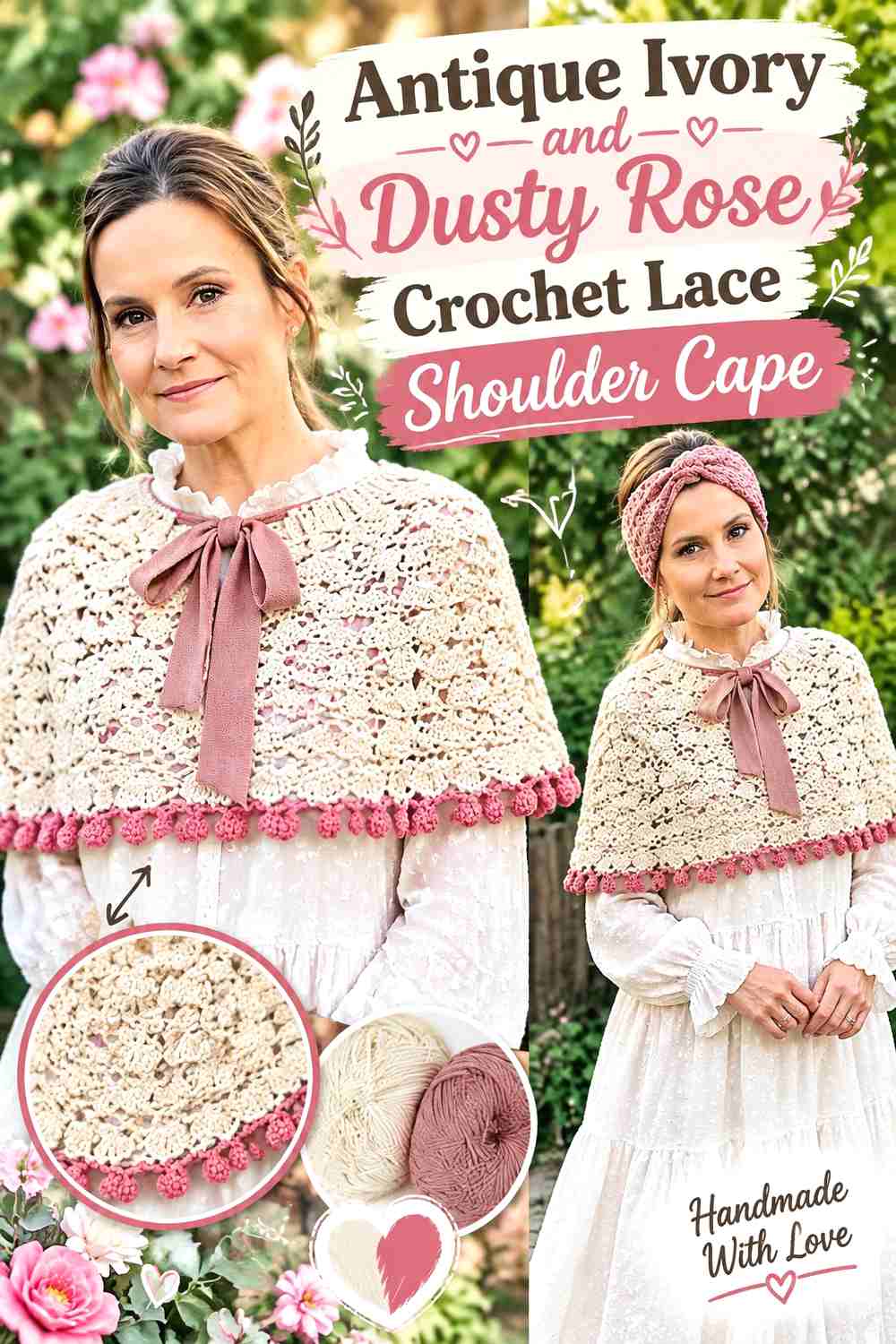
A lacy shoulder snug can take on a soft vintage direction when antique ivory covers most of the openwork and dusty rose appears along the lower edge or front finishing. Ivory keeps the lace shadows visible, while the muted pink introduces color without making the cape look striped. The supporting tutorial is already a lacy shoulder capelet, making it a close construction match.
Antique Ivory Keeps Dusty Rose Crochet Lace Light
Use antique ivory across the main shoulder area when the lace pattern itself deserves most of the attention.
The garment underneath will show through the openings, so judge the ivory while the cape is draped rather than only while the fabric lies flat.
Dusty Rose Can Frame the Antique Ivory Crochet Cape Edge
A dusty rose lower border creates a soft endpoint beneath the pale lace and can repeat in front ties or a small neckline detail.
Keep the rose controlled if the border already runs around the full width of the cape. A narrow accent can occupy considerable visual space on a short shoulder garment.
Creator Credit: Loopy Mabel Crochet
2. Deep Teal And Oatmeal Crochet Tunisian Lace Shoulder Cape
 SAVE
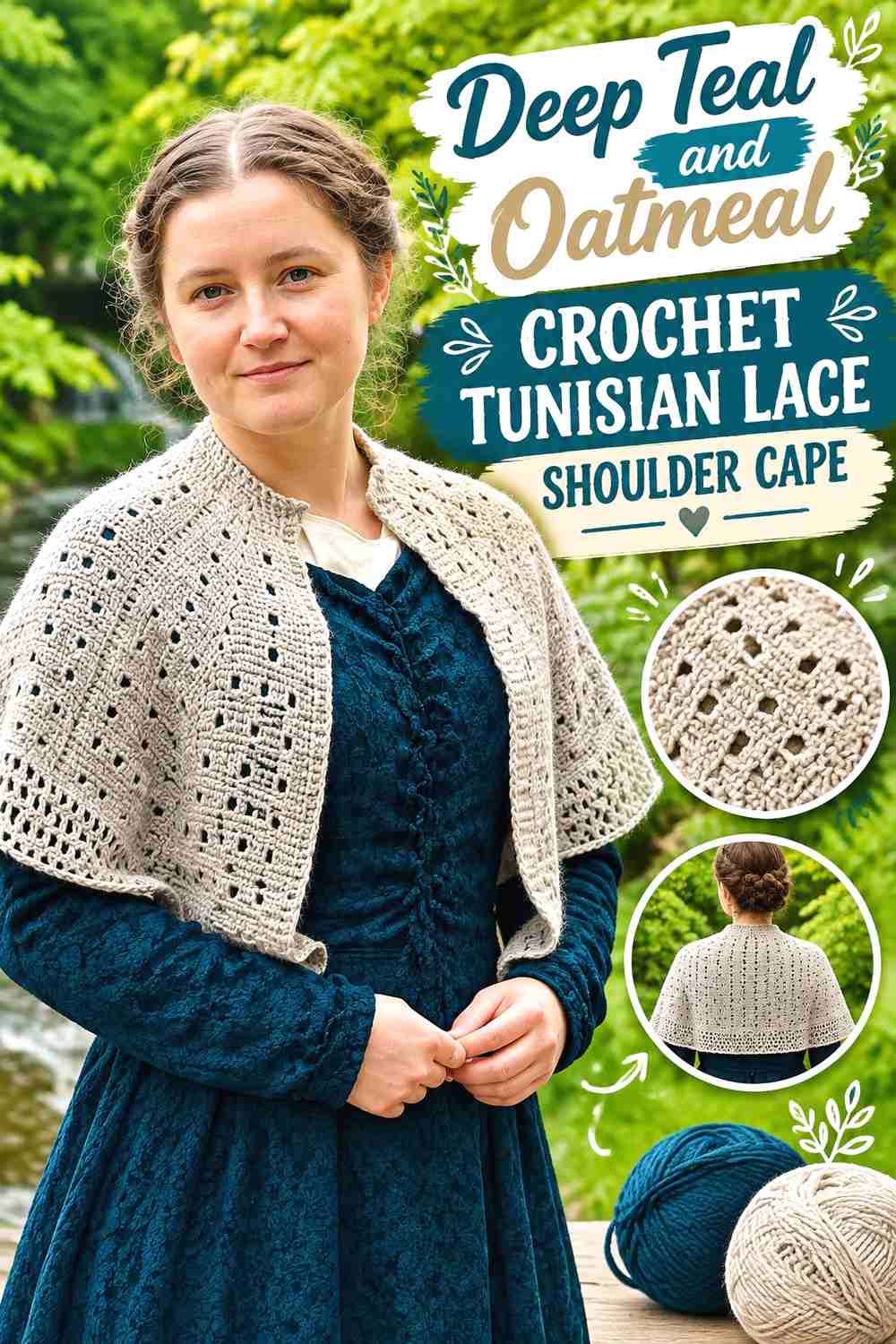
Tunisian lace gives this cape a different texture from conventional crochet openwork. Deep teal can dominate the body while oatmeal marks the final edge, giving the eyelets strong color continuity and preventing every lace section from becoming a separate stripe.
Deep Teal Can Carry the Crochet Tunisian Lace Pattern
Use deep teal through broad sections of the eyelet fabric so the repeating structure remains easy to follow.
Because a dark yarn can reduce the visibility of subtle stitch detail, examine a sample under ordinary indoor light before deciding that the body needs even more depth.
Oatmeal Can Outline the Deep Teal Crochet Cape
Oatmeal provides clear value contrast at the lower boundary and can make the finished shoulder shape easier to see.
If you repeat oatmeal at the neckline, keep one of the two borders narrower so the teal remains the dominant field.
Creator Credit: YarnAndy
3. Burgundy And Blush Crochet Lace Panel Shoulder Cape
 SAVE
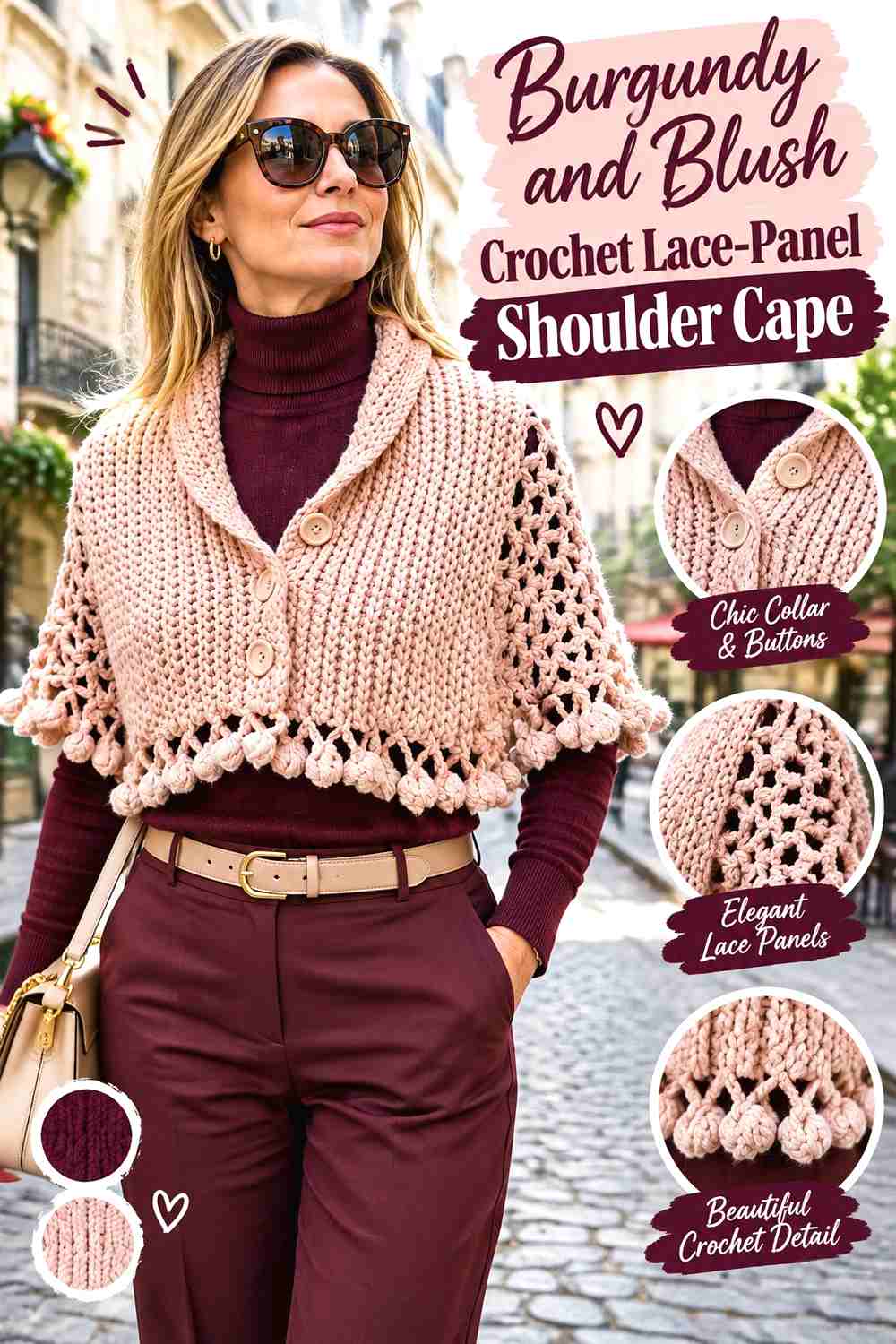
A cape or poncho construction with dedicated lace sections can use burgundy for the denser upper area and blush through the more open lower panels. That arrangement puts the darker color close to the neckline while allowing the lace to become lighter as it spreads over the shoulders.
Burgundy Can Anchor the Blush Crochet Shoulder Cape Neckline
Keep burgundy around the upper section when you want the neckline to have a defined frame.
Avoid extending it too deeply into the lace unless a dark-heavy cape is intentional. Short shoulder garments can become visually dense quickly when their upper half is saturated.
Blush Can Open Up Burgundy Crochet Lace Panels
Blush through the lower lace produces a lighter visual field and makes the open pattern less heavy than an all-burgundy version.
If the cape has a shaped border, consider staying with blush there instead of returning to burgundy and creating another strong dark line.
Creator Credit: Handwork diy
4. Cream And Sage Crochet Floral Lace Shoulder Cape
 SAVE
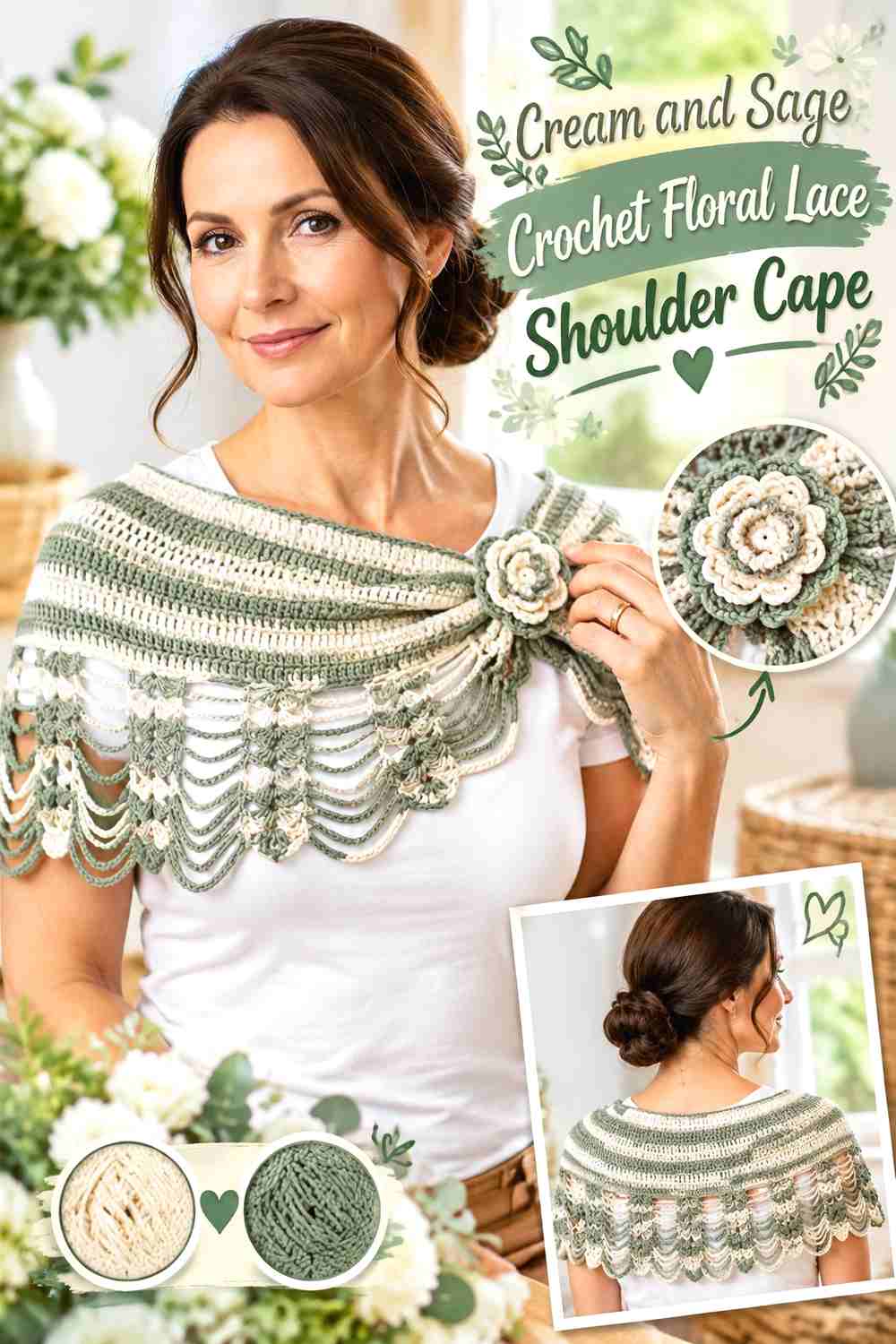
A lace cape with an ornamental or floral finish suits a cream-led palette because the light field lets decorative shapes create their own shadows. Sage can appear in the final border or flower detail instead of being introduced throughout every openwork repeat.
Cream Can Keep Sage Crochet Floral Lace Uncluttered
Use cream across most of the shoulder cape so intricate arches and motifs remain connected visually.
Changing between cream and sage within every lace unit may make the motif structure harder to distinguish from the color pattern.
Sage Can Highlight the Cream Crochet Cape Border
Reserve sage for the outer border or a decorative floral feature where it can have a clear role.
If sage appears in a crocheted flower, repeating a small amount at the neckline can connect the detail to the cape without requiring green bands across the entire body.
Creator Credit: Alextitia Tuto Crochet
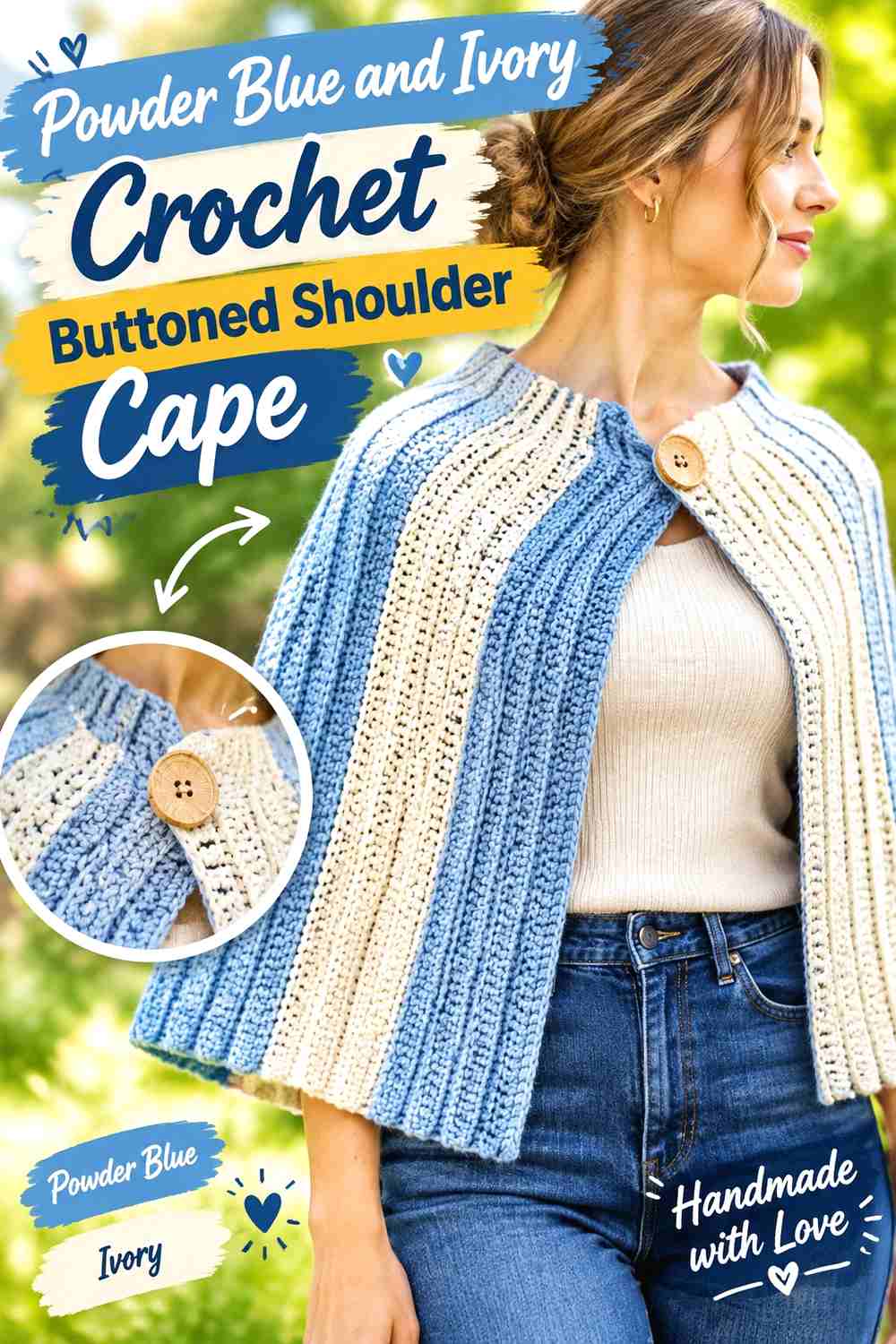
5. Powder Blue And Ivory Crochet Buttoned Shoulder Cape
 SAVE
A side-to-side capelet with a button closure can be adapted toward a lacier visual direction through a soft palette. Powder blue can cover the main body, while ivory marks the neckline or button area so the front closure remains visible without overpowering the shoulder drape.
Powder Blue Can Keep the Ivory Crochet Shoulder Cape Soft
Use powder blue across the main surface so the cape remains one continuous color around the shoulders.
Because this construction is more textured than highly open lace, the lace effect here is best treated as a lighter styling adaptation rather than attributing a different stitch pattern to the creator.
Ivory Can Define the Powder Blue Crochet Cape Closure
Place ivory near the neckline or button when that feature needs clearer visual separation.
Avoid adding a wide ivory lower band as well unless you want a strongly two-tone cape. A small light closure area can already attract substantial attention.
Creator Credit: Nana’s Crafty Home | Tonya Bush
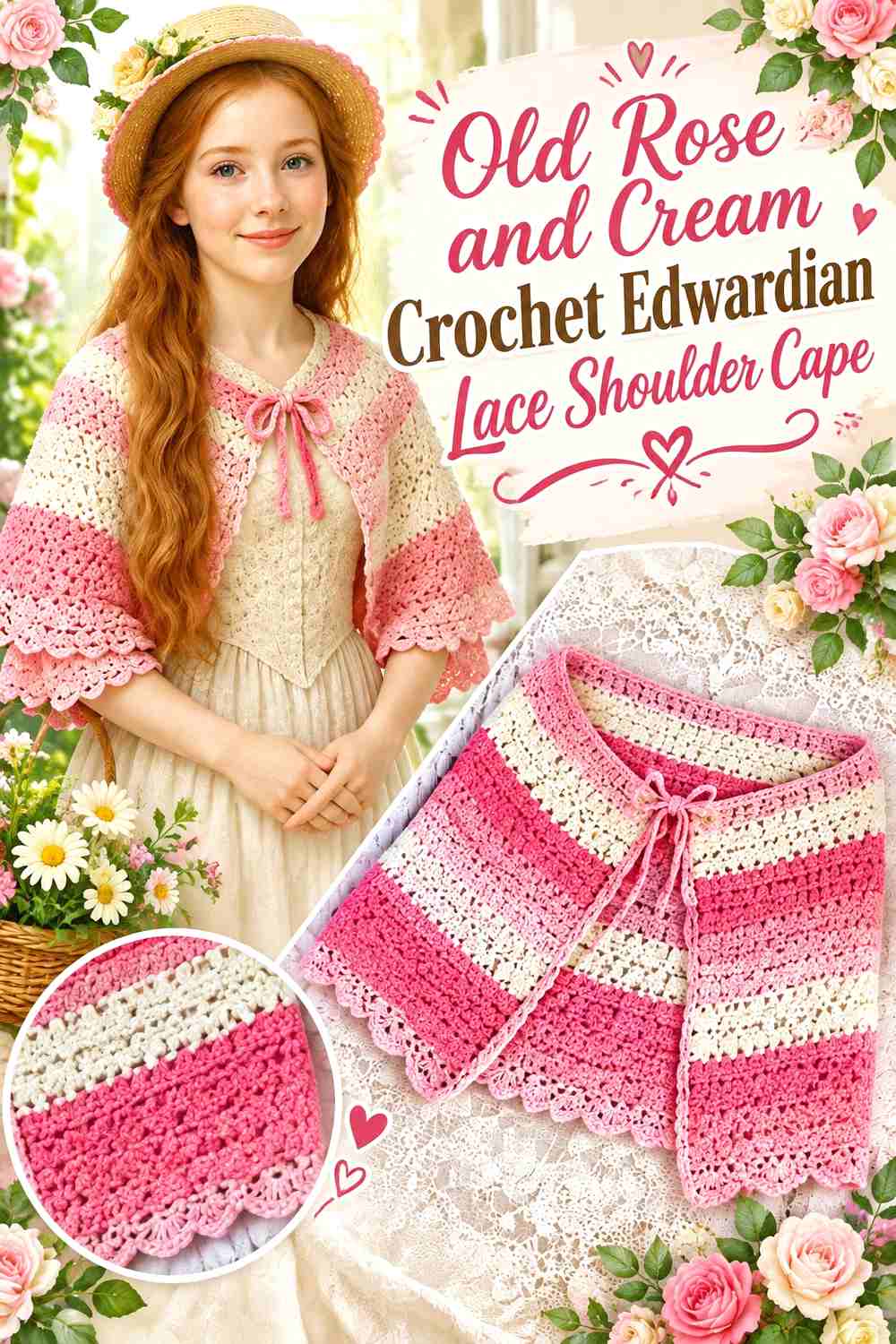
6. Old Rose And Cream Crochet Edwardian Lace Shoulder Cape
 SAVE
An Edwardian-inspired capelet naturally suits a softened historical palette. Old rose can dominate the body while cream highlights ties or the decorative lower edge. Because the vintage silhouette already provides character, the colors can remain restrained.
Old Rose Can Carry the Crochet Edwardian Shoulder Shape
Use old rose consistently through the broad cape section so the historical silhouette remains easy to read.
If the openwork or edging contains substantial detail, avoid alternating pink and cream through every repeat. The construction already supplies enough variation.
Cream Can Lighten the Old Rose Crochet Cape Ties and Edge
Cream works particularly well on narrow ties or selected edging because it adds contrast without dividing the main body.
Keep the tie color consistent on both sides so the front of the cape remains visually balanced.
Creator Credit: Selina Veronique Crochet
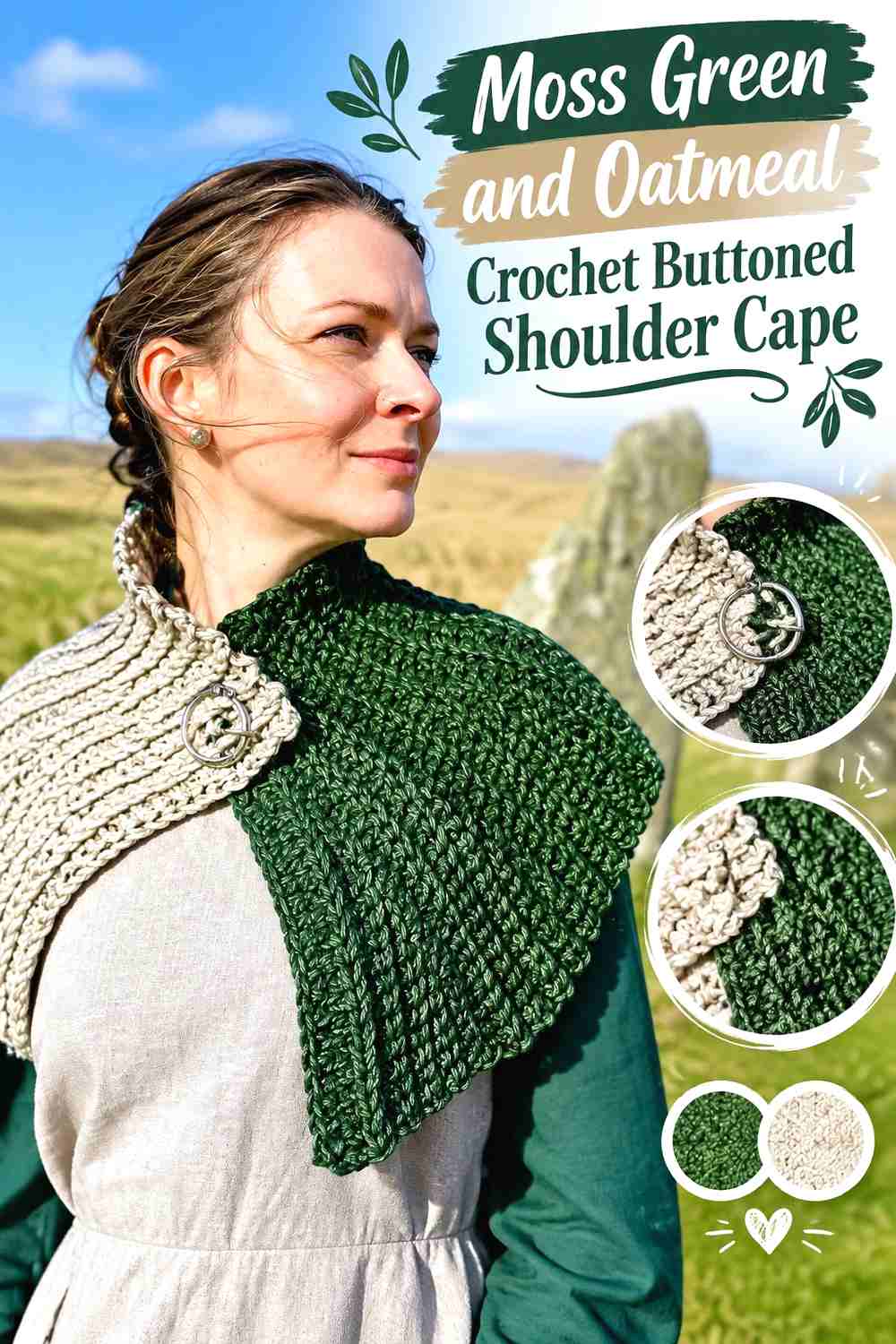
7. Moss Green And Oatmeal Crochet Buttoned Shoulder Cape
 SAVE
A rustic buttoned capelet can shift toward a lace-shoulder styling direction by pairing moss green with a lighter oatmeal accent. Moss can dominate the main fabric while oatmeal appears around the closure or lower finishing rather than through constant striping.
Moss Green Can Ground the Oatmeal Crochet Shoulder Cape
Use moss green through the central body when you want the cape to remain earthy and garment-like rather than delicate and bridal.
The darker green also gives open or textured sections a strong silhouette against pale shirts and dresses.
Oatmeal Can Separate Moss Green Crochet Closure Details
A small oatmeal edge near a button can stop the dark front sections from visually merging.
If the closure already supplies enough contrast, keep the lower edge moss green so the cape does not become framed on every side.
Creator Credit: Ophelia Talks Crochet
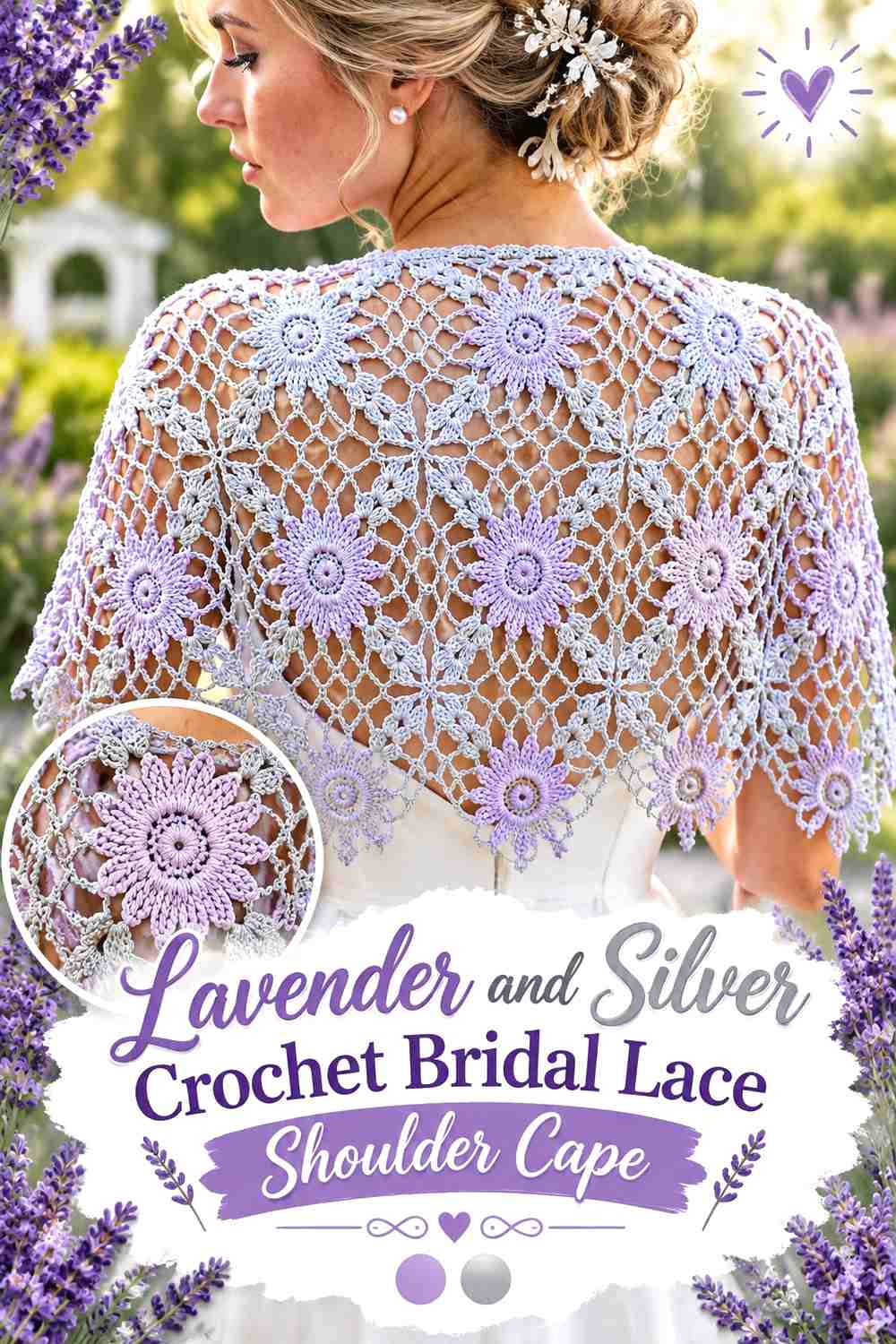
8. Lavender And Silver Crochet Bridal Lace Shoulder Cape
 SAVE
A wedding-lace shawl can be adapted into a short shoulder-cape styling direction when you want more coverage than a collar but less length than a conventional shawl. Lavender can provide a subtle alternative to white, while a soft silver-gray accent marks the outer edge.
Lavender Can Keep the Crochet Bridal Lace Distinct From White Clothing
A pale lavender cape can remain delicate while still separating from an ivory or white dress underneath.
Because the garment background affects every lace opening, compare lavender over the actual dress color before choosing how much silver to add.
Silver Can Give Lavender Crochet Lace a Quiet Border
Soft silver-gray can define the lower edge without creating the stronger outline of charcoal or navy.
Keep it concentrated along one finishing area. Repeated silver stripes could pull attention away from the floral or openwork lace that gives the cape its occasion-ready character.
Creator Credit: Knitting World
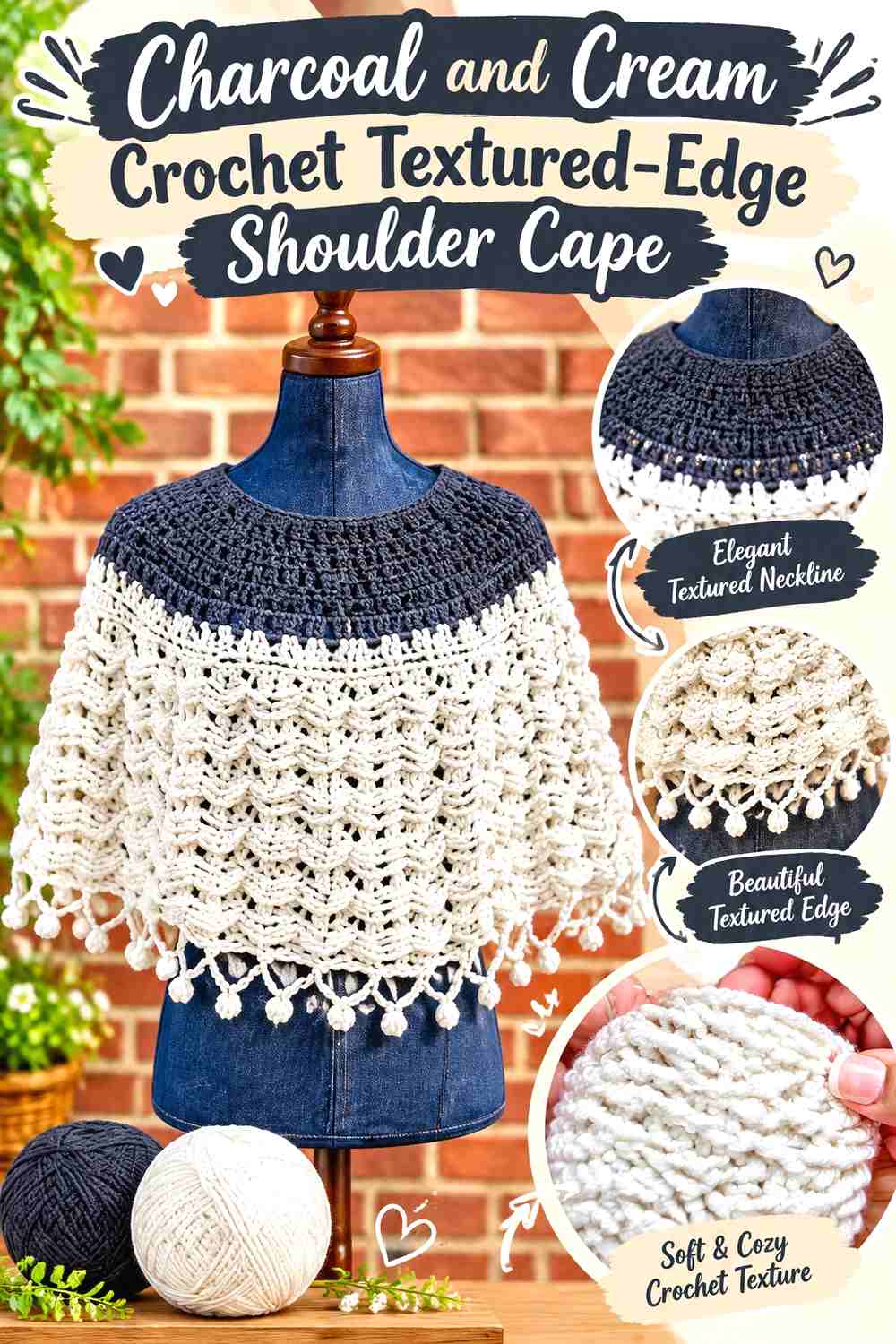
9. Charcoal And Cream Crochet Textured Edge Shoulder Cape
 SAVE
A more structured capelet can still support a lace-inspired color treatment by keeping charcoal in the main body and introducing cream around a decorative edge. The source uses strong texture rather than delicate lace, so this idea is best viewed as an open-edge or styling adaptation rather than an exact lace construction.
Charcoal Can Keep the Cream Crochet Shoulder Cape Grounded
Use charcoal across the larger shoulder section so the cape retains a strong silhouette.
Texture can disappear more easily in very dark yarn, so inspect the crocheted fabric itself before assuming charcoal will show every raised detail clearly.
Cream Can Highlight the Charcoal Crochet Cape Edge
A cream border creates a strong finishing line and is particularly useful when the cape will be worn over dark clothing.
Because the contrast is high, keep the cream treatment relatively narrow unless a graphic black-and-white-style frame is intended.
Creator Credit: Stitches n Scraps
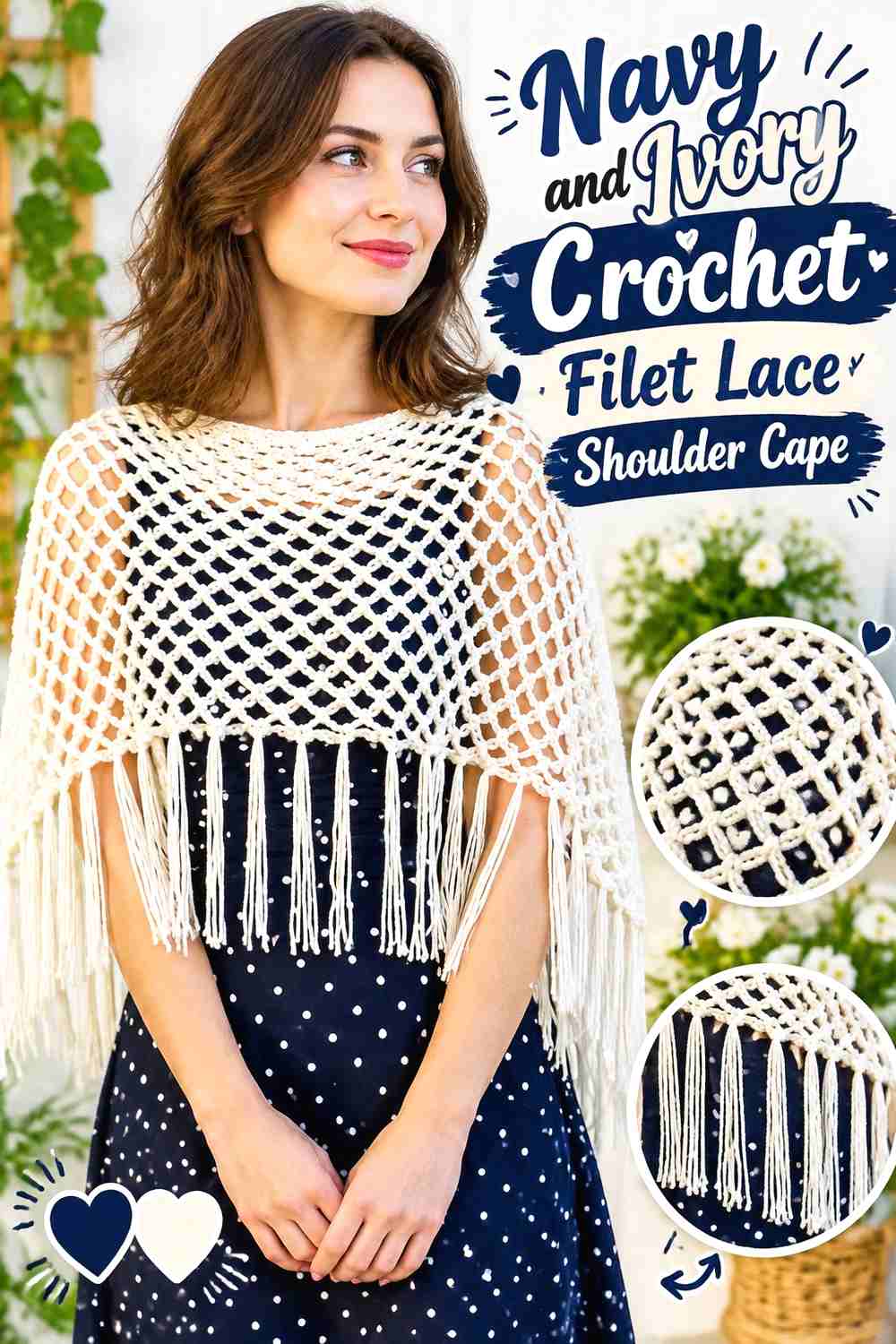
10. Navy And Ivory Crochet Filet Lace Shoulder Cape
 SAVE
Filet crochet is a strong match for a two-color cape because the open squares already provide consistent pattern. Navy can lead the main mesh while ivory defines the neckline or lower edge without interrupting the filet structure.
Navy Can Keep the Ivory Crochet Filet Pattern Continuous
Use navy through the majority of the mesh so the open-and-solid rhythm remains the primary visual pattern.
A dark cape worn over pale clothing will naturally show strong contrast through the openings, so additional color changes may be unnecessary.
Ivory Can Frame the Navy Crochet Lace Without Filling the Mesh
Place ivory at an outer border or fringe-adjacent section rather than switching colors repeatedly through the filet body.
This keeps the lace readable while giving the pale accent a structural role.
Creator Credit: Crazy Cool Crochet
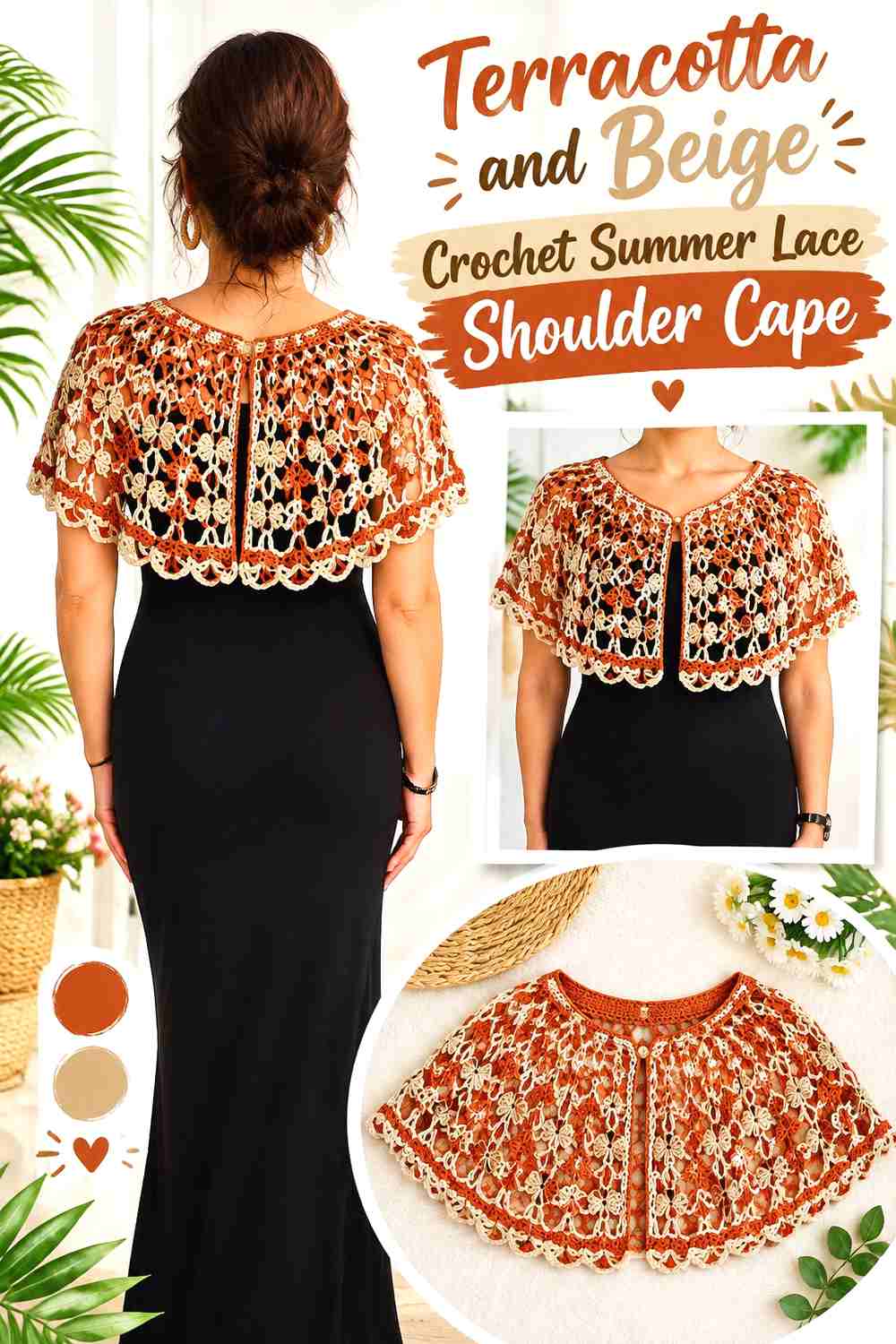
11. Terracotta And Beige Crochet Summer Lace Shoulder Cape
 SAVE
A summer capelet can use terracotta for warmth while beige keeps the openwork visually lighter. Beige can dominate the central lace area, with terracotta used toward the outer rows or front edges.
Beige Can Keep Terracotta Crochet Summer Lace Airy
Use beige across most of the open shoulder fabric when the goal is a lightweight visual effect.
The clothing underneath will remain visible, so test beige over likely summer tops before deciding whether it needs more contrast.
Terracotta Can Warm the Beige Crochet Cape Outer Edge
Place terracotta toward the longest outer sections where it can frame the cape without repeatedly interrupting the lace.
Because outer cape rows cover substantial width, a modest terracotta band can already make the palette feel noticeably warmer.
Creator Credit: Hectanooga1
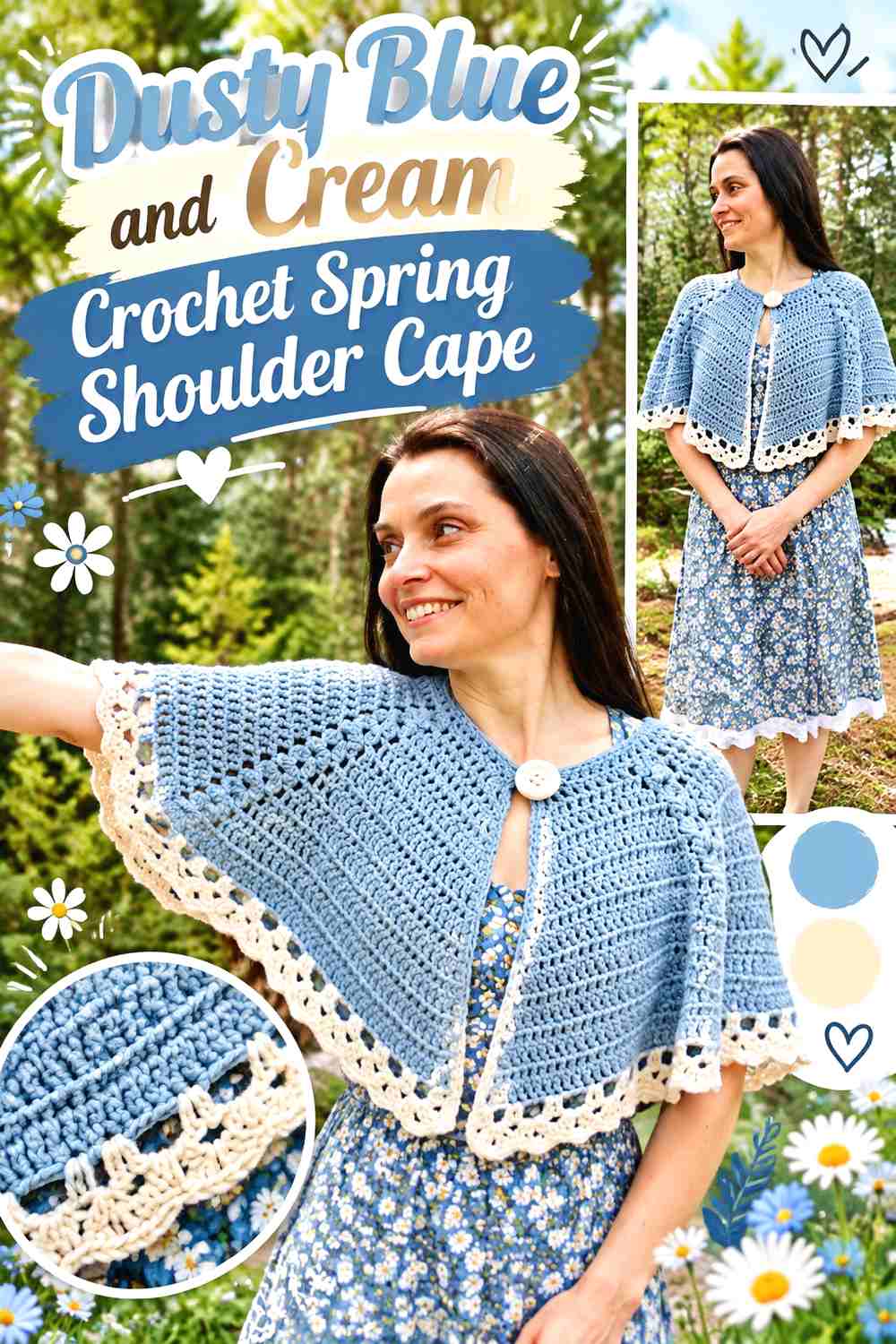
12. Dusty Blue And Cream Crochet Spring Shoulder Cape
 SAVE
A spring capelet with flexible closure options can take on a lace-forward look through a light dusty-blue body and cream finishing details. Keep cream concentrated near ties, buttons, or a narrow lower border rather than inserting it throughout the entire shoulder area.
Dusty Blue Can Keep the Cream Crochet Spring Cape Cohesive
Use dusty blue across the main shoulder coverage so the piece reads as one light garment rather than separate bands.
If adapting a denser tutorial toward a lace-inspired color direction, use the creator’s original construction rather than assuming color changes alter the fabric structure.
Cream Can Connect Dusty Blue Crochet Cape Closures
Cream can work on either ties or a button-adjacent edge, giving the front a light focal point.
Avoid using different cream treatments on each side. Symmetry around the closure helps a short cape sit visually centered.
Creator Credit: Jayda InStitches
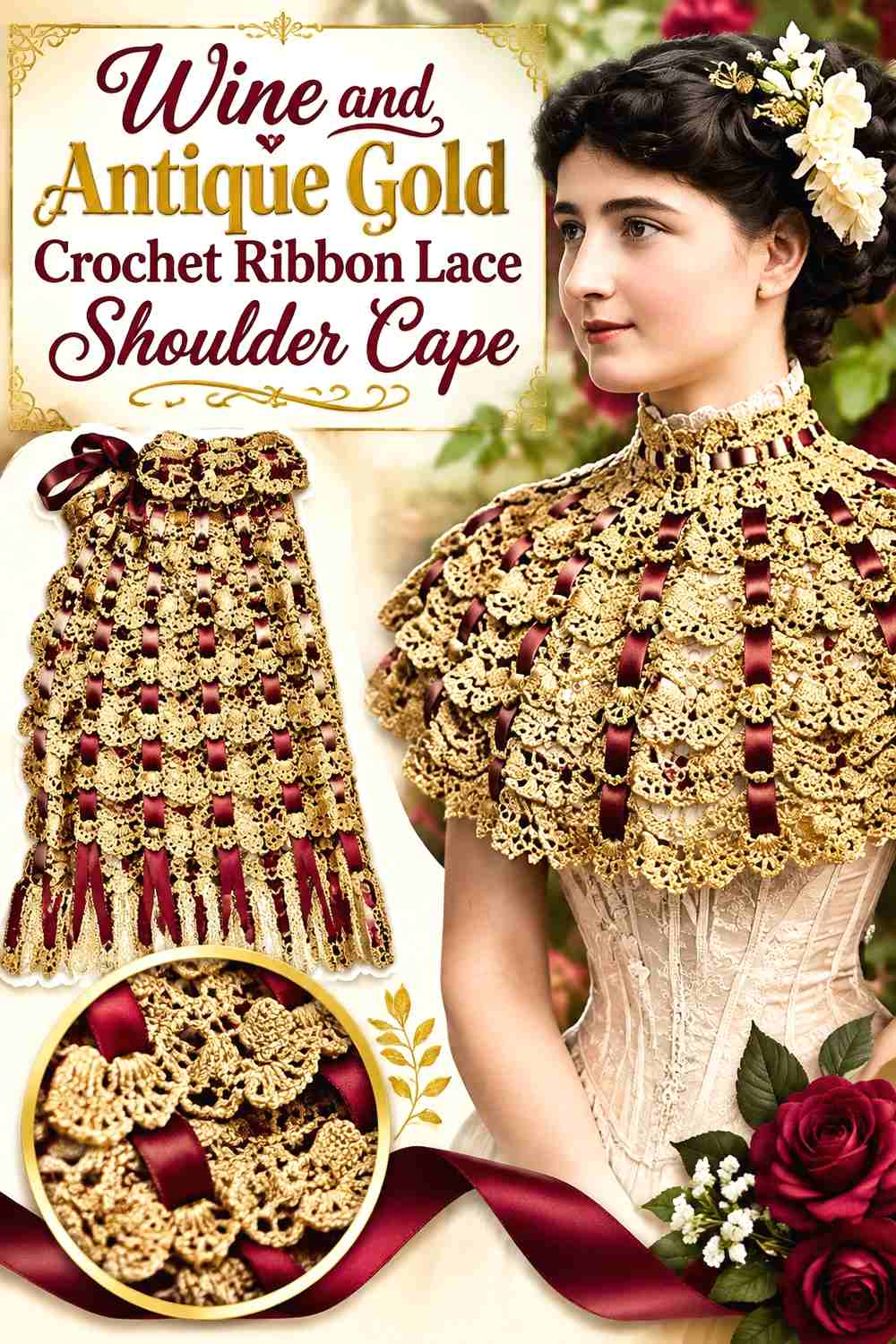
13. Wine And Antique Gold Crochet Ribbon Lace Shoulder Cape
 SAVE
A historically inspired ribbon capelet can support a richer heirloom palette. Wine can dominate the crochet fabric while antique-gold-inspired ribbon or edging provides the accent. Because ribbon already introduces a different texture, it does not need to cover much area to become noticeable.
Wine Can Give Antique Gold Crochet Lace a Rich Background
Use wine consistently through the shoulder cape so the historical shape stays visually continuous.
If the lace is detailed, a solid wine body lets the ribbon remain the distinct secondary element rather than competing with internal color changes.
Antique Gold Can Highlight Wine Crochet Ribbon Placement
Keep the gold accent where the historical construction naturally calls attention to ribbon or ties.
Repeating gold along every lower edge may dilute the effect. One clear ribbon path is often enough against deep wine.
Creator Credit: Just Vintage Crochet
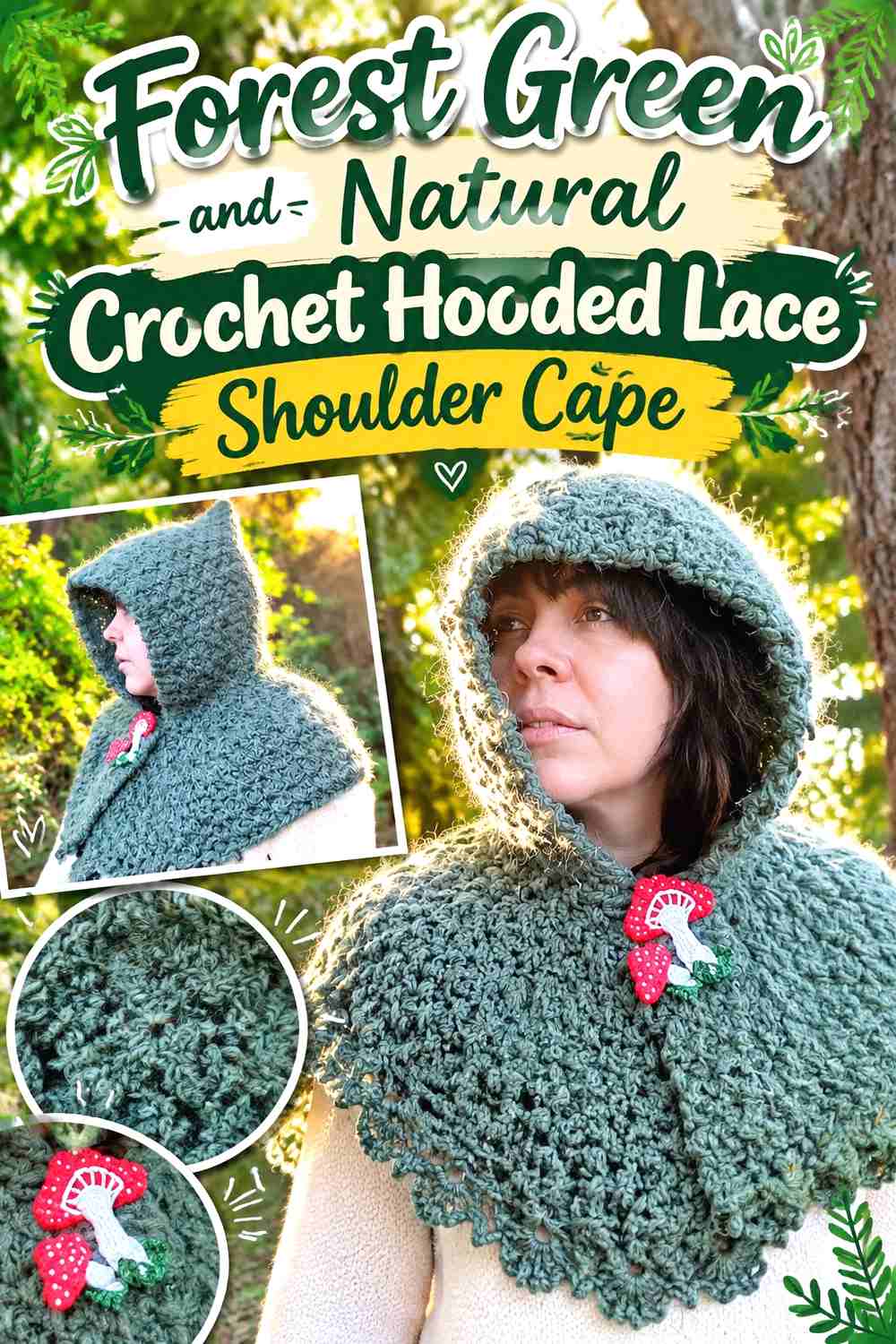
14. Forest Green And Natural Crochet Hooded Lace Shoulder Cape
 SAVE
A hooded cape introduces a much larger color area around the head and back than a simple capelet. Forest green can cover the hood and most of the shoulder body, while natural yarn appears in the lace-like outer border or tie area. The source is a hooded cape rather than a delicate shoulder-only lace piece, so a shorter lace-focused version is an adaptation.
Forest Green Can Connect the Crochet Hood and Shoulder Cape
Keep the hood and main shoulder body in the same forest green so the larger silhouette remains unified.
Changing the hood to the light accent would give it enormous visual weight and could pull attention away from the shoulder lace.
Natural Yarn Can Lighten the Forest Green Crochet Cape Edge
Use a natural neutral around the lower border or ties where it can interrupt the deep green without breaking up the hood.
If you shorten the cape for a shoulder-length interpretation, reassess the border width because the accent will occupy a larger percentage of the smaller garment.
Creator Credit: Lizfaerie Crafts
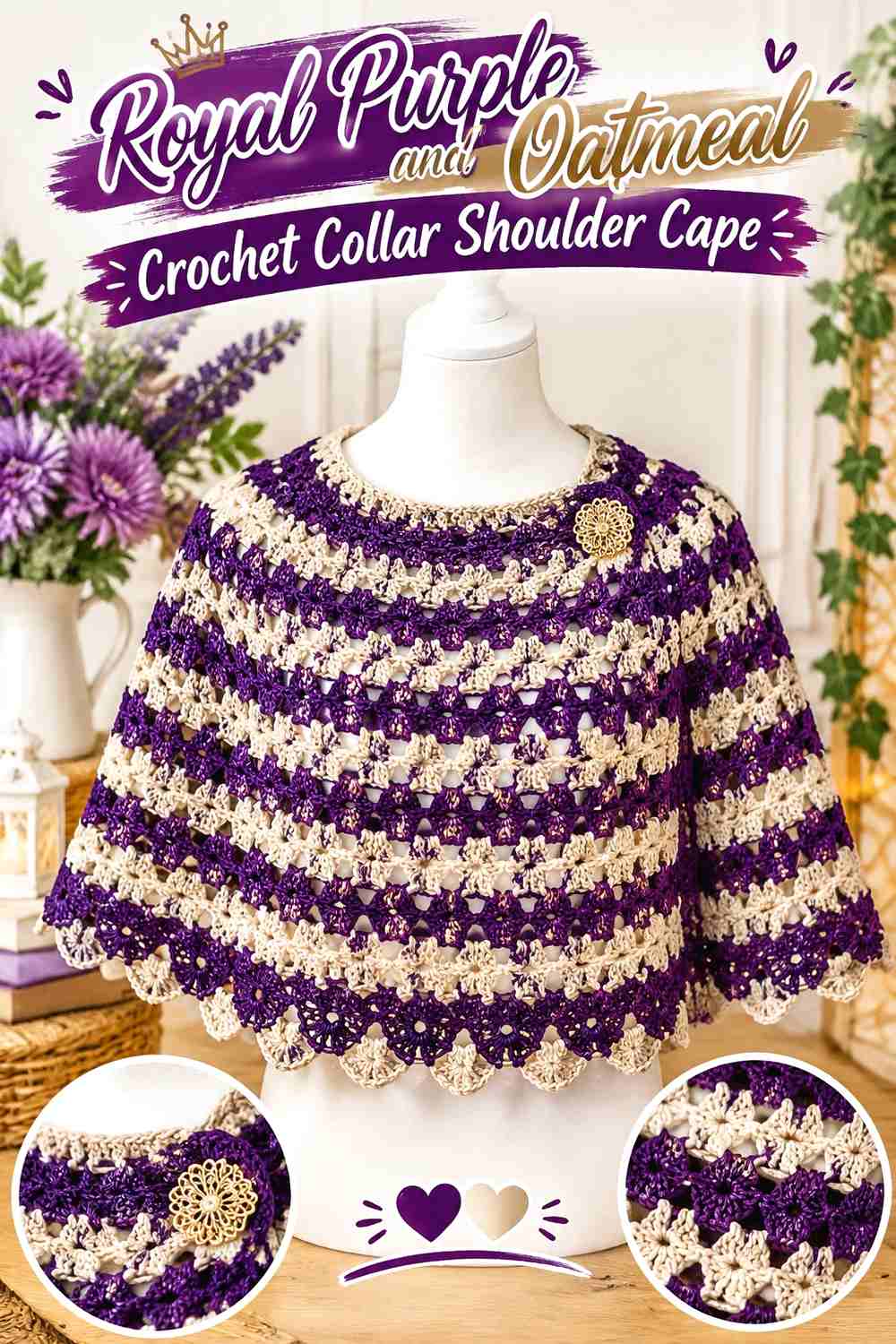
15. Royal Purple And Oatmeal Crochet Collar Shoulder Cape
 SAVE
A collar capelet places more visual weight around the neck, so royal purple can dominate the main body while oatmeal highlights a narrower collar edge or lower trim. This keeps the strong purple away from being divided into numerous competing bands.
Royal Purple Can Keep the Oatmeal Crochet Shoulder Cape Rich
Use royal purple through the largest cape area so the garment has one unmistakable dominant color.
If the collar is substantial, making it entirely oatmeal can create an almost equal light section near the face. Decide whether that is desirable before extending the accent.
Oatmeal Can Separate the Royal Purple Crochet Collar
A narrow oatmeal line around the collar makes the neckline easy to distinguish from the rest of the cape.
Repeating oatmeal at a small lower detail can connect the palette, but a wide matching lower band may over-frame the purple center.
Creator Credit: Bag-O-Day Crochet
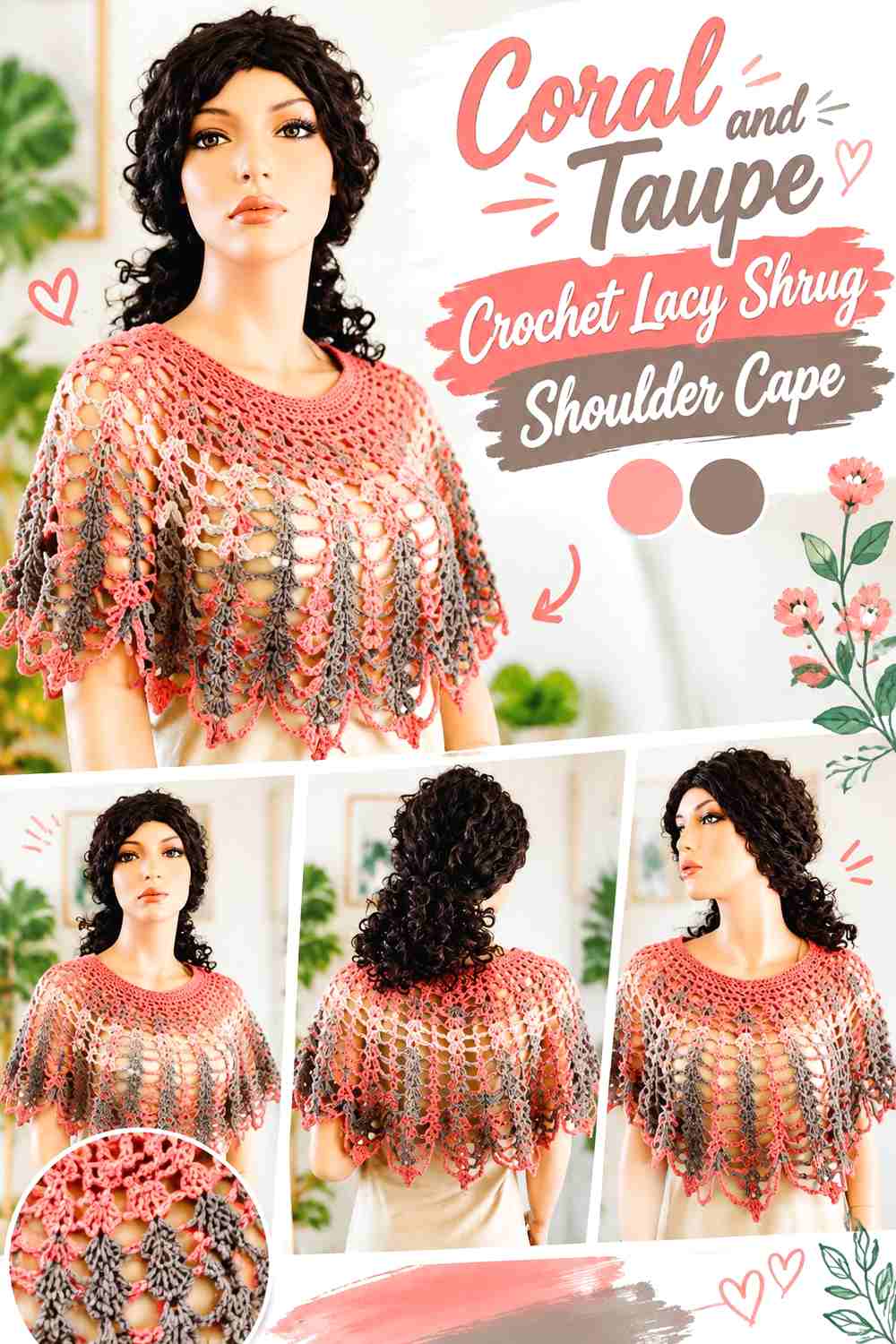
16. Coral And Taupe Crochet Lacy Shrug Shoulder Cape
 SAVE
A shrug-influenced capelet can use coral through the airy body and taupe at the edges closest to the shoulders or arms. The warmer coral keeps the openwork noticeable, while the neutral reduces visual competition around the fit-related edges.
Coral Can Carry the Taupe Crochet Lacy Shoulder Surface
Use coral across broad openwork sections so the lace remains cohesive from shoulder to shoulder.
Because a shrug-style cape interacts more directly with arm movement, scattered color blocks can distort visually as the garment shifts. Larger color fields are easier to read.
Taupe Can Quiet the Coral Crochet Cape Edges
Place taupe along a restrained outer or arm-adjacent section where it can define the fit without becoming another focal point.
If the source construction is more shrug-like than a traditional cape, preserve its intended shape and treat the lace-cape styling as an aesthetic interpretation.
Creator Credit: ThePatternfamily
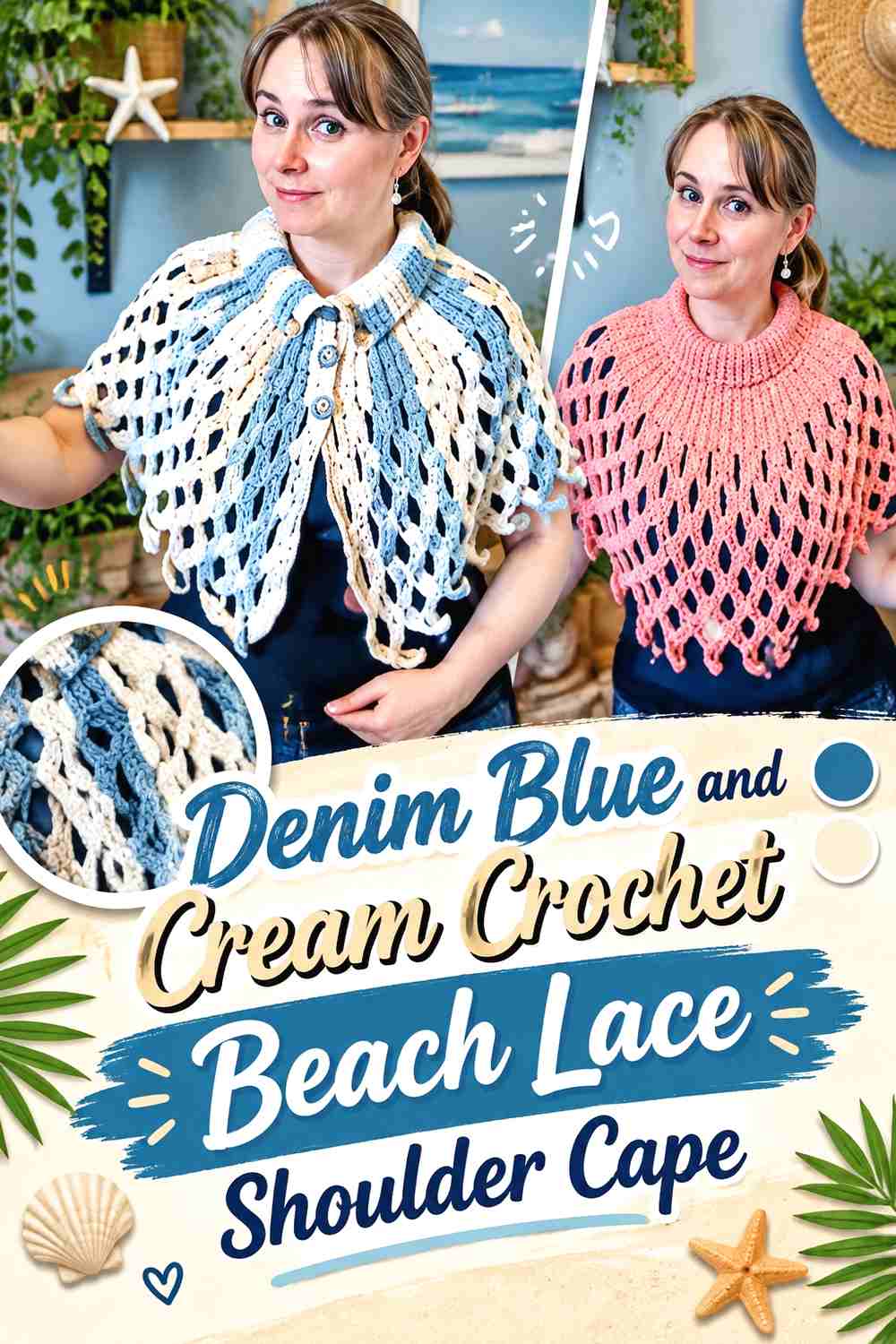
17. Denim Blue And Cream Crochet Beach Lace Shoulder Cape
 SAVE
A capelet-poncho tutorial provides a useful base when you want to choose a shorter shoulder-covering length. Denim blue can dominate the open body while cream finishes the lower edge, producing a casual lace direction that is less formal than ivory bridal capes or vintage ribbon styles.
Denim Blue Can Keep the Cream Crochet Beach Cape Casual
Use denim blue through most of the capelet body so the openwork has one relaxed, wearable main color.
The lace will look different depending on the top or swimsuit cover layer underneath, so check the finished fabric over likely background colors.
Cream Can Give Denim Blue Crochet Lace a Light Lower Finish
A cream lower edge creates separation without changing the entire blue field.
If you choose the shorter capelet version rather than extending toward a poncho, keep the cream border proportionate to the reduced length so it does not take over the finished piece.
Creator Credit: Sabrina Melodieuse
Comparing the 18 Crochet Lace Shoulder Cape Color Directions
For the lightest romantic look, antique ivory and dusty rose, cream and sage, lavender and silver, or dusty blue and cream keep pale colors across most of the shoulder area and use the accent selectively.
For a deeper evening palette, deep teal and oatmeal, navy and ivory, plum and mauve, wine and antique gold, or royal purple and oatmeal give the cape stronger visual weight while preserving lighter details around important edges.
Choose the filet, Tunisian lace, floral lace, or shell-lace cape when the stitch structure itself should remain the primary decorative feature. These styles benefit from larger uninterrupted color areas.
The Edwardian and ribbon capelets suit vintage color palettes, while the hooded, collar, and shrug-influenced versions give the color scheme additional structural zones to work with.
Conclusion
Color planning for a crochet lace shoulder cape should begin with the areas that remain most visible when the piece is worn: neckline, shoulders, lower edge, closure, and any collar or hood. The open spaces then bring the clothing underneath into the finished palette.
For intricate lace, use fewer color interruptions and let stitchwork provide most of the visual movement. Simpler mesh can handle wider color blocks, while vintage ties, buttons, ribbons, and decorative edging offer natural places for accents.
When adapting a denser capelet or longer poncho tutorial toward a lace shoulder-cape idea, preserve the creator’s construction rather than assuming that changing yarn, stitch structure, or length is automatic. Treat color and styling as editorial adaptations and use the original tutorial for its exact fit and assembly.
Frequently Asked Questions
What colors work well for a crochet lace shoulder cape?
Light neutrals such as cream, ivory, oatmeal, and natural yarn emphasize openwork, while navy, burgundy, plum, forest green, teal, or royal purple create a deeper cape. Muted colors such as dusty rose, sage, lavender, and dusty blue work well when you want softer contrast.
Should the crochet lace cape border be darker than the body?
It can be. A darker border strongly defines the lower silhouette, while a lighter or tonal border keeps the edge softer. On a short cape, even a narrow dark border can have considerable visual weight.
How does the clothing underneath affect crochet lace color?
The base garment is visible through the openwork, effectively becoming part of the palette. Pale lace over dark clothing appears more graphic; similar-colored lace and clothing create a more blended surface.
Should the neckline match the crochet lace body?
Not necessarily. A contrasting neckline can frame the face and give the cape a clear upper boundary. If the lower border also contrasts strongly, check that the main lace color still occupies enough area to remain dominant.
Can I use two strong colors in a lace shoulder cape?
Yes, but give them unequal or clearly defined roles. For example, one shade can dominate the lace body while the other appears at the neckline and border. Alternating two saturated colors throughout intricate lace can make the stitch pattern harder to read.
What is the difference between a crochet shoulder cape and a capelet?
The terms often overlap. A shoulder cape generally emphasizes short coverage around the shoulders, while capelet can describe several short cape-like shapes, including buttoned, tied, circular, collar, or small poncho styles. Check the finished silhouette rather than relying only on the title.
Can I adapt a crochet poncho or shawl tutorial into a shoulder cape?
Sometimes the construction can support a shorter styling direction, but do not assume that simply stopping early produces the same fit. Neckline shaping, increases, shoulder width, and borders can all depend on the intended length. Use the tutorial’s construction guidance and verify proportions before making an adaptation.