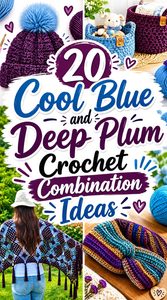
Cool blue and deep plum create a crochet palette in which both colors can carry substantial visual weight. Deep plum is usually the darker, richer shade, while cool blue can range from pale and misty to a stronger medium blue. That makes color placement especially important: if both yarns are fairly dark, small details may merge even though the hues are different.
Rather than dividing every project into equal stripes, give the colors jobs that suit the object. Deep plum can frame a cool blue shawl, define a tote base, outline granny squares, or form garment ribbing. Cool blue can break up large plum surfaces, lighten cuffs and borders, or take over the main field when a less dark finished piece is wanted.
These 20 ideas apply the combination to blankets, garments, bags, home decor, and smaller accessories. The tutorials support the underlying crochet projects; the cool blue and deep plum arrangements are independent palette adaptations for planning your own version.
Quick List
- Cool Blue And Deep Plum Crochet Throw Blanket
- Cool Blue And Deep Plum Crochet Granny Square Cardigan
- Cool Blue And Deep Plum Crochet Tote Bag
- Deep Plum And Cool Blue Crochet Scarf
- Cool Blue And Deep Plum Crochet Poncho
- Deep Plum And Cool Blue Crochet Sweater Vest
- Cool Blue And Deep Plum Crochet Shawl
- Deep Plum And Cool Blue Crochet Cushion Cover
- Deep Plum And Cool Blue Crochet Mittens
- Cool Blue And Deep Plum Crochet Slippers
- Cool Blue And Deep Plum Crochet Ear Warmer
- Deep Plum And Cool Blue Crochet Clutch
- Cool Blue And Deep Plum Crochet Bucket Hat
- Deep Plum And Cool Blue Crochet Market Bag
- Cool Blue And Deep Plum Crochet Handbag
- Cool Blue And Deep Plum Crochet Beanie
- Deep Plum And Cool Blue Crochet Cowl
- Cool Blue And Deep Plum Crochet Headband
- Cool Blue And Deep Plum Crochet Wrap
- Deep Plum And Cool Blue Crochet Nesting Baskets
Decide Whether Cool Blue or Deep Plum Should Carry the Surface
Because both colors have enough character to lead a project, deciding on a dominant shade before crocheting can prevent an unplanned half-and-half result. Large areas such as blanket fields, cardigan panels, bag bodies, and shawl centers establish the dominant color more strongly than narrow borders or cuffs.
A cool-blue-led project can use deep plum to define edges and structural details. A plum-led project can reverse that hierarchy, using blue at openings, ends, joins, or selected motifs. Equal proportions are useful when the construction already provides clear blocks, such as granny squares or broad wrap sections.
Protect Cool Blue and Deep Plum Contrast Around Crochet Texture
Do not assume two different hues automatically provide strong value contrast. A dark cool blue and deep plum may look surprisingly similar in grayscale, which can reduce separation around small motifs, narrow stripes, or detailed texture.
Compare the actual yarns side by side before placing one shade inside small granny-square centers or around raised stitches. If the values are too close, either choose a lighter blue or use the colors in larger blocks where hue differences have more room to register.
Repeat Cool Blue or Deep Plum Before Adding Another Accent
With a two-color palette, repetition is often more useful than introducing a third color to fix an isolated detail. If deep plum appears on tote handles, repeat it at the base or opening. If cool blue forms cardigan cuffs, bring it back at the neckline or hem.
That repeated placement helps separate areas of the crochet item feel related while preserving the clear cool-blue-and-plum identity.
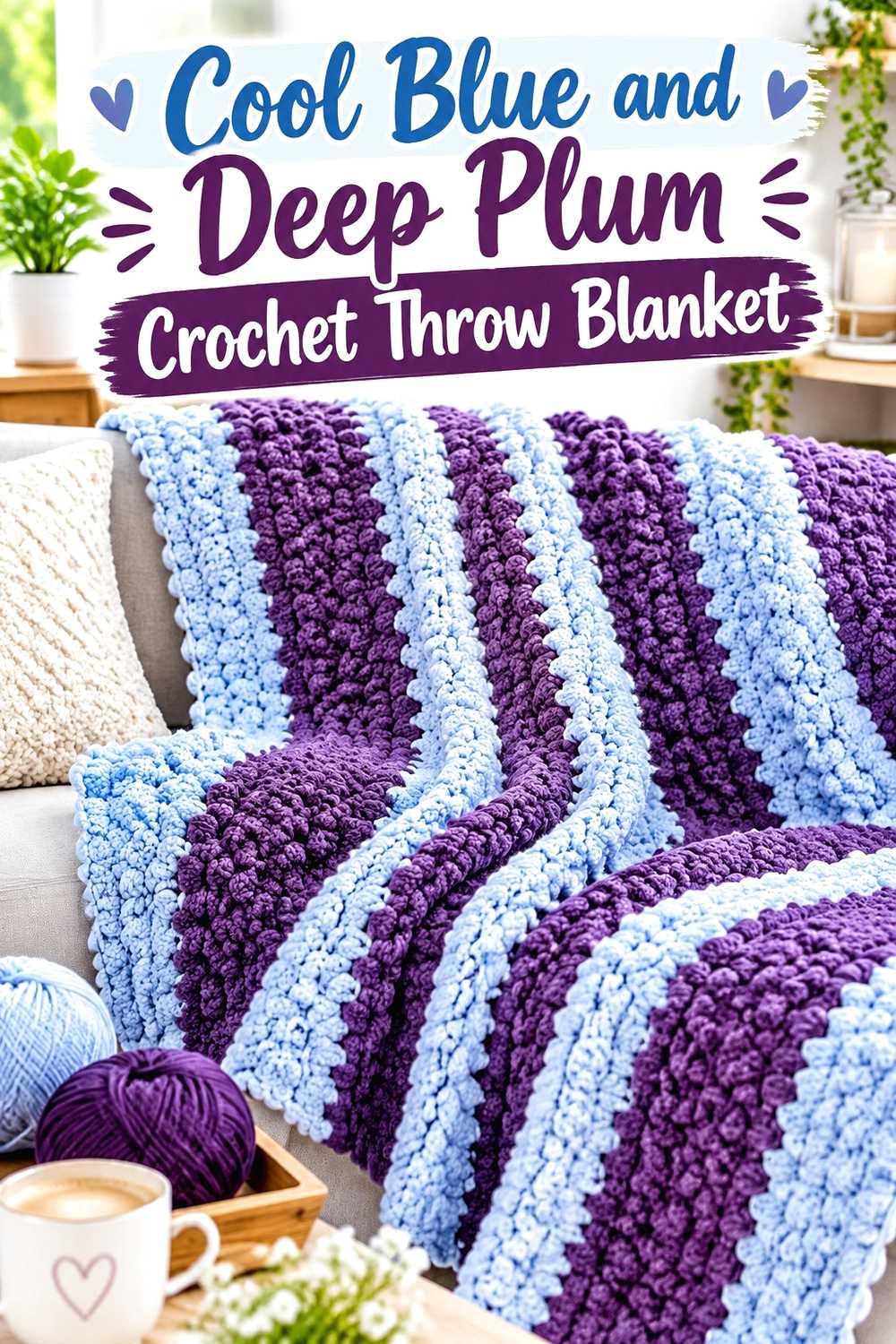
1. Cool Blue And Deep Plum Crochet Throw Blanket
 SAVE
SAVELet cool blue occupy most of the blanket when you want the larger field to stay lighter than a plum-dominated throw. Deep plum can interrupt that surface through broad bands, selected blocks, or an outer frame. Since a blanket provides so much visual area, repeating plum several times usually feels more connected than saving it for one isolated section.
Cool Blue Can Carry the Largest Crochet Blanket Field
Use cool blue across broad areas so stitch texture has room to remain continuous. This is useful for blankets with noticeable ridges, clusters, or repeating surface patterns because the color does not compete with every texture change.
If the blanket needs more depth, increase the amount of plum gradually rather than adding unrelated accent shades.
Deep Plum Can Mark Cool Blue Crochet Blanket Sections
Deep plum works well as a repeated separator between larger blue areas. The darker bands can make the structure of the color layout easier to see from across a room.
A plum border can also connect those internal sections. If that produces too dark a perimeter, return to cool blue for the final outer edge.
Creator Credit: Bella Coco
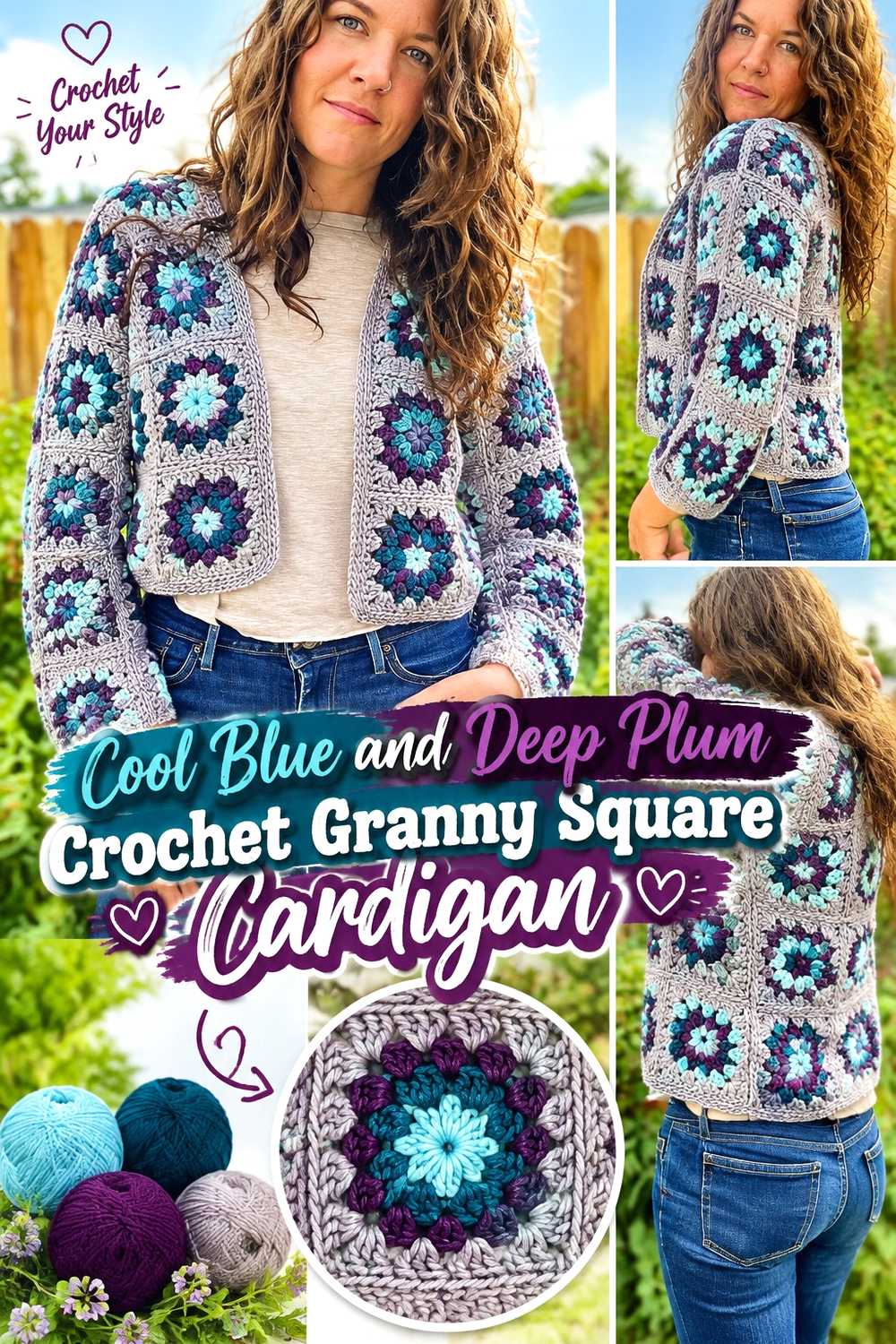
2. Cool Blue And Deep Plum Crochet Granny Square Cardigan
 SAVE
SAVEGranny squares give both colors repeated opportunities to appear without forcing them into narrow stripes. Cool blue can cover larger motif areas while deep plum defines centers, outer rounds, or selected joins. Before committing to every square, arrange several samples together so you can judge the cumulative effect of the darker shade.
Deep Plum Borders Can Build a Strong Cool Blue Crochet Motif Grid
A narrow plum outer round may look modest on one square but become much more prominent once many squares sit side by side. That can create a defined grid across cardigan panels and sleeves.
If the grid becomes heavier than intended, keep plum inside the motifs and use cool blue for their outer rounds or joins.
Cool Blue Cuffs Can Relieve a Deep Plum-Heavy Crochet Cardigan
When plum already appears frequently across the motif layout, cool blue cuffs, neckline trim, or lower edging can keep the garment from being surrounded by another dark frame.
Repeat blue in at least two finishing areas so those lighter sections look connected to the motifs rather than added after the fact.
Creator Credit: Off the Beaten Hook
3. Cool Blue And Deep Plum Crochet Tote Bag
 SAVE
SAVEA cool blue tote body gives deep plum room to act as the structural-looking shade. Use plum at the base, handles, upper edge, or another repeated location instead of scattering small dark details randomly across the bag.
Cool Blue Keeps the Main Crochet Tote Surface Continuous
Covering the largest front and back areas in blue allows openwork or textured stitches to read as one field. This is especially useful when the stitch pattern already creates considerable visual detail.
If your cool blue is fairly dark, test the texture first so you can see whether enough stitch definition remains.
Deep Plum Can Connect a Cool Blue Crochet Tote Base and Handles
Plum at both the bottom and handles carries the dark color through two structurally related areas. A slim plum band around the opening can create another link if the bag needs it.
If all three areas begin to overpower the blue body, keep either the base or upper edge cool blue.
Creator Credit: TL Yarn Crafts
4. Deep Plum And Cool Blue Crochet Scarf
 SAVE
SAVEA long scarf can give deep plum an uninterrupted central section while cool blue provides substantial blocks at both ends. This creates a clear lengthwise hierarchy and avoids turning the entire scarf into repetitive narrow stripes.
Deep Plum Can Keep the Main Crochet Scarf Texture Cohesive
Use plum through the central length when ribbing, lace, or another stitch pattern should remain uninterrupted. The long dark section establishes the scarf’s main color immediately.
If subtle texture disappears more than expected in plum, make the cool blue sections longer so the lighter color has greater visual influence.
Cool Blue Can Balance Both Deep Plum Crochet Scarf Ends
Placing blue at both ends creates repetition even when the scarf hangs asymmetrically. Consider how it will be wrapped before choosing the size of those blocks; very short blue areas may disappear inside folds.
If fringe is added, blue will visually extend the end sections, while plum fringe pulls the palette back toward the dominant center.
Creator Credit: Hooked by Robin
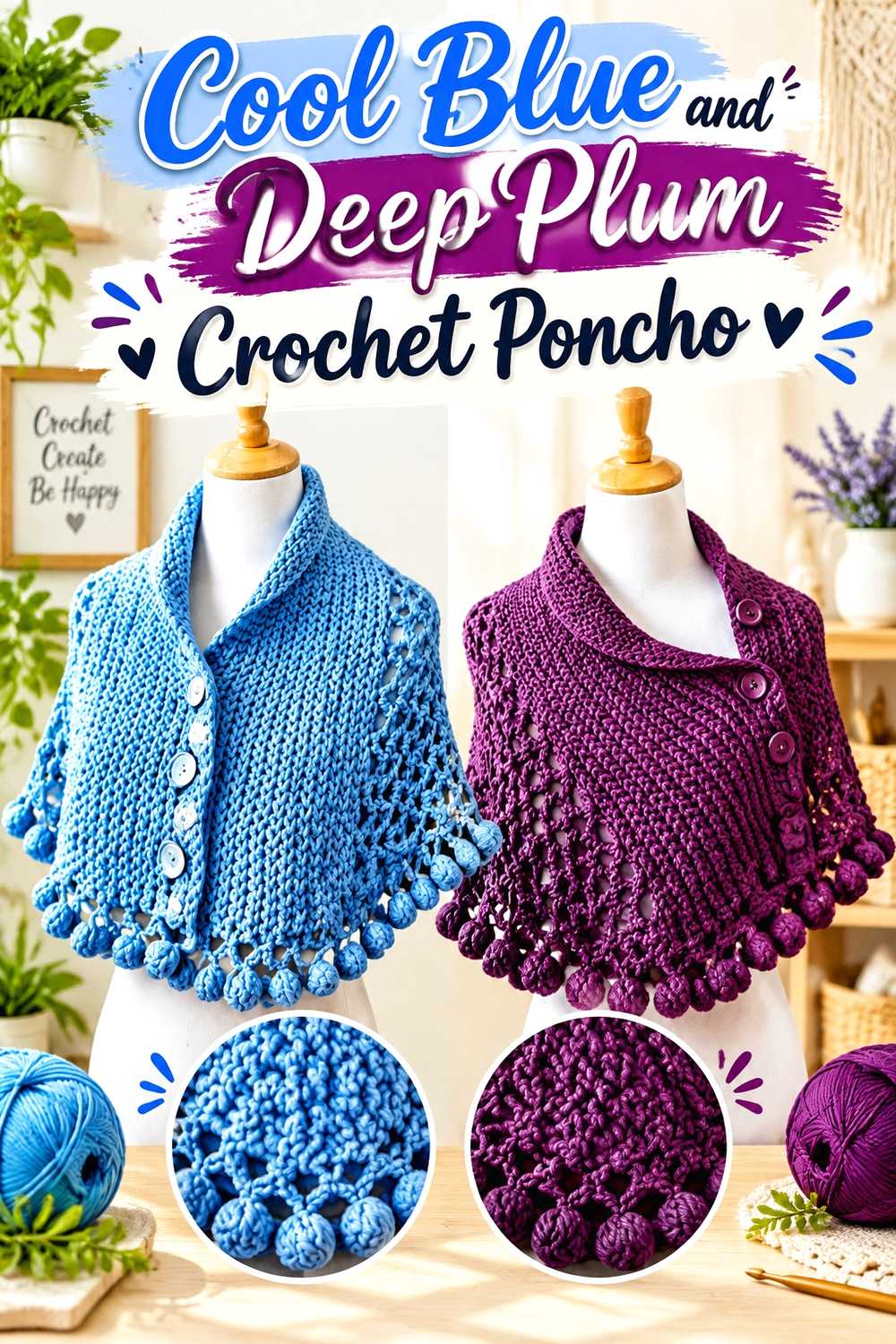
5. Cool Blue And Deep Plum Crochet Poncho
 SAVE
SAVEA poncho offers enough uninterrupted fabric for cool blue to establish a clear dominant role. Deep plum can then trace the neckline and lower perimeter, where a relatively narrow amount of color can have significant visual impact.
Cool Blue Can Keep the Main Crochet Poncho Body Open
Using blue through the broad body prevents frequent color changes from competing with shaping, drape, or openwork. It also gives plum more impact when the darker shade finally appears.
If you want plum inside the main surface, repeat it symmetrically rather than inserting a single unrelated section.
Deep Plum Can Frame a Cool Blue Crochet Poncho
Plum around the neckline establishes a strong upper boundary, while repeating it along the lower edge ties both ends of the garment together.
Because the bottom perimeter is extensive, inspect the overall balance before widening the plum border. A relatively narrow edge can already make the darker shade prominent.
Creator Credit: Handwork diy
6. Deep Plum And Cool Blue Crochet Sweater Vest
 SAVE
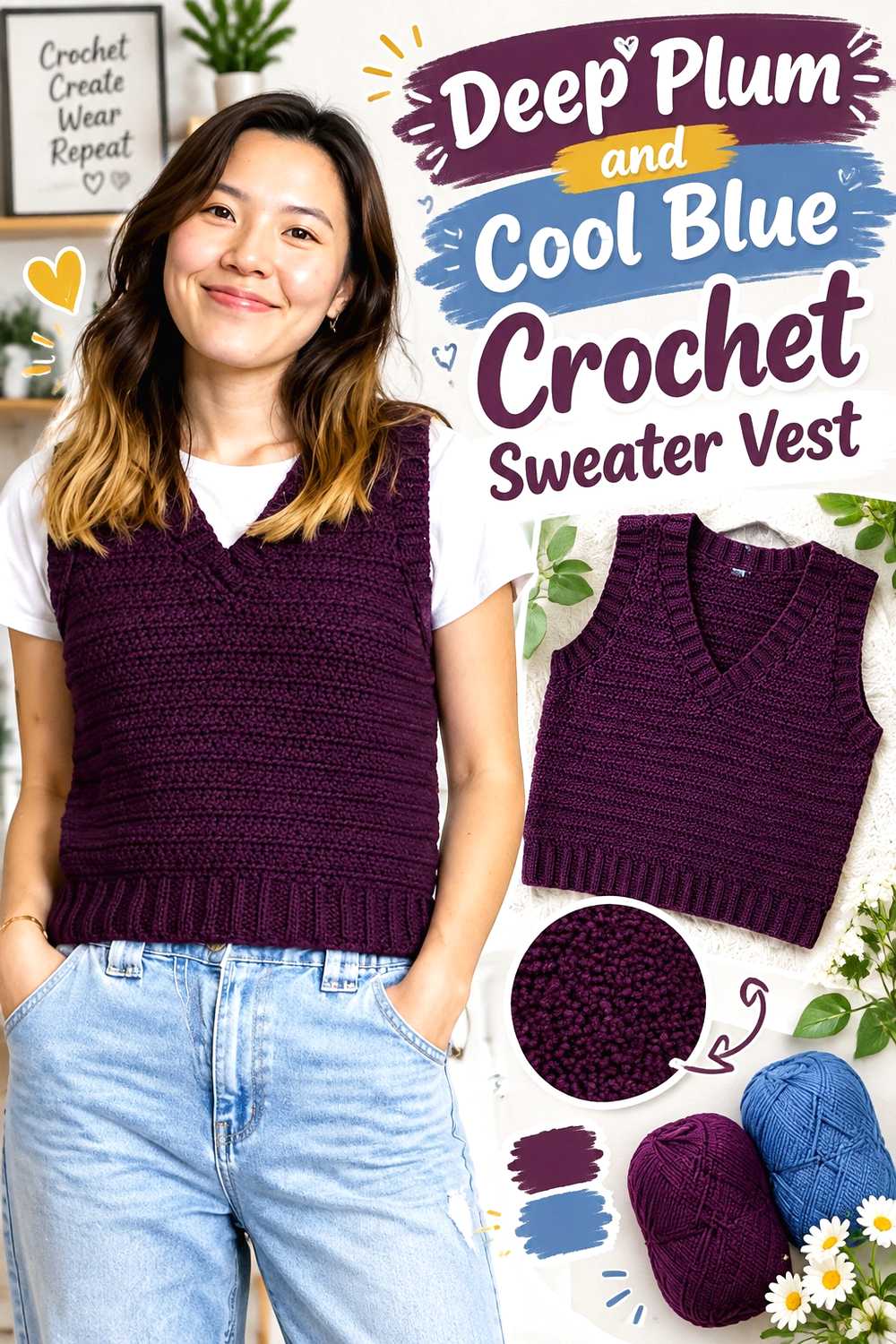
SAVEThis vest reverses the preceding color hierarchy. Deep plum covers the main front and back panels, while cool blue traces openings and finishing areas. That keeps the garment distinctly plum-led while preventing the dark shade from extending uninterrupted to every edge.
Deep Plum Can Unify the Main Crochet Sweater Vest Panels
Keeping both body panels plum avoids unnecessary color divisions across the torso. It also allows the neckline, armholes, and lower edge to become the logical places for blue contrast.
When using a very dark plum, test any subtle stitch texture before committing to the full panel.
Cool Blue Can Separate Deep Plum Crochet Necklines and Armholes
Blue edging around the neckline and armholes gives those openings clear definition against the plum body. Repeating blue at the hem can connect all of the finishing areas.
Because contrasting trim attracts attention, check that the edging tension is consistent before completing every section.
Creator Credit: VivCrochets
7. Cool Blue And Deep Plum Crochet Shawl
 SAVE
SAVEA blue-led shawl can reserve deep plum for the widest outer portion. That placement gives the darker shade substantial visual presence without requiring it to cover the main field.
Cool Blue Can Preserve the Main Crochet Shawl Pattern
Keep the central shawl area blue when lace, mesh, or another repeating texture should remain continuous. Fewer color changes let the stitch structure carry more of the visual interest.
If a dark cool blue reduces the visibility of openwork, choose a lighter blue while preserving the same palette relationship.
Deep Plum Can Give a Cool Blue Crochet Shawl a Defined Edge
A plum border follows a long perimeter, so it may appear more substantial than its actual share of the shawl. This makes it useful when you want a strong finish without dividing the central pattern.
If plum begins to dominate the piece, narrow the border rather than adding another transition shade.
Creator Credit: Bag-O-Day Crochet
8. Deep Plum And Cool Blue Crochet Cushion Cover
 SAVE
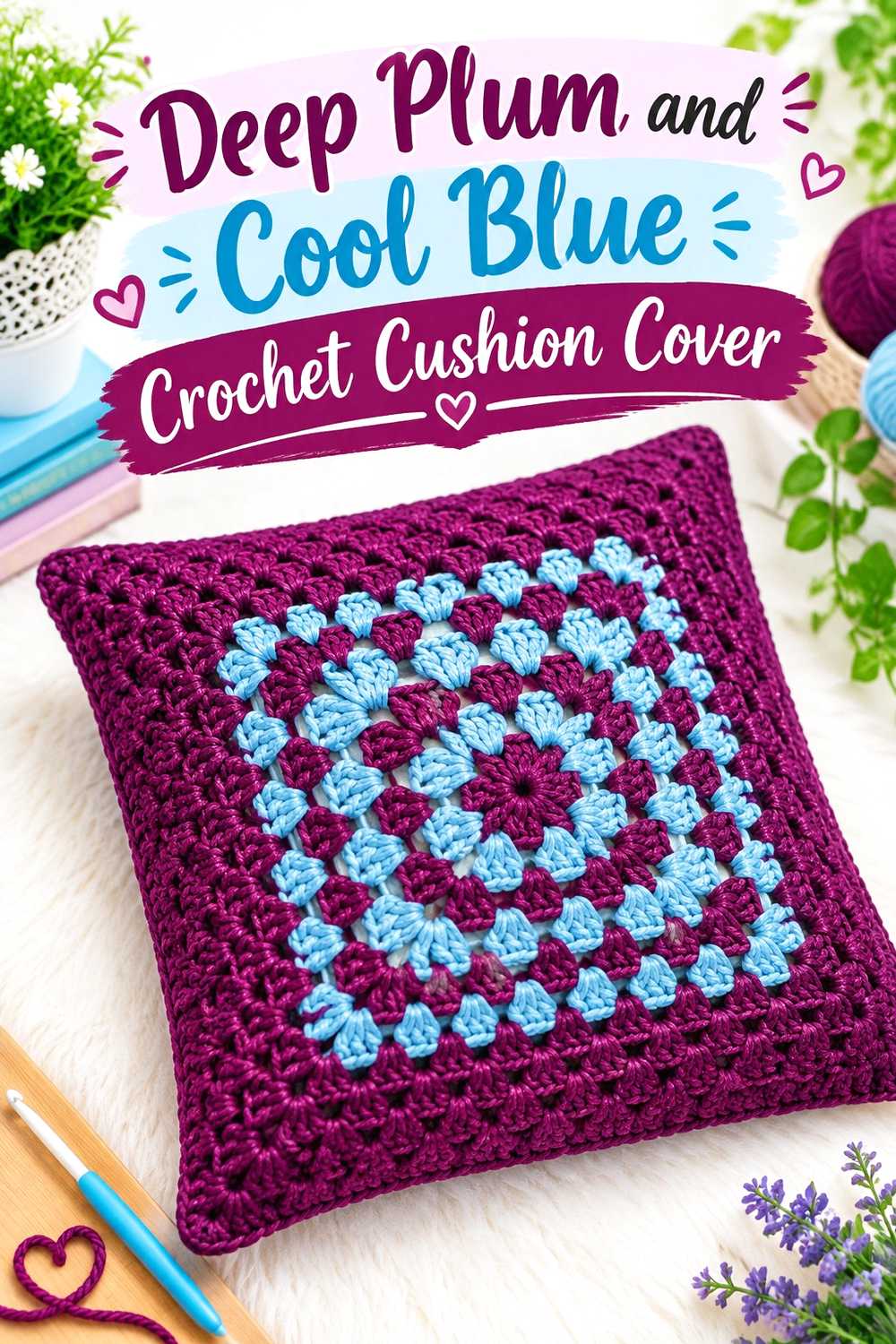
SAVEA cushion face provides a flat surface for deliberate color framing. Deep plum can fill the center while cool blue forms an outer border, corner treatment, or repeated motif detail. The reverse side can swap the hierarchy for a different appearance without changing the overall palette.
Deep Plum Can Give the Crochet Cushion a Strong Central Field
Use plum across the primary face when you want the cushion to read as dark from a distance. If the surface contains raised stitches, check whether those details remain visible in the selected plum yarn.
Moving blue closer to the texture can help separate smaller details when the plum surface feels visually dense.
Cool Blue Can Frame Deep Plum Crochet Cushion Texture
A blue border gives the dark center a clear perimeter and prevents plum from filling the entire visible face. Repeat a small blue detail toward the center if the border otherwise feels detached.
For a reversible cover, use a blue-led back rather than duplicating exactly the same layout on both sides.
Creator Credit: Jayda InStitches
9. Deep Plum And Cool Blue Crochet Mittens
 SAVE
SAVEMittens have relatively little space for complicated color distribution. A deep plum hand with a cool blue cuff creates one clear transition at a functional part of the mitten and avoids fragmenting the fingers and thumb areas.
Deep Plum Can Keep the Main Crochet Mitten Hand Unified
Use plum throughout the hand when you want the mitten shape to read as a single dark form. Multiple small blue bands can compete with shaping on such a compact item.
Compare both mittens before finishing so the plum-to-blue division appears in corresponding areas.
Cool Blue Can Highlight Deep Plum Crochet Mitten Cuffs
A blue cuff separates the wrist area from the plum hand and can make ribbing or another cuff texture more visible.
If a full blue cuff feels too strong, keep most of the cuff plum and reserve blue for its outer portion.
Creator Credit: Brunaticality
10. Cool Blue And Deep Plum Crochet Slippers
 SAVE
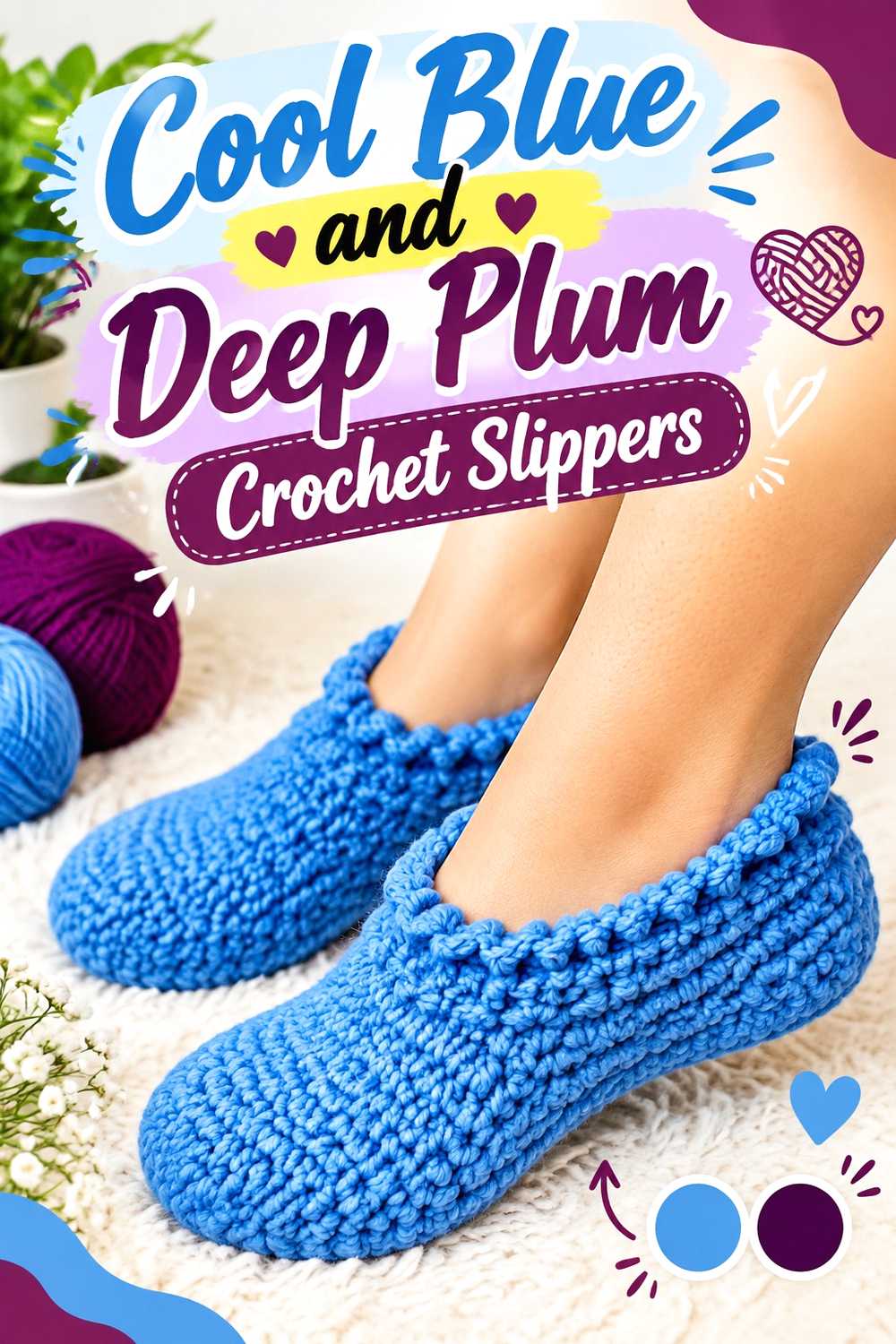
SAVECool blue can cover the toe and foot while deep plum defines the opening, heel, or finishing edge. This follows the three-dimensional form of the slipper instead of dividing a small surface into many stripes.
Cool Blue Can Keep the Main Crochet Slipper Foot Cohesive
A continuous blue toe and foot allow seams or stitch-direction changes to remain the main structural divisions. That keeps the two-color plan from becoming overly busy.
For a matched pair, keep the plum transition in corresponding areas on both slippers.
Deep Plum Can Define a Cool Blue Crochet Slipper Opening
Plum around the opening adds a clear darker line where the slipper ends. Extending it down the heel gives the dark shade more importance without interrupting the blue toe.
If you prefer a lighter result, keep plum limited to the upper edge.
Creator Credit: Littlejohn’s Yarn
11. Cool Blue And Deep Plum Crochet Ear Warmer
 SAVE
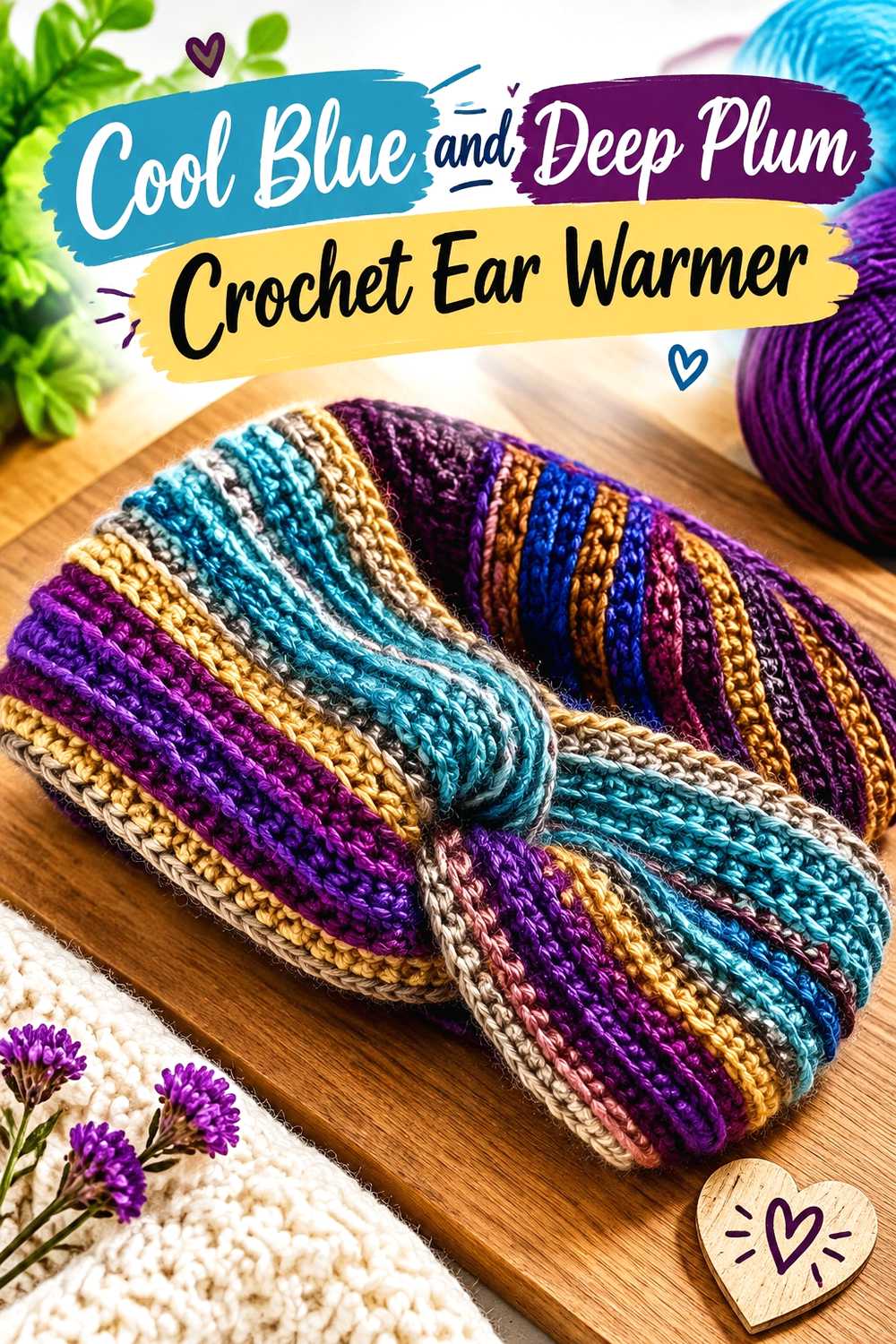
SAVEA narrow ear warmer works well with a restrained palette. Cool blue can cover most of the band while deep plum appears around a twist, overlap, or central feature. This concentrates contrast where the accessory already has a visual focal point.
Cool Blue Can Keep the Crochet Ear Warmer Band Continuous
Use blue across most of the circumference so cables, ribbing, or other texture can travel around the band without being repeatedly interrupted.
If the center construction is already prominent, only a small amount of plum may be necessary.
Deep Plum Can Emphasize a Cool Blue Crochet Ear Warmer Center
Placing plum around the central crossing or twist directs the darkest color toward that feature. Check where the color change falls before committing, since an awkward transition can distract from the shaping.
If a clean center change is impractical, keep the center blue and use plum along an edge instead.
Creator Credit: Pattern Princess
12. Deep Plum And Cool Blue Crochet Clutch
 SAVE
SAVEA clutch gives the palette two obvious surfaces to divide: the main body and the flap or upper closure area. A plum body with a blue flap creates large, clean blocks and avoids unnecessary striping.
Deep Plum Can Keep the Main Crochet Clutch Body Simple
Use plum across the larger front and back surfaces when the stitch pattern should remain visually uninterrupted. This establishes a strong dark foundation for the cooler flap.
Compare the yarns before starting if both are dark; the body-and-flap division should remain visible if color blocking is the main design feature.
Cool Blue Can Turn a Deep Plum Crochet Clutch Flap Into a Focal Area
Blue on the flap places contrast exactly where the bag changes shape near the opening. If the blue feels isolated, repeat a narrow amount near the base or another small finishing area.
Avoid automatically adding a third accent color around the closure, since the two existing shades already provide a clear distinction.
Creator Credit: Momì’s Crochet
13. Cool Blue And Deep Plum Crochet Bucket Hat
 SAVE
SAVEA bucket hat has three obvious zones—the crown, sides, and brim—which makes the palette easy to organize. Keep the crown and sides cool blue while giving deep plum responsibility for the brim.
Cool Blue Can Unite the Crochet Bucket Hat Crown and Sides
Using blue through both upper zones keeps the main hat body visually continuous. It also prevents each construction transition from becoming an unnecessary color transition.
If you want more plum above the brim, repeat only a narrow detail rather than splitting the entire side wall.
Deep Plum Can Make a Cool Blue Crochet Bucket Hat Brim Distinct
Because the brim projects outward, plum remains noticeable from several viewing angles. That gives the darker shade considerable impact even though it covers less surface than blue.
If a full plum brim feels too heavy, keep its inner portion blue and reserve plum for the outer section.
Creator Credit: PassioKnit Kelsie
14. Deep Plum And Cool Blue Crochet Market Bag
 SAVE
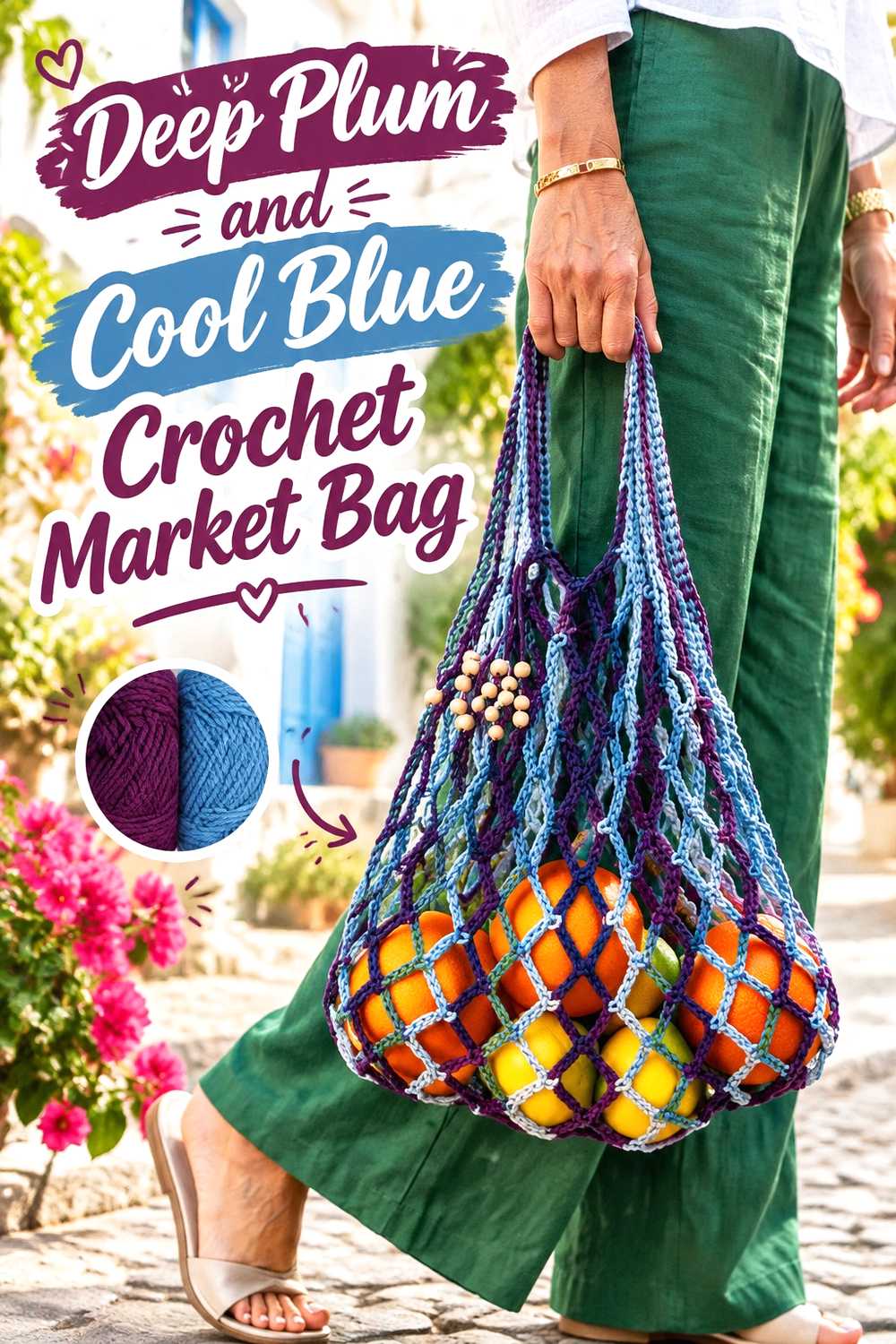
SAVEThis market bag makes plum responsible for the open or textured body while blue lightens the upper edge and handles. The arrangement keeps the dark shade across the largest field but gives the top of the bag a clear visual break.
Deep Plum Can Carry the Main Cool Blue Crochet Market Bag Surface
Use plum continuously through the body to keep mesh or openwork from being fragmented by constant color changes. Remember that the contents may show through an open bag and affect how the dark yarn appears.
If the body needs a lighter interruption, one deliberate blue band will usually read more clearly than several very narrow ones.
Cool Blue Can Connect Deep Plum Crochet Market Bag Handles
Blue handles look more integrated when the same color returns around the upper edge. That repetition makes the color shift feel tied to the bag’s construction.
If the blue handles already occupy enough visual space, keep the base plum instead of adding another blue area at the bottom.
Creator Credit: Home Handwork Diy
15. Cool Blue And Deep Plum Crochet Handbag
 SAVE
SAVEUnlike the market bag, this handbag can use more defined color blocking across the body. Cool blue can fill the central surface while deep plum appears at the base, sides, upper trim, or handles to create a darker frame around the blue.
Cool Blue Can Hold the Main Crochet Handbag Surface
Keeping the broad center blue gives textured stitches an uninterrupted background. If the bag already contains noticeable surface patterning, avoid adding numerous narrow plum bands that compete with it.
Use the darker shade where the handbag’s shape naturally changes instead.
Deep Plum Can Frame a Cool Blue Crochet Handbag Without Overcrowding It
Plum at the base and upper edge can visually contain the blue center. Repeating it in the handles connects those separate dark areas.
If all three plum zones make the handbag feel too dark, choose two and leave the remaining structural area blue.
Creator Credit: Naztazia
16. Cool Blue And Deep Plum Crochet Beanie
 SAVE
SAVEA cool blue crown with deep plum ribbing creates a straightforward two-zone color plan. The larger blue area controls the finished hat, while plum forms a dark face-framing band along the lower edge.
Cool Blue Can Keep the Main Crochet Beanie Crown Unified
Using blue through the body and crown avoids interrupting shaping with multiple color changes. If the hat contains raised texture, check a small blue sample to see how clearly that texture appears.
The lighter the selected blue is relative to plum, the more obvious the lower color division will become.
Deep Plum Can Define Cool Blue Crochet Beanie Ribbing
Plum ribbing gives the lower band enough contrast to read as an intentional section rather than simply the end of the hat.
If the band begins to dominate the beanie, reduce its visual depth instead of adding another intermediate color.
Creator Credit: LoveCrafts
17. Deep Plum And Cool Blue Crochet Cowl
 SAVE
SAVEA cowl folds and rotates when worn, so the palette should work from several orientations. Deep plum can fill the central fabric while cool blue frames both edges, ensuring the supporting color remains visible even when part of the loop turns inward.
Deep Plum Can Keep the Main Crochet Cowl Texture Continuous
Use plum across the widest center area when you want the stitch pattern to travel around the loop without color interruptions.
If deep plum hides subtle relief, move blue closer to the textured sections or increase the width of the edge bands.
Cool Blue Can Frame Both Deep Plum Crochet Cowl Edges
Repeating blue along the top and bottom gives the plum center two related boundaries. This works more reliably on a rotating cowl than one isolated blue block that could disappear inside a fold.
For an asymmetric version, make one blue edge wider while retaining a narrow amount on the opposite side.
Creator Credit: The Crochet Crowd
18. Cool Blue And Deep Plum Crochet Headband
 SAVE
SAVEA covered crochet headband has limited visible surface, so color changes need to be purposeful. Cool blue can cover most of the band while deep plum marks an edge, center detail, or small repeated section.
Cool Blue Can Keep the Main Crochet Headband Surface Clean
Use blue throughout most of the visible band when the crochet texture itself provides enough detail. Dividing such a narrow object into many short color blocks can make its outline look unnecessarily busy.
Check the project from normal viewing distance before deciding that it needs more plum.
Deep Plum Can Add One Focused Detail to a Cool Blue Crochet Headband
A plum edge or center feature creates contrast without competing across the full band. If you repeat plum, use another small related location rather than scattering tiny accents everywhere.
When both yarns are dark, a slightly lighter cool blue can give that plum detail more separation.
Creator Credit: Fiber Flux
19. Cool Blue And Deep Plum Crochet Wrap
 SAVE
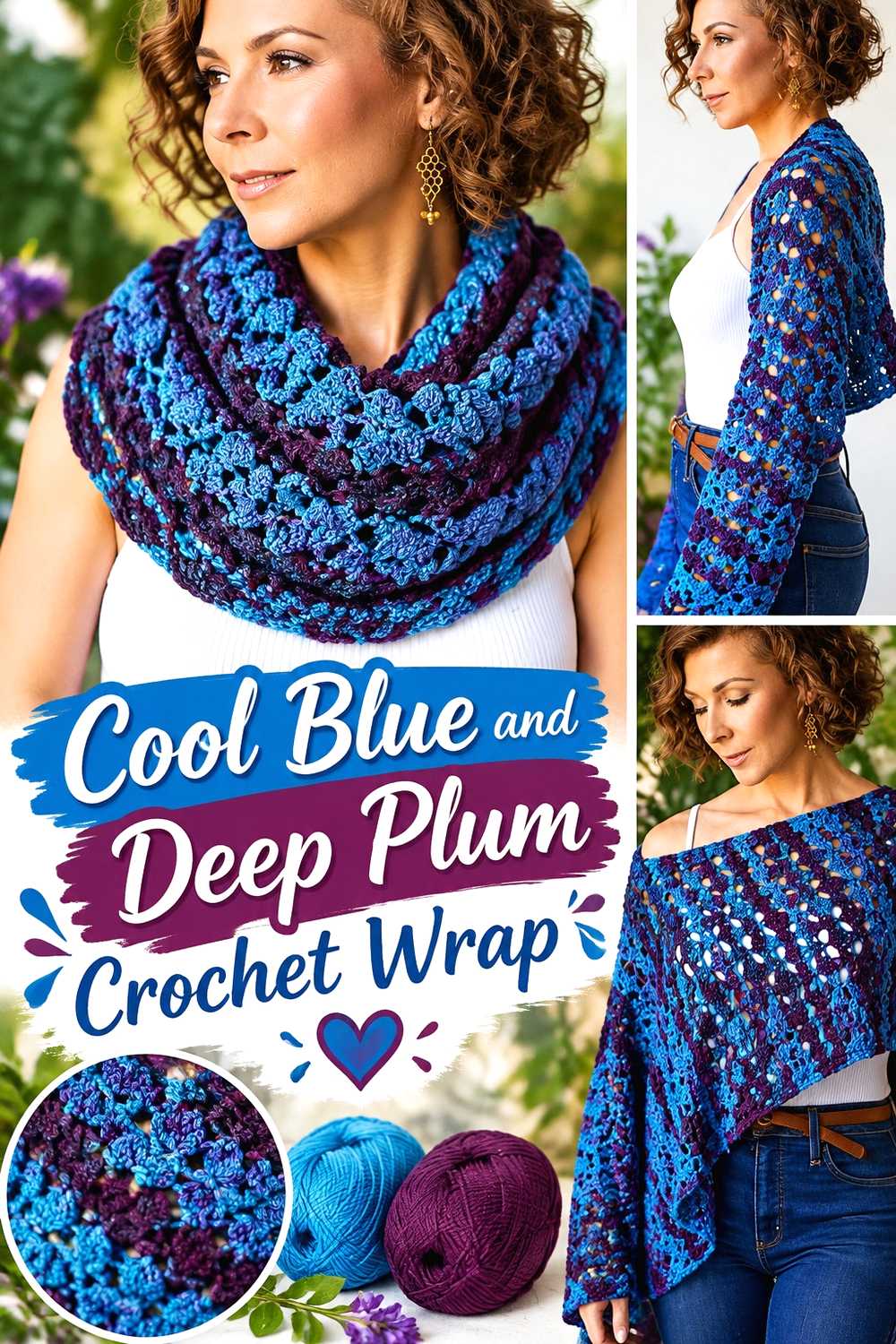
SAVEA wrap has enough surface for both colors to occupy substantial areas. Instead of treating plum as trim only, use broad color blocks or measured bands so blue and plum can share the fabric while still maintaining a clear hierarchy.
Cool Blue Can Create Breathing Room Between Deep Plum Crochet Wrap Sections
When plum appears in large blocks, blue between them prevents the entire wrap from reading as one continuous dark surface. Broader blue sections will create a stronger visual break than several narrow stripes.
If you want a blue-led wrap, simply increase the size or frequency of those areas while keeping the same basic repetition.
Deep Plum Can Anchor Cool Blue Crochet Wrap Ends
Placing substantial plum sections toward the ends gives the long piece dark visual anchors. Repeat the placement on both sides if you want symmetry.
For a more directional wrap, use a larger plum area at one end and a smaller repeated plum section at the other rather than abandoning repetition altogether.
Creator Credit: ExpressionFiberArts
20. Deep Plum And Cool Blue Crochet Nesting Baskets
 SAVE
SAVEA basket set creates an opportunity to vary the color proportions while preserving one palette. Deep plum can lead on one basket, cool blue on another, and a third can divide the colors more evenly. Repeating the same two shades across the set keeps the pieces related even when their individual layouts change.
Deep Plum Can Ground the Lower Cool Blue Crochet Basket Sections
Using plum around basket bases gives the darkest shade a consistent lower anchor. Continue blue through the upper walls if you want a clear bottom-to-top transition.
On a set, keeping the plum base concept consistent can connect baskets whose overall color proportions differ.
Cool Blue Can Lighten Deep Plum Crochet Basket Upper Bands
Blue around upper basket walls or rims prevents the entire set from becoming plum-heavy. It also places the lighter shade where it remains clearly visible when baskets sit beside one another.
If you reverse the colors on one basket, retain at least one repeated placement detail so the set still reads as coordinated rather than unrelated.
Creator Credit: MJ’s Off The Hook Designs
Which Cool Blue and Deep Plum Crochet Direction Fits Your Project?
For a lighter overall surface, the blanket, tote bag, poncho, shawl, slippers, ear warmer, bucket hat, handbag, beanie, and headband can all let cool blue occupy the largest visual area. Deep plum then supplies definition around borders, bases, brims, handles, and other smaller zones.
For a darker result, the scarf, sweater vest, cushion cover, mittens, clutch, market bag, and cowl can give deep plum most of the surface while blue creates the visual breaks.
The granny square cardigan, wrap, and nesting baskets are useful when you want a more balanced relationship. Their repeated motifs, broad sections, or multiple pieces provide enough room for both shades to take meaningful roles without resorting to tiny alternating stripes.
Conclusion
Cool blue and deep plum can produce either a blue-led or plum-led crochet project depending on where the colors are placed. A cool blue main field leaves deep plum available for strong definition around borders, cuffs, bases, brims, straps, and motif outlines. A plum main field creates a darker result that can be opened up with blue around garment edges, bag handles, scarf ends, or selected details.
The main checkpoint is value contrast. If your blue is fairly dark, compare it with the plum before assigning the two shades to tiny motifs or subtle texture. When their values are close, larger color blocks usually preserve the distinction more successfully.
Use the linked tutorials for the construction of each crochet item, then adapt the blue-and-plum distribution to the object’s actual panels, borders, motifs, openings, or structural details rather than applying one identical stripe arrangement to every project.
Frequently Asked Questions
Do cool blue and deep plum work together in crochet?
They can form a strong two-color palette because the hues are distinct, but the exact contrast depends on the yarns. A lighter cool blue will separate more clearly from deep plum than a dark blue of similar value.
Should Cool Blue or Deep Plum dominate a crochet project?
Either can lead. Use cool blue across the larger surface when you want the piece to read as primarily blue. Give deep plum the dominant role when you want a darker overall direction. Borders, cuffs, handles, and trim can then carry the supporting shade.
How do I stop Cool Blue and Deep Plum from blending together?
Compare the yarns side by side and view them from a distance. A grayscale photo can help reveal whether their lightness values are too similar. If they nearly merge, choose a lighter blue or place the two colors in larger areas rather than tiny adjacent details.
Where should Deep Plum go on a mostly Cool Blue crochet project?
Deep plum can define borders, bag bases, handles, garment cuffs, necklines, hat brims, shawl edges, motif outlines, and scarf ends. Repeating it in two related locations often looks more connected than using one isolated dark accent.
Can Cool Blue and Deep Plum be used in equal amounts?
Yes, particularly on granny squares, wraps, blankets with broad blocks, and coordinated basket sets. Equal proportions are easier to organize when the construction naturally provides large repeated areas for each shade.
Should Deep Plum always be the crochet border color?
No. A plum border creates a darker frame, but a cool blue border may be better when the project already contains a large amount of plum. Choose the border based on which color needs more or less visual weight in the finished piece.
How can I substitute different Cool Blue or Deep Plum yarn shades?
Preserve the relationship between the colors rather than matching a commercial shade name exactly. For cool blue, choose a blue that retains the cooler character and the amount of lightness your design needs. For deep plum, choose a dark purple or plum-family shade that remains distinguishable from the blue, especially when the colors meet in small details.


