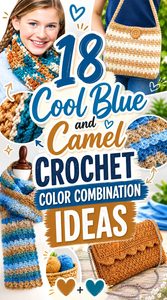
Cool blue and camel give crochet projects two noticeably different color roles to work with. Cool blue can create the larger, quieter-looking field, while camel adds a warmer neutral break around borders, cuffs, handles, motif edges, and other details. Reverse those proportions and the same combination becomes much more camel-led, with blue providing the sharper contrasting detail.
The most useful way to plan this pairing is to think beyond equal stripes. A blanket can use broad cool blue sections with narrow camel separators, while a sweater vest can place camel across the main panels and reserve cool blue for neckline and armhole trim. On granny-square projects, one color can control motif centers while the other handles joins and outer rounds.
The 18 ideas below explore different ways to distribute cool blue and camel across crochet wearables, home decor, bags, and accessories. The tutorials support the construction concepts; the cool blue and camel palettes are independent color adaptations you can apply to your own project.
Quick List
- Cool Blue And Camel Crochet Throw Blanket
- Camel And Cool Blue Crochet Granny Square Cardigan
- Cool Blue And Camel Crochet Tote Bag
- Camel And Cool Blue Crochet Scarf
- Cool Blue And Camel Crochet Poncho
- Camel And Cool Blue Crochet Sweater Vest
- Cool Blue And Camel Crochet Shawl
- Camel And Cool Blue Crochet Cushion Cover
- Camel And Cool Blue Crochet Mittens
- Cool Blue And Camel Crochet Slippers
- Cool Blue And Camel Crochet Ear Warmer
- Camel And Cool Blue Crochet Clutch
- Cool Blue And Camel Crochet Market Bag
- Camel And Cool Blue Crochet Handbag
- Cool Blue And Camel Crochet Scrunchie
- Cool Blue And Camel Crochet Beanie
- Camel And Cool Blue Crochet Cowl
- Cool Blue And Camel Crochet Color Block Tote
How to Balance Cool Blue and Camel in Crochet
Cool blue and camel do not have to occupy equal amounts of a project. Start by deciding which color should establish the overall appearance. On a large blanket or shawl, the dominant shade may cover most of the visible field. On a smaller accessory, the distinction can come from assigning colors to functional areas such as the crown and brim of a hat or the body and handles of a bag.
Camel can also behave differently depending on its placement. A narrow camel border around an entire cool blue piece can attract more attention than a larger camel section placed only on one side. Judge color balance by visual position as well as total yarn area.
Use Cool Blue and Camel Contrast to Protect Crochet Details
Although cool blue and camel are different hues, the amount of light-and-dark separation depends on the exact yarns you choose. A pale cool blue beside medium camel may produce clear value contrast, while a darker blue and deeper camel may appear closer in grayscale.
This matters around granny-square centers, ribbing, bobbles, lace edges, narrow stripes, and other small details. Place your yarns together and view them from a distance before assigning the colors. A grayscale photo can provide another quick check when maintaining detail separation is important.
1. Cool Blue And Camel Crochet Throw Blanket
 SAVE
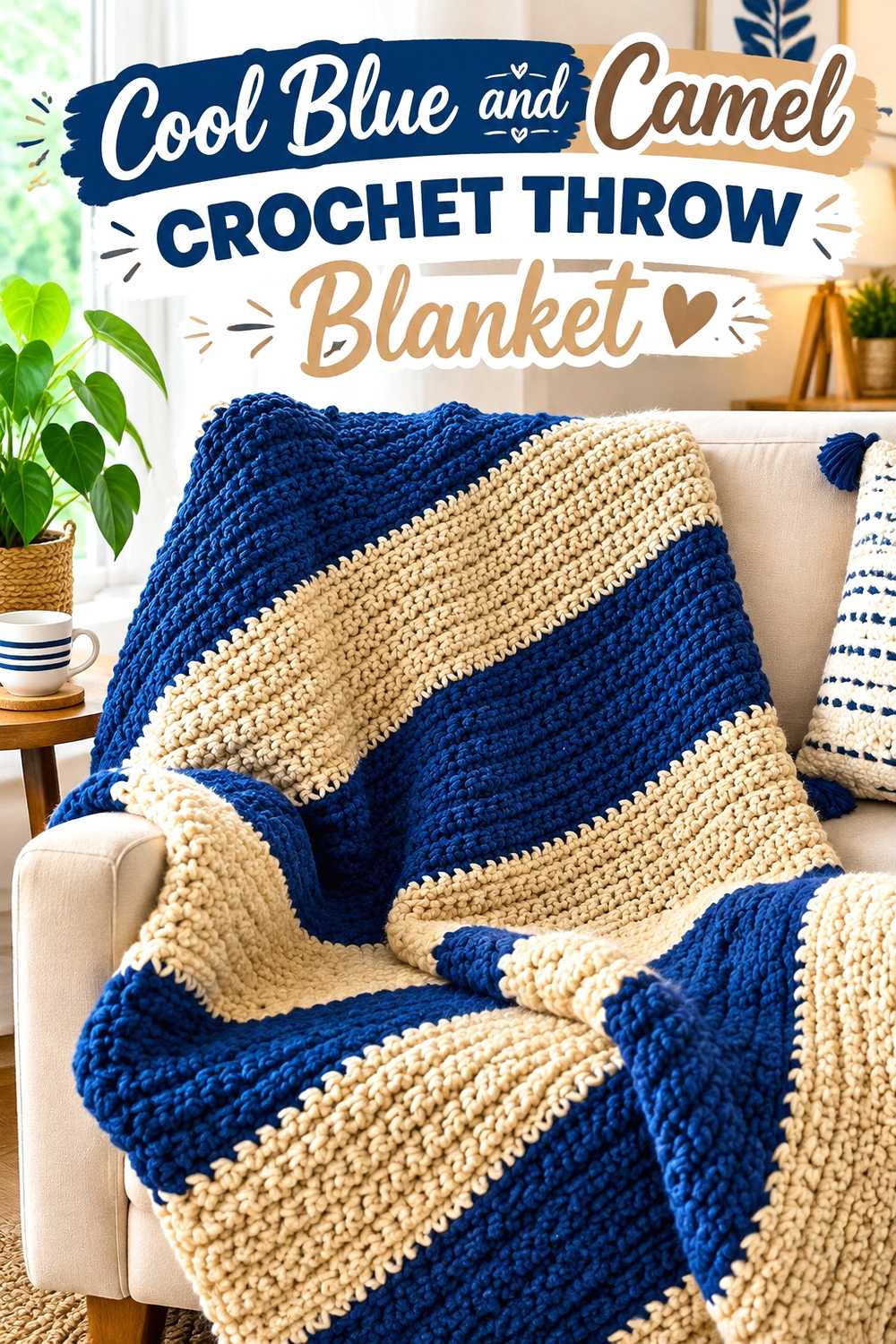
SAVELet cool blue cover most of the blanket when you want a broad, uninterrupted main field. Camel can appear as separator bands, selected blocks, or the outer border. Because a blanket has a large surface, repeating camel at planned intervals is usually more connected than placing one isolated tan section at a single end.
Cool Blue Can Carry the Largest Crochet Blanket Sections
Broad cool blue areas give repeated stitch texture enough room to remain visually continuous. If the blanket has pronounced ridges, clusters, or another surface pattern, keeping several sections in one color prevents the palette from competing with every texture change.
When more warmth is wanted, increase the camel sections gradually instead of introducing additional unrelated colors.
Camel Can Give Cool Blue Crochet Blanket Bands a Clear Rhythm
Use camel between larger blue areas to create recognizable repetition across the blanket. Keeping those camel sections relatively consistent can make the color placement feel intentional from one end of the throw to the other.
A camel outer border can also tie the internal bands together. If the border becomes visually heavier than expected, use cool blue for the final edge instead.
Creator Credit: B.Hooked Crochet
2. Camel And Cool Blue Crochet Granny Square Cardigan
 SAVE
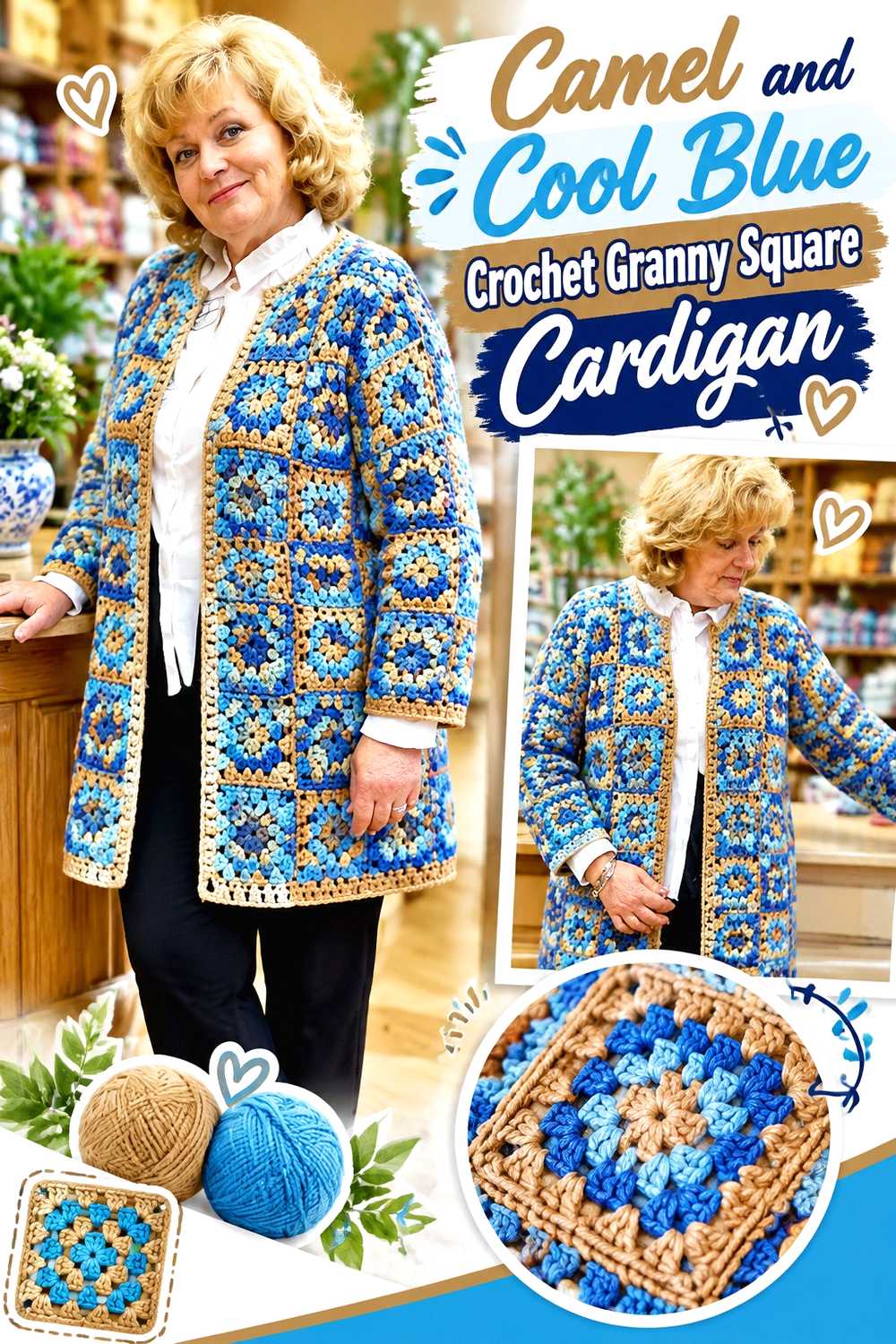
SAVEThis cardigan direction gives camel more responsibility inside the motifs while cool blue provides contrast around centers, outer rounds, or joins. Granny-square construction allows the colors to repeat many times, so even a relatively small blue section in each motif can become significant across the complete garment.
Camel Can Lead the Main Crochet Granny Square Surface
Camel across the largest area of each square creates a warm neutral base and keeps the cardigan from becoming predominantly blue. Try arranging several completed or sample squares beside one another before deciding how much camel each motif needs.
What looks balanced in one square can change once repeated across front panels, sleeves, and the back.
Cool Blue Can Define Camel Crochet Motifs and Joins
A cool blue outer motif round can separate neighboring camel areas and create a repeated grid after joining. Alternatively, keep the outer rounds camel and use blue specifically for the joins.
If blue is already prominent in every motif, consider camel cuffs or edging so the finishing areas do not add another heavy band of blue.
Creator Credit: Viktoria e Svitlana Marongiu
3. Cool Blue And Camel Crochet Tote Bag
 SAVE
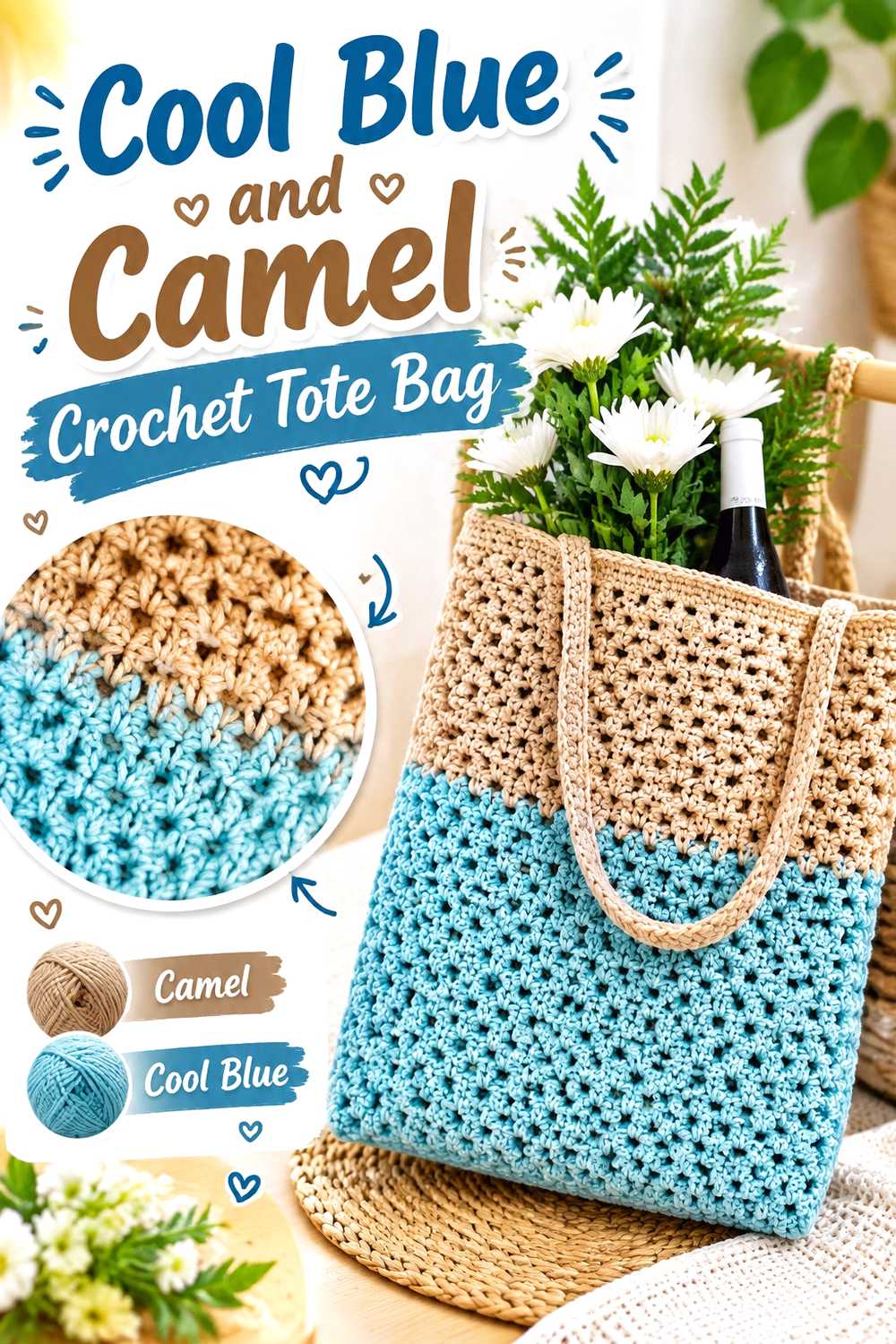
SAVEA cool blue tote body paired with a camel base and handles gives the neutral shade a structural role. This keeps the palette organized around recognizable bag areas rather than scattering camel randomly through the body.
Cool Blue Can Keep the Crochet Tote Body Visually Continuous
Use cool blue across the largest front, back, and side areas when the bag has texture or openwork you want to read as one continuous surface. Frequent camel stripes may compete with that structure.
If your cool blue is fairly dark, work a small sample first to check whether subtle stitch texture remains visible enough for your preference.
Camel Can Connect the Cool Blue Crochet Tote Base and Handles
Repeating camel at both the base and handles carries the supporting color from bottom to top. A narrow camel section around the opening can connect those areas further without taking over the blue body.
If camel feels too strong at all three locations, keep it at the handles and base while returning to blue for the upper edge.
Creator Credit: TL Yarn Crafts
4. Camel And Cool Blue Crochet Scarf
 SAVE
SAVEA long scarf gives camel enough room to act as the main color while cool blue is concentrated at the ends. This creates a different balance from evenly alternating stripes and gives the accessory a clear center-versus-edge color structure.
Camel Can Keep the Main Crochet Scarf Length Cohesive
Use camel through most of the center when you want a continuous field for ribbing, lace, or another repeated stitch pattern. The long neutral area allows the crochet texture to carry more of the visual interest.
If the scarf feels too camel-heavy, introduce one or two cool blue sections near each end rather than breaking the entire center into small stripes.
Cool Blue Can Balance Both Camel Crochet Scarf Ends
Placing cool blue at both ends produces repetition that remains visible when the scarf hangs vertically. Consider how long those sections should be based on how the scarf will be wrapped; very short blue areas may disappear inside a knot or fold.
Fringe can continue either the blue end sections or return to camel, depending on which color you want to extend visually.
Creator Credit: Hooked by Robin
5. Cool Blue And Camel Crochet Poncho
 SAVE
SAVEA poncho provides a broad canvas for a cool-blue-led palette. Keep most of the body blue and place camel around the neckline, lower perimeter, or selected bands. Since edging can travel around much of the garment, camel does not need a large surface area to become noticeable.
Cool Blue Can Keep the Main Crochet Poncho Panels Unified
Large blue sections let the poncho silhouette remain visually uninterrupted. This is useful when openwork, raised stitches, or shaping already gives the fabric plenty of detail.
If you want camel inside the main body, repeat it symmetrically or at deliberate intervals instead of inserting one unrelated section.
Camel Can Frame the Cool Blue Crochet Poncho Perimeter
Camel around the neckline and lower edge creates two connected finishing zones. The lower border may look especially prominent because it follows such a long perimeter.
Check the complete garment before expanding the camel border. A narrow band may provide enough definition without changing the project from blue-led to camel-heavy.
Creator Credit: Handwork diy
6. Camel And Cool Blue Crochet Sweater Vest
 SAVE
SAVEA camel body with cool blue finishing gives this vest a warmer dominant direction than the preceding poncho. Use camel across the main front and back panels, then let cool blue trace the neckline, armholes, or lower ribbing.
Camel Can Control the Main Crochet Sweater Vest Panels
Keeping both body panels predominantly camel makes the vest read as one cohesive neutral garment. It also leaves the shaping and silhouette easier to see without repeated color blocks across the torso.
If the stitch texture is subtle, crochet a camel sample before assigning it to the full body so you can judge how clearly the relief shows.
Cool Blue Can Outline Camel Crochet Necklines and Armholes
Cool blue trim around the neckline and armholes creates repeated contrast at the vest openings. Adding the same blue to the lower edge can connect all three finishing areas.
Contrasting trim attracts attention to edging quality, so check tension consistency before completing every opening.
Creator Credit: VivCrochets
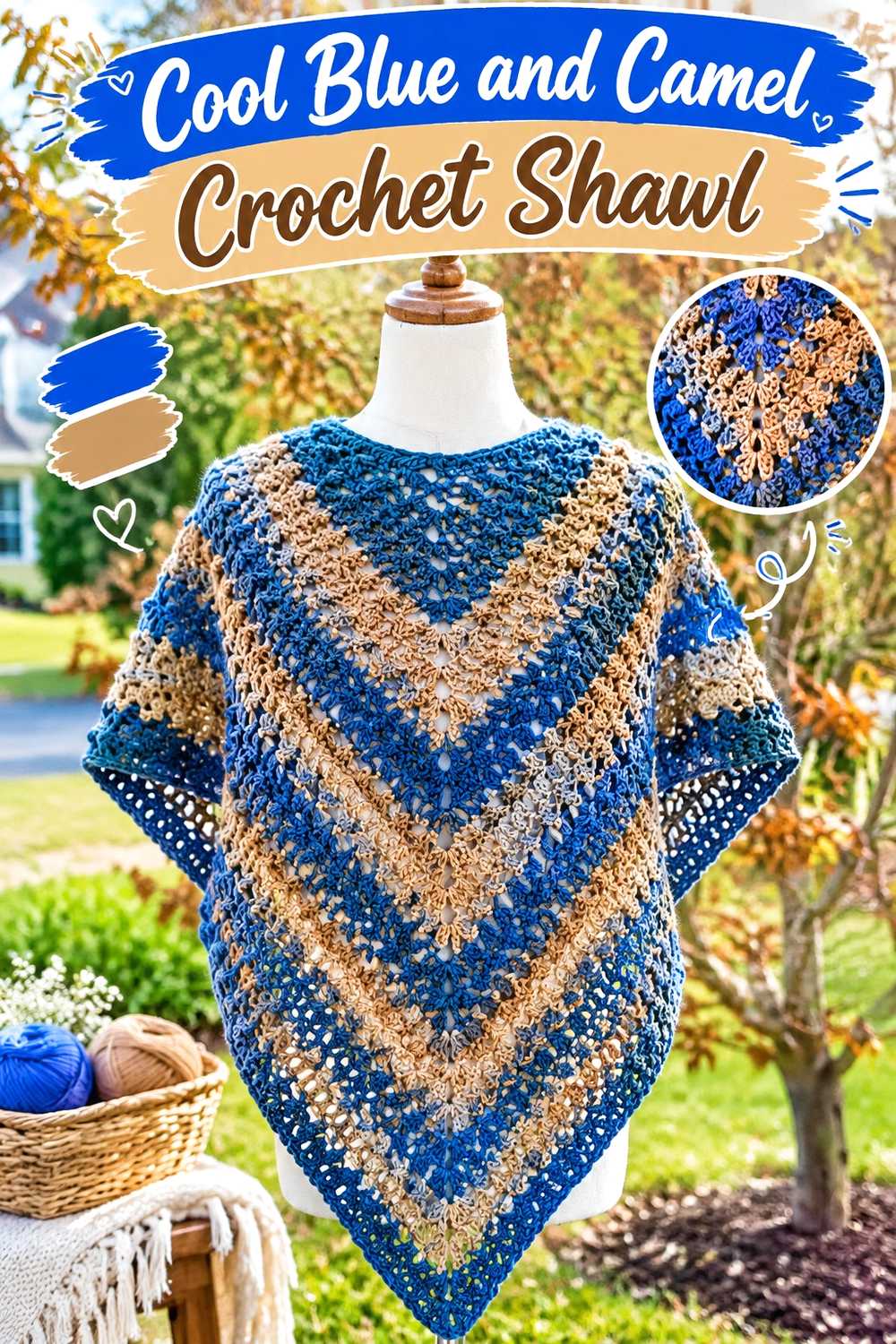
7. Cool Blue And Camel Crochet Shawl
 SAVE
SAVEA cool blue shawl with camel concentrated toward the outer edge uses the changing width of the piece to make a smaller quantity of camel visually important. Keep the central field blue, then introduce camel in a controlled band or final border.
Cool Blue Can Preserve the Main Crochet Shawl Pattern
Use cool blue throughout the central area when the shawl relies on lace, mesh, fans, or other repeating texture. A continuous color allows the stitch structure to remain the main feature instead of stopping for frequent color changes.
If the selected blue is dark, check a small section of openwork to make sure the spaces remain as visible as you want.
Camel Can Give the Cool Blue Crochet Shawl Edge More Definition
Camel near the widest part of the shawl can create a clear finishing line because the border occupies a long visual path.
If the camel section starts pulling too much attention away from the central pattern, reduce its width and repeat only a narrow amount nearer the outer edge.
Creator Credit: Bag-O-Day Crochet
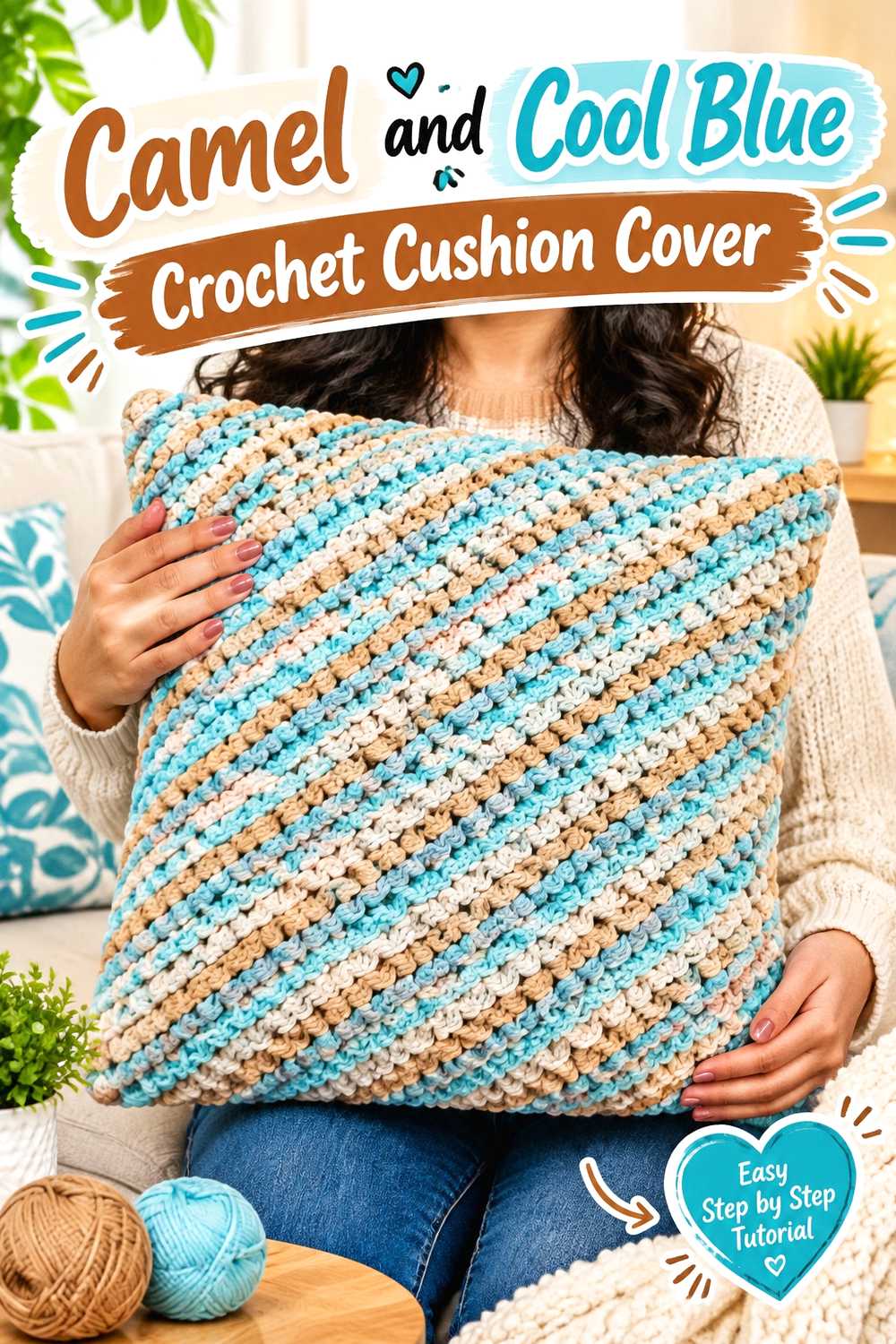
8. Camel And Cool Blue Crochet Cushion Cover
 SAVE
SAVEA cushion allows more controlled color blocking than many wearables because its face is largely flat. Camel can form the central field while cool blue creates an outer frame, corner sections, or a repeating motif around the main surface.
Camel Can Give the Crochet Cushion Face a Neutral Center
Use camel through most of the front when you want raised texture or a central motif to sit on one continuous background. Because a pillow is usually viewed from several feet away, check whether subtle camel-on-camel texture remains visible at normal room distance.
If not, move cool blue closer to the textured area.
Cool Blue Can Frame Camel Crochet Cushion Details
A cool blue outer border can separate the camel face from surrounding decor and create a strong visual perimeter. Repeating blue in a small center or corner detail can prevent that border from looking disconnected.
For a reversible cushion, consider making the back blue-led instead of duplicating the same front color arrangement.
Creator Credit: Crochet MC
9. Camel And Cool Blue Crochet Mittens
 SAVE
SAVEMittens have limited space for color changes, so a simple camel hand with cool blue cuffs keeps both shades easy to identify. The functional boundary at the wrist gives the palette a natural place to switch colors.
Camel Can Keep the Main Crochet Mitten Hand Cohesive
Use camel across the fingers, palm, and thumb area when you want the small mitten surface to remain visually unified. Numerous blue stripes could compete with shaping and make the color arrangement look more complicated than the object requires.
Compare both mittens side by side before finishing so the color placement stays consistent across the pair.
Cool Blue Can Separate the Camel Crochet Mitten Cuffs
Cool blue cuffs provide a visible change at the wrist and can help ribbing or another cuff texture stand apart from the camel hand.
If a full blue cuff creates more contrast than you want, keep most of the cuff camel and reserve blue for its outer edge.
Creator Credit: Brunaticality
10. Cool Blue And Camel Crochet Slippers
 SAVE
SAVEFor slippers, let cool blue cover most of the foot while camel defines the heel, opening, or finishing edge. The division follows the slipper’s three-dimensional form and avoids turning a small project into a series of narrow stripes.
Cool Blue Can Keep the Crochet Slipper Toe and Foot Connected
Continuous cool blue across the toe and main foot area helps the slipper read as one form. This is useful when seams or stitch-direction changes already create visible construction lines.
For a matching pair, make sure the transition to camel occurs in corresponding areas.
Camel Can Define the Cool Blue Crochet Slipper Opening
Camel around the upper edge adds a warmer boundary without taking much surface from the blue body. Extending camel farther down the heel produces a front-versus-back color division if you want the neutral shade to have more presence.
Keep the toe blue if maintaining a clear dominant color is the goal.
Creator Credit: Littlejohn’s Yarn
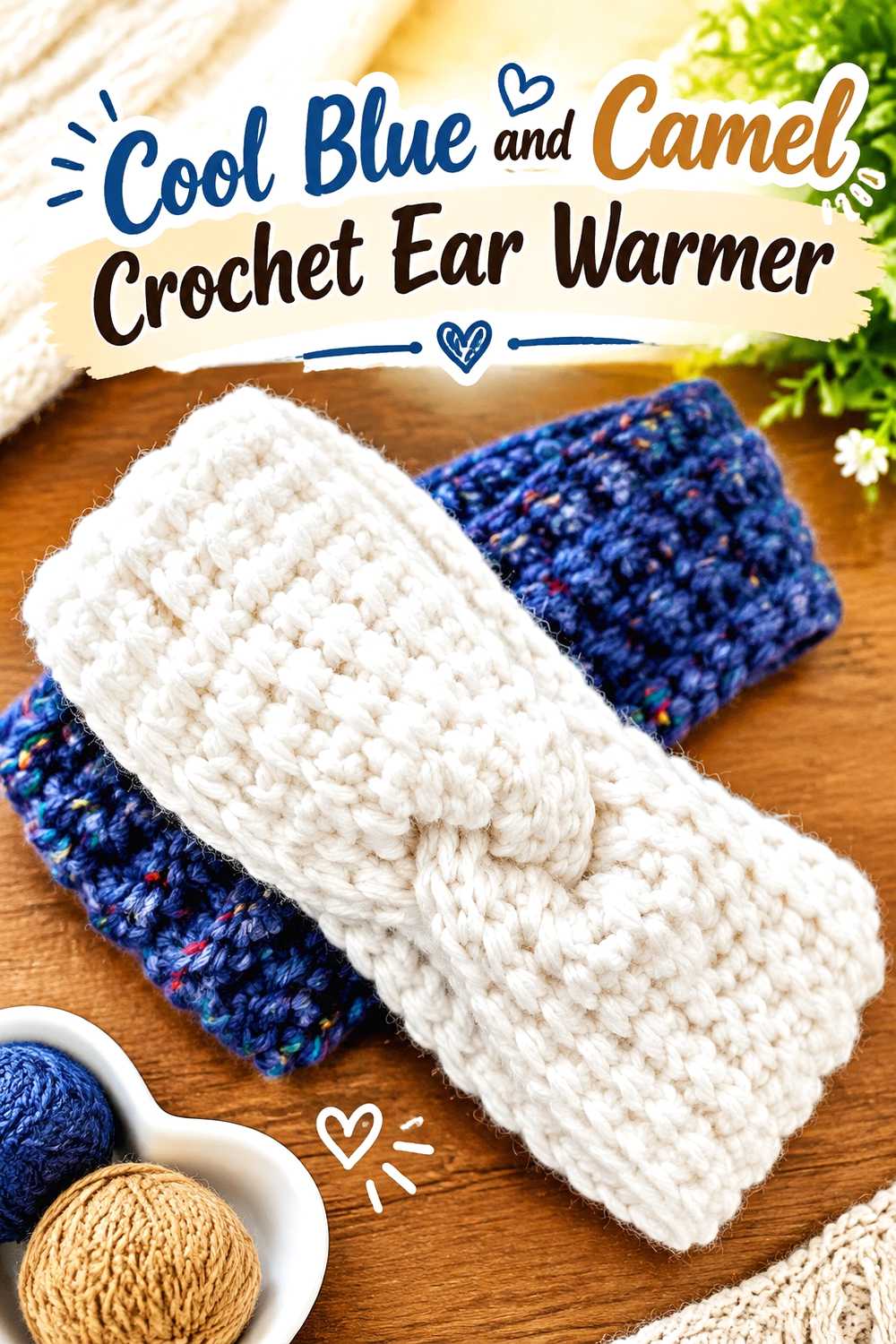
11. Cool Blue And Camel Crochet Ear Warmer
 SAVE
SAVEA narrow ear warmer benefits from a restrained palette. Use cool blue around most of the band and place camel specifically at a twist, overlap, or center detail rather than alternating many tiny sections.
Cool Blue Can Keep the Main Crochet Ear Warmer Band Continuous
A predominantly blue band keeps the narrow accessory visually simple around the head. This gives any ribbing, cables, or raised texture enough room to remain readable.
If the center feature is already dramatic, a very small camel section may be all the contrast the project needs.
Camel Can Emphasize a Cool Blue Crochet Ear Warmer Center
Place camel around the twist or central crossing when you want that construction feature to become the palette’s focal point.
If the transition falls in an awkward part of the shaping, keep the center blue and instead use camel along one edge. Color placement should work with the construction rather than forcing a change where it becomes visually messy.
Creator Credit: Pattern Princess
12. Camel And Cool Blue Crochet Clutch
 SAVE
SAVEA clutch naturally separates into a body and flap, making it suitable for larger color blocks. Camel can cover the main body while cool blue controls the flap or upper closure area.
Camel Can Keep the Crochet Clutch Body Visually Simple
Use camel across the large front and back surfaces when texture or stitch pattern should remain uninterrupted. A single body color also leaves more contrast available for the upper section.
Before crocheting the full bag, compare the camel and blue yarns together to make sure the flap will remain distinct from the body.
Cool Blue Can Make the Camel Crochet Clutch Flap the Focal Area
A cool blue flap places the cooler shade exactly where the bag changes shape near its opening. This creates contrast without needing additional stripes across the main body.
If the flap seems visually isolated, repeat blue in a narrow lower detail rather than introducing a third accent shade.
Creator Credit: Momì’s Crochet
13. Cool Blue And Camel Crochet Market Bag
 SAVE
SAVEFor an open or mesh market bag, use cool blue throughout most of the flexible body and reserve camel for handles, the upper band, or the base. This keeps the openwork visually consistent while the neutral color marks the bag’s boundaries.
Cool Blue Can Carry the Main Crochet Market Bag Mesh
Keeping the mesh or openwork blue prevents frequent changes from fragmenting the bag surface. Remember that whatever is placed inside the bag may show through those openings, so judge the palette with the fabric both empty and filled.
If cool blue needs more interruption, one broad camel band is usually clearer than many narrow ones.
Camel Can Connect Cool Blue Crochet Handles to the Bag Body
Camel handles become more integrated when the same color appears around the upper edge or base. Repetition gives the neutral shade a clear role instead of making it look limited to an attached component.
If camel at both top and bottom feels too heavy, keep the base blue and use camel only around the opening and handles.
Creator Credit: Crochet Designer Simona
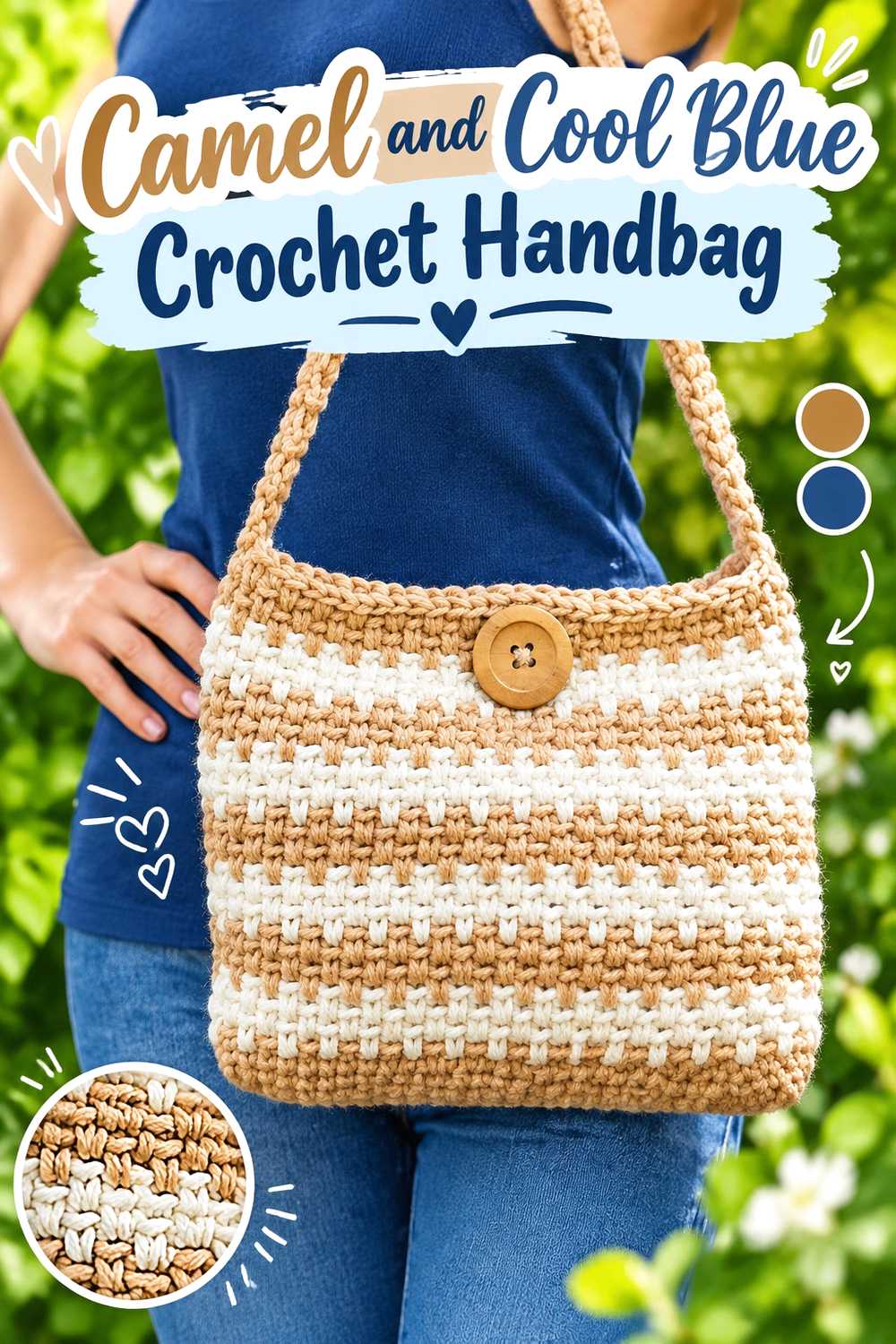
14. Camel And Cool Blue Crochet Handbag
 SAVE
SAVEThis handbag reverses the preceding market-bag proportions by giving camel the main body. Cool blue can define the opening, handles, or a selected front panel, creating a more neutral-led finished piece.
Camel Can Control the Main Crochet Handbag Surface
A camel body creates one uninterrupted background for the bag’s stitch texture. Avoid scattering tiny blue details everywhere if the surface already contains pronounced crochet patterning.
Instead, choose one or two structural areas where blue can provide a clear visual reason for being present.
Cool Blue Can Link Camel Crochet Handbag Handles and Edging
Use blue for the handles and repeat it around the top edge so those elements look connected. A small amount at the base can create a third repetition point if the handbag needs more blue.
If the handles already occupy considerable visual space, leave the base camel so the neutral shade remains dominant.
Creator Credit: naztazia
15. Cool Blue And Camel Crochet Scrunchie
 SAVE
SAVEThe small scale of a scrunchie makes simple color placement particularly important. Cool blue can cover most of the ruffled surface, with camel appearing as a narrow accent or in a coordinated second section.
Cool Blue Can Keep Crochet Scrunchie Ruffles Easy to Follow
Use blue through the largest ruffled area so folds and shadows remain part of one continuous color surface. A highly textured accessory can become visually crowded if the colors alternate every few stitches.
If your yarn itself has strong texture, compare the crocheted blue and camel fabrics before deciding how much contrast to use.
Camel Can Give a Cool Blue Crochet Scrunchie a Controlled Accent
A small camel section can interrupt the blue without dividing every ruffle. Another approach is to make a coordinated pair, with one scrunchie blue-led and the other camel-led.
That lets each color take a larger uninterrupted role instead of forcing an equal split into one compact accessory.
Creator Credit: ElyseCrochets 💌
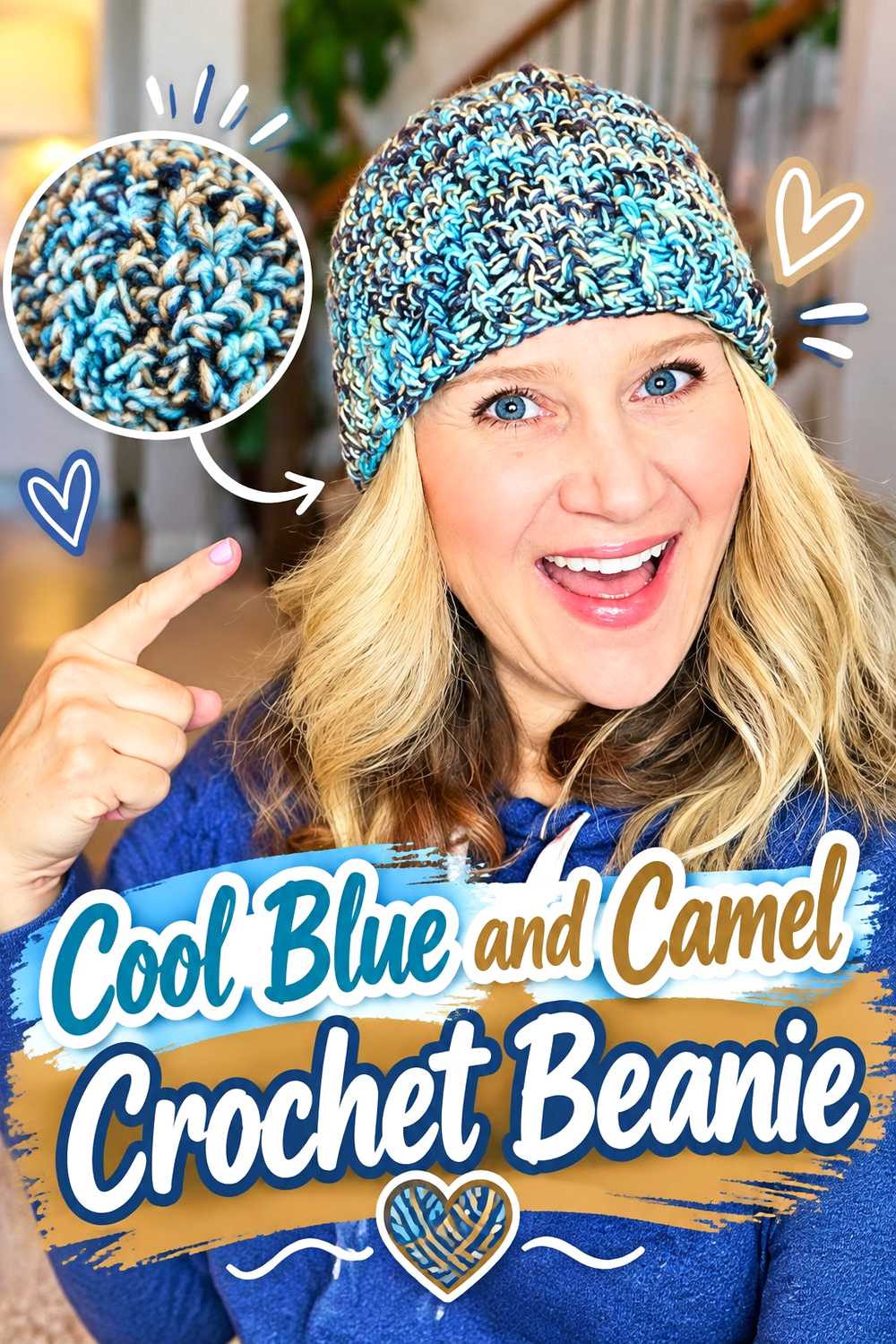
16. Cool Blue And Camel Crochet Beanie
 SAVE
SAVEA cool blue crown with camel ribbing creates a clean two-zone beanie. The blue controls most of the hat while camel defines the lower edge, where the shift in construction or texture often already creates a natural boundary.
Cool Blue Can Keep the Main Crochet Beanie Crown Unified
Use blue from the upper body through the crown so shaping is not interrupted by unnecessary color changes. If the crown includes visible texture, check how it reads in the selected blue before making the full hat.
A lighter cool blue will generally create a different value relationship with camel than a deep steel or slate-leaning blue.
Camel Can Define the Cool Blue Crochet Beanie Ribbing
Camel ribbing forms a warmer band around the lower part of the hat and makes the edge visually distinct from the blue crown.
If the camel band looks too dominant, reduce its visual depth rather than adding another transition color. The two-color palette is clearer when one shade remains visibly in charge.
Creator Credit: Erica Arndt
17. Camel And Cool Blue Crochet Cowl
 SAVE
SAVEA cowl is seen as a continuous loop, so the palette should work even when the fabric turns or folds. Camel can dominate the center while cool blue frames the top and bottom edges, keeping the supporting color visible from several orientations.
Camel Can Keep the Main Crochet Cowl Texture Continuous
Use camel through the widest middle section when you want the stitch texture to travel around the full loop without color interruptions.
Because the cowl may fold onto itself when worn, avoid relying on one isolated blue patch that could disappear inside the folds.
Cool Blue Can Frame Both Camel Crochet Cowl Edges
Repeat cool blue along both the upper and lower edges for a consistent frame around the camel body. This gives the supporting color two visible locations regardless of how the cowl rotates.
If you prefer an asymmetric direction, make one blue edge deeper and keep the other narrow while still repeating the shade on both sides.
Creator Credit: The Crochet Crowd
18. Cool Blue And Camel Crochet Color Block Tote
 SAVE
SAVEThis final tote gives cool blue and camel more equal responsibility than the earlier bag ideas. Instead of assigning one shade only to handles or trim, use larger color blocks across the bag body so both colors remain substantial parts of the finished surface.
Cool Blue and Camel Can Share Larger Crochet Tote Panels
Divide the bag into a few broad color areas rather than many narrow stripes. Large blocks give both shades enough visual room and keep the tote from looking fragmented.
If the construction has obvious front, side, or lower sections, align color changes with those areas where practical so the palette supports the bag’s shape.
Camel Can Anchor Cool Blue Crochet Tote Handles Without Taking Over
Even in a more balanced color-block project, the handles need a clear relationship with the body. Camel handles can repeat an existing camel block, while cool blue handles can extend a blue upper section.
Avoid introducing a third handle color simply for extra contrast. The existing camel and cool blue relationship already provides two distinct visual roles.
Creator Credit: Tejelu crochet
Comparing Cool Blue and Camel Crochet Directions
Choose a cool-blue-led direction when you want the cooler shade to occupy the broadest field. The blanket, tote, poncho, shawl, slippers, ear warmer, market bag, scrunchie, and beanie can all use blue as the main visual surface while camel provides interruption or definition.
Choose a camel-led direction when you want the neutral shade to carry more of the finished item. The scarf, sweater vest, cushion, mittens, clutch, handbag, and cowl give camel substantial uninterrupted areas while cool blue highlights selected details.
The granny-square cardigan and final color-block tote are better suited to a more balanced distribution because their repeated motifs or larger separate sections allow both shades to occupy meaningful areas without relying on tiny accents.
Conclusion
Cool blue and camel can shift from a blue-led combination to a neutral-led one simply by changing where each shade appears. Cool blue works well across large blanket fields, shawl bodies, poncho panels, and bag surfaces, while camel can define borders, cuffs, handles, ribbing, and motif edges.
Reversing those roles produces an equally useful approach: camel can fill garment panels and accessory bodies while cool blue marks the openings, trims, ends, or structural details.
Before choosing small motif or texture colors, compare the actual yarns for value contrast. Then use the shape of the crochet item to decide where each shade belongs instead of applying the same stripe arrangement to every project. Refer to the linked creator tutorials for exact project construction while planning the cool blue and camel distribution separately.
Frequently Asked Questions
Do cool blue and camel work together in crochet?
Yes, they can create a clear cool-versus-warm-neutral contrast. The exact result depends on the particular yarn shades, so compare the skeins together rather than relying only on the color names.
Should cool blue or camel dominate a crochet project?
Either can dominate. Cool blue across the largest area produces a more blue-led result, while camel across body panels, blanket sections, or bag surfaces creates a neutral-led direction. Choose the hierarchy before planning smaller accents.
Where can I place camel on a mostly cool blue crochet project?
Camel can work around borders, cuffs, handles, bag bases, shawl edges, ribbing, scarf sections, motif outlines, or neckline trim. Repeating camel in more than one related area can keep it from looking disconnected.
Where can cool blue go on a camel crochet project?
Cool blue can define cuffs, edging, motif centers, joins, handles, scarf ends, bag flaps, necklines, or selected panels. The lighter or more contrasting shade is especially useful near details you want to separate visually.
How can I tell whether cool blue and camel have enough contrast?
Place the yarns side by side and view them from a distance. You can also photograph them and convert the image to grayscale. If the values look very similar, small motifs and narrow stripes may blend more than expected.
Can I use equal amounts of cool blue and camel?
Yes. Larger color blocks, granny squares, and panel-based projects give both colors enough area to work in roughly equal proportions. On very small accessories, giving one color a dominant role can make the palette easier to read.
What can I substitute if I cannot find the exact cool blue or camel shade?
Preserve the relationship between the colors rather than searching for identical commercial shade names. Choose a blue with the cooler, softened appearance you want and a tan-to-light-brown neutral that remains clearly distinguishable from it. Also preserve the intended light-and-dark contrast if small crochet details depend on it.