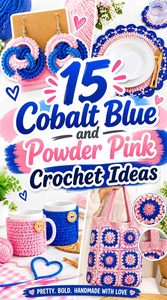
Cobalt blue and powder pink create a crochet palette with a clear difference in both color temperature and visual intensity. Cobalt blue can provide the stronger, cooler anchor, while powder pink introduces a lighter and softer counterpoint. The combination becomes especially useful when one shade covers the larger surface and the other is placed strategically rather than splitting every project evenly.
A cobalt-led blanket can use powder pink to break up broad blue sections. A powder-pink cardigan can reserve cobalt for cuffs and edging. Smaller projects such as granny squares, earrings, scrunchies, and mug cozies allow the colors to sit closer together because their surfaces are compact.
The 15 ideas below show different ways to distribute these two colors across crochet texture, panels, motifs, borders, handles, brims, and finishing details. The linked tutorials support the underlying crochet projects; the cobalt-blue-and-powder-pink palettes are color adaptations rather than claims about the colors used by the original creators.
Quick List
- Cobalt Blue And Powder Pink Crochet Blanket
- Powder Pink And Cobalt Blue Crochet Cardigan
- Cobalt Blue And Powder Pink Crochet Granny Square Bag
- Powder Pink And Cobalt Blue Crochet Chunky Beanie
- Cobalt Blue And Powder Pink Crochet Granny Square
- Powder Pink And Cobalt Blue Crochet Market Bag
- Cobalt Blue And Powder Pink Crochet Scrunchie
- Powder Pink And Cobalt Blue Crochet Mug Cozy
- Cobalt Blue And Powder Pink Crochet Headband
- Powder Pink And Cobalt Blue Crochet Storage Basket
- Cobalt Blue And Powder Pink Crochet V Neck Sweater
- Powder Pink And Cobalt Blue Crochet Placemat And Coaster Set
- Cobalt Blue And Powder Pink Crochet Bucket Hat
- Powder Pink And Cobalt Blue Crochet Tote Bag
- Cobalt Blue And Powder Pink Crochet Earrings
Decide Whether Cobalt Blue or Powder Pink Should Dominate
Cobalt blue is visually assertive, so it does not always need half of the crochet surface to make an impact. A powder-pink project can use relatively narrow cobalt cuffs, borders, handles, or motif rounds and still read clearly as a two-color design.
When cobalt blue leads, powder pink can prevent a blanket, sweater, bag, or hat from becoming one uninterrupted dark or saturated field. Larger pink blocks produce a softer effect than tiny scattered accents.
Think about the construction before choosing proportions. Granny squares have centers and outer rounds. Cardigans have cuffs, bands, and panels. Bags have bases, bodies, edges, and handles. Using those structural divisions gives the color placement a reason.
Check Cobalt Blue and Powder Pink Value Contrast
Different hues can still be closer in lightness than expected, particularly when the cobalt is softened or the powder pink is relatively deep.
Compare your actual yarns side by side before using them in small motifs. A grayscale photo can help you see whether the shades remain distinct without relying on hue.
When contrast is strong, narrow cobalt outlines around powder-pink details can stay visible. When values are closer, use larger blocks so the colors do not visually merge around textured stitches.
1. Cobalt Blue And Powder Pink Crochet Blanket
 SAVE
SAVEA blanket gives cobalt blue enough room to become the main field without making powder pink disappear. Use cobalt across the broad central areas and introduce powder pink through substantial bands or selected sections rather than changing colors every few rows.
The larger blocks keep the blanket readable from across a room and allow crochet texture to remain visible independently of the palette.
Cobalt Blue Can Carry the Main Crochet Blanket Field
Let cobalt blue occupy the widest uninterrupted sections when you want a cooler, more saturated blanket. Broad areas also prevent every stitch repeat from becoming another color change.
If the blanket begins to feel too blue-heavy, add one substantial powder-pink section rather than several thin lines. A larger pink area changes the balance more clearly.
Powder Pink Can Soften a Cobalt Blue Crochet Blanket Border
Powder pink can work around the outer edge or in one repeated interior band. Its lighter visual character creates a softer boundary around the stronger blue field.
Repeat pink somewhere within the blanket before reaching the border if the outer section otherwise seems unrelated to the center.
Creator Credit: Bella Coco
2. Powder Pink And Cobalt Blue Crochet Cardigan
 SAVE
SAVEA cardigan offers several useful color zones without requiring stripes across the body. Powder pink can cover the main front, back, and sleeve panels while cobalt blue follows cuffs, the front band, or lower edging.
This distribution keeps the garment visually soft overall but gives the darker blue enough repetition to define its construction.
Powder Pink Can Keep the Crochet Cardigan Panels Continuous
Use powder pink across the largest panels to avoid breaking the cardigan into too many competing sections. The continuous color can also keep textured stitches easier to follow.
Lay the front, back, and sleeves together before adding cobalt so you can judge the complete color balance rather than deciding from one panel.
Cobalt Blue Can Define Powder Pink Cardigan Cuffs and Edging
Cuffs and front edging give cobalt blue natural repeated locations. Because they already outline the cardigan, the stronger shade reinforces the garment shape rather than appearing randomly.
If cobalt starts taking over visually, limit it to two or three finishing areas instead of outlining every edge.
Creator Credit: TCDDIY
3. Cobalt Blue And Powder Pink Crochet Granny Square Bag
 SAVE
SAVEGranny squares let the colors repeat in predictable positions. Cobalt blue can form the motif centers while powder pink expands around the outer rounds, or you can reverse that order if you want the finished bag to appear predominantly blue.
Consistency is particularly important when several squares meet across one bag surface.
Cobalt Blue Can Create Repeated Powder Pink Crochet Bag Centers
Use cobalt in the same central position across several motifs to establish a clear visual rhythm. The blue centers do not need to occupy most of each square to stay prominent.
Arrange all completed motifs before joining so cobalt focal points are distributed evenly across the finished bag.
Powder Pink Can Separate Cobalt Blue Granny Square Motifs
Powder pink outer rounds create softer spacing between stronger blue centers and can prevent multiple cobalt areas from visually merging.
If you use powder pink for both outer rounds and joins, consider repeating cobalt in the handles or upper edge so the blue remains visible around the bag silhouette.
Creator Credit: Ganchillo Crochet
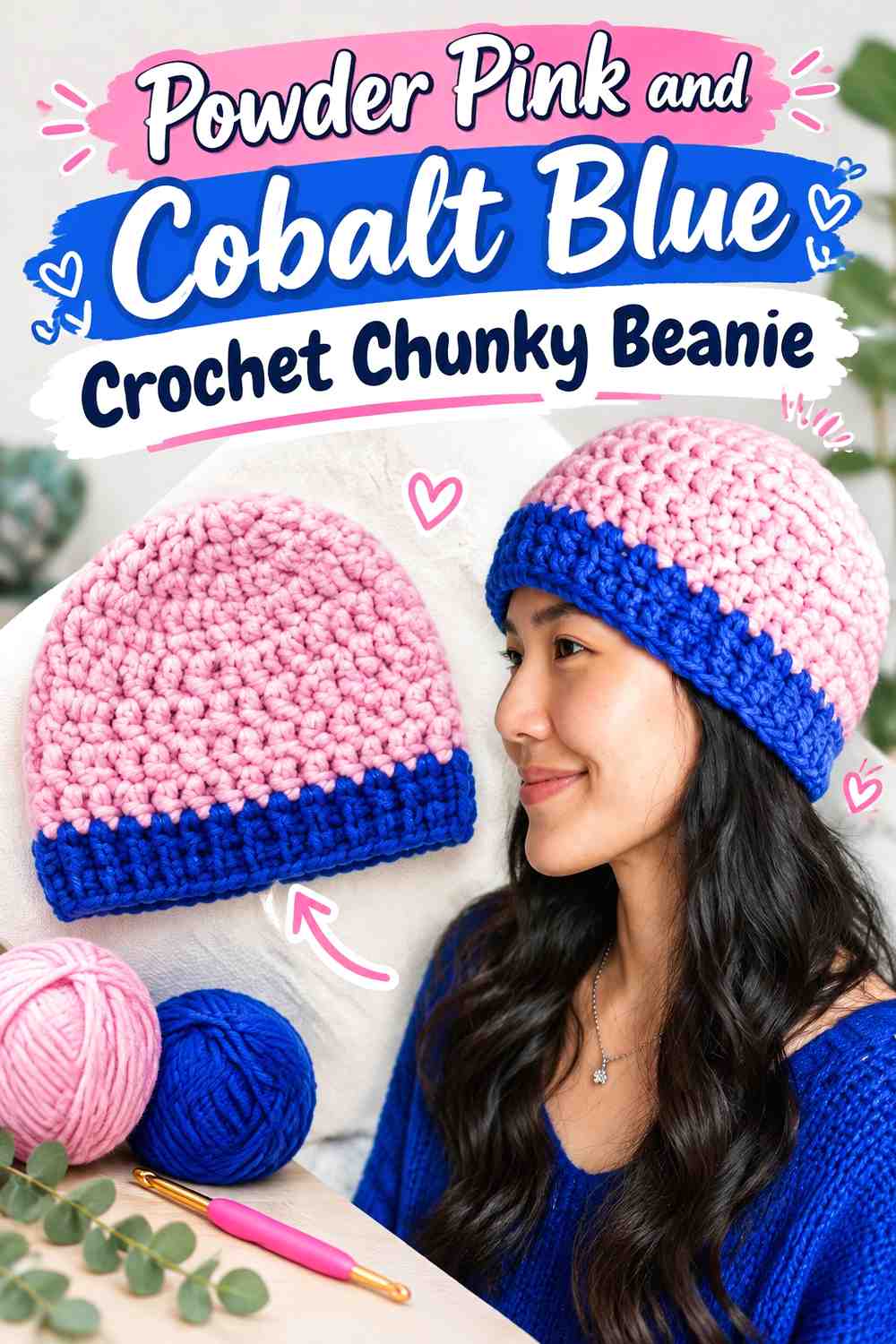
4. Powder Pink And Cobalt Blue Crochet Chunky Beanie
 SAVE
SAVEA beanie benefits from a simple color division because its compact shape already contains obvious crown and lower-edge sections. Powder pink can cover most of the hat while cobalt blue forms a contrasting brim.
This keeps the texture visible and gives the saturated blue one concentrated area.
Powder Pink Can Keep the Crochet Beanie Crown Soft
Use powder pink continuously across the crown if you want the lighter shade to remain dominant. Avoid breaking pronounced ribbing or chunky texture with several narrow blue stripes unless that effect is intentional.
View the hat in its finished shape before deciding whether the pink section needs additional contrast.
Cobalt Blue Can Anchor the Powder Pink Crochet Beanie Brim
A cobalt blue lower band provides a strong boundary against the softer crown. Because the brim can occupy a meaningful proportion of the finished hat, it may provide all the blue the palette needs.
If you want more cobalt, repeat a small detail near the top rather than striping the entire crown.
Creator Credit: VivCrochets
5. Cobalt Blue And Powder Pink Crochet Granny Square
 SAVE
SAVEA single granny square is an efficient way to test the palette before making a blanket, cardigan, or bag. Start with cobalt blue in the center and expand into powder pink, then make a second square with the order reversed.
Seeing several motifs together will tell you more about the balance than looking at one square in isolation.
Cobalt Blue Can Establish the Powder Pink Crochet Granny Square Center
A cobalt center provides a concentrated focal point that remains visible as lighter powder-pink rounds are added.
Keep the blue area large enough that it will still register when several finished squares are placed side by side.
Powder Pink Can Give Cobalt Blue Crochet Motifs More Separation
Powder pink around the outer rounds can create visual breathing room between multiple cobalt centers.
If the final project needs stronger definition between squares, use cobalt again only at a later outer round rather than alternating the colors at every opportunity.
Creator Credit: Hooked by Robin
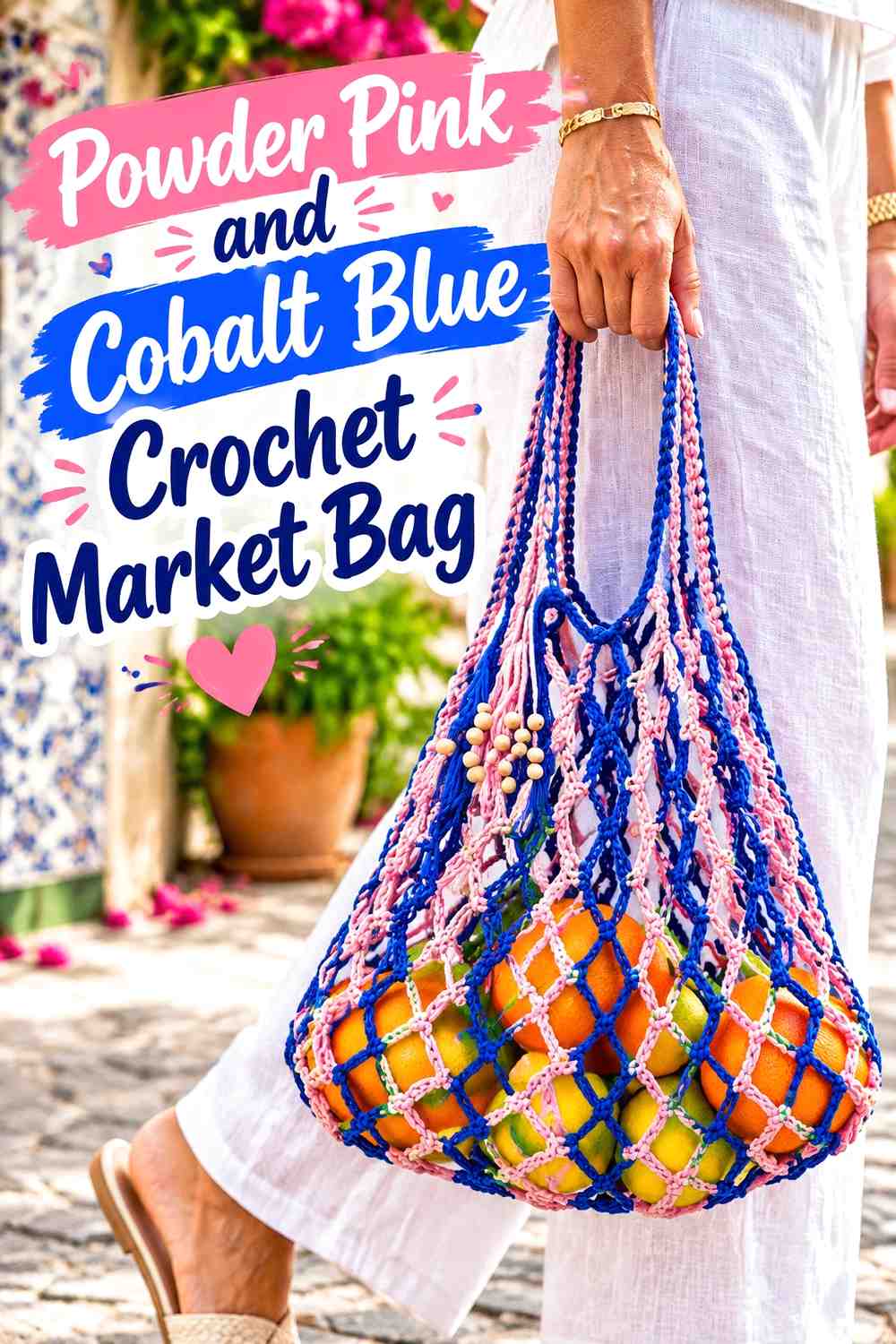
6. Powder Pink And Cobalt Blue Crochet Market Bag
 SAVE
SAVEA market bag has natural divisions at the base, open body, upper edge, and handles. Powder pink can fill the main body while cobalt blue defines the handles and selected finishing areas.
Keeping the openwork mostly one color also prevents the mesh structure from competing with frequent color changes.
Powder Pink Can Keep the Crochet Market Bag Body Continuous
Use powder pink throughout the main openwork when you want the stitch pattern to stay visually connected.
Since a market bag changes shape when filled, broad color fields often remain more coherent than thin stripes that stretch differently across the surface.
Cobalt Blue Can Connect Powder Pink Crochet Market Bag Handles
Cobalt blue handles create a strong accent above the softer bag body. Repeat cobalt at the upper edge or base so the handles relate visually to another part of the project.
A narrow second appearance can be enough; the handles themselves already create a large visible blue element.
Creator Credit: Home Handwork Diy
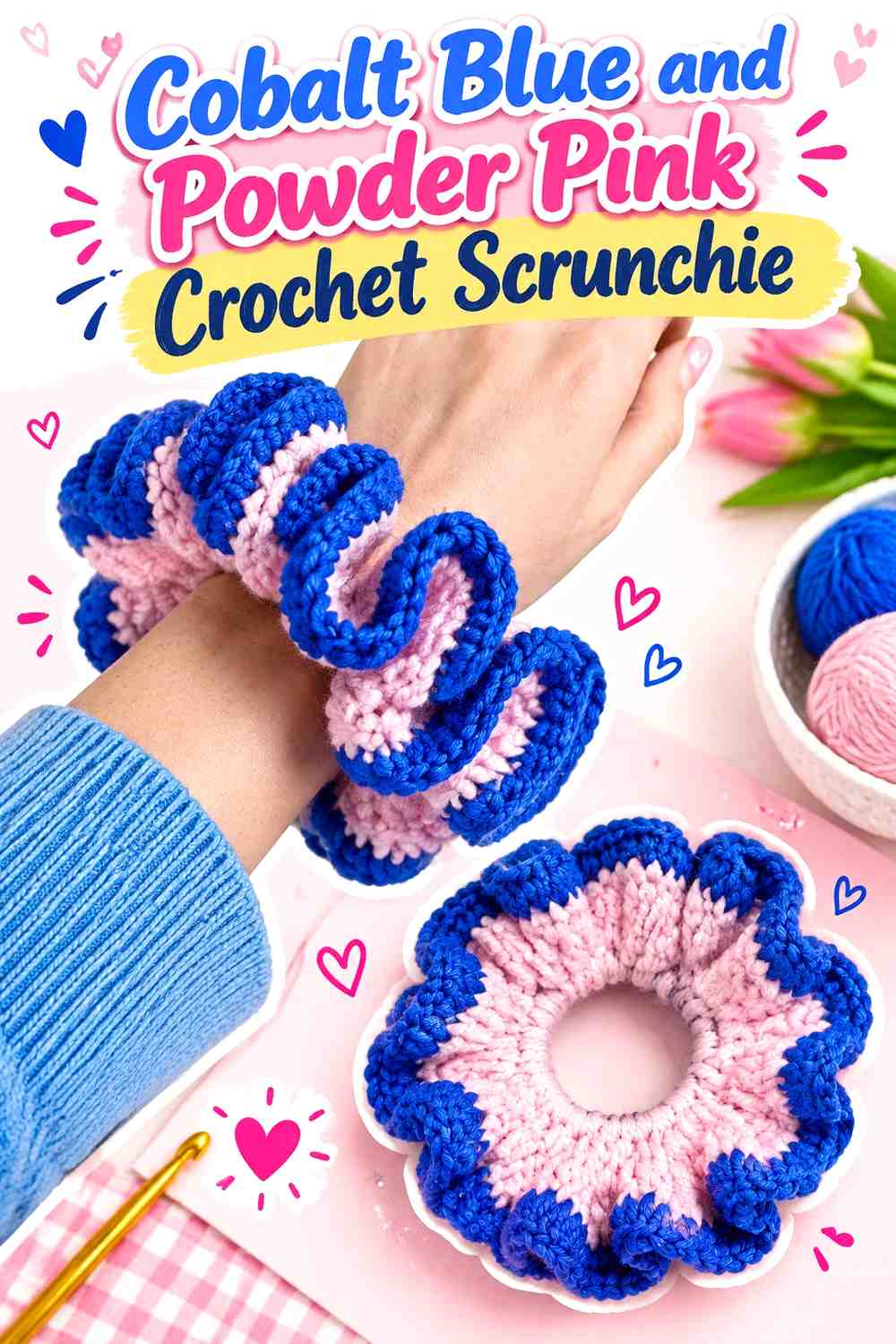
7. Cobalt Blue And Powder Pink Crochet Scrunchie
 SAVE
SAVEA scrunchie can use a more balanced color split because the finished item is small. Cobalt blue can form the inner portion while powder pink expands into the outer ruffle.
Remember that gathered crochet hides parts of the fabric, so color proportions can look very different once the scrunchie contracts around the elastic.
Cobalt Blue Can Create a Defined Powder Pink Crochet Scrunchie Base
Using cobalt close to the inner edge creates a dark central ring beneath the softer outer ruffle.
Keep the blue section broad enough to remain visible when the fabric gathers. Tiny inner details may disappear almost completely.
Powder Pink Can Make the Cobalt Blue Crochet Scrunchie Ruffle Lighter
Powder pink works well across the outermost ruffle because that section receives the most visible surface area.
Judge the result both stretched and relaxed. If cobalt disappears when the scrunchie contracts, increase its section rather than adding random blue stitches to the pink edge.
Creator Credit: ElyseCrochets
8. Powder Pink And Cobalt Blue Crochet Mug Cozy
 SAVE
SAVEA mug cozy has very little room for complicated color blocking. Powder pink can cover most of the wrap while cobalt blue outlines the top, bottom, or another structural feature.
The compact surface means even a relatively narrow cobalt section can remain prominent.
Powder Pink Can Keep the Crochet Mug Cozy Body Clear
Use powder pink across the central area when the cozy includes texture. One continuous lighter field prevents the surface from becoming crowded.
Wrap the piece around the intended mug before judging the color distribution because part of the crochet may sit close to the handle or curve out of direct view.
Cobalt Blue Can Define the Powder Pink Crochet Mug Cozy Edge
Cobalt around an edge gives the strong blue a specific role rather than dividing the cozy into multiple small patches.
If the edging is too narrow to register clearly, repeat cobalt at another finishing point instead of adding several tiny stripes through the center.
Creator Credit: Naztazia
9. Cobalt Blue And Powder Pink Crochet Headband
 SAVE
SAVEA headband has a narrow surface, so focused color placement usually works better than numerous transitions. Cobalt blue can form the main band while powder pink appears at the center, twist, or end sections.
Check the colors while the headband is curved into its worn shape because a flat strip does not show where the accents will finally sit.
Cobalt Blue Can Keep the Crochet Headband Visually Continuous
Use cobalt across most of the circumference when you want the cooler color to lead. A continuous blue field also gives ribbing or other surface texture room to remain visible.
Avoid changing color at every shaping point unless you specifically want those construction changes emphasized.
Powder Pink Can Create a Focused Cobalt Blue Headband Accent
A powder-pink center or twist creates a softer focal section without fragmenting the whole band.
For stronger repetition, place a smaller amount of pink near both ends. Keep cobalt dominant by avoiding equal alternating stripes.
Creator Credit: B.Hooked Crochet
10. Powder Pink And Cobalt Blue Crochet Storage Basket
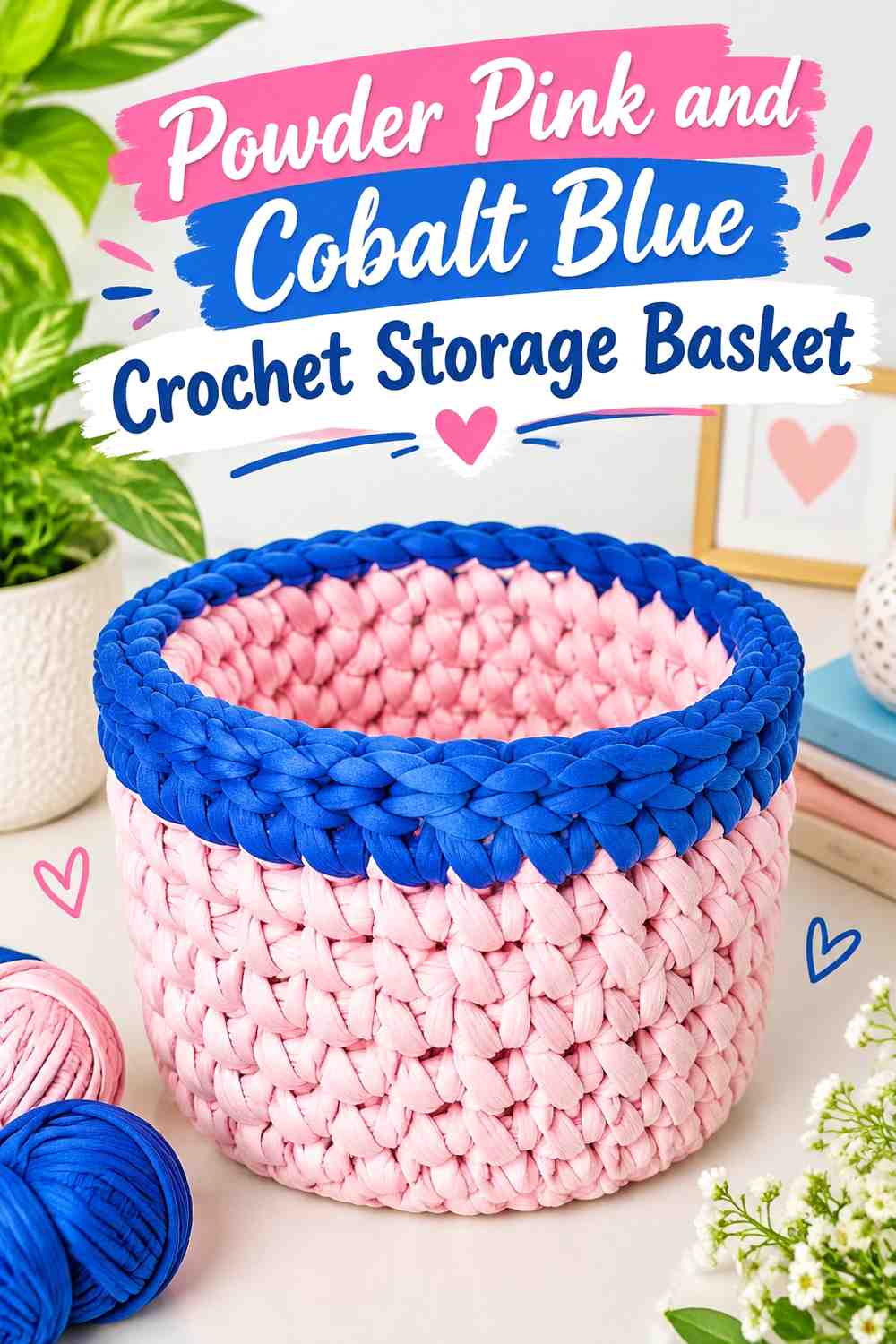 SAVE
SAVEA basket gives the palette broad horizontal zones. Powder pink can cover the upper walls while cobalt blue forms the base and lower section.
The darker lower block visually grounds the basket, while the pink upper area keeps the project from becoming overwhelmingly saturated.
Cobalt Blue Can Ground the Powder Pink Crochet Basket Base
Use cobalt across enough of the lower wall that it reads as a deliberate section instead of a thin stripe near the bottom.
If the basket contains pronounced stitch texture, check a blue sample first. Very deep cobalt can reduce the visible shadow between smaller raised stitches.
Powder Pink Can Lighten the Cobalt Blue Crochet Basket Upper Walls
Powder pink across the upper half shifts attention upward and creates a clearer distinction between the two sections.
For the rim or handles, continue powder pink for a simple two-block scheme or repeat cobalt if the lower section needs another visual connection.
Creator Credit: Lallaulab
11. Cobalt Blue And Powder Pink Crochet V Neck Sweater
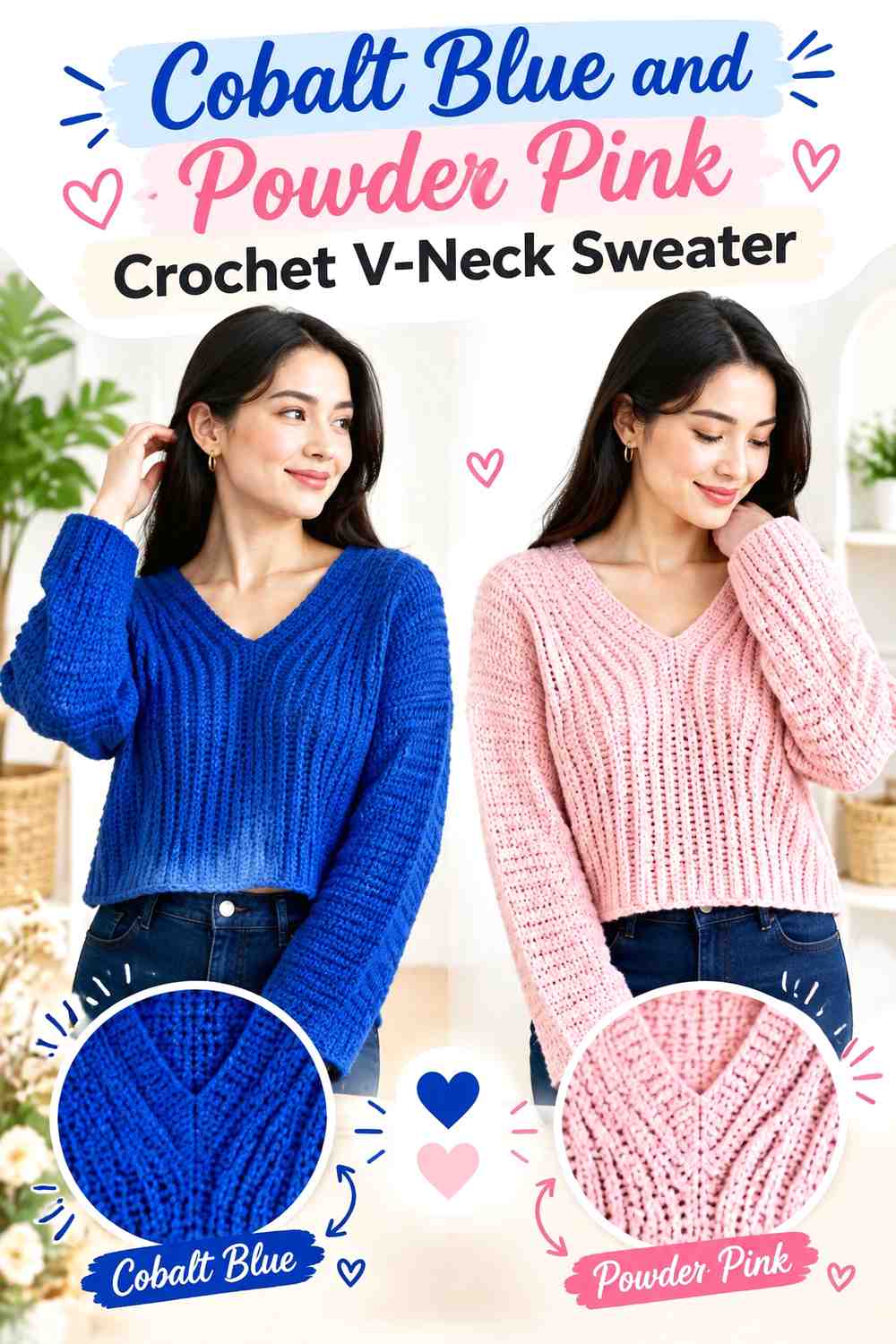 SAVE
SAVEA sweater provides large surfaces where cobalt blue can become the dominant field, while powder pink follows more delicate finishing lines. Use cobalt across the front, back, and sleeves, then place pink around the V-neck, cuffs, or hem.
The contrast is most successful when powder pink repeats rather than appearing only once at the neckline.
Cobalt Blue Can Carry the Main Crochet Sweater Panels
Keeping cobalt continuous across the major panels gives the garment a clear cool foundation.
If the sweater contains subtle stitch texture, make a small cobalt sample before committing. Strong or dark shades can make fine surface details less obvious.
Powder Pink Can Outline the Cobalt Blue Crochet V-Neck
Powder pink around the V-neck follows an existing structural line, giving the lighter shade a logical focal position.
Repeat it at cuffs or along the lower edge if the neckline alone feels disconnected. Keep those repetitions narrow if cobalt should remain firmly dominant.
Creator Credit: forthefrills
12. Powder Pink And Cobalt Blue Crochet Placemat And Coaster Set
 SAVE
SAVEA coordinated table set benefits from keeping the same color roles across pieces of different sizes. Powder pink can form the centers while cobalt blue creates the borders.
The border does not need identical proportions on placemats and coasters. What matters is that cobalt retains the same framing role.
Powder Pink Can Unite the Crochet Placemat and Coaster Centers
Use powder pink across the broad central areas to establish a consistent main color across the set.
Because placemats provide substantially more visual area than coasters, judge the balance of each piece rather than mechanically reproducing the same color-width ratio.
Cobalt Blue Can Frame Powder Pink Crochet Table Pieces
Cobalt around the outer edge provides clear definition against the lighter center.
If the blue border looks too detached on the larger placemat, repeat a restrained cobalt detail nearer the center instead of adding a third color.
Creator Credit: Brunaticality
13. Cobalt Blue And Powder Pink Crochet Bucket Hat
 SAVE
SAVEA bucket hat naturally divides into crown, sides, and brim. Cobalt blue can cover the crown and sides while powder pink takes over at the brim.
That structure gives both shades substantial areas without relying on decorative striping.
Cobalt Blue Can Keep the Crochet Bucket Hat Crown Defined
Use cobalt continuously across the top and sides for a strong cool-colored upper section.
If the hat uses texture, judge how clearly the stitches appear in your particular blue. A slightly lighter cobalt may preserve surface detail more effectively than a near-navy version.
Powder Pink Can Make the Cobalt Blue Crochet Brim Softer
A powder-pink brim creates a broad light accent that remains visible from multiple angles.
Because the brim already contributes significant pink coverage, avoid adding several unrelated pink stripes to the crown unless you intentionally want a more evenly divided palette.
Creator Credit: Wb crochet
14. Powder Pink And Cobalt Blue Crochet Tote Bag
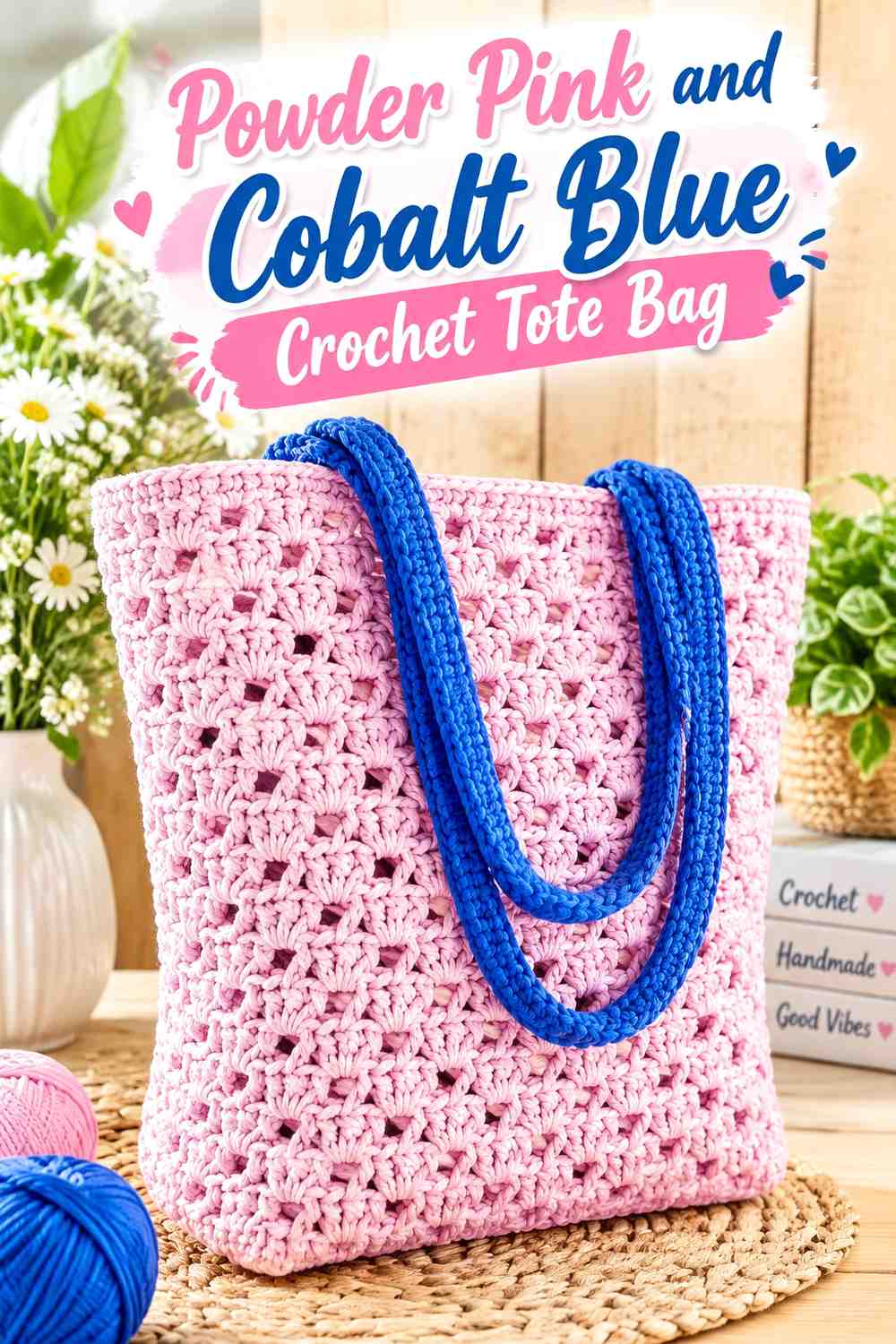 SAVE
SAVEA simple tote gives powder pink a broad front-and-back canvas while cobalt blue can be concentrated at the base, top edge, and handles.
This arrangement keeps the main panels visually calm and places the stronger blue around parts of the bag that already create structural lines.
Powder Pink Can Keep the Crochet Tote Panels Cohesive
Use powder pink across both major panels when you want the softer shade to define the bag overall.
If the crochet fabric is textured, avoid scattering cobalt stitches through the center without a clear repeat. Broad pink sections let the stitch surface remain the main panel detail.
Cobalt Blue Can Connect Powder Pink Crochet Tote Handles and Edging
Cobalt handles become highly visible because they extend above the main panels. Repeating the same blue along the upper edge or base helps integrate them with the rest of the tote.
If the handles already provide enough cobalt, keep the second blue area narrow so powder pink still dominates.
Creator Credit: Kristines Crochets
15. Cobalt Blue And Powder Pink Crochet Earrings
 SAVE
SAVECrochet earrings provide very little space, so the colors need concentrated roles. Cobalt blue can define the main motif while powder pink appears at the center or outer detail, or the order can be reversed when you want a lighter pair.
Always judge the finished motif from normal viewing distance rather than only while holding it close.
Cobalt Blue Can Keep the Crochet Earring Motif Clearly Defined
Use cobalt across the larger motif area when you want the earring shape to remain visually strong.
Keep both earrings consistent by placing the blue in the same section of each motif rather than improvising the color balance separately.
Powder Pink Can Add a Focused Cobalt Blue Crochet Earring Accent
Powder pink works well at a center or outer section where a small light area can contrast with the stronger blue.
If the pink disappears from ordinary viewing distance, enlarge its section instead of adding multiple tiny pink details that make the motif more complicated.
Creator Credit: Andi’s Crochet
Comparing Cobalt Blue and Powder Pink Crochet Directions
For a cobalt-blue-dominant direction, the blanket, granny square bag, granny square, headband, V-neck sweater, bucket hat, and earrings give the saturated blue enough surface to establish the overall look. Powder pink then softens borders, motifs, brims, and other secondary areas.
For a powder-pink-dominant direction, the cardigan, beanie, market bag, mug cozy, storage basket, placemat set, and tote place the lighter shade across the largest areas while cobalt provides stronger definition.
The scrunchie sits comfortably between the two approaches because its small, gathered surface can support a more balanced division. Motifs are also useful for testing proportions before you commit to a larger garment or blanket.
Conclusion
Cobalt blue and powder pink produce their clearest crochet combinations when the colors have recognizable roles. Cobalt can create strong fields, outlines, handles, brims, borders, and motif centers. Powder pink can soften those areas or become the main surface when you want cobalt to function as a concentrated accent.
On textured crochet, avoid changing colors so frequently that the palette obscures the stitch pattern. On garments, use cuffs, necklines, and edging as natural color boundaries. On bags and baskets, let bases, handles, rims, and panels determine where the transitions occur.
Before starting a large project, place your actual cobalt-blue and powder-pink yarns together and check their contrast. If one exact shade is unavailable, preserve the relationship—a stronger cool blue paired with a noticeably softer pink—rather than relying only on the color names.
Frequently Asked Questions
Do cobalt blue and powder pink work together in crochet?
Yes, they can create a clear cool-and-soft contrast. The pairing is easiest to organize when one color covers the larger surface while the second is repeated in specific structural or decorative areas.
Should cobalt blue or powder pink be the dominant crochet color?
Either can lead. Cobalt blue creates a stronger, cooler overall result, while powder pink makes the project lighter and lets smaller blue areas become more prominent.
Where should powder pink go in a cobalt blue crochet project?
Powder pink works well on borders, cuffs, brims, motif rounds, necklines, or selected color blocks. These areas give the lighter shade enough visibility without requiring an equal split.
Where should cobalt blue go in a powder pink crochet project?
Cobalt blue can define handles, bases, outer rounds, edging, cuffs, borders, and other structural areas. Because it is often visually stronger than powder pink, a smaller amount may still have substantial impact.
How can I tell whether cobalt blue and powder pink have enough contrast?
Compare the actual yarns side by side and view them from several feet away. A grayscale photograph can also show how far apart they are in lightness. If they merge, make each color section larger.
Can I add a neutral to cobalt blue and powder pink crochet?
You can use a restrained neutral when more separation is needed, especially around granny-square rounds or joins. Keep it limited if cobalt blue and powder pink should remain the obvious primary palette.
How do I keep cobalt blue and powder pink crochet from looking too busy?
Reduce the frequency of color changes. Let one shade occupy larger uninterrupted areas and repeat the second around natural construction points such as cuffs, borders, handles, brims, joins, or motif centers. This is especially helpful when the crochet already has strong texture.