Wasabi and chocolate brown create a crochet palette built around a lively yellow-green and a much deeper earthy neutral. The combination becomes especially useful when the colors have different jobs rather than competing for equal space. Wasabi can brighten broad surfaces and motif centers, while chocolate brown can add definition around borders, cuffs, handles, joins, brims, and other structural details.
The proportions can also be reversed. A chocolate-brown cardigan or scarf creates a darker overall direction, with smaller wasabi details providing concentrated contrast. On granny squares, pillows, and baskets, the placement of the darker shade can determine whether individual stitches and motifs remain clearly separated.
The 13 ideas below use the same core palette in different ways so you can compare dominant colors, color blocking, motif placement, borders, texture visibility, and practical shade substitution.
Quick List
- Wasabi And Chocolate Brown Crochet Blanket
- Chocolate Brown And Wasabi Crochet Cardigan
- Wasabi And Chocolate Brown Crochet Pillow
- Wasabi And Chocolate Brown Crochet Granny Square Tote
- Chocolate Brown And Wasabi Crochet Scarf
- Wasabi And Chocolate Brown Crochet Ribbed Beanie
- Wasabi And Chocolate Brown Crochet Granny Square
- Chocolate Brown And Wasabi Crochet Shawl
- Wasabi And Chocolate Brown Crochet Sweater
- Chocolate Brown And Wasabi Crochet Bucket Hat
- Wasabi And Chocolate Brown Crochet Market Bag
- Chocolate Brown And Wasabi Crochet Storage Basket
- Wasabi And Chocolate Brown Crochet Headband
Decide Whether Wasabi or Chocolate Brown Should Dominate
Wasabi and chocolate brown have very different visual weights, so they do not need equal coverage. Wasabi can become the larger field when you want the crochet item to look lighter and more energetic, while chocolate brown can occupy smaller structural areas that need definition.
Reversing the relationship produces a much darker project. A chocolate-brown scarf or cardigan can use only modest amounts of wasabi at the ends, cuffs, or edging because the yellow-green shade will already stand apart from the darker surface.
Consider the item’s construction before deciding. Borders, handles, cuffs, brims, joins, and motif rounds already create visual divisions, making them natural places for the supporting shade.
Check Wasabi and Chocolate Brown Contrast Around Crochet Texture
The contrast between a lighter wasabi and deep chocolate brown can make crochet texture easier to separate, but the actual result depends on your yarns. A very deep olive-like wasabi may sit closer to brown than a brighter yellow-green does.
Place the skeins together and view them from several feet away. A grayscale photo can help you judge whether the colors have enough light-and-dark separation for small motifs or narrow stripes.
Dark brown can also conceal subtle stitch shadows. If a project depends heavily on cables, bobbles, ribbing, or another raised texture, make a small brown sample before assigning the darkest shade to the most detailed area.
1. Wasabi And Chocolate Brown Crochet Blanket
 SAVE
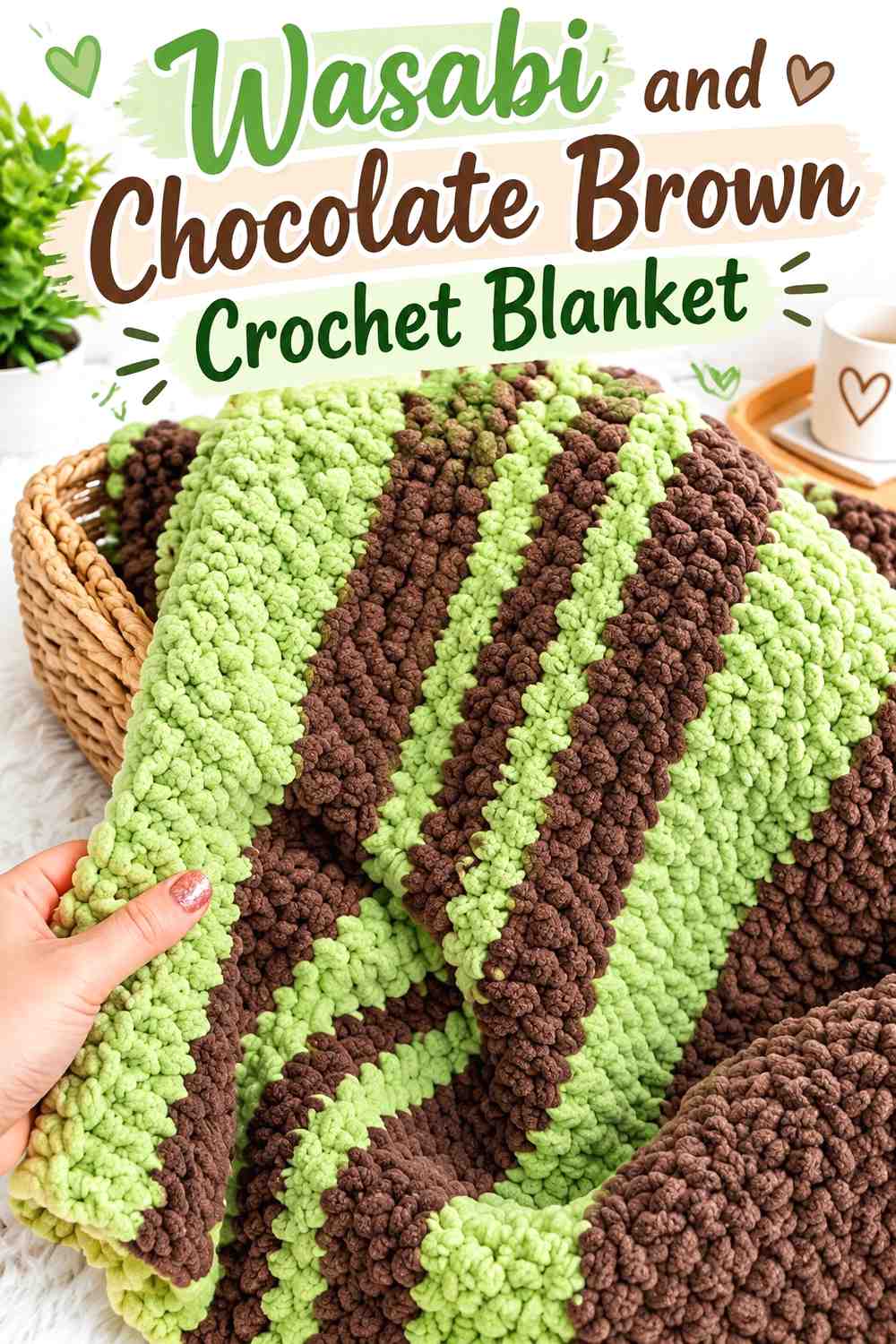
SAVEA blanket gives wasabi enough room to lead without making chocolate brown feel insignificant. Use wasabi across broad central sections and repeat chocolate brown in wider bands or around the perimeter.
Avoid alternating the two colors in every row unless a highly striped result is intentional. Larger color sections allow both the stitch pattern and the strong value contrast to remain visible.
Wasabi Can Carry the Main Crochet Blanket Surface
Let wasabi cover most of the field when you want the blanket to read as green first. Broad wasabi sections create continuity and provide a lighter surface on which stitch texture can remain visible.
If the center begins to look too uniform, introduce one substantial chocolate-brown section rather than scattering many tiny brown lines through the blanket.
Chocolate Brown Can Frame the Wasabi Crochet Blanket
Chocolate brown works well around the outer edge because the darker value creates a clear visual stopping point.
Repeat brown somewhere within the main blanket before reaching the border if the frame otherwise feels disconnected. One or two interior bands can be enough to connect the edge to the rest of the palette.
Creator Credit: Bella Coco
2. Chocolate Brown And Wasabi Crochet Cardigan
 SAVE
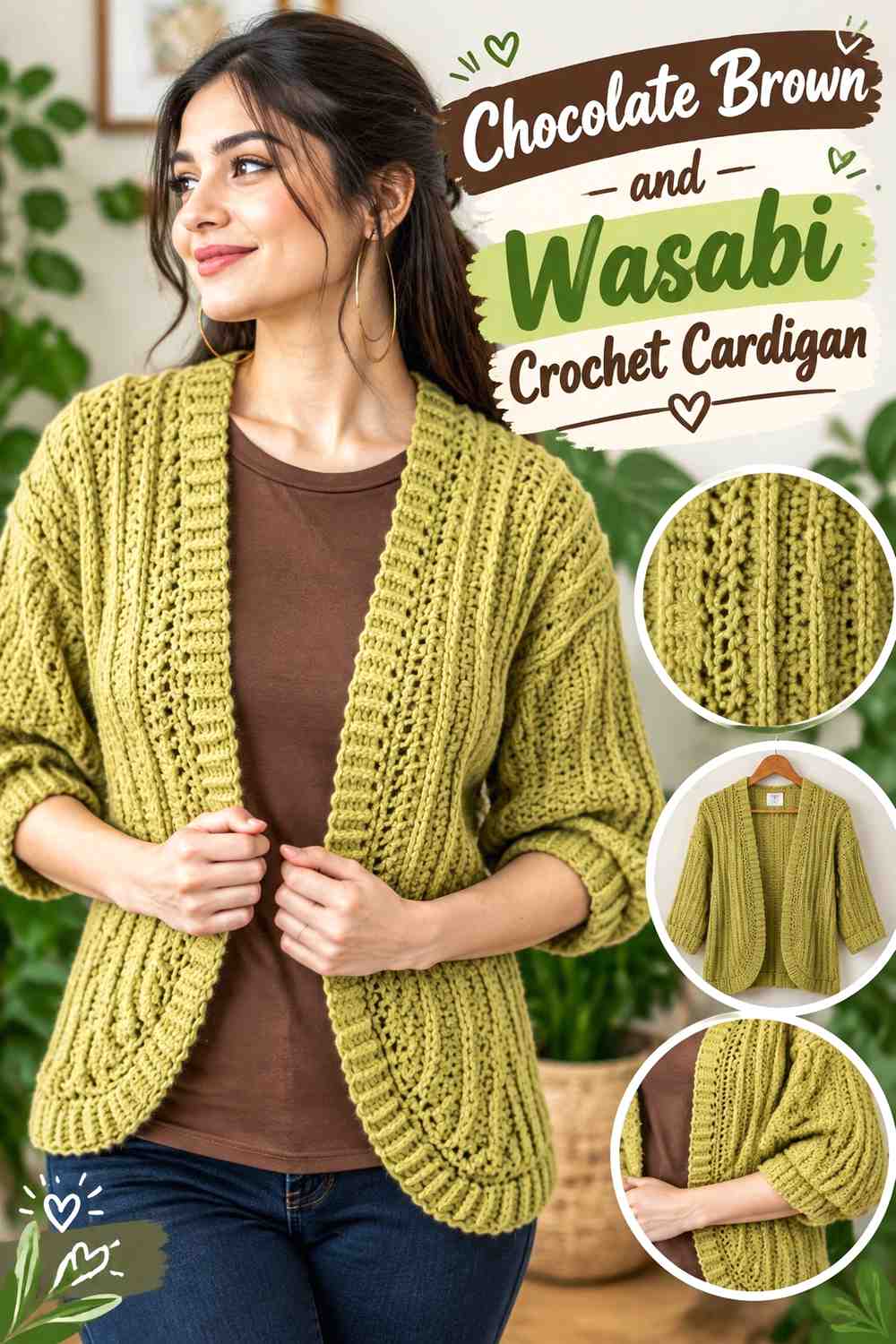
SAVEA cardigan can use chocolate brown across the front, back, and sleeves while placing wasabi around cuffs, the front opening, or lower edging. This gives the garment a dark foundation without reducing the yellow-green shade to an isolated detail.
Because cuffs and edging repeat naturally around the garment, they provide useful locations for distributing wasabi evenly.
Chocolate Brown Can Keep the Crochet Cardigan Panels Connected
Using chocolate brown through the main panels creates a continuous garment field. If the cardigan has strong stitch texture, test the brown yarn first to make sure those details remain visible.
Lay the body and sleeve pieces together before adding wasabi so you can judge the color distribution across the whole garment rather than one panel at a time.
Wasabi Can Define Chocolate Brown Cardigan Cuffs and Edging
Wasabi at both cuffs and along the front opening creates repeated contrast without dividing the large brown panels.
If those areas already provide enough green, keep the lower hem brown. Adding wasabi to every possible edge can turn a controlled accent into an almost equal two-color split.
Creator Credit: TCDDIY
3. Wasabi And Chocolate Brown Crochet Pillow
 SAVE
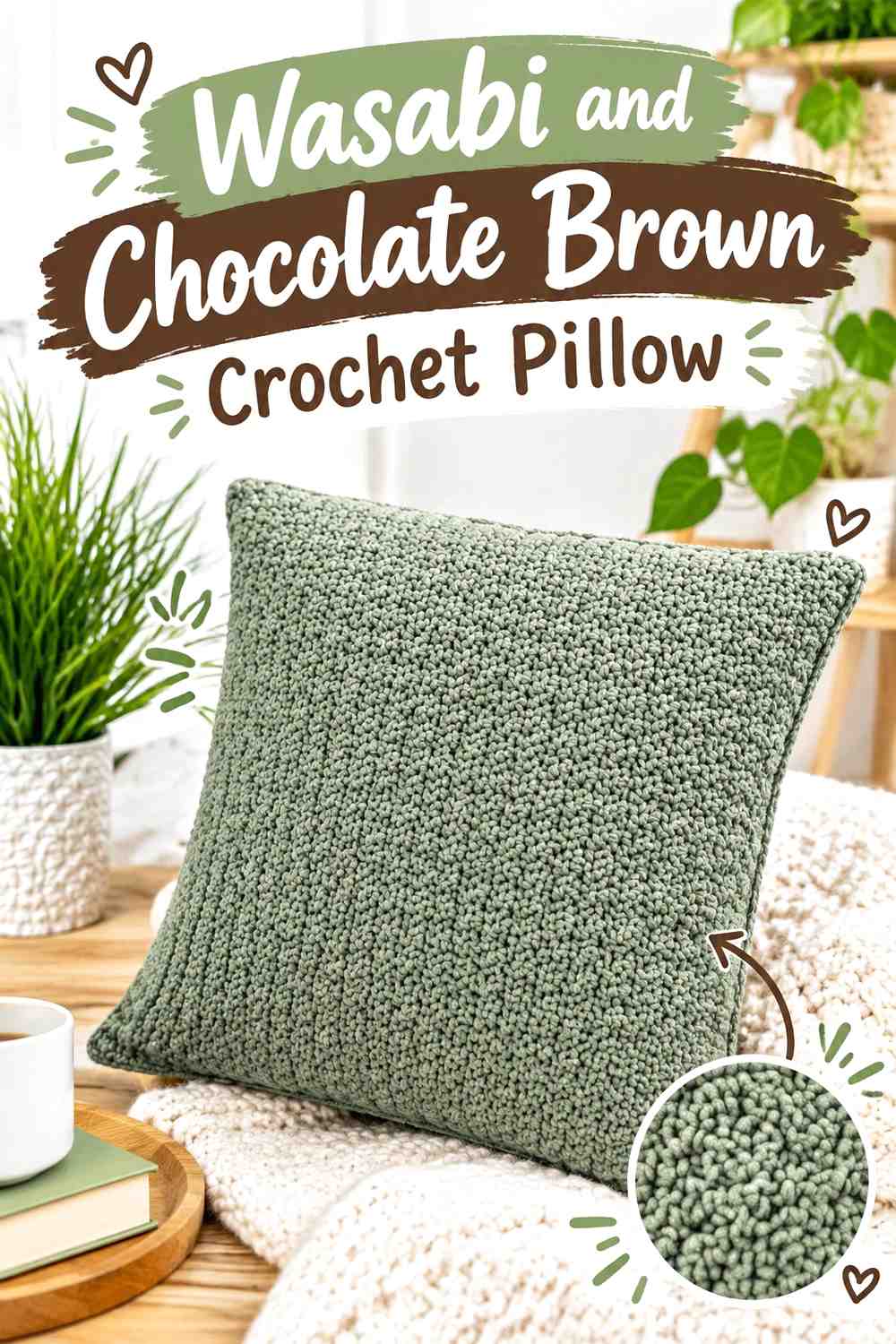
SAVEA pillow is compact enough for strong two-color blocking. Wasabi can cover most of the front surface while chocolate brown outlines the edge, highlights broad textured sections, or appears on the back.
The darker color is particularly useful when the pillow has raised details that need a stronger boundary.
Wasabi Can Keep the Crochet Pillow Face Visually Open
Use wasabi across the main face if you want stitch texture to stay visible from normal room-viewing distance.
Instead of changing every raised stitch to brown, consider keeping larger textured areas in wasabi and using chocolate only around selected sections. This prevents the surface from becoming overly segmented.
Chocolate Brown Can Give Wasabi Pillow Texture More Definition
Chocolate brown can outline an outer border or larger motif where the change in value helps separate one section from another.
Avoid using very thin brown details unless they remain visible from several feet away. A broader border often contributes more than scattered dark stitches on a home-decor piece.
Creator Credit: Jo to the World Creations
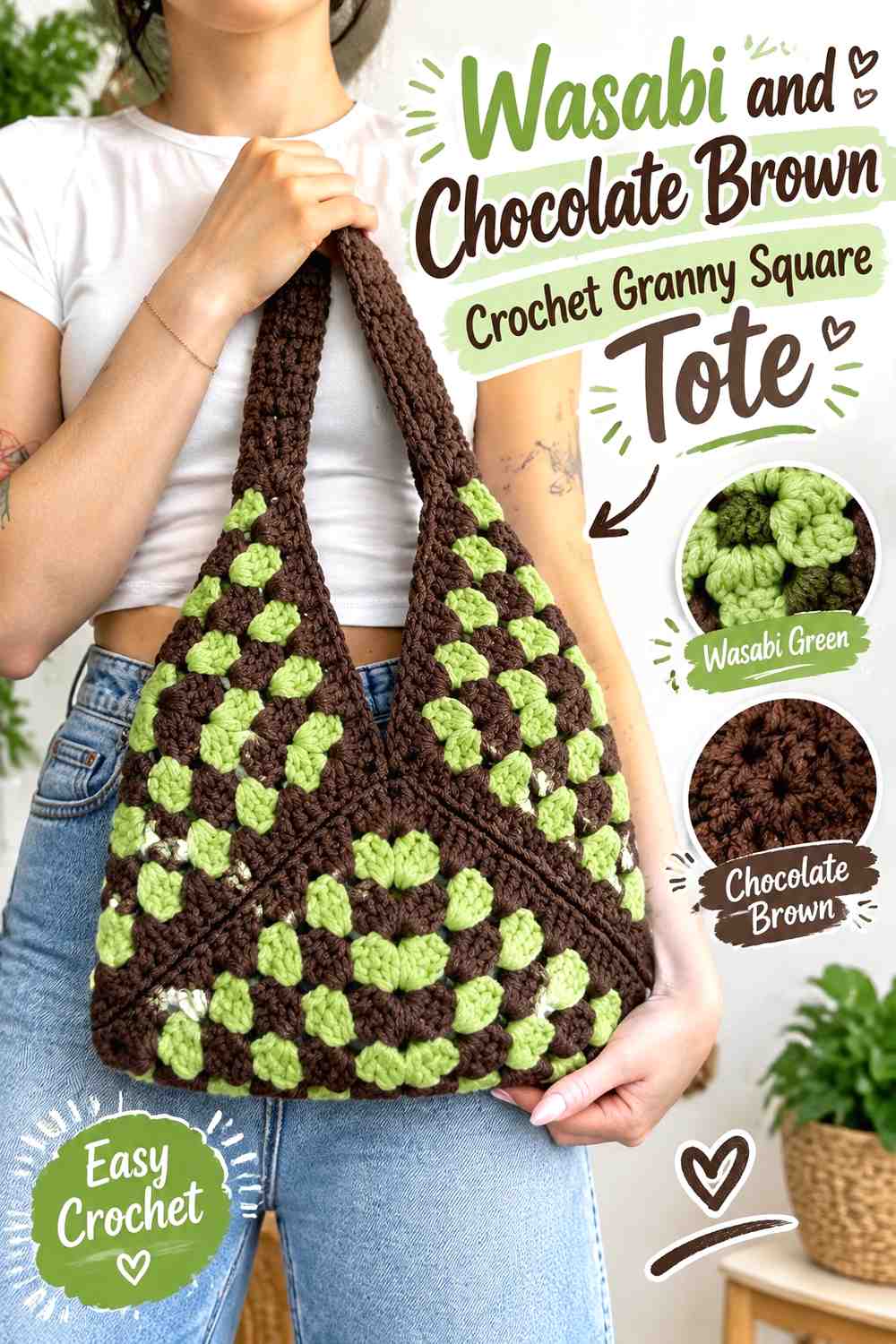
4. Wasabi And Chocolate Brown Crochet Granny Square Tote
 SAVE
SAVEGranny squares give wasabi and chocolate brown repeated positions. Wasabi can fill the motif centers while chocolate brown surrounds the outer rounds, joins, and handles.
This arrangement keeps individual centers recognizable while the darker shade visually connects the squares across the completed bag.
Wasabi Can Repeat Through Chocolate Brown Crochet Tote Centers
Using wasabi in every center establishes a clear rhythm across the tote. The green areas do not need to be large when their location repeats consistently.
Arrange the completed squares before joining them so the wasabi centers stay balanced across the front, back, and sides.
Chocolate Brown Can Organize Wasabi Granny Square Edges
A chocolate-brown final round gives each wasabi motif a defined boundary. If brown is also used for joining, separate squares can begin to look like one continuous dark grid surrounding the brighter centers.
Repeating wasabi on the handles or top edging can restore some green near the outer silhouette of the finished tote.
Creator Credit: Kenikse Crochet
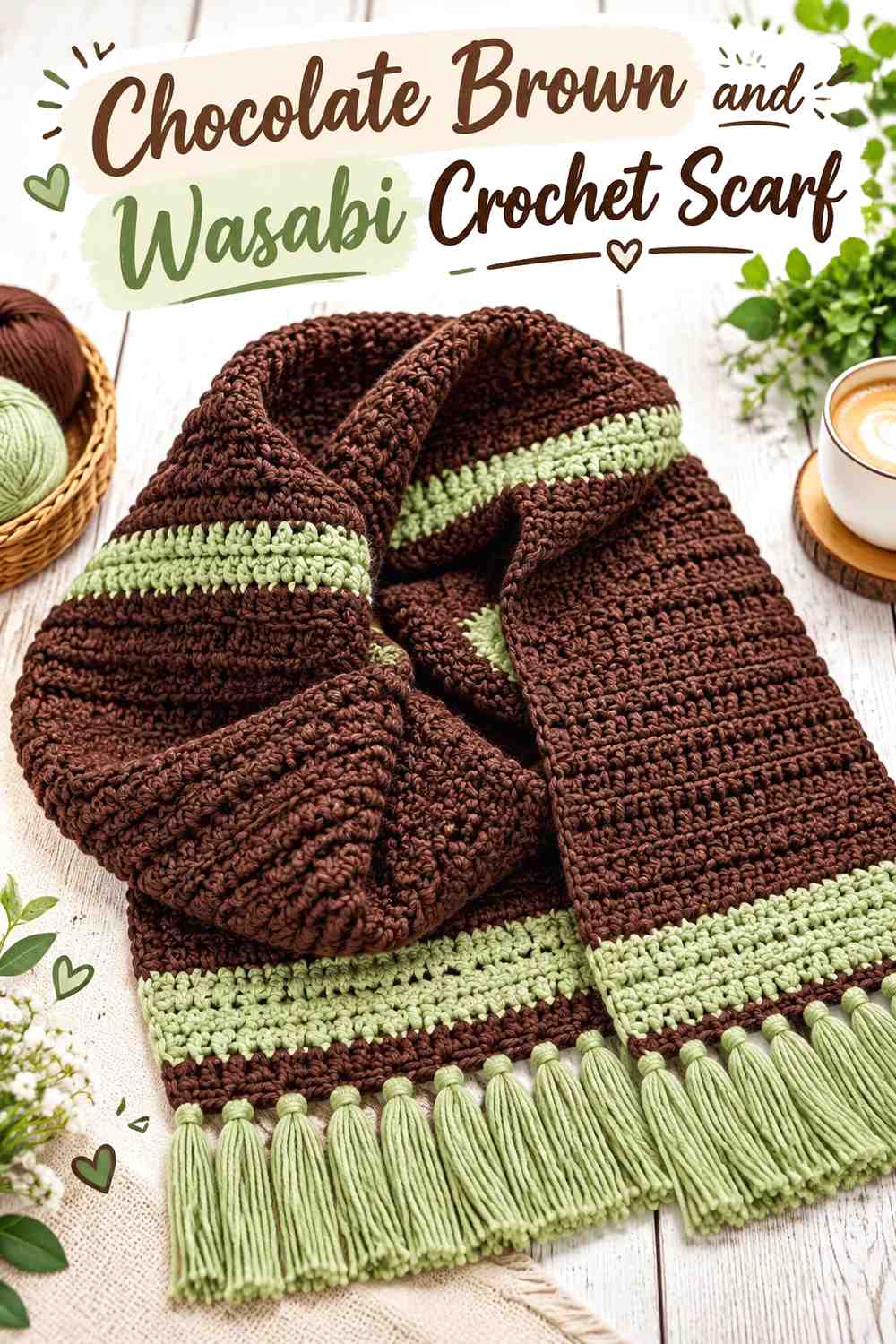
5. Chocolate Brown And Wasabi Crochet Scarf
 SAVE
SAVEA long scarf can handle chocolate brown as the dominant color because there is enough length for wasabi to appear in substantial end sections or occasional broad bands.
This is usually clearer than changing colors every few rows, especially when the scarf already has a pronounced stitch pattern.
Chocolate Brown Can Form the Main Crochet Scarf Length
Keep most of the central length chocolate brown when you want a darker accessory. Before committing, confirm that any important texture remains visible in the brown yarn.
If the surface detail becomes difficult to see, place more of the textured section in wasabi instead of relying on increasingly narrow green accents.
Wasabi Can Brighten Chocolate Brown Crochet Scarf Ends
Wasabi at both ends gives the warm green a repeated role and keeps it visible even when the scarf is wrapped.
Make each end section broad enough to register clearly. A few tiny wasabi rows may appear disconnected against a very long brown center.
Creator Credit: Rich Textures Crochet
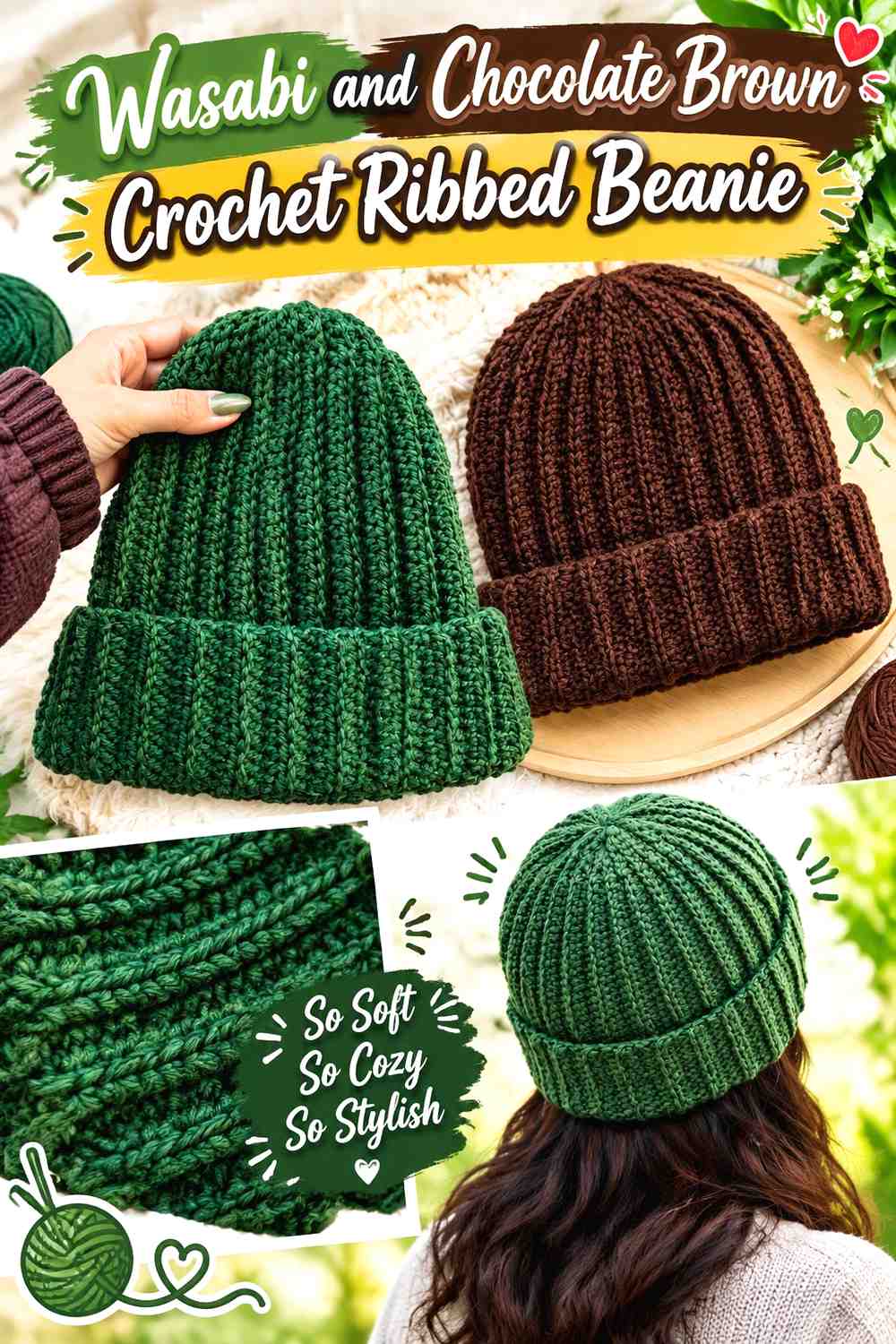
6. Wasabi And Chocolate Brown Crochet Ribbed Beanie
 SAVE
SAVERibbing already creates strong visual lines, so a simple color division can be more effective than numerous stripes. Wasabi can cover the crown while chocolate brown forms the lower band or folded brim.
This places the darkest color at a natural structural boundary and leaves the wasabi crown uninterrupted.
Wasabi Can Keep the Crochet Beanie Crown Bright and Continuous
Use wasabi throughout the main crown if you want the yellow-green side of the palette to dominate.
Keeping one color across the ribbing lets the raised and recessed lines remain the main surface detail rather than competing with repeated brown changes.
Chocolate Brown Can Anchor the Wasabi Crochet Beanie Brim
A chocolate-brown brim creates a strong lower boundary and gives the hat a clear two-part color plan.
If the brim already occupies a substantial portion of the finished hat, additional brown stripes on the crown may not be needed. Let the darker band provide the contrast.
Creator Credit: VivCrochets
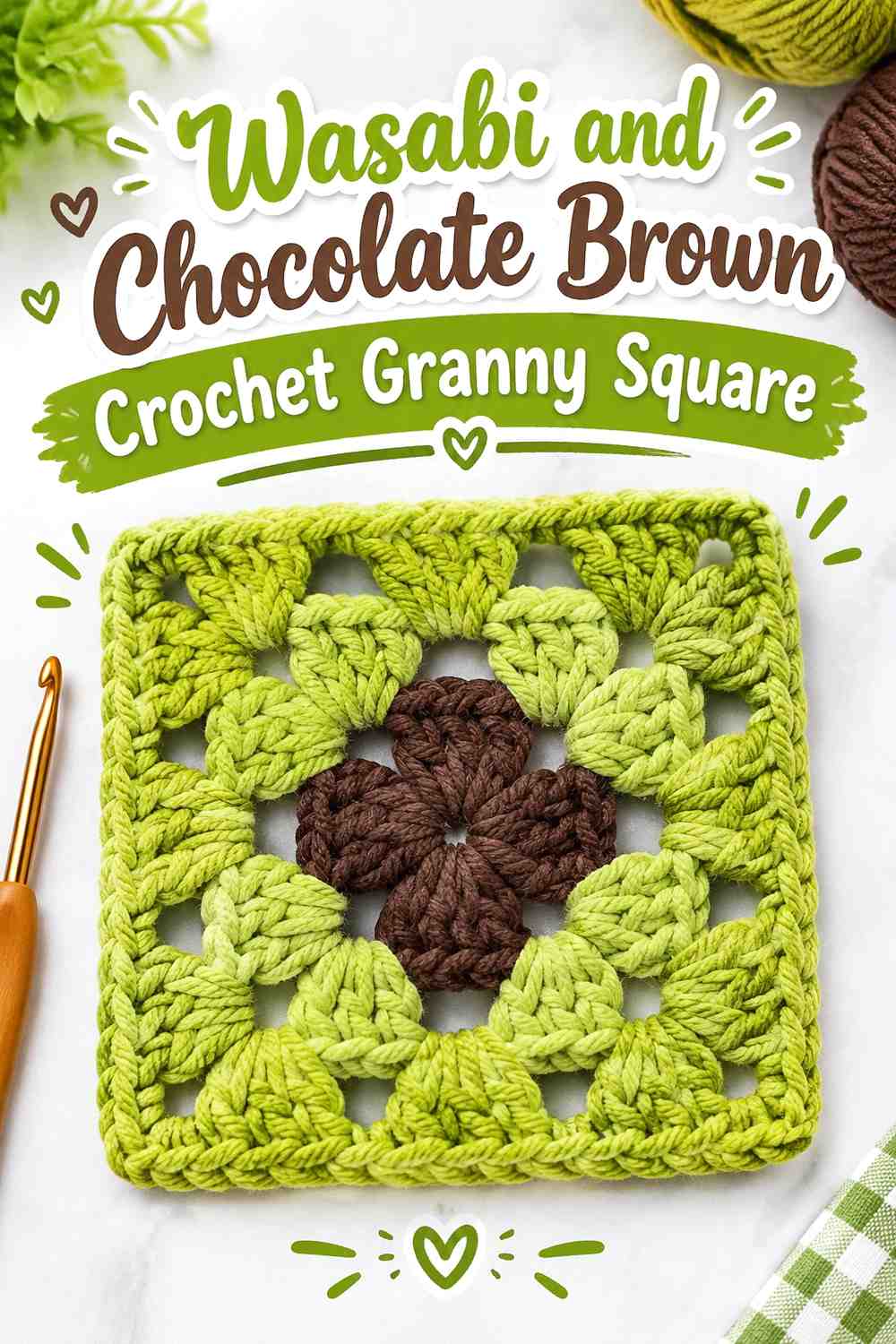
7. Wasabi And Chocolate Brown Crochet Granny Square
 SAVE
SAVEA single granny square is an efficient way to test how your actual wasabi and chocolate-brown yarns interact before committing to a larger project.
Wasabi can fill the center while chocolate brown expands around it, or you can reverse the order to see whether the darker center provides enough stitch visibility.
Wasabi Can Give the Crochet Granny Square a Clear Center
A wasabi center creates a bright focal point that can remain visible even after several chocolate-brown outer rounds are added.
Make more than one sample before choosing the final proportions. A center that looks large on a single square can appear much smaller once several motifs are arranged together.
Chocolate Brown Can Separate Repeated Wasabi Crochet Motifs
Using brown around the outer rounds creates clear boundaries when multiple wasabi-centered squares touch.
This is especially useful for blankets and bags where motif edges become part of the finished grid. If brown occupies too much area, widen the wasabi center or repeat green in another round.
Creator Credit: Hooked by Robin
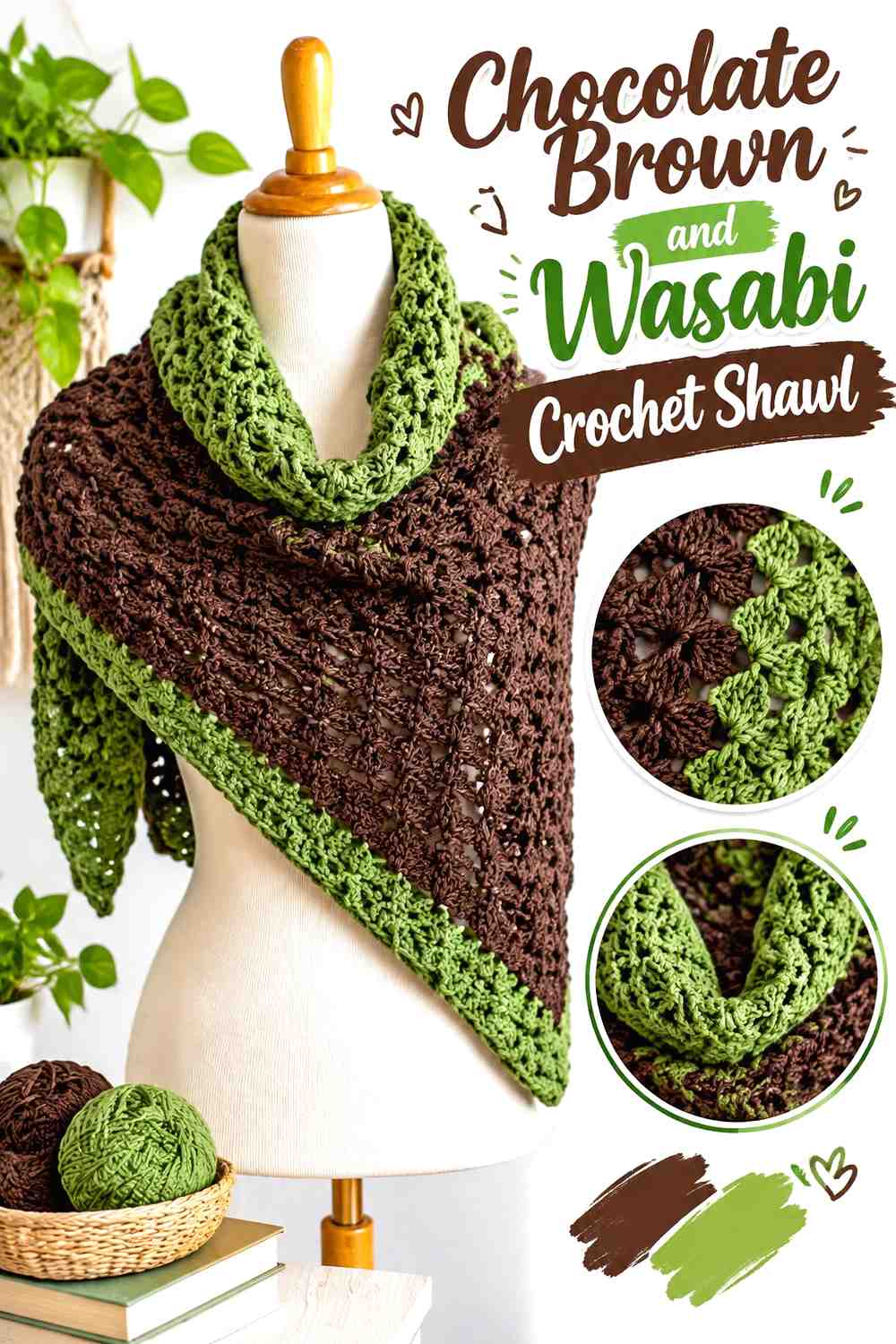
8. Chocolate Brown And Wasabi Crochet Shawl
 SAVE
SAVEA shawl offers enough length for chocolate brown to act as a broad background while wasabi appears in selected sections or around the final edge.
The arrangement works particularly well when the shawl contains lace or openwork because broad color areas prevent the palette from competing with the spaces in the fabric.
Chocolate Brown Can Give the Crochet Shawl a Deep Main Field
Use brown throughout much of the shawl if you want a darker overall wrap. Before doing so, sample any delicate stitch pattern in chocolate brown to check whether its structure stays readable.
If the texture disappears, move one or more detailed sections into wasabi rather than adding more complicated striping.
Wasabi Can Lift the Edge of a Chocolate Brown Crochet Shawl
A wasabi border or broad final section creates a noticeable contrast against the darker body.
Repeat a smaller wasabi section earlier in the shawl if the final green edge feels detached. One controlled repetition can connect the colors without changing the dominant brown direction.
Creator Credit: Fiber Flux
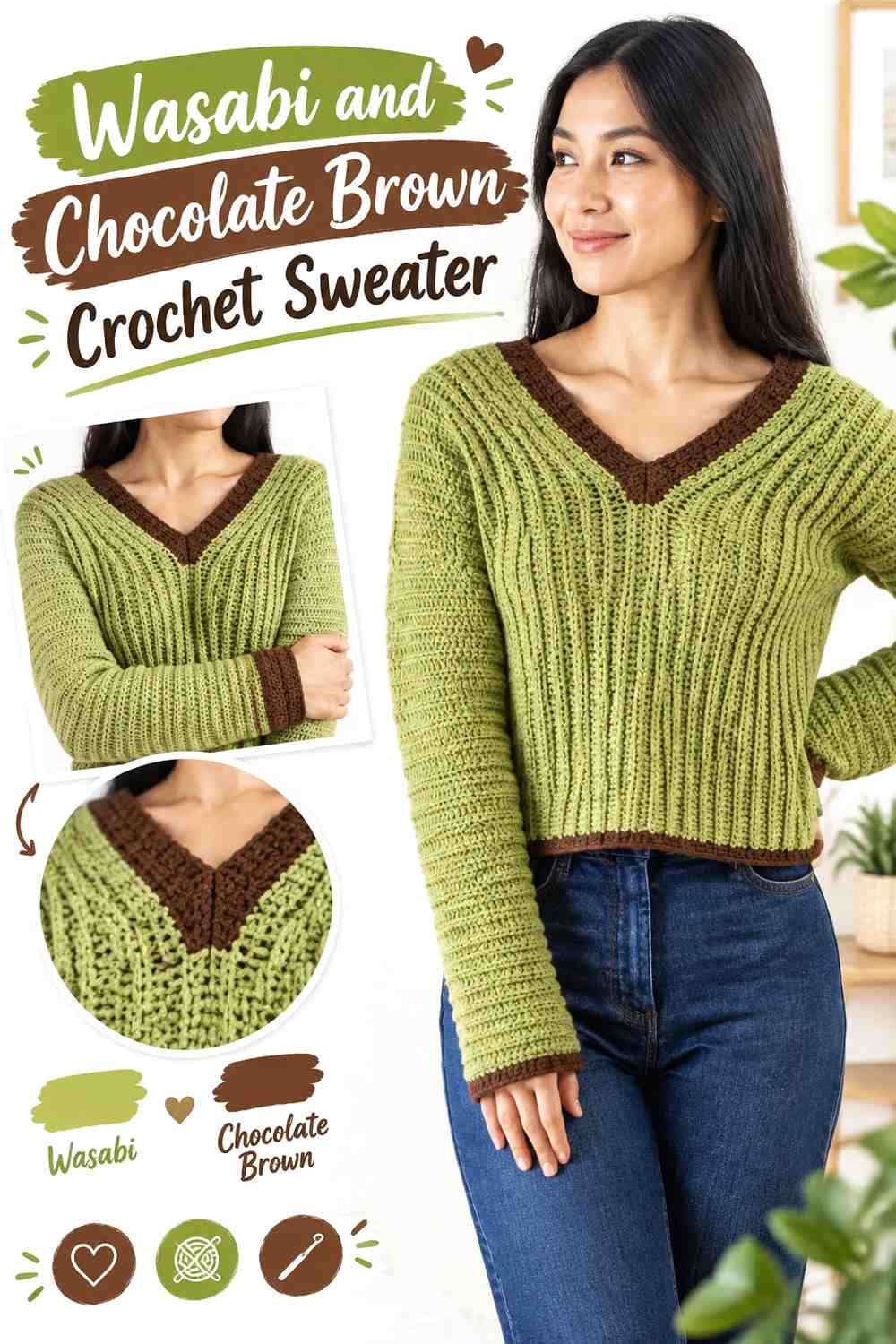
9. Wasabi And Chocolate Brown Crochet Sweater
 SAVE
SAVEA wasabi sweater body can use chocolate brown around the neckline, cuffs, and lower edge. These repeated finishing areas allow the darker shade to outline the garment while keeping the larger panels visibly green.
This is a useful arrangement when you want strong contrast without turning the sweater into a full striped design.
Wasabi Can Keep the Crochet Sweater Panels Visually Connected
Use wasabi across the front, back, and most of the sleeves for a continuous main field.
If the sweater has decorative stitchwork, the lighter color may also allow shadows and surface changes to remain more noticeable than they would in very dark brown.
Chocolate Brown Can Outline the Wasabi Crochet Sweater
Chocolate brown around a neckline creates a strong boundary, especially when repeated at the cuffs or hem.
Choose two or three finishing areas rather than automatically placing brown on every edge. Too many dark outlines can visually divide the garment into separate sections.
Creator Credit: For The Frills
10. Chocolate Brown And Wasabi Crochet Bucket Hat
 SAVE
SAVEA bucket hat naturally divides into crown, sides, and brim. Chocolate brown can cover the upper hat while wasabi takes over at the brim, creating a broad green accent without introducing narrow stripes.
The brim is visible from several directions, so wasabi can have significant visual impact even when it covers less total area.
Chocolate Brown Can Keep the Crochet Bucket Hat Crown Grounded
Use chocolate brown through the crown and sides for a solid dark upper section.
If the hat includes textured stitches, check the brown yarn before completing the full crown. Small details can be less noticeable in very dark shades.
Wasabi Can Turn the Chocolate Brown Crochet Brim Into a Focal Area
A wasabi brim gives the green enough width to compete visually with the brown crown without requiring equal total coverage.
Before adding any green higher on the hat, view the brim in the hat’s finished shape. Its visible area may already provide enough wasabi repetition.
Creator Credit: PassioKnit Kelsie
11. Wasabi And Chocolate Brown Crochet Market Bag
 SAVE
SAVEA market bag provides natural color zones at the base, body, upper edge, and handles. Wasabi can fill the open or mesh body while chocolate brown defines the base and handles.
Repeating brown at both ends of the bag creates a useful frame around the lighter central area.
Wasabi Can Keep the Crochet Market Bag Body Easy to Read
Use wasabi throughout the main openwork so the repeated mesh or lace structure stays visually continuous.
Since market bags can change shape when filled, broad single-color areas usually remain easier to read than complicated narrow stripes that stretch in different directions.
Chocolate Brown Can Connect Wasabi Market Bag Handles and Base
Chocolate brown at the base and handles places the darker color in two structurally important areas.
If that creates more brown than you want, keep the base wasabi and reserve chocolate for the upper edge and handles. The important point is that the brown repeats rather than appearing in one isolated location.
Creator Credit: The Crochet Crowd
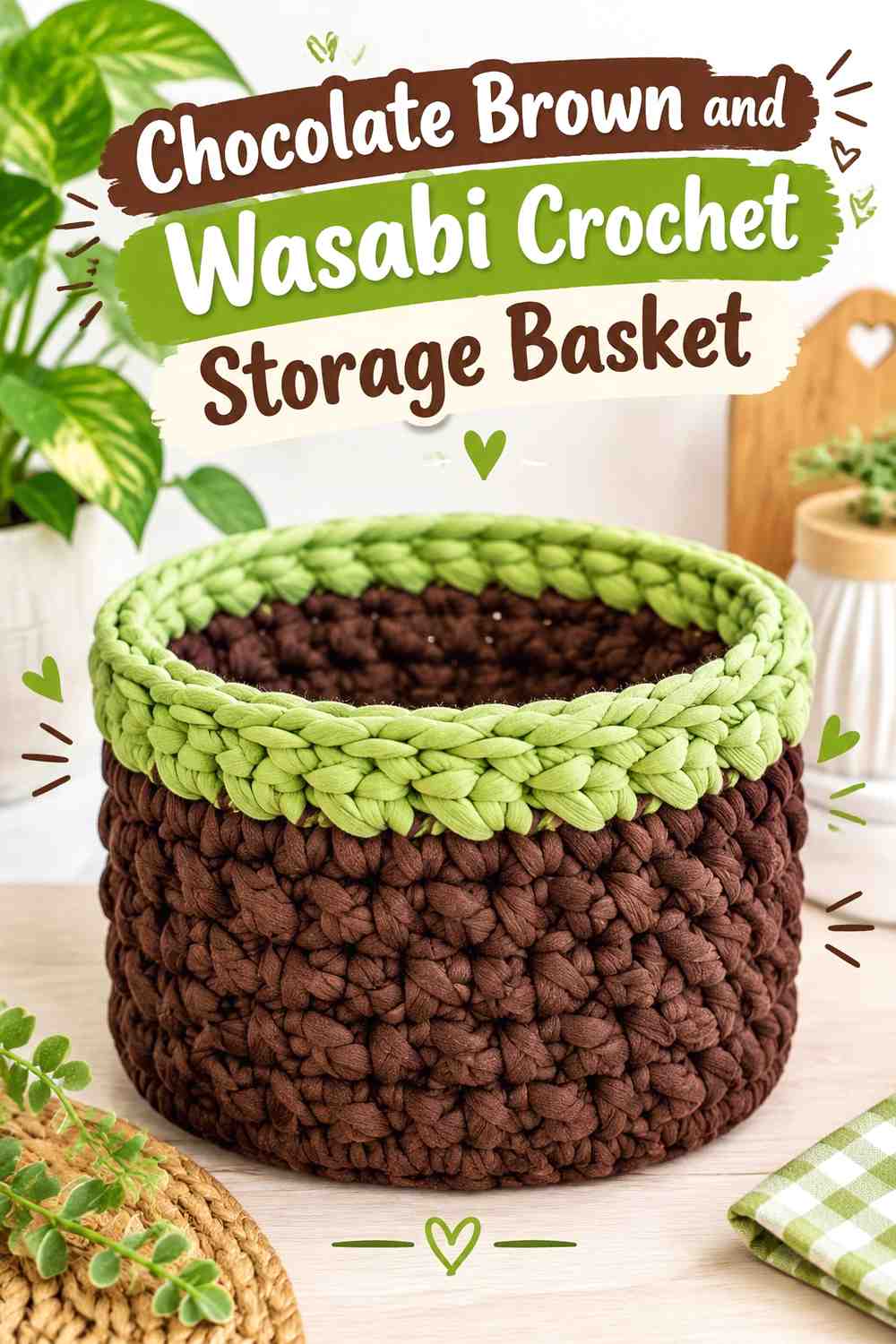
12. Chocolate Brown And Wasabi Crochet Storage Basket
 SAVE
SAVEA storage basket suits large horizontal color blocks. Chocolate brown can form the lower section and base, while wasabi covers the upper walls and rim.
This arrangement uses the darker color near the bottom, where it creates visual weight, while keeping the brighter green visible higher on the basket.
Chocolate Brown Can Ground the Crochet Basket Lower Section
Continue chocolate brown through enough of the side wall that it reads as a deliberate color block rather than a thin base line.
If the basket has pronounced texture, test whether the darkest brown still allows that surface detail to show before using it across most of the lower section.
Wasabi Can Lighten the Chocolate Brown Crochet Basket Upper Walls
Wasabi across the upper part shifts the visual focus upward and prevents the basket from becoming overwhelmingly dark.
For handles, decide which effect you want. Brown handles repeat the lower base and create stronger continuity, while wasabi handles preserve a cleaner top-and-bottom color division.
Creator Credit: Lallaulab
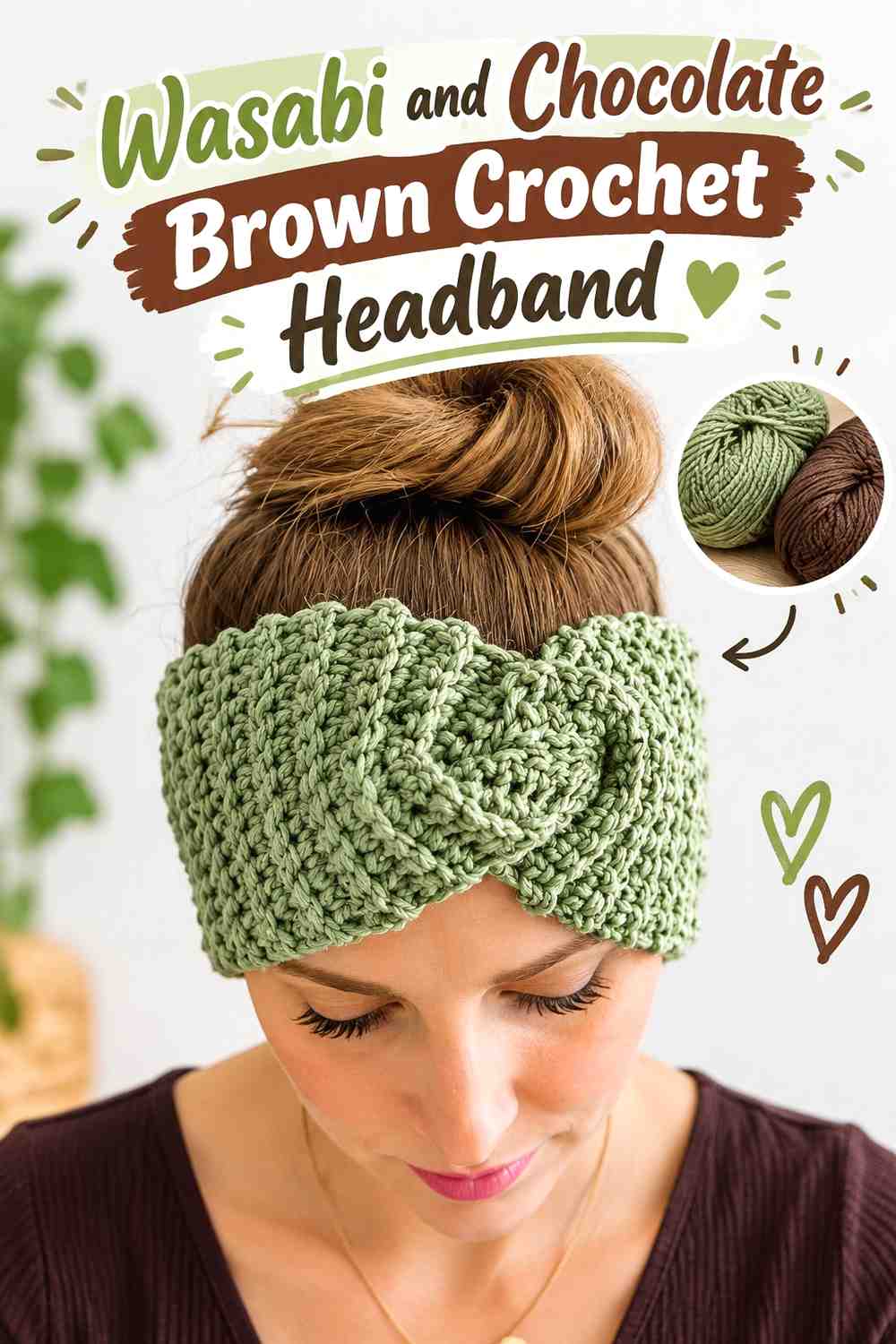
13. Wasabi And Chocolate Brown Crochet Headband
 SAVE
SAVEA headband has limited surface area, so the palette benefits from a simple hierarchy. Wasabi can cover most of the band while chocolate brown appears around the central twist, join, or another focused detail.
Because the headband curves when worn, check color placement in its finished shape rather than judging only the flat strip.
Wasabi Can Keep the Crochet Headband Surface Continuous
Using wasabi around most of the circumference makes the green direction obvious and gives ribbing or other texture an uninterrupted background.
If the headband changes width near the center, you can use that construction change as the point where brown begins rather than introducing color randomly.
Chocolate Brown Can Create a Focused Wasabi Crochet Headband Accent
Chocolate brown at the twist or center provides strong definition in a relatively small area.
If you want more brown, repeat a narrow section at both ends instead of dividing the entire headband into alternating stripes. This preserves wasabi as the dominant color.
Creator Credit: B.Hooked Crochet
Comparing Wasabi and Chocolate Brown Crochet Palette Directions
For a wasabi-led result, the blanket, pillow, granny square tote, ribbed beanie, granny square, sweater, market bag, and headband give the yellow-green color substantial surface area. Chocolate brown then works as a frame, border, handle color, brim, join, or finishing detail.
For a chocolate-brown-led result, the cardigan, scarf, shawl, bucket hat, and storage basket create a deeper overall surface and use wasabi to interrupt that visual weight.
Motif projects are especially useful when you are unsure about the combination. A single granny square can show whether your wasabi is light enough to separate clearly from chocolate brown and whether the dark outer rounds make the motif more defined or heavier than intended.
Conclusion
Wasabi and chocolate brown work most clearly in crochet when their roles are deliberately unequal. Wasabi can provide the larger, livelier surface while chocolate brown defines edges and structural features, or the relationship can be reversed for a darker project with concentrated green accents.
Use larger wasabi sections when stitch texture needs to stay visible. Chocolate brown works especially well around borders, cuffs, brims, handles, joins, and bases where a darker color can reinforce an existing visual boundary.
For motifs, test the order of the colors before making a full set. For garments, view all panels together before deciding how much brown or wasabi belongs on the finishing. And when substituting yarn, preserve the important relationship—a yellow-green wasabi direction paired with a substantially deeper brown—rather than trying to match a commercial shade name exactly.
Frequently Asked Questions
Do wasabi and chocolate brown work together in crochet?
They can create a strong earthy contrast when the wasabi is visibly lighter or brighter than the chocolate brown. Giving one color more surface area and assigning the second a repeated structural role usually keeps the pairing organized.
Should wasabi or chocolate brown be the dominant crochet color?
Either can lead. Use wasabi as the dominant shade when you want the finished project to look lighter and more green. Let chocolate brown dominate when you want a deeper overall surface with smaller wasabi accents.
Where should chocolate brown go in a wasabi crochet project?
Borders, cuffs, handles, brims, joins, bases, and outer motif rounds are useful places because they already define part of the object’s construction. The dark shade can emphasize those boundaries without requiring extensive brown coverage.
Where should wasabi go in a chocolate-brown crochet project?
Use wasabi where you want a clear focal contrast: scarf ends, cardigan cuffs, shawl edging, hat brims, basket upper sections, or motif centers. Repeating it in at least two related areas can make the accent feel more integrated.
How can I check whether wasabi and chocolate brown have enough contrast?
Place the actual yarns side by side and look at them from a distance. A grayscale photo can help you compare their lightness. If the shades merge more than expected, make the individual color sections larger rather than relying on very small details.
Can chocolate brown hide crochet texture?
Very dark yarn can make subtle stitch shadows harder to distinguish. When cables, bobbles, ribbing, or another texture is important, work a small brown sample before using chocolate across the most detailed part of the project.
What can I use instead of wasabi in this crochet palette?
Choose another yellow-green or muted chartreuse-like shade that remains clearly separate from the chocolate brown. Preserve its lighter or livelier role rather than focusing on matching the word “wasabi” exactly.