Cobalt blue and rust create a crochet palette with strong warm-and-cool contrast. Cobalt brings a saturated blue foundation, while rust introduces an earthy orange-brown direction that can warm edges, motifs, cuffs, stripes, and other selected details.
The pair does not need equal coverage. A cobalt-led sweater can use relatively small rust cuffs and neckline trim because the warm color already stands apart from the blue. On a rust-led scarf or tote, cobalt can instead provide the darkest or coolest visual breaks.
Crochet construction gives you natural places to control that contrast. Granny-square centers and outer rounds, cardigan cuffs, bag handles, hat brims, towel borders, and rug rings can all carry one color without making the palette look randomly divided.
Quick List
- Cobalt Blue And Rust Crochet Blanket
- Rust And Cobalt Blue Crochet Cardigan
- Cobalt Blue And Rust Crochet Granny Square Tote
- Rust And Cobalt Blue Crochet Scarf
- Cobalt Blue And Rust Crochet Ribbed Beanie
- Rust And Cobalt Blue Crochet Granny Square
- Cobalt Blue And Rust Crochet V Neck Sweater
- Rust And Cobalt Blue Crochet Market Bag
- Cobalt Blue And Rust Crochet Sun Hat
- Rust And Cobalt Blue Crochet Earrings
- Cobalt Blue And Rust Crochet Scrunchie
- Rust And Cobalt Blue Crochet Drawstring Pouch
- Cobalt Blue And Rust Crochet Everyday Tote
- Rust And Cobalt Blue Crochet Tea Towel
- Cobalt Blue And Rust Crochet Washcloth Set
- Rust And Cobalt Blue Crochet Cup Cozy
- Cobalt Blue And Rust Crochet Round Rug
Decide Whether Cobalt Blue or Rust Should Lead
Cobalt blue is usually visually assertive, so it can remain noticeable even when it occupies less surface area. Rust can therefore lead across large panels, scarf lengths, or bag bodies while cobalt is restricted to borders, handles, cuffs, and other structural details.
A cobalt-dominant project creates a cooler overall result. Rust then works particularly well at locations where the eye already expects a transition, such as the edge of a blanket, a sweater neckline, the brim of a hat, or the outer rounds of a motif.
Before beginning a large project, compare the actual yarns side by side. A bright cobalt paired with muted rust will create a different balance from a softened blue paired with a deeper reddish brown.
Use Cobalt Blue and Rust Contrast to Protect Crochet Texture
Hue contrast does not automatically guarantee light-and-dark contrast. Your cobalt and rust may still sit surprisingly close together in value.
Take a grayscale photo of the yarns if small motif details need to remain distinct. If both shades appear similarly dark, use broader color sections rather than alternating them in tiny stitches.
Texture matters too. Cables, ribbing, bobbles, waffle surfaces, and other raised crochet details can become harder to see in a very deep cobalt. When texture is central to the project, make a small sample in both colors before deciding which shade belongs across the most detailed area.
1. Cobalt Blue And Rust Crochet Blanket
 SAVE
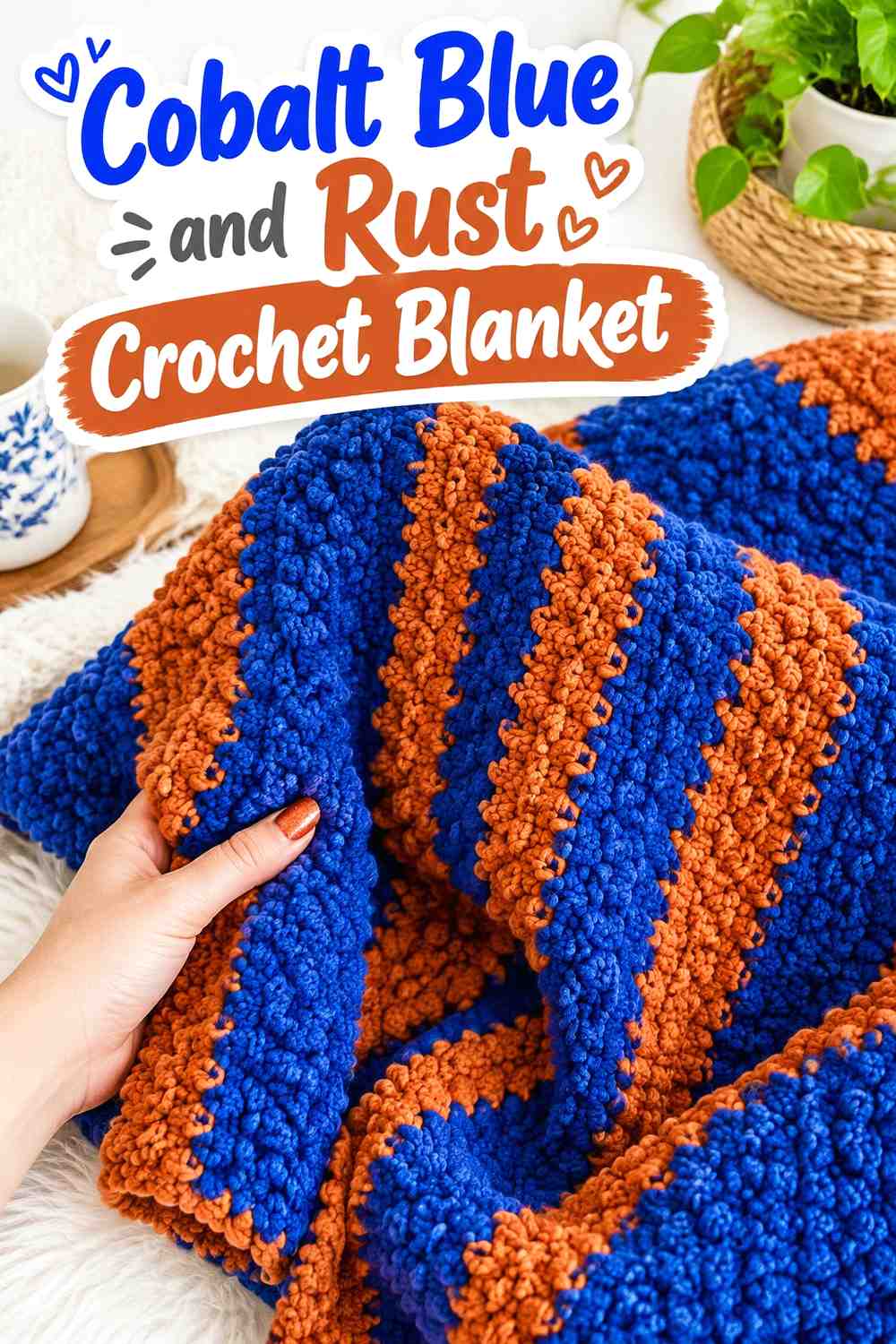
SAVEA blanket gives cobalt blue enough area to create a strong cool foundation while allowing rust to appear in substantial bands or an outer border. Wider color blocks usually suit this pairing better than constant narrow striping because both colors are visually strong.
Let cobalt cover the broadest areas if you want the blanket to read blue first, then repeat rust in a few deliberate places so the warm shade remains connected across the surface.
Cobalt Blue Can Carry the Main Crochet Blanket Field
Use cobalt blue for large uninterrupted sections when the stitch pattern already provides texture. One stable color lets the crochet surface remain visible without adding another visual change at every repeat.
If the blanket becomes too blue-heavy, increase the size of one rust section instead of scattering small rust lines throughout the entire field.
Rust Can Warm a Cobalt Blue Crochet Blanket Border
Rust around the outer edge introduces warmth at a natural stopping point and prevents the blue center from continuing visually beyond the blanket.
Repeat rust once or twice inside the main field if the border otherwise seems detached. The repetition can be modest; its purpose is connection rather than equal coverage.
Creator Credit: Bella Coco
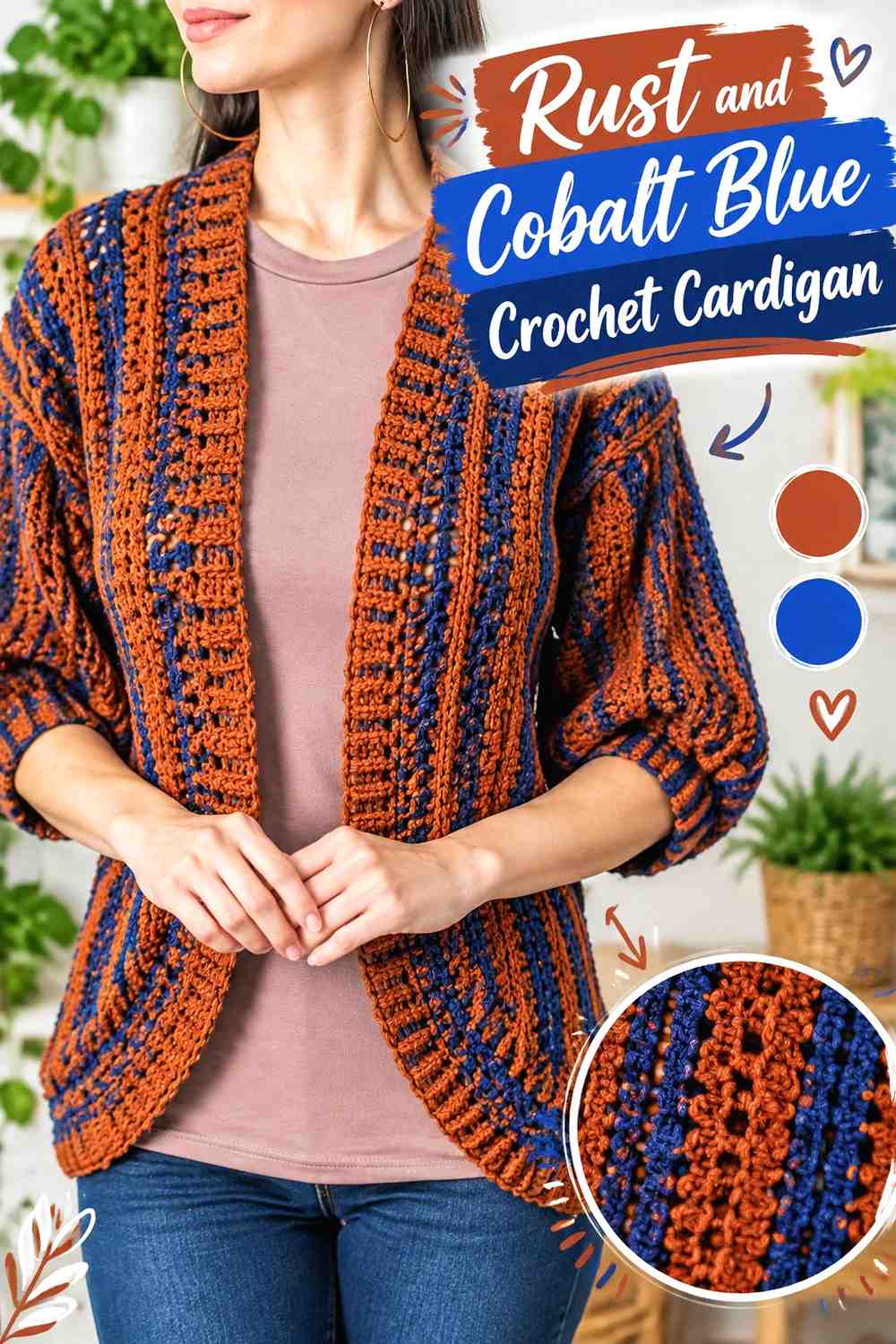
2. Rust And Cobalt Blue Crochet Cardigan
 SAVE
SAVEA cardigan can use rust across the main body and sleeves while cobalt blue defines cuffs, lower edging, or the front opening. That distribution keeps the garment warm overall but lets blue trace important structural boundaries.
Because cuffs and edging naturally repeat, they are useful locations for controlling a strong accent without creating stripes through every panel.
Rust Can Keep the Crochet Cardigan Panels Visually Connected
Use rust continuously across the front, back, and most of the sleeves if you want the garment to have a clear dominant color.
Before adding blue, lay the cardigan sections together. A cobalt accent that looks small on one piece can become much more prominent once both cuffs and the full front edge are visible at the same time.
Cobalt Blue Can Define Rust Cardigan Cuffs and Edging
Cobalt blue around cuffs and the front band creates a crisp cooler boundary against the rust body.
Choose a limited number of finishing areas for cobalt. Outlining cuffs, hem, neckline, pockets, and every seam can make the garment visually fragmented instead of simply accented.
Creator Credit: TCDDIY
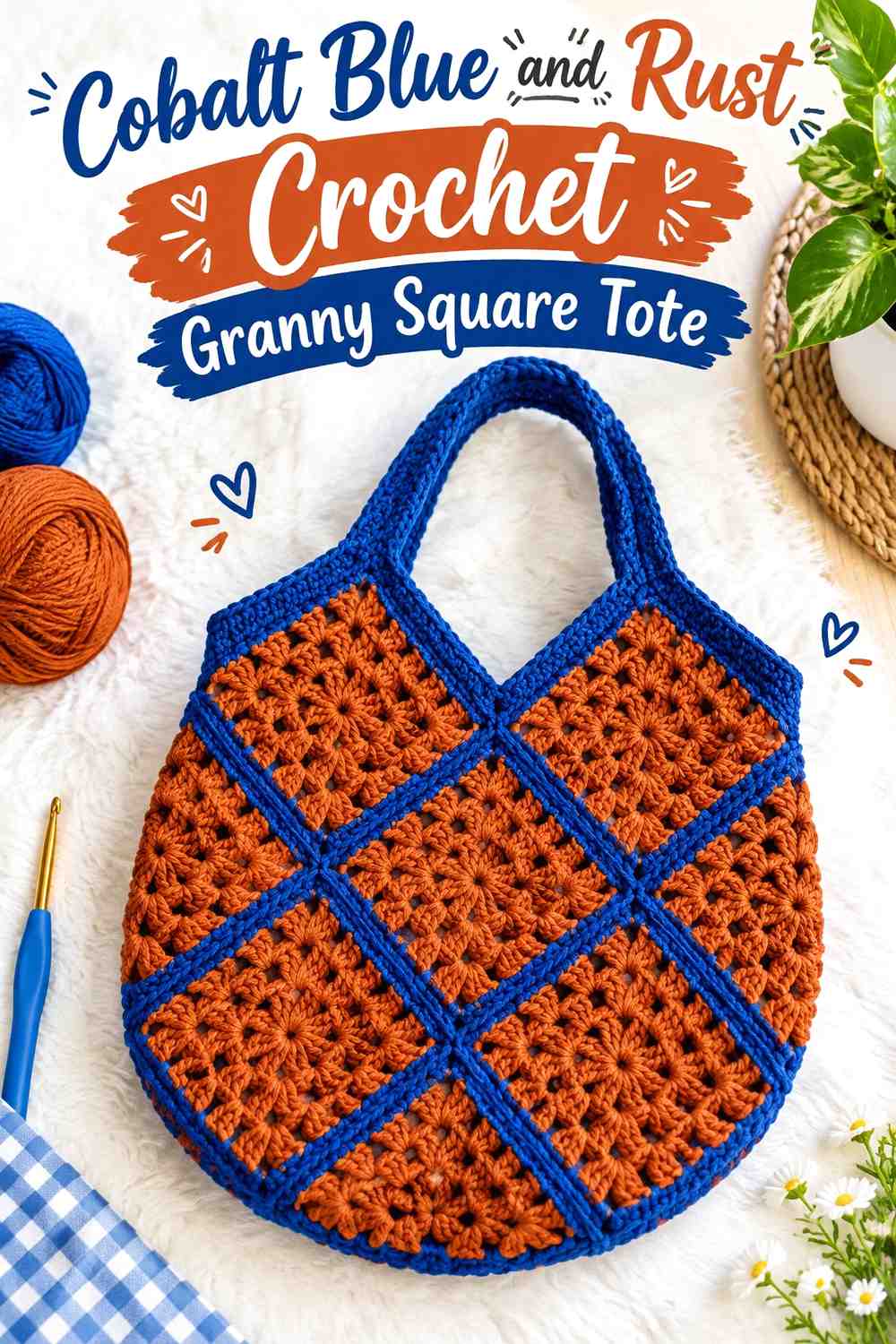
3. Cobalt Blue And Rust Crochet Granny Square Tote
 SAVE
SAVEGranny squares give cobalt and rust predictable locations within repeated motifs. Cobalt blue can occupy the centers while rust moves through later rounds, or rust can form the centers and cobalt can define the edges and joins.
Whatever order you choose, repetition matters more than equal color amounts.
Cobalt Blue Can Repeat Through Rust Crochet Tote Motifs
Keeping cobalt in every motif center creates a recurring focal point across the bag. Even a relatively small blue center can remain noticeable when the same placement appears again and again.
Arrange all finished squares before joining them so the cobalt areas stay balanced across both sides of the tote.
Rust Can Separate Cobalt Blue Crochet Granny Square Centers
Rust outer rounds give adjacent cobalt centers more space and prevent several strong blue areas from visually running together.
If rust also becomes the joining color, consider repeating cobalt in the handles or upper edge so the blue remains visible beyond the motif centers.
Creator Credit: Ginger Knots
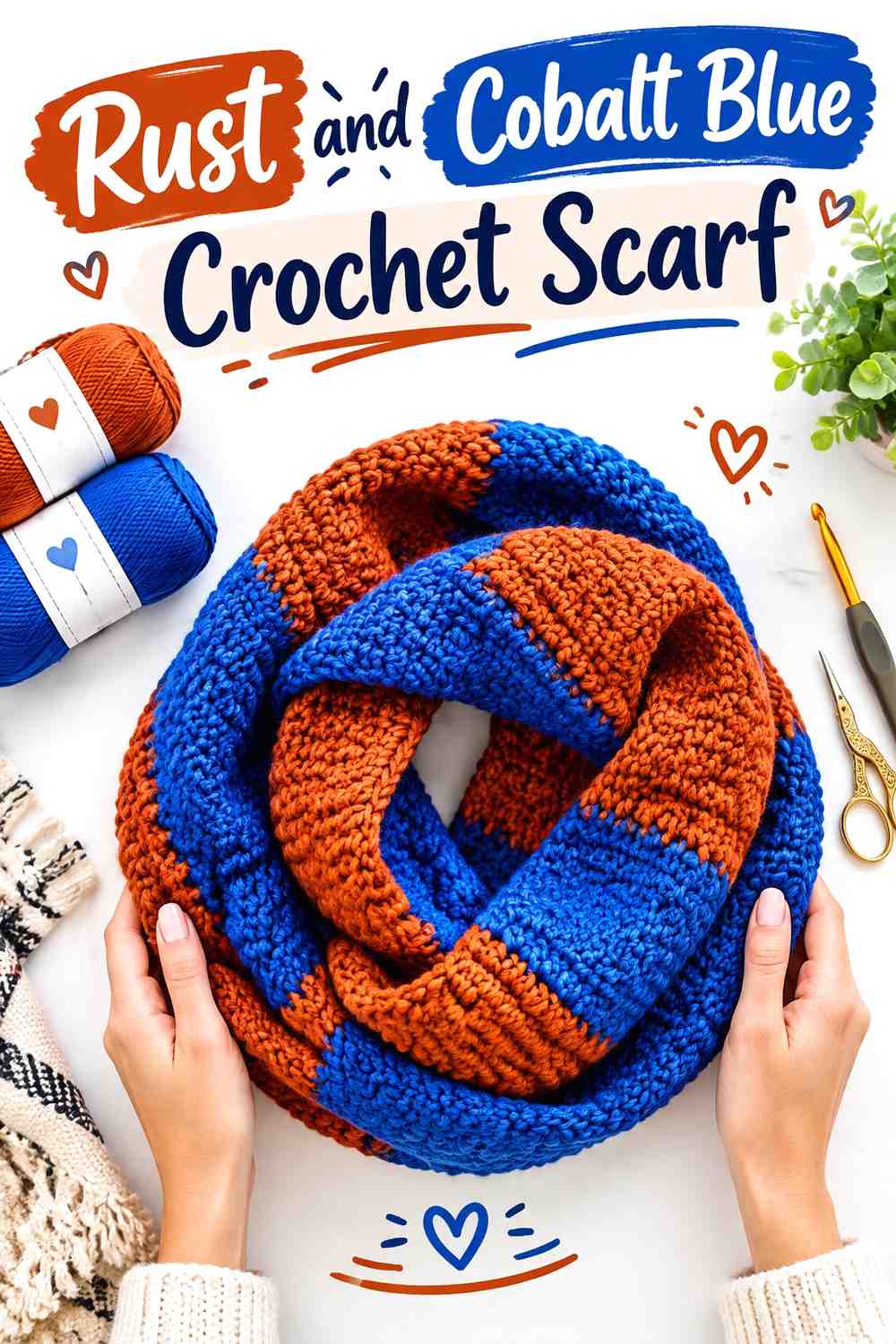
4. Rust And Cobalt Blue Crochet Scarf
 SAVE
SAVEA scarf provides enough length for rust to dominate without making cobalt blue disappear. Use rust through most of the central section and place cobalt at both ends or in a few broader blocks.
This creates cleaner color rhythm than changing between two strong shades every few rows.
Rust Can Carry the Main Crochet Scarf Length
A long uninterrupted rust section gives textured stitches room to remain visible and keeps the accessory clearly warm-led.
If the scarf begins to look too uniform, add one substantial cobalt area rather than numerous narrow stripes that compete with the stitch pattern.
Cobalt Blue Can Give Rust Crochet Scarf Ends Strong Definition
Cobalt blue at both ends creates repeated cool anchors and stays visible even when the scarf is wrapped.
Make the blue sections broad enough to register from a distance. Tiny cobalt lines can disappear against a long rust body and may look incidental instead of intentional.
Creator Credit: Sewrella
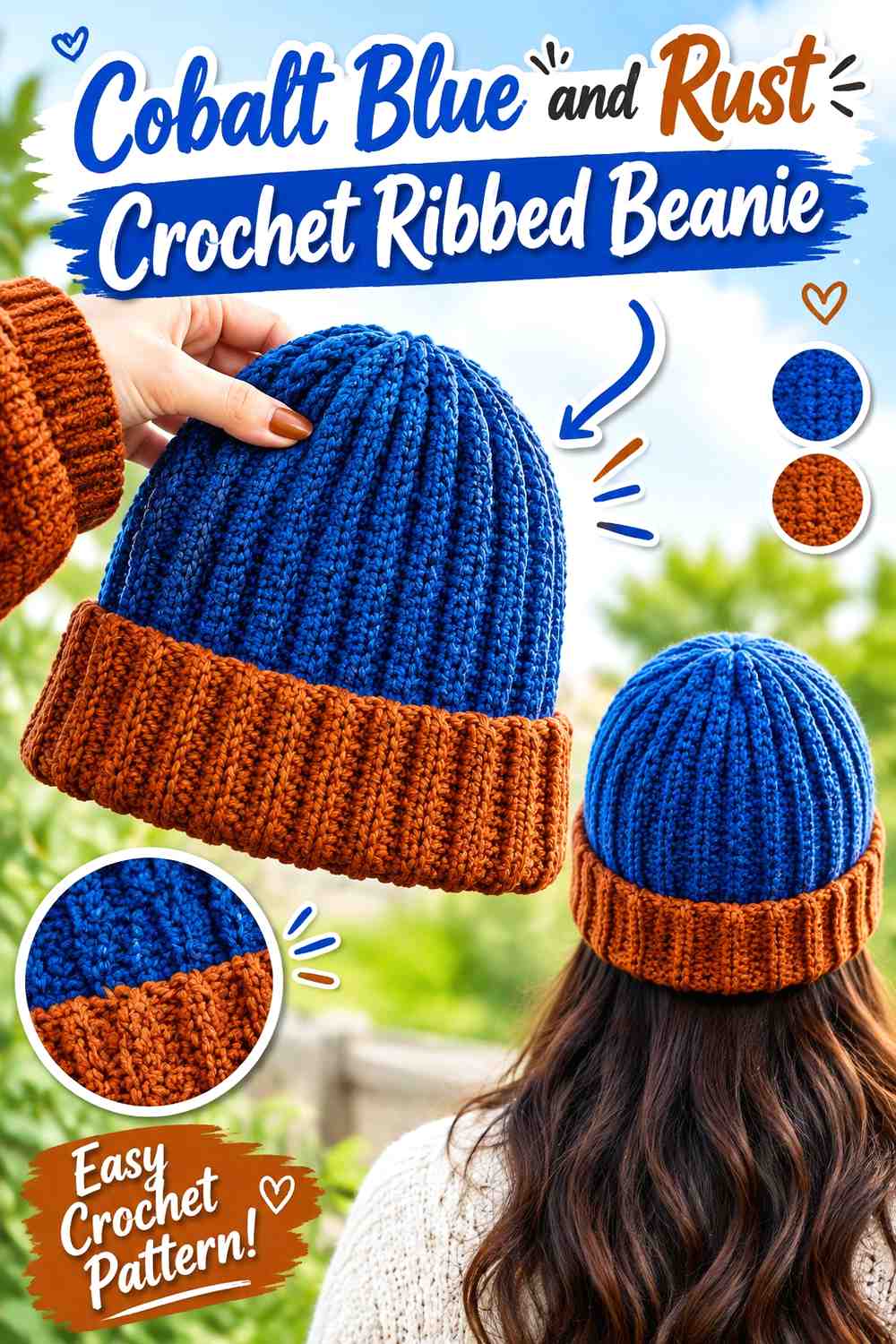
5. Cobalt Blue And Rust Crochet Ribbed Beanie
 SAVE
SAVERibbing already produces strong directional lines, so a simple color division works well. Cobalt blue can cover the crown while rust forms the lower band or folded brim.
The result gives each shade a clear territory without interrupting the ribbed texture repeatedly.
Cobalt Blue Can Keep the Crochet Beanie Crown Continuous
Use cobalt through most of the crown when you want the cool color to lead. A single uninterrupted field lets the ribbing provide the surface detail.
If your cobalt is especially dark, make sure the ribbed shadows still remain visible before committing the entire crown to that shade.
Rust Can Anchor the Cobalt Blue Crochet Beanie Brim
A rust brim creates a broad warm contrast at a natural structural point.
Because the brim already occupies meaningful visual space, more rust may not be necessary. Adding small rust stripes higher on the hat can weaken the clean crown-and-brim division.
Creator Credit: VivCrochets
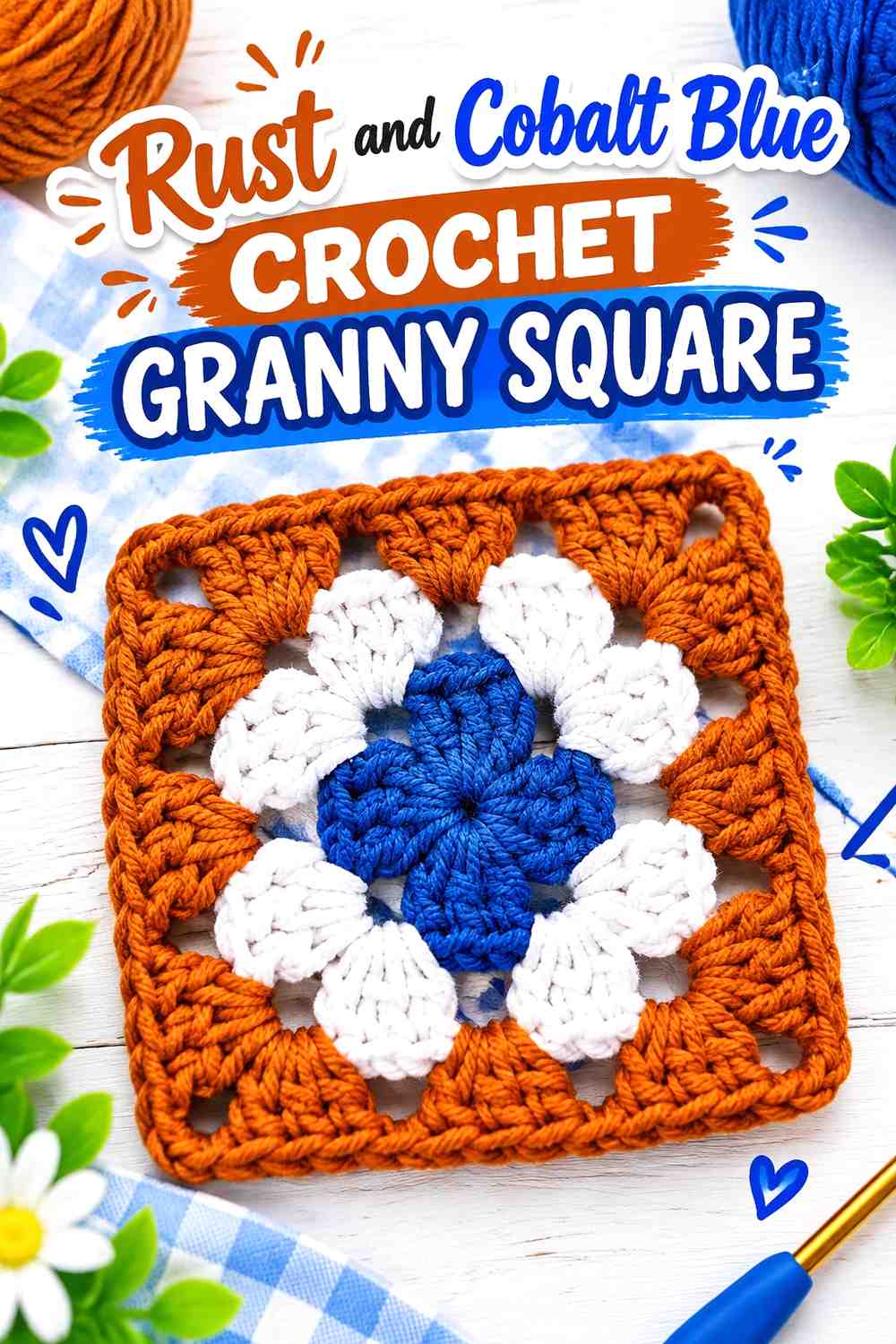
6. Rust And Cobalt Blue Crochet Granny Square
 SAVE
SAVEA single granny square is one of the easiest places to test this pairing before committing to a blanket, cardigan, or bag. Rust can occupy the center while cobalt blue frames later rounds, giving you an immediate sense of how strongly the colors separate.
Make a second motif with the roles reversed if you are uncertain which shade should dominate.
Rust Can Establish the Cobalt Blue Crochet Granny Square Center
A rust center provides a warm focal point surrounded by cooler cobalt. Keep the rust area large enough that it will still be noticeable once several motifs sit side by side.
One square can be misleading because the outer color gains far more visual area when a complete motif grid is assembled.
Cobalt Blue Can Give Rust Crochet Motifs a Defined Outer Frame
Cobalt blue around the outer rounds creates a strong border between neighboring rust centers.
If cobalt becomes too dominant after several squares are grouped together, enlarge the rust center or add another rust round before the final blue frame.
Creator Credit: Hooked by Robin
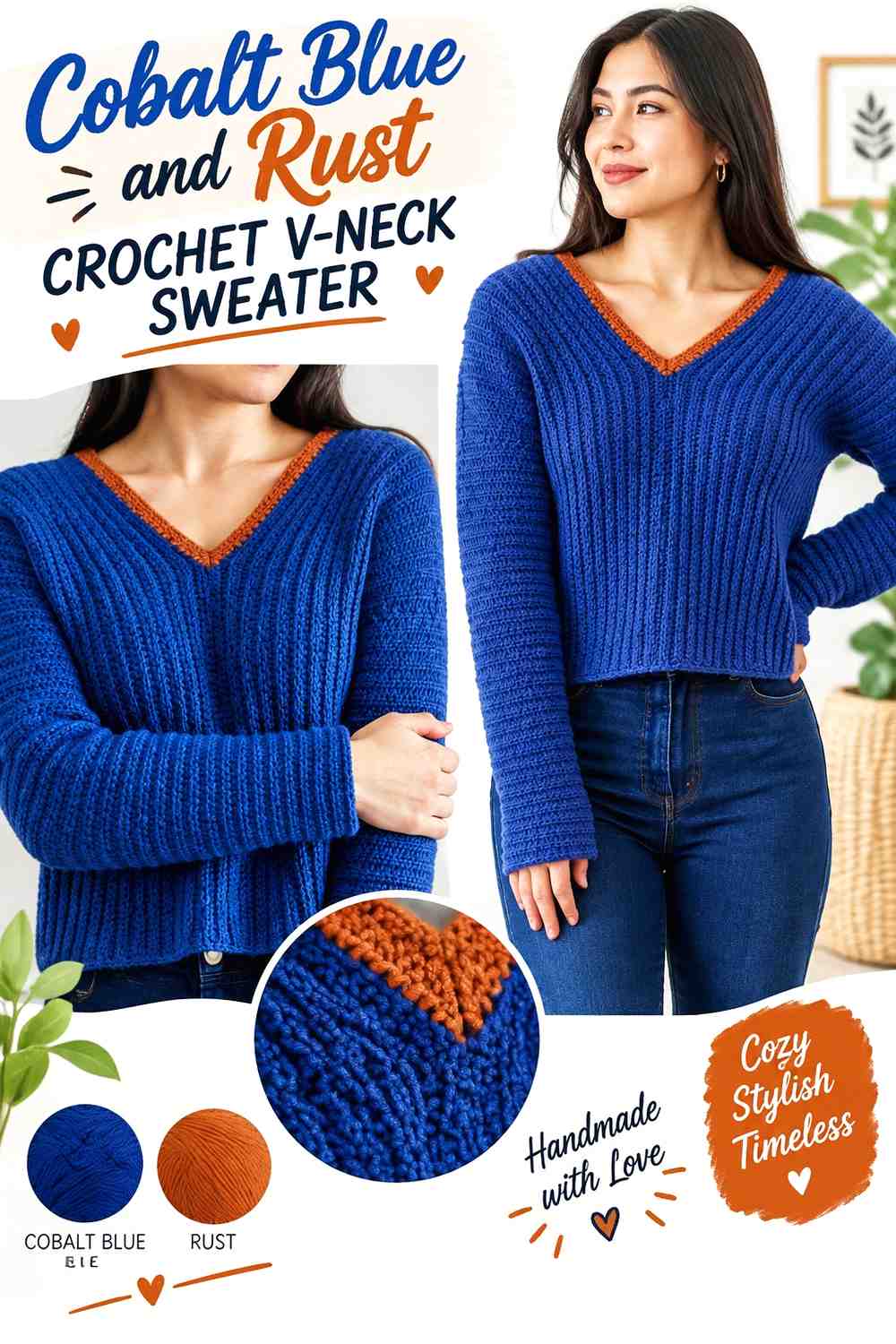
7. Cobalt Blue And Rust Crochet V Neck Sweater
 SAVE
SAVEA V-neck sweater gives cobalt blue a broad garment field and rust a natural focal position around the neckline. Rust can also repeat at the cuffs or hem so the warm shade does not appear only once.
Keeping most of the panels blue prevents the stronger contrast from breaking the garment into too many sections.
Cobalt Blue Can Carry the Main Crochet Sweater Panels
Use cobalt across the front, back, and sleeves for a continuous cool foundation.
If the sweater uses subtle texture, sample it in cobalt before working large panels. Very dark or saturated yarn can make small stitch shadows less obvious.
Rust Can Outline the Cobalt Blue Crochet V-Neck
The neckline is a useful place for rust because the warm color follows an existing garment shape.
Repeat rust at the cuffs or lower edge if needed, but keep those sections relatively restrained when cobalt should remain the dominant color.
Creator Credit: forthefrills
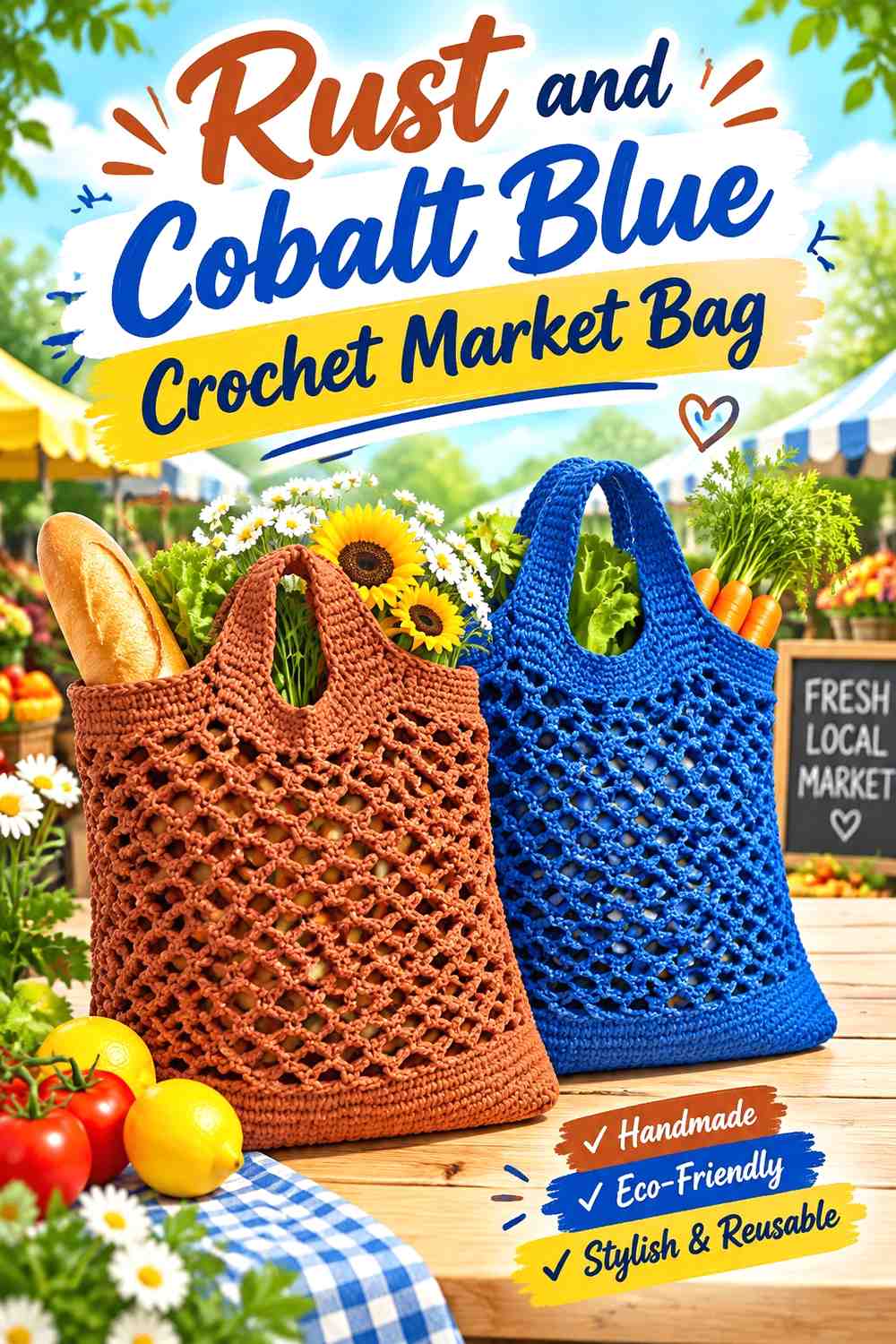
8. Rust And Cobalt Blue Crochet Market Bag
 SAVE
SAVEA market bag provides separate areas at the base, mesh body, upper edge, and handles. Rust can cover the expandable body while cobalt blue appears around the base and handles.
The cooler color then repeats at both ends of the bag without interrupting the openwork constantly.
Rust Can Keep the Crochet Market Bag Body Cohesive
Use rust throughout most of the open body so the mesh or repeated stitch pattern remains visually continuous.
A filled market bag changes shape significantly, which makes broad color areas easier to read than several narrow stripes that stretch in different directions.
Cobalt Blue Can Connect Rust Crochet Market Bag Handles and Base
Cobalt handles become highly visible because they extend above the main body. Repeating blue at the base or top edging integrates them with the rest of the bag.
If the handles already create enough blue, keep the second cobalt area narrow so rust continues to dominate.
Creator Credit: The Crochet Crowd
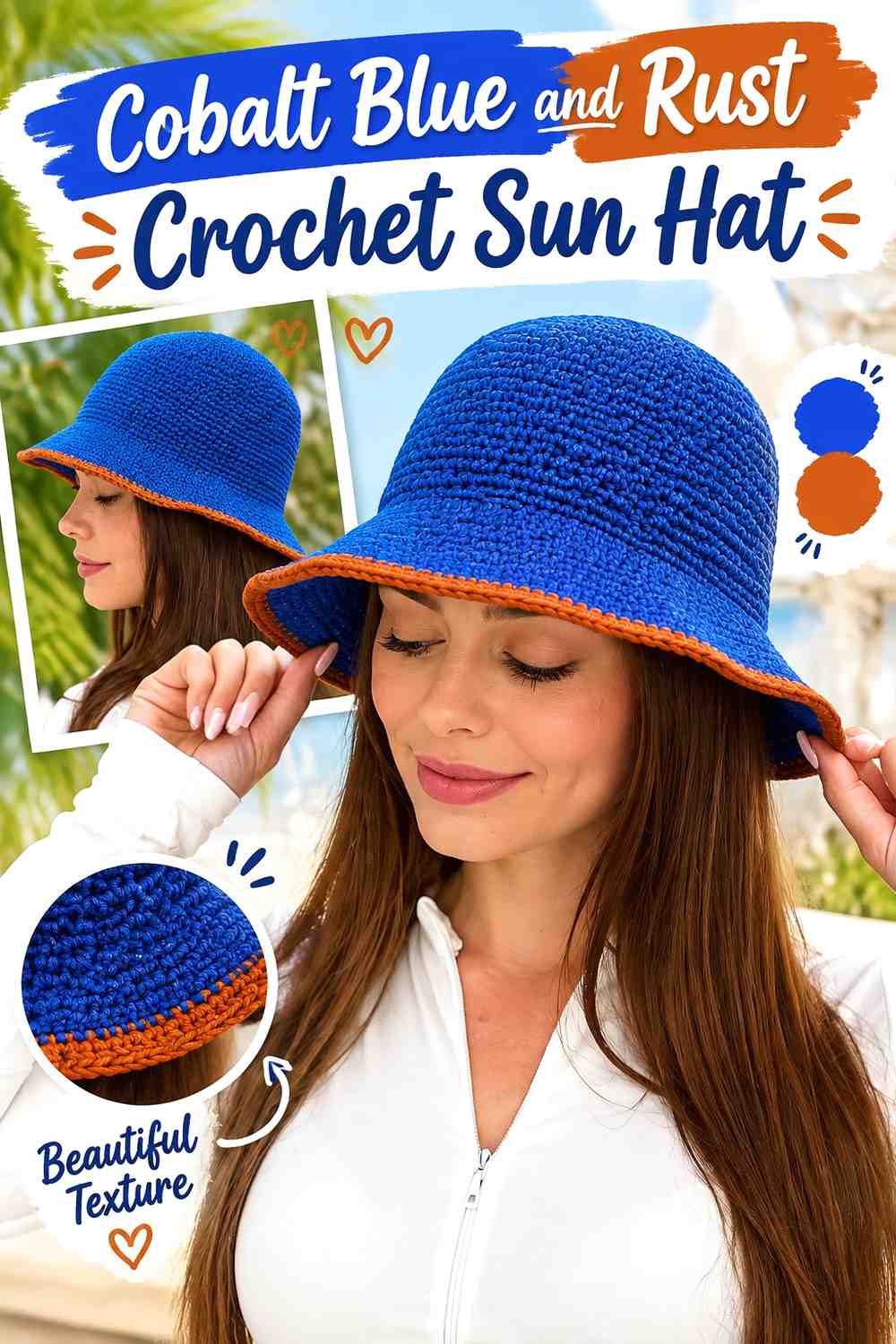
9. Cobalt Blue And Rust Crochet Sun Hat
 SAVE
SAVEA sun hat naturally divides into crown, sides, and brim. Cobalt can cover the upper portion while rust takes over at the brim, creating a broad warm contrast that can be seen from several angles.
This structure avoids unnecessary striping and uses the shape of the hat to organize the palette.
Cobalt Blue Can Keep the Crochet Sun Hat Crown Defined
Continue cobalt across the crown and sides for a strong cool-colored upper section.
Before adding rust, view the hat shape as a whole. If the crown has decorative texture, check that the blue does not conceal details that matter to the finished design.
Rust Can Make the Cobalt Blue Crochet Sun Hat Brim Warmer
A rust brim supplies substantial warm coverage without requiring equal color proportions across the entire hat.
Because the brim is visually prominent, additional rust bands around the crown may be unnecessary. Let the construction create the color division.
Creator Credit: Mindful Knots
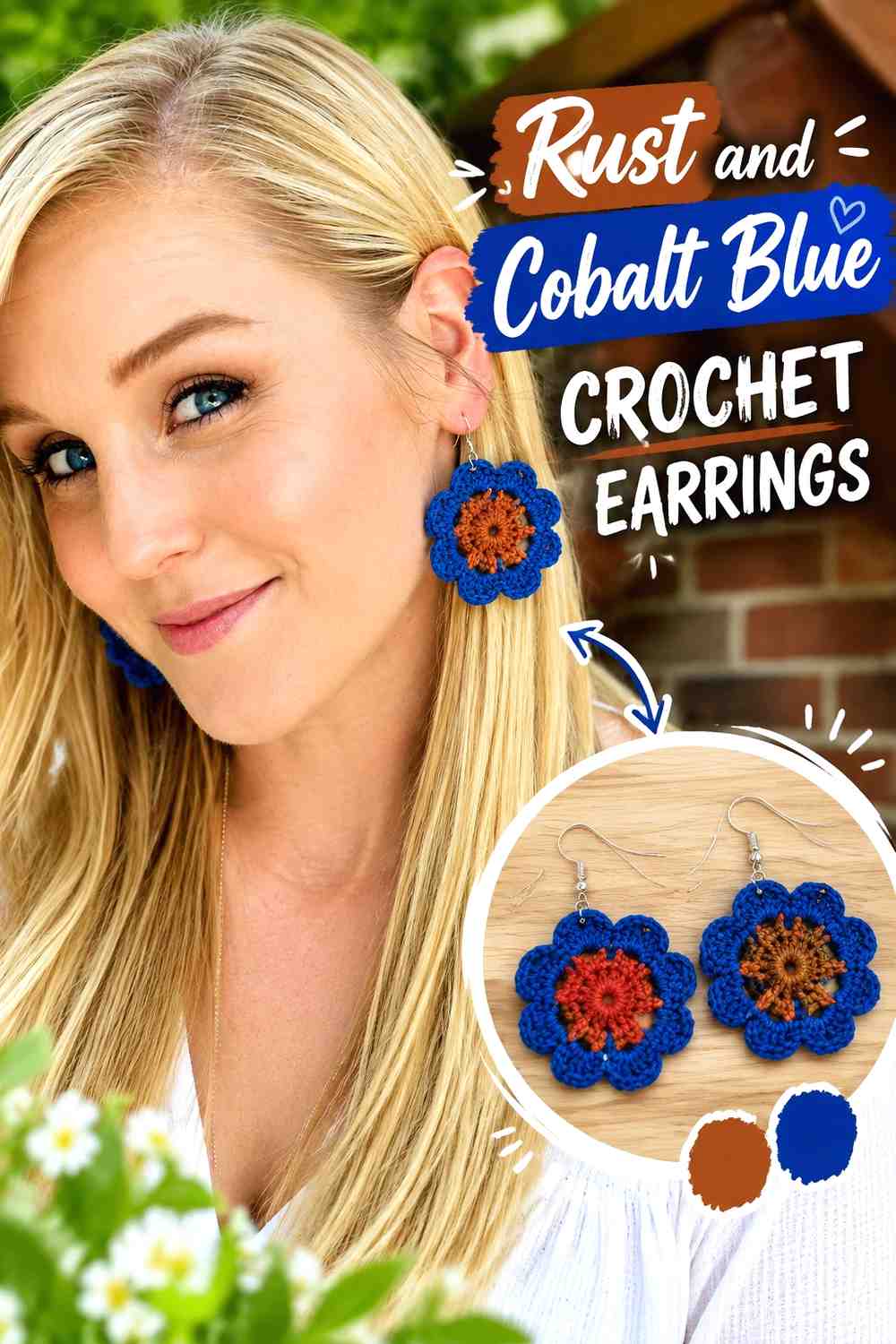
10. Rust And Cobalt Blue Crochet Earrings
 SAVE
SAVECrochet earrings provide very little space for complex color distribution. Rust can form the main motif while cobalt blue appears at the center or outer edge.
The key is visibility: tiny color changes that look obvious while you crochet may disappear once the earrings are viewed from normal conversational distance.
Rust Can Carry the Main Cobalt Blue Crochet Earring Motif
Use rust across the largest motif area if you want the earrings to read warm first.
Apply the same color placement to both earrings so the cobalt details occur in matching locations rather than creating two slightly different palettes.
Cobalt Blue Can Add a Focused Rust Crochet Earring Accent
A cobalt center or outer detail can provide enough cool contrast without dividing the small motif into many sections.
If blue disappears from normal viewing distance, enlarge the cobalt area instead of adding several tiny blue stitches elsewhere.
Creator Credit: Crochet with Tiffany Hansen
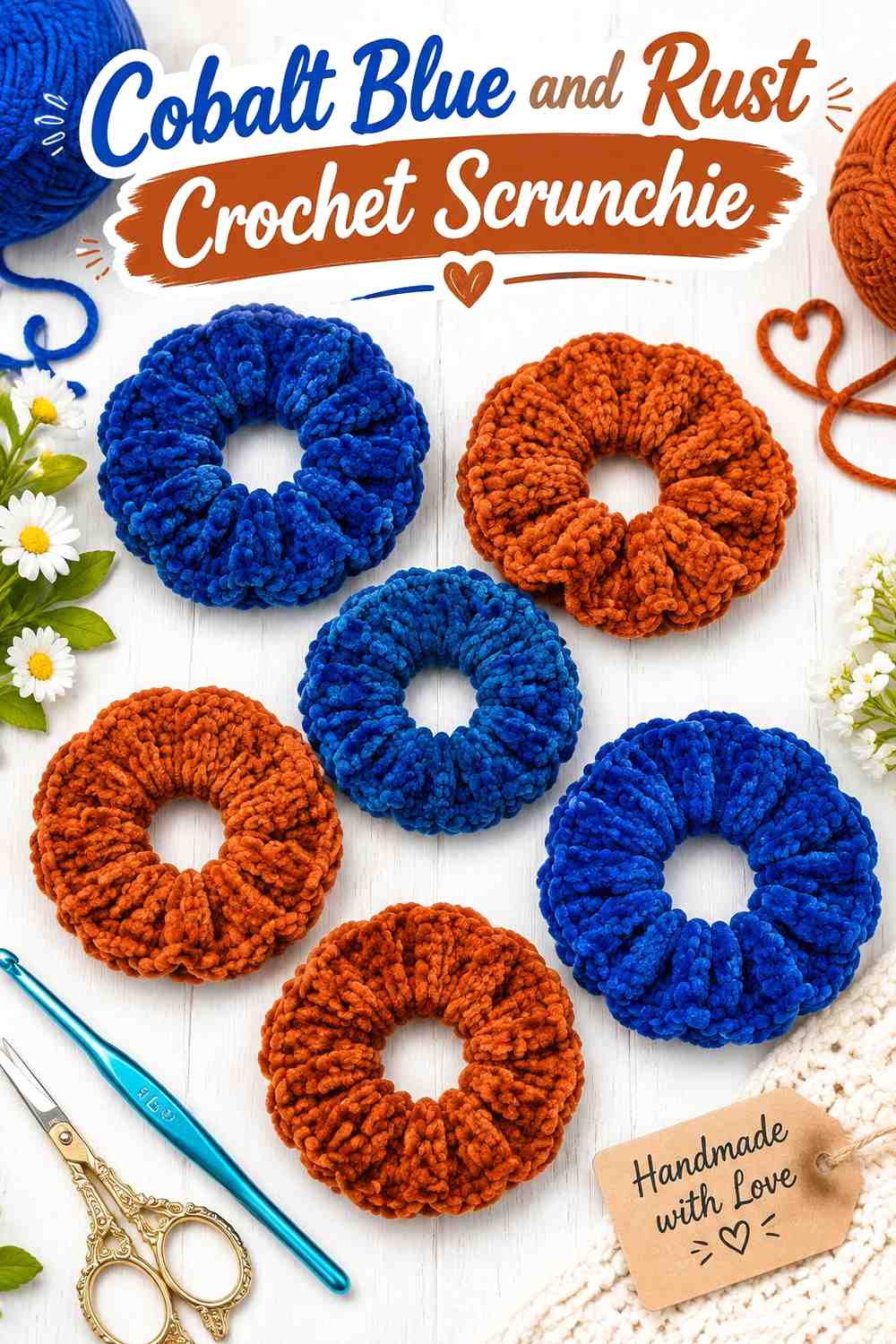
11. Cobalt Blue And Rust Crochet Scrunchie
 SAVE
SAVEA scrunchie can handle a fairly balanced palette because the overall item is small, but gathering changes how much of each color remains visible.
Cobalt blue can form the inner section while rust occupies the wider outer ruffle, or the arrangement can be reversed for a cooler final look.
Cobalt Blue Can Give the Rust Crochet Scrunchie a Defined Inner Base
Use cobalt near the elastic when you want a dark cool center beneath the rust ruffle.
Make the blue section large enough to remain visible once the fabric gathers. Narrow inner color changes often disappear inside the folds.
Rust Can Keep the Cobalt Blue Crochet Scrunchie Ruffle Visible
Rust across the outer ruffle places the warm shade where the most fabric remains exposed.
Check the scrunchie both relaxed and stretched before deciding whether cobalt needs additional repetition. The visible balance can change dramatically between those two positions.
Creator Credit: Erica Arndt
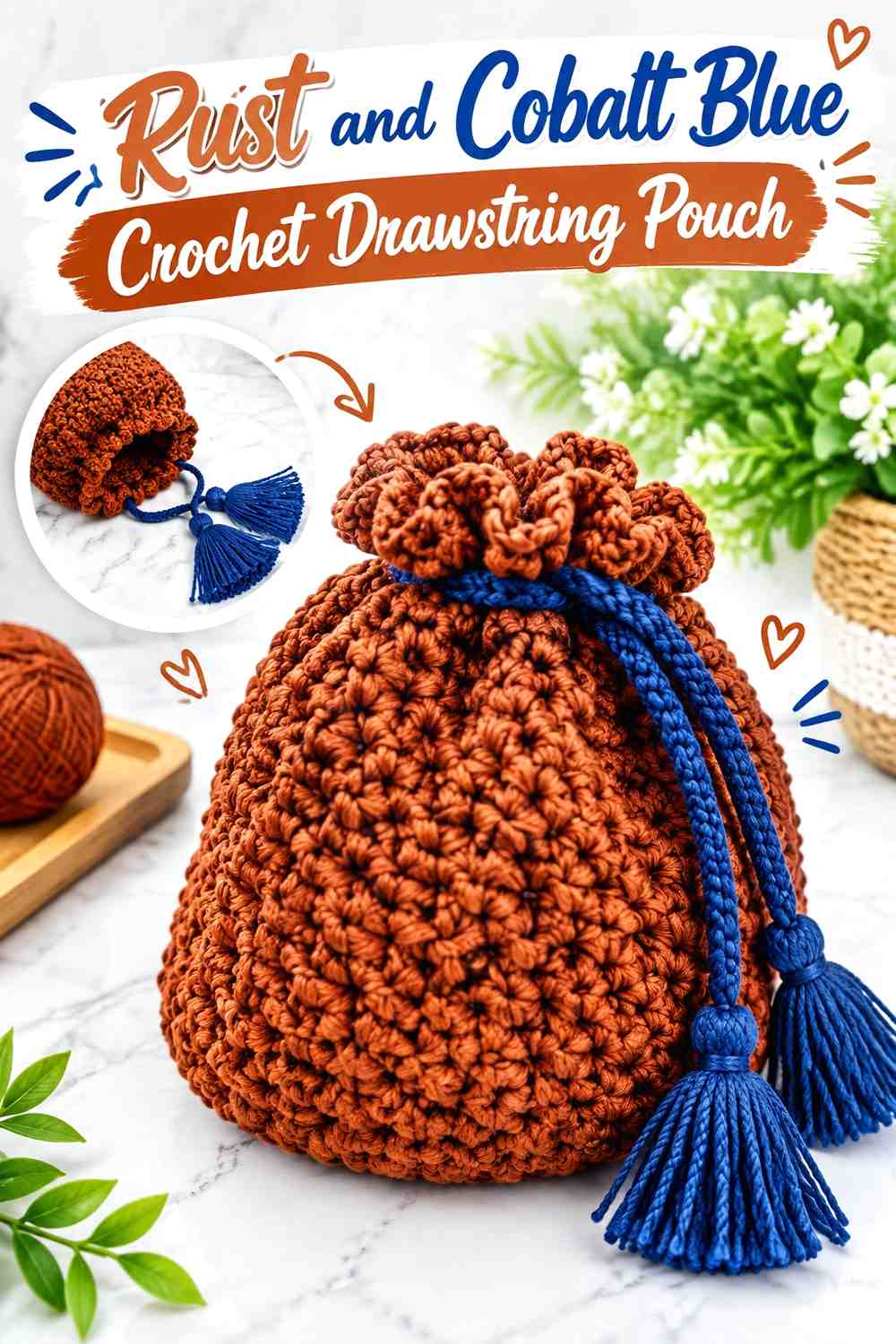
12. Rust And Cobalt Blue Crochet Drawstring Pouch
 SAVE
SAVEA drawstring pouch has clear divisions between base, body, and closure. Rust can dominate the main body while cobalt blue defines the drawstring channel and bottom edge.
That arrangement places the strongest cool contrast around structural transitions.
Rust Can Keep the Crochet Drawstring Pouch Body Warm
Use rust across most of the central surface if the pouch contains raised or decorative texture.
One uninterrupted warm field gives those stitches more space to remain visible than frequent switching between rust and cobalt.
Cobalt Blue Can Define the Rust Crochet Drawstring Area
Cobalt around the upper channel clearly distinguishes the closure from the body.
Repeat blue at the base if you want a stronger connection between top and bottom. For a subtler version, keep the base rust and use cobalt only in the channel and drawstring.
Creator Credit: Handmade By Mei
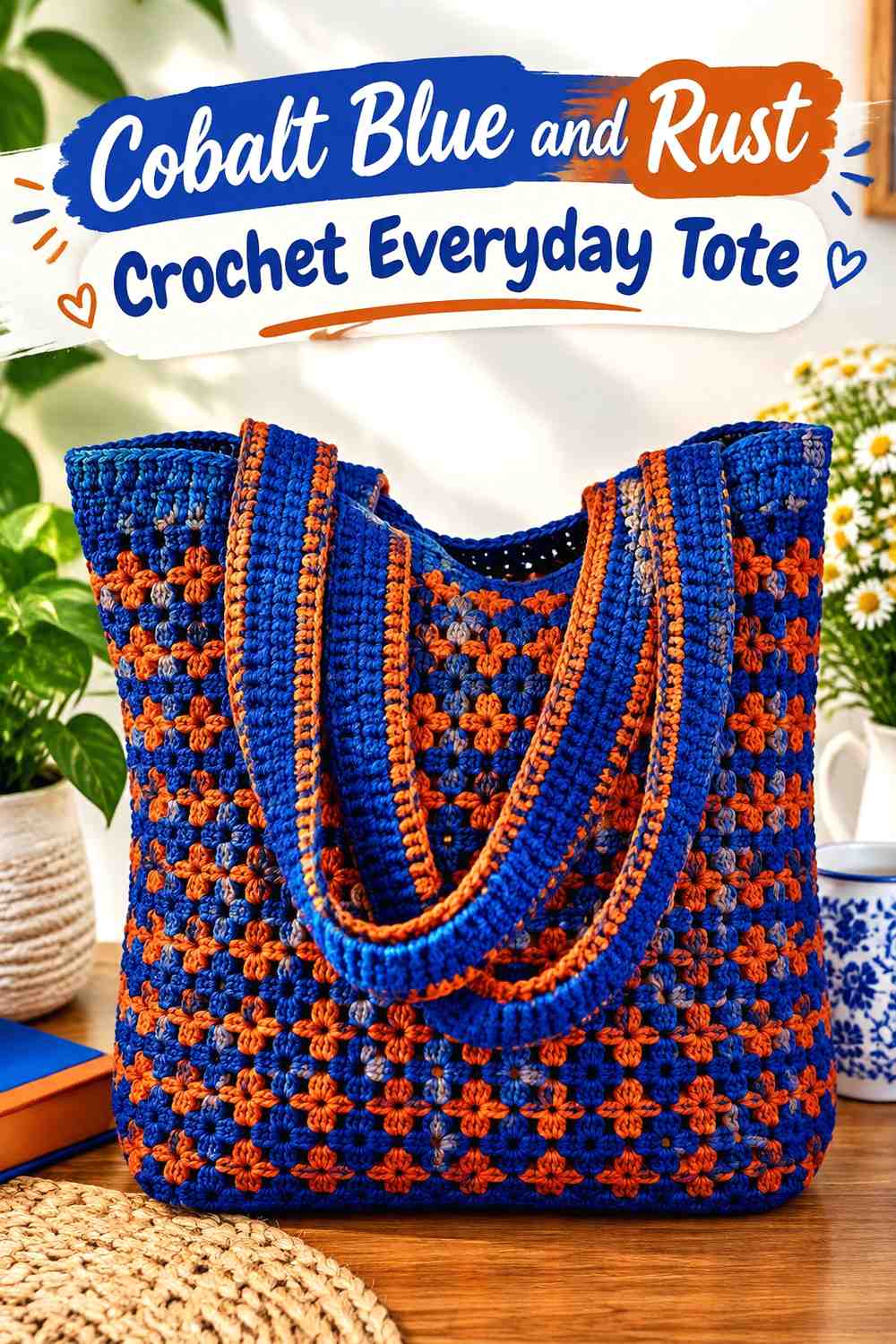
13. Cobalt Blue And Rust Crochet Everyday Tote
 SAVE
SAVEA tote gives cobalt blue broad front and back panels while rust can appear around the base, top edge, and handles.
Because handles extend beyond the main body, even a modest amount of rust there can become an important part of the finished color balance.
Cobalt Blue Can Keep the Crochet Tote Panels Cohesive
Use cobalt continuously across both main panels when you want the bag to read cool first.
If the tote features noticeable texture, avoid scattering isolated rust details through the center unless they form a deliberate repeated motif.
Rust Can Connect Cobalt Blue Crochet Tote Handles and Edging
Rust handles create a prominent warm accent above the blue body. Repeating rust along the upper edge or base ties the handles back into the bag.
Keep the repeated section relatively narrow if cobalt should remain the clear dominant shade.
Creator Credit: Kristines Crochets
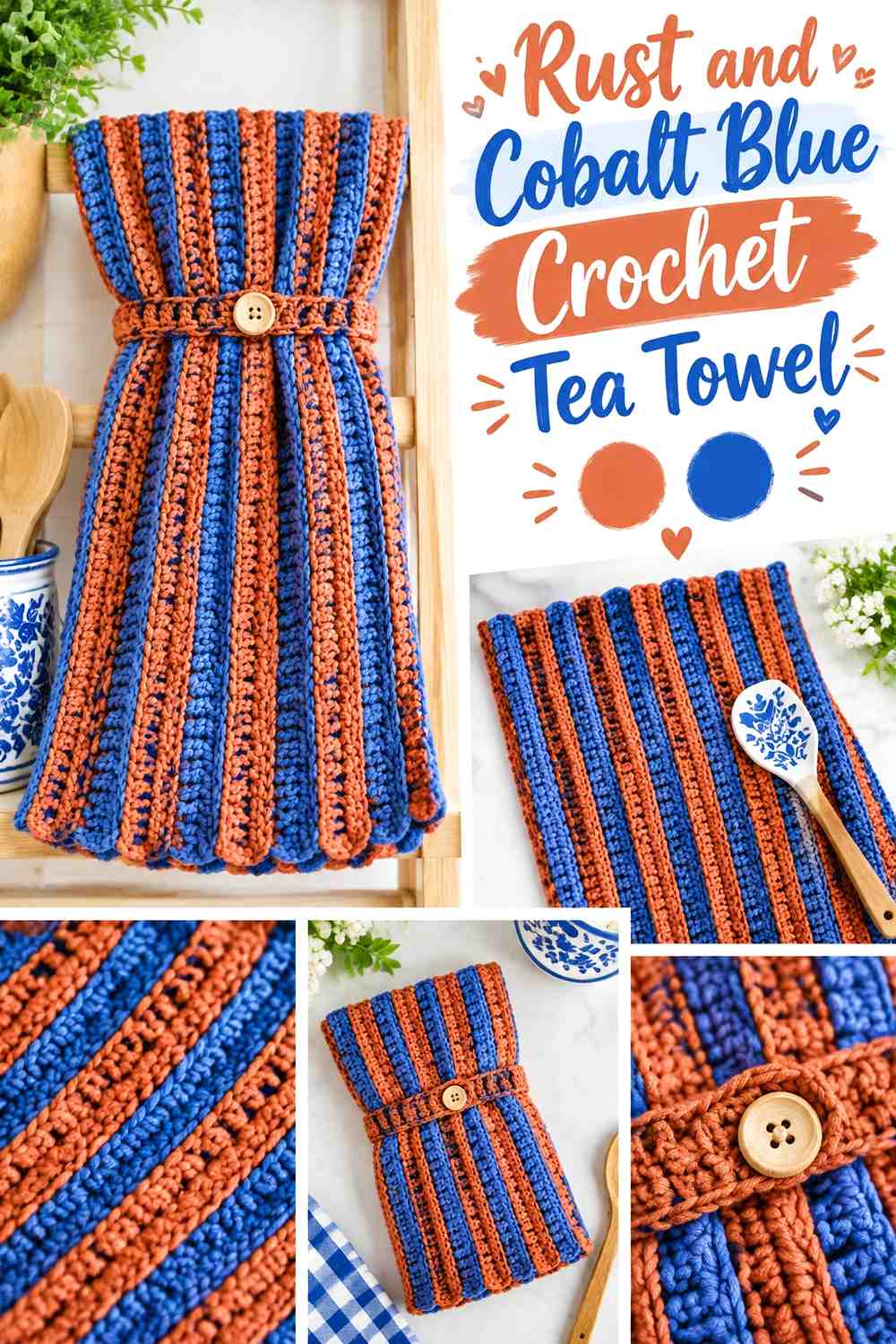
14. Rust And Cobalt Blue Crochet Tea Towel
 SAVE
SAVEA tea towel provides a long rectangular surface where rust can cover the main body and cobalt blue can define the lower edge or selected bands.
Broad sections are particularly useful when the towel already contains obvious stitch texture.
Rust Can Keep the Crochet Tea Towel Surface Continuous
Use rust across most of the towel to allow the repeated stitch pattern to remain visually consistent.
Avoid changing to cobalt at every texture repeat unless you intentionally want the color sequence to become the main feature.
Cobalt Blue Can Give the Rust Crochet Tea Towel a Defined Edge
A cobalt lower band creates a strong cool finish when the towel hangs vertically.
Repeat a small cobalt section toward the opposite end if necessary to connect the palette, but leave enough uninterrupted rust for the main color to remain clear.
Creator Credit: Winding Road Crochet
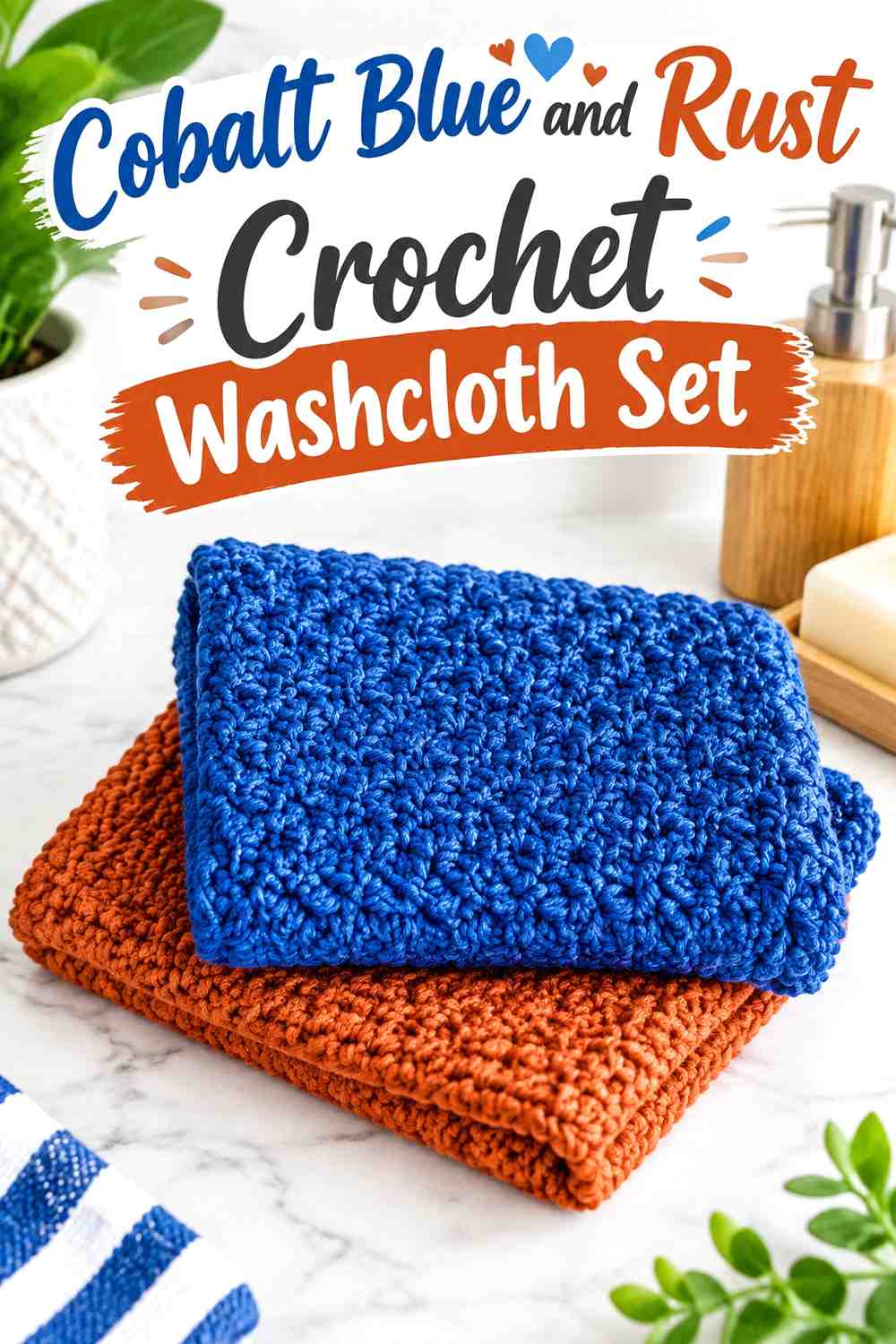
15. Cobalt Blue And Rust Crochet Washcloth Set
 SAVE
SAVEA washcloth set makes it easy to explore both color hierarchies without changing the project concept. One cloth can use cobalt blue across the center with rust edging, while another reverses the arrangement.
The reversal creates coordination without requiring every piece to look identical.
Cobalt Blue Can Lead One Rust Crochet Washcloth
Use cobalt across the main surface of the first cloth and reserve rust for the border or one substantial band.
Because the surface is small, a single rust edge can provide enough contrast without additional striping.
Rust Can Reverse the Cobalt Blue Crochet Washcloth Balance
For the companion piece, place rust in the central field and move cobalt to the border.
Keeping the same placement logic while reversing the shades makes the set look intentionally related rather than like two unrelated color experiments.
Creator Credit: Melanie Ham
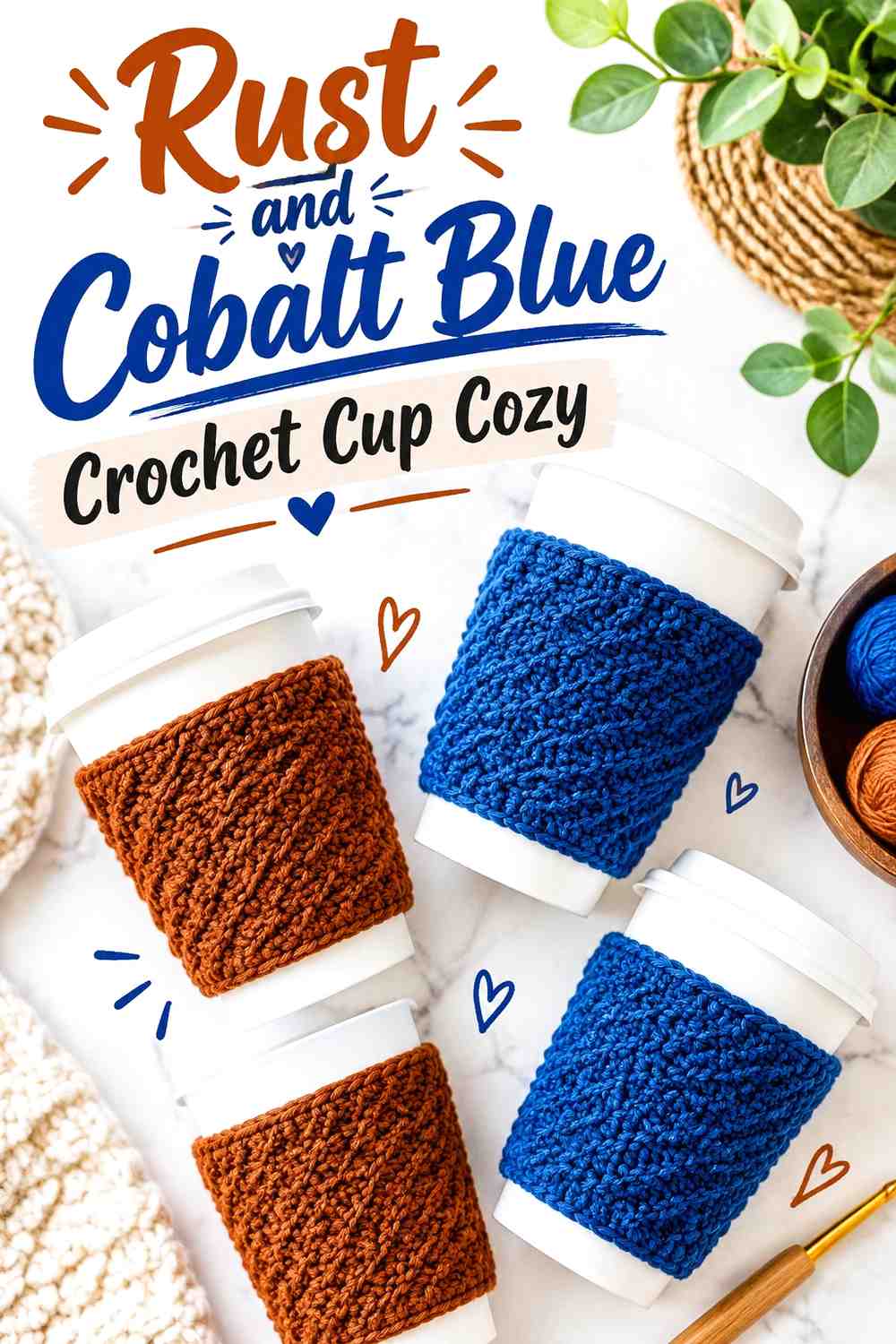
16. Rust And Cobalt Blue Crochet Cup Cozy
 SAVE
SAVEA cup cozy has very little surface, so a simple two-color hierarchy works better than complex blocking. Rust can cover the main wrap while cobalt blue defines the edges or closure detail.
Even a narrow cobalt section can be prominent because the finished object is compact.
Rust Can Keep the Crochet Cup Cozy Body Clear
Use rust across the central wrap if the cozy has ribbing or raised texture. One main color lets that surface detail remain readable.
Place the cozy around the intended cup shape before judging the balance because some sections may curve away from view or sit beside the handle.
Cobalt Blue Can Outline the Rust Crochet Cup Cozy
Cobalt along the top and bottom edges gives the cooler shade two related locations.
If the edging is too narrow to remain visible, repeat cobalt at the closure or another structural feature rather than introducing several tiny stripes through the center.
Creator Credit: Pretty Darn Adorable Crochet Tutorials
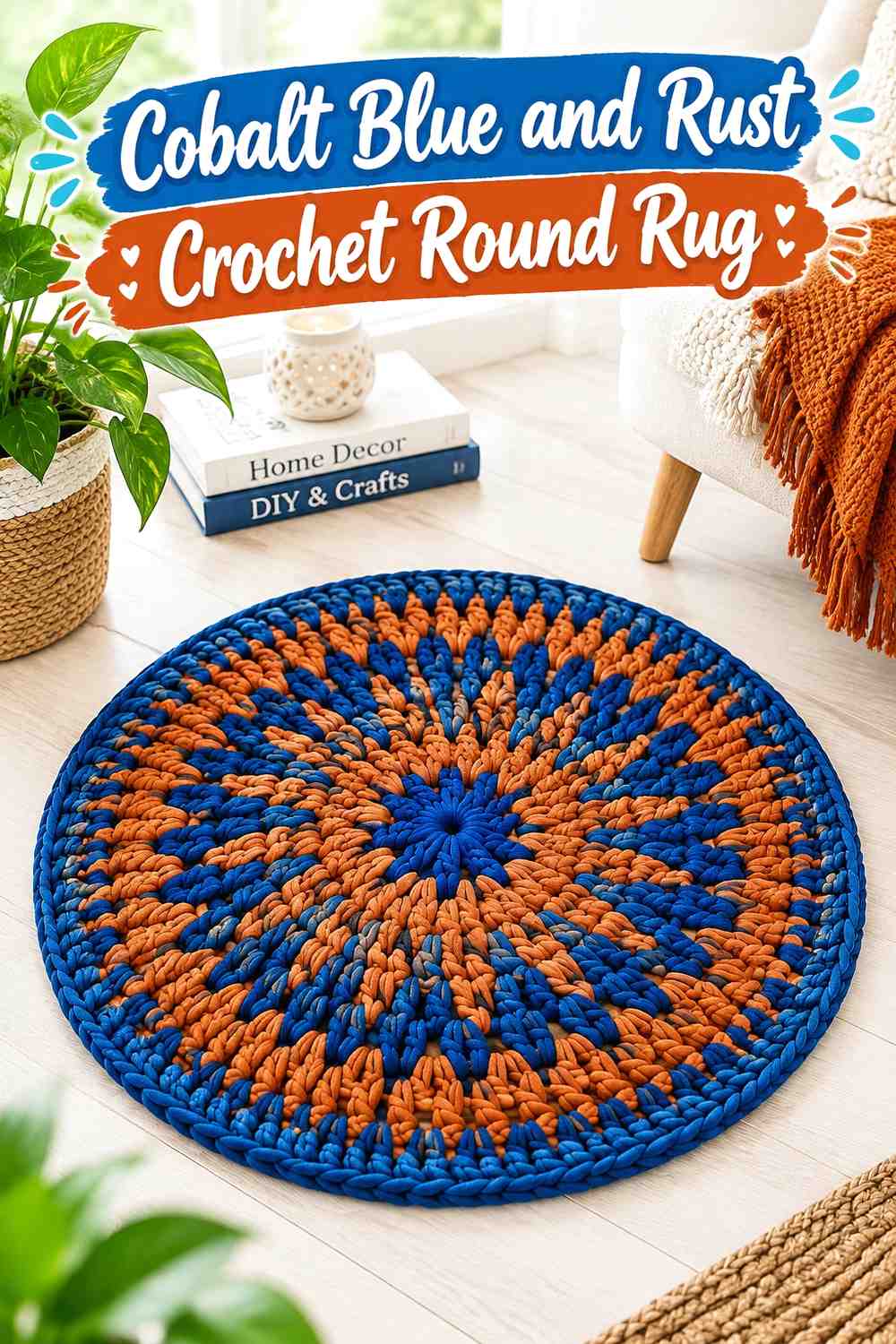
17. Cobalt Blue And Rust Crochet Round Rug
 SAVE
SAVEA round rug changes the visual proportion of colors as it grows because outer areas occupy increasingly more surface. Cobalt blue can establish the center while rust expands through the outer portion, or the roles can be reversed for a cooler finished rug.
Judge the balance by visible area rather than by using the same number of rounds in each shade.
Cobalt Blue Can Establish the Rust Crochet Rug Center
Use cobalt through a substantial central area if you want the blue to remain visible after rust is introduced.
A center that looks large early in the project can appear surprisingly small once much wider outer sections surround it.
Rust Can Expand Around the Cobalt Blue Crochet Rug
Rust across the outer area creates a warm frame around the cooler center.
Monitor its increasing visual share as the rug grows. If rust begins to overwhelm cobalt, return to blue for a later outer section rather than assuming equal round counts create equal color proportions.
Creator Credit: Jen Dwyer
Comparing Cobalt Blue and Rust Crochet Directions
For a cobalt-blue-led palette, the blanket, granny square tote, ribbed beanie, V-neck sweater, sun hat, scrunchie, everyday tote, washcloth set, and round rug give the cooler color enough surface to establish the overall direction. Rust then adds concentrated warmth around borders, motifs, bands, handles, or outer sections.
For a rust-led palette, the cardigan, scarf, granny square, market bag, earrings, drawstring pouch, tea towel, and cup cozy use the earthy orange-brown as the main field while cobalt supplies cooler definition.
Projects with distinct construction zones are particularly useful for this palette. Hats provide crowns and brims, bags provide bodies and handles, garments provide panels and cuffs, and motifs provide centers and outer rounds. Using those existing divisions usually produces a more intentional result than adding color changes solely for decoration.
Conclusion
Cobalt blue and rust work most clearly in crochet when each shade has a recognizable role. Cobalt can provide a saturated cool field or a strong framing color, while rust adds warmth to borders, brims, motif centers, cuffs, handles, and other selected areas.
If cobalt dominates, give rust enough surface to remain visible rather than reducing it to scattered individual stitches. If rust dominates, remember that cobalt can make a large visual impact even in smaller sections.
Texture should influence the decision too. Use larger uninterrupted fields when ribbing, cables, waffle texture, openwork, or other stitch details already create plenty of visual activity. For motifs, bags, and garments, let the construction itself suggest where the color changes belong.
Frequently Asked Questions
Do cobalt blue and rust work together in crochet?
They can create strong warm-and-cool contrast. Cobalt supplies the cooler saturated side of the palette, while rust introduces an earthy orange-brown counterpoint. Clear dominant and supporting roles usually make the combination easier to control.
Should cobalt blue or rust be the dominant crochet color?
Either can lead. Use cobalt when you want a stronger cool foundation. Use rust when you prefer an earthier overall project with concentrated blue accents around edges, handles, cuffs, or other structural areas.
Where should rust go in a cobalt blue crochet project?
Rust works particularly well on borders, cuffs, brims, handles, motif centers, lower bands, or selected larger color blocks. These placements give the warm shade a clear purpose.
Where should cobalt blue go in a rust crochet project?
Cobalt can define edging, joins, scarf ends, bag handles, drawstring areas, motif frames, and other parts that benefit from stronger cool contrast.
How can I check whether cobalt blue and rust have enough contrast?
Place the actual yarns beside each other and view them from several feet away. A grayscale photo can also help compare their lightness. If they look too similar in value, enlarge the color sections rather than relying on tiny adjacent details.
Can cobalt blue hide crochet texture?
A deep or highly saturated cobalt can make subtle stitch shadows harder to see. Make a small sample before using it across cables, bobbles, ribbing, or another texture that needs clear definition.
What can replace rust in a cobalt blue crochet palette?
Choose another earthy orange, reddish brown, burnt orange, or muted terracotta-like shade that preserves the warm contrast against cobalt. Focus on maintaining the relationship between the two colors rather than matching an exact commercial shade name.