
Cobalt Blue and Cream give crochet projects a clear light-and-dark relationship without requiring a large palette. Cobalt Blue can provide the saturated visual anchor, while Cream gives motifs, borders, openwork, and textured stitches a lighter area around which to stand out.
The balance does not need to be equal. A Cobalt Blue cardigan can use Cream only at cuffs and edging, while a Cream blanket can reserve blue for a substantial outer frame. Motif projects can alternate the relationship again, using Cobalt Blue centers against Cream outer rounds or Cream joins between stronger blue squares.
The tutorials below support the underlying crochet constructions. The Cobalt Blue and Cream placements are independent color adaptations, so use each creator’s tutorial for construction while planning the palette separately.
Quick List
- Cobalt Blue And Cream Crochet Bucket Hat
- Cobalt Blue And Cream Crochet Granny Square Vest
- Cobalt Blue And Cream Crochet Triangle Shawl
- Cobalt Blue And Cream Crochet Cowl
- Cobalt Blue And Cream Crochet Storage Basket
- Cobalt Blue And Cream Crochet Chunky Blanket
- Cobalt Blue And Cream Crochet Market Bag
- Cobalt Blue And Cream Crochet Striped Top
- Cobalt Blue And Cream Crochet Textured Pillow
- Cobalt Blue And Cream Crochet Washcloth
- Cobalt Blue And Cream Crochet Headband
- Cobalt Blue And Cream Crochet Bandana
- Cobalt Blue And Cream Crochet Oval Placemat
- Cobalt Blue And Cream Crochet Carnation Bouquet
- Cobalt Blue And Cream Crochet Star Stitch Coasters
- Cobalt Blue And Cream Crochet Scarf
- Cobalt Blue And Cream Crochet Cardigan
- Cobalt Blue And Cream Crochet Water Bottle Holder
- Cobalt Blue And Cream Crochet Laptop Sleeve
- Cobalt Blue And Cream Crochet Cup Cozy
Choose Whether Cobalt Blue or Cream Should Carry the Largest Crochet Areas
Cobalt Blue makes sense as the dominant color when you want a saturated main surface with lighter details around it. Large cardigan panels, pillow fronts, hat crowns, and bag bodies can carry blue while Cream marks edges, joins, cuffs, or borders.
Cream dominance changes the emphasis. A Cream blanket, scarf, or accessory gives Cobalt Blue accents more isolation, so smaller blue sections can still feel important. This is useful when you want the palette to remain light overall without reducing the blue to an insignificant detail.
Use Cream to Separate Cobalt Blue Crochet Motifs and Texture
Cream can do more than lighten the palette. In granny squares, it can separate Cobalt Blue centers or create quieter joins between motifs. Around raised texture, a Cream border can mark where the central stitch pattern ends without introducing another saturated color.
The amount of Cream matters. Very narrow Cream lines may disappear on large-scale pieces, while too much Cream can shift the entire project away from a blue-led design. Match the width of the accent to the scale of the crochet item.
Check Cobalt Blue and Cream Value Contrast Before Small Details
The names Cobalt Blue and Cream do not guarantee the same contrast from one yarn selection to another. A very light Cream against a deep blue will create strong separation, while a muted medium blue and darker Cream may produce a gentler difference.
Place the yarns together and look at them from a distance before committing to tiny motifs or thin stripes. A grayscale photo can also help you see whether the light-and-dark difference remains clear when hue is removed.
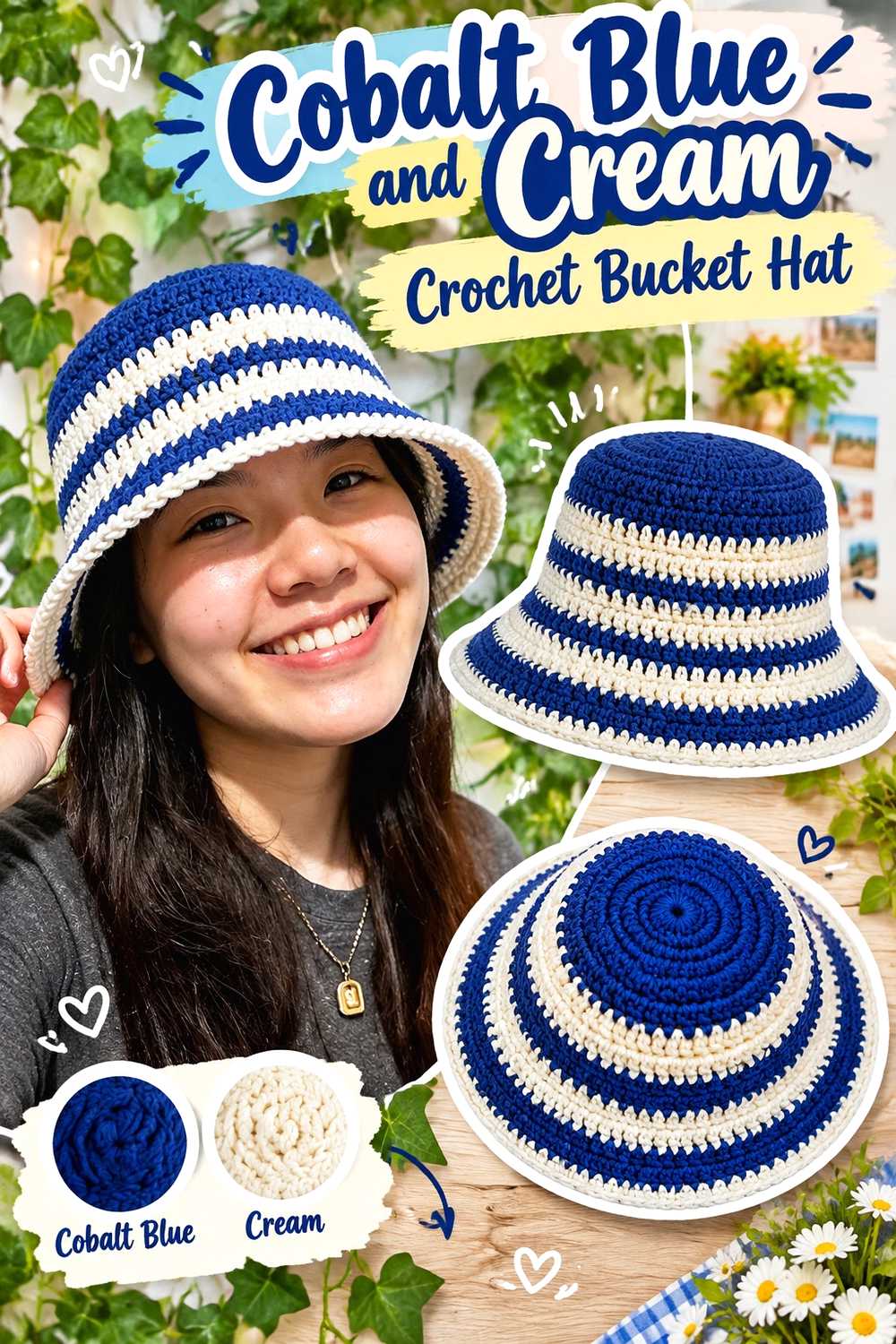
1. Cobalt Blue And Cream Crochet Bucket Hat
 SAVE
A bucket hat naturally divides into crown, sides, and brim, giving this two-color palette useful structural boundaries. Cobalt Blue can cover the crown and main body while Cream defines the brim, creating a light outer frame around the deeper blue.
Cobalt Blue Can Keep the Crochet Bucket Hat Crown Cohesive
Using Cobalt Blue across the crown and sides creates one continuous main field instead of interrupting the compact hat with frequent color changes. This also gives any stitch texture or shaping a consistent background.
If you want the hat to remain clearly blue-led, carry Cobalt Blue down far enough that Cream reads as an accent rather than half of the project.
Cream Can Give the Cobalt Blue Crochet Bucket Hat Brim a Clear Break
The brim already marks a change in shape, so it is a logical location for Cream. A substantial Cream brim makes the color transition look connected to the construction rather than inserted randomly.
For a subtler version, keep most of the brim Cobalt Blue and use Cream only along its outer portion.
Creator Credit: VivCrochets
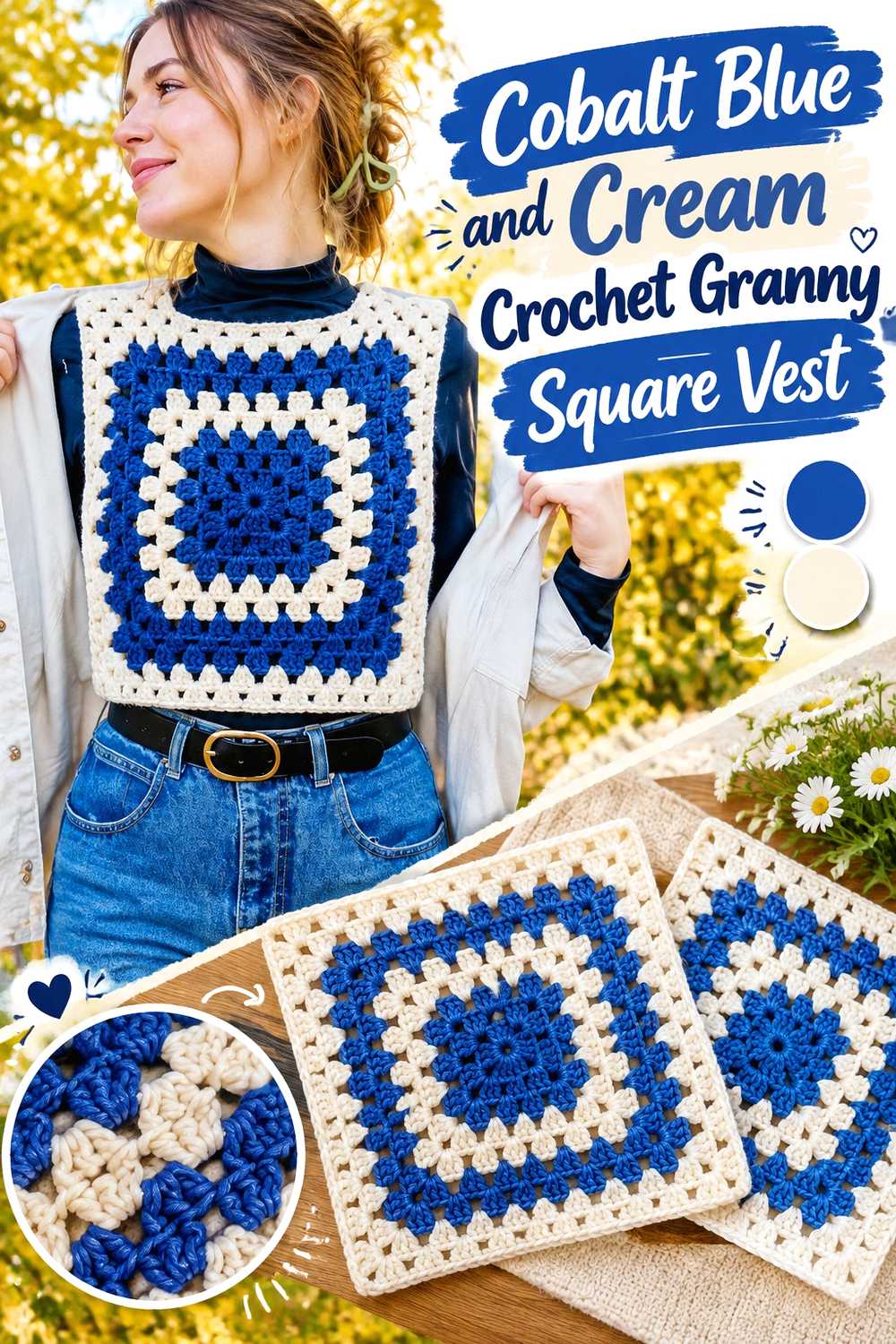
2. Cobalt Blue And Cream Crochet Granny Square Vest
 SAVE
Granny squares allow the palette to repeat in smaller controlled units. Cobalt Blue can form the motif centers while Cream expands through outer rounds, joins, or garment edging, keeping individual blue areas separated across the vest.
Cobalt Blue Centers Give Cream Crochet Vest Squares a Repeated Focal Point
Placing Cobalt Blue in a consistent part of each motif creates a recognizable rhythm across the front and back panels. The repetition matters more than making every square exactly equal in color coverage.
Arrange several completed motifs together before joining them. A Cobalt Blue center that looks balanced alone may become much more dominant once many squares sit side by side.
Cream Joins Can Keep Cobalt Blue Crochet Vest Motifs Separated
Cream between motifs creates lighter channels through a layout containing multiple saturated blue areas. The same Cream can continue around armholes, neckline, or outer edging to connect the joining color with the garment finish.
If you want a more blue-heavy vest, keep the Cream joins narrower while preserving enough contrast to distinguish individual motifs.
Creator Credit: HayHay Crochet
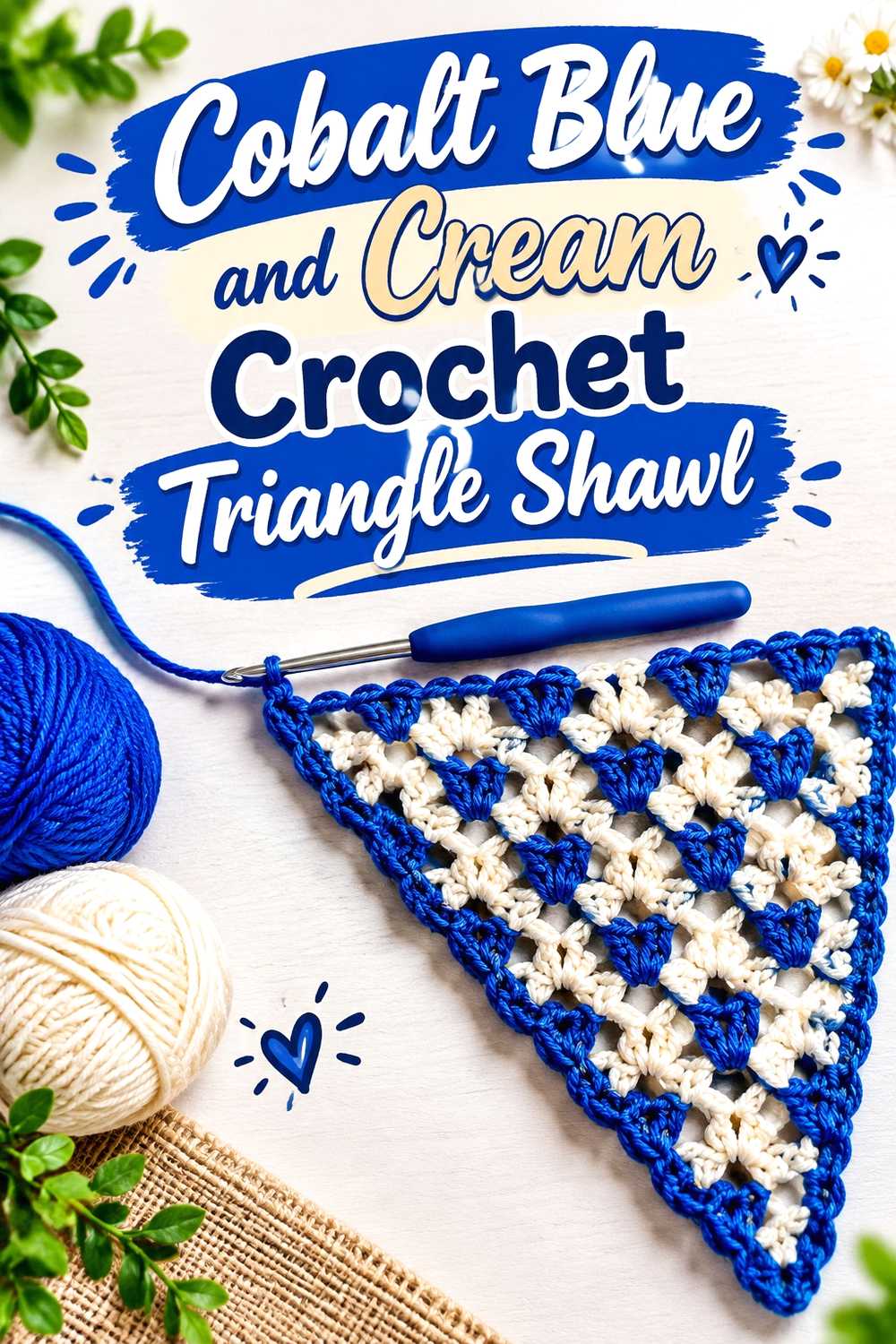
3. Cobalt Blue And Cream Crochet Triangle Shawl
 SAVE
A triangular shawl changes color proportions as it expands, so a section added near the outer edge occupies much more visual width than one near the center. Cream can begin the shawl quietly, with Cobalt Blue gaining prominence as the triangle grows.
Cream Can Keep the Crochet Triangle Shawl Center Visually Light
Starting with Cream gives the smaller central portion a light foundation. If the shawl includes openwork, the surrounding clothing will also show through, making the Cream section feel even less visually dense.
This arrangement is useful when you want Cobalt Blue to become more prominent gradually instead of dominating from the first section.
Cobalt Blue Gains More Impact Toward the Wider Crochet Shawl Edge
A Cobalt Blue section near the outside spans a much greater width than the same number of color changes near the center. That makes the outer portion a useful place for a strong blue statement.
If a full Cobalt Blue edge feels too heavy, finish with a narrower Cream border so the light shade returns once more at the perimeter.
Creator Credit: Hooked by Robin
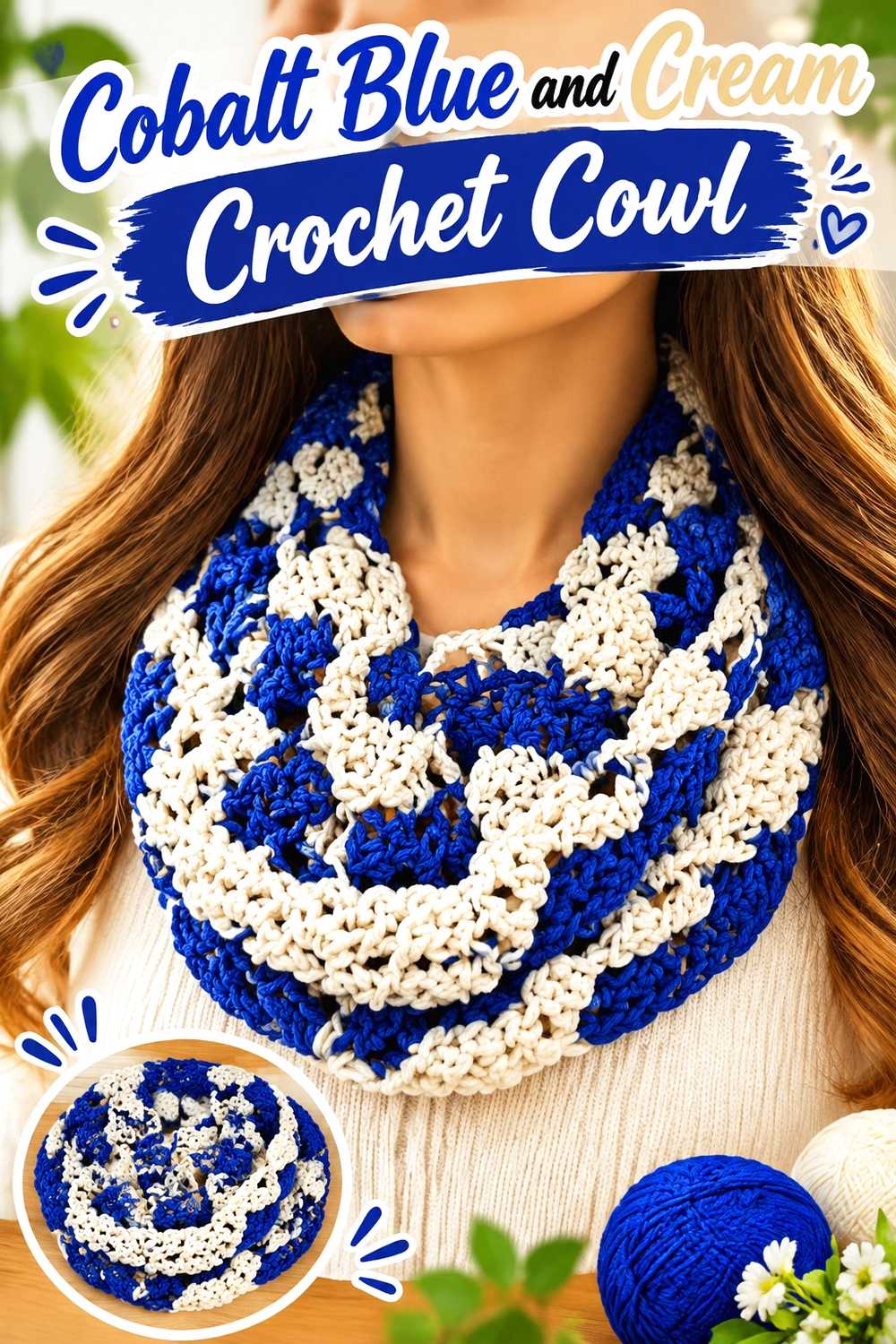
4. Cobalt Blue And Cream Crochet Cowl
 SAVE
A cowl has enough height for substantial color blocking but usually does not need many narrow stripes. Cobalt Blue can cover the main body, while Cream appears along the upper or lower edge where it remains easy to see when the cowl is worn.
Cobalt Blue Can Carry the Main Crochet Cowl Texture
A broad Cobalt Blue center keeps ribbing or another repeated texture visually continuous around the neck. This is especially useful when the stitch pattern already provides plenty of surface interest.
Before adding Cream, consider where the cowl naturally folds. A color band hidden inside a fold will contribute less to the finished palette than it does while the fabric is lying flat.
Cream Can Frame Cobalt Blue Without Dividing the Crochet Cowl Too Often
A Cream upper edge, lower edge, or both gives Cobalt Blue a lighter boundary without turning the cowl into a sequence of small stripes.
If Cream appears on both edges, leave enough uninterrupted Cobalt Blue between them to preserve a clear dominant color.
Creator Credit: Bag-O-Day Crochet
5. Cobalt Blue And Cream Crochet Storage Basket
 SAVE
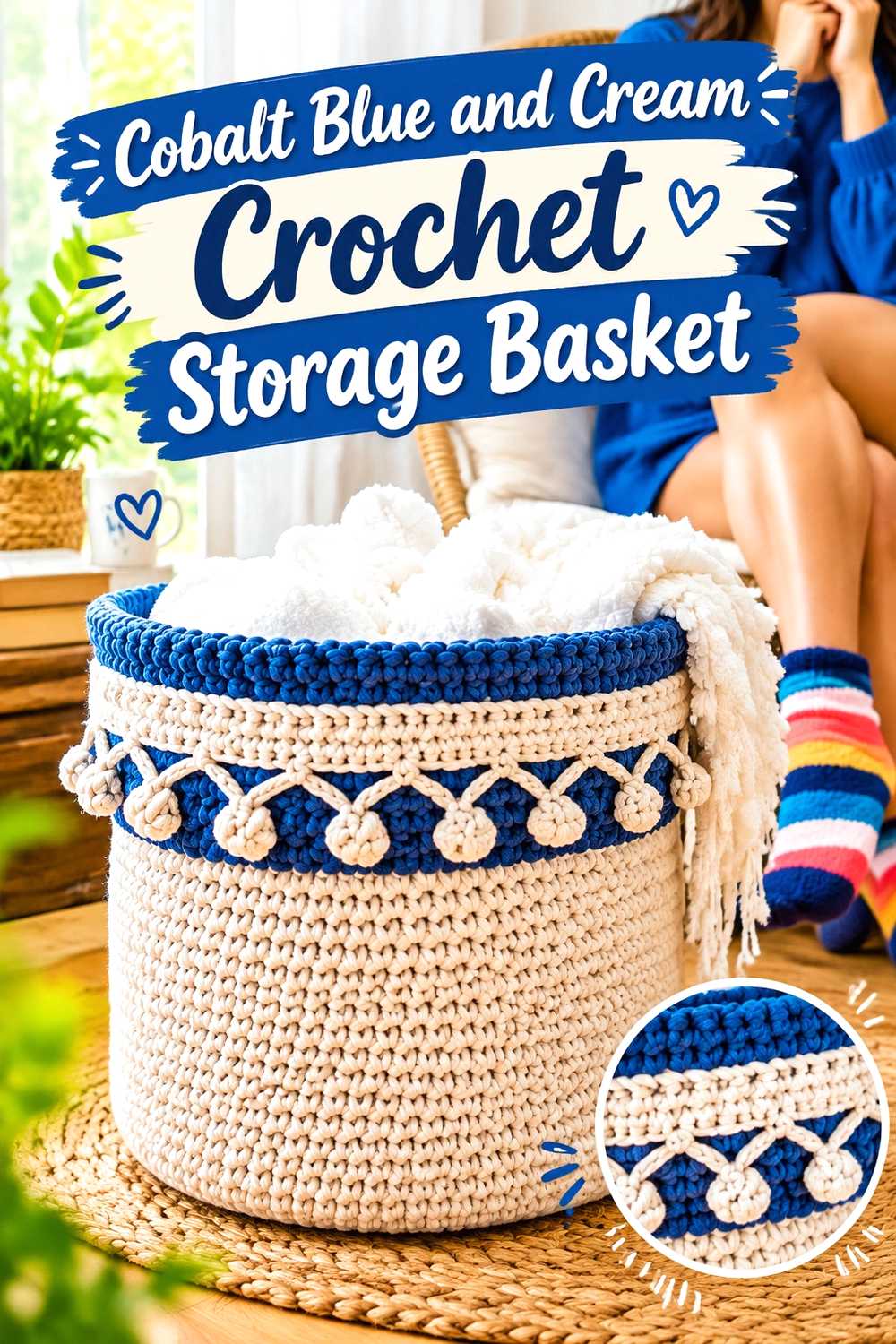
A basket can divide the palette across its base, walls, top edge, and handles. Cream makes a useful main field when you want the basket to remain light overall, while Cobalt Blue can visually strengthen the lower or upper boundaries.
Cream Can Keep the Crochet Storage Basket Sides Light
Using Cream through most of the basket walls provides a quiet background for chunky or dense stitches. It also prevents a large storage piece from becoming one uninterrupted mass of saturated blue.
When the basket will hold colorful yarn or other visible items, the Cream body can provide separation between the contents and the stronger Cobalt Blue details.
Cobalt Blue Can Define the Cream Crochet Basket Base and Upper Edge
Repeating Cobalt Blue at more than one structural point makes the accent feel connected. A blue base paired with a blue upper band or handle detail can frame the Cream middle instead of leaving one isolated dark section.
On a large basket, make the Cobalt Blue bands substantial enough to match the scale of the stitches.
Creator Credit: TL Yarn Crafts
6. Cobalt Blue And Cream Crochet Chunky Blanket
 SAVE
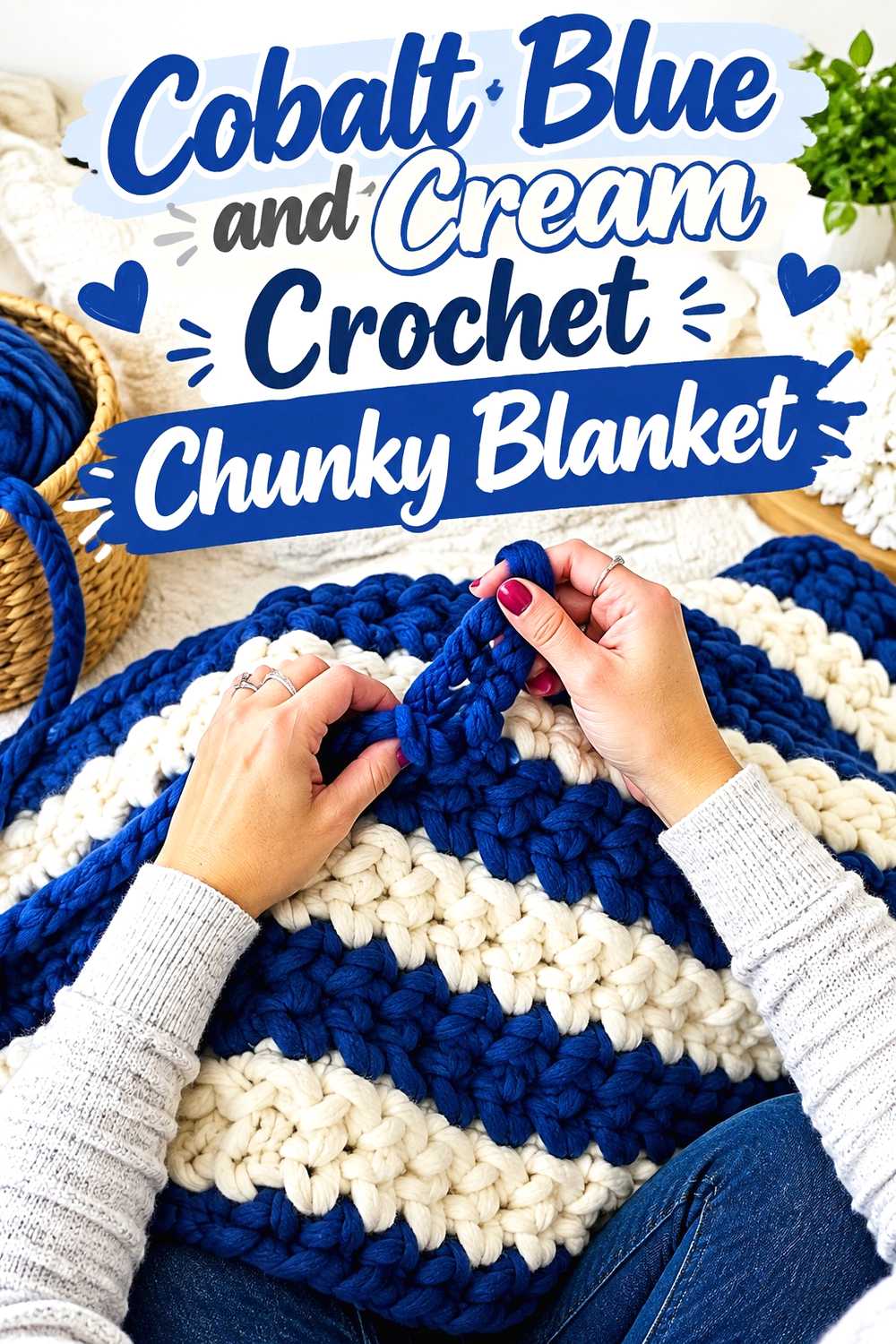
Large stitches already create strong visual texture, so this blanket palette benefits from broad color areas rather than many narrow changes. Cream can fill most of the blanket while Cobalt Blue appears as a wide border or one or two substantial sections.
Cream Gives a Chunky Crochet Blanket a Broad Light Field
A large Cream center lets oversized stitch texture remain the main feature across most of the blanket. It also makes a relatively small number of Cobalt Blue sections look more deliberate because they are surrounded by uninterrupted light fabric.
If Cream is intended to dominate, avoid alternating the colors every few rows purely for variety.
Cobalt Blue Needs Enough Width to Frame a Cream Crochet Blanket
On a large blanket, a very thin Cobalt Blue edge may have little visual impact from across the room. A broader blue frame better matches the scale of the finished piece.
You can also place Cobalt Blue in one large end section rather than around all four sides if you prefer an asymmetrical color-blocked direction.
Creator Credit: Bella Coco
7. Cobalt Blue And Cream Crochet Market Bag
 SAVE
Openwork lets the background show through, so colors behave differently on a market bag than on a dense tote. Cobalt Blue can cover the mesh body without creating a completely solid field, while Cream defines denser-looking areas such as the base, upper edge, or handles.
Cobalt Blue Can Lead the Crochet Market Bag Without Looking Like a Solid Block
Open stitches visually break up Cobalt Blue and allow clothing or the contents of the bag to show through. That makes the shade useful across a relatively large section without the same visual weight it would have in dense fabric.
Judge the blue with something behind the mesh before deciding whether it needs more Cream.
Cream Can Separate the Cobalt Blue Crochet Market Bag Handles From the Body
Cream handles provide a clear transition from the blue mesh body to the carrying area. Repeating Cream at the base or upper edge can keep those handles from looking disconnected.
If you expect the bag to be seen mostly against pale clothing, consider whether a Cream mesh body would lose too much definition and reserve the light color for denser sections instead.
Creator Credit: The Crochet Crowd
8. Cobalt Blue And Cream Crochet Striped Top
 SAVE
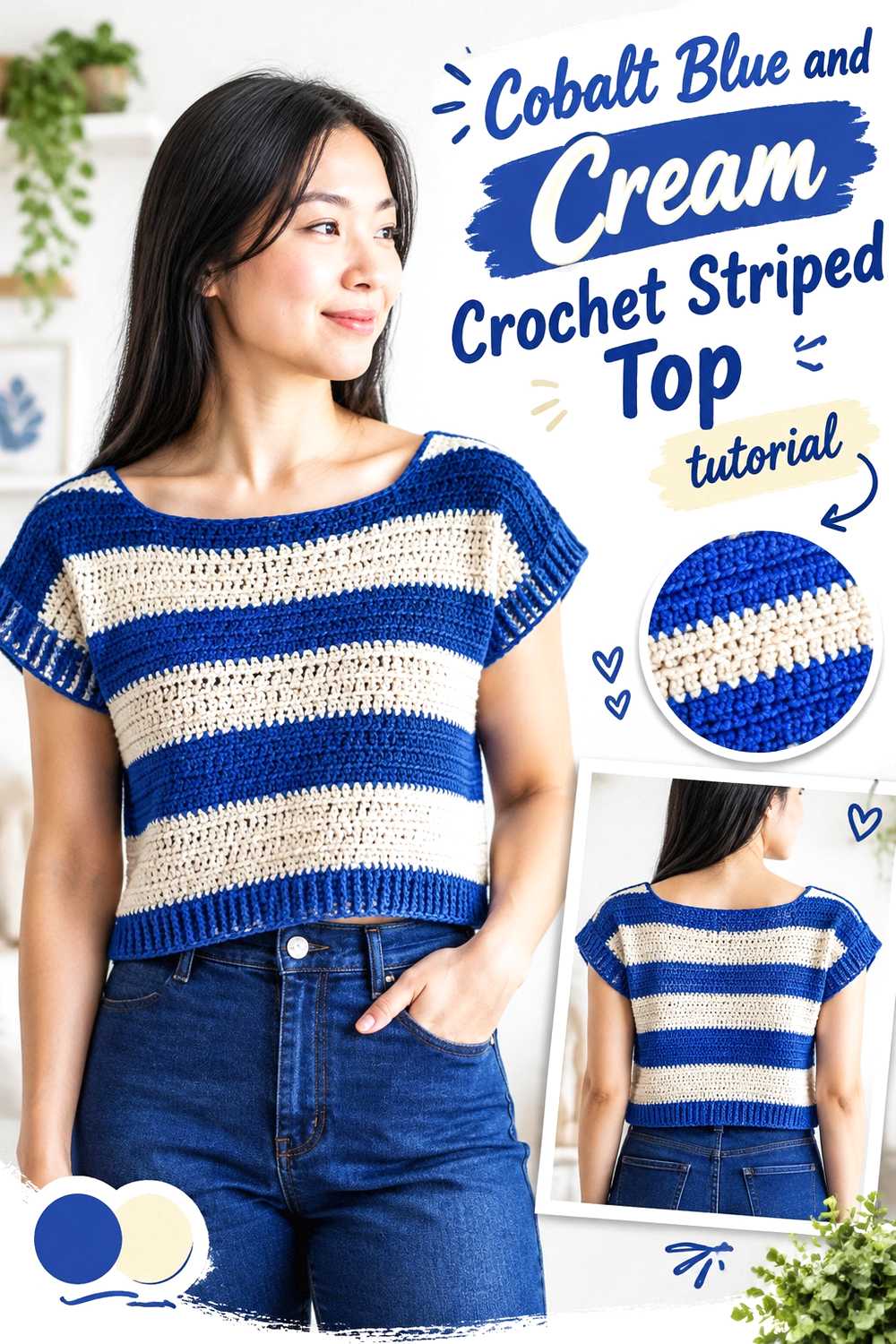
A striped top can give both colors repeated visibility without forcing them into equal proportions. Broad Cream bands with narrower Cobalt Blue stripes produce a lighter top, while reversing those widths makes blue the dominant impression.
Cream Bands Can Give Cobalt Blue Crochet Top Stripes More Space
Cream between blue stripes prevents multiple saturated bands from visually merging. Wider Cream sections are especially useful when you want the stripe pattern to remain obvious from a distance.
Consider the torso and sleeves together when planning the balance so one area does not become much more Cobalt Blue-heavy than the other unintentionally.
Cobalt Blue Stripe Width Controls the Weight of the Cream Crochet Top
A narrow Cobalt Blue stripe behaves like an accent; a broad one becomes a major color block. Adjusting width can therefore change the palette without introducing any additional colors.
If the top feels busier than intended, reduce the frequency of Cobalt Blue rather than adding a third neutral between every stripe.
Creator Credit: forthefrills
9. Cobalt Blue And Cream Crochet Textured Pillow
 SAVE
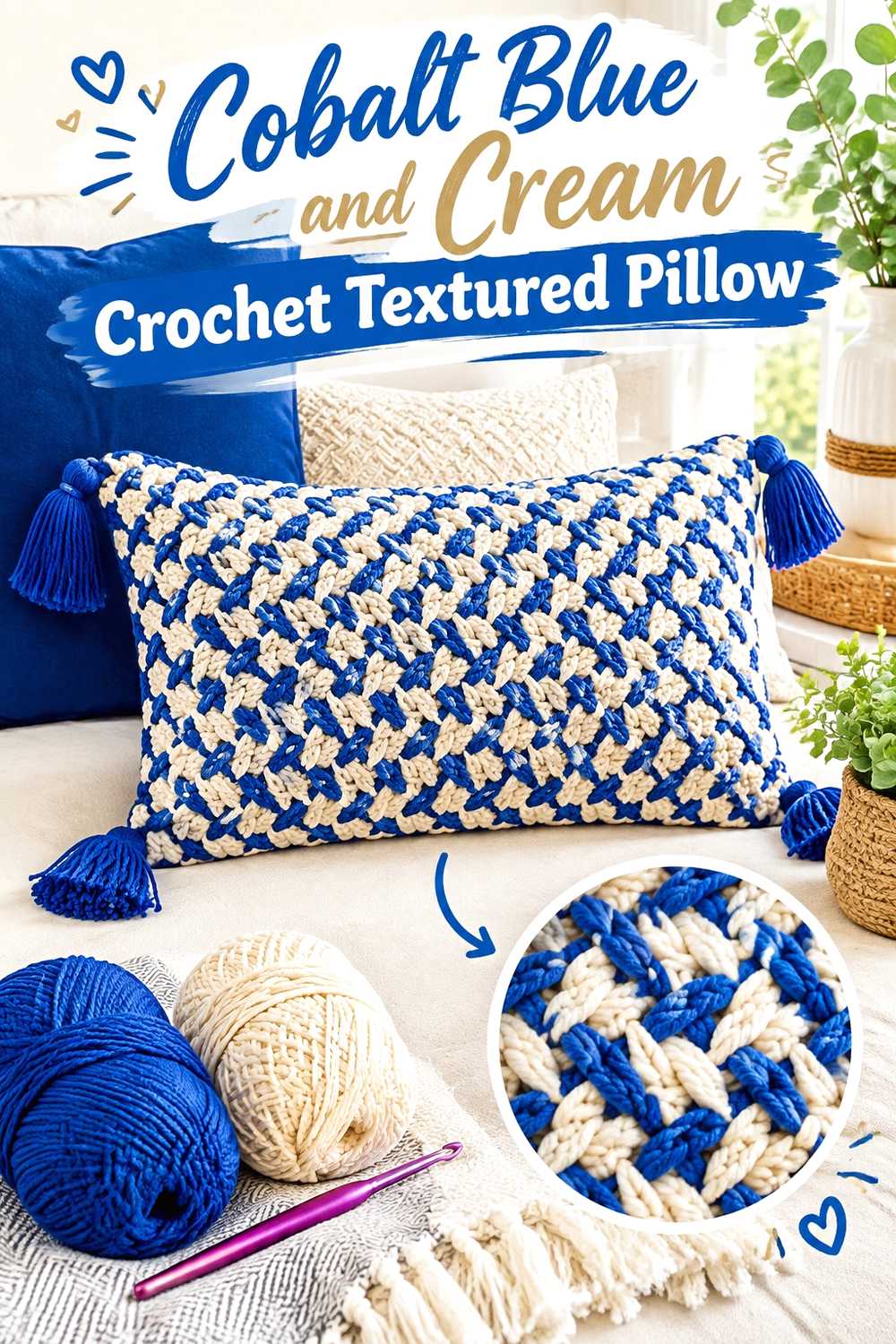
A pillow gives Cobalt Blue enough uninterrupted surface area to become a strong decor color. Cream can move to the perimeter, back panel, or selected finishing details so the central raised texture is not broken up unnecessarily.
Cobalt Blue Can Keep the Crochet Pillow Texture Continuous
Use Cobalt Blue across most of the textured front if cables or other raised stitches are intended to be the main surface feature. Keeping that section one color lets shadows and stitch direction do more of the visual work.
Check the actual fabric in the room where the pillow will be used because dark, saturated yarn can make subtle texture less obvious in low light.
Cream Can Frame a Cobalt Blue Crochet Pillow Without Interrupting Its Center
A Cream outer border creates a clear endpoint for the Cobalt Blue front. The contrast occurs at the edge rather than cutting repeatedly through the raised stitchwork.
Another option is a Cream back panel, which gives the pillow two different color emphases depending on which side faces outward.
Creator Credit: MJ’s Off The Hook Designs
10. Cobalt Blue And Cream Crochet Washcloth
 SAVE
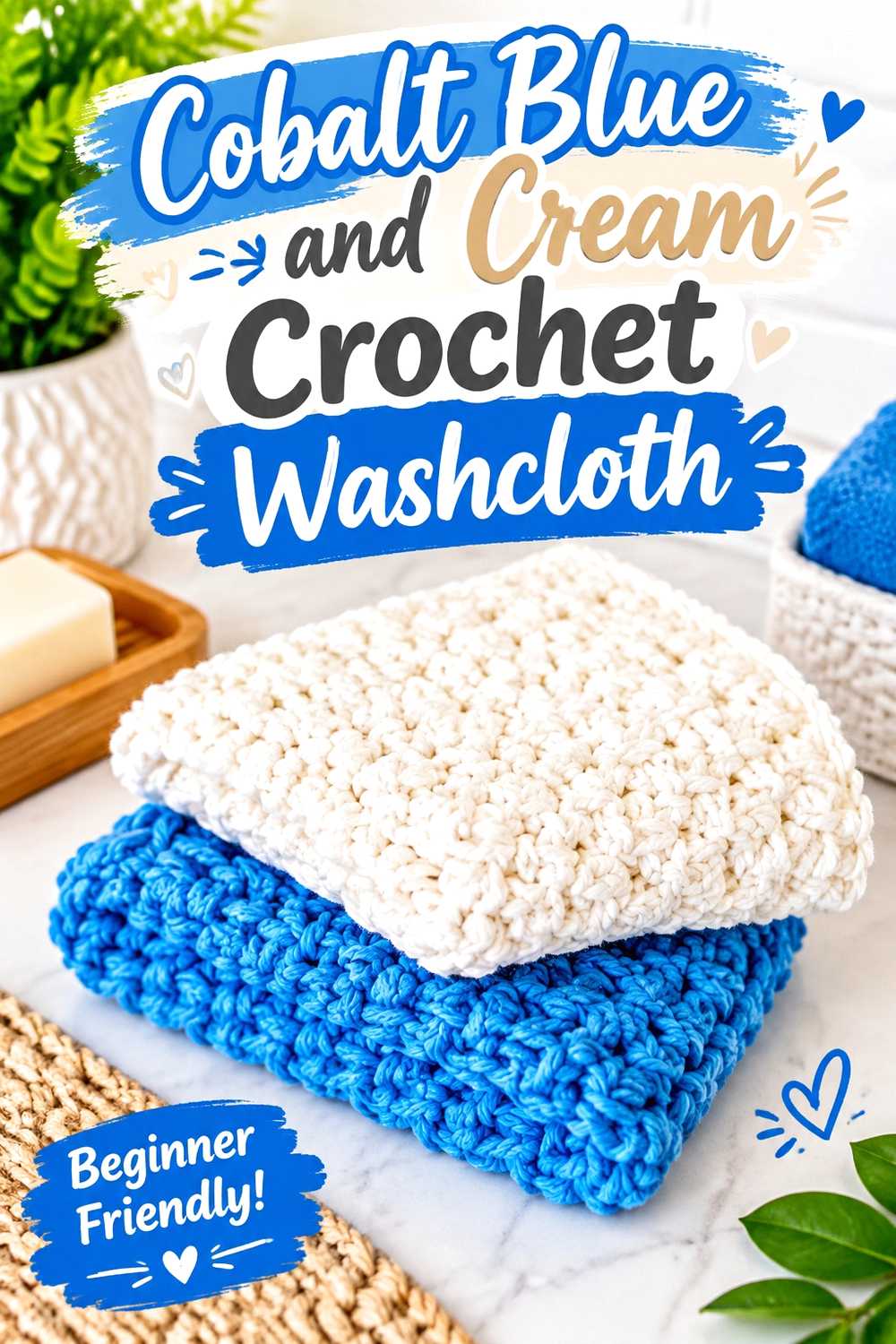
A washcloth offers a small surface on which to test the palette before using it on a larger home project. Cream can carry the textured center, with Cobalt Blue used as the border or one broad contrasting section.
Cream Can Make Crochet Washcloth Texture the Main Detail
A continuous Cream field keeps the center light and lets the repeated stitch texture provide most of the visual variation. It is also a useful way to judge how your chosen Cream appears once it is worked into fabric rather than viewed as a skein.
Avoid inserting many narrow blue bands if the texture itself is already complex.
Cobalt Blue Can Give the Cream Crochet Washcloth a Defined Perimeter
A Cobalt Blue edge clearly separates the outer boundary from the Cream center. If your chosen construction includes a hanging detail, repeating blue there can connect that smaller feature with the border.
For a coordinated set, reverse the colors on selected washcloths rather than inventing additional shades.
Creator Credit: Melanie Ham
11. Cobalt Blue And Cream Crochet Headband
 SAVE
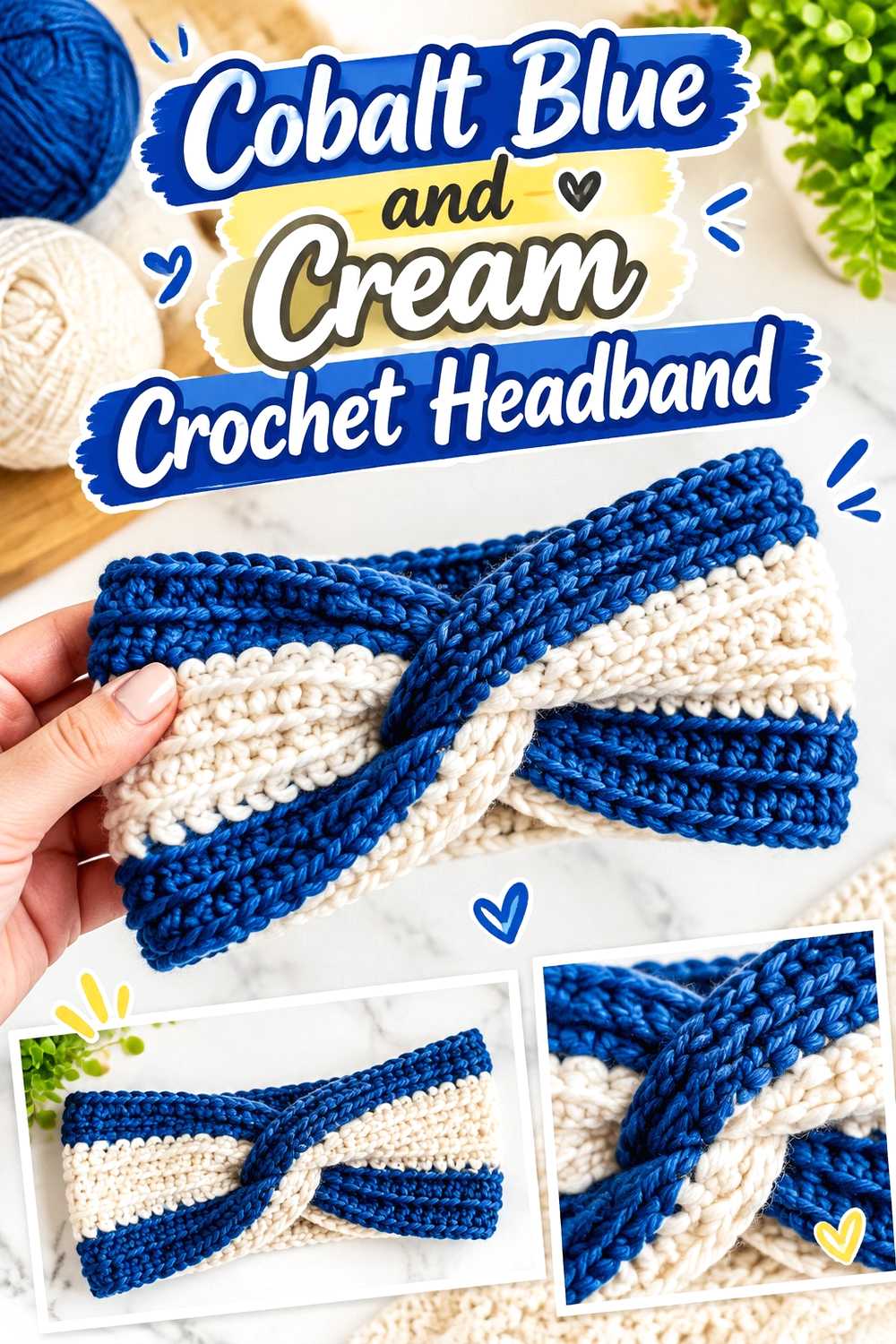
A headband has very little surface area, so two or three broad color zones work more clearly than many thin stripes. Cream can cover most of the band while Cobalt Blue identifies the central twist or another obvious focal section.
Cream Can Keep the Crochet Headband Main Surface Light
Using Cream through the majority of the band gives stitch texture an uninterrupted background. It also makes a relatively small amount of Cobalt Blue feel stronger because the blue is surrounded by a much lighter shade.
If the headband has pronounced texture, this simple color plan prevents the surface and palette from competing for attention.
Cobalt Blue Can Mark the Cream Crochet Headband’s Central Detail
Placing Cobalt Blue near the central twist or another structural feature gives the color change a visual reason. The blue becomes associated with the focal point rather than appearing as a random patch.
If the construction does not allow the center to be isolated cleanly, make one broader Cobalt Blue section instead of forcing a tiny color change into it.
Creator Credit: CJ Design
12. Cobalt Blue And Cream Crochet Bandana
 SAVE
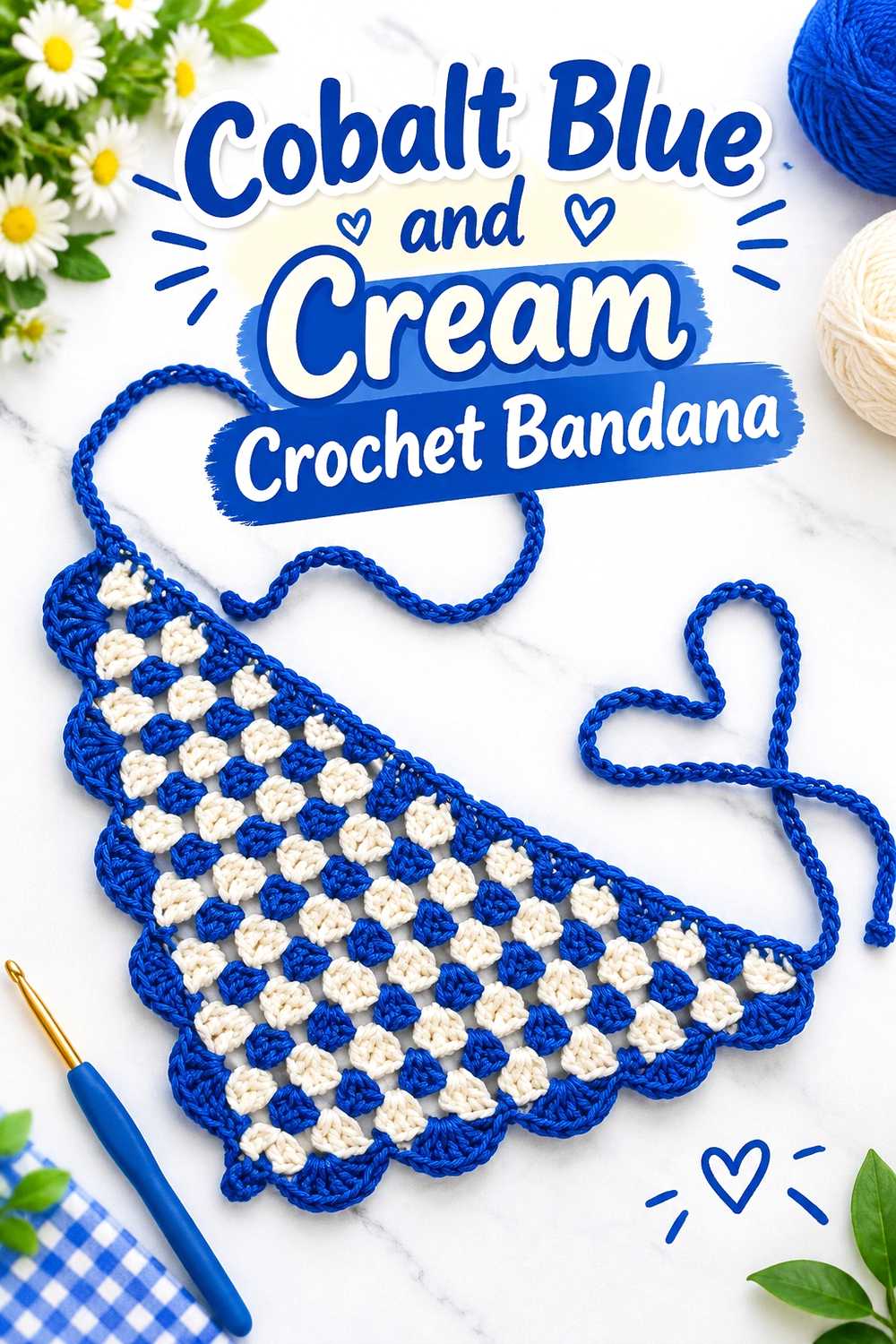
A triangular bandana gives this palette a natural field-and-frame arrangement. Cobalt Blue can fill the main triangle while Cream follows the border and ties, creating a lighter outline around the saturated center.
Cobalt Blue Can Carry the Main Crochet Bandana Triangle
A broad Cobalt Blue center makes the color unmistakably dominant. If the fabric includes open spaces, those openings can visually lighten the blue without requiring extra Cream sections inside the triangle.
Judge the color distribution while the bandana is folded and tied, since some of the central fabric may become less visible during wear.
Cream Can Connect the Cobalt Blue Crochet Bandana Border and Ties
Using Cream around the edge and continuing it into the ties creates one continuous supporting-color system. This is more connected than using Cream on only one small corner.
If a full Cream frame feels too prominent, narrow the border while keeping the ties Cream so the light shade still repeats.
Creator Credit: PassioKnit Kelsie
13. Cobalt Blue And Cream Crochet Oval Placemat
 SAVE
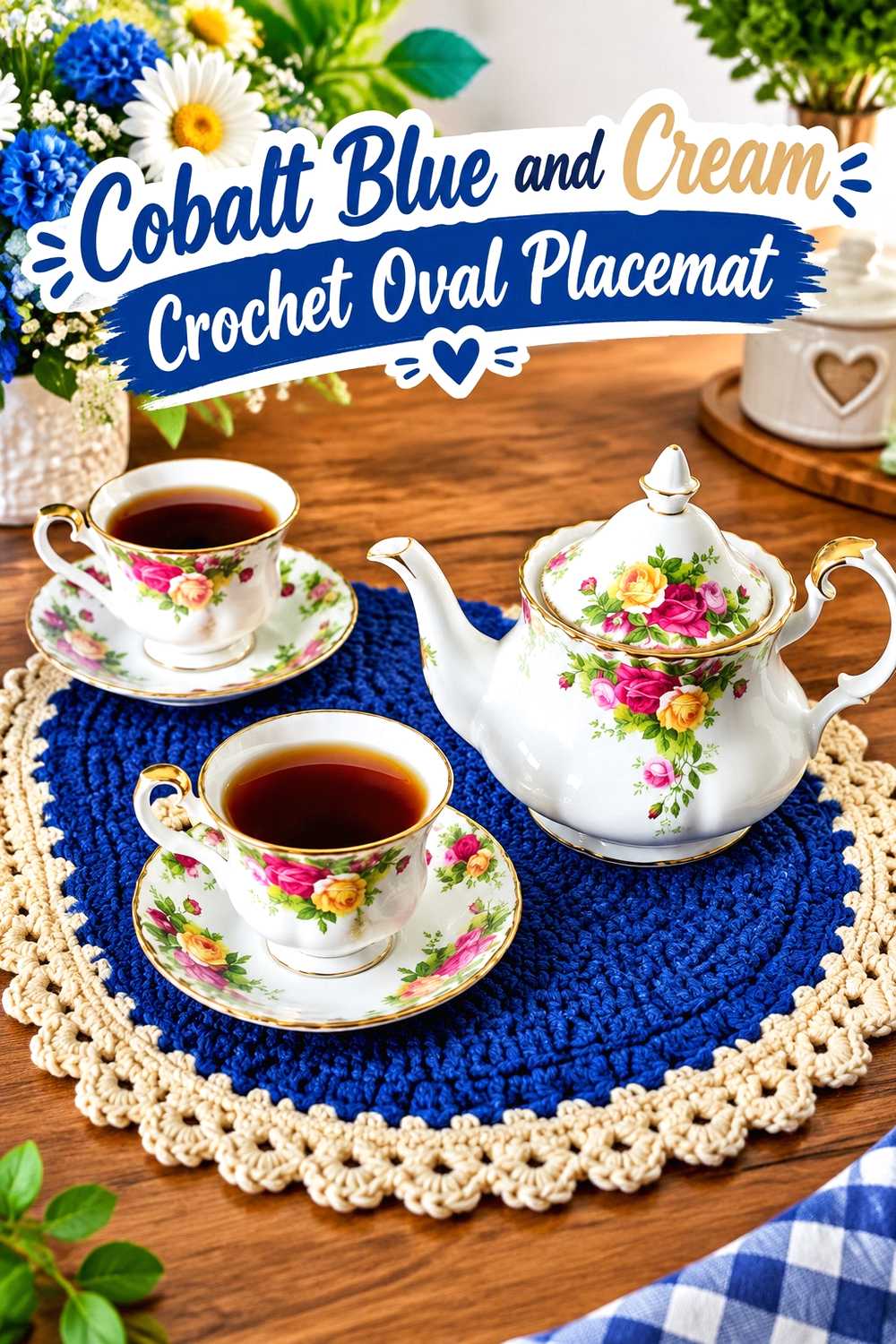
An oval placemat is particularly suited to a light center and dark outer edge. Cream can fill most of the usable central area, while Cobalt Blue follows the oval perimeter and remains visible around plates and bowls.
Cream Needs Enough Crochet Placemat Area to Stay Visible Around Dinnerware
A Cream center that is too small may disappear almost entirely under a plate. Extend it far enough outward that the light field remains part of the table setting during actual use.
Make one sample and place your normal dinnerware on it before deciding whether the proportions should be repeated across a whole set.
Cobalt Blue Can Give the Cream Crochet Placemat a Defined Oval Frame
Cobalt Blue at the perimeter emphasizes the shape while creating a strong boundary against the tabletop. It also places the darkest color where it is less likely to be completely covered by a plate.
If your table is already dark blue or another deep tone, increase the Cream share so the placemat does not visually disappear into the background.
Creator Credit: Jayda InStitches
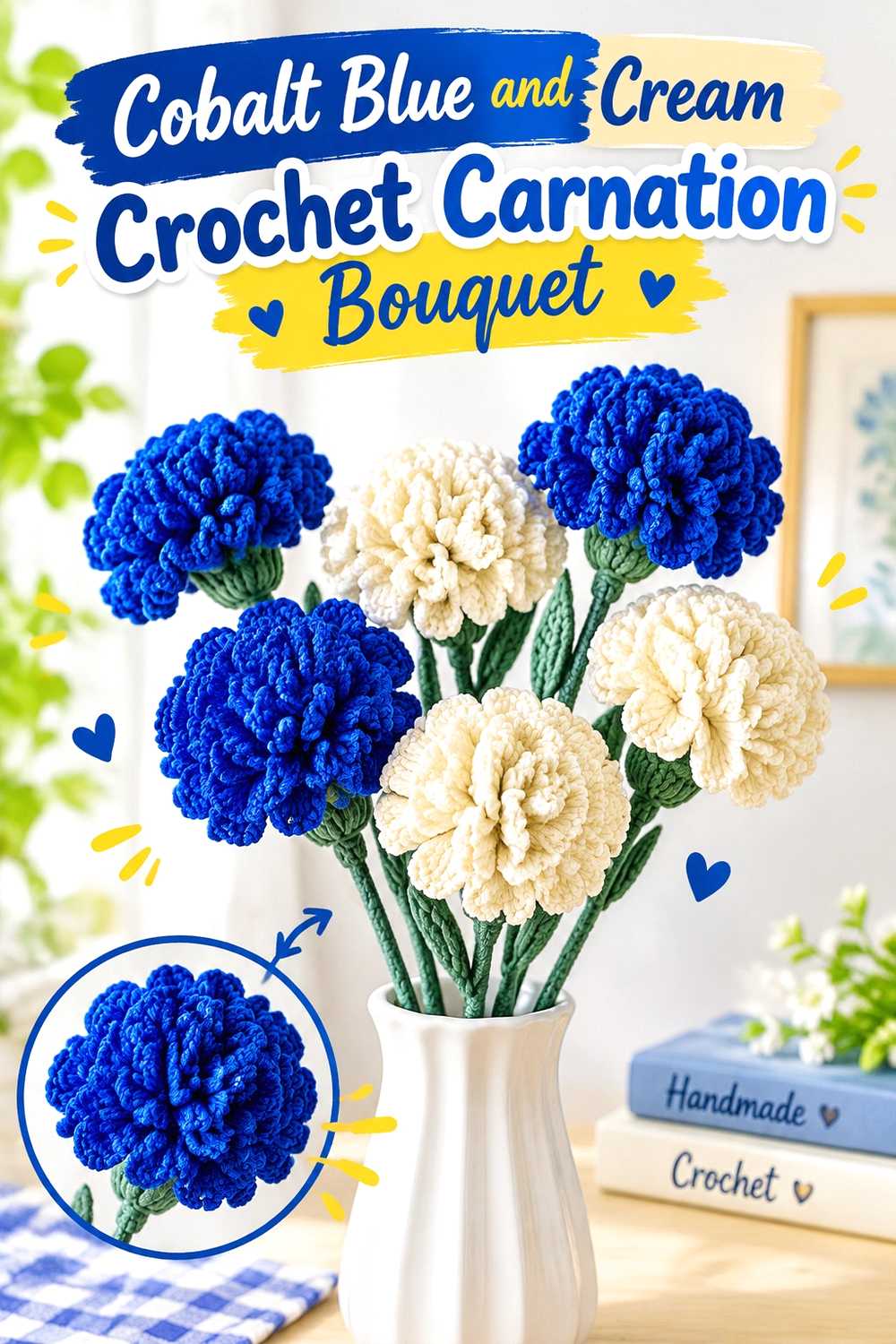
14. Cobalt Blue And Cream Crochet Carnation Bouquet
 SAVE
A bouquet allows the two colors to repeat as separate flower heads rather than dividing one continuous piece of fabric. Cream carnations can form the majority, while selected Cobalt Blue blooms create deeper focal points through the arrangement.
Cream Carnations Give Cobalt Blue Crochet Blooms More Space
Use several Cream flower heads between the blue blooms so Cobalt Blue does not merge into one large dark cluster. The light flowers become visual separators while still remaining part of the two-color concept.
When arranging the finished flowers, judge the palette as a complete bouquet rather than balancing every individual stem identically.
Cobalt Blue Crochet Carnations Work Better as Repeated Accents Than One Isolated Bloom
A single Cobalt Blue flower among many Cream blooms can look detached. Repeating blue in several locations creates a clearer color rhythm and leads the eye through the bouquet.
If you want Cobalt Blue to dominate, reverse the proportion but still keep Cream distributed in more than one part of the arrangement.
Creator Credit: Lingzhi Handmade
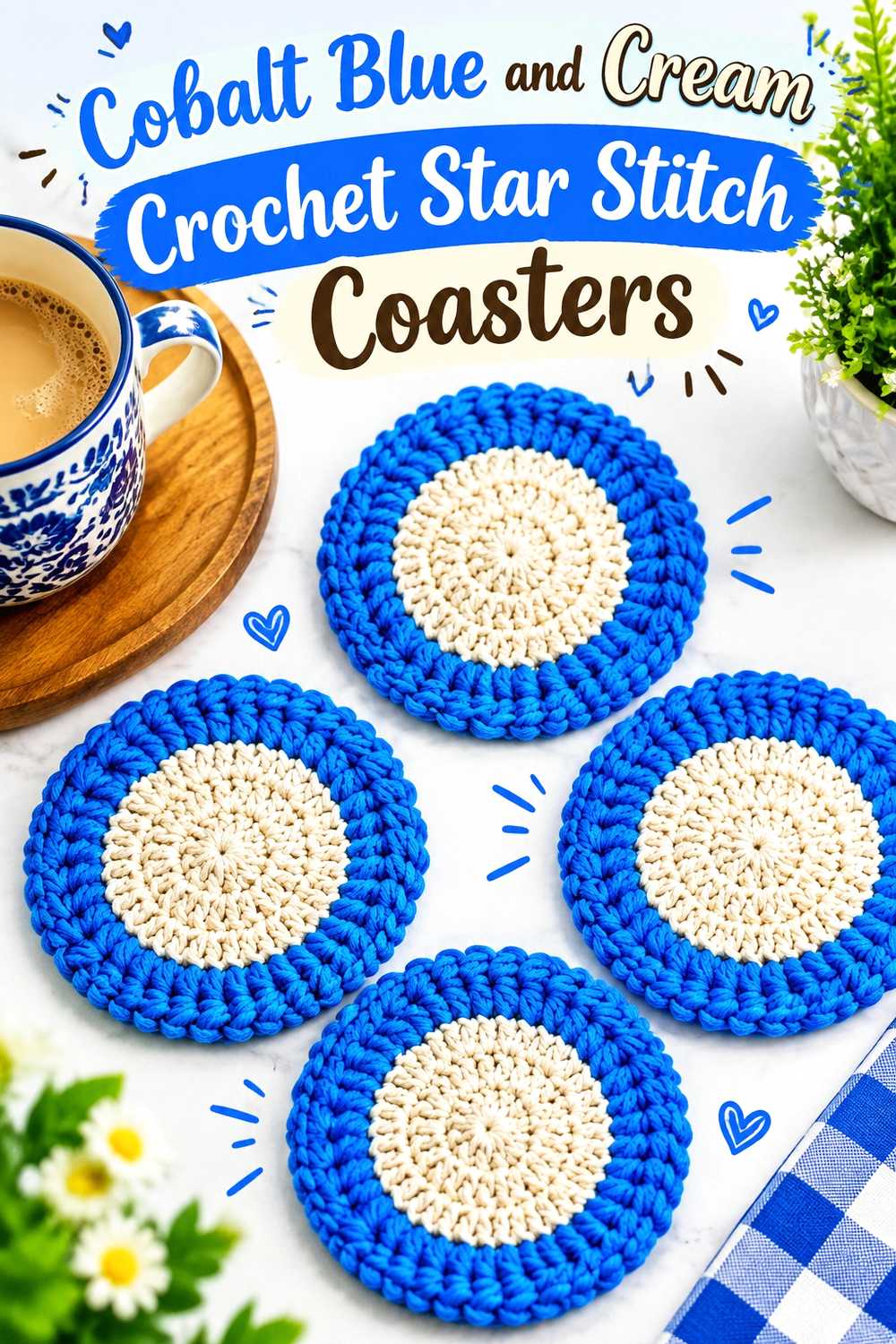
15. Cobalt Blue And Cream Crochet Star Stitch Coasters
 SAVE
Small coasters benefit from a clear center-and-edge strategy. Cobalt Blue can cover the central circle while Cream highlights the decorative outer stitches, or the palette can be reversed across selected pieces in a matching set.
Cobalt Blue Can Give the Crochet Coaster Center a Strong Base
A Cobalt Blue center makes the smallest project in the collection feel distinctly blue without requiring repeated narrow stripes. Keeping several coaster centers the same shade also creates consistency across a set.
If you want variety, reverse the palette on only a few pieces instead of changing the color plan of every coaster.
Cream Can Make the Cobalt Blue Crochet Star-Stitch Edge Easier to Read
The outer texture already differs from the center, so Cream can emphasize that change. Pairing the light color with the decorative edge gives the contrast a clear purpose.
View the coaster from normal table height before deciding whether the Cream section is wide enough to remain visible.
Creator Credit: naztazia
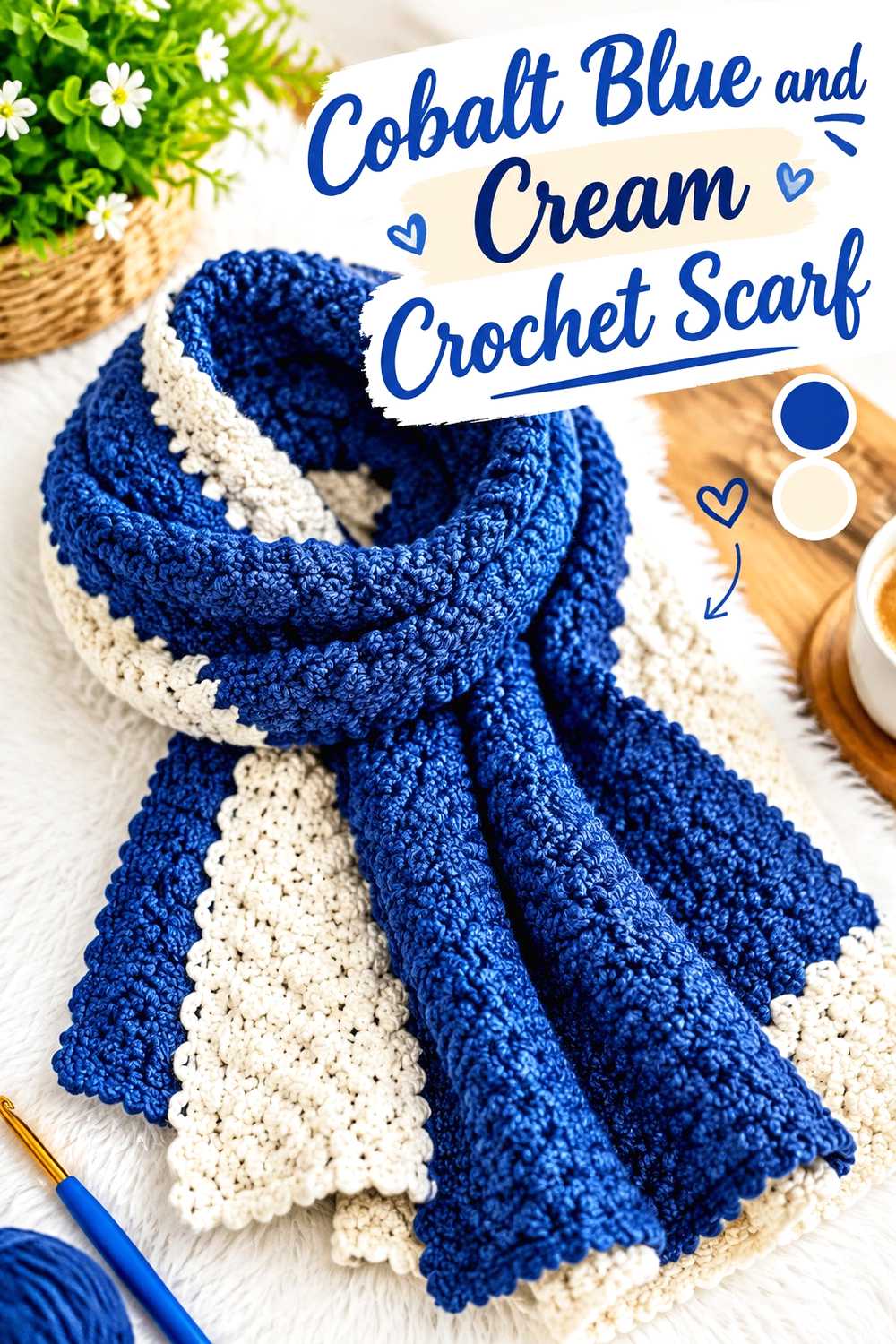
16. Cobalt Blue And Cream Crochet Scarf
 SAVE
A scarf offers enough length for broad blocks, repeated bands, or contrasting ends. Cream can occupy most of the length while Cobalt Blue appears toward the ends, where it is more likely to remain visible after the scarf is wrapped.
Cream Can Keep the Main Crochet Scarf Length Visually Open
Using Cream through the central portion gives the stitch pattern a light continuous field. This is useful when you want the scarf to remain mostly neutral while still including a saturated color.
Remember that some of the center may be wrapped around the neck and hidden, so the color proportions of the flat scarf do not always match what is seen during wear.
Cobalt Blue Can Make Cream Crochet Scarf Ends More Distinct
Broad Cobalt Blue end sections place the accent where it can remain visible below a coat or jacket. This can be more effective than concentrating all the blue near the middle.
If the ends feel disconnected, repeat one smaller blue band closer to the center to create a visual link.
Creator Credit: Fiber Flux
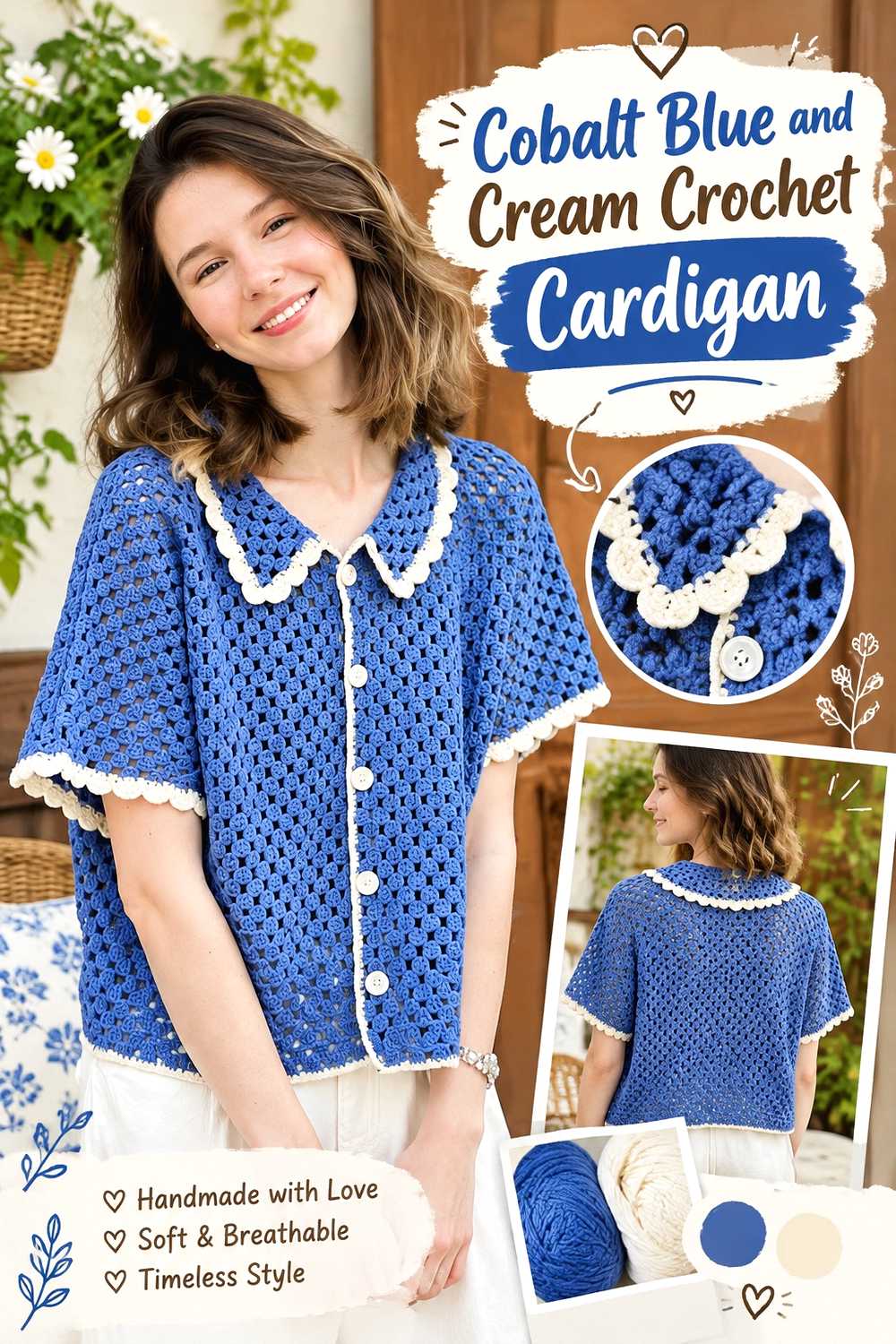
17. Cobalt Blue And Cream Crochet Cardigan
 SAVE
A cardigan provides several separated components that can repeat Cream without disrupting a Cobalt Blue body. Blue can cover the major panels and sleeves, while Cream appears at cuffs, front edging, neckline, or hem.
Cobalt Blue Can Unify the Main Crochet Cardigan Panels
Keeping the large body sections Cobalt Blue establishes a strong garment-wide foundation. The same shade on the sleeves can make the whole cardigan feel continuous rather than assembling several unrelated color blocks.
If the stitch pattern is detailed, fewer color changes across the body also give that texture more room to remain visible.
Cream Can Connect Cobalt Blue Crochet Cardigan Cuffs and Edging
Repeat Cream at two or more related finishing areas rather than using it once. Cream cuffs paired with Cream front edging or neckline trim create a recurring light outline around the blue garment.
If you want more Cream overall, increase the width of those finishing areas before adding unrelated stripes through the main panels.
Creator Credit: namekamilla
18. Cobalt Blue And Cream Crochet Water Bottle Holder
 SAVE
A water bottle holder can divide the palette across base, body, upper edge, and strap. Cream works well through an open body, while Cobalt Blue can identify denser-looking structural sections and the long carrying strap.
Cream Can Keep the Crochet Water Bottle Holder Body Light
A Cream body creates a neutral framework around a bottle that may already contribute another visible color through open stitches. This helps prevent the holder itself from competing with a brightly colored bottle.
If the body is very open, test it with the bottle inserted because the background changes how much Cream is actually seen.
Cobalt Blue Can Link the Cream Crochet Holder Base and Strap
Using Cobalt Blue on the strap gives the saturated color enough length to remain important even though the body is Cream. Repeating blue at the base or top edge ties the strap back into the holder.
Avoid leaving the strap as the only Cobalt Blue area if you want the palette to look integrated rather than attached afterward.
Creator Credit: Strong Earth Creations
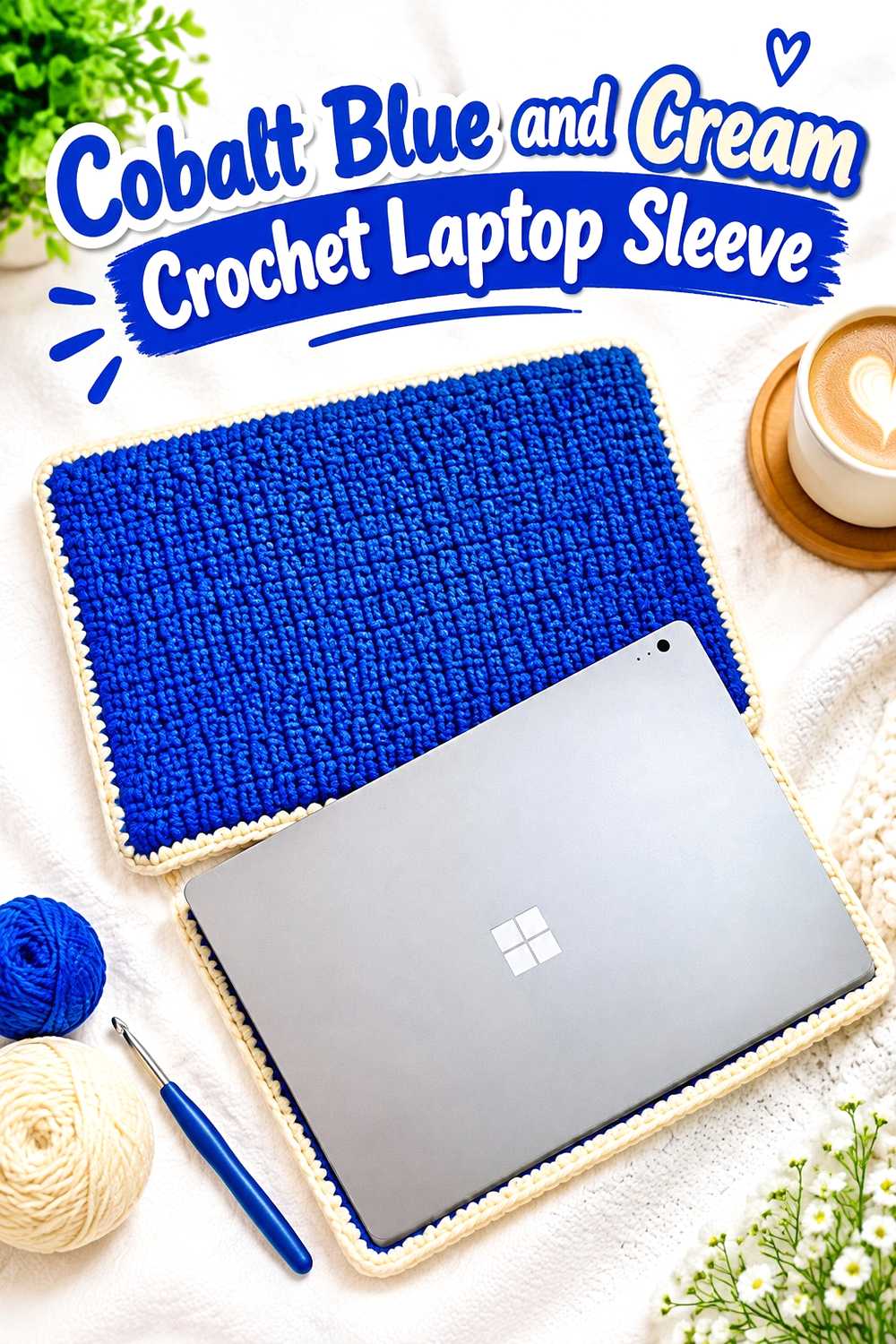
19. Cobalt Blue And Cream Crochet Laptop Sleeve
 SAVE
A laptop sleeve offers a broad rectangular field, so strong color blocking works better than scattering many small accents. Cobalt Blue can cover most of the sleeve while Cream defines the opening or another substantial upper section.
Cobalt Blue Can Give the Crochet Laptop Sleeve a Continuous Main Surface
A Cobalt Blue body keeps the case visually simple and gives any repeated stitch texture one consistent background. It also creates enough saturated area that Cream does not need to be used in large amounts.
If you want a lighter sleeve, reverse the proportions rather than inserting many alternating stripes.
Cream Can Mark the Opening of a Cobalt Blue Crochet Laptop Sleeve
A Cream band near the opening provides a clear endpoint for the blue body. Because that area already functions as the transition between case and device, the color change feels structurally connected.
Repeat a small amount of Cream in another edge detail only if the first band looks too isolated; otherwise, one broad light section may be enough.
Creator Credit: ElyseCrochets 💌
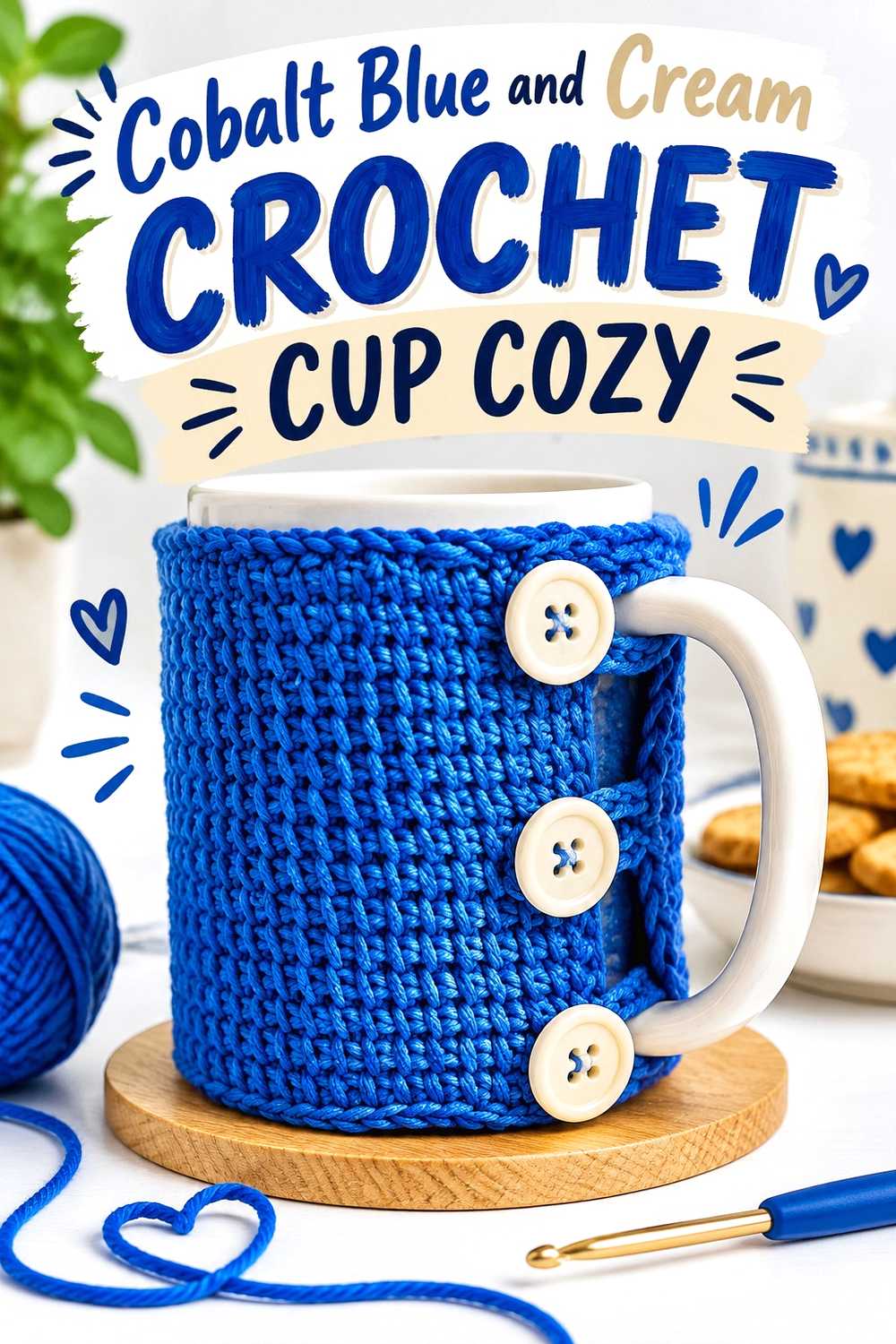
20. Cobalt Blue And Cream Crochet Cup Cozy
 SAVE
A cup cozy has a compact wraparound surface, so one dominant shade plus a clear accent works better than an overly complex stripe sequence. Cream can carry the main body while Cobalt Blue defines the edges or one central band.
Cream Can Keep the Crochet Cup Cozy Body Neutral
A Cream main field allows the mug itself to remain part of the overall color composition. This is useful if you plan to use the cozy on cups in several different colors.
Because the project is small, one uninterrupted Cream section also gives the stitch texture enough room to be visible.
Cobalt Blue Can Give the Cream Crochet Cup Cozy a Strong Small-Scale Accent
Use Cobalt Blue on a substantial edge or central section rather than several tiny lines. A slightly larger blue area is easier to recognize once the cozy curves around a mug.
Before repeating the combination for a set, place the finished cozy on the intended cups and check whether the mug color changes the apparent balance between Cream and Cobalt Blue.
Creator Credit: Lanas y ovillos
Comparing Cobalt Blue and Cream Crochet Color Placements
For the strongest Cobalt Blue emphasis, the bucket hat, textured pillow, bandana, cardigan, laptop sleeve, and market bag give blue enough uninterrupted area to establish the project immediately. Cream works mainly as a brim, edge, join, cuff, strap, or other supporting detail.
For a lighter overall direction, the chunky blanket, basket, washcloth, headband, placemat, scarf, water bottle holder, and cup cozy can give Cream most of the visual area. Smaller Cobalt Blue sections then create definition without darkening the entire project.
The granny square vest, triangle shawl, striped top, carnation bouquet, and coasters offer more active interaction between both shades. These projects let color placement repeat across motifs, sections, blooms, stripes, or borders rather than assigning one shade to the entire body.
Conclusion
Cobalt Blue and Cream work particularly well when the contrast follows the structure of the crochet item. Cobalt Blue can anchor broad panels, centers, bag bodies, and garment surfaces, while Cream can separate motifs, outline edges, lighten borders, and give saturated blue sections room to stand apart.
Choose a blue-dominant balance when you want the finished project to read immediately as Cobalt Blue. Increase the Cream share when you want a lighter overall piece with stronger isolated blue accents. For motif and striped projects, focus less on equal quantities and more on consistent repetition.
Compare your actual yarns before committing to the final layout. Cobalt Blue can vary in depth and Cream can range from very pale to warmer, deeper neutrals, so preserving the intended light-dark relationship is more important than matching a shade name exactly.
Frequently Asked Questions
Should Cobalt Blue or Cream be the dominant crochet color?
Either can lead. Cobalt Blue dominance creates a stronger saturated overall surface, while Cream dominance makes individual blue accents more isolated and noticeable. Choose according to the visual weight you want on the specific item.
How can I check whether Cobalt Blue and Cream have enough contrast?
Place the yarns next to each other in the lighting where the finished project will normally be seen and view them from several feet away. A grayscale photo can also show whether they remain clearly separated by light and dark value rather than hue alone.
Where should Cream go on a Cobalt Blue crochet project?
Cream works especially well at borders, joins, cuffs, brims, handles, ties, outer motif rounds, and other structural transitions. These placements give the lighter shade a clear role rather than scattering it randomly through the project.
Can Cream be the main color instead of Cobalt Blue?
Yes. Cream can cover the main field of blankets, scarves, placemats, accessories, and bags while Cobalt Blue provides borders or selected details. This produces a lighter overall palette without removing the strong blue contrast.
How do I keep Cobalt Blue and Cream granny squares from looking too busy?
Give each color a consistent motif role. For example, repeat Cobalt Blue in the centers and Cream in outer areas or joins. Repetition usually creates more visual order than changing the placement of both colors on every square.
What can replace Cream if I cannot find the exact shade?
Choose another light neutral that preserves the intended separation from Cobalt Blue. An ivory, warm off-white, or similarly light neutral can maintain the palette structure as long as it remains noticeably lighter than the blue.
How can I use Cobalt Blue and Cream without making every crochet project look striped?
Assign the colors to construction features instead of alternating them repeatedly. Borders, motif centers, cuffs, handles, brims, joins, flower heads, ties, and back panels all provide ways to use both shades without relying on stripes.