Wasabi and Soft Gray create a crochet palette with a useful built-in hierarchy. Wasabi supplies a lively yellow-green accent, while Soft Gray gives that stronger color a quieter surface to work against. The combination can look crisp and graphic when the colors are separated into clear blocks, or softer when gray occupies most of the project and Wasabi appears only at edges, motifs, straps, or finishing details.
Soft Gray is especially useful on crochet projects where stitch texture matters. Because it does not compete strongly with the structure of the fabric, it can act as a background for cables, ribbing, openwork, granny motifs, or decorative edging. Wasabi can then be placed where you want the eye to stop.
The tutorials linked below support the underlying crochet constructions. The Wasabi and Soft Gray palettes are editorial adaptations, so use the creator’s tutorial for the project construction while planning the color distribution separately.
Quick List
- Wasabi And Soft Gray Crochet Tote Bag
- Wasabi And Soft Gray Crochet Basket
- Wasabi And Soft Gray Crochet Granny Square Vest
- Wasabi And Soft Gray Crochet Star Stitch Coasters
- Wasabi And Soft Gray Crochet Cowl
- Wasabi And Soft Gray Crochet Oval Placemat
- Wasabi And Soft Gray Crochet Slippers
- Wasabi And Soft Gray Crochet Market Bag
- Wasabi And Soft Gray Crochet Water Bottle Holder
- Wasabi And Soft Gray Crochet Bandana
- Wasabi And Soft Gray Crochet Striped Top
- Wasabi And Soft Gray Crochet Scrunchie
- Wasabi And Soft Gray Crochet Carnation Bouquet
- Wasabi And Soft Gray Crochet Scarf
- Wasabi And Soft Gray Crochet Washcloth
- Wasabi And Soft Gray Crochet Cup Cozy
- Wasabi And Soft Gray Crochet Rug
Decide How Much Wasabi the Crochet Project Really Needs
Wasabi does not have to occupy half of a project to feel important. Against Soft Gray, even relatively small green areas can become clear focal points. On bags and home decor, this makes Wasabi useful for handles, borders, motif centers, or isolated structural bands. On garments, repeating it at cuffs, neckline, hems, or selected stripes can establish the palette without turning the entire wearable bright green.
Reverse the balance when you want Wasabi to define the finished object. A Wasabi bag body, bandana, or placemat can still feel controlled when Soft Gray frames its edges or handles.
Use Soft Gray to Protect Crochet Texture
A quieter gray surface can help crochet texture remain the main feature rather than forcing stitchwork to compete with constant color changes. This matters on ribbed accessories, dense bag fabric, textured washcloths, and raised borders.
Soft Gray is also useful between repeated Wasabi areas. In motifs or stripes, it creates breathing room so several green sections do not merge into one continuous visual block.
Check the Wasabi and Soft Gray Value Difference
The names of the colors do not tell you exactly how light or dark your yarns will be. A pale Wasabi paired with medium Soft Gray may have strong value contrast, while a muted dark Wasabi and deeper gray may look much closer once crocheted.
Compare the yarns side by side before making small motifs. A grayscale photo can help reveal whether enough light-and-dark separation exists. If the shades merge, use larger blocks or stronger placement differences rather than relying on tiny color details.
1. Wasabi And Soft Gray Crochet Tote Bag
 SAVE
SAVEA tote gives Wasabi and Soft Gray several obvious areas to divide: base, main body, upper edge, and straps. Soft Gray can cover most of the bag for a neutral everyday surface, while Wasabi highlights the handles and upper finishing area. Reversing that arrangement creates a much brighter tote with gray acting as the frame.
Soft Gray Can Keep the Crochet Tote Body Calm and Continuous
Use Soft Gray across the largest body section when you want the stitch surface to remain visually consistent. The neutral background gives texture room to show without adding repeated color interruptions through the middle of the bag.
This also makes it easier to control Wasabi. Instead of scattering green stripes through the body, save the stronger color for areas that already have a structural reason to look different.
Wasabi Can Turn Soft Gray Crochet Tote Handles Into a Focal Point
Wasabi handles create two repeated accents against the broad gray bag body. Because straps occupy less visual area than the main fabric, they let the green register strongly without taking over the project.
Repeat a little Wasabi near the opening if the handles feel disconnected. A top border or wider finishing band can visually link the bright straps back to the tote.
Creator Credit: VivCrochets
2. Wasabi And Soft Gray Crochet Basket
 SAVE
SAVEA crochet basket benefits from color placement that follows its vertical structure. Soft Gray can cover the base and lower sides, while Wasabi appears in an upper band, around handles, or near another finishing detail. This keeps the brighter shade visible even when the basket is filled.
Soft Gray Can Give the Crochet Basket a Neutral Lower Base
Keeping the bottom and lower walls Soft Gray gives the basket one continuous visual foundation. On a chunky construction, that uninterrupted color also prevents the large stitches from looking overly busy.
If the basket will sit among colorful yarn, toys, or craft supplies, a gray lower section can provide a useful neutral break between the contents and the Wasabi accent.
Wasabi Works Best on the Soft Gray Crochet Basket Where It Stays Visible
A Wasabi band near the opening is less likely to disappear behind the contents of the basket. If the construction includes handles or another upper feature, repeating Wasabi there helps the green look intentionally connected.
Avoid reducing Wasabi to an extremely thin line on a chunky basket. A wider accent is usually easier to read against the scale of the stitches.
Creator Credit: TL Yarn Crafts
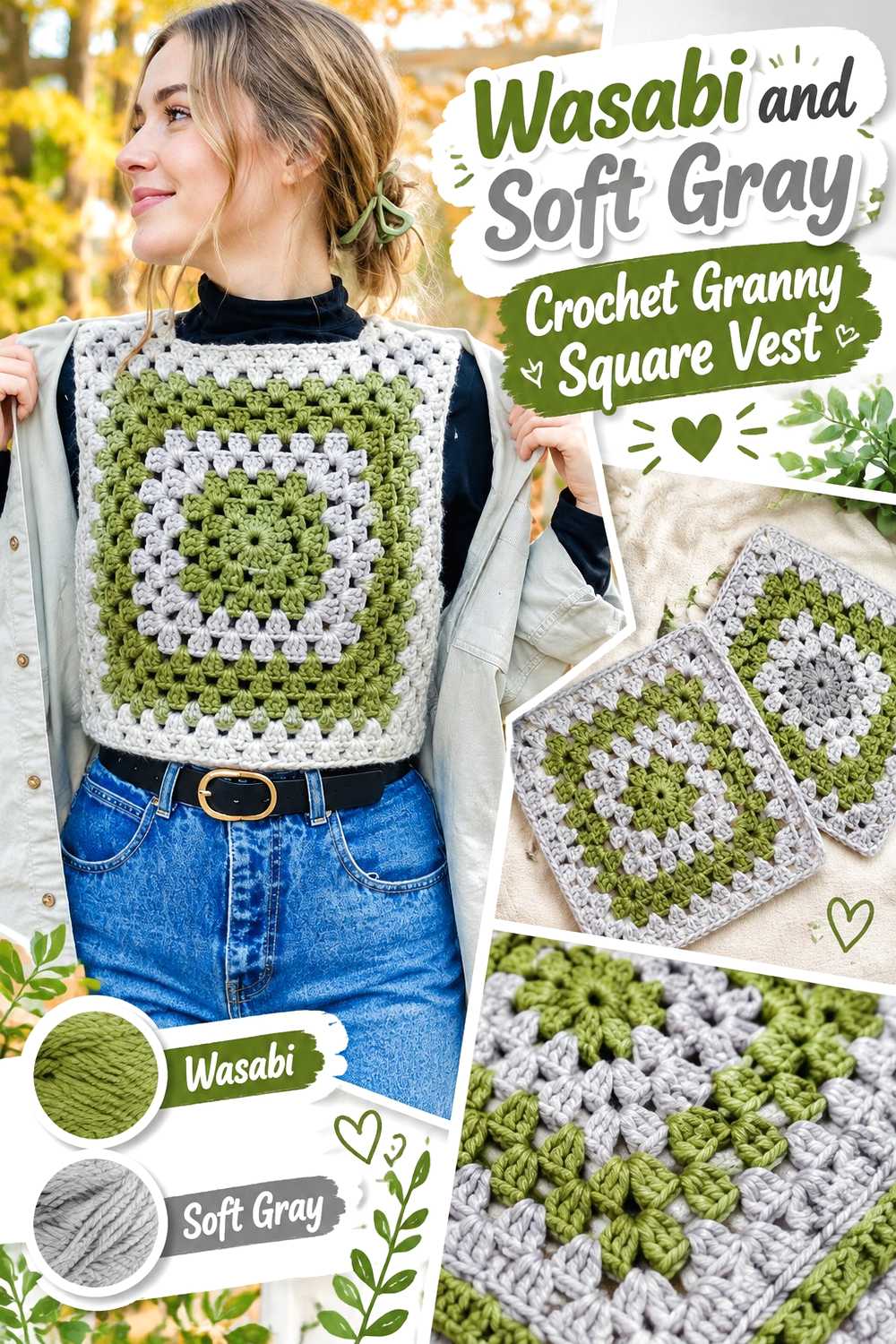
3. Wasabi And Soft Gray Crochet Granny Square Vest
 SAVE
SAVEGranny squares give this palette an opportunity to repeat Wasabi in controlled amounts. Soft Gray can occupy larger outer motif areas, while Wasabi appears at the centers. That creates a recurring green focal point without making every square equally bright from edge to edge.
Wasabi Centers Can Connect the Crochet Vest Motifs
Repeat Wasabi in a similar location across several squares so the green becomes a recognizable part of the vest layout. Consistent centers can visually link separate motifs across the front and back.
If the centers become too dominant, reduce their area rather than changing to another color. The Soft Gray outer sections should still have enough space to act as the visual background.
Soft Gray Can Give Wasabi Crochet Granny Squares More Separation
Soft Gray around Wasabi centers creates breathing room between the strongest colored areas. The neutral can also continue into joins or garment edging so the squares do not appear as isolated blocks.
Before assembling the vest, arrange the completed motifs together. Check whether the Wasabi distribution feels balanced across the entire panel rather than judging one square at a time.
Creator Credit: HayHay Crochet
4. Wasabi And Soft Gray Crochet Star Stitch Coasters
 SAVE
SAVESmall coasters need uncomplicated color placement. Soft Gray can fill the central circle while Wasabi is concentrated around the star-stitch edge, allowing the decorative border to become the main color event.
Soft Gray Keeps the Crochet Coaster Center Visually Simple
A Soft Gray center gives cups and glasses a neutral background while allowing the stitch pattern to remain visible. Keeping all coaster centers gray can also make a set feel coordinated.
If you want variation within the set, reverse the palette on only one or two coasters instead of changing every piece independently.
Wasabi Can Emphasize the Soft Gray Crochet Star-Stitch Border
Wasabi works particularly well at the perimeter because the color change and texture change happen together. The green therefore highlights a real design feature instead of appearing as an arbitrary stripe.
Make one sample before completing a full set. View it from normal table distance to check that the Wasabi edge remains visible enough against your exact Soft Gray yarn.
Creator Credit: naztazia
5. Wasabi And Soft Gray Crochet Cowl
 SAVE
SAVEA cowl has enough height for simple color blocking but does not need complicated striping. Soft Gray can cover most of the neck area while Wasabi creates one substantial edge band or selected section.
Soft Gray Can Carry Most of the Crochet Cowl Texture
Using Soft Gray across the main body allows ribbing or another repeated stitch pattern to stay consistent around the cowl. The neutral shade is useful when texture already provides enough visual movement.
Check how the finished cowl naturally folds before deciding exactly where to place Wasabi. A bright section positioned inside a fold may become less visible during wear than expected.
Wasabi Can Give a Soft Gray Crochet Cowl a Defined Edge
A Wasabi upper or lower edge produces a strong break without interrupting the whole cowl. Placing the green near the top brings the accent closer to the face, while a lower band puts it closer to the outer garment worn underneath.
If both edges use Wasabi, keep a sufficiently broad Soft Gray center so the palette still has a clear dominant shade.
Creator Credit: Bag-O-Day Crochet
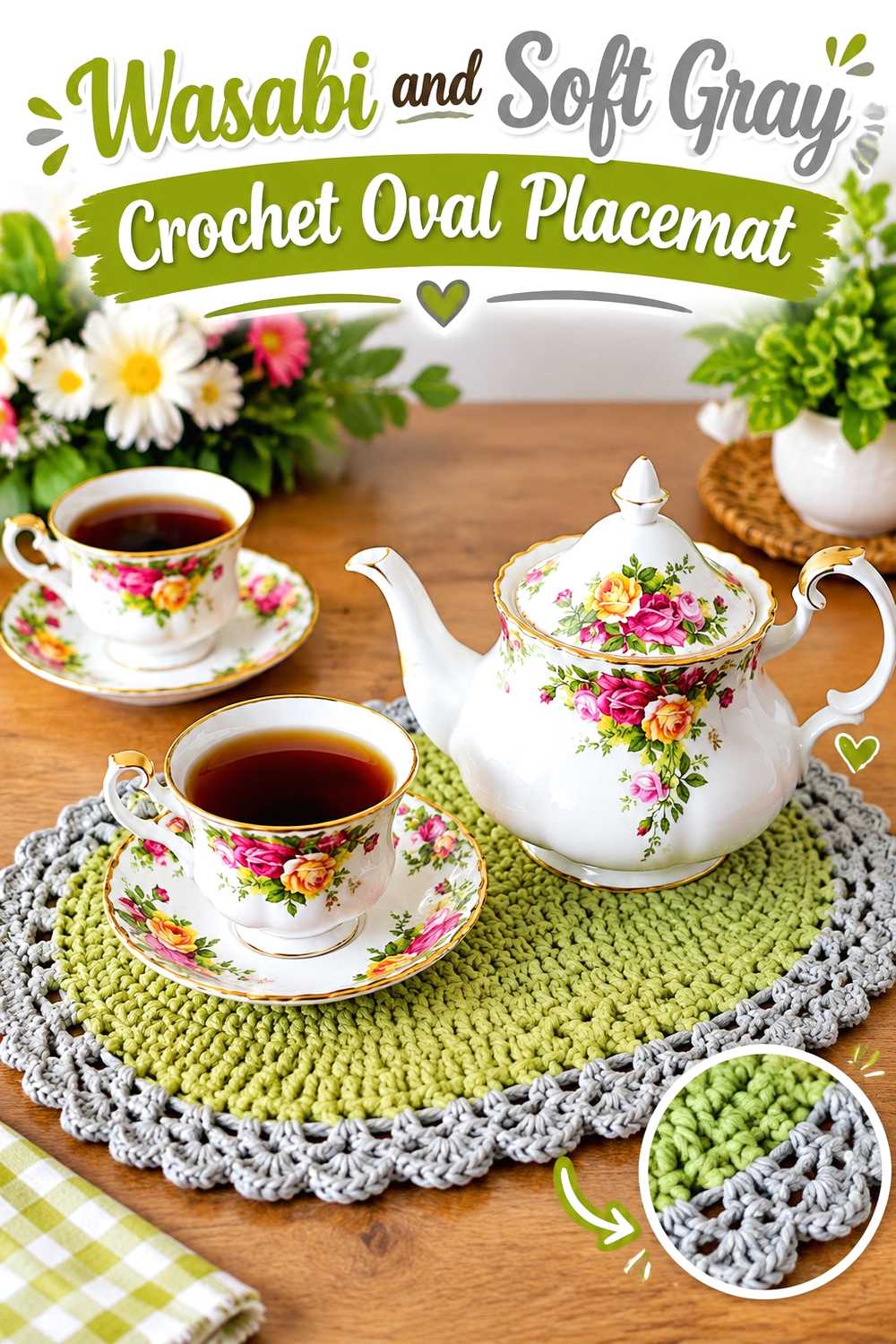
6. Wasabi And Soft Gray Crochet Oval Placemat
 SAVE
SAVEAn oval placemat naturally supports a center-and-border palette. Wasabi can fill the central area while Soft Gray follows the expanding oval edge, or the arrangement can be reversed for a more neutral table setting.
Wasabi Needs Enough Crochet Placemat Area to Stay Visible Under a Plate
If Wasabi occupies only a tiny center, much of it may disappear once dinnerware is placed on top. Extend the green far enough outward that it remains visible around the plate.
Testing one finished placemat with your actual dishes is more useful than judging the color proportions while the crochet piece is empty.
Soft Gray Can Frame the Wasabi Crochet Placemat Without Competing
Soft Gray around the outside gives the Wasabi center a quieter visual boundary. The neutral border can also help separate the yellow-green from a colorful tablecloth or other surrounding decor.
For a coordinated set, keep the border placement consistent from one placemat to the next. Variation can come from matching coasters or napkin accessories instead.
Creator Credit: Jayda InStitches
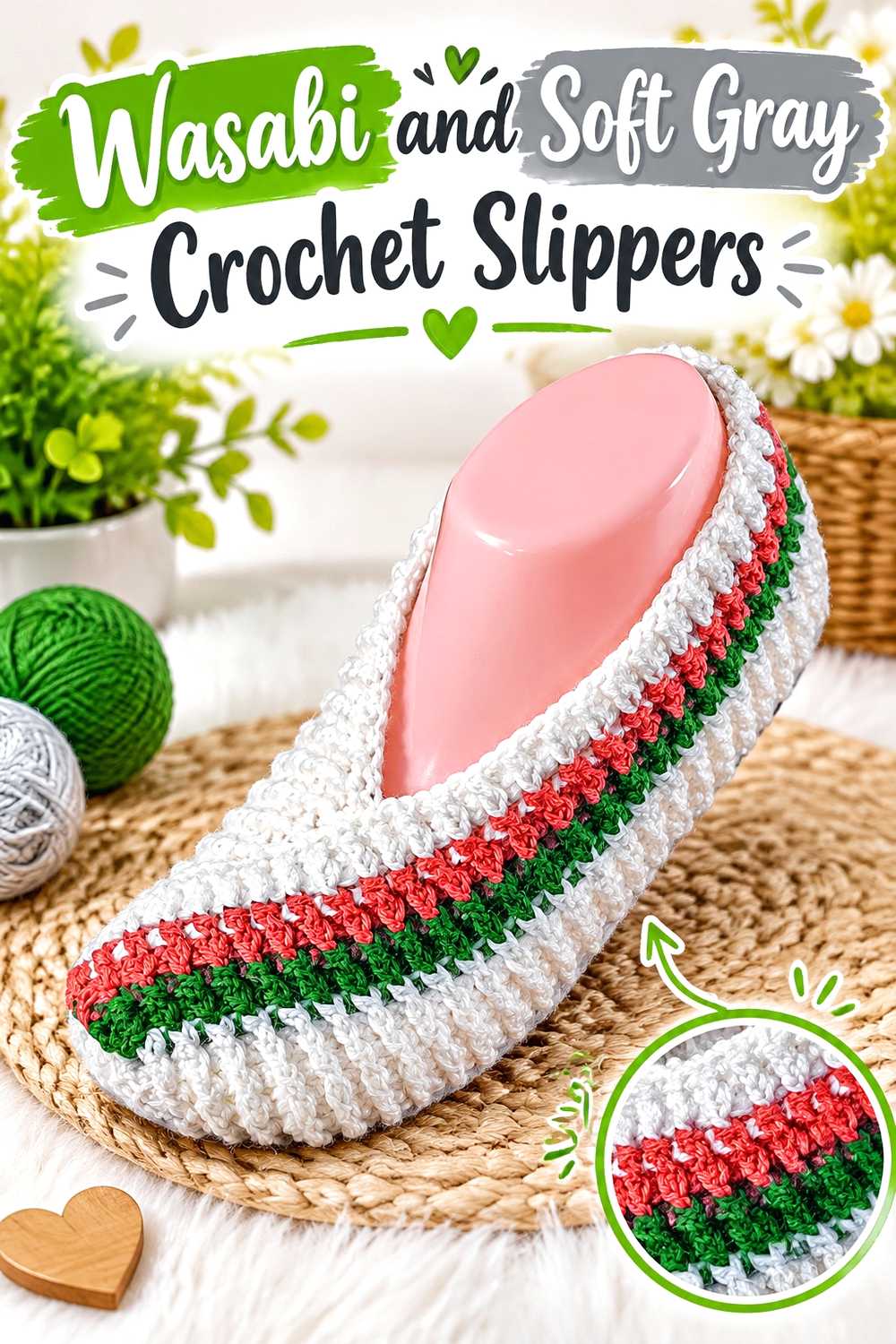
7. Wasabi And Soft Gray Crochet Slippers
 SAVE
SAVESlippers are viewed as a pair, so consistent placement is especially important. Soft Gray can dominate the lower and main body areas while Wasabi repeats across matching upper sections or edges.
Soft Gray Can Keep Both Crochet Slippers Visually Matched
Use Soft Gray in corresponding sections on both slippers so the pair has a clear base. A neutral dominant color also gives you room to use Wasabi prominently without making the whole project equally bright.
Plan the transition point on the first slipper before crocheting the second. This helps keep the two-color placement consistent across the pair.
Wasabi Can Highlight the Soft Gray Crochet Slipper Uppers
A Wasabi upper section gives the green a visible role when the slippers are worn. It can be more effective than several narrow stripes because there is enough surface area for the color to register clearly.
If you prefer subtler green, limit Wasabi to the opening edge or another matching finishing section on both slippers.
Creator Credit: Di’s Handicrafts (Crochet and Knitting)
8. Wasabi And Soft Gray Crochet Market Bag
 SAVE
SAVEOpenwork changes the apparent weight of a color because the surroundings show through the stitches. Wasabi can therefore cover much of a mesh bag without looking as visually solid as the same shade would on a dense tote. Soft Gray can define the base and handles.
Wasabi Can Stay Bright Without Overwhelming an Open Crochet Market Bag
When Wasabi is used through mesh, open spaces break up the green surface. This makes the color a good candidate for the main bag body if you want a lively project that still feels visually open.
Check the bag against clothing or objects likely to show behind the mesh. The background can affect how strong or muted the Wasabi appears.
Soft Gray Can Anchor the Wasabi Crochet Market Bag at Structural Points
Use Soft Gray where the fabric becomes visually denser, such as the base, top edge, or handles. The gray sections can create boundaries around the Wasabi mesh without interrupting every openwork repeat.
Repeating Soft Gray at both upper and lower areas also prevents one neutral section from looking unrelated.
Creator Credit: The Crochet Crowd
9. Wasabi And Soft Gray Crochet Water Bottle Holder
 SAVE
SAVEA bottle holder has three useful color zones: base, body, and strap. Soft Gray can form the main holder while Wasabi runs through the strap, or Wasabi can dominate the mesh body with gray defining the top and bottom.
Soft Gray Can Keep the Crochet Water Bottle Holder Body Versatile
Soft Gray across the main body gives the holder a neutral framework around bottles of different colors. This is particularly useful when an open stitch allows the bottle itself to remain visible.
If the bottle is brightly colored, gray also prevents the finished combination from becoming too crowded.
Wasabi Can Make the Soft Gray Crochet Water Bottle Strap a Strong Accent
The strap is long enough for Wasabi to register clearly, even though it occupies less total area than the holder body. Connecting the green strap to a small Wasabi upper border can make the two areas feel intentionally related.
Consider how the strap looks when worn across clothing as well as when the holder is lying flat.
Creator Credit: Crochet with Clare
10. Wasabi And Soft Gray Crochet Bandana
 SAVE
SAVEA triangular bandana gives the two colors a clear main-field-and-border relationship. Wasabi can dominate the triangle while Soft Gray frames the edge and ties, keeping the green strong but contained.
Wasabi Can Fill the Main Crochet Bandana Triangle
A broad Wasabi center makes the yellow-green the defining color rather than reducing it to a tiny trim. This approach works especially well when the bandana includes openwork because the spaces visually lighten the green.
Check the finished triangle while curved around the head. Color proportions can look different once the flat fabric is folded and tied.
Soft Gray Can Connect the Wasabi Crochet Bandana Edge and Ties
Using Soft Gray for both the border and ties creates a continuous frame around the main Wasabi area. Because the ties extend away from the triangle, repeating the same neutral keeps them visually connected to the body.
If a full gray border looks too wide, narrow the edge but retain gray in the ties so the supporting color still appears more than once.
Creator Credit: PassioKnit Kelsie
11. Wasabi And Soft Gray Crochet Striped Top
 SAVE
SAVEA striped top gives both shades repeated visibility, but equal-width stripes are only one option. Soft Gray can occupy broader bands while narrower Wasabi stripes provide a clear rhythm through the garment.
Soft Gray Can Give the Crochet Top Stripes More Breathing Room
Wider Soft Gray bands keep the top from becoming visually dominated by repeated bright green. They also provide neutral spaces between Wasabi stripes so each accent remains distinct.
Plan the stripe relationship across sleeves as well as the torso. A consistent color hierarchy makes separately constructed garment areas feel more connected.
Wasabi Stripes Can Add Rhythm to a Soft Gray Crochet Top
Wasabi can repeat regularly without taking up equal surface area. Narrower green bands spaced between larger gray sections create a controlled pattern while keeping the yellow-green clearly present.
If the top begins to look busier than intended, reduce the frequency of Wasabi rather than introducing a third neutral.
Creator Credit: forthefrills
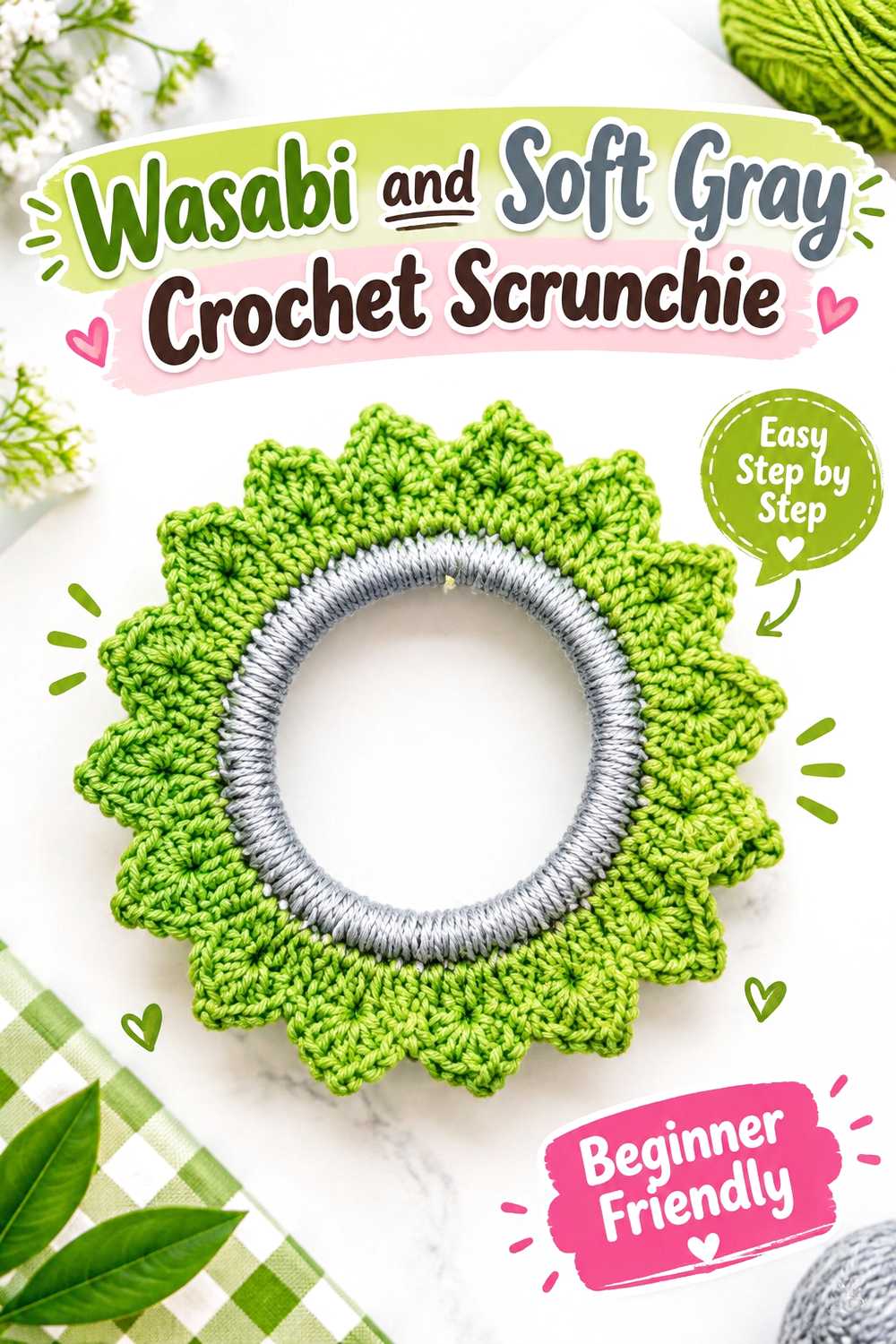
12. Wasabi And Soft Gray Crochet Scrunchie
 SAVE
SAVEA scrunchie is small enough that complex color planning can quickly become cluttered. One effective approach is to use Soft Gray around the inner fabric and Wasabi on the outer decorative section, allowing the green to emphasize the fuller edge.
Soft Gray Can Keep the Crochet Scrunchie Center Visually Controlled
Soft Gray close to the elastic creates a neutral inner area that does not compete with the surrounding ruffles or decorative stitches. The shade may also remain partially hidden when the scrunchie is wrapped around the hair.
This makes the central section a practical place for the quieter color.
Wasabi Can Highlight the Outer Edge of a Soft Gray Crochet Scrunchie
Use Wasabi where the crochet expands outward so the brighter shade remains visible when the accessory is worn. A substantial outer green section will usually read more clearly than several tiny alternating color changes.
For a small accessory, two well-defined color zones are often enough to establish the entire palette.
Creator Credit: Jess Crafting
13. Wasabi And Soft Gray Crochet Carnation Bouquet
 SAVE
SAVEA bouquet allows Wasabi and Soft Gray to take very different roles from a wearable or bag. Soft Gray can form the carnation petals for an unusual neutral floral display, while Wasabi supplies leaves and other green components. The Wasabi therefore performs a foliage role without needing to dominate the flower heads.
Soft Gray Can Make the Crochet Carnation Petals the Main Neutral Feature
Repeating Soft Gray across several flowers creates a cohesive bouquet even when the individual blooms face different directions. The neutral petals can also make stitch shape and layered flower construction more noticeable than a highly varied multicolor bouquet would.
Avoid adding several unrelated petal colors if the goal is to preserve the Wasabi-and-Gray concept.
Wasabi Can Give Soft Gray Crochet Carnations Clear Foliage Contrast
Wasabi leaves create a strong distinction between flower heads and greenery. Because the green is sharper than a traditional muted leaf shade, control its visual share through the number and placement of leaves.
If the foliage begins competing with the flowers, let more of the Soft Gray blooms remain visible above the Wasabi leaves.
Creator Credit: Lingzhi Handmade
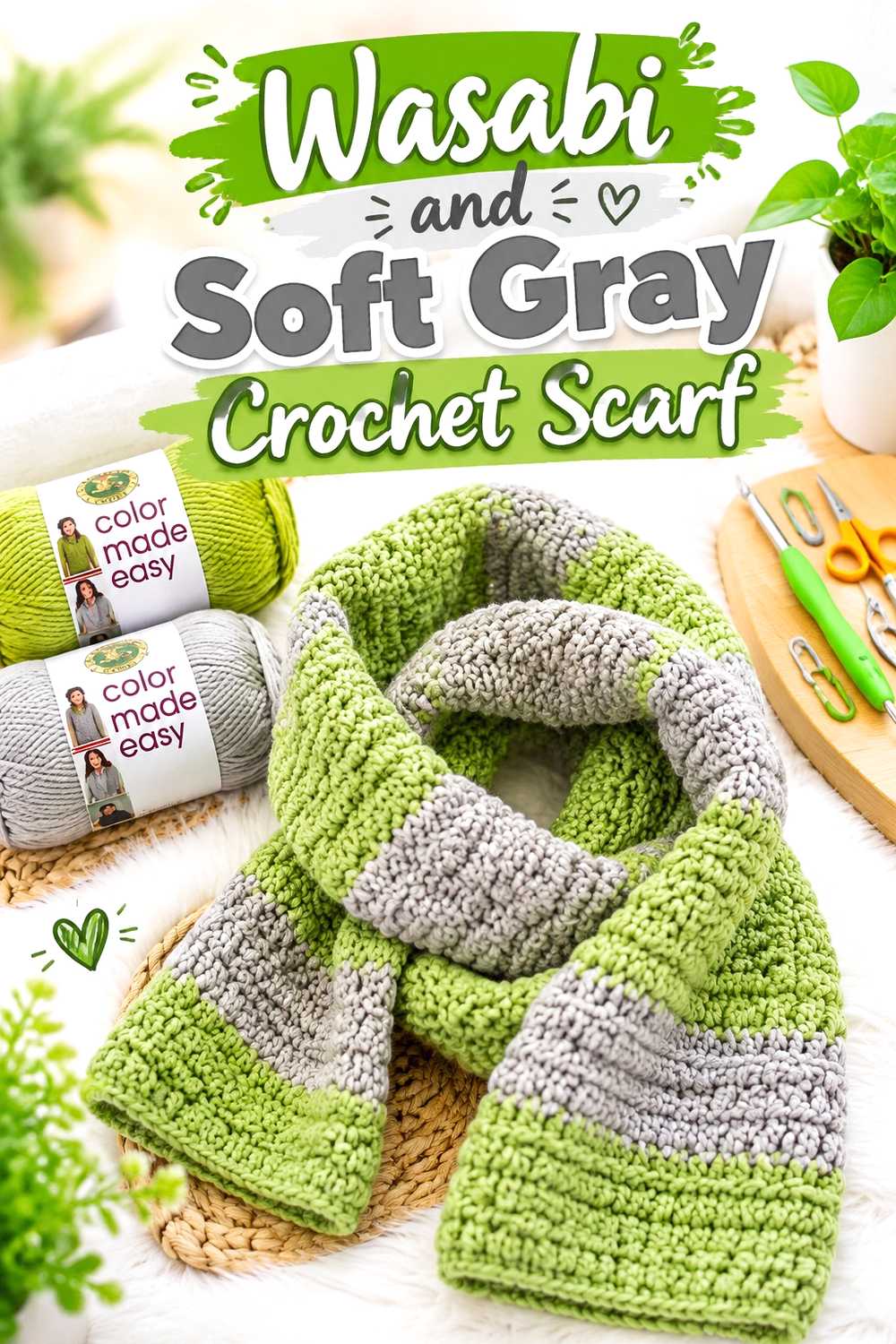
14. Wasabi And Soft Gray Crochet Scarf
 SAVE
SAVEA long scarf offers room for repeated blocks without requiring the strict rhythm of narrow stripes. Soft Gray can establish the majority of the length while Wasabi appears in broad sections toward the ends or at selected intervals.
Soft Gray Can Establish the Main Crochet Scarf Length
Using Soft Gray for most of the scarf lets the stitch pattern remain visually continuous over a long distance. It also means the scarf can show a significant amount of texture without color changes becoming the dominant feature.
Consider how the scarf will be wrapped. Some central sections may be hidden around the neck, while end sections stay much more visible.
Wasabi Can Make the Soft Gray Crochet Scarf Ends More Distinct
Broad Wasabi end blocks concentrate the green where it can still be seen after the scarf is wrapped. This can be more effective than placing all of the accent color in the middle.
If the ends feel disconnected, repeat a smaller Wasabi section closer to the center rather than switching to an additional color.
Creator Credit: Sewrella
15. Wasabi And Soft Gray Crochet Washcloth
 SAVE
SAVEA washcloth is a useful place to test the palette on texture before committing to a larger project. Soft Gray can dominate the textured center while Wasabi forms an outer edge or one defined section.
Soft Gray Helps the Crochet Washcloth Texture Stay Easy to Read
Use Soft Gray across the main field when you want the stitch pattern to provide most of the visual detail. A consistent neutral surface can make alternating stitch heights or raised texture easier to notice.
This approach also gives you a practical swatch for seeing how your selected gray looks after being worked into actual crochet fabric.
Wasabi Can Give the Soft Gray Crochet Washcloth a Clear Border
A Wasabi edge provides enough contrast to define the perimeter without interrupting the central stitch texture. The green can also be repeated on a hanging loop if the chosen construction includes one.
Before making a coordinated set, decide whether every washcloth should use the same balance or whether some should reverse Wasabi and Soft Gray.
Creator Credit: Melanie Ham
16. Wasabi And Soft Gray Crochet Cup Cozy
 SAVE
SAVEA cup cozy has a small, wraparound surface, making one main color plus one concentrated accent more effective than complicated striping. Soft Gray can cover the body while Wasabi appears around upper and lower edges or a central decorative band.
Soft Gray Can Keep the Crochet Cup Cozy Body Neutral
A Soft Gray main field gives the cozy enough visual separation from brightly colored mugs without competing strongly with them. It also leaves more attention for crochet texture.
Check your chosen yarn colors against the mug you expect to use most often. The background color of the cup becomes part of the overall visual combination.
Wasabi Can Give the Soft Gray Crochet Cup Cozy a Defined Accent
A Wasabi edge or substantial band creates a clear yellow-green detail despite the small project size. Keep the accent wide enough to remain recognizable once the cozy is wrapped around the mug.
Avoid adding several tiny green stripes when one stronger Wasabi section can create a cleaner result.
Creator Credit: Pretty Darn Adorable Crochet Tutorials
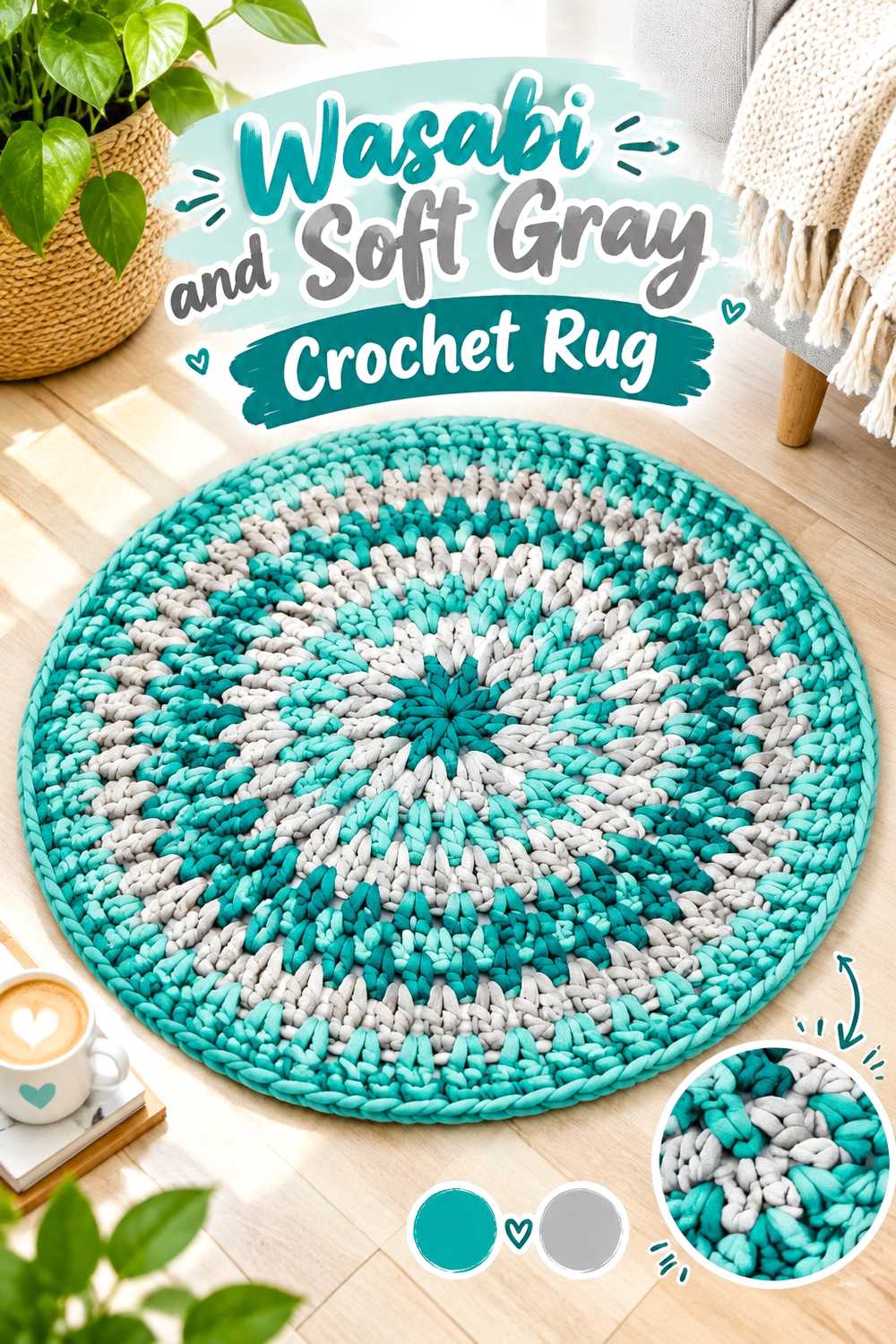
17. Wasabi And Soft Gray Crochet Rug
 SAVE
SAVEA rug gives this palette a much larger visual footprint. Soft Gray can cover most of the surface, while Wasabi defines the perimeter or a few broad sections. Alternatively, a Wasabi center with a substantial gray frame makes the green the main decor statement while keeping its edge controlled.
Soft Gray Can Carry the Largest Crochet Rug Surface
A broad Soft Gray field works particularly well when the rug already has a strong circular or textured construction. It lets the shape and stitch pattern remain visible without filling the floor with one large block of bright green.
Consider the flooring underneath when choosing the gray. If the two are extremely similar, the rug’s outline may depend more heavily on the Wasabi sections.
Wasabi Can Define the Outer Edge of a Soft Gray Crochet Rug
Placing Wasabi near the perimeter gives the rug a distinct boundary and keeps the brighter color visible even when furniture or objects partially cover the center.
Because the rug has a much larger scale than a coaster or washcloth, give the Wasabi enough width to suit that scale. An extremely narrow green line may have little visual effect from standing height.
Creator Credit: Jen Dwyer
Comparing Wasabi and Soft Gray Crochet Color Placements
Choose a Soft Gray-dominant layout when stitch texture, wearability, or a neutral overall appearance matters most. The tote, basket, cowl, laptop sleeve, striped top, scarf, washcloth, cup cozy, and rug all give gray enough uninterrupted area to act as the main field.
For a brighter Wasabi-led project, consider the placemat, market bag, bandana, or parts of the slippers. These give the green broader sections while Soft Gray controls the edges or structural details.
The granny square vest, coasters, water bottle holder, scrunchie, and carnation bouquet suit more specialized color placement. In these projects, one shade can be assigned to a specific motif, border, strap, flower component, or decorative feature instead of simply dividing the object in half.
Conclusion
Wasabi and Soft Gray are most useful together when the colors are given clearly different responsibilities. Soft Gray can create visual breathing room around texture, motifs, and stronger accents, while Wasabi can identify the areas that deserve more attention.
For the quietest version of the combination, let Soft Gray cover most of the project and reserve Wasabi for borders, straps, ends, or motif centers. For a brighter result, reverse that balance and use gray mainly to frame the Wasabi surface.
Always judge the actual yarns together before committing to a large project. A muted olive-leaning Wasabi creates a very different contrast from a bright yellow-green, and Soft Gray can range from nearly white to medium charcoal-leaning tones. Preserving the intended dominant, supporting, and accent relationship matters more than matching the color names exactly.
Frequently Asked Questions
Does Wasabi work well with Soft Gray in crochet?
Yes. Soft Gray can give Wasabi a quieter background, allowing the stronger yellow-green to stand out without requiring large amounts of it. The combination can be especially useful when you want one noticeable accent color alongside a neutral.
Should Wasabi or Soft Gray be the dominant crochet color?
Either can lead. Soft Gray dominance produces a quieter project with focused green accents. Wasabi dominance produces a brighter overall piece, while gray can define edges, straps, borders, joins, or other structural details.
How can I tell if Wasabi and Soft Gray yarn have enough contrast?
Compare the yarns side by side and view them from several feet away. A grayscale photo is another useful check. If they become difficult to distinguish in grayscale, use larger color blocks rather than depending on very small contrasting motifs.
Where should Wasabi go on a Soft Gray crochet project?
Good locations include borders, handles, straps, cuffs, motif centers, flower foliage, decorative edges, selected stripes, and other areas that already have a structural reason to stand apart from the main fabric.
Can I use a darker gray instead of Soft Gray with Wasabi?
Yes, but the palette will change. A darker gray gives Wasabi stronger dark-light separation and creates a heavier visual frame. If you want to preserve the softer character of the original combination, choose a gray that remains noticeably lighter than charcoal.
What can replace Wasabi if I cannot find that exact yarn shade?
Look for another yellow-green or similarly fresh green that keeps the same visual role. Pay attention to lightness and saturation relative to the Soft Gray rather than searching only for a yarn labeled “Wasabi.”
How can I keep Wasabi and Soft Gray crochet from looking too busy?
Reduce unnecessary color changes. Give one shade larger uninterrupted areas and place the second color at specific edges, motifs, straps, stripes, or other repeated structural points. A clear hierarchy usually works better than alternating the two colors everywhere.