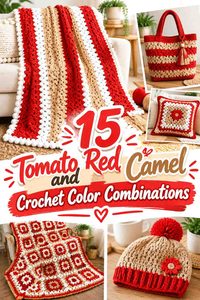
Burgundy and slate blue create an interesting crochet pairing because the colors bring different visual temperatures without requiring a bright accent. Burgundy contributes a warm, deep red direction, while slate blue introduces a cooler, softened blue. Depending on the exact yarns you choose, the result can range from noticeably contrasting to quietly blended.
The key is deciding which shade should control the largest visual area. Burgundy can make a sweater, blanket, or pillow feel darker and more concentrated, while a slate-blue-dominant layout gives the project a cooler and often lighter-looking field. You can also reserve one color for borders, ribbing, joins, handles, or motif centers instead of dividing every project evenly between the two.
The tutorials credited with each idea support the crochet project or construction concept. The burgundy-and-slate-blue palettes below are independent color adaptations, so the creators are not being credited with using these exact colors.
Quick List
- Burgundy And Slate Blue Granny Stripe Crochet Blanket
- Burgundy And Slate Blue Ribbed Crochet Beanie
- Burgundy And Slate Blue Granny Square Crochet Tote
- Burgundy And Slate Blue Mitered Crochet Pillow
- Burgundy And Slate Blue C2c Crochet Granny Square
- Burgundy And Slate Blue Crochet Shawl
- Burgundy And Slate Blue Crochet Pullover Sweater
- Burgundy And Slate Blue Crochet Storage Basket
- Burgundy And Slate Blue Textured Crochet Scarf
- Burgundy And Slate Blue Oversized Crochet Cardigan
- Burgundy And Slate Blue Crochet Cowl
- Burgundy And Slate Blue Crochet Bucket Hat
- Burgundy And Slate Blue Crochet Sweater Vest
- Burgundy And Slate Blue Crochet Mug Rug
- Burgundy And Slate Blue Crochet Fingerless Gloves
- Burgundy And Slate Blue Crochet Ear Warmer Headband
Decide Whether Burgundy or Slate Blue Should Lead
Burgundy and slate blue do not need equal coverage. In fact, giving one shade a clear dominant role can make a two-color crochet project easier to read.
For a darker overall piece, use burgundy across the largest panels or surfaces and introduce slate blue around cuffs, borders, motifs, or smaller structural details. To cool and lighten the overall appearance, reverse those roles and let slate blue cover the larger areas.
Equal coverage makes more sense when the construction already supports obvious repetition, such as granny stripes, checker-style motifs, or alternating squares.
Check Burgundy and Slate Blue Value Contrast
Two different hues can still sit surprisingly close together in lightness. A dusty medium burgundy paired with a darker slate blue may produce much less separation than a deep wine-colored burgundy beside a lighter gray-blue.
Place the actual yarns together before using one for small lettering, narrow motif outlines, or detailed colorwork. A grayscale photo is a useful quick check. If the two shades nearly merge in grayscale, larger color blocks may show the combination more successfully than tiny contrasting details.
Place Burgundy and Slate Blue Around Natural Crochet Divisions
Crochet projects often provide obvious places for a second color: cuffs, necklines, ribbing, borders, granny-square centers, joins, handles, pockets, brims, or fringe.
Using those divisions can make burgundy and slate blue look more deliberate than changing colors simply because equal amounts remain. It also lets stitch texture stay uninterrupted where texture is an important part of the project.
1. Burgundy And Slate Blue Granny Stripe Crochet Blanket
 SAVE
SAVEA granny stripe blanket provides enough surface area for both colors to establish a visible rhythm. Slate blue can cover wider sections to keep the blanket from becoming too dark, while burgundy can return at planned intervals as the stronger visual marker. This arrangement works especially well when you want both colors clearly present without alternating them after every stripe.
Burgundy Can Establish the Crochet Blanket’s Stripe Rhythm
Use burgundy at consistent intervals when you want it to function as an anchor rather than an occasional accent. Repeating the deeper shade across the blanket helps the separate burgundy bands relate to one another.
The burgundy sections do not need to be as wide as the slate blue sections. Because burgundy usually carries stronger visual weight, narrower bands may still have plenty of presence.
Slate Blue Can Give Burgundy Granny Stripes More Separation
Wider slate blue areas create breathing room between darker burgundy stripes. This is particularly useful when your burgundy yarn is very deep and repeated dark bands begin to dominate the blanket.
Lay several planned stripes together before committing to the full project. This lets you judge the overall proportion rather than deciding based on a single burgundy-and-blue transition.
Creator Credit: Emma C Makes YouTube tutorial
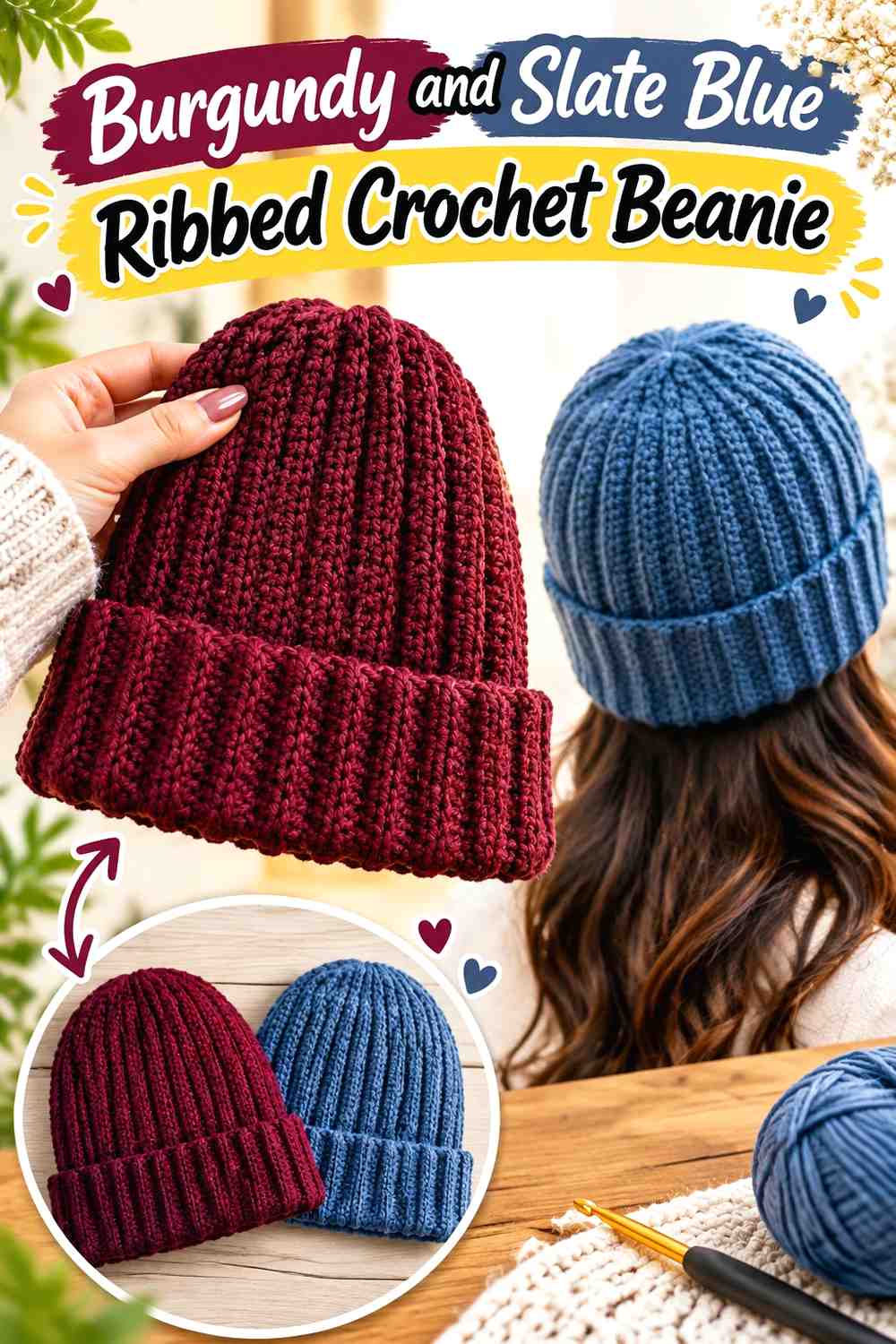
2. Burgundy And Slate Blue Ribbed Crochet Beanie
 SAVE
SAVEA ribbed beanie gives you a simple way to separate the colors without interrupting every line of texture. Burgundy can cover the crown and most of the body while slate blue defines the lower band or folded edge. Reversing those placements produces a much cooler-looking hat using the same two yarns.
Burgundy Can Keep the Crochet Beanie Crown Visually Continuous
Using burgundy across the crown prevents repeated color changes from breaking up the ribbed texture. This makes sense when the vertical or knit-like appearance of the crochet fabric is an important part of the finished hat.
If your burgundy is especially dark, examine the ribbing under normal indoor lighting. A texture that appears pronounced in strong daylight may look subtler in a deep-colored yarn.
Slate Blue Can Define the Burgundy Crochet Beanie Brim
Slate blue around the lower edge provides a clear endpoint for a burgundy body. Giving the blue a wider folded section will make it a significant part of the palette, while a narrow band keeps burgundy firmly dominant.
If you want a more connected two-color design, repeat a small amount of slate blue elsewhere rather than adding several unrelated color changes across the crown.
Creator Credit: VivCrochets YouTube tutorial
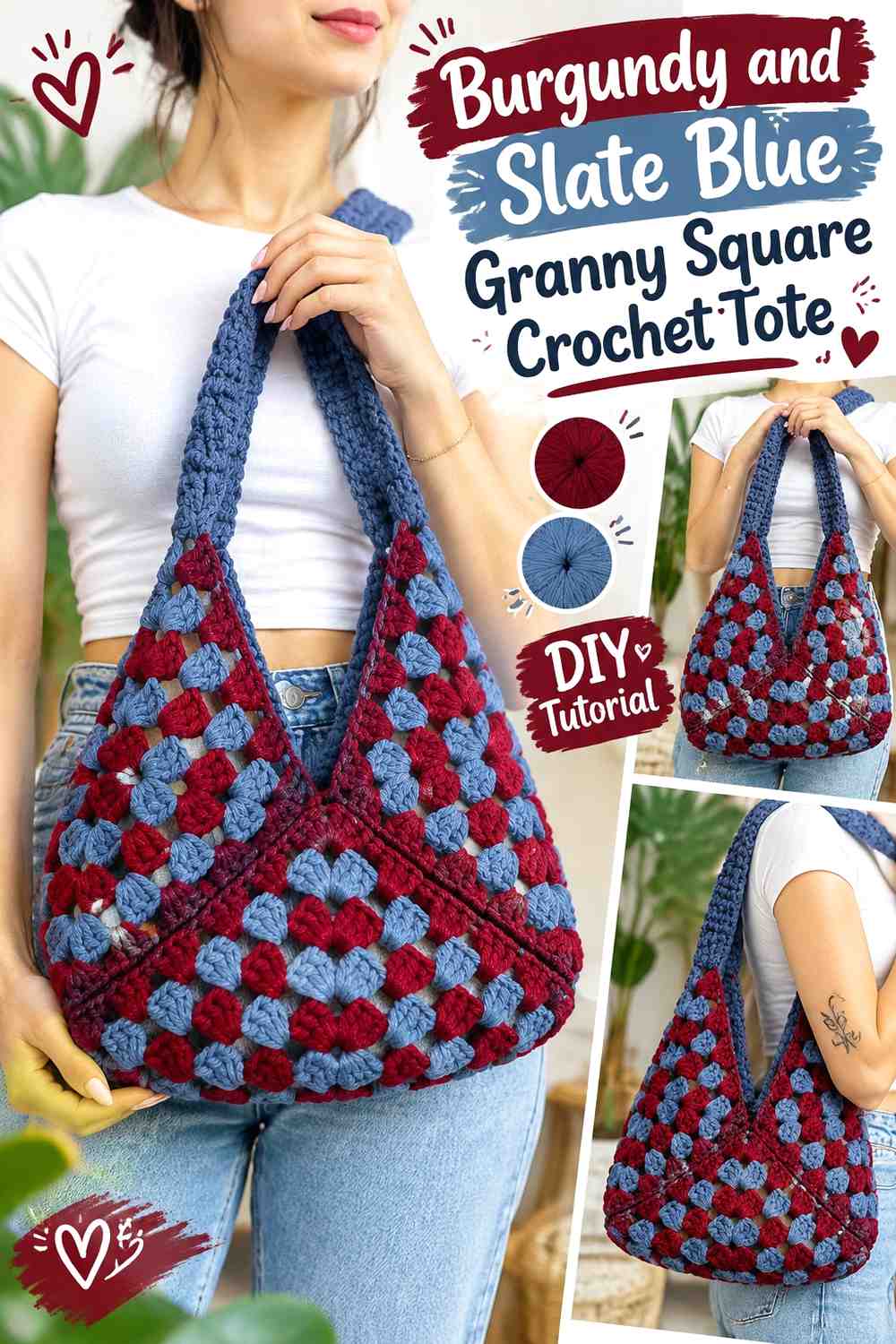
3. Burgundy And Slate Blue Granny Square Crochet Tote
 SAVE
SAVEA granny square tote offers several color zones: motif centers, outer sections, joins, handles, and edging. Slate blue can cover the largest parts of each square, while burgundy appears in the centers and structural details. That gives the bag a cooler main surface while allowing the deeper color to organize the individual motifs.
Burgundy Can Connect Slate Blue Crochet Tote Motifs
Use burgundy repeatedly in the same position within each square when you want the motifs to look related. Centers are one option, but burgundy can also occupy an outer motif section if you want each square to have a stronger dark frame.
Before joining the bag, arrange the completed squares on a flat surface. Small changes in orientation can alter how much burgundy appears concentrated in one area.
Slate Blue Can Keep Burgundy Crochet Tote Joins From Taking Over
If burgundy is used for visible joins, straps, or edging, allowing slate blue to dominate the square surfaces keeps those darker structural lines from overwhelming the bag.
Repeating slate blue consistently across the body also gives you freedom to make the burgundy handles more noticeable without introducing a third color.
Creator Credit: Kenikse Crochet YouTube tutorial
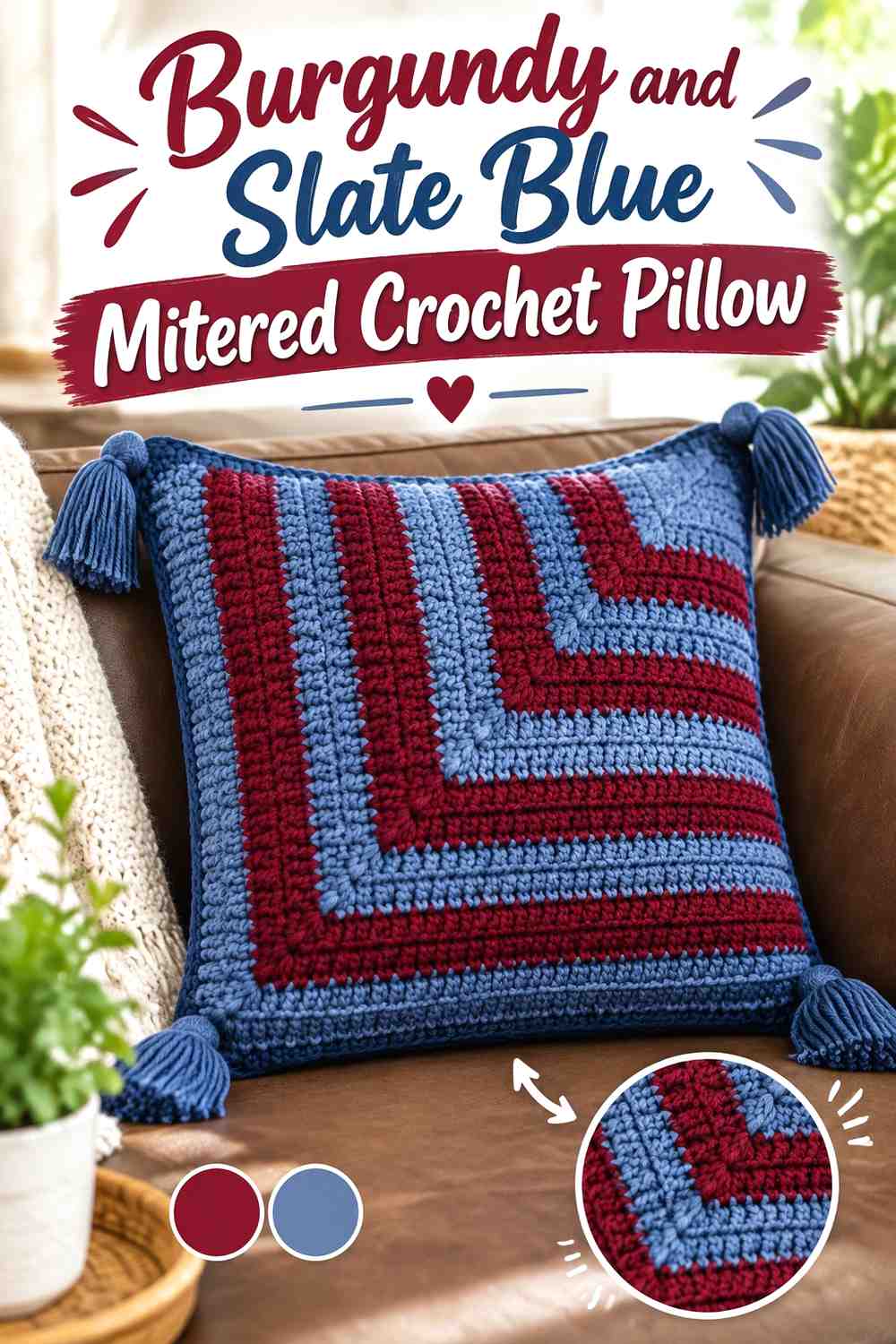
4. Burgundy And Slate Blue Mitered Crochet Pillow
 SAVE
SAVEA mitered pillow can make the color relationship part of the surface design rather than confining the second shade to a border. Burgundy and slate blue can occupy opposing sections or alternate as the shape expands, creating more directional movement than a single-color pillow face.
Burgundy Can Give the Slate Blue Crochet Pillow a Darker Corner Anchor
Concentrating burgundy toward one part of the pillow can create a strong visual starting point. Slate blue can then expand away from it, making the construction direction easier to notice.
If the two yarns have similar value, use larger blocks rather than narrow alternating bands. Larger areas allow the hue difference to remain visible even when the light-and-dark contrast is modest.
Slate Blue Can Soften a Burgundy Crochet Pillow Surface
When burgundy begins to occupy most of the pillow face, a larger slate blue section can prevent the finished surface from looking overly dark. This is especially useful on a pillow where the entire front is visible at once.
Consider carrying one of the front colors around the outer edge rather than introducing a new border shade. That keeps the two-color idea visually contained.
Creator Credit: The Crochet Crowd YouTube tutorial
5. Burgundy And Slate Blue C2c Crochet Granny Square
 SAVE
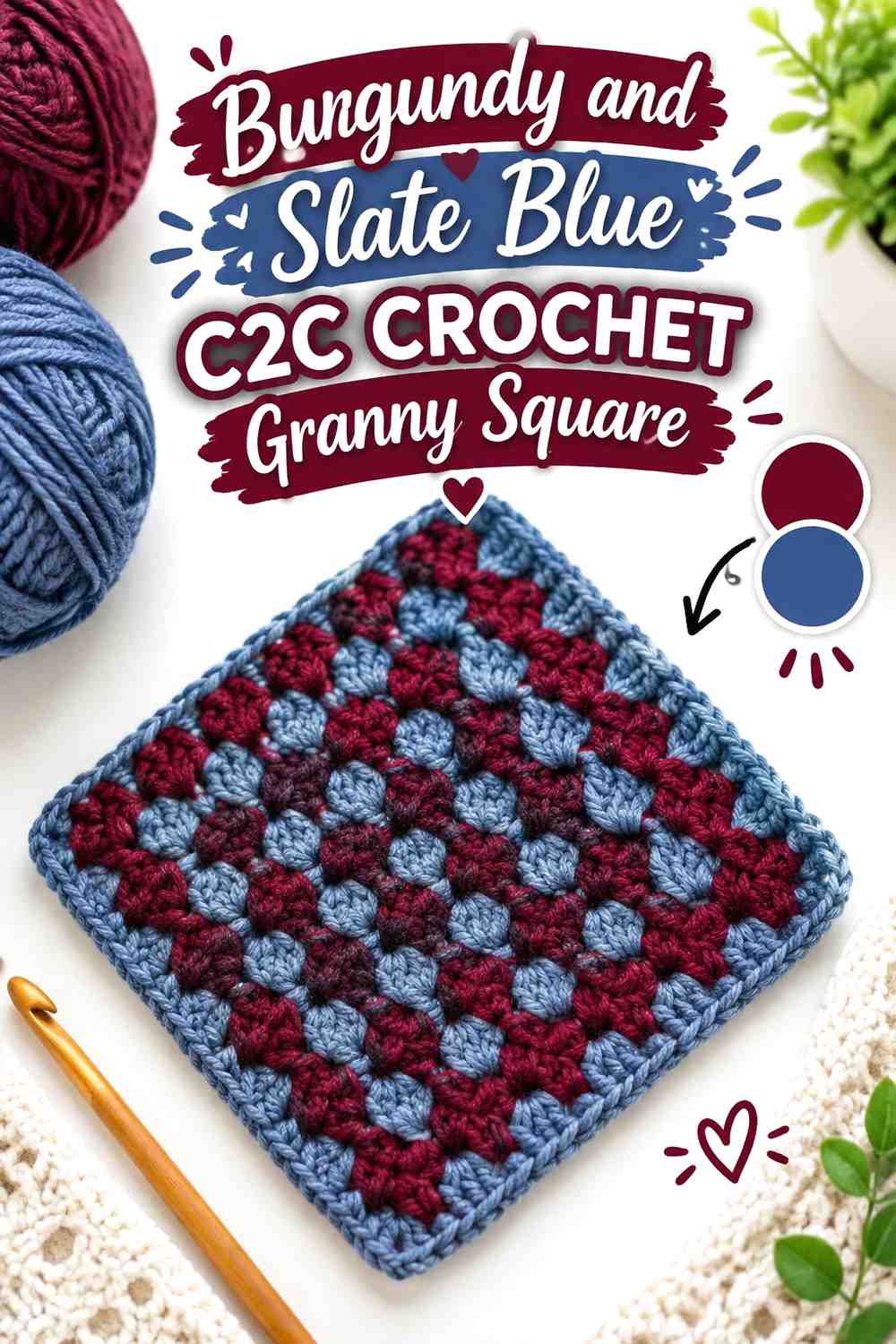
SAVECorner-to-corner granny construction lets burgundy and slate blue meet along a diagonal instead of only in concentric sections. This makes the combination useful for larger graphic motifs that can later become pillow panels, bags, blankets, or other joined projects.
Burgundy Can Create a Strong Diagonal Through the Slate Blue Crochet Square
Give burgundy a substantial section rather than changing colors every few clusters if you want the diagonal construction to remain visually obvious.
When several squares will be joined, experiment with rotating them before deciding on the arrangement. Matching burgundy diagonals can create a continuous directional effect, while alternating them produces a more broken geometric layout.
Slate Blue Can Take the Larger Role in a Burgundy C2C Crochet Motif
Using more slate blue can make a collection of repeated squares feel less visually heavy, particularly when burgundy is deep.
Keep enough burgundy in each motif that the color relationship repeats consistently. If only a few squares contain burgundy, the darker color may look like an exception rather than part of the project-wide palette.
Creator Credit: Bella Coco YouTube tutorial
6. Burgundy And Slate Blue Crochet Shawl
 SAVE
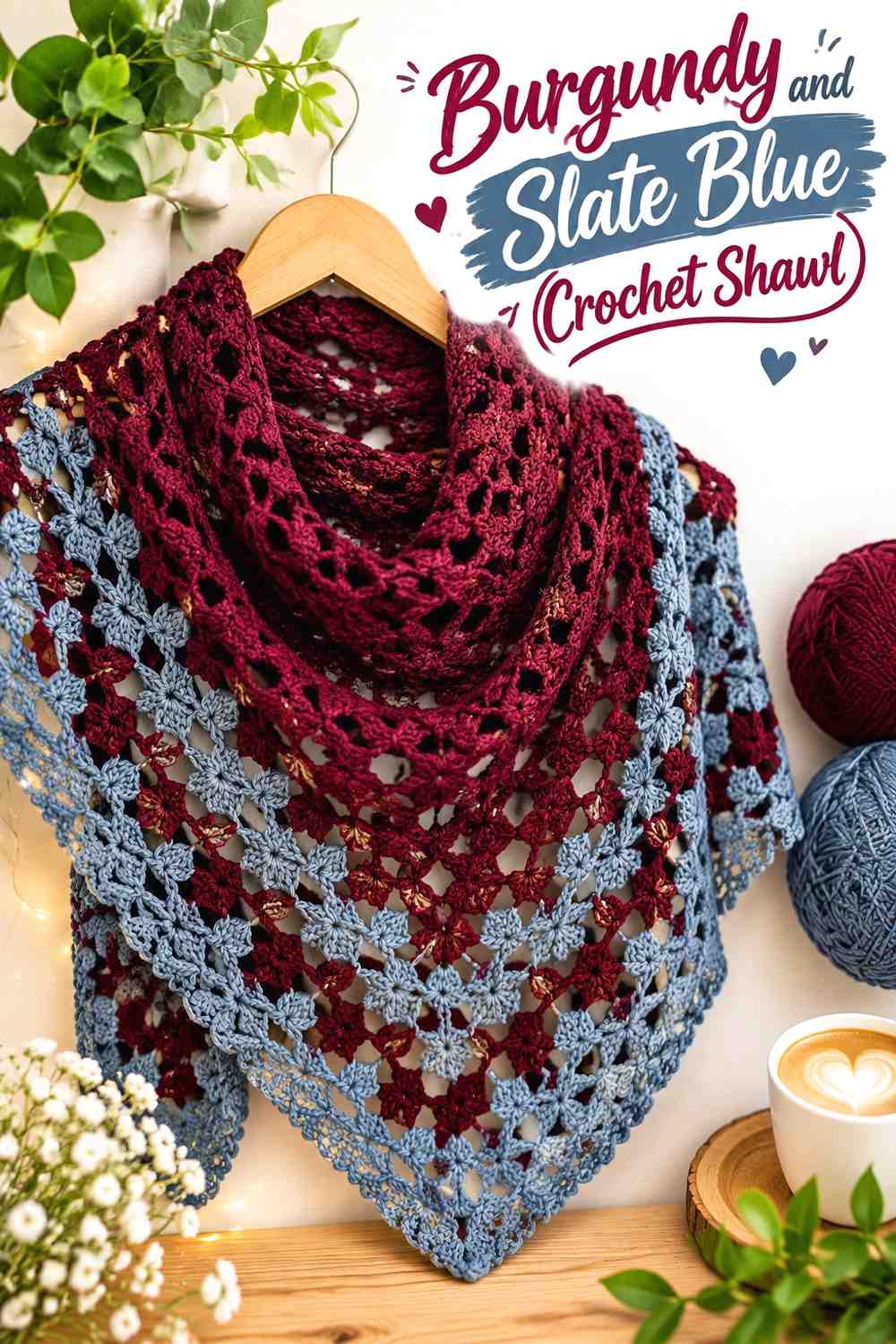
SAVEA shawl naturally changes in width as the fabric grows, so color placement can affect how much of each shade is visible when the piece is worn. Slate blue can lead through the center while burgundy is introduced toward the outer portion, where the wider rows give the deeper color more visual area.
Slate Blue Can Keep the Burgundy Crochet Shawl Center Cooler
Starting with slate blue gives the central area a quieter base before burgundy is introduced. This is useful when the stitch pattern includes openwork that you want to remain visible without a very dark color covering the entire shawl.
Remember that sections overlap when a shawl is wrapped or draped. A burgundy band that seems modest while the shawl is flat may become much more noticeable when worn.
Burgundy Can Frame Slate Blue Crochet Shawl Openwork
Burgundy around the outer portion can define the overall silhouette of a slate blue shawl. The darker edge can also separate the shawl from lighter clothing beneath it.
If the border contains intricate openwork, test your burgundy first. Very dark yarn can reduce visible stitch definition depending on lighting and fiber texture.
Creator Credit: Fiber Spider YouTube tutorial
7. Burgundy And Slate Blue Crochet Pullover Sweater
 SAVE
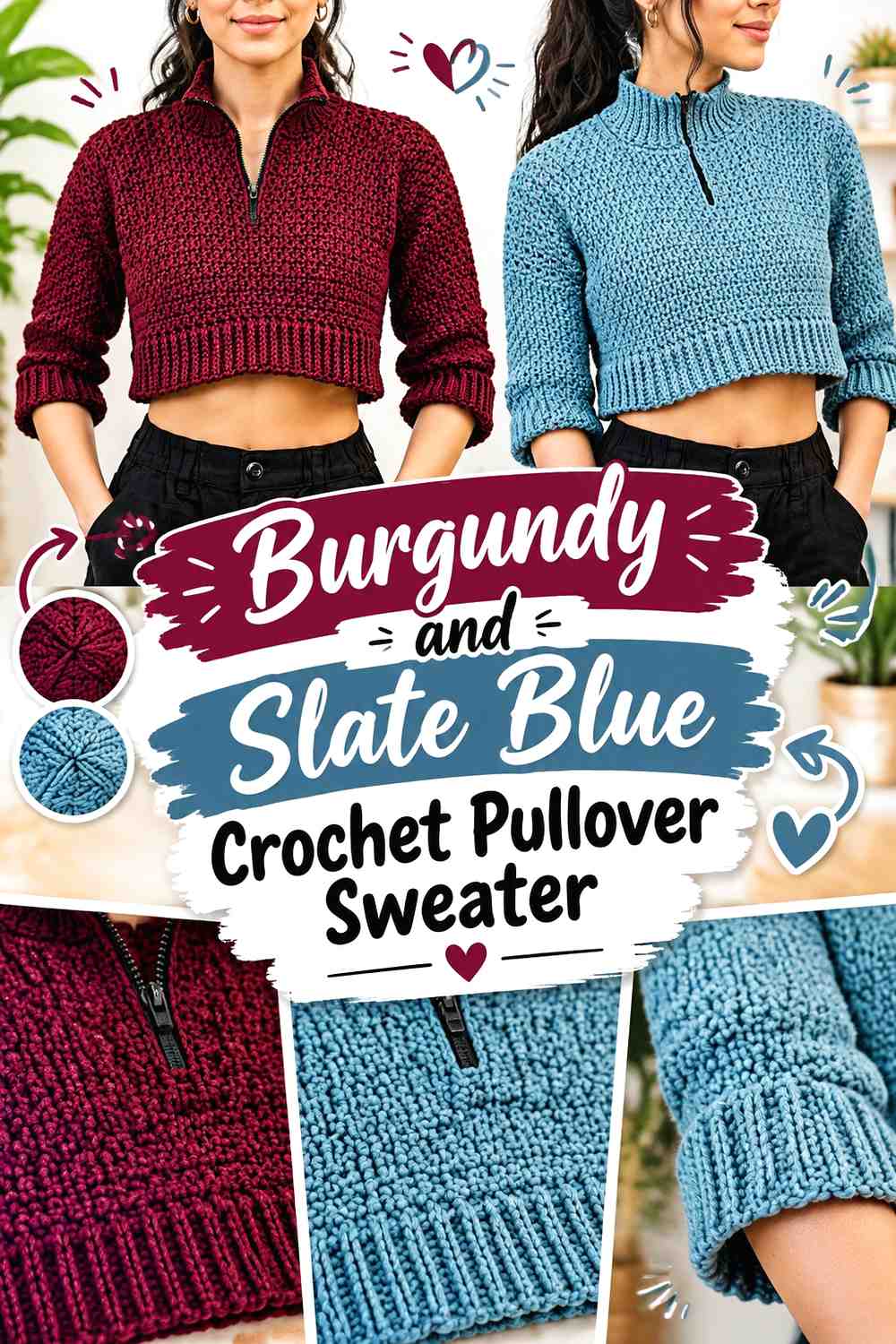
SAVEA pullover has several natural places to keep the second color controlled. Burgundy can cover the front, back, and sleeves while slate blue is concentrated around the neckline, cuffs, or lower finishing. This produces a clear dominant-and-supporting relationship rather than visually dividing the sweater into equal halves.
Burgundy Can Unite the Main Crochet Sweater Panels
Working the large body areas in burgundy helps the front and back read as one continuous color statement. It also leaves stitch texture uninterrupted across broad areas.
If the sweater uses pronounced texture, make a burgundy swatch large enough to assess it from a normal viewing distance. Deep yarn colors can sometimes hide subtle shadows between stitches.
Slate Blue Can Outline Burgundy Crochet Sweater Finishing
Slate blue around the neckline and cuffs can provide repeated points of cooler contrast. Repeating the same blue at the lower edge helps those separate accents feel intentional.
For a stronger two-color effect, increase the width of the slate blue finishing. For a quieter result, keep the blue confined to narrow edges.
Creator Credit: TCDDIY YouTube tutorial
8. Burgundy And Slate Blue Crochet Storage Basket
 SAVE
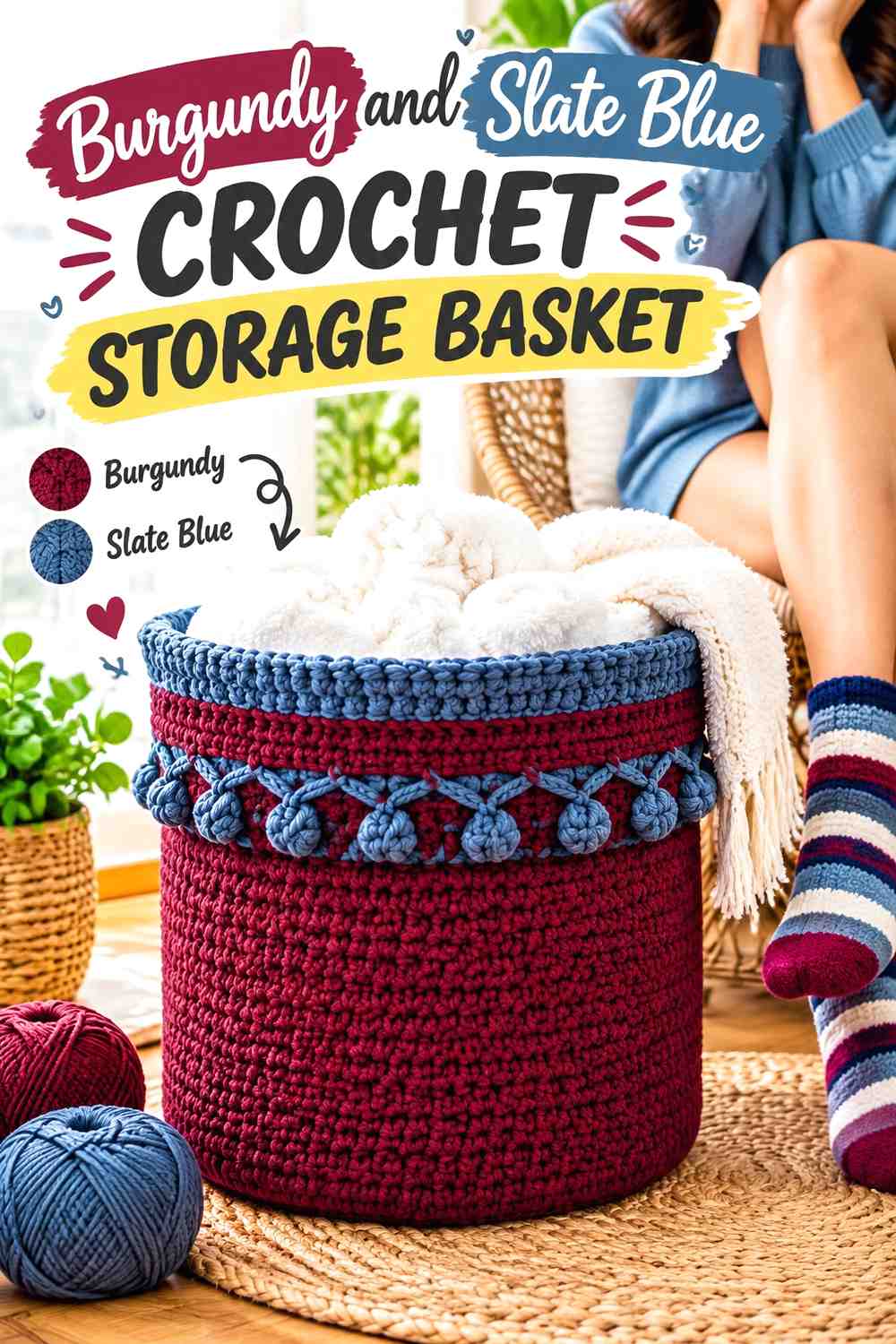
SAVEA storage basket has a broad continuous side wall, so large color blocks are often clearer than frequent narrow stripes. Slate blue can form the main basket body while burgundy marks the rim, accent section, or another visible structural area.
Slate Blue Can Keep the Burgundy Crochet Basket Accent Controlled
Using slate blue across most of the basket gives burgundy enough contrast to work in a smaller amount. This is helpful when the basket will sit near other dark home accents and you do not want the whole container to disappear into them.
Choose the transition point before you start the upper portion so the color division relates to the basket shape rather than simply occurring when one yarn runs low.
Burgundy Can Give the Slate Blue Crochet Basket a Defined Upper Section
A burgundy upper band can visually finish a slate blue basket and direct attention toward the opening. If the design includes another distinct detail near the top, repeating burgundy there can connect function and color.
For a less divided appearance, move the burgundy closer to the rim. Giving burgundy more side-wall coverage creates a stronger two-block design.
Creator Credit: TL Yarn Crafts YouTube tutorial
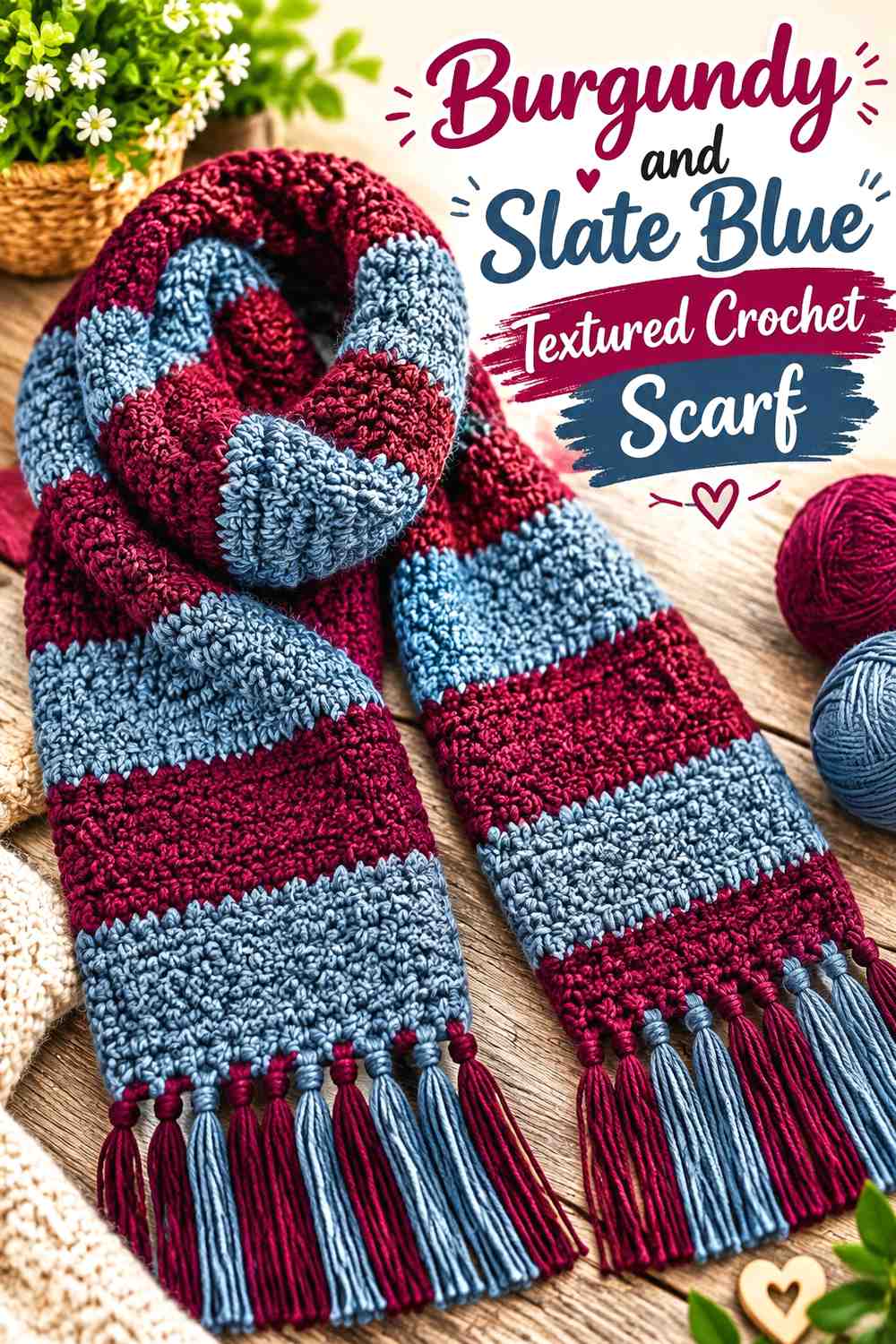
9. Burgundy And Slate Blue Textured Crochet Scarf
 SAVE
SAVEA textured scarf gives burgundy and slate blue plenty of length for broad color sections. Slate blue can cover the center while burgundy is repeated toward both ends, allowing the deeper color to remain balanced when the scarf hangs around the neck.
Slate Blue Can Keep the Crochet Scarf Texture Visible
Large uninterrupted areas of slate blue allow repeated stitch texture to remain the main feature instead of being broken by constant color changes.
If your blue is particularly dark, compare it with the burgundy before beginning. Two similarly dark shades may create a subtle, blended palette rather than an obvious color-block effect.
Burgundy Can Balance Both Ends of a Slate Blue Crochet Scarf
Repeating burgundy at both ends creates visual balance when the scarf is worn with the ends hanging forward. An intentionally asymmetric layout is also possible, but it produces a noticeably different result.
The burgundy sections do not have to be large. Placement near the ends already gives them extra visibility as finishing points.
Creator Credit: Rich Textures Crochet YouTube tutorial
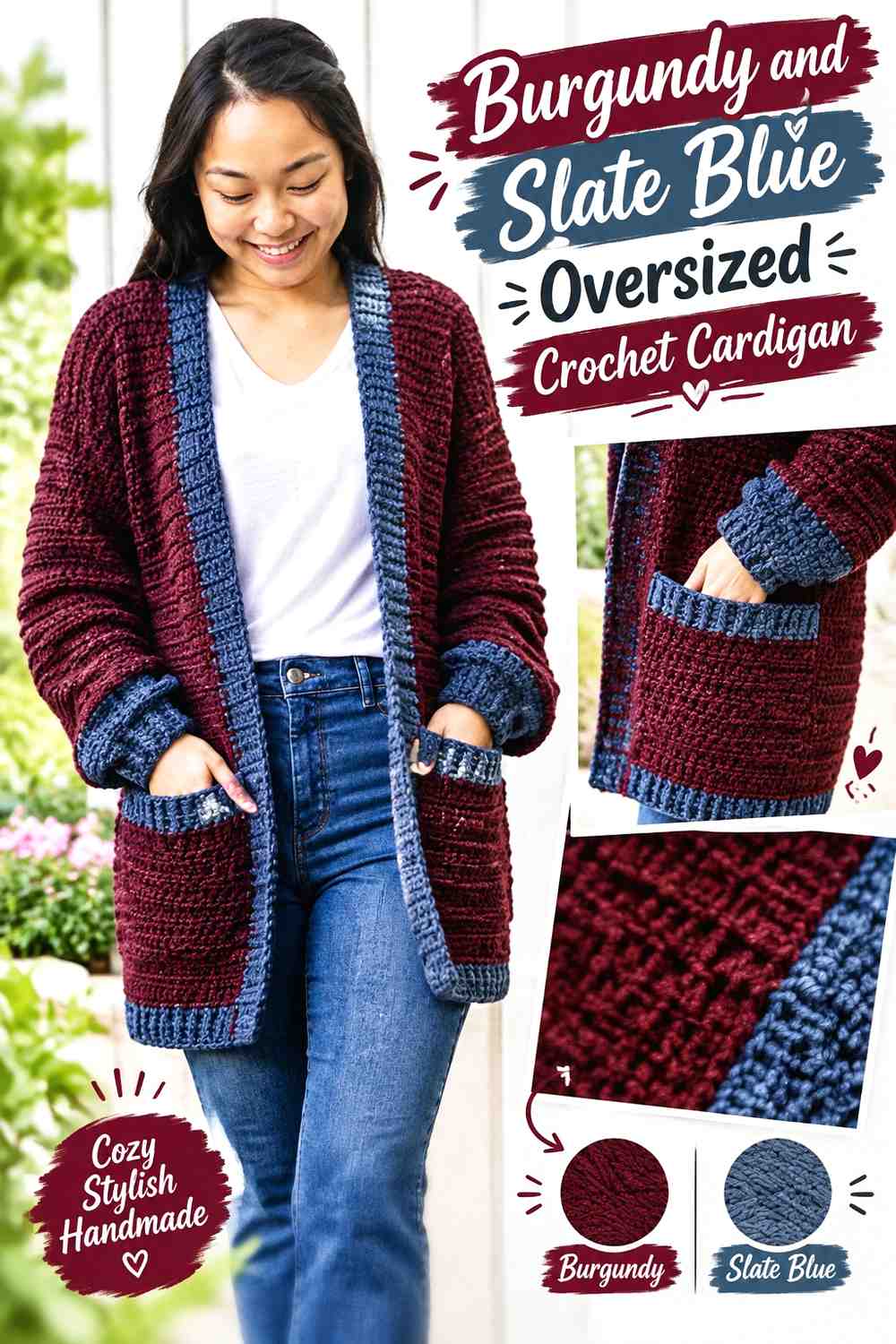
10. Burgundy And Slate Blue Oversized Crochet Cardigan
 SAVE
SAVEAn oversized cardigan provides large panels plus several smaller details that can carry a supporting color. Burgundy can dominate the body while slate blue appears on pockets, cuffs, edging, or the lower band. This keeps the cooler shade visible without interrupting the large cardigan panels.
Burgundy Can Keep the Oversized Crochet Cardigan Cohesive
Use burgundy across the major body pieces when you want the cardigan silhouette to read clearly rather than becoming a patchwork of color blocks.
Because an oversized cardigan has a large visual area, even a moderate color change can look substantial. Check how much slate blue appears on the front before repeating it on every finishing detail.
Slate Blue Can Make Burgundy Crochet Cardigan Pockets Intentional
Slate blue pockets create a concentrated area of contrast on the cardigan front. If you choose this direction, repeating slate blue at the cuffs or edging helps the pockets look connected to the overall palette.
If contrasting pockets feel too prominent, keep the pockets burgundy and move slate blue to narrower finishing areas instead.
Creator Credit: forthefrills YouTube tutorial
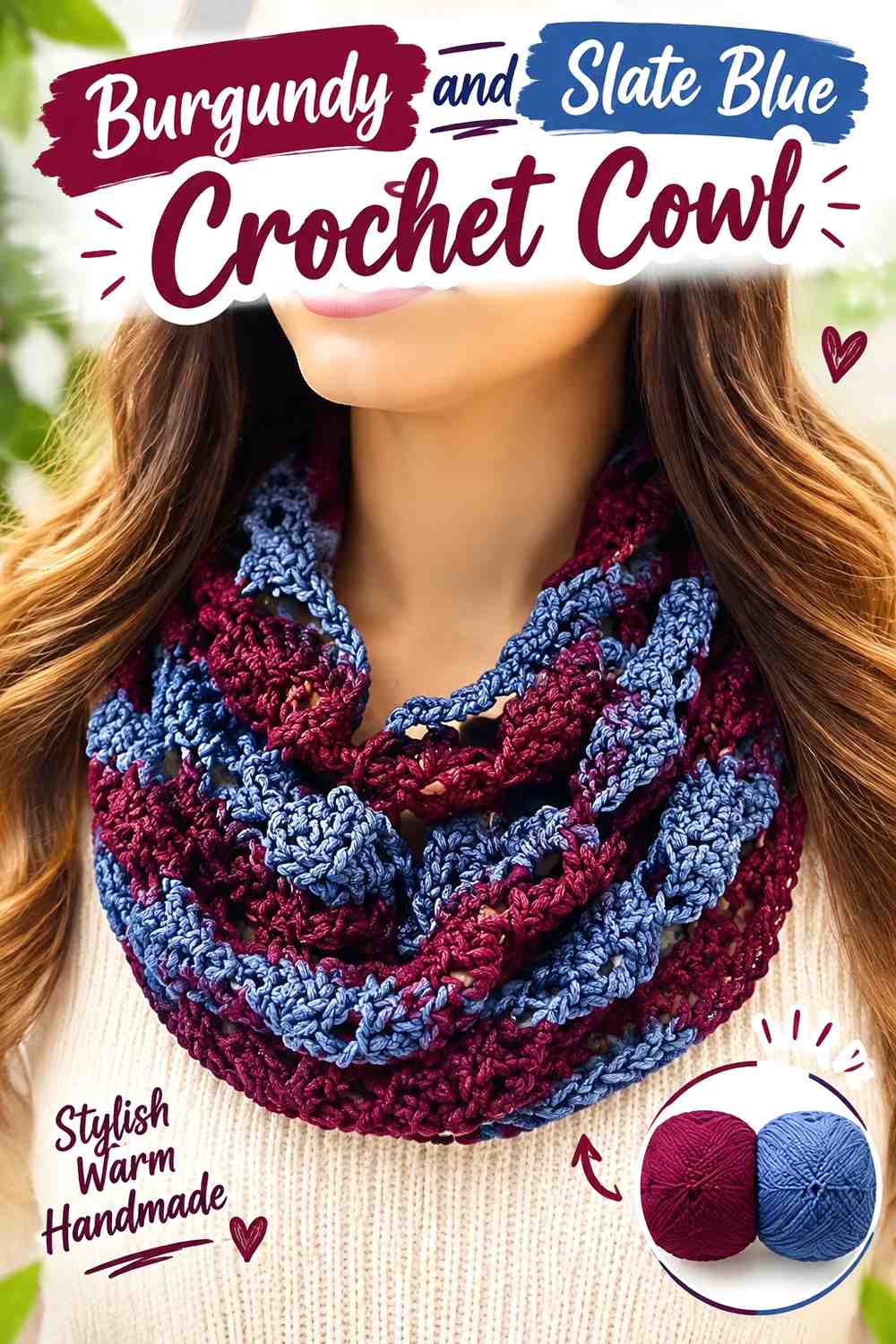
11. Burgundy And Slate Blue Crochet Cowl
 SAVE
SAVEA cowl has limited surface area, so a small amount of burgundy can have significant impact against slate blue. Keeping the central fabric blue and placing burgundy around one or both edges creates a clear frame without making the compact project overly busy.
Slate Blue Can Lead the Burgundy Crochet Cowl Surface
Use slate blue across most of the main stitch pattern if texture is an important part of the cowl. One continuous color keeps that texture from being divided into several small visual sections.
Slate blue also gives you room to make burgundy more concentrated at an edge where it will remain noticeable after the cowl folds around the neck.
Burgundy Can Frame Both Slate Blue Crochet Cowl Edges
Burgundy at the top and bottom creates a contained frame around the slate blue center. This gives a relatively small amount of burgundy a clear purpose.
If your burgundy and blue are close in value, widen the burgundy sections rather than relying on a very thin line to create separation.
Creator Credit: Bag-O-Day Crochet YouTube tutorial
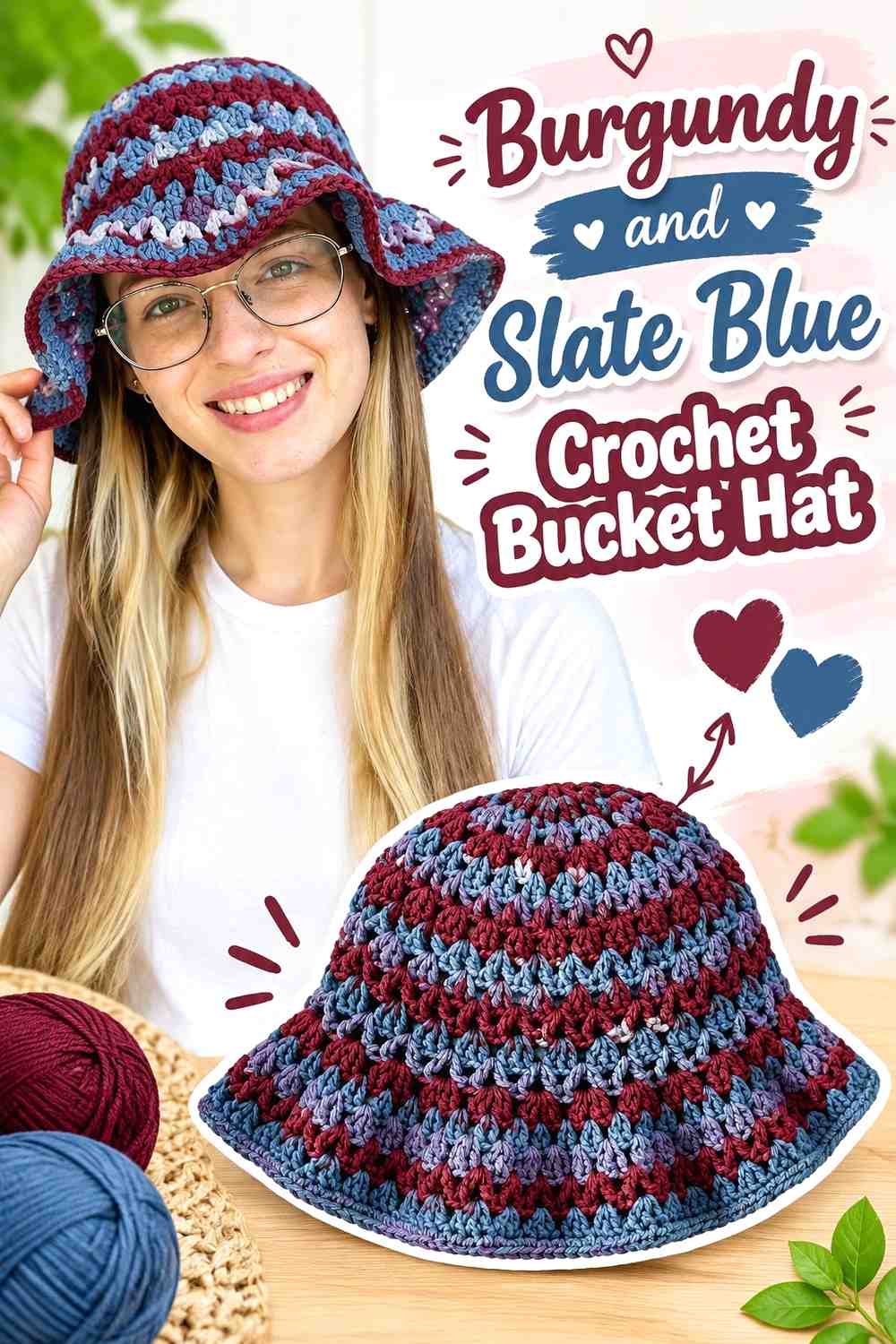
12. Burgundy And Slate Blue Crochet Bucket Hat
 SAVE
SAVEA bucket hat naturally separates into a crown, side section, and brim. Use those structural areas to control the palette instead of inserting random narrow stripes. Slate blue can cover the crown and sides while burgundy takes over at the brim.
Slate Blue Can Keep the Burgundy Crochet Bucket Hat Crown Cool
A slate blue crown provides a broad muted surface and lets the shape remain easy to read. Extending the blue through the side section makes burgundy on the brim look deliberate rather than evenly mixed.
For more burgundy, introduce a wider burgundy area near the lower sides instead of scattering small changes near the top.
Burgundy Can Turn the Slate Blue Crochet Brim Into a Strong Border
Because the brim extends outward, burgundy placed there already occupies a visually important location. It can create a stronger two-color statement than a narrow burgundy stripe on the crown.
If the brim feels too disconnected from the slate blue upper hat, repeat a small burgundy detail higher up rather than dividing every section equally.
Creator Credit: PassioKnit Kelsie YouTube tutorial
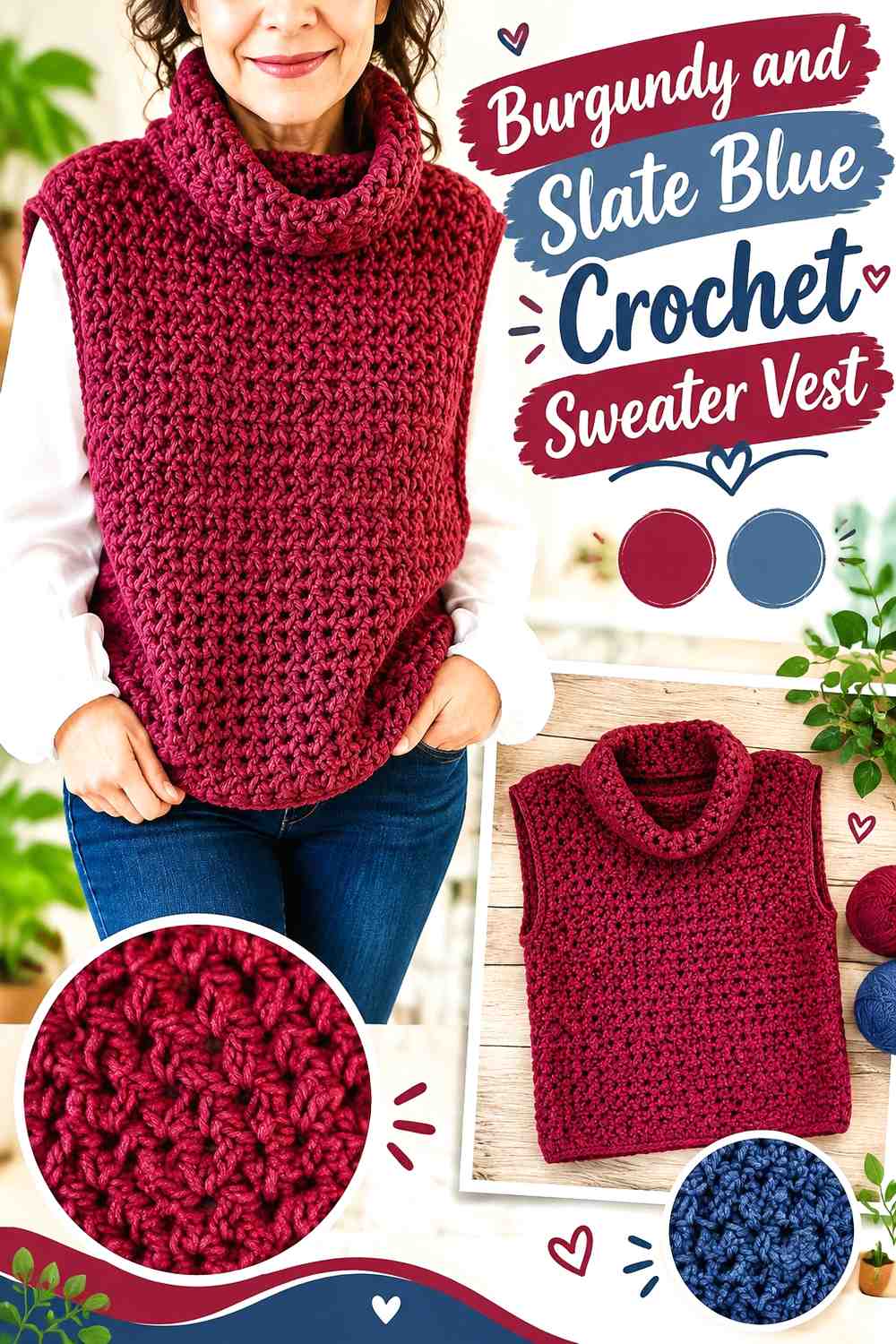
13. Burgundy And Slate Blue Crochet Sweater Vest
 SAVE
SAVEA sweater vest gives the supporting shade several natural finishing areas without sleeves competing for attention. Burgundy can cover the body panels while slate blue outlines the neckline, armholes, and lower edge.
Burgundy Can Keep the Crochet Vest Body Visually Strong
Using burgundy throughout the main vest panels creates a continuous dark field and keeps the overall silhouette cohesive.
If your vest has textured stitches, check whether the chosen burgundy shows them clearly. Moving slightly lighter within the burgundy family may improve definition without changing the overall palette idea.
Slate Blue Can Outline Burgundy Crochet Vest Openings
Slate blue around the neckline and armholes separates those structural openings from the burgundy body. Repeating blue along the lower edge can complete the framing effect.
Decide how wide the contrasting finishing should be before adding it. Wide slate blue bands can become a major design feature, while narrow ones keep burgundy clearly dominant.
Creator Credit: Kiri Kiri YouTube tutorial
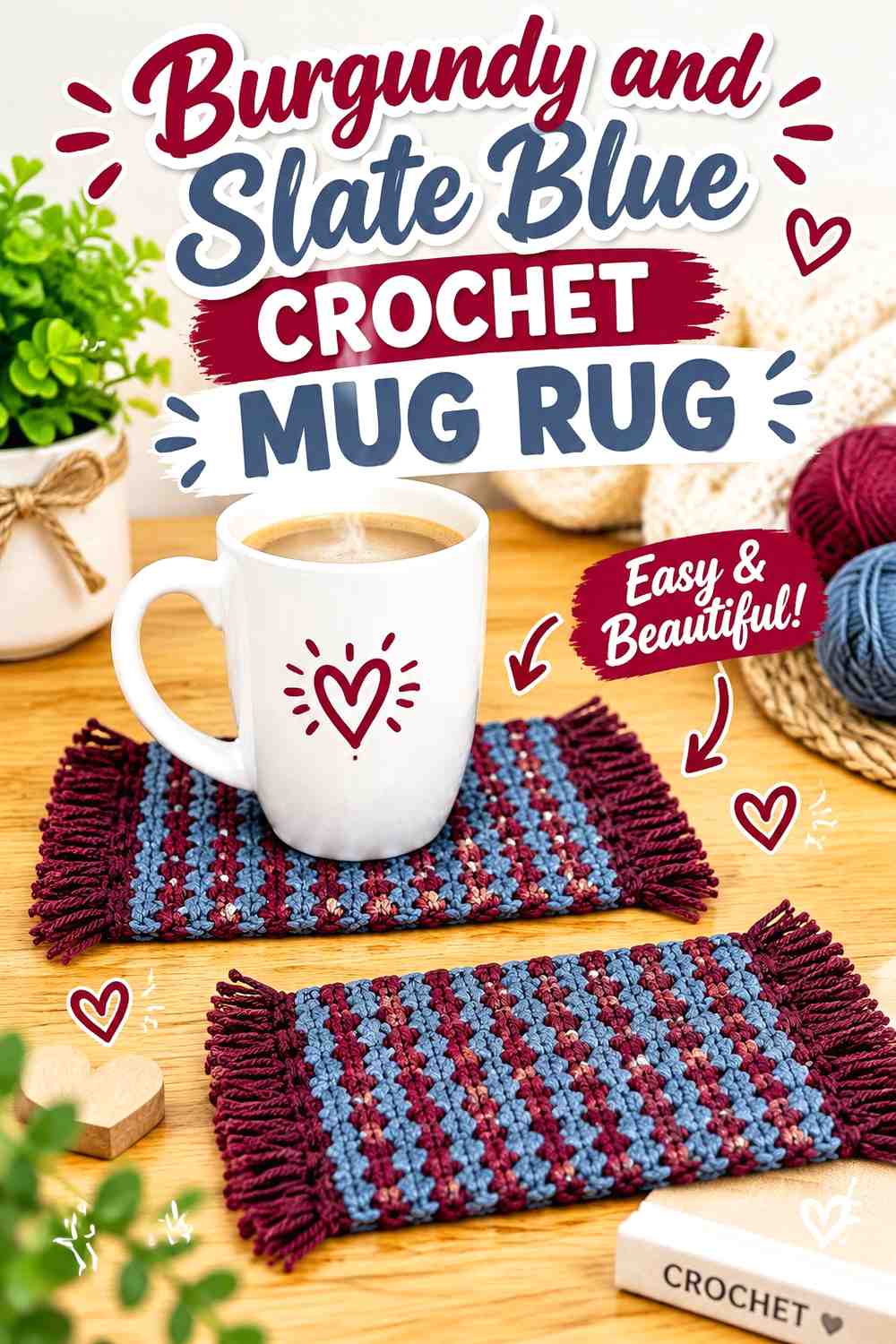
14. Burgundy And Slate Blue Crochet Mug Rug
 SAVE
SAVEA mug rug is useful for experimenting with the pairing before using it on a garment or blanket. Slate blue can form the main surface while burgundy appears in a stripe, border, or fringe detail. Because the piece is small, even one burgundy feature may provide enough contrast.
Slate Blue Can Keep the Burgundy Crochet Mug Rug Simple
Use slate blue across most of the rectangle when you want stitch texture to remain easy to see. A single broad field also makes the project a useful test of how the exact blue yarn looks once crocheted.
Place the completed sample in the lighting where a larger planned project would normally be seen. This provides a more realistic color check than comparing loose yarn alone.
Burgundy Can Define the Slate Blue Crochet Mug Rug Edge
A burgundy border creates a contained outline, while burgundy fringe produces a looser visual finish outside the main fabric. Choose one or the other when you want the two-color arrangement to remain restrained.
Using burgundy for the border, internal stripes, and fringe simultaneously can quickly make the darker shade dominant on such a small piece.
Creator Credit: Crochet Jewel YouTube tutorial
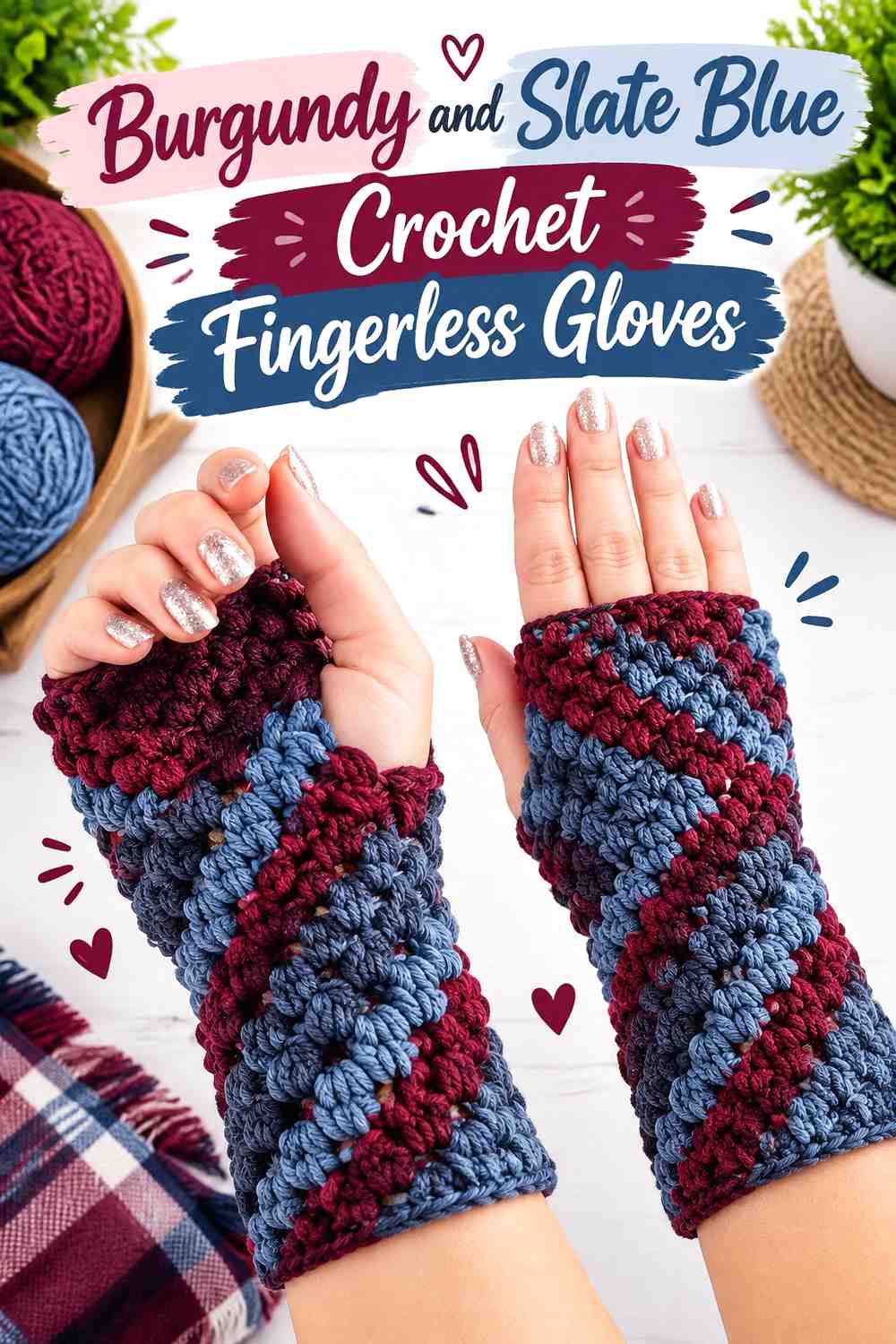
15. Burgundy And Slate Blue Crochet Fingerless Gloves
 SAVE
SAVEFingerless gloves offer a compact wearable surface where color placement can emphasize either the cuff or hand section. Burgundy can cover most of the hand while slate blue marks the cuff, keeping the two colors visibly separated instead of alternating them across every textured row.
Burgundy Can Keep the Crochet Glove Hand Section Unified
Using burgundy across the main hand area allows the stitch texture to remain visually continuous. This matters when raised or dimensional texture is already providing plenty of surface detail.
If burgundy hides some of that texture in your chosen yarn, reverse the hierarchy and use slate blue across the most textured section.
Slate Blue Can Separate the Burgundy Crochet Glove Cuff
A slate blue cuff gives the glove a cooler finishing area and establishes a natural transition between the hand and wrist.
Repeat the same placement on both gloves. With a small paired accessory, inconsistent color proportions between the two pieces can be much more noticeable than on a larger project.
Creator Credit: Hooked by Robin YouTube tutorial
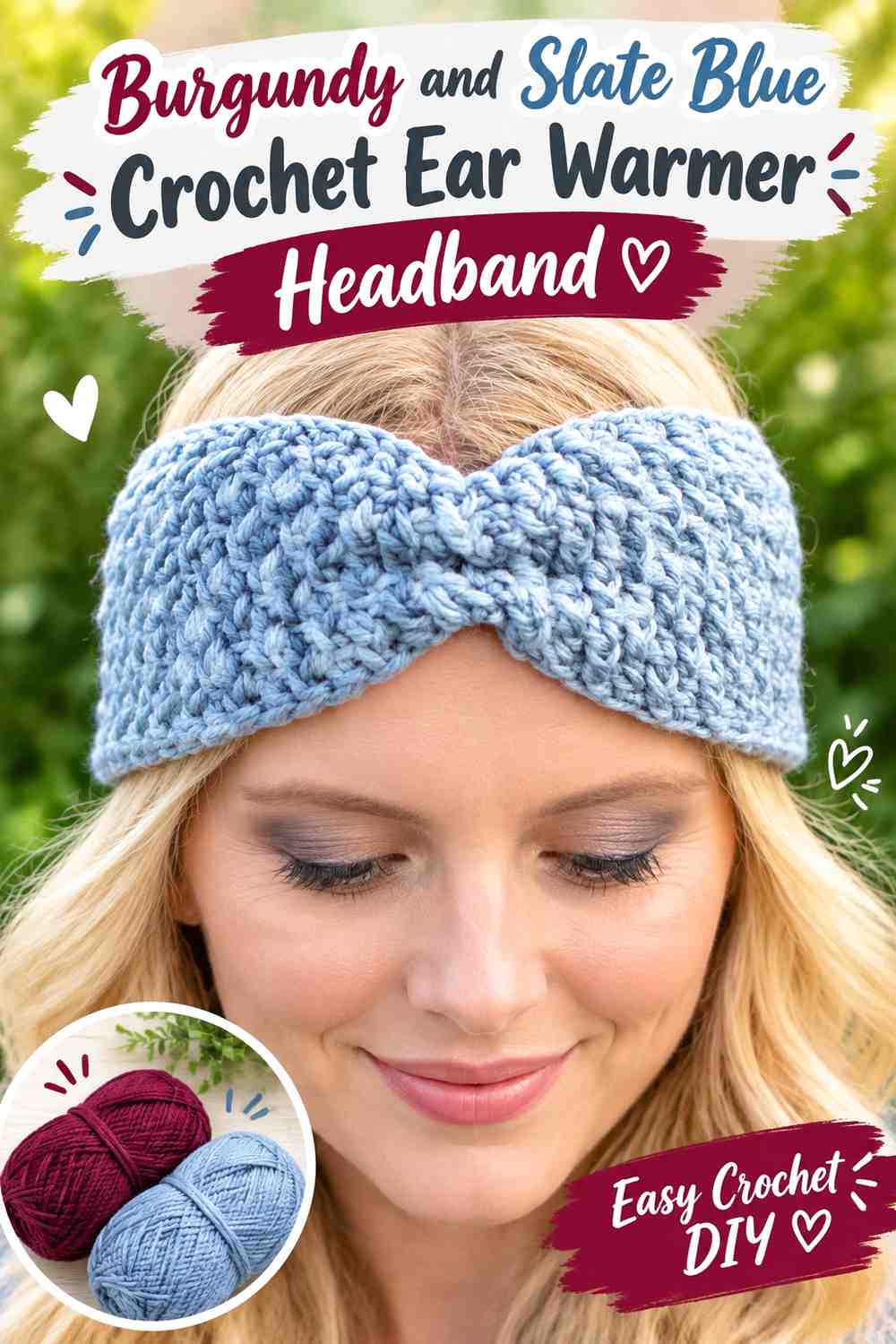
16. Burgundy And Slate Blue Crochet Ear Warmer Headband
 SAVE
SAVEAn ear warmer is another useful project for concentrated two-color placement. Slate blue can cover most of the band while burgundy is confined to a central detail, edge, or short contrast section. The small scale means the accent does not need to occupy much area to remain visible.
Slate Blue Can Preserve the Crochet Headband’s Textured Surface
Using slate blue continuously around most of the band keeps repeated texture from being interrupted by frequent color changes.
If the exact slate blue is dark and muted, compare it with burgundy from several feet away. Similar-value yarns may make the headband look almost tonal despite the difference in hue.
Burgundy Can Create a Focal Point on the Slate Blue Crochet Headband
A concentrated burgundy section near the front can establish a clear focal point rather than distributing small red areas around the entire band.
If you prefer a more understated result, use burgundy only as narrow edging and let slate blue remain uninterrupted through the center.
Creator Credit: naztazia YouTube tutorial
Choosing Between Burgundy-Dominant and Slate-Blue-Dominant Crochet
Choose a burgundy-dominant arrangement when you want more dark, warm visual weight. The pullover, cardigan, sweater vest, beanie, and fingerless gloves all provide useful structural places for slate blue to act as a supporting color rather than competing for equal space.
A slate-blue-dominant arrangement works well when you want the palette to move in a cooler, more muted direction. The basket, scarf, cowl, mug rug, and headband allow burgundy to remain concentrated around edges or other focal areas.
For the strongest graphic contrast, look at projects where the construction naturally creates separate color blocks. Granny stripes, C2C squares, granny-square bags, pillows, and bucket hats provide clearer boundaries between burgundy and slate blue than heavily textured fabrics with constant color changes.
Conclusion
Burgundy and slate blue can produce several different crochet directions even when no third color is added. The biggest decision is not simply which color you prefer, but where each one will carry the most visual weight.
Use burgundy across broad panels when you want a deeper overall project, or let slate blue dominate when you prefer a cooler surface with burgundy providing definition. On motif projects, decide the color order before joining. On garments, use cuffs, necklines, pockets, brims, and edging as natural opportunities for the supporting shade.
Most importantly, compare the actual yarns before planning small colorwork details. Burgundy and slate blue can be surprisingly close in value, and preserving enough separation for the specific stitch texture or motif is more useful than relying on the color names alone.
Frequently Asked Questions
Do burgundy and slate blue work together in crochet?
Yes. Burgundy brings a warmer red direction while slate blue contributes a cooler muted blue. The relationship can look clearly contrasting or more blended depending on the darkness and saturation of the exact yarns.
Should burgundy or slate blue be the dominant crochet color?
Either can lead. Burgundy works well when you want stronger dark visual weight, while slate blue creates a cooler main field. Consider the project structure as well: garment bodies and blanket fields are natural dominant-color areas, while cuffs, borders, brims, and joins are useful supporting-color locations.
How can I check whether burgundy and slate blue have enough contrast?
Place the yarns side by side and view them from a distance. A grayscale photograph can also help compare their lightness. If they appear almost identical in grayscale, use larger color blocks rather than depending on tiny details for contrast.
Can I use equal amounts of burgundy and slate blue?
Yes, especially in granny stripes, repeated motifs, checker-style arrangements, or other constructions with strong visual divisions. Equal coverage creates a more graphic two-color effect than a dominant-and-accent arrangement.
Where should slate blue go in a burgundy crochet garment?
Slate blue can work around cuffs, necklines, hems, pockets, armholes, button bands, or other finishing areas. Repeating blue in more than one location generally makes it feel connected to the garment rather than like an isolated accent.
Where should burgundy go in a slate blue crochet home-decor project?
Borders, basket rims, pillow sections, motif centers, fringe, and repeated stripes can all give burgundy a defined role. Because burgundy often carries strong visual weight, you may need less of it than slate blue to make both colors noticeable.
What should I substitute if I cannot find the exact burgundy or slate blue yarn?
Preserve the relationship between the shades. For burgundy, look for another deep, muted red or wine-like color. For slate blue, choose a softened blue with a gray influence. More important than matching a name is maintaining the light/dark difference and muted character you want in the finished crochet piece.