Burgundy and rose taupe create a warm, muted crochet palette with enough contrast to define borders, motifs, ribbing, and larger color blocks without depending on a bright accent. Burgundy usually provides the darker visual anchor, while rose taupe can lighten the project with its softer brown-pink direction.
The combination becomes more useful when the colors are assigned different jobs. Burgundy can define a cardigan opening, blanket stripe, bag join, or pillow border, while rose taupe covers larger areas where texture needs more visibility. Reversing those roles produces a noticeably softer finished project even though the palette stays the same.
The tutorials credited below support each crochet construction concept. The burgundy-and-rose-taupe arrangements are independent palette adaptations, so the creators are not being credited with using these exact colors.
Quick List
- Burgundy And Rose Taupe Granny Stripe Crochet Blanket
- Burgundy And Rose Taupe Ribbed Crochet Beanie
- Rose Taupe And Burgundy Granny Square Crochet Tote
- Burgundy And Rose Taupe C2c Crochet Granny Square
- Burgundy And Rose Taupe Crochet Sweater
- Rose Taupe And Burgundy Crochet Storage Basket
- Rose Taupe And Burgundy Textured Crochet Scarf
- Burgundy And Rose Taupe Pocket Crochet Cardigan
- Rose Taupe And Burgundy Crochet Cowl
- Burgundy And Rose Taupe Crochet Fingerless Gloves
- Rose Taupe And Burgundy Twisted Crochet Headband
- Rose Taupe And Burgundy Crochet Mug Rug
- Burgundy And Rose Taupe Crochet Market Bag
- Burgundy And Rose Taupe Crochet Sweater Vest
- Rose Taupe And Burgundy Granny Square Crochet Bucket Hat
- Burgundy And Rose Taupe Crochet Poncho
- Rose Taupe And Burgundy Granny Square Crochet Crossbody Bag
- Burgundy And Rose Taupe Textured Crochet Pillow
Decide Whether Burgundy or Rose Taupe Should Dominate
Burgundy generally carries more dark visual weight, so it does not always need equal surface coverage to remain noticeable. A project that is mostly rose taupe with burgundy edging can still read strongly as a burgundy-and-rose-taupe combination.
Use burgundy across the largest panels when you want a deeper overall result. Let rose taupe lead when stitch texture, openwork, or a lighter surface should attract more attention than the color contrast itself.
Check Burgundy and Rose Taupe for Enough Value Separation
Color names alone do not guarantee contrast. A muted medium burgundy and dark rose taupe can sit surprisingly close together in lightness, while a deep wine burgundy beside a pale rose taupe may separate clearly.
Place the actual yarns beside each other and look at them from several feet away. A grayscale photo can also help when you plan small motifs, narrow stripes, or colorwork that depends on clear light-and-dark separation.
Use Burgundy and Rose Taupe Around Natural Crochet Divisions
Borders, cuffs, brims, necklines, granny-square centers, joins, bag straps, pillow edges, and blanket stripes already create natural divisions. They are useful places to introduce the second color without making the project look randomly segmented.
When texture is the main feature, consider keeping the most textured section in one uninterrupted shade. Constant color changes can compete with bobbles, ribbing, shells, or other prominent stitch surfaces.
1. Burgundy And Rose Taupe Granny Stripe Crochet Blanket
 SAVE
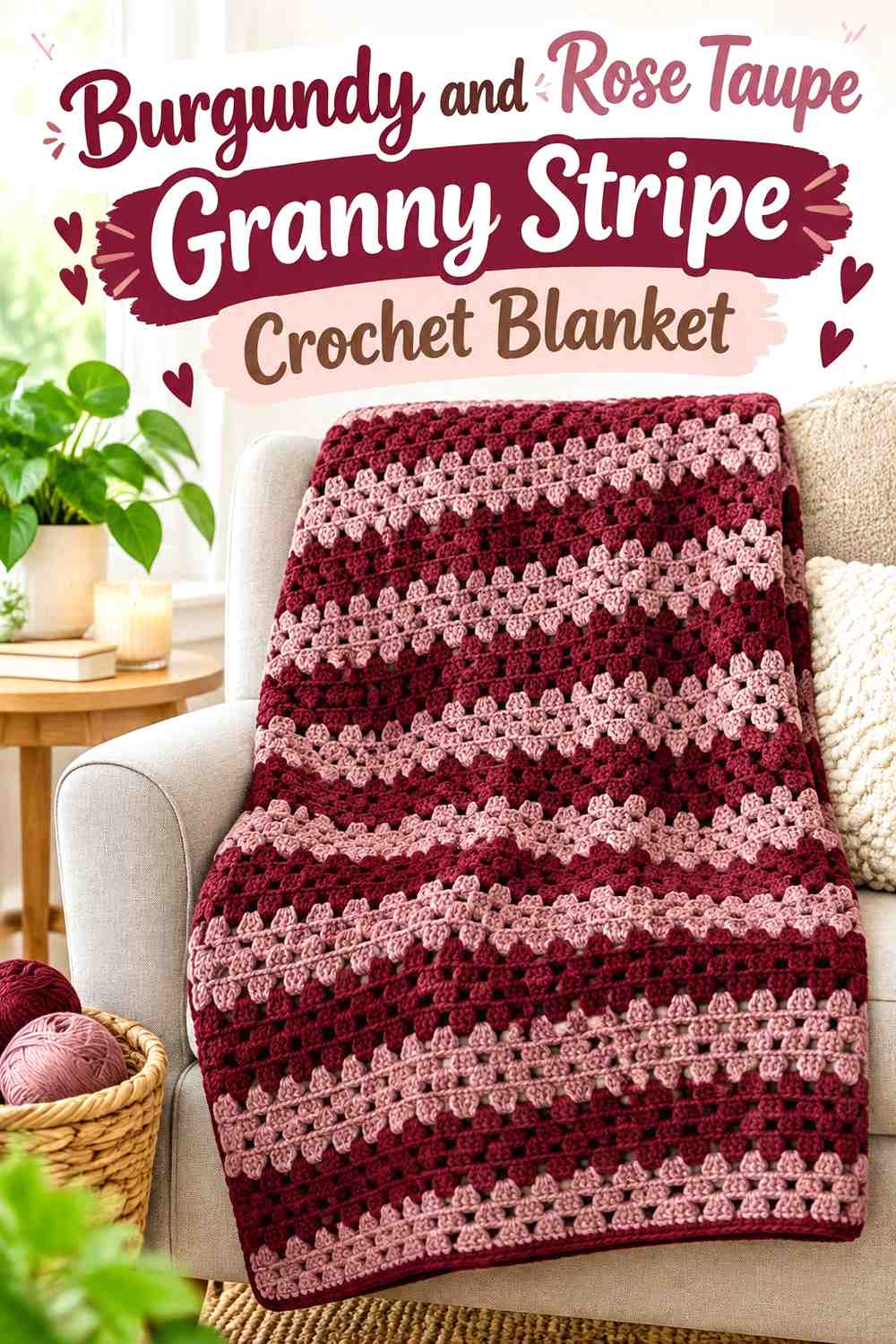
SAVEA granny stripe blanket gives both colors enough room to repeat without forcing an equal alternation. Rose taupe can occupy the wider stripe groups, while burgundy returns at regular intervals as the darker anchor. This keeps a large blanket from becoming overwhelmingly dark while still making burgundy an important part of the design.
Burgundy Can Set the Crochet Blanket’s Repeating Rhythm
Use burgundy at planned intervals rather than inserting it whenever you feel the blanket needs more color. Predictable repetition helps the deeper stripes connect across the entire surface.
Burgundy bands can also be narrower than rose taupe bands. Because the darker color already has strong visual weight, it may remain prominent without occupying half of the blanket.
Rose Taupe Can Separate Dark Burgundy Crochet Stripes
Rose taupe gives burgundy sections enough space to remain distinct. Wider rose taupe areas can also keep granny-style openings and stitch groups easier to see when the burgundy yarn is very dark.
Lay several planned stripe repeats together before continuing the full blanket. A sequence that looks balanced over six inches may feel very different when repeated across a large surface.
Creator Credit: The Loopy Lamb
2. Burgundy And Rose Taupe Ribbed Crochet Beanie
 SAVE
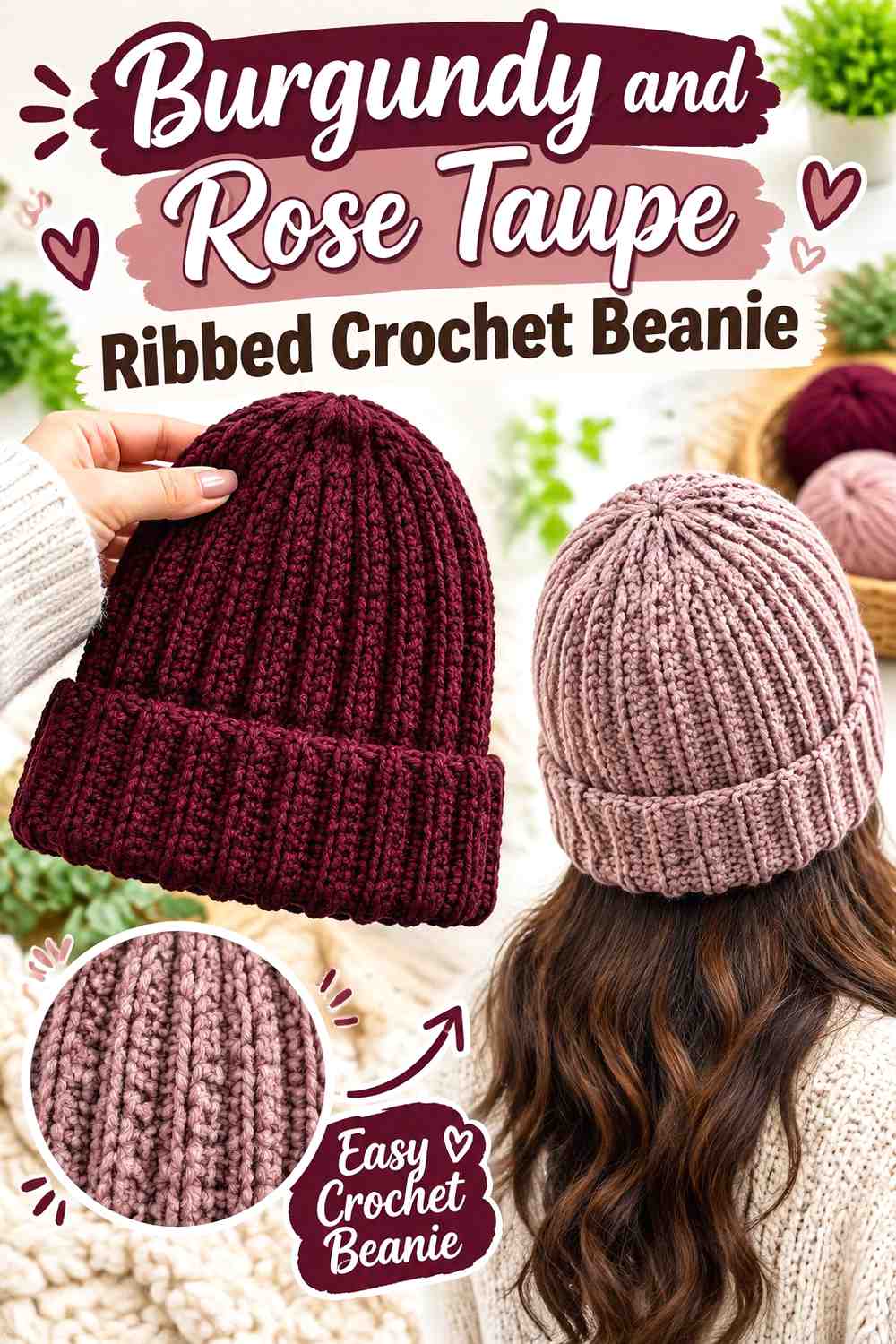
SAVEA ribbed beanie works well with a clear dominant color because the vertical texture already supplies plenty of visual variation. Burgundy can cover the crown and main body while rose taupe defines the lower band or folded brim.
Burgundy Can Keep the Crochet Beanie Ribbing Continuous
Working most of the hat in burgundy avoids breaking the ribbed texture into many short color blocks. That is particularly useful when the knit-like surface is an important part of the finished beanie.
Check a burgundy swatch under normal indoor lighting. Very dark shades can reduce the visible shadow between ribs, so the texture may appear subtler than it does in lighter yarn.
Rose Taupe Can Define the Burgundy Crochet Beanie Brim
A rose taupe brim gives the second shade a substantial but contained location. Make the brim wider if you want rose taupe to share more visual weight, or keep it narrow when burgundy should remain unmistakably dominant.
Repeating rose taupe only where the hat naturally changes structure usually looks more deliberate than scattering small rose taupe stripes across the crown.
Creator Credit: VivCrochets
3. Rose Taupe And Burgundy Granny Square Crochet Tote
 SAVE
SAVEA granny square tote provides several separate color decisions: motif centers, outer sections, joins, edging, and handles. Rose taupe can lead across the square surfaces while burgundy connects the motifs or repeats through their centers.
Rose Taupe Can Lead the Crochet Tote Motif Surfaces
Making rose taupe the larger part of each square gives the bag a softer overall field. Burgundy can then become a deliberate motif detail instead of competing with rose taupe in equal amounts everywhere.
Arrange completed squares before joining them. Rotate motifs if necessary so the burgundy areas do not unintentionally collect on only one side of the bag.
Burgundy Can Connect Rose Taupe Crochet Tote Squares
Burgundy is useful for visible joins, edging, or handles when you want the bag structure to read more clearly. A darker joining color can visually organize separate rose taupe-heavy motifs into one finished tote.
If the handles are burgundy too, repeat some burgundy within the squares so the straps look connected to the bag body.
Creator Credit: Brunaticality
4. Burgundy And Rose Taupe C2c Crochet Granny Square
 SAVE
SAVECorner-to-corner granny construction lets the two colors meet diagonally rather than through ordinary concentric rounds. Burgundy can occupy one directional block while rose taupe carries the rest of the square, making the color placement part of the motif geometry.
Burgundy Can Create a Clear Diagonal Across Rose Taupe
Use a substantial burgundy section if you want the corner-to-corner direction to remain obvious. Very narrow burgundy changes may look like isolated stripes rather than part of the square’s overall structure.
If several squares will be joined, rotate them before choosing the final layout. Aligning the burgundy sections creates stronger directional movement.
Rose Taupe Can Keep Burgundy C2C Crochet Motifs Lighter
Letting rose taupe occupy the larger area can keep a blanket or bag made from many squares from becoming too dark. This is especially useful when the chosen burgundy is deep.
Keep the burgundy placement consistent enough across repeated squares that it remains part of the project-wide palette rather than appearing randomly.
Creator Credit: Bella Coco
5. Burgundy And Rose Taupe Crochet Sweater
 SAVE
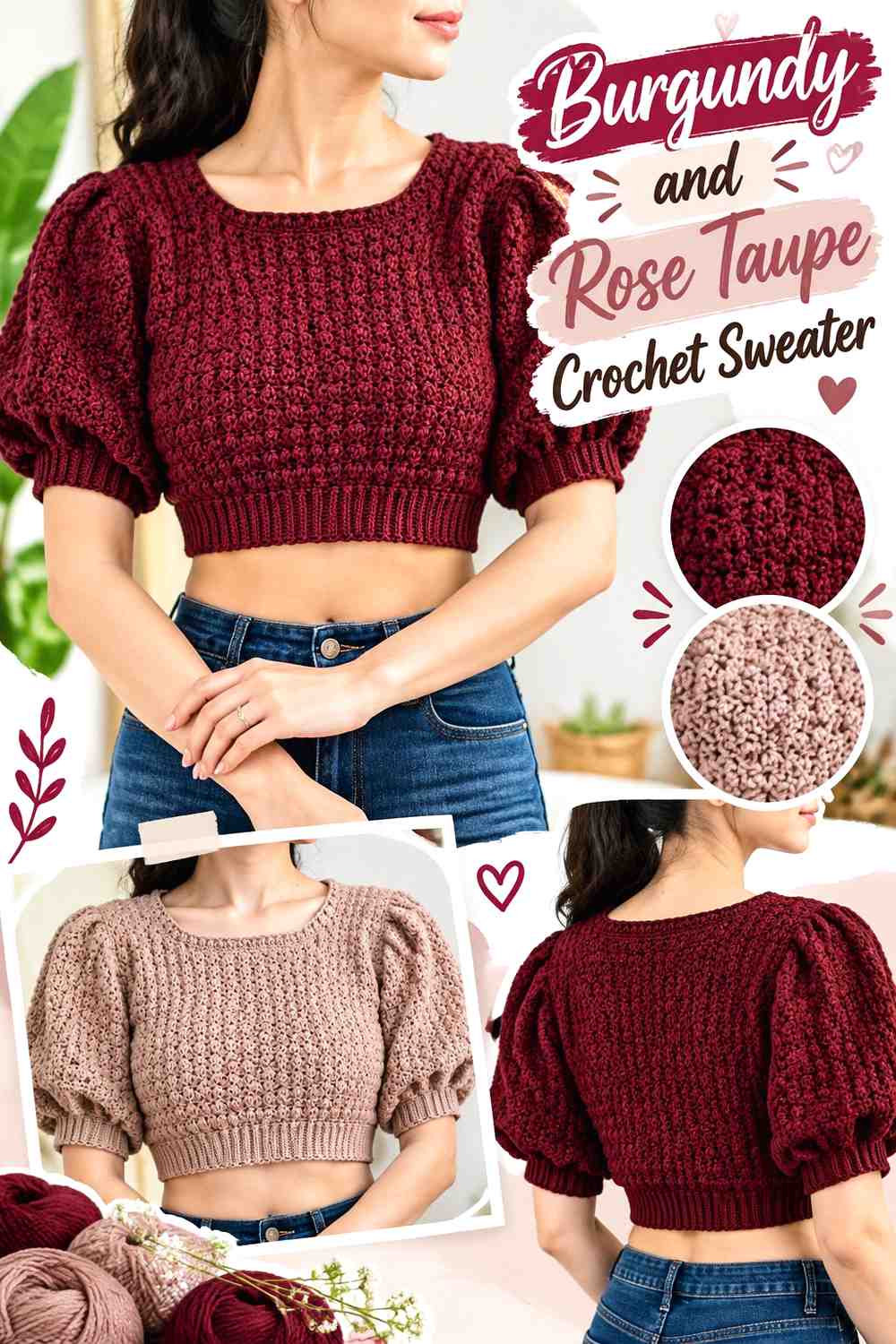
SAVEA sweater gives the palette large body panels plus smaller finishing areas. Burgundy can cover the front, back, and sleeves while rose taupe appears around the collar, cuffs, and lower band for a controlled two-color arrangement.
Burgundy Can Unite the Main Crochet Sweater Panels
Keeping broad sweater sections burgundy prevents the body from looking divided into unrelated blocks. It also gives texture or shaping one continuous background.
Before making the full garment, check whether your burgundy shows the chosen stitch texture clearly. A slightly lighter burgundy can sometimes preserve more visible detail while maintaining the same color direction.
Rose Taupe Can Link Burgundy Crochet Sweater Cuffs and Edging
Rose taupe works well when repeated across several finishing areas. Cuffs alone can appear isolated, but matching rose taupe at the neckline or hem creates an intentional finishing system.
Keep these areas narrower for a burgundy-heavy sweater, or increase their width when you want rose taupe to become a stronger part of the wearable palette.
Creator Credit: TCDDIY
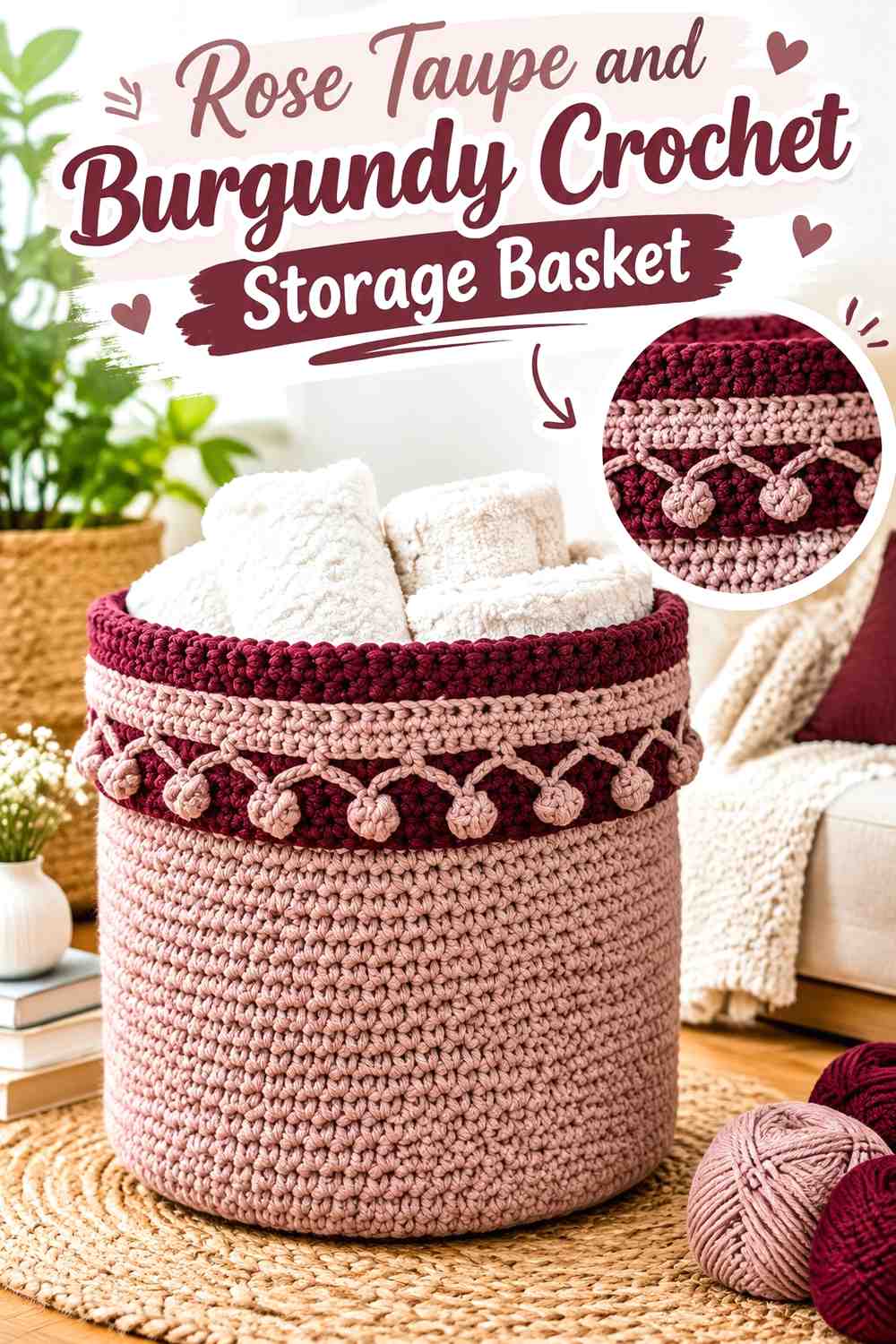
6. Rose Taupe And Burgundy Crochet Storage Basket
 SAVE
SAVEA storage basket is easier to read when the colors occupy broad areas rather than many tiny stripes. Rose taupe can cover the body while burgundy marks the upper section, rim, or decorative band.
Rose Taupe Can Keep the Crochet Basket Body Visually Light
Using rose taupe across most of the basket provides a quieter surface and leaves enough contrast for a concentrated burgundy accent near the top.
Choose the color-change point according to the basket shape rather than changing simply because one skein is nearly finished. A deliberate division looks more connected to the construction.
Burgundy Can Define the Rose Taupe Crochet Basket Rim
A burgundy rim gives the basket opening a clear visual boundary. If another structural detail appears near the top, repeating burgundy there can help connect the color to the basket design.
For a subtler version, confine burgundy to the uppermost section. For a stronger two-block appearance, allow the burgundy band to extend farther down the side.
Creator Credit: TL Yarn Crafts
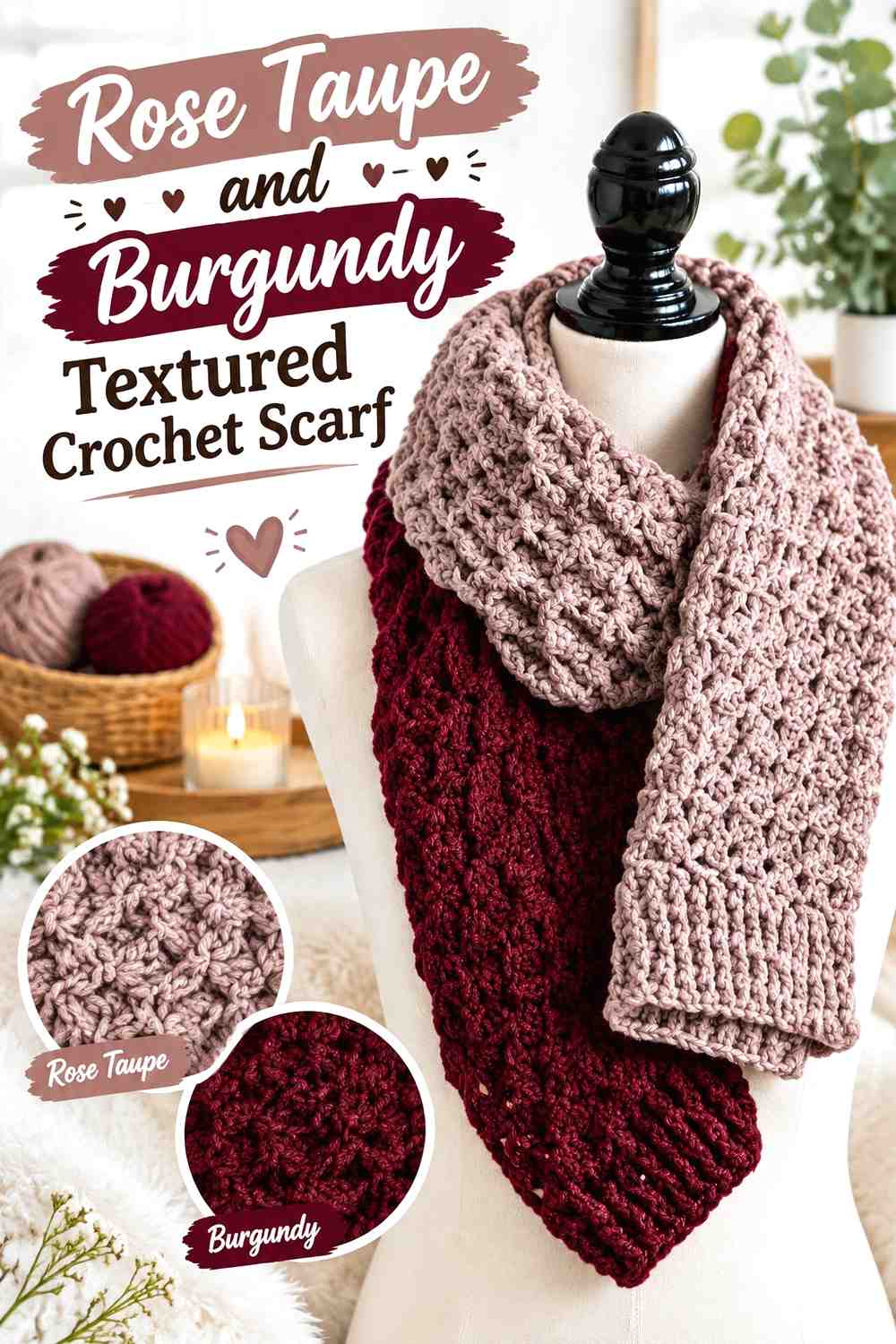
7. Rose Taupe And Burgundy Textured Crochet Scarf
 SAVE
SAVEA textured scarf gives the softer color enough length to show raised stitches clearly. Rose taupe can cover the center of the scarf while burgundy appears at both ends, creating darker finishing blocks without interrupting the texture every few rows.
Rose Taupe Can Keep Crochet Scarf Texture Easy to See
Use long uninterrupted rose taupe sections when the stitch surface is a major part of the scarf. A muted medium-light shade can allow shadows between raised stitches to remain visible.
If your rose taupe is quite dark, compare it with the burgundy first. Two close values can create a subtle tonal look rather than obvious color blocking.
Burgundy Can Balance Both Rose Taupe Crochet Scarf Ends
Repeating burgundy at both ends gives the scarf balanced finishing points when it hangs around the neck. An asymmetric version can also work, but it will create a noticeably different visual direction.
The burgundy areas do not need to be large. Their position at the ends already gives them prominence.
Creator Credit: Rich Textures Crochet
8. Burgundy And Rose Taupe Pocket Crochet Cardigan
 SAVE
SAVEA pocket cardigan lets the second color appear in functional details instead of dividing the whole garment. Burgundy can dominate the cardigan panels, while rose taupe is used on pockets, cuffs, ribbing, or edging.
Burgundy Can Keep Large Crochet Cardigan Panels Cohesive
Use burgundy across the main cardigan body when you want the silhouette to remain visually continuous. Large garments already create plenty of surface area, so several large contrasting blocks may be more color than you need.
The deeper shade also gives rose taupe pockets or trim a clear background.
Rose Taupe Can Make Burgundy Crochet Cardigan Pockets Deliberate
Rose taupe pockets can create noticeable contrast on the front. Repeat the same shade at the cuffs or neckline so the pockets do not look like an unrelated addition.
If contrasting pockets feel too prominent, keep them burgundy and shift rose taupe to narrower edging instead.
Creator Credit: forthefrills
9. Rose Taupe And Burgundy Crochet Cowl
 SAVE
SAVEA cowl has a compact surface, so a relatively small burgundy section can still influence the entire palette. Rose taupe can cover the main stitch pattern, with burgundy framing the top and bottom.
Rose Taupe Can Lead the Burgundy Crochet Cowl Surface
Keeping the central area rose taupe allows texture or openwork to remain uninterrupted. It also prevents the compact accessory from looking overly divided.
If the rose taupe and burgundy are close in value, larger color sections will usually communicate the pairing more clearly than very narrow stripes.
Burgundy Can Frame Both Rose Taupe Crochet Cowl Edges
Burgundy at the upper and lower edges creates a contained frame around the softer center. The repeated placement also prevents one dark section from looking accidental.
Check where the cowl naturally folds when worn. A narrow burgundy edge may disappear inside the fold, so increase its visual width if you want it consistently visible.
Creator Credit: Bag-O-Day Crochet
10. Burgundy And Rose Taupe Crochet Fingerless Gloves
 SAVE
SAVEFingerless gloves give you a natural separation between the hand section and wrist cuff. Burgundy can cover the hand while rose taupe defines the cuff, or those roles can be reversed when texture is easier to see in the lighter shade.
Burgundy Can Keep the Crochet Glove Hand Section Unified
Use burgundy through the main hand area when you want the glove to have a deeper dominant color. Keeping this section uninterrupted also prevents frequent color changes from competing with shell or other surface details.
Make the same placement decisions for both gloves before starting the second one so the pair remains visually consistent.
Rose Taupe Can Separate the Burgundy Crochet Glove Cuff
Rose taupe cuffs create a softer transition at the wrist and provide a clear second-color zone. The cuff is large enough to establish the palette without requiring additional stripes across the hand.
If your burgundy hides the most textured stitches, reverse the plan and move rose taupe into that section instead.
Creator Credit: Hooked by Robin
11. Rose Taupe And Burgundy Twisted Crochet Headband
 SAVE
SAVEA twisted headband works well with restrained color placement because the central twist already creates a focal point. Rose taupe can cover most of the band while burgundy is concentrated around the front or along the edges.
Rose Taupe Can Preserve the Crochet Headband Ribbing
A continuous rose taupe surface lets ribbing or repeated texture remain visible around the band. Frequent burgundy stripes could compete with the front twist and make the small accessory busier than necessary.
Compare the yarns at the finished band width before deciding how much burgundy to add.
Burgundy Can Emphasize the Rose Taupe Crochet Headband Twist
A concentrated burgundy front section can place the darker color exactly where the headband already has structural emphasis.
For a quieter adaptation, keep the central twist rose taupe and use burgundy only as narrow edging. Both approaches maintain a clear color hierarchy.
Creator Credit: naztazia
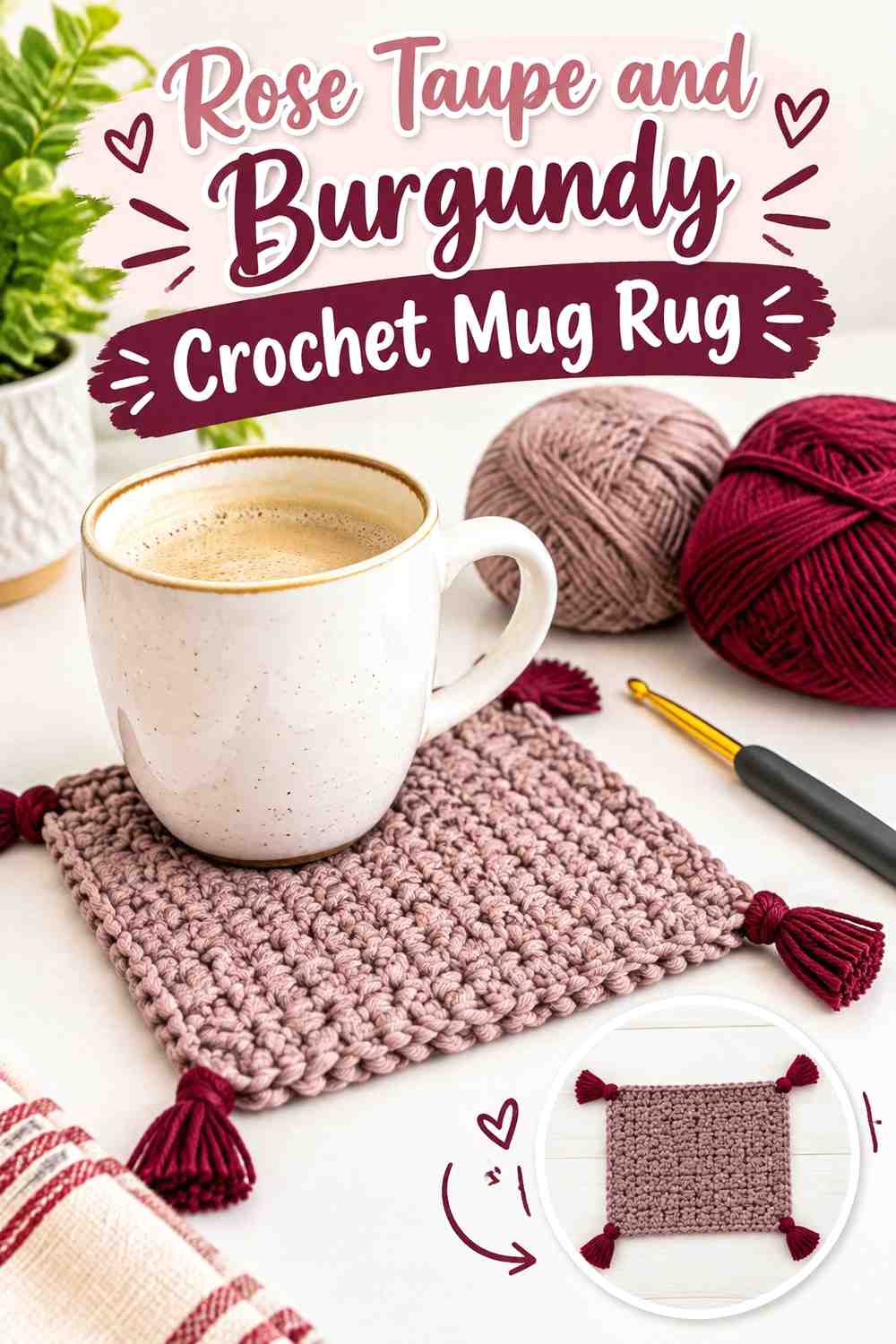
12. Rose Taupe And Burgundy Crochet Mug Rug
 SAVE
SAVEA mug rug is a useful small project for testing the palette before committing to a garment or blanket. Rose taupe can form the main rectangle while burgundy appears around the edge, in a stripe, or in the tassels.
Rose Taupe Can Create a Simple Crochet Mug Rug Field
Using rose taupe for most of the surface gives you a realistic look at how the shade behaves once crocheted rather than viewed as loose yarn.
The small scale also makes it easier to judge whether your exact rose taupe is sufficiently lighter than burgundy for a larger project.
Burgundy Can Define the Rose Taupe Crochet Mug Rug Edge
A burgundy border provides a contained finish, while burgundy tassels move the dark color outside the main rectangle.
Avoid using burgundy simultaneously for several large stripes, a heavy border, and all finishing details unless you intentionally want it to overtake rose taupe as the dominant shade.
Creator Credit: Tamara Kelly – Moogly
13. Burgundy And Rose Taupe Crochet Market Bag
 SAVE
SAVEA market bag can use color placement to separate the main body from the upper edge and handles. Burgundy can carry the lower bag while rose taupe appears toward the opening and straps, creating a visible transition without interrupting every row.
Burgundy Can Anchor the Lower Crochet Market Bag
Using burgundy around the lower portion gives the bag a strong visual base. Keep the color block broad enough to remain noticeable even when the bag stretches or changes shape during use.
If the stitch pattern becomes increasingly open toward the top, changing to rose taupe there can also make the two sections easy to distinguish.
Rose Taupe Can Connect Burgundy Crochet Bag Handles to the Opening
Rose taupe handles work better visually when the same color is repeated around the upper bag. This creates a transition between the burgundy body and contrasting straps rather than making the handles look separate.
For a more burgundy-heavy version, keep the handles burgundy and restrict rose taupe to a narrow upper band.
Creator Credit: The Crochet Crowd
14. Burgundy And Rose Taupe Crochet Sweater Vest
 SAVE
SAVEA sweater vest gives the secondary color several natural locations because the neckline and armholes require visible finishing. Burgundy can cover the body panels while rose taupe outlines those openings.
Burgundy Can Carry the Main Crochet Vest Panels
Keeping the front and back burgundy gives the vest a strong continuous center. This works especially well when rose taupe will be repeated around several openings.
Check the burgundy against the vest’s stitch texture before making large panels. If texture disappears, a slightly lighter burgundy or a rose-taupe-dominant reversal may be more effective.
Rose Taupe Can Outline Burgundy Crochet Vest Armholes
Rose taupe around the neckline and armholes creates a clear frame around the burgundy body. Repeating the same shade at the lower edge can complete that framing system.
Narrow edging keeps burgundy dominant. Wider rose taupe ribbing makes the two-color treatment much more noticeable.
Creator Credit: JeggoCrochet
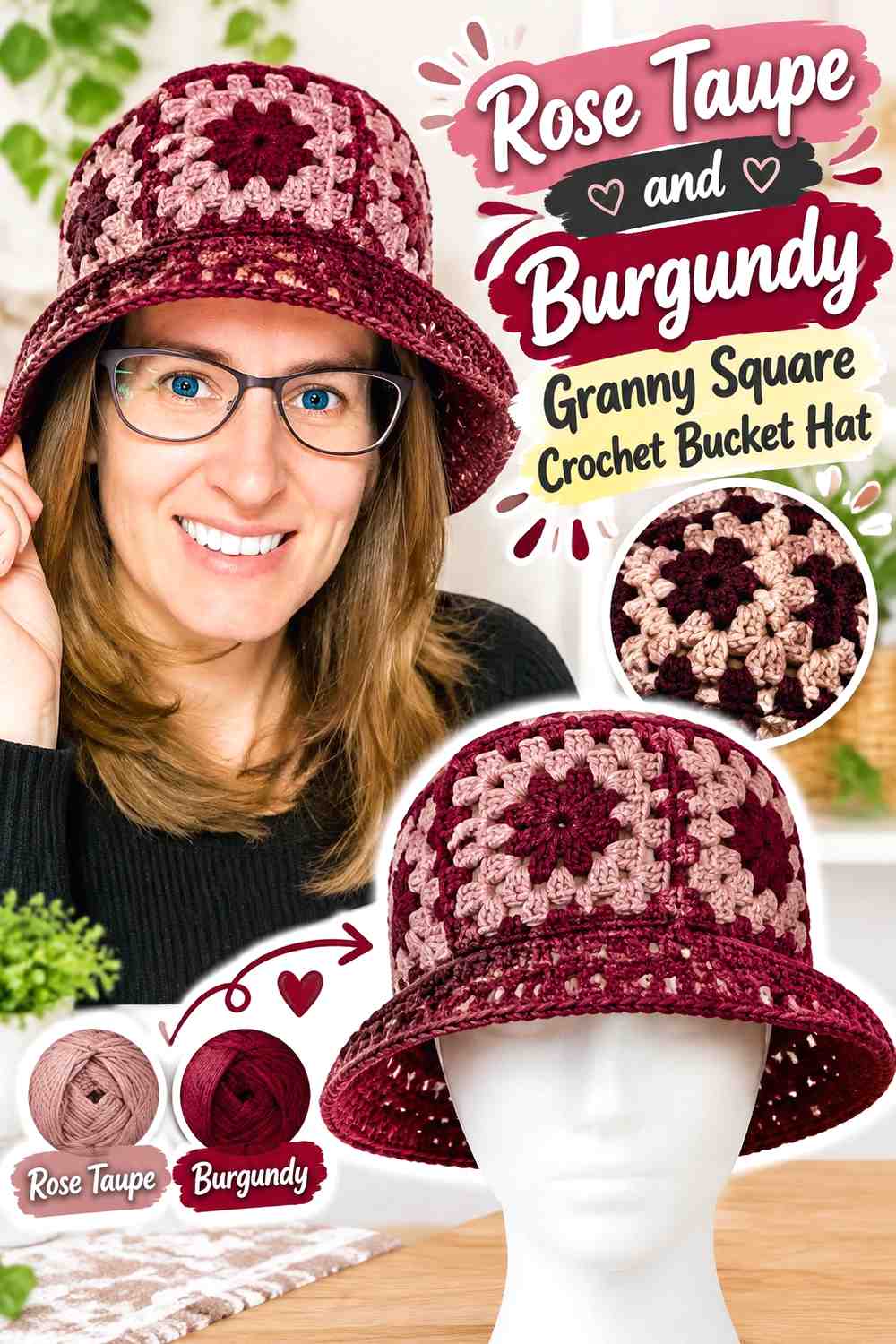
15. Rose Taupe And Burgundy Granny Square Crochet Bucket Hat
 SAVE
SAVEA granny-square bucket hat gives both colors distinct motif and brim areas. Rose taupe can occupy most of the squares while burgundy repeats through centers or outer motif sections and then returns around the brim.
Rose Taupe Can Keep the Crochet Bucket Hat Motifs Soft
Giving rose taupe the larger share prevents the repeated squares from becoming visually heavy. Burgundy can still appear consistently enough in each motif to connect the entire hat.
Arrange the squares before assembly so the burgundy areas repeat around the circumference rather than clustering unexpectedly.
Burgundy Can Connect Rose Taupe Crochet Squares to the Brim
A burgundy brim can bring the darker motif color into a larger structural area. That repetition makes the brim feel connected to the squares rather than added as a separate color block.
If a full burgundy brim feels too heavy, use rose taupe for most of it and finish with a narrower burgundy edge.
Creator Credit: Crochet with Clare
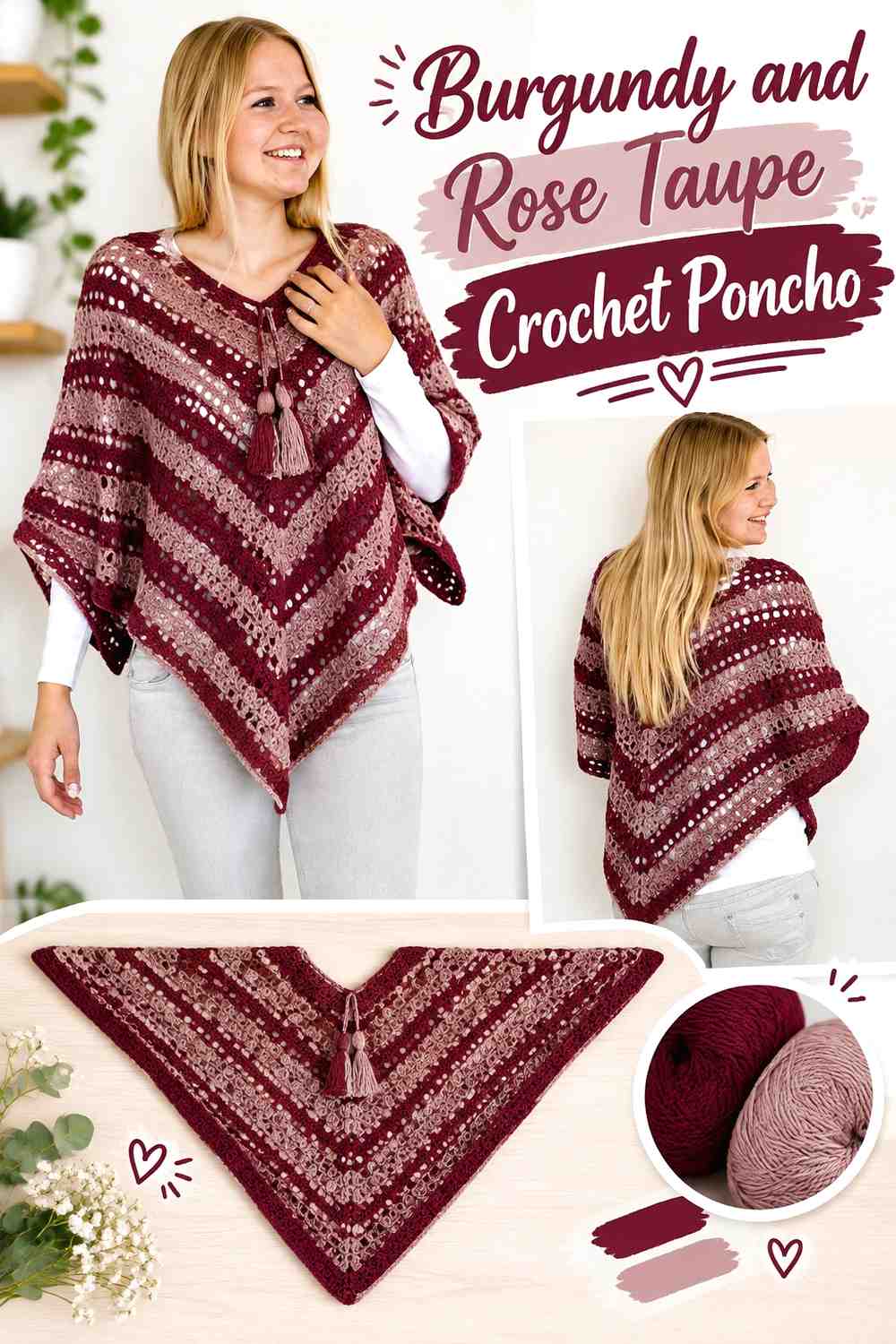
16. Burgundy And Rose Taupe Crochet Poncho
 SAVE
SAVEA poncho offers a large continuous surface where broad color sections can be more effective than many thin stripes. Burgundy can establish the center or upper portion, while rose taupe gradually occupies more space toward the outer area.
Burgundy Can Anchor the Crochet Poncho Center
Keeping burgundy closer to the neckline gives the deeper shade a concentrated focal area and leaves the expanding outer fabric available for rose taupe.
Consider how the poncho folds over the shoulders. Color blocks can overlap when worn, changing their apparent proportions compared with the piece laid flat.
Rose Taupe Can Lighten the Burgundy Crochet Poncho Outer Area
As the poncho expands, rose taupe can take over larger sections and reduce the dark visual weight created by burgundy near the center.
If you add a burgundy finish after a wide rose taupe area, repeat enough of it to make the outer edge deliberate rather than using a single barely visible line.
Creator Credit: Wilma Westenberg
17. Rose Taupe And Burgundy Granny Square Crochet Crossbody Bag
 SAVE
SAVEA crossbody bag combines motif surfaces with seams and strap details, giving burgundy several places to define a rose-taupe-heavy design. Rose taupe can lead across the granny squares while burgundy marks centers, joins, or strap-related details.
Rose Taupe Can Lead the Crochet Crossbody Bag Squares
Rose taupe across most of each square creates a softer bag body and makes smaller burgundy motif sections easy to repeat consistently.
Before assembly, position the squares exactly as they will appear on the finished bag. The fold and seam arrangement can bring burgundy details closer together than expected.
Burgundy Can Define Rose Taupe Crochet Bag Joins
Using burgundy at visible joins can make separate granny squares easier to distinguish. It can also connect naturally to burgundy edging or a strap detail.
Avoid adding a completely new dark color for the joins when burgundy can already provide the definition the bag needs.
Creator Credit: MJ’s Off The Hook Designs
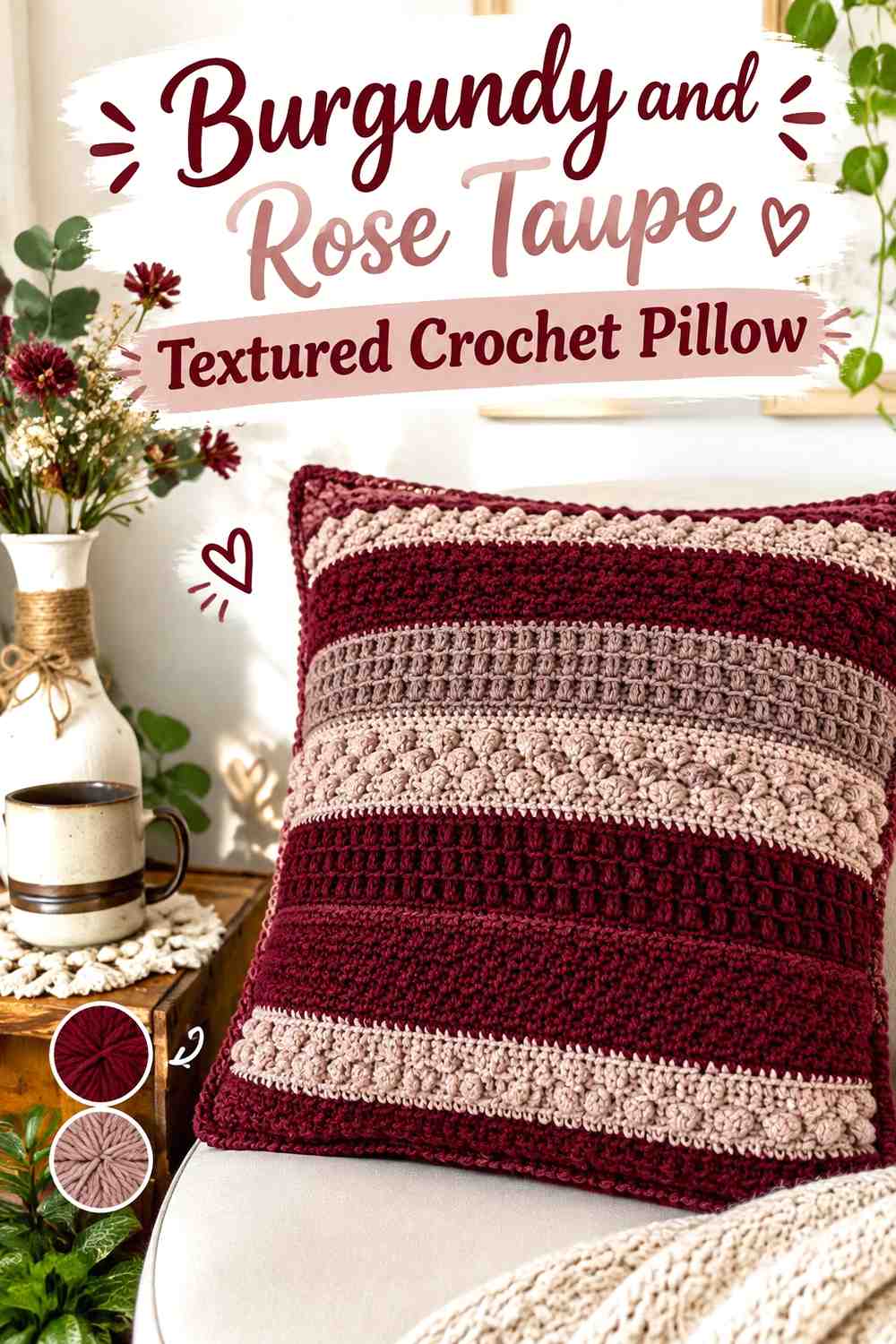
18. Burgundy And Rose Taupe Textured Crochet Pillow
 SAVE
SAVEA textured pillow is a useful place to let rose taupe expose stitch detail while burgundy provides stronger framing. Burgundy can cover selected texture sections or the outer border, with rose taupe carrying the larger pillow surface.
Rose Taupe Can Keep Crochet Pillow Texture Visible
Use rose taupe across bobbles, puffs, or other raised sections when the stitch relief is a major feature. A lighter muted field can make the shadows created by dimensional stitches easier to notice.
If your chosen rose taupe is dark, test a swatch before assuming it will show more definition than burgundy.
Burgundy Can Frame the Rose Taupe Crochet Pillow Surface
A burgundy outer section or border can contain a rose taupe textured center without interrupting its stitch pattern.
Keep the burgundy frame proportional to the pillow face. An excessively wide dark border can shrink the apparent size of the rose taupe center, while a narrow edge provides definition without becoming the dominant feature.
Creator Credit: Stephanie Zed
Choosing Between Burgundy-Dominant and Rose-Taupe-Dominant Crochet
A burgundy-dominant arrangement suits projects where you want greater dark visual weight and a clearly defined supporting shade. Sweaters, cardigans, vests, beanies, ponchos, and gloves all provide natural edges or finishing areas where rose taupe can appear without dividing the main surface.
Rose-taupe-dominant projects shift attention toward texture and softer color coverage. Scarves, cowls, baskets, headbands, mug rugs, motif bags, and textured pillows give burgundy opportunities to work as a darker outline or repeated accent.
For the most graphic result, use the colors in separate blocks on granny squares, blanket stripes, bucket hats, or C2C motifs. These constructions already create boundaries that help two muted shades remain distinct.
Conclusion
Burgundy and rose taupe can produce several different crochet looks without requiring a third color. Burgundy works effectively as a dark anchor around borders, cuffs, joins, motifs, and garment panels, while rose taupe can open up larger surfaces and give textured stitches more visual room.
Before choosing a layout, compare your actual yarns rather than relying only on the shade names. Decide which color should lead, check their value contrast, and identify the project’s natural divisions. Those three choices make it much easier to distribute burgundy and rose taupe consistently across the finished piece.
Frequently Asked Questions
Do burgundy and rose taupe work together in crochet?
Yes. Burgundy supplies a deeper red direction while rose taupe brings a softer muted pink-brown tone. How strongly they contrast depends on the exact darkness and saturation of the yarns you choose.
Should burgundy or rose taupe be the dominant crochet color?
Either can lead. Use burgundy when you want more dark visual weight. Let rose taupe dominate when you want a softer overall surface or want raised crochet texture to receive more attention.
How can I check burgundy and rose taupe contrast before crocheting?
Place the yarns beside each other and look at them from a distance. A grayscale photograph can also reveal whether they differ enough in lightness for small motifs or narrow colorwork details.
Where should rose taupe go in a burgundy crochet garment?
Cuffs, necklines, hems, armhole edging, pockets, and button bands are useful locations. Repeating rose taupe in two or more finishing areas can make the supporting color feel integrated with the garment.
Where should burgundy go in a rose taupe crochet home-decor project?
Borders, basket rims, pillow edges, motif centers, joins, and repeated stripes are practical choices. Burgundy usually needs less surface area than rose taupe when you want it to provide definition rather than dominate.
Can burgundy and rose taupe be used in equal amounts?
Yes, especially in stripes, repeated squares, C2C layouts, or other projects with clear geometric divisions. Equal coverage creates a more graphic result than using one shade only as trim.
What can I substitute for burgundy or rose taupe yarn?
Preserve the color roles rather than trying to match a commercial shade name exactly. Replace burgundy with another deep muted red or wine-like shade. For rose taupe, look for a softened pink-brown or dusty rosy neutral that maintains the amount of light-and-dark contrast you want.