
Burgundy and Dusty Pink create a useful color hierarchy for a crochet bobble sweater. Burgundy has enough depth to anchor large body panels, cuffs, or backgrounds, while Dusty Pink gives raised bobbles a lighter visual break without the sharper contrast of cream or white.
Bobble texture makes placement especially important. Small Dusty Pink bobbles repeated across a Burgundy sweater can influence the whole garment even though they use relatively little yarn. The reverse arrangement—Burgundy bobbles on a Dusty Pink field—creates stronger dark punctuation and can make individual raised stitches easier to locate from a distance.
The supporting tutorials below include direct bobble, puff-stitch, popcorn-texture, and related sweater constructions, plus a few compatible sweater tutorials useful for body, sleeve, neckline, and assembly planning. Where a source does not use bobbles throughout the exact area described, treat the bobble placement as an independent adaptation rather than assuming the creator made this Burgundy and Dusty Pink version.
Quick List
- Burgundy Crochet Bobble Sweater With Dusty Pink Front Panel
- Dusty Pink Crochet Bobble Sweater With Burgundy Front Panel
- Burgundy Crochet Bobble Sweater With Dusty Pink Bobble Sleeves
- Dusty Pink Crochet Bobble Sweater With Burgundy Bobble Sleeves
- Burgundy and Dusty Pink Allover Crochet Bobble Sweater
- Burgundy Crochet Bobble Sweater With Dusty Pink Bobble Yoke
- Dusty Pink Crochet Bobble Sweater With Burgundy Bobble Yoke
- Burgundy Crochet Bobble Sweater With Dusty Pink Shoulder Panels
- Dusty Pink Crochet Bobble Sweater With Burgundy Shoulder Panels
- Burgundy Crochet Bobble Sweater With Dusty Pink Cuffs and Hem
- Dusty Pink Crochet Bobble Sweater With Burgundy Cuffs and Hem
- Burgundy Diamond-Bobble and Dusty Pink Crochet Sweater
- Dusty Pink Diamond-Bobble and Burgundy Crochet Sweater
- Burgundy Front and Dusty Pink Back Crochet Bobble Sweater
- Dusty Pink Front and Burgundy Back Crochet Bobble Sweater
- Burgundy and Dusty Pink Alternating-Row Crochet Bobble Sweater
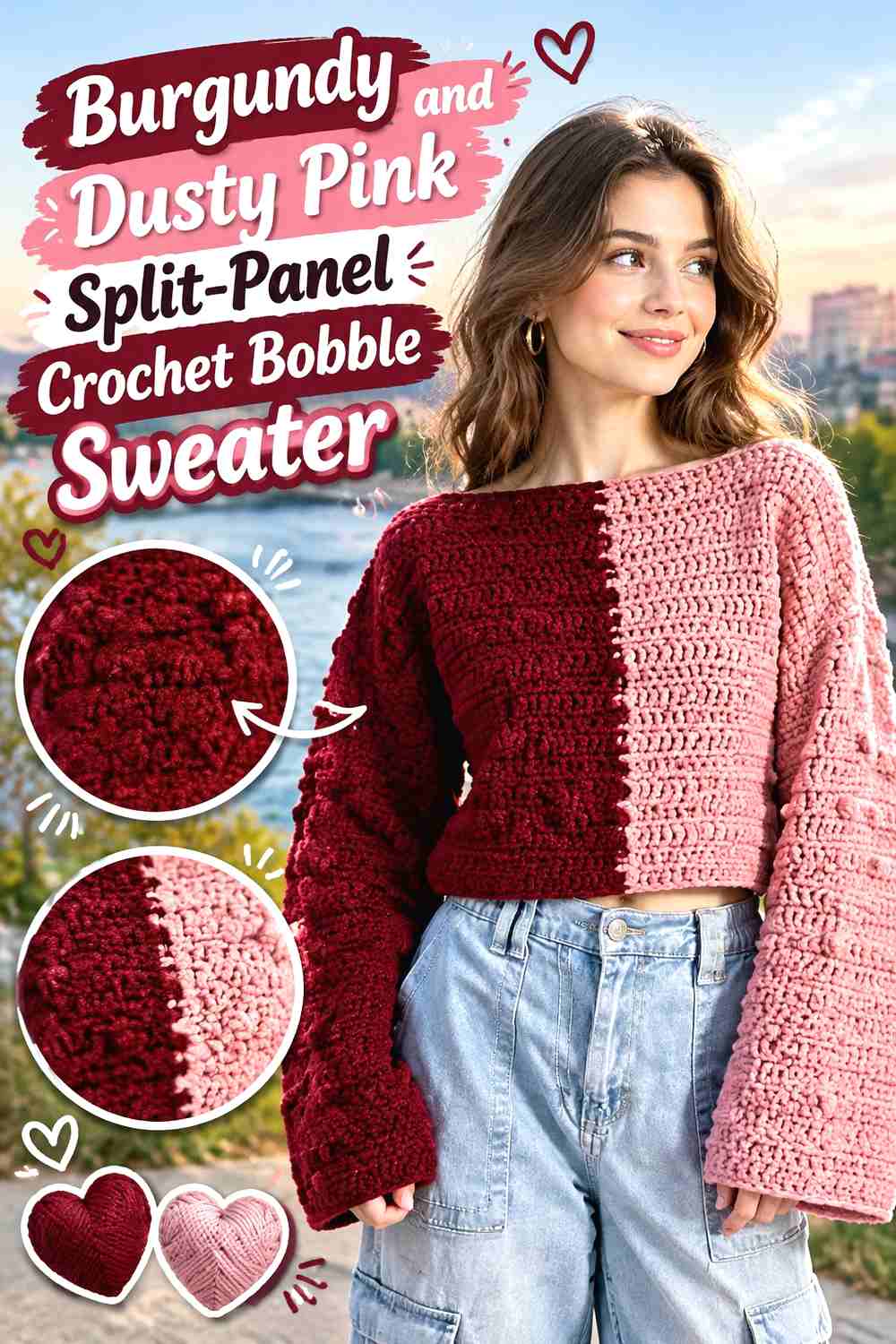
- Burgundy and Dusty Pink Split-Panel Crochet Bobble Sweater
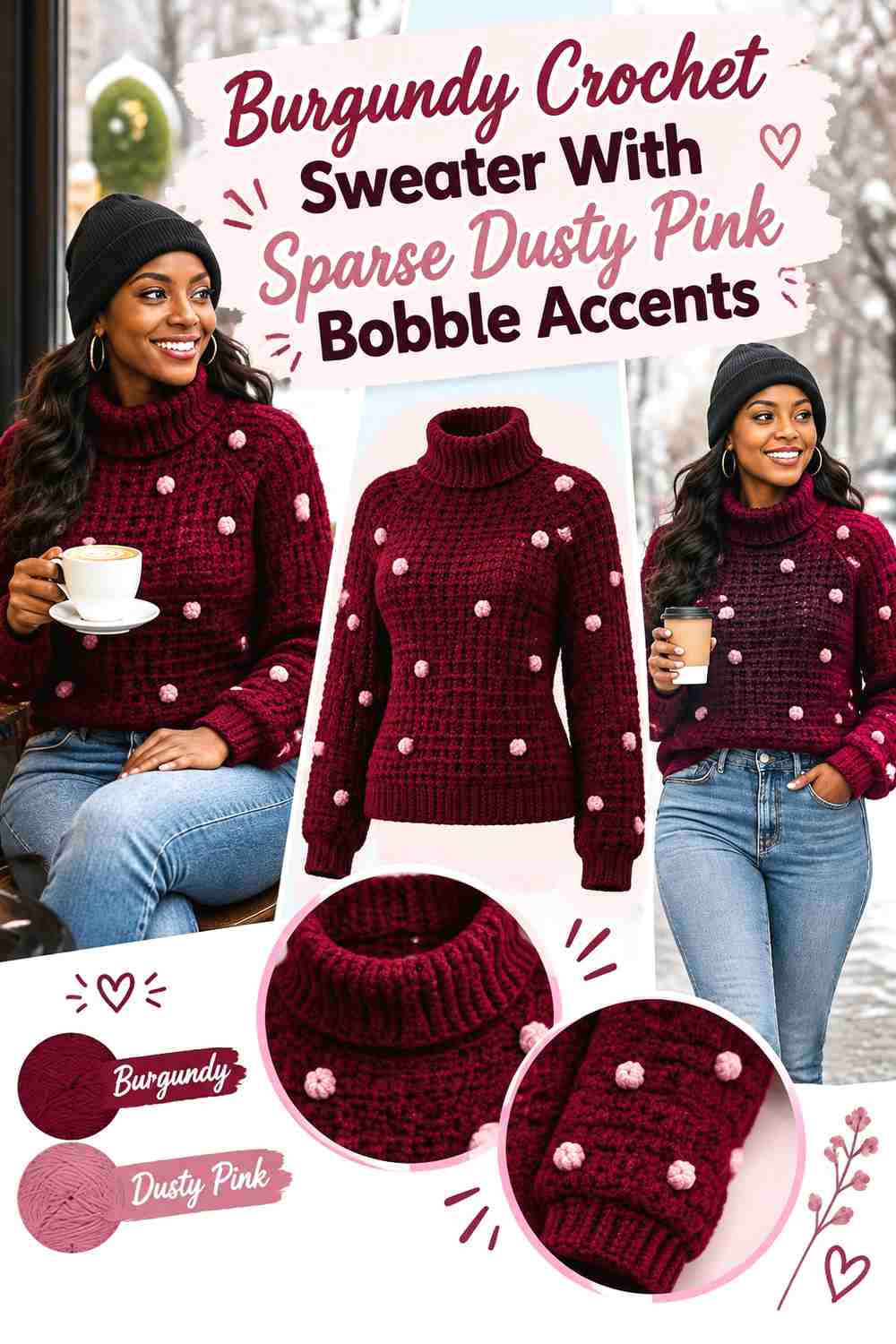
- Burgundy Crochet Sweater With Sparse Dusty Pink Bobble Accents
Decide Whether Burgundy or Dusty Pink Should Carry the Bobble Texture
Giving one color the bobbles and the other the flatter background creates clearer hierarchy than changing colors randomly around every raised stitch. Dusty Pink bobbles can lighten a Burgundy field, while Burgundy bobbles create deeper points across a softer pink sweater.
Test several bobbles together rather than judging one stitch. A small contrast that looks restrained on a swatch can become much stronger once repeated across a front panel or both sleeves.
Check Burgundy and Dusty Pink for Value Contrast
Burgundy will often appear darker than Dusty Pink, but shade names alone do not guarantee enough separation. Compare the actual yarns side by side and consider a grayscale photo if the raised details seem to disappear.
If contrast is limited, use the colors across larger zones—such as Burgundy sleeves against a Dusty Pink body—rather than relying on tiny bobbles alone to show the palette.
Keep Burgundy and Dusty Pink Connected Across the Sweater
Sleeves, neckline, cuffs, and hem all affect the final color balance. Dusty Pink bobbles on the body can connect naturally to pink cuffs, while a Burgundy neckline can tie dark bobbles back into a lighter sweater.
The second color does not need to appear everywhere. It needs enough deliberate repetition that one section does not look unrelated to the rest of the garment.
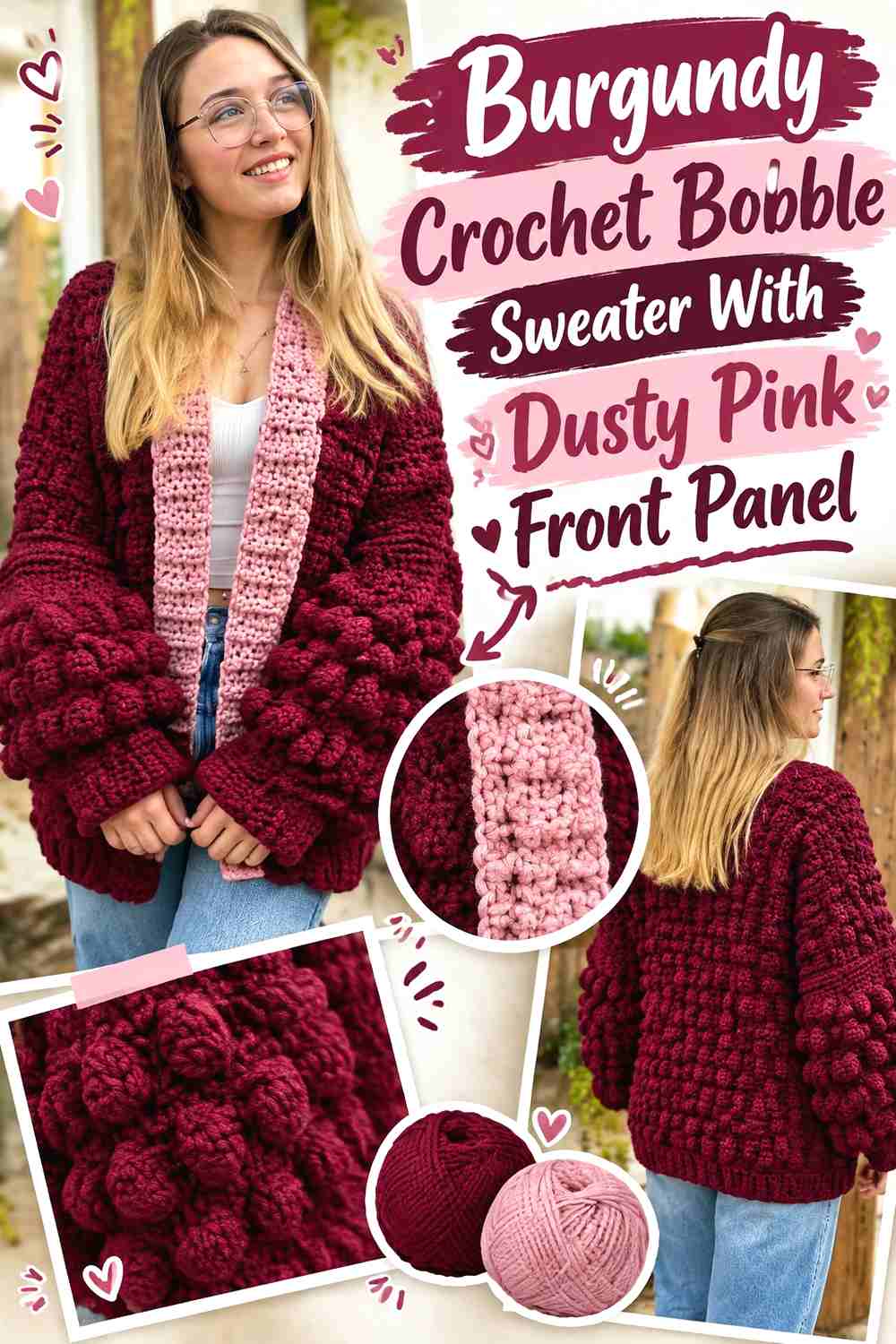
1. Burgundy Crochet Bobble Sweater With Dusty Pink Front Panel
 SAVE
Keep the sleeves, back, and most of the torso Burgundy, then use Dusty Pink bobbles across a defined front panel. This makes the raised section the lighter focal point without fragmenting the entire sweater.
Dusty Pink Bobbles Need Burgundy Space Around the Front Panel
Leave a noticeable Burgundy margin beside the Dusty Pink texture. The darker field gives the panel a clear boundary and prevents the pink bobbles from blending into unrelated color changes near the side seams.
Burgundy Should Continue Around the Dusty Pink Neckline Area
If the front panel reaches high on the torso, keeping the neckline Burgundy can visually contain it. A Dusty Pink neckline as well may make the focal area broader than intended.
Creator Credit: HighLevelSylvie
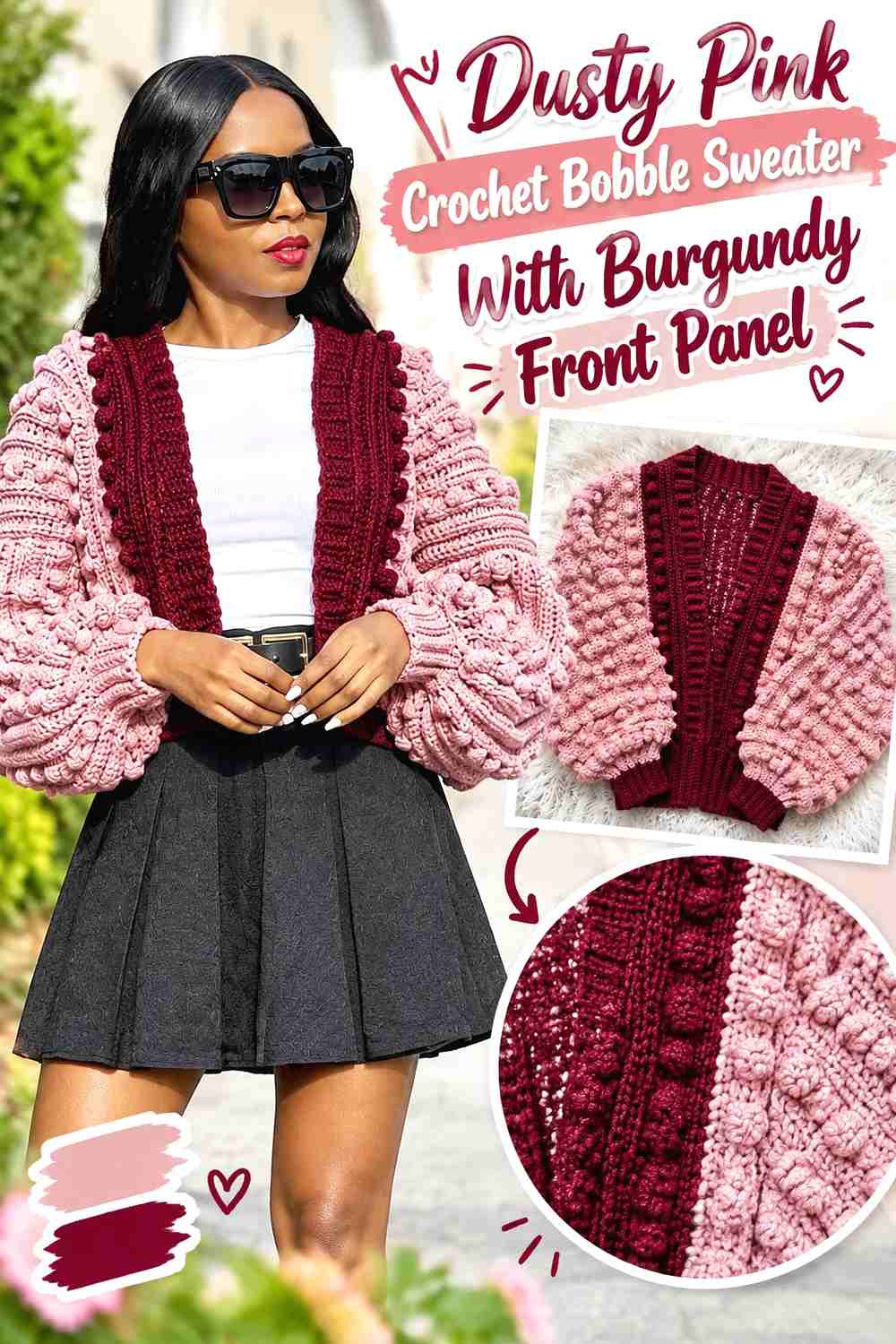
2. Dusty Pink Crochet Bobble Sweater With Burgundy Front Panel
 SAVE
Reverse the balance by covering most of the sweater in Dusty Pink and concentrating Burgundy bobbles through the center front. The darker raised stitches create a more graphic focal area against the softened background.
Burgundy Bobbles Can Create Strong Definition on Dusty Pink
Use Burgundy consistently within the panel rather than mixing isolated dark bobbles with pink ones. The repeated deep color helps the raised texture remain recognizable across the torso.
Dusty Pink Should Stay Broad Beside Burgundy Texture
Preserve enough uninterrupted Dusty Pink on both sides of the panel so the sweater still reads as pink-led. Expanding Burgundy into every cuff, hem, and neckline can quickly reverse the hierarchy.
Creator Credit: AC Crochets
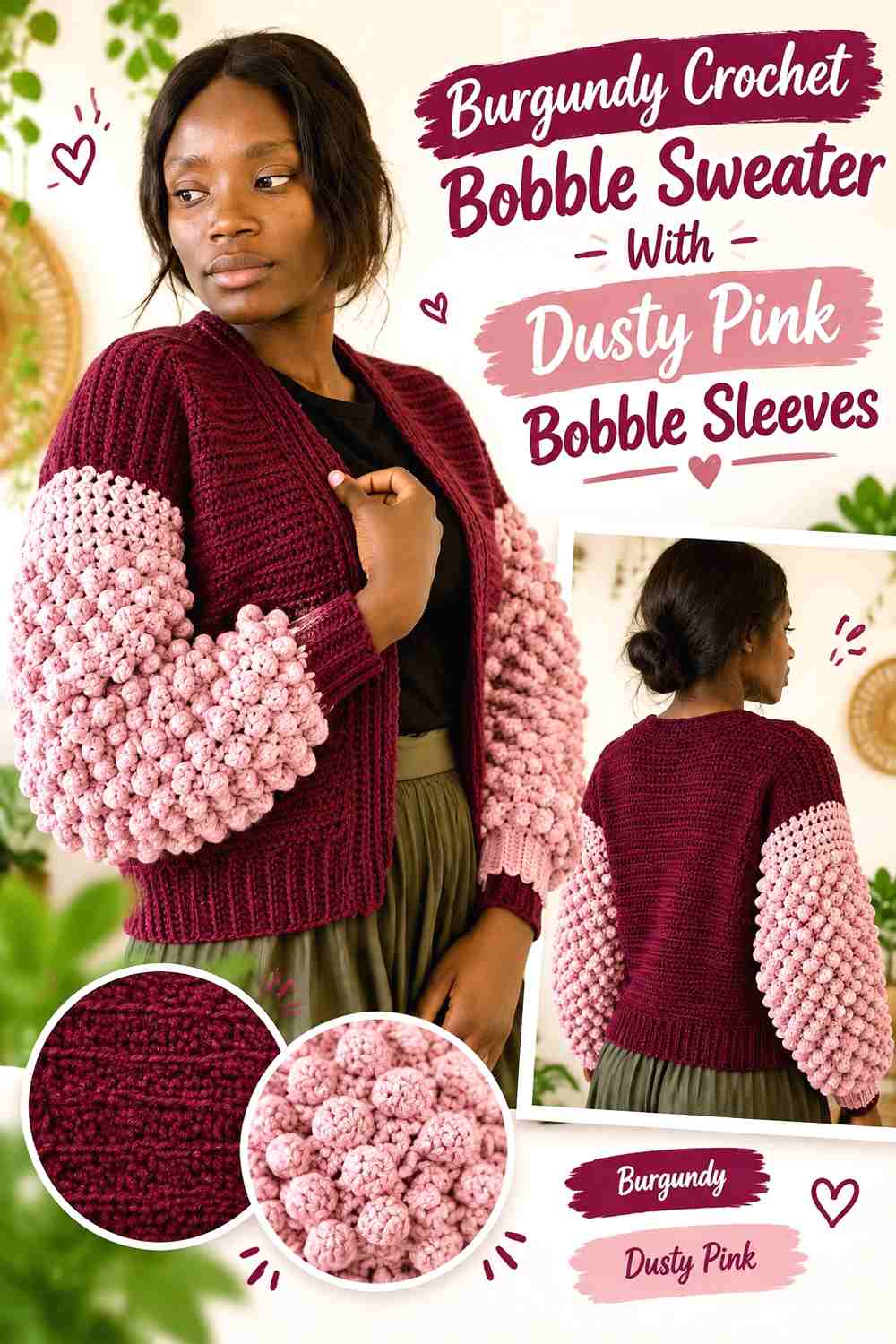
3. Burgundy Crochet Bobble Sweater With Dusty Pink Bobble Sleeves
 SAVE
Keep the torso mostly Burgundy and move the strongest Dusty Pink texture onto both sleeves. The arms become the focal feature while the darker body gives them a quieter backdrop.
Dusty Pink Bobble Sleeves Need Burgundy Connections at the Shoulders
Repeat some Burgundy inside the sleeve tops or cuffs so the color change does not look abrupt at the armholes. Even a narrow dark transition can connect the sleeves to the torso.
Burgundy Body Panels Should Stay Calm Beside Dusty Pink Sleeves
Avoid covering the torso with an equally dense second bobble pattern if the sleeves are intended to lead. A quieter Burgundy body makes the sleeve texture easier to appreciate.
Creator Credit: Dreamcrochets
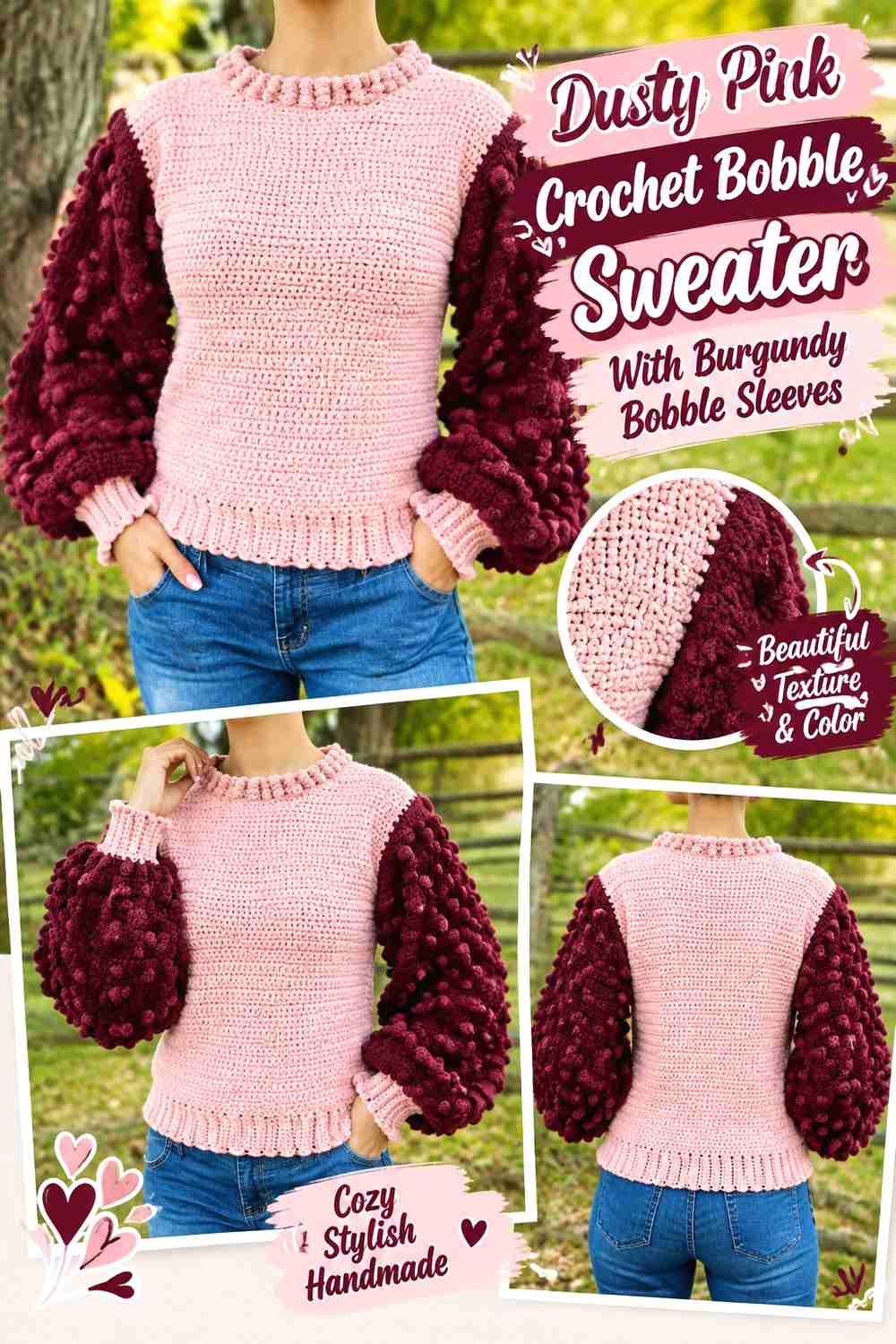
4. Dusty Pink Crochet Bobble Sweater With Burgundy Bobble Sleeves
 SAVE
This version keeps the body light and soft while using Burgundy bobbles across the sleeves. The deeper arm texture creates a stronger frame around the torso without making the whole sweater dark.
Burgundy Bobble Sleeves Can Give Dusty Pink More Structure
Use enough Burgundy across the sleeves to create a genuine color block rather than scattered dark stitches. Broad repetition makes the arm treatment look deliberate.
Dusty Pink Cuffs Can Soften Burgundy Bobble Sleeves
A Dusty Pink cuff can reconnect the sleeve to the body and keep the wrist from becoming another dark block. If Burgundy already appears at the neckline, however, matching Burgundy cuffs may create a more structured frame.
Creator Credit: Yarn Cakes, LLC
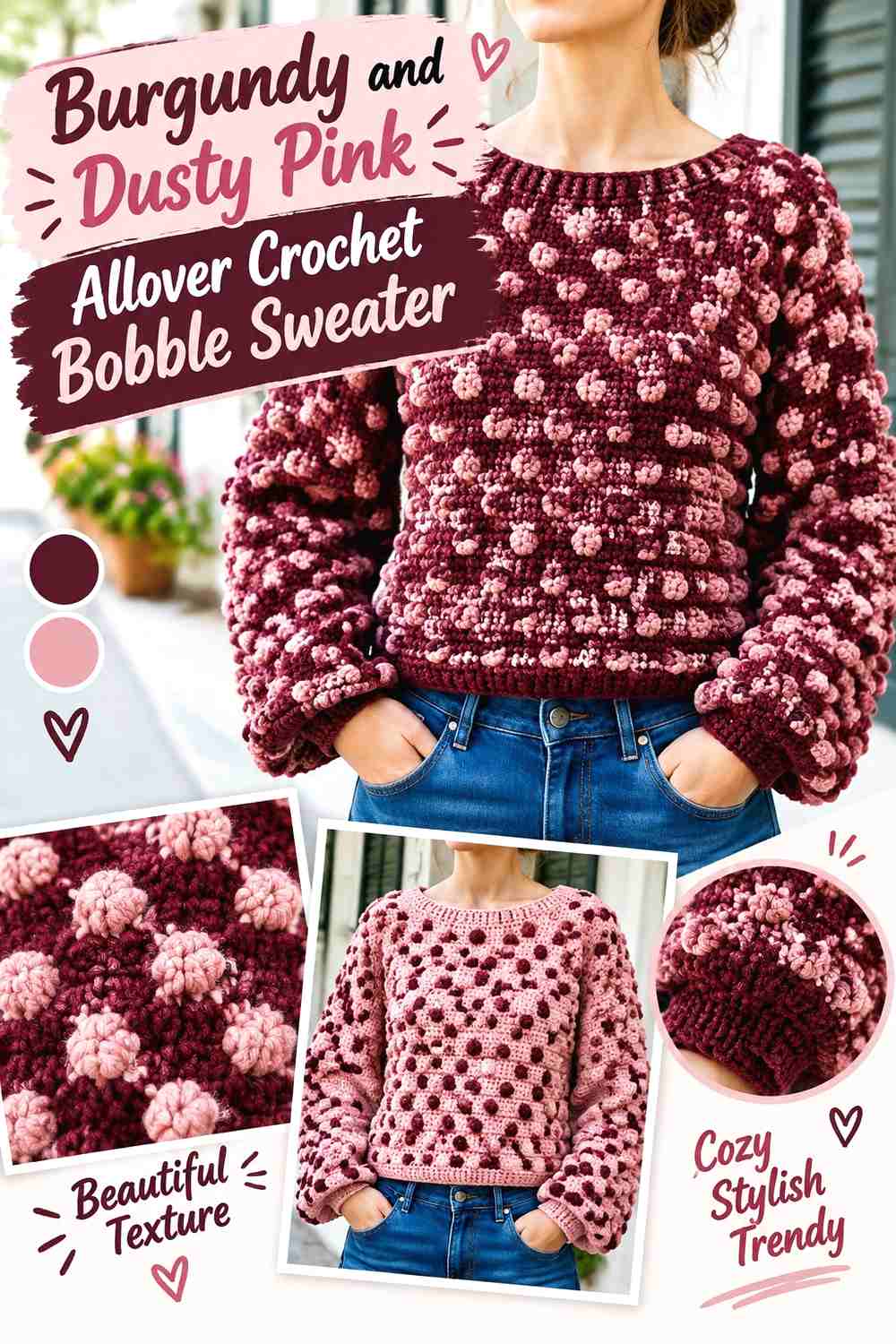
5. Burgundy and Dusty Pink Allover Crochet Bobble Sweater
 SAVE
Give both colors repeated roles throughout the body and sleeves instead of concentrating them in one panel. This is one of the busier options, so the color sequence needs a recognizable system.
Burgundy Should Anchor the Dusty Pink Allover Bobbles
Use Burgundy as the background, alternating row, or repeated border if you want the sweater to remain grounded. Without a dominant color, the bobbles and color changes can compete equally.
Dusty Pink Bobbles Need Consistent Burgundy Spacing
Repeat the pink raised stitches at predictable intervals rather than changing their placement randomly from row to row. The regular spacing helps the two-color texture look organized.
Creator Credit: Olga Poltava
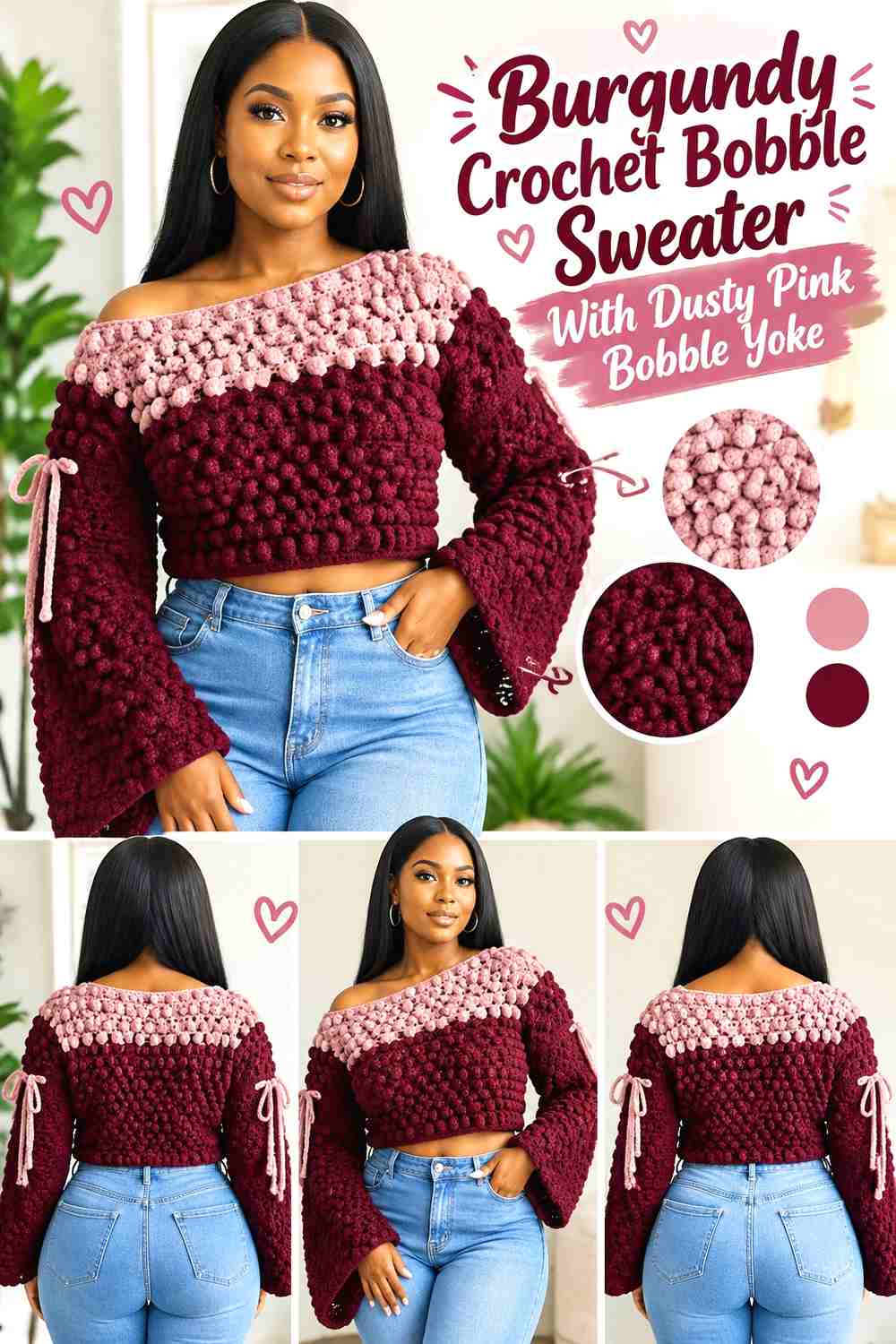
6. Burgundy Crochet Bobble Sweater With Dusty Pink Bobble Yoke
 SAVE
Concentrate Dusty Pink bobbles around the upper chest and shoulders, then let Burgundy carry the lower body. The lighter texture draws attention upward without requiring pink throughout the whole garment.
Dusty Pink Bobbles Can Define the Burgundy Yoke
Give the Dusty Pink section enough depth to read as a true yoke. A single narrow line of bobbles may look more like trim than an intentional upper-body feature.
Burgundy Should Take Over Cleanly Below Dusty Pink
Use a clear transition into the Burgundy lower body rather than scattering pink stitches downward indefinitely. A small Dusty Pink repeat at the cuffs can connect the yoke to another garment area.
Creator Credit: 🧶Mihankushea🧶
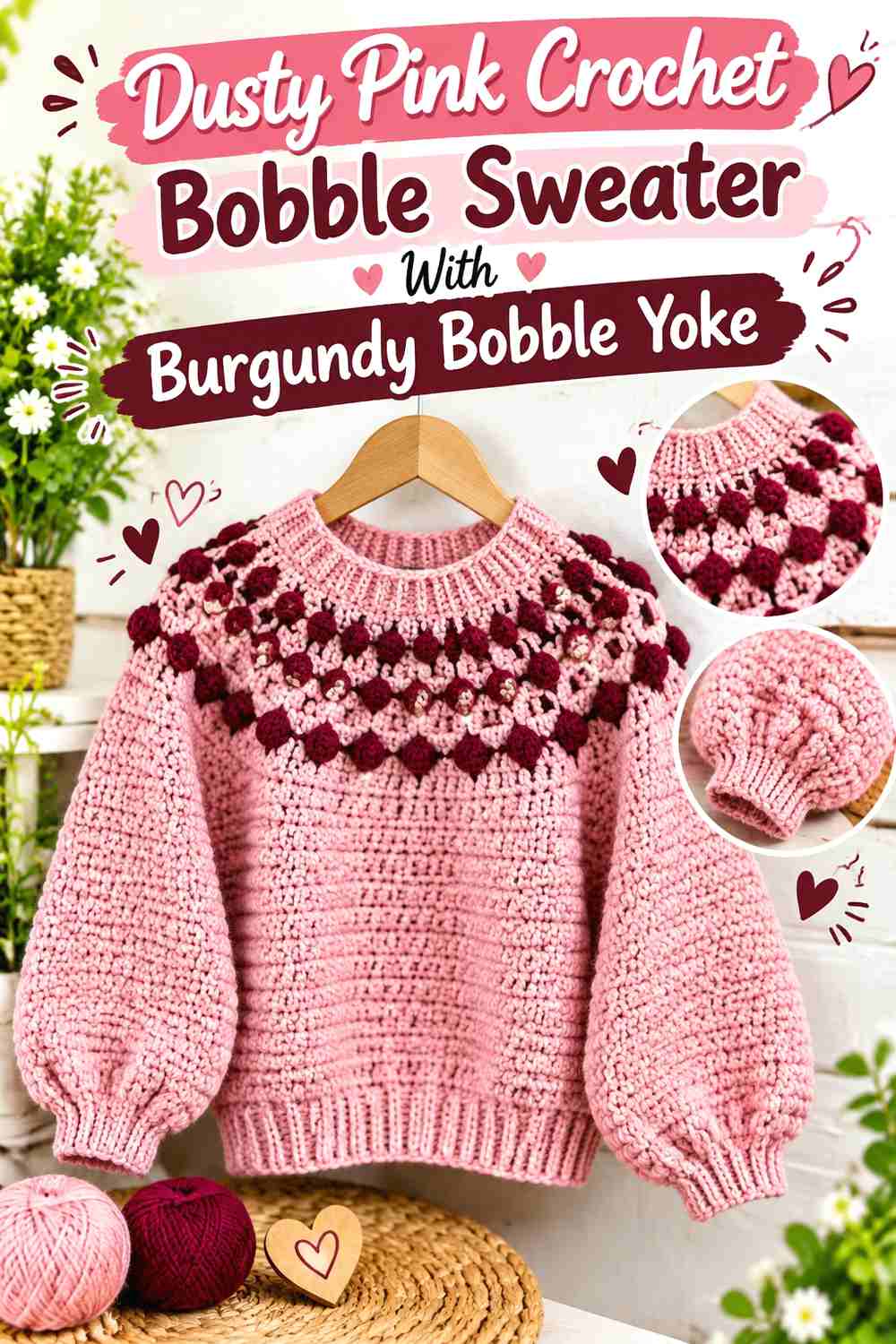
7. Dusty Pink Crochet Bobble Sweater With Burgundy Bobble Yoke
 SAVE
A Dusty Pink body with Burgundy bobbles near the shoulders puts the deepest color in a highly visible upper section. This can make Burgundy look more important than its actual yarn share.
Burgundy Bobbles Need a Clear Dusty Pink Yoke Background
Keep the flatter yoke fabric Dusty Pink so the raised dark stitches are easy to separate. If the entire yoke switches to Burgundy, the bobbles can lose some of their individual definition.
Dusty Pink Should Continue Below the Burgundy Yoke
Let the main torso remain confidently Dusty Pink. A broad pale body prevents the dark upper texture from turning the project into a mostly Burgundy sweater.
Creator Credit: Myzayi Yunus
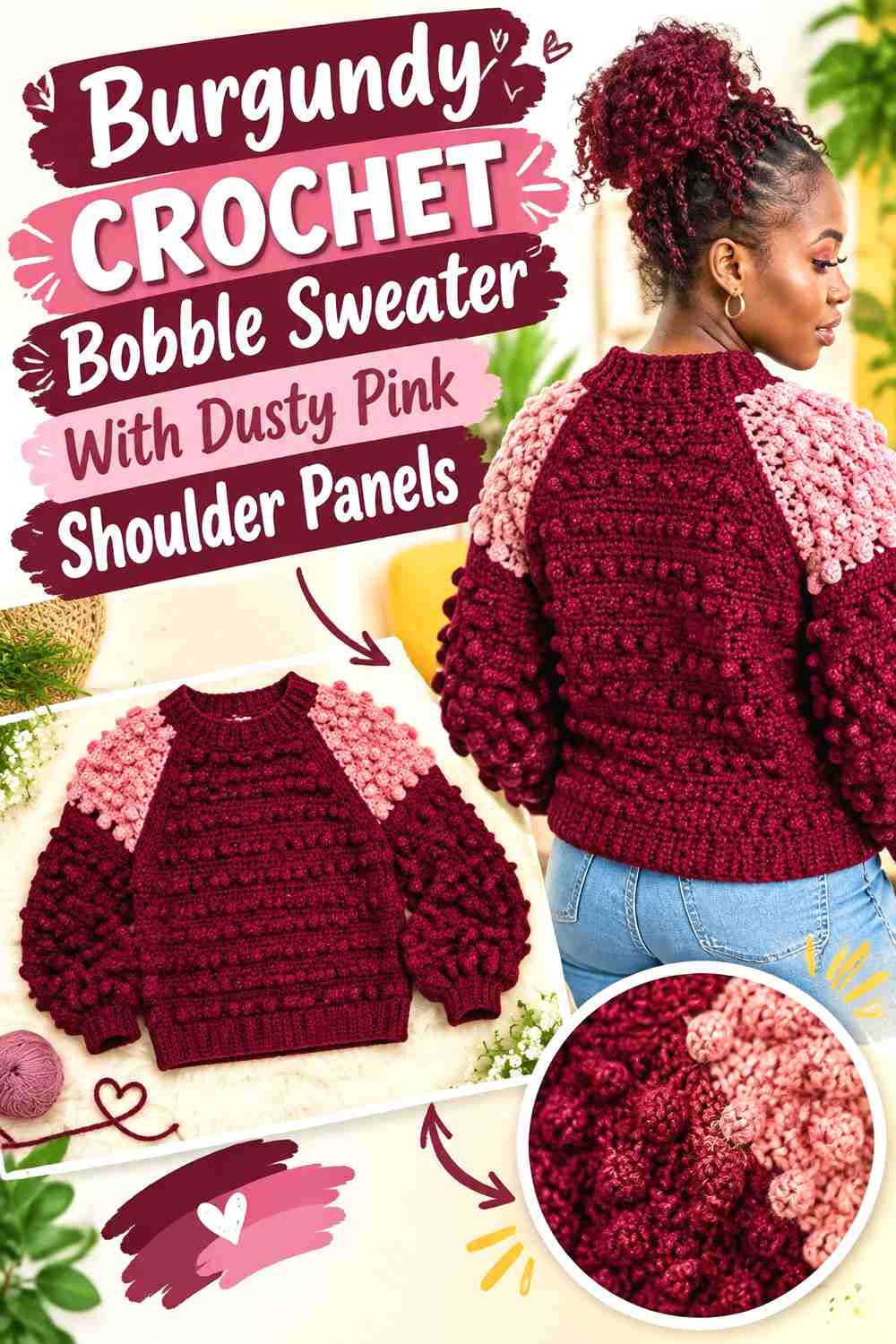
8. Burgundy Crochet Bobble Sweater With Dusty Pink Shoulder Panels
 SAVE
Place Dusty Pink bobbles specifically across the shoulder tops and upper sleeves while keeping the center torso Burgundy. This spreads the lighter texture horizontally instead of using a central vertical panel.
Dusty Pink Shoulder Bobbles Should Balance Across Burgundy
Check the left and right placement together. Strong light bobbles can make even a small accidental difference between the shoulders more noticeable.
Burgundy Should Separate Dusty Pink From the Neckline
A narrow Burgundy area between the Dusty Pink shoulder panels and neck can help preserve the sweater’s dark anchor. If pink reaches both the shoulders and neckline, it may become the dominant upper color.
Creator Credit: JENNIFER OKORO
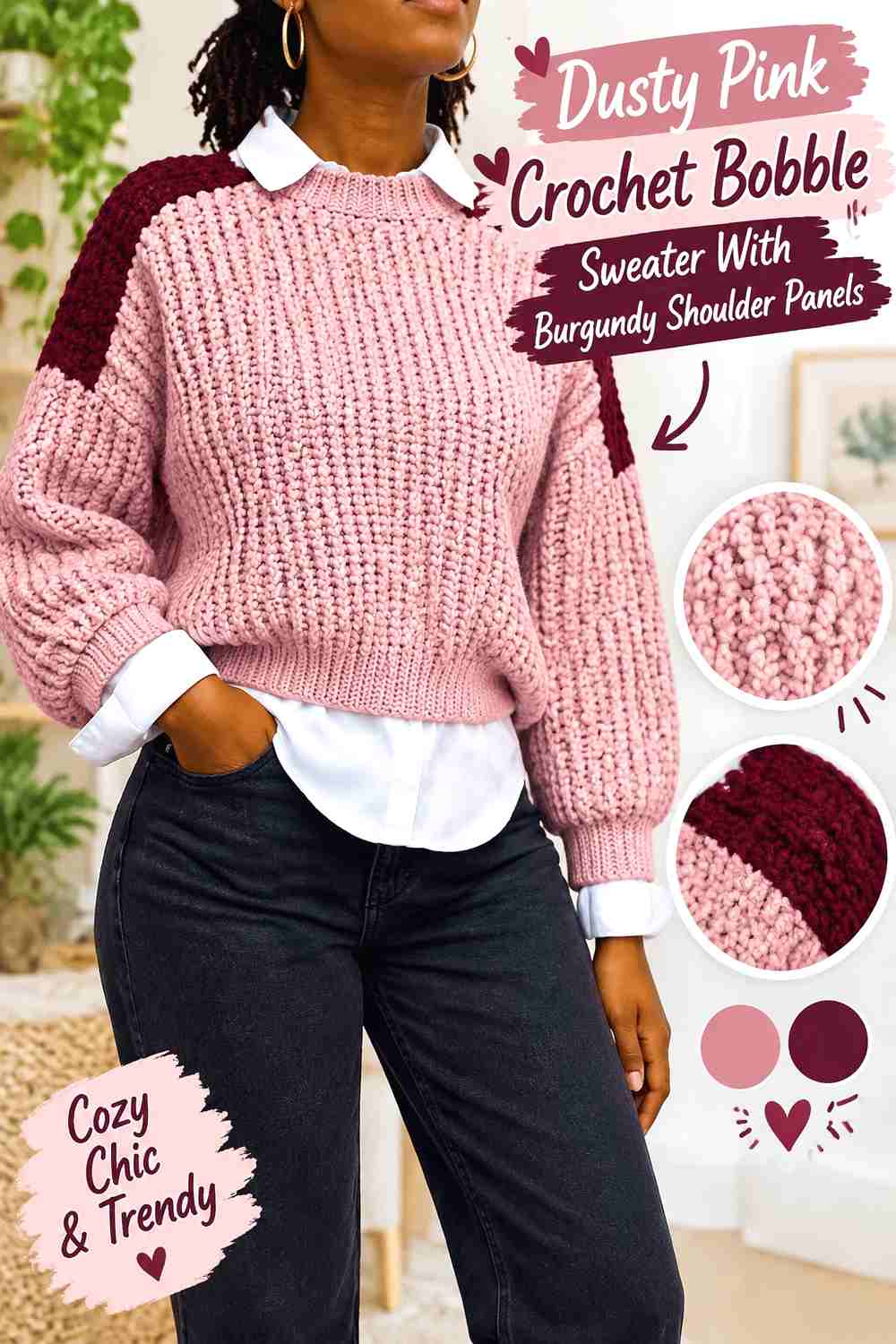
9. Dusty Pink Crochet Bobble Sweater With Burgundy Shoulder Panels
 SAVE
Use Dusty Pink for the broad torso and place Burgundy bobble texture over the shoulders. The darker upper panels visually frame the neckline and introduce more depth without covering the whole body.
Burgundy Shoulder Bobbles Can Frame a Dusty Pink Neckline
Keep the Burgundy texture close enough to the upper body to create a clear shoulder feature, but leave some Dusty Pink at the neckline if you want the main color to remain visible near the face.
Dusty Pink Should Reappear Inside Burgundy Sleeve Transitions
Carry a little Dusty Pink into the sleeve tops or cuffs. That repetition prevents Burgundy shoulder sections from looking detached from the pale body.
Creator Credit: Sitn’Crochet
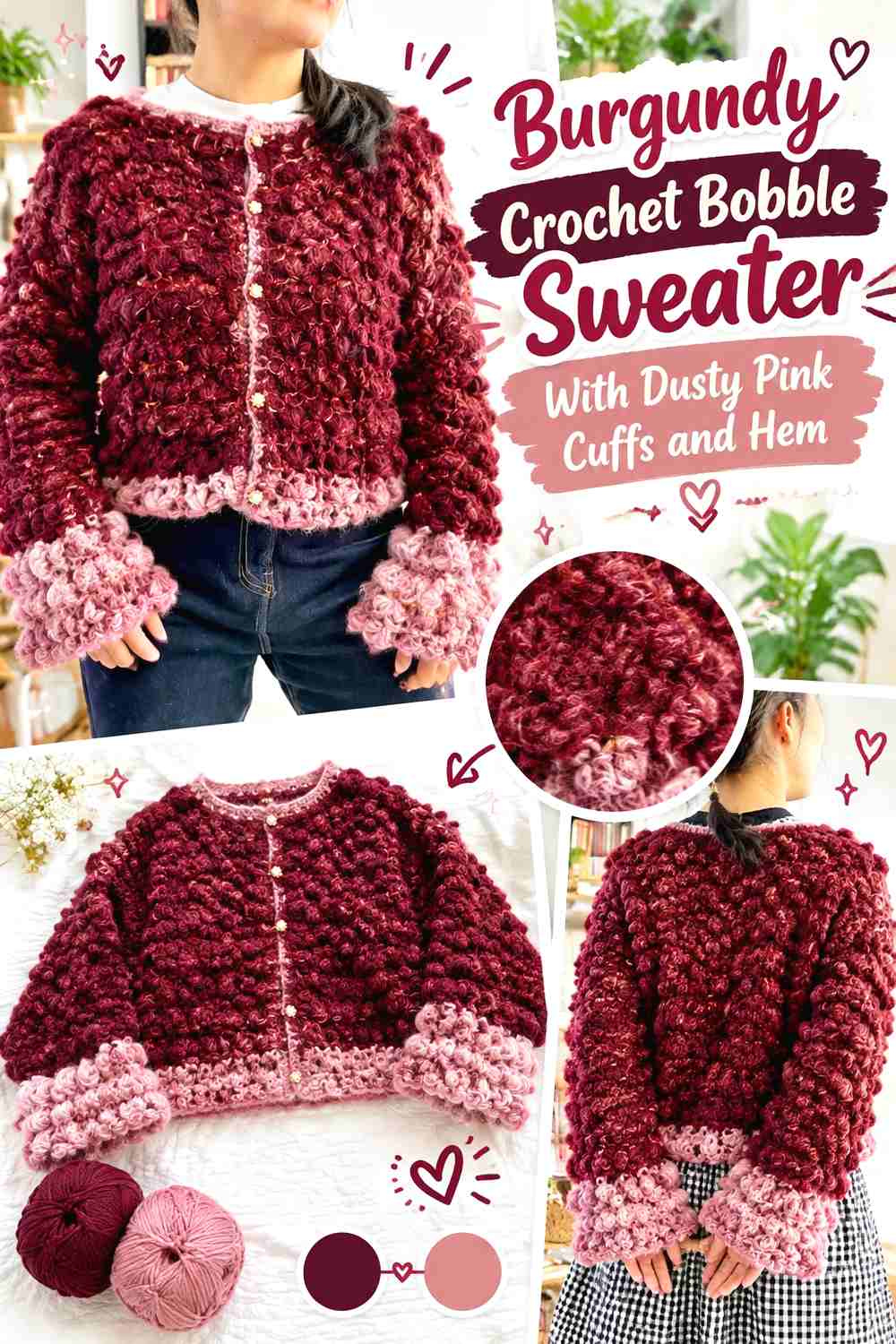
10. Burgundy Crochet Bobble Sweater With Dusty Pink Cuffs and Hem
 SAVE
Keep the bobble body predominantly Burgundy and move Dusty Pink to the finishing sections. This creates a restrained two-color design where the lighter shade outlines the sweater instead of interrupting the main texture.
Dusty Pink Cuffs Can Lighten Burgundy Bobble Sleeves
Use the same Dusty Pink treatment on both wrists so the lighter color acts as a repeated finish. If the cuffs are wide, they may become significant color blocks, so compare them with the sleeve length before committing.
Dusty Pink Hem Should Stay Proportionate to Burgundy
A narrow Dusty Pink hem gives the sweater a clean lower boundary. A very deep band can visually divide the torso and compete with the Burgundy bobbles above.
Creator Credit: CROCHET BY BEV
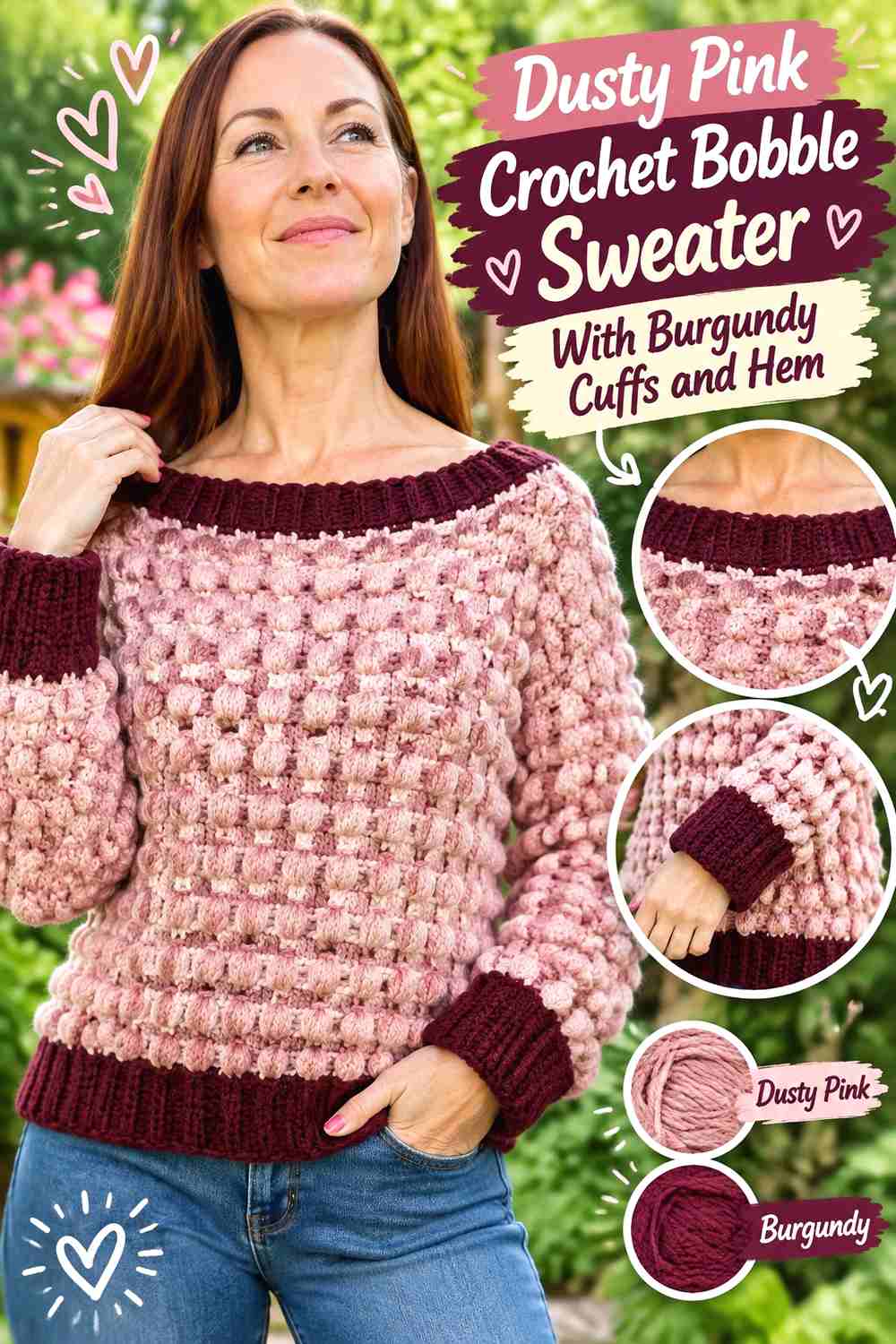
11. Dusty Pink Crochet Bobble Sweater With Burgundy Cuffs and Hem
 SAVE
This inversion uses Dusty Pink for the textured body while Burgundy finishes the wrists and lower edge. The dark boundaries give the softer sweater more structure.
Burgundy Cuffs Can Anchor Dusty Pink Bobble Sleeves
Dark cuffs create a clear endpoint for sleeves filled with lighter raised texture. Repeat Burgundy elsewhere—such as the neckline or hem—so the wrist treatment does not feel isolated.
Burgundy Hem Can Ground a Dusty Pink Bobble Body
Keep the hem visually connected to the rest of the palette. If the Burgundy band is already broad, a smaller matching neckline may be enough to complete the frame.
Creator Credit: Loops Only Crochet
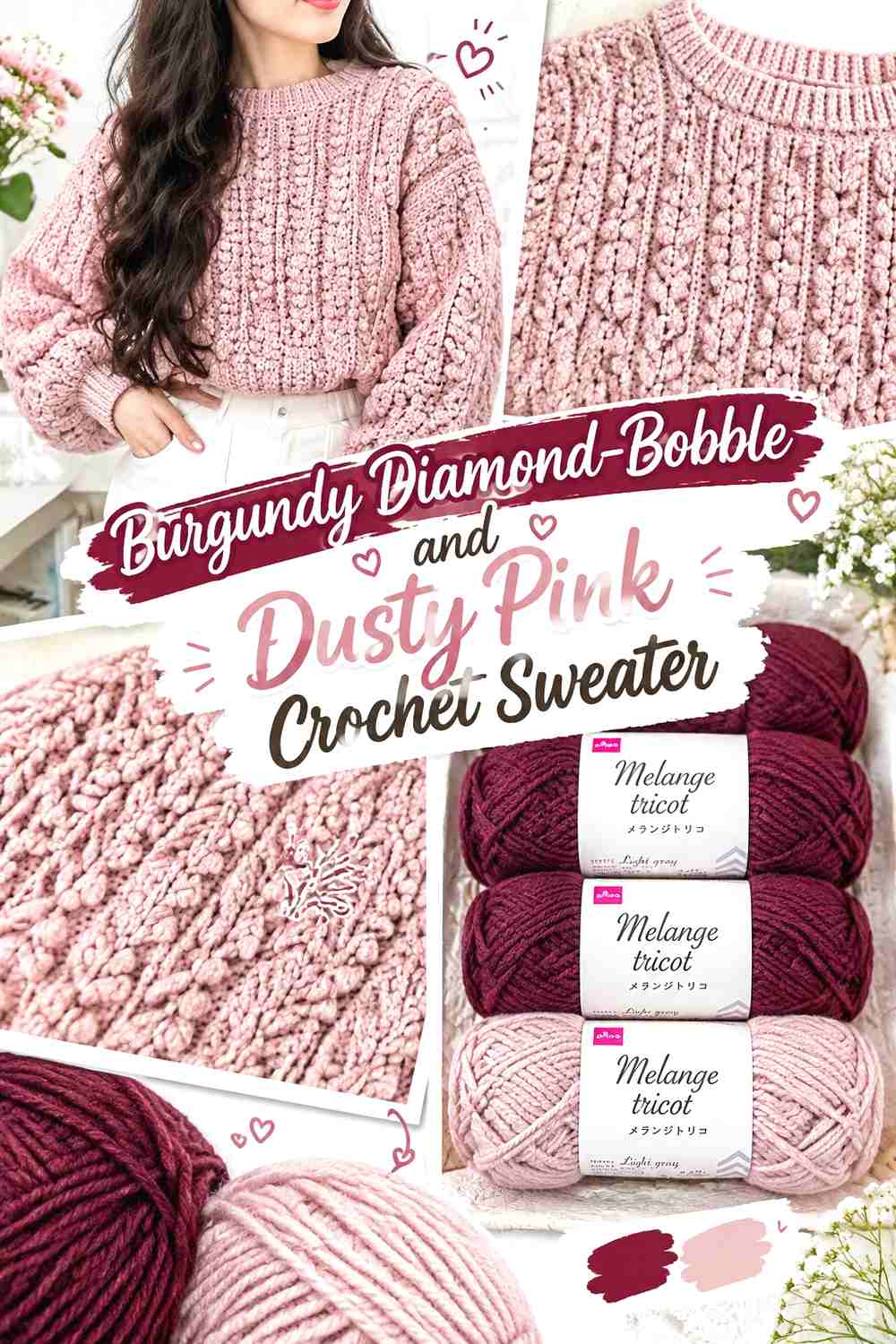
12. Burgundy Diamond-Bobble and Dusty Pink Crochet Sweater
 SAVE
Arrange Burgundy bobbles into larger diamond-style or geometric groupings against a Dusty Pink field. The darker raised motifs become recognizable units rather than an allover texture.
Dusty Pink Space Helps Burgundy Bobble Diamonds Stay Distinct
Leave enough flatter Dusty Pink fabric between motif groups for each Burgundy shape to remain readable. Crowding them together can turn several diamonds into one dark textured block.
Burgundy Bobble Diamonds Need Consistent Dusty Pink Placement
Repeat the geometric areas across the torso according to a planned layout. Check the panel as a whole before carrying the same motif onto the sleeves.
Creator Credit: Jolnent じょるねんと
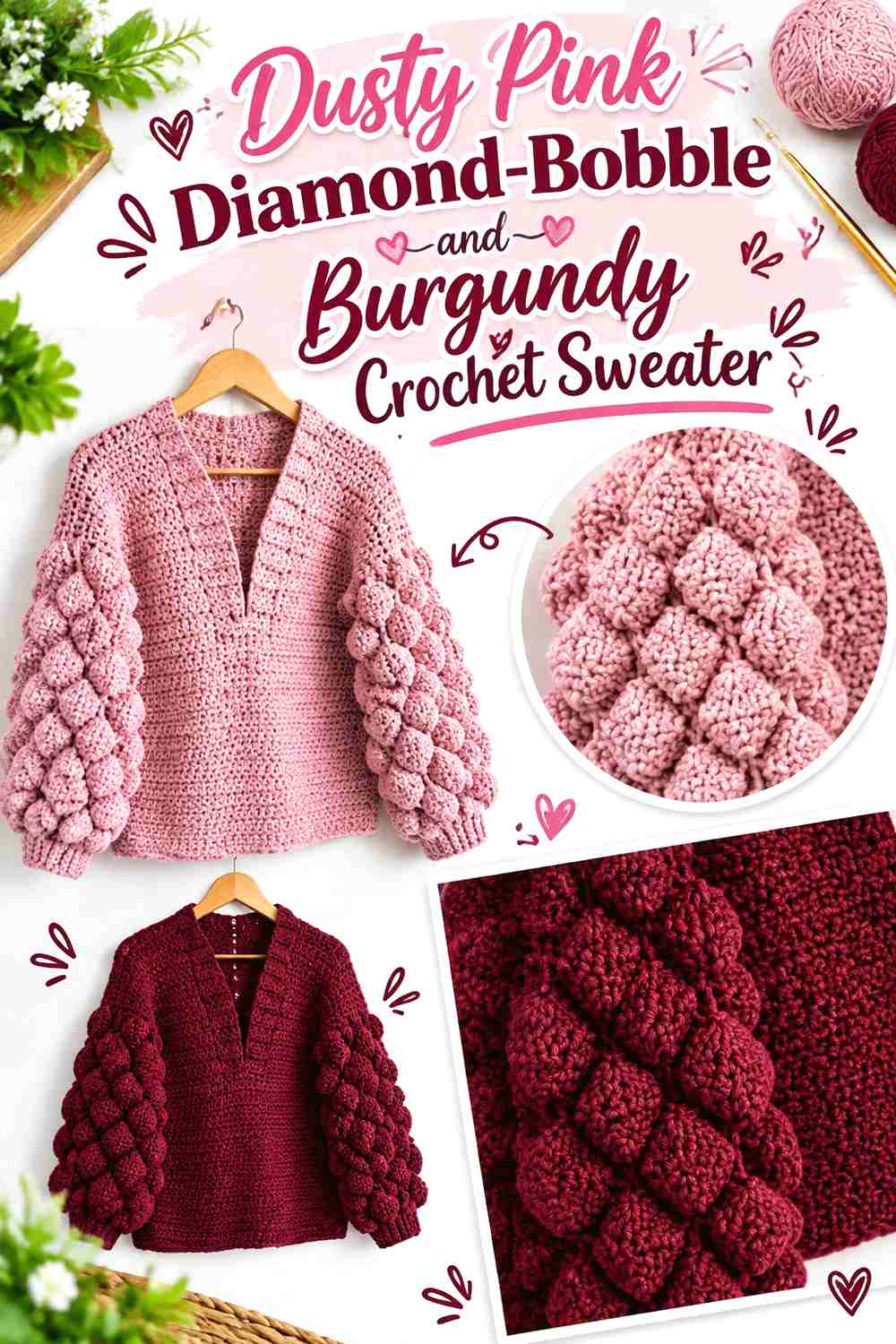
13. Dusty Pink Diamond-Bobble and Burgundy Crochet Sweater
 SAVE
Place lighter Dusty Pink bobble shapes over a broad Burgundy sweater body. The contrast softens the geometric motifs while allowing the deep background to remain dominant.
Dusty Pink Bobble Diamonds Need Enough Burgundy Around Them
A generous Burgundy gap gives each pale motif a clear outline. If Dusty Pink areas become too large or touch each other, the sweater starts to read as evenly two-color rather than Burgundy-led.
Burgundy Can Continue Through the Dusty Pink Sweater Edges
Use Burgundy at the neckline, cuffs, or hem to connect the background around the entire silhouette. This makes the Dusty Pink bobbles feel inset into the garment rather than applied as separate blocks.
Creator Credit: DiMar DiMax Crochet
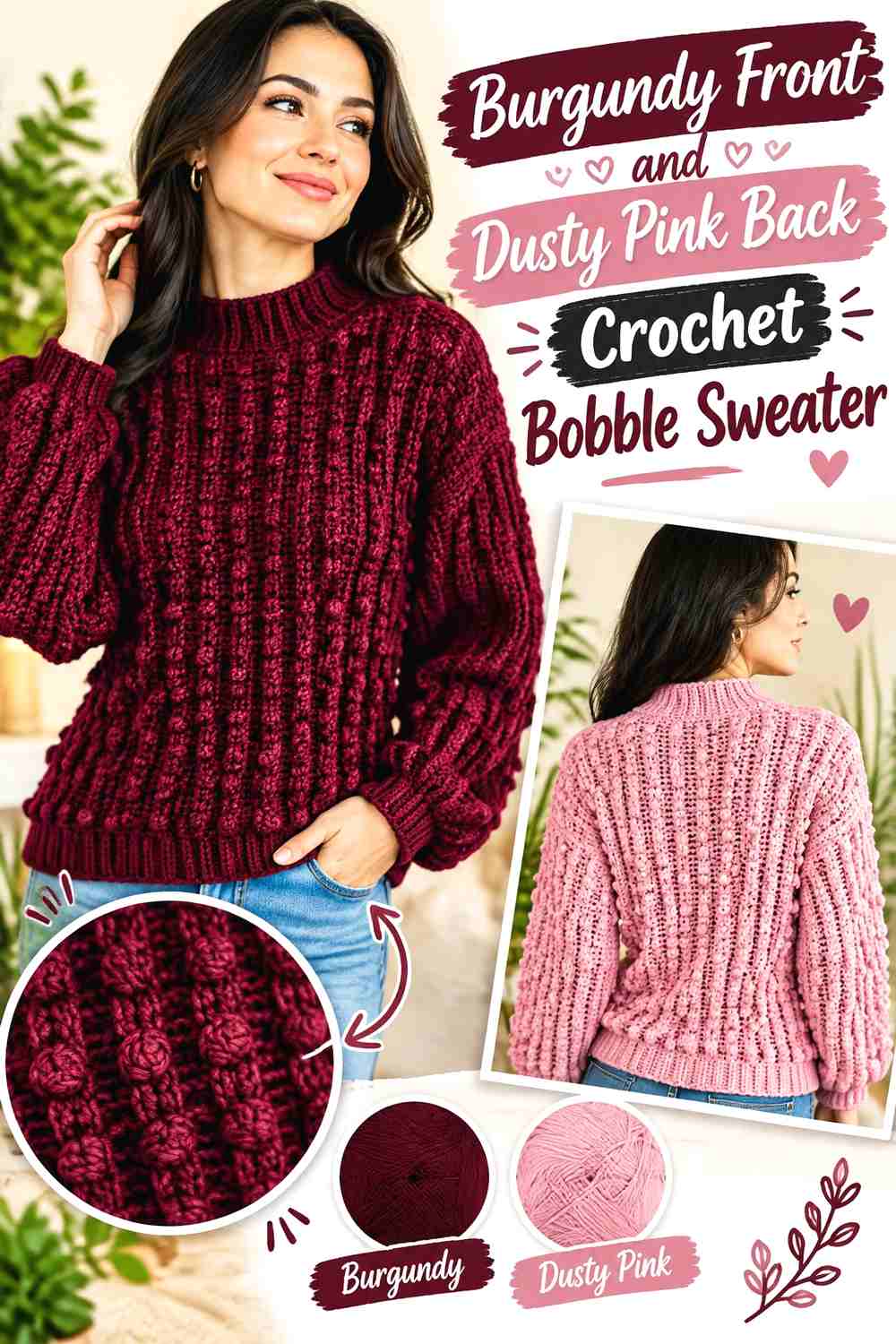
14. Burgundy Front and Dusty Pink Back Crochet Bobble Sweater
 SAVE
Give the front Burgundy bobble texture and let Dusty Pink carry more of the back. This creates two viewing directions while still allowing both colors to meet across the shoulders and sleeves.
Burgundy Front Bobbles Need Dusty Pink Connections at the Shoulders
Repeat a little Dusty Pink around the neckline, shoulder seam area, or sleeve top so the transition to the back is not hidden entirely at the seams.
Dusty Pink Back Panels Can Stay Quieter Than Burgundy
A less textured Dusty Pink back can provide visual relief from the stronger Burgundy front. If you repeat bobbles behind, use them selectively so both sides do not compete equally.
Creator Credit: TCDDIY
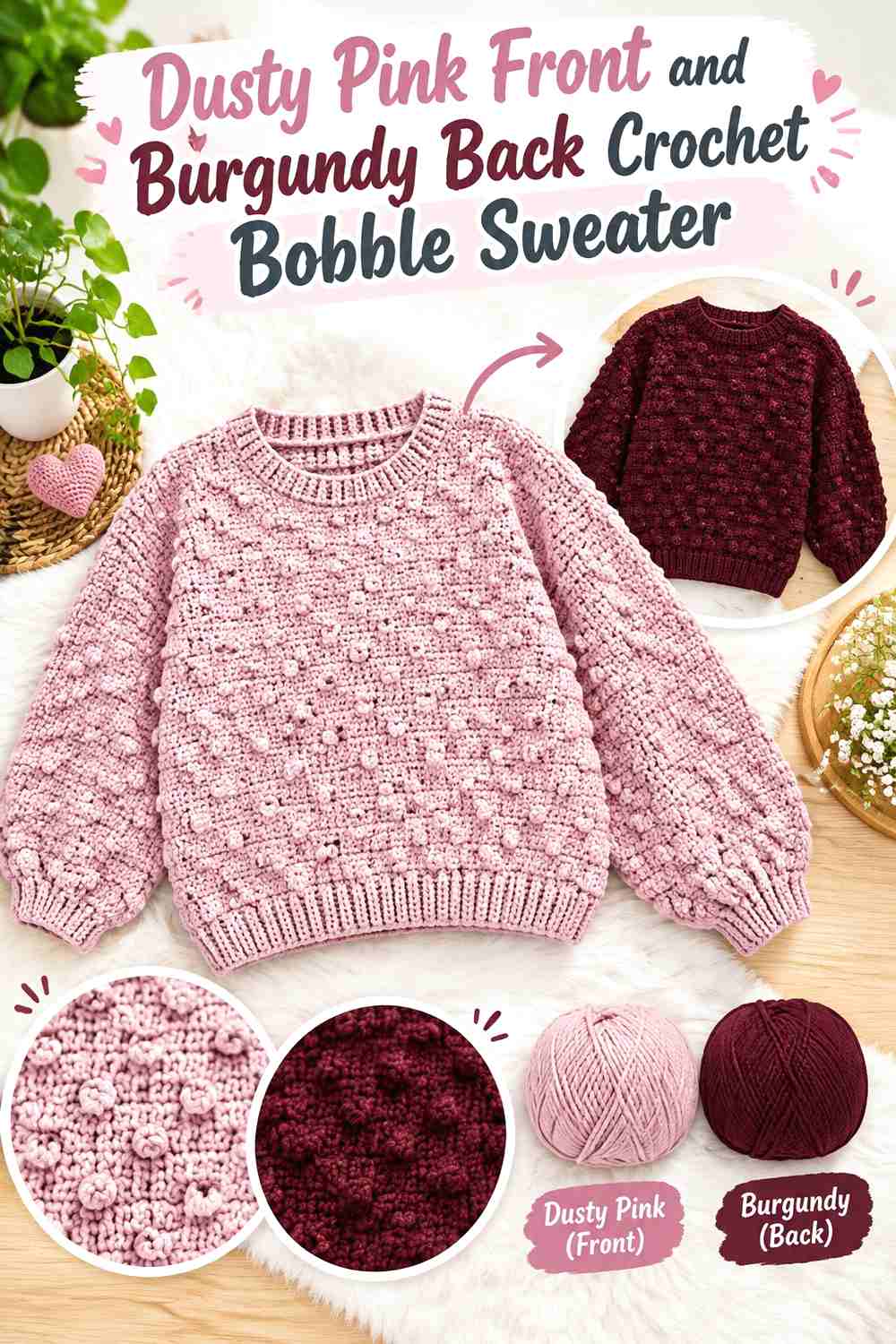
15. Dusty Pink Front and Burgundy Back Crochet Bobble Sweater
 SAVE
Reverse the viewing emphasis with a Dusty Pink front and a deeper Burgundy back. Small Burgundy bobbles can still appear on the front to preview the darker rear panel.
Dusty Pink Front Bobbles Should Reference Burgundy Carefully
Use Burgundy in selected raised details rather than filling the entire front with dark texture. The goal is to connect the colors while preserving a Dusty Pink first impression.
Burgundy Back Can Carry Denser Bobble Texture Than Dusty Pink
If you want stronger texture on the rear panel, Burgundy can support a more concentrated bobble arrangement. Check the shoulder transition so the denser section does not begin abruptly at the seam.
Creator Credit: KnitcroAddict
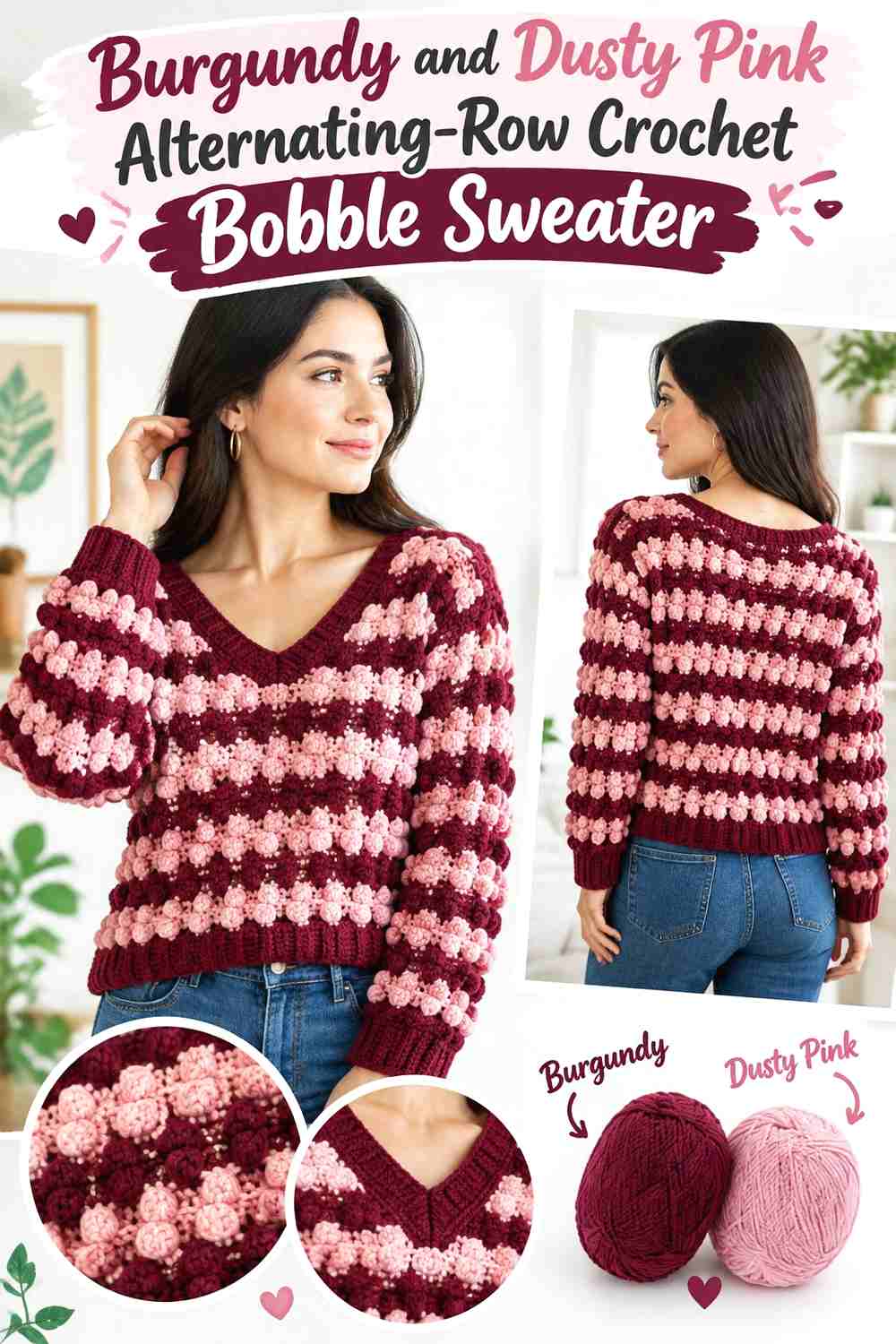
16. Burgundy and Dusty Pink Alternating-Row Crochet Bobble Sweater
 SAVE
Alternate the colors through broader horizontal sections rather than assigning each one to a separate panel. Bobbles can repeat inside selected rows, giving the sweater both stripe rhythm and raised texture.
Burgundy Rows Should Give Dusty Pink Bobbles Visual Rest
Keep some Burgundy bands relatively uninterrupted. If every row contains both colors and bobbles, the surface can become difficult to read.
Dusty Pink Rows Need a Predictable Burgundy Repeat
Use a consistent sequence or clearly intentional variation rather than switching colors at arbitrary intervals. A planned rhythm matters particularly across wide front and back panels.
Creator Credit: forthefrills
17. Burgundy and Dusty Pink Split-Panel Crochet Bobble Sweater
 SAVE
Divide the sweater into larger Burgundy- and Dusty Pink-led zones instead of regular stripes. This creates deliberate asymmetry and makes the color-block layout as important as the bobble texture.
Burgundy Should Cross Into the Dusty Pink Bobble Panel
Repeat a few Burgundy bobbles, part of the neckline, or a cuff detail on the pink side. This crossover helps the split sweater feel connected rather than assembled from two unrelated colorways.
Dusty Pink Should Reappear Inside the Burgundy Panel
Use the same idea in reverse. A Dusty Pink bobble column or small shoulder detail on the Burgundy side can unify the palette without eliminating the asymmetric effect.
Creator Credit: VivCrochets
18. Burgundy Crochet Sweater With Sparse Dusty Pink Bobble Accents
 SAVE
For the most restrained palette, let Burgundy cover almost the entire sweater and use Dusty Pink only for spaced bobbles. The lighter raised points add interest without creating obvious stripes or panels.
Dusty Pink Bobbles Need Deliberate Spacing Across Burgundy
Sparse accents look most convincing when their positions follow a clear rhythm. Random clustering can make the sweater look unfinished rather than intentionally minimal.
Burgundy Should Remain Unbroken Around Dusty Pink Accents
Keep cuffs, neckline, and major panels mostly Burgundy if you want the bobbles to remain the only significant pink feature. A small Dusty Pink repeat at one edge is enough if additional connection is needed.
Creator Credit: Shyler crochets
Which Burgundy and Dusty Pink Bobble Sweater Direction Should You Choose?
For a strongly Burgundy-led sweater, Ideas 1, 3, 6, 8, 10, 13, and 18 keep the deeper shade over most of the surface while Dusty Pink lightens selected bobbles, panels, or finishing areas.
For a more Dusty Pink-led result, Ideas 2, 4, 7, 9, 11, and 15 use the softer shade as the larger field and allow Burgundy to provide deeper definition.
Ideas 5 and 16 spread both colors more evenly through repeated texture or rows. Idea 17 creates the strongest asymmetry, while Ideas 12 and 13 use larger bobble motifs instead of uniform allover texture.
If the bobbles themselves should be the focal point, choose a background with enough contrast and leave quieter fabric around them. If color blocking matters more, keep the bobbles mostly within one panel and let the larger Burgundy/Dusty Pink zones control the sweater.
Conclusion
Burgundy and Dusty Pink work particularly well on a crochet bobble sweater when one shade anchors the garment and the other has a defined textural role. Burgundy can ground the body, hems, or broad panels, while Dusty Pink can lighten bobbles and upper-body details. Reversing those roles produces a noticeably softer sweater with darker raised punctuation.
Decide first whether the sweater should read Burgundy-first, Dusty Pink-first, or deliberately balanced. Then plan where the second color will repeat across the body, sleeves, cuffs, or neckline.
For exact garment construction, follow the credited creator’s tutorial. Where a source demonstrates puff texture, sleeve shaping, or a general sweater rather than the exact bobble placement described here, test the bobble fabric separately because raised stitches can change the look and dimensions of a panel.
Frequently Asked Questions
Do Burgundy and Dusty Pink have enough contrast for crochet bobbles?
They often can, but actual yarn shades vary. Compare them in a bobble swatch and view it from several feet away. If the raised stitches disappear, increase the contrasting background area rather than adding more colors.
Should Burgundy or Dusty Pink be used for the bobbles?
Use Dusty Pink bobbles when you want lighter raised texture on a deep background. Burgundy bobbles create darker punctuation on a softer sweater. Both work; the important decision is which color should dominate the overall garment.
How can I keep Burgundy bobbles visible on Dusty Pink?
Give each Burgundy bobble enough Dusty Pink space around it. Dense clusters of dark bobbles can visually merge, so wider spacing may make individual raised stitches clearer.
Can Dusty Pink be used only on the sleeves of a Burgundy bobble sweater?
Yes. Repeat a small amount of Dusty Pink elsewhere—perhaps at the neckline or selected body bobbles—if you want the sleeves to feel more connected to the torso.
What can replace Burgundy in this bobble sweater palette?
Choose another deep, muted red or wine-like shade that remains clearly darker than the Dusty Pink. A much brighter red will make the palette more vivid, while a dark plum will shift it toward purple.
What can replace Dusty Pink without changing the Burgundy palette too much?
Look for another softened medium-light pink. Preserve enough lightness difference from Burgundy so the bobbles, borders, or panels still separate visually.
How can I stop a Burgundy and Dusty Pink bobble sweater from looking too busy?
Give each color a clear job. Keep one shade dominant across the body, repeat the second in predictable bobble positions, and avoid combining stripes, multiple bobble motifs, contrasting cuffs, and several panel changes all at once.