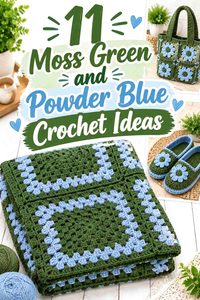
Moss green and powder blue create a useful crochet pairing because they can move between earthy and airy depending on which shade takes the larger role. Moss green can give a project a darker visual anchor, while powder blue can open up smaller details, borders, or color changes when the blue is noticeably lighter.
The strongest results usually come from giving the two colors different jobs rather than dividing every project evenly. A blanket can be moss-heavy with narrow powder blue breaks, while a bucket hat can reverse that balance with a blue crown and green brim. Cream can also be introduced selectively when the two main colors need more separation.
The crochet tutorials credited below support the construction concepts. The moss green and powder blue schemes are independent color adaptations, so you can use the tutorial method while planning the palette around your own yarn choices.
Quick List
- Moss Green Dominant And Powder Blue Crochet Stripe Blanket
- Powder Blue And Moss Green Crochet Granny Square Cardigan
- Moss Green And Powder Blue Crochet Tote Bag
- Powder Blue Moss Green And Cream Crochet Mosaic Pillow
- Powder Blue And Moss Green Crochet Color Block Scarf
- Moss Green And Powder Blue Crochet Ribbed Beanie
- Powder Blue Crown And Moss Green Brim Crochet Bucket Hat
- Moss Green Body And Powder Blue Trim Crochet Sweater Vest
- Moss Green Base And Powder Blue Rim Crochet Storage Basket
- Powder Blue Center And Moss Green Edge Crochet Shawl
- Moss Green Powder Blue And Cream Crochet Granny Square Motif
How to Balance Moss Green and Powder Blue in Crochet
Start by deciding whether you want moss green or powder blue to control the first impression. Giving one color noticeably more surface area makes the palette easier to read, especially on larger pieces such as blankets, cardigans, and shawls.
Moss green can take the dominant role when you want the project to feel darker and more grounded. Powder blue is useful as a secondary color around borders, cuffs, motif centers, stripes, or other areas where a lighter break helps define the construction. Reverse those roles when you want a lighter finished piece.
The proportions do not need to be calculated precisely. What matters is avoiding accidental competition in which both colors repeatedly occupy the same amount of visual space without a clear reason.
Check Moss Green and Powder Blue Value Contrast Before Crocheting
Color names alone do not tell you how much contrast two yarns will create. One moss green may be substantially darker than another, and some powder blues lean so muted that they can approach a medium value.
Place the actual yarns together before committing to a large project. Looking at them from a distance or viewing a photo in grayscale can help reveal whether the light-dark difference is strong enough for the placement you have planned.
This is especially useful for granny squares, mosaic surfaces, ribbed trim, borders, and small motifs. If moss green and powder blue merge more than expected, inserting a little cream or moving the lighter shade around the detailed area can restore separation.
Use Cream With Moss Green and Powder Blue Only Where It Adds Definition
Cream can make moss green and powder blue easier to distinguish, but it does not need equal billing. On a pillow, cream might outline a motif. On granny squares, it can become a joining or outer-round color. On a blanket, a narrow cream edge may be enough.
Keep the neutral controlled when the two-color relationship is the reason for choosing the palette. Too much cream can change the project from a moss-green-and-powder-blue scheme into a neutral project with two accents.
1. Moss Green Dominant And Powder Blue Crochet Stripe Blanket
 SAVE
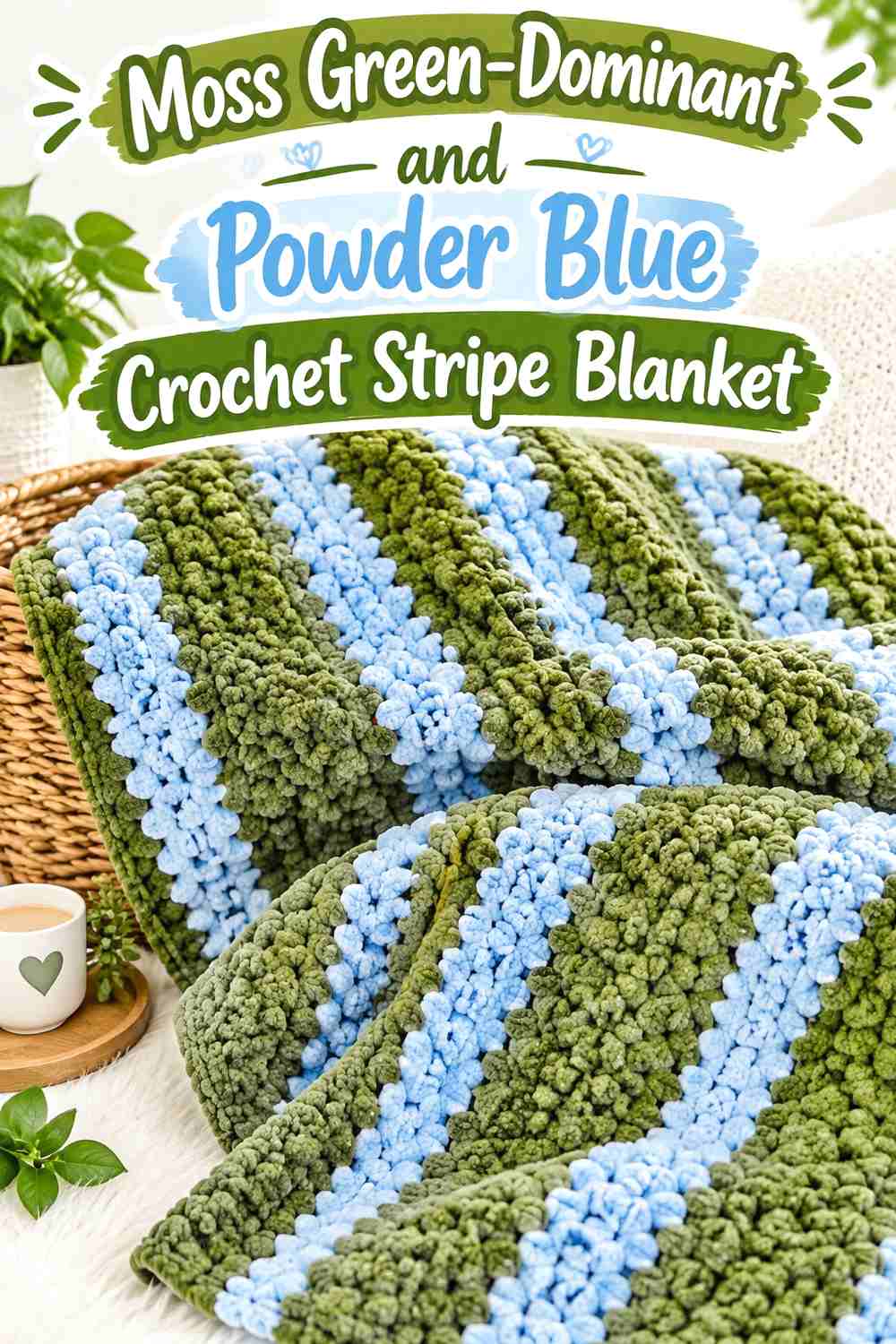
Let moss green cover the larger sections of this crochet blanket and interrupt it with powder blue stripes or repeated bands. The darker green gives a large blanket enough visual weight, while lighter blue breaks prevent the surface from becoming one uninterrupted block. This arrangement is especially useful when the stitch pattern already produces plenty of texture and does not need several competing colors.
Let Moss Green Carry Most of the Crochet Blanket
Broad moss green areas give the blanket a clear dominant color. Instead of alternating moss green and powder blue equally every time you change yarn, consider allowing several green sections to establish the background before introducing blue.
This makes the powder blue changes easier to notice and gives the blanket a more intentional hierarchy. It also lets textured stitches remain part of the design rather than asking every stripe to compete for attention.
Use Powder Blue to Break Up Large Moss Green Sections
Powder blue works well where the blanket needs a lighter pause. It can appear as narrower repeated stripes, a central band, or occasional sections distributed across the length.
Keep the blue placements visually connected. One isolated powder blue band may look accidental on a large blanket, while repeating it at planned intervals makes it clearly part of the palette.
Consider Powder Blue or Cream Around the Moss Green Blanket Edge
A border is an opportunity to either reinforce the dominant moss green or create a final lighter frame. Powder blue keeps the project firmly within the two-color scheme, while a restrained cream border can provide more separation if your green and blue yarns are similar in value.
Compare the unfinished blanket with both options before deciding. The best edge depends on how much blue already appears across the main surface.
Creator Credit: Bella Coco
2. Powder Blue And Moss Green Crochet Granny Square Cardigan
 SAVE
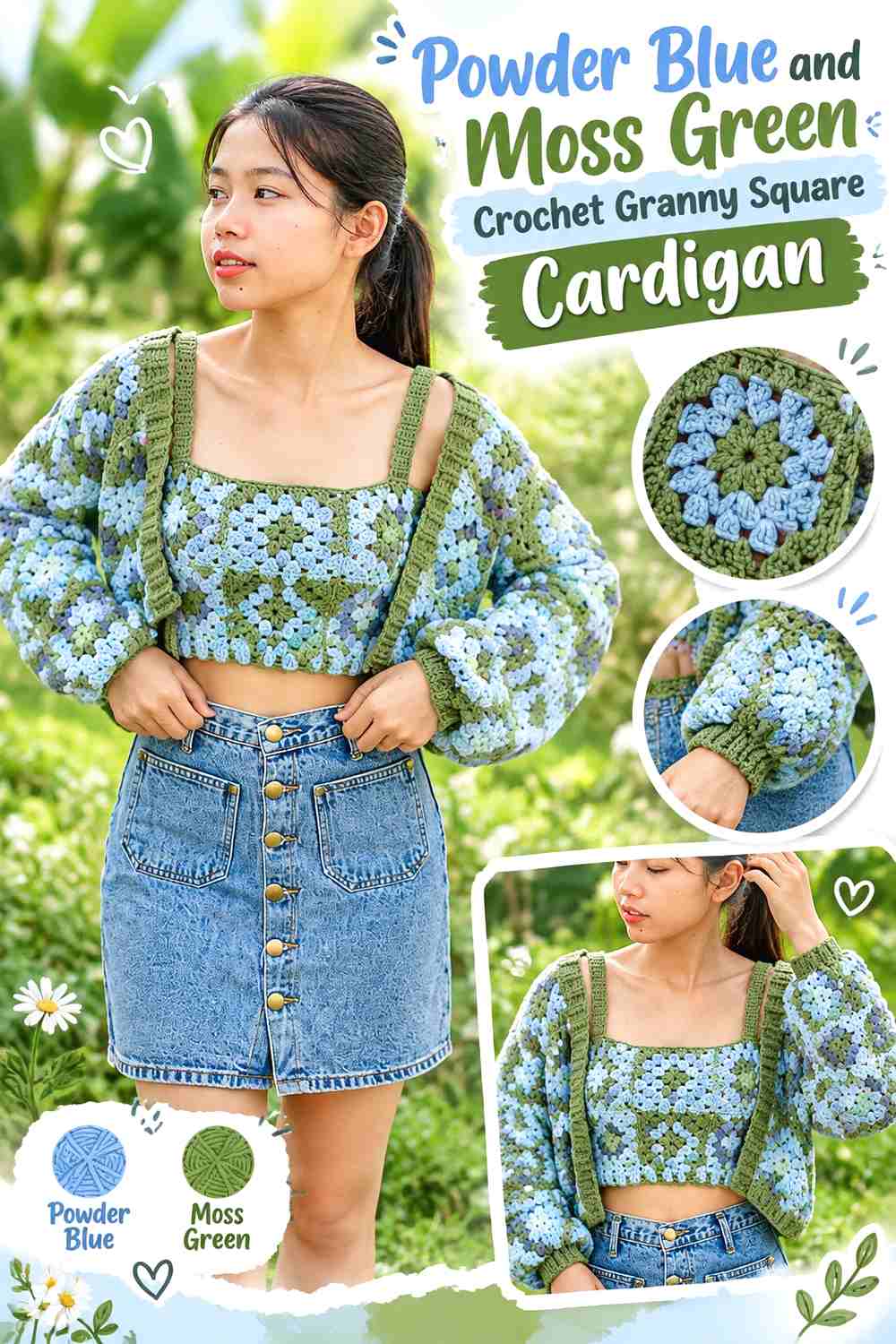
A granny square cardigan provides many small spaces for changing the balance between powder blue and moss green. Powder blue can lead across the main body while moss green marks selected square centers, outer rounds, cuffs, or edging. Keeping one color consistent across repeated locations prevents the cardigan from looking randomly assembled.
Let Powder Blue Connect the Crochet Cardigan Panels
Using powder blue repeatedly across the body gives separate granny squares a visual link. It does not need to appear in exactly the same round of every motif, but repeating it across the front, back, and sleeves helps the cardigan read as one garment.
This is particularly useful when moss green is being used more selectively. The blue becomes the background relationship that holds the stronger green placements together.
Place Moss Green Where the Crochet Cardigan Needs More Definition
Moss green can emphasize granny-square centers, selected outer rounds, or blocks placed around the lower body and sleeves. Because it is likely to appear darker than a typical powder blue, a smaller amount may still carry considerable visual weight.
Distribute those darker areas across the garment rather than concentrating every moss green square on one side unless asymmetry is intentional.
Repeat Moss Green or Powder Blue at the Cardigan Cuffs and Edging
Cuffs, neckline finishing, and front edging can connect the motif palette to the garment’s final outline. Moss green trim gives a powder-blue-heavy cardigan a firmer frame, while powder blue trim keeps the edge quieter.
Before choosing, look at which color already dominates the outer rounds of the squares. Repeating an existing edge color often gives a cleaner transition than introducing another competing division.
Creator Credit: Chenda DIY
3. Moss Green And Powder Blue Crochet Tote Bag
 SAVE
A tote gives moss green enough surface area to work as a practical visual base while powder blue can highlight the upper section, handles, or selected stripes. Concentrating the lighter color near the opening also draws attention upward without splitting the bag into too many small color blocks.
Keep Moss Green Across Most of the Crochet Tote Body
Using moss green through the main bag body gives the tote a strong continuous field. This is helpful when the crochet fabric already includes obvious stitch texture because the color does not compete with every structural detail.
If you want more variation, interrupt the body with one or two powder blue bands rather than switching colors constantly.
Use Powder Blue Around the Moss Green Tote Opening
The upper edge is a natural place for powder blue because it separates the main body from the handle area. A lighter band here can make the bag opening easier to identify visually and gives the blue an obvious purpose.
You can repeat that powder blue again in the handles or straps so the lighter shade does not appear only once.
Keep Moss Green and Powder Blue Handle Colors Connected to the Bag
Handles can look disconnected when they introduce a color that appears nowhere near the top of the bag. If you want powder blue handles, repeat blue along the upper body or edging first.
For moss green handles, carrying the green body directly into the handle area creates a quieter transition. Either approach works; the key is making the handle color look planned rather than added afterward.
Creator Credit: Hopeful Turns
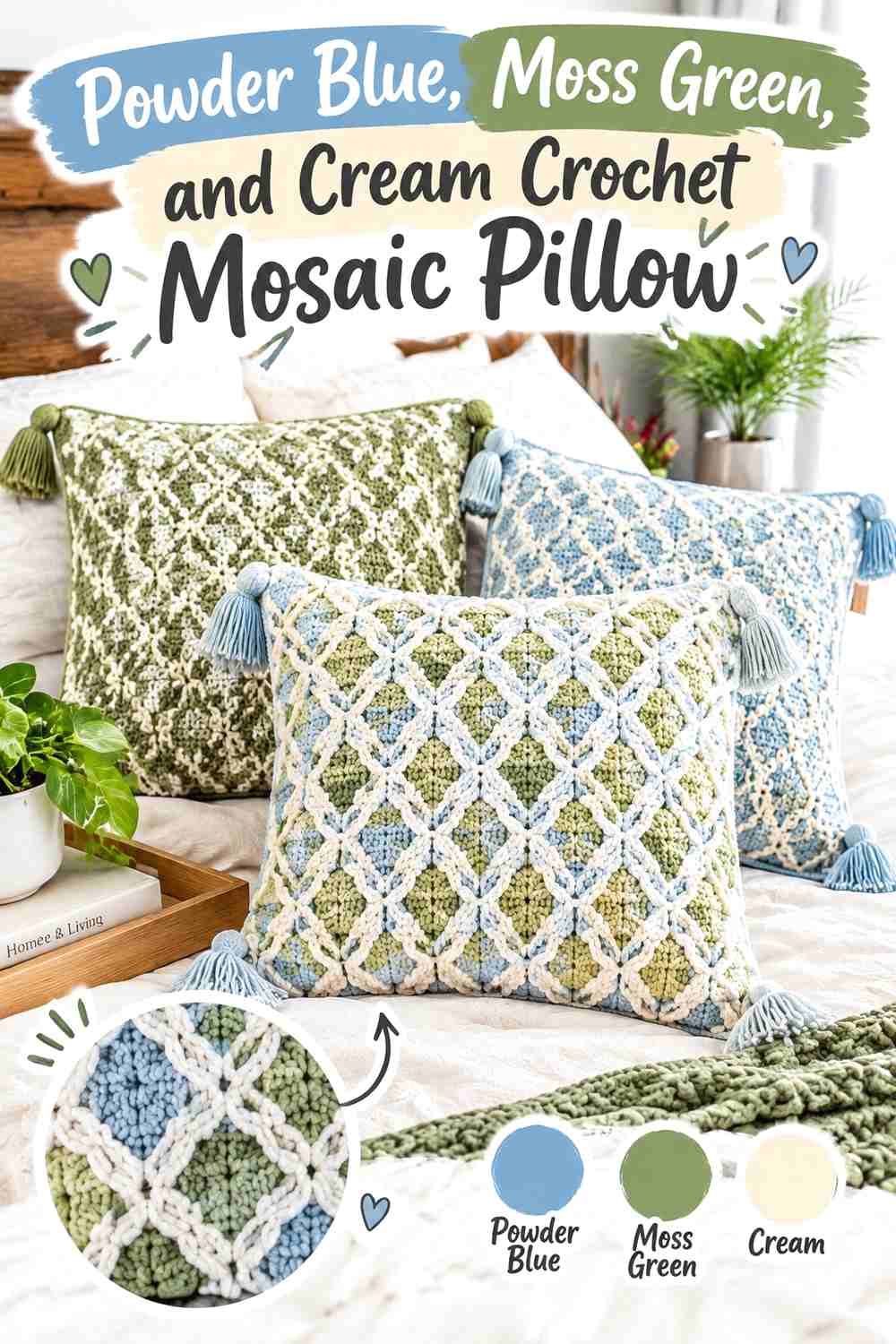
4. Powder Blue Moss Green And Cream Crochet Mosaic Pillow
 SAVE
A crochet pillow can handle a more graphic distribution of moss green and powder blue because the front surface is viewed as one contained composition. Cream is useful here as a separator rather than a third equal color. Use it around detailed mosaic areas when direct green-blue contact does not provide enough definition.
Let Powder Blue Open Up the Crochet Pillow Surface
Powder blue can occupy the larger background areas when you want the pillow to feel lighter. The color gives moss green motifs or geometric details more room to stand apart, particularly when the green is noticeably darker.
Avoid scattering tiny blue areas everywhere. Larger connected sections usually give a decorative pillow a clearer visual structure.
Use Moss Green to Define the Powder Blue Pillow Motif
Moss green is well suited to the portions of the surface that need the strongest outline or repeated motif emphasis. On a mosaic-style front, darker green areas can create clearer divisions between neighboring shapes.
Check the pillow from several feet away before committing to the full front. If the motif disappears at that distance, your chosen moss green and powder blue may need greater value separation.
Add Cream Between Moss Green and Powder Blue Only When Needed
Cream can outline selected sections, soften the jump between the two main colors, or create negative space around a central feature. It is most useful when it solves a visibility problem.
Keep cream secondary so the finished pillow still reads primarily as a moss green and powder blue design rather than a cream pillow with colored details.
Creator Credit: MJ’s Off The Hook Designs
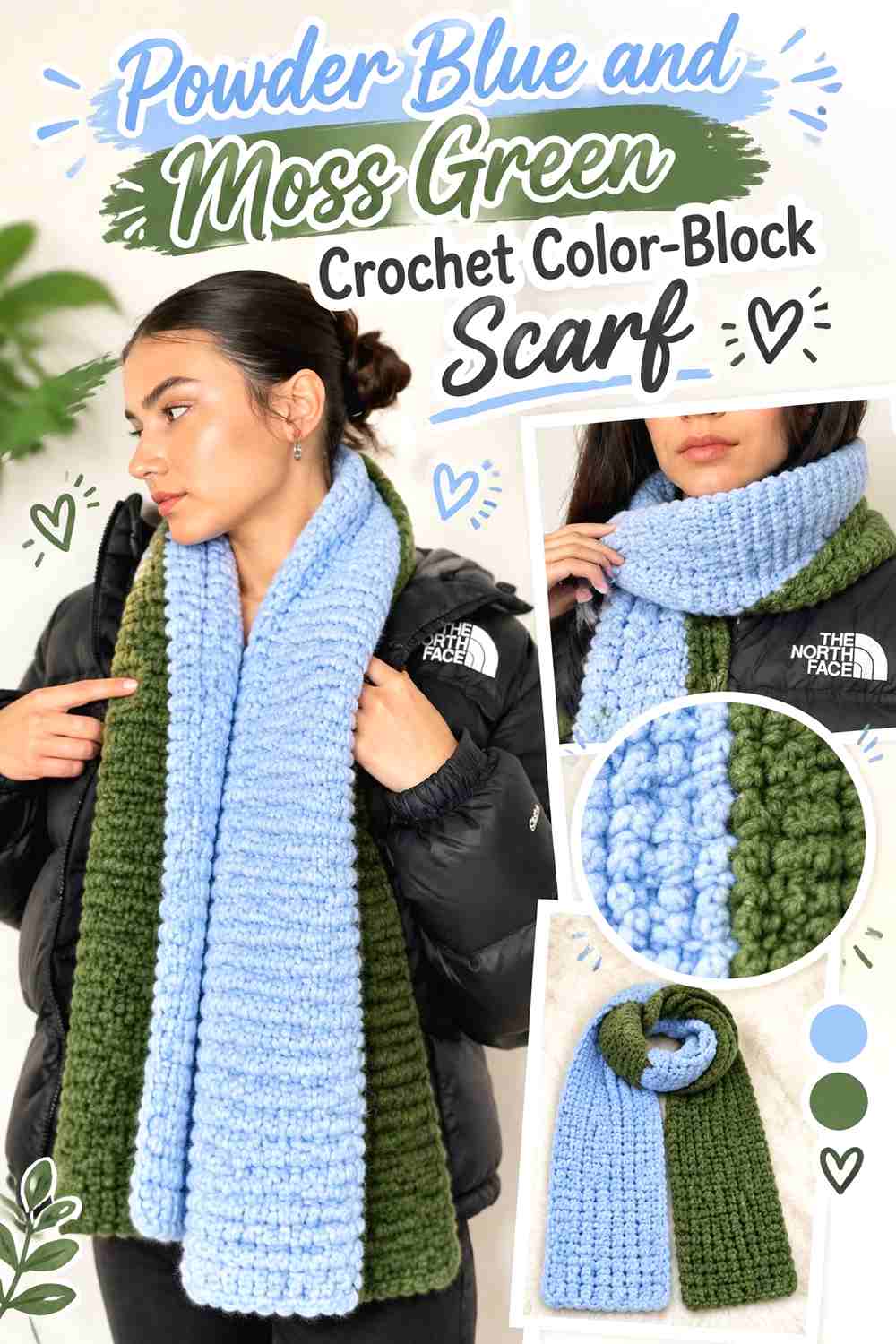
5. Powder Blue And Moss Green Crochet Color Block Scarf
 SAVE
A long scarf gives the two colors room to appear in larger uninterrupted sections. Powder blue can dominate the length, while moss green at the ends gives the scarf darker visual anchors. This approach avoids the busier appearance that can result from frequent narrow stripes.
Give Powder Blue Most of the Crochet Scarf Length
A long powder blue center keeps the scarf visually continuous and allows the stitch texture to remain easy to see. Moss green can then become a deliberate contrast instead of another equally repeated stripe.
This balance is particularly useful when you want the scarf to coordinate easily with simple neutral outerwear without eliminating color.
Anchor Powder Blue With Moss Green Scarf Ends
Moss green end sections give the scarf a defined beginning and end when it is worn open. Because both ends remain visible at the same time, repeating a similar amount of green on each side produces an obvious color-block plan.
If you prefer asymmetry, keep another small moss green detail elsewhere so the uneven distribution still looks intentional.
Use Moss Green or Powder Blue Fringe Selectively
If you add fringe or another decorative finish, decide whether it should extend the end-block color or introduce contrast. Moss green fringe attached to green ends creates a longer dark block, while powder blue fringe creates a lighter transition.
Do not add a third strong color at this stage unless it already appears elsewhere in the scarf.
Creator Credit: crochet daniela
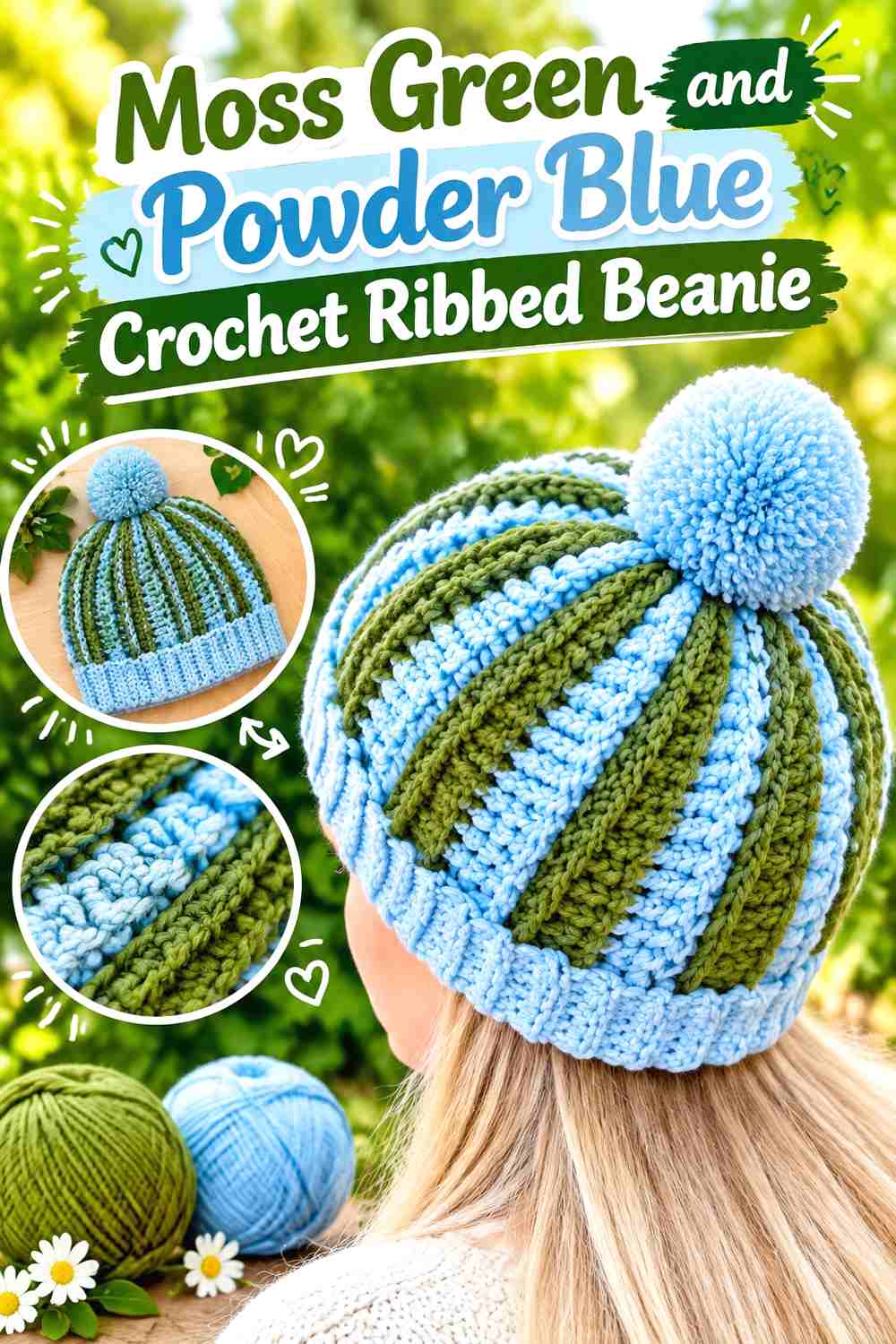
6. Moss Green And Powder Blue Crochet Ribbed Beanie
 SAVE
A ribbed beanie benefits from a simple color division because the vertical or raised texture already creates plenty of surface movement. Moss green can ground the lower portion while powder blue takes over the main body or crown. The division also gives the brim a clear relationship to the rest of the hat.
Use Moss Green to Define the Crochet Beanie Brim
A moss green brim creates a darker visual band around the face and gives the lower edge of the beanie more definition. Keeping that band consistent also prevents the ribbed texture from being interrupted by unnecessary color changes.
If your chosen moss green is only slightly darker than powder blue, compare the yarns before crocheting the full hat so the intended division remains visible.
Let Powder Blue Lighten the Moss Green Beanie Body
Powder blue across the upper body shifts the visual weight away from the brim. This works especially well when you want the green to function as a deliberate accent rather than cover the entire hat.
Keep the color change positioned where it makes sense for the finished silhouette rather than switching simply because half the yarn has been used.
Repeat Moss Green Near the Powder Blue Crown Only if the Beanie Needs Balance
A narrow moss green repeat near the top can connect the crown back to the brim, but it is optional. On a small wearable, too many short color changes can make the beanie look segmented.
First consider the cleaner two-block version. Add the extra green only if the large powder blue section feels disconnected from the brim.
Creator Credit: Di’s Handicrafts (Crochet and Knitting)
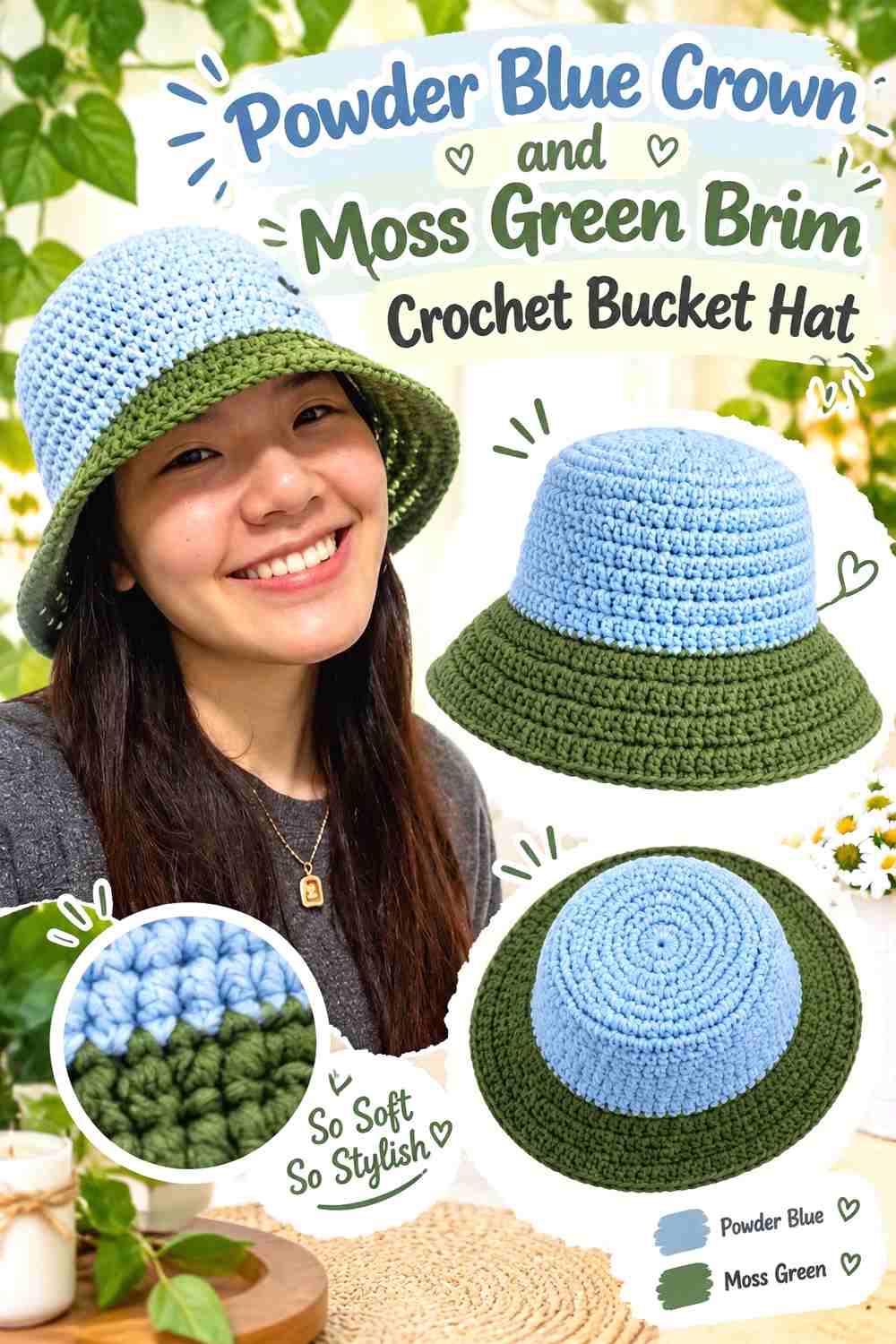
7. Powder Blue Crown And Moss Green Brim Crochet Bucket Hat
 SAVE
A bucket hat naturally divides into crown, sides, and brim, which makes color placement easier to plan without inventing decorative details. Powder blue can cover most of the crown and sides, while moss green gives the brim a contrasting lower frame.
Keep Powder Blue Across the Crochet Bucket Hat Crown
Using one continuous powder blue area across the top keeps the crown visually clean. It also allows the shape of the hat to remain easy to read rather than breaking the relatively small surface into several bands.
Carry the blue down the sides if you want moss green to function as a distinct brim color.
Let Moss Green Give the Powder Blue Bucket Hat a Defined Brim
The brim is broad enough to support a darker contrast without requiring another motif or stripe. Moss green there creates a clear visual boundary and keeps the darker shade concentrated around the lowest section.
This can be more effective than alternating green and blue repeatedly through the crown because the construction itself explains the color change.
Repeat Powder Blue at the Moss Green Brim Edge Only With Restraint
A narrow powder blue finishing edge can reconnect the brim to the crown when the moss section feels visually heavy. However, it is not automatically necessary.
Look at the completed green brim before adding another change. Leaving the final edge moss green may give the hat a cleaner two-part color layout.
Creator Credit: VivCrochets
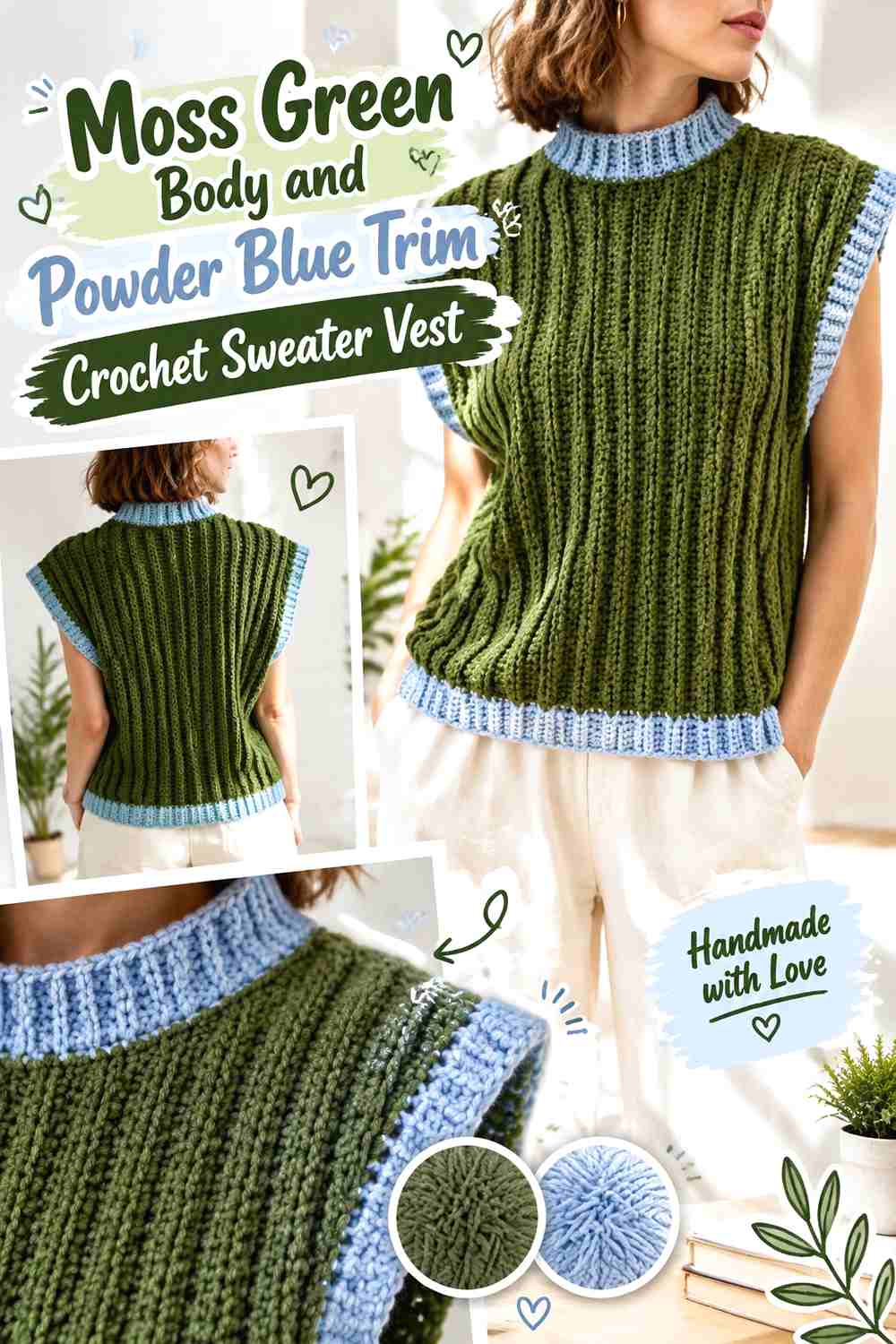
8. Moss Green Body And Powder Blue Trim Crochet Sweater Vest
 SAVE
A sweater vest offers large uninterrupted panels where moss green can dominate without becoming visually fragmented. Powder blue works well around the smaller structural areas—neckline, armholes, lower edging, or selected bands—because those placements repeat naturally around the garment.
Use Moss Green Across the Main Crochet Vest Panels
Keeping the front and back largely moss green gives the vest one recognizable base color. This also makes the garment easier to layer because the secondary blue appears in controlled locations rather than covering every section.
If you introduce stripes, keep enough uninterrupted moss green to preserve its dominant role.
Frame Moss Green With Powder Blue at the Crochet Vest Neckline
Powder blue around the neckline creates a lighter division between the green body and whatever layer is worn underneath. Repeating the same blue around the armholes can make the trim feel connected.
Check the width of any contrasting trim visually as you work. A very broad powder blue edge can begin competing with the moss green body instead of simply defining it.
Carry Powder Blue Into the Moss Green Vest Hem Only if It Improves Repetition
Repeating powder blue at the lower edge can create a three-point relationship between neckline, armholes, and hem. That works when you want the blue to be clearly noticeable.
If the neckline and armholes already provide enough blue, a moss green hem will keep the lower body calmer and retain stronger green dominance.
Creator Credit: passtschon
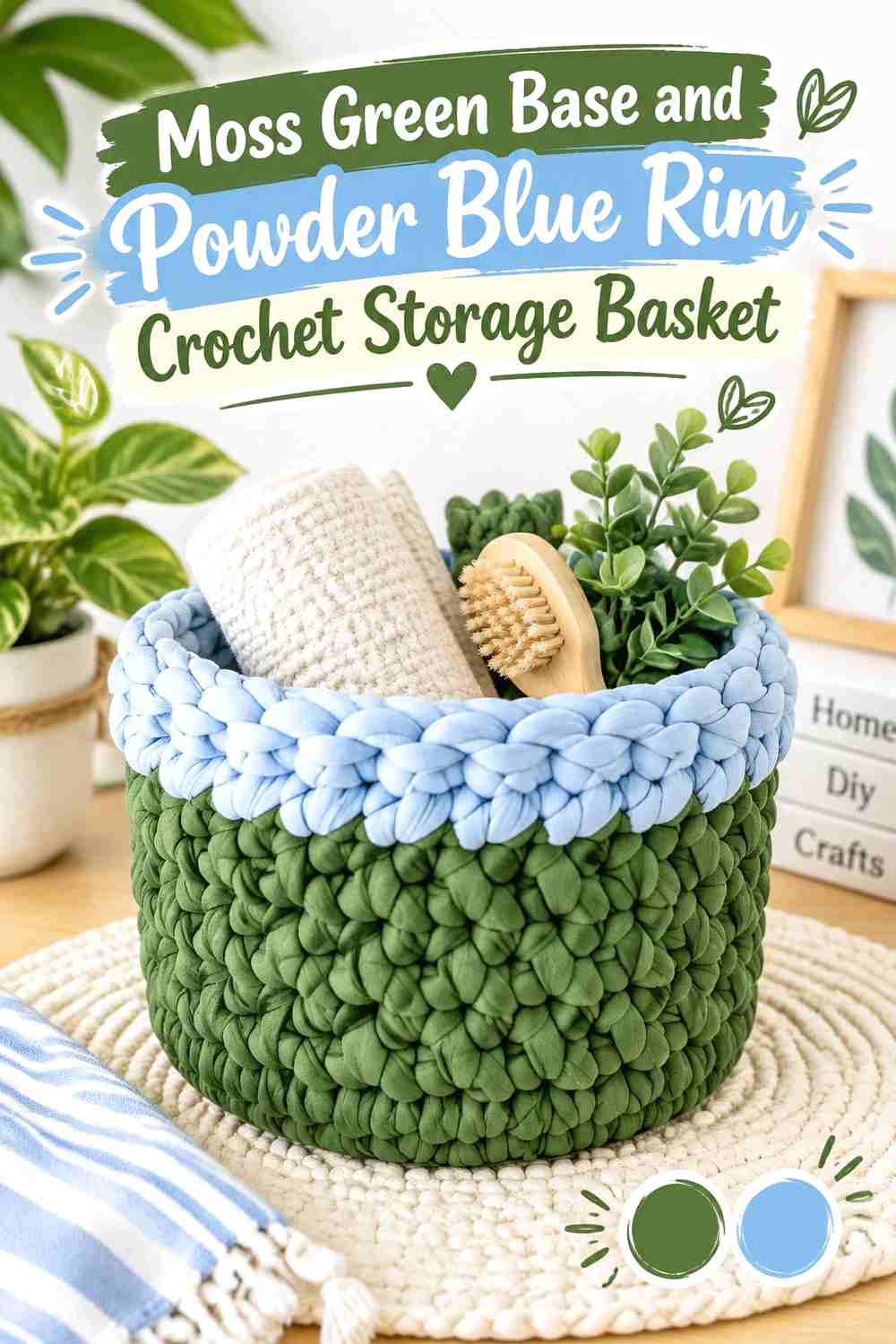
9. Moss Green Base And Powder Blue Rim Crochet Storage Basket
 SAVE
A storage basket benefits from placing the darker color low and the lighter color near the opening. Moss green can visually anchor the base and side walls, while powder blue identifies the rim or handle area without making the basket overly striped.
Keep Moss Green Around the Crochet Basket Base
The base and lower wall are natural areas for uninterrupted moss green because they create one continuous visual foundation. Carrying the same shade upward for a substantial portion of the sides makes the basket feel more cohesive.
This is preferable to alternating very narrow green and blue bands if your priority is a calm home-decor palette.
Shift to Powder Blue Near the Moss Green Basket Rim
Introducing powder blue toward the top gives the basket a lighter finish and makes the opening visually distinct. The change can happen as one upper band rather than several alternating rounds.
Choose the transition point by looking at the overall basket proportions rather than automatically dividing the height exactly in half.
Repeat Powder Blue on Moss Green Basket Handles When Applicable
If the basket construction includes handles or an emphasized gripping area, powder blue can connect those details to the upper rim. That keeps the lighter shade concentrated where the basket is visually and physically opened.
If there are no handles, the rim alone is enough. Avoid adding decorative blue patches merely to force more color onto the project.
Creator Credit: Lallaulab
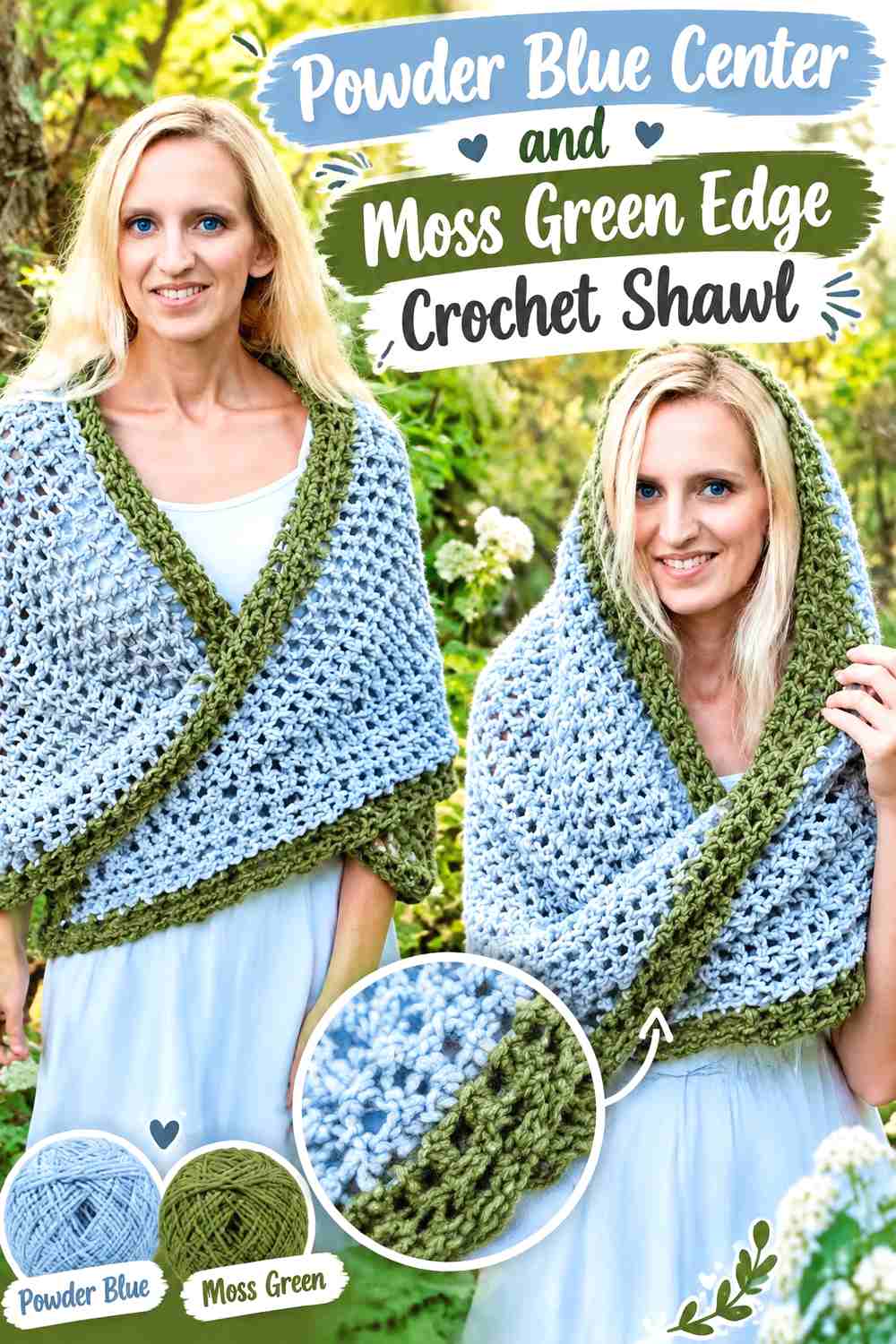
10. Powder Blue Center And Moss Green Edge Crochet Shawl
 SAVE
A shawl gives powder blue room to create a broad central field while moss green can become increasingly visible toward the outside. This distribution places the darker color where the finished shawl forms its outer silhouette and prevents the center from feeling unnecessarily heavy.
Let Powder Blue Control the Crochet Shawl Center
Powder blue through the main central area makes the shawl’s stitch pattern and shaping easier to read when the yarn provides sufficient definition. It also creates a large, uninterrupted color field before the darker green is introduced.
Avoid inserting too many isolated moss green sections through this area if you want the outer green edge to feel purposeful.
Build Moss Green Around the Powder Blue Shawl Exterior
Moving into moss green toward the outside gives the shawl a darker frame. The green can occupy a substantial final section rather than being limited to one extremely narrow line.
How much green you use should depend on the visual weight you want around the shoulders and outer edge, not on an arbitrary equal split.
Use Moss Green Edging to Finish the Powder Blue Shawl Clearly
If the construction includes decorative edging, keeping it moss green reinforces the outer frame. The darker shade can make openwork or shaped edge details easier to distinguish when the adjacent powder blue is lighter.
If your two yarns are close in value, consider whether a narrow neutral separator would help before committing to the final edge.
Creator Credit: naztazia
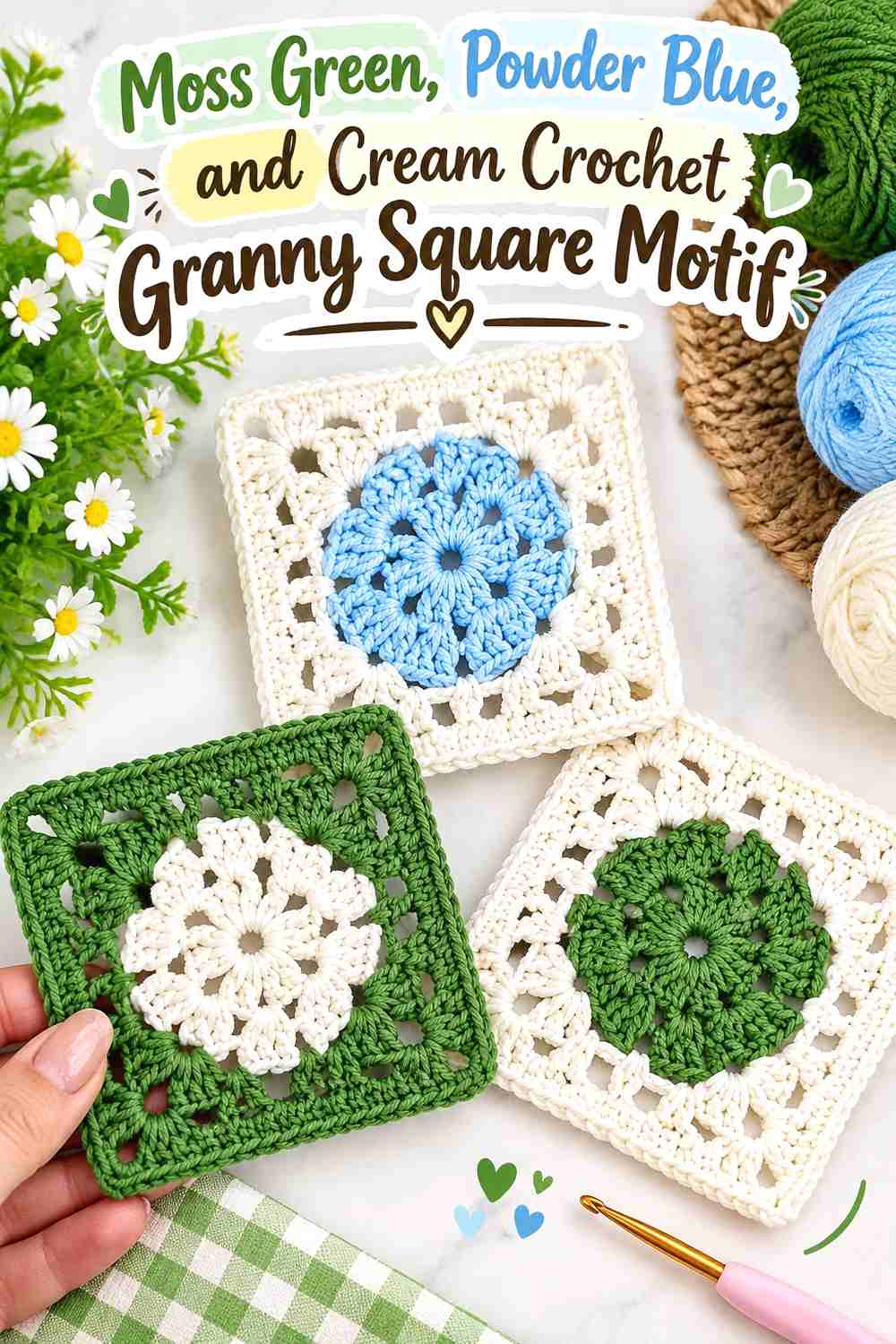
11. Moss Green Powder Blue And Cream Crochet Granny Square Motif
 SAVE
A granny square is a useful place to test the palette before committing to a larger blanket, cardigan, or bag. Moss green can provide the central anchor, powder blue can widen the motif, and cream can create separation around the outside. Because the color areas are small, value relationships become especially noticeable.
Put Moss Green at the Crochet Granny Square Center
A moss green center gives the motif a dark focal point without requiring green to dominate the entire square. This works well if you plan to repeat many motifs and want the darker color distributed evenly across a larger project.
Keep the center treatment consistent when uniformity matters, or rotate the color order deliberately if you are making several square variations.
Surround Moss Green With Powder Blue for a Softer Transition
Powder blue around a darker moss green center expands the motif without adding another strong dark block. It can also make the center easier to distinguish when viewed from a distance.
Before making a full stack of motifs, finish one sample and inspect whether the two colors remain distinct after the square is viewed alongside other squares.
Use Cream to Separate Powder Blue and Moss Green Granny Square Joins
Cream is especially useful as an outer round or joining color when repeated moss green and powder blue motifs begin blending together. The neutral space allows each square to keep a recognizable outline.
Keep cream narrower if you want the finished blanket, cardigan, or bag to remain clearly dominated by green and blue.
Creator Credit: Tuba Crochet
Choosing Between These Moss Green and Powder Blue Crochet Ideas
Choose a moss-green-dominant blanket, tote, vest, or basket when you want the deeper shade to control most of the finished surface. These projects leave powder blue to do more targeted work around stripes, openings, trim, or edges.
The cardigan, pillow, scarf, bucket hat, and shawl give powder blue more visual space. They are useful when you want the palette to appear lighter while still keeping enough moss green to provide definition.
The beanie and granny square are smaller ways to test the relationship before using the combination on a larger project. If the yarns do not separate clearly in those small areas, adjust the shades or add a limited cream separator before committing to a full garment or blanket.
Conclusion
Moss green and powder blue become more useful as a crochet palette when each color has a defined role. Moss green can anchor bases, brims, borders, panels, and motif centers, while powder blue can lighten larger fields or clarify smaller structural areas.
For the strongest color contrast, choose versions of the two shades that remain visibly different in lightness. For a quieter result, use closer values and rely more on larger color blocks than tiny details.
The project itself should guide placement. A basket naturally offers a base and rim, a cardigan offers panels and trim, and a granny square offers centers and outer rounds. Using those built-in divisions usually produces a more coherent palette than adding color changes simply to create variety. Refer to the credited tutorials for exact construction details.
Frequently Asked Questions
Do moss green and powder blue work together in crochet?
Yes. The pairing can create a balanced contrast when the moss green is darker or more muted and the powder blue is lighter. Test the actual yarns together because shade names do not guarantee the same light-dark relationship across different yarns.
Should moss green or powder blue be the dominant crochet color?
Either can dominate. Moss green works well when you want a darker base across blankets, bags, baskets, or garment panels. Powder blue is useful when you want a lighter main field with green concentrated around trim, borders, brims, or motifs.
How can I tell whether moss green and powder blue have enough contrast?
Place the yarns side by side and look at them from a distance. You can also photograph them and view the image in grayscale. If the shades become difficult to distinguish, increase the light-dark difference or add a limited neutral separator where detail needs to stay visible.
Can I add cream to moss green and powder blue crochet projects?
Yes. Cream is most useful as a separator, joining shade, motif outline, or border. Keep its role smaller when you want moss green and powder blue to remain the unmistakable main palette.
Where should moss green go in a powder blue crochet garment?
Moss green can work around cuffs, necklines, armholes, lower edging, selected motifs, or other areas that benefit from darker definition. Repeating the green in more than one structural location usually makes the placement look more connected.
What can I substitute if I cannot find the exact moss green or powder blue yarn?
Preserve the relationship rather than chasing an exact shade name. For moss green, look for a muted green that can still serve as the darker or earthier color. For powder blue, choose a softened light blue that remains visibly separate from the green. Compare the replacement yarns together before starting the full project.