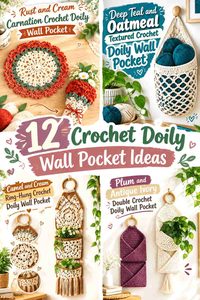
Crochet doily wall pockets combine decorative lace with a simple storage or display function. A round or shaped doily can inspire a folded pocket, while a dedicated hanging basket or wall organizer can take on a doily-like appearance through an openwork panel, lace edge, or decorative motif.
Color changes how clearly those details show. A cream lace section over a dark pocket body can make every opening visible, while sage and oatmeal create a softer transition. The rim, fold line, hanging loop, and exposed doily edge are especially important because those areas remain visible even after the pocket is filled.
The 12 ideas below use both doily tutorials and dedicated hanging-pocket constructions. When the source teaches a flat doily rather than a wall pocket, the folding, backing, or hanging arrangement is an independent adaptation rather than part of the creator’s original tutorial.
Quick List
- Antique Ivory And Sage Round Crochet Doily Wall Pocket
- Burgundy And Blush Mandala Crochet Doily Wall Pocket
- Dusty Rose And Cream Heart Crochet Doily Wall Pocket
- Olive And Oatmeal Pineapple Crochet Doily Wall Pocket
- Mauve And Ivory Flower Edge Crochet Doily Wall Pocket
- Terracotta And Natural Netted Crochet Doily Wall Pocket
- Dusty Blue And Cream Boho Crochet Doily Wall Pocket
- Moss Green And Oatmeal Folded Crochet Doily Wall Pocket
- Plum And Antique Ivory Double Crochet Doily Wall Pocket
- Camel And Cream Ring Hung Crochet Doily Wall Pocket
- Deep Teal And Oatmeal Textured Crochet Doily Wall Pocket
- Rust And Cream Carnation Crochet Doily Wall Pocket
Decide Which Part of the Crochet Doily Becomes the Pocket Front
A round doily does not need to disappear completely when converted into a wall pocket. One practical visual approach is to keep the most decorative portion facing forward while a folded or backed section creates the storage area behind it.
Before choosing colors, decide which lace section will remain exposed. If only the upper third of a motif will be visible, that is where an accent color will have the greatest effect.
For dedicated wall-pocket constructions, you can create the doily effect through the rim, an appliquéd motif, or a contrasting lace-like panel instead of changing the underlying pocket construction.
Use Contrast Around the Crochet Wall Pocket Opening
The pocket opening needs to remain visually understandable even when lace surrounds it. A contrasting rim can help separate the functional opening from decorative holes and arches.
Dark-on-light contrast creates the clearest boundary. Tonal combinations such as dusty rose and blush produce a softer transition but may need a more defined edge if the lace is intricate.
Avoid putting several strong colors directly around the opening. The doily pattern, rim, hanging loop, and contents already create multiple visual elements in a small area.
Repeat the Doily Color at the Hanging Loop or Ring
The hanging point is visually separate from the pocket, so repeating one of the doily colors there can help connect the upper and lower sections.
If the lace edge is sage, a small sage hanging loop can be enough. You do not necessarily need to make the entire pocket green.
Wooden rings, rods, or hooks also become part of the finished composition, so judge the yarn palette with the hanging hardware in place.
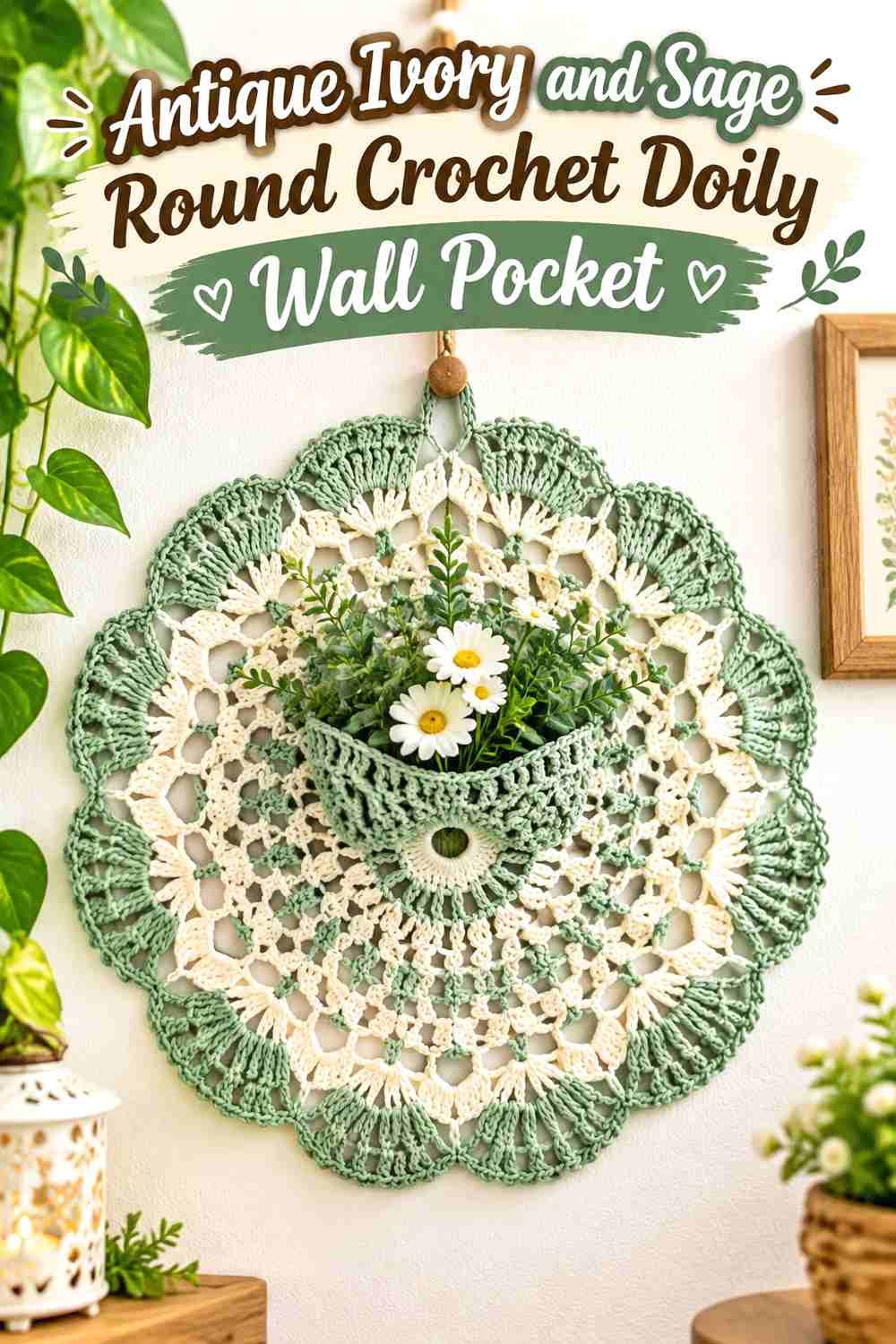
1. Antique Ivory And Sage Round Crochet Doily Wall Pocket
 SAVE
A classic round lace doily can become the decorative starting point for a wall pocket by keeping antique ivory across most of the radial lace and introducing sage around the outer portion that will remain visible after folding or mounting. The supporting tutorial teaches a round lace doily, so the pocket backing and hanging method are separate adaptations.
Antique Ivory Keeps Sage Crochet Doily Lace Easy to Read
Use antique ivory across the center and most of the decorative openwork when you want the radial stitch pattern to remain the main feature.
If the pocket backing is also very pale, check whether the lace openings still show clearly once the doily is positioned against it.
Sage Can Define the Antique Ivory Crochet Wall Pocket Edge
Sage works well around the outer doily rounds because those sections naturally form a visible rim after the motif is folded or mounted.
Repeat a small amount of sage at the hanging loop if the border otherwise feels visually disconnected from the top of the pocket.
Creator Credit: Knitting Love 💗
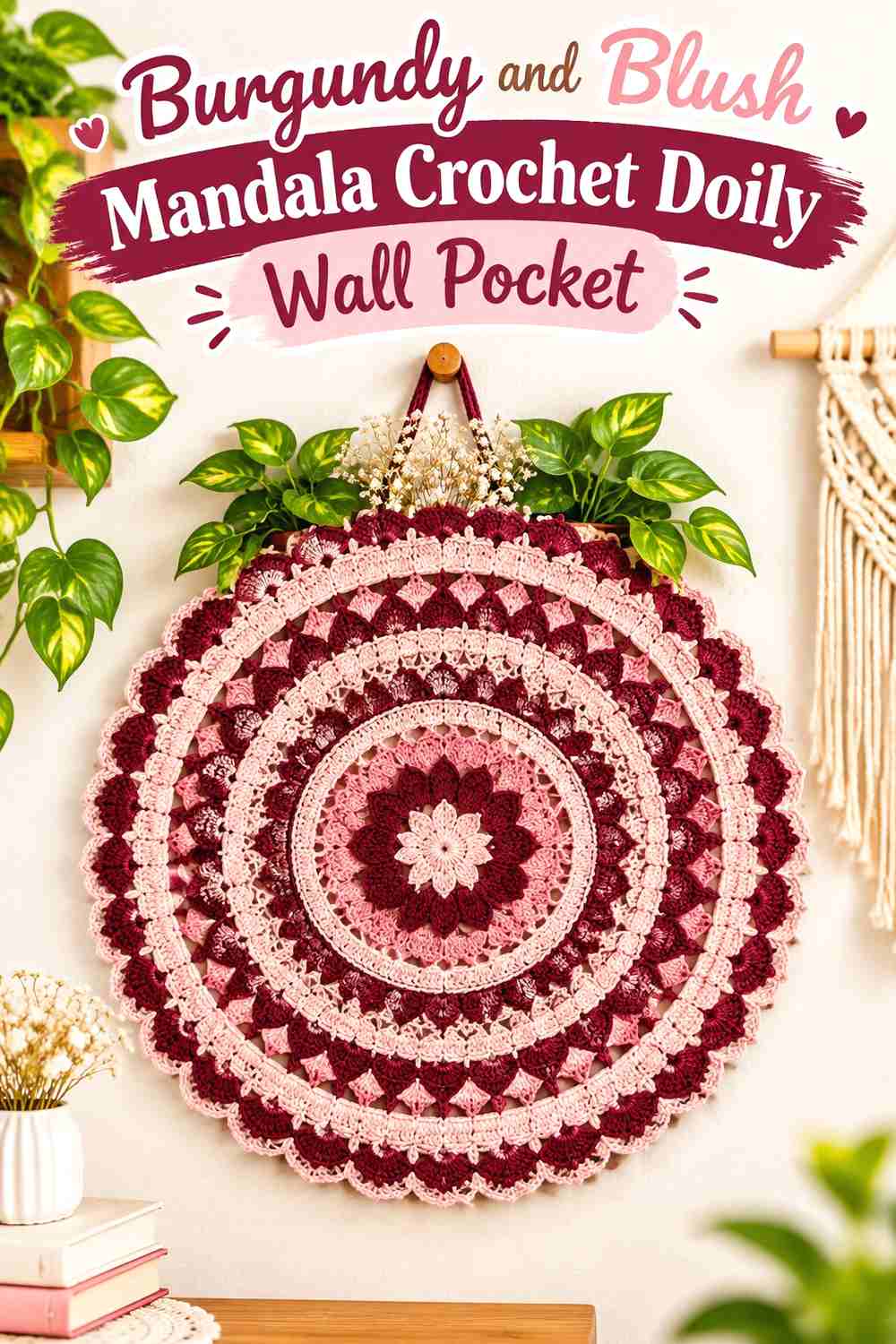
2. Burgundy And Blush Mandala Crochet Doily Wall Pocket
 SAVE
A mandala doily can handle more deliberate color zoning than a traditional one-color lace motif. Burgundy can define selected outer rings while blush occupies larger areas of the center. When adapted into a wall pocket, position the most attractive color transition where it will remain visible above the fold.
Blush Can Keep Burgundy Crochet Mandala Rings From Feeling Heavy
Give blush enough surface area between darker rings so the mandala does not become one dense burgundy disk.
Once part of the doily forms or sits behind the pocket, reassess the visible ratio. A balanced flat mandala may become burgundy-heavy after folding.
Burgundy Can Frame the Blush Crochet Doily Pocket Opening
If a burgundy outer round lands near the pocket opening, it can create a strong boundary between the storage area and decorative lace.
Avoid introducing another dark edging color at the same point. The burgundy already supplies enough definition.
Creator Credit: Yarnspirations
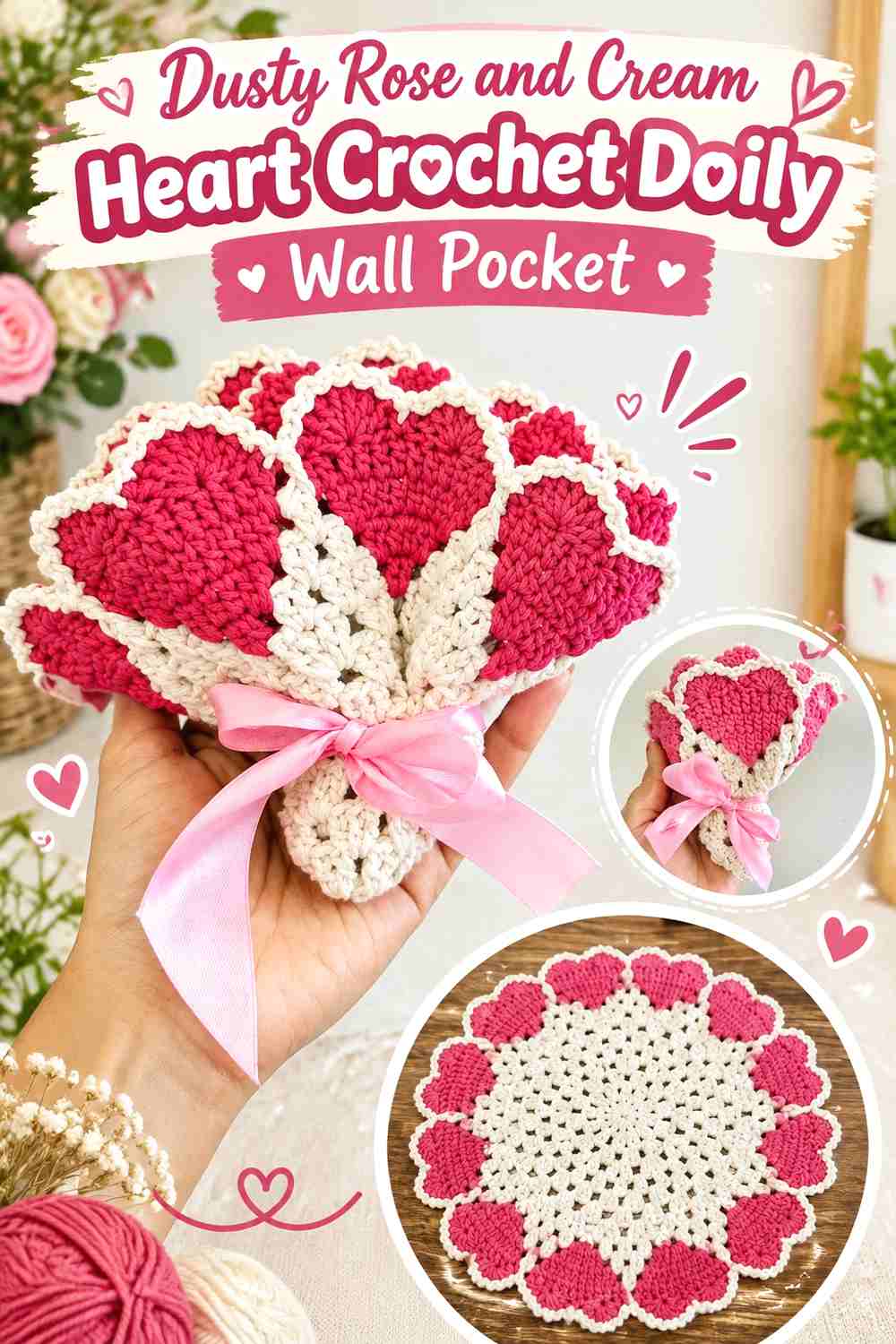
3. Dusty Rose And Cream Heart Crochet Doily Wall Pocket
 SAVE
A heart-shaped doily offers a natural romantic wall-pocket direction. Dusty rose can define the heart sections while cream keeps the surrounding lace light. Because the tutorial teaches a decorative heart doily rather than a storage pocket, a backing panel or carefully planned fold is needed for the wall-pocket adaptation.
Dusty Rose Should Keep the Crochet Heart Motifs Visible
Use dusty rose consistently where the heart shapes appear so they remain recognizable after part of the doily is covered by the pocket.
If only a few hearts remain exposed, avoid changing those individual motifs to several different colors.
Cream Can Give Dusty Rose Crochet Hearts a Light Pocket Background
Cream around the heart details gives the rose enough separation without creating a stark white contrast.
If the pocket itself is cream, consider keeping dusty rose near the rim so the storage opening does not visually disappear into the lace.
Creator Credit: Shelen Crochet
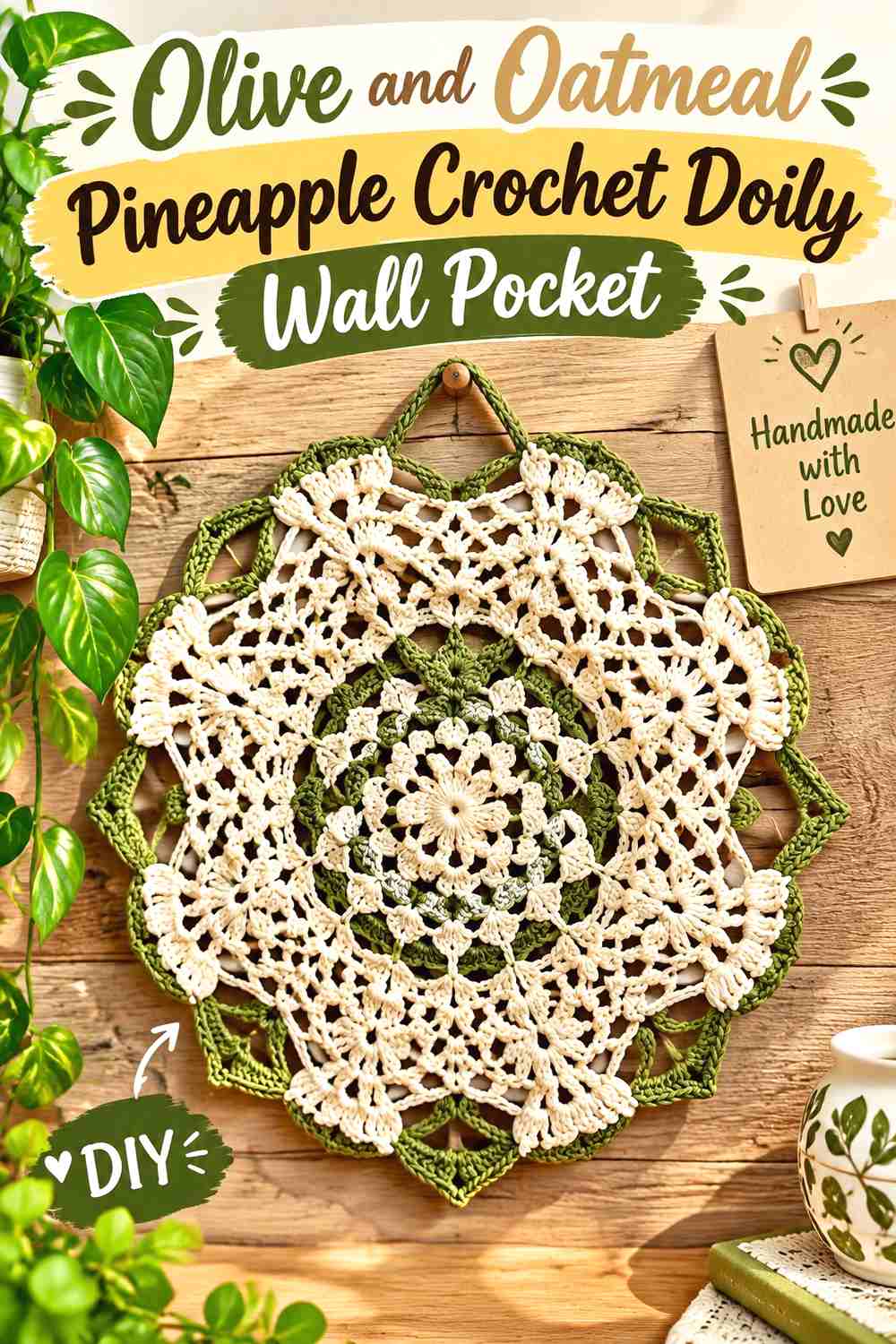
4. Olive And Oatmeal Pineapple Crochet Doily Wall Pocket
 SAVE
Pineapple lace creates long, directional openings that can become especially decorative on the exposed front of a wall pocket. Oatmeal can cover most of the lace, while olive defines the outer motifs or a folded lower section. The source teaches a pineapple doily, so the wall-pocket assembly is an editorial adaptation.
Oatmeal Lets Olive Crochet Pineapple Lace Stay Detailed
Use oatmeal through most pineapple motifs when you want their internal spaces and arches to remain visually light.
Changing colors inside every pineapple can make the lace structure harder to follow, especially once the motif is folded.
Olive Can Give the Oatmeal Crochet Wall Pocket a Grounded Rim
Place olive around the visible rim or outer doily section to create a stronger boundary around the pale lace.
A matching olive loop can connect the dark edge to the hanging point without adding more color inside the pineapple motifs.
Creator Credit: Kristines Crochets
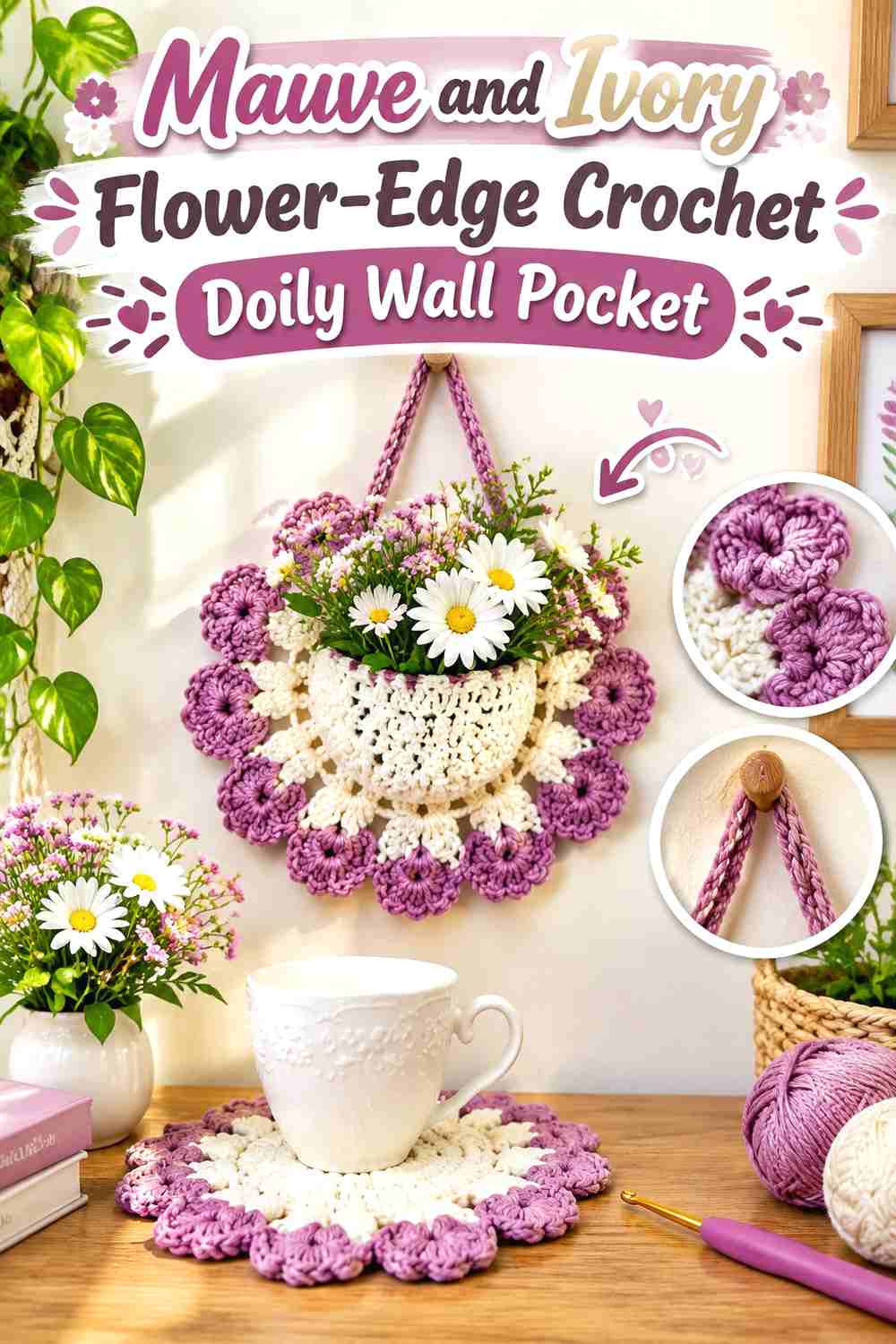
5. Mauve And Ivory Flower Edge Crochet Doily Wall Pocket
 SAVE
A flower-edged doily offers a useful way to concentrate the strongest color around the perimeter. Ivory can cover the main circular body while mauve defines the flowers at the edge. When turned into a pocket, arrange the motif so enough of that floral fringe remains exposed.
Mauve Should Remain Visible Along the Ivory Crochet Doily Edge
If the flower edging is the reason you chose the motif, avoid folding the entire decorative border behind the pocket.
Test the fold before assembly and make sure several mauve flowers remain visible across the front.
Ivory Can Keep Mauve Crochet Flowers From Crowding the Wall Pocket
A broad ivory center provides visual space between the decorative flowers and whatever is stored inside the pocket.
If the hanging loop needs another accent, ivory is the quieter choice when the mauve edge already supplies substantial decoration.
Creator Credit: JTEasyCrochet
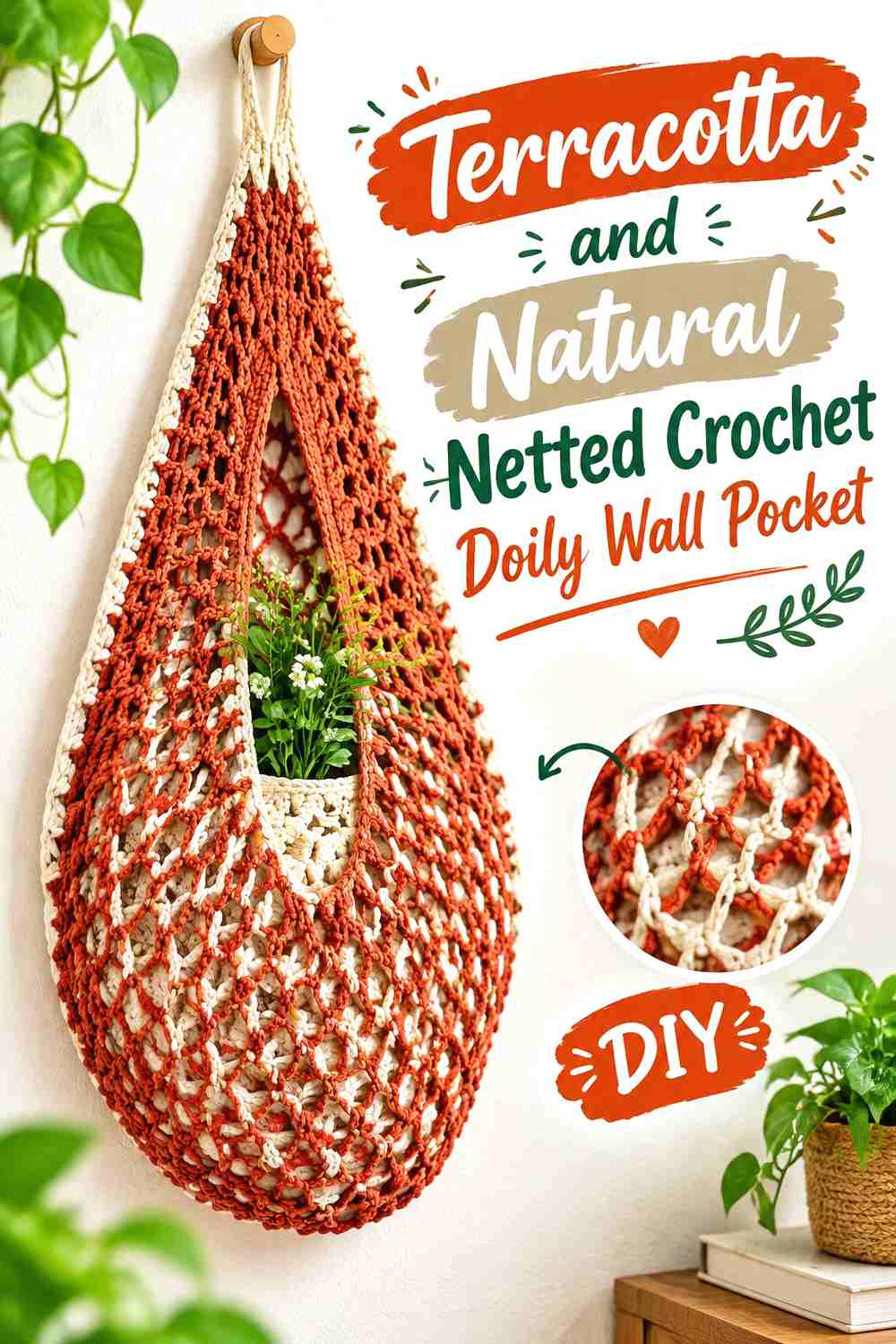
6. Terracotta And Natural Netted Crochet Doily Wall Pocket
 SAVE
A dedicated hanging basket with netted fabric can take on a doily-inspired appearance when the openwork is treated as the decorative front. Natural yarn can dominate the mesh while terracotta outlines the opening and hanging section. This source directly supports a wall-hanging storage construction rather than requiring a flat doily to become the pocket.
Natural Yarn Keeps Terracotta Crochet Netting Visually Light
Use the natural shade through most of the netted body so the open structure remains easy to see.
Because the pocket contents may show through the mesh, the visual effect will change depending on what is stored inside.
Terracotta Can Define the Natural Crochet Wall Pocket Opening
A terracotta upper edge creates a clear functional boundary around the opening.
Repeat the same color at the hanging loop if needed, but avoid turning the lower net into alternating stripes when the openwork already provides enough pattern.
Creator Credit: Crochet With Julie
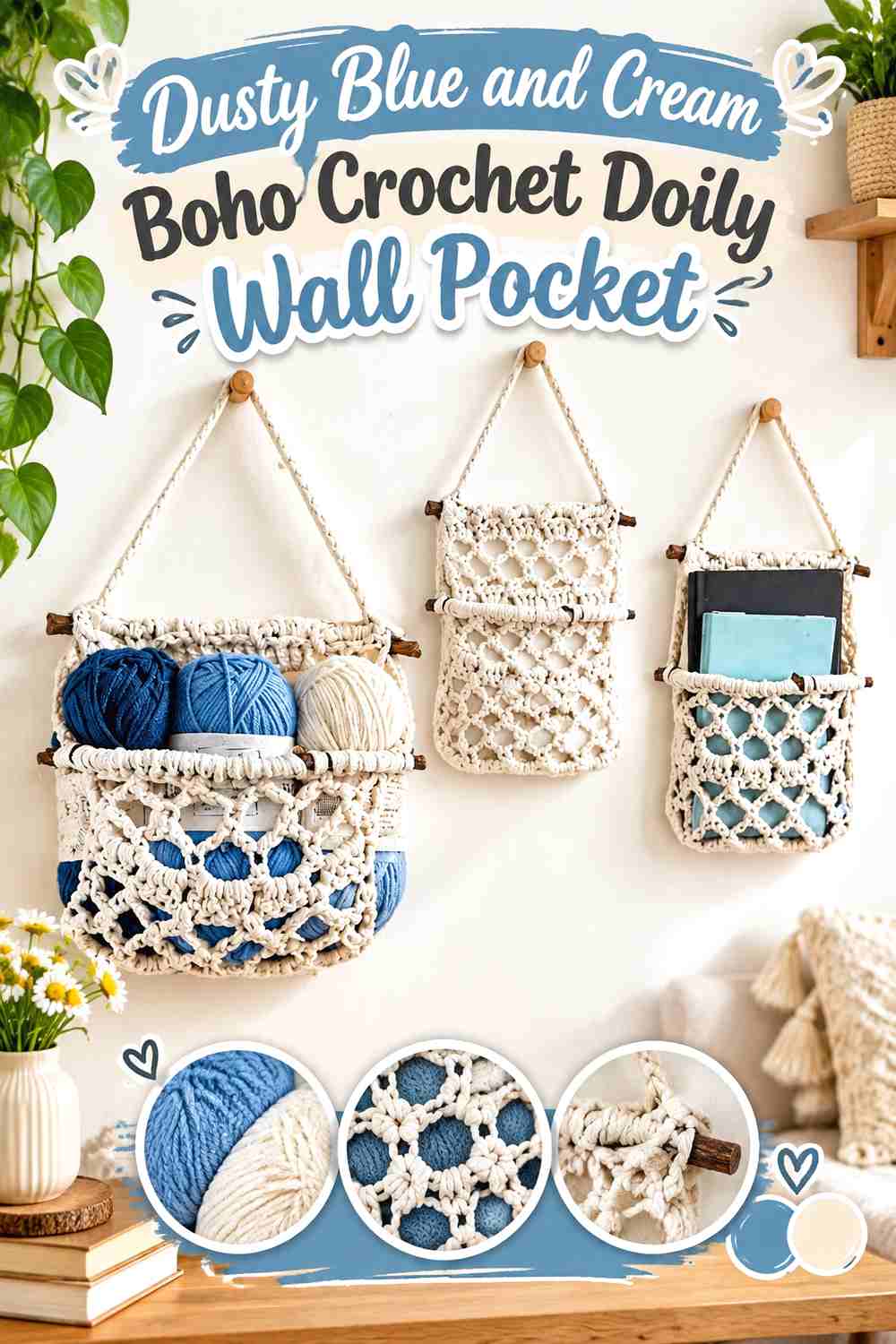
7. Dusty Blue And Cream Boho Crochet Doily Wall Pocket
 SAVE
A larger hanging organizer can be given a lighter doily direction by using dusty blue for the structural sections and cream for eyelet or openwork details. This construction is a dedicated wall organizer rather than a traditional lace doily, so the doily influence comes from the color treatment and open decorative sections.
Dusty Blue Can Keep the Cream Crochet Wall Organizer Cohesive
Use dusty blue through the broad structural areas so the pocket retains a clear base color.
Cream should be concentrated where the openwork or decorative blocks need emphasis instead of being distributed randomly through every row.
Cream Can Highlight Dusty Blue Crochet Eyelet Details
Cream around an eyelet section creates a lace-like visual break against the blue body.
Because the organizer hangs vertically, view the complete piece before extending the cream section. A pale block can look larger once the full wall hanging is visible.
Creator Credit: luckyday ♡
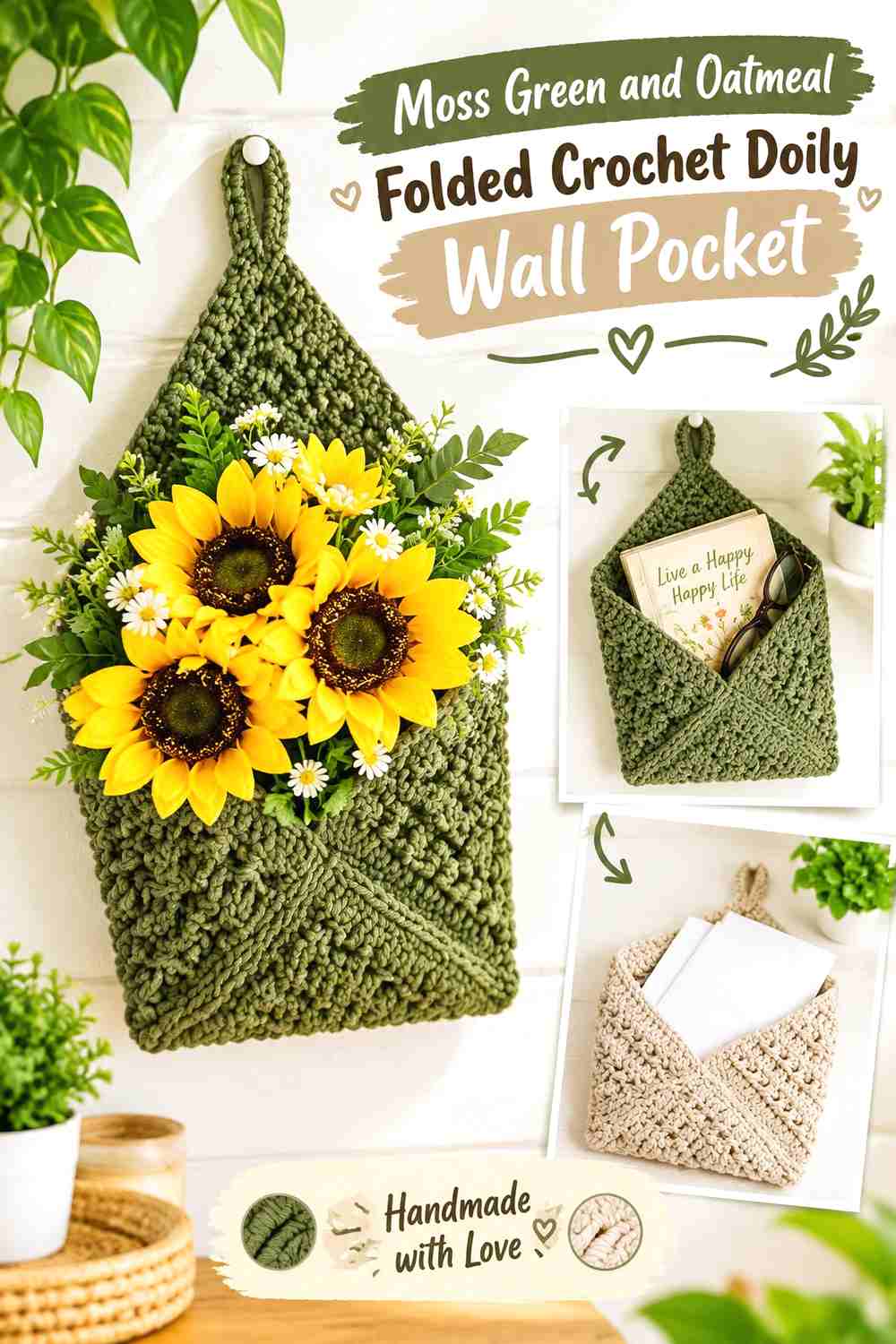
8. Moss Green And Oatmeal Folded Crochet Doily Wall Pocket
 SAVE
A square-based hanging basket can create an envelope-like wall pocket when its corners are brought together. Moss green can dominate the folded structure while oatmeal appears around the visible edge, giving the simple geometry a more decorative, doily-inspired finish.
Moss Green Can Keep the Oatmeal Crochet Folded Pocket Structured
Use moss green through the main square so the overlapping folds read as one continuous pocket.
Introducing oatmeal inside every section can make the folded construction look more complicated than it actually is.
Oatmeal Can Trace the Moss Green Crochet Pocket Fold
A narrow oatmeal edge helps identify where the pocket opens and where the sides overlap.
Repeat oatmeal at the hanging loop only if that connection improves the overall balance; the visible fold may already provide enough light contrast.
Creator Credit: Winding Road Crochet
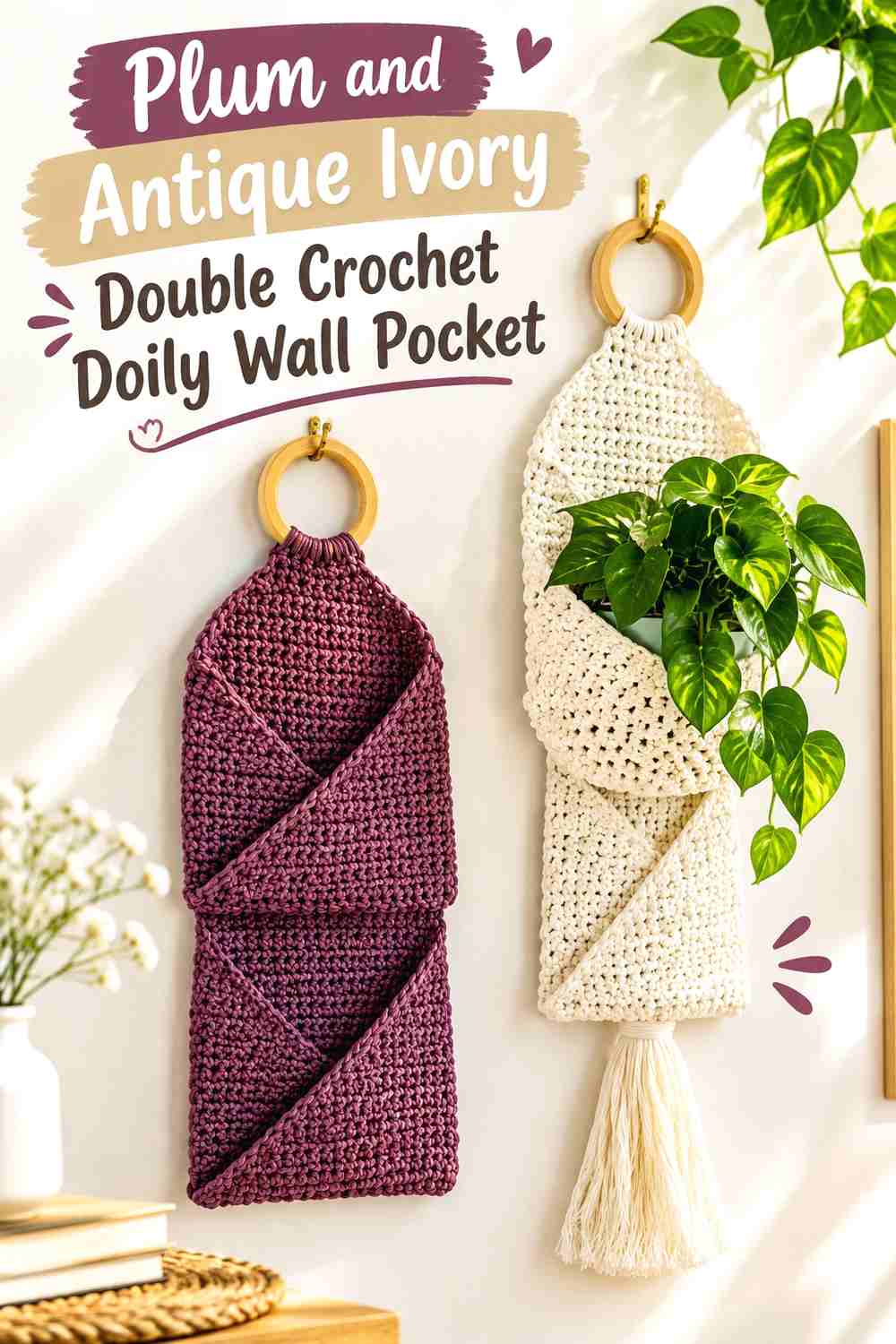
9. Plum And Antique Ivory Double Crochet Doily Wall Pocket
 SAVE
A two-pocket wall organizer creates more opportunity for repeating a doily-inspired palette vertically. Plum can define the lower or outer edges of both pockets, while antique ivory covers the larger surfaces so the organizer does not become too dark.
Antique Ivory Can Connect Two Plum Crochet Wall Pockets
Use antique ivory consistently through the main sections of both pockets so they clearly belong to one hanging piece.
Different dominant colors on the upper and lower pockets can make the organizer look like two unrelated projects.
Plum Should Repeat at Both Antique Ivory Crochet Pocket Openings
A plum rim on each pocket establishes a vertical rhythm and makes both openings easier to locate.
Keep the plum width similar enough that one pocket does not appear substantially heavier unless that asymmetry is deliberate.
Creator Credit: Happy Heartsy
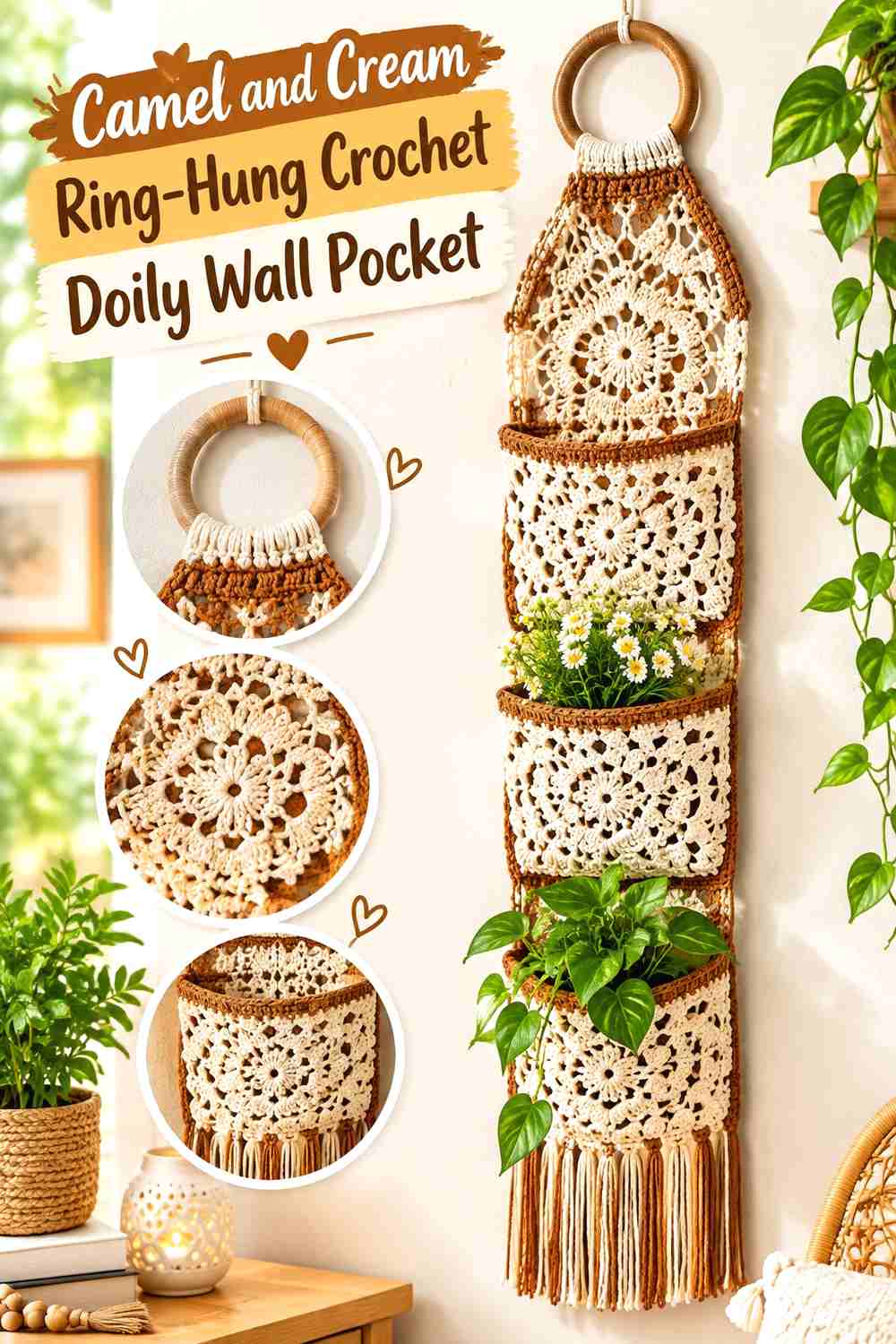
10. Camel And Cream Ring Hung Crochet Doily Wall Pocket
 SAVE
A hanging pocket suspended from a ring naturally draws attention to its upper section. Camel can cover the structural body while cream forms a lace-inspired edge or appliquéd doily detail near the opening. The tutorial source supports wall-pocket ideas, while the specific doily treatment remains an independent color and embellishment direction.
Camel Can Keep the Cream Crochet Ring-Hung Pocket Grounded
Use camel across the main storage area so the wall pocket has a warm, consistent field beneath the decorative section.
A neutral body is particularly useful if the doily detail contains open spaces through which the camel remains visible.
Cream Can Connect the Camel Crochet Pocket With the Hanging Ring
Cream around the upper edge can visually brighten the area closest to the ring.
If the ring itself is light wood, a cream border produces a softer transition; if the hardware is dark, the same cream edge will appear much more pronounced.
Creator Credit: Crochet by Nadira
11. Deep Teal And Oatmeal Textured Crochet Doily Wall Pocket
 SAVE
A simple hanging wall basket can take on a more decorative lace direction when deep teal forms the pocket and oatmeal is reserved for the upper edging or an added doily-style motif. The supporting tutorial is a dedicated hanging basket construction, so the structural storage concept is already established.
Deep Teal Can Keep the Oatmeal Crochet Wall Pocket Strongly Defined
Use deep teal through the full storage body so the silhouette remains clear even if an oatmeal lace motif is layered over part of the front.
If the doily detail is highly open, the teal showing through it becomes part of the pattern.
Oatmeal Can Give Deep Teal Crochet Doily Details Maximum Separation
Place oatmeal where the lace openings or scalloped edge need to be easy to see.
Because the value difference is strong, a relatively small oatmeal section may be enough. Avoid covering most of the teal body unless a light-led pocket is the intended result.
Creator Credit: First The Coffee Crochet
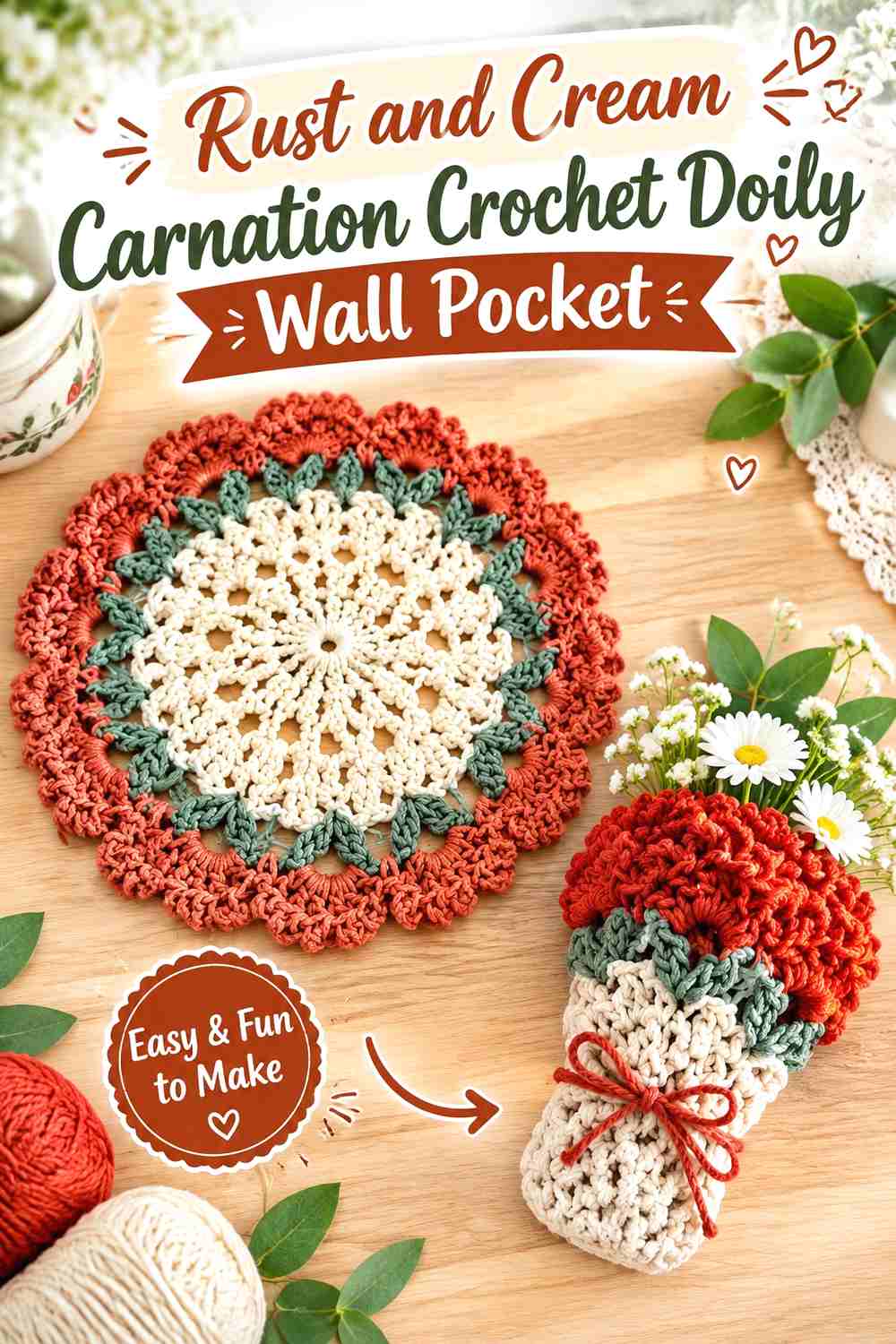
12. Rust And Cream Carnation Crochet Doily Wall Pocket
 SAVE
A floral two-way doily can create a distinctive wall-pocket front when its flower forms remain exposed rather than folded behind the storage section. Rust can give the carnation-like flowers a warm focal color, while cream keeps the rest of the doily light. The tutorial teaches the decorative doily itself, so the wall-pocket backing and suspension are separate adaptations.
Rust Should Keep the Cream Crochet Carnation Motifs Recognizable
Use rust consistently through the principal flower details so they remain visible after the doily is positioned against a backing or pocket.
If only part of each flower remains exposed, stronger color continuity becomes even more important.
Cream Can Leave Space Around Rust Crochet Doily Flowers
A cream field keeps the floral border from becoming one dense band of warm color.
Choose a backing color only after placing it behind the finished lace. Dark backing will make the cream openings highly graphic, while a pale backing will create a quieter pocket.
Creator Credit: AmiaMikancl Crochet
Comparing the 12 Crochet Doily Wall Pocket Directions
For the most traditional lace-doily appearance, the antique ivory round doily, olive pineapple lace, dusty rose heart, and rust carnation designs keep a decorative motif at the center of the idea. These require the most deliberate planning when the flat motif is converted into or mounted onto a usable pocket.
For a more functional wall organizer, the terracotta netted basket, dusty blue boho organizer, moss green folded basket, plum double-pocket design, and deep teal hanging basket begin with storage-oriented constructions. A lace edge or doily motif can then provide the decorative layer without changing the underlying pocket.
The burgundy mandala works well when you want more color inside the doily itself, while the mauve flower-edge version keeps most of the center quiet and concentrates decoration around the perimeter.
Conclusion
A crochet doily wall pocket works best when the lace and storage areas have clearly different jobs. The doily can supply the decorative front, exposed rim, scalloped edge, or appliquéd panel, while a denser section supports the actual contents.
For traditional round, heart, pineapple, mandala, or floral doilies, decide what will remain visible before choosing the color sequence. An attractive round that is perfectly balanced while flat can look very different once part of it is folded or hidden behind a pocket.
For dedicated hanging baskets and organizers, keep the structural body relatively simple and use a lighter or contrasting shade where you want a doily-like edge or motif to stand out. This preserves the useful pocket while still giving the wall hanging a decorative lace character.
Frequently Asked Questions
Can a crochet doily be turned into a wall pocket?
A doily can inspire or form part of a wall-pocket design, but a flat lace motif does not automatically become a stable storage pocket. Depending on the motif, it may need folding, a backing panel, or attachment to a denser crocheted structure. Preserve the original doily construction and plan the wall-pocket assembly separately.
What colors work well for a crochet doily wall pocket?
Cream, ivory, oatmeal, and natural yarn emphasize lace, while sage, dusty rose, burgundy, teal, olive, rust, plum, and terracotta can define rims, flowers, outer rounds, or pocket bodies. Choose colors according to which lace details need the most visibility.
Should the crochet pocket body be darker than the doily?
It can be. A dark pocket behind light lace makes the doily openings very clear. A similar-value body creates a softer surface. Test the doily over the planned backing before final assembly because the underlying color will show through openwork.
Where should the accent color go on a doily wall pocket?
Useful locations include the outer doily rounds, scalloped edge, pocket rim, hanging loop, floral motifs, or closure area. Repeating one accent in two related locations usually feels more connected than scattering it throughout every lace section.
Can I use a round crochet doily for a wall pocket?
Yes as an adaptation, provided you plan how the round shape will be folded, backed, or attached. Check which portions of the circular lace remain visible before committing to an elaborate color sequence.
How can I make the crochet pocket opening easy to identify?
Use a denser edge or a color with enough contrast from the surrounding lace. Keeping the opening visually simpler than the decorative doily section also helps distinguish functional space from openwork.
How do I keep an openwork doily wall pocket from looking too busy?
Give one color most of the surface, limit accent shades, and reserve the strongest contrast for the rim or important motifs. If the lace itself is intricate, let the stitch pattern provide the detail rather than changing colors repeatedly.