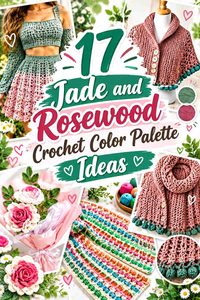
Jade and rosewood create a crochet palette with a clear cool-versus-warm relationship. Jade brings a green focal color, while rosewood contributes a muted reddish-brown direction that can deepen borders, ribbing, motifs, and larger garment sections. Neither shade has to be treated as the automatic dominant color; the actual lightness and saturation of the yarns should determine how you distribute them.
For this palette, rosewood refers to the color direction, not a particular material or standardized commercial yarn shade. It can range from muted red-brown to deeper brownish burgundy. That variation matters because a dark rosewood beside a deep jade can create a close-value, blended result, while a lighter jade against deep rosewood gives motifs and edges much stronger definition.
The 17 ideas below use the pair across stripes, panels, granny squares, floral motifs, ribbing, handles, borders, and textured surfaces so the colors perform different jobs from project to project.
Quick List
- Jade And Rosewood Striped Crochet Blanket
- Jade Crochet Cardigan With Rosewood Ribbing
- Rosewood Crochet Woven Scarf With Jade Details
- Jade Daisy Crochet Blanket With Rosewood Centers
- Rosewood V Neck Crochet Sweater With Jade Trim
- Jade Rosewood And Cream Gingham Crochet Tote
- Jade Crochet Bucket Hat With Rosewood Brim
- Jade Textured Crochet Pillow With Rosewood Border
- Rosewood Crochet Rose Bouquet With Jade Foliage
- Jade Granny Square Crochet Cardigan With Rosewood Borders
- Rosewood Granny Triangle Crochet Bandana With Jade Edging
- Jade And Rosewood Granny Square Crochet Bag
- Jade Crochet Market Bag With Rosewood Handles
- Rosewood Crochet Poncho With Jade Edging
- Jade Crochet Headband With Rosewood Center Detail
- Rosewood Crochet Tote With Jade Handles
- Jade And Rosewood Two Tone Crochet Skirt
Decide Whether Jade or Rosewood Should Lead
Jade can dominate the largest panels when you want green to establish the project immediately. Rosewood can then appear in cuffs, borders, straps, motif centers, and joins, where its reddish-brown depth creates definition without covering half the project.
The reverse arrangement creates a different result. A rosewood sweater, scarf, poncho, or bandana can use jade only around openings and finishing details. Because a saturated jade can attract attention even in small amounts, equal surface coverage is not required for the palette to feel balanced.
Check Jade and Rosewood Value Before Making Small Motifs
Hue difference does not guarantee strong value contrast. Deep jade and dark rosewood can become surprisingly similar when viewed in grayscale, even though one is green and the other reddish brown.
That can be useful on wide stripes and garment panels when you want a subdued transition. Granny squares, gingham checks, flower centers, and narrow borders need more careful testing. Place the yarns together and view them from a distance, or photograph them in grayscale, before relying on the two shades to define small details.
1. Jade And Rosewood Striped Crochet Blanket
 SAVE
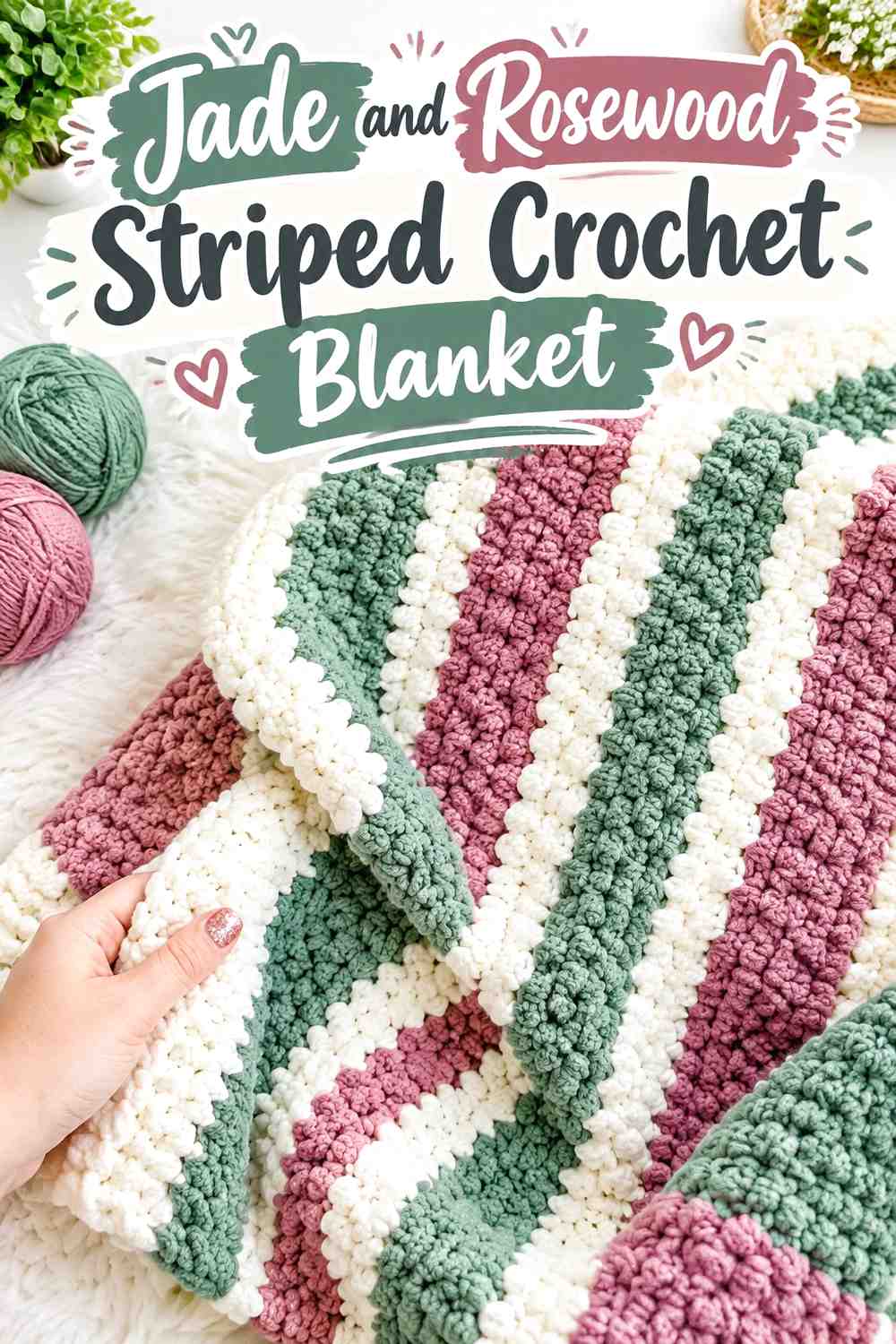
SAVEA striped blanket gives jade and rosewood enough room to remain recognizable even when the shades are similar in value. Let jade occupy several broad sections and use rosewood as a recurring darker or warmer interruption. This keeps the blanket from turning into an equal alternating pattern unless that is specifically the look you want.
Jade Can Carry the Broadest Crochet Blanket Sections
Use jade across the widest areas when you want green to establish the blanket from across the room. Larger blocks also give textured stitches enough space to develop before another color interrupts the surface.
If your jade is unusually dark, examine a swatch before making it the dominant field. Subtle stitch texture may need a lighter jade or larger rosewood breaks to remain visible.
Rosewood Should Repeat Through the Jade Crochet Blanket
Introduce rosewood at more than one point so the warm shade becomes part of the blanket rhythm. A rosewood section near the outer border can also reconnect the edge with the stripes inside.
When both shades are dark, make the color bands wider rather than relying on very narrow stripes to show the difference.
Creator Credit: Bella Coco
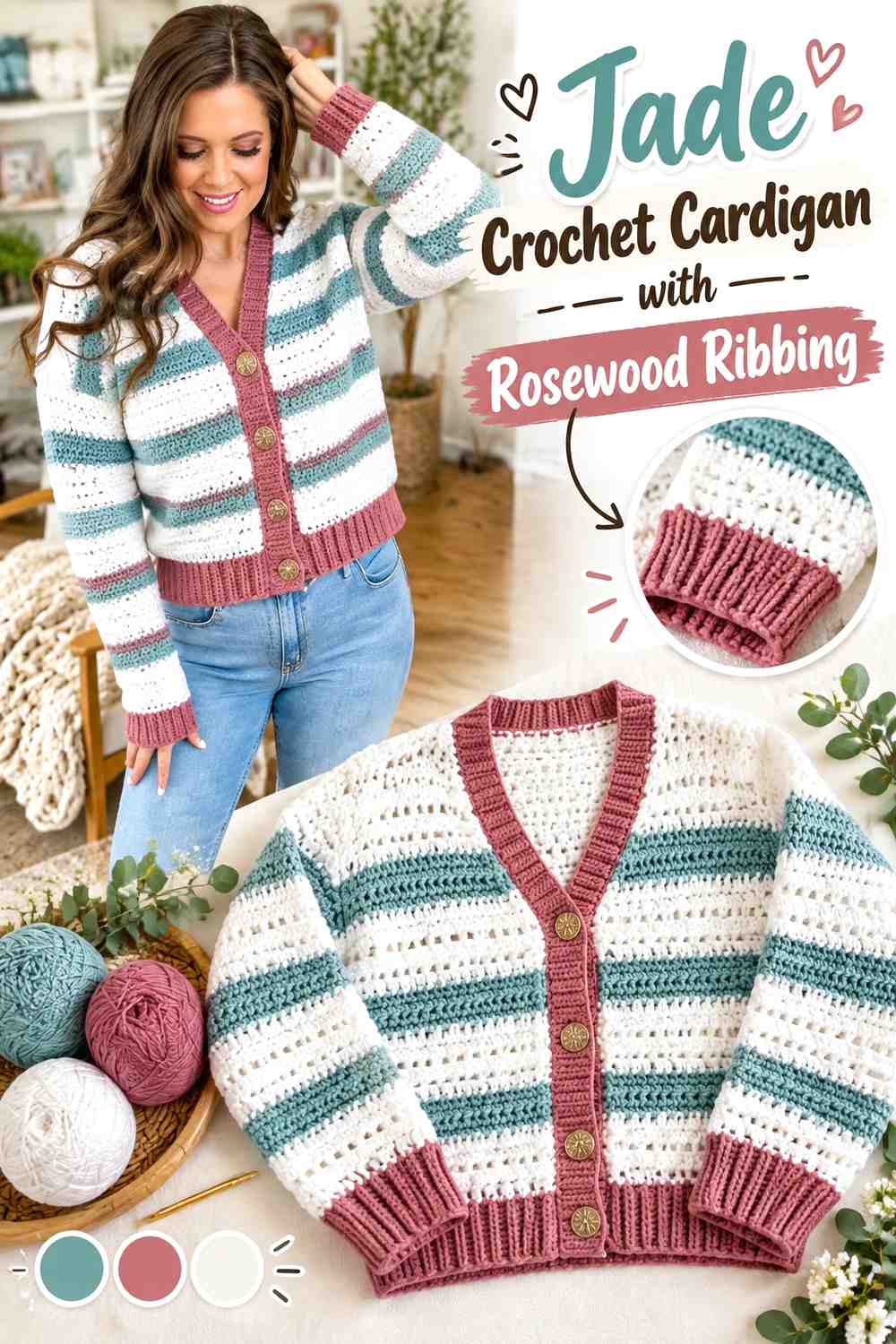
2. Jade Crochet Cardigan With Rosewood Ribbing
 SAVE
SAVEA jade cardigan gives rosewood several logical finishing locations. Keep the front, back, and most of the sleeves jade, then introduce rosewood through the cuffs, lower ribbing, neckline, or front opening. The color changes follow the garment structure instead of dividing the panels arbitrarily.
Jade Keeps the Crochet Cardigan Panels Connected
Use jade across the major body sections when you want the cardigan to read as one green garment. If rosewood also appears inside the body, repeat that placement so it relates to the edging instead of becoming a single disconnected stripe.
This approach is particularly useful when the jade itself is already visually strong and does not need another equally large color competing with it.
Rosewood Can Frame Jade Crochet Cardigan Edges
Rosewood cuffs and front edging create a warm outline around the cooler jade body. Repeating rosewood at the hem can complete that frame, although the hem does not need to be as wide as the other finishing areas.
If your rosewood is much darker than the jade, keep its edge proportions controlled; a deep border can appear visually larger than its actual width.
Creator Credit: MJ’s Off The Hook Designs
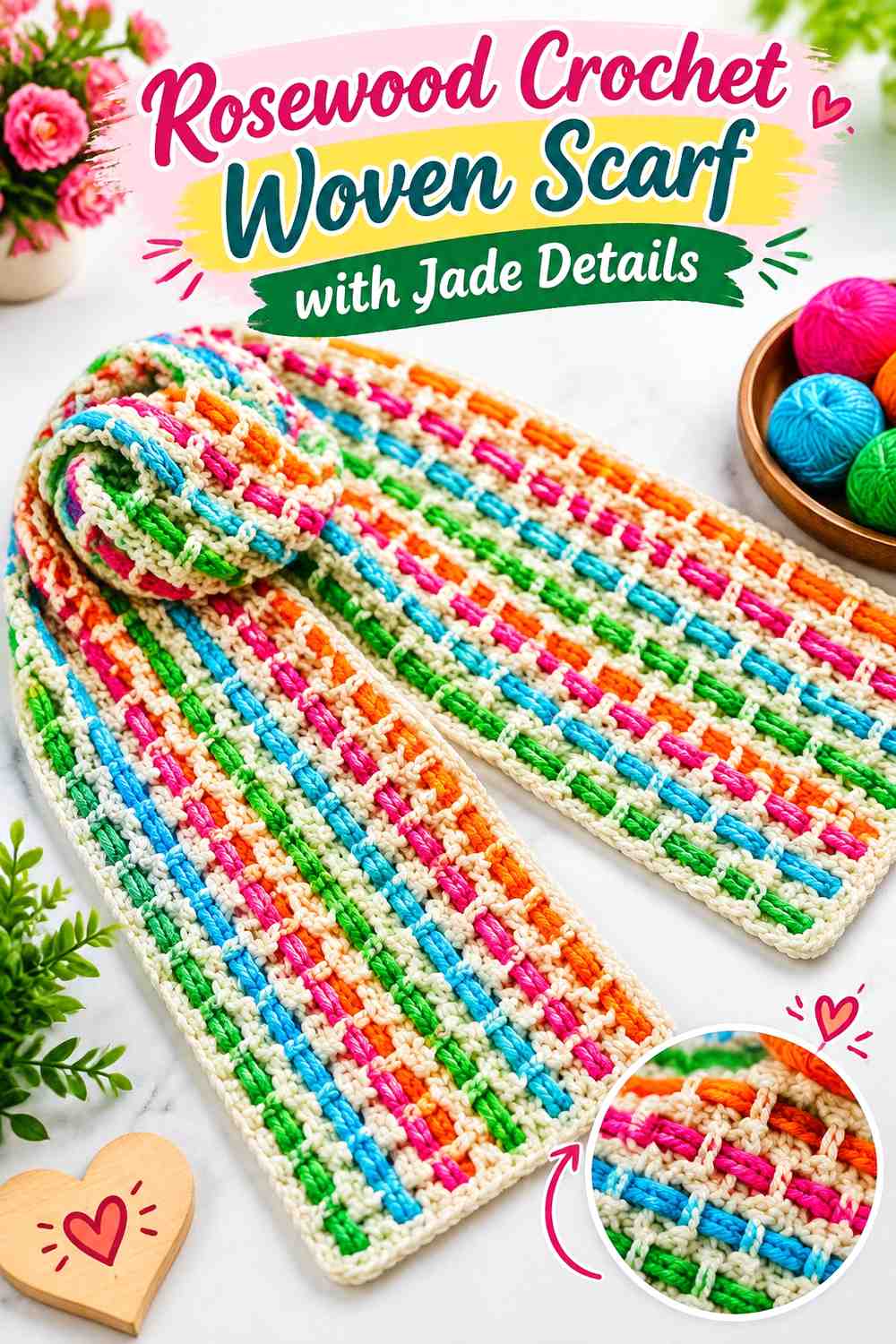
3. Rosewood Crochet Woven Scarf With Jade Details
 SAVE
SAVEA woven-look scarf lets the colors perform different jobs instead of simply alternating as stripes. Rosewood can form the crochet mesh or structural base while jade passes through the openings as the contrasting woven element.
Rosewood Gives the Jade Crochet Scarf a Continuous Base
Keep the main scarf rosewood when you want a deep, warm foundation. A consistent base also makes it easier to see the visual effect of the woven jade sections rather than forcing the two shades to compete across identical rows.
If rosewood hides too much of the crochet structure, choose a slightly lighter reddish-brown rather than adding unnecessary third colors.
Jade Needs Enough Separation From Rosewood Crochet Openings
Test the jade inside a short section of rosewood mesh before completing the whole scarf. Narrow strips expose much less color than a full panel, so two yarns that look clearly different in skeins can appear surprisingly close once woven together.
A slightly lighter or cleaner jade can preserve the same palette while improving the visibility of the woven effect.
Creator Credit: naztazia
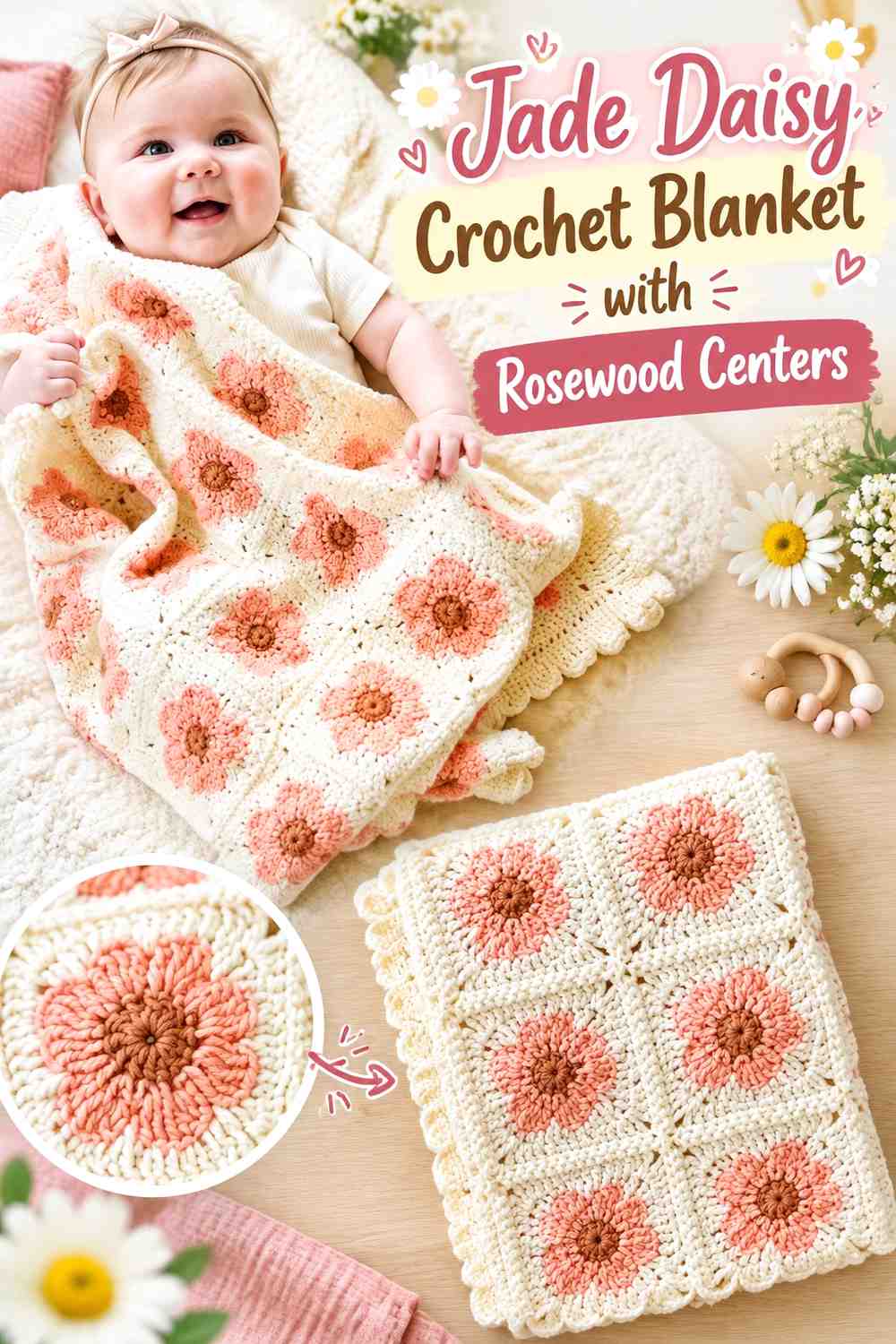
4. Jade Daisy Crochet Blanket With Rosewood Centers
 SAVE
SAVEA floral blanket gives rosewood a small but highly repeated role. Jade can create the field or outer areas of the motifs, while rosewood appears at flower centers. A pale neutral can be used between them when the two main colors are too dark to define a small daisy clearly.
Jade Gives Rosewood Crochet Flower Centers a Consistent Field
Keep jade in the same surrounding role from motif to motif. That consistency allows small rosewood centers to form a recognizable pattern across the entire blanket rather than looking like scattered brown-red spots.
If the flowers are closely spaced, avoid changing the jade shade repeatedly; the repeated motifs already create plenty of visual activity.
Rosewood Centers Need Separation From Jade Crochet Flowers
Check the completed motif at normal viewing distance. When jade and rosewood are both dark, the center may disappear even though the individual yarns look different up close.
A restrained cream, ivory, or another pale neutral around the rosewood center can restore the flower shape while leaving jade and rosewood as the main palette.
Creator Credit: Daisy Farm Crafts
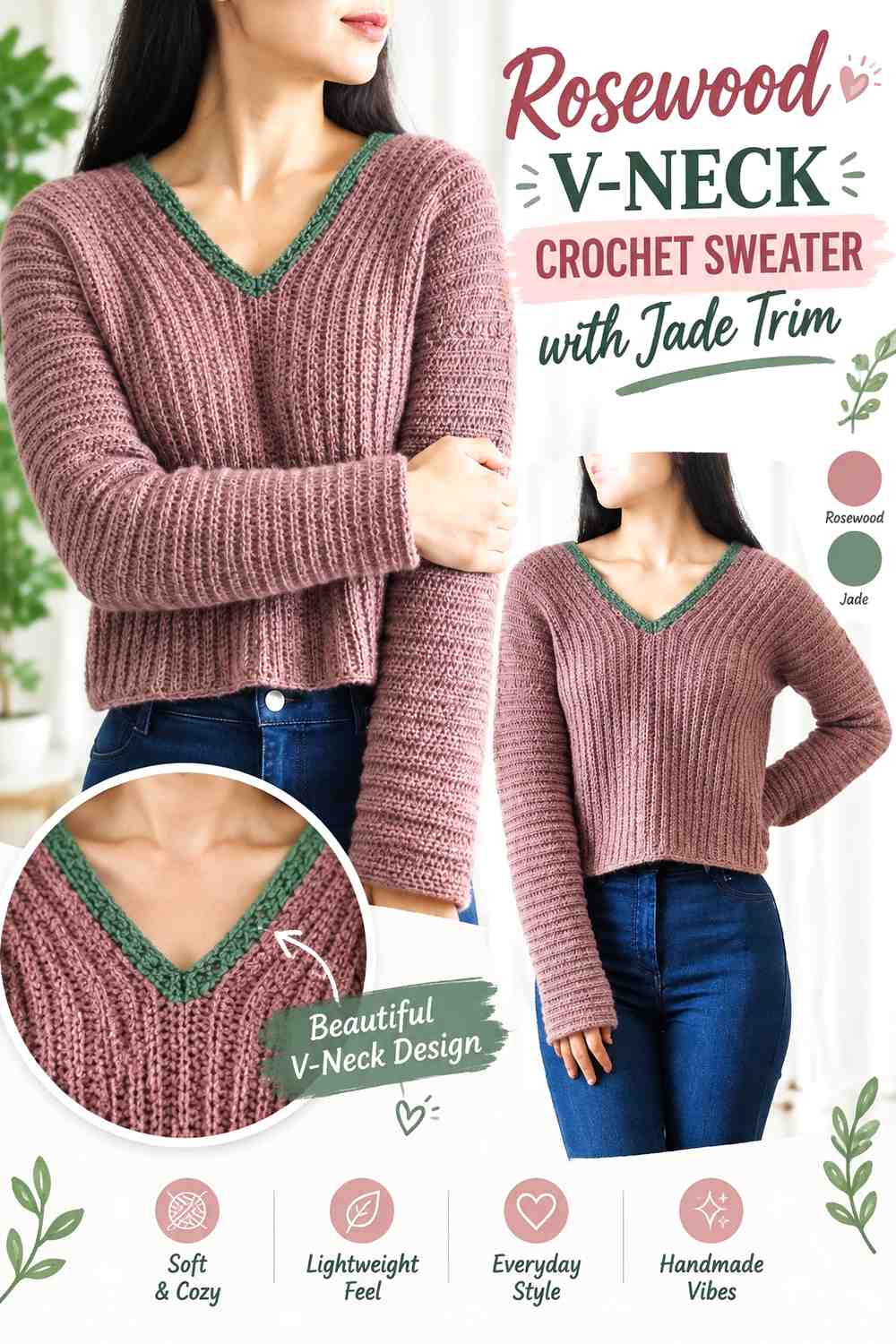
5. Rosewood V Neck Crochet Sweater With Jade Trim
 SAVE
SAVEA rosewood-led sweater gives the palette one of its deeper directions. Let the reddish-brown shade cover the main body and sleeves, then place jade around the V-neck, cuffs, or lower edge where the green follows recognizable garment boundaries.
Rosewood Can Lead the Crochet Sweater Body
Use rosewood continuously through the front and back if you want the sweater to remain warm and dark overall. This gives the garment silhouette and stitchwork more visual continuity than frequent two-color bands.
For highly textured sweater fabric, compare the texture in your rosewood before making the entire garment in the darkest yarn.
Jade Can Outline the Rosewood Crochet V-Neck
A jade neckline places the cooler shade at one of the sweater’s most noticeable edges. Repeat jade at the cuffs or a restrained hem detail to stop the green from becoming a single isolated accent.
If the jade is much brighter than the rosewood, relatively narrow trim may provide all the emphasis the garment needs.
Creator Credit: forthefrills
6. Jade Rosewood And Cream Gingham Crochet Tote
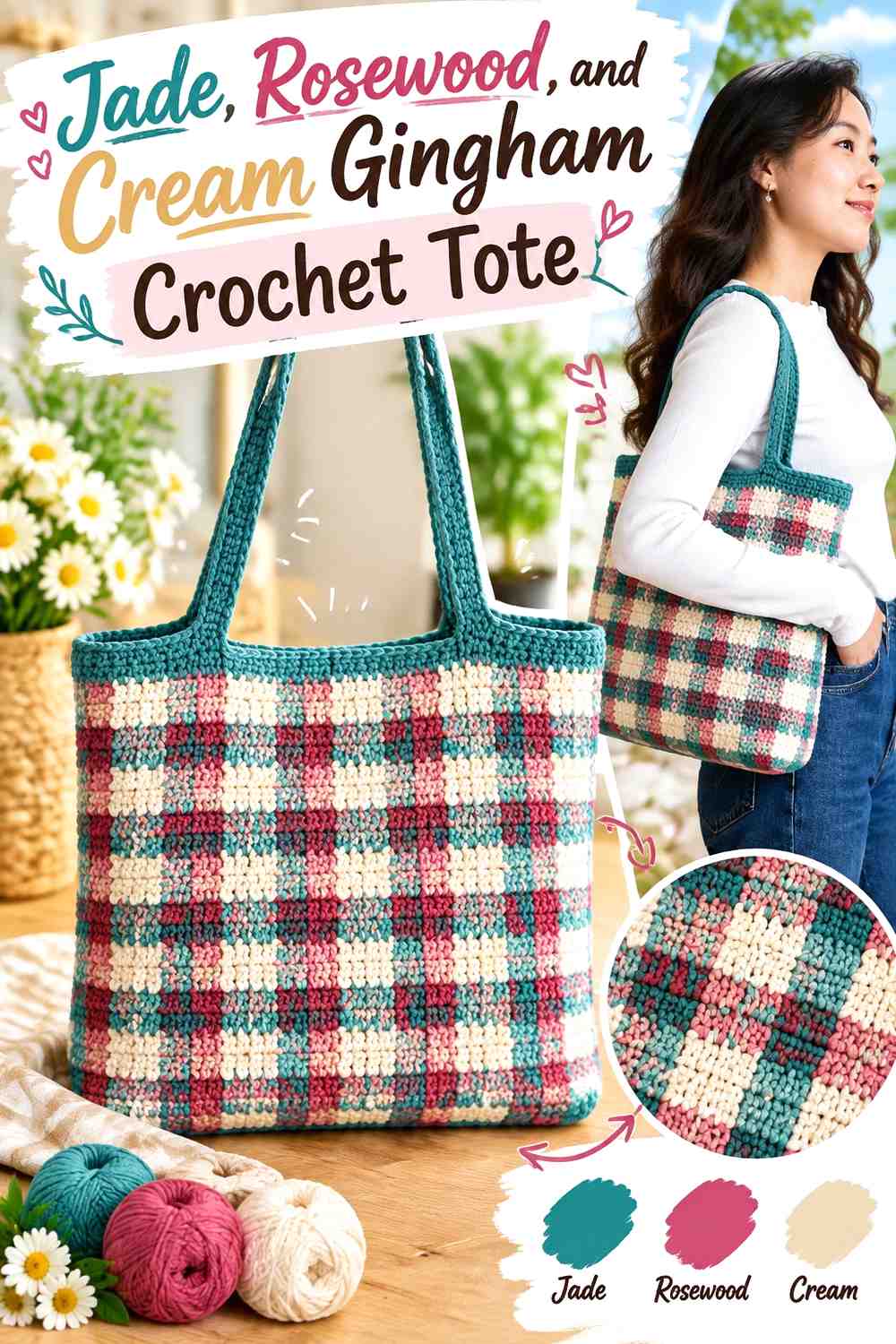 SAVE
SAVEGingham places greater demands on value contrast than broad stripes. Use rosewood as the deepest check, jade as a middle or contrasting hue, and cream as the lightest separator. The third shade keeps the checked structure readable without changing the main jade-and-rosewood direction.
Rosewood Should Anchor the Jade Crochet Gingham Checks
Give rosewood one consistent role across the tote rather than changing its visual function from square to square. A repeating dark check helps the geometric design remain organized on both sides of the bag.
Compare the yarns in grayscale before starting. If jade and rosewood collapse into the same value, the cream sections will need to do most of the work separating them.
Jade Can Bridge Rosewood and Cream Across the Crochet Tote
Jade can function as the middle color when it is clearly darker than cream but lighter or more saturated than rosewood. Keep its placement consistent so the gingham reads as a pattern rather than unrelated colored squares.
Cream Can Keep Jade and Rosewood Crochet Checks Clear
Use cream selectively as the lightest component. Its purpose is to create breathing room between the stronger colors, not to become the tote’s dominant shade.
A softer off-white can provide separation when you want less contrast than a very bright white would create.
Creator Credit: VivCrochets
7. Jade Crochet Bucket Hat With Rosewood Brim
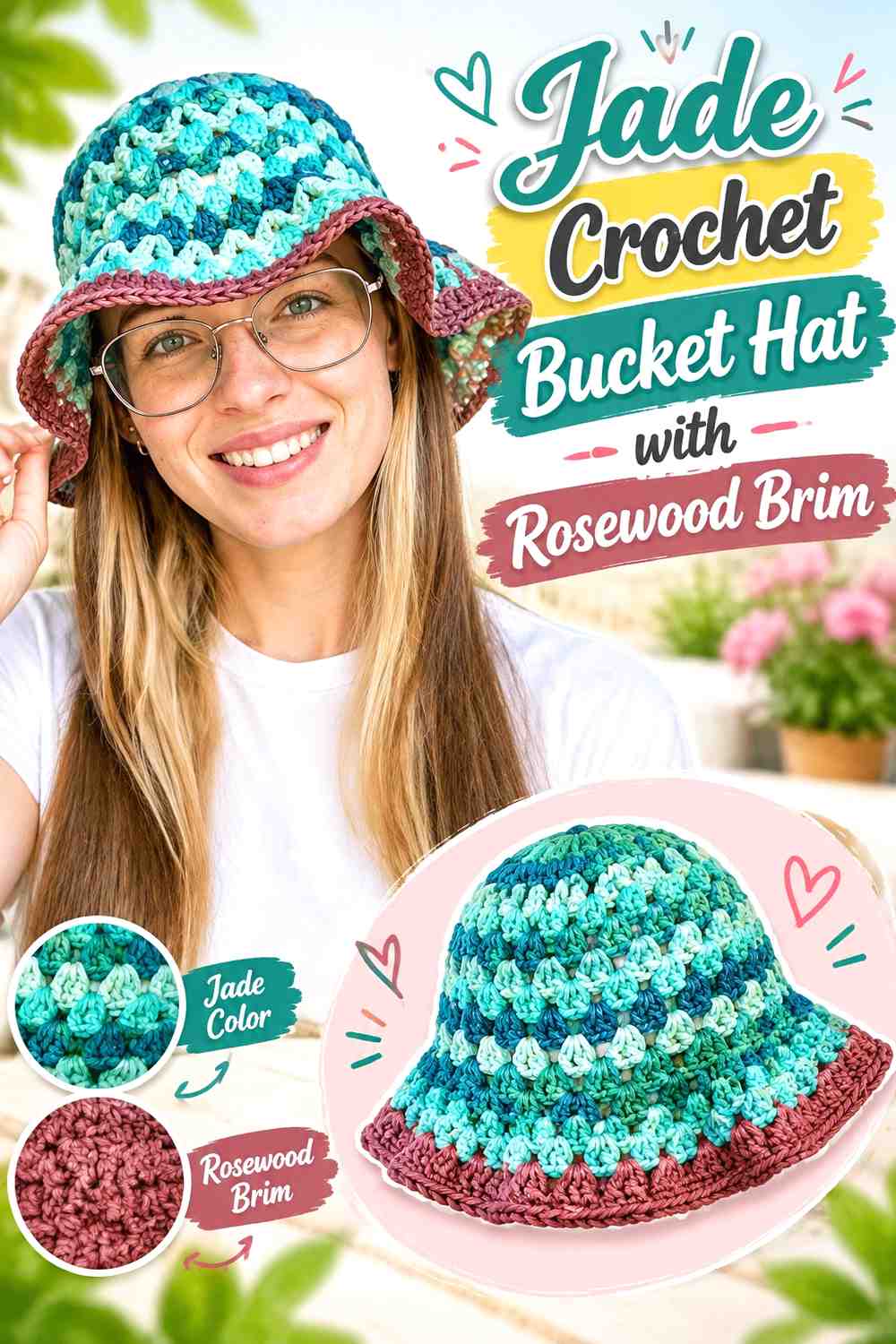 SAVE
SAVEA bucket hat already contains a useful structural divide between crown, sides, and brim. Let jade cover the upper portion and switch to rosewood when the brim begins. The color change then reinforces the actual shape of the hat.
Jade Can Keep the Crochet Bucket Hat Crown Unified
Use jade continuously across the crown and sides when the green is intended to dominate. Avoid scattered rosewood patches in the upper section unless you plan a repeated motif, because they can weaken the clean brim transition.
Rosewood Can Give the Jade Crochet Brim More Visual Weight
Rosewood creates a darker or warmer lower frame around the jade crown. Because a bucket-hat brim is visible from several directions, it may contribute more rosewood to the finished appearance than its stitch area suggests.
Check the hat from the front and side before deciding whether additional rosewood is needed elsewhere.
Creator Credit: PassioKnit Kelsie
8. Jade Textured Crochet Pillow With Rosewood Border
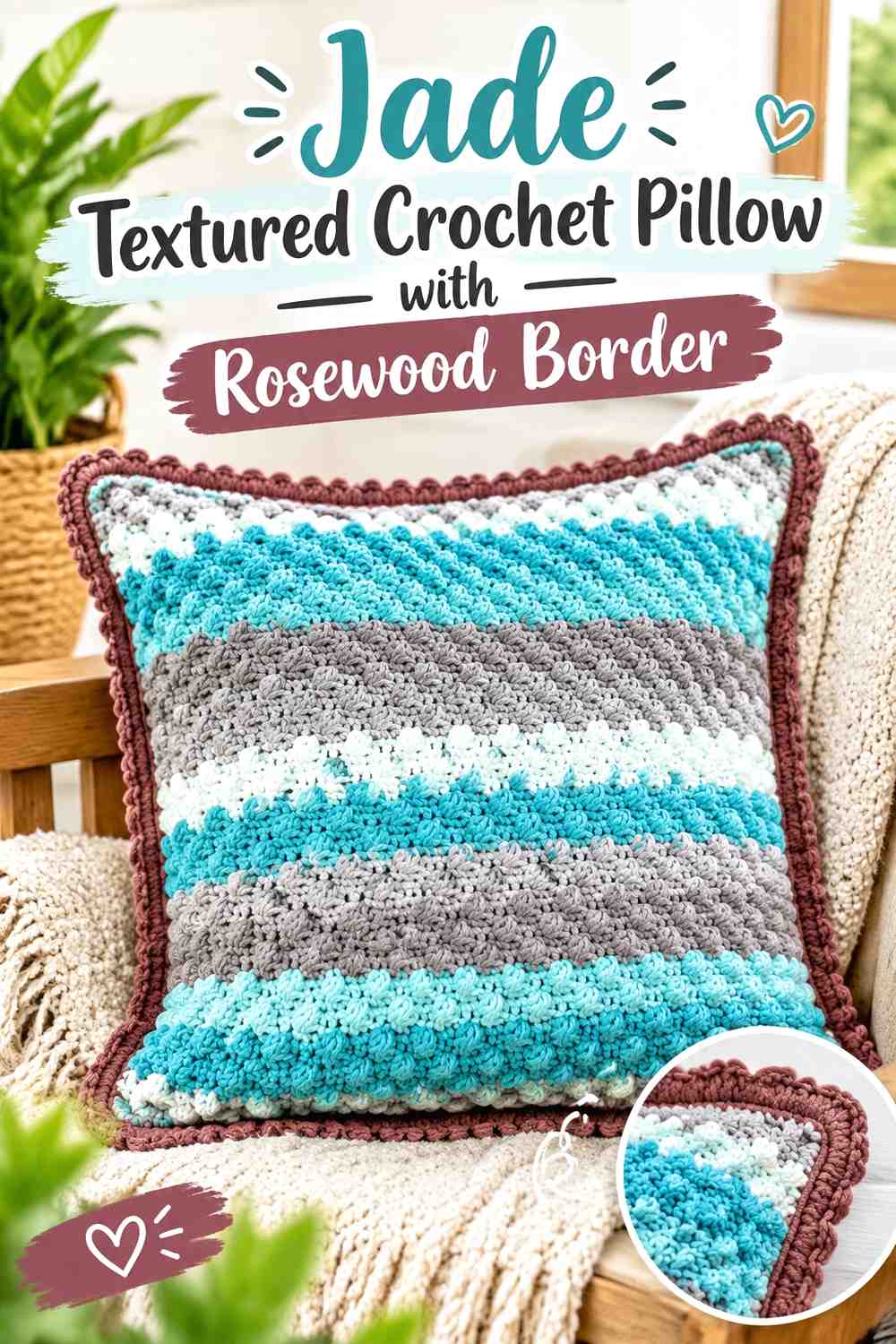 SAVE
SAVEA textured pillow is a useful place to keep color changes restrained. Jade can cover the raised or patterned face, while rosewood defines the perimeter. The result allows texture and color contrast to support each other instead of competing across the center.
Jade Can Keep Crochet Pillow Texture Visible
Use jade for the main face when its value makes the raised stitches easy to see. Before committing to the full pillow, compare a small textured swatch in jade with the same texture in rosewood.
If jade is very dark, a slightly clearer or lighter green may show shadows and surface changes more effectively.
Rosewood Can Frame the Jade Crochet Pillow Face
Place rosewood around the outer edge or joining area to create a warm boundary around the green surface. If rosewood also appears inside the center, repeat it symmetrically so those details connect with the border.
A thick rosewood frame will have more visual weight than narrow edging, so choose the width according to how dominant you want the brown-red shade to become.
Creator Credit: Rich Textures Crochet
9. Rosewood Crochet Rose Bouquet With Jade Foliage
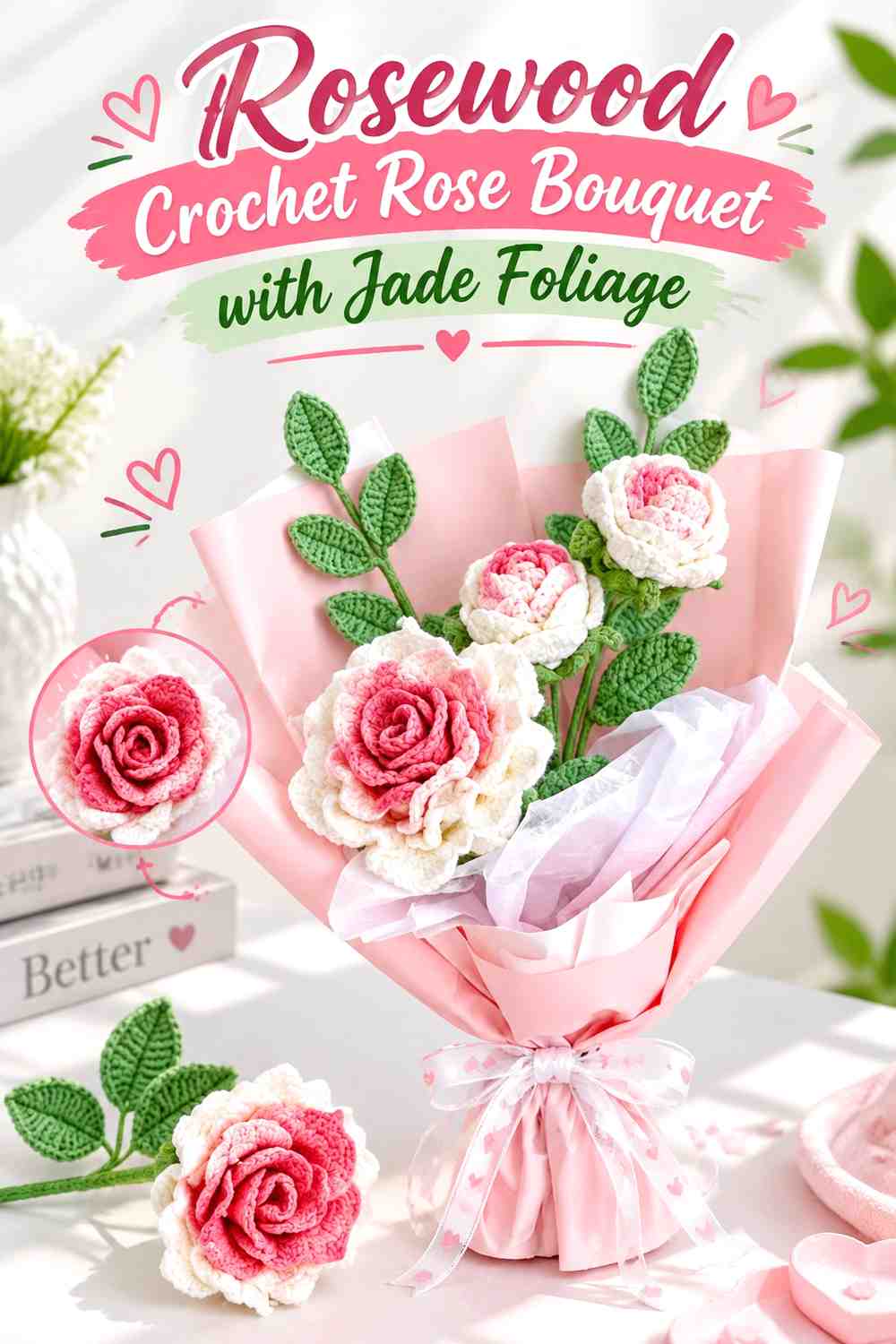 SAVE
SAVEA flower bouquet gives the colors naturally different roles. Rosewood can cover the rose heads, while jade works through leaves and foliage. This arrangement uses the warm shade as the floral focal point and keeps green in a recognizable supporting position.
Rosewood Roses Should Repeat Across the Jade Crochet Bouquet
Distribute rosewood flowers throughout the bouquet instead of clustering all the darkest blooms on one side. Balanced repetition prevents the arrangement from appearing visually heavy in a single area.
If your rosewood is especially deep, mix the spacing rather than placing every dark flower directly beside another.
Jade Foliage Can Separate Rosewood Crochet Roses
Place jade leaves around several rosewood blooms so the green appears throughout the arrangement. The foliage can also create useful boundaries between neighboring dark flowers.
Choose a jade that remains distinct from the rosewood at a distance; layered crochet petals and leaves can make both yarns appear visually deeper than they look in the skein.
Creator Credit: Lingzhi Handmade
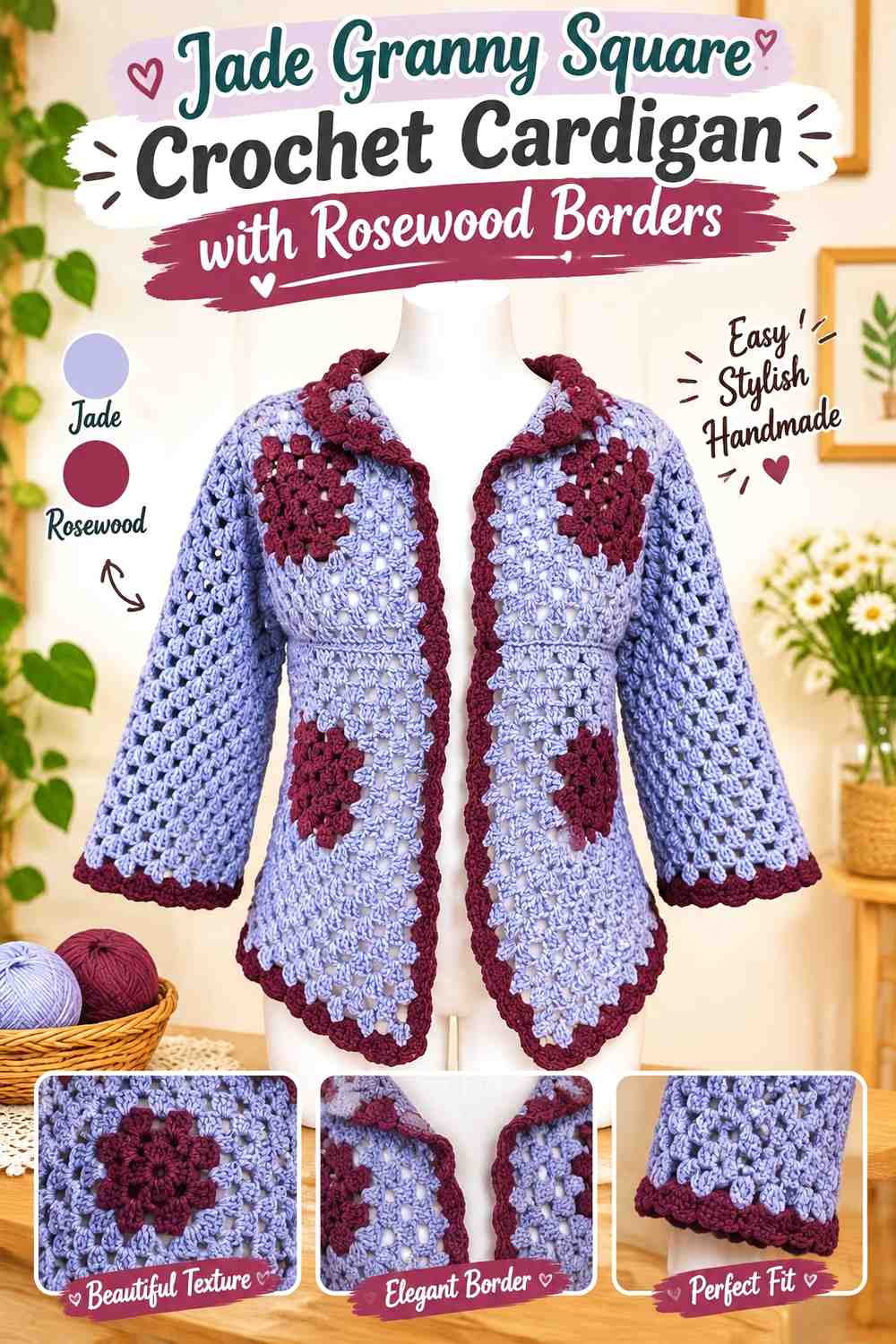
10. Jade Granny Square Crochet Cardigan With Rosewood Borders
 SAVE
SAVEA granny-square cardigan can make jade the repeating motif color while rosewood acts as the framework that connects separate squares. Using the darker warm shade around outer rounds, joins, or garment edges can give a multicomponent cardigan a stronger visual structure.
Jade Should Repeat Across the Rosewood Crochet Cardigan Motifs
Include jade somewhere in every major group of squares across the fronts, back, and sleeves. The exact placement does not need to be identical, but recurring green prevents one section of the garment from feeling unrelated to another.
Plan the square arrangement before joining so the strongest jade motifs do not collect on one sleeve or front panel.
Rosewood Can Connect Jade Crochet Squares at the Edges
Bring rosewood into selected outer motif rounds and repeat it around the finished cardigan opening or cuffs. Using the same shade at both motif and garment scale makes the border color feel structural.
If the rosewood is dark, avoid surrounding every jade detail with a heavy dark round unless you intentionally want the squares to look strongly outlined.
Creator Credit: Nati Crochet
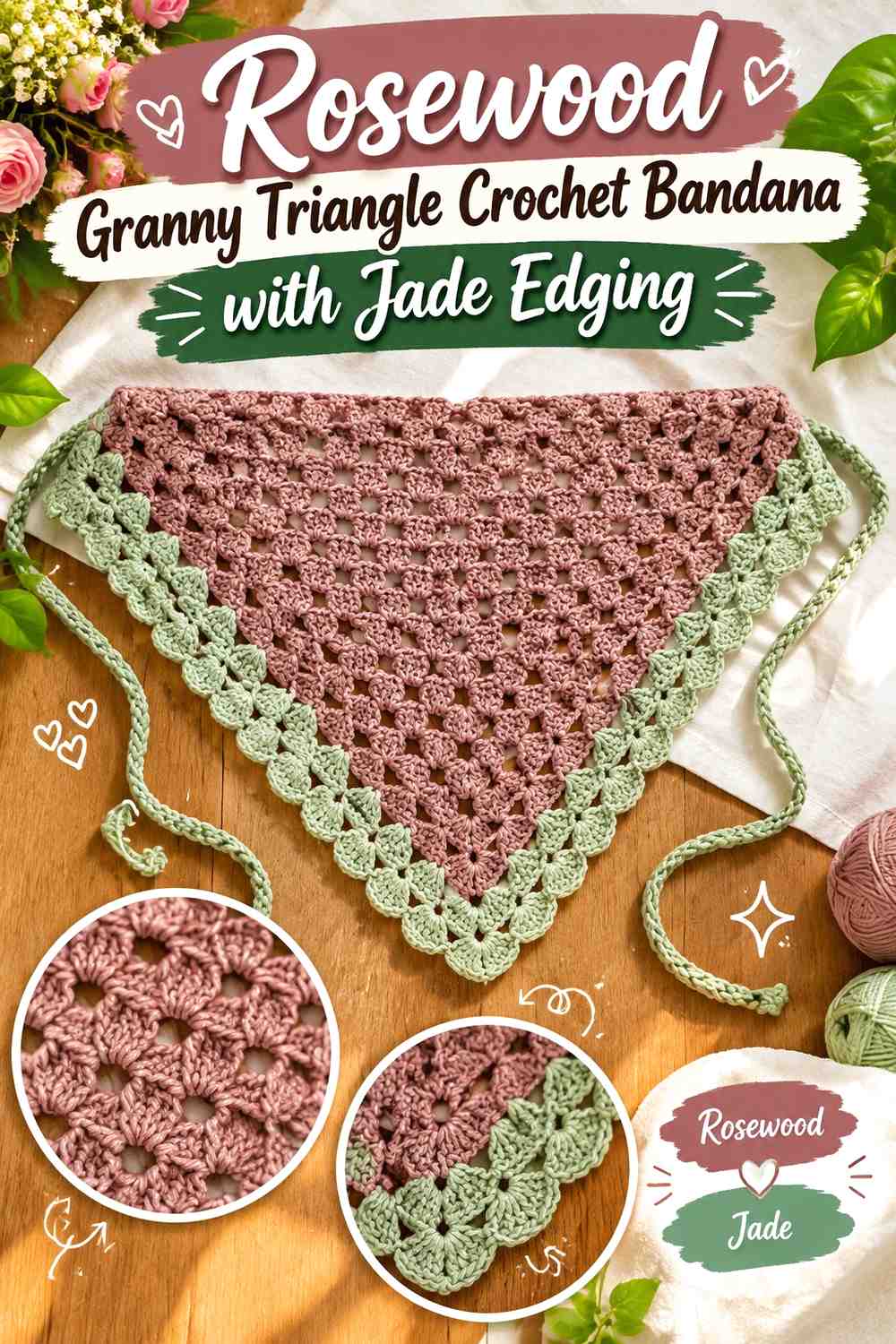
11. Rosewood Granny Triangle Crochet Bandana With Jade Edging
 SAVE
SAVEA triangle bandana has a large central field and a clearly visible outer edge, making it well suited to a simple two-color hierarchy. Rosewood can cover most of the triangle while jade follows the edging and continues into the ties.
Rosewood Can Keep the Crochet Bandana Center Cohesive
Use rosewood through the main granny-style triangle when you want the accessory to remain warm and dark. The open spaces already create visual movement, so frequent jade stripes are not necessary.
If rosewood is extremely deep, check that the granny structure remains readable before completing the full triangle.
Jade Can Connect Rosewood Crochet Edging and Ties
Carry jade around the outer edge and into the ties so the green has more than one purpose. This gives the supporting color a continuous route through the finished accessory.
A relatively small amount of jade may be enough when it is brighter or lighter than the rosewood center.
Creator Credit: HayHay Crochet
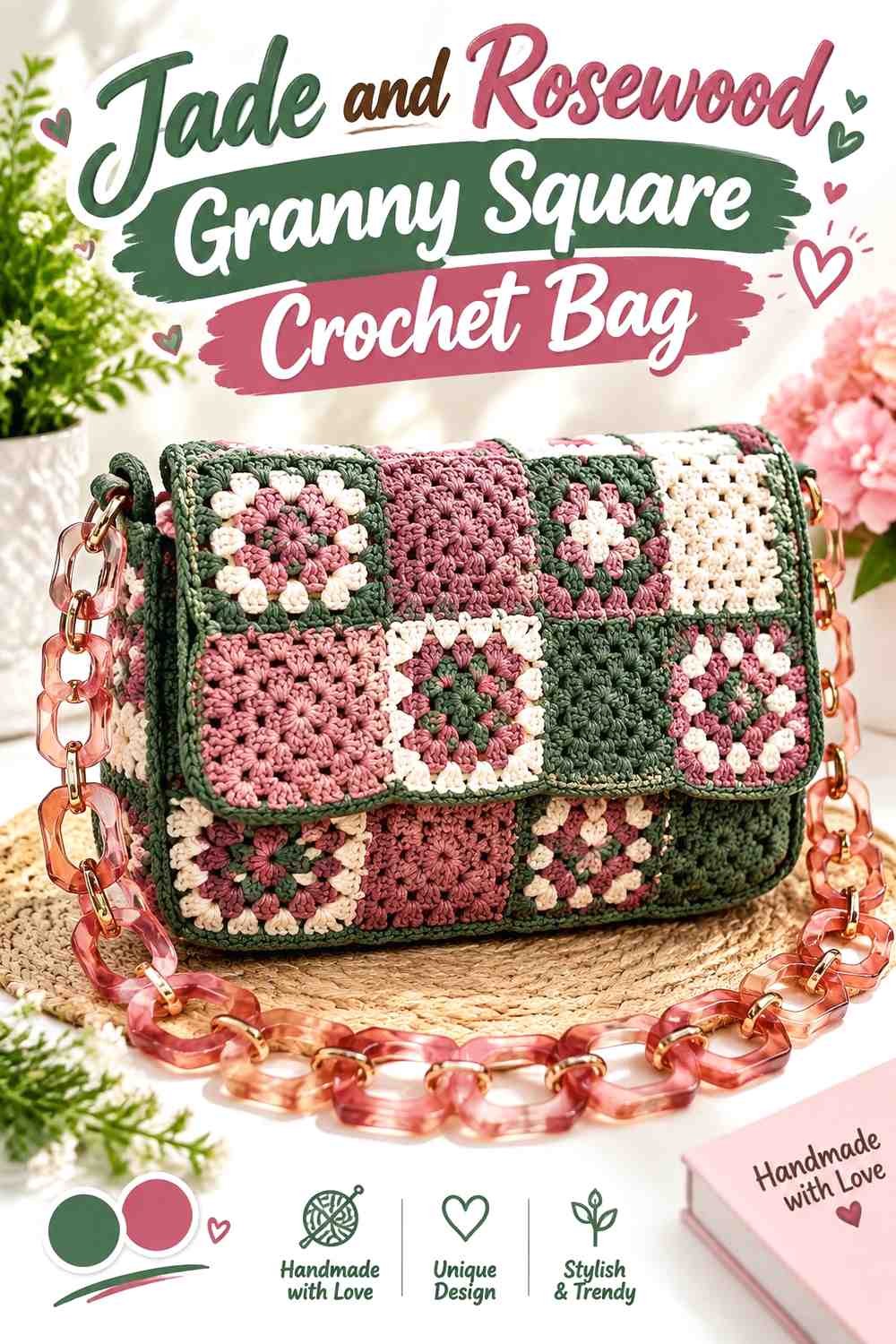
12. Jade And Rosewood Granny Square Crochet Bag
 SAVE
SAVEGranny squares let jade and rosewood interact repeatedly inside individual motifs. Jade can form centers with rosewood outer rounds, or the roles can alternate between selected squares. What matters most is maintaining a clear system across the complete bag panel.
Jade Can Anchor Rosewood Crochet Granny Square Centers
Repeat jade in the same motif position across several squares if you want the bag to look orderly. Jade centers create a clear repeated focal point while allowing rosewood to build outward around them.
If you alternate which color leads, plan the complete panel first rather than deciding each square independently.
Rosewood Can Define Jade Crochet Granny Square Borders
Use rosewood near the outside of selected motifs when you want the reddish-brown shade to separate neighboring jade areas. Lay the squares together before joining to check whether one corner of the bag has become disproportionately dark.
If rosewood is also the joining color, consider how much additional dark surface that will introduce between motifs.
Creator Credit: Brunaticality
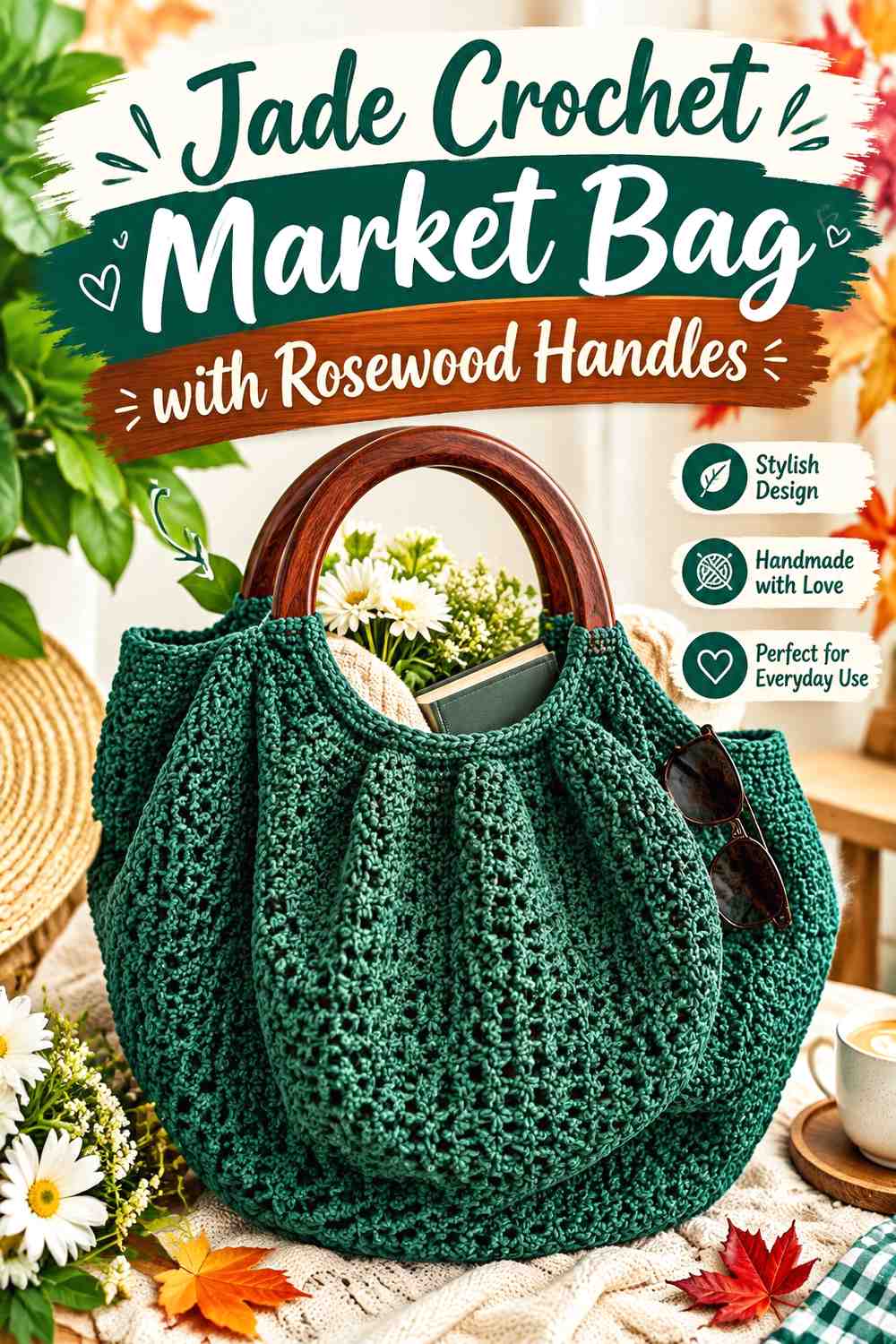
13. Jade Crochet Market Bag With Rosewood Handles
 SAVE
SAVEA market bag can assign the colors according to its structure. Jade can cover most of the open or solid body, while rosewood defines the opening and handles. Repeating rosewood near the base is another option when the upper portion needs visual balance.
Jade Can Carry the Main Crochet Market Bag Surface
Use jade through the bag body when you want green to remain dominant. If the fabric is mesh or openwork, look at the bag both empty and filled because whatever sits behind the stitches can alter the apparent depth of the jade.
Rosewood Can Connect Jade Crochet Handles to the Opening
Introduce rosewood around the upper edge before continuing into the handles. That transition helps the straps look integrated with the bag rather than like a second-color component added afterward.
If you also repeat rosewood near the base, keep that lower section controlled so the bag still reads primarily as jade.
Creator Credit: Just Be Crafty
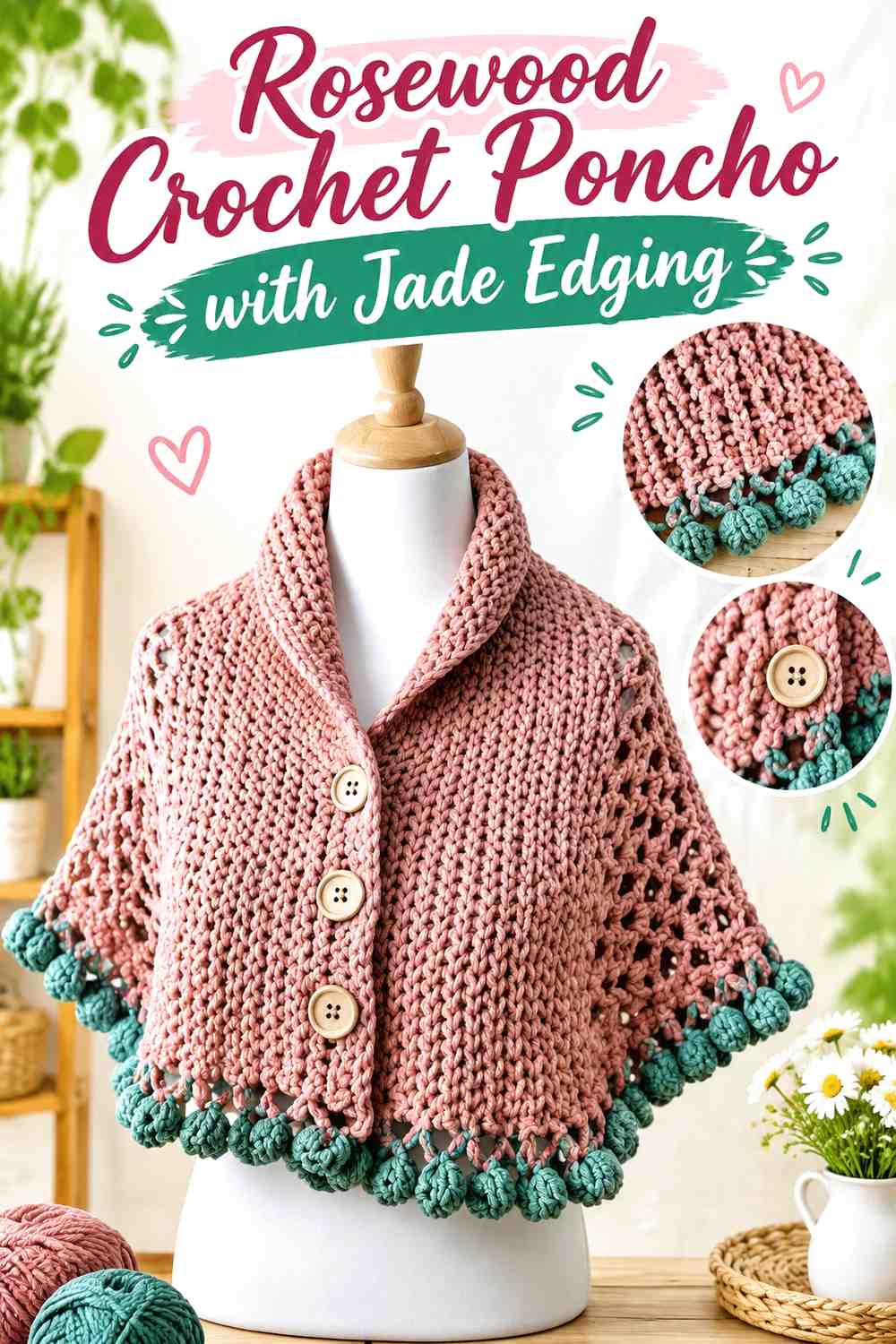
14. Rosewood Crochet Poncho With Jade Edging
 SAVE
SAVEA poncho offers a large uninterrupted area, so a restrained palette can keep the silhouette clear. Rosewood can cover the main body while jade follows the neckline and outer perimeter.
Rosewood Can Keep the Crochet Poncho Body Unified
Use rosewood across the broad center when you want the garment to have a deep, warm direction. Avoid unnecessary jade stripes through every section if the poncho already contains visible lace or texture.
A single dominant field can make those crochet details easier to appreciate.
Jade Can Outline the Rosewood Crochet Poncho
Use jade around the lower perimeter to create a cooler edge against the rosewood body. Repeating jade around the neckline can connect the center opening to the outer border.
If the jade is much brighter than rosewood, a narrow edge may create enough separation without turning the border into the main feature.
Creator Credit: Handwork diy
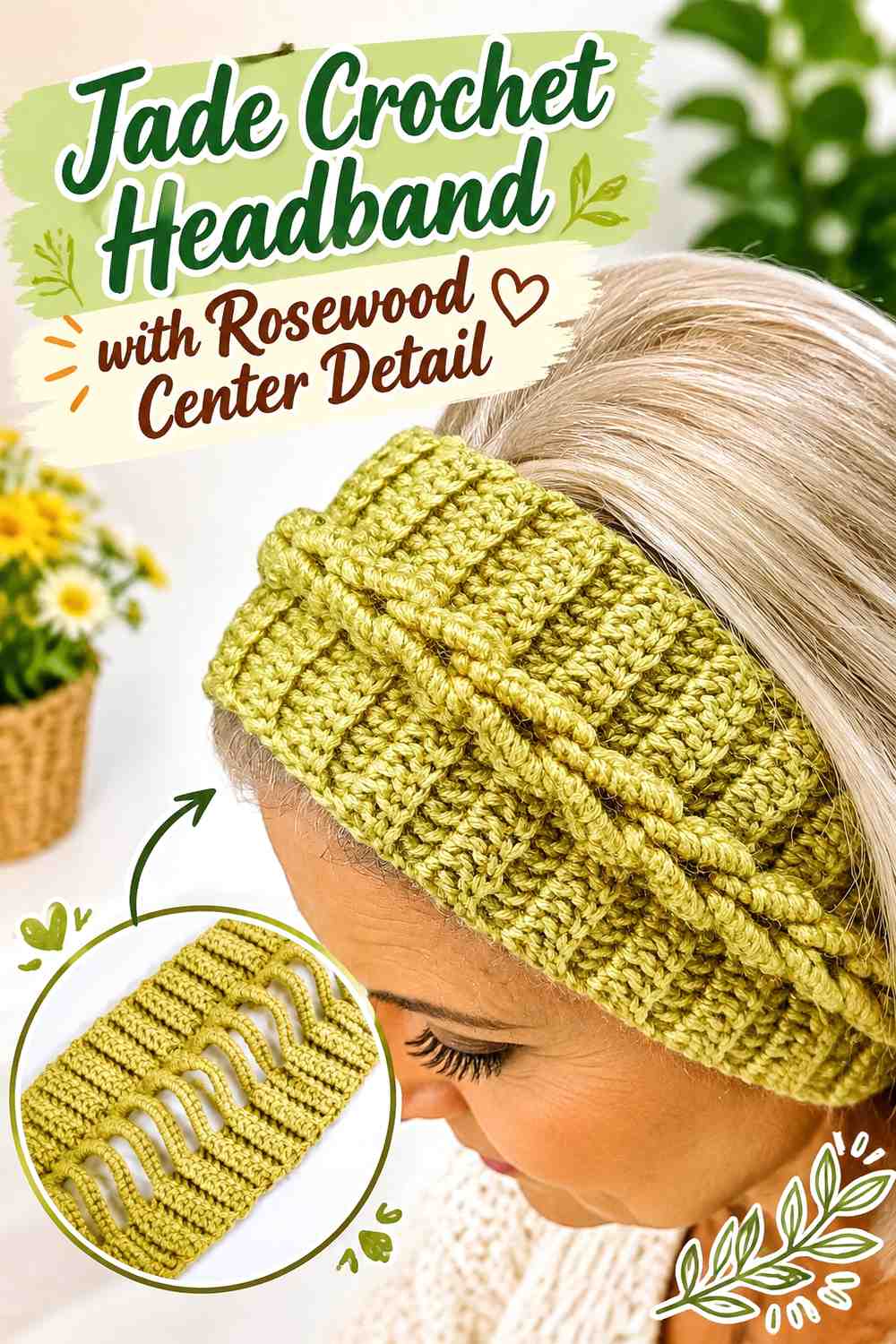
15. Jade Crochet Headband With Rosewood Center Detail
 SAVE
SAVEA headband has too little surface area for complicated color distribution to be necessary. Jade can cover the main band while rosewood concentrates around a center twist, overlap, or other focal detail.
Jade Can Keep the Crochet Headband Surface Continuous
Use jade throughout most of the band so the stitch texture remains uninterrupted. A consistent green background also gives the smaller rosewood center enough contrast to become noticeable.
Rosewood Can Emphasize the Jade Crochet Headband Center
Place rosewood where the headband already has a structural focal point. Because the accessory is small, even a narrow dark section can have significant visual weight.
Avoid adding unrelated rosewood bands near both ends unless you want a more striped effect; the center accent is often enough to establish the second color.
Creator Credit: Di’s Handicrafts (Crochet and Knitting)
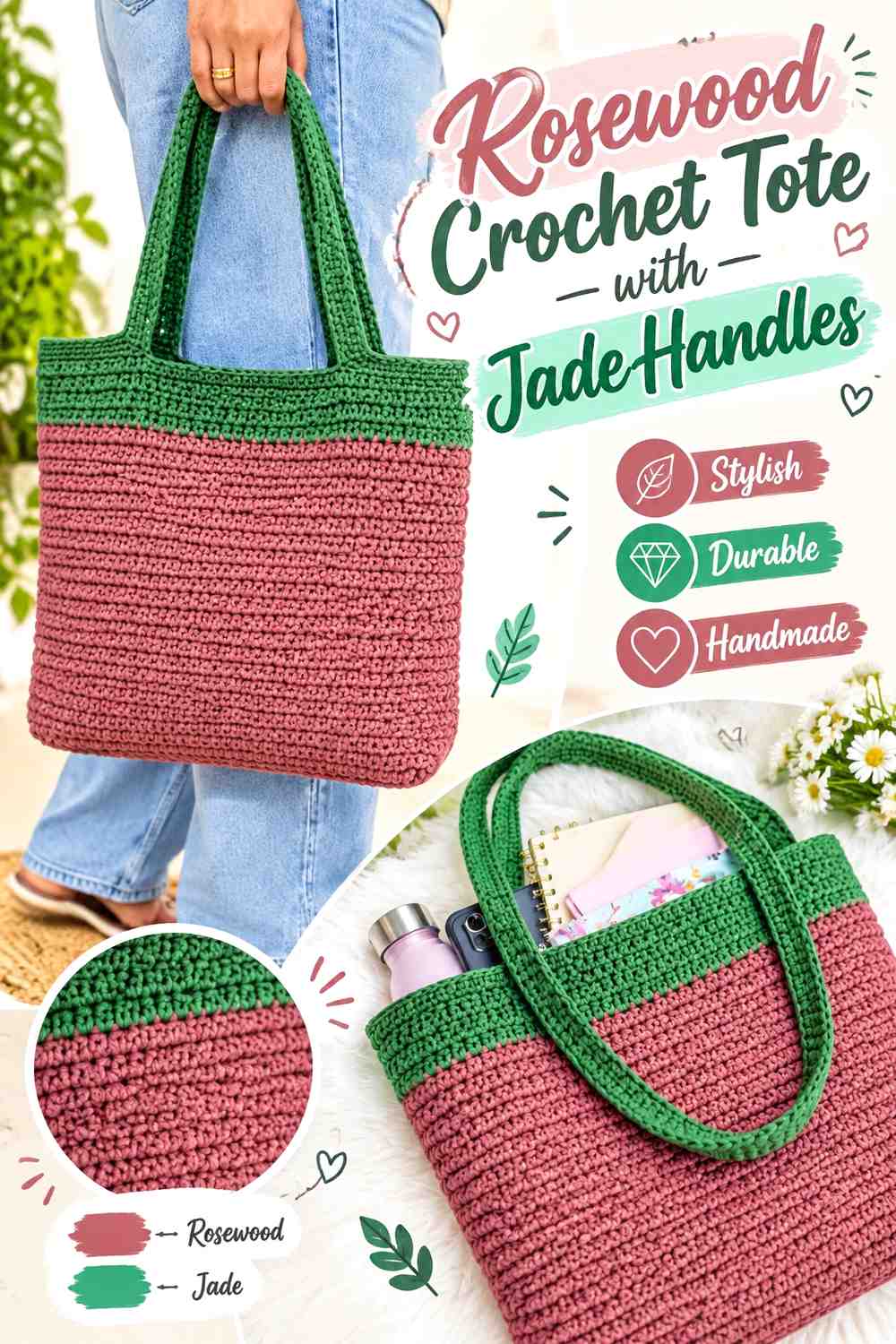
16. Rosewood Crochet Tote With Jade Handles
 SAVE
SAVEThis tote reverses the color hierarchy of the jade market bag. Rosewood becomes the continuous body color, while jade appears around the opening and handles. The arrangement works particularly well when you want jade to remain noticeable without covering a large rectangular surface.
Rosewood Can Keep the Crochet Tote Body Grounded
Use rosewood across the front, back, and base to establish a consistent warm field. If the tote has a simple stitch pattern, the uninterrupted color can make its overall shape more prominent.
Jade Can Give the Rosewood Crochet Tote a Defined Top Edge
Bring jade into the upper edge before forming or attaching the handles. This provides a transition between the rosewood body and green straps and prevents the handles from looking visually disconnected.
If the jade is especially vivid, avoid adding large extra green blocks unless you intentionally want to shift the tote toward an equal two-color balance.
Creator Credit: Hopeful Turns
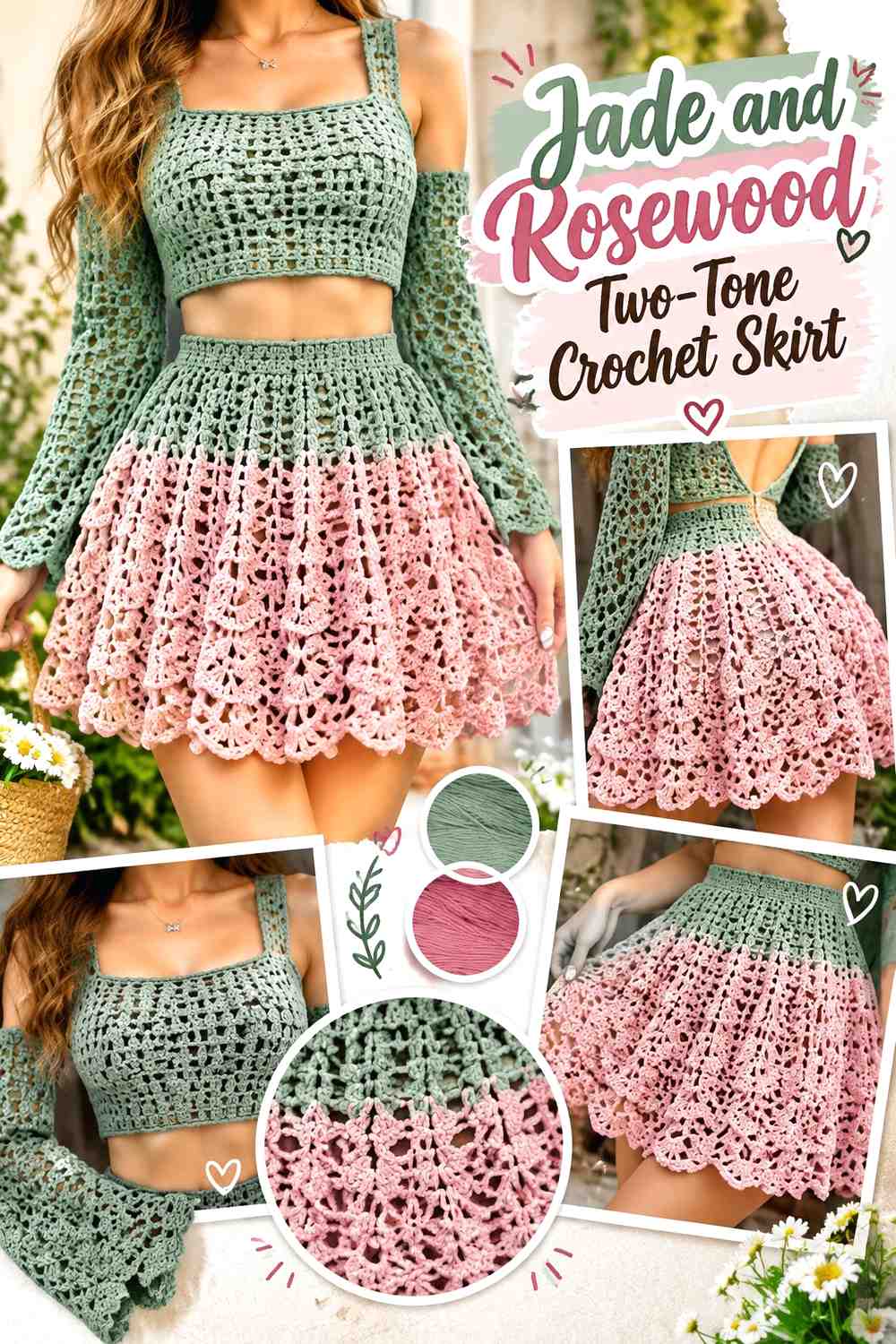
17. Jade And Rosewood Two Tone Crochet Skirt
 SAVE
SAVEA skirt needs color placement that works around the entire garment rather than only from the front. Jade can form the main field while rosewood appears at the waistband and in a repeated lower section, or those roles can be reversed for a darker result.
Jade Can Carry the Main Crochet Skirt Body
Use jade across the largest area when you want green to remain the dominant color from every viewing angle. Plan the rosewood placement around the complete circumference before changing colors so the distribution does not become front-heavy.
Rosewood Can Separate the Jade Crochet Waistband and Lower Detail
A rosewood waistband gives the warm shade a structural purpose. Repeating rosewood lower on the skirt can connect the top accent to the rest of the garment without requiring equal color coverage.
When the two yarns are close in value, use broader sections rather than narrow bands so the color transitions remain visible.
Creator Credit: Maria Alice Crochê
Comparing Jade and Rosewood Crochet Directions
| If You Want | Color Direction to Consider |
|---|---|
| Mostly jade | Blanket, cardigan, bucket hat, pillow, market bag, or headband |
| Mostly rosewood | Scarf, sweater, bandana, poncho, or tote |
| Clear geometric colorwork | Gingham tote or granny-square bag |
| Rosewood concentrated around edges | Jade cardigan, pillow, bucket hat, or market bag |
| Jade concentrated around edges | Rosewood sweater, bandana, poncho, or tote |
| Strong repeated motifs | Daisy blanket or granny-square cardigan |
| Separate natural-looking color roles | Rosewood roses with jade foliage |
| A softer low-contrast result | Broad blanket stripes or large garment panels |
Conclusion
Jade and rosewood give crochet projects two very different color personalities to work with: one green and cool, the other reddish brown and warm. The strongest results come from deciding which shade has the dominant job rather than trying to use them in equal quantities everywhere.
For a jade-forward result, start with the blanket, cardigan, bucket hat, pillow, market bag, or headband and let rosewood define smaller structural areas. For a deeper direction, make rosewood the primary color on a scarf, sweater, bandana, poncho, or tote and use jade around openings and finishing details.
Motif-based projects require the most contrast checking. Deep jade and dark rosewood can visually merge inside small granny-square rounds, gingham checks, or flower details even when they look very different as yarn. Broader panels can accommodate that softer relationship more easily.
Use the original tutorials for construction guidance and treat these jade-and-rosewood placements as independent ways to adapt the finished projects.
Frequently Asked Questions
Do jade and rosewood work together in crochet?
Yes. Jade supplies a cool green direction while rosewood adds a warmer reddish-brown contrast. How dramatic the pairing looks depends mainly on the value and saturation of the actual yarns you choose.
Should jade or rosewood be the dominant crochet color?
Either can lead. Jade works well across large surfaces when you want green to define the project, while rosewood creates a deeper result when used on main garment panels, scarf fabric, or bag bodies.
How can I check whether jade and rosewood have enough contrast?
Place the yarns together and look at them from a distance. A grayscale photograph can also reveal whether the two colors have similar lightness. This is especially useful before crocheting small motifs or narrow borders.
What can I add if jade and rosewood are too close in value?
A restrained pale neutral such as cream or ivory can separate the colors in gingham, flowers, or granny squares. Another option is replacing either the jade or rosewood with a lighter or darker version while preserving its original color role.
How can I substitute a different jade yarn?
Preserve the contrast relationship that matters to the project. If jade is supposed to be lighter than rosewood, choose another green that remains clearly lighter. If the intended effect is tonal, match the original value more closely.
How can I substitute a different rosewood shade?
Look for a muted reddish brown with similar depth. A darker rosewood strengthens borders and ribbing, while a lighter rosewood creates a softer transition against jade across broad panels and stripes.
Can jade and rosewood work in granny-square crochet?
Yes, but test the colors at motif scale. If they are close in value, use one consistently in centers and the other in wider outer rounds, or introduce a small light separator so individual motif sections remain visible.
How do I keep a jade and rosewood crochet project from looking too busy?
Give each color a defined job. Let one cover the main surface and repeat the other in predictable borders, cuffs, straps, motif centers, joins, or selected bands rather than changing colors at every possible section.