Jade and pewter gray make a useful crochet pairing because each color can take a very different role. Jade supplies the recognizable green element, while pewter gray can either quiet the palette or become a strong darker framework around the green.
The proportions matter. A cardigan with broad jade panels and narrow pewter gray cuffs will look primarily green, while a pewter gray basket with one jade band gives the same palette a much more neutral direction. Texture matters too: when the two yarns are close in lightness, ribbing, raised stitches, and motifs can appear more blended than they do when the yarn is still in the skein.
These 16 ideas use the same two-color family in different ways so you can compare dominant colors, borders, stripes, centers, joins, handles, and garment details rather than simply alternating jade and gray everywhere.
Quick List
- Jade And Pewter Gray Crochet Blanket
- Jade And Pewter Gray Crochet Pocket Cardigan
- Pewter Gray And Jade Crochet Vest
- Jade And Pewter Gray Crochet Bucket Hat
- Pewter Gray And Jade Tunisian Crochet Scarf
- Jade And Pewter Gray Crochet Beanie
- Pewter Gray And Jade Crochet Shawl
- Pewter Gray And Jade Crochet Basket
- Jade And Pewter Gray Crochet Granny Squares
- Jade And Pewter Gray Crochet Tote Bag
- Pewter Gray And Jade Crochet Plant Hanger
- Jade And Pewter Gray Crochet Flower Coasters
- Pewter Gray And Jade Crochet Cushion Cover
- Jade And Pewter Gray Crochet Mug Cozy
- Pewter Gray And Jade Crochet Wall Hanging
- Jade And Pewter Gray Crochet Market Bag
Decide Whether Jade or Pewter Gray Should Dominate
Giving jade and pewter gray exactly the same amount of space is only one option. A clearer hierarchy often makes a two-color project easier to read. Jade can dominate a blanket, cardigan, hat, or tote while pewter gray marks edges and structural details. Reversing the arrangement creates a quieter gray-led project with smaller green focal points.
Look at the largest uninterrupted surface first. On a cardigan, that might be the body panels. On a cushion, it is the central face. On a basket, it is the wall. Assigning that area to one color establishes the overall direction before you decide where the second shade belongs.
Check Jade and Pewter Gray Contrast in Worked Crochet
Color names alone do not tell you how much contrast two yarns will create. A dark jade and dark pewter gray may be different hues but similar in lightness, especially once crochet texture creates shadows.
Work a small sample or place the yarns next to each other and view them from farther away. A grayscale photo is another simple way to check value contrast. If an important motif, stripe, or border almost disappears, choose a lighter or darker version of one color while keeping the jade-and-pewter relationship.
1. Jade And Pewter Gray Crochet Blanket
 SAVE
SAVEA jade-dominant blanket gives the green enough uninterrupted space to establish the overall look, while pewter gray can divide larger sections and define the perimeter. Rather than alternating the colors in equal narrow stripes, use broader jade areas and more controlled gray interruptions when you want the blanket to remain clearly jade-led.
Let Jade Cover the Largest Crochet Blanket Sections
Broad jade sections allow both the color and the stitch texture to remain visible. This is especially useful when the blanket already contains noticeable surface patterning, since frequent color changes can compete with that texture.
Before committing to a stripe sequence, compare one broad jade section with several thin jade stripes. The broad version usually gives the green much more visual authority.
Use Pewter Gray to Frame the Jade Crochet Blanket
Pewter gray can be placed in narrower stripes or reserved for the final border. A gray perimeter can give the jade center a defined edge without adding another unrelated color.
If your pewter gray is nearly as dark as the jade, expect a quieter transition. A lighter pewter produces stronger separation around the green.
Creator Credit: Knit Picks — YouTube tutorial
2. Jade And Pewter Gray Crochet Pocket Cardigan
 SAVE
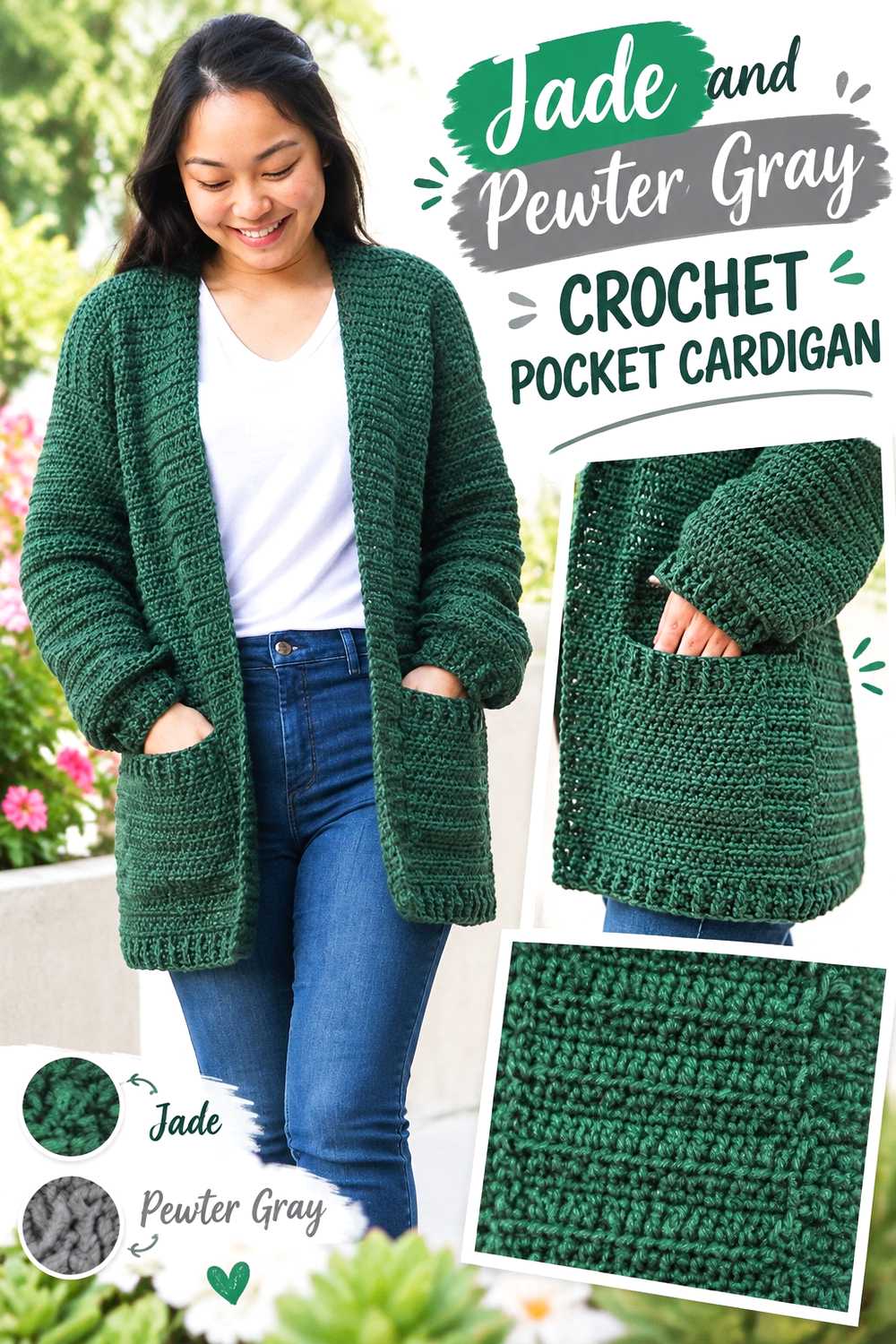
SAVEA pocket cardigan gives the palette several natural zones: body panels, sleeves, pockets, cuffs, hem, and front edging. Keeping jade across the largest panels while repeating pewter gray in smaller details creates a coordinated garment without breaking the body into too many color blocks.
Keep Jade Across the Main Crochet Cardigan Panels
Use jade on the back and major front sections when you want the garment to read primarily as green. The uninterrupted color also keeps panel construction visually connected from shoulder to hem.
If the cardigan has broad sleeves, keeping them jade can extend that continuity. Pewter gray can then be saved for details rather than competing with the body.
Repeat Pewter Gray on Jade Cardigan Pockets and Cuffs
Pewter gray pockets create obvious contrast on a jade front, while gray cuffs offer a smaller accent. Using both can connect the upper and lower portions of the garment.
If gray pockets appear too large against the jade, keep the pockets jade and move pewter gray to the cuff, hem, or front opening instead.
Creator Credit: forthefrills — YouTube tutorial
3. Pewter Gray And Jade Crochet Vest
 SAVE
SAVEA pewter-gray body with jade edging reverses the dominant relationship. Because a vest exposes its neckline, armholes, and lower edge clearly, those borders give jade several places to repeat without requiring the green to cover large panels.
Let Pewter Gray Form the Main Crochet Vest Body
Keeping the front and back largely pewter gray gives the garment one continuous neutral field. This is useful when you want jade to function as a visible detail rather than the first color noticed.
The gray also creates a consistent background for any stitch texture running across the vest.
Use Jade to Outline the Pewter Gray Crochet Vest
Jade can follow the neckline, armholes, straps, or lower edge. Repeating it around more than one opening prevents the green from looking like an isolated finishing choice.
Watch the trim width. A broad jade border can become almost as visually important as the pewter gray body, while narrow edging preserves the gray-led hierarchy.
Creator Credit: Brunaticality — YouTube tutorial
4. Jade And Pewter Gray Crochet Bucket Hat
 SAVE
SAVEA bucket hat has clear structural divisions between crown, sides, and brim. That makes it possible to use jade and pewter gray in large, deliberate zones instead of frequent stripes. A jade crown with a pewter gray brim gives the darker neutral a strong framing role near the widest part of the hat.
Carry Jade Through the Crochet Bucket Hat Crown
Keeping jade continuous through the crown and upper sides gives the rounded section a clear color identity. It also gives visible stitch texture a less interrupted background.
Extend jade lower on the sides when you want pewter gray to remain limited to the brim.
Let Pewter Gray Define the Jade Crochet Bucket Hat Brim
Because the brim projects outward, even a relatively small amount of pewter gray can become noticeable. The color change can emphasize the transition from the fitted body of the hat to the wider lower edge.
If the change feels too abrupt, introduce a narrow pewter gray band before the full brim rather than adding additional colors.
Creator Credit: PassioKnit Kelsie — YouTube tutorial
5. Pewter Gray And Jade Tunisian Crochet Scarf
 SAVE
SAVEA long scarf provides enough surface for broad blocks, repeated bands, or an intentionally uneven distribution. Pewter gray can control most of the length while jade appears at the ends or in spaced sections, creating a neutral-led scarf with recognizable green interruptions.
Give Pewter Gray Long Uninterrupted Crochet Scarf Sections
Broad pewter gray areas make the scarf read as a gray accessory instead of a tightly striped two-color piece. They also allow the Tunisian texture to remain consistent for longer stretches.
If you want jade to feel more important, reduce the length of the gray blocks rather than adding several new colors.
Use Jade Where the Pewter Gray Crochet Scarf Needs a Focal Break
Jade can appear near both ends, through a central block, or at repeated intervals. Repeating the color is usually more cohesive than placing one isolated jade stripe in an otherwise gray scarf.
Evaluate the colors in the completed texture, since shadows in Tunisian crochet can make two medium-to-dark shades appear closer than expected.
Creator Credit: Knitting my hobby — YouTube tutorial
6. Jade And Pewter Gray Crochet Beanie
 SAVE
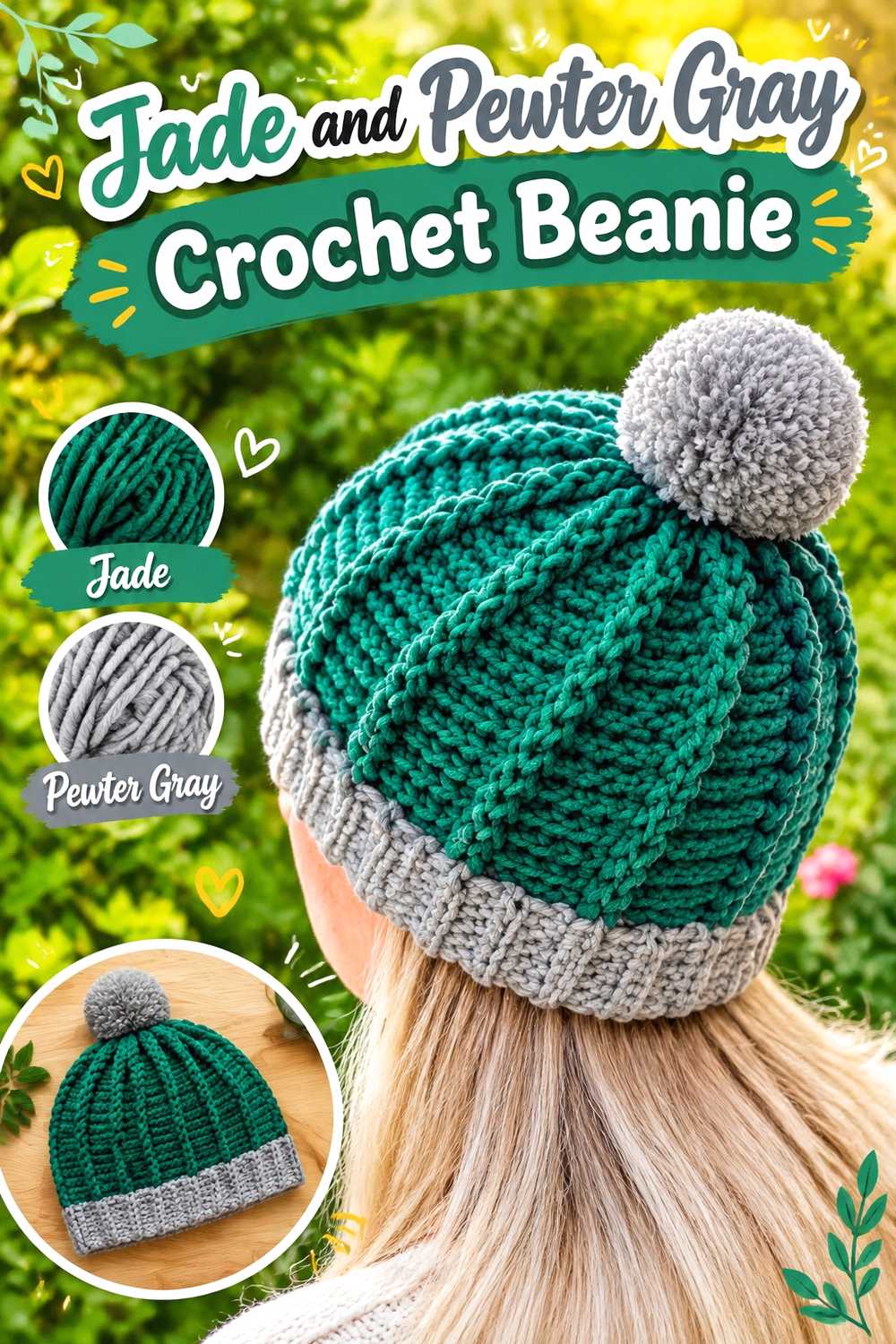
SAVEA beanie can separate jade and pewter gray according to its structure rather than using small alternating stripes. Jade across the crown and pewter gray around the ribbed band gives each color a distinct job and makes the lower edge easy to identify.
Keep Jade Across the Main Crochet Beanie Crown
A solid jade crown creates the largest color block and allows post stitches or other raised texture to remain visually continuous.
If the crochet texture produces deep shadows, compare your jade with pewter gray after working a sample. Dark versions of both colors may blend more than expected.
Use Pewter Gray Around the Jade Crochet Beanie Ribbing
Pewter gray can turn the ribbed lower section into a deliberate frame. Because this band encircles the hat, the gray will remain visible even if it occupies much less total area than jade.
Repeating a small amount of gray in an optional finishing detail can connect the palette, but avoid adding details solely to create another color placement.
Creator Credit: Di’s Handicrafts (Crochet and Knitting) — YouTube tutorial
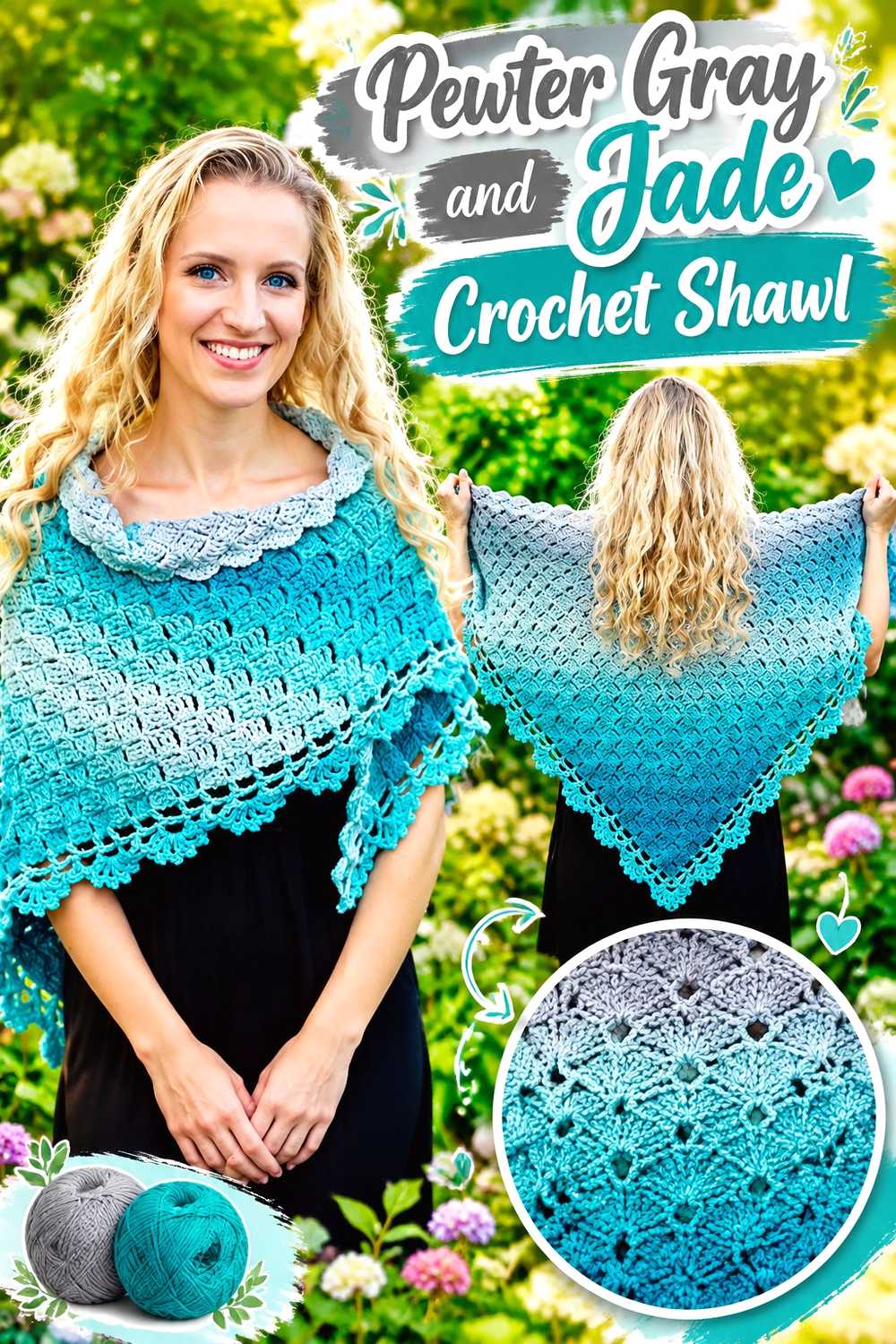
7. Pewter Gray And Jade Crochet Shawl
 SAVE
SAVEA triangular shawl creates expanding rows and a pronounced outer edge, giving the two colors different visual opportunities. Pewter gray can form the larger interior field while jade marks the border or appears in selected bands that become wider as the shawl grows.
Let Pewter Gray Control the Main Crochet Shawl Field
A continuous pewter gray center allows the shape of the shawl to remain visually clear. It can also keep decorative openwork or textured stitches from competing with frequent color changes.
If the gray feels too dominant once the shawl grows, introduce jade before the outermost section rather than waiting until the final edge.
Use Jade to Give the Pewter Gray Crochet Shawl a Defined Border
Jade around the outer edge makes the triangular silhouette more visible and creates a cooler color frame around the neutral interior.
A narrow jade finish produces a restrained accent. Several jade rows give the green much more influence, so judge border width in relation to the full shawl rather than the unfinished edge.
Creator Credit: Naztazia — YouTube tutorial
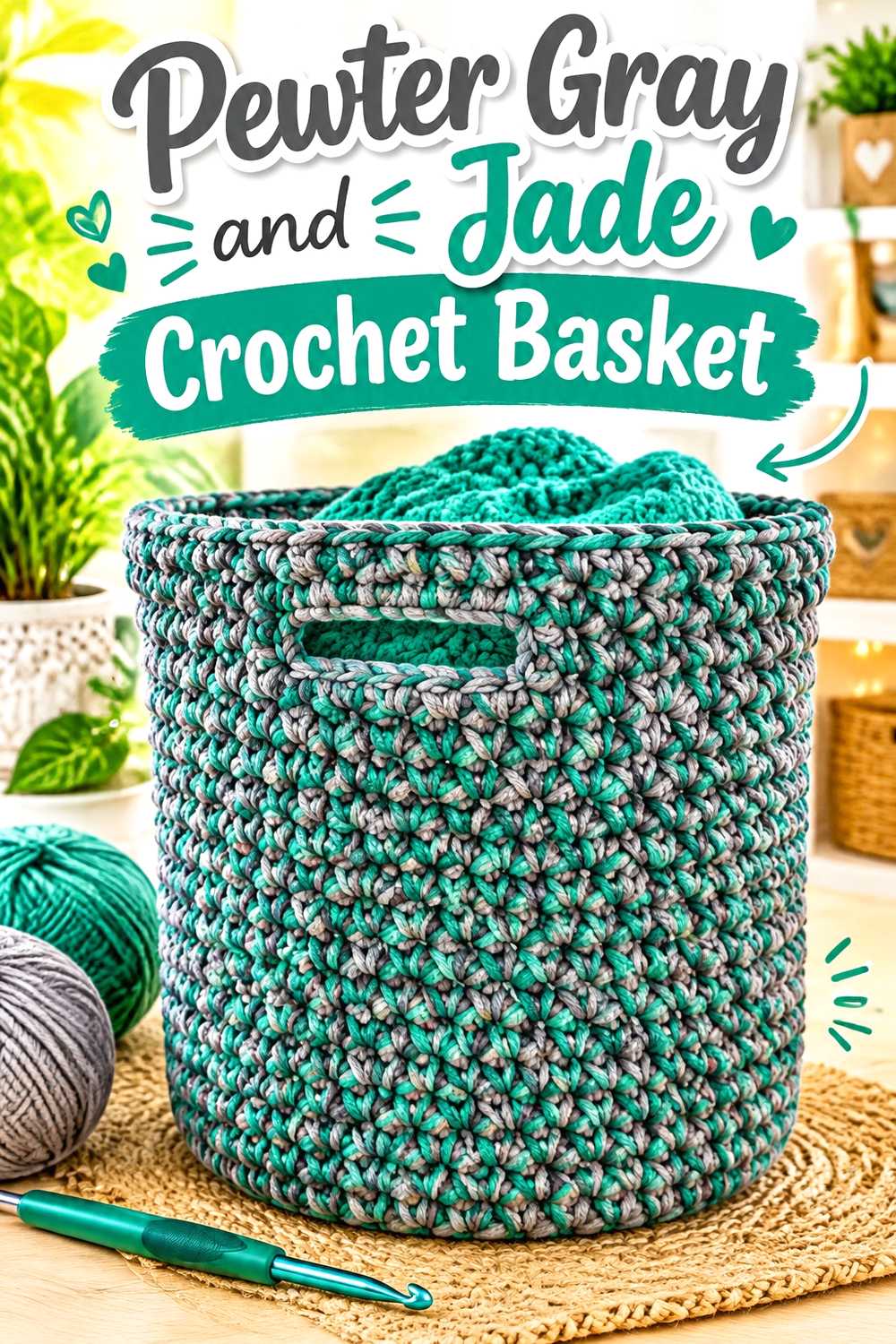
8. Pewter Gray And Jade Crochet Basket
 SAVE
SAVEA basket works well with a neutral-led palette because its base and walls provide a large continuous surface. Pewter gray can form the main structure while jade marks a band, rim, or handle area. The result uses green as an architectural accent rather than scattered decoration.
Use Pewter Gray Across the Main Crochet Basket Walls
Keeping most of the basket gray creates a consistent field around the sides and gives any surface texture a uniform background.
Decide how high the gray should extend before adding jade. A color change near the upper third will look different from one placed directly at the rim.
Place Jade Where the Pewter Gray Crochet Basket Changes Structure
A jade band works especially well near the transition to handles or the top edge because the color change aligns with a visible change in the basket itself.
If jade appears only in one narrow line, it may seem disconnected. Repeating a little jade at the rim can reinforce the accent without turning the basket into a heavily striped project.
Creator Credit: Jayda InStitches — YouTube tutorial
9. Jade And Pewter Gray Crochet Granny Squares
 SAVE
SAVEGranny squares give jade and pewter gray multiple roles through centers, outer rounds, repeated motifs, and joins. Instead of making every square identical, you can reverse the dominant color in selected motifs while keeping the same two-color system.
Use Jade Centers to Create Repetition Across Pewter Gray Crochet Squares
A jade center repeated across several gray-dominant squares creates small green focal points throughout the layout. That repetition can keep the jade recognizable even when pewter gray occupies more total space.
If the center is very small, bring jade back in another round so the green does not disappear once the motifs are viewed from a distance.
Let Pewter Gray Outer Rounds Organize the Jade Crochet Motifs
Using pewter gray around the outside of each square can create a more continuous field when the motifs are joined. It gives the separate jade centers a consistent neutral frame.
For stronger definition between squares, use jade for the join. For a quieter layout, continue with pewter gray so the outer rounds and joining area visually merge.
Creator Credit: The Crochet Crowd — YouTube tutorial
10. Jade And Pewter Gray Crochet Tote Bag
 SAVE
SAVEA tote has a broad body plus narrower handles and an upper opening, making it suitable for a jade-dominant palette with pewter gray structural accents. Keeping jade across the main fabric prevents the bag from looking overly segmented.
Keep Jade Across the Main Crochet Tote Bag Body
A solid jade body gives the largest surface one clear color and can make stitch texture easier to follow visually.
If the bottom construction is visually distinct, pewter gray can be introduced there, but avoid dividing every structural section into a different color unless you specifically want strong color blocking.
Use Pewter Gray on Jade Crochet Tote Handles and Edging
Pewter gray handles stand out against a jade body without occupying much surface area. Repeating gray around the opening can visually connect the handles to the bag itself.
If the handles already create enough contrast, keep the upper edge jade for a cleaner transition between body and opening.
Creator Credit: Kristines Crochets — YouTube tutorial
11. Pewter Gray And Jade Crochet Plant Hanger
 SAVE
SAVEA plant hanger has open spaces and narrow supports rather than a large flat surface, so the two colors need to be distributed where they remain visible once a pot is inserted. Pewter gray can form the straps while jade surrounds the lower pot-holding section.
Use Jade Around the Lower Pewter Gray Crochet Plant Hanger
Giving jade the lower body makes the green visible beneath and around the pot rather than limiting it to thin hanging strands.
Before deciding on placement, consider how much of the crochet will actually remain exposed when the pot is inside the hanger.
Carry Pewter Gray Up the Jade Crochet Plant Hanger Straps
Pewter gray works well on the long upper supports because their vertical lines naturally frame the lower jade section.
If the gray straps look detached, repeat pewter gray in a narrow lower detail. This creates a connection between the top supports and the rest of the hanger without introducing a third color.
Creator Credit: Bella Coco — YouTube tutorial
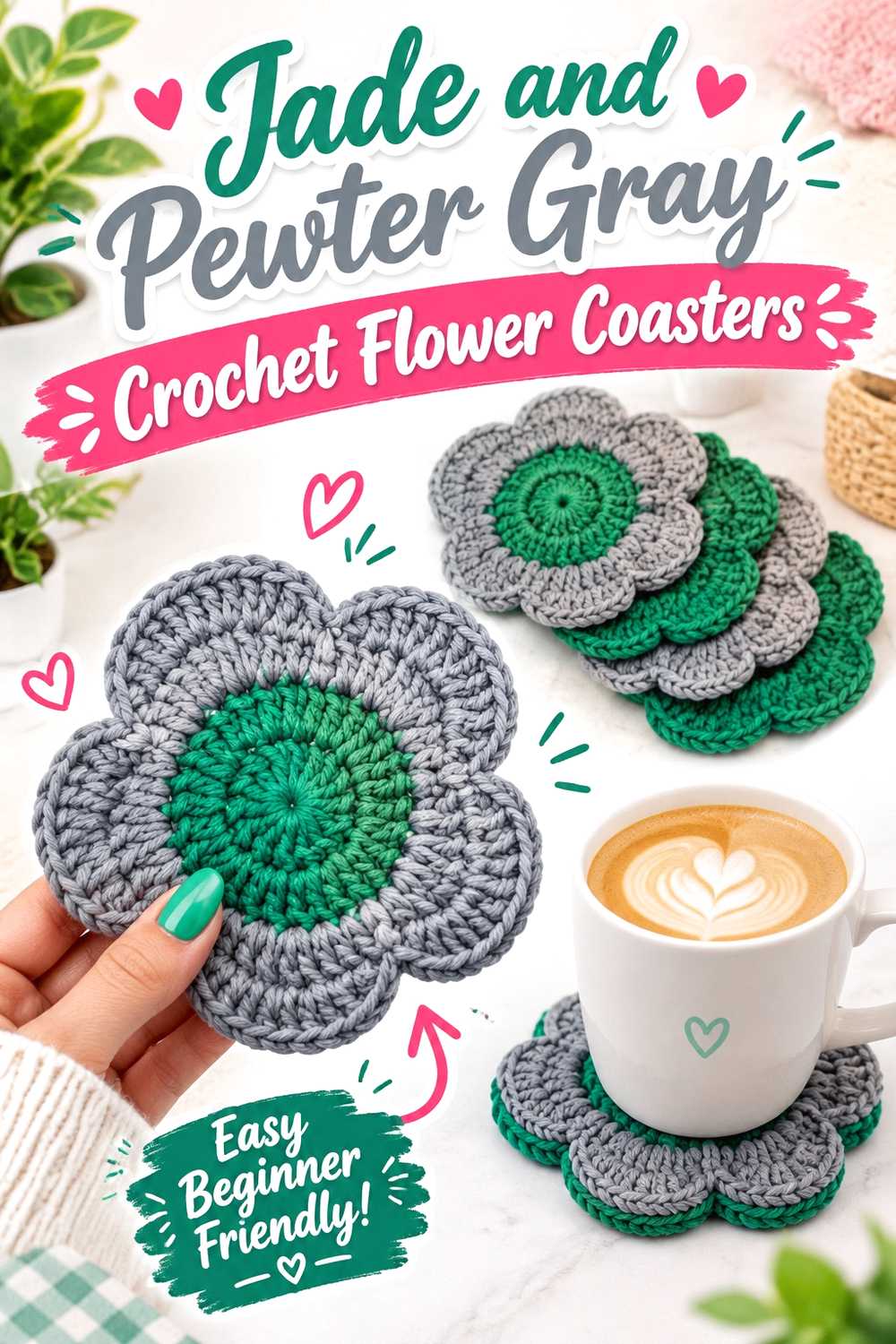
12. Jade And Pewter Gray Crochet Flower Coasters
 SAVE
SAVEA flower-shaped coaster gives jade and pewter gray clearly defined center and petal areas. The strongest decision is whether jade should form the recognizable flower shape or appear only in the center. Using jade for the petals gives the green a larger role even though the project is small.
Use Jade Petals to Define the Crochet Flower Coaster
Jade around the outer flower shape makes the green visible from every side and emphasizes the scalloped or petal-like silhouette.
Because the coaster is small, narrow color sections can disappear visually. Give jade enough area to remain identifiable when the coaster is underneath a cup.
Let Pewter Gray Ground the Jade Crochet Coaster Center
A pewter gray center can provide a neutral break inside the surrounding jade petals. The result is more controlled than alternating colors around every small section.
If your pewter gray and jade are similar in value, the center will blend softly into the petals. Increase value contrast when you want the flower structure to read more distinctly.
Creator Credit: ElyseCrochets 💌 — YouTube tutorial
13. Pewter Gray And Jade Crochet Cushion Cover
 SAVE
SAVEA cushion cover offers one of the largest uninterrupted home-decor surfaces in this collection. Pewter gray can occupy the background while jade highlights central motifs, appliqués, selected squares, or outer framing. This produces a neutral-heavy piece without losing the green entirely.
Let Pewter Gray Form the Main Crochet Cushion Background
A broad gray field gives raised details and motifs a consistent visual base. It also keeps the cushion from becoming overly busy when the construction already includes several joined sections.
If the front contains multiple motifs, repeat the same gray consistently around them to maintain continuity.
Use Jade to Separate Motifs on the Pewter Gray Crochet Cushion
Jade can emphasize selected flower areas, motif centers, outer rounds, or the final cushion edge. Concentrating the green around specific details gives those areas more visual importance.
Avoid scattering tiny jade sections randomly across the cover. Repetition at recognizable positions will make the palette look more deliberate.
Creator Credit: Tejidos a Crochet Moni kano — YouTube tutorial
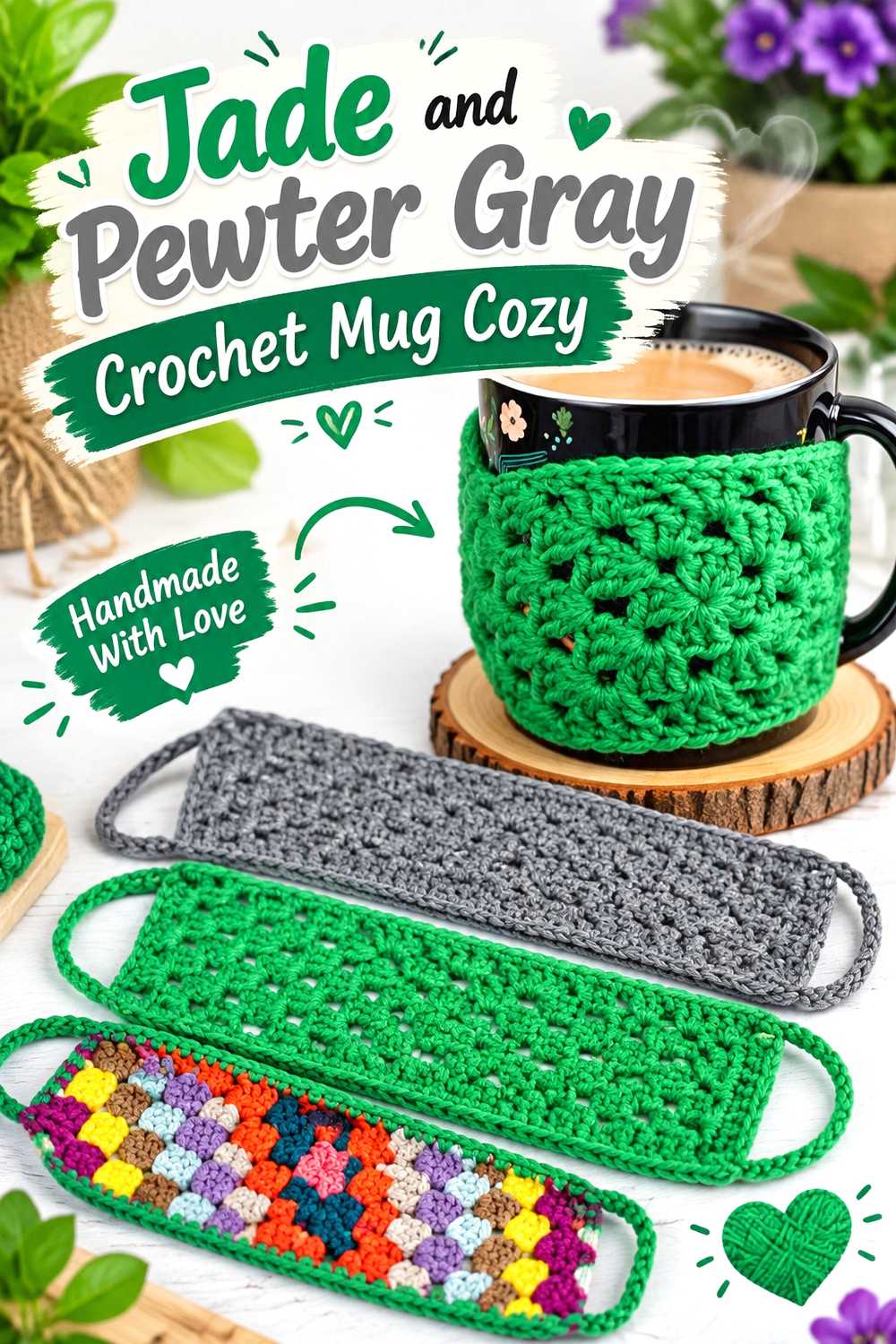
14. Jade And Pewter Gray Crochet Mug Cozy
 SAVE
SAVEA mug cozy provides limited surface area, so each color needs a clear role. Jade can cover the main visible section while pewter gray frames the top, bottom, closure, or selected granny-square rounds.
Keep Jade Visible Across the Crochet Mug Cozy Front
Place jade across the area that faces outward when the cozy is wrapped around the mug. A very small jade detail may become hidden near the handle or closure.
For a granny-square construction, give jade either the center plus another round or a substantial outer section rather than relying on one tiny accent.
Use Pewter Gray to Finish the Jade Crochet Mug Cozy Edges
Pewter gray edging can outline the green without dividing the small project into many narrow stripes. This is particularly useful along the top and bottom, where the color naturally follows the shape of the cozy.
If you include a closure detail, repeating pewter gray there can connect it visually to the edging.
Creator Credit: Katia Creates — YouTube tutorial
15. Pewter Gray And Jade Crochet Wall Hanging
 SAVE
SAVEA wall hanging is viewed mainly from the front, so color placement should make sense as a complete composition. Pewter gray can serve as the background or larger lower area, while jade creates bands, geometric sections, or repeated accents that remain easy to see from across a room.
Use Pewter Gray as the Crochet Wall Hanging Background
A larger gray field gives jade details space to stand apart instead of placing both colors in equal competing blocks.
This works especially well when the hanging contains openwork, fringe, or dimensional texture because the color plan stays relatively controlled while the construction provides additional visual detail.
Repeat Jade Across the Pewter Gray Crochet Wall Hanging
Use jade in more than one visible position if you want it to feel integrated. A jade band near the top can be echoed lower down or repeated in selected decorative sections.
Check the hanging from a distance before finishing. Small jade accents that look substantial while crocheting may appear much less noticeable once the piece is displayed vertically.
Creator Credit: Mei Crafts — YouTube tutorial
16. Jade And Pewter Gray Crochet Market Bag
 SAVE
SAVEAn openwork market bag behaves differently from a dense tote because the background shows through the crochet. Jade and pewter gray may therefore appear less solid once the bag stretches around its contents. Broad color areas generally remain easier to read than frequent narrow changes.
Let Jade Lead the Openwork Crochet Market Bag
Use jade through most of the netted or open body when you want the finished bag to remain clearly green. Because the openings visually interrupt the yarn, the color may feel less dense than it would on solid crochet fabric.
A substantial jade section helps compensate for that visual openness.
Use Pewter Gray Around the Jade Crochet Market Bag Handles
Pewter gray can define the handles, upper edge, or reinforced areas without interrupting the open body repeatedly.
Repeating a gray section near the base can balance the handles if needed, but keep the jade share larger when the goal is a jade-led market bag.
Creator Credit: Home Handwork Diy — YouTube tutorial
Comparing the Jade and Pewter Gray Crochet Combinations
The blanket, cardigan, bucket hat, beanie, tote, mug cozy, and market bag are useful when you want jade to remain the first color noticed. These projects give the green substantial body or surface coverage and move pewter gray toward borders, bands, handles, or finishing details.
The vest, scarf, shawl, basket, cushion, plant hanger, and wall hanging provide stronger gray-led alternatives. Here, pewter gray can occupy the larger field while jade identifies edges, motifs, bands, or structural transitions.
Granny squares and flower coasters offer the easiest way to experiment with reversing the palette. Because their sections are small and clearly divided, you can swap jade and pewter gray between centers and outer areas without changing the overall crochet concept.
Conclusion
Jade and pewter gray work best when their jobs are decided before the project becomes heavily established. If jade should dominate, give it the body of the blanket, cardigan, tote, hat, or bag and use pewter gray where the construction naturally creates an edge. For a more neutral result, put pewter gray across the largest field and reserve jade for borders, motifs, bands, and repeated focal areas.
Also consider value, not just hue. A deep jade beside dark pewter gray will create a quieter, more blended result than a lighter jade paired with a much darker gray. Neither direction is automatically better; the important question is whether the contrast supports the stitches, motifs, and structural details you actually want the viewer to notice.
Follow the credited tutorials for exact project construction, then treat the jade-and-pewter-gray placements as adaptable color plans.
Frequently Asked Questions
Does jade work well with pewter gray in crochet?
Jade and pewter gray can create a balanced cool-toned combination because the green remains identifiable while gray provides a neutral counterpoint. The final effect depends heavily on the exact lightness and saturation of the two yarns, so compare them together before starting a large project.
Should jade or pewter gray be the main crochet color?
Either can dominate. Use more jade when you want the piece to read primarily as green. Let pewter gray cover the larger surface when you want a more neutral project with jade acting as the accent.
How can I keep dark jade and pewter gray from blending together?
Check their light-and-dark values rather than relying only on their different hues. If they look very similar in a grayscale photo, choose a lighter version of one shade when clear motif, border, or stripe separation matters.
Where should pewter gray go in a mostly jade crochet project?
Structural edges are useful locations: cardigan cuffs, blanket borders, hat brims, tote handles, cushion frames, mug-cozy edging, or basket rims. These areas let gray support the shape of the item rather than appearing randomly.
Can I make a jade and pewter gray crochet project without using equal amounts of both colors?
Yes. Unequal proportions can actually create a clearer visual hierarchy. One color might cover most of the project while the other occupies only a border, stripe, handle, motif center, or trim.
How can I substitute a different jade yarn without changing the whole palette?
Preserve the characteristic that matters most to your original plan. If contrast with pewter gray is important, choose another green with similar lightness or darkness. If you want a muted palette, avoid replacing softened jade with an extremely bright green unless you intentionally want a stronger color contrast.
Should jade or pewter gray be used for granny-square joins?
Pewter gray joins can make gray outer rounds merge into a larger neutral field, while jade joins create stronger green lines between individual motifs. Choose according to whether you want the joins to recede or become part of the visible color pattern.