Jade and caramel give crochet projects an interesting balance between a cooler green and a warm brown. Instead of dividing every project equally between the two shades, you can change the finished look by deciding which color controls the largest surface, where the second shade appears, and whether the transition between them is broad or concentrated in small details.
That flexibility makes the pairing useful across very different crochet projects. Jade can cover a cardigan panel while caramel defines the cuffs, or caramel can dominate a basket while jade appears only in a repeated band. On smaller projects, simply changing the center, border, handle, brim, or edging color can make the same two-color combination feel substantially different.
The tutorials credited below support the crochet construction concepts. The jade-and-caramel palettes are color adaptations, so you can use the tutorials while planning your own color distribution.
Quick List
- Jade Led And Caramel Striped Crochet Blanket
- Jade And Caramel Crochet Pocket Cardigan
- Caramel Body And Jade Trim Crochet Vest
- Jade Crown And Caramel Brim Crochet Bucket Hat
- Jade And Caramel Tunisian Crochet Scarf
- Caramel Ribbed And Jade Body Crochet Beanie
- Jade And Caramel Crochet Mobius Shawl
- Caramel Led And Jade Banded Crochet Basket
- Jade And Caramel Crochet Granny Squares
- Jade Body And Caramel Handle Crochet Tote Bag
- Jade And Caramel Crochet Plant Hanger
- Caramel Center And Jade Edge Crochet Coasters
- Jade Front And Caramel Border Crochet Cushion Cover
- Jade And Caramel Crochet Mug Cozy
Decide Whether Jade or Caramel Should Lead
Before dividing a project into two equal colors, decide which shade should carry the largest visual area. A jade-led project emphasizes the cooler green and lets caramel function as warmth around borders, cuffs, stripes, or handles. A caramel-led project reverses that relationship and makes jade a smaller contrasting detail.
The choice matters most on large uninterrupted surfaces. A blanket, cardigan, cushion, or bag body gives the dominant color much more visual weight than a narrow border. On smaller pieces such as coasters or mug cozies, changing the center and outer edge can be enough to shift the entire balance.
Check the Light-and-Dark Difference Between Your Jade and Caramel
Not every jade yarn and caramel yarn will have the same contrast. A pale jade beside deep caramel may create strong separation, while a dark jade beside medium caramel can produce a more blended result.
Place the two yarns next to each other before starting. If motifs, stripes, or borders need clear definition, check that they remain visibly different from a short distance. A grayscale photo can also help reveal whether two different hues are actually close in lightness.
Repeat Jade and Caramel Where the Project Needs Visual Connection
When one color appears only once, that area can sometimes feel detached from the rest of a multicolor project. Repeating a smaller amount of the accent elsewhere can make the palette feel more intentional.
For example, caramel cardigan cuffs can relate to a caramel neckline, while a jade basket band can connect with a narrow jade top edge. The goal is not perfect symmetry. Repetition simply gives the secondary shade more than one visual anchor when the project benefits from it.
1. Jade Led And Caramel Striped Crochet Blanket
 SAVE
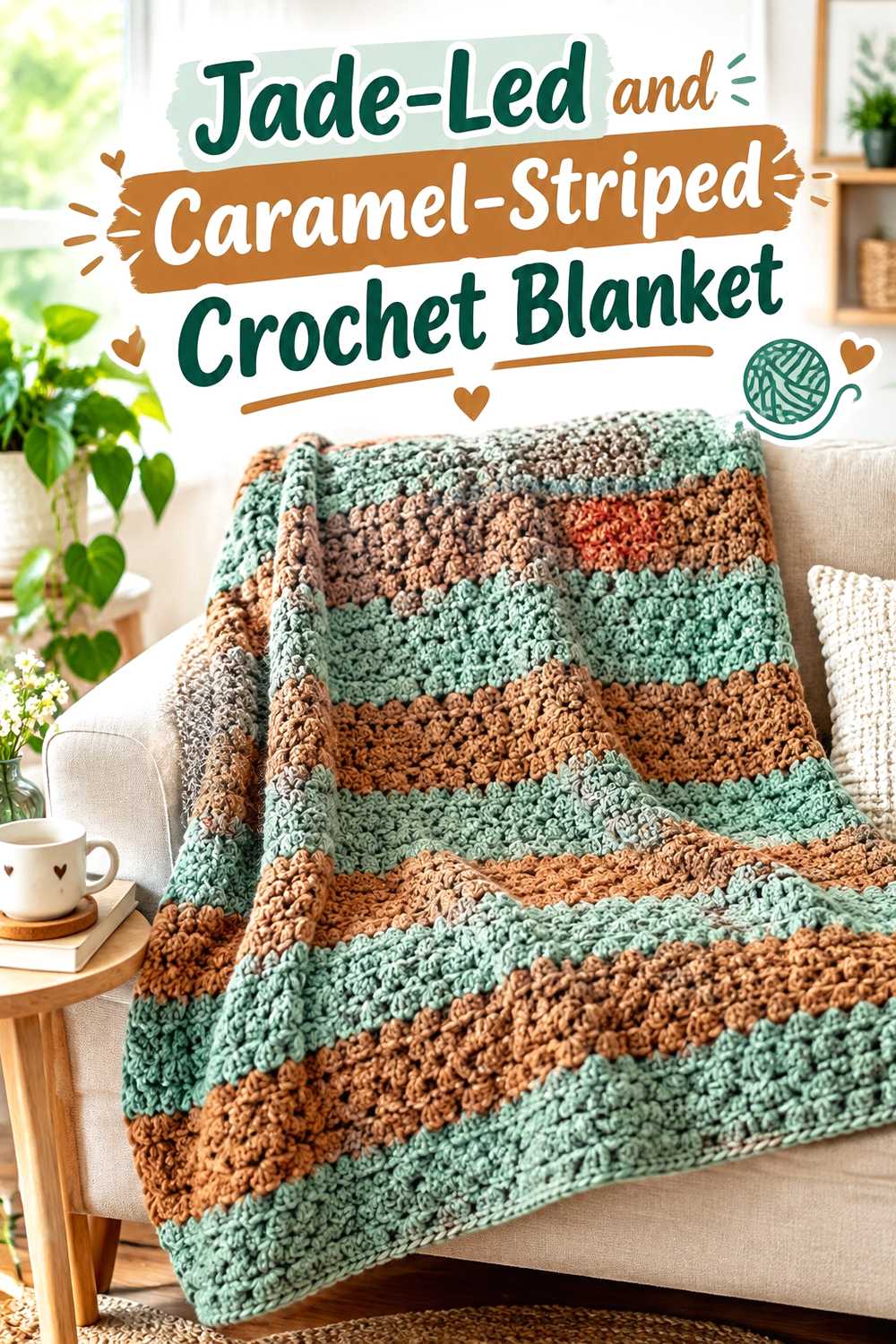
SAVEA jade-led blanket gives the green the largest uninterrupted field while caramel creates warm horizontal breaks. This approach is especially useful when you want the blanket to read primarily as jade rather than as an evenly divided two-color design. The width and frequency of the caramel sections will determine whether they behave like subtle accents or a major part of the composition.
Let Jade Control Most of the Crochet Blanket Surface
Use jade across more rows when you want the blanket to retain a strong green identity. Larger jade sections also give stitch texture more uninterrupted space, instead of breaking every few rows with another color.
If the blanket pattern already has a noticeable stitch repeat, broad jade areas can keep the color layout from competing with that texture. Compare a few stripe widths before committing to the full blanket.
Use Caramel Stripes to Break Up Large Jade Sections
Caramel can work as periodic stripes rather than occupying half of the blanket. Wider caramel bands create obvious warm blocks, while thinner ones act more like separators between larger jade areas.
Consider carrying caramel into the outer border if you want the stripes to connect visually with the edge. If the stripe contrast already feels strong, a jade border can instead return attention to the dominant color.
Creator Credit: The Loopy Lamb
2. Jade And Caramel Crochet Pocket Cardigan
 SAVE
SAVEA pocket cardigan provides several natural locations for separating jade and caramel without forcing frequent color changes. Jade can cover the main body and sleeves while caramel defines smaller structural areas such as pockets, cuffs, hem edging, or the front opening. That distribution keeps the garment cohesive while still making the second color visible from several angles.
Keep Jade Across the Main Crochet Cardigan Panels
Using jade across the larger front and back panels keeps the garment visually continuous. This can be useful on an oversized cardigan because several large sections are visible at once, and too many similarly sized color blocks can make the garment feel fragmented.
If you want stronger contrast, keep caramel concentrated around areas that naturally frame the jade rather than inserting it randomly through the body.
Repeat Caramel on Crochet Cardigan Cuffs, Pockets, or Edging
Caramel can link the smaller cardigan details together. Using it on both cuffs and the front edging, for example, makes the warm accent recur instead of appearing as one isolated patch.
Pockets are another useful location because their color can be visible without taking over the entire front. If caramel pockets feel too strong, keep the pockets jade and move caramel to narrower trim.
Creator Credit: forthefrills
3. Caramel Body And Jade Trim Crochet Vest
 SAVE
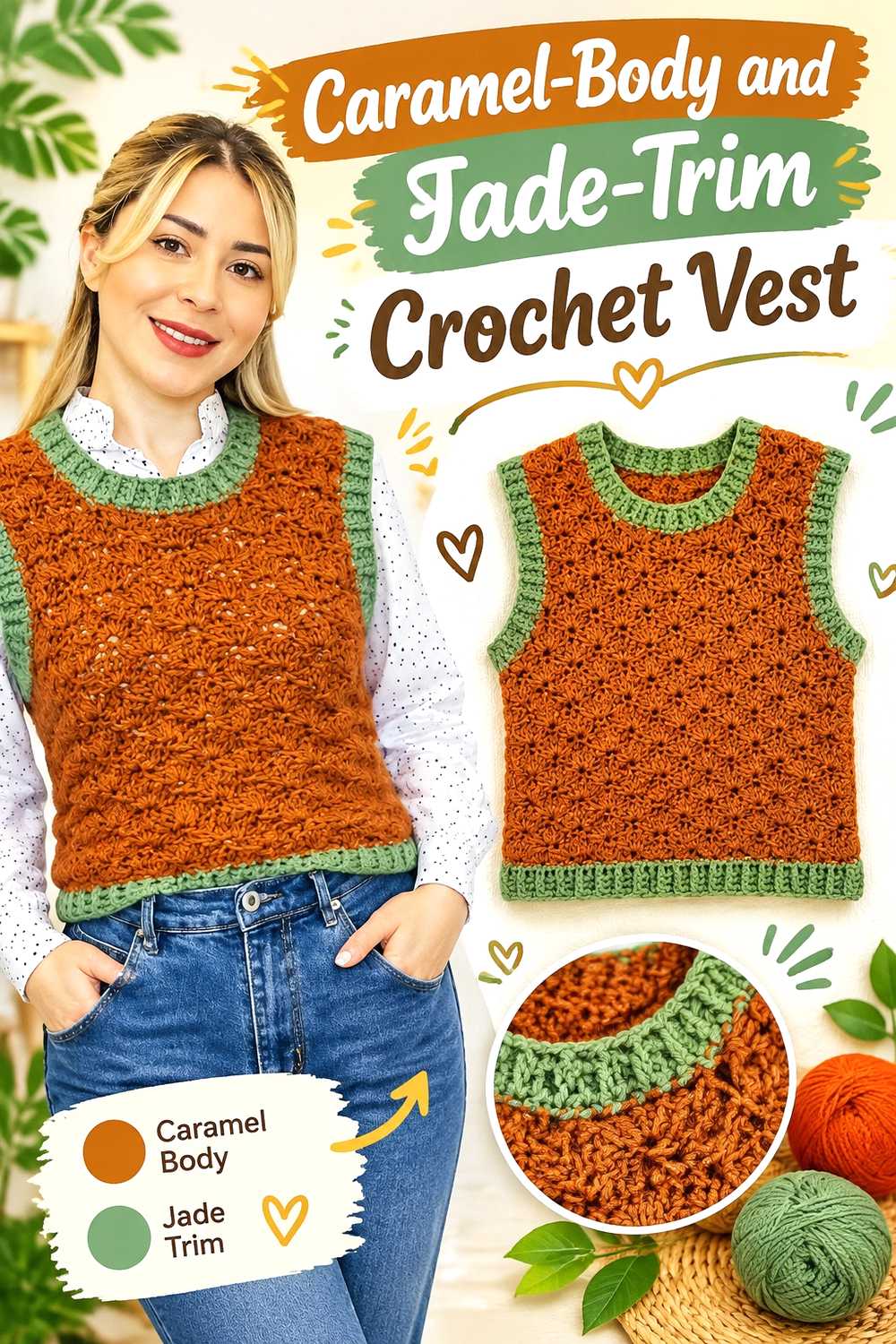
SAVEReversing the hierarchy creates a different wearable even with the same two colors. A caramel body gives the vest a warm base, while jade can outline the neckline, armholes, straps, or lower edge. Because a vest exposes several borders at once, a contrasting trim color can become an important part of the finished silhouette.
Let Caramel Form the Main Crochet Vest Panels
Caramel works well as the uninterrupted body color when you want the vest to look warmer overall. Keeping the main panels in one shade also allows the front and back shapes to read clearly without additional color blocking.
Before adding jade, look at how much edging the construction includes. A wide trim can visually occupy much more of the finished vest than a narrow one.
Use Jade to Define the Caramel Crochet Vest Edges
Jade around the neckline and armholes can give the caramel body a defined boundary. Repeating jade at the lower edge can connect those separate areas and prevent the green from looking like an afterthought.
If your jade and caramel are similar in value, this edging will look more tonal. Choose versions with greater light-and-dark separation if you want the outline to be more obvious.
Creator Credit: Brunaticality
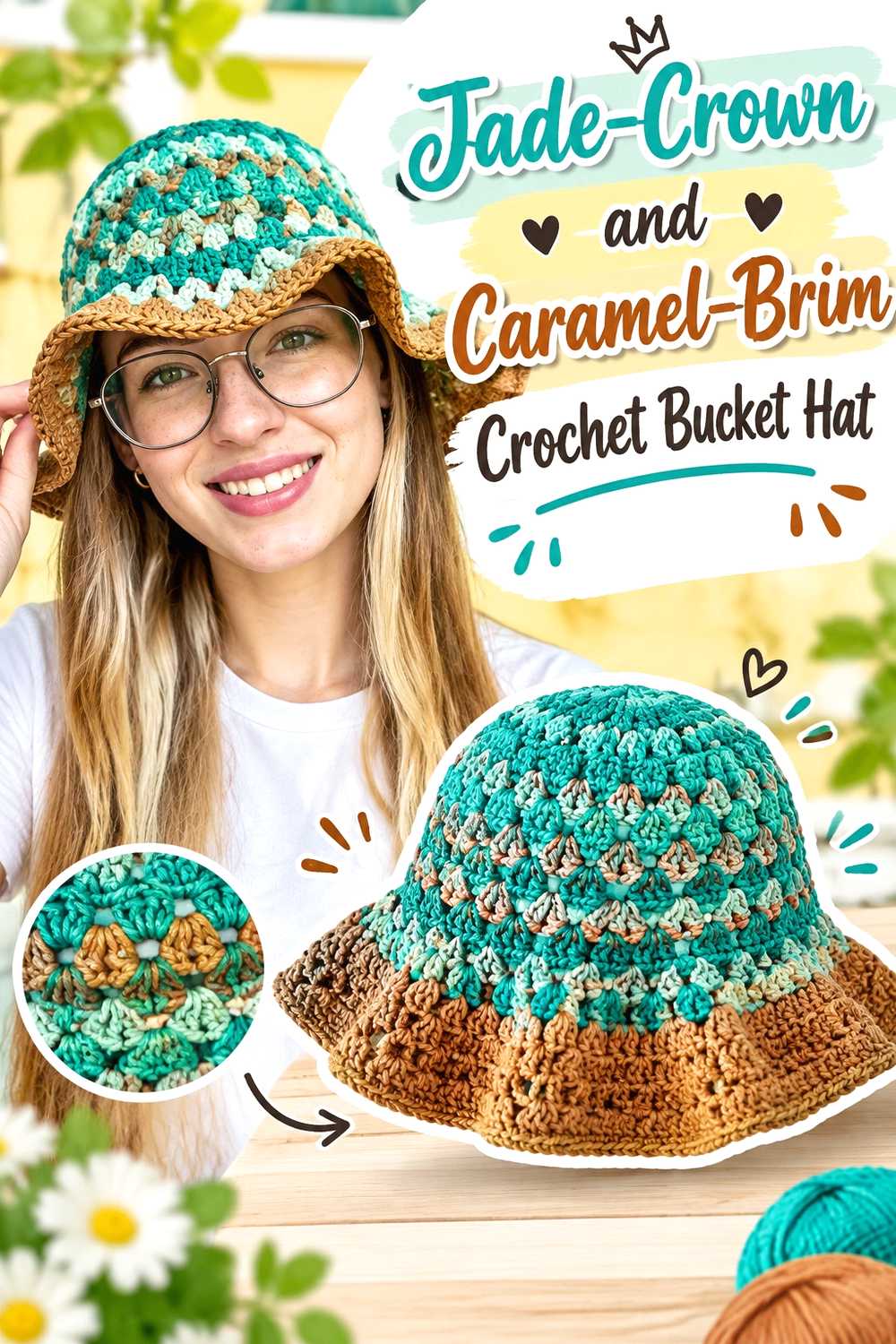
4. Jade Crown And Caramel Brim Crochet Bucket Hat
 SAVE
SAVEA bucket hat naturally divides into crown, sides, and brim, so the shape makes two-color planning straightforward. Jade can cover the crown and most of the side section, while caramel becomes a distinct brim. This places the warm shade around the widest lower portion instead of scattering it through the hat.
Keep Jade Continuous Through the Crochet Bucket Hat Crown
Using jade continuously across the upper part of the hat keeps the crown visually clean. This is particularly helpful if the crochet texture already creates visible patterning, because frequent color changes could compete with the hat’s rounded construction.
You can extend jade farther down the side if you want caramel to function strictly as a brim accent.
Let Caramel Give the Jade Crochet Bucket Hat a Defined Brim
A caramel brim creates a clear change at the outer edge of the hat. Because the brim projects outward, the color naturally becomes noticeable even if it occupies less total area than jade.
If the color change seems too abrupt, introduce a narrow caramel round before the full brim. If you want sharper separation, change directly from jade to caramel at the brim transition.
Creator Credit: PassioKnit Kelsie
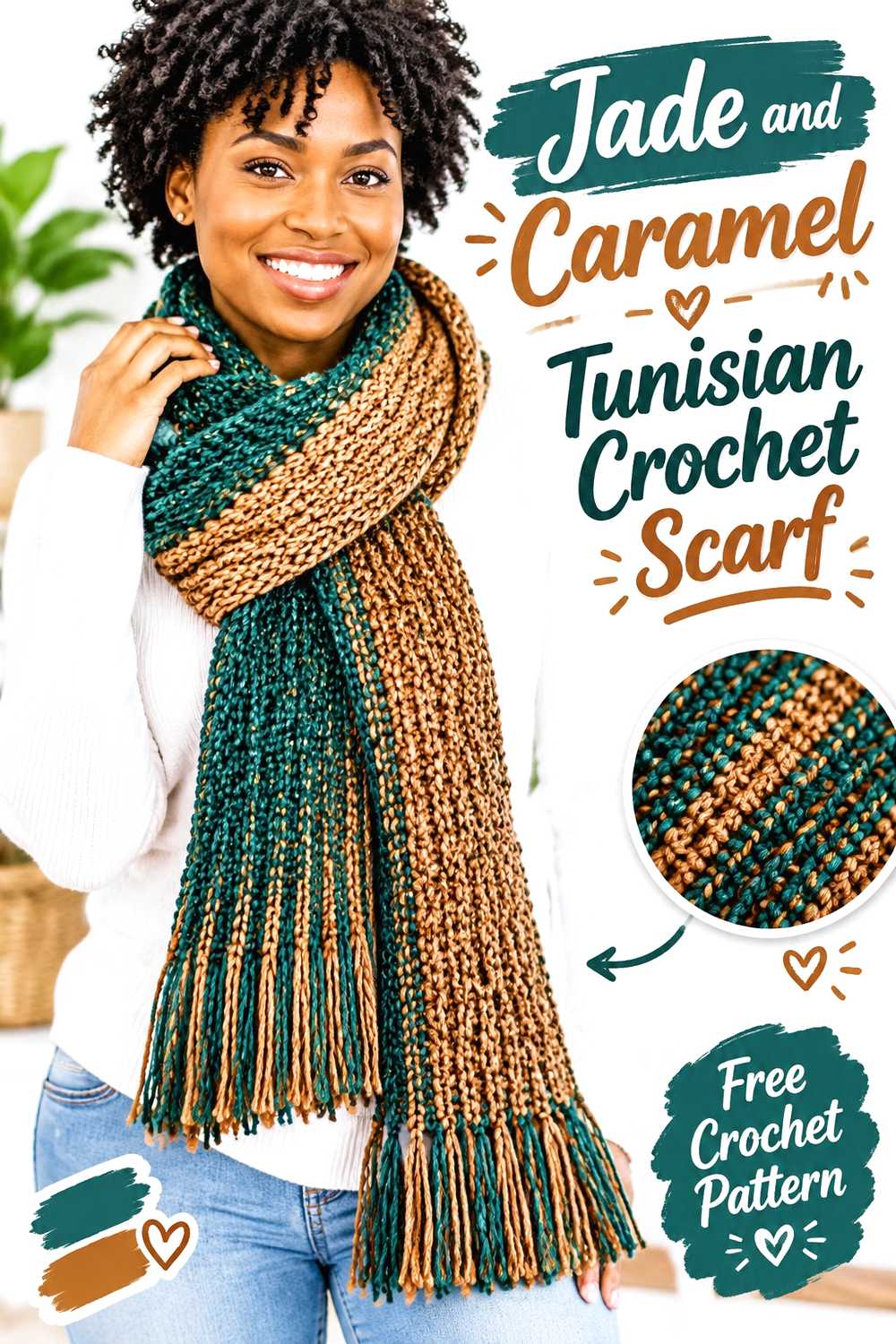
5. Jade And Caramel Tunisian Crochet Scarf
 SAVE
SAVEA long scarf gives jade and caramel room to alternate without requiring many different colors. You can work broad blocks, lengthwise-looking color sections created by the stitch pattern, or controlled repeats. Because a scarf is viewed both folded and extended, consider how the colors will look when only part of the fabric is visible.
Use Jade and Caramel in Broad Crochet Scarf Sections
Larger blocks make the two colors easier to distinguish than many narrow changes. A jade section followed by a substantial caramel section also allows the stitch texture to remain visible within each shade.
Before settling on equal blocks, consider using more jade than caramel or vice versa. Unequal proportions often give one color a clear leading role.
Keep Jade and Caramel Contrast Visible Through Tunisian Texture
Textured Tunisian crochet can change how solid colors appear because shadows form across the fabric. Put your jade and caramel swatches side by side after working a little fabric rather than judging only from unwound yarn.
If they begin to merge visually, a lighter caramel or darker jade can restore separation while preserving the same overall palette.
Creator Credit: TL Yarn Crafts
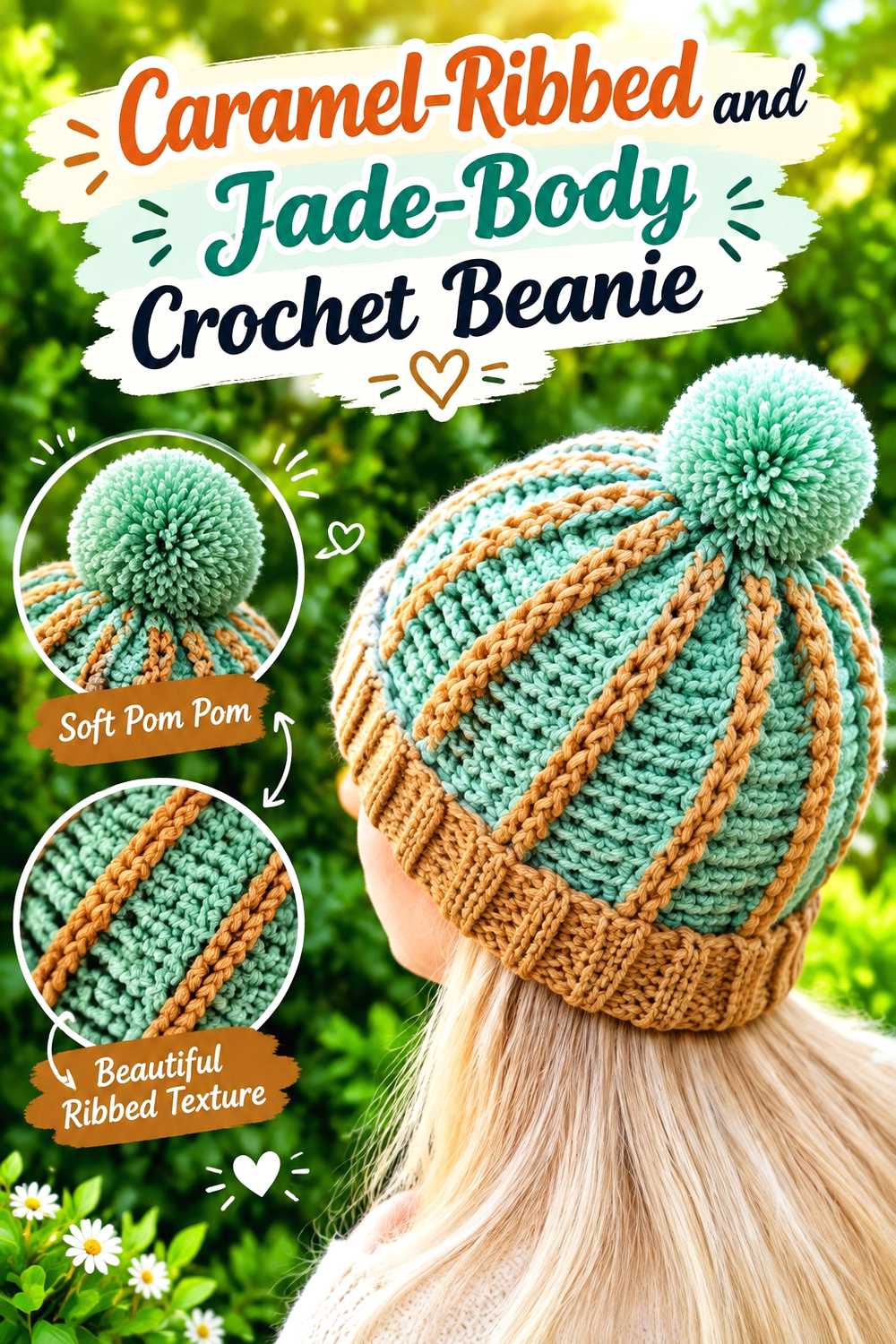
6. Caramel Ribbed And Jade Body Crochet Beanie
 SAVE
SAVEA beanie provides a compact way to give the colors different jobs. Caramel can emphasize the lower ribbing or band while jade covers the crown. This keeps the warm shade near the face of the hat construction and gives the cooler green the larger rounded surface.
Use Caramel to Separate the Crochet Beanie Ribbing
Caramel on the ribbed section makes the lower band a deliberate design feature rather than simply a continuation of the crown. The effect is strongest when the caramel differs clearly in value from jade.
If the band is visually wide, caramel may become almost as dominant as the crown color. Check the proportions before assuming it will read as a small accent.
Let Jade Carry the Crochet Beanie Crown
Jade across the crown gives the largest curved surface one consistent color. That continuity can help textured stitches remain readable without multiple color transitions cutting across them.
If you add a pom-pom or other optional finishing detail, repeating either jade or caramel can reinforce the existing palette rather than introducing a third unrelated shade.
Creator Credit: Di’s Handicrafts (Crochet and Knitting)
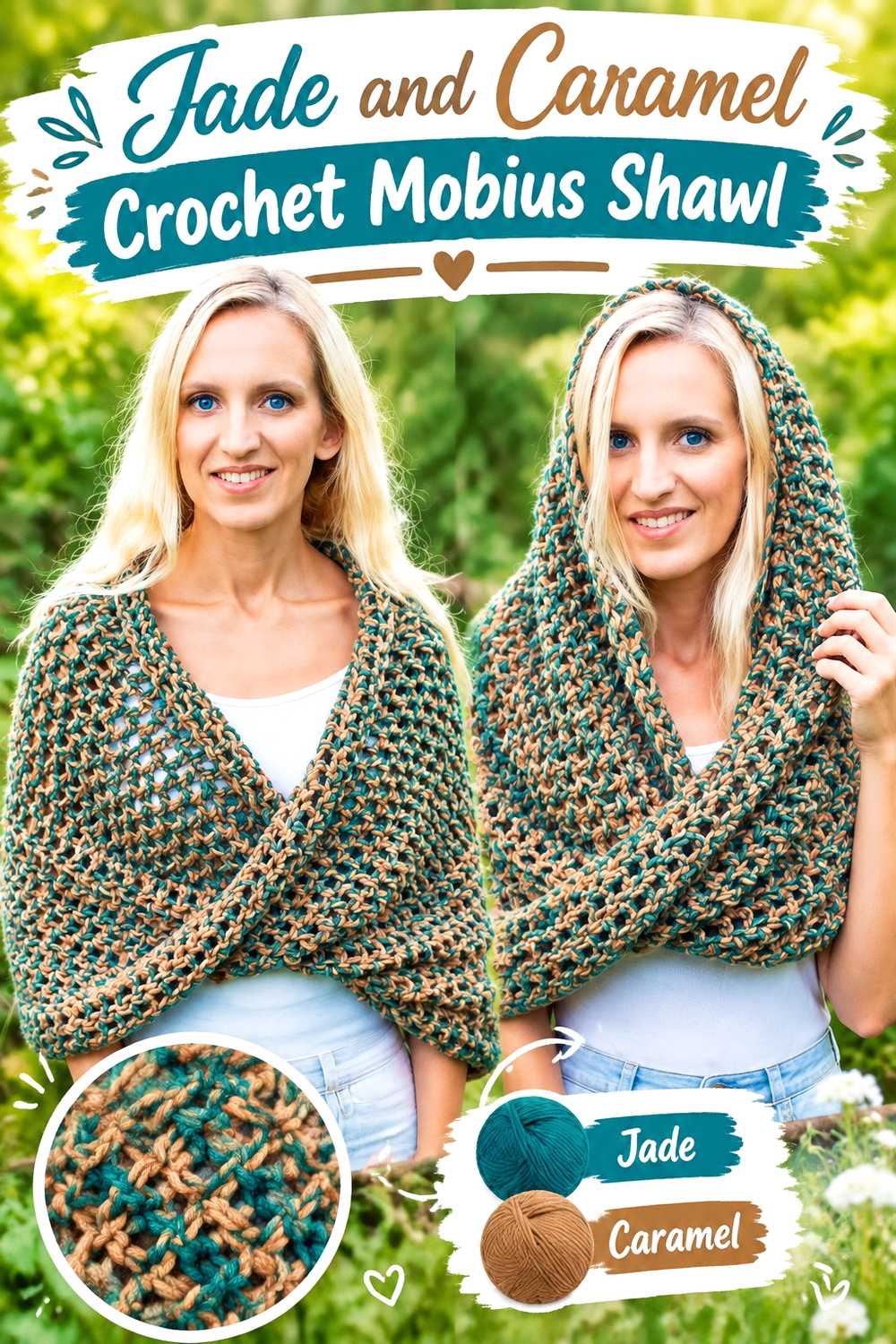
7. Jade And Caramel Crochet Mobius Shawl
 SAVE
SAVEA twisted wrap gives the two colors a different challenge because sections can rotate into view rather than staying on a fixed front or back. Jade and caramel therefore work well in repeated bands or broad alternating areas that remain recognizable as the shawl twists around the body.
Repeat Jade Around the Crochet Mobius Shawl
Repeating jade at intervals helps the cooler shade appear from several viewing angles. A single jade section can disappear behind the twist, while recurring jade bands keep the color connected around the loop.
You do not need perfectly equal repeats. Allowing jade to occupy more area can preserve it as the main shade.
Use Caramel to Mark Transitions Across the Jade Shawl
Caramel can separate broad jade areas and make the twisted construction easier to read visually. A warmer stripe at intervals creates landmarks along the continuous loop without requiring many additional colors.
If the shawl already has strong stitch texture, keep the color sequence relatively simple so the twist, texture, and palette are not all competing equally.
Creator Credit: naztazia
8. Caramel Led And Jade Banded Crochet Basket
 SAVE
SAVEA basket benefits from a color plan that respects its base, walls, rim, and handles. Caramel can cover most of the walls for a warm neutral-heavy appearance, while jade appears as one substantial band or a repeated upper detail. This keeps the green noticeable without turning the basket into evenly alternating stripes.
Let Caramel Cover Most of the Crochet Basket Walls
A broad caramel field makes the basket read primarily as a warm brown piece of storage decor. It also gives any visible post stitches or other surface texture a consistent background.
If you use caramel from the base upward, decide whether jade should interrupt the wall or be reserved for the upper portion. Both choices create different emphasis.
Place Jade Where the Crochet Basket Changes Visually
A jade band can work well near a handle area, rim, or other structural transition because the color change already coincides with a change in the basket’s form.
Repeating a narrow jade edge above a wider jade band can also tie the accent together. Avoid introducing jade only in one tiny spot if you want it to read as a deliberate second color.
Creator Credit: Jayda InStitches
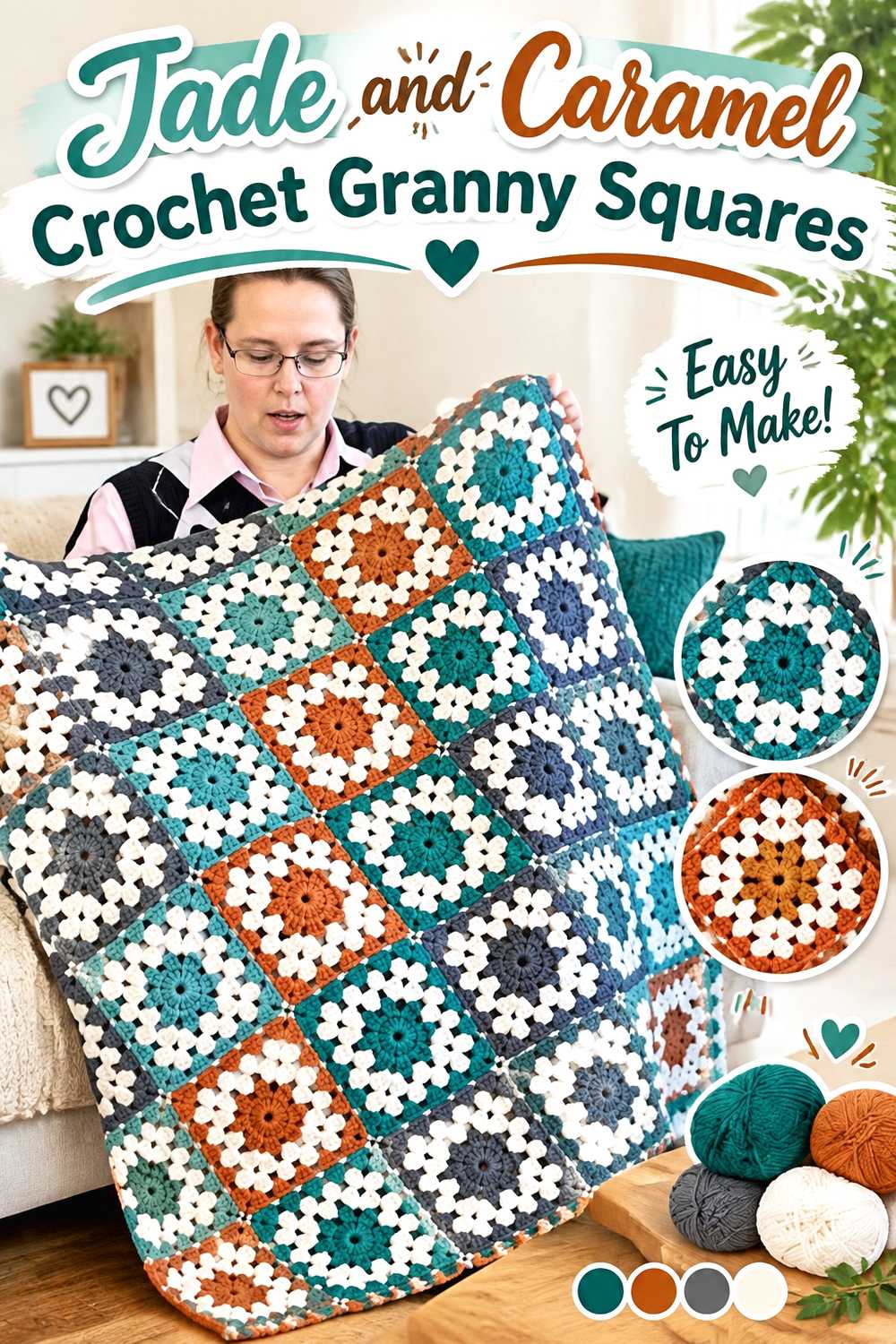
9. Jade And Caramel Crochet Granny Squares
 SAVE
SAVEGranny squares offer more control over color hierarchy because the center, middle rounds, outer rounds, and joins can each carry different visual weight. With only jade and caramel, you can still create noticeably different motifs by reversing which shade begins in the center or by changing the width of the outer sections.
Use Jade Centers to Repeat Color Across Caramel Crochet Squares
A jade center gives every motif a repeated focal point even when caramel occupies more of the outer area. This can be useful when assembling several squares because the jade centers create a recurring visual rhythm across the finished project.
If the center is very small, consider bringing jade back near the outer edge so it is not overwhelmed by caramel.
Let Caramel Outer Rounds Frame Jade Crochet Motifs
Caramel around the outside of a jade-centered square can act as a warm frame. It also determines which color will dominate once multiple motifs sit next to each other.
If you plan to join the squares, compare the outer caramel with the proposed join color. Using caramel for both creates a more continuous field, while jade joins introduce stronger separation.
Creator Credit: The Crochet Crowd
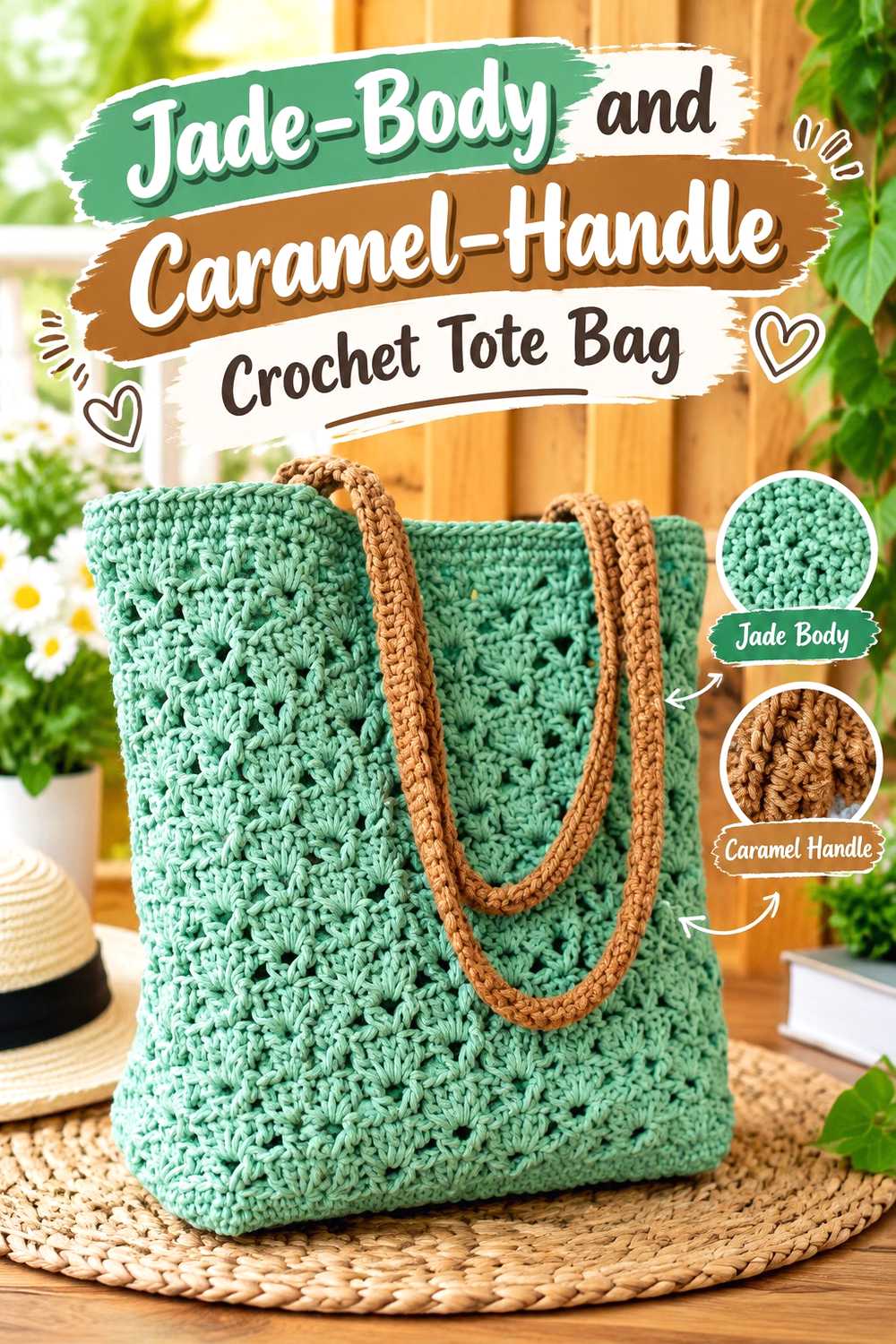
10. Jade Body And Caramel Handle Crochet Tote Bag
 SAVE
SAVEA tote bag gives you a large body area plus smaller functional details, making it well suited to a dominant-and-accent scheme. Jade can cover the main bag while caramel defines the handles or an upper border. The contrast becomes especially visible where the handles rise away from the bag body.
Keep Jade Across the Main Crochet Tote Bag
A jade bag body creates one substantial block of color and avoids disrupting the larger fabric surface. If the tote has visible texture, keeping this area in one shade can also make the stitch pattern easier to see.
For a stronger two-color result, bring caramel into the top edge rather than limiting it to the handles alone.
Use Caramel on Crochet Tote Handles Without Losing Jade Balance
Caramel handles add warmth exactly where the bag changes from body to carrying structure. Because handles are narrower than the body, the caramel can remain secondary even when it is highly visible.
If the handles feel disconnected from the jade body, repeat caramel in a narrow border at the opening. That creates a visual bridge between the two areas.
Creator Credit: Kristines Crochets
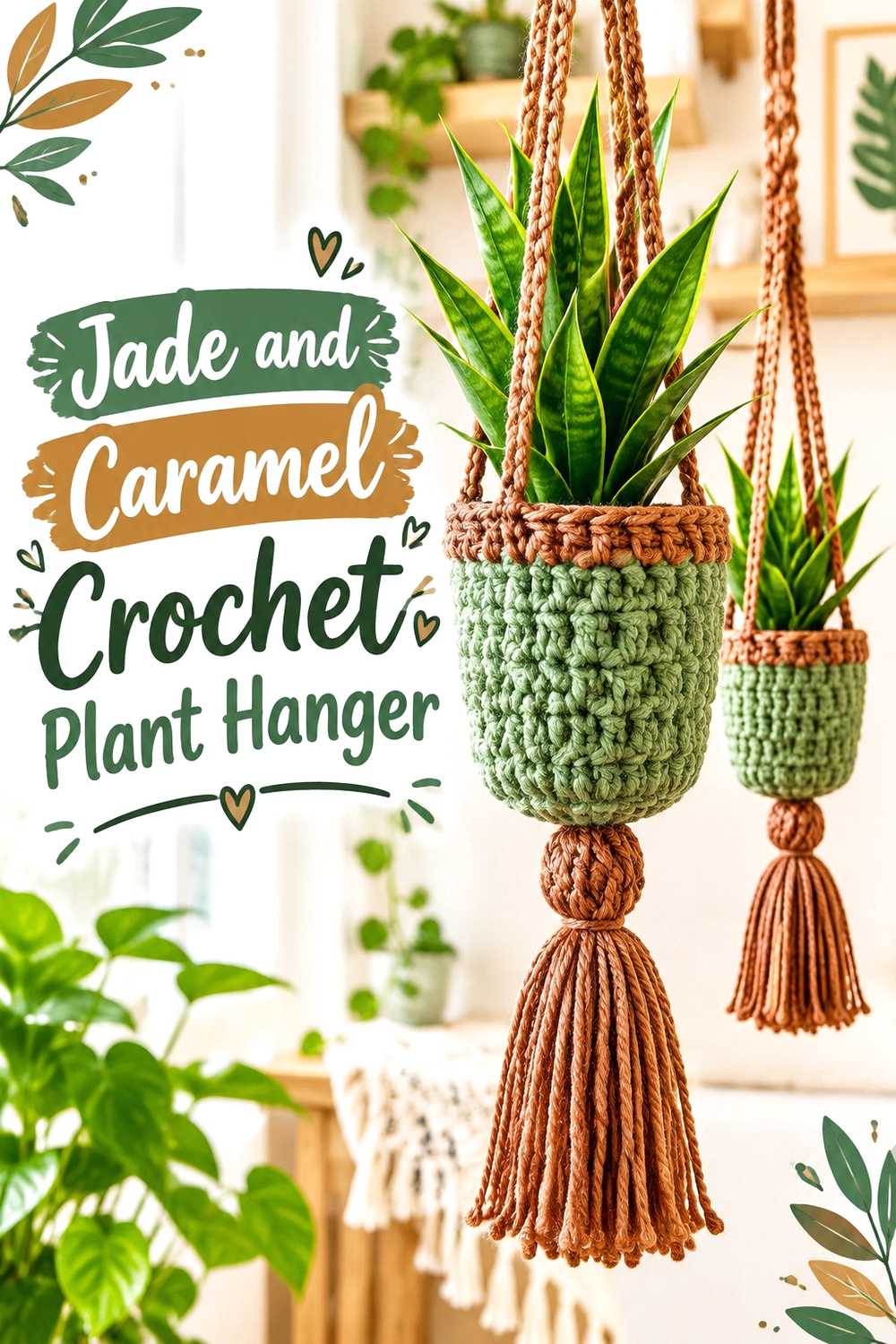
11. Jade And Caramel Crochet Plant Hanger
 SAVE
SAVEA plant hanger has much less uninterrupted fabric than a cushion or blanket, so color placement needs to work across narrow bands, straps, and hanging sections. Jade and caramel can be separated by function: one color around the pot-holding portion and another along the upper straps or decorative details.
Use Jade Around the Main Crochet Plant Hanger Body
Placing jade around the section that surrounds the pot gives the green enough surface area to remain recognizable. This also creates a direct color block beneath the plant rather than scattering jade through every narrow strand.
If the pot itself is strongly colored, compare it with the jade before committing to the full hanger.
Carry Caramel Into the Crochet Plant Hanger Straps
Caramel straps can create a warmer frame around the jade lower section. Because the straps extend vertically, they remain visible even when much of the lower crochet is obscured by the pot.
Repeating a little caramel near the lower edge can connect the long straps back to the main body if the transition otherwise looks too abrupt.
Creator Credit: Bella Coco
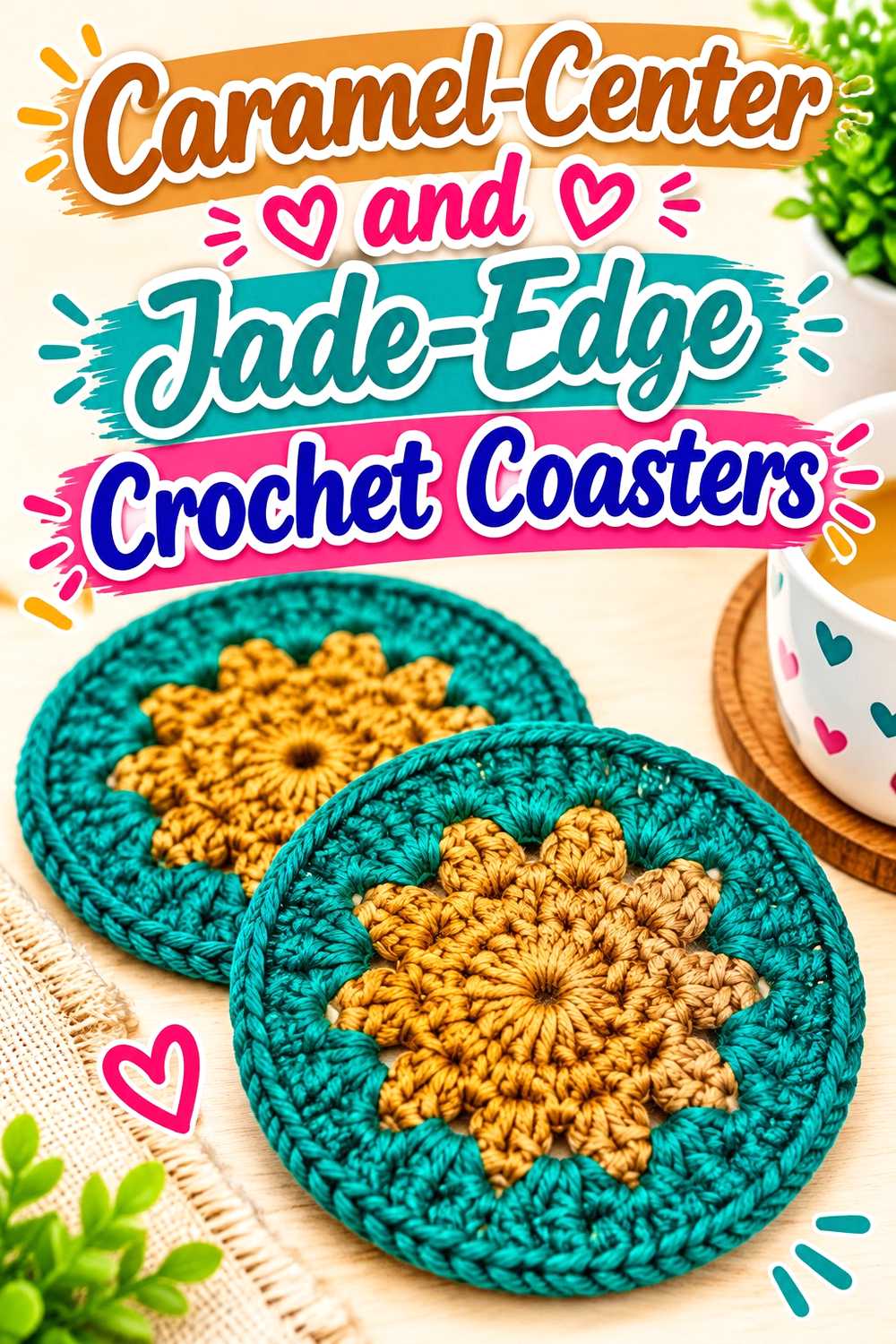
12. Caramel Center And Jade Edge Crochet Coasters
 SAVE
SAVESmall coasters are a useful place to test jade and caramel before committing to a larger project. A caramel center with jade around the outside concentrates the warmth where the motif begins while giving the green a broader framing role. Reversing one or two coasters in a set can also create variation without changing the palette.
Keep Caramel Visible in the Crochet Coaster Center
A caramel center works best when enough of it remains visible after the outer rounds are added. If the center is tiny and jade occupies nearly everything else, the finished coaster may simply read as green from a distance.
Consider extending caramel through more than the smallest central detail when you want a genuinely two-color result.
Use Jade to Give the Caramel Crochet Coaster a Clear Edge
Jade around the perimeter can turn the final round into a distinct frame. This is especially useful if the coaster has a decorative outer shape because the contrasting green emphasizes the silhouette.
Check the jade and caramel together after working a sample. Similar values will create a quieter border, while stronger value contrast makes the outline more defined.
Creator Credit: Crochet Jewel
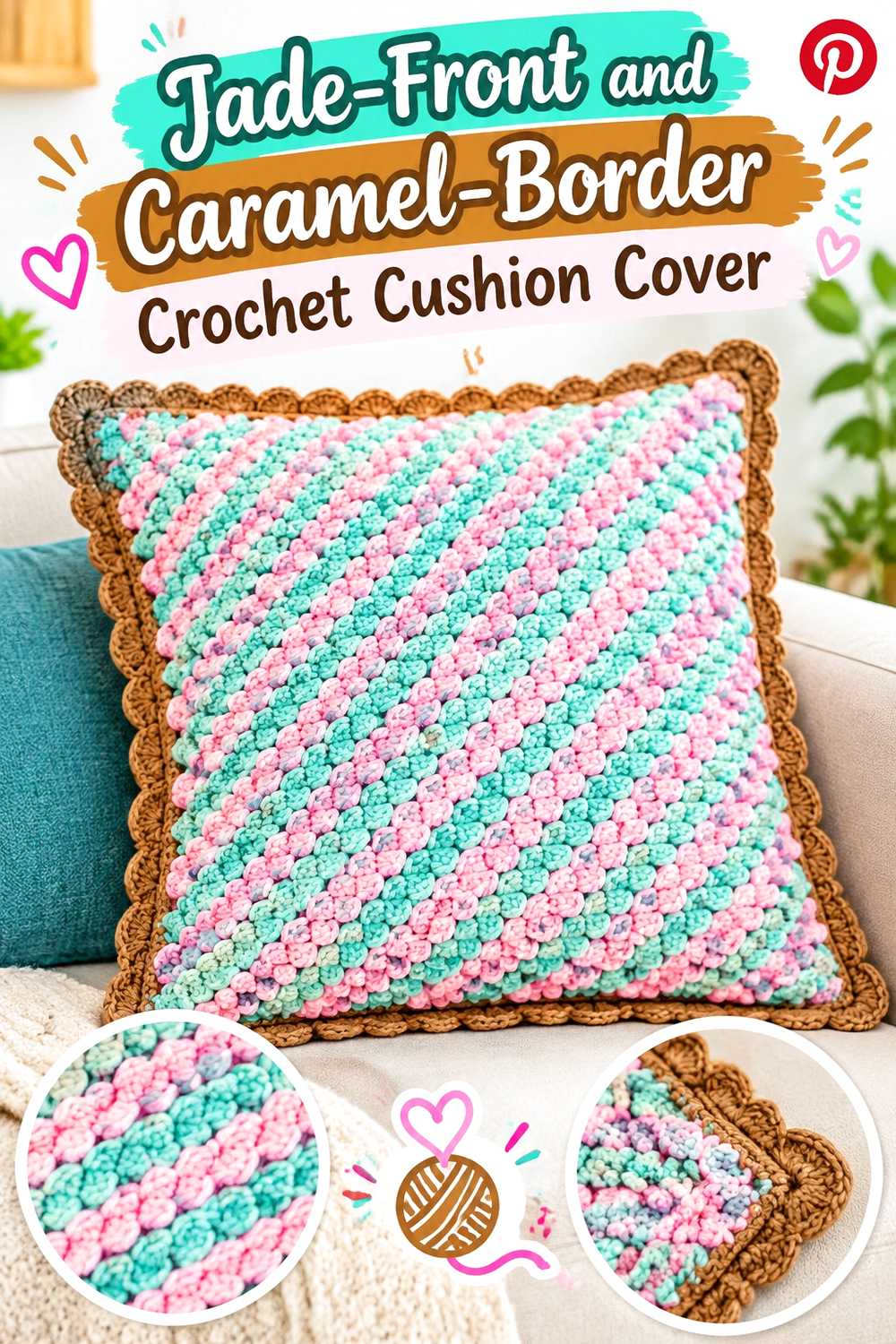
13. Jade Front And Caramel Border Crochet Cushion Cover
 SAVE
SAVEA cushion gives jade enough space to become the dominant decor color while caramel can frame the edges. Because the front surface is usually viewed as one complete composition, the relationship between center and border matters more here than on smaller accessories.
Let Jade Cover the Main Crochet Cushion Face
A jade-dominant front creates a clear central color field and gives raised or textured stitches room to remain uninterrupted. If the cushion pattern contains strong surface texture, one main color across the face can keep that texture from becoming visually crowded.
You can also use jade on the back if you want the cushion to stay green-led from every angle.
Use Caramel to Frame the Jade Crochet Cushion
A caramel border creates a warm perimeter around the cooler jade center. The width of that border controls how strongly caramel participates in the overall design.
A narrow edge reads as trim, while a broader caramel frame becomes an important part of the front composition. Compare the proportions with the size of the cushion face rather than choosing the border width in isolation.
Creator Credit: Crochet MC
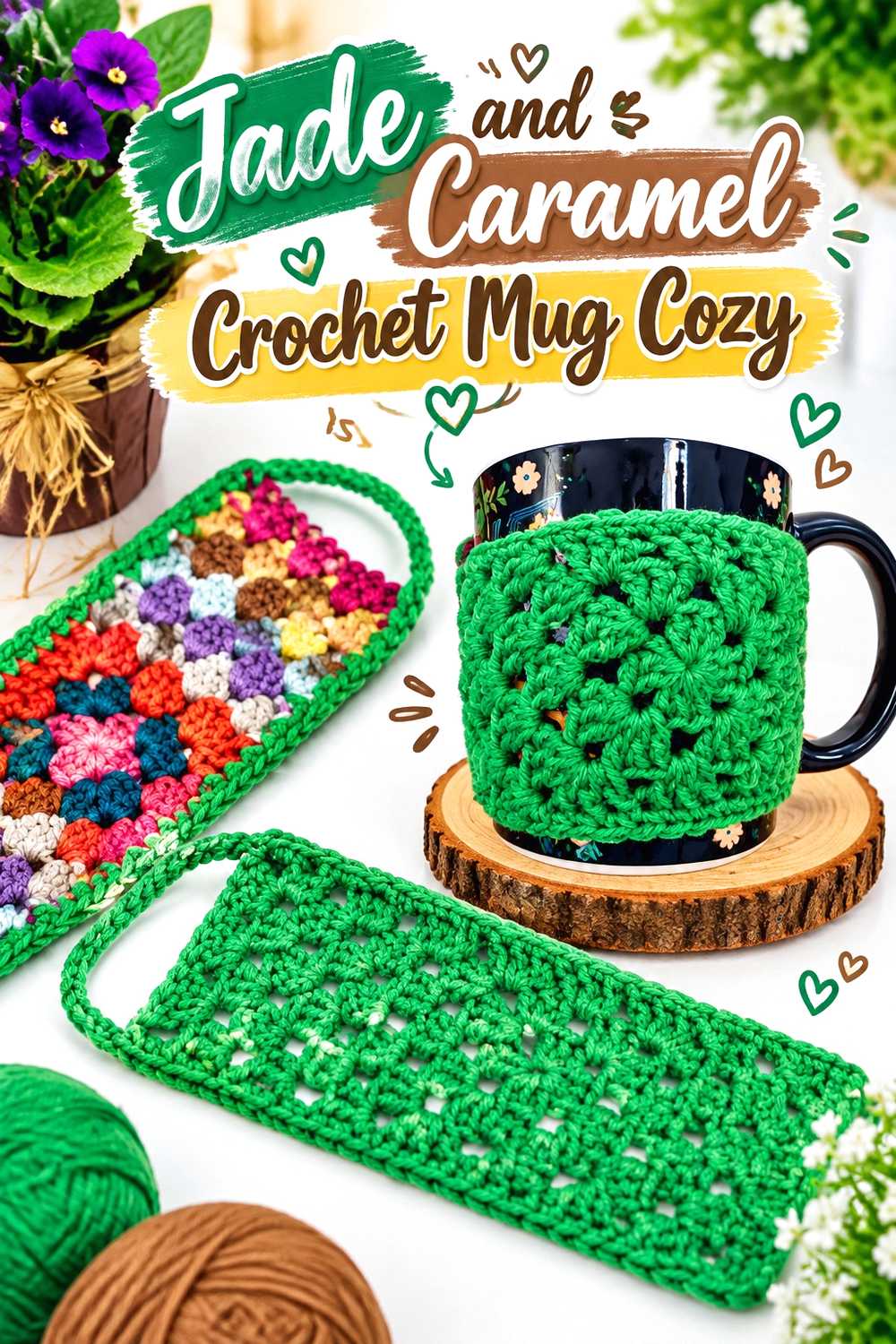
14. Jade And Caramel Crochet Mug Cozy
 SAVE
SAVEA mug cozy is small enough that even a limited amount of caramel or jade can noticeably affect the whole project. Because the piece wraps around a curved object, think about which color should appear on the main front area and which should be used near edges, tabs, or granny-square details.
Give Jade Enough Space on the Crochet Mug Cozy Front
If jade is intended to lead, place it across the area most visible when the cozy is wrapped around the mug. A tiny jade detail surrounded by caramel will not read as a jade-led project once the cozy is in use.
For a granny-square-based version, jade can occupy the center or a substantial middle section rather than only the smallest starting round.
Use Caramel to Define the Jade Crochet Mug Cozy Edges
Caramel along the top, bottom, or closure area can outline the jade body without dividing the small surface into too many pieces.
Because mug cozies have limited space, avoid adding several narrow alternating stripes unless that busier effect is intentional. One jade field with controlled caramel edging usually gives each shade a clearer role.
Creator Credit: Katia Creates
Comparing the Jade and Caramel Color Balance
| Project | Stronger Color Role | Useful Secondary Placement |
|---|---|---|
| Blanket | Jade | Caramel stripes or border |
| Cardigan | Jade | Caramel cuffs, pockets, edging |
| Vest | Caramel | Jade neckline and armhole trim |
| Bucket hat | Jade | Caramel brim |
| Scarf | Either | Broad alternating sections |
| Beanie | Jade | Caramel ribbed band |
| Mobius shawl | Jade | Repeated caramel bands |
| Basket | Caramel | Jade upper band or rim |
| Granny squares | Either | Reversed centers and outer rounds |
| Tote bag | Jade | Caramel handles and top edge |
| Plant hanger | Jade | Caramel straps |
| Coasters | Caramel | Jade outer edge |
| Cushion | Jade | Caramel border |
| Mug cozy | Jade | Caramel edging or closure area |
For the strongest color separation, choose jade and caramel yarns that also differ noticeably in lightness. For a more blended appearance, keep their values closer while preserving the cool-green versus warm-brown relationship.
Conclusion
Jade and caramel can produce very different crochet results without changing the basic two-color palette. For a jade-heavy direction, the blanket, cardigan, tote, cushion, and beanie give the green plenty of uninterrupted space. If you want caramel to carry more visual weight, the vest, basket, and coaster ideas place the warm shade across larger structural areas.
The placement can matter as much as the exact shade. Caramel around a jade cushion works differently from caramel stripes through a jade blanket, while jade edging on a caramel vest creates a different balance again. Decide first which color should lead, then use the second shade where the project’s borders, straps, cuffs, centers, handles, or structural transitions naturally create contrast.
Use the credited tutorials for their exact construction guidance while treating the jade-and-caramel layouts as adaptable color plans.
Frequently Asked Questions
Should jade or caramel be the dominant crochet color?
Either can lead. Choose jade when you want the project to read primarily as green with warmer brown details. Choose caramel when you want a warmer overall surface and jade as a cooler accent. The dominant shade should generally receive more visual area rather than simply appearing first.
How can I tell whether my jade and caramel yarns have enough contrast?
Place the yarns side by side and compare them from a short distance. You can also photograph them in grayscale. If they become almost indistinguishable without hue, their values are similar and motifs or narrow borders may have softer separation.
What should I substitute if I cannot find the exact jade shade?
Look for another green that preserves the role you need. If jade is supposed to contrast strongly with caramel, maintain a noticeable light-and-dark difference. If you want a muted earthy palette, choose a softened green rather than replacing jade with a very bright saturated shade simply because it is available.
Can jade and caramel be used equally in one crochet project?
Yes, but equal coverage creates a different effect from a dominant-and-accent arrangement. Alternating scarf blocks or granny squares can support a more even balance. On cardigans, cushions, bags, and other pieces with obvious structural sections, assigning one shade to the main surface and the other to details can make the layout easier to read.
Where should caramel go in a mostly jade crochet project?
Caramel works particularly well where the item already has a visual boundary: blanket borders, cardigan cuffs, vest edging, hat brims, tote handles, cushion frames, basket bands, or mug-cozy edges. Using those structural locations lets the color change support the shape of the project.
How can I keep jade and caramel granny squares from looking too repetitive?
Reverse the color hierarchy across selected motifs while keeping the same two-color palette. Some squares can begin with jade and finish with caramel, while others can begin with caramel and bring jade into the outer rounds. Check the full layout before joining so the reversals look distributed rather than clustered.