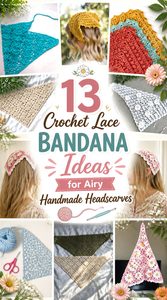
Crochet lace bandanas can share the same basic triangular outline and still behave very differently when worn. A wide-open mesh lets hair show through, filet crochet creates a more orderly geometric surface, and floral or shell motifs make the decorative stitching the center of attention. Construction matters too: some bandanas grow continuously as one triangle, while others combine motifs or attach the lace to a more stable headband.
The 13 ideas below cover that wider range, including diamond lace, daisies, picot texture, V-stitches, scalloped filet, modular flowers, and designs that can expand into larger accessories. Along with appearance, compare how much coverage you want, where the piece needs to fit, whether the ties or a closed band provide the hold, and how much blocking or motif finishing you are willing to do. Each project points to an original creator tutorial for the exact construction.
Quick List
- Crochet Shell-Lace Triangle Bandana
- Crochet Diamond-Grid Lace Bandana
- Crochet Picot-Edged Mesh Bandana
- Crochet Daisy-Motif Patchwork Bandana
- Crochet Floral Shell-Trim Lace Bandana
- Crochet Textured Picot Bandana
- Crochet Filet-Lace Scallop Bandana
- Crochet Band-First Lacy Head Kerchief
- Crochet Ribbed-Band V-Stitch Head Kerchief
- Crochet XoXo V-Stitch Bandana
- Crochet Flower-Granny Modular Bandana
- Crochet Center-Out Boho Lace Bandana
- Crochet Cluster-Lace Shawl-Style Bandana
Choose Lace Density Based on the Coverage You Actually Want
“Lace” can mean anything from small chain spaces between substantial stitch groups to large mesh openings with very little solid fabric. That difference becomes much more noticeable on the head than it does when a bandana is lying on a table. Hair color, texture, and the layer underneath become part of the appearance of an open design.
For greater coverage, look toward shell lace, closely spaced V-stitches, textured picots, or motif constructions with more solid crochet. Diamond mesh and filet can give a clearer geometric effect while remaining open. Very sparse mesh makes the lightest visual statement but provides less concealment.
Before committing to a yarn substitution, crochet a small sample and hold it against hair rather than evaluating it only on a flat surface. A stitch pattern that looks moderately open against a pale tabletop can appear considerably more transparent in actual wear.
Fit the Triangle Before Relying on the Ties
A lace bandana should not need aggressive stretching to reach its tying position. When an open triangle is pulled too firmly, the openings can elongate, the point can distort, and the edge may become wavy. Ideally, the body already provides the intended crown coverage and the ties simply secure it.
Triangle depth matters independently from width. A shallow design behaves more like a hair accent, while a deeper point covers more of the back of the head. Designs with closed or ribbed bands need a different checkpoint: the band itself becomes the main fit component.
For made-to-fit adjustments, compare the unfinished piece with the intended wearer before completing decorative edging. If a tutorial includes its own sizing system, follow that designer’s adjustment guidance instead of assuming that changing hook size alone will preserve the intended lace proportions.
Yarn, Drape, and Blocking Can Change the Finished Lace
Smooth yarn generally makes geometric openings, picots, shells, and floral motifs easier to read. Fuzzier fibers can soften those lines, while heavier yarn can enlarge every opening and add bulk at the knot. A material substitution therefore changes more than the color.
Drape is especially important around the crown. A fabric that is too rigid may stand away from the head; fabric that is extremely loose may grow when the ties are pulled. Test the fabric both flat and hanging before deciding that a substitution is suitable.
Many lace designs also benefit visually from appropriate blocking because it can help settle uneven edges and clarify openwork. Follow the yarn label and the designer’s guidance rather than assuming every fiber can be treated the same way. Decorative beads, mixed fibers, or other embellishments may also change appropriate care.
1. Crochet Shell Lace Triangle Bandana
 SAVE
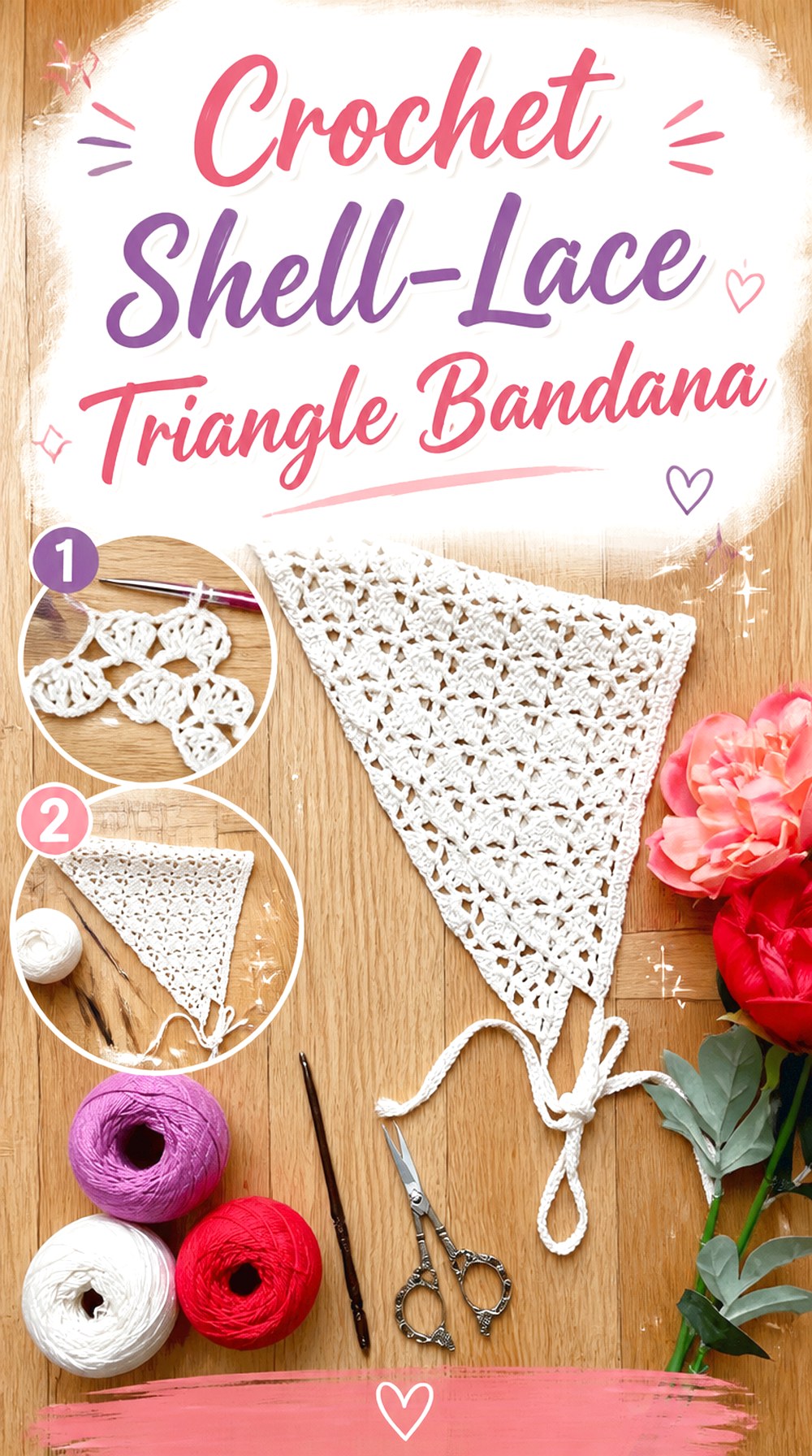
This version puts the lace pattern across the entire triangle rather than saving decoration for the border. Twinkie Chan’s Creativebug design uses a repeating shell-based fabric that gives the finished headscarf alternating areas of open space and fuller stitch groups. The result reads more like traditional crochet lace than a basic granny triangle while retaining a recognizable kerchief silhouette. The source also presents the design as adjustable by changing the number of rows.
Choose this direction when the stitch pattern itself should be the focal point. It is especially effective in a solid yarn or thread because the shells and negative space do not have to compete with frequent color changes.
Let the Shell Pattern Determine the Visual Weight
Shells place several stitches into concentrated areas, so this bandana has a different rhythm from uniformly spaced mesh. That can provide more visual coverage without turning the whole triangle into dense fabric. If substituting yarn, check whether the shell groups remain flexible rather than becoming stiff or bulky.
The best comparison is not simply yarn thickness. Make a small section of the actual lace and see whether the openings and shell curves remain distinct.
Check the Point After the Lace Relaxes
A lace triangle can look slightly irregular straight from the hook because individual shells and chain spaces do not always settle at the same rate. Before judging the silhouette, follow the designer’s finishing advice and see how the fabric responds.
Avoid stretching simply to create a sharper point. The goal of finishing is to organize the stitches and edges, not force the bandana into dimensions the fabric does not naturally support.
Original Tutorial and Creator Credit
Creator/Site: Twinkie Chan / Creativebug
2. Crochet Diamond Grid Lace Bandana
 SAVE
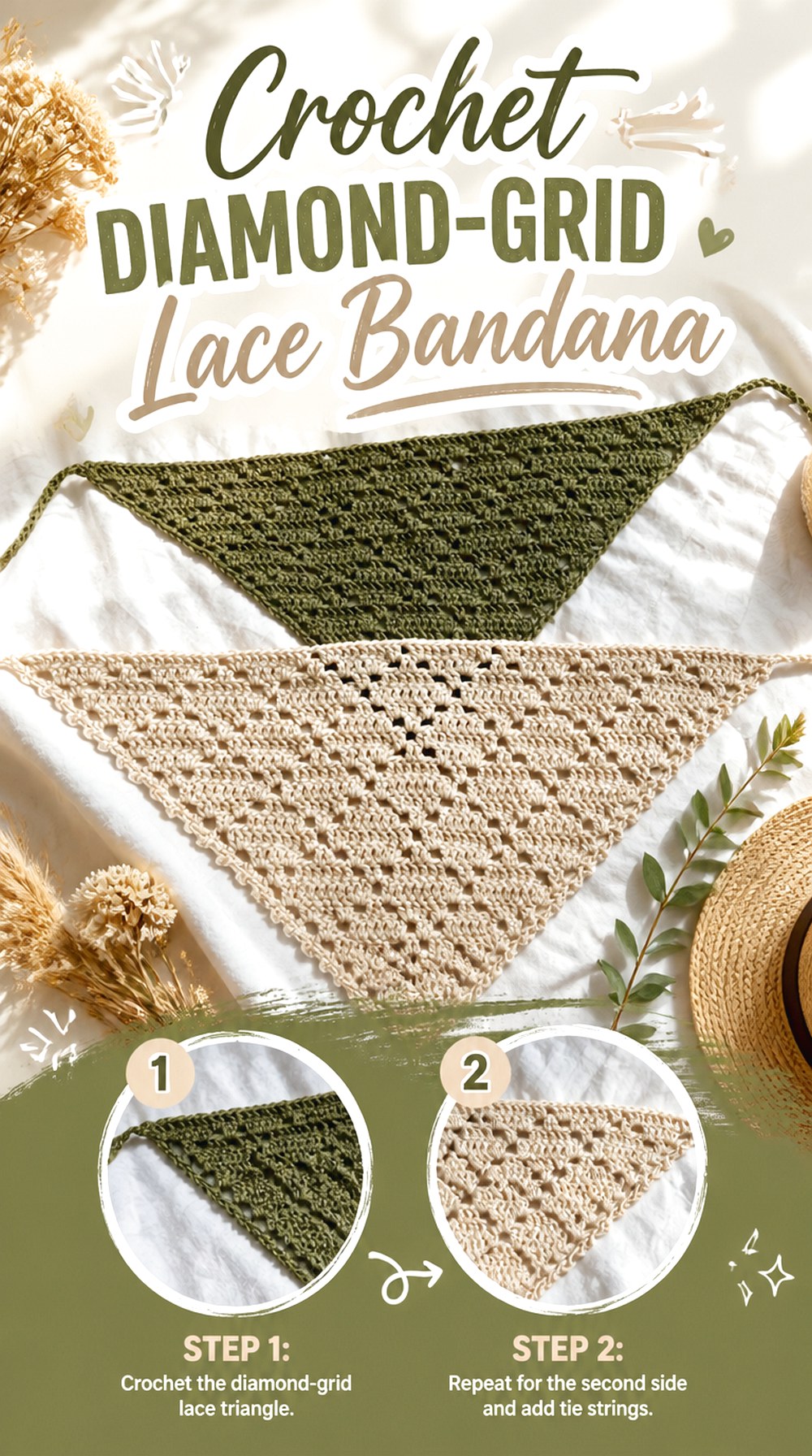
For a more geometric approach, this bandana uses diamond-shaped openings to organize the triangle. VivCrochets demonstrates a lace design in which the pattern itself forms a repeating grid, with optional picot details providing an additional decorative layer around the edge. The designer also explains how the bandana can be adjusted in size. Watch the Diamond Lace source details
This option works well when you want obvious openwork without floral or vintage-style motifs. The repeated diamonds create a stronger visual structure than loose mesh, so a single-color yarn can still produce plenty of surface interest.
Count the Geometry, Not Just the Overall Rows
Geometric lace is less forgiving of a misplaced opening than an irregular-looking mesh because the eye quickly notices when one diamond breaks alignment. Use whatever counting or visual-reference method the original tutorial provides and periodically lay the triangle flat.
Catching an offset motif early is more useful than trying to disguise it later with blocking. Blocking can refine shape; it cannot restore a lace repeat that was constructed in the wrong position.
Picots Can Be Optional Without Making the Design Plain
The diamond grid already provides a strong focal point, so an extra pointed edge changes the character rather than completing an otherwise unfinished-looking fabric. VivCrochets specifically presents picots as optional.
That gives you a useful decision: keep them for a more decorative perimeter, or omit them when you want the repeating diamonds to dominate. If you change the edging, make sure the replacement does not draw the side edges tighter.
Original Tutorial and Creator Credit
Creator: VivCrochets
3. Crochet Picot Edged Mesh Bandana
 SAVE
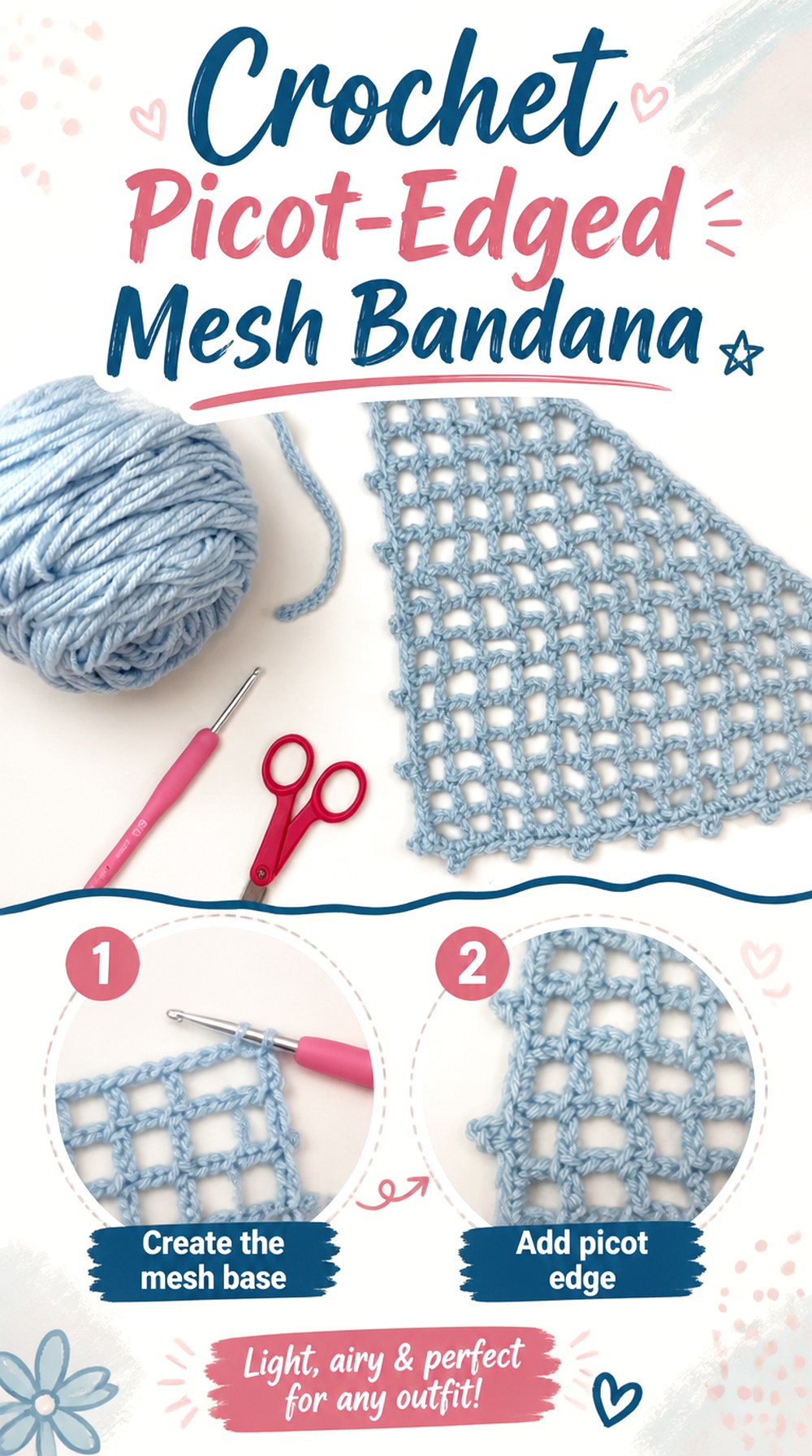
This mesh bandana takes openness further. ElyseCrochets demonstrates a lightweight-looking triangle built around a clearly visible mesh stitch pattern and finishes the project with a border and picot edging. The tutorial uses worsted-weight yarn in the demonstrated version, showing that a lace effect does not always require crochet thread or very fine yarn. Watch source details
Choose this project when you want the negative space itself to be a major design element. Because hair will remain highly visible through the openings, the bandana functions more as an airy crochet overlay than a high-coverage headscarf.
Make Hair Color Part of the Design Check
Large openings create contrast with whatever sits underneath them. A light yarn over dark hair will emphasize every square or opening, while similar yarn and hair colors can make the stitch pattern appear subtler.
Hold a swatch against the intended background before deciding that the mesh is too plain. The same fabric can look dramatically different once it is worn instead of photographed against a neutral table.
Do Not Use the Knot to Correct an Undersized Body
Mesh can stretch readily when pulled, which makes it tempting to tighten the ties until a small triangle reaches around the head. That tension can lengthen openings near the top corners and change the silhouette.
Check that the corners reach a comfortable tying position before the knot is tightened. If they do not, revisit sizing through the tutorial rather than relying on stretch.
Original Tutorial and Creator Credit
Creator: ElyseCrochets 💌
4. Crochet Daisy Motif Patchwork Bandana
 SAVE
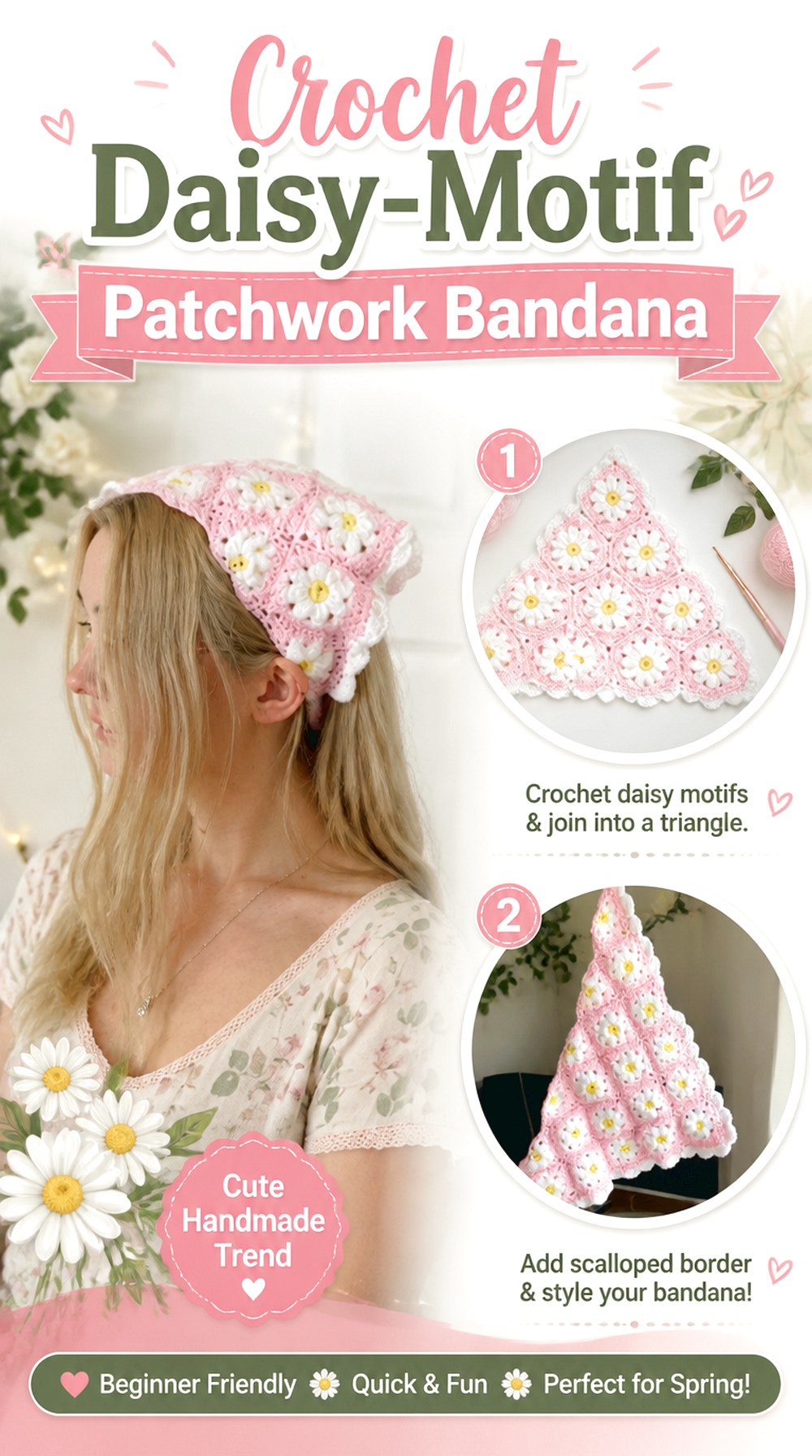
Instead of crocheting one continuous field of lace, this project makes individual daisy components part of the structure. The cosybearcrochet tutorial covers daisy squares, daisy triangles, assembly, and the final border and straps, so the joins remain an intentional visual feature of the finished bandana. Watch tutorial details
This is a strong choice for crocheters who enjoy motif work and color placement. The floral centers can introduce contrast without striping the entire headscarf, and the modular construction looks markedly different from a top-down or center-out triangle.
Match Motif Size Before Assembly
When several pieces must form one triangle, consistency matters before joining starts. Even a small difference between repeated motifs can make a seam travel off course or cause one side of the finished bandana to sit differently from the other.
Lay all pieces together in their intended arrangement first. If one motif is noticeably larger, resolving that discrepancy before assembly is usually cleaner than trying to force the border to compensate.
Plan Color Placement on the Floor or Table
Joined floral pieces allow more deliberate color placement than a continuous lace repeat. Arrange completed motifs before sewing or joining them and view the whole triangle from a distance.
This is particularly useful when flower centers and backgrounds use strong contrast. Decide whether you want one dominant central flower, an evenly repeated palette, or a more scattered patchwork effect before committing to the joins.
Watch the Seams for Added Stiffness
Motif joins can create slightly firmer lines than the surrounding open crochet. That is not automatically a problem—the seams can help define the patchwork—but bulky joining can affect how the bandana curves over the head.
Follow the creator’s assembly method and check the joined fabric against the intended shape before adding the final straps.
Original Tutorial and Creator Credit
Creator: cosybearcrochet
5. Crochet Floral Shell Trim Lace Bandana
 SAVE
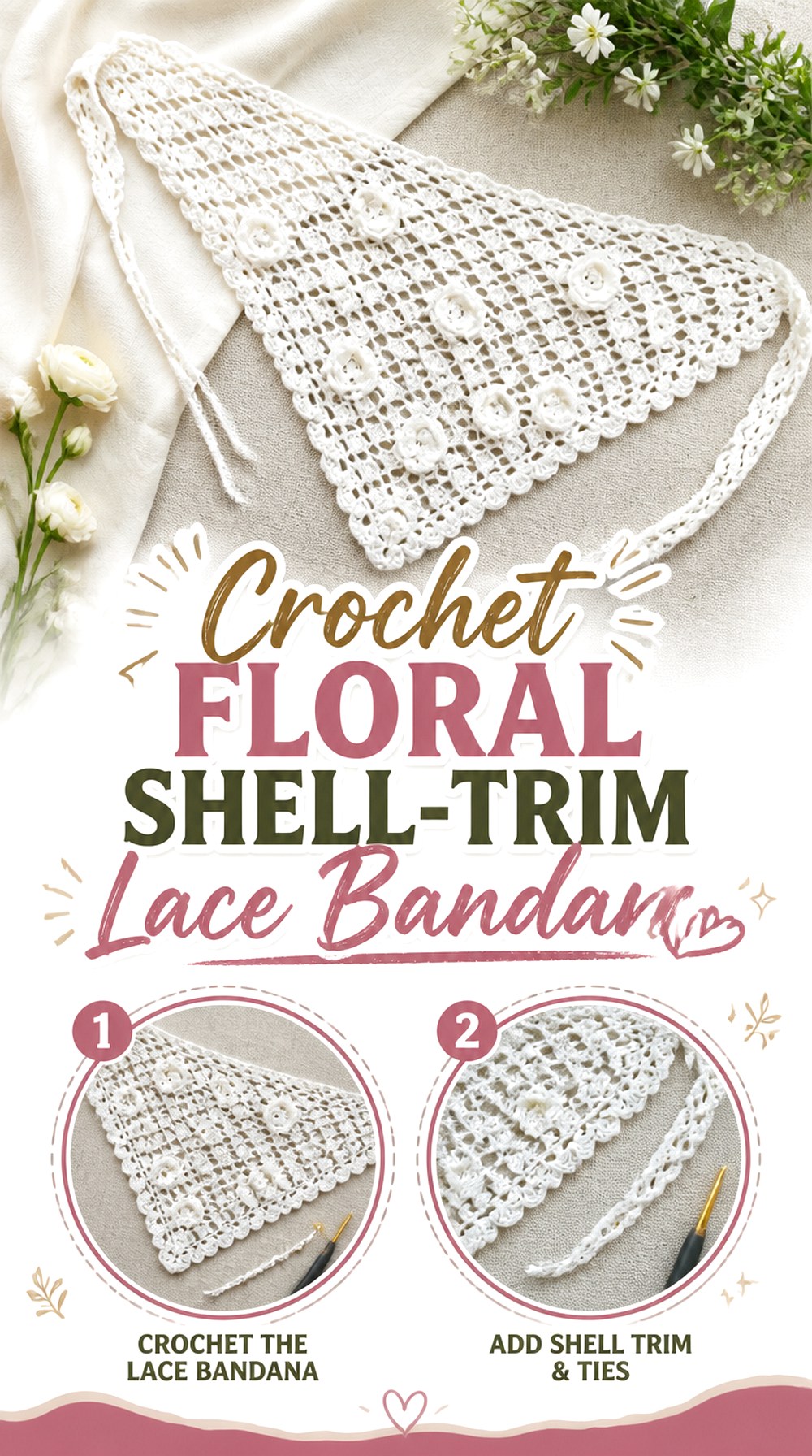
This design combines several decorative layers rather than relying on a single repeating motif. petpetcrochets demonstrates an airy lace body, a shell border, tie sections, and added flowers. The creator also presents the finished lace piece as adaptable for several styling uses beyond a conventional head bandana. Watch tutorial details
It suits readers who want a visibly embellished piece rather than minimal mesh. Because the flowers are an additional design element, they can become focal points without requiring the whole triangular field to be assembled from separate motifs.
Decide Where the Flowers Should Carry Attention
Added flowers can make the lower point, side edge, or another selected area feel visually heavier. Before attaching all decorative elements, place them temporarily on the completed lace and view the bandana both flat and in its intended wearing position.
A flower placement that looks balanced on a table may sit differently once the triangle curves around the head.
Fine Lace Changes the Scale of Every Detail
The tutorial uses fine cotton thread and a small hook for the demonstrated project, which supports its delicate, open appearance. A much heavier substitution would enlarge not only the triangle but also the flowers, shells, and spaces between stitches.
If changing materials, sample enough of the pattern to see how all those elements scale together. Do not assume that simply stopping earlier will preserve the same proportions.
Embellishment Affects Care
A plain mesh triangle is relatively straightforward to handle, but attached flowers and delicate shell edging create more places that can snag or become misshapen. Care will depend on the actual fiber and construction.
Follow the yarn label and creator guidance, and avoid assigning a generic washing method solely because the project is cotton or lace.
Original Tutorial and Creator Credit
Creator: petpetcrochets
6. Crochet Textured Picot Bandana
 SAVE
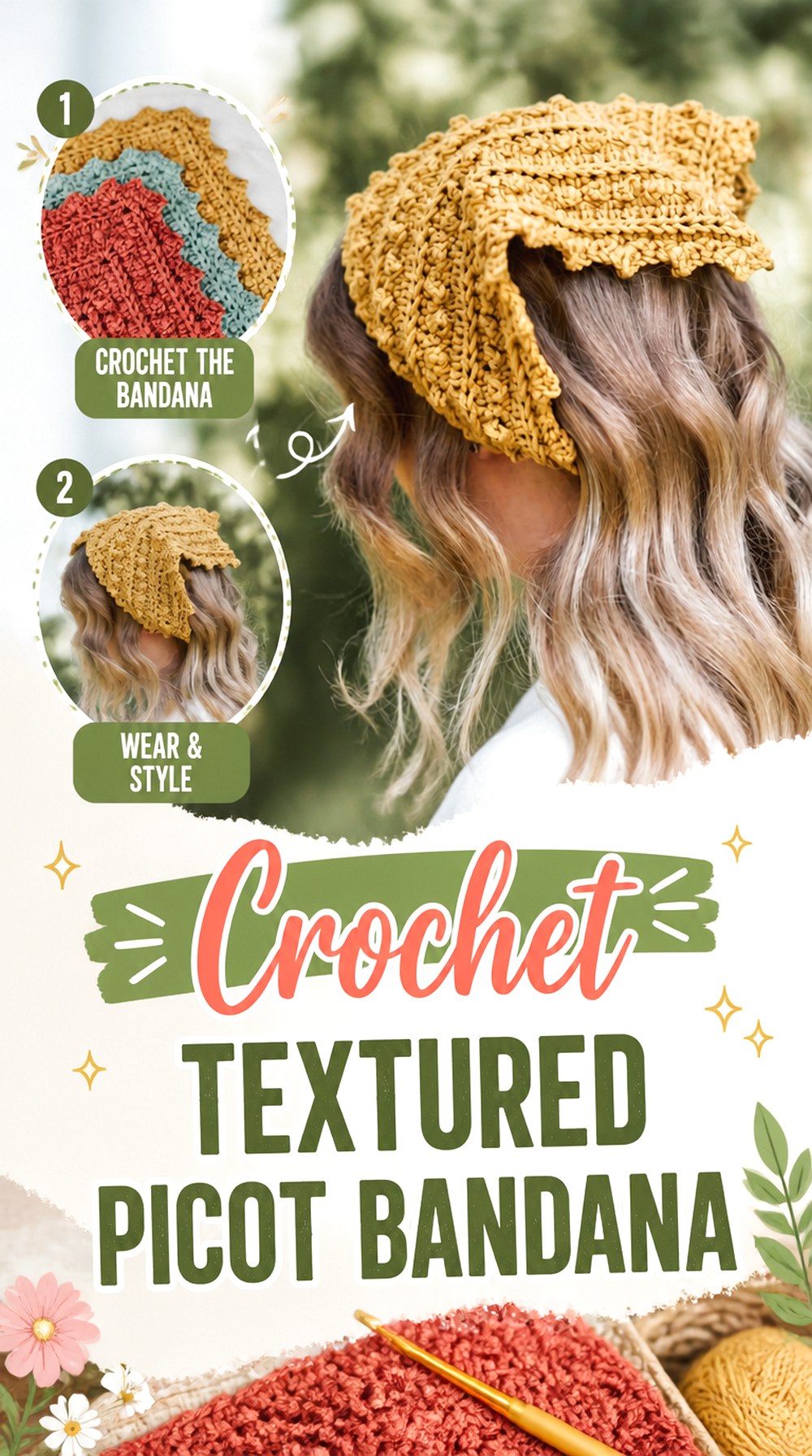
The Turtle Trunk’s Picot Bandana makes small pointed texture a major part of the fabric rather than treating picots only as a final edge decoration. The tutorial is presented in three sizes and uses medium-weight yarn in the demonstrated project, giving this idea a more substantial look than thread-scale lace. Watch tutorial details
This is a useful choice when you like decorative texture but do not want large transparent openings. It can still read as lace because of the repeated negative space and pointed details, yet it provides a different balance between crochet fabric and visible hair.
Texture Makes Tension Changes Easier to Spot
Repeated small details look most intentional when they are similar in scale. If one section is worked much more tightly, the points can bunch together; if another is loose, the spacing may expand.
Periodically spread the fabric on a flat surface without stretching it. Comparing neighboring repeats is often a better tension check than measuring only the overall triangle.
Use the Designer’s Size Rather Than Guessing From Yarn
Because the source provides multiple sizes, start with the creator’s sizing framework before trying to resize through material substitutions alone. View pattern confirmation
A heavier or lighter yarn changes fabric thickness and tie bulk as well as width. If you deliberately substitute, compare the resulting fabric with the intended wearer during construction.
Original Tutorial and Creator Credit
Creator: The Turtle Trunk
7. Crochet Filet Lace Scallop Bandana
 SAVE
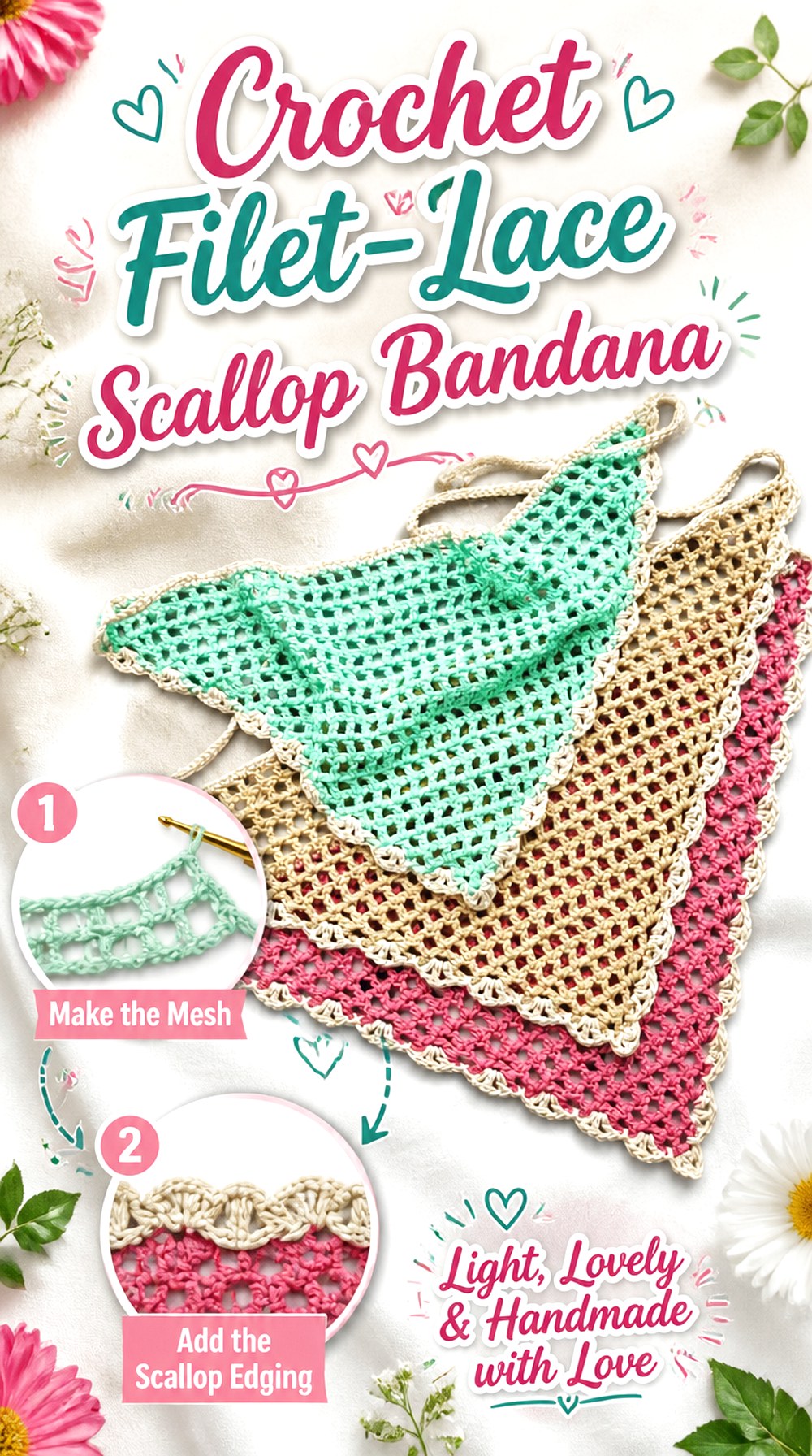
This Annie Design Crochet project uses regular filet-style openwork for the main triangle and then changes character at the perimeter with a scalloped border. The published design uses rows of double crochet and chain spaces, with the triangle expanding through the repeated lace structure.
The combination is useful when you want orderly mesh through the center but a softer vintage-looking outline. It also creates a natural opportunity for a contrasting border color without introducing color changes throughout every lace row.
Straight Filet Lines Reveal Uneven Growth
A regular filet field creates visible horizontal and diagonal lines. If one side gains length differently from the other, the geometry may begin to lean before the overall dimensions look obviously wrong.
Lay the piece flat periodically and compare both slopes of the triangle. The earlier you catch an asymmetry, the less lace you have to revisit.
Give the Scallops Enough Room to Settle
Decorative shells or scallops can look crowded immediately after they are worked, especially if the edge tension differs from the center fabric. The source specifically includes blocking as part of the finishing guidance.
Use appropriate finishing for your chosen yarn and guide the perimeter into shape rather than aggressively stretching the points.
Contrast Borders Need Deliberate Color Balance
A contrasting scallop draws the eye to the outside edge, making the silhouette more prominent. That can be useful with understated center mesh, but a very strong contrast may visually dominate the lace.
Place both yarn colors together against hair or clothing before committing. The border occupies less area, yet its position makes it disproportionately noticeable.
Original Tutorial and Creator Credit
Creator/Site: Annie Design Crochet
8. Crochet Band First Lacy Head Kerchief
 SAVE
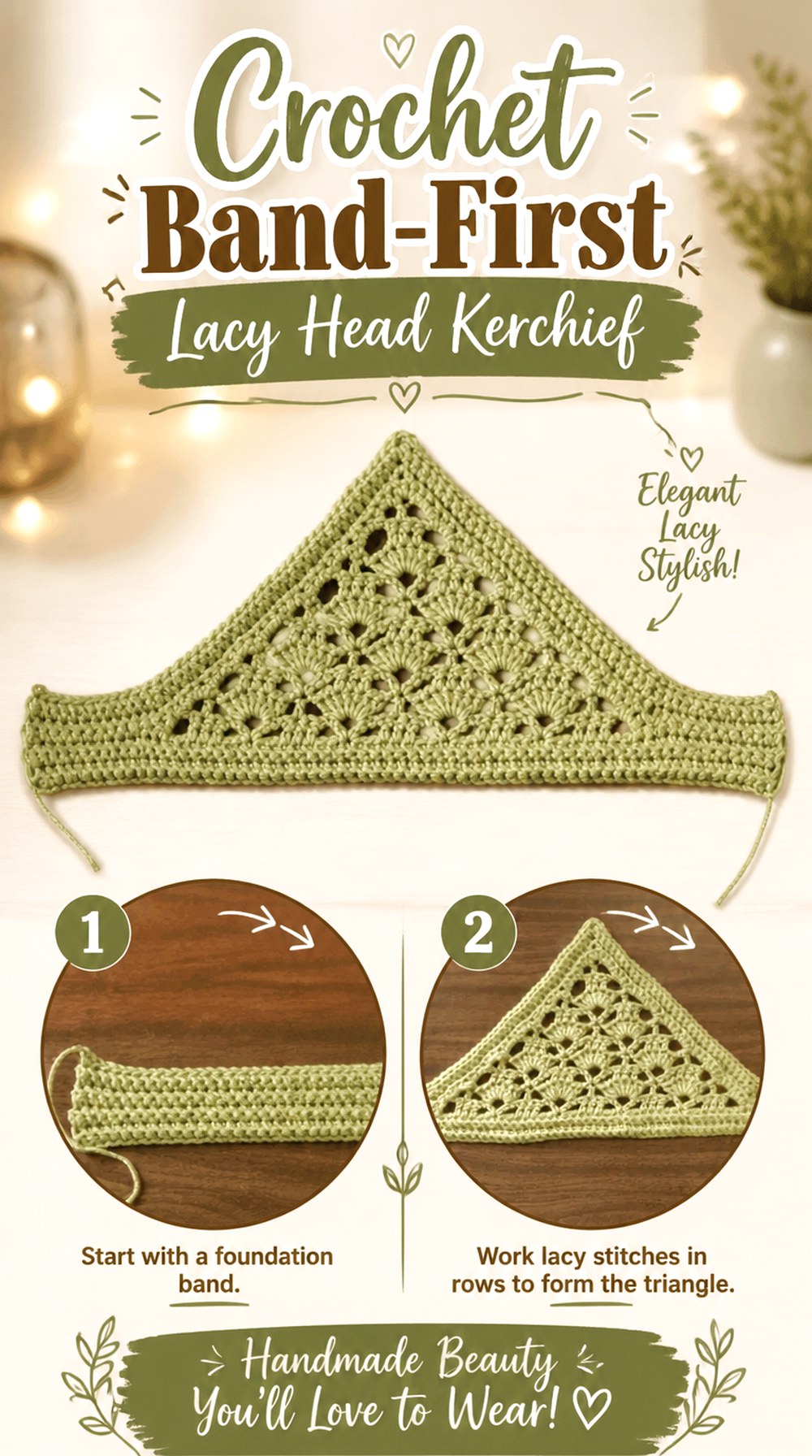
Kristen TenDyke’s kerchief approaches fit from a different direction. Instead of growing the entire accessory as one triangle with loose ties, the design first creates a band to fit around the head, centers the lace triangle on that band, and later completes and seams the band. The page also includes guidance for adapting the piece to different yarns and gauges.
This makes the project especially interesting for readers who prefer a defined circumference rather than tying two narrow straps each time the kerchief is worn.
Treat the Band as the Primary Fit Component
Here, crown fit is not determined by triangle width alone. The band circles the head, so its comfortable finished length matters before the decorative triangle receives much attention.
Measure where the kerchief will actually sit rather than relying on a generic head circumference. Hair volume and placement can change the practical fit point.
Substitution Requires More Than Matching a Hook
The designer explicitly provides an adaptable approach for different yarn and gauge combinations. That is more reliable than simply choosing a different hook and hoping the same instructions produce the intended circumference.
If you change yarn, follow the source’s fitting method and check both band comfort and lace proportion. A perfectly fitted band can still look unbalanced if the attached triangle becomes disproportionately deep.
Check the Seam Against the Intended Wearing Position
A closed band eliminates dangling ties but introduces a seam. Before final finishing, consider where that join sits against the hair and whether any yarn tails or bulky joining create an uncomfortable spot.
Use the seam construction specified in the original source rather than improvising a thicker join that may change the circumference.
Original Tutorial and Creator Credit
Creator/Site: Kristen TenDyke Designs
9. Crochet Ribbed Band V Stitch Head Kerchief
 SAVE
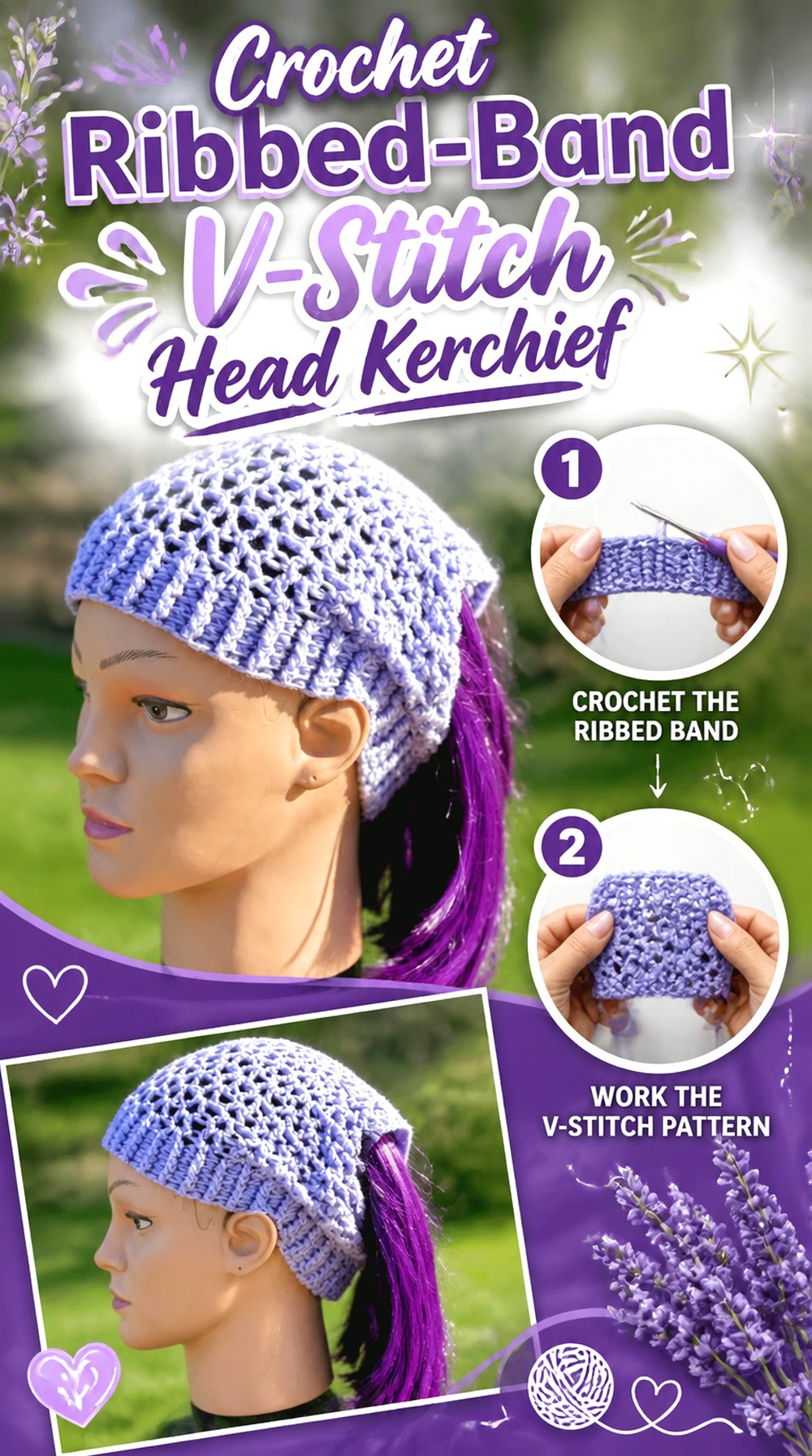
The Bandkerchief from Stitches n Scraps combines an open V-stitch kerchief section with a substantial ribbed band worked around the head. The redesigned version grows the lacy section from the point upward, then transitions into the band, and the original tutorial provides five size options.
Visually, this is one of the most distinctive choices in the list because the lower lace and upper ribbing clearly perform different jobs. Choose it when a secure, headband-like fit matters more than traditional dangling ties.
The Ribbing Should Hold Without Pinching
A ribbed band gains some flexibility from its structure, but that does not mean it should be deliberately undersized. Stitches n Scraps includes a fit checkpoint before the ribbing is completed and describes ways to alter the size.
Use that checkpoint. The lace portion should not have to stretch dramatically simply because the band is too tight.
Two Textures Need Compatible Drape
The open V-stitch portion is lighter than the ribbed band. When substituting yarn, make sure the two fabrics still feel balanced together.
If the ribbing becomes very heavy while the kerchief remains loose, the upper section may dominate visually and physically. Conversely, extremely soft ribbing may provide less definition than the original construction intends.
Closed-Band Designs Change Hairstyle Compatibility
A continuous band can be convenient because there is no knot, but it also passes around the full head. Think about whether the intended wearer will place it over loose hair, beneath a ponytail, or farther forward like a headband.
Check fit in that actual position before fastening off. A comfortable circumference can feel different once hair volume is included.
Original Tutorial and Creator Credit
Creator/Site: Stitches n Scraps
10. Crochet XoXo V Stitch Bandana
 SAVE
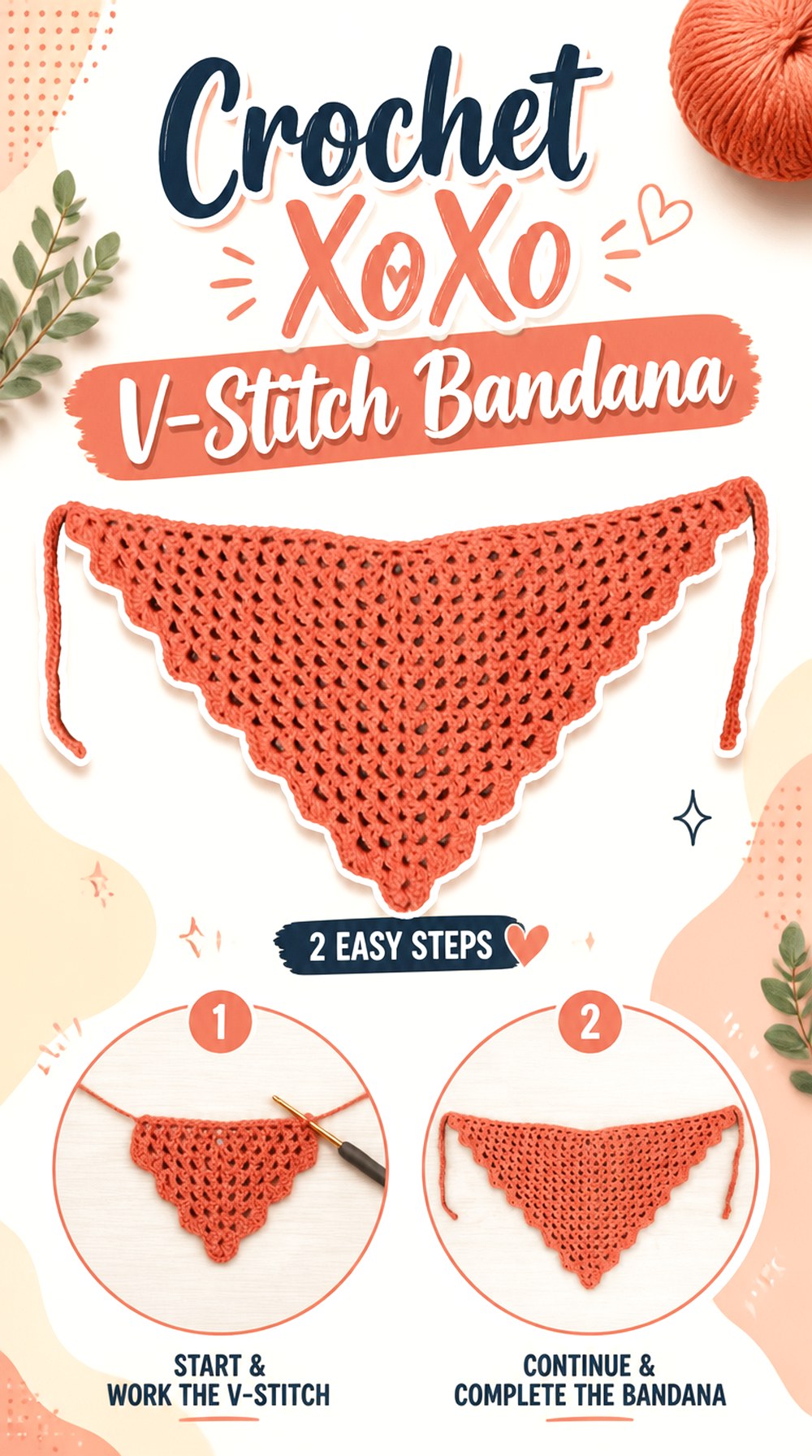
Fosbas Designs uses repeated V-stitches to build an open triangular bandana, producing a surface made from regular vertical pairs rather than squares, diamonds, or flowers. The design also transitions into a more decorative lower finish and crocheted ties.
The V-stitch rhythm makes this a good middle ground between sparse mesh and denser shell crochet. You still get obvious openings, but each V gives the fabric a recognizable repeated motif.
Keep the Center Line Visually Stable
V-stitch triangles depend on consistent growth around their central shaping area. If that center drifts, the finished point may appear to lean even when both outside edges are technically similar in length.
Use the placement cues in the source and inspect the center line from a distance every few repeats rather than relying only on the last row you completed.
A Decorative Final Edge Changes the Silhouette
The finishing section introduces more concentrated stitch groups than the open V-stitch body. That gives the lower edge additional weight and texture.
If you substitute a thicker yarn, make sure that decorative edge does not become disproportionately bulky. A small sample of both the V-stitch and border can tell you more than the yarn label alone.
Original Tutorial and Creator Credit
Creator/Site: Fosbas Designs
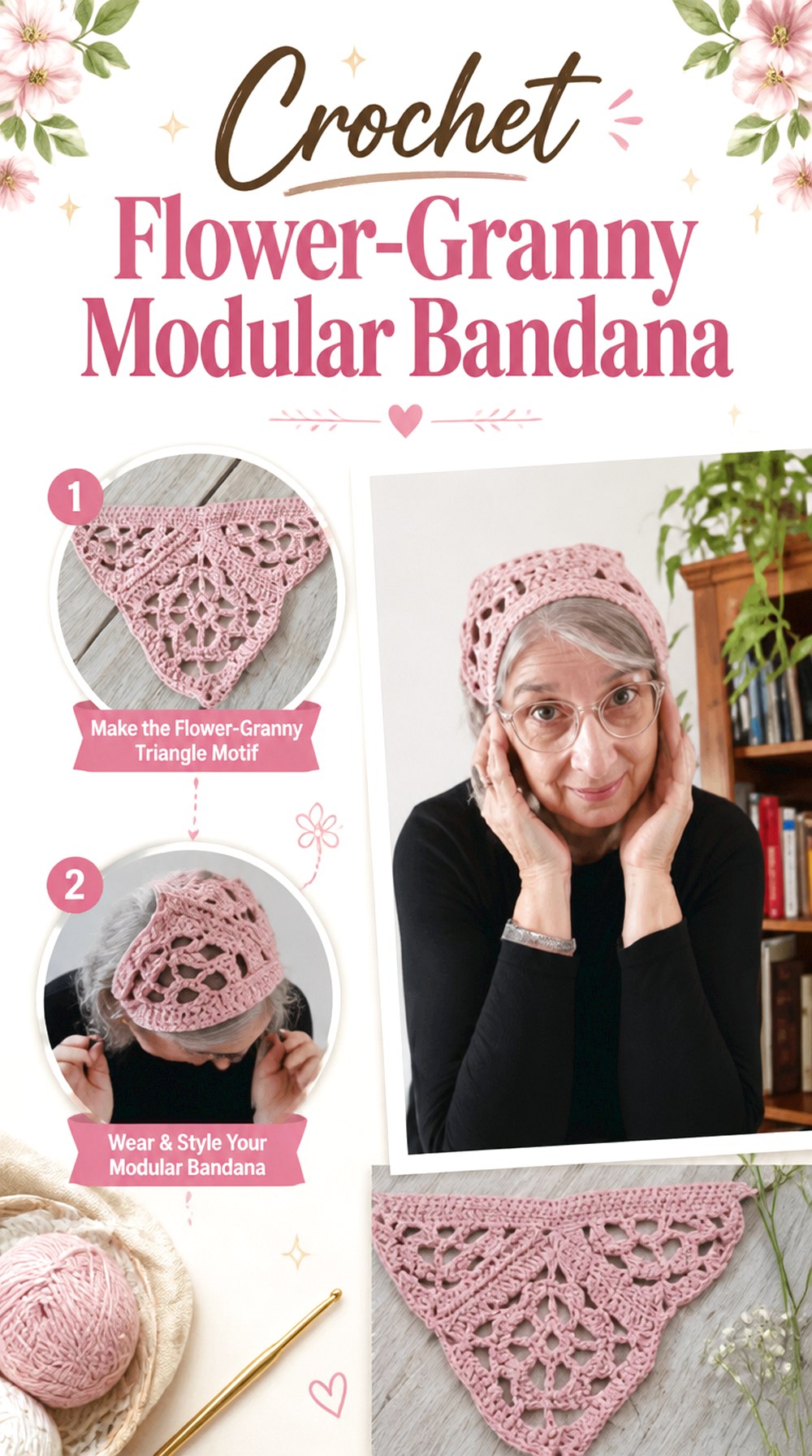
11. Crochet Flower Granny Modular Bandana
 SAVE
Sandra Regev’s Adriene design uses a full floral granny square plus two half-square components to create the triangular headscarf. The pieces are assembled into the final shape, and a strap across the top continues into the ties.
Unlike the daisy patchwork earlier in the list, this concept places one larger flower-square structure at the center of the composition. That creates a more graphic focal point and gives the joins a clear architectural purpose rather than forming an all-over field of repeated small flowers.
Dry-Lay the Full and Half Motifs First
The designer’s construction depends on the full and half pieces forming one clean triangle. Before joining, arrange the pieces exactly as they will sit in the finished bandana.
This reveals differences in motif scale, edge length, and color balance while they are still easy to correct.
The Top Strap Can Visually Unite the Modules
A straight band across the top creates a clean line above the separate motifs. If the motifs use multiple colors, consider whether the strap should blend with the background, repeat the flower center, or provide a deliberate contrast.
Whichever direction you choose, check that the strap fabric is comfortable against the hairline and does not become excessively stiff relative to the flower pieces.
Modular Resizing Needs More Planning
A continuously growing triangle can often gain another repeat, but a motif bandana has discrete units. Adding or enlarging pieces may alter the whole layout.
Sandra’s source provides its own sizing and material context. If you need another size, use those directions rather than assuming an extra square can be inserted without changing the triangular composition.
Original Tutorial and Creator Credit
Creator/Site: Sandra Stitches
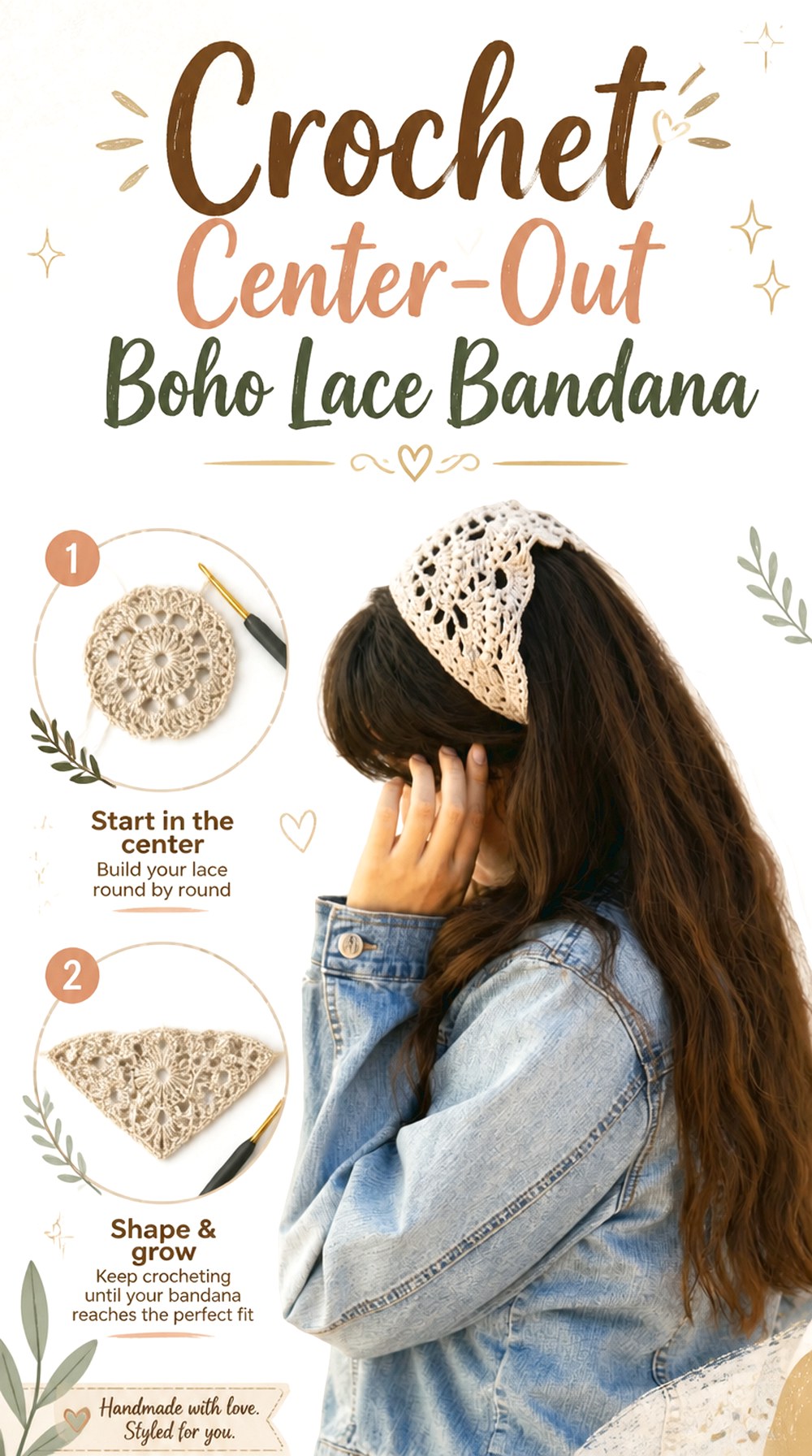
12. Crochet Center Out Boho Lace Bandana
 SAVE
The Breezy Boho Bandana from YippieYarnYay begins from a small central loop and develops into a lace triangle in rows. Its tie straps are integrated into the finishing rather than sewn on separately, and the designer also provides a variation that enlarges the concept into a hip scarf using different materials.
This makes it a good option for readers who enjoy a decorative center-out construction and want a pattern concept with styling potential beyond one headwear format.
Size the Head Version Before Thinking Bigger
A pattern that can become a hip scarf does not mean every head bandana should simply be enlarged. Those two uses require very different proportions and fit.
Follow the designer’s specific variation when changing scale. For the headscarf itself, concentrate first on comfortable crown coverage and tie placement rather than the maximum size the lace repeat can produce.
Integrated Ties Reduce One Assembly Decision
The source incorporates the ties into the bandana rather than asking you to create and sew on separate straps. That creates a cleaner transition at the corners.
It still pays to check tie length before finishing completely. Hair thickness, preferred knot style, and where the bandana sits can all affect how much usable tie length feels comfortable.
Fine Yarn Keeps the Lace Visually Delicate
The original bandana version is designed around a fine yarn setup, while the larger hip-scarf variation changes materials. That distinction is useful: scaling lace through yarn thickness can change its character substantially.
If you want the same delicate headscarf effect, do not assume a heavier yarn will simply create a faster version of the identical look.
Original Tutorial and Creator Credit
Creator/Site: YippieYarnYay
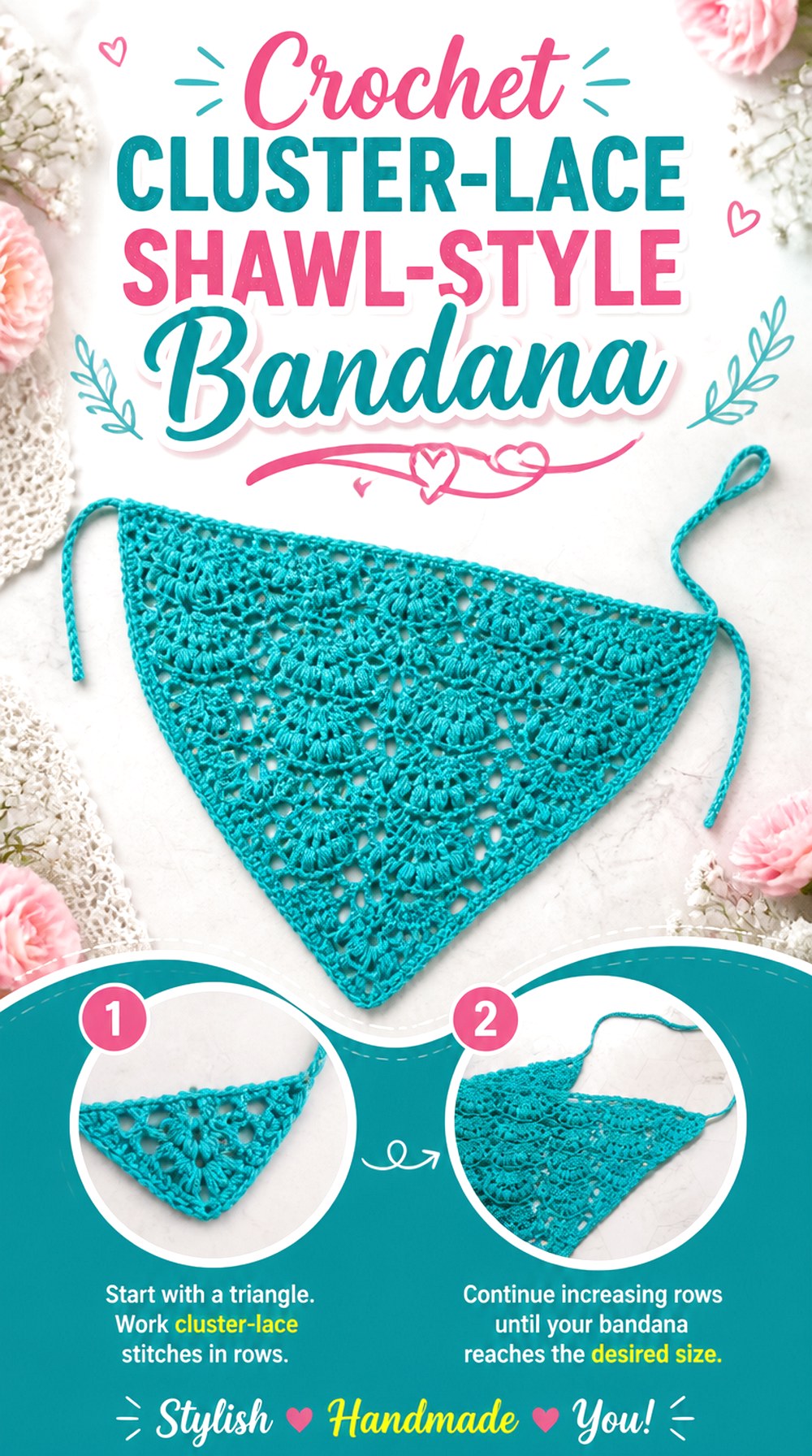
13. Crochet Cluster Lace Shawl Style Bandana
 SAVE
TLH Patterns takes the triangular lace concept toward a fuller scarf aesthetic. The tutorial combines several familiar crochet stitch types, including cluster texture, in a lace headscarf that the creator also explains can be adapted into a triangle shawl. View tutorial details
This direction is worth considering if you prefer a deeper, more textile-like triangle rather than a very small hair accessory. It also demonstrates how a bandana construction can become the starting point for a larger lace piece without simply adding a heavier border.
Deeper Triangles Need More Drape
As a triangle becomes larger, stiffness becomes more apparent because more fabric has to bend around the head or hang when worn another way. A flexible lace fabric can transition between those uses more naturally.
If substituting yarn, hang a sample vertically as well as laying it flat. A stitch pattern can look open on a table yet still feel unexpectedly rigid once gravity acts on a larger piece.
Cluster Texture Adds Weight Between Open Spaces
Clustered stitch groups concentrate more yarn in selected areas. This can make the lace feel richer and more dimensional than simple chain-space mesh, but it also changes how the fabric hangs.
Watch the balance between cluster sections and open areas when making substitutions. Excessively heavy clusters can make a large triangle feel bottom-heavy.
Treat Shawl Conversion as a Real Size Change
A shawl has different coverage and drape requirements from a headscarf. Use the creator’s adaptation guidance rather than assuming that endlessly repeating the bandana section will automatically produce the right proportions.
Check how the side edges and center point develop as the piece grows, especially if you are modifying materials at the same time.
Original Tutorial and Creator Credit
Creator: TLH Patterns
How These Crochet Lace Bandana Styles Compare
| Project direction | Main visual feature | Construction choice to consider |
|---|---|---|
| Shell-Lace Triangle | Repeating shells throughout | Lace pattern is the main feature |
| Diamond-Grid Lace | Geometric diamond openings | Counting and alignment matter |
| Picot-Edged Mesh | Large open mesh | High transparency and light coverage |
| Daisy-Motif Patchwork | Repeated flowers | Multiple pieces must match before joining |
| Floral Shell-Trim | Lace plus added flowers | More embellishment and finishing |
| Textured Picot | Small raised pointed detail | Less dependent on large openings |
| Filet-Lace Scallop | Regular grid with soft border | Strong contrast between center and edge |
| Band-First Kerchief | Lace attached to fitted band | Circumference drives the fit |
| Ribbed-Band V-Stitch | Airy triangle plus ribbing | Closed headband replaces ties |
| XoXo V-Stitch | Repeating V-shaped openings | Balanced center growth is important |
| Flower-Granny Modular | Central floral modules | Full and half motifs form the triangle |
| Center-Out Boho Lace | Decorative center-out growth | Integrated ties and multi-use option |
| Cluster-Lace Shawl Style | Openwork with textured groups | Drape matters more as scale increases |
For maximum openness, the mesh and filet designs stand out. The two band-based kerchiefs are better comparisons when secure fit matters more than a traditional back knot. Floral projects range from small repeated daisies to a central modular flower and applied embellishment, so choosing between them is partly about how much joining and finishing you want. Shell, picot, V-stitch, and cluster options sit between those extremes.
Conclusion
These 13 crochet lace bandana ideas show how much can change inside one small triangular accessory. Diamond and filet designs emphasize geometry, mesh exposes more hair, shells and picots create stronger edges, and floral motifs introduce either modular construction or added embellishment. The band-first and ribbed-band kerchiefs are particularly different because fit comes from a defined circumference instead of conventional ties.
Choose the project by comparing coverage, drape, motif work, finishing, and the way you prefer the headscarf to stay in place. Once you have selected the construction that suits your goal, use the linked original tutorials for the creators’ exact stitch sequences, measurements, materials, and adjustment instructions.
Frequently Asked Questions
Can I use a different yarn weight for a crochet lace bandana?
Often you can experiment with another yarn, but changing weight can enlarge every lace opening, thicken the border, change drape, and make the ties bulkier. For a continuously growing triangle, adaptation may be relatively flexible; motif and fitted-band projects can be less forgiving. Make a representative swatch first and compare it with the intended wear position. When the designer provides specific substitution or sizing instructions, follow those instead of relying on hook changes alone.
How do I know when a crochet bandana is wide enough?
Do not judge width only from a generic measurement. Place the unfinished triangle where you intend to wear it and check whether its upper corners reach a comfortable tying position without significantly stretching the lace. Also look at depth: a wide but shallow triangle provides different coverage from a deeper kerchief. For fitted-band constructions, follow the tutorial’s circumference checkpoint because the band, rather than the triangle width, determines much of the fit.
Do crochet lace bandanas need to be blocked?
Not every project requires the same finishing treatment, but appropriate blocking can help open lace, settle scallops, even the triangle edges, and make geometric repeats easier to see. The correct method depends on the fiber, yarn label, and designer guidance. Avoid pulling the piece aggressively to force a larger size. Blocking is most useful for organizing and relaxing the fabric rather than compensating for incorrect stitch placement or an undersized bandana.
How can I keep the ties from distorting an open lace triangle?
Make sure the body is already large enough before using the ties to secure it. If the corners only reach behind the head when the lace is stretched hard, the triangle may need additional width according to the source pattern. Tie with enough tension to hold the bandana but not enough to elongate the openings near the corners. Wider or denser ties can feel different from narrow cords, so test the finished piece in its actual wearing position.
Are floral motif bandanas harder to resize than continuous lace bandanas?
They can require more planning because the shape depends on complete motifs, half motifs, or a particular assembly layout. A continuously growing triangle may allow another pattern repeat, whereas adding one whole square to a modular design can change both width and shape. With floral projects, compare motif dimensions before joining and use the creator’s sizing guidance whenever available. Changing yarn or hook size can also alter seam bulk and flower proportions, not just the overall dimensions.
Is continuous lace or joined-motif construction better for a first bandana?
The better choice depends on what you already crochet comfortably. Continuous mesh, V-stitch, or filet designs reduce assembly but can require careful repeat counting. Joined flowers break the work into smaller pieces, yet consistent motif size and neat joining become important. Look at the original tutorial before deciding and confirm that you are comfortable with its stitch vocabulary and finishing method rather than assuming that one construction style is universally simpler.