
15 Crochet Gothic Rose Accessories Ideas for Dark Romantic Style
Crochet roses can move far beyond soft garden styling. With darker color relationships, sharper contrast, compact motifs, and carefully chosen accessory forms, the same floral idea can work for Victorian-inspired outfits, romantic goth wardrobes, dramatic event styling, or subtle everyday details.
These 15 projects cover very different ways to wear the motif: close-fitting jewelry, earrings and rings, clustered brooches, several kinds of hair accessories, a triangular bandana, a functional shawl fastener, hanging bag pieces, and a full rose-motif purse. The gothic direction comes primarily from your styling choices rather than from changing a creator’s construction without checking it first. Use the original tutorial for the exact pattern, then consider color, scale, attachment method, and intended use before adapting the finished look.
Quick List
- Crochet Blood-Red Rose Choker
- Crochet Thorn-Garden Rose Earrings
- Crochet Midnight Rose Bracelet
- Crochet Black Lace Rose Ring
- Crochet Victorian Rose Garden Brooch
- Crochet Garnet Rose Hair Clip
- Crochet Dark-Romance Rose Crown
- Crochet Crimson Rose Hair Vine
- Crochet Black-and-Red Rose Bandana
- Crochet Mourning Rose Shawl Pin
- Crochet Oxblood Rose Bag Charm
- Crochet Cathedral Rose Granny-Square Purse
- Crochet Midnight Rose Hair Tie
- Crochet Petite Gothic Rose Keychain
- Crochet Raven Rose Gajra
Choosing a Gothic Palette Without Hiding the Rose
Black is an obvious starting point, but an all-black dimensional flower can lose petal definition when the yarn absorbs light. One useful alternative is contrast within the dark palette: black leaves with burgundy petals, charcoal edging around oxblood roses, black bases with muted wine accents, or plum combined with deep forest green.
Yarn texture matters as much as color. Very fuzzy fibers can soften the boundaries between closely layered petals, while smoother yarn generally makes stitch and edge definition easier to see. For small jewelry, the scale of the yarn also affects how dominant the rose becomes. Before committing to an entire matching set, crochet one motif and view it from normal wearing distance. The best dark palette is not necessarily the darkest one; it is the combination that still lets the flower read clearly.
Match Rose Scale to the Accessory
A rose that looks balanced on a purse may overwhelm an earring, ring, or narrow choker. Changing yarn thickness or hook size can alter the overall scale, but it can also affect stiffness, density, and the way layered petals settle. When a tutorial provides its own resizing guidance, follow that before improvising.
Consider movement as well. Earrings need a relatively controlled weight. A hair vine benefits from flowers that do not pull the supporting strand out of position. A bag charm can tolerate more dimension, but a heavy hanging piece may stretch its attachment. Rings and bracelets require enough clearance to remain comfortable during hand movement.
For wearable projects, compare the finished motif or base against the intended wearer before permanently attaching flowers, hardware, buttons, or elastics. This is particularly important when adapting a decorative tutorial into a darker, more embellished version.
Closures, Hardware, and Finishing Deserve Attention
The crochet flower may be the visual focal point, but the attachment is often the functional weak point. Earrings depend on their findings, rings on their bases, hair pieces on clips or elastics, brooches on pin backings, and bag accessories on whatever connects them to the bag. Secure the crochet according to the original tutorial and check the finished attachment under normal movement before wearing it.
Added beads, chains, charms, ribbons, or metal findings can change weight and care requirements. Keep embellishments clear of mechanisms that need to open, close, flex, or slide. For jewelry worn directly against the skin, choose hardware and fibers appropriate for the wearer and confirm material composition when sensitivities are a concern.
Care should follow the yarn label and the creator’s project guidance. Mixed-material accessories may need gentler handling than an all-yarn piece.
1. Crochet Blood Red Rose Choker
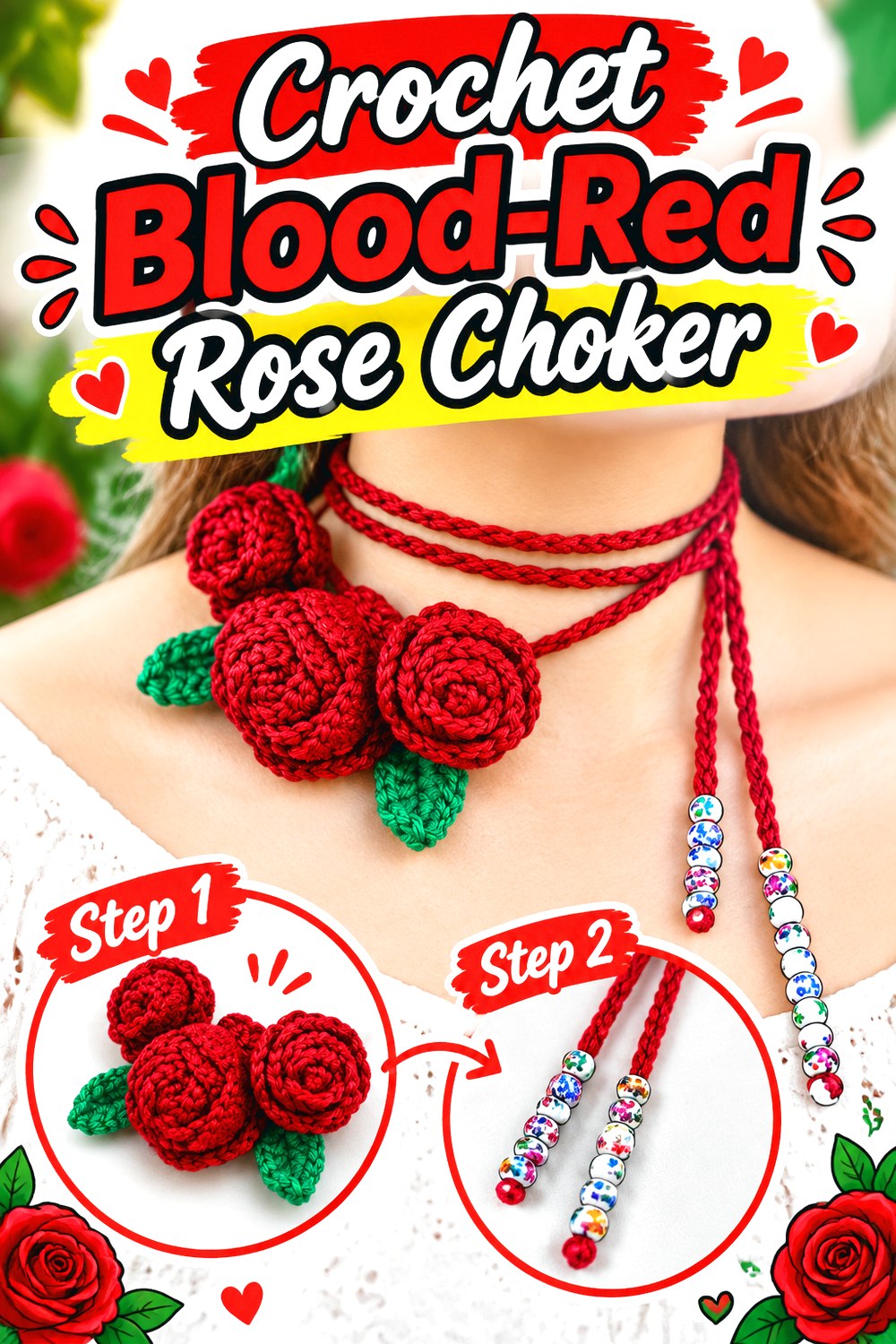
A rose choker puts the flower directly at the neckline, making it one of the strongest choices when you want the gothic rose to dominate an outfit without creating a large accessory. Nicole Riley’s source design combines several roses with leaves and a narrow necklace structure, giving the floral arrangement enough presence to read as more than a single appliqué.
For a darker interpretation, consider a black or charcoal neck element beneath deep crimson, wine, or nearly black roses. The important decision is proportion: a substantial flower cluster creates a statement neckline, while a lighter visual treatment leaves more room for other jewelry.
Check the Neck Fit Before Finishing
A choker needs a different fit from a long necklace. It should sit where intended without becoming restrictive when the wearer turns or lowers their head. If you alter yarn thickness, flower size, or the necklace component, reassess the completed length rather than assuming the original proportions will remain unchanged.
Also check how the rose cluster lies against the upper chest. Added weight can encourage the flowers to tilt forward, while an overly stiff base may stand away from the neck.
Let the Roses Keep Their Definition
Dark petals need enough separation to remain recognizable. If black roses visually merge into a black neckband, changing the leaves, edging, or neighboring rose color can restore contrast without abandoning the gothic palette.
A smooth burgundy rose against black can often show more depth than a completely black flower. If you do choose monochrome black, inspect the petals under both daylight and indoor lighting before deciding whether additional contrasting details are needed.
Original Tutorial and Creator Credit
Creator/Site: Nicki’s Homemade Crafts
2. Crochet Thorn Garden Rose Earrings
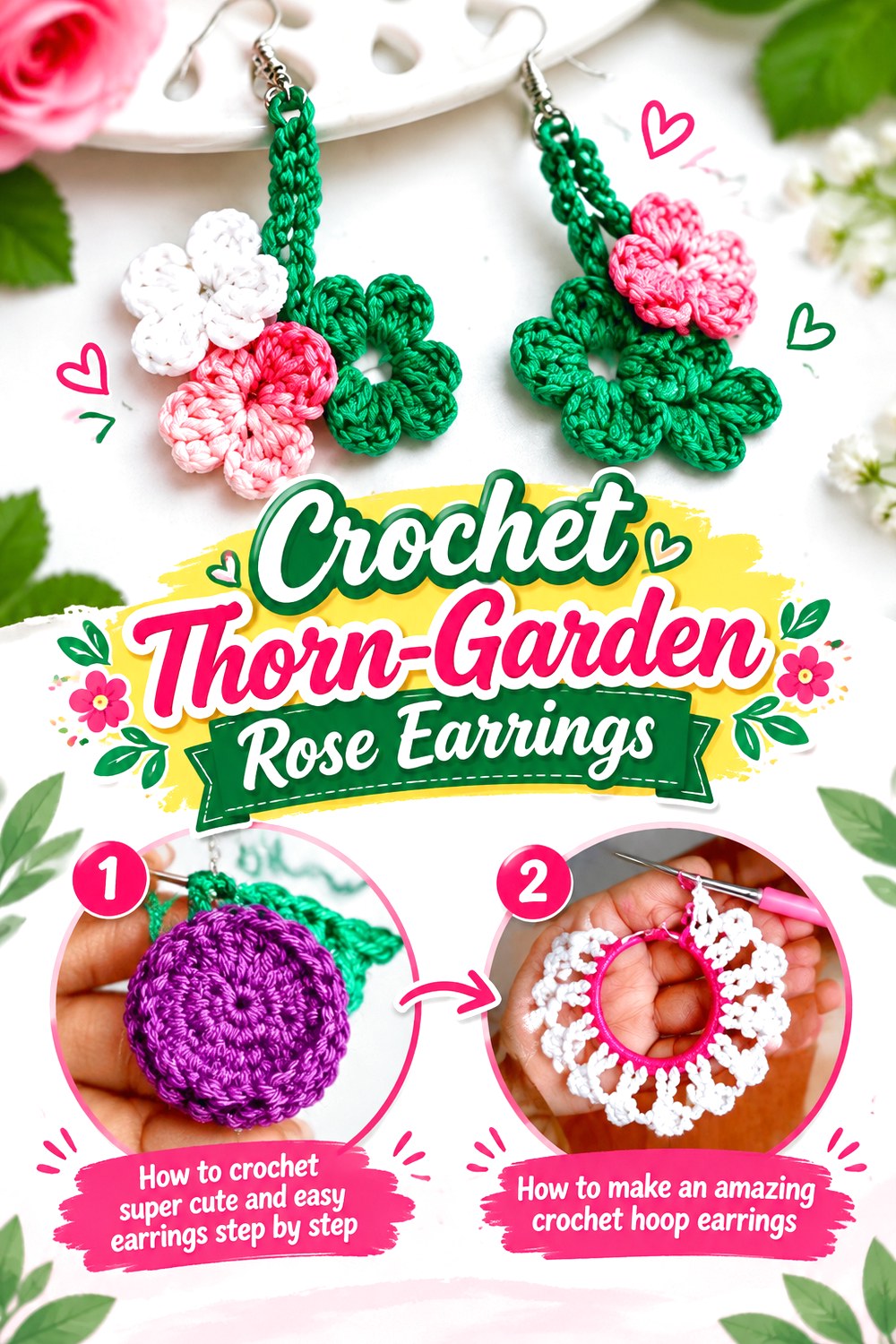
Rose earrings reduce the floral idea to a much smaller scale, so they work well when you want gothic styling that does not occupy the entire neckline. Raizzasdiy Crochet demonstrates a finished pair built specifically as rose earrings rather than simply suggesting that a generic flower could be attached to jewelry findings.
For a thorn-garden look, deep red petals paired with very dark green accents can keep the botanical character while feeling moodier than pastel florals. Because earrings move continuously, neat backs and controlled flower dimensions matter just as much as the front view. Make the pair visually consistent before attaching the final findings.
Keep the Pair Visually Balanced
Small differences in tension can become noticeable when two flowers are worn side by side. Compare both roses before final assembly, checking their diameter, petal fullness, and orientation rather than judging each one independently.
If one flower is visibly denser, remaking it may produce a cleaner result than trying to reshape it after the hardware is attached. This is also a good point to decide whether leaves or other additions improve the design or simply make the earrings look crowded.
Consider Weight Before Adding Gothic Embellishments
Beads, chains, metal charms, or extra crocheted leaves can deepen the gothic styling, but every addition increases movement and weight. Test the finished crochet components with the intended findings before adding decorative extras.
For anyone sensitive to particular metals, confirm the composition of the earring hardware rather than assuming a decorative finish describes the underlying material. Crochet cannot compensate for uncomfortable or unsuitable findings.
Original Tutorial and Creator Credit
Creator: Raizzasdiy Crochet
3. Crochet Midnight Rose Bracelet

A rose bracelet spreads the motif along the wrist instead of concentrating everything into one oversized flower. The tutorial from Handmade by Sakshi🌻 focuses on mini roses and their assembly into a wearable floral bracelet, which gives this idea a noticeably different silhouette from the choker and ring.
For a midnight-garden treatment, alternate dark red roses with black or charcoal connecting sections rather than relying on one uninterrupted color. Since the bracelet flexes repeatedly as the wrist moves, the join between motifs deserves as much attention as the flowers themselves. Check the complete band around the intended wrist before finalizing the closure or ends.
Leave Room for Normal Wrist Movement
A decorative bracelet can appear correctly sized while lying flat yet feel different once wrapped around the wrist. Dimensional roses consume space and may press against neighboring motifs when the band curves.
Before completing the final attachment, temporarily position the bracelet around the wearer and move the wrist through normal positions. A little breathing room is generally more practical than forcing a dense floral band to sit tightly against the skin.
Watch the Connection Between Roses
Mini motifs create multiple joining points. If those connections are loose, the flowers can rotate independently and make the decorative face of the bracelet disappear underneath the wrist.
Keep the orientation consistent during assembly and inspect the bracelet while curved, not only when stretched flat on a table. If you add beads or chain details, make sure they do not interfere with the joins that allow the bracelet to flex.
Original Tutorial and Creator Credit
Creator: Handmade by Sakshi🌻
4. Crochet Black Lace Rose Ring
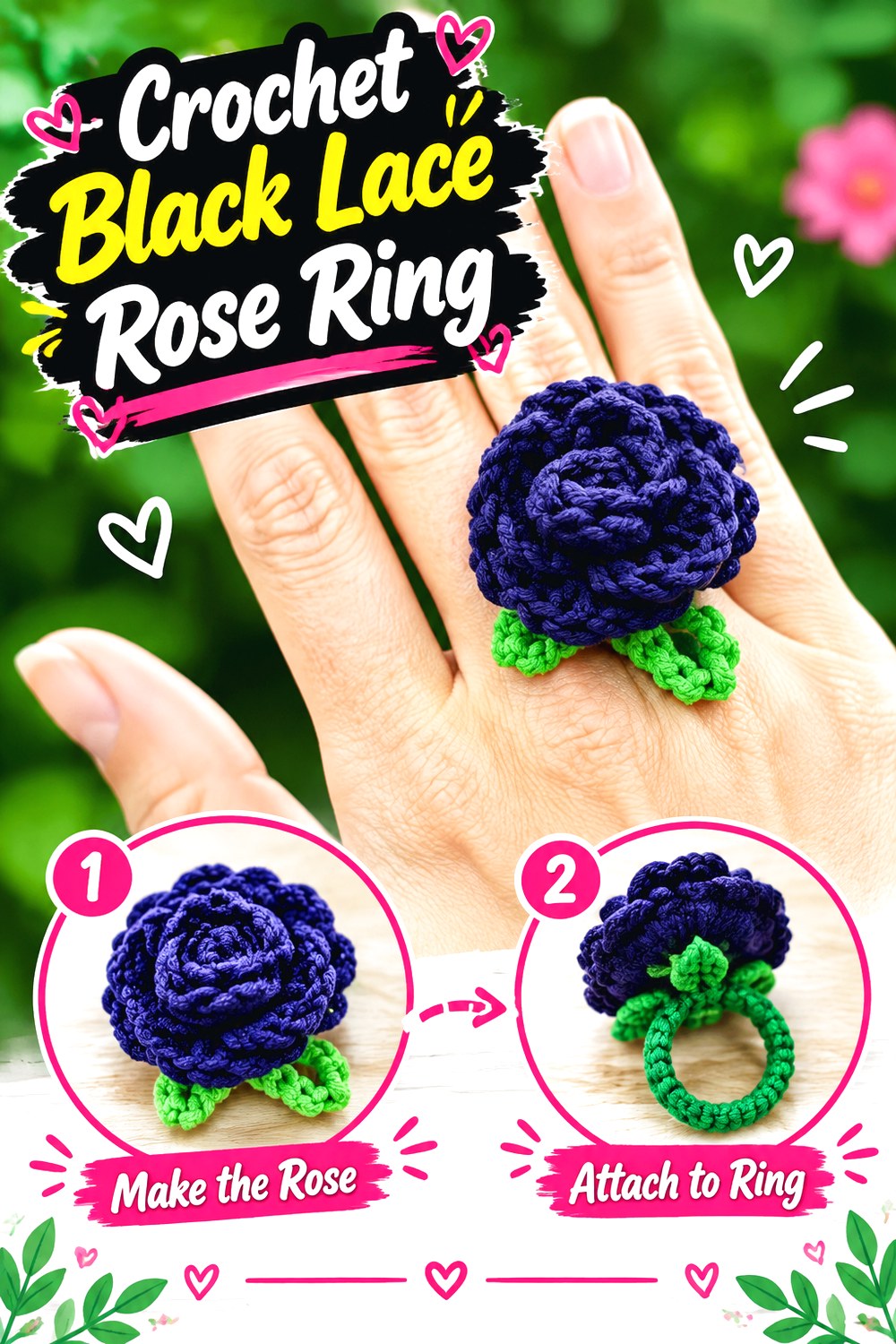
A rose ring makes the floral motif intentionally oversized relative to the finger, turning a very small crochet project into statement jewelry. The Green Dragonfly’s original tutorial creates a dimensional rose with leaves and attaches the finished flower to a ring base, so the project already addresses the crucial transition between soft crochet and rigid jewelry hardware.
For a gothic version, black, wine, or dark plum can work particularly well because the flower remains the only major visual element. Keep the rose small enough that adjacent fingers can still move comfortably, especially if you change the source yarn or add leaves.
Choose the Ring Base Before Final Assembly
The attachment surface matters. The source uses a ring form suitable for sewing the crochet embellishment in place, which is a useful reminder to select hardware that actually works with the intended attachment method.
Do not complete an elaborate flower first and only afterward discover that the chosen ring provides nowhere practical to secure it. Test how the rose sits on the blank and check the underside for bulky knots or edges that could rub the finger.
Scale Down Extra Decoration First
When a project is this compact, adding gothic details can quickly overpower its function. A tiny bead, darker leaf, or subtle contrast edge may contribute more than a dangling chain or multiple extra flowers.
View the ring both from above and from the side. If the rose projects so far that it catches constantly on clothing, bags, or hair, a smaller motif may produce a more wearable result without losing the statement-flower effect.
Original Tutorial and Creator Credit
Creator/Site: The Green Dragonfly
5. Crochet Victorian Rose Garden Brooch
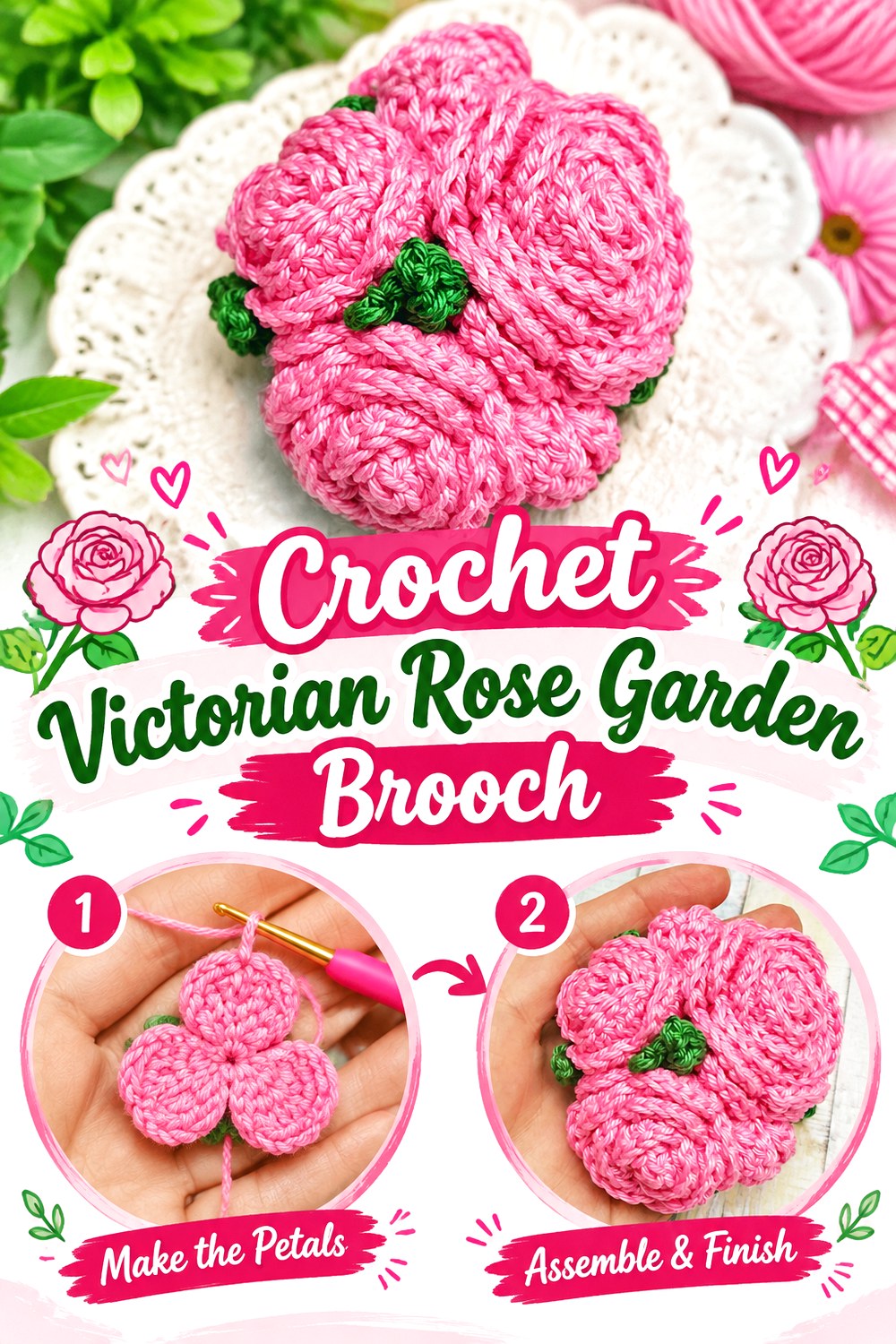
Instead of one large flower, this brooch builds its impact through a clustered miniature rose garden. TheCrochetCircle.com’s source combines five roses in four sizes and includes leaves and a dedicated backing with a pin, producing a layered piece that feels particularly suited to Victorian-inspired gothic styling.
A dark adaptation could mix crimson, black cherry, muted mauve, and nearly black petals rather than making every bloom identical. Because the brooch has several dimensional elements, balance matters: the cluster should still have a clear outer silhouette when viewed from normal distance. It can work on a coat, jacket, scarf, or bag provided the fabric and fastening can support it.
Use Flower Scale to Control the Composition
Multiple rose sizes create more visual depth than repeating identical motifs. When choosing your colors, decide whether the largest bloom should become the darkest focal point or whether a lighter wine shade should pull the eye toward the center.
Arrange all components before permanent attachment. Small shifts in the angle of a rose or leaf can change whether the final brooch looks like an intentional bouquet or a crowded collection of separate motifs.
Check the Fabric That Will Carry the Brooch
A substantial dimensional pin can behave very differently on heavy outerwear and thin knit fabric. Before wearing it, test whether the backing pulls, distorts, or makes the fabric sag.
If the accessory is intended for a lightweight garment, consider whether a smaller version would be more appropriate. The source itself demonstrates that changing the project scale is possible through different flower sizes, but follow the creator’s construction details rather than improvising stitch counts.
Original Tutorial and Creator Credit
Creator/Site: TheCrochetCircle.com
6. Crochet Garnet Rose Hair Clip
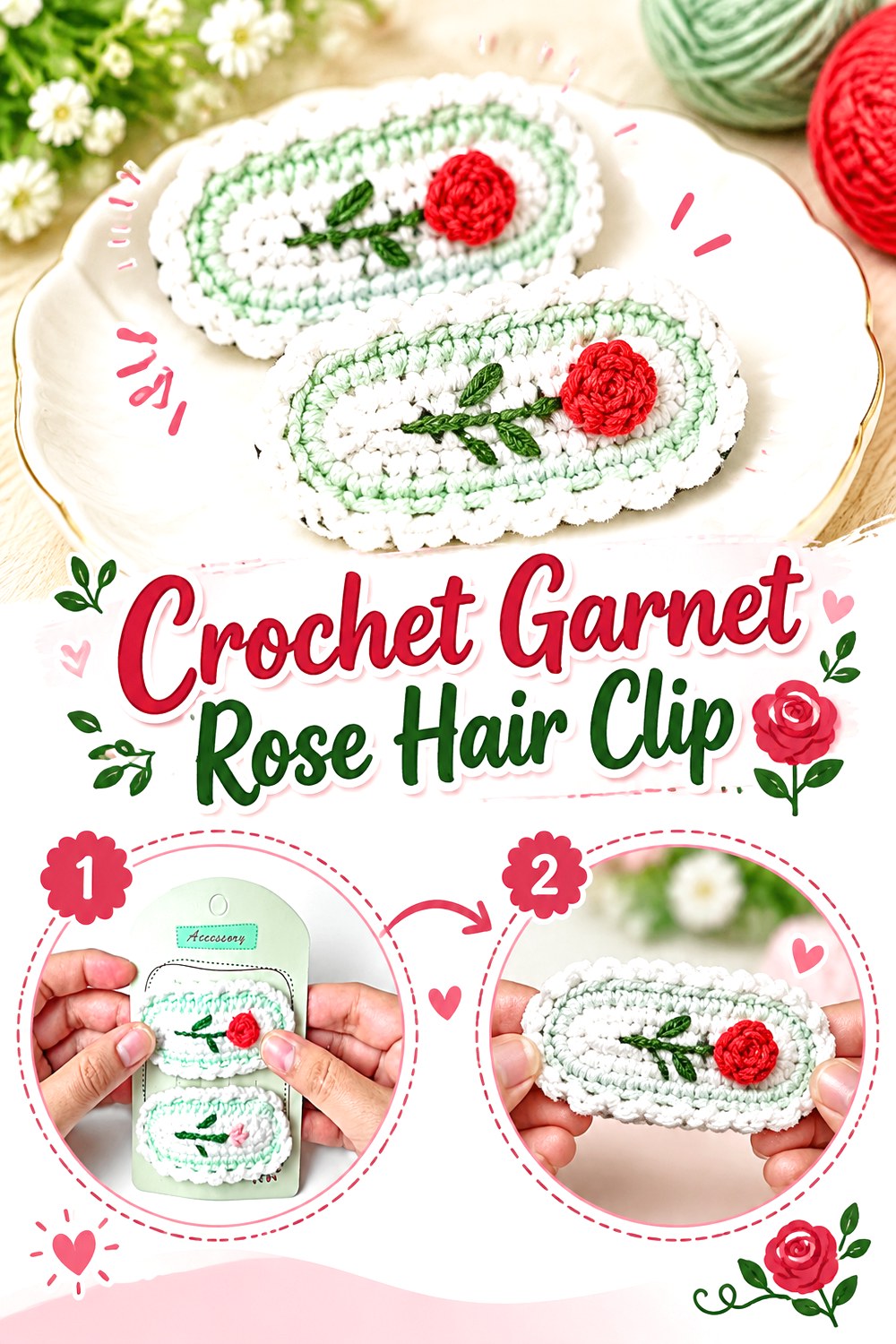
A single rose mounted on a hair clip gives you a compact gothic accent that can be repositioned easily rather than tied permanently into one hairstyle. Happi Crochet’s tutorial specifically turns a crocheted rose into a finished hair clip, keeping the project focused on both the flower and its functional base.
Deep garnet, black cherry, or dark plum can create the gothic character while leaving the clip itself neutral or black. This project works best when the bloom stays proportionate to the hardware; an oversized flower can make a small clip rotate, slip, or sit awkwardly in the hair.
Match the Bloom to the Clip
Check the footprint of the completed rose against the clip before attaching it. The flower should cover enough of the base to look intentional without obstructing the hinge or gripping surfaces.
If you substitute a thicker yarn and the rose grows substantially, a different clip size may be more sensible than forcing the original hardware to carry extra bulk. Test the clip in the intended hairstyle before making the attachment permanent.
Inspect the Back as Carefully as the Front
The underside determines whether the accessory sits neatly. Loose yarn tails, thick seams, or poorly positioned attachment stitches can prevent the rose from lying close to the clip.
Any glue or supplementary fastening should be used only where appropriate for the materials involved and should not interfere with moving hardware. Sewing-based attachment is often easier to inspect and repair later when the clip offers suitable anchor points.
Original Tutorial and Creator Credit
Creator: Happi Crochet
7. Crochet Dark Romance Rose Crown
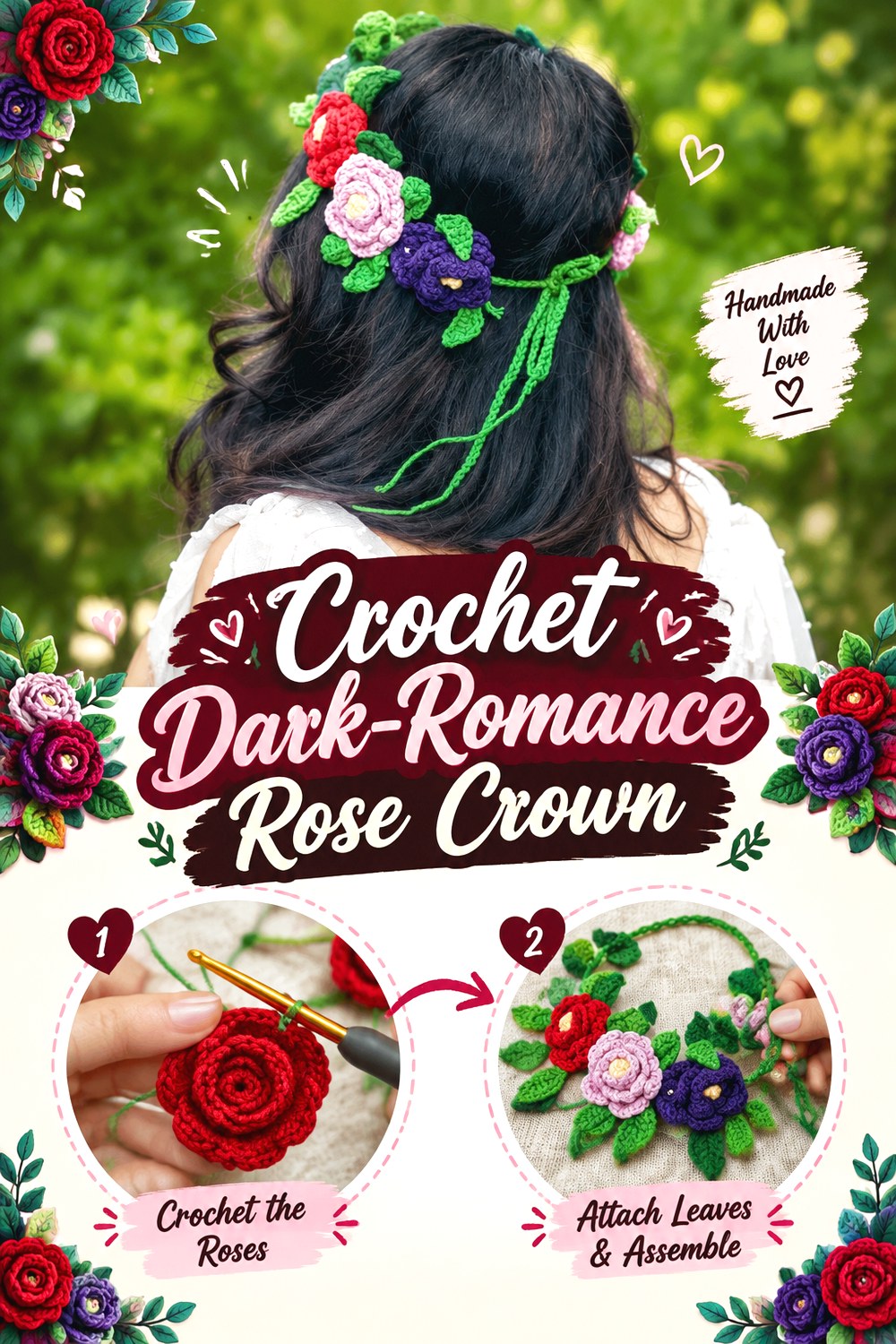
A rose crown moves the motif from a single accent to a continuous headpiece. Jenny & Teddy’s original pattern connects multiple crocheted roses, adds leaves, and finishes the crown with strings at the sides, creating a flexible floral arrangement rather than a rigid purchased headband covered with appliqués.
That construction lends itself well to dark-romance styling. Instead of making every flower black, combine several tones—oxblood, muted burgundy, charcoal, and perhaps one near-black focal rose—to preserve depth across the crown. This is a stronger visual statement than the single hair clip, so consider how much of the head you want the flowers to frame.
Build the Color Rhythm Before Sewing
Lay the finished roses in their proposed order before connecting them. Repeating dark and slightly lighter blooms can prevent one side from looking visually heavier than the other.
Leaves also affect the rhythm. Very bright green may push the piece toward a traditional garden palette, while subdued olive, forest, or blackened green can support the gothic direction. Color is an adaptation; keep the source construction intact unless you understand how a change affects the finished size.
Check the Crown Around the Actual Head
A flat row of flowers does not show exactly how the finished crown will curve. Temporarily arrange or lightly secure the motifs and try the developing piece around the intended wearer before completing every join.
The source finishes with side strings, which allows the headpiece to be tied rather than relying solely on a fixed circumference. Still, the floral section itself should reach the desired area without bunching or stretching.
Keep the Interior Comfortable
A crown has many joins close to the scalp and hairline. Weave ends securely and avoid leaving hard knots, sharp decorations, or bulky seams on the inside.
If you add beads or metal charms for a more elaborate gothic look, position them where they decorate the exterior rather than pressing against the head. Try the finished piece for comfort before wearing it for an extended event.
Original Tutorial and Creator Credit
Creator/Site: Jenny & Teddy
8. Crochet Crimson Rose Hair Vine
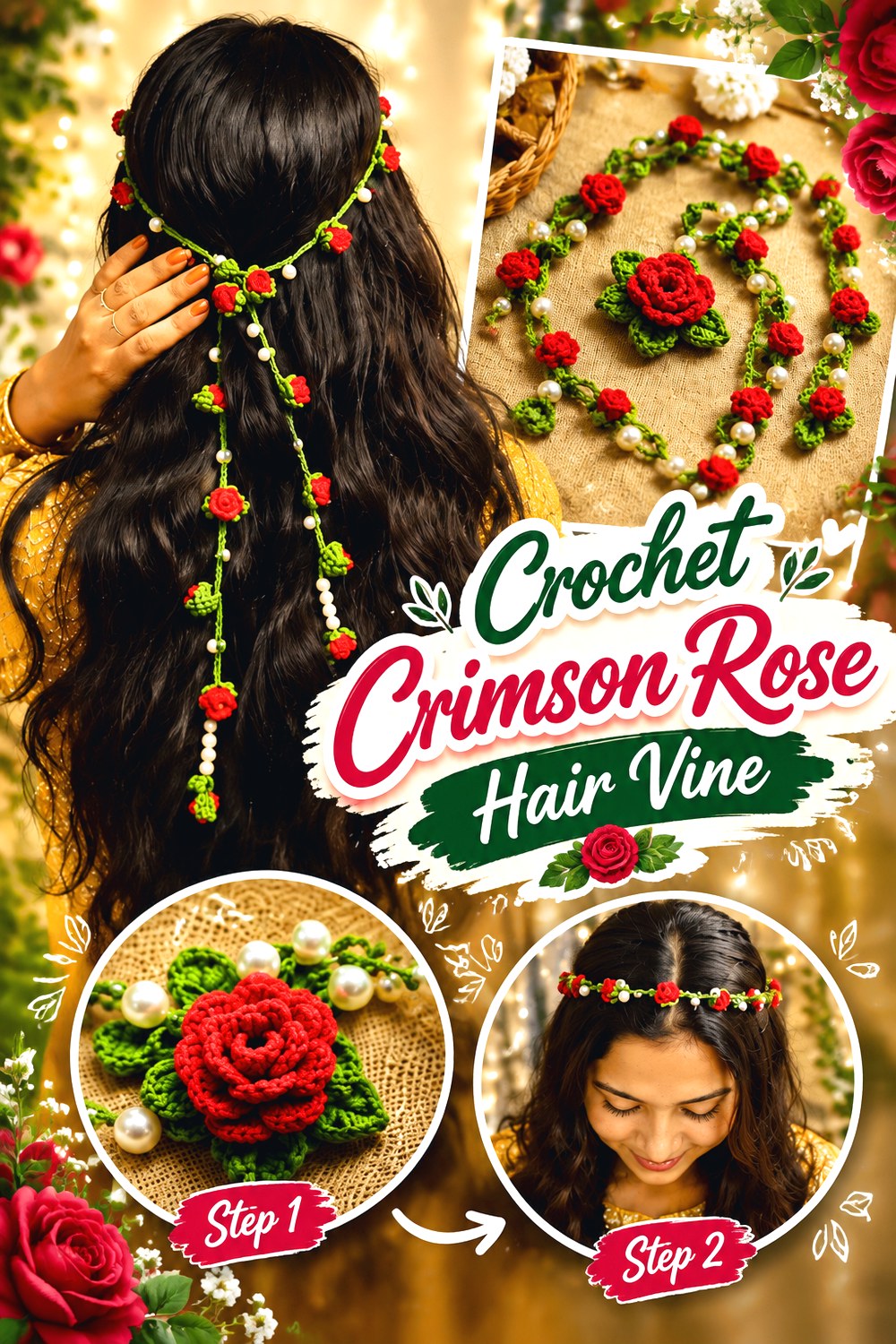
A hair vine creates a more linear, trailing floral effect than a crown. The tutorial from 𝐊𝐧𝐢𝐭𝐭𝐢𝐧𝐠 𝐛𝐲 𝐖𝐚𝐣𝐢𝐝𝐚 combines crochet roses and leaves along a hair accessory and also demonstrates pearl embellishment, giving the finished piece an ornamental, occasion-focused character.
For gothic styling, crimson flowers with black or deep green foliage can shift the mood dramatically. Pearls can remain for a Victorian contrast, or you can simply follow the structural tutorial and choose a plainer finish. Because a vine hangs or curves through the hairstyle, judge the project while positioned vertically and along actual hair rather than only on a flat work surface.
Plan Where the Visual Weight Falls
A hair vine does not need the same density from end to end. Decide whether the largest floral concentration belongs near a bun, along a braid, or toward one side of the head.
Before attaching every embellishment permanently, pin or place the developing vine against the intended hairstyle. Flowers that appear evenly spaced on a table can overlap once the strand bends around the head.
Be Careful When Substituting Embellishments
The source incorporates pearls as part of its decorative finish. Replacing them with metal beads, chains, or other gothic accents may alter weight and flexibility.
If you change those materials, test a short section first. A hair vine works best when it can follow the hairstyle rather than being pulled straight by heavy additions. Secure small embellishments carefully and consider whether they could snag delicate hair.
Original Tutorial and Creator Credit
Creator: 𝐊𝐧𝐢𝐭𝐭𝐢𝐧𝐠 𝐛𝐲 𝐖𝐚𝐣𝐢𝐝𝐚
9. Crochet Black and Red Rose Bandana
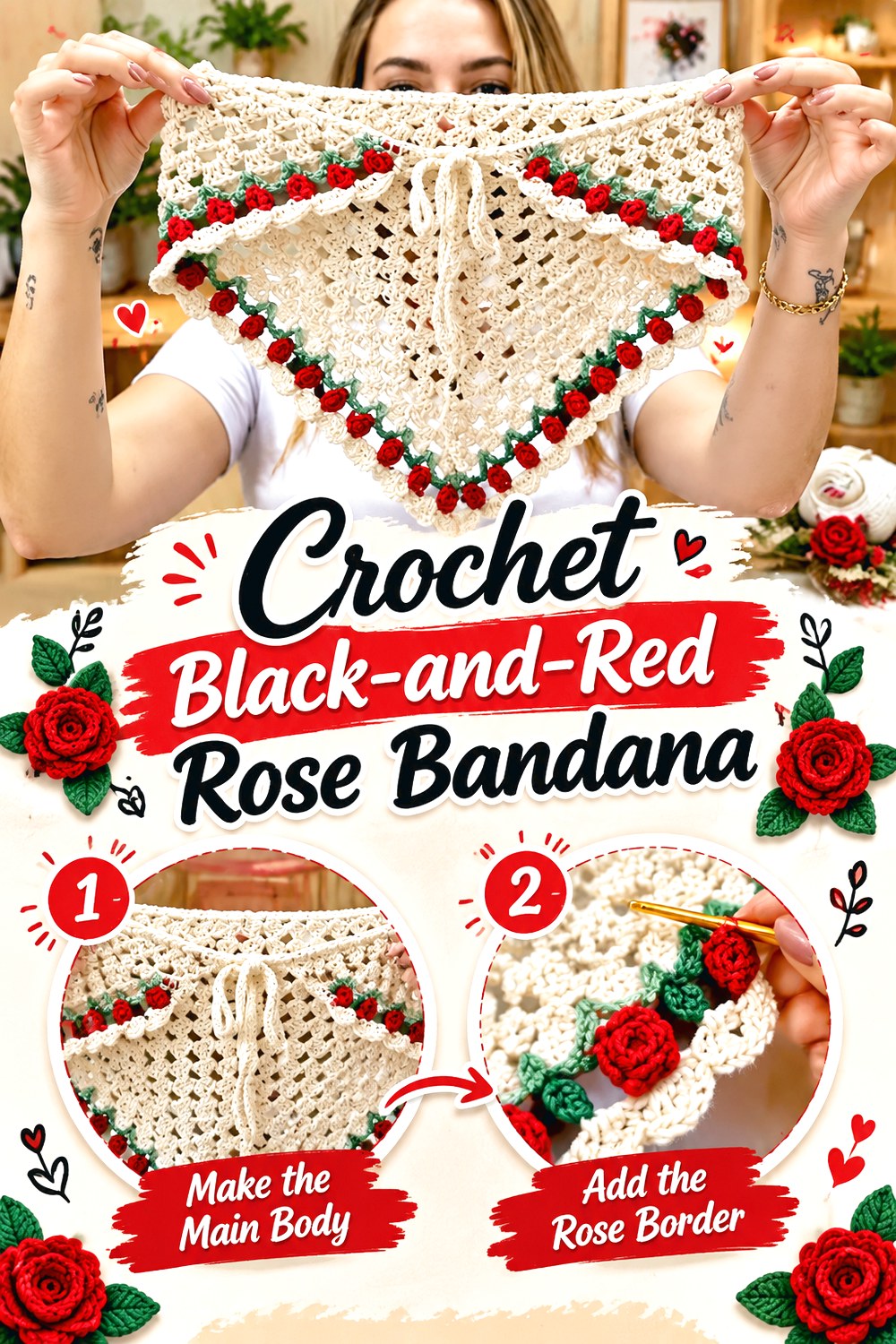
The rose becomes part of the edge treatment in this bandana rather than a separate piece of jewelry or hardware-mounted embellishment. Fial Barbantes’ tutorial teaches a crochet bandana with rose trim, including the triangular body, edging, straps, and finishing.
That makes it a practical option for readers who want the gothic rose motif integrated into a larger textile accessory. A black bandana with dark red rose details creates strong contrast, while charcoal with burgundy gives a softer result. Because the head covering has a much larger fabric area than the other projects, yarn drape and overall weight become more noticeable.
Preserve Drape in the Main Bandana
The body needs to bend around the head rather than behave like a rigid decorative panel. If you substitute a substantially thicker or stiffer yarn, the same construction may produce a very different silhouette.
Make a small fabric sample if you are uncertain about the substitution. The rose edging can be dimensional, but the triangular body should still fold and tie in the way you expect.
Keep the Ties Functional
Extra gothic embellishment around the tie area can interfere with knotting. Leave enough uncomplicated length for the bandana to fasten securely and comfortably.
If you want beads, charms, or tassels, their best placement may be toward the ends rather than where the ties cross behind the head. Check for added weight as well; heavy ends can pull the bandana backward during wear.
Original Tutorial and Creator Credit
Creator: Fial Barbantes
10. Crochet Mourning Rose Shawl Pin
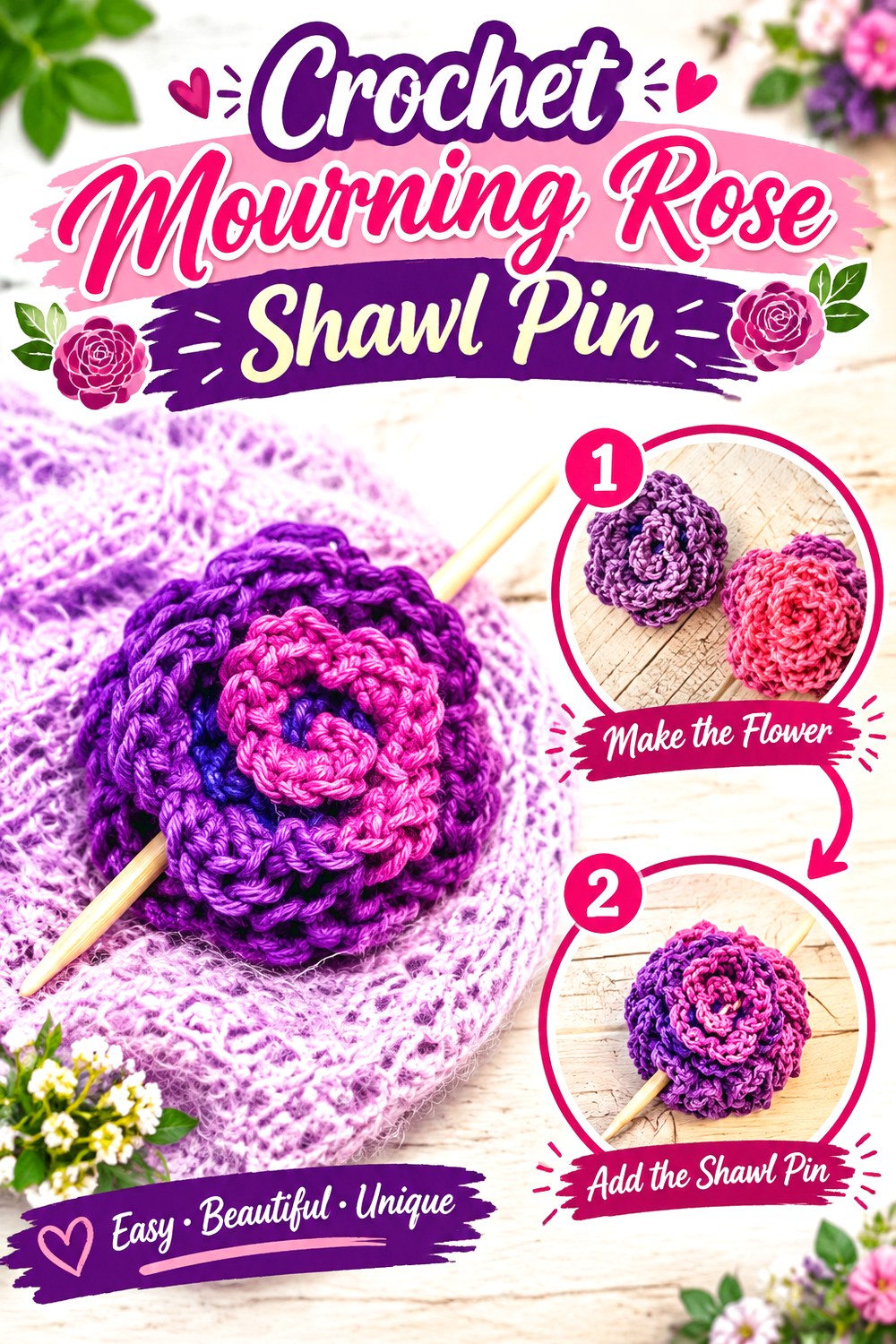
A rose shawl pin combines ornament with a real fastening job. Light and Joy Designs teaches a crochet rose shawl pin in two flower sizes and presents it specifically as a way to secure scarf or wrap styling.
That dual purpose makes the project particularly suitable for a Victorian mourning-inspired palette: a black rose can act as both a focal point and a practical closure against a charcoal wrap, while a wine-colored rose provides more contrast. Because the piece interacts with another textile, consider the thickness and stability of the scarf or shawl it will fasten.
Match the Fastener to the Fabric
A fastening method that works well with a substantial wrap may not be ideal for delicate open lace. Before using any shawl pin, check that it passes through or around the fabric without splitting yarn, pulling stitches, or distorting the textile.
The flower itself should not be the only consideration. The pin or stick component needs enough room to operate without catching on the crocheted petals.
Choose Rose Size by Function
The source demonstrates two rose sizes, offering a useful built-in comparison between more compact and more noticeable flowers.
Use the smaller visual scale when the scarf already has strong texture or lace, and reserve a larger rose for a simpler fabric that can support the extra presence. If you adapt the yarn, verify the resulting flower size before committing to the fastening hardware.
Original Tutorial and Creator Credit
Creator: Light and Joy Designs
11. Crochet Oxblood Rose Bag Charm

Kukkacrochet By Putri’s rose bag charm stands apart from a flat floral decoration because the source creates a dimensional mini pouch-style charm with a front, back, strap, and assembled rose form.
That small three-dimensional structure offers plenty of gothic styling potential without altering its function. An oxblood rose against black or charcoal elements can make the flower look more dramatic, while a very dark purple creates a less literal rose palette. Since the charm hangs vertically from a bag, judge the finished shape in that position. Gravity can change how petals, leaves, and straps overlap compared with how they look while lying flat.
Reinforce the Hanging Point
The top attachment carries the weight of the whole charm and experiences repeated movement as the bag is handled. Inspect that area after assembly and make sure the strap or loop is secured as the tutorial intends.
If you add metal clasps or heavier decorative pieces, the load on the crochet increases. Test the charm on the intended bag before adding more embellishment simply for appearance.
Keep the Mini-Pouch Form Usable
This project is more than a hanging rose, so any adaptation should preserve the dimensional structure demonstrated in the source.
Avoid placing chains, beads, or extra flowers where they obstruct an opening or distort the front and back alignment. If you want a heavier gothic look, color and surface details are often safer adaptations than changing the basic shape.
Original Tutorial and Creator Credit
Creator: Kukkacrochet By Putri
12. Crochet Cathedral Rose Granny Square Purse
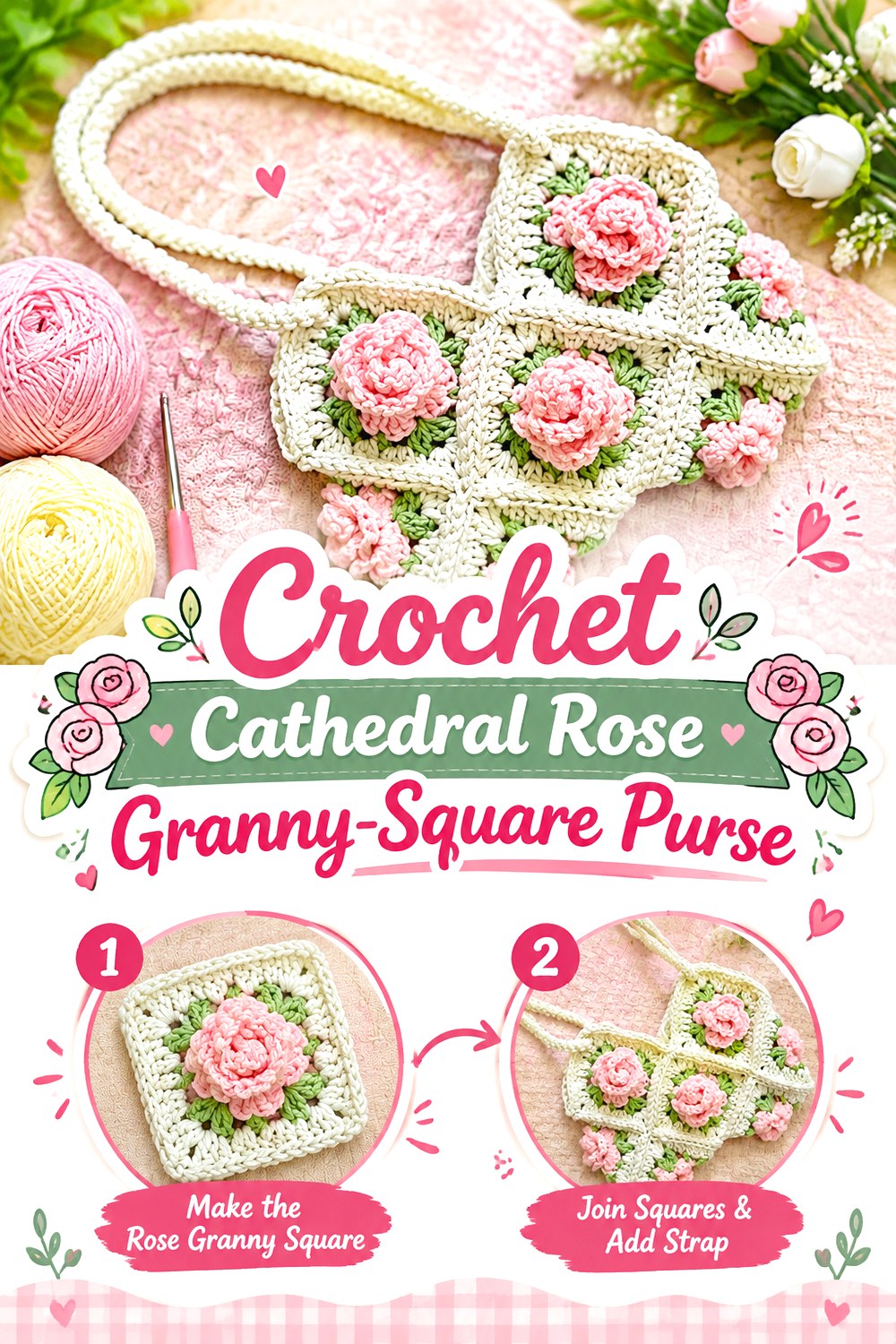
A full purse gives the rose motif much more visual territory than a charm. Stitchy Days demonstrates a bag made from layered rose motifs developed into granny squares, then joined into the bag and finished with a top border and cord strap.
For a cathedral-inspired gothic version, imagine burgundy roses surrounded by black or charcoal square backgrounds, with subdued green leaf sections if you want the botanical form to remain obvious. Unlike tiny accessories, a purse must carry its own weight plus its contents. That means motif joining, top-edge stability, and the strap deserve equal attention alongside the flowers.
Judge the Motif as Part of a Larger Layout
A single rose square can look balanced while the completed arrangement feels visually busy. Make enough motifs to test the color distribution before joining the entire bag.
If every square contains identical high contrast, the surface may become very intense. Alternating slightly different dark rose tones can create variation without changing the motif construction. Keep square dimensions consistent so the joins do not have to compensate for uneven pieces.
Think About Strap Stretch Early
Long crochet straps can change under weight depending on yarn, stitch structure, length, and use. The source finishes the bag with a cord strap, so follow that construction carefully before considering substitutions.
Load the completed bag conservatively at first and observe whether the strap or top edge changes shape. If you need more carrying strength, choose an adaptation that supports rather than obscures the original assembly.
Lining Is a Separate Decision
A lining can reduce how much small objects interact with open crochet fabric, but adding one changes finishing and care. The source information should be checked before assuming lining is part of the original construction.
If you choose to add your own, fit the lining to the finished bag rather than a theoretical measurement. Avoid pulling the crochet inward with a lining that is too small.
Original Tutorial and Creator Credit
Creator: Stitchy Days
13. Crochet Midnight Rose Hair Tie

A rose hair tie offers a softer and more flexible attachment than a clip. Mathineehandmade’s original video is specifically a rose hair-tie project and includes an elastic base rather than leaving the conversion from flower to hair accessory unexplained.
For a midnight version, a black elastic combined with burgundy or black-cherry petals keeps the hardware visually quiet while the flower remains prominent. Because the elastic repeatedly stretches, the attachment between crochet and hair tie is a key durability point. Avoid placing stiff embellishments where they will interfere with wrapping the elastic around a ponytail or bun.
Keep the Elastic Free to Stretch
The flower should be secured without accidentally locking too much of the elastic into a rigid crocheted section. After attachment, stretch the hair tie gently and confirm that the normal working area still moves freely.
If a larger rose requires a large sewn base, it may be better suited to a decorative bun tie than to an elastic intended to wrap several times around a smaller ponytail.
Replace Worn Elastics Before the Flower Is Lost
The crocheted rose may outlast the elastic component. Inspect the tie periodically for cracks, loss of recovery, or visible wear, especially around the attachment area.
When possible, think about future replacement while assembling the project. A beautiful crochet motif is more useful if the supporting elastic can be repaired or replaced without dismantling the entire flower.
Original Tutorial and Creator Credit
Creator: Mathineehandmade
14. Crochet Petite Gothic Rose Keychain
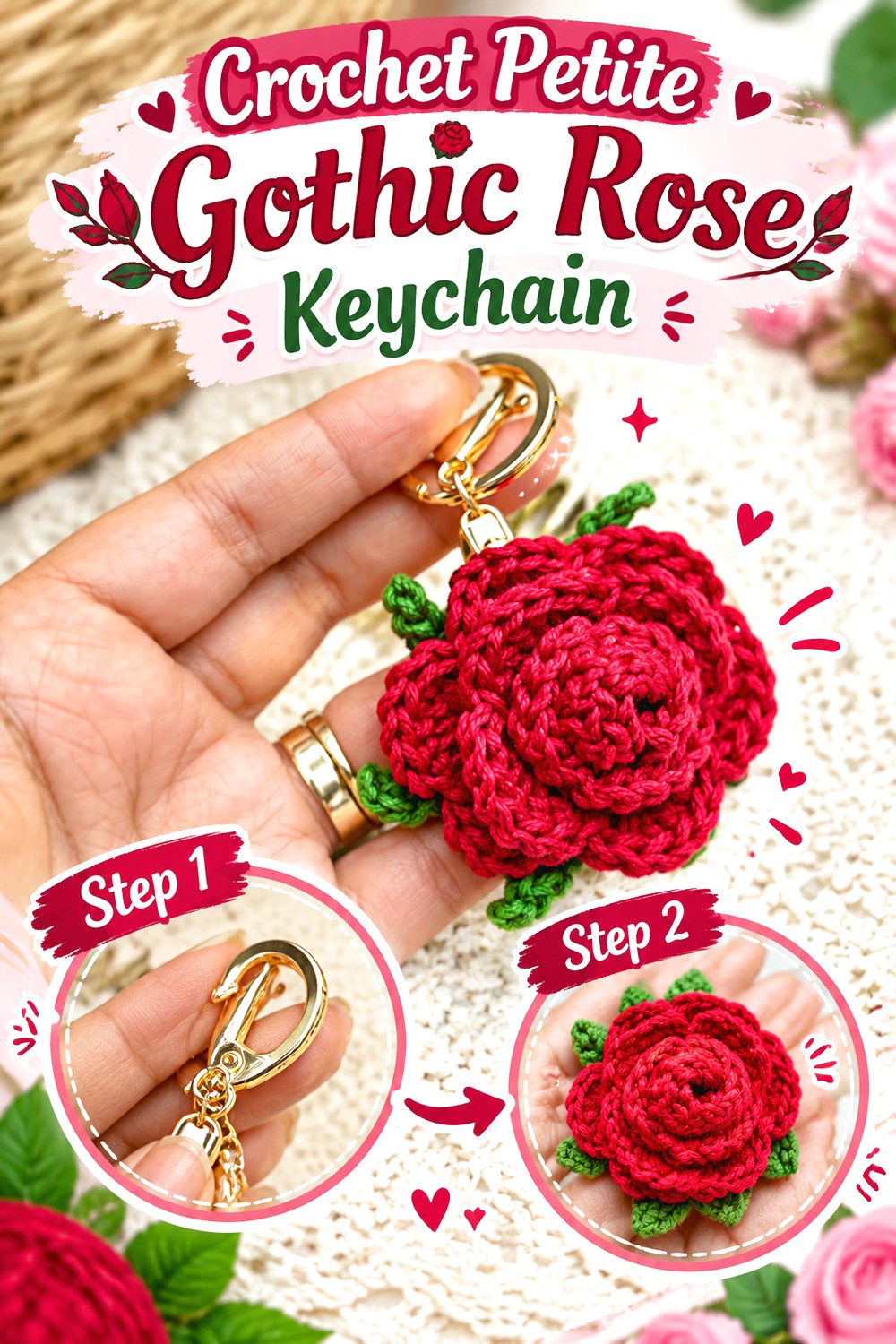
A keychain lets you use a dimensional rose without worrying about wearable fit. Shelen Crochet’s tutorial constructs a rose keychain through the flower, green calyx, and final assembly, keeping the project compact and clearly designed for hanging from hardware.
A petite gothic version can use blackened red petals, dark foliage, and restrained hardware so it works on keys or as a small bag accent. Since keychains experience more friction than decorative jewelry, neat finishing and secure attachment matter. Large loose petals or very long hanging elements may catch more frequently when the keys are moved in and out of a bag or pocket.
Keep the Hanging Connection Short and Secure
A compact connector keeps the rose close to the keyring and reduces unnecessary leverage on the crochet attachment. Inspect the point where the flower or calyx connects to the hardware rather than relying only on the appearance of the front.
If you add a chain extension for styling, test how it behaves with the weight of real keys. A longer chain creates more movement and more opportunities for snagging.
Choose Embellishments for Everyday Friction
Loose beads and delicate dangling pieces may look appealing but can receive repeated knocks against keys, zippers, and bag interiors. A strongly textured rose already provides visual interest without requiring many extras.
For a gothic finish, color contrast may be the most practical adaptation: deep red petals, nearly black leaves, and dark-toned hardware can create the intended mood without making the keychain fragile.
Original Tutorial and Creator Credit
Creator: Shelen Crochet
15. Crochet Raven Rose Gajra

A crochet rose gajra wraps floral decoration around a bun, creating a circular hair accent that looks substantially different from a straight vine, crown, or single hair clip. Knit Bucket By Pinki Mehta’s tutorial focuses specifically on crocheting roses and assembling them into a finished gajra hair accessory.
For a gothic reinterpretation, use repeated burgundy, oxblood, or black-cherry roses with subdued foliage instead of changing the core assembly. Because the accessory curves around a bun, the spacing between flowers should be judged in its finished circular position. Roses packed too closely can crush neighboring petals, while excessive gaps can break the intended garland effect.
Test the Circle Around the Intended Hairstyle
Bun size varies considerably, and the same gajra can appear dense on a small bun but sparse on a larger one. Before finalizing the assembly, compare the floral section with the hairstyle it is meant to surround.
Do not rely only on flat length. The flowers themselves occupy space once the piece curves, so temporary placement gives a more useful fit check than measurements alone.
Keep Attachment Areas Away From the Petal Face
The front should read as an uninterrupted row of roses. Concentrate joins and supporting elements behind or beneath the flowers where the source construction permits.
If you add chains or beads for a darker ceremonial look, keep them from tangling with the hair or interfering with whatever attachment method secures the gajra around the bun. Small decorative elements also need particularly secure fastening.
Original Tutorial and Creator Credit
Creator: Knit Bucket By Pinki Mehta
Comparing the Gothic Rose Accessory Styles
| Project | Main Visual Effect | Most Important Checkpoint |
|---|---|---|
| Rose choker | Strong floral neckline | Comfortable neck fit and flower balance |
| Rose earrings | Small paired accents | Matching scale and manageable weight |
| Rose bracelet | Repeated flowers around wrist | Flexibility and secure motif joins |
| Rose ring | Compact statement flower | Finger comfort and stable ring base |
| Rose brooch | Layered miniature bouquet | Pin support and balanced cluster |
| Rose hair clip | Repositionable single accent | Flower-to-clip proportion |
| Rose crown | Continuous floral headpiece | Head fit and motif spacing |
| Rose hair vine | Trailing botanical line | Weight distribution along the hairstyle |
| Rose bandana | Rose motif integrated into fabric | Drape and functional ties |
| Rose shawl pin | Decorative functional fastener | Compatibility with scarf or shawl fabric |
| Rose bag charm | Dimensional hanging accessory | Secure hanging point |
| Rose purse | Large repeated motif statement | Joining, strap stability, and bag structure |
| Rose hair tie | Flexible ponytail or bun accent | Elastic movement |
| Rose keychain | Compact everyday charm | Hardware connection and snag resistance |
| Rose gajra | Circular floral bun surround | Flower spacing around the finished bun |
Conclusion
The most convincing crochet gothic rose accessories do not depend on making every component black. Contrast, flower scale, silhouette, and the relationship between soft crochet and functional hardware usually have a larger effect. A close-fitting rose choker makes a very different statement from tiny earrings, while the bandana and granny-square purse let the motif become part of a larger textile surface.
Choose the accessory by how you actually plan to wear or use it, then build the dark-romantic character through color and restrained embellishment. Before changing yarn weight, closures, hardware, or dimensions, check how the alteration could affect fit and structure. For exact construction, assembly, and source-specific materials, follow the original tutorials credited with each project.
Frequently Asked Questions
Can I crochet gothic roses entirely in black yarn?
Yes, but pure black can make layered petals harder to distinguish, especially in low light. If definition disappears, try charcoal, black cherry, deep plum, or burgundy for at least part of the flower. Another option is keeping the rose black while using a slightly contrasting leaf, border, base, or neighboring motif. Crochet one sample first and view it from normal wearing distance before committing to multiple flowers.
What yarn works best for small gothic rose jewelry?
The best choice depends on the tutorial and the scale you want. Finer, smoother yarn or thread can produce a more compact flower with clearer details, while heavier yarn generally creates a larger and bulkier motif. Do not substitute solely by color. Check the creator’s specified yarn and hook information first, then consider how a substitution could change flower size, stiffness, weight, and the way the accessory sits.
How can I stop a crochet rose from sagging on an accessory?
Start by identifying whether the problem comes from the rose itself or its attachment. A dimensional bloom may need secure stitching through several structural points rather than being held by one loose connection. The supporting clip, ring base, band, or bag loop also needs to suit the flower’s size. If you increased the original yarn weight or added beads and chains, that additional weight may be contributing to the tilt.
Can I resize the roses in these tutorials?
Sometimes, but use the original creator’s adjustment guidance when it is provided. Switching hook or yarn size changes more than diameter; it can also alter density, stiffness, weight, and the proportion between the flower and its accessory base. For paired earrings or repeated bracelet motifs, consistency is especially important. Make one trial rose, compare it with the intended hardware or wearer, and only then produce the remaining pieces.
Can I add chains, beads, charms, or ribbon for a stronger gothic look?
Usually these can be considered decorative adaptations, but they should not interfere with the project’s function. Keep extras away from clip hinges, elastic working sections, necklace adjustments, bag openings, and other moving parts. Additional hardware also introduces weight and different care requirements. Test a small amount first rather than decorating the entire accessory before checking how it hangs, stretches, or moves.
How should crochet rose accessories be washed or stored?
There is no single care method that fits every project because fiber content, metal hardware, beads, elastic, stuffing, and other components vary. Follow the yarn label and any care information supplied by the original creator. Dimensional roses can flatten in crowded storage, so give them enough space to retain their shape. For mixed-material jewelry and hair accessories, consider whether the non-yarn components can safely tolerate the same cleaning method before washing the whole piece.

