
Antique Pink and Chocolate Brown create a crochet palette with warmth on both sides, but the colors play very different roles. Antique Pink brings a softened rosy tone, while Chocolate Brown adds deeper visual weight. Together, they can produce anything from a brown-led project with restrained pink accents to a lighter Antique Pink piece framed by dark brown edges.
The key is avoiding an automatic 50/50 split. Chocolate Brown can organize large surfaces, joins, straps, cuffs, and borders, while Antique Pink can highlight motifs, textured sections, brims, or garment finishing. Reversing those roles is equally useful when you want the project to read primarily pink.
The tutorials below support the underlying crochet constructions. Antique Pink and Chocolate Brown are editorial palette adaptations, so use each creator’s tutorial for construction while planning the color distribution separately.
Quick List
- Antique Pink And Chocolate Brown Crochet Tote Bag
- Antique Pink And Chocolate Brown Crochet Cardigan
- Antique Pink And Chocolate Brown Crochet Chunky Blanket
- Antique Pink And Chocolate Brown Crochet Granny Square Vest
- Antique Pink And Chocolate Brown Crochet Storage Basket
- Antique Pink And Chocolate Brown Crochet Headband
- Antique Pink And Chocolate Brown Crochet Star Stitch Coasters
- Antique Pink And Chocolate Brown Crochet Striped Top
- Antique Pink And Chocolate Brown Crochet Market Bag
- Antique Pink And Chocolate Brown Crochet Textured Pillow
- Antique Pink And Chocolate Brown Crochet Cowl
- Antique Pink And Chocolate Brown Crochet Triangle Shawl
- Antique Pink And Chocolate Brown Crochet Oval Placemat
- Antique Pink And Chocolate Brown Crochet Bandana
- Antique Pink And Chocolate Brown Crochet Water Bottle Holder
- Antique Pink And Chocolate Brown Crochet Scarf
Decide Whether Antique Pink or Chocolate Brown Should Dominate
Chocolate Brown can carry large crochet surfaces without requiring frequent color changes. It works particularly well across bag bodies, garment panels, blanket centers, and pillows when you want Antique Pink to appear as a controlled accent.
Making Antique Pink dominant changes the emphasis. Pink can cover a hat crown, bandana triangle, placemat center, or openwork bag while Chocolate Brown defines the edges. Because the brown is darker, even relatively small amounts can create a strong visual boundary.
Use Chocolate Brown to Give Antique Pink Crochet Details Definition
Chocolate Brown is useful around Antique Pink motifs because it can create substantial value contrast when the yarns are sufficiently different in lightness. This is particularly effective around granny-square centers, borders, cuffs, and small decorative sections.
However, color names alone do not guarantee contrast. A deep dusty Antique Pink and a lighter cocoa brown can be closer in value than expected. Compare the actual yarns side by side or view them in grayscale before relying on very small details.
Let Antique Pink Repeat Instead of Appearing Only Once
A small amount of Antique Pink often looks more intentional when it appears in more than one related location. Pink cuffs can connect with a neckline, a pink tote edge can relate to the handles, and pink granny-square centers can repeat throughout an entire garment panel.
Repetition does not mean equal amounts. Two or three carefully placed Antique Pink areas can establish the color throughout a Chocolate Brown project without turning the piece into alternating stripes.
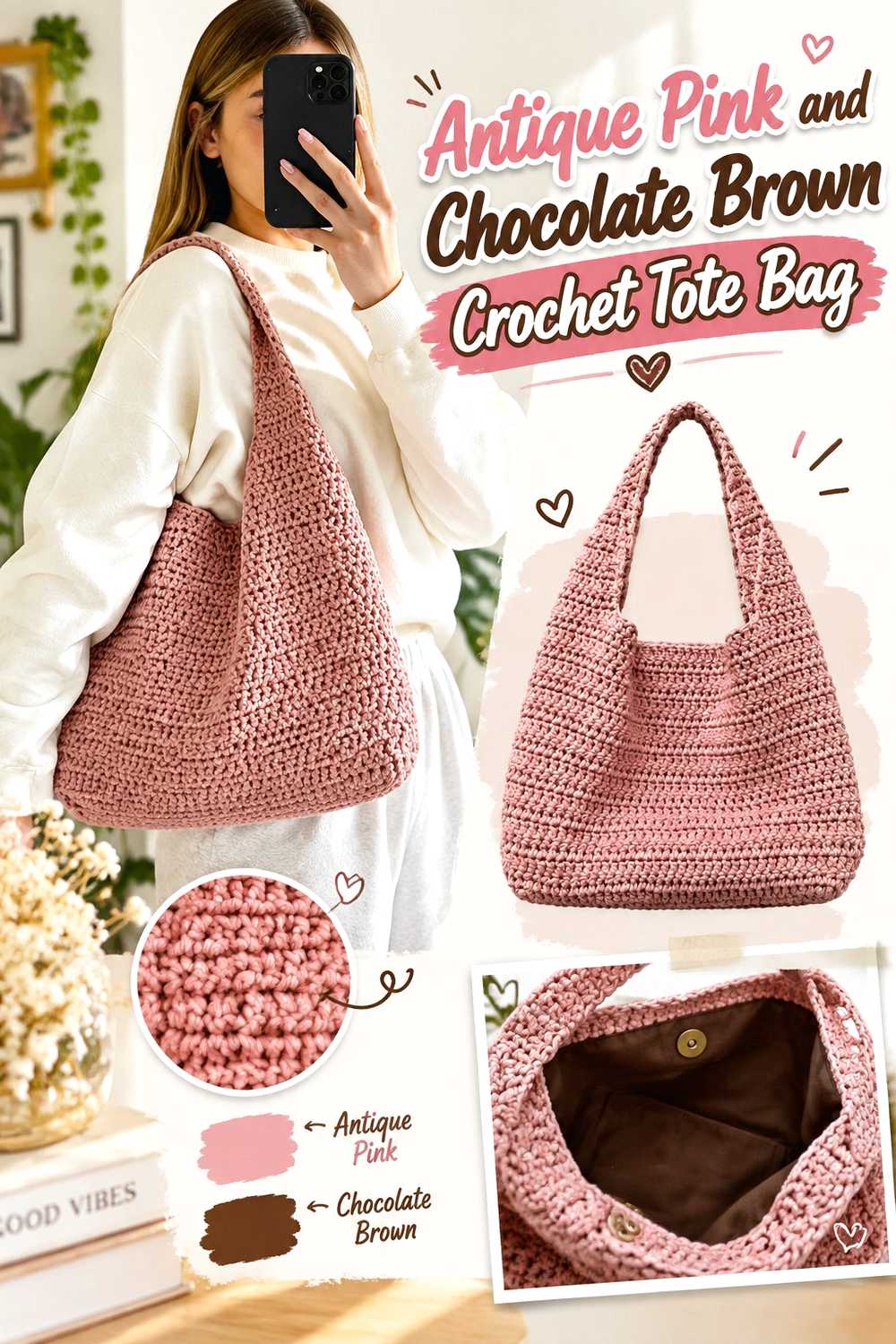
1. Antique Pink And Chocolate Brown Crochet Tote Bag
 SAVE
A tote provides large, easy-to-control color zones. Chocolate Brown can cover the main bag body while Antique Pink appears at the opening and handles. This keeps the practical shape visually grounded but gives the softer pink enough repeated surface area to matter.
Chocolate Brown Can Anchor the Main Crochet Tote Body
Use Chocolate Brown through the broad body if you want the tote to read as a brown-led accessory. Keeping that surface continuous also lets stitch texture remain visible without numerous color transitions.
The base can remain Chocolate Brown too, creating one uninterrupted foundation from the bottom through most of the sides.
Antique Pink Can Connect the Chocolate Brown Crochet Tote Handles and Edge
Antique Pink handles create noticeable accents because they extend vertically beyond the darker body. Repeating pink around the upper edge helps those handles look integrated rather than added as two isolated color strips.
If full pink handles feel too prominent, reverse the arrangement and use Chocolate Brown straps with a substantial Antique Pink top band.
Creator Credit: crochet daniela
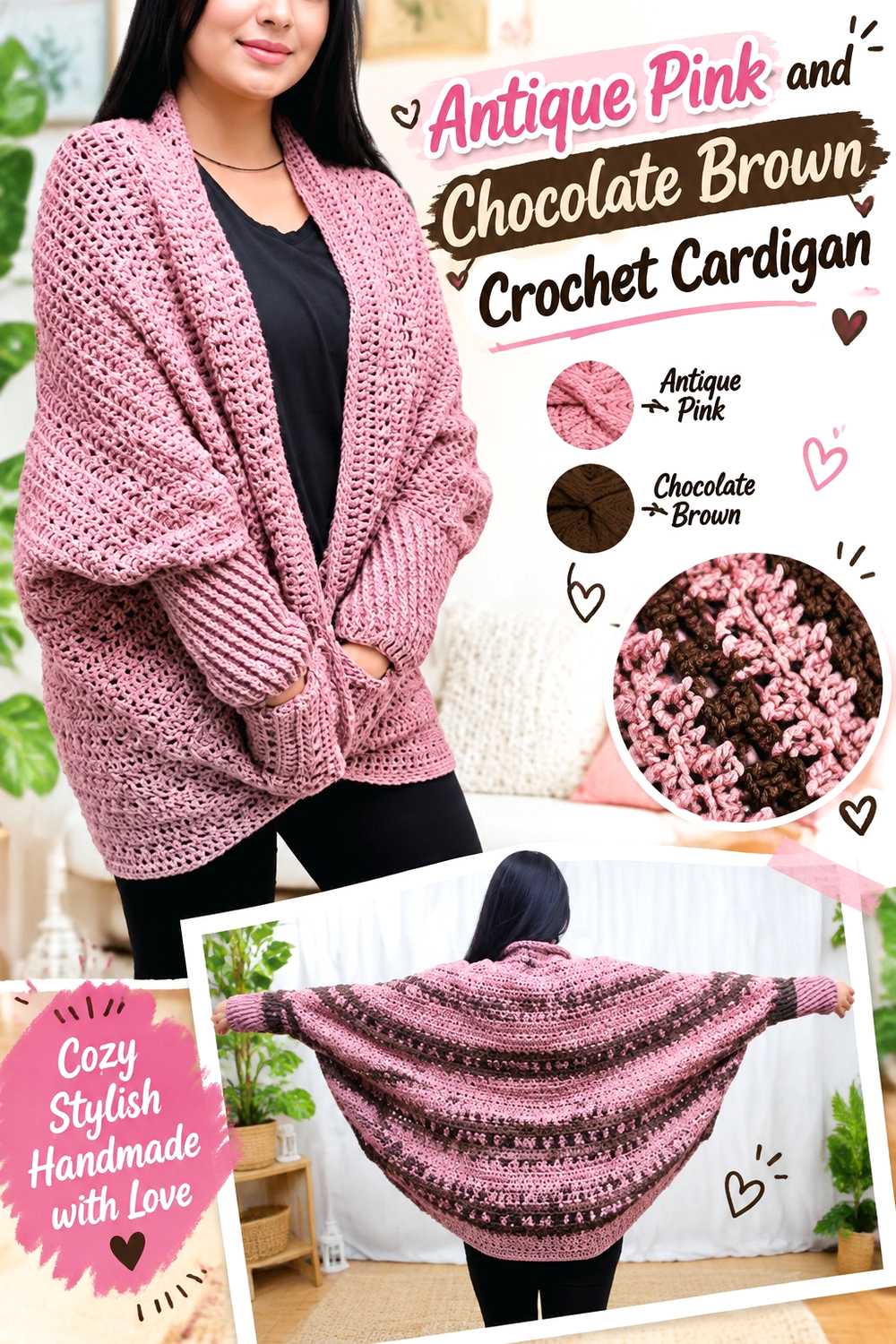
2. Antique Pink And Chocolate Brown Crochet Cardigan
 SAVE
A cardigan offers multiple places for a secondary shade to repeat naturally. Chocolate Brown can cover the large front, back, and sleeve areas, while Antique Pink appears at cuffs, neckline, front edging, or hem.
Chocolate Brown Can Unify the Main Crochet Cardigan Panels
Broad Chocolate Brown panels establish the garment before any accent is introduced. Keeping the major body sections in one shade also prevents detailed stitches from competing with constant color changes.
You can continue Chocolate Brown through the sleeves for a cohesive base or introduce more Antique Pink there if you want stronger color blocking.
Antique Pink Can Link Chocolate Brown Crochet Cardigan Finishing Areas
Repeat Antique Pink at related edges such as the cuffs and front opening. That allows physically separated parts of the cardigan to share the same accent.
If you want more pink, widen those finishing areas before adding unrelated stripes through the center of the Chocolate Brown panels.
Creator Credit: Nirvana Crochet
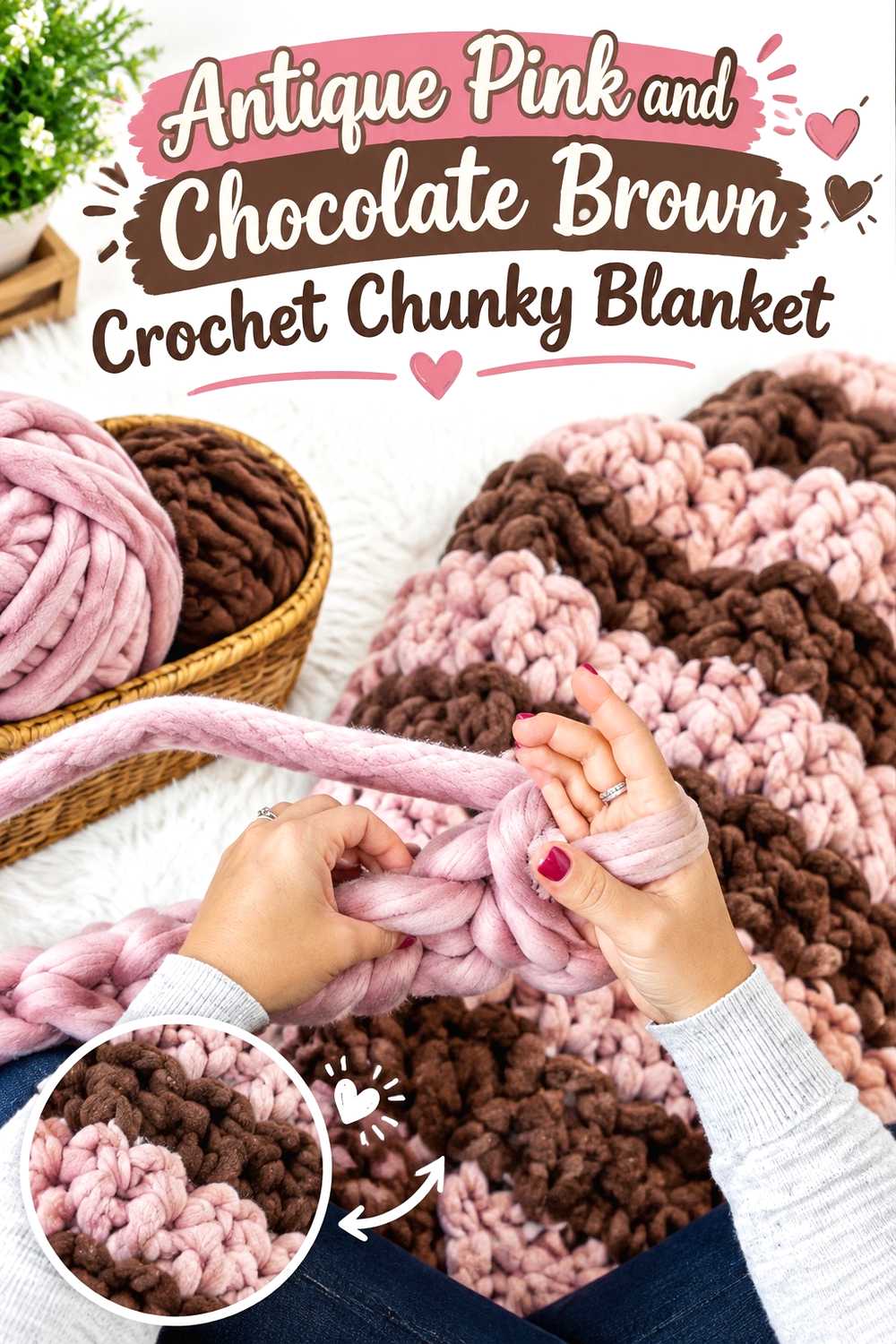
3. Antique Pink And Chocolate Brown Crochet Chunky Blanket
 SAVE
Chunky crochet already has a large visual scale, so Antique Pink and Chocolate Brown benefit from generous color blocks. Antique Pink can occupy most of the blanket while Chocolate Brown creates a substantial outer frame or broad end sections.
Antique Pink Can Fill the Main Crochet Blanket Field
A large Antique Pink center gives the softer shade enough room to establish the blanket without being repeatedly interrupted by dark stripes. Oversized stitches already provide plenty of visual movement.
This is especially useful when you want the texture, rather than frequent color changes, to remain the main feature.
Chocolate Brown Needs Enough Width Around an Antique Pink Crochet Blanket
A very narrow Chocolate Brown border can look insignificant against chunky stitches. Increase the border width until its scale feels appropriate beside the large central surface.
For a darker result, reverse the palette and use Antique Pink only in broad end blocks against a Chocolate Brown field.
Creator Credit: Bella Coco
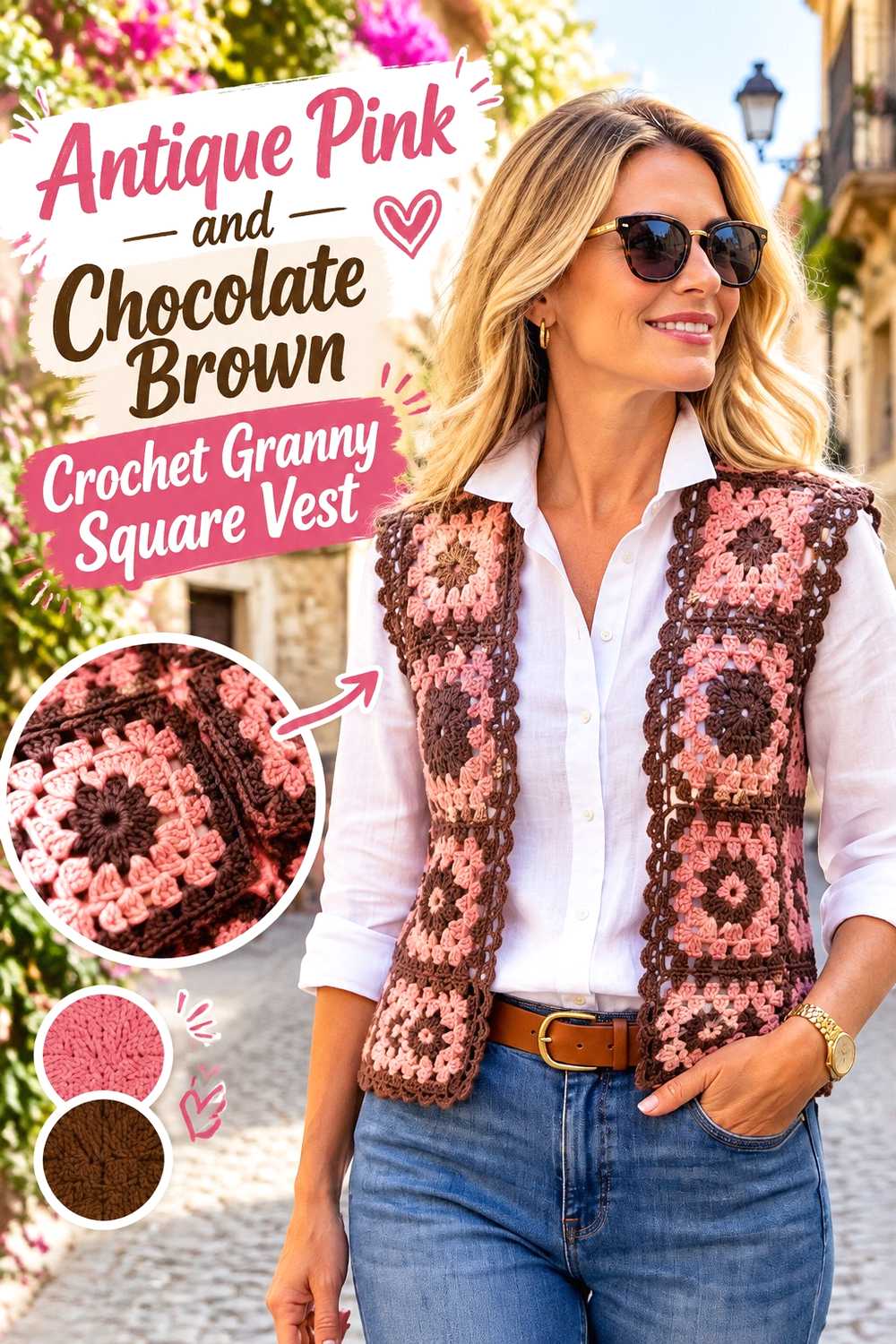
4. Antique Pink And Chocolate Brown Crochet Granny Square Vest
 SAVE
Granny squares give both colors recurring roles without requiring an equal split. Antique Pink can form the centers while Chocolate Brown expands through the outer portions and joins, giving the vest a repeated rosy focal point within a darker framework.
Antique Pink Centers Can Connect the Crochet Vest Motifs
Repeat Antique Pink in the same general motif area across the vest. Consistent pink centers create a color rhythm that can be followed from square to square across the garment.
Lay several finished motifs together before making all of them. Repetition can make the Antique Pink appear much stronger than it does in one isolated square.
Chocolate Brown Can Organize Antique Pink Crochet Granny Squares
Chocolate Brown around the outer motif areas separates the pink centers while also connecting neighboring squares visually. Brown joins or garment edging can extend the same framework around the neckline and armholes.
If the overall panel looks darker than intended, enlarge the Antique Pink portion of the motifs instead of immediately adding a third color.
Creator Credit: Handwork diy
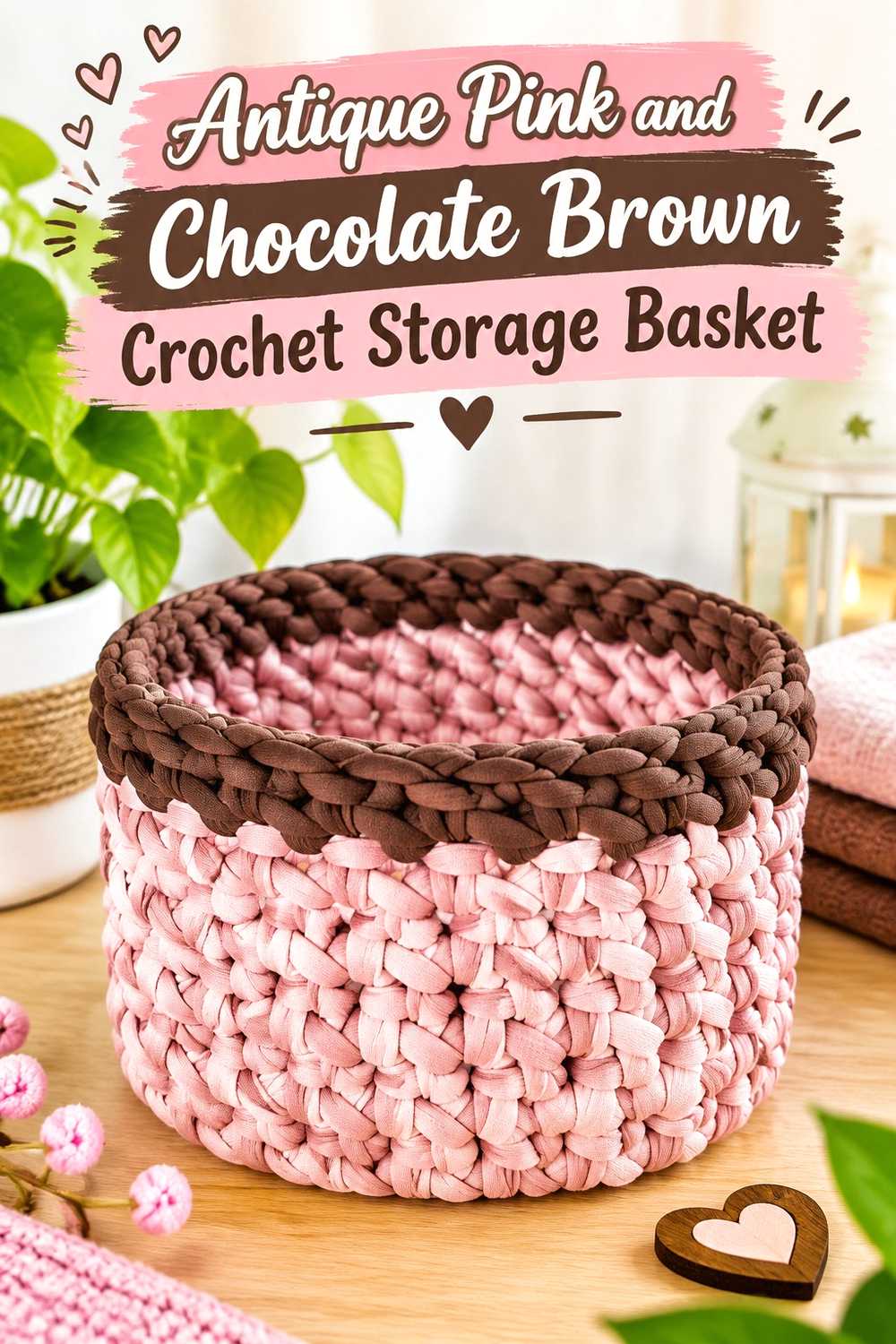
5. Antique Pink And Chocolate Brown Crochet Storage Basket
 SAVE
A basket divides naturally into base, walls, upper edge, and sometimes handle areas. Chocolate Brown can form the lower foundation while Antique Pink appears toward the top, where the accent remains visible even when the basket is filled.
Chocolate Brown Can Ground the Crochet Basket Base
Using Chocolate Brown across the base and lower sides concentrates the deepest color where the basket meets the surface underneath it.
Carry the brown high enough to create a substantial section. On chunky crochet, one narrow dark line may look too small for the scale of the stitches.
Antique Pink Can Stay Visible at the Top of a Chocolate Brown Crochet Basket
An Antique Pink upper band keeps the softer color above the contents of the basket. If the construction has handles or another obvious upper detail, pink can repeat there as well.
This is usually more useful than placing all of the Antique Pink near the bottom, where it can become visually obscured.
Creator Credit: Lallaulab
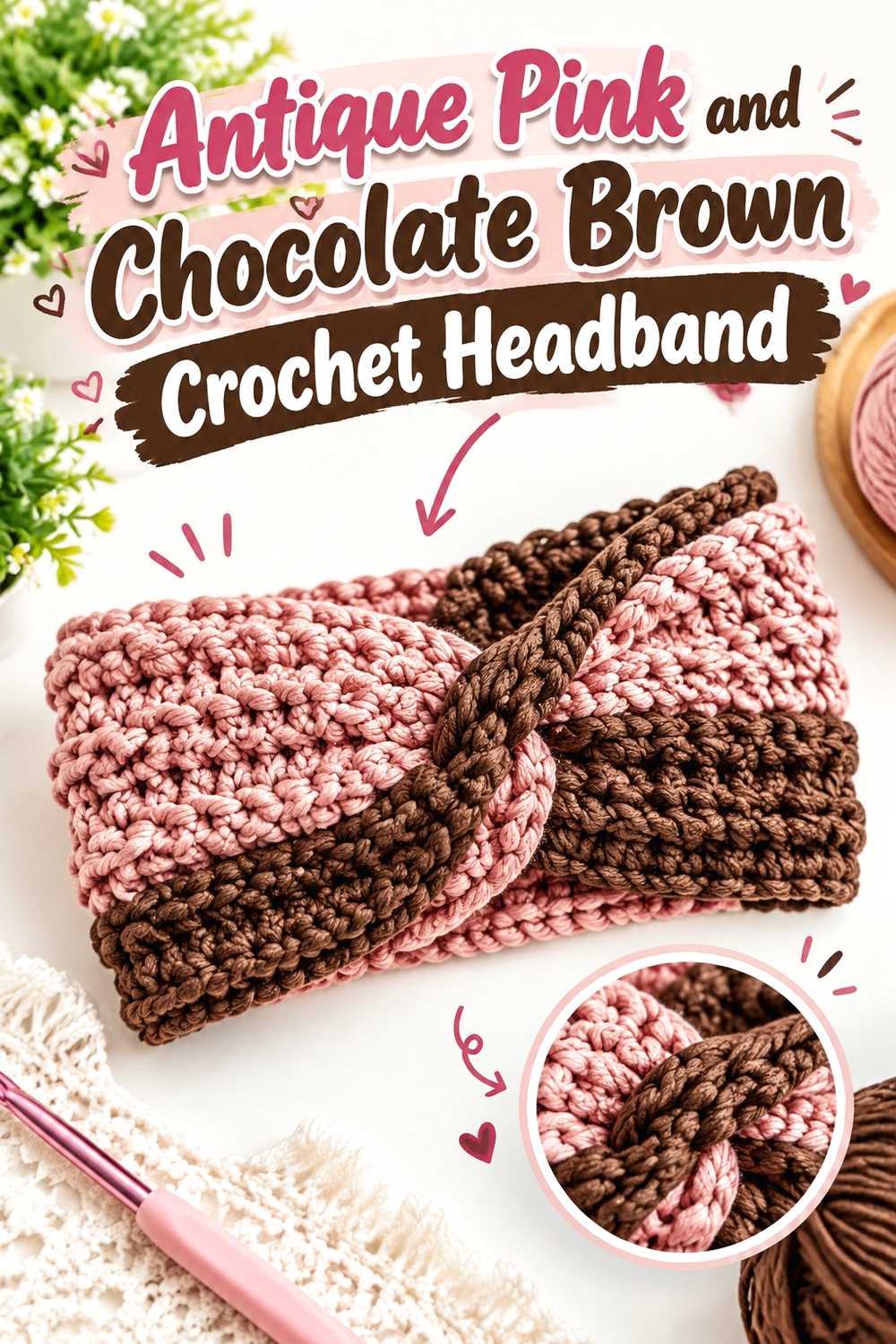
6. Antique Pink And Chocolate Brown Crochet Headband
 SAVE
A narrow headband benefits from a simple palette. Antique Pink can cover most of the band while Chocolate Brown marks the center detail or one broader contrasting section.
Antique Pink Can Keep the Crochet Headband Soft and Continuous
Using Antique Pink across the primary headband surface gives the muted shade enough room to show clearly. Stitch texture can supply the smaller details without requiring several additional color changes.
This works particularly well when the headband has a strong central construction feature.
Chocolate Brown Can Define the Antique Pink Crochet Headband Center
A Chocolate Brown center can visually emphasize a twist, join, or another focal detail. The color change then follows the construction instead of appearing as a random patch.
If isolating the center is awkward for the chosen design, use brown across one broader end section rather than forcing a very small color change.
Creator Credit: CJ Design
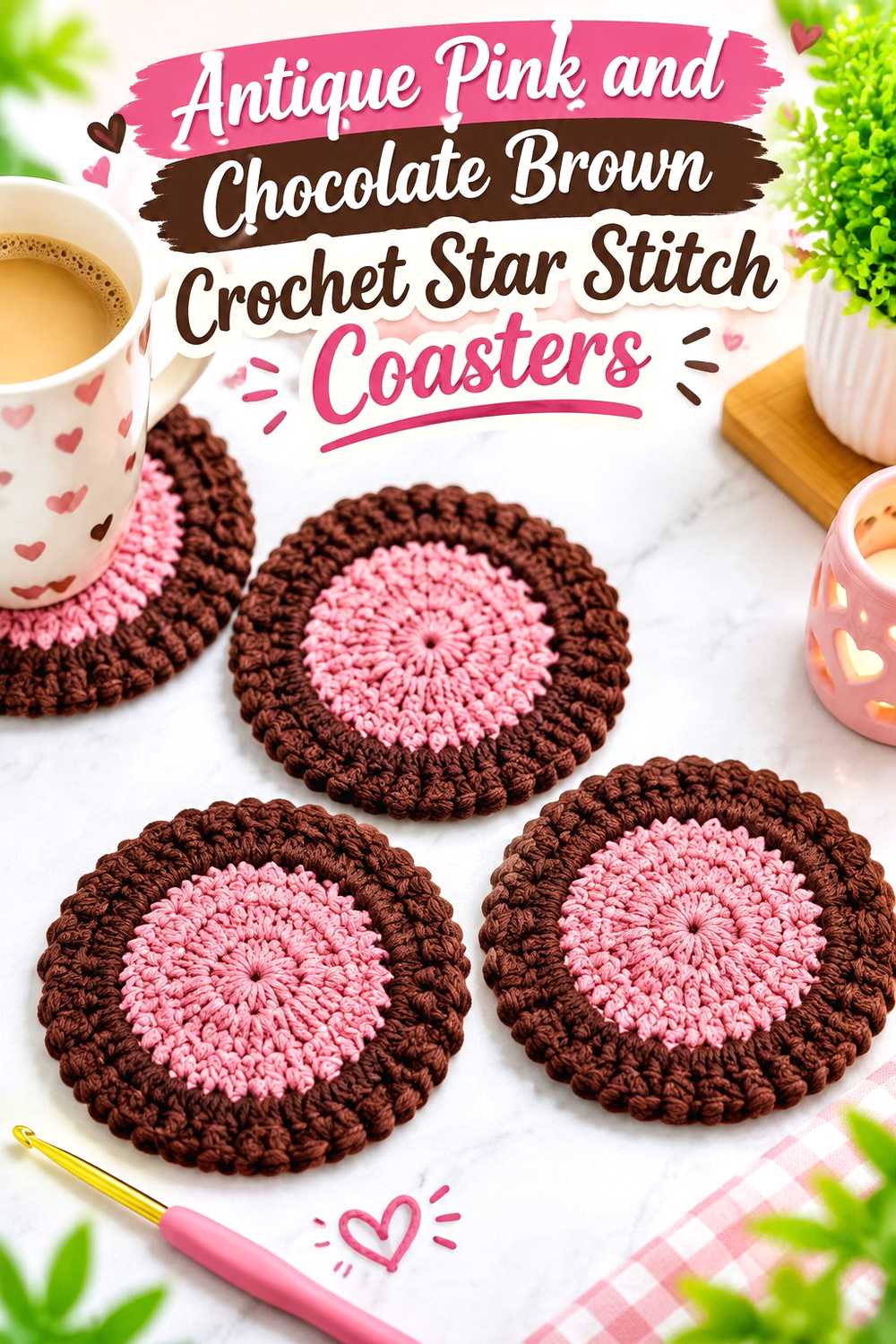
7. Antique Pink And Chocolate Brown Crochet Star Stitch Coasters
 SAVE
A small coaster needs clear color roles. Antique Pink can fill the center while Chocolate Brown outlines the decorative star-stitch edge, creating a dark frame around the softer center.
Antique Pink Can Keep the Crochet Coaster Center Light
Using Antique Pink in the circular center gives the color enough surface area to remain recognizable even once a cup covers part of the coaster.
Across a full set, keeping the same pink center can create consistency while the darker border provides definition.
Chocolate Brown Can Emphasize the Antique Pink Crochet Star-Stitch Edge
Chocolate Brown works well where the stitch treatment changes because the darker color draws attention toward the decorative border.
Make one coaster first and view it from normal table distance. If the Chocolate Brown overwhelms the center, reduce the visual width of the darker section.
Creator Credit: naztazia
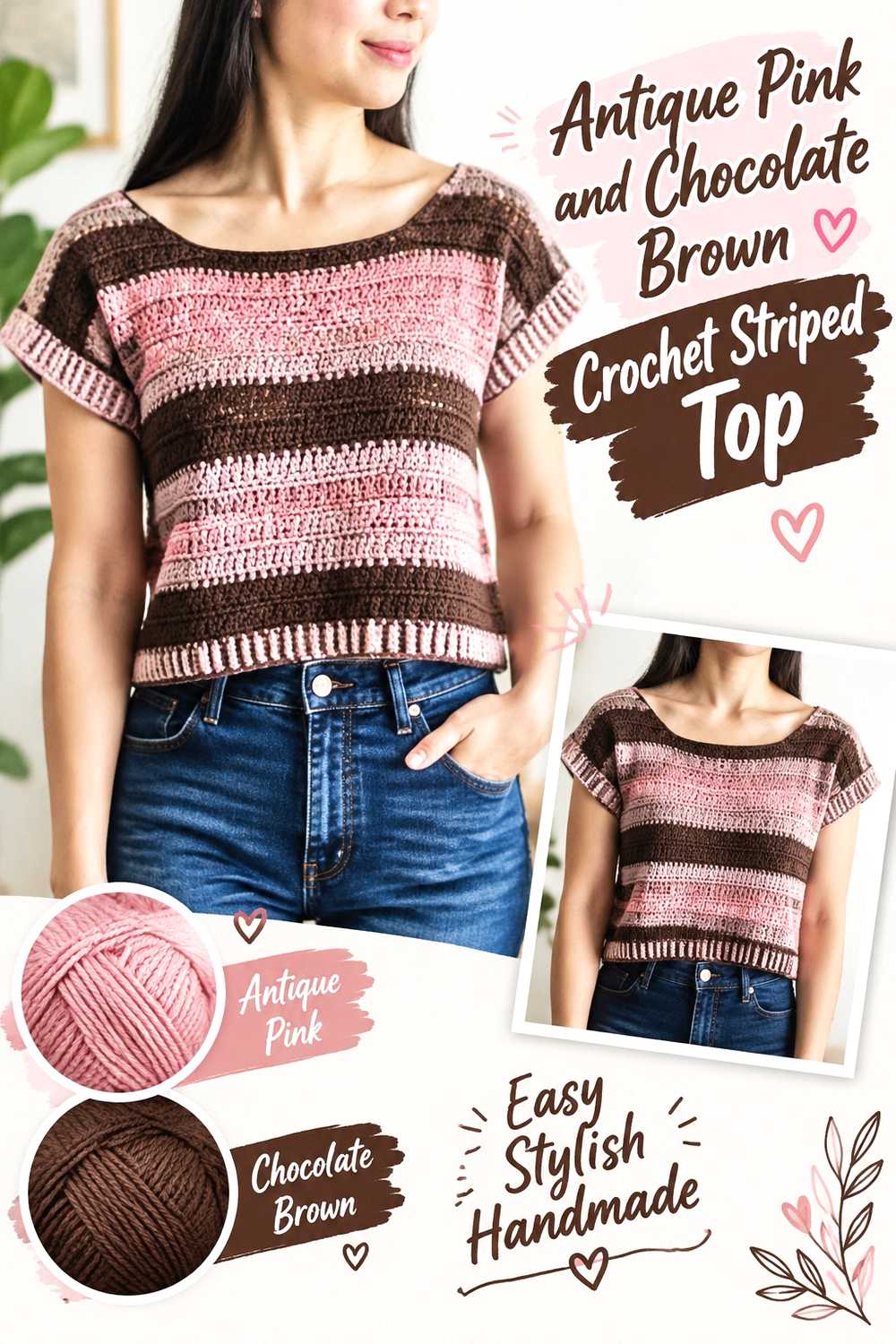
8. Antique Pink And Chocolate Brown Crochet Striped Top
 SAVE
A striped top can use both colors repeatedly without making their widths equal. Broad Chocolate Brown bands with narrower Antique Pink stripes produce a darker garment, while wider pink stripes create a softer overall balance.
Chocolate Brown Can Give the Crochet Top Stripes Their Dark Anchor
Use broader Chocolate Brown stripes if you want the garment to remain brown-led. Those larger sections also create more uninterrupted space across the torso.
Consider the sleeves at the same time as the body. A very different stripe balance on the sleeves can shift the visual emphasis away from the main panels.
Antique Pink Stripe Width Changes the Chocolate Brown Crochet Top Balance
Narrow Antique Pink stripes behave as accents, while wider pink bands move the garment closer to an equal two-color distribution.
If the top becomes busier than expected, reduce the frequency of Antique Pink rather than inserting an unrelated neutral between the colors.
Creator Credit: forthefrills
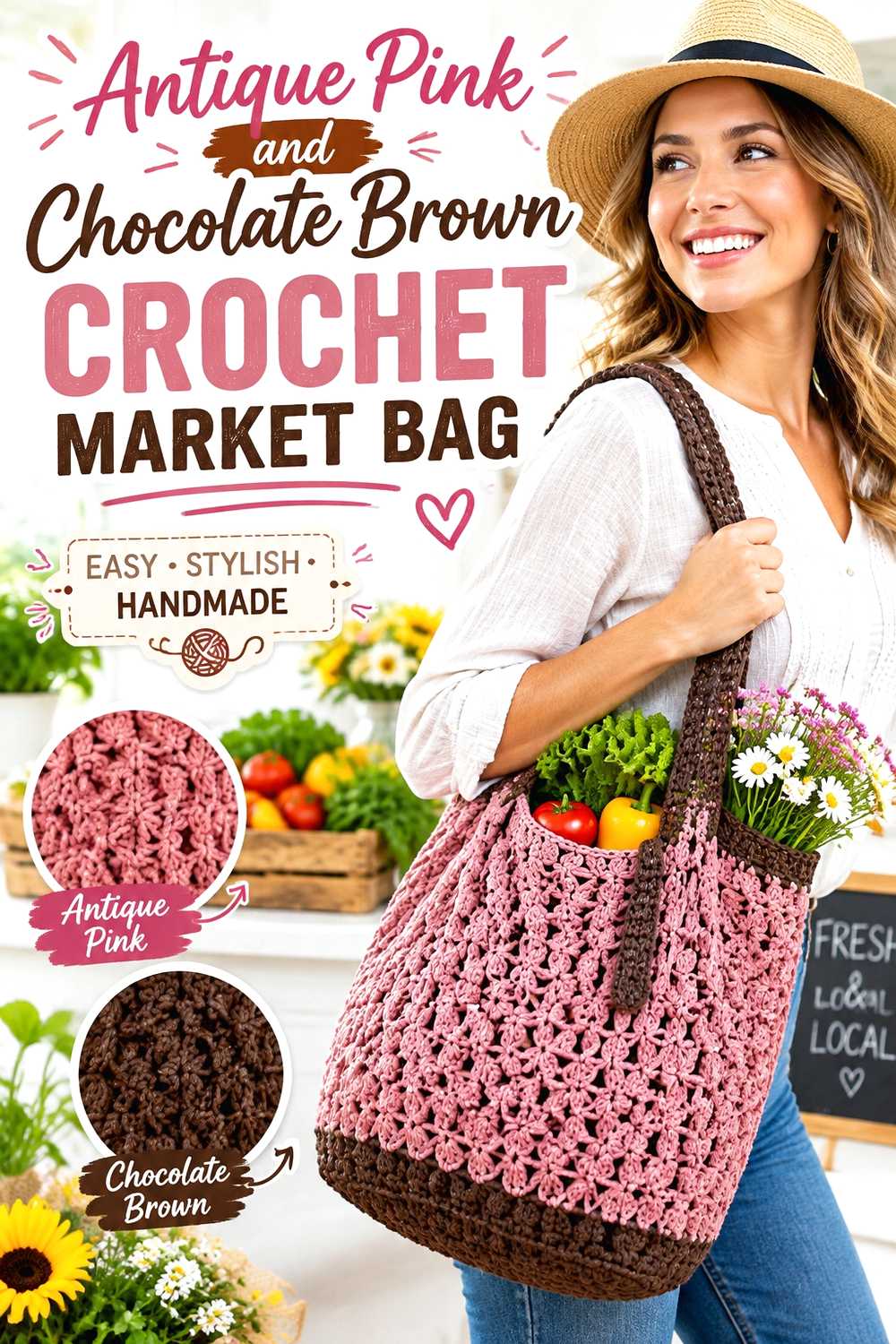
9. Antique Pink And Chocolate Brown Crochet Market Bag
 SAVE
Openwork changes how much visual weight a color carries. Antique Pink can cover the mesh body without creating the same solid block it would in dense fabric, while Chocolate Brown defines the handles, base, or top edge.
Antique Pink Can Lead the Crochet Market Bag Through Openwork
Using Antique Pink across the open body allows the softer color to become dominant while the gaps break up its surface.
Check the bag with clothing or contents behind the mesh before deciding on the final balance because the background will become part of what you see through the fabric.
Chocolate Brown Can Frame the Antique Pink Crochet Market Bag Structure
Chocolate Brown handles and base sections provide strong boundaries around the lighter openwork. Repeating brown in at least two structural locations makes it feel connected to the whole bag.
Avoid scattering tiny brown stripes throughout the mesh if the larger structural sections already provide enough contrast.
Creator Credit: The Crochet Crowd
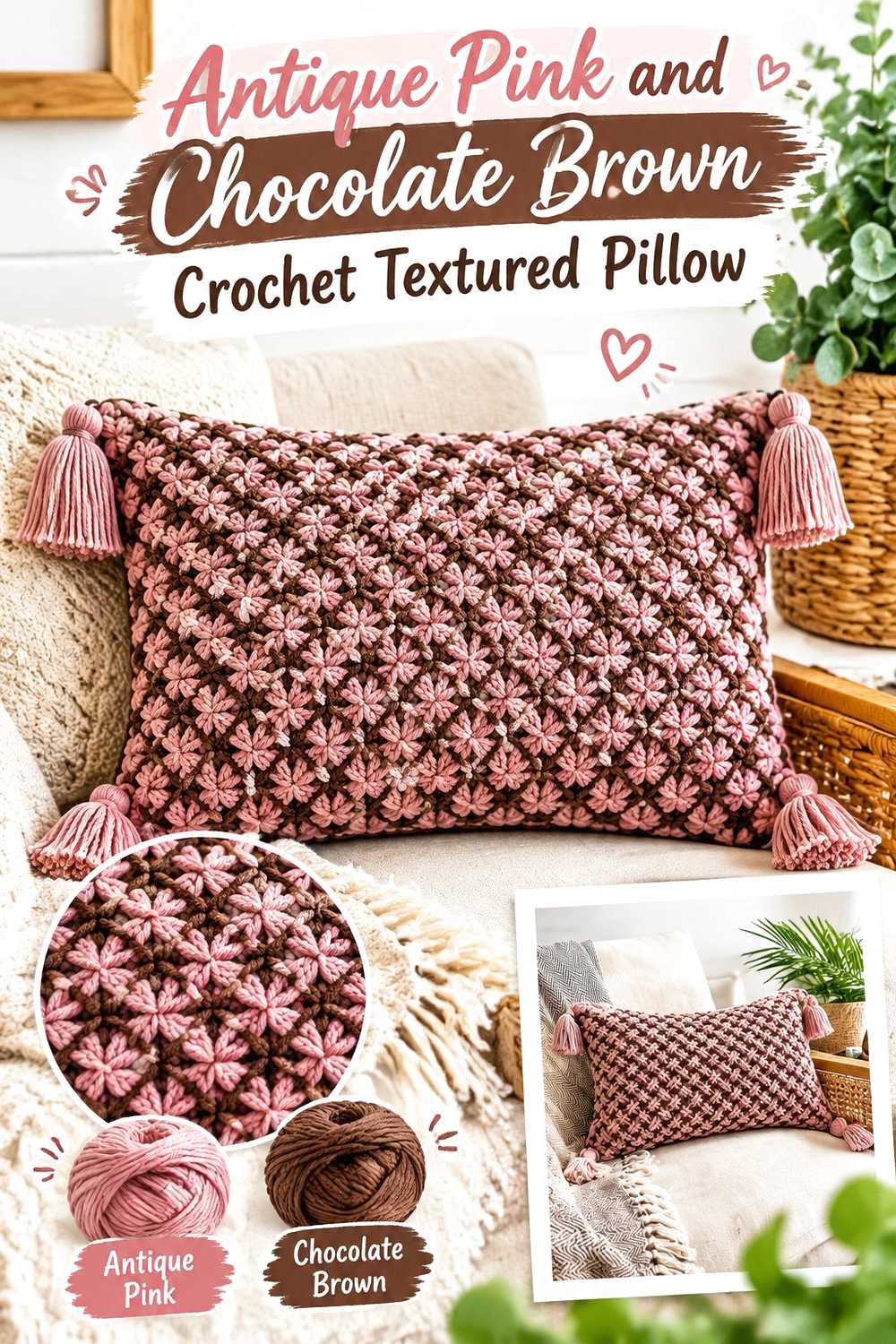
10. Antique Pink And Chocolate Brown Crochet Textured Pillow
 SAVE
A textured pillow gives Chocolate Brown a broad surface where raised crochet can remain visually continuous. Antique Pink can move toward the edge, corners, back panel, or other finishing details.
Chocolate Brown Can Keep the Crochet Pillow Texture Uninterrupted
Use Chocolate Brown across the central textured face when cables or other raised stitches are the main feature. Frequent Antique Pink changes through that area can make color boundaries compete with the texture.
Check the brown fabric under the lighting where the pillow will be displayed because very dark yarn can make subtle relief less noticeable.
Antique Pink Can Frame a Chocolate Brown Crochet Pillow
A substantial Antique Pink border creates a lighter boundary around the darker center without interrupting the raised stitches.
Another option is an Antique Pink back panel. Turning the pillow then changes which color dominates while preserving a simple two-color front.
Creator Credit: MJ’s Off The Hook Designs
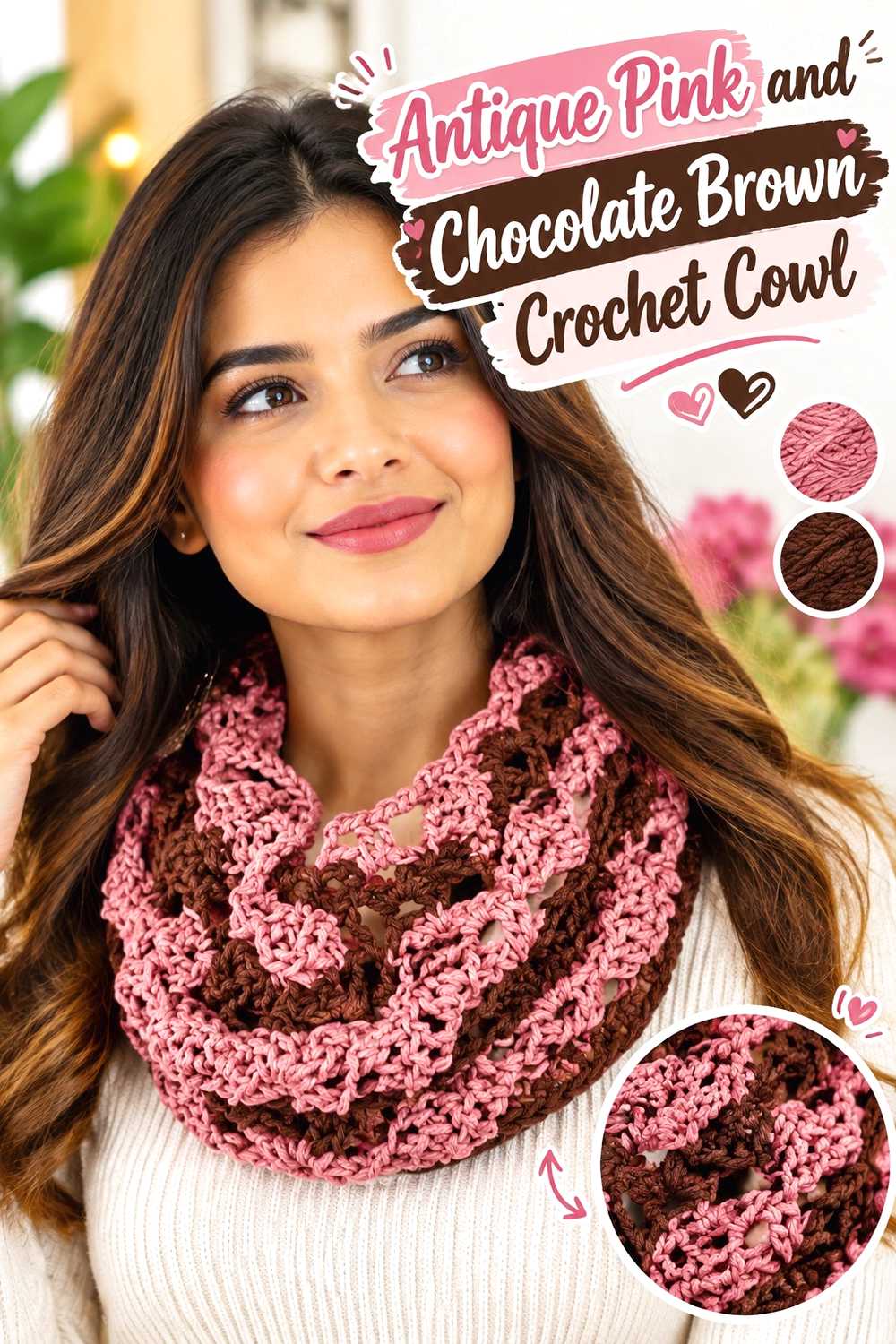
11. Antique Pink And Chocolate Brown Crochet Cowl
 SAVE
A cowl offers enough height for meaningful color blocking without needing constant stripes. Chocolate Brown can form the center while Antique Pink creates an upper or lower edge.
Chocolate Brown Can Carry the Main Crochet Cowl Texture
A Chocolate Brown central field lets ribbing or another repeated stitch texture continue around the neck without multiple interruptions.
Before choosing the accent placement, check how the cowl naturally folds. A color section placed where the fabric turns inward may be less visible during wear.
Antique Pink Can Give the Chocolate Brown Crochet Cowl a Softer Edge
An Antique Pink upper edge brings the muted rose closer to the face, while a pink lower edge places it against the outer garment underneath.
If both edges are Antique Pink, keep enough Chocolate Brown between them that the cowl still has a clear dominant field.
Creator Credit: Bag-O-Day Crochet
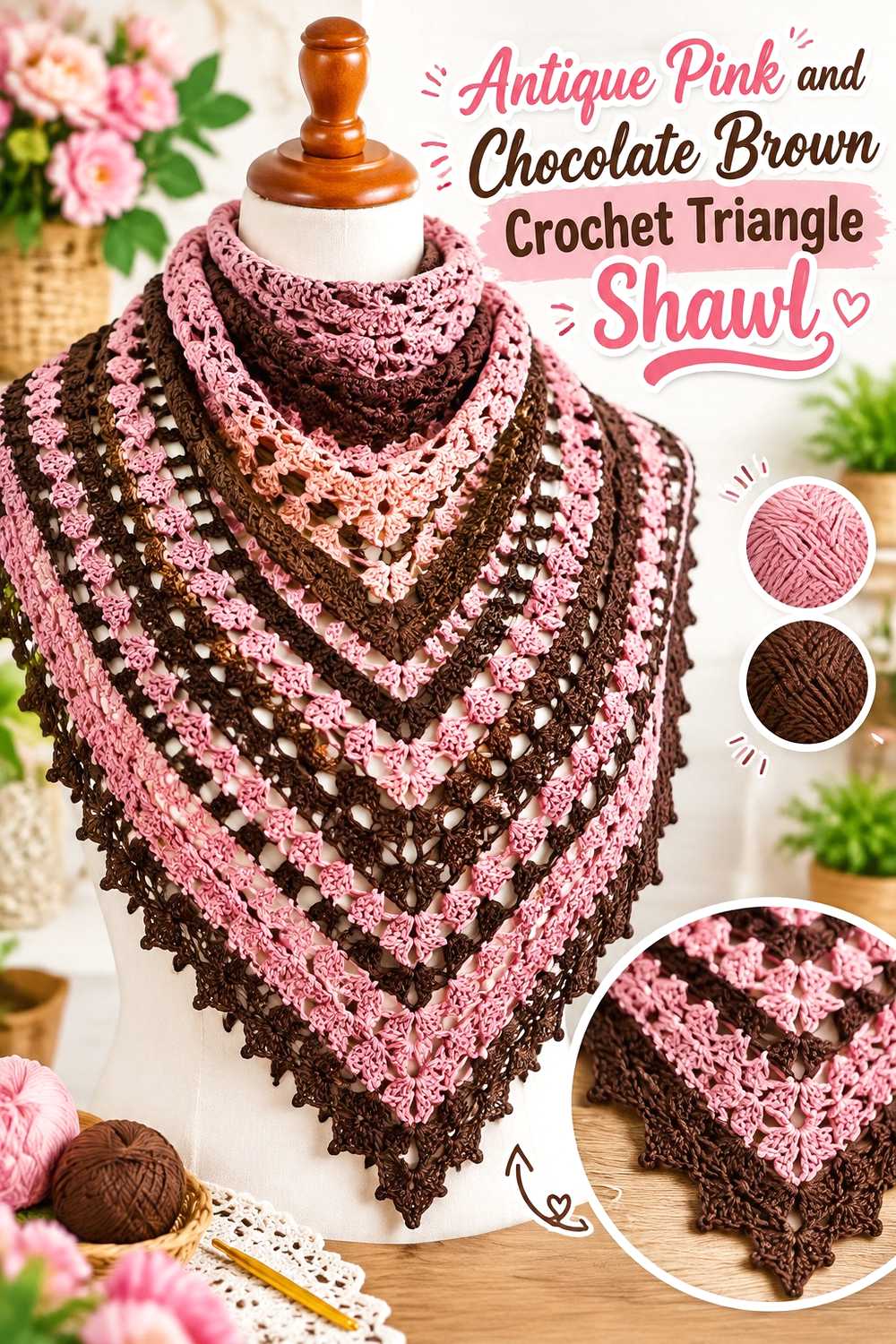
12. Antique Pink And Chocolate Brown Crochet Triangle Shawl
 SAVE
A triangle shawl gives later color sections more width as the project expands. Chocolate Brown can establish the center, while Antique Pink appears farther outward where even one section can cover a substantial span.
Chocolate Brown Can Establish the Crochet Triangle Shawl Center
Starting with Chocolate Brown creates a concentrated dark foundation and gives the early part of the shawl a consistent color identity.
This is especially useful with openwork, where the stitch pattern already provides plenty of visual variation.
Antique Pink Gains More Presence Along the Chocolate Brown Crochet Shawl Edge
An Antique Pink section near the outer portion covers more width than the same color near the narrow center. Use that geometry when you want the pink to become increasingly noticeable.
For a darker final outline, return to Chocolate Brown after the Antique Pink and use it at the outermost edge.
Creator Credit: Hooked by Robin
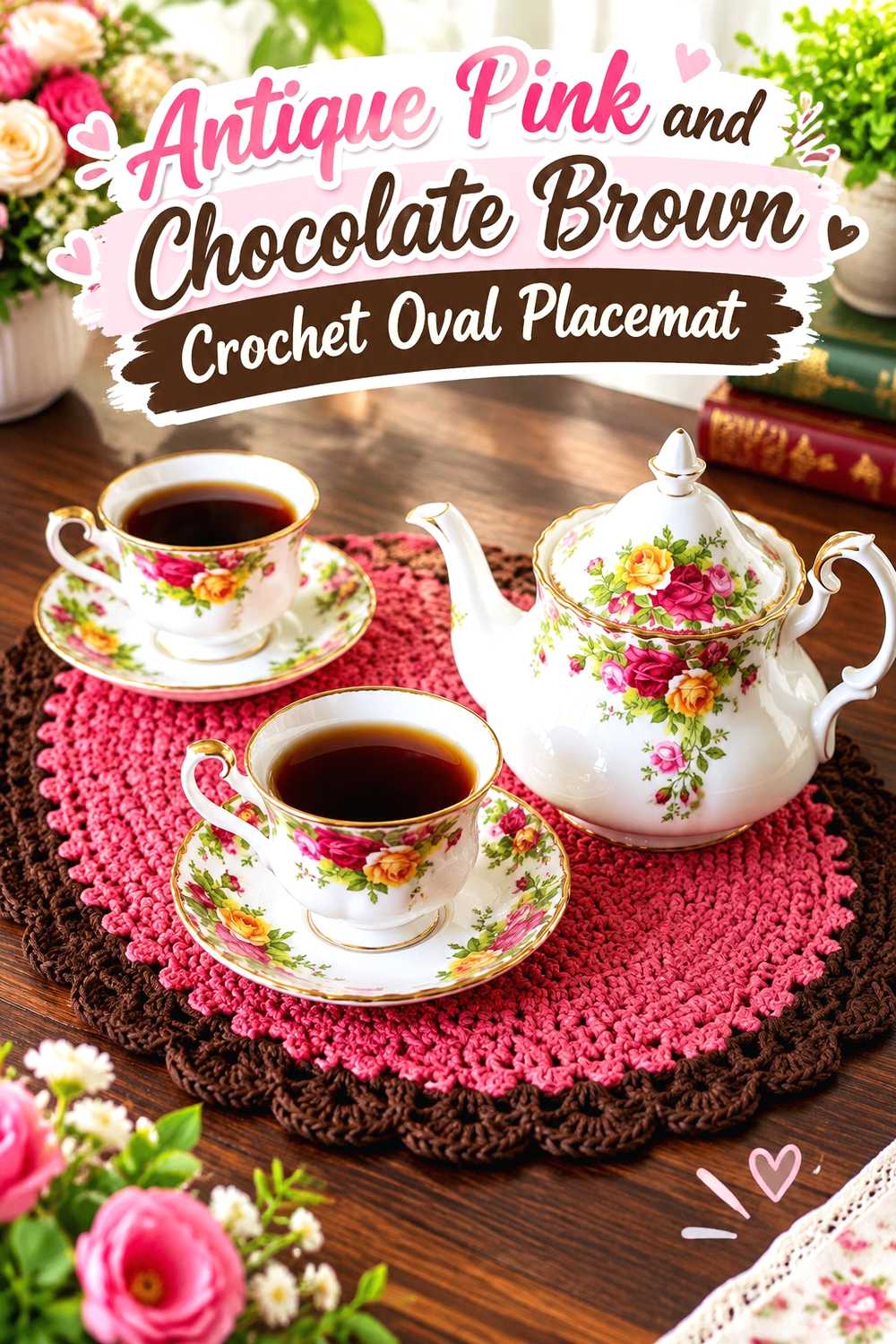
13. Antique Pink And Chocolate Brown Crochet Oval Placemat
 SAVE
A placemat naturally supports a center-and-border arrangement. Antique Pink can fill the central oval while Chocolate Brown follows the outside, giving the lighter field a strong perimeter.
Antique Pink Needs Enough Crochet Placemat Area to Stay Visible
A very small Antique Pink center may disappear once dinnerware is placed on top. Extend the pink far enough outward that it remains visible around the plate.
Test one completed placemat with your usual dishes before committing to the same proportions across an entire set.
Chocolate Brown Can Outline the Antique Pink Crochet Placemat
A Chocolate Brown outer section emphasizes the oval shape and creates a clear boundary between the Antique Pink center and the tabletop.
If the table itself is dark brown, increase the Antique Pink share so the placemat does not visually merge with its background.
Creator Credit: Jayda InStitches
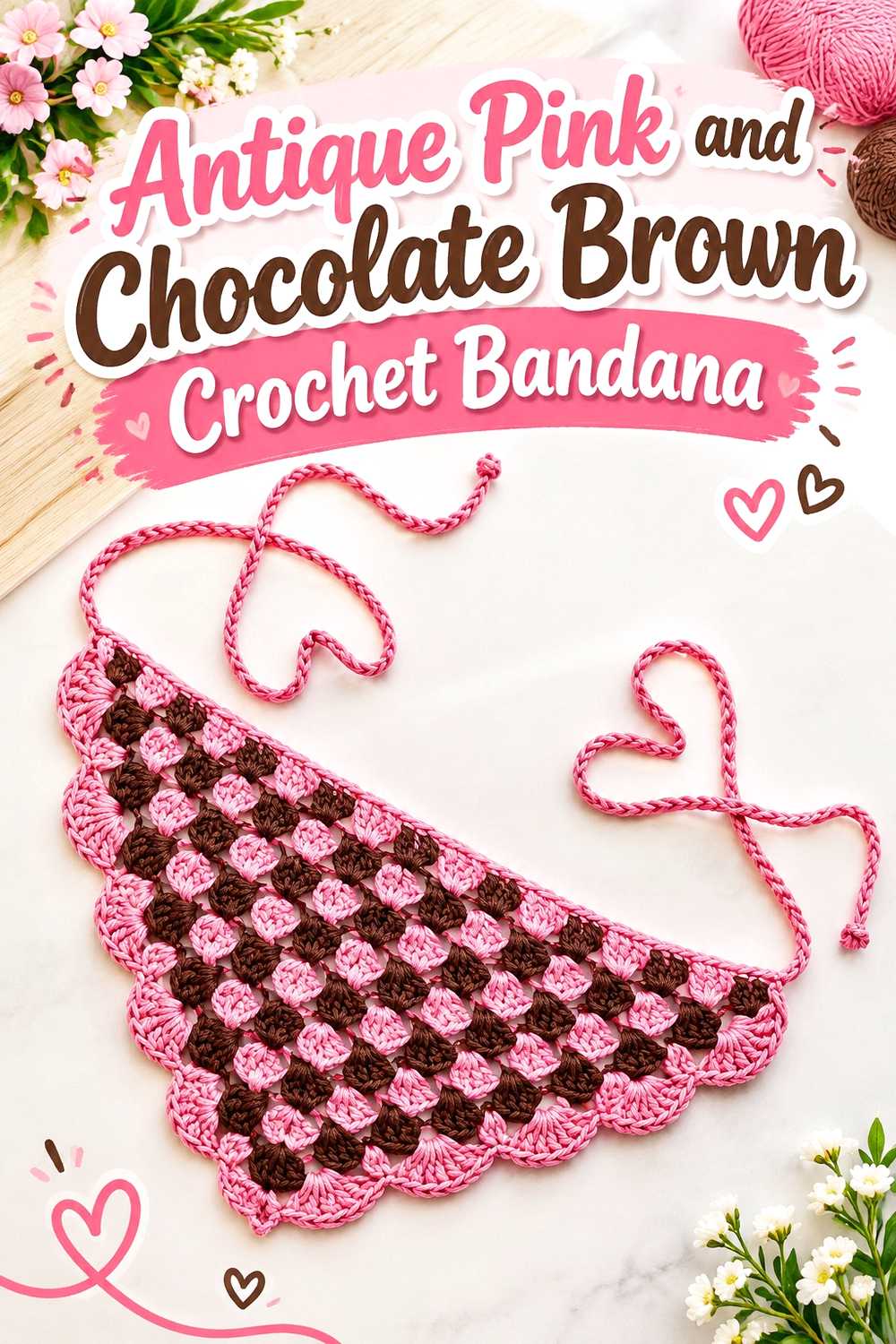
14. Antique Pink And Chocolate Brown Crochet Bandana
 SAVE
A bandana provides a large triangular field, border, and ties. Antique Pink can fill the main triangle while Chocolate Brown follows the edge and continues into the ties.
Antique Pink Can Lead Across the Crochet Bandana Triangle
A broad Antique Pink center gives the muted color enough area to define the accessory. If the crochet includes openwork, hair or clothing showing through the spaces will also affect how the pink appears.
Judge the finished proportions while the bandana is folded and tied rather than relying only on its flat appearance.
Chocolate Brown Can Connect the Antique Pink Crochet Bandana Border and Ties
Using Chocolate Brown around the outer edge and continuing the color into both ties creates a continuous dark framework around the pink center.
If the border feels heavier than intended, narrow the Chocolate Brown edging but retain the dark ties so the supporting shade still repeats.
Creator Credit: PassioKnit Kelsie
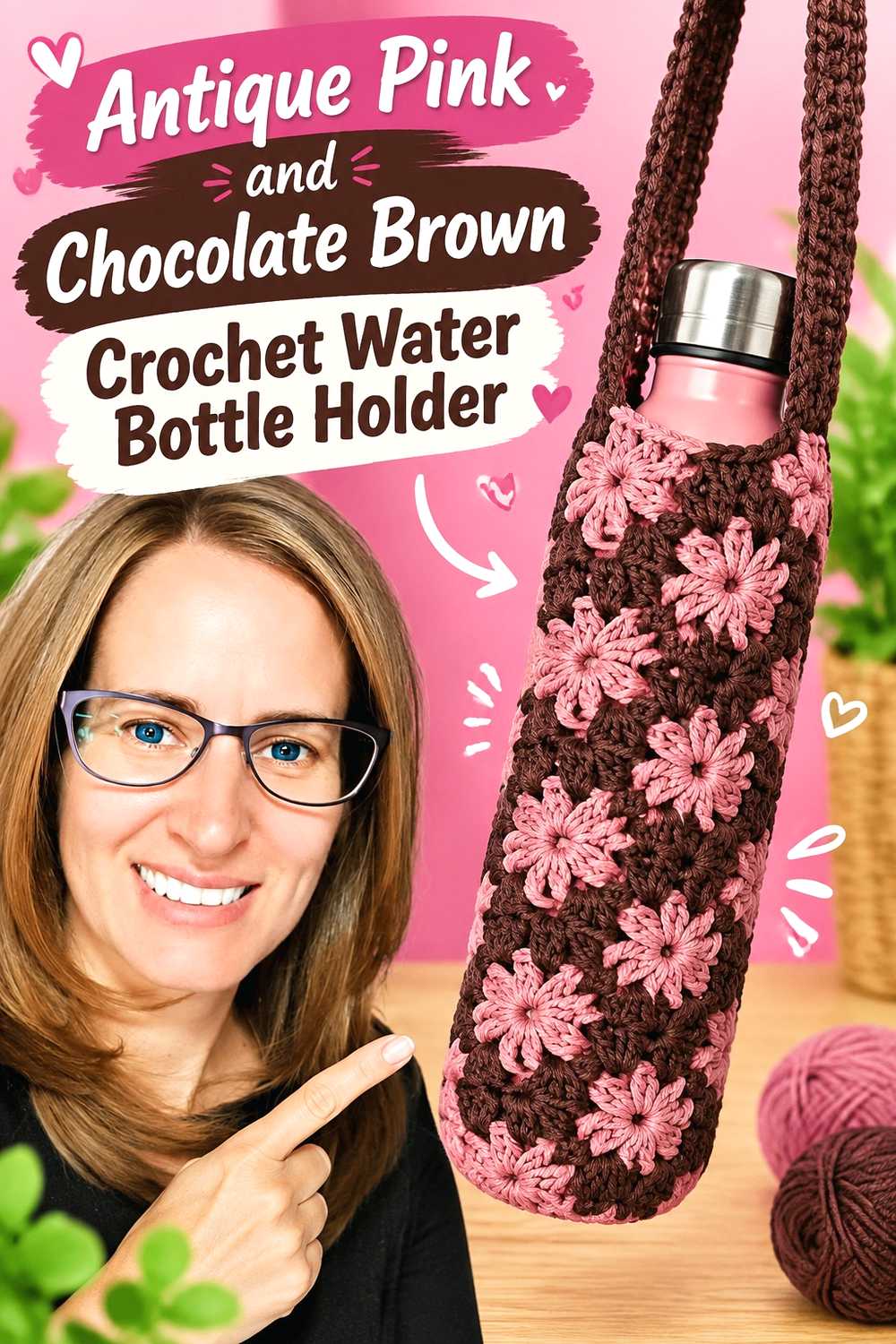
15. Antique Pink And Chocolate Brown Crochet Water Bottle Holder
 SAVE
A bottle holder offers distinct base, body, top, and strap areas. Chocolate Brown can carry the main holder while Antique Pink appears through the strap and upper edge, giving the softer shade plenty of visibility without dividing the body repeatedly.
Chocolate Brown Can Give the Crochet Water Bottle Holder a Strong Framework
Using Chocolate Brown across the main body creates a dark structure around the bottle. If the fabric is open, the bottle itself will also contribute visible color through the crochet.
Check the palette with the intended bottle inside before deciding whether more Antique Pink is needed.
Antique Pink Can Link the Chocolate Brown Crochet Holder Strap and Opening
A long Antique Pink strap has enough visual area to register strongly even though it is narrower than the body. Repeating pink around the opening connects the strap back to the holder.
If the Antique Pink strap already dominates visually, keep the base Chocolate Brown rather than adding another large pink section.
Creator Credit: Crochet with Clare
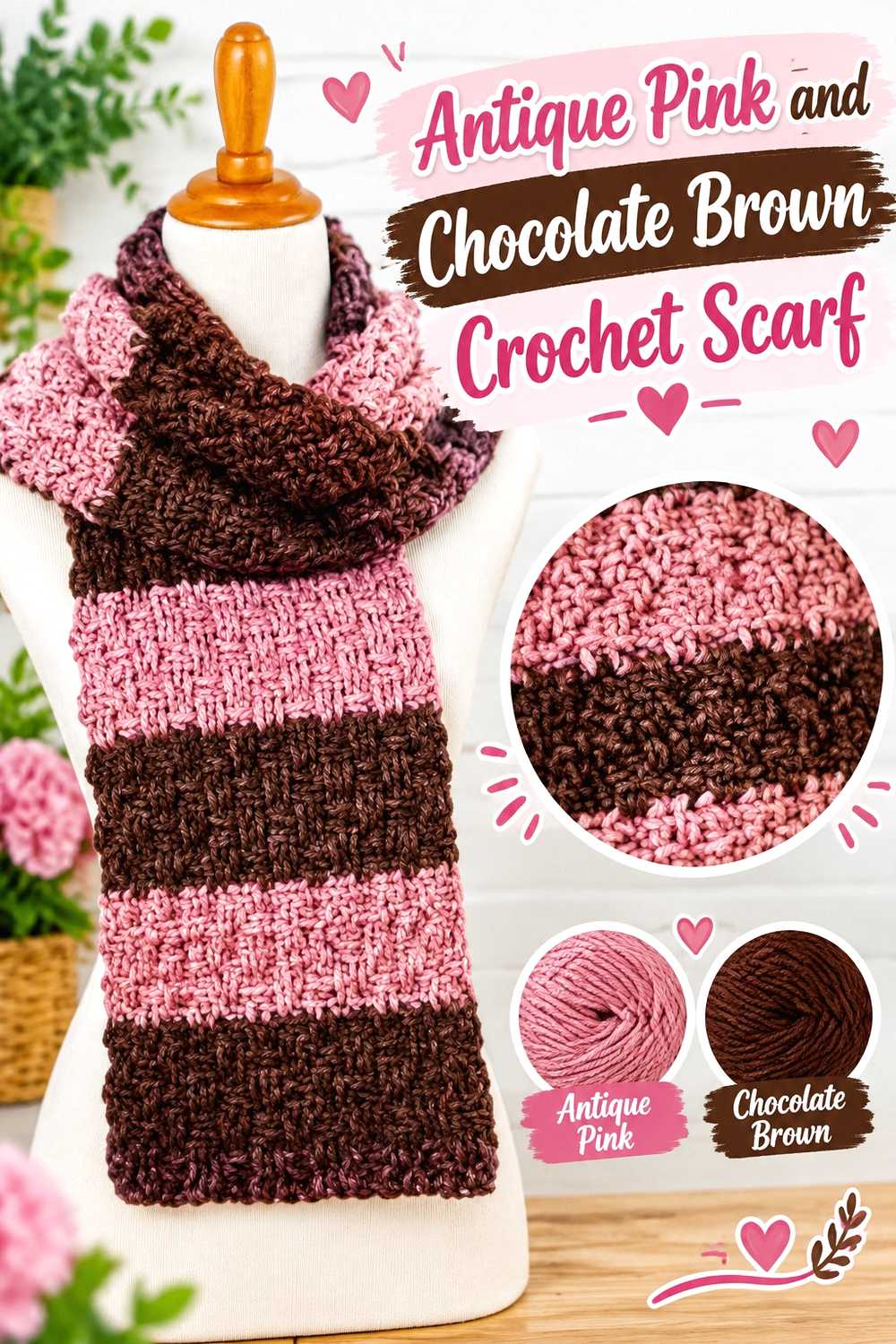
16. Antique Pink And Chocolate Brown Crochet Scarf
 SAVE
A scarf has enough length for broad blocks instead of constant two-color striping. Antique Pink can cover much of the main length while Chocolate Brown appears at both ends, or the relationship can be reversed for a darker result.
Antique Pink Can Keep the Main Crochet Scarf Field Soft
A long Antique Pink section gives stitch texture an uninterrupted background and keeps the scarf visually lighter than a brown-dominant version.
Remember that the middle of a scarf is often wrapped around the neck, so color placed there may be less visible than broad sections at the ends.
Chocolate Brown Can Give Antique Pink Crochet Scarf Ends More Weight
Chocolate Brown end blocks create repeated dark anchors at opposite ends of the scarf. Keeping those blocks similar in scale helps the two ends look connected.
If you want additional brown through the center, repeat one restrained band rather than turning the entire scarf into many narrow alternating stripes.
Creator Credit: Fiber Flux
Comparing Antique Pink and Chocolate Brown Crochet Palettes
For a darker overall result, the tote, cardigan, textured pillow, cowl, water bottle holder, and parts of the striped top give Chocolate Brown enough surface area to act as the main visual anchor. Antique Pink can then highlight structural or decorative areas.
For a softer pink-led direction, the beanie, blanket, headband, market bag, placemat, bandana, and scarf can give Antique Pink the largest uninterrupted sections while Chocolate Brown creates boundaries.
The granny square vest, storage basket, coasters, and triangle shawl fall between those approaches. Their construction naturally divides the colors into centers, edges, bands, or expanding sections, making it possible for both shades to have substantial roles without splitting the project evenly.
Conclusion
Antique Pink and Chocolate Brown work most effectively when their color placement follows the structure of the crochet project. Chocolate Brown can anchor large surfaces and define borders, straps, joins, cuffs, and edges, while Antique Pink can soften broad fields or create repeated focal points.
Choose a Chocolate Brown-dominant palette when you want the pink to function as a restrained accent. Let Antique Pink cover more of the surface when you want a lighter project, then use Chocolate Brown to outline its shape or emphasize construction changes.
Compare your actual yarns before committing to a large piece. Antique Pink can range from pale dusty rose to deeper muted pink, while Chocolate Brown can range from lighter cocoa to very dark espresso-like tones. Maintaining the intended contrast and color hierarchy matters more than matching the shade names exactly.
Frequently Asked Questions
Should Antique Pink or Chocolate Brown dominate a crochet project?
Either color can lead. Chocolate Brown dominance creates a deeper overall surface with Antique Pink accents, while Antique Pink dominance produces a softer project framed by darker brown details.
Where should Chocolate Brown go on an Antique Pink crochet project?
Chocolate Brown works well at borders, cuffs, handles, straps, joins, brims, ties, bases, and other structural transitions. These placements give the darker color a clear purpose.
How can I tell whether Antique Pink and Chocolate Brown have enough contrast?
Place the actual yarns side by side and view them from several feet away. A grayscale photo can also help reveal their value difference. If the shades look similar in grayscale, use broader color sections instead of relying on tiny contrasting details.
Can Antique Pink and Chocolate Brown work in granny squares?
Yes. One useful arrangement is to repeat Antique Pink in motif centers and Chocolate Brown in the outer sections or joins. Consistent placement helps multiple squares read as one coordinated project.
What can replace Antique Pink if I cannot find the exact shade?
Choose another muted or dusty rose that preserves a similar relationship with the Chocolate Brown. Focus on lightness, saturation, and the intended dominant-or-accent role rather than the commercial shade name.
Can I replace Chocolate Brown with a lighter brown?
Yes, but the palette will have softer value contrast. If the brown becomes lighter, check whether small Antique Pink motifs or borders still remain clearly separated.
How can I keep Antique Pink and Chocolate Brown crochet from looking too busy?
Reduce unnecessary color changes. Give one shade larger uninterrupted sections and repeat the other at related structural points such as cuffs, borders, motif centers, handles, ties, or ends. This creates a clearer hierarchy than irregularly alternating the colors throughout.