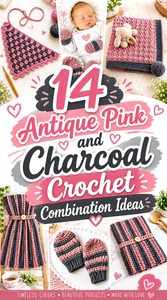
Antique Pink and Charcoal create a crochet palette with a softer kind of contrast. Antique Pink brings a muted rosy color rather than a sharp, saturated pink, while Charcoal supplies the dark visual weight needed to define edges, motifs, straps, cuffs, and other structural details.
The combination can move in two very different directions. Charcoal can dominate a scarf, tote, hat, or blanket while Antique Pink appears as controlled highlights. Reversing the proportion makes Antique Pink the main field and uses Charcoal almost like an outline, which can be especially effective on small accessories and projects with obvious borders.
The tutorials linked with each idea support the underlying crochet construction. The Antique Pink and Charcoal palettes are color adaptations, so follow the creator for construction while planning the color distribution separately.
Quick List
- Antique Pink And Charcoal Crochet Tote Bag
- Antique Pink And Charcoal Crochet Scarf
- Antique Pink And Charcoal Crochet Beanie
- Antique Pink And Charcoal Crochet Earrings
- Antique Pink And Charcoal Crochet Scrunchie
- Antique Pink And Charcoal Crochet Drawstring Pouch
- Antique Pink And Charcoal Crochet Tea Towel
- Antique Pink And Charcoal Crochet Washcloth
- Antique Pink And Charcoal Crochet Chunky Blanket
- Antique Pink And Charcoal Crochet Baby Mittens
- Antique Pink And Charcoal Crochet Baby Blanket
- Antique Pink And Charcoal Crochet Bandana
- Antique Pink And Charcoal Crochet Water Bottle Holder
- Antique Pink And Charcoal Crochet Bucket Hat
Decide Whether Antique Pink or Charcoal Should Lead
Charcoal is useful when you want the project to read darker overall. It can cover large tote bodies, scarves, blanket fields, and hat surfaces while Antique Pink appears at borders, ends, motifs, or other selected points. Because Antique Pink is softer than a vivid pink, giving it a reasonable amount of surface area helps prevent it from becoming visually insignificant against a very dark Charcoal.
An Antique Pink-led arrangement creates a lighter result. In that version, Charcoal can define construction changes such as bag handles, bandana ties, blanket borders, pouch closures, or hat brims. The darker shade usually needs less area to establish a strong boundary.
Use Charcoal to Separate Antique Pink Crochet Details
Small Antique Pink motifs can lose definition if they sit among several similar mid-value colors, but Charcoal provides a distinctly darker neighboring area when your actual yarn choices have sufficient value contrast. This can help on appliqués, striped towels, small accessories, and motif-based pieces.
Do not judge contrast from shade names alone. Place the actual yarns together and, if useful, view a grayscale photo. A very deep dusty pink and a lighter charcoal may be closer in value than expected, in which case broader color blocks will usually read more clearly than tiny details.
1. Antique Pink And Charcoal Crochet Tote Bag
 SAVE
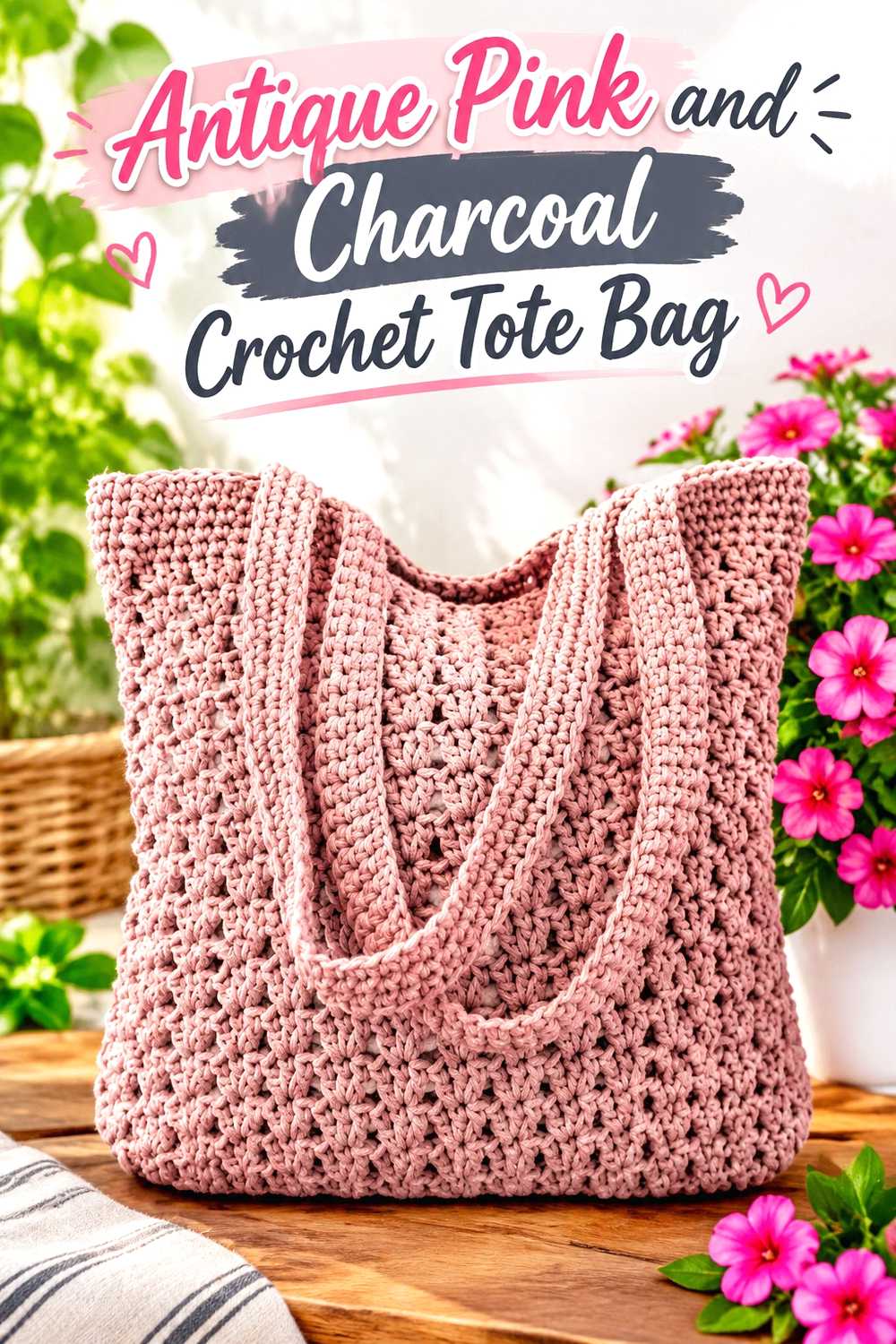
SAVEA tote gives this palette several separate surfaces: body, upper edge, and handles. Charcoal can cover the majority of the bag, while Antique Pink highlights the carrying area and repeats near the opening. This makes the muted pink noticeable without interrupting the entire bag body.
Charcoal Can Keep the Crochet Tote Body Visually Continuous
Using Charcoal across the broad central surface gives the tote one strong foundation and lets stitch texture repeat without numerous color breaks. It also makes the bag clearly dark-led even if Antique Pink appears in more than one finishing area.
If the body has pronounced texture, keeping it one color prevents the palette from competing with that texture for attention.
Antique Pink Can Connect the Charcoal Crochet Tote Handles to the Opening
Antique Pink handles create visible vertical accents, but repeating the pink around the upper edge helps integrate them with the rest of the tote. Without that repetition, two pink handles can look more attached than designed into the color scheme.
For a quieter variation, keep the handles Charcoal and use Antique Pink only as a substantial upper band.
Creator Credit: Kristines Crochets
2. Antique Pink And Charcoal Crochet Scarf
 SAVE
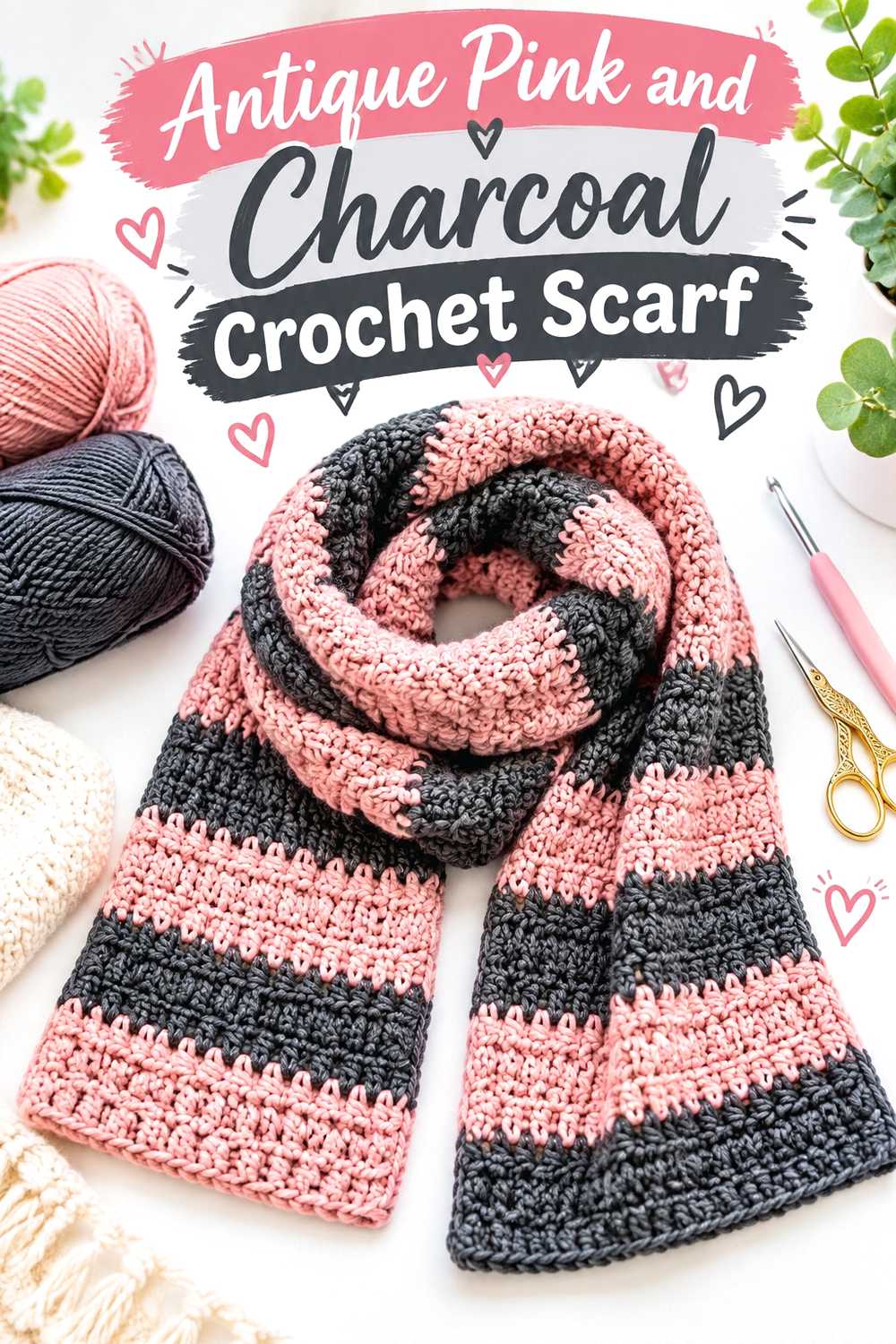
SAVEA scarf provides enough length for large color blocks rather than constant alternating stripes. Charcoal can run through most of the central length, while Antique Pink is concentrated at the ends where it stays visible after the scarf is wrapped.
Charcoal Can Carry the Main Crochet Scarf Length
A long Charcoal center gives repeated stitches a consistent background and makes the scarf read as one continuous accessory. The middle is also frequently wrapped around the neck, so it does not necessarily need the strongest color contrast.
Keeping this area Charcoal gives you more freedom to use wider Antique Pink sections where they will actually remain visible.
Antique Pink Can Keep Charcoal Crochet Scarf Ends From Feeling Too Heavy
Broad Antique Pink end blocks lighten the lower portions of the scarf and give the muted pink enough area to register against the darker central field.
If the two pink ends feel disconnected, repeat Antique Pink in one smaller section nearer the middle rather than converting the whole scarf into narrow stripes.
Creator Credit: Sewrella
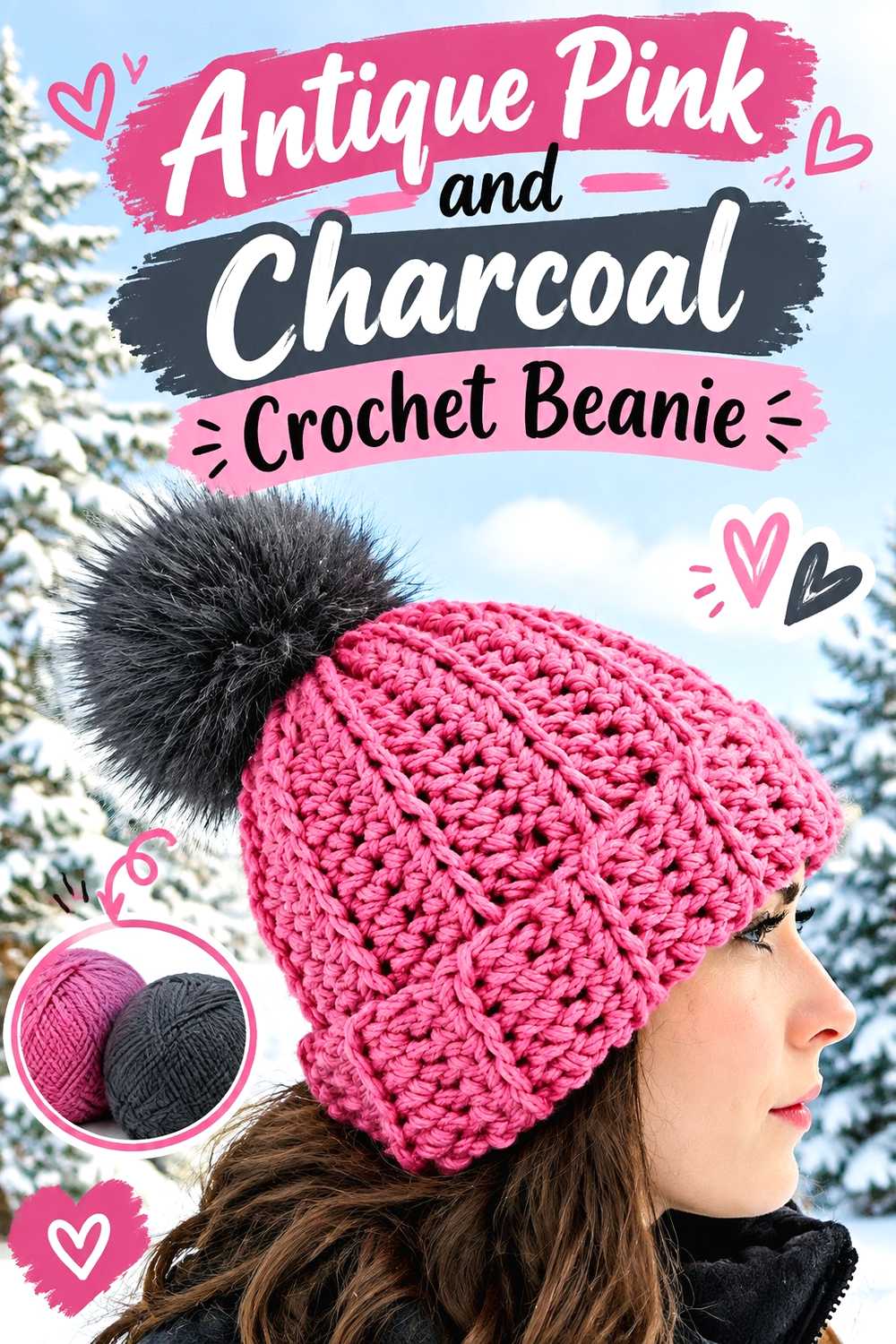
3. Antique Pink And Charcoal Crochet Beanie
 SAVE
SAVEA beanie benefits from straightforward color placement because its surface is compact. Antique Pink can cover the crown and upper body, while Charcoal forms the lower section or folded edge, producing a darker frame close to the face.
Antique Pink Can Lead Across the Crochet Beanie Crown
Keeping the upper hat Antique Pink allows ribbing or other repeated stitch texture to continue without multiple visual interruptions. It also ensures the softer pink is not reduced to a tiny detail beside the stronger Charcoal.
If you want a pink-led hat, give Antique Pink noticeably more height than the dark lower section.
Charcoal Can Define the Antique Pink Crochet Beanie Edge
A Charcoal lower band creates a strong endpoint for the pink body. The placement works especially well because the color change follows a real edge or fold instead of appearing midway through the hat without a structural reason.
If the Charcoal feels too dominant, reduce the width of the lower section rather than adding another color.
Creator Credit: Jonna Martinez
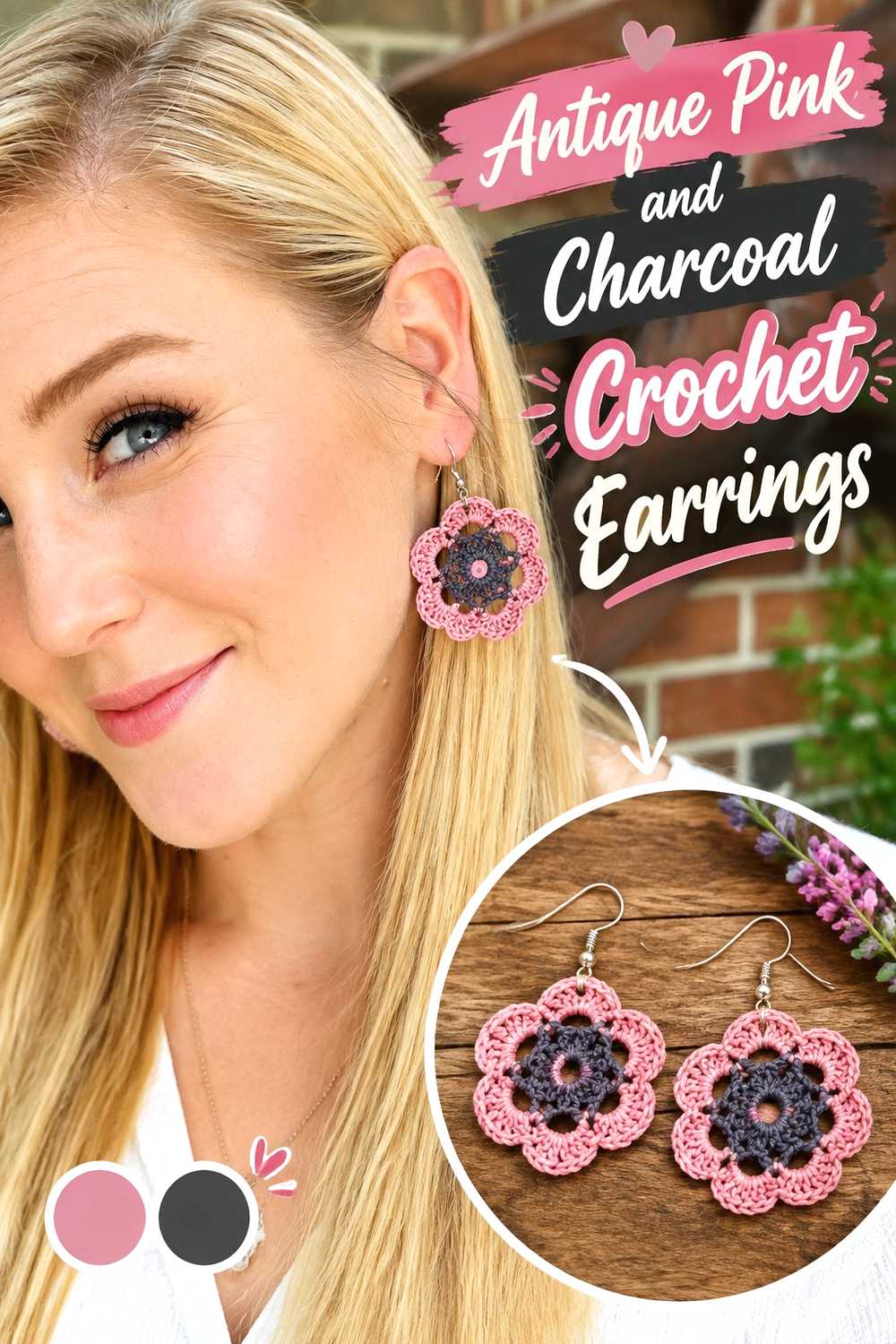
4. Antique Pink And Charcoal Crochet Earrings
 SAVE
SAVESmall crochet earrings need an especially disciplined palette because there is little surface area for complicated color changes. Antique Pink can fill the main crocheted shape while Charcoal appears along a defined edge or smaller inner detail.
Antique Pink Needs Enough Crochet Earring Area to Remain Recognizable
Use Antique Pink across the larger portion of the motif if you want the muted rosy tone to be obvious. Very small pink details can disappear visually once the earrings are viewed at normal conversational distance.
Keep both earrings consistent in the way the pink is distributed so the pair reads as intentionally matched.
Charcoal Can Give Antique Pink Crochet Earrings a Dark Outline
A controlled Charcoal edge can strengthen the silhouette of the Antique Pink motif. Because the earrings are small, the darker color usually does not need to occupy much area to become noticeable.
Avoid dividing a tiny motif into many alternating pink-and-gray sections; one main color plus a defined dark detail is generally clearer.
Creator Credit: Crochet with Tiffany Hansen
5. Antique Pink And Charcoal Crochet Scrunchie
 SAVE
SAVEA scrunchie lets color placement follow its layered shape. Charcoal can stay closer to the inner elastic area while Antique Pink expands through the outer decorative stitches, keeping the softer color visible when the accessory is worn.
Charcoal Can Recede Toward the Crochet Scrunchie Center
Using Charcoal near the inner part of the scrunchie creates a dark foundation that may become partially hidden when the accessory wraps around the hair. That makes it a logical supporting-color location.
The darker center can also provide separation beneath Antique Pink outer stitches where both colors remain visible.
Antique Pink Can Lead Around the Outer Charcoal Crochet Scrunchie Edge
Place Antique Pink through the fuller outer area so it remains the most visible shade once the scrunchie is gathered. A broad pink section works better here than several tiny color changes.
If you want Charcoal to show more clearly, repeat it in one controlled outer detail instead of alternating every section.
Creator Credit: Erica Arndt
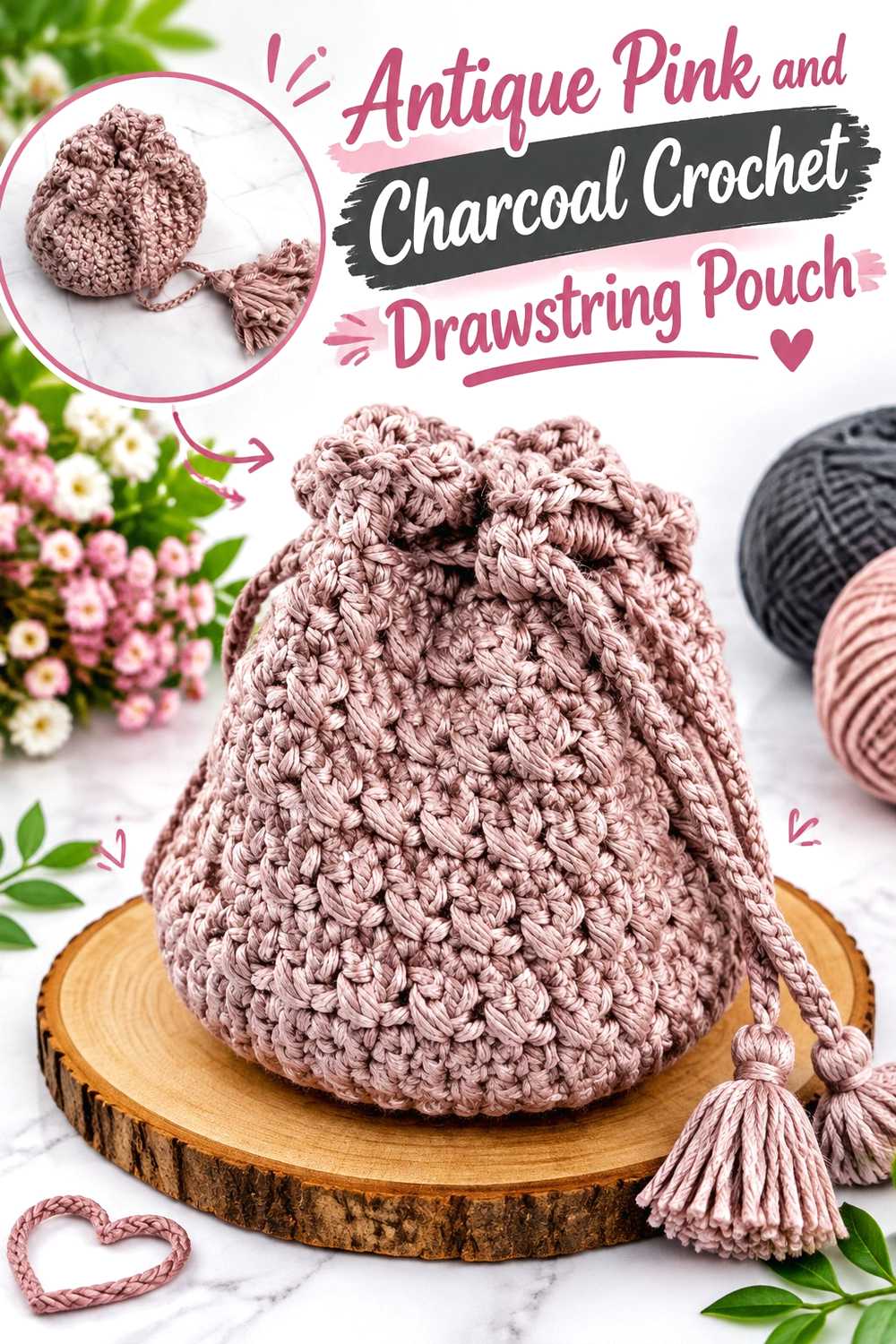
6. Antique Pink And Charcoal Crochet Drawstring Pouch
 SAVE
SAVEA pouch naturally divides into body, upper channel, and ties. Antique Pink can cover most of the pouch body, while Charcoal marks the drawstring area and cords, creating a darker finish around the opening.
Antique Pink Can Keep the Crochet Pouch Body Soft and Uninterrupted
A broad Antique Pink field works well on the main pouch because the muted color can cover substantial area without requiring another light neutral to calm it.
If the stitch texture is important, keeping this section one shade also prevents multiple color transitions from breaking up the surface.
Charcoal Can Make the Antique Pink Crochet Pouch Closure Look Connected
Using Charcoal through the upper closure area and drawstring creates a continuous dark feature rather than one isolated line. The color visually explains where the pouch body ends and the closing mechanism begins.
Repeat Charcoal at the base only if you want a more strongly framed version; otherwise, the closure can provide enough contrast on its own.
Creator Credit: Handmade by Mei
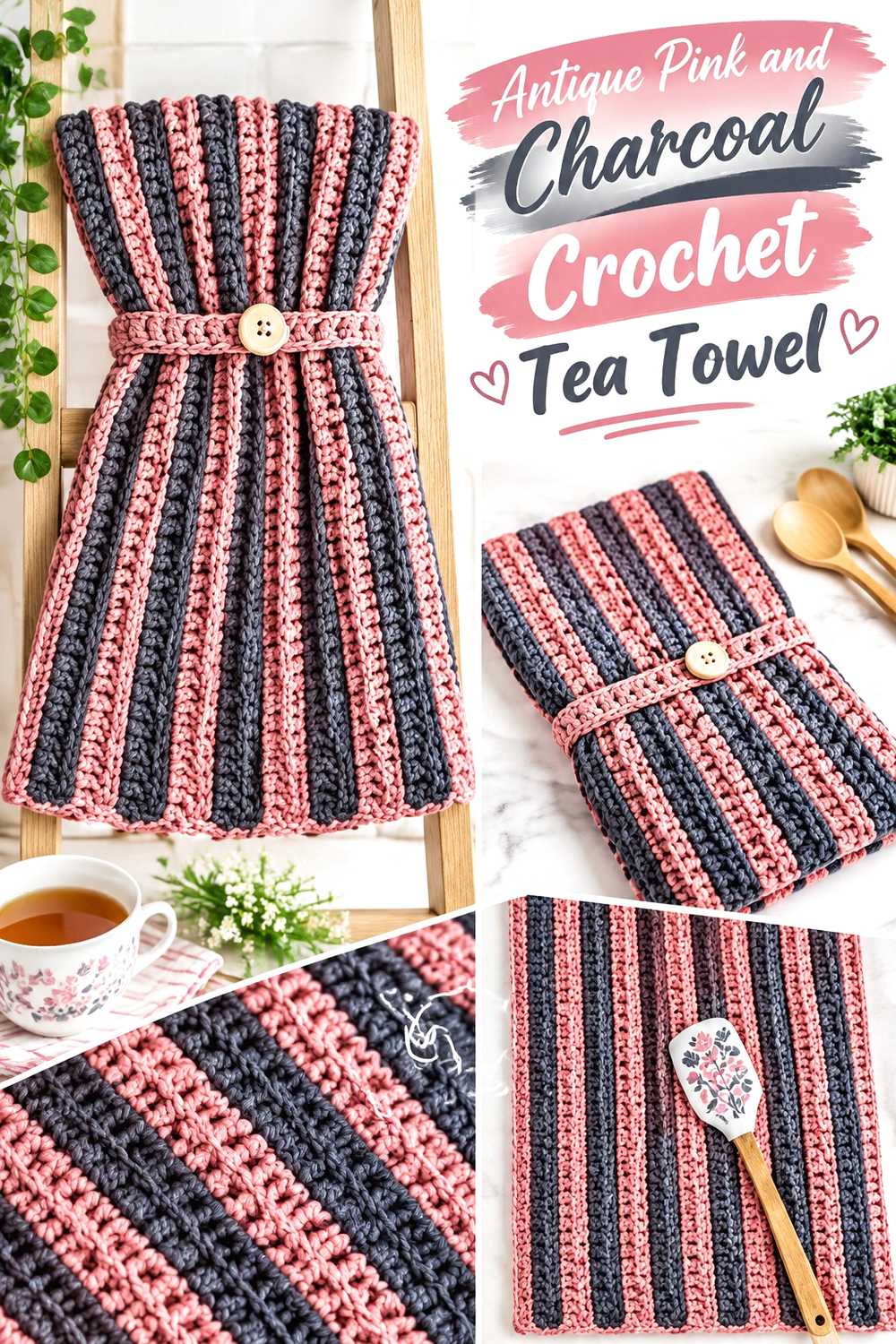
7. Antique Pink And Charcoal Crochet Tea Towel
 SAVE
SAVEA tea towel offers a long rectangular surface where color can be organized into broad bands. Charcoal can carry the central field, while Antique Pink marks the lower decorative section or selected stripes that remain visible when the towel hangs.
Charcoal Can Keep the Crochet Tea Towel Center Cohesive
Using Charcoal through most of the towel prevents the central stitch pattern from becoming fragmented. This works particularly well when the towel already contains enough texture to create visual interest without frequent color changes.
Consider which part will be visible when the towel is folded or hung before deciding where to place Antique Pink.
Antique Pink Can Emphasize the Charcoal Crochet Tea Towel’s Visible End
A substantial Antique Pink lower band keeps the softer color exposed even when the upper part of the towel is folded over a handle or rail.
If you prefer stripes, use a controlled group near the lower end rather than distributing identical pink bands across the entire towel without regard to how it will hang.
Creator Credit: Winding Road Crochet
8. Antique Pink And Charcoal Crochet Washcloth
 SAVE
SAVEA washcloth is an effective small-scale test for this pairing. Antique Pink can cover the textured center, while Charcoal outlines the perimeter and helps define the square or rectangular shape.
Antique Pink Can Keep the Crochet Washcloth Texture Easy to Inspect
A continuous Antique Pink center lets you see how the muted shade behaves in the actual stitch texture rather than judging it only from the yarn skein.
If the finished fabric looks darker or duller than expected, you can change the color balance on subsequent washcloths without committing to a large project.
Charcoal Can Give an Antique Pink Crochet Washcloth a Clean Visual Edge
A Charcoal border provides a darker endpoint around the pink center. Because the piece is small, the border usually needs less width than it would on a blanket to remain obvious.
For a coordinated set, reverse the palette on some washcloths rather than introducing several additional colors.
Creator Credit: Melanie Ham
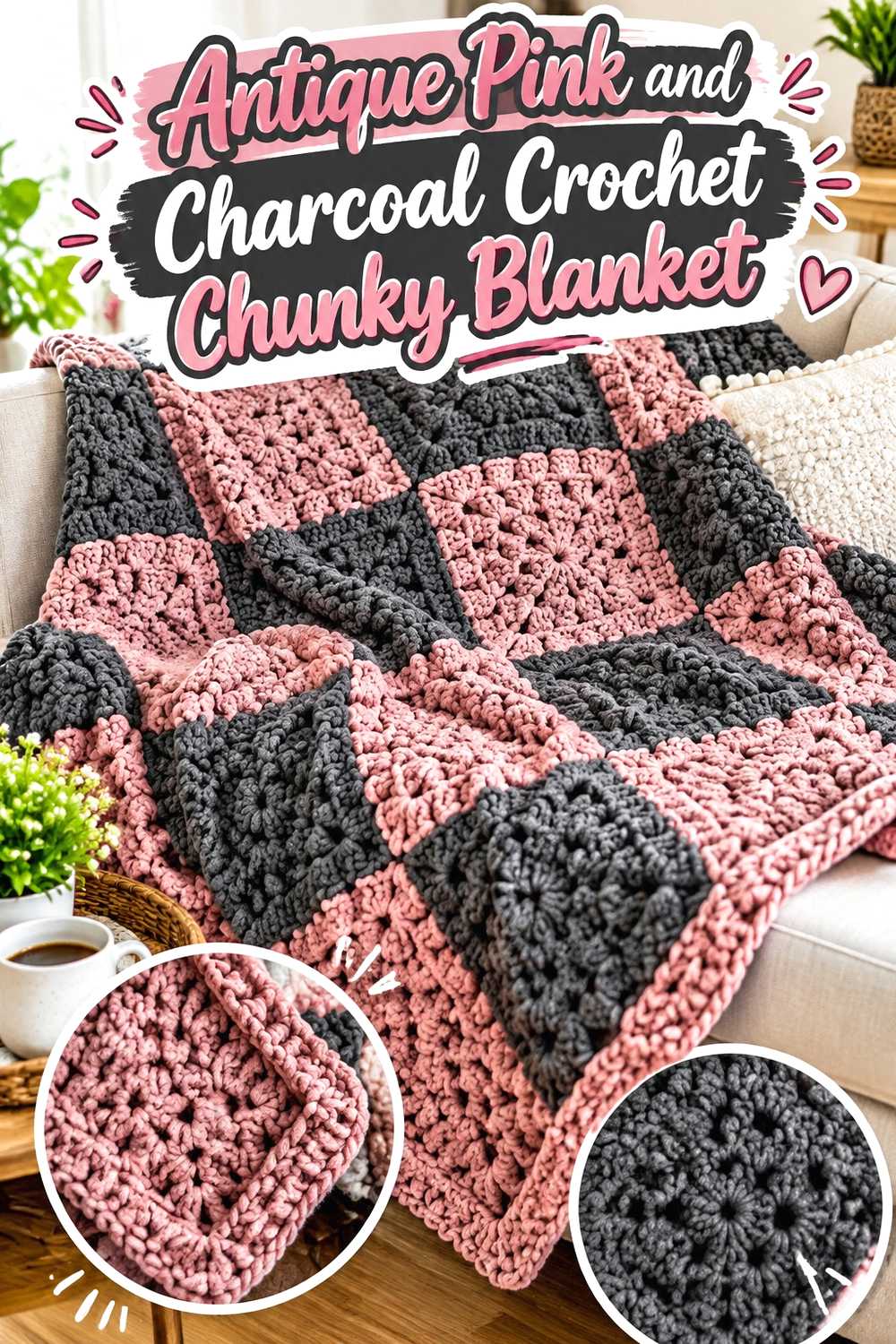
9. Antique Pink And Charcoal Crochet Chunky Blanket
 SAVE
SAVEChunky crochet already has substantial visual texture, so broad color areas tend to work more effectively than numerous narrow stripes. Charcoal can cover the main blanket field, while Antique Pink appears in generous end sections or a substantial outer frame.
Charcoal Can Anchor the Largest Crochet Blanket Area
Using Charcoal over the central field creates a strong dark foundation and keeps the oversized stitches visually continuous. It also lets Antique Pink remain a deliberate contrast rather than competing equally across every row or motif.
If the blanket is already highly textured, fewer color changes allow that scale to remain the main structural feature.
Antique Pink Needs a Generous Area on a Charcoal Crochet Blanket
A very narrow Antique Pink border can look insignificant on a large chunky piece. Give the pink enough width to match the scale of the stitches and the overall blanket.
For a lighter alternative, reverse the balance and use Antique Pink in the central field with a substantial Charcoal frame.
Creator Credit: CJ Design
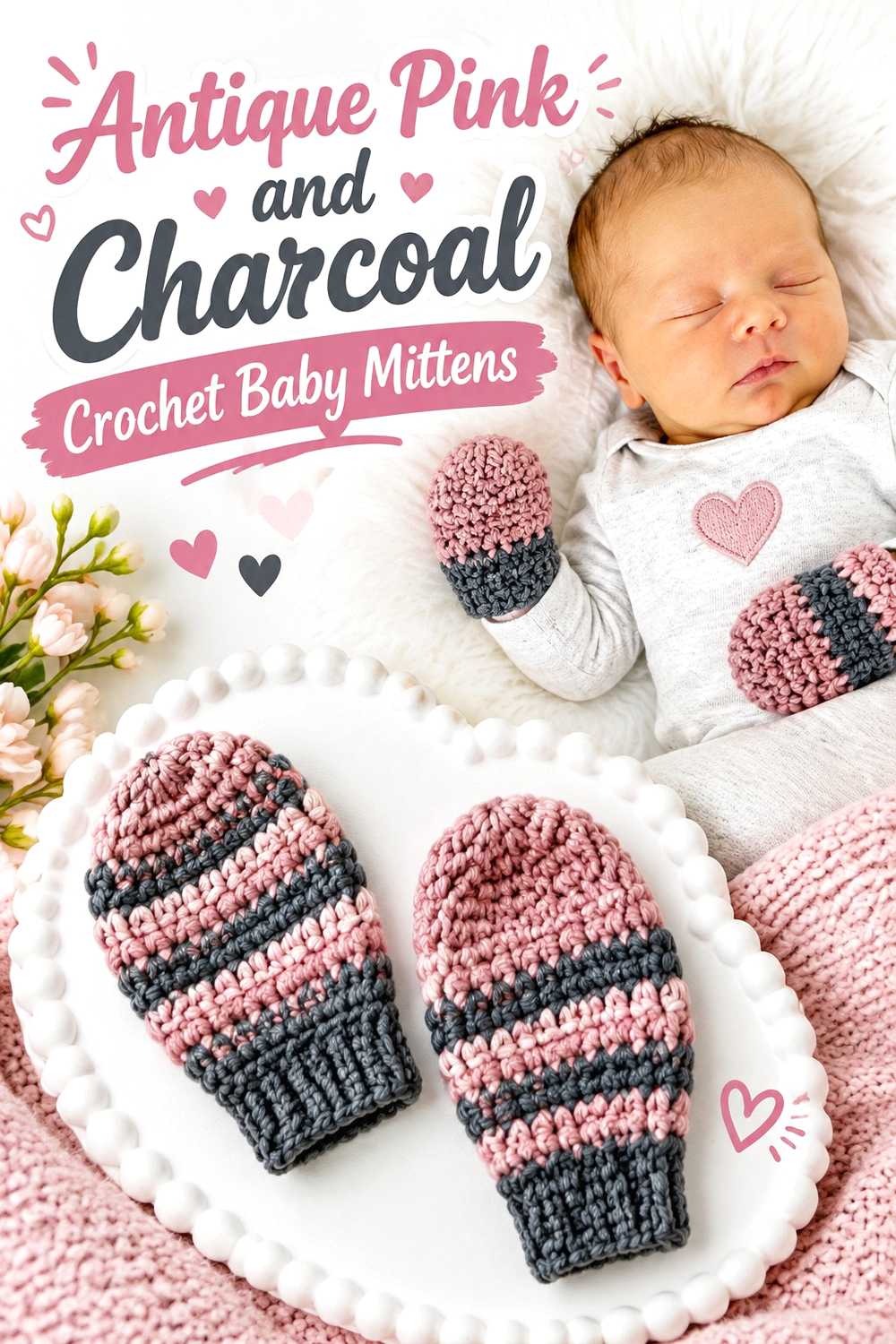
10. Antique Pink And Charcoal Crochet Baby Mittens
 SAVE
SAVEA pair of mittens needs consistent color placement from one piece to the other. Antique Pink can cover the main mitten body while Charcoal is repeated at the cuffs, giving the pair a clear dark boundary at the wrist.
Antique Pink Can Keep Both Crochet Baby Mittens Consistent
Use Antique Pink in corresponding sections on both mittens rather than improvising the color division separately. Because the pieces are viewed as a pair, mismatched placement can become more noticeable than it would on a single accessory.
The broad body is also large enough for Antique Pink to remain recognizable rather than becoming a minor accent.
Charcoal Can Define the Antique Pink Crochet Mitten Cuffs
Charcoal at the cuffs creates an obvious transition between the hand section and wrist edge. Keeping the dark color confined to that repeated structural area gives both mittens the same visual finish.
Color choice does not determine suitability for a particular baby, so follow the source construction and the yarn manufacturer’s relevant care information rather than assuming properties from appearance alone.
Creator Credit: Daisy Farm Crafts
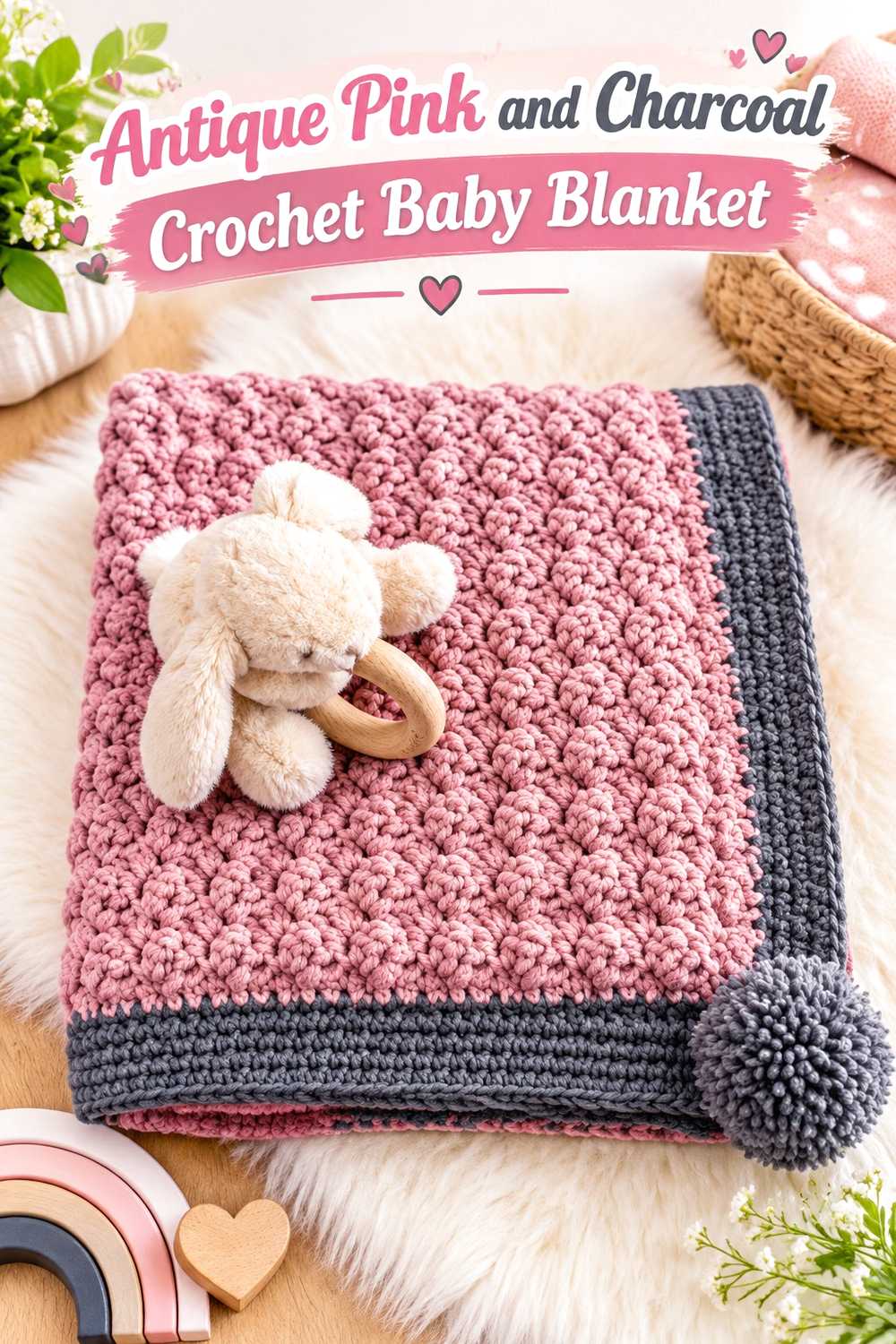
11. Antique Pink And Charcoal Crochet Baby Blanket
 SAVE
SAVEA baby blanket provides enough area for both shades to be visible without requiring equal coverage. Antique Pink can carry the central field while Charcoal appears as broad selected bands or an outer border that defines the overall shape.
Antique Pink Can Keep the Crochet Baby Blanket Center Lighter
A large Antique Pink field creates a softer visual center while allowing repeated stitch texture to remain continuous. This approach also prevents the darker Charcoal from occupying most of the blanket’s surface.
If the construction includes pronounced texture, keeping the main area one color can make those stitches easier to follow visually.
Charcoal Can Frame Antique Pink Without Overweighting the Crochet Baby Blanket
Use Charcoal around the outside or in a limited number of substantial sections rather than filling many small alternating stripes. A concentrated dark frame can define the Antique Pink center with less visual fragmentation.
If the border becomes heavier than intended, reduce its width before adding more Antique Pink elsewhere.
Creator Credit: Maisie and Ruth
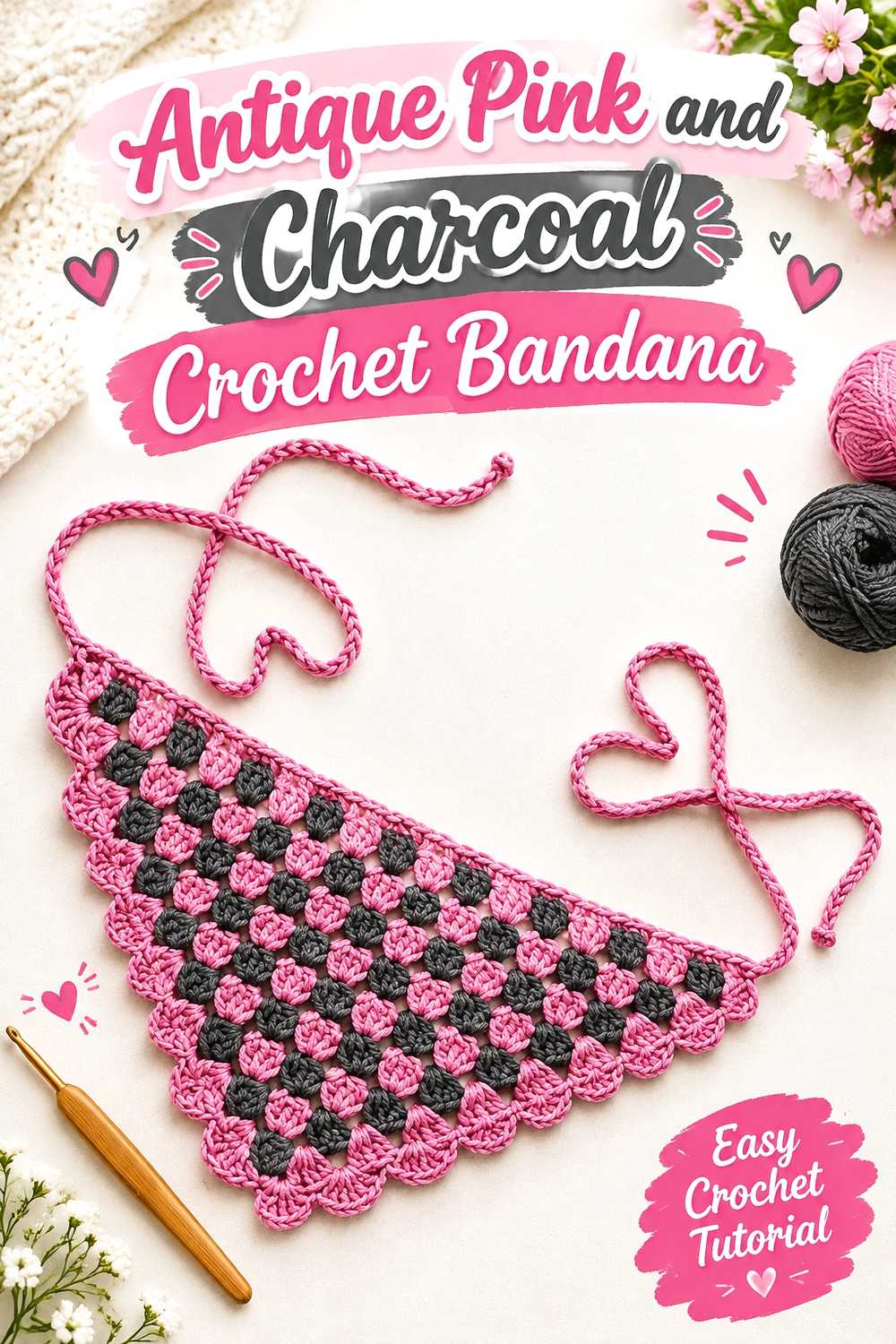
12. Antique Pink And Charcoal Crochet Bandana
 SAVE
SAVEA triangular bandana gives the palette a broad center plus distinct edging and ties. Antique Pink can lead across the triangle while Charcoal runs around the outer edge and continues into the ties.
Antique Pink Can Fill the Main Crochet Bandana Triangle
Using Antique Pink across the central triangle gives the softened rose tone enough room to establish the accessory. Open spaces in the crochet can also make the color appear lighter because hair or clothing shows through.
Judge the balance while the bandana is folded and tied, since the flat triangle does not show exactly how much of each shade will remain visible during wear.
Charcoal Can Connect the Antique Pink Crochet Bandana Border and Ties
Carrying Charcoal from the edge into both ties creates one continuous supporting-color feature. The dark frame defines the triangle without repeatedly interrupting the Antique Pink center.
If the Charcoal border looks too heavy, narrow the edge but keep the ties dark so the palette still feels connected.
Creator Credit: PassioKnit Kelsie
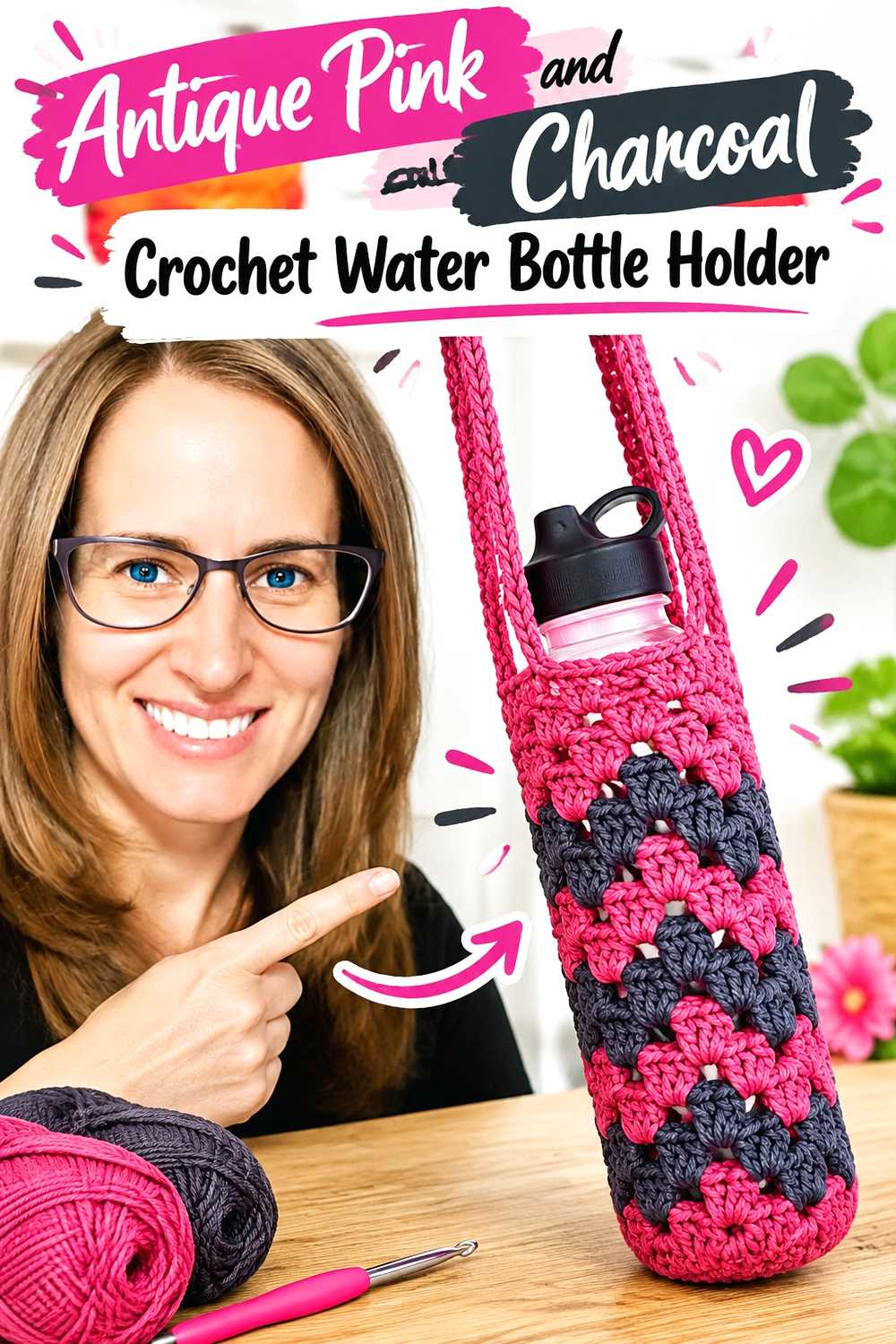
13. Antique Pink And Charcoal Crochet Water Bottle Holder
 SAVE
SAVEA bottle holder separates naturally into base, body, upper edge, and strap. Charcoal can carry the main holder while Antique Pink appears through the strap and upper detail, or those roles can be reversed for a softer overall result.
Charcoal Can Give the Crochet Water Bottle Holder a Strong Main Framework
A Charcoal body works well around bottles in many colors because the dark crochet acts as a consistent frame. If the fabric is open, the bottle itself will contribute another visible color through the stitches.
Test the combination with the intended bottle inserted before deciding whether the body needs more Antique Pink.
Antique Pink Can Connect the Charcoal Crochet Holder Strap to the Top Edge
A long Antique Pink strap creates plenty of visible pink despite occupying less surface area than the body. Repeating Antique Pink near the opening prevents the strap from looking like an unrelated color added afterward.
If the pink strap already has enough presence, keep the remaining details Charcoal rather than adding unnecessary extra color breaks.
Creator Credit: Crochet with Clare
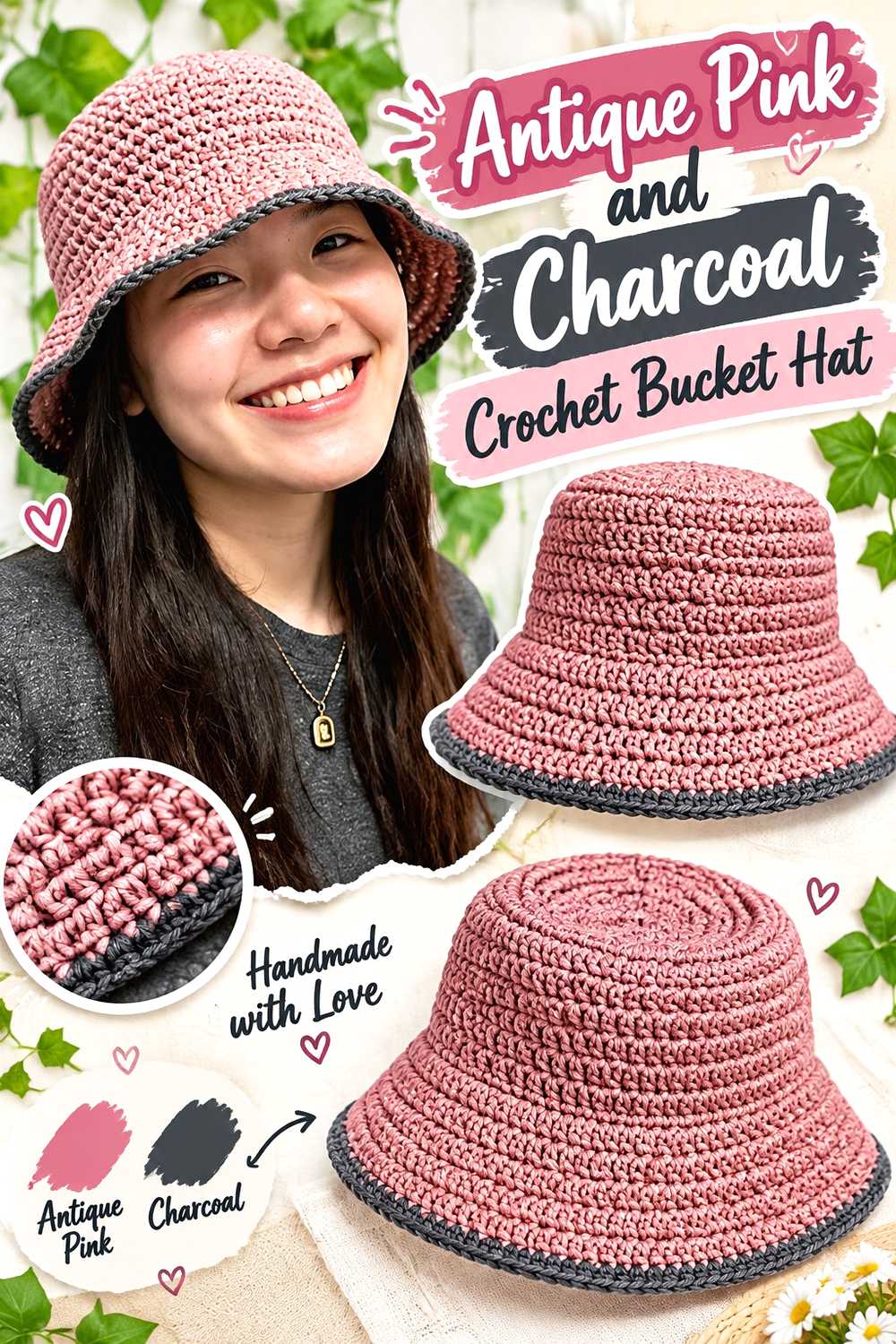
14. Antique Pink And Charcoal Crochet Bucket Hat
 SAVE
SAVEA bucket hat makes color blocking straightforward because the crown, side section, and brim already form separate areas. Antique Pink can cover the crown and sides, while Charcoal defines the brim and gives the lower edge a darker visual weight.
Antique Pink Can Keep the Crochet Bucket Hat Crown and Sides Connected
Using Antique Pink continuously through the upper hat prevents the compact shape from being broken into several small bands. It also ensures the muted pink remains the primary impression rather than becoming a thin accent.
If your chosen Antique Pink is especially dark, compare it directly with Charcoal before relying on a narrow color boundary.
Charcoal Can Give the Antique Pink Crochet Bucket Hat Brim Definition
The brim is a logical place for Charcoal because both the shape and color change at the same point. The darker area can frame the Antique Pink upper portion without needing additional stripes around the crown.
For a less dramatic split, keep part of the brim Antique Pink and concentrate Charcoal closer to its outer edge.
Creator Credit: VivCrochets
Comparing Antique Pink and Charcoal Crochet Color Placement
For a Charcoal-led direction, the tote, scarf, water bottle holder, and chunky blanket provide large dark fields where Antique Pink can function as a controlled accent. These ideas suit a palette in which the deeper neutral should remain visually dominant.
The beanie, earrings, scrunchie, pouch, heart appliqués, washcloth, baby mittens, baby blanket, bandana, and bucket hat can put Antique Pink across larger visible sections. Charcoal then works as an outline, cuff, closure, border, tie, or other defining detail.
The tea towel sits between those approaches because its long rectangular form can handle either broad blocks or selected repeated bands. The useful decision is not whether both colors occupy identical areas, but whether their placement still looks deliberate when the towel is actually hanging.
Conclusion
Antique Pink and Charcoal work best when the dark-light relationship follows the structure of the crochet item. Charcoal can establish strong borders, bases, cuffs, ties, straps, and broad background fields, while Antique Pink can soften large surfaces or bring attention to selected details.
Choose a Charcoal-dominant layout when you want Antique Pink to appear as a concentrated accent. Let Antique Pink lead when you want the project to feel lighter, then use Charcoal to define the silhouette or mark important structural areas.
Before committing to a large piece, compare the actual yarns together. Antique Pink can range from pale dusty rose to deeper muted pink, and Charcoal can vary from medium smoky gray to nearly black. Preserving the intended contrast and dominant-supporting relationship matters more than matching the shade names exactly.
Frequently Asked Questions
Should Antique Pink or Charcoal dominate a crochet project?
Either can lead. Charcoal dominance creates a darker overall piece with Antique Pink accents, while Antique Pink dominance produces a softer surface that can be framed by Charcoal edging, cuffs, handles, ties, or borders.
How can I check the contrast between Antique Pink and Charcoal yarn?
Place the yarns side by side and view them from several feet away. A grayscale photo can help you compare their light-and-dark values. If the two shades become unexpectedly similar, use broader color blocks rather than very small details.
Where should Charcoal go on an Antique Pink crochet project?
Charcoal works particularly well at structural areas such as borders, cuffs, handles, drawstrings, brims, bases, ties, and outer edges. These placements give the dark color a clear visual purpose.
Can Antique Pink be used as a small accent against Charcoal?
Yes, but give it enough area to remain visible. A broad end block, motif, strap, border section, or repeated detail generally shows the muted pink more effectively than a very thin isolated line.
What can replace Antique Pink if I cannot find the exact shade?
Look for another muted or dusty pink that preserves a similar relationship with Charcoal. Pay attention to whether it remains distinctly lighter than the gray and whether it has the softened character you want, rather than relying on the commercial shade name.
Can I replace Charcoal with a lighter gray?
Yes, although the contrast will become softer. A lighter gray can make Antique Pink and the supporting neutral feel closer in visual weight. Preserve enough value difference for the motifs, borders, or details you want to emphasize.
How can I stop Antique Pink and Charcoal crochet from looking too segmented?
Reduce unnecessary color changes. Give one shade larger uninterrupted surfaces and repeat the second at related structural points. Matching cuffs, consistent borders, coordinated handles, repeated motif centers, or one clear stripe system usually look more connected than irregular color switching.