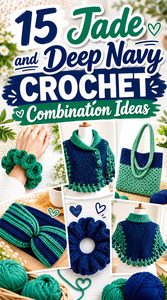
Jade and deep navy create a crochet palette where both colors can look substantial, but they do different jobs. Jade introduces a brighter green-blue note, while deep navy provides a dark anchor that can define borders, joins, cuffs, handles, and other structural-looking details.
Because both shades can be fairly saturated, proportion matters. A jade cardigan outlined repeatedly in deep navy can become much darker once all its motif borders and joins sit together. On a navy-led vest or scarf, larger jade sections can prevent the project from becoming one continuous dark block.
These 15 ideas show how to distribute jade and deep navy across different crochet items. The linked tutorials support the underlying construction concepts; the jade-and-navy palettes are independent color adaptations you can apply to your own project.
Quick List
- Jade And Deep Navy Crochet Throw Blanket
- Jade And Deep Navy Crochet Granny Square Cardigan
- Jade And Deep Navy Crochet Tote Bag
- Deep Navy And Jade Crochet Scarf
- Jade And Deep Navy Crochet Poncho
- Deep Navy And Jade Crochet Sweater Vest
- Jade And Deep Navy Crochet Shawl
- Deep Navy And Jade Crochet Cushion Cover
- Deep Navy And Jade Crochet Mittens
- Jade And Deep Navy Crochet Slippers
- Jade And Deep Navy Crochet Ear Warmer
- Deep Navy And Jade Crochet Market Bag
- Jade And Deep Navy Crochet Bucket Hat
- Jade And Deep Navy Crochet Beanie
- Jade And Deep Navy Crochet Scrunchie
Balance Jade and Deep Navy Before Choosing Crochet Placement
A two-color project does not need equal amounts of jade and deep navy. Large blanket fields, garment panels, shawl bodies, and bag surfaces usually determine the dominant color. A smaller navy border can still have considerable impact because it traces an entire edge.
For a brighter result, let jade cover most of the project and use navy for definition. For a darker direction, reverse the proportions and use jade around selected openings, ends, motifs, or finishing areas.
Check Jade and Deep Navy Contrast Around Crochet Details
Jade and deep navy are different hues, but that does not guarantee strong value contrast. A dark jade yarn may sit surprisingly close to navy when viewed in grayscale.
This matters around small granny-square centers, narrow stripes, ribbing, raised texture, and motif borders. Compare the actual yarns side by side before committing. If they appear too close in value, choose a lighter jade or use the colors in larger blocks where the hue distinction has more room to remain visible.
1. Jade And Deep Navy Crochet Throw Blanket
 SAVE
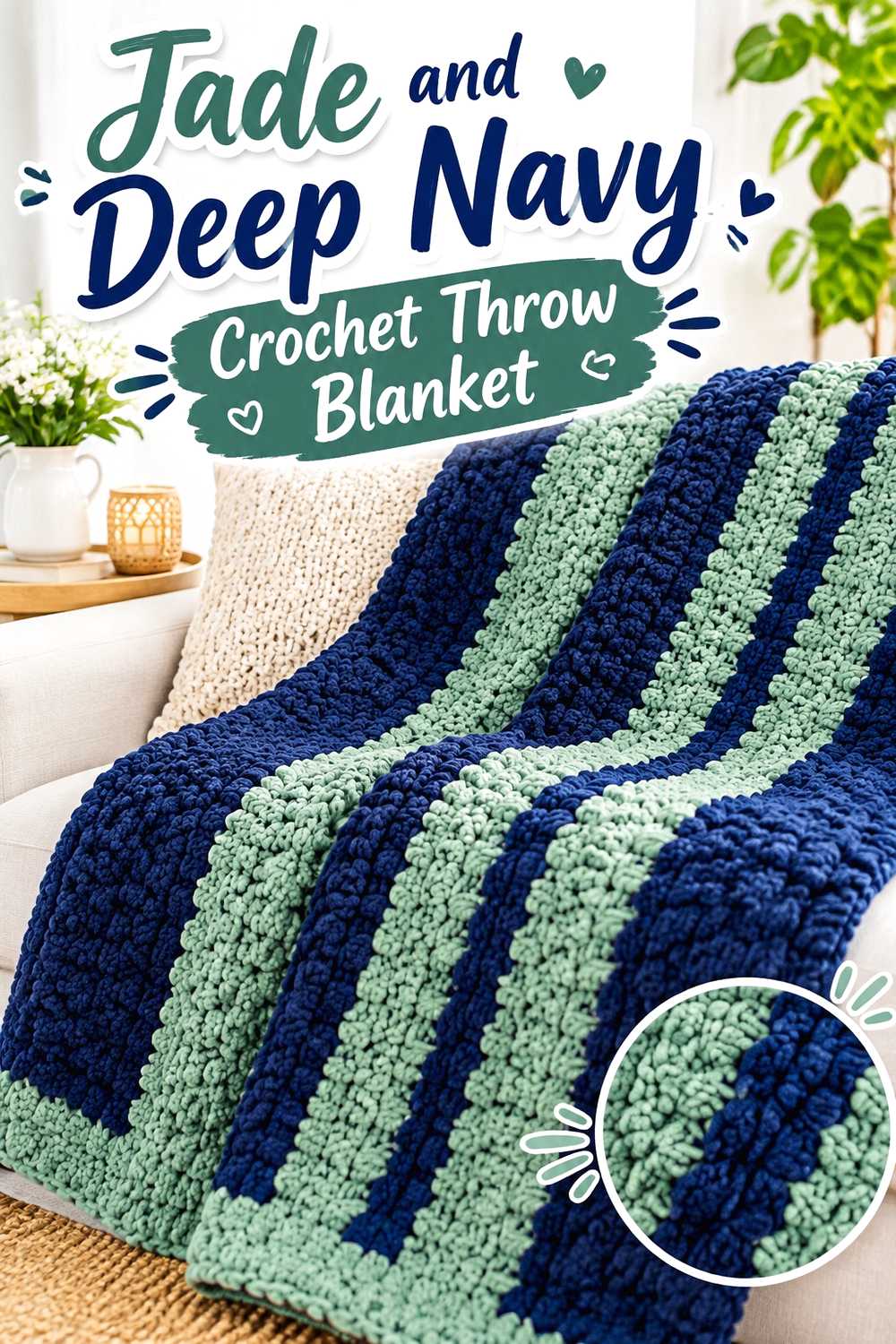
SAVEA jade-led blanket gives the greener shade most of the surface while deep navy creates definition through repeated bands or an outer frame. Because blankets have large visual areas, broad color sections usually show the relationship more clearly than many narrow alternating stripes.
Jade Can Carry the Largest Crochet Blanket Sections
Use jade across broad fields when you want the blanket to remain noticeably green-blue from a distance. Keeping several rows or textured sections in one shade also prevents frequent color changes from competing with the stitch pattern.
If the jade surface starts feeling too uniform, increase the navy repetition rather than immediately adding another color.
Deep Navy Can Separate Jade Crochet Blanket Bands
Navy can create strong visual breaks between larger jade sections. Repeat those dark divisions at recognizable intervals so they contribute to the blanket’s overall rhythm.
A navy border reinforces the dark framing effect. If that edge becomes heavier than intended, finish with jade at the outermost edge.
Creator Credit: Bella Coco
2. Jade And Deep Navy Crochet Granny Square Cardigan
 SAVE
SAVEA granny square cardigan gives jade and navy many opportunities to repeat. Jade can occupy the larger motif areas while deep navy defines centers, outer rounds, joins, or selected garment edges. The key is judging several squares together rather than deciding from one motif.
Jade Can Keep Deep Navy Crochet Granny Squares Brighter
Let jade occupy the largest part of each square when you want the finished cardigan to remain jade-led. Deep navy can then provide controlled definition without turning every motif into a dark block.
Arrange several squares side by side before joining. Navy sections that look narrow individually can become much more prominent when repeated across a full panel.
Deep Navy Can Outline Jade Crochet Motifs and Joins
A navy outer round can produce a strong grid between jade motifs. That can be useful when individual squares should remain clearly visible.
If navy already controls the motif outlines and joins, consider jade cuffs or neckline edging so another dark frame does not surround the entire garment.
Creator Credit: Viktoria e Svitlana Marongiu
3. Jade And Deep Navy Crochet Tote Bag
 SAVE
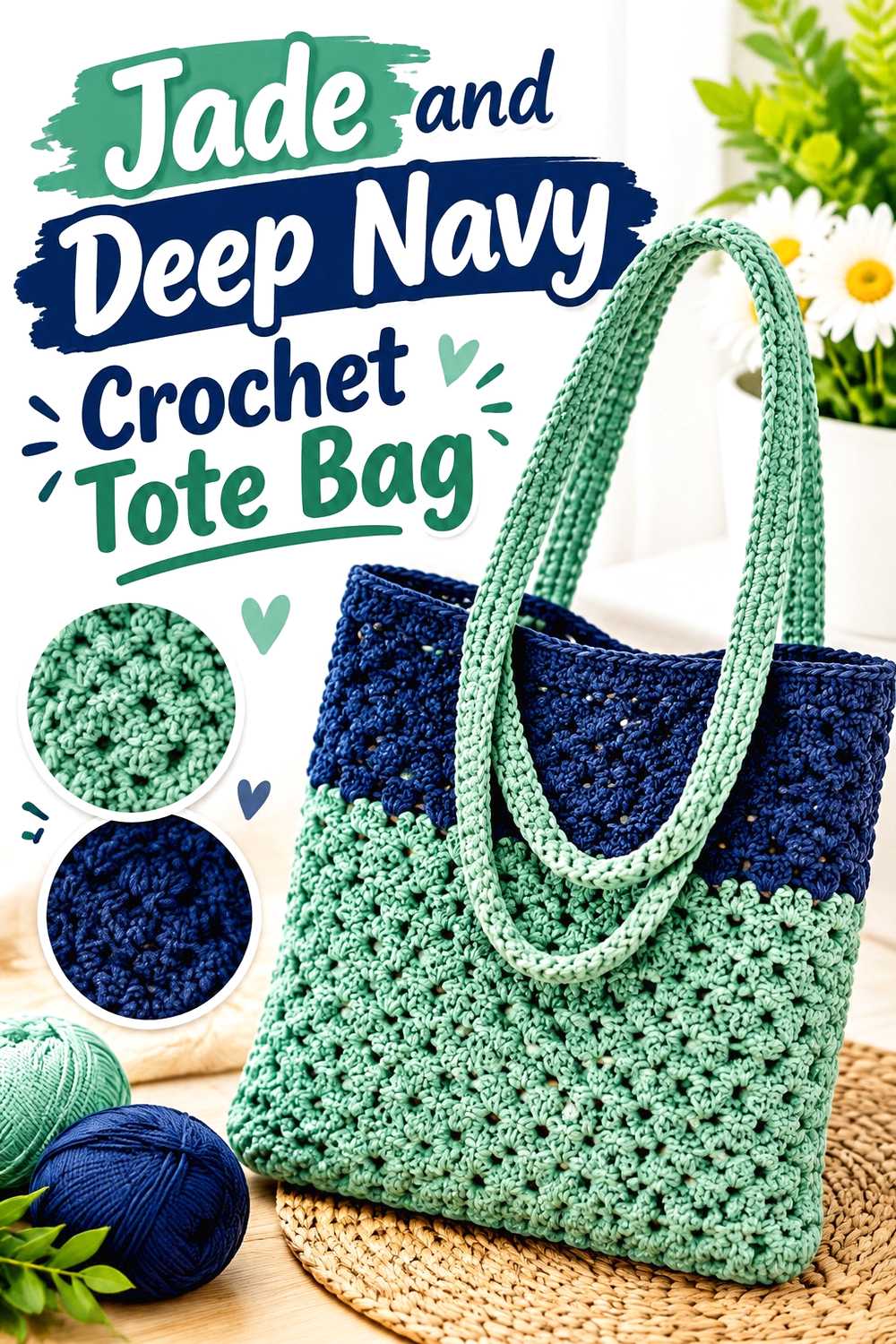
SAVEA jade tote body with deep navy at the base and handles creates a clear division between the main surface and structural-looking details. This works better than scattering isolated navy stripes throughout a bag that already has visible stitch texture.
Jade Can Keep the Main Crochet Tote Surface Continuous
Use jade throughout the broad front and back areas when openwork or textured stitches should remain easy to follow. A large same-color field lets the stitch pattern carry more of the decoration.
If your jade is very dark, crochet a small sample first to see whether subtle texture remains visible.
Deep Navy Can Connect a Jade Crochet Tote Base and Handles
Navy at the base and handles gives the dark shade two related anchor points. Repeating a narrow navy band near the opening can connect them further.
If all three dark areas make the tote more navy-heavy than intended, keep either the base or upper edge jade.
Creator Credit: TL Yarn Crafts
4. Deep Navy And Jade Crochet Scarf
 SAVE
SAVEA scarf provides enough length for deep navy to dominate without completely suppressing jade. Keep navy through most of the center and use substantial jade sections at both ends instead of alternating every few rows.
Deep Navy Can Keep the Main Jade Crochet Scarf Texture Cohesive
A long navy center lets ribbing, lace, or another repeated stitch pattern continue without frequent visual interruption. Because navy can hide subtle relief, check the texture in your chosen yarn before committing to the full length.
If the center looks too dark, expand the jade sections rather than adding extra colors.
Jade Can Balance Both Deep Navy Crochet Scarf Ends
Jade blocks at both ends create repetition and lighten the overall scarf when it hangs vertically. Make those sections large enough to remain visible after wrapping.
Jade fringe can visually extend the brighter ends, while navy fringe brings the finish back toward the dominant center.
Creator Credit: Hooked by Robin
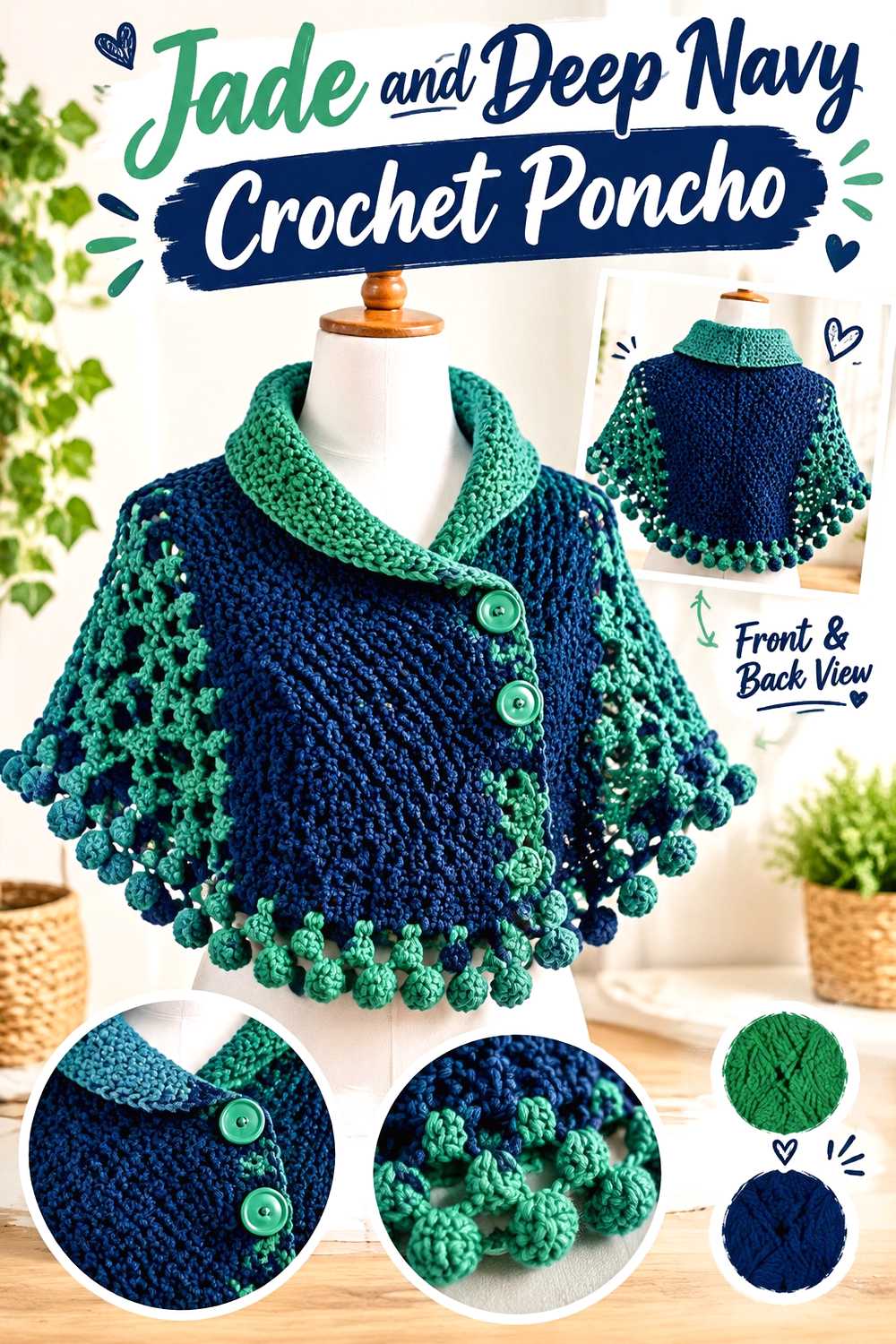
5. Jade And Deep Navy Crochet Poncho
 SAVE
SAVEA poncho gives jade a broad uninterrupted surface while deep navy can define the neckline and lower perimeter. Since those edges extend across a large part of the garment, navy does not need to occupy much width to influence the finished look.
Jade Can Lead the Main Deep Navy Crochet Poncho Body
Keep most of the body jade when openwork, drape, or shaping already gives the poncho plenty of visual detail. Too many narrow navy bands may compete with those features.
If you add navy within the body, repeat it deliberately rather than inserting one isolated dark section.
Deep Navy Can Frame a Jade Crochet Poncho Edge
Deep navy around the neckline creates a strong upper boundary, while a matching lower border connects the dark color to the full silhouette.
Inspect the garment before widening the navy hem. A narrow dark perimeter can already look substantial because it travels around so much of the poncho.
Creator Credit: Handwork diy
6. Deep Navy And Jade Crochet Sweater Vest
 SAVE
SAVEThis vest reverses the hierarchy by letting deep navy control the main panels. Jade can then highlight the neckline, armholes, or lower edging, preventing the dark shade from covering the garment from center to perimeter.
Deep Navy Can Unite the Main Jade Crochet Sweater Vest Panels
Use navy continuously across the front and back when you want a strongly dark garment body. Avoid inserting small jade stripes across the torso if shaping and stitch texture already create enough visual movement.
Work a navy sample first when subtle texture is important, since dark yarn can reduce the visibility of small surface changes.
Jade Can Outline Deep Navy Crochet Armholes and Necklines
Jade around the neckline and armholes creates repeated brighter boundaries against the navy body. Carrying jade to the lower edge can connect all the finishing areas.
If jade around all three zones becomes too prominent, keep the hem navy and reserve jade for the upper openings.
Creator Credit: VivCrochets
7. Jade And Deep Navy Crochet Shawl
 SAVE
SAVEA jade shawl with deep navy concentrated toward the outer edge allows the stitch pattern to remain continuous through the center. As the shawl expands, even a fairly narrow navy border becomes visually significant.
Jade Can Preserve the Main Deep Navy Crochet Shawl Pattern
Keep lace, mesh, or another repeating stitch structure in jade when you want the central pattern to remain easy to follow. Frequent navy changes can interrupt the visual flow of detailed openwork.
If your jade is unusually dark, check whether the lace openings remain distinct before working the full project.
Deep Navy Can Give a Jade Crochet Shawl a Defined Border
Navy around the broad outer edge creates a clear frame and can emphasize the finished shape of the shawl.
Because the perimeter is long, increase the navy cautiously. A smaller section may provide all the definition needed while allowing jade to remain dominant.
Creator Credit: Bag-O-Day Crochet
8. Deep Navy And Jade Crochet Cushion Cover
 SAVE
SAVEA cushion cover provides a flat surface that makes center-and-frame color planning particularly effective. Deep navy can fill the main face while jade appears around an outer border or selected motif details.
Deep Navy Can Give the Jade Crochet Cushion a Dark Central Field
Use navy across most of the cushion face when you want a strong, dark foundation. If the design includes raised stitches or granny-square texture, view a sample from normal room distance to see whether those details remain visible.
Move jade closer to the most detailed sections when more separation is needed.
Jade Can Frame Deep Navy Crochet Cushion Motifs
A jade border gives the navy center a brighter perimeter and prevents the cushion from becoming dark from edge to edge.
Repeat jade in a small central or corner detail if the border otherwise appears disconnected. For a reversible cover, a jade-led back can provide another way to use the same palette.
Creator Credit: Jayda InStitches
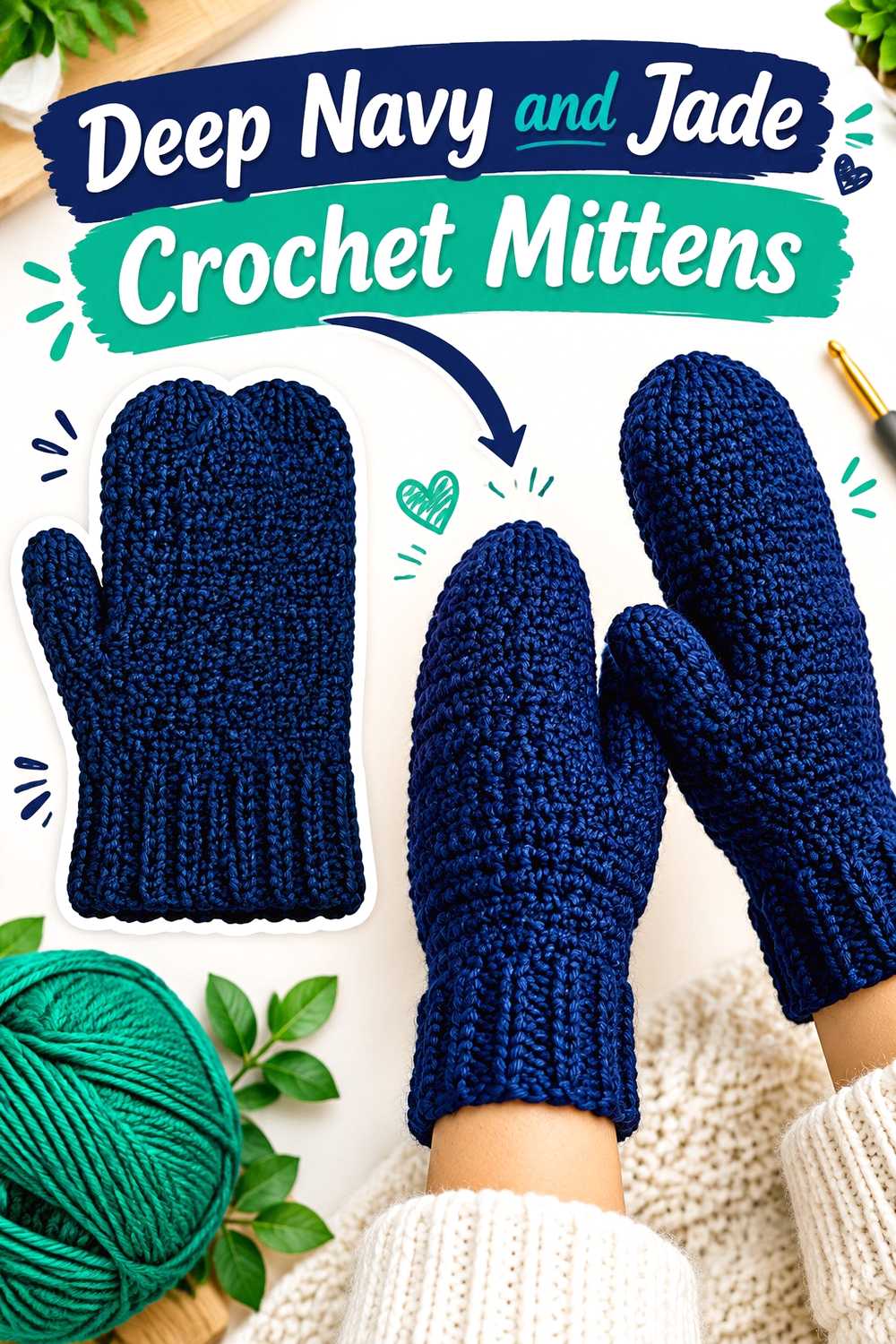
9. Deep Navy And Jade Crochet Mittens
 SAVE
SAVEMittens have a compact surface, so simple color zoning works better than constant striping. Deep navy can cover the hand while jade defines the cuff, giving the color change a natural location at the wrist.
Deep Navy Can Keep the Main Jade Crochet Mitten Hand Unified
Use navy through the fingers, palm, and thumb area so the mitten reads as one dark shape. Numerous jade stripes can compete with shaping across such a small object.
Compare both mittens before finishing to keep the color transition visually consistent across the pair.
Jade Can Highlight Deep Navy Crochet Mitten Cuffs
Jade cuffs create a brighter break at the wrist and can help ribbing or another cuff texture stand apart from the navy hand.
If a full jade cuff feels too bright, keep part of the cuff navy and place jade nearer the outer edge.
Creator Credit: Brunaticality
10. Jade And Deep Navy Crochet Slippers
 SAVE
SAVEFor slippers, jade can cover the main toe and foot while navy defines the heel, opening, or upper trim. The color division follows the three-dimensional shape rather than forcing many small bands onto a compact surface.
Jade Can Keep the Main Deep Navy Crochet Slipper Foot Cohesive
Use jade across the toe and central foot so seams or construction changes remain the main visual divisions.
For a matched pair, compare the slippers before finishing and keep the transition to navy in corresponding areas.
Deep Navy Can Define a Jade Crochet Slipper Opening
A navy opening creates a dark upper line around the brighter jade body. Extending navy down the heel gives the darker color additional presence without interrupting the toe.
If you want a stronger jade-led result, limit navy to the upper trim.
Creator Credit: Littlejohn’s Yarn
11. Jade And Deep Navy Crochet Ear Warmer
 SAVE
SAVEA narrow ear warmer benefits from keeping the two-color plan restrained. Jade can cover most of the band while deep navy concentrates around a twist, crossing point, or edging detail.
Jade Can Keep the Main Deep Navy Crochet Ear Warmer Band Clear
Use jade through most of the circumference so ribbing, cables, or another texture has uninterrupted space to remain visible.
If jade and navy are close in value, avoid dividing the narrow band into many alternating stripes. Larger color areas will show the hue difference more clearly.
Deep Navy Can Emphasize a Jade Crochet Ear Warmer Center
Place navy around the twist or central feature when the construction allows a clean color change. That gives the darkest shade a clear reason for being present.
If changing color at the center creates an awkward join, keep the twist jade and use navy along an edge instead.
Creator Credit: Pattern Princess
12. Deep Navy And Jade Crochet Market Bag
 SAVE
SAVEThis bag places deep navy across most of the open or textured body while jade lightens the handles and upper band. The arrangement works particularly well when you want the bag to remain dark without allowing navy to continue uninterrupted through every visible section.
Deep Navy Can Carry the Main Jade Crochet Market Bag Surface
Use navy across the primary body so mesh or openwork remains visually consistent. Remember that contents may show through an open crochet bag and change how the dark shade appears.
If the body needs more jade, use one broad repeated section rather than several tiny color changes.
Jade Can Connect Deep Navy Crochet Market Bag Handles
Jade handles look more integrated when the same color repeats around the upper edge. This turns the brighter shade into a clear finishing element rather than an isolated addition.
If the handles already occupy substantial visual space, keep the base navy so the darker color remains dominant.
Creator Credit: Crochet Designer Simona
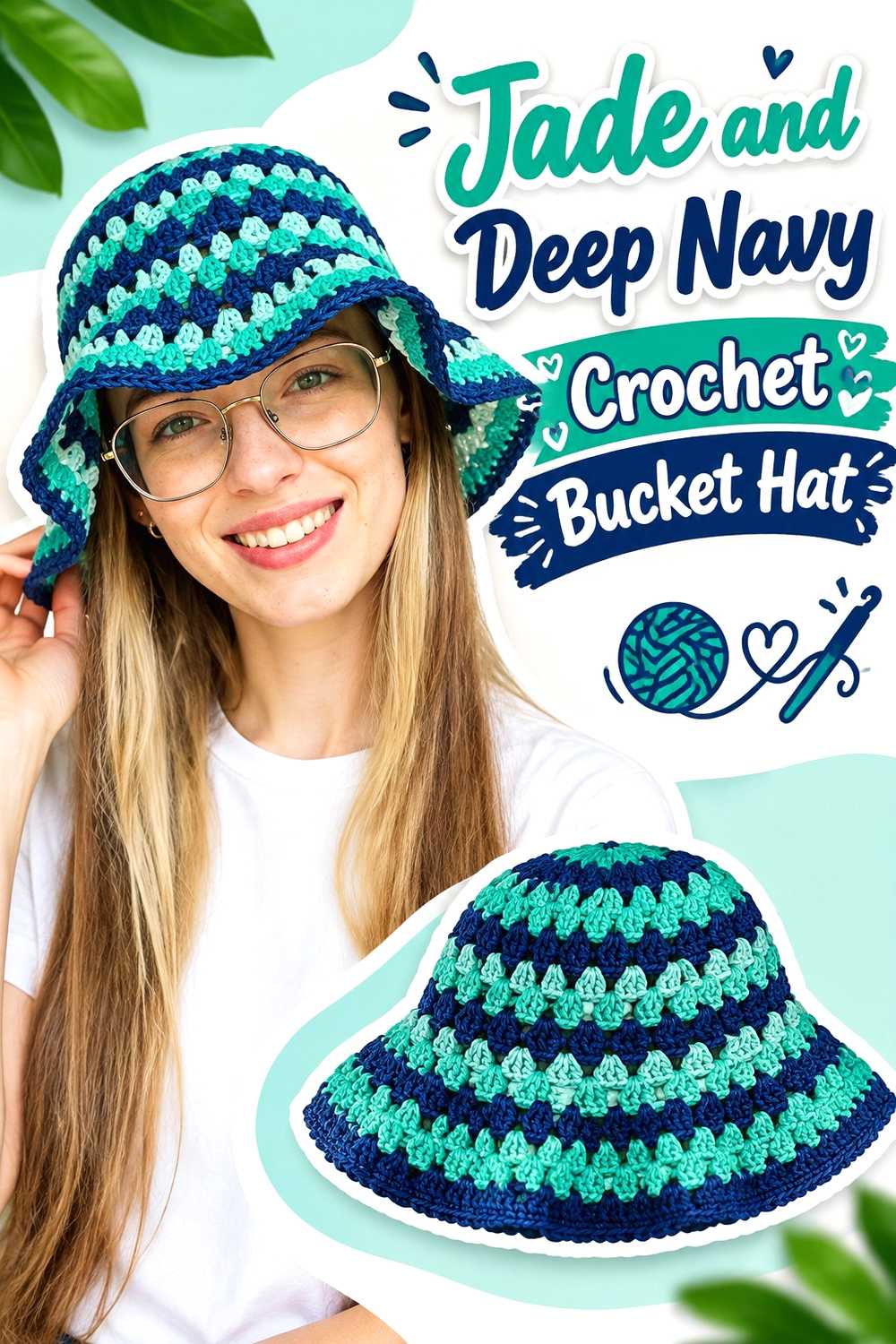
13. Jade And Deep Navy Crochet Bucket Hat
 SAVE
SAVEA bucket hat naturally divides into crown, side wall, and brim. Keeping the crown and sides jade while placing deep navy on the brim creates a clear lower frame without fragmenting the upper body.
Jade Can Unite the Deep Navy Crochet Bucket Hat Crown and Sides
Use jade through both upper sections so the main hat body remains continuous. Turning every construction transition into a color change can make the small hat unnecessarily busy.
If more navy is wanted above the brim, add one narrow repeated detail rather than splitting the entire side wall.
Deep Navy Can Make a Jade Crochet Bucket Hat Brim Distinct
Because the brim projects outward, navy remains visible from several angles and can have more visual impact than its surface share suggests.
If a full dark brim becomes too dominant, keep the inner portion jade and move navy toward the outer edge.
Creator Credit: PassioKnit Kelsie
14. Jade And Deep Navy Crochet Beanie
 SAVE
SAVEA jade crown with deep navy ribbing creates a simple two-zone hat. Jade controls most of the visible surface, while the darker band outlines the lower edge and provides a clear finish.
Jade Can Keep the Main Deep Navy Crochet Beanie Crown Unified
Use jade throughout the upper body and crown so shaping is not interrupted by unnecessary color changes. If the beanie uses raised texture, check a sample to make sure the chosen jade shows it clearly.
A lighter jade will create a stronger value break against navy than a very dark green-blue shade.
Deep Navy Can Define Jade Crochet Beanie Ribbing
Navy ribbing creates a strong lower frame around the hat. Because that band circles the entire head, it can look substantial even when its depth is limited.
If navy starts overpowering the jade crown, reduce the band rather than adding a third transition color.
Creator Credit: Erica Arndt
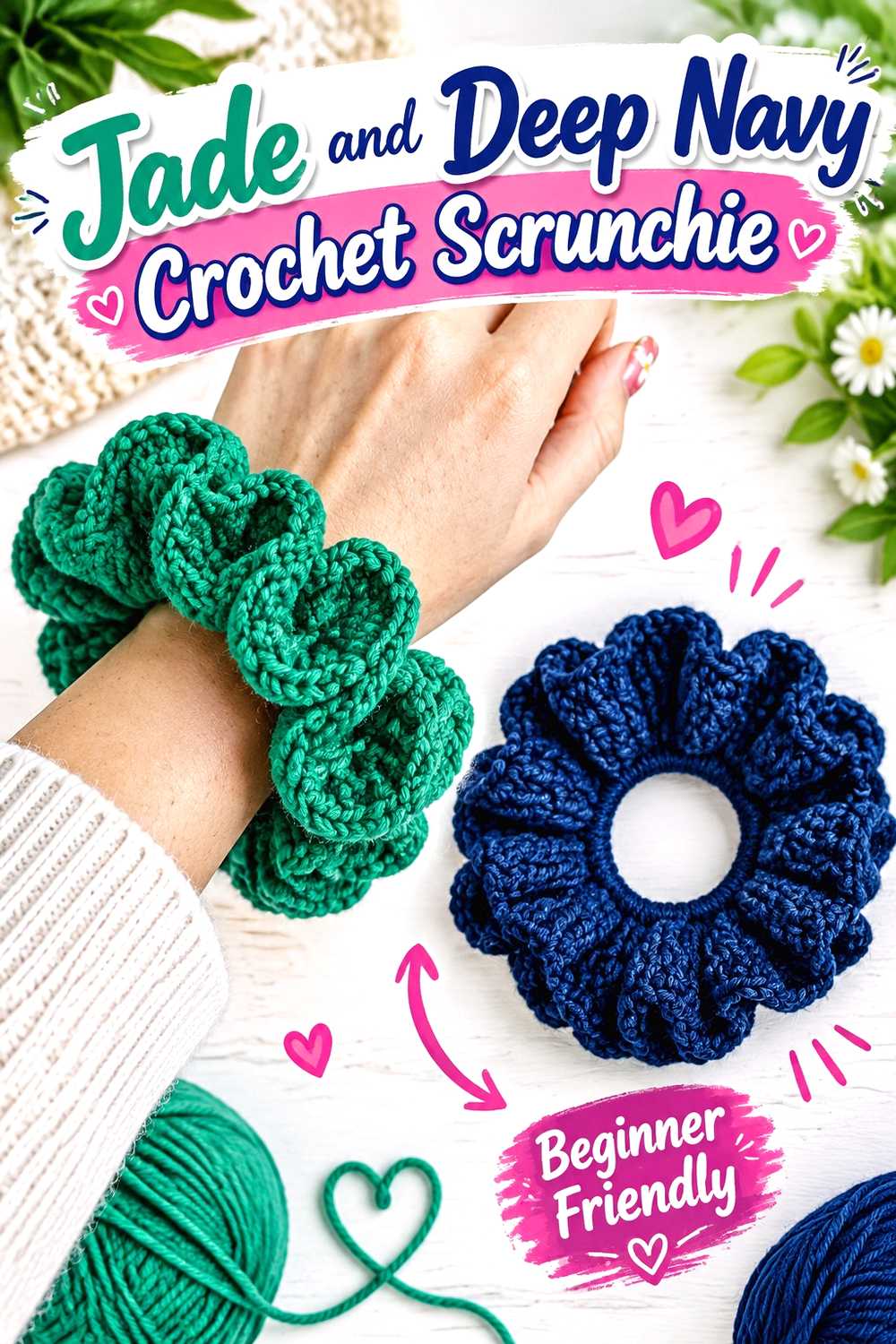
15. Jade And Deep Navy Crochet Scrunchie
 SAVE
SAVEA scrunchie has little surface area, so the jade-and-navy relationship needs to stay simple. Jade can carry most of the ruffled fabric while deep navy appears in one controlled section or along a repeated edge.
Jade Can Keep Deep Navy Crochet Scrunchie Ruffles Readable
Use jade across most of the gathered surface so folds and shadows remain part of one continuous color field. Very frequent navy changes can make the compact accessory look fragmented.
If your yarn has considerable texture of its own, compare both colors once crocheted rather than judging only from the skeins.
Deep Navy Can Give a Jade Crochet Scrunchie a Focused Accent
A limited navy section can provide enough contrast without dividing every ruffle. Another option is to make a coordinated pair—one jade-led and another navy-led—so each shade receives a larger uninterrupted role.
That approach often shows the two-color relationship more clearly than forcing a half-and-half split onto one small scrunchie.
Creator Credit: ElyseCrochets 💌
Comparing Jade and Deep Navy Crochet Directions
For a brighter overall result, the blanket, tote, poncho, shawl, slippers, ear warmer, bucket hat, beanie, and scrunchie can all give jade the largest visual area. Deep navy then becomes useful for borders, handles, brims, openings, and other defining details.
For a darker direction, the scarf, sweater vest, cushion, mittens, and market bag can let navy control the principal field while jade provides deliberate breaks.
The granny square cardigan is especially flexible because centers, outer rounds, joins, cuffs, and edging can each change the balance. Before making a full garment, arrange several sample motifs together so the repeated dark areas do not create more navy than planned.
Conclusion
Jade and deep navy work most effectively when each shade has a clear purpose. Jade can keep large blanket, garment, shawl, and bag surfaces brighter, while navy defines borders, bases, handles, cuffs, brims, and motif edges.
The hierarchy can also be reversed when a darker project is wanted. Navy can fill sweater panels, scarf centers, cushion faces, mittens, or market bags while jade breaks up the dark surface around openings and finishing areas.
Before assigning the colors to tiny motifs or narrow textured details, compare the actual yarns for light-and-dark contrast. Then use the linked tutorials for construction and plan the jade-and-navy distribution around the real shape of each project rather than applying the same stripe sequence to every item.
Frequently Asked Questions
Do Jade and Deep Navy work together in crochet?
They can create a strong green-blue and dark-blue palette, particularly when jade is light enough to remain distinct from navy. The exact result depends on the yarns, so compare the actual shades before planning small details.
Should Jade or Deep Navy dominate a crochet project?
Either can lead. Jade works well as the dominant shade when you want the finished project to remain brighter, while deep navy creates a darker overall direction. Use the supporting shade around borders, panels, cuffs, handles, or other intentional areas.
How can I keep Jade and Deep Navy from blending together?
Check the yarns side by side and view them from a distance. A grayscale photo can show whether their lightness values are too similar. If they nearly merge, choose a lighter jade or use the colors in larger blocks instead of tiny adjacent details.
Where should Deep Navy go on a mostly Jade crochet project?
Deep navy can define blanket borders, tote bases, handles, shawl edging, hat brims, ribbing, slipper openings, motif outlines, and garment trim. Repeating navy in two related areas can keep the dark shade connected.
Where can Jade go on a Deep Navy crochet project?
Jade can lighten cuffs, scarf ends, bag handles, garment edging, motif centers, borders, or selected panels. It is particularly useful where a dark navy field needs a visible break.
Can Jade and Deep Navy be used equally in crochet?
Yes. Granny-square garments, large blankets, and color-blocked projects give both shades enough room to occupy substantial areas. Smaller accessories often look clearer when one shade remains dominant.
What can I substitute for Jade or Deep Navy?
Preserve the relationship between the two colors instead of trying to match an exact commercial shade name. Choose another medium or bright green-blue for the jade role and a very dark blue for the navy role. If the project depends on visible motifs or narrow stripes, preserve enough light-and-dark separation between them.