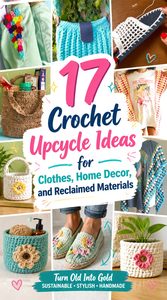
Crochet upcycling can mean much more than using leftover yarn. An old T-shirt can become the raw material for a basket, damaged jeans can gain a visible crochet repair, and an existing jacket, cap, jar, tin, lampshade, or pair of flip-flops can become the foundation for something noticeably different.
These 17 crochet upcycle ideas cover several approaches: turning discarded textiles into crochet material, attaching crochet to an existing garment, repairing worn areas, reusing containers, and rebuilding everyday objects around parts that are still serviceable. The important differences are not only visual. Weight, stretch, attachment strength, washability, heat exposure, sharp edges, and the condition of the original item can all determine whether an upcycle remains useful. Each project below includes an original tutorial source for the creator’s exact construction details.
Quick List
- Crochet T-Shirt Yarn Storage Basket
- Crochet Recycled Denim Wristlet
- Crochet Plarn Utility Basket
- Crochet Old-Sheet Rag Rug
- Crochet Sleeve Denim Jacket Makeover
- Crochet Lacy Lampshade Refresh
- Crochet Mosaic Tin Can Organizer
- Crochet Mason Jar Drink Cozy
- Crochet T-Shirt Poncho Upcycle
- Crochet Lace-Patch Jeans Repair
- Crochet Button-Down Collar Refresh
- Crochet Granny Baseball Cap Makeover
- Crochet Fabric-and-Motif Upcycled Dress
- Crochet Plarn Market Tote
- Crochet T-Shirt Yarn Purse
- Crochet Flip-Flop Slippers
- Crochet Flower Jeans Embellishment
Decide What Is Actually Worth Saving
A successful upcycle starts with the condition of the original object. Cosmetic wear is very different from structural failure. Faded denim, a dated lampshade, a plain baseball cap, or a shirt with an unwanted collar can still provide a sound base. Severely weakened seams, cracked shoe soles, unstable electrical components, or containers with dangerous edges need more caution.
Wash or clean reusable textiles before cutting them and inspect attachment areas closely. For clothing, pull gently around armholes, necklines, hems, and damaged denim to see whether the surrounding fabric can support new stitches or sewing. For hard objects, check whether the item remains appropriate for its original purpose. Crochet can disguise a surface, but it cannot make a damaged base structurally sound.
Match the Crochet Fabric to the Original Material
Upcycled materials behave differently from standard yarn. Strips cut from jersey T-shirts produce thick, somewhat elastic fabric, while denim strips can become noticeably heavy. Plastic-bag yarn has its own stiffness and memory. When crochet is attached to a conventional garment, the new section can also stretch or weigh differently from the woven or knit fabric beside it.
Think about the intended result before choosing density. Storage baskets and bag bases usually benefit from more structure, while sleeves and garment inserts need enough movement for comfortable wear. A small swatch or temporary pinned section can reveal whether the crochet is pulling on the original object before you commit to the full makeover.
Plan Attachment, Care, and Safety Before Cutting
The joining point is often more important than the decorative crochet. A jacket armhole, purse handle, shoe sole, neckline, or torn denim area repeatedly absorbs movement. Weak attachment points can distort even beautifully crocheted sections.
Mixed-material projects also need care decisions. Yarn, denim, plastic, metal hardware, adhesives, and salvaged fabric may not tolerate the same washing or drying method, so follow the most restrictive relevant care guidance rather than assuming the whole object can be treated like ordinary crochet.
For containers, remove or fully protect sharp edges before adding a cover. Crochet placed around lamps should remain safely away from bulbs and heat-producing parts, and the lamp and bulb should continue to be used according to their manufacturer instructions.
1. Crochet T Shirt Yarn Storage Basket
 SAVE
SAVEInstead of treating worn knit shirts as unusable fabric, this project turns them into a thick crochet material and then into a substantial container. The Naztazia tutorial specifically demonstrates making T-shirt yarn before crocheting it into a basket or bowl-style form, so the transformation happens at both the material and project level.
This approach suits shirts with large areas of usable jersey even when their original fit or appearance is no longer useful. The finished basket can work for lightweight household storage, but its exact firmness will depend on the shirts, strip consistency, tension, and finished dimensions rather than color alone.
Keep the Fabric Strips Consistent
Jersey from different shirts can vary considerably in thickness and stretch. If one section of homemade yarn is much wider than another, the basket wall may change thickness unexpectedly or become harder to shape.
Before crocheting a large amount, compare how the prepared strips behave when gently stretched. Similar-feeling shirts are easier to combine predictably. When a fabric behaves very differently, consider reserving it for a separate project rather than forcing every discarded shirt into the same basket.
Choose Structure Based on the Contents
A decorative basket for scarves or yarn has different requirements from a container expected to hold compact, heavy objects. Thick recycled jersey can create substantial crochet fabric, but a larger basket can still spread or slump depending on the material and stitch density.
Think about where the basket will sit and what will go inside it. If upright sides are important, check the shape frequently rather than waiting until the full height is complete.
Original Tutorial and Creator Credit
Creator: naztazia
2. Crochet Recycled Denim Wristlet
 SAVE
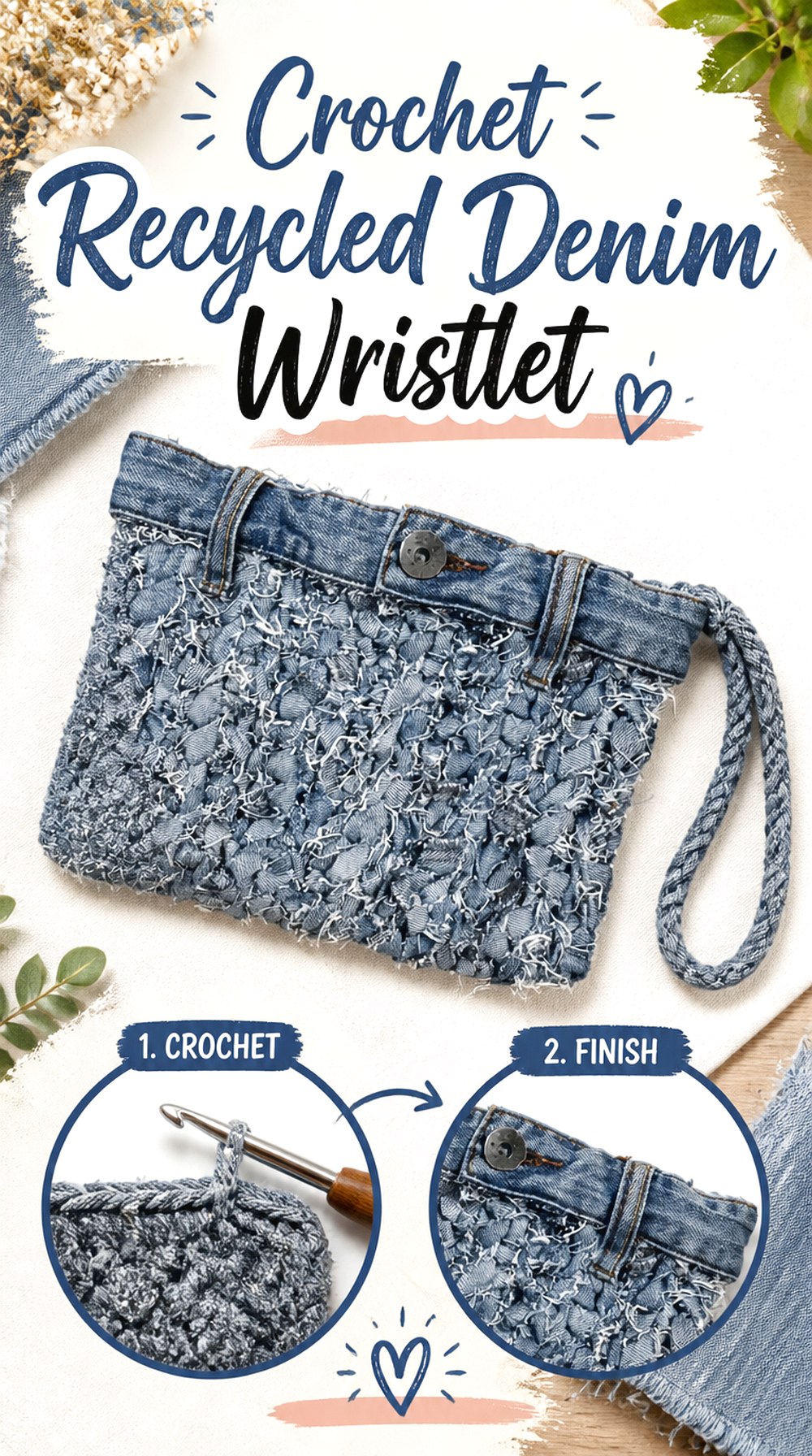
SAVEHannah Cross of HanJan Crochet takes reclamation further than simply decorating old denim: the jeans themselves become crochet material for a compact bag. Her original tutorial explains creating yarn from jeans and uses recognizable parts of the garment, including the waistband and a denim seam, in the finished clutch-style bag.
The result is an appealing choice when the legs of a pair of jeans are still usable even though the garment itself is not. Compared with a conventional yarn purse, denim produces a heavier, more rugged-looking surface. That makes a smaller wristlet or clutch a sensible format because the recycled material remains the main visual feature without requiring an oversized amount of dense fabric.
Prioritize the Flattest Denim
Bulky seams, pocket layers, rivets, and reinforced areas do not behave like the broad flat sections of a jean leg. When preparing fabric for any recycled-denim crochet project, the most uniform areas generally create the most manageable strips.
Save interesting structural pieces separately until you know whether they are useful as trim, a strap, or another detail. Trying to force every part of the jeans into crochet yarn can create unnecessary thickness.
Account for Denim Weight
A denim-strip bag can become noticeably heavier than a similar-sized bag made from standard yarn. That affects more than comfort: it also changes how the wrist strap, opening, and side seams are loaded during use.
Before deciding to enlarge a recycled-denim design, consider the weight of both the empty bag and its likely contents. More capacity is not automatically more practical when the material itself contributes significant bulk.
Original Tutorial and Creator Credit
Creator/Site: Hannah Cross, HanJan Crochet
3. Crochet Plarn Utility Basket
 SAVE
SAVEPlastic shopping bags can be cut and connected into plarn, creating a completely different crochet material from either fabric strips or conventional yarn. Chinar 2 Burj’s tutorial turns that reclaimed plastic into a round utility basket, showing both preparation of the bags and the resulting container.
This option makes sense for storage situations where a flexible, wipeable plastic surface is useful. It also offers a contained way to experiment with plarn before committing to something larger such as a market tote. Because different shopping bags vary in thickness and stiffness, however, the finished basket should be judged by its actual stability rather than by assuming all plarn behaves alike.
Start With Clean, Flexible Bags
Plarn preparation cannot improve a bag that is brittle, contaminated, or beginning to deteriorate. Choose clean bags that still flex without splitting.
Color can be treated as a secondary decision. Material consistency matters more because sudden changes in plastic thickness can alter both tension and the feel of the finished fabric.
Check the Rim and Base in Use
A basket can look stable while empty yet spread once objects are placed inside. Check how the base sits on a flat surface and whether the upper edge remains usable under a realistic load.
If the basket is meant for frequently handled items, also inspect the cut plastic periodically. Reclaimed plastic should be retired if it starts cracking rather than kept in service simply because it has been crocheted.
Original Tutorial and Creator Credit
Creator: Chinar 2 Burj
4. Crochet Old Sheet Rag Rug
 SAVE
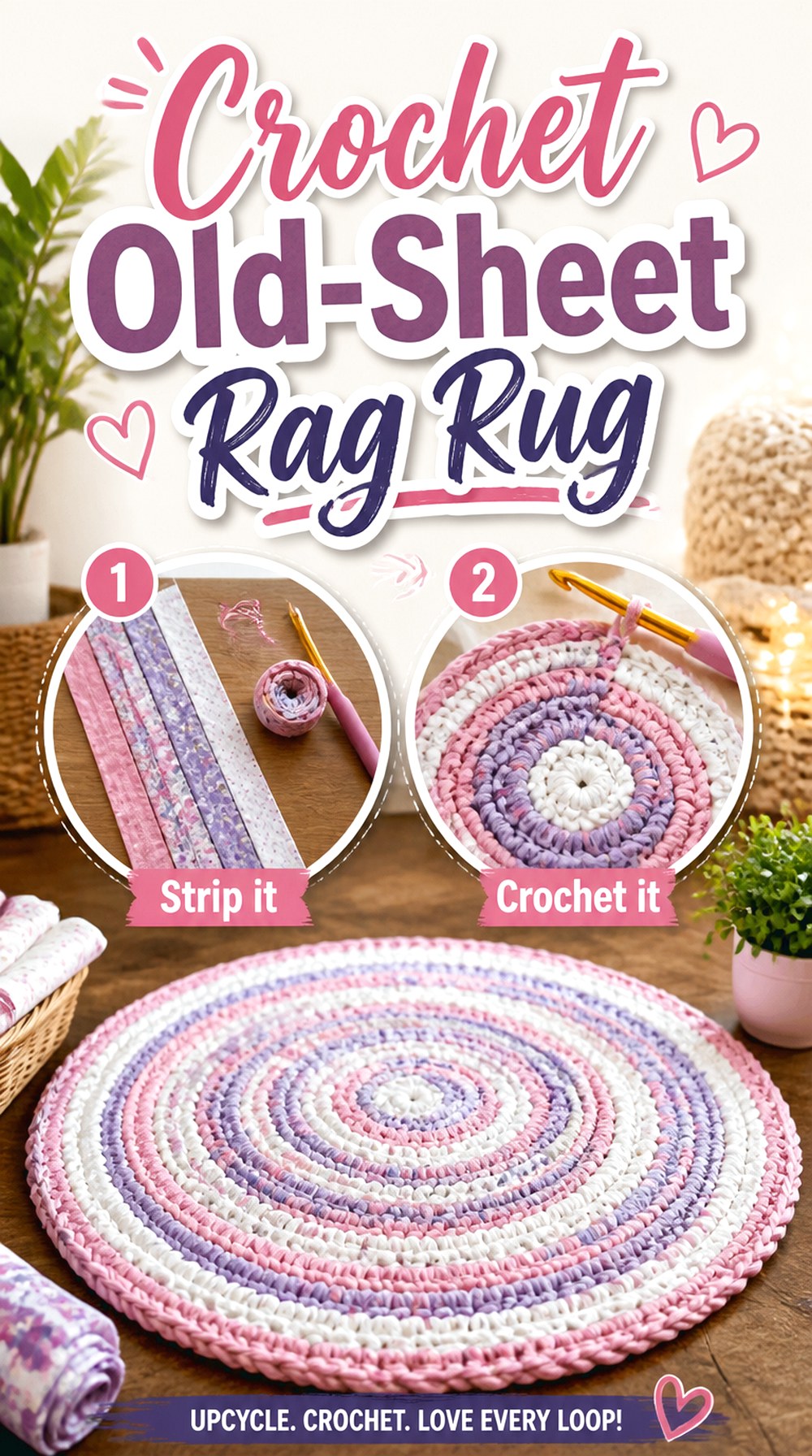
SAVEOld sheets offer large stretches of fabric, making them useful when an upcycled project needs much more material than a bag or small accessory. Mandy Beyeler’s Sugar Bee Crafts tutorial specifically makes a crocheted rag rug from old sheets and also shows examples with discarded curtain fabric.
A rag rug creates a deliberately substantial surface, so variation in reclaimed fabric becomes part of the character rather than something that must disappear. The project can also absorb textiles that are too worn or outdated for clothing. What matters most is whether the usable fabric has reasonably compatible weight and behavior once turned into strips.
Avoid Combining Incompatible Fabrics
Two sheets can look similar when flat but react differently after being cut, stretched, and crocheted. Extremely slippery fabric mixed with firm woven cotton, for example, may make tension harder to control.
When using several reclaimed textiles, compare a few prepared strips first. Keeping broadly similar fabric behavior throughout the rug usually makes its thickness and shape easier to manage.
Correct Ripples While They Are Small
Large round or oval crochet pieces make shaping problems visible quickly. Too much expansion may encourage rippling, while too little can cause cupping or pulling.
Lay the rug on the floor periodically instead of evaluating it only in your lap. A shape problem that appears early is usually easier to correct than one carried through many additional rounds.
Original Tutorial and Creator Credit
Creator/Site: Mandy Beyeler, Sugar Bee Crafts
5. Crochet Sleeve Denim Jacket Makeover
 SAVE
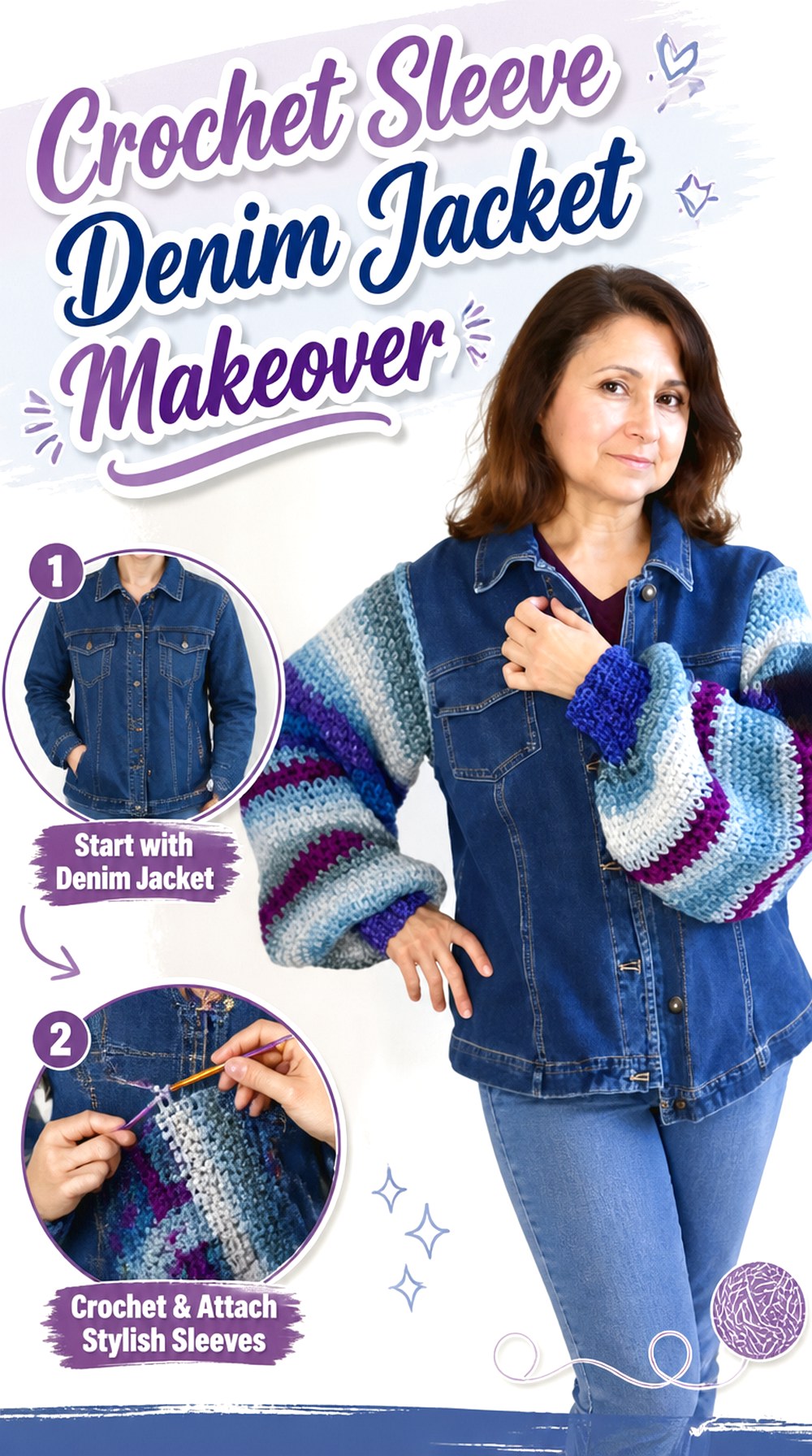
SAVEA denim jacket can remain useful long after its styling feels dated. Crazy Cool Crochet’s project removes the original denim sleeves and replaces them with crochet sleeves, leaving the recognizable jacket body intact while substantially changing its appearance.
This is more ambitious than adding a patch or appliqué because the crochet becomes a functional garment section rather than surface decoration. The contrast between structured denim and softer crochet is the main design feature. It also means fit deserves close attention: armhole dimensions, sleeve width, yarn weight, cuff treatment, and the strength of the attachment all affect whether the finished jacket feels wearable.
Fit the Armhole Before the Sleeve Length
A beautifully proportioned sleeve is of little use if its upper edge does not correspond well with the jacket opening. Treat the armhole as the main compatibility point.
Compare the crochet circumference with the actual jacket rather than relying solely on a generic clothing size. Vintage, thrifted, oversized, and fitted denim jackets can have very different proportions even when their labels appear similar.
Balance Soft Crochet With Firm Denim
The jacket body has considerably less stretch than many crochet fabrics. If the sleeve stretches dramatically, the transition can look uneven or feel unstable.
Choose a fabric that allows arm movement without becoming so loose that the sleeve weight pulls on the armhole. The aim is compatibility rather than making the crochet imitate denim.
Reinforce the Joining Area
The armhole absorbs movement whenever the wearer reaches, bends, or removes the jacket. Inspect the denim around the cut or seam line before attachment and avoid relying on weakened threads.
After assembly, check the join from both sides. Any visible pulling or gaps are better addressed before the jacket enters regular wear.
Original Tutorial and Creator Credit
Creator/Site: Crazy Cool Crochet
6. Crochet Lacy Lampshade Refresh
 SAVE
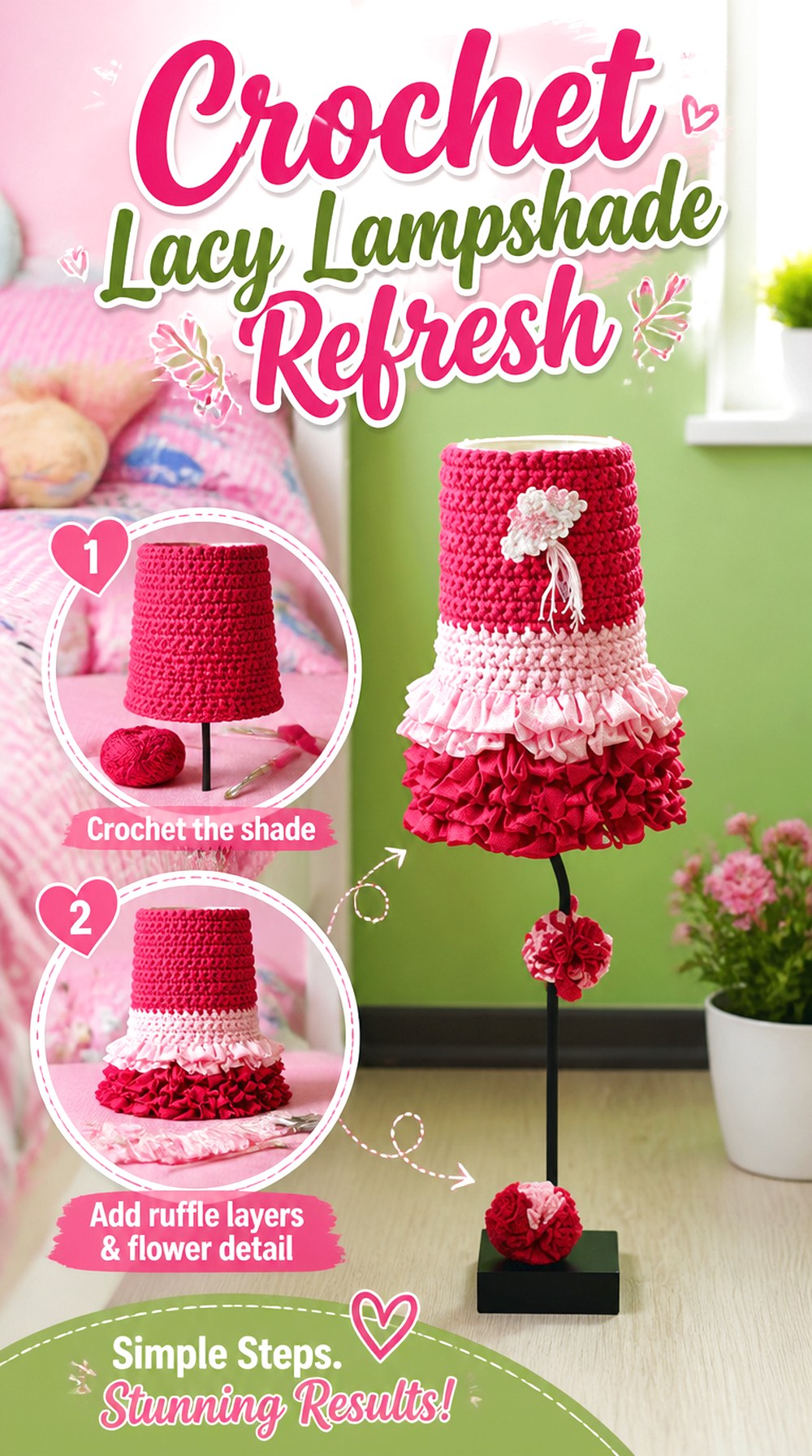
SAVEA lampshade with a usable frame and surface does not necessarily need replacing because its appearance has become dated. Joanne Loh’s Craft Passion tutorial gives an existing lamp a new visual identity with a custom crochet lampshade cover, making this one of the few projects here where the original household object remains largely intact underneath.
Lace works especially well visually because it allows the underlying shade and light to remain part of the composition. This is primarily a decorative upcycle, however, so fitting and heat awareness matter more than storage strength or stretch.
Measure the Shade, Not the Lamp
Tapered lampshades can change circumference substantially from top to bottom. A cover that fits one edge well may become loose or overstretched elsewhere.
Use the actual shade as the fitting reference and pay attention to how the crochet sits when the lamp is off. Sagging, bunching, or excessive stretching can become more obvious when the light is switched on.
Keep Crochet Away From Heat Sources
A crochet cover should never interfere with bulb clearance, ventilation, fittings, wiring, or other functional lamp components. Do not use crochet to conceal electrical damage.
Follow the lamp and bulb manufacturers’ instructions, and reconsider the project if the existing shade, socket, cord, or frame is damaged. Decorative reuse should not compromise the safe operation of the lamp.
Original Tutorial and Creator Credit
Creator/Site: Joanne Loh, Craft Passion
7. Crochet Mosaic Tin Can Organizer
 SAVE
SAVEA thoroughly cleaned food can can become a compact organizer once its utilitarian exterior is covered. Oombawka Design Crochet’s original project uses mosaic crochet around an upcycled tin can and discusses using the finished container for crochet hooks, pens, markers, and similar tools.
This idea differs from the softer baskets in the list because the metal container supplies the structure. The crochet cover can therefore focus on texture and pattern rather than supporting the contents. The most important preparation issue is not stitch choice but the condition of the can itself.
Eliminate Sharp-Edge Risk First
A cut metal rim can remain hazardous even when the outside of the container looks polished. Inspect the entire upper edge before crocheting a cover.
The source discusses protecting the can when necessary. Whatever finishing approach is used, the metal should not be left where fingers, yarn, or stored tools can catch against a sharp surface.
Let the Container Provide the Structure
Because the tin already has rigid walls, there is little benefit in making the crochet excessively stiff. Instead, concentrate on getting a neat fit that does not sag around the outside.
This makes the project a useful place for decorative texture or contrasting colors. The solid base object does the mechanical work while the crochet provides the visible transformation.
Original Tutorial and Creator Credit
Creator/Site: Oombawka Design Crochet
8. Crochet Mason Jar Drink Cozy
 SAVE
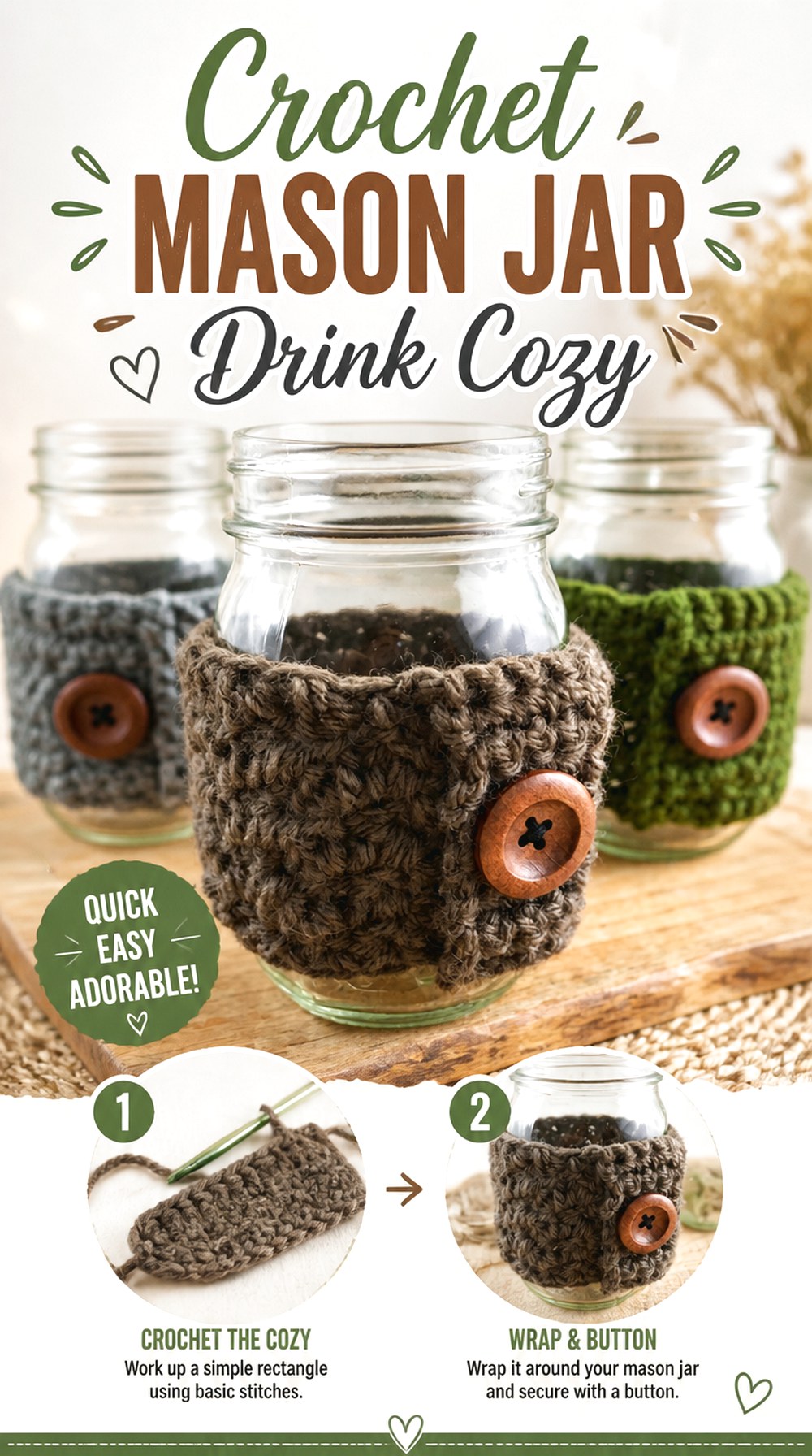
SAVEGlass jars are already reusable, but a crochet sleeve can change how one functions and looks. Brittany of Just Be Crafty designed a fitted cozy for a mason jar used as a beverage container, including a buttoned appearance that makes the project feel more like an intentional accessory than a plain jar cover.
The main advantage of this upcycle is reversibility. The glass remains unchanged, and the crochet piece can be removed. It is therefore a useful idea for jars that are structurally sound but need a more comfortable or decorative outer layer.
Fit the Jar You Actually Own
Mason-style jars come in different capacities, shapes, shoulders, and circumferences. The source itself recommends checking fit against the jar during construction.
That principle matters when adapting any jar cozy. Measure the real container and remember that a very loose sleeve can rotate or slide, while an overstretched one may distort its stitches.
Do Not Treat Yarn as Heat Protection
A crochet cozy can make a container easier to hold, but it should not be treated as certified insulation against dangerously hot contents. Glass suitability and beverage temperature still matter.
If you use a jar for drinks, follow the jar manufacturer’s guidance. Also consider whether buttons or other embellishments will make washing or frequent handling less convenient.
Original Tutorial and Creator Credit
Creator/Site: Brittany, Just Be Crafty
9. Crochet T Shirt Poncho Upcycle
 SAVE
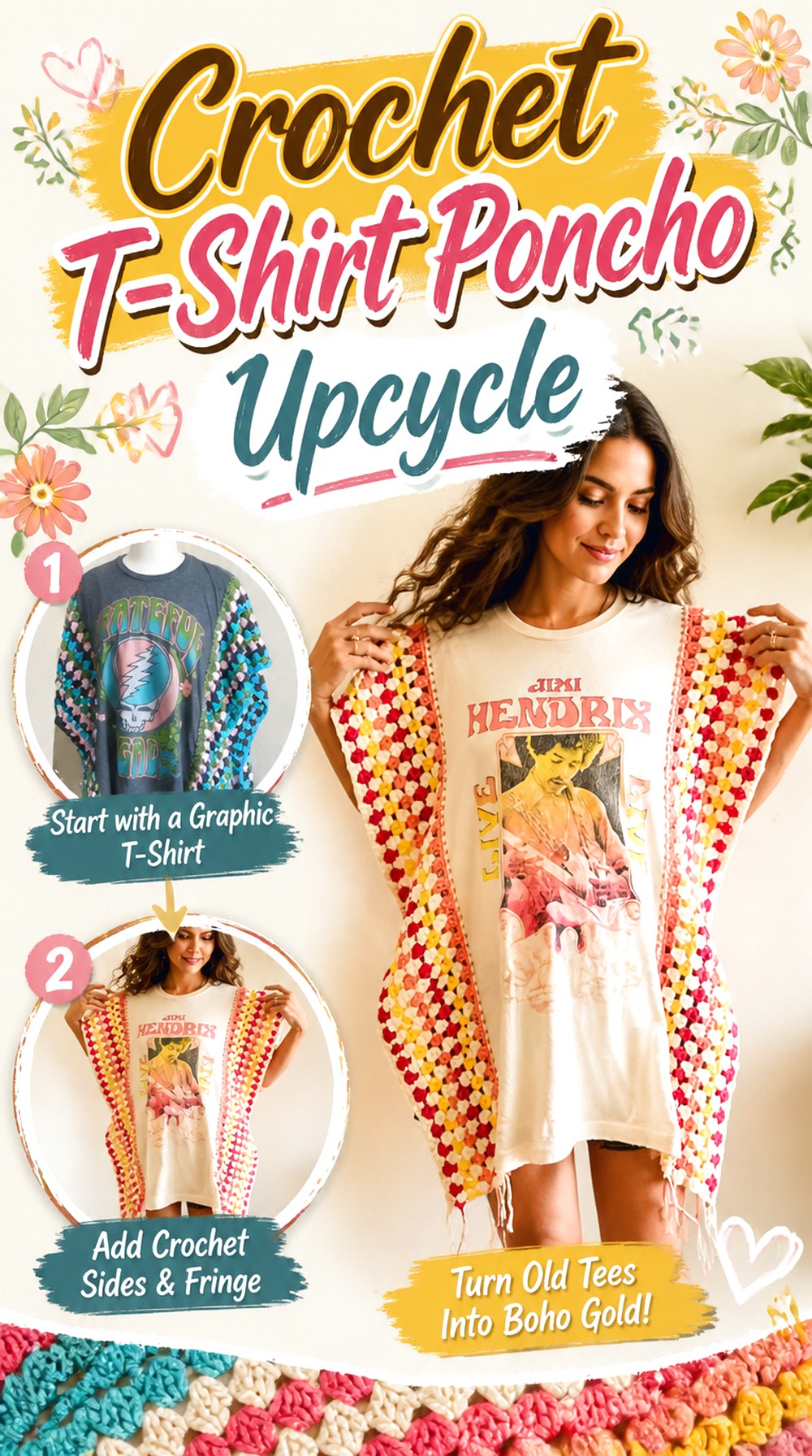
SAVEThe Snugglery approaches T-shirt reuse differently from projects that cut the whole garment into yarn. Instead, much of the shirt remains recognizable while crochet expands it into a breezy poncho-style garment using granny stitch.
That makes this a good example of selective upcycling: preserve the part that already fits the concept and add crochet where more volume, drape, and visual interest are wanted. The transformation is substantial, but the original fabric still anchors the project. Because the crochet hangs from knit jersey, attachment spacing and added weight deserve more attention than they would on a rigid object.
Preserve Enough Stable Shirt Fabric
Before cutting, identify which parts of the shirt need to remain intact to support the new shape. Thin jersey that is already developing holes or laddering may not be a good attachment surface.
If the graphic or central body is the reason for saving the shirt, plan around that feature first. Crochet should support the redesign rather than force useful fabric into an awkward shape.
Space Attachment Points Carefully
Closely packed attachment points can stiffen or pucker a stretchy T-shirt edge, while wide irregular gaps can concentrate strain in a few places.
Whatever attachment technique the original tutorial uses, inspect the fabric after the first section is joined. The jersey should lie smoothly without obvious tearing or bunching around the connection.
Test the Added Shoulder Weight
A wide crochet section can weigh much more than the T-shirt fabric it replaces or extends. Before adding extra length, try on the garment and check how the neckline and shoulders respond.
If the shirt begins to pull downward or distort, more crochet may make the problem worse rather than improve the drape.
Original Tutorial and Creator Credit
Creator: The Snugglery
10. Crochet Lace Patch Jeans Repair
 SAVE
SAVEA hole in otherwise wearable denim can become the focal point rather than something to hide. Jess Coppom of Make & Do Crew demonstrates patching jeans with crochet lace, using an open medallion-style piece behind or across the damaged area for a deliberately bohemian result.
This is both decorative and functional, but it is best suited to damage surrounded by fabric strong enough to support the patch. The visible contrast between sturdy denim and open crochet is what makes the repair distinctive. Placement also matters because knees, thighs, and other high-movement areas are subjected to repeated flexing.
Anchor Beyond the Weakest Threads
The edge of a visible hole may not be the strongest attachment line. Denim often thins before it actually tears.
Inspect beyond the opening and attach the repair to fabric that still has enough integrity to carry the new stitching. Otherwise, the crochet may remain intact while the denim immediately around it continues to fail.
Consider How the Area Moves
A patch across a relatively flat leg section behaves differently from one placed directly over a frequently bending knee. Try the jeans on with the crochet temporarily positioned before permanent attachment.
The patch should not become uncomfortably tight when sitting, walking, or bending. Open lace offers visual flexibility, but the attachment stitches also need room to move.
Make Laundering Part of the Repair Plan
A repaired garment now contains at least two materials with potentially different care requirements. Secure loose ends thoroughly and avoid assuming the original jeans-care routine remains suitable.
Follow the yarn label and consider gentler handling if the lace or attachment is delicate. Inspect the repair after washing for new fraying around the denim edge.
Original Tutorial and Creator Credit
Creator/Site: Jess Coppom, Make & Do Crew
11. Crochet Button Down Collar Refresh
 SAVE
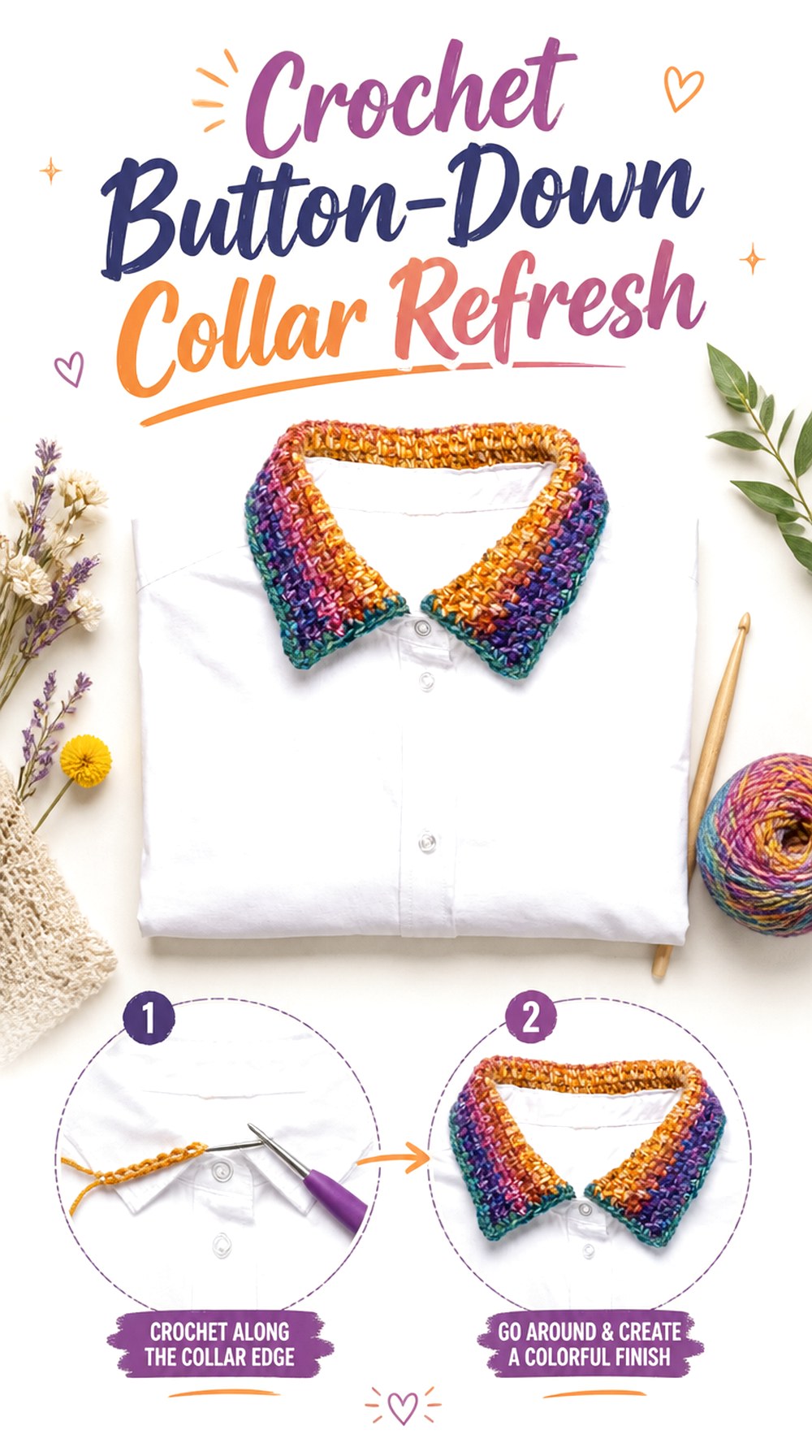
SAVEReplacing one small garment component can create a surprisingly large visual change. Yarnspirations’ Red Heart upcycled collar project is designed to replace the collar on an adult button-down shirt with a crochet version, leaving the rest of the garment intact.
Compared with replacing sleeves or rebuilding a dress, this is a focused modification. It suits a shirt whose body, cuffs, and button placket remain worth keeping but whose collar no longer fits the desired style. Because the neckline still has to pass comfortably around the wearer and sit properly against the shirt, measurements matter more than the relatively small amount of crochet might suggest.
Measure Before Removing the Original Collar
The existing collar provides valuable information about the neckline it serves. Record its dimensions and examine how it attaches before taking anything apart.
A generic adult size cannot account for every vintage, fitted, oversized, or altered shirt. The replacement needs to work with the actual neckline rather than simply resemble the original collar from a distance.
Match Flexibility to the Shirt
A stiff crochet collar on a soft blouse can feel disproportionately heavy, while an extremely loose fabric can lose the crisp shape expected on a structured shirt.
Compare the weight and movement of a swatch against the garment. A successful contrast can still look intentional without making the neckline uncomfortable.
Original Tutorial and Creator Credit
Creator/Site: Yarnspirations / Red Heart
12. Crochet Granny Baseball Cap Makeover
 SAVE
SAVEAn ordinary baseball cap provides a built-in brim and familiar wearable structure, which makes it an interesting base for crochet decoration. Yarnspirations’ Red Heart project specifically focuses on breathing new life into an old cap with granny-style crochet.
This is a different type of garment upcycle because the goal is not to create a hat from scratch. The existing cap already determines the basic fit and visor shape. Crochet adds the handmade surface treatment. That means an old cap with a comfortable fit but tired appearance can be a stronger candidate than one with a broken adjustment band or badly misshapen brim.
Keep the Brim Functional
The visor is one of the cap’s defining structural components. Avoid adding so much weight or bulk around it that the brim twists or becomes uncomfortable.
Try the cap on repeatedly as crochet is added. A surface treatment that looks balanced on a table may feel front-heavy when worn.
Watch for Bulk Around the Crown
Motifs and joins can create thickness where several crochet edges meet. On a hat, that extra bulk sits directly against the head.
Before permanently attaching decorative sections, check the inside as carefully as the outside. Smooth attachment points can matter more for comfort than perfectly hiding every transition from exterior view.
Original Tutorial and Creator Credit
Creator/Site: Yarnspirations / Red Heart
13. Crochet Fabric and Motif Upcycled Dress
 SAVE
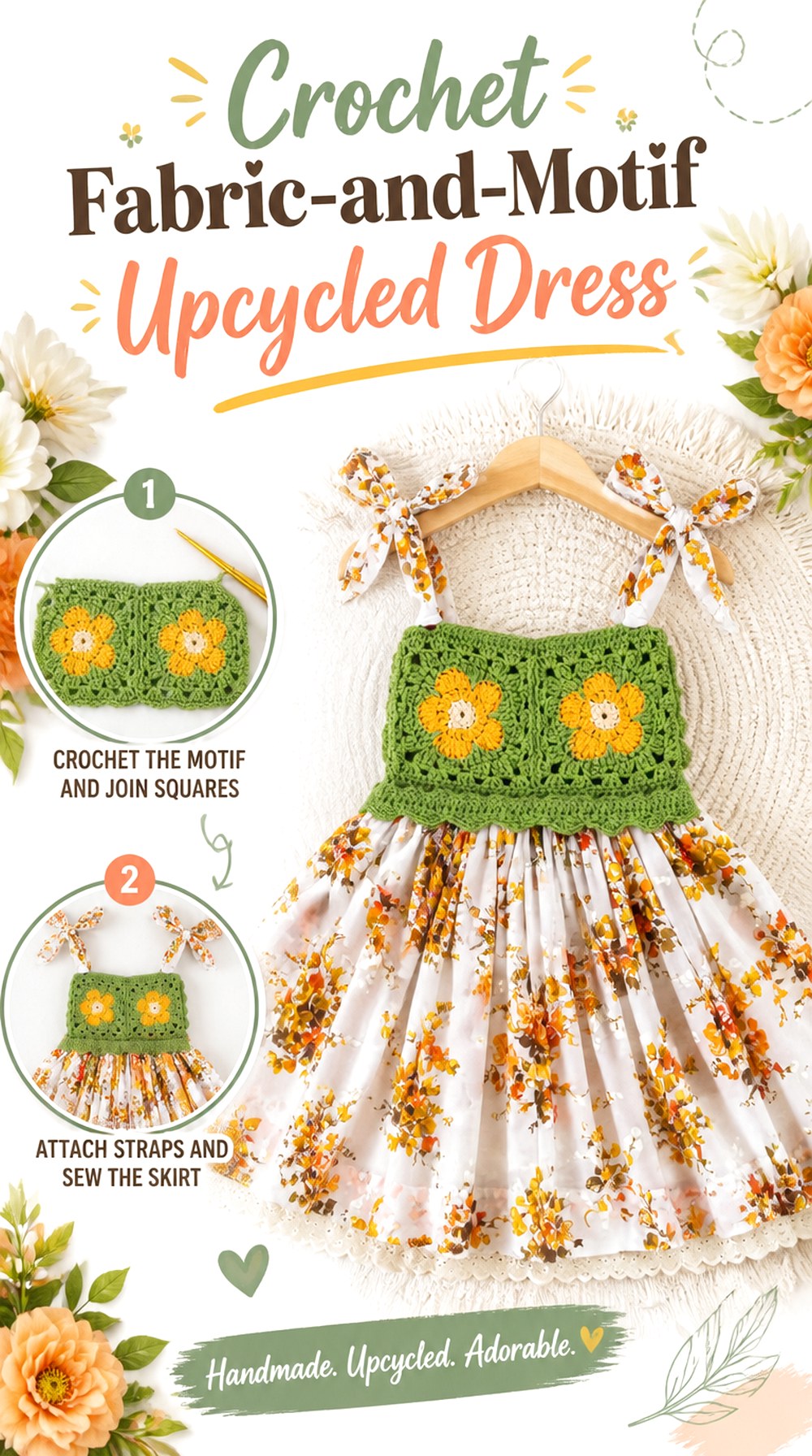
SAVEYarnspirations’ Red Heart upcycled dress explores mixed-material garment construction on a larger scale, combining thrifted fabric with crochet handiwork rather than making an entire dress from fresh yarn.
This type of project is useful when a piece of fabric or part of an existing garment deserves to remain in use but needs substantial redesign. Unlike a small collar or jeans patch, the finished result depends on several areas working together: the original textile, crochet sections, joining points, garment proportions, and overall drape.
Let the Existing Fabric Carry Useful Structure
Fabric that already hangs well across a larger area does not necessarily need to be replaced with crochet. Preserving a useful section can reduce both weight and reconstruction.
Decide which part of the material is visually strongest and structurally soundest. Build the redesign around that asset instead of trying to include every scrap merely because it is available.
Check Fit at Every Material Transition
Crochet and woven fabric rarely stretch in exactly the same way. A joining line across the torso, waist, or hip can therefore affect both ease and movement.
Try on or measure the developing garment before the next major section is added. If one material is pulling while the other hangs loosely, adding length will not correct the underlying mismatch.
Plan for Mixed-Material Care
The finished dress may contain yarn, reclaimed fabric, sewing thread, and possibly additional notions. Their care requirements can differ.
Record what you know about each component before assembly. When fiber content is uncertain, conservative care is generally more sensible than assuming the finished piece can tolerate the treatment used for only one material.
Original Tutorial and Creator Credit
Creator/Site: Yarnspirations / Red Heart
14. Crochet Plarn Market Tote
 SAVE
SAVEA market tote asks more of plarn than a small decorative basket because the finished fabric must repeatedly handle movement, contents, and the force concentrated around the handles. Crafters Autonomous demonstrates a tote crocheted from upcycled grocery bags with a defined base, body, and handles.
This is one of the most functional recycling projects in the list, but it also deserves realistic limits. Plarn can produce substantial fabric, yet its performance depends on the original plastic, preparation, joins, tension, bag size, and what is carried inside.
Treat the Handles as the Main Stress Point
A roomy tote can encourage overloading. Even when the body looks strong, handles and their attachment points receive concentrated force every time the bag is lifted.
Inspect those areas frequently during use. If the plastic begins to stretch permanently, split, or thin around the join, reduce the load or retire the bag rather than waiting for a complete failure.
Keep the Base Appropriate for the Contents
An open or highly flexible base may be fine for bulky lightweight items but less useful for small objects that can distort the fabric.
Think about the intended shopping or storage use before increasing the tote’s size. A modest bag that holds its shape may be more practical than a much larger one that sags when filled.
Original Tutorial and Creator Credit
Creator: Crafters Autonomous
15. Crochet T Shirt Yarn Purse
 SAVE
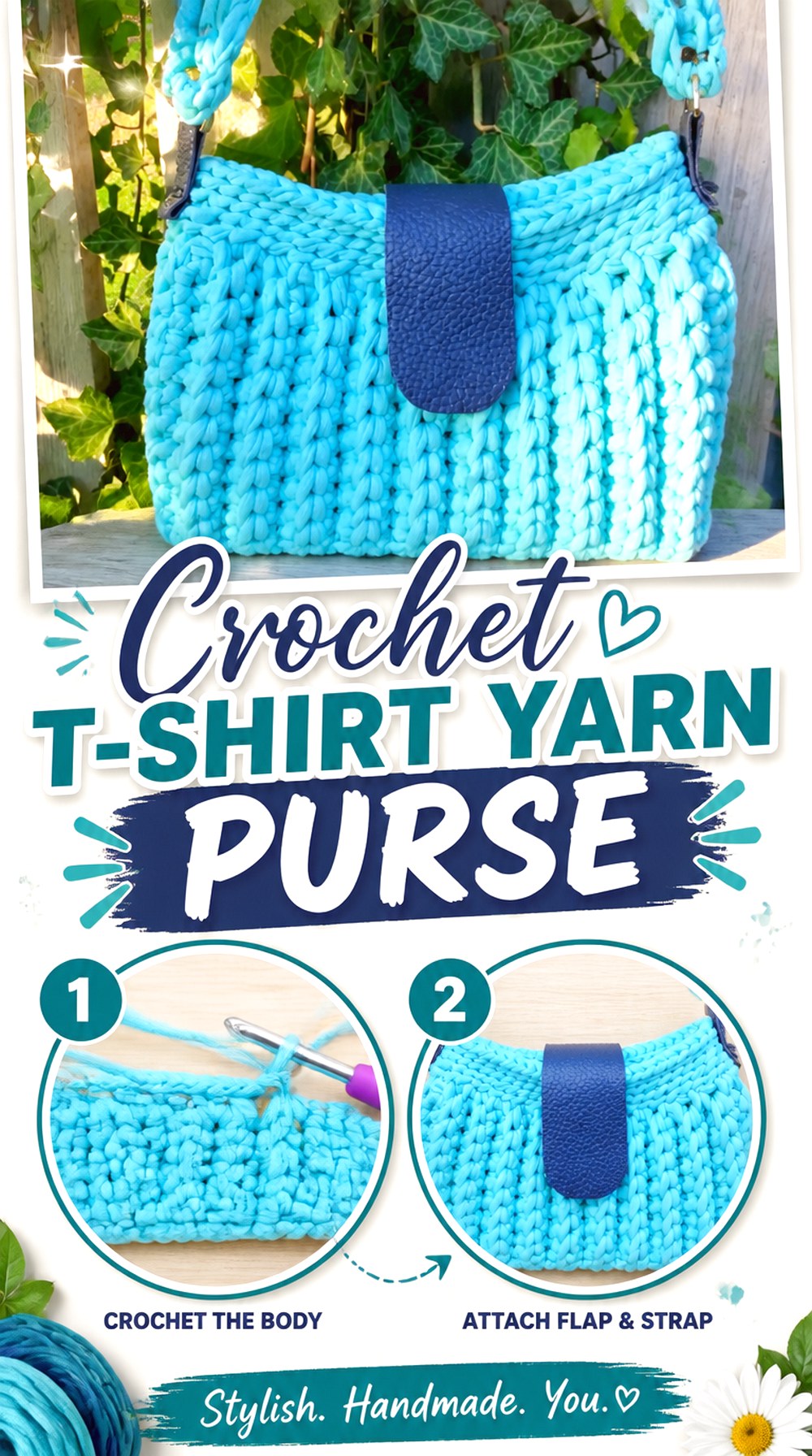
SAVEDIY Crafts TV turns an old T-shirt into crochet material for a purse and also incorporates salvaged components from an old bag, including closure hardware. That makes the project a two-source upcycle: fabric becomes yarn, while useful purse parts are reused rather than discarded.
The result is visually different from the earlier T-shirt basket because the material now needs to work with a wearable handle, opening, and closure. Those details introduce stress points that a stationary container does not have. A compact purse format also keeps the thick T-shirt material from becoming unnecessarily heavy.
Inspect Salvaged Hardware Individually
A buckle, magnetic closure, ring, or handle attachment is worth reusing only if it still works reliably. Check for cracking, sharp edges, corrosion, weak stitching holes, or loose mechanisms.
There is little value in attaching a damaged component to freshly crocheted fabric. Reuse should preserve useful parts, not transfer an old failure point to a new bag.
Keep Scale in Proportion to the Material
T-shirt yarn creates a thicker fabric than many conventional purse yarns. Enlarging a small purse design can therefore increase both bulk and empty weight quickly.
Before adding extra width or depth, consider what the purse actually needs to carry. A compact accessory often shows the recycled texture more clearly than an oversized shape.
Check the Closure Before Finishing
A closure that is even slightly misaligned can pull the top edge sideways. Temporarily position the hardware while the bag can still be adjusted.
Look at the bag both empty and lightly filled. The opening should meet naturally rather than needing to be stretched into position every time it closes.
Original Tutorial and Creator Credit
Creator: DIY Crafts TV
16. Crochet Flip Flop Slippers
 SAVE
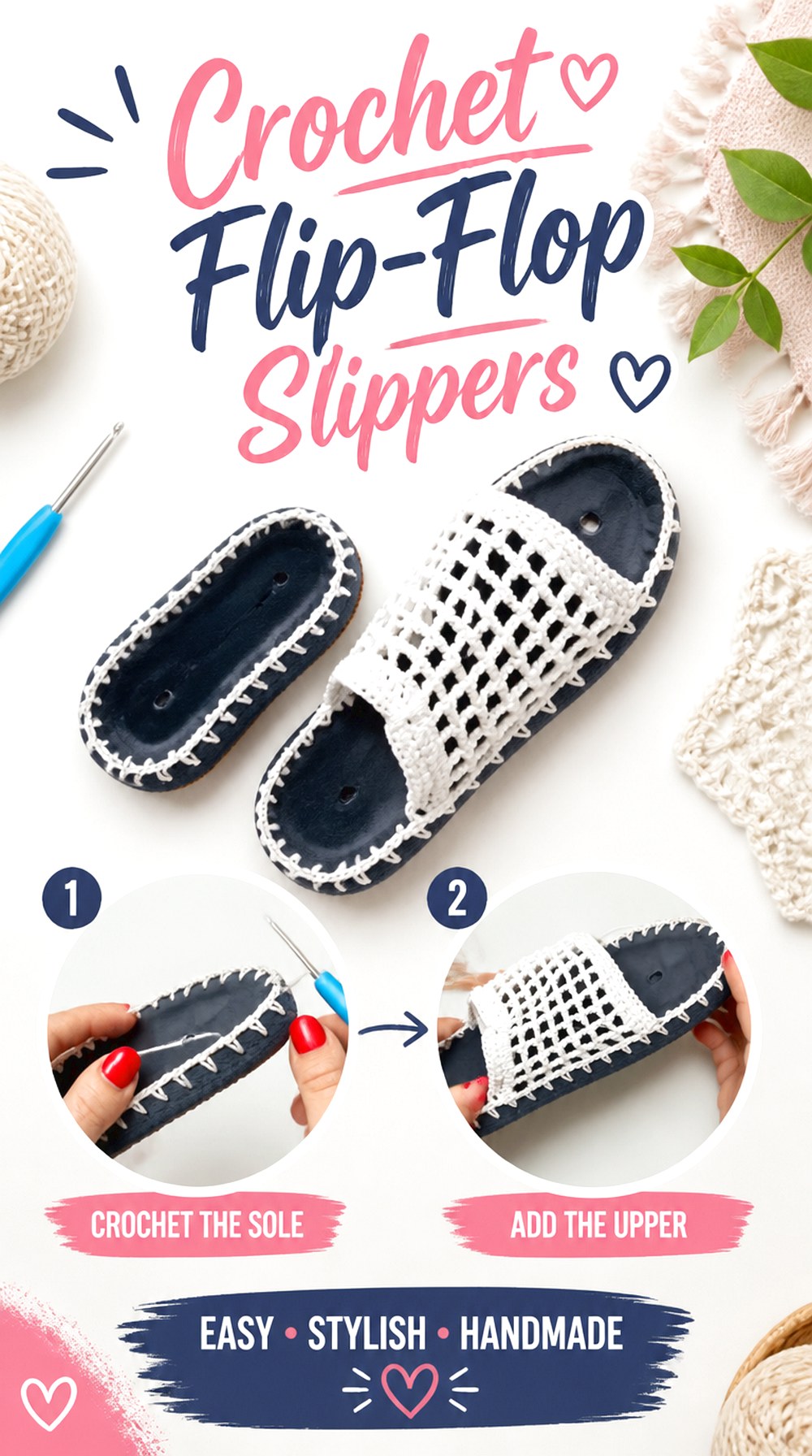
SAVEOld flip-flops can provide ready-made soles for an entirely different style of footwear. Artsy Maki’s tutorial uses old flip-flops as the base for crochet slippers, preserving the sole while replacing or transforming the upper portion.
This is a particularly clear example of upcycling only the part that still has useful function. It also requires more caution than a decorative container because footwear must tolerate body weight, bending, friction, and outdoor or indoor surfaces. A worn-looking flip-flop may still have a usable sole, but structural damage is a different matter.
Inspect the Soles Before Crocheting
Check the tread, heel area, toe section, and any previous strap holes. Deep cracks, crumbling foam, separation, or severe compression are reasons to choose another pair.
Crochet can change the appearance and upper construction, but it cannot restore the structural integrity or traction of a deteriorated sole.
Evaluate Fit While Walking
Footwear should be checked dynamically rather than only while standing. The crochet upper may stretch differently after a few steps, and attachment points can feel different once the foot bends.
Test the slippers cautiously on an appropriate surface before extended wear. Watch for heel movement, excessive looseness, rubbing, or strain around the points where crochet meets the sole.
Retire the Base When It Wears Out
Upcycling can extend the usefulness of an object, but it does not make the underlying material permanent. Continue inspecting the sole after the makeover.
If traction, cushioning, or structural integrity deteriorates, stop using the footwear even if the crochet upper remains attractive.
Original Tutorial and Creator Credit
Creator: Artsy Maki
17. Crochet Flower Jeans Embellishment
 SAVE
SAVENot every denim upcycle needs a hole or major reconstruction. The Crocheting is passion tutorial demonstrates adding a crochet flower design to old jeans, using the crochet primarily as an intentional surface feature rather than a structural replacement.
This works well when jeans remain wearable but feel plain, dated, or visually tired. It also gives crocheters a lower-commitment alternative to opening seams or replacing garment sections. Placement becomes the key creative decision because an appliqué changes how the eye moves across the jeans and may experience different amounts of friction depending on where it is attached.
Place Motifs Away From Heavy Friction
A flower on the outer leg experiences different wear from one placed where thighs rub together or where the garment repeatedly contacts a chair.
Pin or baste the motif temporarily and wear the jeans around the house before permanent attachment. A slightly different location can significantly reduce abrasion.
Secure Dimensional Details for Washing
Raised petals and decorative edges can catch more easily than flat fabric. Make sure each important section is attached securely enough for the intended use.
Care should follow both the yarn and garment requirements. Turning the jeans inside out or using gentler handling may help protect decorative work, but always base care decisions on the actual materials used.
Original Tutorial and Creator Credit
Creator: Crocheting is passion
Which Crochet Upcycle Approach Should You Choose?
For the least invasive makeover, begin with a removable jar cozy, tin-can cover, lampshade cover, or decorative jeans embellishment. These preserve most of the original object and make it easier to judge the transformation before committing to major cutting.
Visible repairs and component replacements sit in the middle. A crochet jeans patch, replacement shirt collar, or crochet jacket sleeves can extend an existing garment, but the surrounding fabric needs enough strength to carry the alteration.
Projects that convert discarded material into new crochet fabric—T-shirt baskets, denim wristlets, rag rugs, plarn totes, and T-shirt purses—offer the biggest material transformation. They also require the most attention to strip preparation, weight, texture, and consistency because the reclaimed object is becoming the crochet material itself.
Conclusion
These 17 crochet upcycle ideas show several ways to keep useful material in circulation. Some projects preserve almost the entire original object, such as a jar, lamp, cap, or jacket. Others break an unwanted textile or plastic bag down into a new crochet material and rebuild it as a rug, basket, tote, or purse.
The right project depends less on what looks most dramatic and more on what you actually have: sound denim can be repaired or redesigned, large sheets can become substantial floor pieces, flexible T-shirts can become fabric yarn, and intact containers can gain removable crochet surfaces. Check structure, stretch, attachment areas, care, and safety before cutting. Then use the linked original tutorials for the creators’ exact construction details.
Frequently Asked Questions
What qualifies as a crochet upcycle project?
A crochet upcycle keeps an existing item or discarded material in useful circulation while giving it a different function, construction, or appearance. That might mean attaching crochet sleeves to a denim jacket, covering a reusable jar, repairing jeans with crochet lace, cutting old T-shirts into yarn, or turning plastic bags into plarn. Simply making a new item from newly purchased yarn would not usually involve the same reuse element.
Can I combine several different old fabrics in one crochet project?
Yes, but similarity in behavior matters more than matching colors. Fabric strips with very different thickness, stretch, slipperiness, or weight can produce uneven crochet fabric. Prepare a short length from each textile and compare them before cutting everything apart. If one material creates a noticeably different stitch size or tension, it may be better saved for another project or used as an intentional accent.
How do I attach crochet to fabric without weakening the garment?
The best method depends on the garment and the original tutorial, so avoid assuming one technique works for every fabric. Inspect the attachment area first and do not join into threads that are already tearing. Keep holes or stitches reasonably even and avoid concentrating too much tension in one spot. For fitted clothing, test movement and stretch before completing the entire attachment.
Is plarn suitable for every type of crochet bag?
No. Plastic shopping bags vary in thickness, flexibility, age, and condition, and plarn behaves differently from conventional yarn. It can be useful for baskets and reusable totes, but handles, joins, and heavily loaded areas deserve regular inspection. Avoid brittle or damaged plastic from the beginning, and do not assume a crocheted plarn bag can safely carry unlimited weight simply because the fabric feels sturdy.
What safety issues matter when upcycling cans, lamps, or footwear?
Tin cans must not have accessible sharp edges. Lamps should remain electrically sound, properly ventilated, and used according to their manufacturer instructions, with crochet kept away from bulbs and heat-producing components. For footwear, begin only with soles that retain adequate structural integrity and traction. Crochet can decorate or rebuild around a usable object, but it should never be used to conceal a safety-critical defect.
How should I wash a crochet project made from mixed materials?
Use the requirements of every material as your guide rather than treating the project like ordinary yarn crochet. A denim-and-crochet garment, for example, may contain yarn, sewing thread, metal hardware, and reclaimed fabric. Check known fiber labels and creator guidance, and choose conservative care when something is uncertain. Embellishments, adhesives, buttons, plastic, or reused hardware may make machine washing or high-heat drying inappropriate.