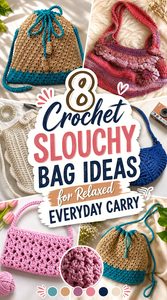
A crochet slouchy bag can be a deep hobo that folds softly at the center, a relaxed shoulder bag with built-in handles, or even a curved sling that stays close to the body. The shape matters, but yarn flexibility, strap construction, opening style, and lining can change the finished bag just as much.
These eight ideas cover noticeably different approaches, including chunky hobo construction, cotton handles, bucket shaping, open texture, a crescent silhouette, and a drawstring top. Some tutorials are direct hobo or slouch-bag projects, while others offer compatible sling and bucket constructions for readers who prefer a relaxed alternative.
Each idea focuses on choosing and planning the finished bag; use the linked original creator tutorial for the exact construction details.
Quick List
- Crochet Chunky Macramé Slouch Shoulder Bag
- Crochet Soft Cotton Twin-Handle Slouch Bag
- Crochet Tall Boho Bucket Carry Bag
- Crochet X-Mesh Snap Hobo Bag
- Crochet Triangle-Motif Crescent Sling Bag
- Crochet Relaxed Boho Sling Bag
- Crochet Gathered-Top Classic Hobo Bag
- Crochet Drawstring Slouch Shoulder Bag
What Actually Makes a Crochet Bag Look Slouchy?
Slouch comes from the relationship between shape and fabric behavior. A broad body suspended from a narrower handle area naturally folds inward, while tapered sides can create a hobo curve even before the bag is filled. A bucket bag behaves differently: its lower section may remain comparatively defined while the upper body relaxes.
Look at the finished project rather than judging the pattern only by its flat dimensions. Two similarly sized bags can hang very differently if one uses thick cord and the other uses a softer cotton yarn.
More slouch is not automatically better. Excessive stretch can move the bottom lower than intended or pull the opening out of shape. The useful goal is controlled drape: enough flexibility for the silhouette to soften without losing the carrying points that give the bag its form.
How Yarn Choice Changes Stretch, Weight, and Shape
A yarn substitution can turn a relaxed hobo into a firm tote—or make an originally controlled bag sag much more than expected. Wide ribbon, braided macramé yarn, cotton, nylon, and finer conventional yarns do not create interchangeable fabrics.
Before substituting, compare more than the yarn label. Notice thickness, elasticity, surface texture, and how firmly the fabric bends. A small swatch can show whether the material folds smoothly or stays rigid when held upright.
Also consider the final scale. A flexible fabric that seems manageable in a small sample may stretch more noticeably across a large bag body. If you want to preserve a tutorial’s original silhouette, staying reasonably close to the creator’s material characteristics is safer than selecting a replacement only because the color is similar.
Check the Strap and Opening Before Choosing a Tutorial
The carrying point is one of the biggest differences among slouchy bags. Short integrated handles pull a bag upward and keep it near the shoulder. A longer sling strap lowers the body, while adjustable hardware lets you change the carrying position. Those choices affect both appearance and how much the bag can stretch vertically.
Openings deserve the same attention. An uncovered hobo is quick to access but offers little containment. A central snap brings the sides together without fully closing them. A drawstring gathers a much larger area, while lining or an inner pouch can help control small belongings in open-textured fabric.
Review these details before choosing by appearance alone. Retrofitting a closure or substantially changing a strap can alter the proportions that made the original bag slouch attractively.
1. Crochet Chunky Macramé Slouch Shoulder Bag
 SAVE
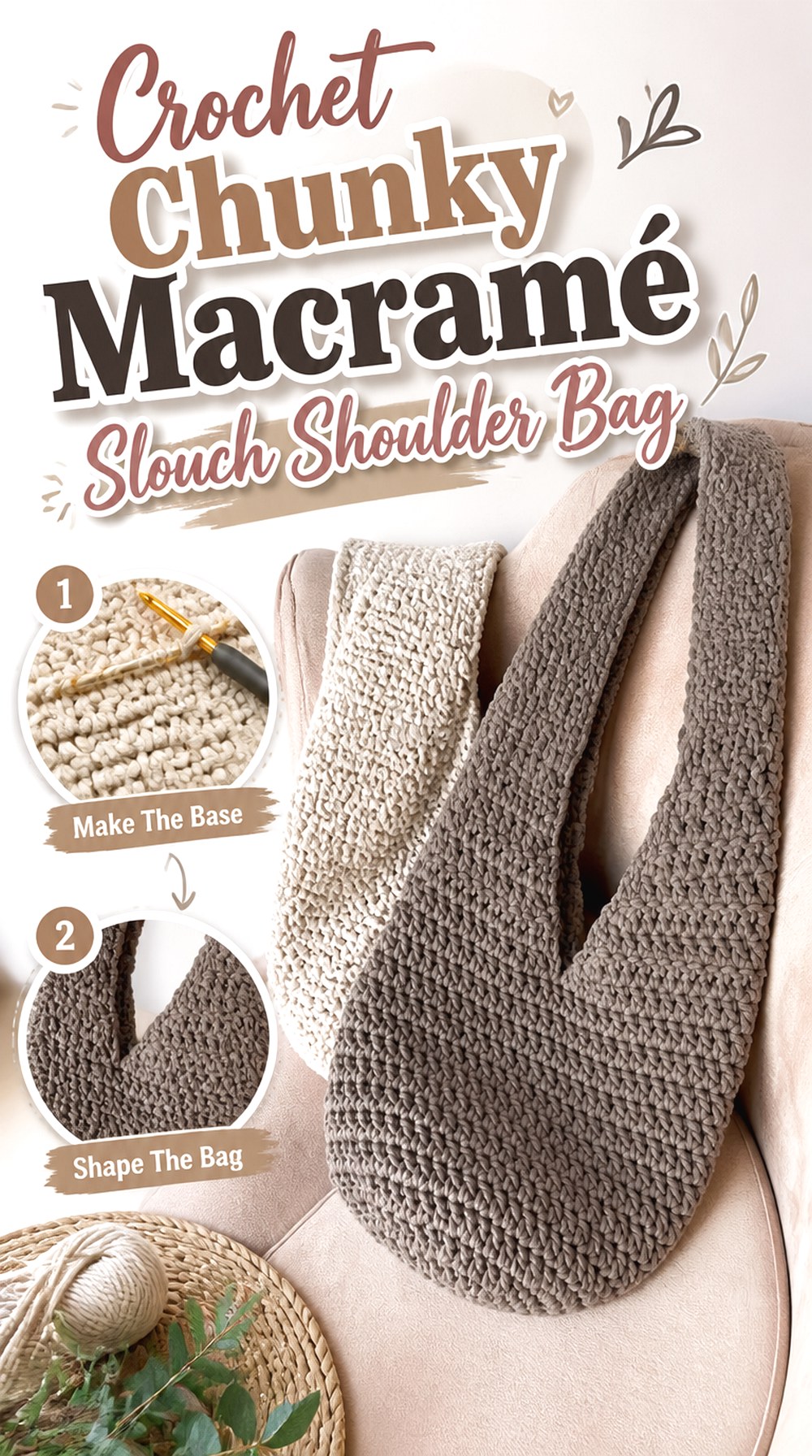
This version makes the oversized hobo silhouette the main event. Magic Knot Bag’s tutorial uses chunky braided macramé yarn for a broad shoulder bag whose body drops below a relatively compact carrying section. The thick material gives the crochet surface strong visual definition while the hobo shaping prevents the finished piece from reading like a basic rectangular tote. The creator separates the base, body, and strap portions in the tutorial, so the major shape changes are easy to identify.
Choose this direction when you want the bag itself to make a statement. Its scale and chunky fabric are much more prominent than the finer cotton and small sling options later in the list.
Chunky Yarn Magnifies Every Proportion
Thicker material enlarges both the stitches and the visual weight of the bag. If you replace the original yarn, compare flexibility as well as thickness. A substitute that is substantially firmer may push the sides outward and reduce the hobo fold, while a stretchier option can create more downward drop. For a large bag, that difference becomes visible quickly because there is more fabric hanging beneath the shoulder.
Watch Where the Wide Body Meets the Strap
The transition from bag body to carrying section controls much of a hobo’s silhouette. If the upper edge stays too wide, it can resemble an ordinary tote; if it narrows appropriately, the center is encouraged to fall into softer folds. When following the video, notice the finished transition before considering any size adjustment. Changing width and strap proportions independently can produce a very different shape.
Large Does Not Automatically Mean Better for Heavy Loads
An oversized crochet bag provides physical space, but that does not establish a safe weight capacity. Contents still pull on the crochet fabric and strap attachment area. Use the tutorial’s intended construction and inspect the fabric as you use the bag rather than assuming chunky yarn makes it suitable for heavy objects. If stretch control matters, consider whether a compatible lining or reinforcement plan is appropriate.
2. Crochet Soft Cotton Twin Handle Slouch Bag
 SAVE
Kenikse Crochet’s bag takes a noticeably softer route. The source uses DK cotton yarn with a 3.5 mm hook and separates the project into the base, main bag, handle, and handle assembly. Instead of one long sling strap or chunky hobo handle, the finished bag uses two integrated carrying sections that rise from a relaxed body.
That makes this a useful choice for readers who like understated everyday shoulder bags and want the drape to come from the crochet fabric rather than bulky yarn or added hardware. The twin-handle construction also gives the top a different rhythm: the opening remains visually connected to both handles, so symmetry and the way the two sides hang become part of the finished design.
Two Handles Change How the Opening Hangs
With two carrying points, the upper edge is supported differently from a single-strap hobo. Compare both handles before finishing and check that they meet the body at matching positions. On soft fabric, even a small difference can make one side appear to pull higher than the other. The goal is not rigid symmetry for its own sake; it is an even hang that allows the center of the bag to relax naturally.
Cotton Keeps the Surface More Understated
The source specifies DK cotton rather than the chunky braided material used in the first idea. That creates a very different scale of stitch definition. When substituting, decide whether you want a light-looking flexible surface or a thicker fashion-bag effect. Moving dramatically upward in yarn thickness can change both the dimensions and the relationship between the handles and body.
Check Handle Stretch Before Final Finishing
Integrated crochet handles carry the same contents that pull on the body, so their behavior matters once the bag is lifted. Before treating a modified handle length as final, hold the unfinished bag in the intended carrying position and see how the fabric responds. If you plan to add lining or other reinforcement, think about that early enough that the top edge and handle area can work together rather than as unrelated finishes.
Original Tutorial and Creator Credit
Creator: Kenikse Crochet
3. Crochet Tall Boho Bucket Carry Bag
 SAVE
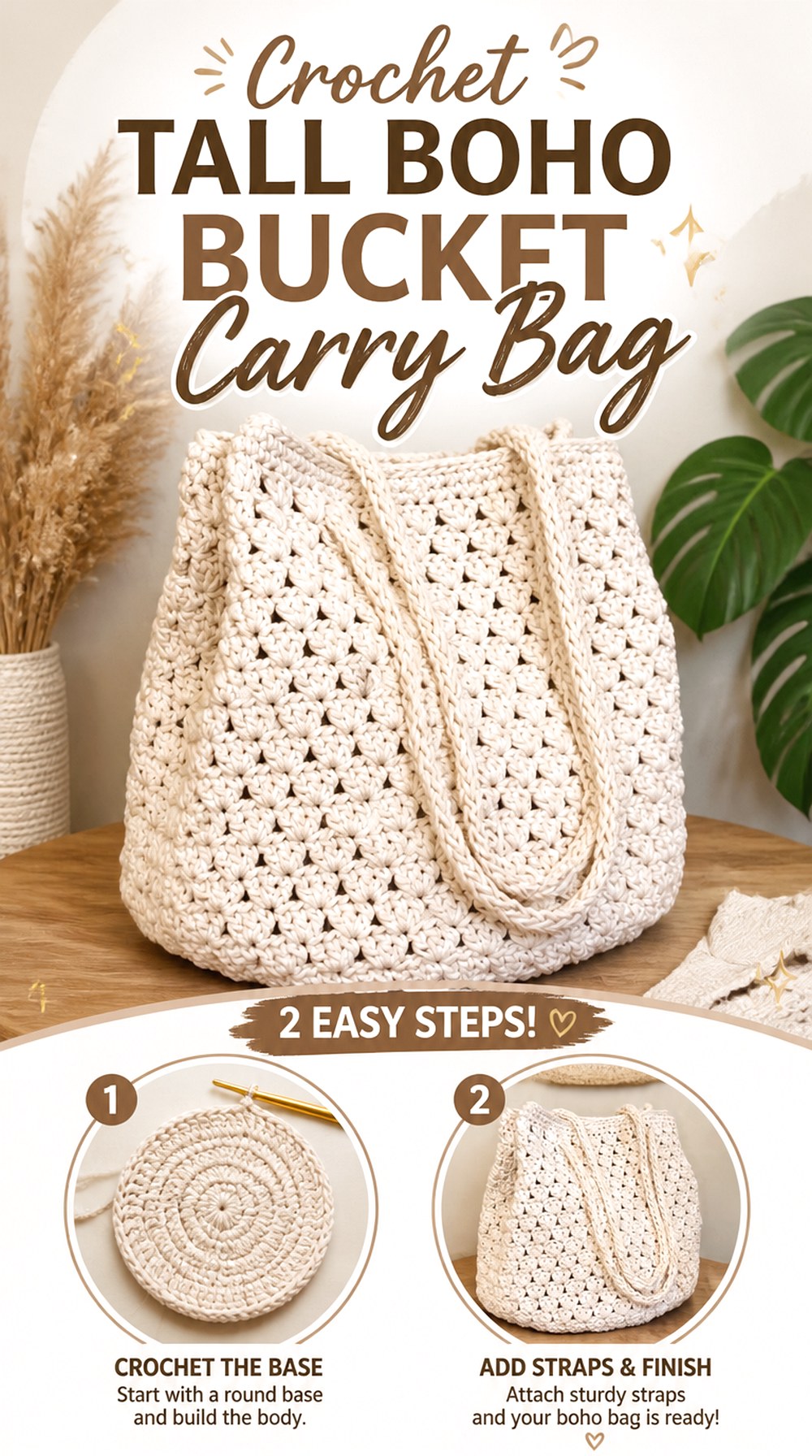
A slouchy bag does not have to taper into the classic hobo shape. Kristines Crochets demonstrates a boho project described as a tote, shoulder, or bucket bag, using macramé cord-type yarn and a broad, deep body. The published measurements confirm that the project has substantial vertical depth as well as width.
This shape is useful when you want a relaxed bag with more of an upright bucket footprint. It does not rely on a narrow crescent or gathered hobo neck to create character. Instead, the proportions allow the body itself to become the focal point. Compared with a low curved sling, belongings settle farther down into the bag, so access and the behavior of the base become more important planning questions.
Depth Moves Belongings Farther From the Opening
A tall bag can look wonderfully relaxed, but extra height also means the lowest part of the interior is farther away. Before enlarging this kind of project, compare the source dimensions with a bag you already use. If quick access matters, increasing width may suit you better than simply adding more vertical depth. Shape decisions should respond to how you intend to use the bag rather than the idea that greater capacity is always preferable.
The Base Determines Whether It Feels Like a Bucket or Sack
A more controlled base gives the lower portion a recognizable footprint, while a very flexible base can collapse around the contents and move the project toward a sack-like silhouette. Neither is automatically wrong. Decide which effect you want before substituting a radically different yarn. A much softer material may produce more puddling than the source project, while a stiffer cord can preserve a clearer bucket outline.
A Broad Body Needs Balanced Shoulder Support
Because the bag carries considerable visual width below the shoulder, the upper carrying section needs to look proportional to that body. If you adapt the dimensions, evaluate the bag while hanging rather than only while it lies flat. A wide base paired with an overly short or narrow-looking handle can make the upper edge bunch more than expected and change the relaxed boho profile.
Original Tutorial and Creator Credit
Creator: Kristines Crochets
4. Crochet X Mesh Snap Hobo Bag
 SAVE
This hobo brings open texture and closure hardware into the same design. The tutorial from 슈퍼스토리 크로셰 superstory crochet uses a defined bottom, an X-patterned net-style body, shaping that narrows toward the upper section, a shoulder strap, and snap buttons. The creator also supplies finished measurements while noting that results can vary with the maker.
The open surface gives this bag less visual density than the chunky hobo, while the snap makes the opening feel more controlled than a fully open soft tote. It is a useful middle ground if you want the recognizable hobo curve but prefer visible texture. The main trade-off is containment: decorative openings and a partial closure require more thought about what will actually be carried inside.
Open Texture Changes What Belongs Inside
Mesh-like crochet can stretch visually and physically around the contents, and small objects may show through or approach the openings. An inner pouch or compatible lining can make sense when you carry loose accessories, but it will also change how freely the exterior expands. Decide whether preserving maximum slouch or adding interior containment matters more before adding a non-stretch lining.
A Central Snap Is Not the Same as a Zipper
The source includes snap buttons at the top. A snap helps pull the opening together but still leaves portions of the upper edge open. That can be convenient for quick access, yet it should not be treated as complete closure. If you regularly carry small or important items, look at the finished opening in the video and decide whether an additional interior organizer fits your needs.
The X Pattern Deserves Clear Stitch Definition
A visible surface pattern contributes much of this bag’s character, so yarn choice affects more than drape. Extremely fuzzy material could soften the X-shaped texture, while a dramatically heavier yarn could enlarge the openings and alter the overall proportions. When substituting, make a small sample and judge whether the pattern remains readable at the flexibility level you want.
Original Tutorial and Creator Credit
Creator: 슈퍼스토리 크로셰 superstory crochet
5. Crochet Triangle Motif Crescent Sling Bag
 SAVE
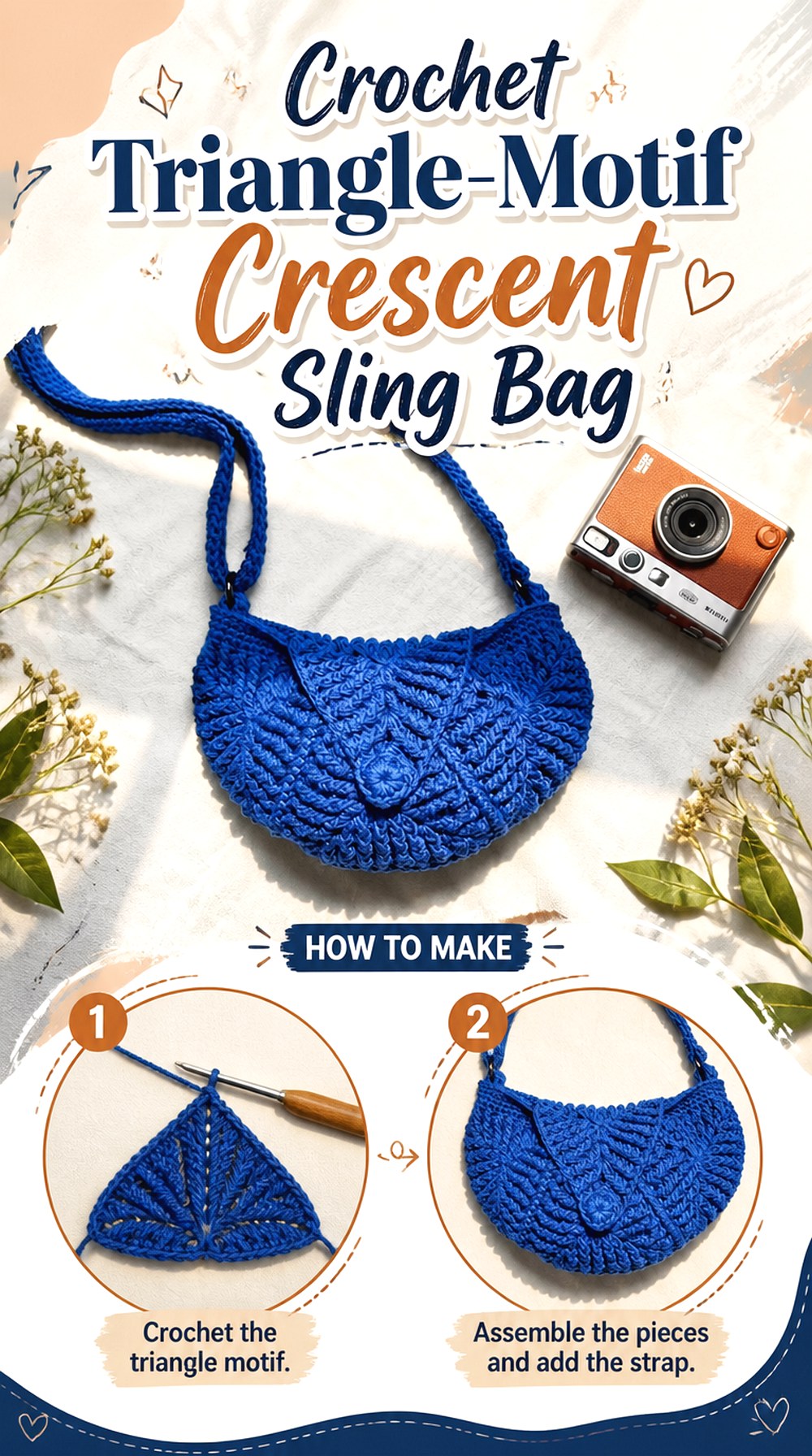
The crescent silhouette moves slouch in a completely different direction. Rather than letting a wide bag fall straight down, tinycrochet’s tutorial creates a curved bag using a granny triangle motif, macramé cord, D-rings, a strap adjuster, and a decorative button.
This is the option to study if you prefer a bag that visually follows the hip instead of hanging like a deep sack. The curved lower edge concentrates the shape horizontally, and the adjustable strap introduces a fit decision that fixed-handle hobos do not offer. Motif placement also makes the surface more deliberate than a plain pouch. Because the curve and motif are both important, aggressive yarn or size changes can alter the character faster than they would on a simple rectangular tote.
Preserve the Curve When Changing the Scale
A crescent works because its width and depth are related. Simply adding more depth can make the center look pouchy instead of gracefully curved, while extending the arc changes how broadly the bag wraps along the body. If you want a larger version, study the source proportions first rather than enlarging only the easiest dimension. The finished silhouette should still read as a crescent when it is hanging.
Hardware Makes Carry Length a Fit Choice
The source uses D-rings and a strap adjuster. That gives this bag more flexibility in where it sits than an integrated crochet handle. Before buying substitute hardware, confirm that ring and adjuster openings are compatible with the strap width. Hardware that is too narrow can bunch the strap, while oversized components may look visually disconnected from a relatively compact curved body.
Let the Triangle Motif Stay Visible
The granny triangle is not merely an add-on; it contributes to the bag’s identity. Very fuzzy or extremely variegated yarn may obscure that geometry. If motif definition matters to you, prioritize a yarn that keeps the edges readable. This is one case where a smoother material can add more visual interest than a dramatic novelty yarn because the construction itself supplies the decorative detail.
Original Tutorial and Creator Credit
Creator: tinycrochet
6. Crochet Relaxed Boho Sling Bag
 SAVE
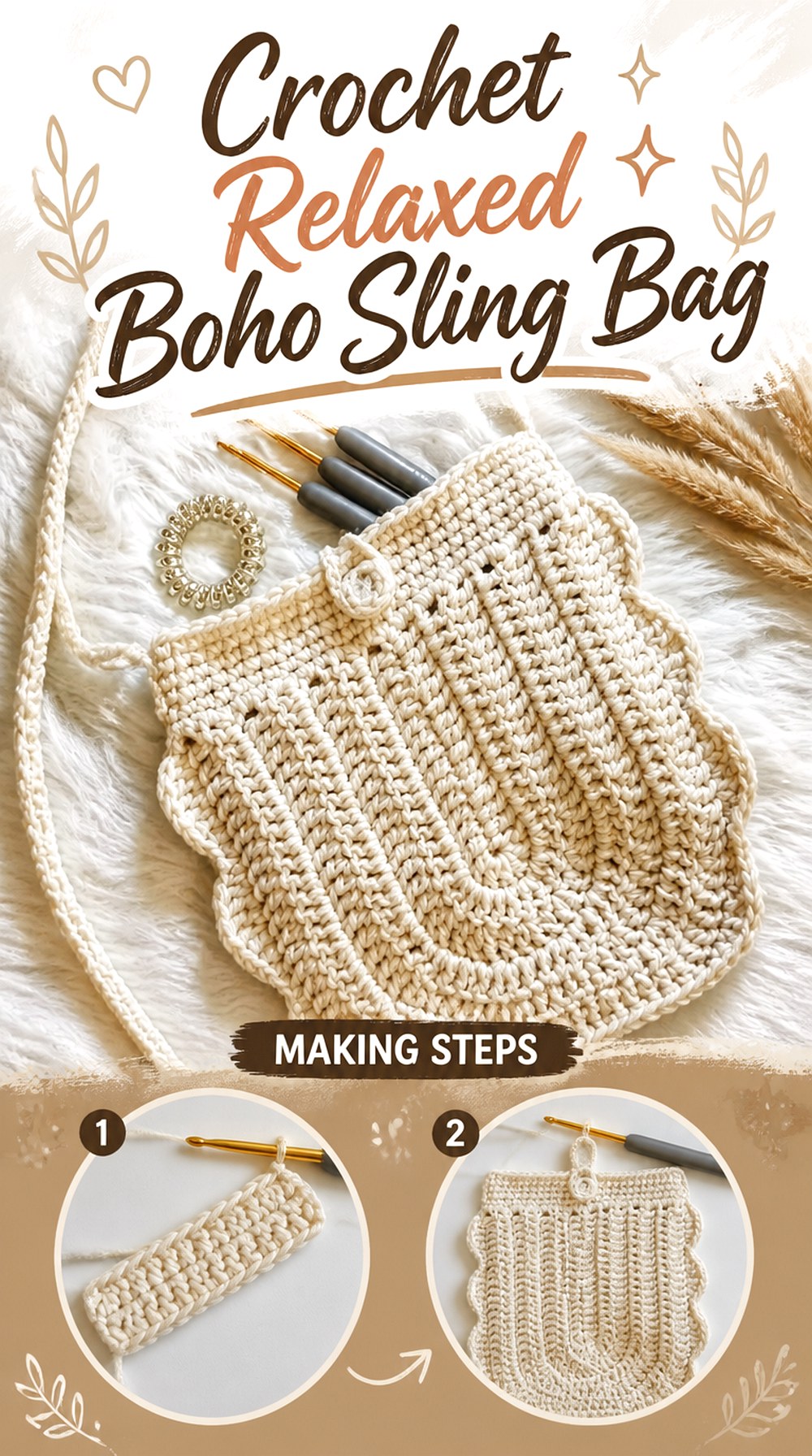
Creggy’s Crochet offers a simpler sling-bag direction that keeps the focus on an easygoing boho profile rather than the crescent geometry of the previous project. The source is a full public tutorial specifically for a crochet boho sling bag. A separate crochet roundup referencing the same tutorial identifies it as a small sling-style project, making it a useful contrast to the oversized and deep bucket bags above.
This format makes sense for readers who want the relaxed feeling of a slouch bag without committing to a large carryall. A smaller body also puts more emphasis on strap length and where the bag sits, because those proportions strongly influence whether it feels like a shoulder accessory or a low-hanging sling.
Smaller Scale Keeps the Slouch More Controlled
A compact bag has less fabric available to collapse into deep folds, so the relaxed appearance comes from proportion and yarn behavior rather than sheer volume. If you adapt it upward in size, expect the same fabric to hang differently. Increasing both height and width can create much more downward drop than the original, especially once belongings are added.
Strap Length Changes the Entire Silhouette
With a sling-style bag, the strap is part of the fit. Hold the body approximately where you want it to sit before finalizing an adaptation. A longer strap moves the bag lower and can emphasize vertical drape; a shorter carry position keeps the body closer to the torso. Avoid assuming one strap length works for everyone or for every clothing layer.
Keep Embellishments Secondary to the Carry Shape
Boho styling can invite fringe, tassels, beads, or other additions, but every extra element changes visual weight and sometimes physical weight as well. If you customize the source idea, add decorative details only after the basic bag hangs correctly. A clean carrying line is harder to correct once embellishment is masking an uneven edge or pulling on a flexible section.
Original Tutorial and Creator Credit
Creator: Creggy’s Crochet
7. Crochet Gathered Top Classic Hobo Bag
 SAVE
Meladora’s Creations for Crochet demonstrates a classic hobo concept built around a broad body that is reduced toward the upper sections before the handles are completed. The tutorial’s chapter information clearly separates the main fabric, corner marking, decreases, top sections, and handles.
This is a useful project for understanding why a hobo looks different from an ordinary tote. The visual effect does not depend on unusual yarn, motif panels, or metal hardware. Instead, narrowing the upper part of the body creates folds and gathers that lead naturally toward the handles. The creator’s accompanying information also discusses lining as an option, which gives readers a natural place to consider whether they want the crochet exterior to stretch freely or be more controlled inside.
Tapering Creates the Hobo Identity
The relationship between a broad lower body and narrower upper edge is the important feature here. If you resize the project, preserve that relationship rather than adding equal width everywhere. A top that becomes almost as broad as the base will tend to look more like a conventional open tote, while excessive narrowing can bunch the fabric beyond the relaxed fold you were aiming for.
Integrated Handles Expose Uneven Shaping Quickly
When handles grow directly from shaped upper sections, the two sides need to pull the bag evenly. Before final finishing, compare their position and length. A soft body can make mismatches more visible because it hangs from those exact points. Blocking can improve presentation, but it cannot fully correct handles that are attached at clearly different heights.
Lining Can Limit How Far the Body Drops
The accompanying project information mentions adding a lining. A non-stretch lining can help contain small objects and restrict expansion, but it also changes the hobo’s movement. If you love a very fluid exterior, do not make the interior dramatically smaller without considering the effect. Decide whether your priority is unrestricted slouch or more controlled interior dimensions.
Original Tutorial and Creator Credit
Creator: Meladora’s Creations for Crochet
8. Crochet Drawstring Slouch Shoulder Bag
 SAVE
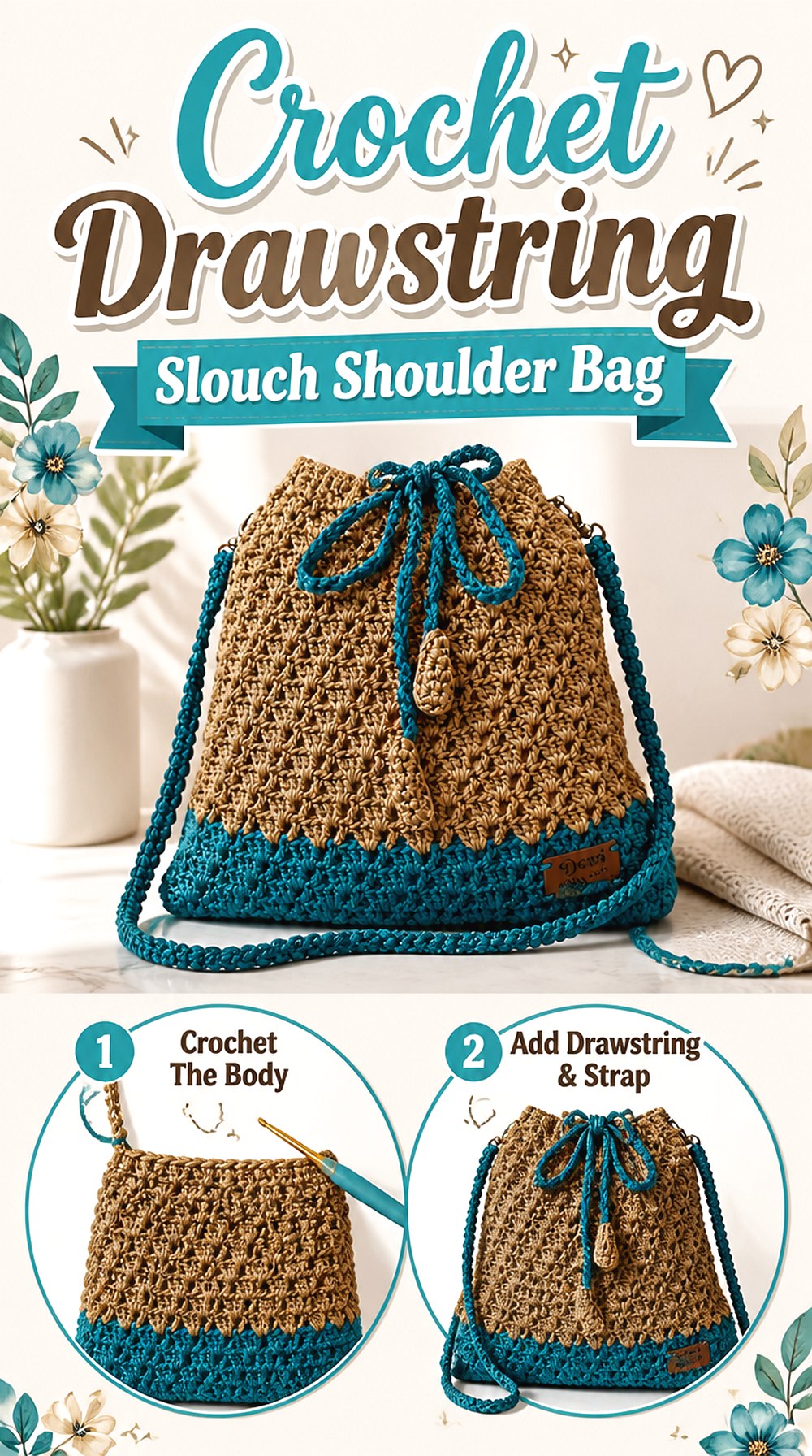
A drawstring changes the top of a relaxed crochet bag more dramatically than a snap or open hobo neck. SANG DEWI CRAFT’s tutorial demonstrates a crochet drawstring bag with a separate base, patterned body, drawstring components, strap hardware, and shoulder strap. The source also provides finished measurements for the creator’s example.
This idea works well for readers who like a soft pouch or bucket silhouette but want the opening to gather deliberately. Unlike permanent hobo tapering, the top can spread for access and then contract again when the drawstring is tightened. The separate strap components also make it visually different from the integrated handles used earlier. If you want a slouchier interpretation, preserve the tutorial’s construction logic while being cautious about changing to a much softer yarn.
The Drawstring Controls a Wide Opening
A gathering cord can close more of the circumference than a single center snap, making it useful when you prefer an adjustable opening. Check the finished video carefully to see how much the source bag actually closes rather than assuming every drawstring produces a completely sealed top. Small belongings may still benefit from an inner pouch depending on the finished gaps and fabric texture.
Strap Hardware Adds More Components to Verify
The source materials include D-ring-style hardware, hooks, and strap-related components. If you substitute them, confirm compatibility before crocheting around fixed dimensions. Rings and clips need to work with the intended strap width, and the attachment area should lie flat enough that the hardware does not twist the upper bag out of shape.
Test the Gather Before Finishing the Cord
A drawstring should move through the upper section without forcing the bag into uneven folds. Before trimming or permanently finishing any adapted cord, open and close the bag several times and look at how the gathering distributes around the top. If one area bunches much more tightly, correct the alignment before treating decorative finishing as complete.
Original Tutorial and Creator Credit
Creator: SANG DEWI CRAFT
How These Slouchy Bag Shapes Compare
For the strongest traditional hobo look, the chunky Magic Knot Bag option and Meladora’s tapered version put the wide-body/narrow-top relationship front and center. Kenikse Crochet offers a softer double-handle alternative without relying on hardware, while the superstory project keeps the hobo shape but adds visible X-mesh and a snap.
Kristines Crochets is a better direction when you prefer deep bucket proportions rather than a narrow hobo neck. The tinycrochet crescent sits closer to the body and makes adjustable hardware and curved geometry part of the design. Creggy’s Crochet keeps the sling concept smaller and simpler, while SANG DEWI CRAFT is the clearest choice when you want a wide opening that can be actively gathered with a drawstring.
Conclusion
Choose the bag by the kind of slouch you actually want. A tapered hobo creates folds through shaping, a soft twin-handle bag lets the fabric supply most of the drape, and a bucket style gives you depth without the same narrow upper curve. Crescent and sling bags are better when you want the body positioned closer to you, while a drawstring offers more control over a relaxed opening.
Yarn flexibility, strap placement, and lining can change any of these silhouettes, so compare those details before substituting materials or resizing. Once you choose the construction that suits your carry style, use the original tutorials for exact stitches, counts, assembly, and finishing details.
Frequently Asked Questions
What makes a crochet bag slouch instead of staying structured?
Slouch usually comes from flexible fabric combined with a shape that allows the body to fold or drop from its carrying points. Broad hobo bodies, tapered tops, deep pouches, and curved slings all create different versions of that effect. Yarn matters too. A firm cord may retain a clearer outline, while a softer fabric can collapse more readily. The construction and material need to work together.
Is cotton a good choice for a crochet slouchy bag?
Cotton can work well, but “cotton” alone does not predict the finished result. A fine DK cotton behaves differently from thick cotton cord or a braided macramé yarn. Compare the tutorial’s material with your substitute for thickness, flexibility, and stretch. If you want to preserve the creator’s silhouette, a yarn with similar fabric behavior is usually a safer starting point than a dramatically different weight.
Should I line a crochet slouchy bag?
A lining is optional unless the specific tutorial requires it, but it can be useful when the crochet fabric is open, stretches more than you want, or needs help containing small belongings. The trade-off is that lining limits some of the exterior’s natural expansion. If preserving a deep, fluid hobo drop is important, consider how the lining dimensions will affect that movement before sewing it in.
How can I keep a crochet bag strap from stretching too much?
Start by following the source tutorial’s strap construction and intended materials. Stretch is influenced by yarn, stitch fabric, strap length, and the load placed in the bag. If you change any of those factors, test the unfinished strap in the intended carrying position before finalizing it. Reinforcement may be worth considering for some designs, but it should be compatible with the original construction rather than added blindly.
Which closure works best for a slouchy crochet bag?
It depends on how much access and containment you want. An open hobo gives the quickest access. A snap brings the center together but usually leaves parts of the opening exposed. A drawstring gathers a larger portion of the top, while a zipper can offer greater containment but may reduce free stretch. Choose the closure based on the finished opening and what you normally carry.
Can I make a crochet slouchy bag larger than the tutorial?
Often you can adapt a concept, but enlarging every dimension does not guarantee the original shape will survive. More fabric can increase downward stretch, move the bottom lower, widen the opening, and put different demands on the strap. Compare the tutorial’s proportions first. When the creator provides resizing guidance, follow that rather than inventing stitch or row changes from a finished photo alone.