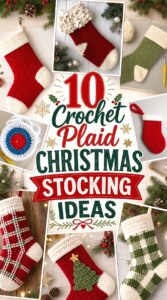
Plaid can change a crochet Christmas stocking more than simply swapping yarn colors. Large buffalo checks create a bold farmhouse look, narrow tartan lines feel more traditional, and selective plaid on the leg or cuff can keep the heel and toe visually clean. Yarn thickness, stocking construction, texture, and the placement of color changes also affect how clearly the checks read.
The collection below includes one dedicated plaid stocking tutorial plus carefully selected stocking constructions that can be adapted for plaid. That distinction matters: the non-plaid tutorials should be followed for their original stocking construction, while the plaid suggestions here are independent design-planning ideas rather than replacements for the creators’ instructions.
Quick List
- Rustic Farmhouse Buffalo Plaid Crochet Christmas Stocking
- Nordic Colorwork Plaid Crochet Christmas Stocking
- Classic Surface-Line Plaid Crochet Christmas Stocking
- Patchwork Plaid-Palette Crochet Christmas Stocking
- Picot-Texture Plaid Accent Crochet Christmas Stocking
- Oversized-Check Chunky Crochet Christmas Stocking
- Any-Yarn Tartan Crochet Christmas Stocking
- Mini Plaid Crochet Christmas Stocking Ornament
- Traditional Plaid-Leg Crochet Christmas Stocking
- Soft-Edge Feltable Plaid Crochet Christmas Stocking
How to Add Plaid Without Changing the Stocking Shape
The safest plaid adaptation is usually one that does not interfere with the shaping instructions. Heels, toes, decreases, and increases already change the available stitch space, so forcing an all-over check repeat into those areas can make color placement unnecessarily complicated.
One practical option is to keep the foot, heel, and toe solid while concentrating the plaid on the straighter leg. Another is to crochet horizontal stripes in the original stocking shape and add contrasting vertical surface-crochet lines afterward. That can create a tartan-like grid without rewriting the stocking’s stitch counts. For true carried-color buffalo plaid, use a tutorial specifically designed around that colorwork or confirm that your planned repeat fits the construction before committing to the full stocking.
Yarn Choice Changes How Clearly the Plaid Reads
Plaid depends on visible boundaries between colors. Smooth yarn with clear stitch definition generally makes small checks and narrow tartan lines easier to distinguish. Very fuzzy yarn can soften those boundaries, which may be attractive for a rustic stocking but less suitable when the plaid itself is meant to be the main feature.
Thickness matters too. A chunky stocking naturally produces larger-looking stitches, so oversized checks tend to suit it better than tiny, complicated color blocks. If you are substituting yarn in an existing tutorial, do not assume the finished stocking will retain the creator’s dimensions. Yarn weight, hook choice, tension, and stitch structure all affect scale. Make a small colorwork sample first when the plaid repeat is important to the final look.
Plan the Cuff, Heel, Toe, and Hanger as Separate Design Areas
A plaid stocking does not need checks everywhere. In fact, separating the stocking into visual zones often produces a cleaner result. A solid heel and toe can frame a busy plaid body, while a plain cuff gives you room for a name, tassel, or other restrained decoration.
The hanging loop deserves practical attention as well. Crochet fabric can stretch, particularly when the stocking contains gifts. Treat the loop and its attachment point as functional parts rather than decorative afterthoughts, and avoid assuming a tutorial’s hanger is intended for substantial weight unless the creator specifically says so. If the finished stocking will be filled rather than displayed empty, consider how much the main fabric stretches and whether an optional lining would help preserve its shape.
1. Rustic Farmhouse Buffalo Plaid Crochet Christmas Stocking
 SAVE
SAVEThis is the most direct match for readers who want recognizable buffalo plaid rather than a plaid-inspired adaptation. MJ’s Off The Hook Designs presents a bulky rustic farmhouse stocking with broad checks and a substantial silhouette. The creator specifically describes using super bulky yarn or holding two strands of worsted-weight yarn together, which contributes to the bold scale of the finished fabric.
Because the check pattern is already integrated into the stocking design, this is a stronger choice than trying to force plaid into an unrelated construction. It also gives the collection a useful reference point for judging how check scale, yarn thickness, and stocking proportions interact.
Large Checks Need Strong Color Separation
Buffalo plaid is easiest to recognize when neighboring values are sufficiently different. Red, a deeper red, and black create the familiar traditional effect, but the same logic can work with other coordinated dark, medium, and brighter shades. Before starting the full stocking, place the yarns together and check whether the middle value remains distinguishable from both neighboring colors.
Bulky Fabric Creates a More Substantial Silhouette
Thicker yarn makes the stocking feel visually heavier and enlarges the apparent scale of every check. That suits farmhouse decorating particularly well, but it also means this design will not resemble a delicate tartan stocking. If you want narrow lines and many small intersections, choose a finer construction elsewhere in the list rather than shrinking this concept without verifying gauge and proportions.
Keep the Cuff From Competing With the Plaid
A strong check pattern already provides plenty of visual movement. A simple solid or softly textured cuff can create a useful resting point at the top. If you customize the trim, compare its visual weight with the body before attaching extra tassels, pompoms, or lettering. Too many high-contrast details can make the stocking look fragmented rather than intentionally plaid.
Original Tutorial and Creator Credit
Creator: MJ’s Off The Hook Designs
2. Nordic Colorwork Plaid Crochet Christmas Stocking
 SAVE
SAVEThis version starts from a stocking construction designed for detailed crochet colorwork. The Unraveled Mitten’s tutorial works from the toe upward, includes a short-row heel, and introduces Fair Isle colorwork on the leg before finishing with a textured cuff and hanger.
The original design is Fair Isle rather than plaid, so the value here is its colorwork-friendly stocking structure. A plaid adaptation should not simply replace the creator’s chart with an improvised repeat. Instead, use the tutorial for the stocking construction and plan a compatible plaid section independently, checking that your chosen repeat suits the available fabric width.
Use the Straight Leg as the Main Plaid Canvas
The leg gives a repeated geometric design more room to remain visually consistent than the shaped toe or heel. Keeping those lower sections solid can also make the plaid feel more deliberate. If your planned checks do not divide neatly across the leg, adjust the design concept rather than changing the tutorial’s shaping counts without understanding the consequences.
Fair Isle and Plaid Create Different Visual Rhythms
Fair Isle often uses small repeated motifs, while plaid depends on recurring horizontal and vertical relationships. That means a successful adaptation needs more than choosing different colors. Decide whether you want block checks, narrow tartan lines, or a simplified geometric grid before beginning the colorwork area. A small swatch can reveal whether the proposed repeat remains readable at the chosen yarn scale.
Watch the Inside of a Multi-Color Stocking
Frequent color changes can leave carried strands or additional bulk inside the fabric, depending on the technique. That matters more in a stocking that will actually hold small items than in one used strictly as mantel décor. Examine the interior as you work and decide whether the finished fabric is smooth enough for its intended use.
Original Tutorial and Creator Credit
Creator: The Unraveled Mitten
3. Classic Surface Line Plaid Crochet Christmas Stocking
 SAVE
SAVEA smooth, traditional stocking makes a useful base when you want tartan-style lines rather than block-by-block carried colorwork. Crochet With Tiffany’s tutorial covers a classic stocking with separate attention to the toe, heel opening, cuff, hanging loop, and heel, using medium-weight yarn in the demonstrated version.
For a plaid adaptation, consider crocheting broad horizontal color bands while keeping the original shaping intact, then adding selected vertical surface lines once the body is finished. This lets the stocking retain its construction while the decorative grid is developed on top of the fabric.
Surface Lines Reduce Colorwork Around the Heel
Vertical plaid lines become awkward when they must follow heel shaping. Adding decorative lines to completed fabric can avoid rewriting those sections. Concentrate them where they can travel cleanly along the leg, and stop or redirect the decorative treatment intentionally rather than forcing a straight line through shaped areas where it no longer sits naturally.
A Solid Toe Grounds a Busy Tartan Body
Traditional tartan effects can involve several intersecting lines, so the stocking benefits from quieter areas. A solid toe and heel can repeat one of the plaid colors and visually connect the design without adding more checks. This is also useful when your chosen plaid repeat does not fit neatly into the changing circumference of the lower stocking.
Check Surface Tension Before Finishing Every Line
Decorative surface crochet can draw the underlying fabric inward when worked too tightly. Add one test line first and lay the stocking flat. If the fabric puckers or the line pulls the leg out of shape, adjust the tension before completing the remaining vertical details.
Original Tutorial and Creator Credit
Creator: Crochet With Tiffany
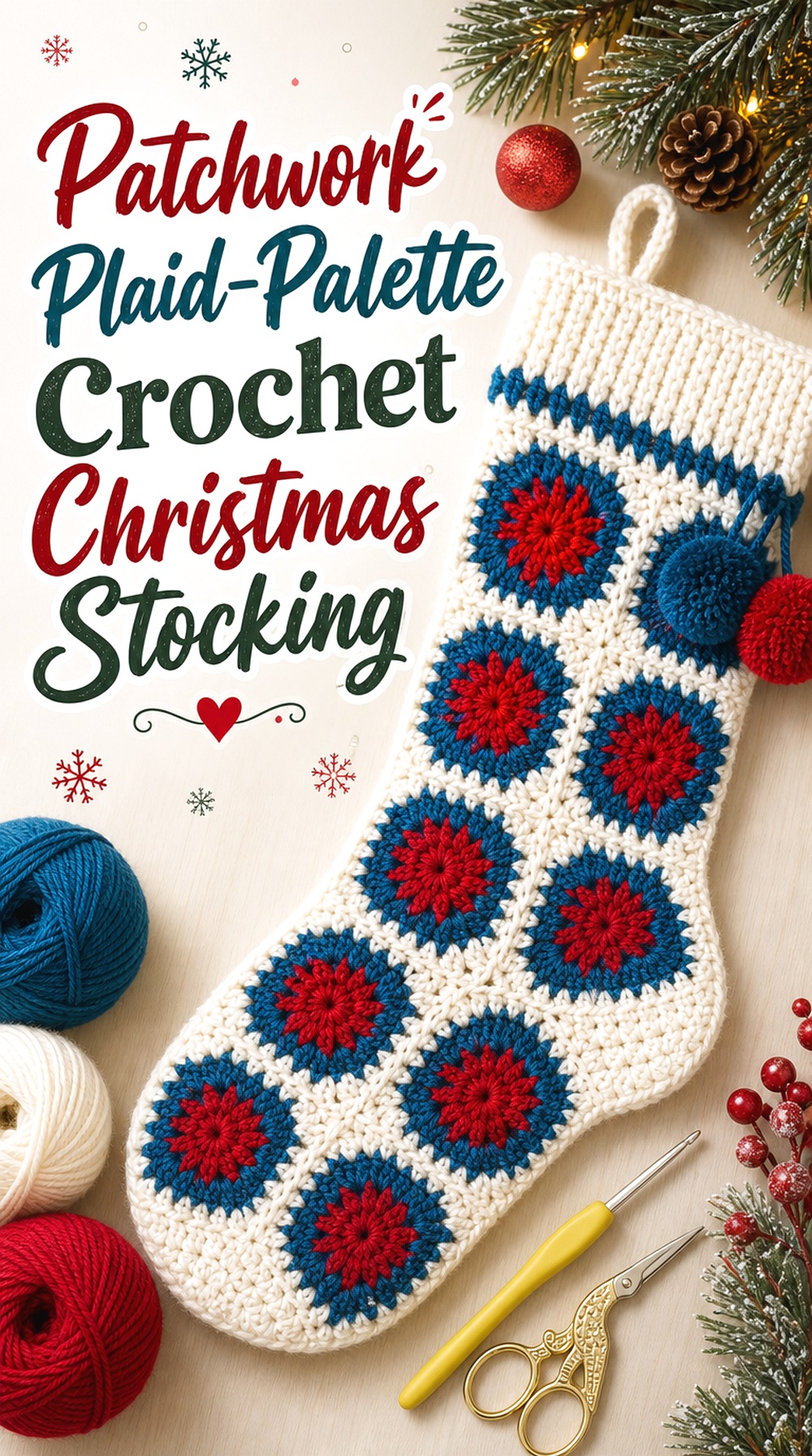
4. Patchwork Plaid Palette Crochet Christmas Stocking
 SAVE
SAVEBella Coco’s stocking takes a very different route: it is assembled from crochet hexagons rather than presenting one uninterrupted stocking surface. That makes it better suited to a patchwork interpretation of plaid than to a literal buffalo-check grid.
Choose a controlled plaid palette—perhaps a light neutral, medium red, dark burgundy, and black—and distribute those colors across the motifs so neighboring pieces repeat in an intentional rhythm. The finished result will read as patchwork with plaid influences rather than woven tartan, which makes this idea useful for readers who like the Christmas plaid color story but want motif construction.
Map the Color Distribution Before Joining Motifs
A motif stocking can look random if colors are assigned one piece at a time. Arrange the completed motifs in the intended stocking shape before permanent joining and photograph the layout. Look for accidental clusters of one color and decide whether the dark shades are distributed evenly enough to keep the finished stocking balanced.
Motif Seams Become Part of the Pattern
Unlike smooth colorwork, joined motifs introduce visible boundaries. Those seams can strengthen a patchwork aesthetic, so there is little reason to disguise them completely. Instead, decide whether the joining yarn should blend into the motifs or act as another controlled line in the overall plaid-inspired palette.
Block Compatible Motifs Before Final Assembly
Small differences in motif size become more noticeable when several pieces meet at one seam. Compare the finished dimensions before joining and correct obvious inconsistencies first. Color planning will not rescue a layout if individual motifs pull the stocking in different directions.
Original Tutorial and Creator Credit
Creator: Bella Coco
5. Picot Texture Plaid Accent Crochet Christmas Stocking
 SAVE
SAVEThe Turtle Trunk’s Picot Stocking is built around noticeable surface texture rather than colorwork. The creator’s finished stocking includes a shaped heel and cuff and is demonstrated in medium-weight yarn. Instead of covering that texture with complicated checks, use plaid as a controlled accent.
One option is a plaid-colored cuff with a quieter body; another is to introduce broad color bands through selected sections while allowing the picot texture to remain the primary detail. This idea suits readers who want plaid colors and geometry without losing the tactile character of the stocking.
Texture and Tiny Checks Can Compete
Raised stitches already cast small shadows and break up the surface. Very small checks may therefore become difficult to distinguish. Wider color blocks or restrained striping usually gives the texture more room to remain visible. Hold the work at normal viewing distance rather than judging the plaid only from a close-up.
A Plaid Cuff Can Be Enough
If modifying textured body stitches seems likely to interfere with the tutorial, keep the original body intact and place the plaid treatment at the cuff. A detachable-looking visual band at the top can still connect the stocking with other plaid holiday décor while leaving the creator’s principal stitch pattern undisturbed.
Repeat One Body Color in the Trim
A plaid accent can look pasted on if none of its colors appear elsewhere. Repeating one shade at the heel, toe, hanging loop, or small edging creates a stronger visual connection without spreading the plaid over every surface.
Original Tutorial and Creator Credit
Creator: The Turtle Trunk
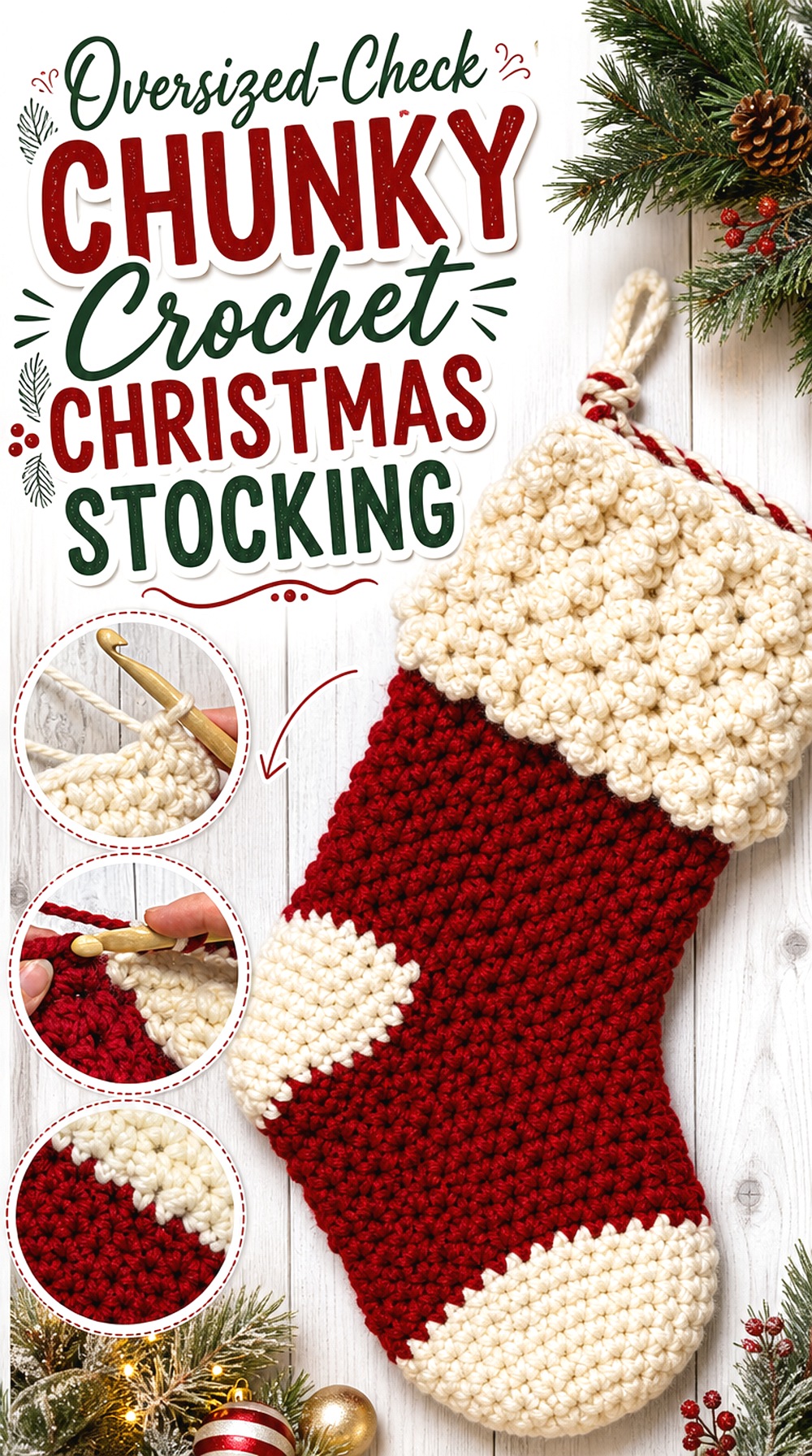
6. Oversized Check Chunky Crochet Christmas Stocking
 SAVE
SAVERich Textures Crochet’s Simply Christmas Stocking uses super-bulky yarn and gives particular emphasis to a plush, highly textured cuff. That scale makes it a natural candidate for oversized plaid rather than a dense tartan.
Think in broad blocks: a few large horizontal bands combined with carefully placed vertical accent lines can suggest large checks without forcing numerous color changes into thick fabric. The substantial cuff can remain neutral so the checks dominate the body, or it can repeat the lightest plaid color for a snowy contrast. This style works especially well when the stocking is meant to read clearly from across a room.
Bigger Stitches Call for Bigger Checks
A color block that spans only a handful of chunky stitches can look spotty rather than plaid. Judge the check size in proportion to the whole stocking. If the pattern is not recognizable when viewed from several feet away, simplify it before adding more intersections or colors.
Keep the Plush Cuff Visually Separate
The tutorial’s cuff already contributes significant texture. Using a highly variegated or heavily checked cuff as well can make the top look disproportionately busy. A solid cuff provides a useful boundary between the plaid body and the mantel or greenery behind it.
Expect Yarn Substitution to Change Scale
Do not downsize a super-bulky design by simply choosing thinner yarn and assuming every proportion will remain correct. The tutorial’s gauge and fabric behavior are part of its construction. If a smaller stocking is the goal, choose a tutorial designed at that scale rather than relying on an unverified yarn substitution.
Original Tutorial and Creator Credit
Creator: Rich Textures Crochet
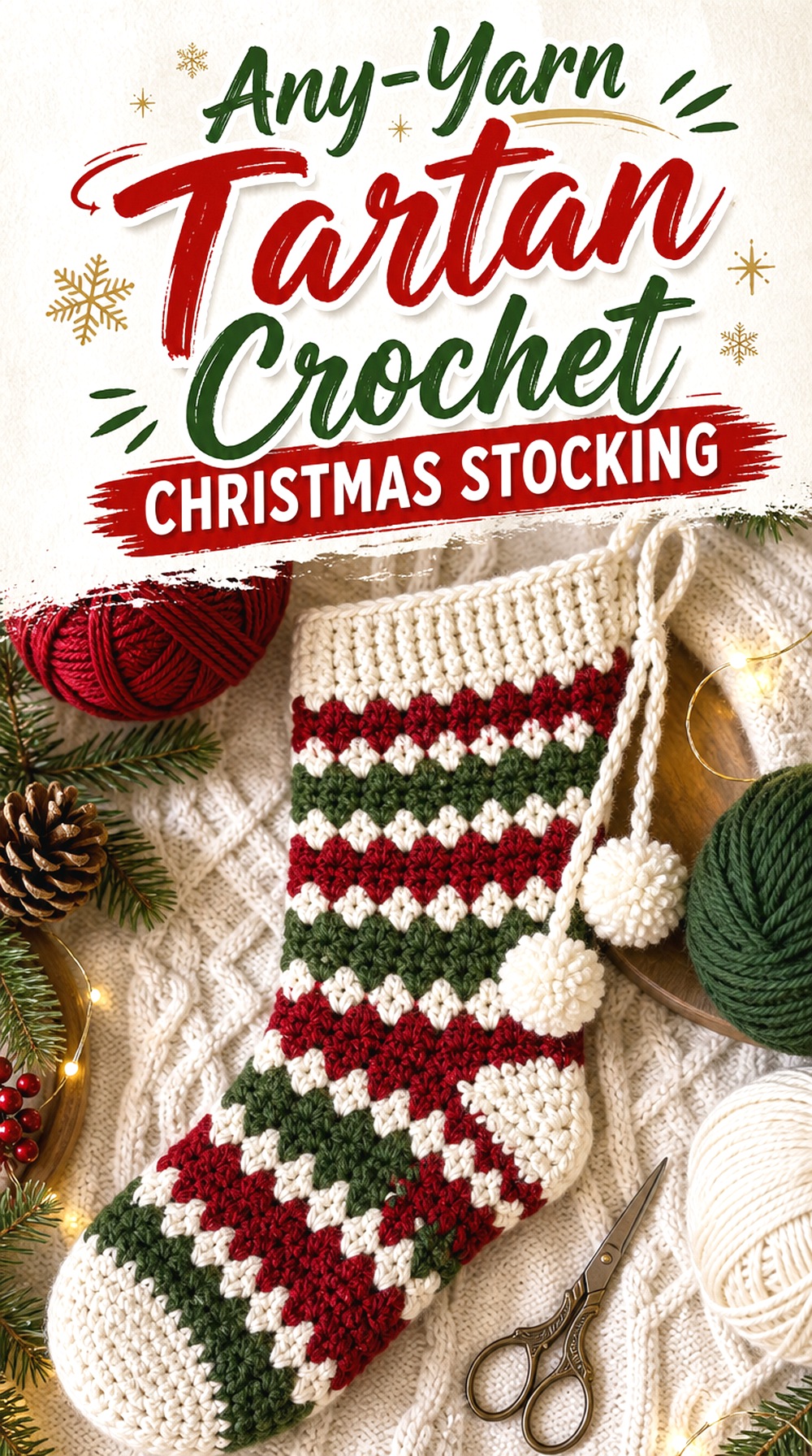
7. Any Yarn Tartan Crochet Christmas Stocking
 SAVE
SAVEPretty Darn Adorable Crochet Tutorials presents the Rainer stocking in several yarn-weight variations, giving readers a useful view of how one overall stocking concept changes with yarn scale. That makes this a good foundation for comparing fine-looking tartan with broader rustic plaid.
Rather than inserting complicated color changes into the shaped sections, establish horizontal stripes in compatible areas and consider surface-worked vertical lines afterward. With a thinner yarn, those lines can appear more detailed; with chunky yarn, simplify the plaid so the intersections do not overwhelm the stitch definition.
Choose the Plaid Scale After Choosing the Yarn
Do not design a tiny tartan repeat first and then expect it to translate cleanly to every yarn weight. Thicker yarn reduces the number of visible stitches across a given area, so the graphic needs to become simpler as the stitches become larger.
Keep Vertical Lines Consistently Spaced
Tartan-inspired surface lines are most convincing when their spacing looks intentional. Before adding them, identify visible stitch columns or other repeatable reference points. If the stocking twists slightly in the round, check alignment from the front rather than assuming a mathematically spaced line will automatically look centered when displayed.
Let One Color Carry Through the Heel and Toe
Using a single plaid color for the shaped lower sections simplifies the design while preserving continuity. A darker shade often creates a strong frame, while a lighter one produces a softer result. The important point is consistency: repeat that choice elsewhere so the solid areas feel integrated rather than unfinished.
Original Tutorial and Creator Credit
Creator: Pretty Darn Adorable Crochet Tutorials
8. Mini Plaid Crochet Christmas Stocking Ornament
 SAVE
SAVEA miniature stocking gives plaid a different purpose. Instead of holding full-size gifts, this Crochet Critters construction is intended as a small Christmas stocking and can be adapted into an ornament, gift embellishment, or tiny surprise holder.
At this scale, an intricate buffalo check may become visually crowded. A simpler two-direction grid—perhaps striped fabric with only a few vertical accent lines—can communicate plaid more clearly. This is also a practical way to test a color combination before committing to a full-size stocking, because you can see how the colors interact on curved crochet fabric.
Simplify the Plaid for a Smaller Surface
Miniature projects have less room for repeated checks. Prioritize recognizable contrast over complexity. Two broad horizontal bands and a few carefully positioned vertical lines may create a clearer plaid impression than trying to squeeze an adult-stockings-sized repeat into a tiny piece.
Keep Embellishments Proportional
Large pompoms, oversized tags, and heavy cuffs can overwhelm a mini stocking. If it will hang from a tree or package, choose lightweight finishing details and check that the hanger does not pull the stocking sideways.
Use Mini Stockings as Color Swatches
When planning a matching family set, a small stocking can help compare combinations under actual holiday lighting. A palette that looks balanced in skeins may appear much darker once several shades are crocheted tightly together. Use the miniature version to evaluate contrast before repeating the scheme at larger scale.
Original Tutorial and Creator Credit
Creator: Crochet Critters
9. Traditional Plaid Leg Crochet Christmas Stocking
 SAVE
SAVENaztazia’s tutorial demonstrates a classic stocking in worsted-weight yarn, working through the toe, body, heel, leg, cuff, and hanging loop. Its traditional form is useful for a highly controlled plaid adaptation: keep the toe, foot, and heel solid, then place the check pattern only on the straight upper leg.
That division makes the plaid a clear focal point while reducing the number of shaped sections where color placement has to be reconsidered. A white or cream cuff can then separate the patterned leg from the hanging loop and create the familiar contrast of a traditional Christmas stocking.
Start the Plaid After the Heel
A straight leg is much easier to organize visually than a heel transition. Waiting until the major shaping is complete gives the checks a more regular canvas. It also allows the solid foot to remain practical-looking rather than visually fragmented.
Align the Front Before Choosing a Check Center
Stockings are normally viewed from one side when hanging. Decide which face will be presented, then center the strongest part of the plaid on that view. A technically even repeat can still look awkward if a narrow partial check lands at the most visible edge.
A Plain Cuff Leaves Room for Personalization
If you intend to add a name or small decorative tag, a solid cuff gives it better contrast than a busy check. Keep any lettering or appliqué proportionate and confirm that it does not interfere with the cuff’s stretch or the hanging loop.
Original Tutorial and Creator Credit
Creator: naztazia
10. Soft Edge Feltable Plaid Crochet Christmas Stocking
 SAVE
SAVEThe Crochet Crowd’s full-size stocking tutorial specifically discusses making the stocking in acrylic or wool and shows felting as an optional direction rather than a requirement. That creates an unusual plaid possibility: a wool stocking whose grid becomes softer and less stitch-defined after controlled felting.
This is not the choice for someone who wants razor-sharp buffalo checks. Instead, it suits a muted, lodge-style plaid where the colors and intersections can look more blended. Because felting changes crochet fabric, treat the unfelted and felted versions as different design outcomes rather than assuming the final dimensions or surface will remain unchanged.
Felting Can Soften Plaid Boundaries
The visual appeal of tartan often comes from crisp crossing lines. Felting intentionally reduces stitch definition, so detailed plaid can lose clarity. Use a simpler, larger-scale layout if you plan to felt, and sample the yarn combination first rather than assuming every color and fiber will behave identically.
Fiber Choice Determines Whether Felting Is Relevant
Not every yarn felts. If you want the tutorial’s felted direction, confirm the fiber content and care information for your chosen yarn instead of relying on appearance. If you prefer sharp checks, leaving the stocking unfelted may be the better design decision even when the yarn itself could felt.
Finish Size Is a Checkpoint, Not an Assumption
Felting can alter dimensions and fabric density, and the result depends on materials and process. If the stocking needs to fit a specific display space or hold particular items, do not rely on an unfelted measurement as the expected final size. Make the size decision around the creator’s instructions and your own sample behavior.
Original Tutorial and Creator Credit
Creator: The Crochet Crowd
Which Plaid Stocking Style Should You Choose?
| Stocking idea | Plaid approach | Main visual effect | Key checkpoint |
|---|---|---|---|
| Rustic Farmhouse | Integrated buffalo plaid | Bold, traditional checks | Keep three-value contrast clear |
| Nordic Colorwork | Planned geometric colorwork | Detailed and graphic | Confirm repeat compatibility |
| Classic Surface-Line | Stripes plus vertical lines | Tartan-like grid | Avoid tight surface crochet |
| Patchwork | Repeated plaid palette | Handmade patchwork | Plan motif color placement first |
| Picot Accent | Limited plaid areas | Texture-led design | Do not bury texture under tiny checks |
| Chunky Oversized Check | Large color blocks | Strong mantel statement | Scale checks to thick stitches |
| Any-Yarn Tartan | Scale-adjusted plaid | Flexible classic look | Choose yarn before designing repeat |
| Mini Plaid | Simplified grid | Ornament-scale plaid | Reduce pattern complexity |
| Traditional Plaid Leg | Plaid upper section only | Clean classic stocking | Begin checks after major shaping |
| Feltable Plaid | Large softened checks | Muted lodge-style finish | Sample felting before sizing |
Conclusion
For unmistakable buffalo plaid, the rustic farmhouse stocking is the clearest starting point because the source tutorial is already designed around plaid. If you prefer traditional tartan, the classic, any-yarn, or plaid-leg options provide smoother surfaces for stripes and added vertical lines. The chunky idea favors oversized checks, while the mini stocking requires a much simpler repeat. Patchwork and picot versions work better when plaid is treated as a palette or accent rather than forced across every stitch.
Whichever route you choose, protect the original stocking construction first and plan the plaid around it. Use the credited original tutorials for exact shaping, heel construction, cuffs, and finishing details.
Frequently Asked Questions
Can any crochet Christmas stocking pattern be changed to plaid?
Not automatically. A simple smooth stocking generally gives you more options than one with complex texture, cables, or extensive shaping. If changing colors would interfere with the original stitch pattern, keep the construction intact and consider adding plaid through horizontal stripes, surface lines, a separate cuff, or another decorative area. Never assume a plaid repeat can replace the creator’s original colorwork without checking compatibility.
What is the simplest way to create a tartan look without rewriting a stocking pattern?
One practical approach is to crochet compatible horizontal stripes while following the stocking construction, then add a small number of vertical surface-crochet lines to the straight portions afterward. This creates crossing directions without requiring the vertical lines to be carried through every round. Test the surface tension first, because lines worked too tightly can pucker the stocking.
Should the heel and toe also be plaid?
They do not need to be. Solid heels and toes often make a busy plaid stocking easier to read and avoid awkward pattern interruptions around increases, decreases, and heel shaping. Repeating one of the plaid colors in those areas is enough to connect them visually with the patterned leg.
Why does my crochet plaid look more like random color blocks?
Check the relationship among your colors and the scale of the repeat. If the shades are too similar, intersections can disappear. If the blocks are too small for the yarn, the design may look speckled rather than checked. Make a swatch, view it from normal display distance, and adjust either the color contrast or the size of the blocks before making the stocking.
Does super-bulky yarn work for crochet plaid stockings?
It can work particularly well for large buffalo-style checks because the thick stitches create a bold graphic surface. It is less suited to very fine tartan lines unless the stocking itself is extremely large. Match the complexity of the plaid to the stitch scale rather than trying to reproduce the same repeat in every yarn weight.
Is lining useful for a crochet plaid Christmas stocking?
A lining can be worth considering when the crochet fabric stretches considerably, when carried colorwork leaves strands that might catch small items, or when you want the stocking to keep a more controlled shape while filled. A decorative stocking that hangs empty may not need one. If you add lining, make sure it does not restrict the stocking opening or distort the crochet exterior.