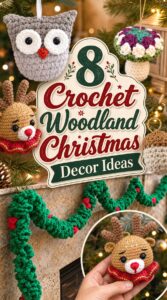
Woodland Christmas crochet works especially well when the display mixes natural forms rather than repeating one ornament shape. Pine cones and acorns bring small botanical details, while mushrooms, birds, owls, and reindeer add recognizable forest character. Evergreen pieces can then connect the smaller decorations into a more complete holiday scene.
The projects below include flat and dimensional ornaments, stuffed animal decorations, and a longer garland, so they do not all demand the same display space or finishing approach. Some make sense as small accents on tree branches, while others can carry more visual weight on a mantel, shelf, wreath, or garland. The comparisons focus on display style, structure, storage, material consequences, and details worth checking before following the original tutorials.
Quick List
- Crochet Textured Pine Cone Hanging Ornament
- Crochet Granny Square Mushroom Ornament
- Crochet Woodland Acorn Ornament
- Crochet Round Owl Christmas Ornament
- Crochet Reindeer Sphere Ornament
- Crochet Christmas Robin Bauble
- Crochet Evergreen Woodland Garland
- Crochet Flat Evergreen Tree Ornament
Choose Woodland Crochet by Display Style, Not Just Motif
A woodland theme can become visually crowded if every piece is a stuffed animal ornament of roughly the same scale. Mixing silhouettes usually gives the display more depth. Flat tree shapes sit close to branches or wreath bases, while pine cones and acorns introduce smaller natural forms. Rounded owls, reindeer, and robins work better as focal ornaments because their faces and dimensional shaping naturally draw attention.
Longer pieces solve a different problem. An evergreen garland can stretch across a mantel, shelf, window, or larger tree and visually connect smaller ornaments. Before starting several projects, decide where each finished piece will live. A decoration that looks balanced on a shelf may feel too bulky on a light tree branch, while a tiny ornament can disappear when used alone in a large mantel arrangement.
Yarn, Structure, and Storage Change the Finished Look
Woodland Christmas decor often depends more on shape definition than drape. Pine cone scales, mushroom caps, animal faces, and evergreen details are easiest to read when the crochet fabric keeps a reasonably clear silhouette. Changing yarn weight or fiber can alter that result, so do not assume a substitute will produce the same scale or firmness as the tutorial.
Storage deserves attention too. Flat ornaments stack easily, while stuffed pieces need enough room that antlers, ears, caps, and hanging loops are not crushed. Dimensional garlands can also tangle if packed tightly with other decorations. For pieces containing stuffing, beads, safety eyes, glued decorations, or similar small components, treat them as decorative objects unless the creator specifically establishes another intended use. Small detachable parts are especially important to consider around young children and pets.
1. Crochet Textured Pine Cone Hanging Ornament
 SAVE
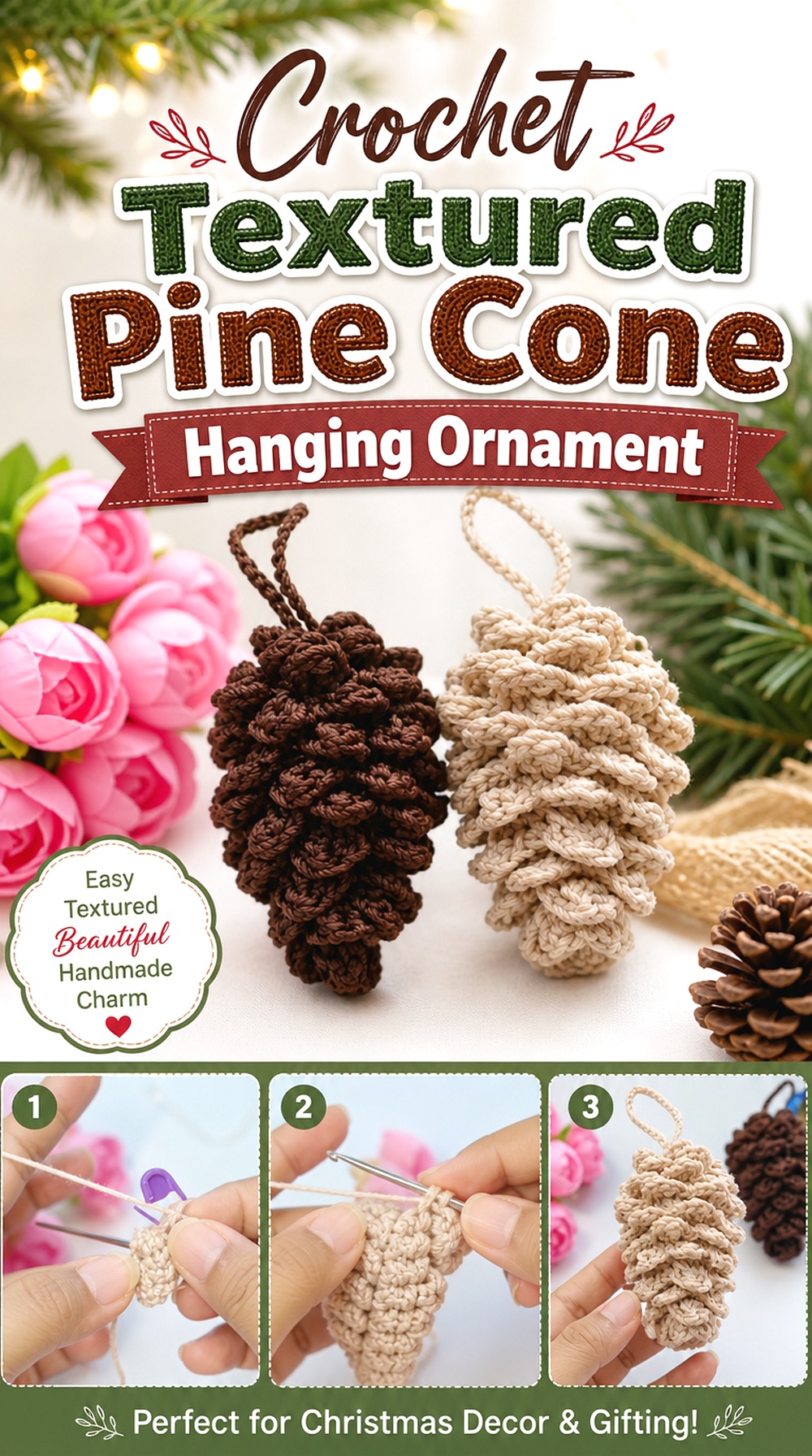
A crochet pine cone brings woodland character without relying on an animal face or traditional Christmas symbol. This version has a layered, dimensional surface that gives the ornament a recognizable cone silhouette and makes it useful for trees, wreaths, garlands, or arrangements with faux evergreen branches. Erfin R. Tangdilintin’s tutorial specifically presents the finished piece as a Christmas tree decoration and notes that thread and hook size can be adjusted together.
Because the interest comes from texture rather than color changes, it can also anchor a collection containing smoother pieces such as acorns and stuffed animal ornaments. The main planning question is scale: a larger, heavier pine cone will behave differently on a fine branch than a smaller thread version.
The Layered Surface Needs Clear Definition
The pine cone effect depends on individual raised sections remaining visually separate. A very fuzzy yarn can soften those edges and make the finished form read more like a generic textured ball. If the woodland shape matters more than softness, compare the yarn surface with the tutorial before substituting.
Also look at how firmly the finished cone holds its outline. For hanging decor, a distinct tapered form generally gives the ornament more visual impact than a shape that collapses against the branch.
Match the Hanging Point to the Display
A pine cone naturally hangs vertically, so the top attachment deserves more attention than it might on a flat ornament. Check that your hanging loop sits centrally before placing the piece on a tree or wreath. If it pulls from one side, the cone may twist and hide the most textured surface.
For wreath use, a shorter attachment can keep the ornament close to the greenery. A longer loop gives it more movement on a tree but also lets the piece swing farther from the branch.
Storage Matters More With Raised Texture
Dimensional crochet can flatten when compressed under heavier Christmas decorations. Store this ornament where the raised sections are not carrying weight for months at a time. A small box or compartment shared with similarly lightweight crochet ornaments is more suitable than tightly packing it beneath rigid baubles.
Before rehanging it the next season, reshape any compressed areas gently rather than assuming the original texture will immediately return on its own.
Original Tutorial and Creator Credit
Creator: Erfin R. Tangdilintin
2. Crochet Granny Square Mushroom Ornament
 SAVE
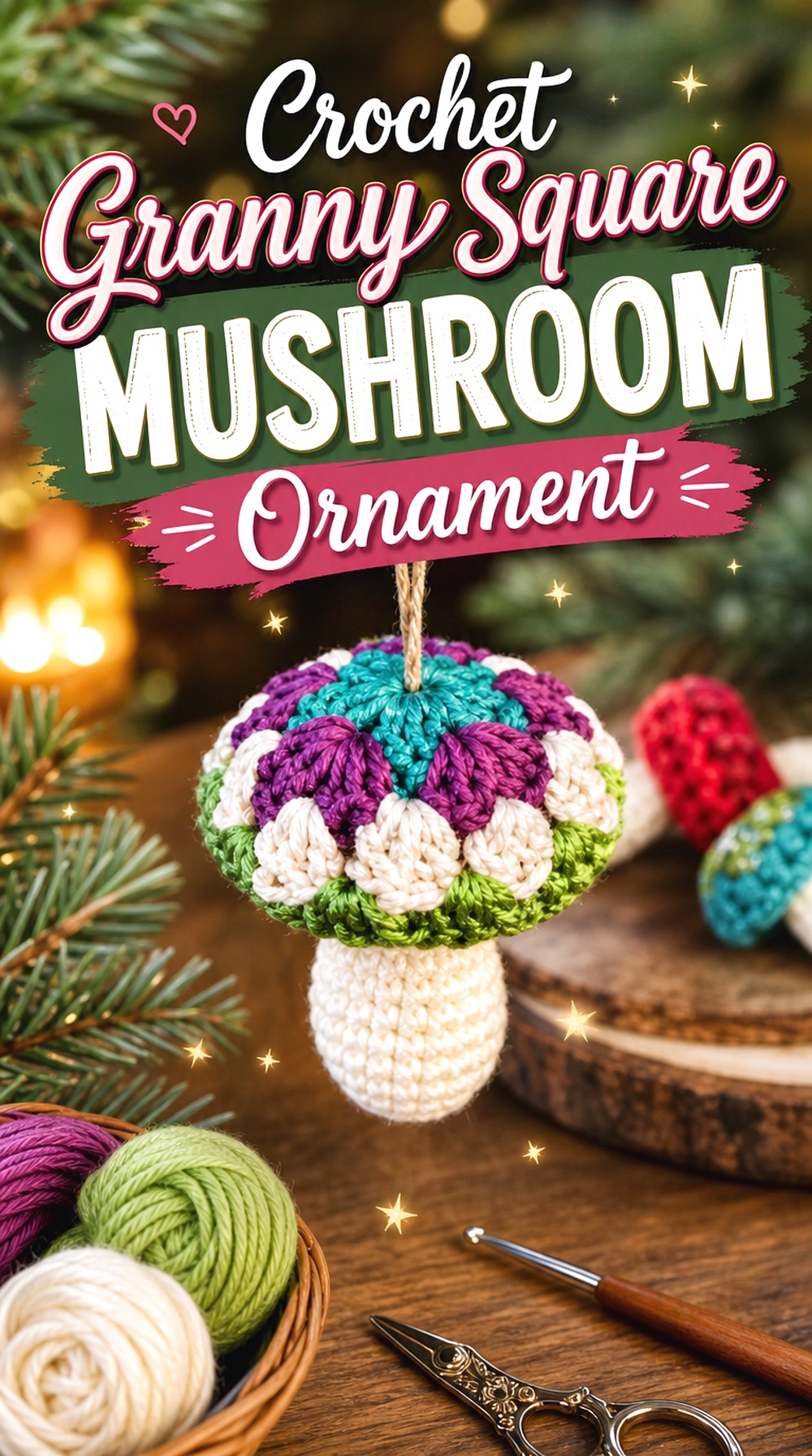
This mushroom takes a noticeably different route from a standard stuffed toadstool. Irina Tsokalo combines a dimensional stem and cap with a granny-square-inspired crochet treatment, producing a mushroom that feels decorative and graphic at the same time. The creator presents it specifically as a Christmas tree ornament or handmade Christmas gift.
The rounded cap creates more visual volume than a flat appliqué, yet the project is still compact enough to mix with acorns, birds, and pine cones. It is a good choice when the woodland collection needs a strong color focal point. The cap-to-stem proportion is what makes the silhouette readable, so substitutions should preserve that contrast rather than simply matching a favorite holiday palette.
Keep the Cap and Stem Visually Balanced
A mushroom can lose its recognizable shape if the cap becomes too soft, too large, or too similar in color to the stem. Compare your developing proportions with the creator’s finished example rather than judging each section separately.
If you change yarn, remember that both thickness and stiffness can affect how broadly the cap spreads. Using the same yarn family for both major sections can help them behave consistently even when the colors differ.
The Underside Will Be Seen on a Tree
Unlike a mushroom sitting upright on a shelf, a hanging ornament can rotate. That means the underside of the cap and the transition into the stem may become visible from several angles.
Before adding the hanging loop, turn the piece slowly and check whether loose ends or uneven finishing are noticeable from the back and underside. A clean finish matters more for a freely hanging ornament than for a decoration that always faces forward on a wall.
Use One Mushroom as a Focal Shape or Repeat It Intentionally
The broad cap makes this ornament visually stronger than a small acorn or flat evergreen. One mushroom can therefore work as an accent among simpler shapes. If you plan to crochet several, consider spacing them across the display instead of clustering every large rounded form in one area.
That keeps the tree or garland from feeling top-heavy and gives smaller woodland pieces enough room to remain visible.
Original Tutorial and Creator Credit
Creator: Irina Tsokalo
3. Crochet Woodland Acorn Ornament
 SAVE
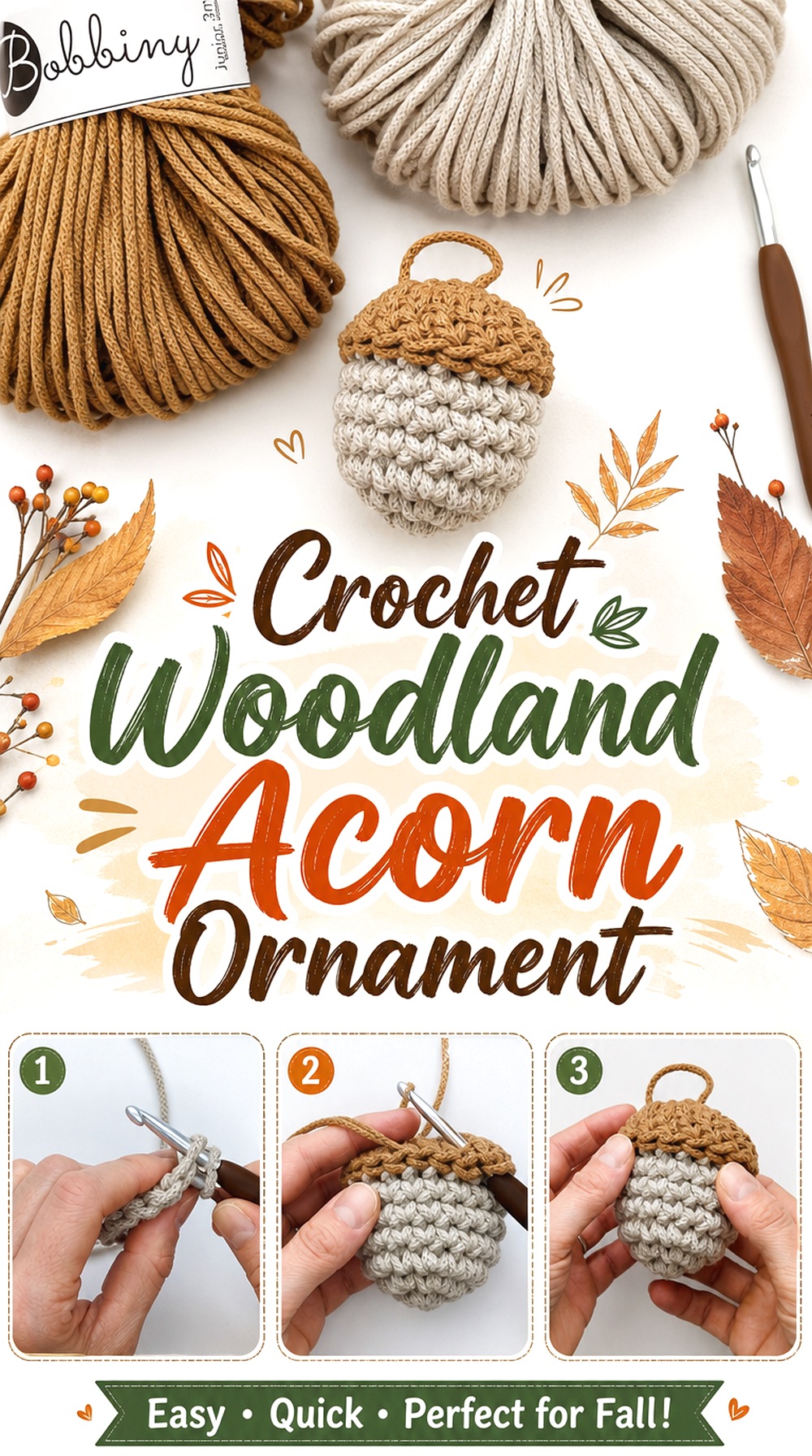
An acorn is one of the easiest woodland motifs to mix into a larger Christmas collection because its small botanical shape does not compete heavily with animal ornaments. Floral Feather Fiber Art’s tutorial makes a stuffed acorn ornament with contrasting cap and body sections and presents it for fall decorating as well as holiday use. The source uses braided cord rather than conventional soft yarn, which contributes to the visibly structured result.
That makes this idea especially useful beside softer pieces such as the owl or robin. The acorn can serve as a small filler ornament between larger focal shapes, or several can be grouped along a garland. Its value comes from scale and repetition rather than elaborate facial details.
A Firmer Material Changes the Acorn’s Role
The tutorial’s braided cord creates a different hand and structure from a soft amigurumi yarn. If you substitute another material, expect the surface and firmness to change even when the overall concept stays the same.
For a sharply defined decorative acorn, choose a material that does not blur the division between cap and lower body. If you prefer a softer appearance, check that the finished ornament still keeps enough shape to read clearly when hanging.
Contrast Should Separate the Cap From the Nut
The acorn needs two visually distinct zones. They do not have to be traditional brown shades, but the cap should remain easy to distinguish from the lower section. A low-contrast combination can make the ornament look like one small oval rather than an acorn.
Before committing to several ornaments, place the two yarns or cords together under the lighting where the decorations will actually be displayed. Subtle tonal differences that look clear in daylight can disappear under warm holiday lights.
Small Natural Motifs Fill Awkward Gaps Well
Large stuffed ornaments can leave bare spaces where branches are too short or too delicate to support them comfortably. An acorn-sized decoration is useful in those gaps.
It can also repeat a woodland color elsewhere in the arrangement without introducing another large object. When planning a set, use the acorn as supporting decor rather than expecting every small motif to carry the same visual weight as the reindeer, owl, or mushroom.
Original Tutorial and Creator Credit
Creator: Floral Feather Fiber Art
4. Crochet Round Owl Christmas Ornament
 SAVE
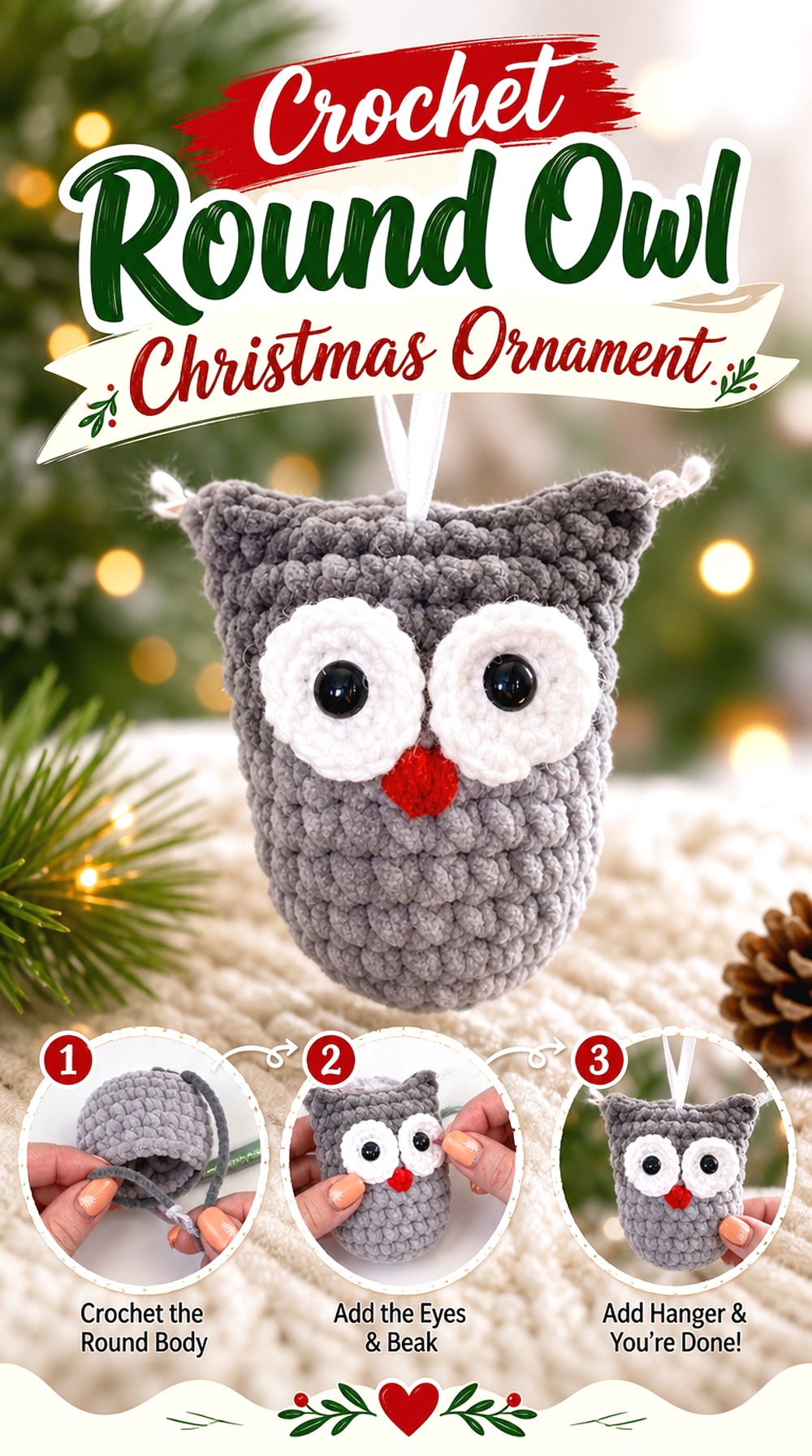
A round owl adds a recognizable woodland animal without creating a large dangling body. Double Dutch Crochet’s Christmas ornament tutorial builds a compact owl with separate eye, nose, body-detail, ear-detail, and ribbon stages, making the facial area a major part of the finished design.
Compared with the mushroom or pine cone, this project depends much more on feature placement. The body shape alone is simple; the eyes and upper-head details are what make the decoration read as an owl. That makes it useful as a focal ornament at eye level, where the face can be seen clearly. It also provides a softer, character-driven contrast to the botanical pieces in the collection.
Eye Placement Carries Most of the Expression
Owls are visually defined by their eyes, so small placement differences can change the finished expression more than they would on a pine cone or acorn. Before permanently attaching facial components, compare both sides from straight ahead.
The ornament should still read clearly from a normal viewing distance rather than only when held close. If the two eyes sit at noticeably different heights or angles, the asymmetry is likely to become more obvious once the piece hangs independently.
Keep the Hanging Ribbon Centered Above the Face
A round ornament can rotate easily if its hanging point is off center. Check the relationship between the ribbon and the owl’s face before securing the final suspension point.
When the ornament hangs naturally, the eyes should face outward rather than drifting toward one side. This matters particularly if the owl will sit among dense evergreen branches, where a slight twist can hide most of the facial details.
Treat Small Components as Decorative Details
The tutorial includes multiple small facial and decorative elements. If the ornament will be displayed where young children or pets can reach it, inspect every attached component and consider whether that location is appropriate.
A Christmas ornament is not automatically a toy simply because it is soft and crocheted. Higher branches, a mantel arrangement, or another controlled display may be more suitable when the finished piece contains small attachments.
Original Tutorial and Creator Credit
Creator: Double Dutch Crochet
5. Crochet Reindeer Sphere Ornament
 SAVE
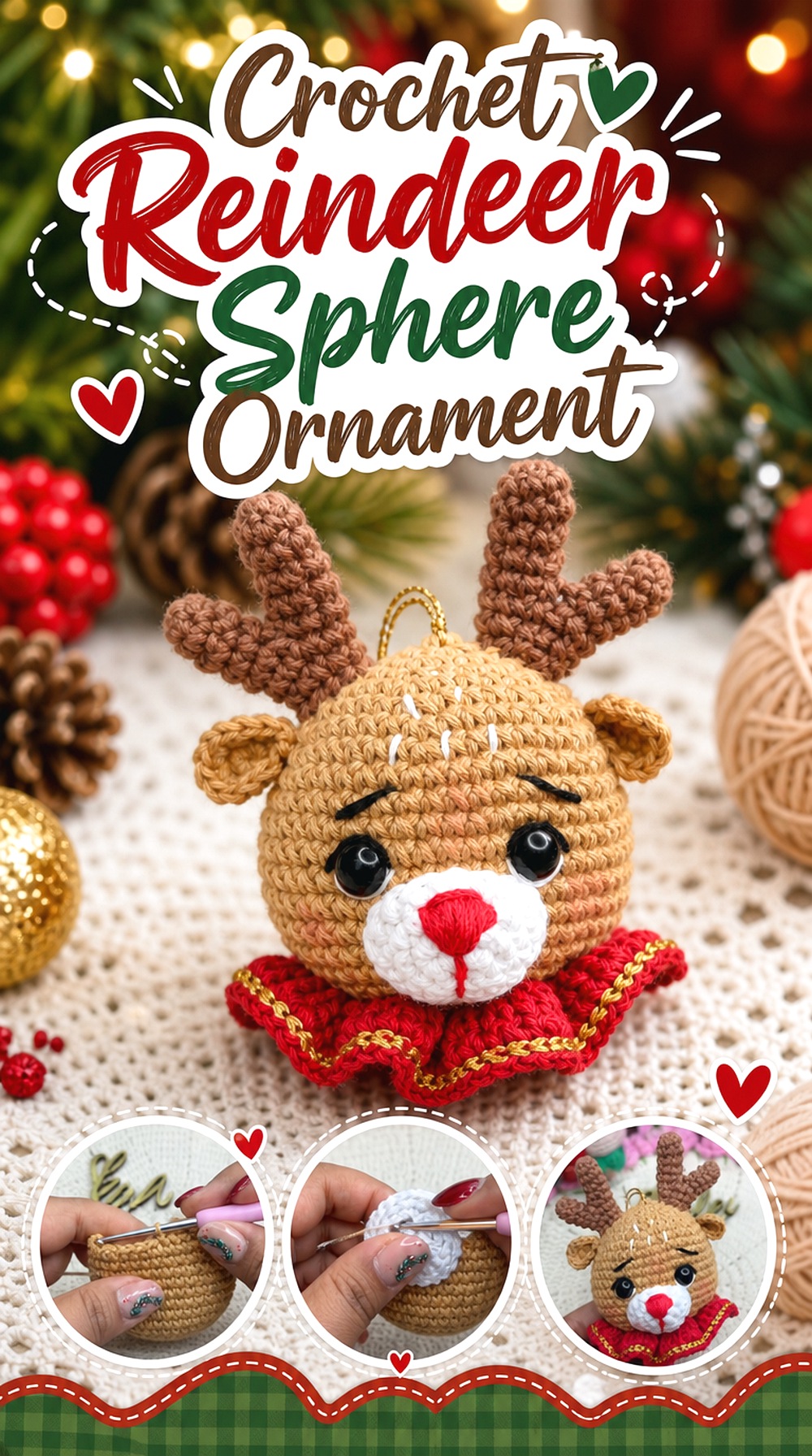
This reindeer takes a compact spherical approach rather than using a full standing animal body. Shelen Crochet’s tutorial builds the Christmas amigurumi around a rounded head form and then adds the muzzle, ears, antlers, and final details. The creator specifically describes it as a reindeer ornament for Christmas decorating or gifting.
The sphere format gives it more presence than the tiny acorn but keeps the ornament visually cleaner than a dangling four-legged animal. Antlers create the widest part of the silhouette, so this piece needs slightly more breathing room between nearby branches. It works especially well as one of the stronger character ornaments in a woodland tree.
Antlers Need Space Around Them
The widest details on a reindeer ornament are not necessarily the body. Antlers can catch against neighboring branches or become visually lost when pushed into dense greenery.
Before choosing the hanging location, hold the finished ornament where you plan to display it and check the side clearance. A branch with open space around the upper half will show the reindeer shape more clearly and reduce pressure on projecting details.
Check Symmetry Before Final Finishing
Ears and antlers create pairs, so noticeable differences between the left and right sides can change the whole expression. Compare their angles from the front before considering the ornament complete.
This is also a good point to look at the muzzle and nose in relation to the center of the face. Correcting placement is generally easier before every yarn tail has been fully hidden and every finishing stitch tightened.
Round Ornaments Need Secure Hanging Placement
A spherical head carries its weight differently from a flat tree ornament. The suspension point needs to hold the ornament in a useful viewing position rather than allowing the face to tilt toward the floor.
Test the hanging balance before trimming or hiding the final attachment ends. If the face points downward, adjust the hanging location rather than relying on the tree branch to force the ornament into position.
Original Tutorial and Creator Credit
Creator: Shelen Crochet
6. Crochet Christmas Robin Bauble
 SAVE
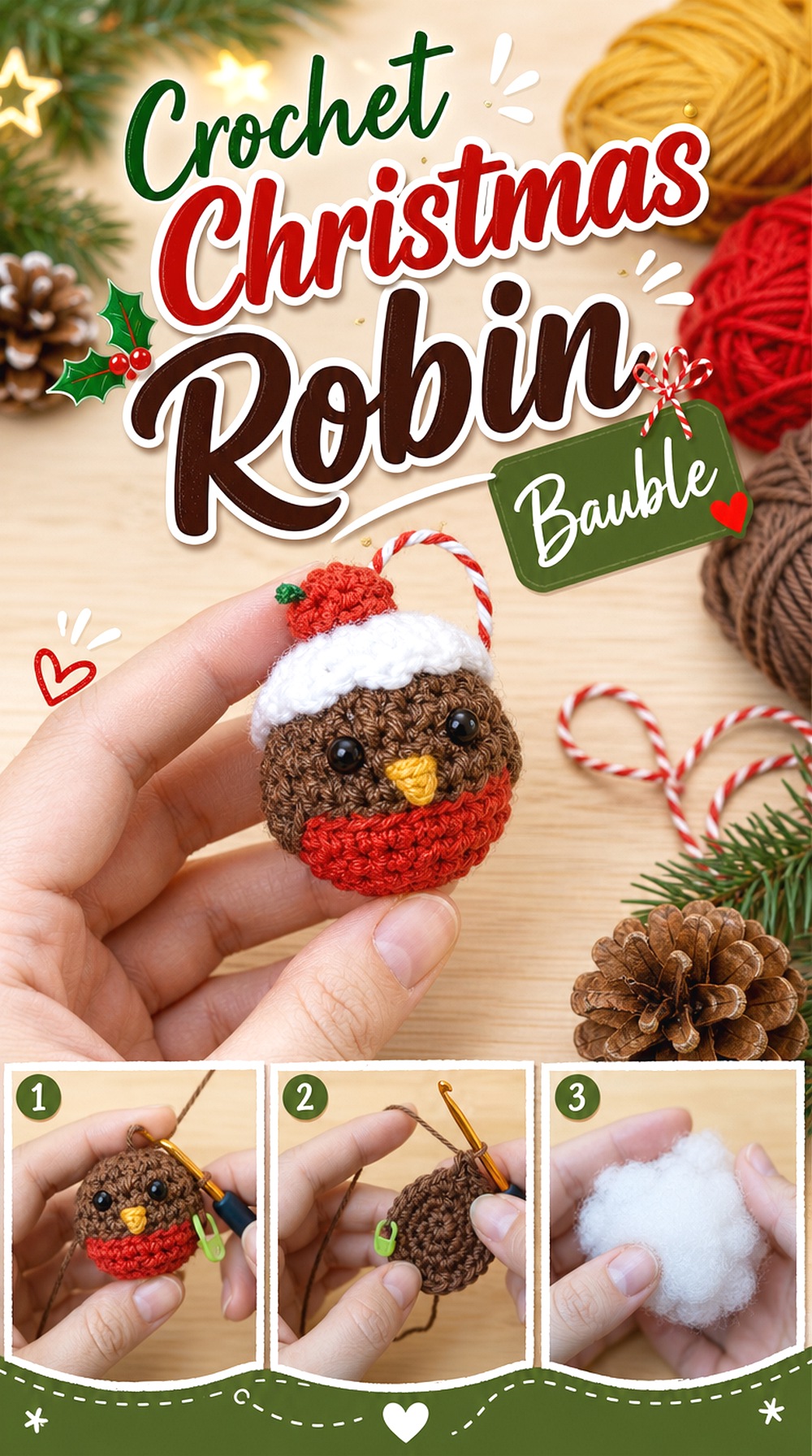
A robin introduces a bird silhouette and warmer color blocking to the woodland collection. But First We Crochet’s tutorial is specifically for a mini robin Christmas bauble, with a stuffed main body, wings, beak, safety eyes, and a hanging string. The creator also provides the yarn and hook information used for the sample while noting that other yarn can change the finished size.
Unlike the owl, which emphasizes large facial features, this robin gets much of its identity from body color and the addition of wings and beak. It can therefore sit beside the owl without feeling like a duplicate. It also works well near evergreen or pine-cone pieces because the warmer breast color creates contrast against green and brown.
Color Placement Defines the Bird Quickly
A robin ornament does not need an exaggerated number of details when the main color areas are easy to read. Keep the transition between the body colors clean and consider how the bird will look from several feet away on a tree.
If you change the palette, retain enough contrast between the breast and surrounding body that the finished piece still has a clear bird-like focal area. Extremely similar tones may hide the feature that distinguishes it from another round animal ornament.
Wings Should Look Balanced From Both Sides
The tutorial includes separate wing construction and attachment. Before fastening both wings permanently, view the ornament from the front, back, and sides.
One wing positioned farther forward can make the bird appear to twist even when the body itself is symmetrical. Pinning or temporarily positioning components before final attachment can help you judge whether both sides feel visually balanced.
Check Small Attachments Before Choosing Its Location
The source uses safety eyes and also lists an optional glue product among its materials. That makes display placement worth considering if the ornament will be around small children or pets.
Use the finished robin as seasonal decor unless you have separately confirmed that every material and attachment suits another intended use. A higher tree branch or adult-accessed garland is a straightforward way to keep decorative details out of easy reach.
Original Tutorial and Creator Credit
Creator: But First We Crochet
7. Crochet Evergreen Woodland Garland
 SAVE
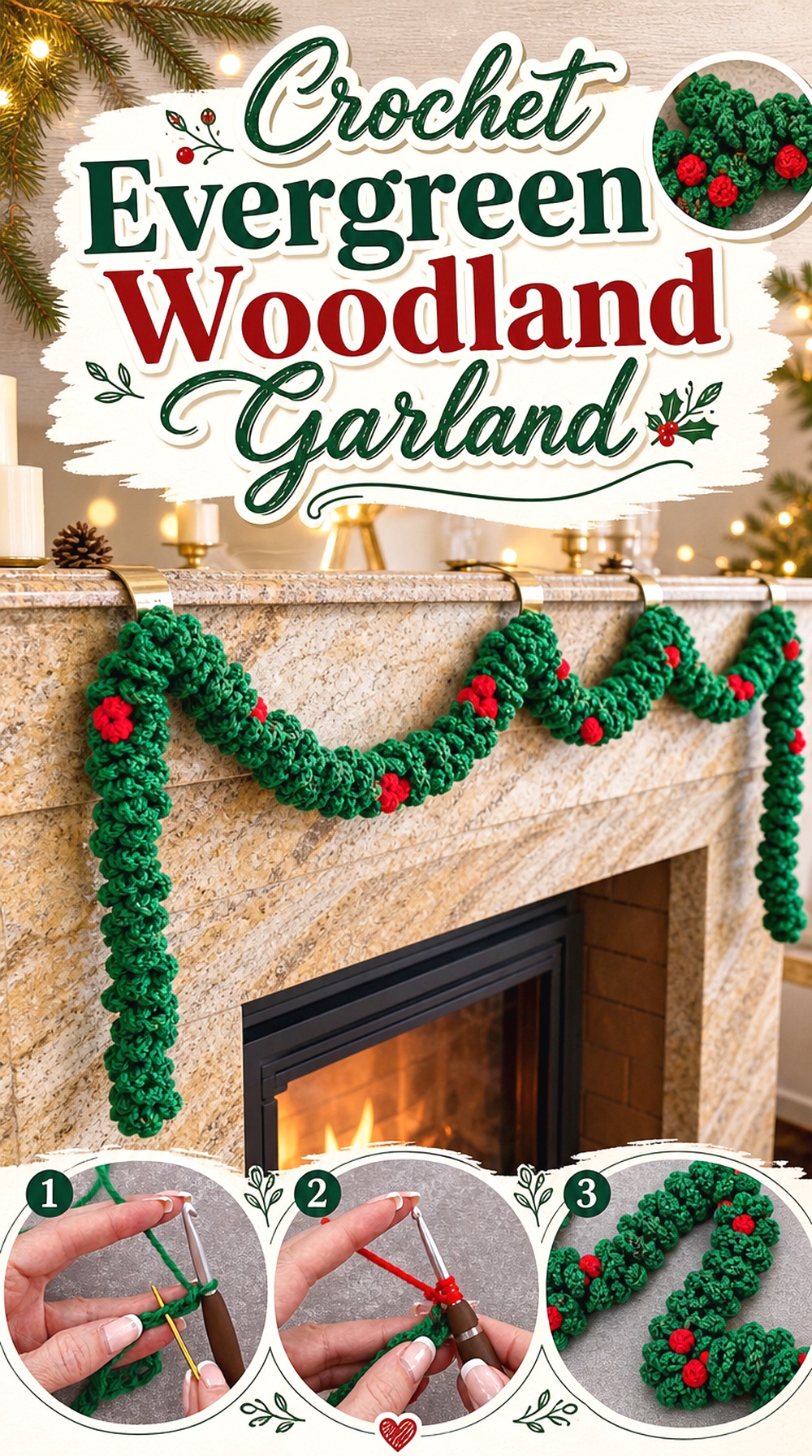
A garland changes the scale of the entire collection. Secret Yarnery’s Christmas evergreen tutorial creates a long foliage-style decoration with berry details rather than a single hanging ornament, and the creator suggests it for home decor, Christmas trees, or gift decorating.
That makes it the most useful option here for connecting separate woodland motifs. It can run beneath pine cones and mushrooms on a mantel, frame a shelf containing the animal ornaments, or add a crocheted foliage layer to a tree. Unlike stuffed pieces, its success depends on repetition, length, and how the strand settles across a surface. Plan the display location before deciding how much garland you actually want to make.
Measure the Display Area Before Repeating the Motif
A garland can be continued far beyond the amount you need, which creates unnecessary bulk and finishing work. Measure the mantel, shelf, doorway, or section of tree where it will go before committing to the full length.
Leave some allowance for drape if you want gentle curves rather than a tight straight line. This is display planning, not a substitute for the creator’s construction instructions, so use the tutorial itself for the exact repeat and assembly details.
Berries Should Support the Evergreen, Not Overload It
The tutorial includes berry elements as part of the finished garland. Visually, those small accents work best when the foliage remains the dominant feature.
If adapting the colors, decide whether you want natural woodland greens and muted berries or a brighter Christmas palette. Too many strongly contrasting embellishments can shift the piece away from a forest look and toward a more general novelty garland.
Long Crochet Decor Needs Tangle-Free Storage
A garland is easier to damage through twisting than a flat ornament. Avoid pushing the whole strand into a small box where berries and foliage can knot around each other.
Coiling it loosely around a piece of clean cardboard or placing it in broad loops inside a storage container can help maintain the shape. Remove any detachable seasonal additions before storage if they would snag the crochet fabric.
Original Tutorial and Creator Credit
Creator: Secret Yarnery
8. Crochet Flat Evergreen Tree Ornament
 SAVE
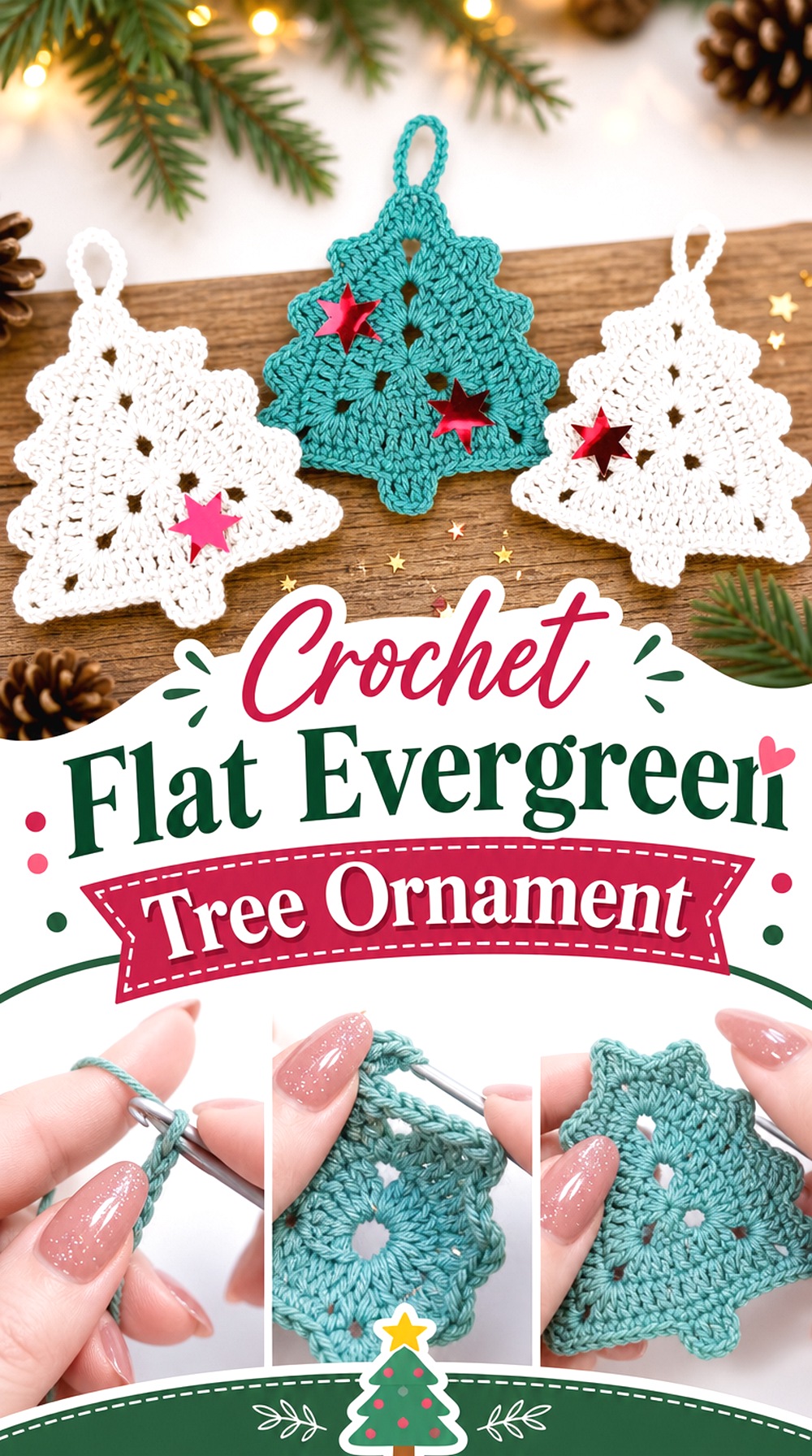
A flat Christmas tree ornament is the practical counterpoint to all the stuffed and heavily textured pieces above. Kristines Crochets’ tutorial produces a tree-shaped decoration with a defined trunk and flat overall construction. The creator lists the sample at about 11 cm high and 11 cm wide at its widest point and uses sport-weight cotton with a 3 mm hook.
Those verified sample measurements are useful for judging the tutorial’s scale, but substitutions can change the result. Because this ornament lies flatter than the reindeer, robin, or mushroom, it can work on shorter branches, gift wrapping, wreath surfaces, or narrow storage boxes where bulky pieces are inconvenient.
Flat Construction Solves Crowded-Branch Problems
A three-dimensional ornament projects outward from the tree and needs space around it. A flat evergreen can sit much closer to the branch, making it useful where the tree is already carrying lights and other decorations.
This also makes the shape easier to layer behind small acorns or pine cones. If your woodland display is starting to feel bulky, adding one or two flat silhouettes can create variety without adding another stuffed object.
Stitch Definition Controls the Tree Outline
The outside contour is the main visual feature, so the edges need to read clearly as a tree rather than an uneven triangle. If you substitute yarn, check whether it maintains the point and lower corners cleanly.
A smooth yarn can emphasize stitch geometry, while a very fluffy yarn may soften the outline. Neither is automatically wrong, but they produce different decorative styles, and the thumbnail appearance should not be treated as a guarantee after a major material change.
This Is the Easiest Shape Here to Store Flat
Flat ornaments can usually be layered with lightweight separators rather than placed in deep individual compartments. That makes this project useful if storage space is limited.
Before packing it away, make sure the hanging loop and corners are lying naturally rather than folded sharply under other decorations. If the piece has shifted after storage, reshape it according to the fiber and finishing method you used instead of applying heat or aggressive pressing without checking yarn-care information.
Original Tutorial and Creator Credit
Creator: Kristines Crochets
Which Woodland Christmas Crochet Project Should You Choose?
Choose the pine cone, acorn, or flat evergreen tree when you need smaller supporting shapes that can fill gaps between larger decorations. The mushroom has more visual volume and works well as a distinctive woodland focal point.
For character ornaments, the owl gives a round, eye-focused look, the reindeer sphere creates the widest silhouette because of its antlers, and the robin bauble adds bird shaping and strong seasonal color contrast. If the display needs something that connects several small motifs rather than another standalone ornament, the evergreen garland is the most useful choice.
A balanced woodland setup can combine one long foliage element, several small botanical ornaments, and only a few stronger animal or mushroom focal pieces.
Conclusion
The strongest crochet woodland Christmas displays mix scale, silhouette, and placement rather than filling every branch with the same type of ornament. Pine cones and acorns make useful smaller accents, while the mushroom, owl, reindeer, and robin bring stronger individual shapes. A flat tree adds an option for crowded branches, and the evergreen garland can connect an entire mantel, shelf, or tree arrangement.
Choose your first project based on where it will be displayed and how much dimension that location can handle. When you are ready to make it, use the original creator tutorials for the exact construction, materials, stitch counts, shaping, and assembly details.
Frequently Asked Questions
What colors work well for crochet woodland Christmas decor?
Natural greens, browns, rusts, cream, and muted red create an obvious forest-inspired palette, but the motif shapes matter as much as the colors. An acorn, pine cone, mushroom, robin, or evergreen still carries woodland identity in a customized palette.
If you want a coordinated collection, repeat two or three background colors across several projects and reserve stronger contrast for focal details such as mushroom caps, robin breasts, or berries.
Should I use the same yarn weight for every woodland ornament?
Not necessarily. Different tutorials are designed around different materials, and the sources here include everything from conventional yarn to braided cord. Changing yarn can alter scale, firmness, stitch definition, and the way a decoration hangs.
If matching finished sizes across several ornaments matters, make one sample first and compare it with the intended display area before producing multiples. Follow each creator’s source for the exact material assumptions behind that project.
How can I keep a woodland Christmas tree from looking too crowded?
Mix flat, small, and dimensional shapes rather than placing several stuffed focal ornaments next to one another. A small acorn or flat tree can fill a gap without competing with a mushroom, owl, or reindeer.
Also leave open space around antlers, broad mushroom caps, and animal faces. The goal is not to fill every visible branch; enough separation helps each silhouette remain recognizable from across the room.
Which projects are easiest to store in a small space?
The flat evergreen tree requires the least depth, while smaller acorns also take relatively little room. Pine cones and stuffed character ornaments need more protection from compression, especially when they have raised texture, ears, wings, or antlers.
A garland uses less rigid volume than several stuffed objects but should be coiled or laid in loose loops so it does not tangle during storage.
Can I resize these crochet Christmas decorations by changing yarn?
Often the finished scale changes when yarn and hook size change, but the exact effect is not universal. A thicker material can create a larger, heavier ornament, while a finer material may produce a smaller one. The acorn and robin sources specifically acknowledge material or yarn substitutions that can affect the result.
Always consider whether the new size still suits the branch, wreath, mantel, or hanging method you plan to use.
Are stuffed crochet woodland ornaments suitable as children’s toys?
Do not assume so. Several decorative projects use or may involve small components such as safety eyes, noses, ribbons, berries, or other attached details. For example, the robin tutorial uses safety eyes, and the fox-free collection here deliberately treats the pieces as seasonal decorations rather than automatically classifying them as toys.
If a piece is intended for a young child rather than display, verify the creator’s intended use and choose age-appropriate materials and securely finished features.
How can I make different woodland crochet projects look like one collection?
Repeat a controlled palette and distribute similar colors across different shapes instead of making every ornament identical. For example, the same evergreen shade can appear in the garland and tree ornament, while a warm neutral can connect the acorn, pine cone, owl, and reindeer.
Spacing also creates cohesion. Alternate small botanical forms with larger animal or mushroom focal pieces so the collection feels planned rather than grouped by project type.