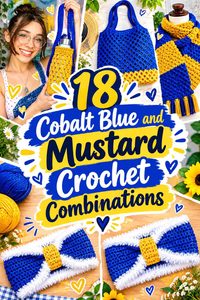
Cobalt blue and mustard create a strong crochet pairing because the colors are clearly different without needing a third shade to separate them. Cobalt can provide a deep, saturated field, while mustard adds a warmer contrast that works especially well on borders, ribbing, motif centers, straps, pockets, and other areas that need visual emphasis.
The balance can change considerably from one project to another. A sweater can stay mostly cobalt with mustard confined to cuffs, while a bucket hat can reverse the hierarchy and let mustard cover most of the surface. Motif projects offer another option: alternate which color occupies the center and outer sections instead of assigning one shade the same role everywhere.
The tutorials credited below support the crochet project or construction concept. The cobalt blue and mustard palettes are independent color adaptations, so the tutorial creators do not necessarily use these exact colors.
Quick List
- Cobalt Blue And Mustard Striped Crochet Blanket
- Cobalt Blue Crochet Pocket Cardigan With Mustard Trim
- Mustard And Cobalt Blue Crochet Granny Square Tote
- Cobalt Blue Crochet Textured Pillow With Mustard Border
- Cobalt Blue And Mustard Color Block Crochet Scarf
- Cobalt Blue Crochet Ribbed Beanie With Mustard Brim
- Mustard Crochet Bucket Hat With Cobalt Blue Band
- Cobalt Blue Crochet Vest With Mustard Edging
- Cobalt Blue And Mustard Mitered Crochet Granny Squares
- Cobalt Blue Crochet Batwing Sweater With Mustard Cuffs
- Cobalt Blue And Mustard Crochet Shawl
- Mustard Crochet Storage Basket With Cobalt Blue Handles
- Cobalt Blue Crochet Market Bag With Mustard Base
- Mustard Crochet Water Bottle Holder With Cobalt Blue Strap
- Cobalt Blue And Mustard Crochet Coaster Set
- Cobalt Blue Crochet Headband With Mustard Center
- Mustard Crochet Clutch With Cobalt Blue Frame
Decide Whether Cobalt Blue or Mustard Should Lead
Cobalt blue and mustard both have enough character to become the focal color, so assigning them equal amounts is not always the clearest approach. On a large blanket or garment, broad cobalt sections can establish a steady base while mustard marks edges, pockets, cuffs, or selected stripes. This lets the warmer color stay noticeable without dividing the project into many competing blocks.
Reversing that hierarchy gives a different result. A mustard bucket hat, basket, flower, or clutch can use cobalt around rims, handles, centers, or closures to provide definition. Cobalt does not need to occupy much surface area when it appears along an important structural line.
Before beginning, identify the areas people will notice first. On a cardigan these might be the front panels and pockets; on a tote they may be the motifs and handles; on a pillow the entire face and border are visible together. Put the stronger contrast where it helps those specific features.
Check Cobalt Blue and Mustard Contrast in Crochet Texture
Different hues can still be closer in lightness than expected. Compare the actual cobalt blue and mustard yarns side by side before relying on the color names alone. A grayscale photograph can help you see whether the two shades maintain enough light-and-dark separation for small motifs, narrow borders, or raised details.
Texture also affects color visibility. Dense cobalt fabric may look heavier than cobalt used in openwork, while mustard placed on raised ribbing can become more prominent because both the color and the surface change attract attention.
If a detailed section disappears, increase the visual area of the contrasting color rather than automatically introducing a third shade. A wider mustard border, a cobalt motif outline, or a more substantial contrasting cuff can often provide the separation the project needs.
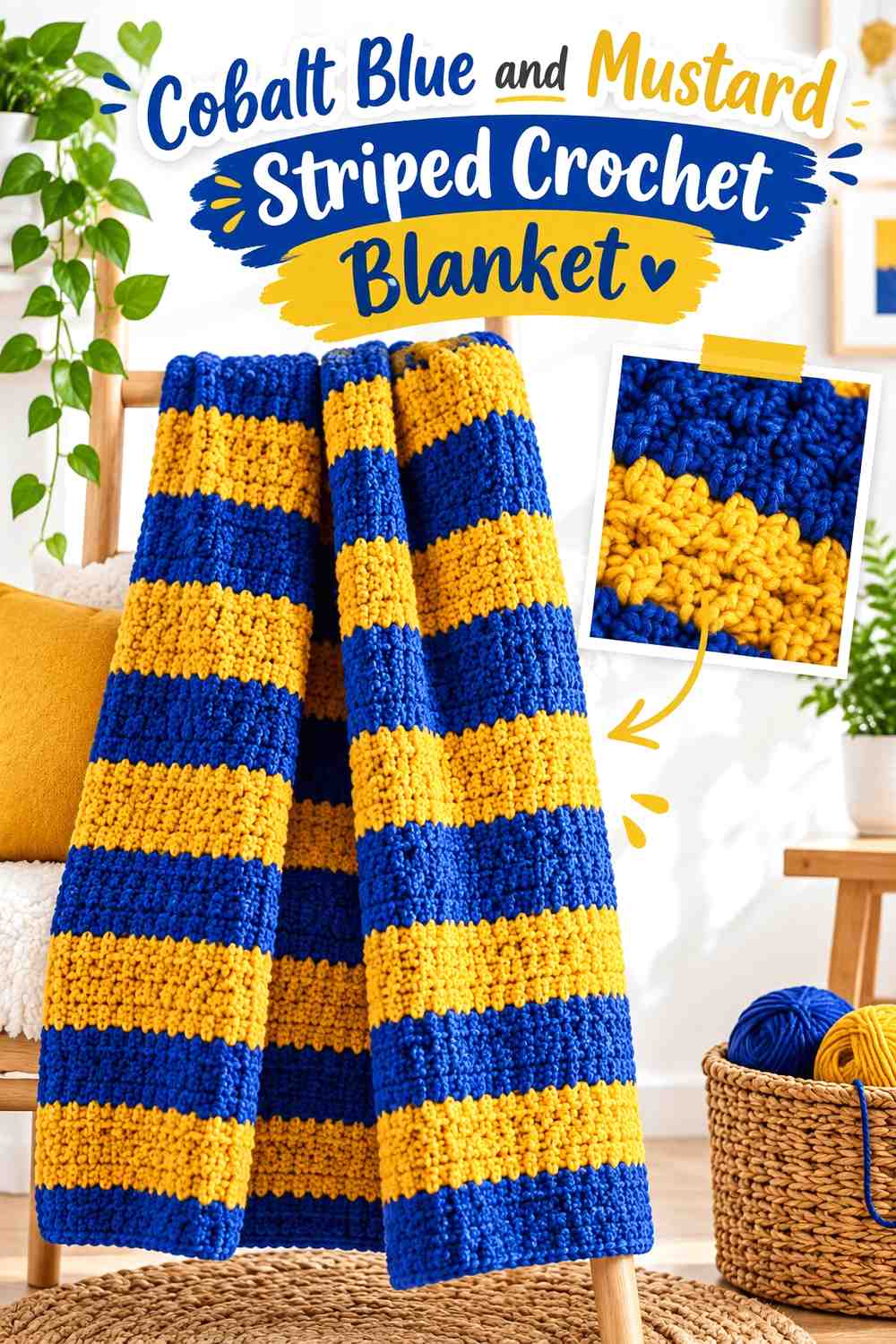
1. Cobalt Blue And Mustard Striped Crochet Blanket
 SAVE
A striped blanket gives cobalt blue and mustard enough room to establish an intentional rhythm. Instead of alternating equal stripes throughout, use cobalt for broader sections and mustard for narrower breaks when you want the finished blanket to read primarily as blue.
Mustard can return at the perimeter, but it does not have to become a heavy outer frame. A narrow mustard border can connect the warmer stripes without competing with the larger cobalt field.
Let Cobalt Blue Carry the Largest Crochet Blanket Stripes
Broad cobalt blue stripes create visual continuity across a large blanket and allow stitch texture to repeat before another color change interrupts it. This is especially useful when the fabric already has pronounced ridges or other surface detail.
If the blanket begins to look too dark or visually heavy, expand selected mustard sections rather than adding many tiny extra stripes. A few intentional changes are easier to read from across a room.
Use Mustard to Interrupt the Cobalt Blue Blanket at Planned Intervals
Mustard works well as a recurring accent when the spacing has a recognizable rhythm. The warm stripes do not need to be identical in width, but their placement should look deliberate rather than scattered.
For the border, compare cobalt and mustard before committing. Mustard emphasizes the perimeter, while cobalt lets the striped body remain the main source of contrast.
Creator Credit: Daisy Farm Crafts
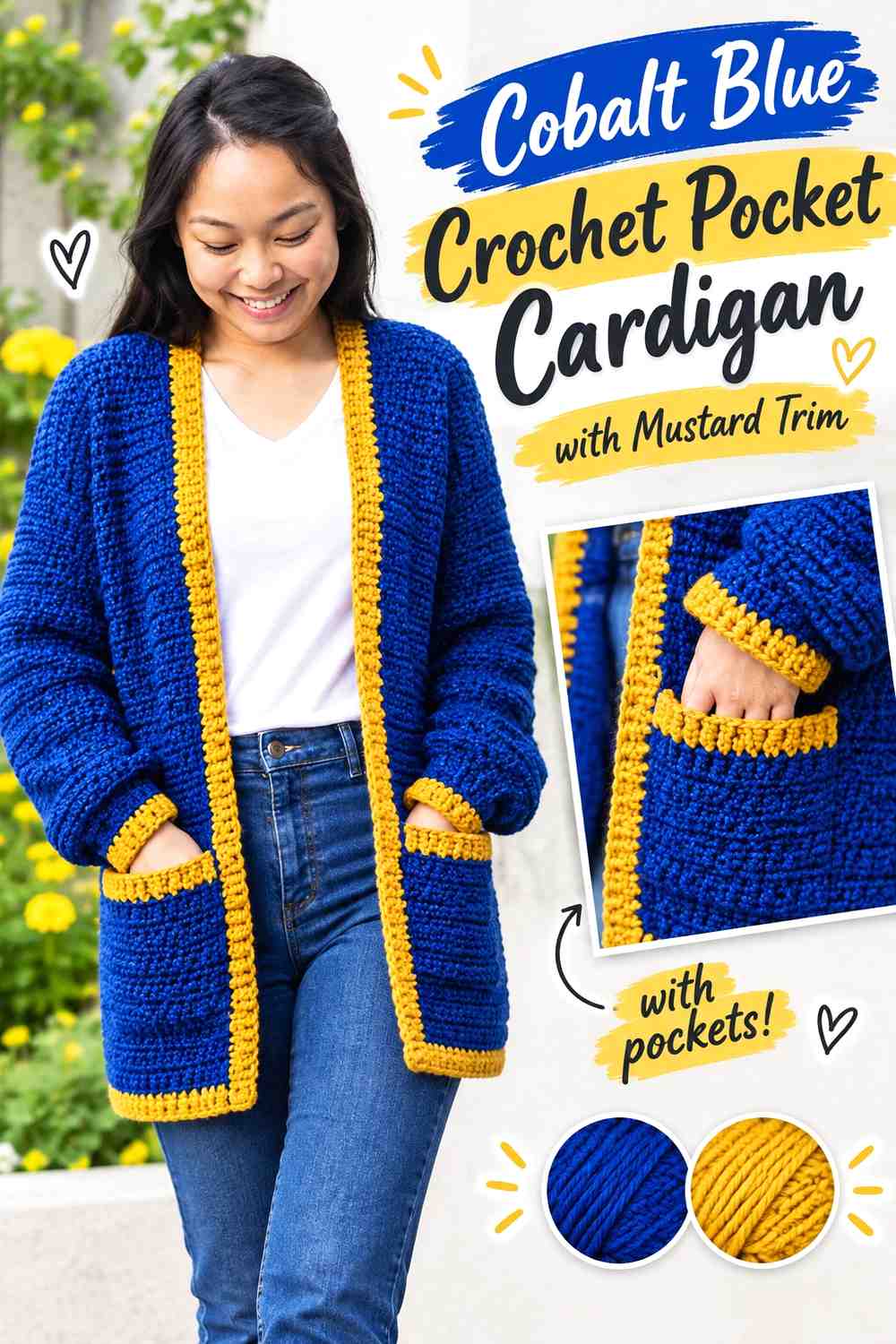
2. Cobalt Blue Crochet Pocket Cardigan With Mustard Trim
 SAVE
A cardigan gives the two colors several natural roles without requiring complicated color blocking. Cobalt blue can cover the main body and sleeves while mustard appears around pockets, cuffs, hem ribbing, or neckline edging.
Because pockets occupy noticeable space on the front, mustard pockets can become a major design feature. Repeating mustard at the cuffs or neckline keeps them connected to the whole garment.
Keep Cobalt Blue Continuous Across the Crochet Cardigan Panels
Cobalt blue across the front and back panels creates one strong body color instead of dividing the cardigan vertically. It also provides a consistent background for mustard pockets or edging.
If you want to increase the mustard content, sleeves or lower trim are usually easier places to expand it than inserting isolated blocks in only one front panel.
Repeat Mustard Beyond the Cobalt Blue Cardigan Pockets
Mustard pockets become more integrated when the same color appears elsewhere. Cuffs are a useful repeat because they sit far enough from the pockets to distribute the warmer color across the garment.
If you add mustard to pockets, cuffs, neckline, and hem, check the complete cardigan before extending it farther. Several small trim areas can collectively give mustard more visual weight than expected.
Creator Credit: For The Frills
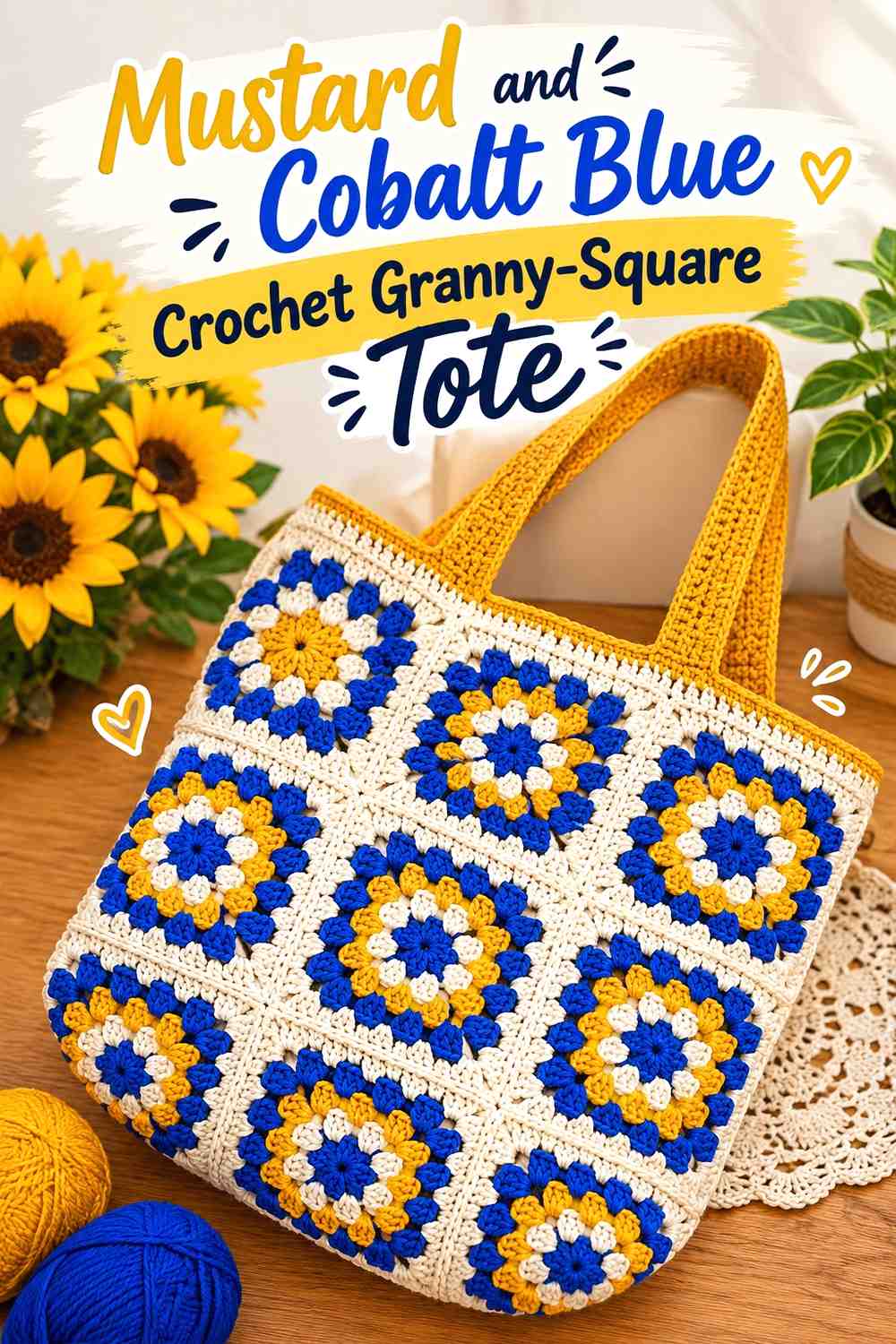
3. Mustard And Cobalt Blue Crochet Granny Square Tote
 SAVE
A granny-square tote can distribute cobalt blue and mustard through repeated motifs rather than large solid panels. Mustard can lead in the square centers while cobalt forms outer rounds and joins, creating a darker framework around the warmer focal points.
Handles provide another opportunity to repeat whichever color has less surface area. If the tote is heavily cobalt around the motifs, mustard handles can bring the warmer shade toward the top.
Put Mustard at the Center of Cobalt Blue Crochet Tote Squares
Mustard centers create repeated warm focal points within cobalt-framed motifs. Keeping that center position consistent gives the finished tote an organized pattern even when several squares are assembled together.
If the centers are very small, test one motif from normal viewing distance. Mustard needs enough area to remain identifiable once the squares become part of a larger bag.
Use Cobalt Blue to Connect the Mustard Tote Motifs
Cobalt joins can separate mustard-heavy squares and create a common framework across the bag. Continuing cobalt around the opening can strengthen that visual connection.
If cobalt also covers the straps, decide whether the bag needs one more mustard repeat near the top. A narrow mustard edge can be enough to carry the motif color upward.
Creator Credit: Crafted by Cat
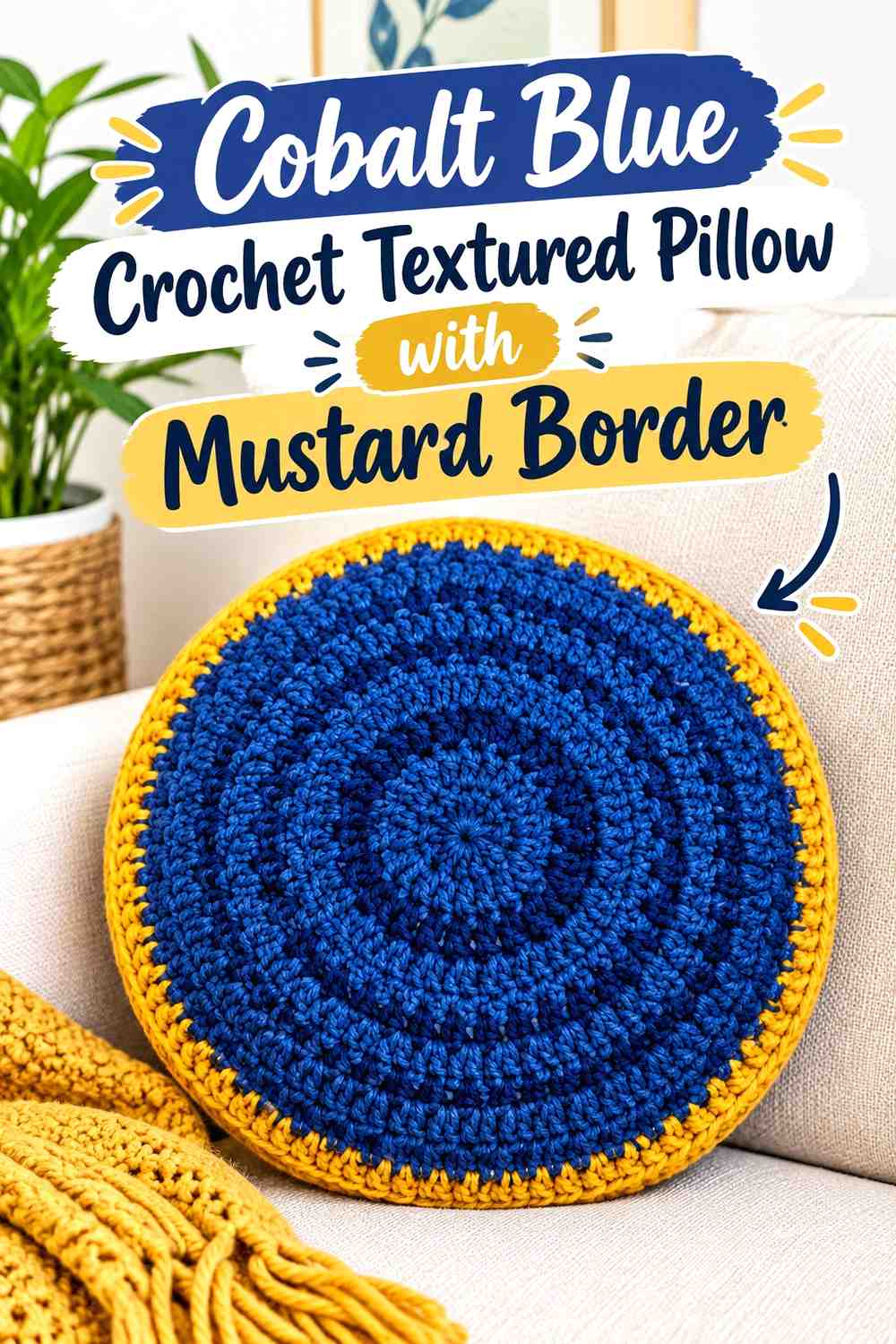
4. Cobalt Blue Crochet Textured Pillow With Mustard Border
 SAVE
A pillow keeps most of its color arrangement visible at once, making it a useful project for a clear dominant-and-border relationship. Cobalt blue can cover the main face, while mustard frames the edge and highlights selected raised details.
The reverse can work too, but a mustard-dominant pillow will have a much warmer overall presence. If cobalt is intended to remain the main color, keep mustard concentrated around the perimeter and a limited number of texture features.
Let Cobalt Blue Give the Crochet Pillow Texture Room to Repeat
A continuous cobalt surface lets raised stitches, ridges, or geometric sections remain the primary source of movement across the pillow face. Frequent color changes could compete with that texture.
Before adding mustard inside the main field, check whether the border alone provides enough contrast. The entire pillow does not need to be divided into two colors to establish the combination.
Use Mustard to Define the Cobalt Blue Crochet Pillow Edge
A mustard border gives the cobalt surface a warm outline and makes the outer shape more deliberate. It can also coordinate with small mustard details elsewhere on the pillow.
If the border begins to overpower the center, reduce its width rather than adding more cobalt detailing. The goal is to frame the pillow face, not shrink it visually.
Creator Credit: Yarnspirations
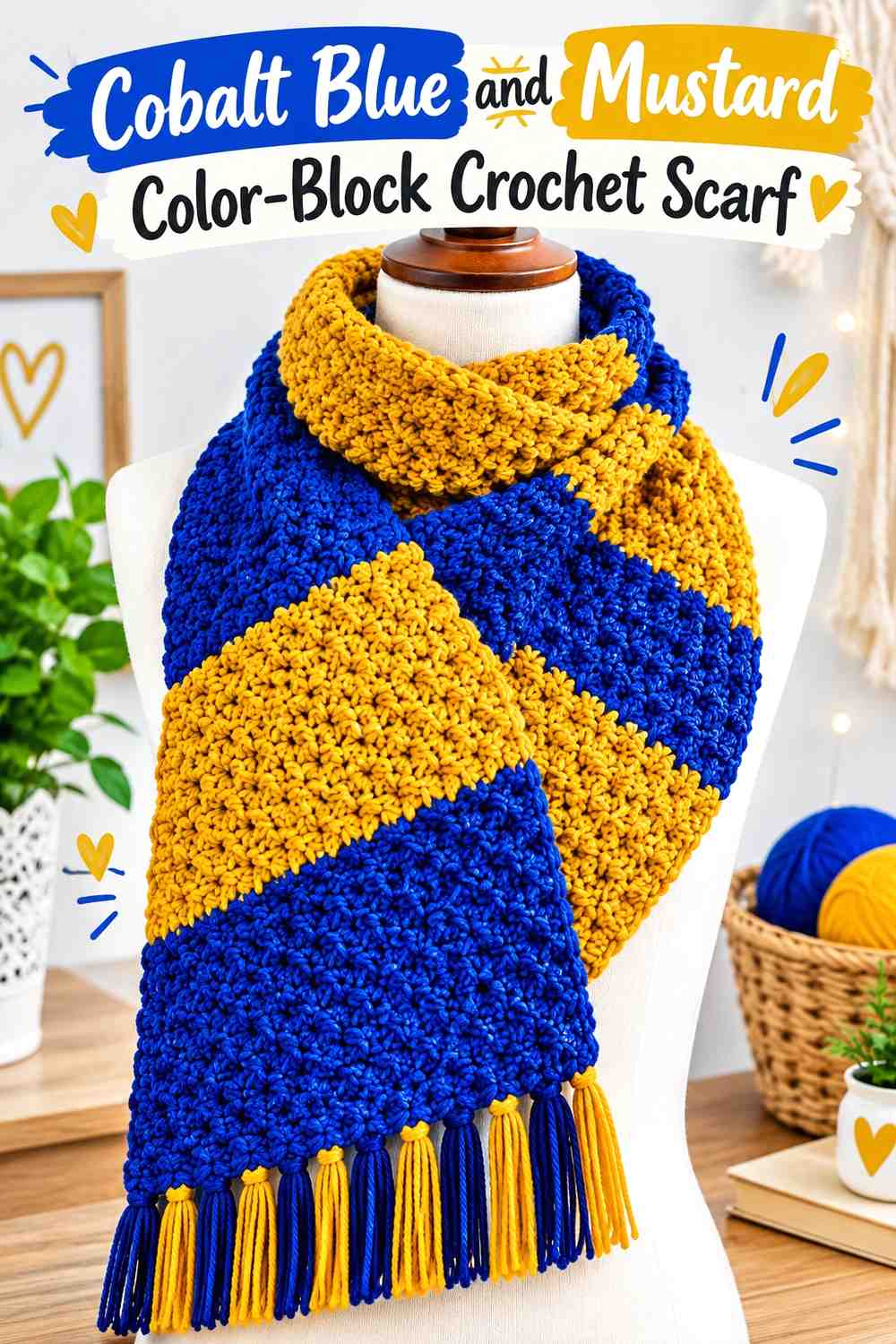
5. Cobalt Blue And Mustard Color Block Crochet Scarf
 SAVE
A scarf provides enough length for large color blocks instead of constant alternation. Cobalt blue can occupy most of the center, while mustard appears at one or both ends.
Unequal blocks are especially useful with this palette because mustard can stay noticeable without taking up half of the scarf. The result depends more on block placement than on using exactly equal quantities.
Keep Cobalt Blue Through the Main Crochet Scarf Length
A long cobalt section creates continuity whether the scarf hangs straight or is wrapped. It also gives textured stitches enough room to repeat without repeated color interruptions.
If you want additional mustard inside the central area, use one substantial block instead of several thin bands. Larger divisions make the intended color blocking easier to recognize.
Finish the Cobalt Blue Crochet Scarf with Mustard Ends
Mustard end sections put the warmer color where it remains visible when the scarf hangs down. Matching mustard at both ends creates symmetry, while one mustard end creates a more asymmetric graphic effect.
If tassels or fringe are included, cobalt fringe on a mustard end can reconnect the finishing detail to the main body color.
Creator Credit: Hooked by Robin
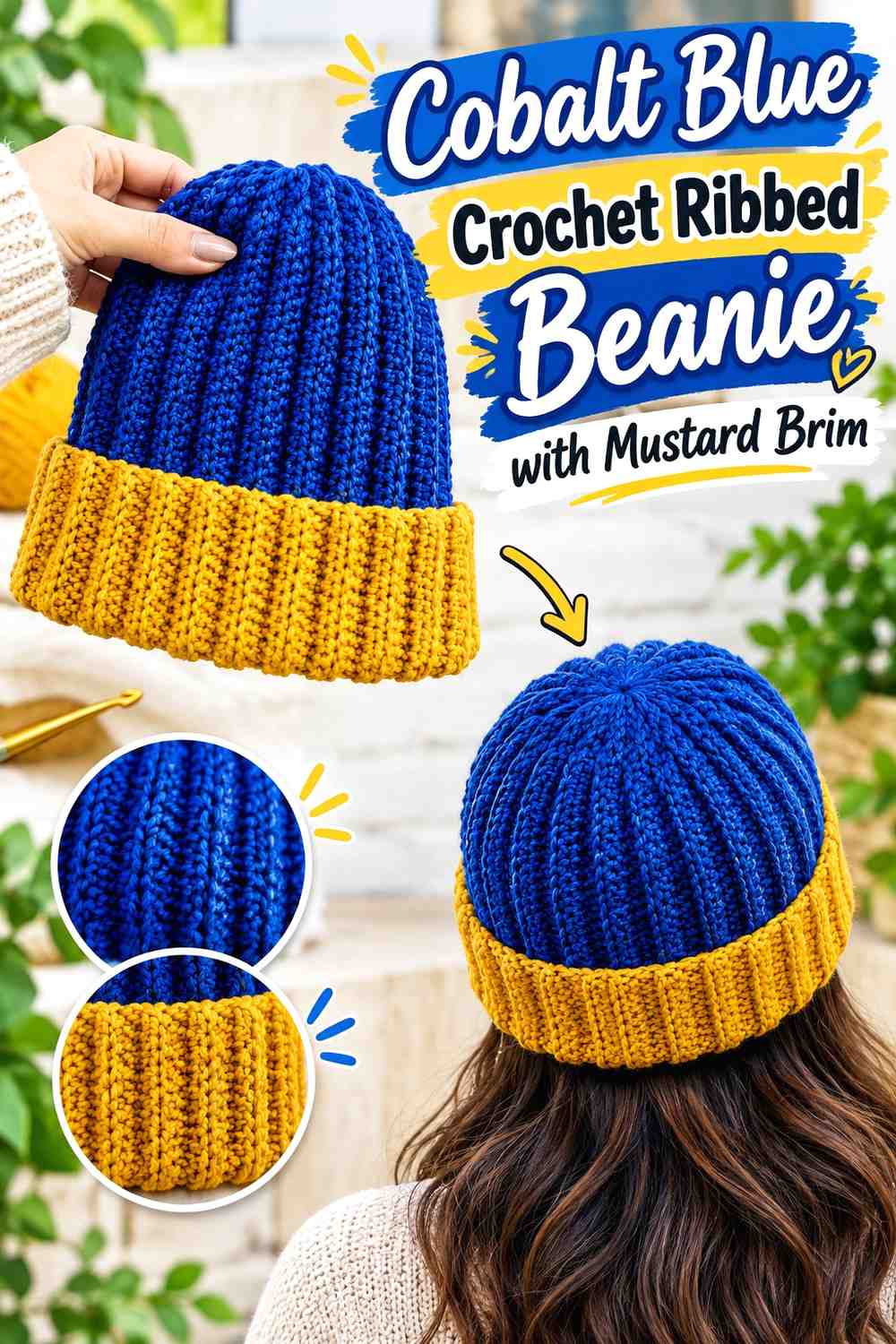
6. Cobalt Blue Crochet Ribbed Beanie With Mustard Brim
 SAVE
A ribbed beanie benefits from a simple two-zone plan. Cobalt blue can cover the crown while mustard occupies the brim, creating a clear division without interrupting every rib with color changes.
Because the brim forms a continuous band, mustard will have considerable visual influence even if it covers less surface than cobalt.
Keep Cobalt Blue Across the Main Crochet Beanie Crown
Using one color through the crown lets the ribbing provide most of the surface variation. Cobalt also gives the top of the hat a consistent shape rather than breaking it into several short bands.
Check the stitch texture in your chosen cobalt yarn before deciding that more color is necessary. Strong ribbing may already create enough visual detail.
Let Mustard Form a Defined Brim Under the Cobalt Blue Crown
Mustard naturally separates the lower edge from the cobalt crown. The placement gives the warmer shade a structural role rather than inserting it as an arbitrary stripe.
If a full mustard brim feels too prominent, keep most of the brim cobalt and reserve mustard for a narrower lower band.
Creator Credit: VivCrochets
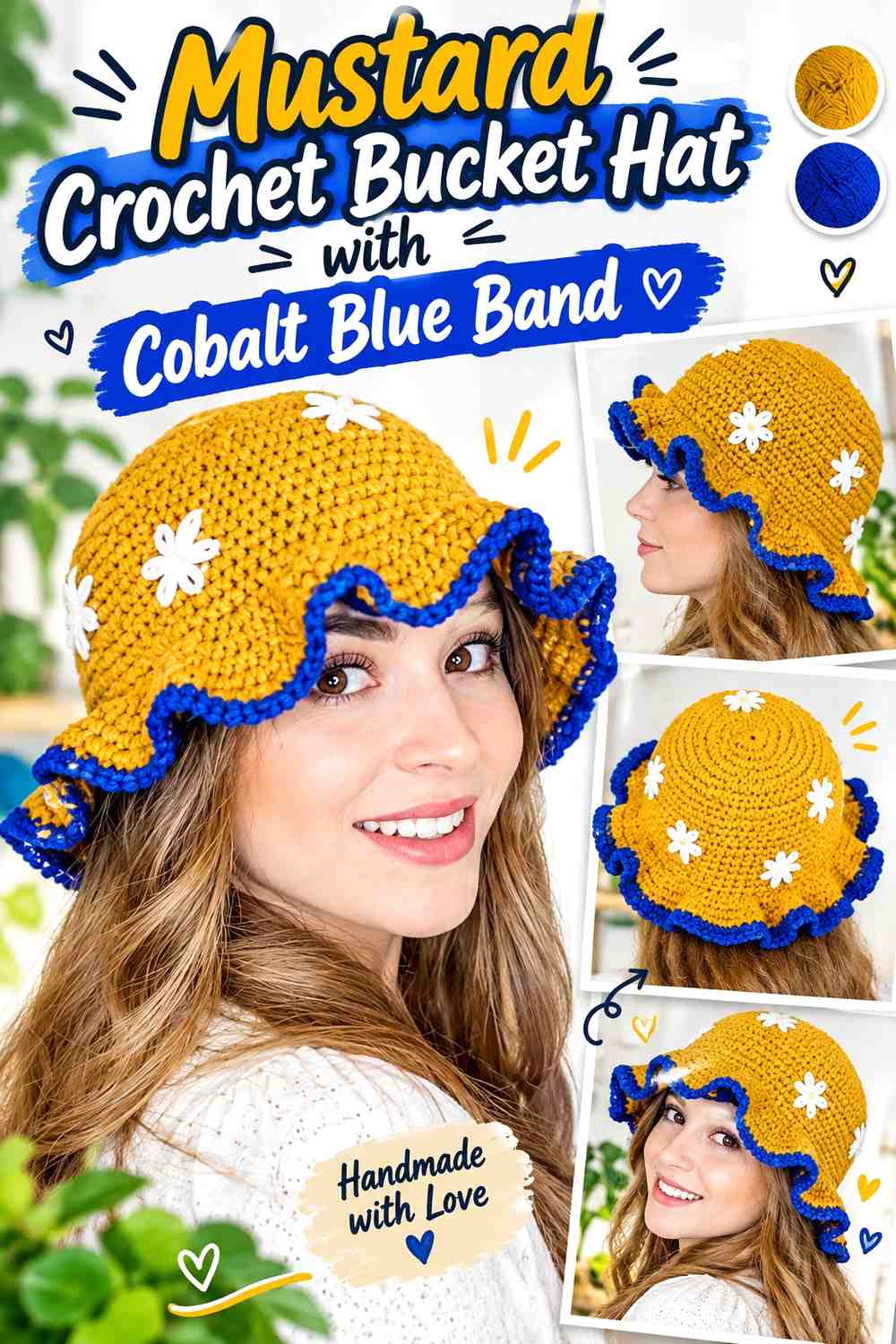
7. Mustard Crochet Bucket Hat With Cobalt Blue Band
 SAVE
A bucket hat is well suited to a mustard-led palette because the crown, side wall, and brim create obvious color zones. Mustard can cover the majority of the hat while cobalt blue forms a band around the sides or defines the brim edge.
A blue band is particularly effective because it circles the entire hat, giving cobalt visibility from every angle without requiring a large amount of yarn.
Let Mustard Cover the Main Crochet Bucket-Hat Surface
Using mustard across the crown and sides establishes a warm field and prevents the hat from being split into too many high-contrast sections.
If you also want mustard across the brim, give cobalt one strong location elsewhere rather than adding several tiny blue stripes.
Use Cobalt Blue to Circle the Mustard Crochet Bucket Hat
A cobalt band around the side section creates a clear horizontal break between the crown and brim. Because the line repeats around the full circumference, even a relatively narrow band becomes important.
For a more blue-forward finish, repeat cobalt along the outer brim edge. Keep that second accent narrower if mustard should remain dominant.
Creator Credit: Brunaticality
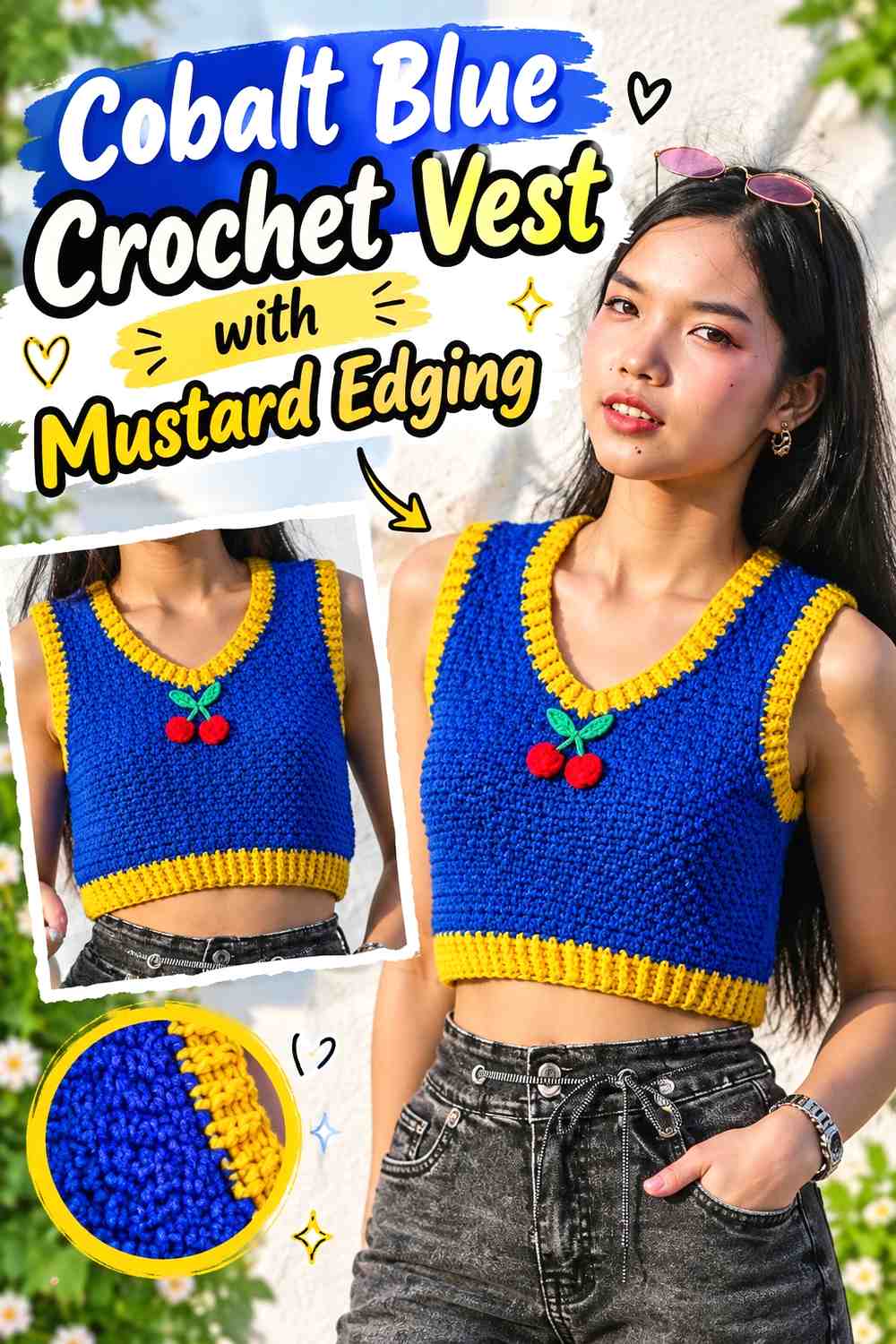
8. Cobalt Blue Crochet Vest With Mustard Edging
 SAVE
A vest gives cobalt blue a large uninterrupted body while mustard can trace the neckline, armholes, and lower edge. This makes the warmer shade useful for showing the garment’s shape instead of breaking the center panels into blocks.
Mustard can also appear in one larger chest or lower-body section when stronger color blocking is wanted, but edging alone can provide plenty of contrast.
Keep Cobalt Blue Across the Main Crochet Vest Panels
Cobalt blue front and back panels establish a strong central field and allow mustard details to remain clearly secondary.
This works particularly well when the vest already has ribbing or other visible construction details. The body does not need many separate color zones to remain interesting.
Let Mustard Outline the Cobalt Blue Crochet Vest Openings
Mustard around the neckline and armholes draws attention to the garment edges and repeats the color in several related locations.
Adding mustard along the hem can complete the frame, but compare the full garment first. A wide mustard band on every edge can move the palette closer to a 50/50 balance.
Creator Credit: Chenda DIY
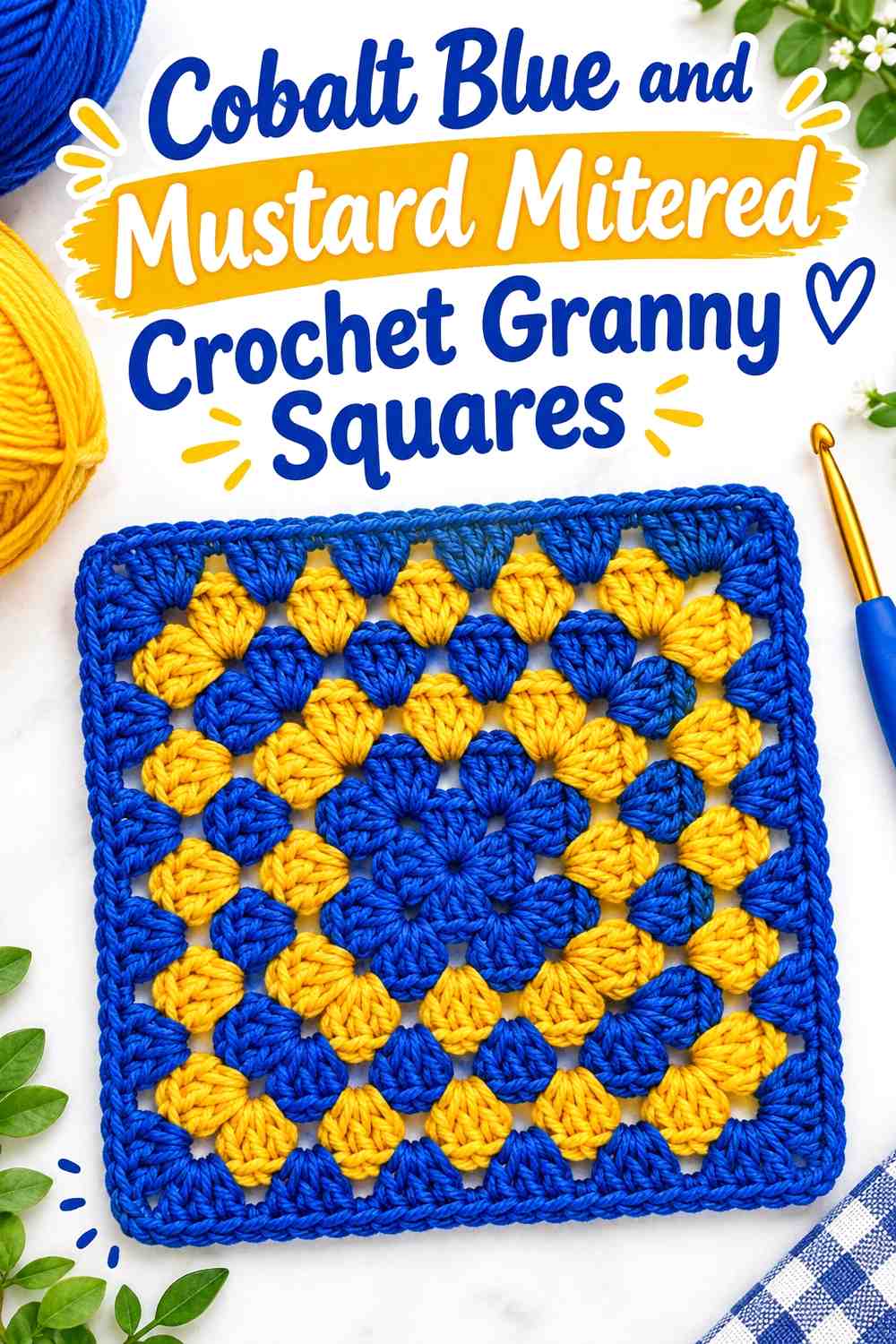
9. Cobalt Blue And Mustard Mitered Crochet Granny Squares
 SAVE
Mitered granny squares give cobalt blue and mustard a diagonal relationship rather than the usual center-to-edge arrangement. Alternating the colors across the angled sections can make the direction of the motif more noticeable.
For a larger project, decide whether every square will follow the same color direction or whether selected motifs will reverse it. Reversals can create movement, but they should be repeated systematically.
Use Cobalt Blue to Strengthen the Mitered Crochet Square Direction
A broad cobalt section can make the diagonal construction easier to see, especially when mustard occupies an adjoining area with enough lightness contrast.
Keep the cobalt position consistent across several squares if the final project needs an orderly directional pattern.
Reverse Mustard and Cobalt Blue in Selected Mitered Crochet Squares
Reversing the two colors can create a checkerboard or rotating effect without introducing additional shades. The key is planning the layout before joining the motifs.
Lay the completed squares on a flat surface and test several orientations. The same two-color motif can look substantially different simply by rotating the diagonal.
Creator Credit: Bella Coco
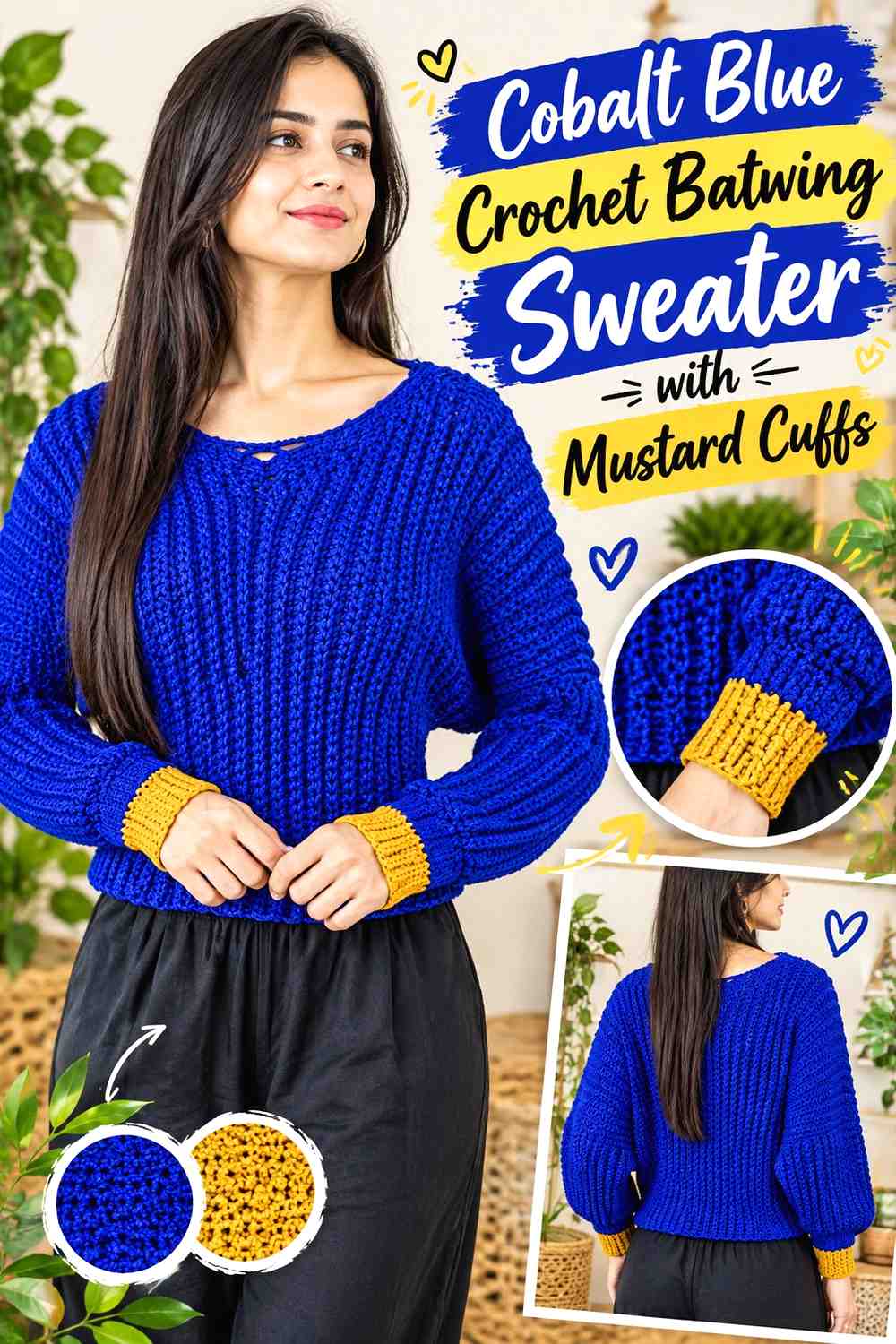
10. Cobalt Blue Crochet Batwing Sweater With Mustard Cuffs
 SAVE
A batwing sweater has a broad body and wide upper sleeves, so an uninterrupted cobalt field can emphasize the overall silhouette. Mustard works well where the sleeves narrow into cuffs and along selected finishing edges.
Because the cuffs are far apart, repeating mustard at the hem or neckline helps connect them across the garment.
Keep Cobalt Blue Continuous Across the Batwing Crochet Sweater
Cobalt blue across the body and upper sleeves allows the wide shape to read as one unit. Large mustard sections through the middle would divide that silhouette more strongly.
If more mustard is wanted, extend it upward from the cuffs rather than scattering small accents across the torso.
Use Mustard Cuffs to Finish the Cobalt Blue Crochet Sleeves
Mustard cuffs create clear endpoints on the wide cobalt sleeves and put the warmer color on a visibly narrower section of the garment.
Repeat mustard once elsewhere, such as at the lower hem or neckline. That small connection keeps the cuffs from looking isolated.
Creator Credit: TCDDIY
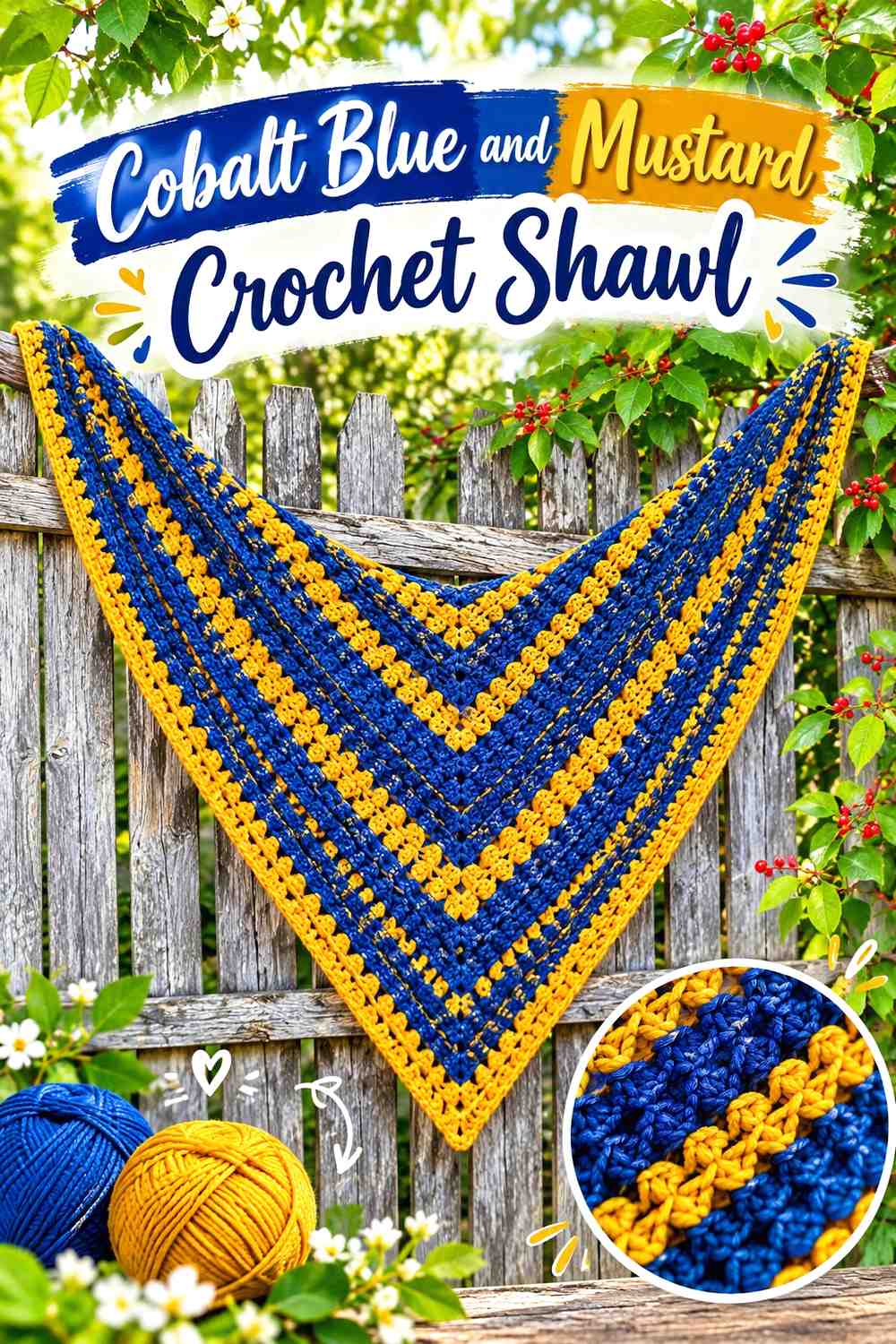
11. Cobalt Blue And Mustard Crochet Shawl
 SAVE
A shawl gives the palette room to shift as the fabric widens. Cobalt blue can lead through the center and upper sections, while mustard gradually becomes more noticeable toward the outside edge.
Because the final rows of many shawl shapes cover increasingly wide spans, even a relatively small number of mustard sections can occupy substantial visible area.
Let Cobalt Blue Establish the Main Crochet Shawl Field
A cobalt center gives the shawl a clear starting color and keeps early texture or openwork from competing with frequent changes.
As the shawl expands, decide whether mustard should appear once as a major outer section or repeat in several controlled bands. Both create different visual rhythms.
Repeat Mustard Before the Outer Cobalt Blue Shawl Edge
If mustard appears only at the final border, it can seem detached from the rest of the shawl. One earlier mustard band creates a reference point and makes the edge feel connected.
The inner mustard repeat can remain narrow while the outer section is broader. Equal stripe widths are not required for the palette to feel coordinated.
Creator Credit: Bag-O-Day Crochet
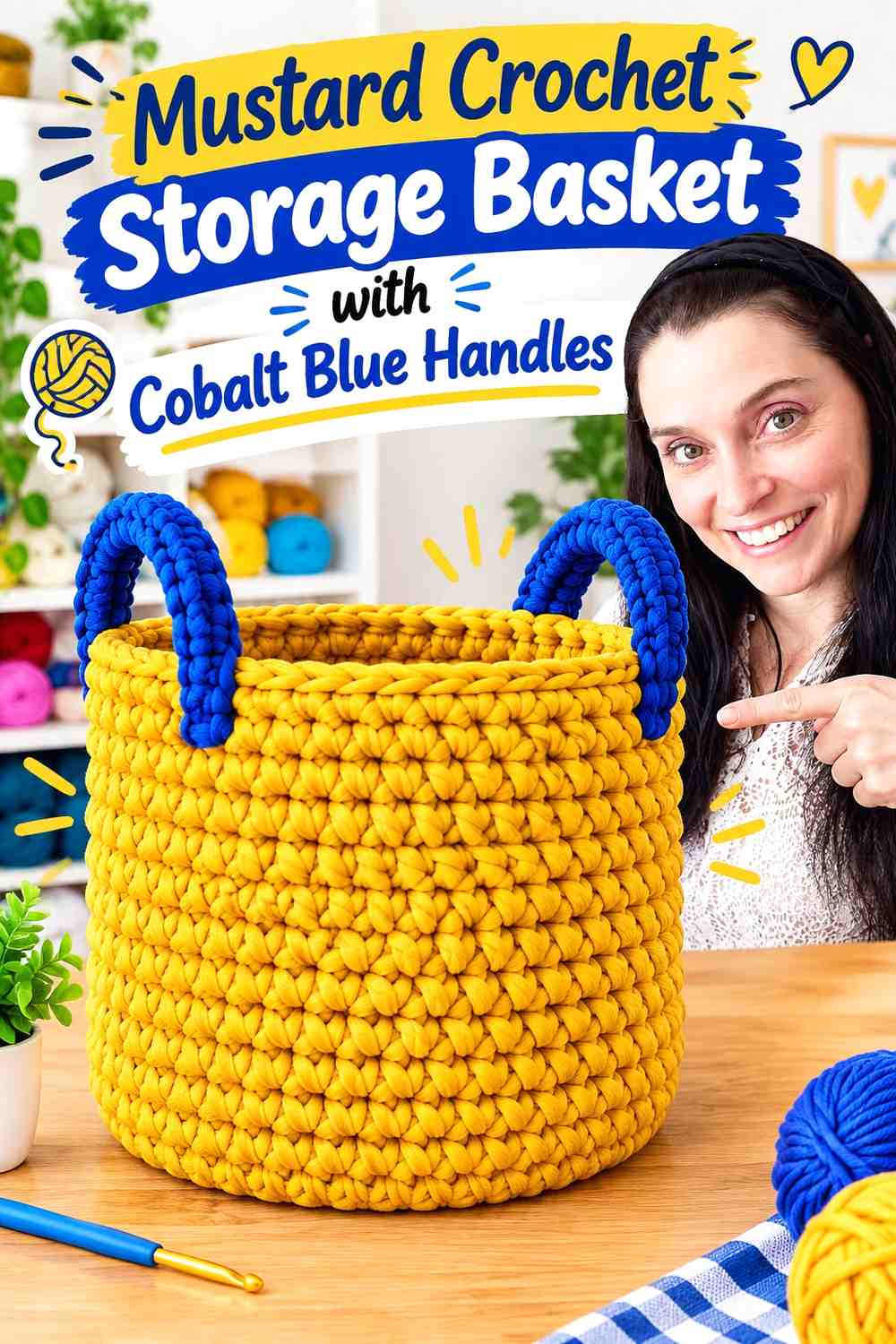
12. Mustard Crochet Storage Basket With Cobalt Blue Handles
 SAVE
A storage basket is a useful place to let mustard dominate. The broad side walls can stay warm and consistent, while cobalt blue appears around the opening, handles, or base.
Those structural locations give cobalt enough visual importance even when mustard covers most of the basket.
Use Mustard Across the Main Crochet Basket Walls
A continuous mustard wall keeps the basket from becoming overly segmented and gives any stitch texture room to repeat.
If the basket has a noticeable upper band, decide whether that section should remain mustard or become cobalt. Changing only at a structural transition usually looks more intentional than inserting an unrelated stripe halfway up the wall.
Repeat Cobalt Blue on the Mustard Basket Handles and Rim
Cobalt around the rim clearly defines the opening, while matching handles connect the accent to a functional part of the basket.
If both the rim and handles feel too blue-heavy, return the handles to mustard and keep cobalt only along the upper edge.
Creator Credit: Jayda InStitches
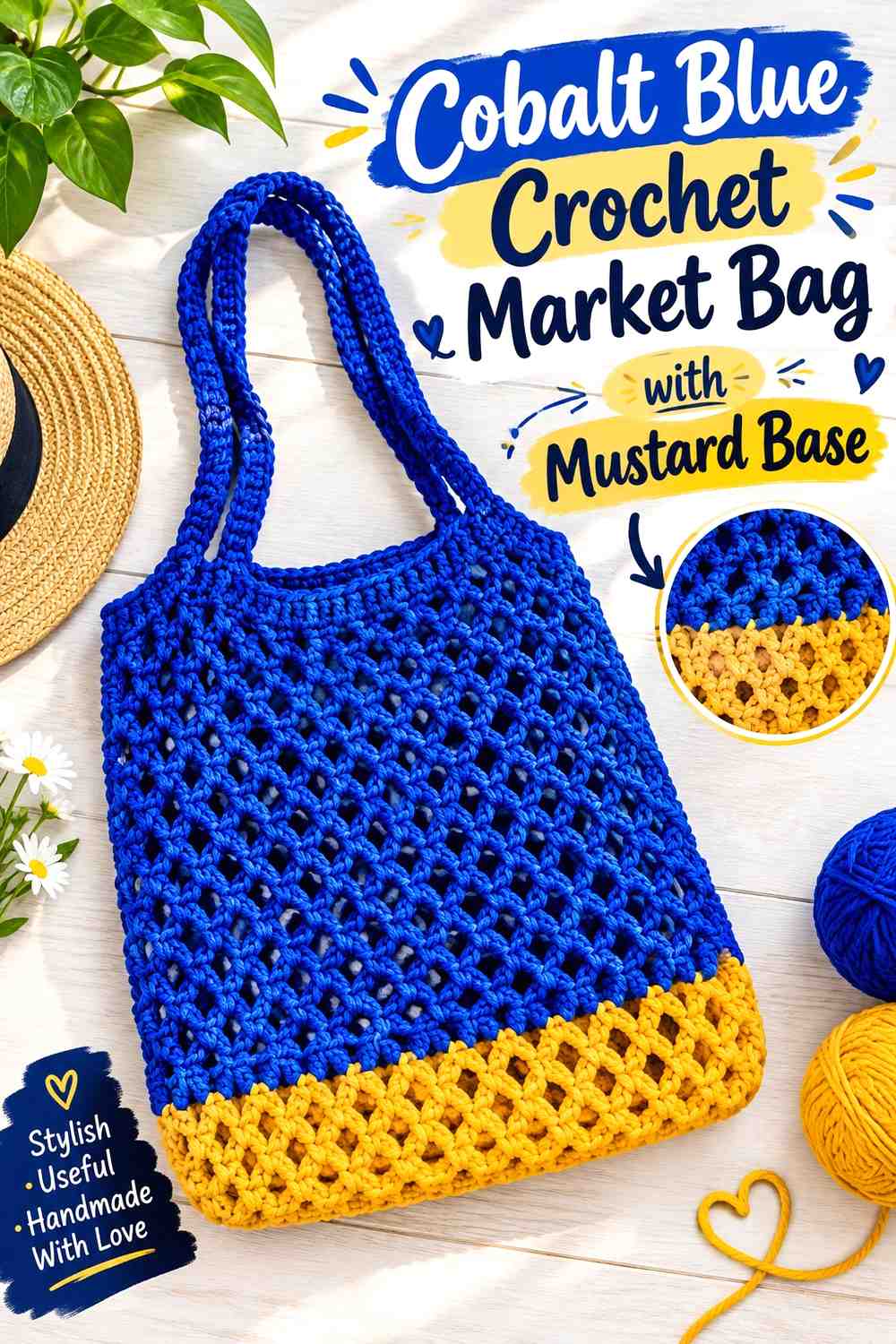
13. Cobalt Blue Crochet Market Bag With Mustard Base
 SAVE
An openwork market bag can use cobalt blue through the expandable body while mustard creates a more solid-looking visual foundation at the bottom. Because open spaces reduce the apparent density of cobalt, the smaller mustard base can still hold substantial visual weight.
A mustard repeat near the opening or handle connections can connect the bottom of the bag with the top.
Let Cobalt Blue Fill the Open Crochet Market-Bag Body
Cobalt openwork creates a strong color field without appearing as visually solid as dense crochet. Keeping the central mesh one color also makes the bag’s shape easier to read.
If additional mustard stripes are inserted throughout the mesh, use them sparingly so they do not interrupt every openwork repeat.
Use Mustard to Ground the Cobalt Blue Crochet Market Bag
A mustard base creates a clear lower boundary under the blue body. Repeating mustard around the opening can give the two ends of the bag a visual connection.
If the handles are already mustard, the top may not need another wide accent band. Judge the whole bag rather than each component separately.
Creator Credit: Diving Ducks Crochet
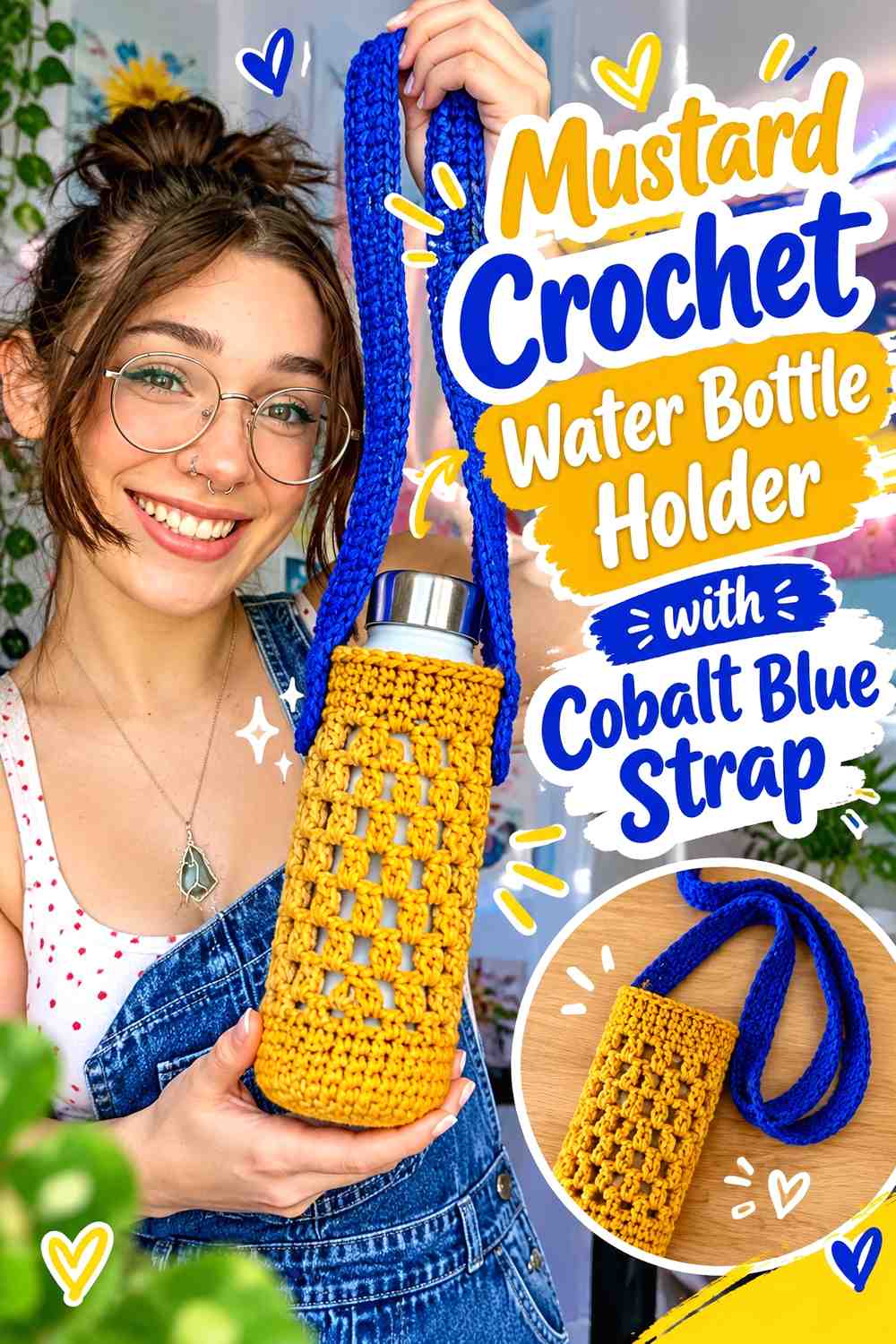
14. Mustard Crochet Water Bottle Holder With Cobalt Blue Strap
 SAVE
A water bottle holder has a narrow body and a long strap, so placing the colors according to function produces a clean split. Mustard can cover the holder body while cobalt blue defines the upper edge and strap.
Because the strap extends well beyond the body, cobalt may appear more dominant than its actual yarn quantity suggests.
Keep Mustard Across the Main Crochet Bottle-Holder Body
A mustard body gives the small cylindrical project one consistent base color. This is particularly useful if the crochet fabric already contains mesh or other open areas.
View the color with a bottle inside before deciding whether more cobalt is required, since the bottle itself may show through open stitches.
Carry Cobalt Blue From the Mustard Holder Rim Into the Strap
Using cobalt around the upper edge and continuing it into the strap gives the accent a clear structural path.
If a fully blue strap feels too dominant, use mustard through most of the strap and reserve cobalt for the attachment areas or a shorter section near the top.
Creator Credit: Strong Earth Creations
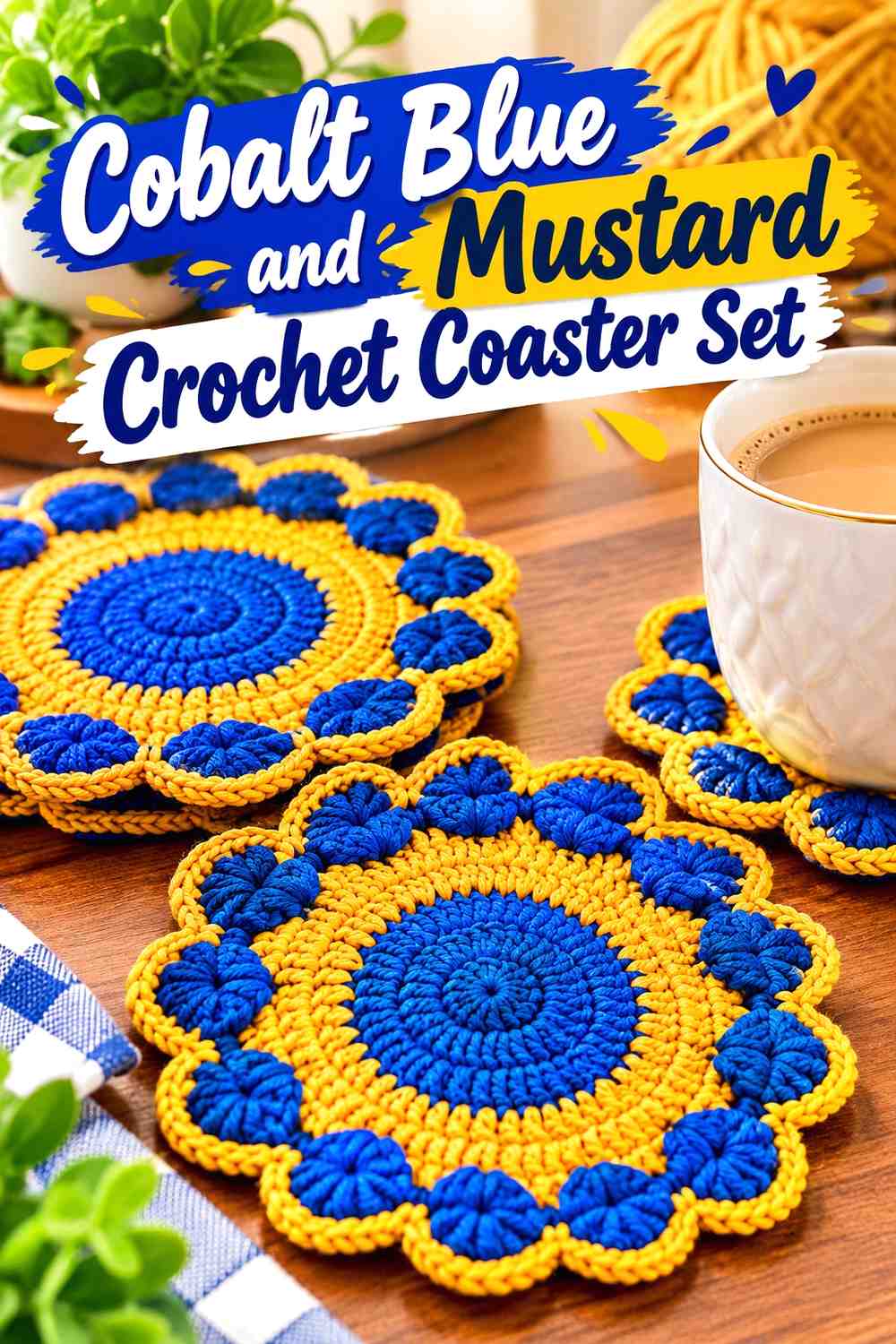
15. Cobalt Blue And Mustard Crochet Coaster Set
 SAVE
A coaster set provides a small scale for testing several distributions of the same two colors. One coaster can use a cobalt center with mustard edging, while another reverses the arrangement.
Because the projects will be viewed together, repeating the same two shades is enough to maintain coordination even when the dominant color alternates.
Use Cobalt Blue Centers on Some Mustard-Edged Crochet Coasters
A cobalt center creates a strong main field, while mustard can form a smaller perimeter or finishing detail. This is useful when you want most of the set to remain blue-forward.
Keep the border substantial enough to be visible around a cup or glass rather than hiding the mustard entirely beneath the item.
Reverse Mustard and Cobalt Blue Across the Crochet Coaster Set
Mustard-centered coasters with cobalt edges prevent every piece from looking identical while preserving the same palette.
Arrange the completed set together before making all the pieces. A simple alternating distribution may create enough variety without needing different stitch patterns as well.
Creator Credit: Zara Crochet Artwork
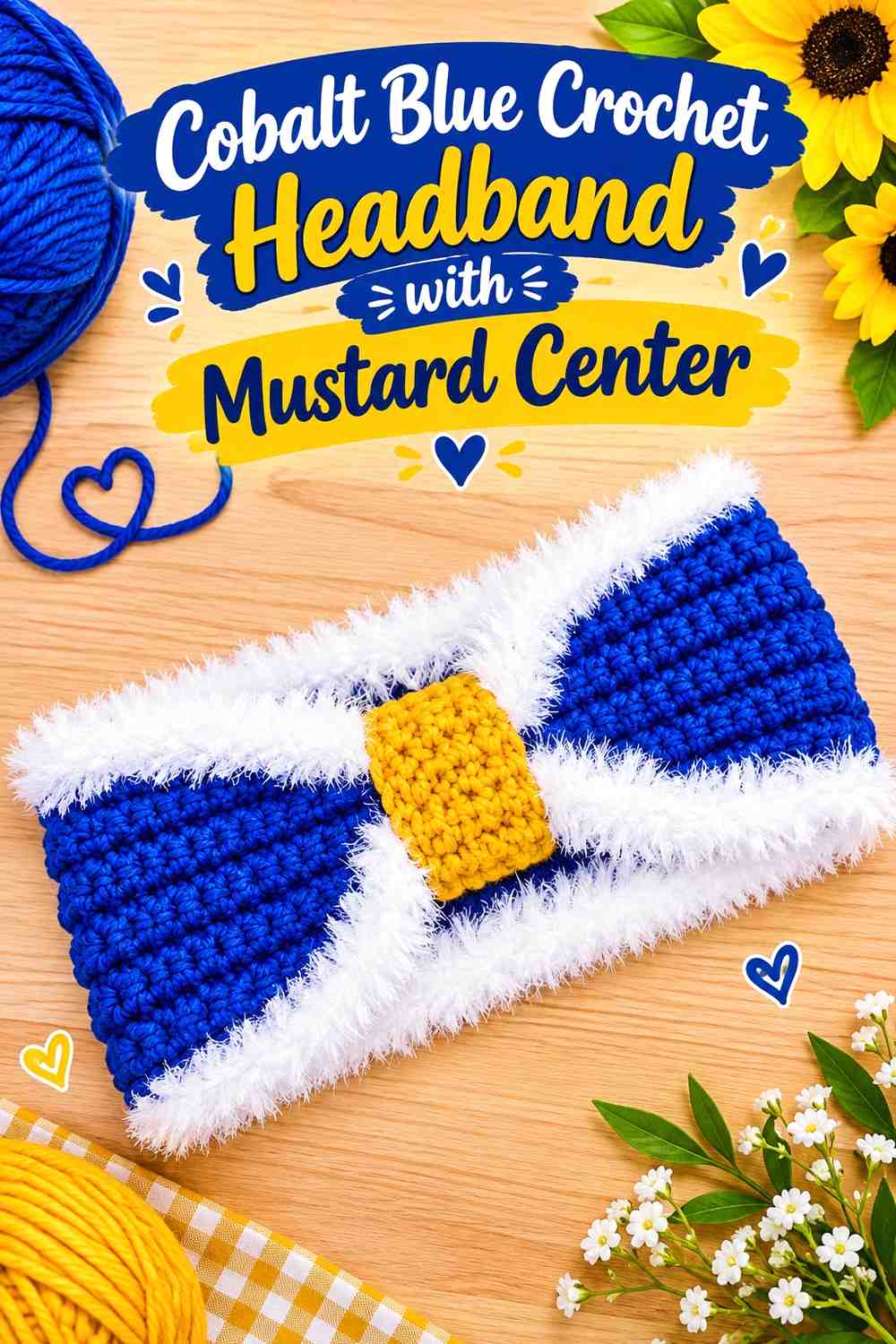
16. Cobalt Blue Crochet Headband With Mustard Center
 SAVE
A headband has little surface area, so a simple division is usually more effective than numerous narrow changes. Cobalt blue can cover the sides while mustard highlights the center twist, join, or focal section.
This arrangement places the warmer color exactly where the construction already draws attention.
Keep Cobalt Blue Along the Crochet Headband Sides
Cobalt on both sides creates a balanced frame around the central feature and prevents the narrow accessory from looking fragmented.
If the sides contain pronounced ribbing, leaving them one color also allows that texture to remain visible without additional visual interruptions.
Put Mustard at the Center of the Cobalt Blue Crochet Headband
Mustard at the twist or central join reinforces the natural focal point of the headband. The section does not need to be large to remain visible.
Make sure the mustard area extends far enough beyond the actual fold or join to be seen when the headband is worn. A tiny hidden section adds little to the finished color scheme.
Creator Credit: Blossom Crochet
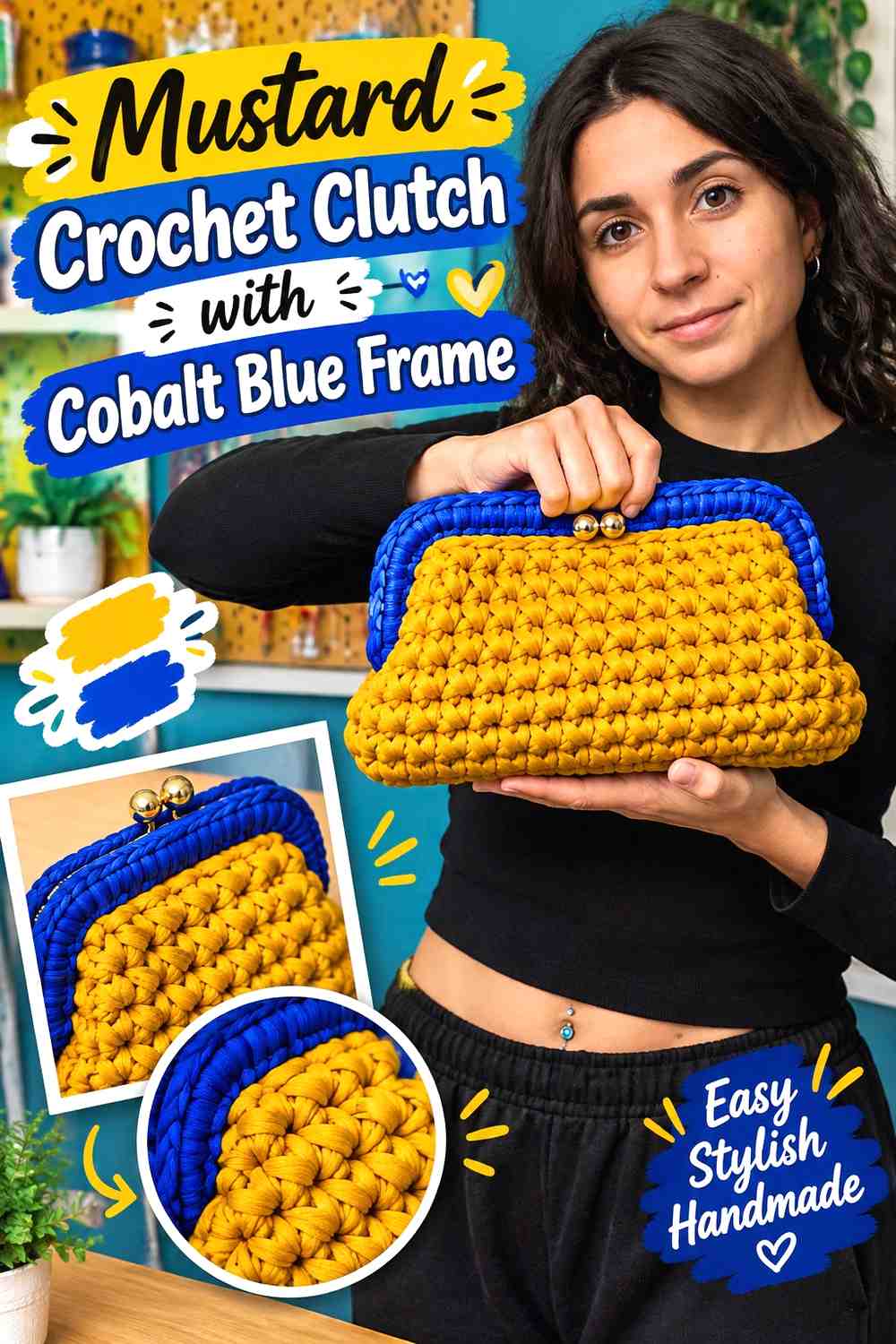
17. Mustard Crochet Clutch With Cobalt Blue Frame
 SAVE
A clutch gives mustard a broad uninterrupted front surface while cobalt blue can outline the base, side edges, handle, or closure area. This produces a compact color-block design without covering the bag in multiple stripes.
Because the opening is a visually important part of a clutch, cobalt placed there can define the bag strongly even if the rest remains mustard.
Let Mustard Cover the Main Crochet Clutch Panels
Mustard across the front and back keeps the small bag visually coherent and gives any stitch texture room to show without frequent color transitions.
If the clutch has a pronounced closure, avoid adding unrelated cobalt blocks through the center unless you intentionally want a more segmented look.
Use Cobalt Blue to Frame the Mustard Crochet Clutch Opening
Cobalt around the upper edge or closure gives the mustard panels a defined endpoint. The same blue can be repeated on a handle if the clutch design includes one.
If the cobalt frame becomes too wide, the opening may dominate the entire bag. Narrow the blue section when mustard should remain the clear main color.
Creator Credit: vivi e cuci
Which Cobalt Blue and Mustard Balance Should You Choose?
Choose a cobalt-led combination when you want the blue to define the overall project and mustard to provide warm interruptions. The blanket, cardigan, pillow, scarf, beanie, vest, sweater, shawl, market bag, and headband all give cobalt enough uninterrupted area to stay dominant.
Choose a mustard-led arrangement when the warmer shade should command more attention. The bucket hat, flower appliqués, basket, water bottle holder, and clutch demonstrate how cobalt can become a smaller but still important framing color.
For motif-based projects such as the tote, mitered squares, and coaster set, consider reversing the color roles from one unit to another. Because the same two shades repeat throughout the project, changing their positions can create variety without introducing another color.
Conclusion
Cobalt blue and mustard work particularly well when each color has an identifiable purpose. Large cobalt fields can make mustard borders, cuffs, pockets, centers, and bands more noticeable, while broad mustard sections give cobalt a chance to act as a strong outline or structural accent.
For the clearest two-color plan, decide which shade should dominate before choosing the placement of the second one. Then repeat that supporting color in a few related areas rather than scattering it everywhere. A mustard cuff that connects with mustard neckline trim, or a cobalt basket rim that repeats on the handles, usually creates a more deliberate result than isolated accents.
Before committing to a large blanket or wearable, compare the actual yarns and test the colors in the intended stitch texture. Use the credited tutorials for exact construction details while adapting the cobalt blue and mustard placement to the visual balance you want.
Frequently Asked Questions
Should cobalt blue or mustard dominate a crochet combination?
Either can lead. Cobalt blue is useful when you want a saturated, cooler-looking main field with mustard concentrated around details. Mustard can dominate when you want a warmer project and use cobalt for borders, handles, motif centers, or other defining areas.
How can I check whether cobalt blue and mustard have enough contrast?
Place the actual yarns together and compare them under the lighting where the finished project will normally be seen. A grayscale photograph can also help reveal their light-and-dark relationship. This matters most for small motifs, thin stripes, edging, and textured details.
Where should mustard go on a mostly cobalt blue crochet garment?
Cuffs, neckline edging, hems, pockets, armhole trim, and selected color blocks are useful options. Choose a few related locations rather than automatically putting mustard on every available edge.
Can mustard be the main color instead of cobalt blue?
Yes. Mustard can cover the main surface of hats, baskets, bags, accessories, motifs, or garments while cobalt supplies darker definition. The bucket hat, basket, bottle holder, flowers, and clutch in this collection all use that general color hierarchy.
How can I make cobalt blue and mustard crochet look less busy?
Reduce the number of color changes and give each shade larger, clearer zones. A cobalt sweater with mustard cuffs usually creates a stronger hierarchy than a sweater covered in many narrow alternating bands.
What can I substitute for mustard if I cannot find the exact shade?
Choose another warm yellow or yellow-brown shade that preserves the contrast relationship you want with cobalt blue. Pay attention to lightness and saturation rather than trying to match the word “mustard” alone.
Should the border be cobalt blue or mustard?
Use the border color according to what the project needs visually. Mustard can warm and emphasize the edge of a cobalt field, while cobalt can contain a brighter mustard surface and give it stronger definition. On motif projects, the border can also repeat whichever shade is used for joins or other structural details.