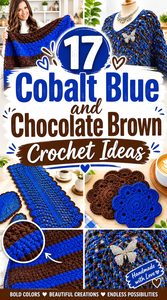
Cobalt Blue and Chocolate Brown create a crochet palette with two substantial colors rather than one strong shade paired with a pale neutral. Cobalt Blue brings the clearer, more saturated color statement, while Chocolate Brown adds darker, earthier visual weight. The result can be bold without requiring constant color changes.
The balance depends heavily on placement. A Cobalt Blue pillow can use Chocolate Brown as an outer frame, while a Chocolate Brown cardigan can use Cobalt Blue at cuffs and neckline details. On granny squares, Cobalt Blue centers can repeat across a Chocolate Brown background. Larger blankets benefit from repeating both colors in broad enough areas that neither disappears when the project is viewed from a distance.
The tutorials credited below support the crochet project or construction concept. The Cobalt Blue and Chocolate Brown color arrangements are independent palette adaptations, so the creators do not necessarily use these exact shades.
Quick List
- Cobalt Blue And Chocolate Brown Crochet Pillow
- Chocolate Brown And Cobalt Blue Crochet Cardigan
- Cobalt Blue And Chocolate Brown Crochet Tote Bag
- Chocolate Brown And Cobalt Blue Crochet Blanket
- Cobalt Blue And Chocolate Brown Crochet Granny Square
- Chocolate Brown And Cobalt Blue Crochet Beanie
- Cobalt Blue And Chocolate Brown Crochet Scarf
- Chocolate Brown And Cobalt Blue Crochet Basket
- Cobalt Blue And Chocolate Brown Crochet Bucket Hat
- Chocolate Brown And Cobalt Blue Crochet Shawl
- Cobalt Blue And Chocolate Brown Crochet Vest
- Chocolate Brown And Cobalt Blue Crochet Cowl
- Cobalt Blue And Chocolate Brown Crochet Coasters
- Chocolate Brown And Cobalt Blue Crochet Headband
- Cobalt Blue And Chocolate Brown Crochet Table Runner
- Chocolate Brown And Cobalt Blue Crochet Market Bag
- Cobalt Blue And Chocolate Brown Crochet Poncho
Decide Whether Cobalt Blue or Chocolate Brown Should Dominate
Cobalt Blue often attracts attention quickly because of its saturation, so it can remain visually important even when Chocolate Brown occupies more total area. This makes the palette useful for garments and home decor where you want brown to create the foundation while blue marks selected details.
For a more color-forward result, reverse those roles. Cobalt Blue can cover the main pillow face, tote body, scarf length, or poncho panels while Chocolate Brown defines the edges and structural areas.
Avoid assuming that an equal 50/50 split will automatically look balanced. On small accessories, a Chocolate Brown brim or border may already represent a large part of the finished surface. On blankets and table runners, the same accent may need to repeat several times before it feels connected.
Check Cobalt Blue and Chocolate Brown Value Contrast
The colors are different in hue, but the actual light/dark contrast depends on the yarns you choose. A very deep Cobalt Blue can sit surprisingly close in value to Chocolate Brown, which may reduce the visibility of narrow stripes or small motifs.
Place the yarns side by side before planning detailed colorwork. A grayscale photo can help show whether the two shades remain distinct without their hue. If they visually merge, use broader panels, motif centers, borders, or cuffs rather than relying on thin outlines.
Use Cobalt Blue and Chocolate Brown Around Crochet Structure
Borders, ribbing, joins, cuffs, brims, handles, and motif centers already have structural importance in crochet. They are useful places to introduce the supporting color because the change looks intentional rather than random.
Texture also affects the decision. Bobbles, cables, ribbing, and raised stitches already create shadows and surface variation. A strongly textured project may need fewer color changes than a flat fabric.
1. Cobalt Blue And Chocolate Brown Crochet Pillow
 SAVE
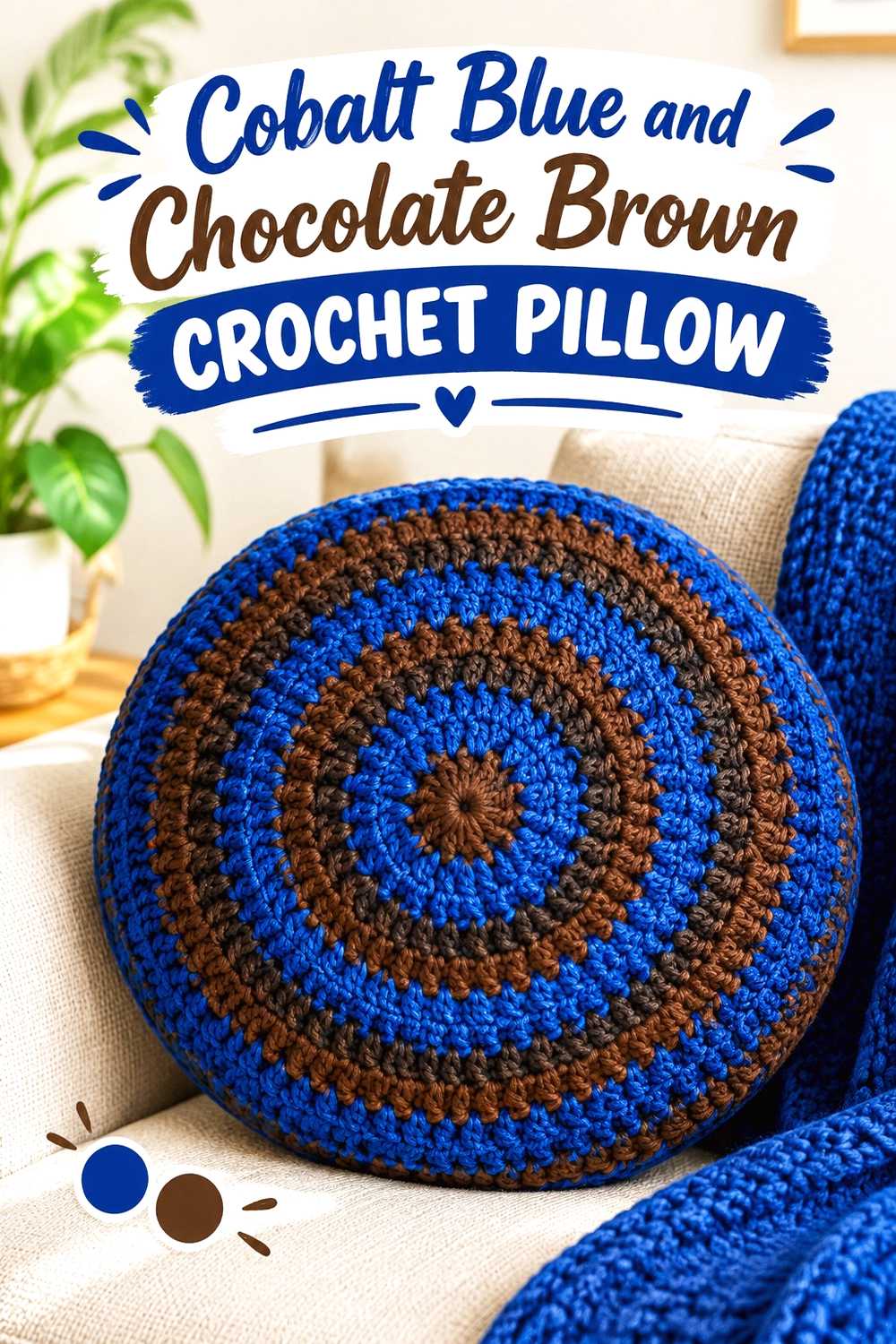
SAVEA pillow gives Cobalt Blue enough uninterrupted surface to establish the main color while Chocolate Brown creates a darker visual boundary. The brown can also separate a central blue texture from the outer edge without introducing a third neutral.
Let Cobalt Blue Cover the Main Crochet Pillow Face
Use Cobalt Blue across the majority of the pillow front when raised stitches, waffle texture, cables, or other details already create visual movement.
Keeping those stitches in one blue field prevents repeated brown interruptions from competing with the texture. If the pillow includes a central motif, Cobalt Blue can also remain concentrated there while brown gradually becomes more visible toward the edge.
Chocolate Brown Can Frame a Cobalt Blue Crochet Pillow
A Chocolate Brown border gives the blue surface a clear endpoint and adds darker visual weight around the outside.
Keep the brown border narrower if you want Cobalt Blue to remain unmistakably dominant. If the edge seems isolated, repeat Chocolate Brown in one small interior line or motif detail rather than simply increasing the border width.
Creator Credit: Yarnspirations
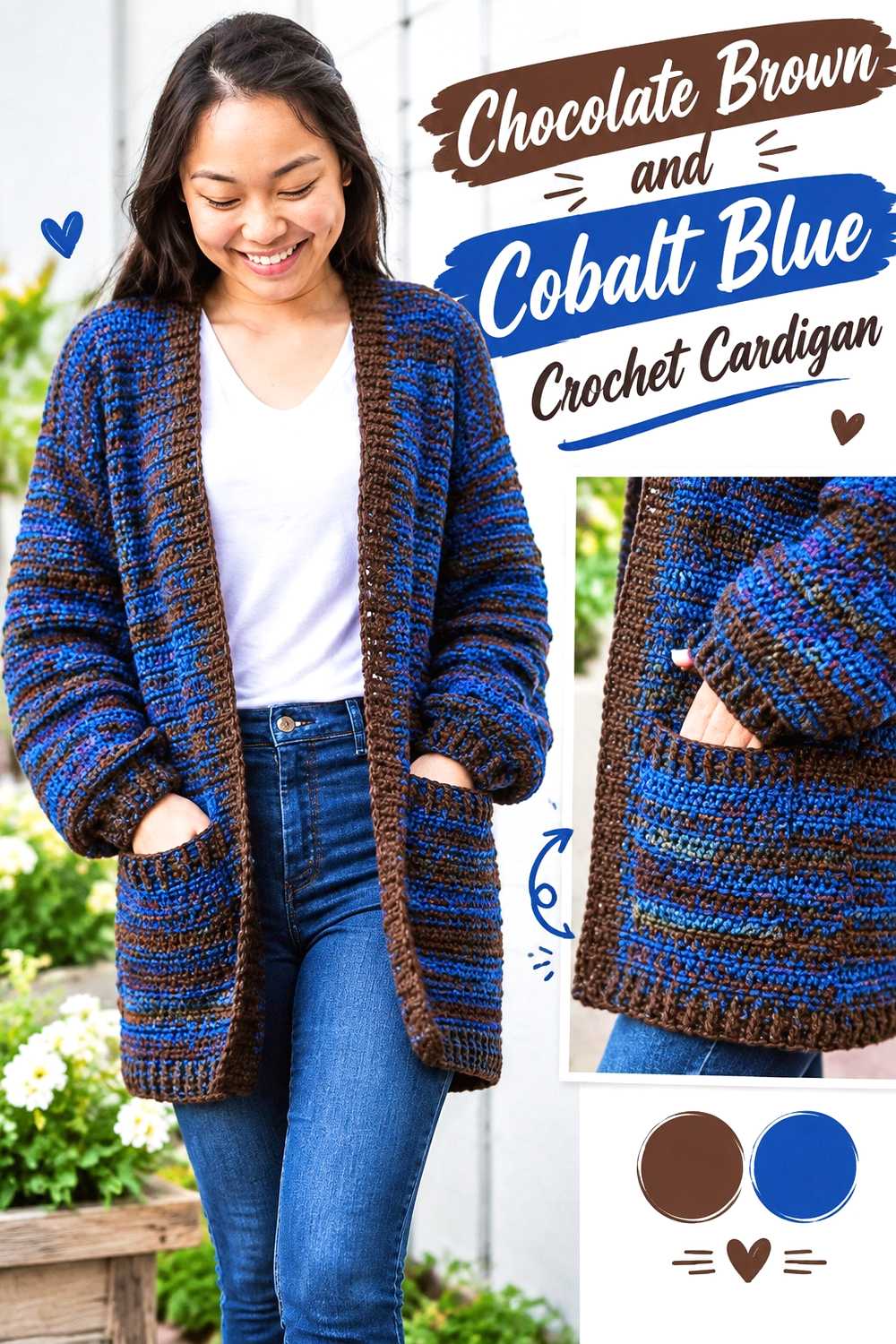
2. Chocolate Brown And Cobalt Blue Crochet Cardigan
 SAVE
SAVEA cardigan offers many natural locations for an accent color. Chocolate Brown can run through the large front, back, and sleeve panels while Cobalt Blue appears around cuffs, the neckline, pockets, or front edging.
Keep Chocolate Brown Across the Main Crochet Cardigan Panels
Using Chocolate Brown consistently over the body gives the cardigan a strong unified foundation. Carrying it through most of the sleeves also keeps the garment from becoming heavily color-blocked.
This is particularly useful if the cardigan already includes visible ribbing or textured stitches that divide the surface structurally.
Repeat Cobalt Blue Around Chocolate Brown Crochet Cardigan Edging
Cobalt Blue cuffs can be repeated around the neckline or front opening so the accent travels across more than one part of the garment.
You do not need to outline every seam. A few deliberately repeated blue finishing areas usually create a clearer hierarchy than placing Cobalt Blue on every available edge.
Creator Credit: For The Frills
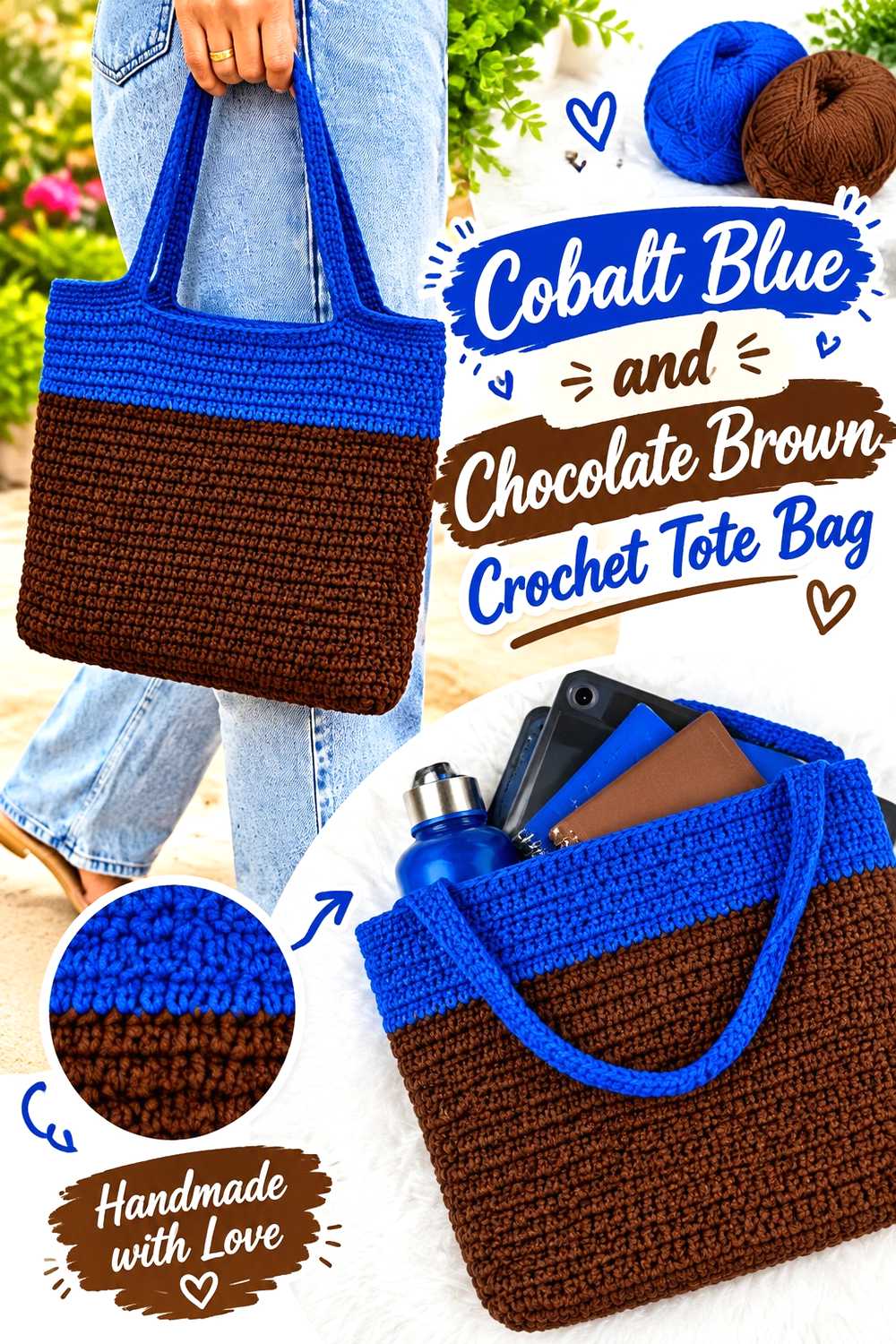
3. Cobalt Blue And Chocolate Brown Crochet Tote Bag
 SAVE
SAVEA tote divides naturally into the body, base, upper edge, and handles. Cobalt Blue can make the bag body the focal area, while Chocolate Brown grounds the more structural sections.
Use Cobalt Blue Across the Main Crochet Tote Bag Body
A broad Cobalt Blue body gives the bag one recognizable color field. This works especially well when the stitch pattern is open or textured because the construction already contributes visual variation.
Keeping the base blue as well produces a more continuous body, while switching to brown at the base creates stronger visual weight at the bottom.
Chocolate Brown Can Anchor Cobalt Blue Crochet Tote Handles
Chocolate Brown handles provide a dark upper detail that can be repeated around the opening or base.
If both the handles and base are brown, check the overall balance before adding another brown stripe through the middle. Those two structural areas may already provide enough grounding.
Creator Credit: Hopeful Turns
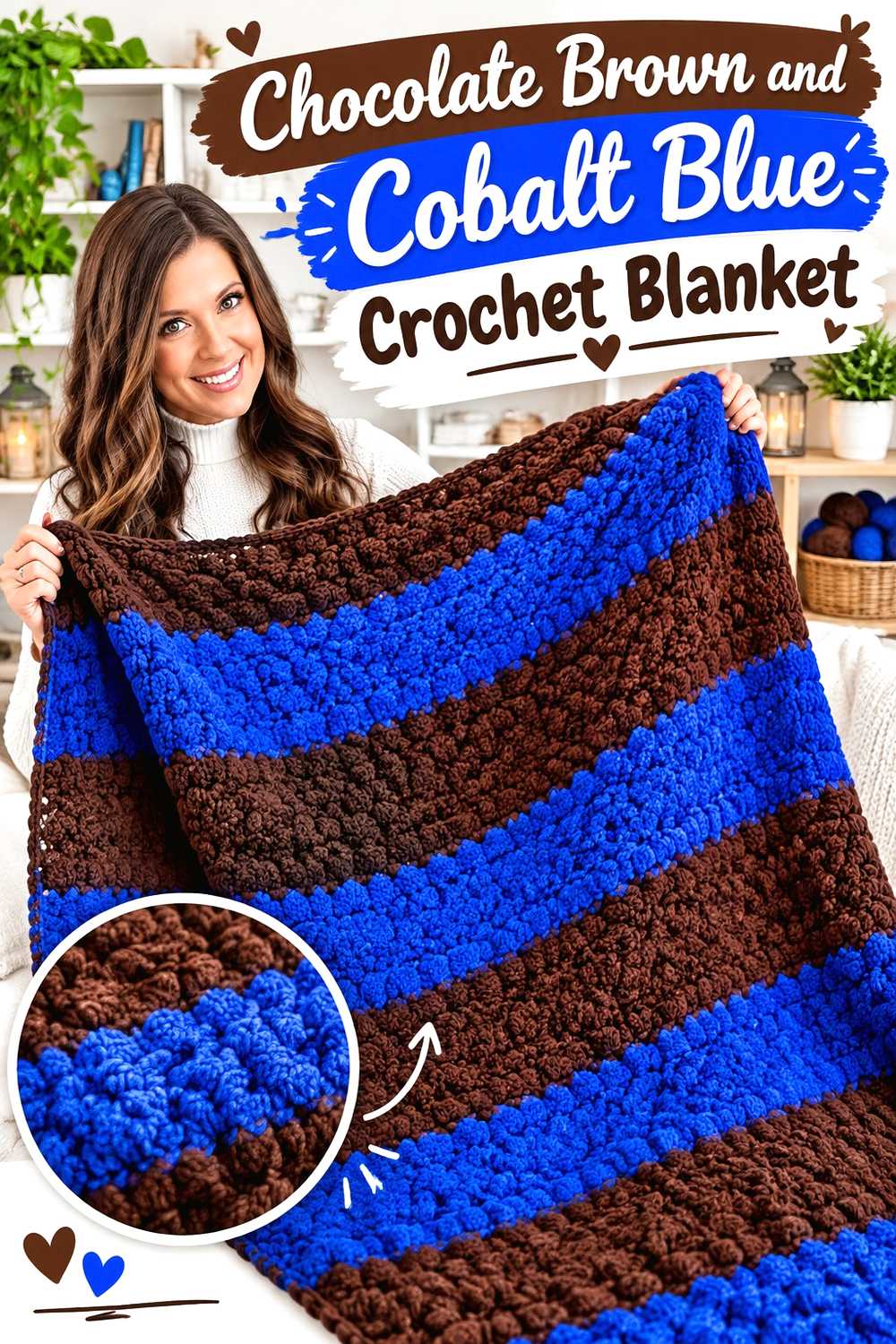
4. Chocolate Brown And Cobalt Blue Crochet Blanket
 SAVE
SAVEA blanket gives both colors enough room to repeat in substantial areas. Chocolate Brown can establish the main field while Cobalt Blue creates clearer interruptions that remain visible when the blanket is folded or viewed across a room.
Break Up Chocolate Brown Crochet Blanket Areas With Cobalt Blue
Use Cobalt Blue at recognizable intervals rather than placing the entire blue portion at one end.
Narrower blue bands preserve a brown-led appearance. Wider Cobalt Blue sections create a more balanced two-color direction and may be useful when the blanket needs stronger visual contrast across a large surface.
Cobalt Blue Can Define a Chocolate Brown Crochet Blanket Border
A Cobalt Blue border makes the outer edge easy to distinguish against a Chocolate Brown center.
Because the border surrounds the entire blanket, even a modest width can have considerable impact. Compare it with the amount of blue already used inside before deciding how broad the final edge should become.
Creator Credit: MJ’s Off The Hook Designs
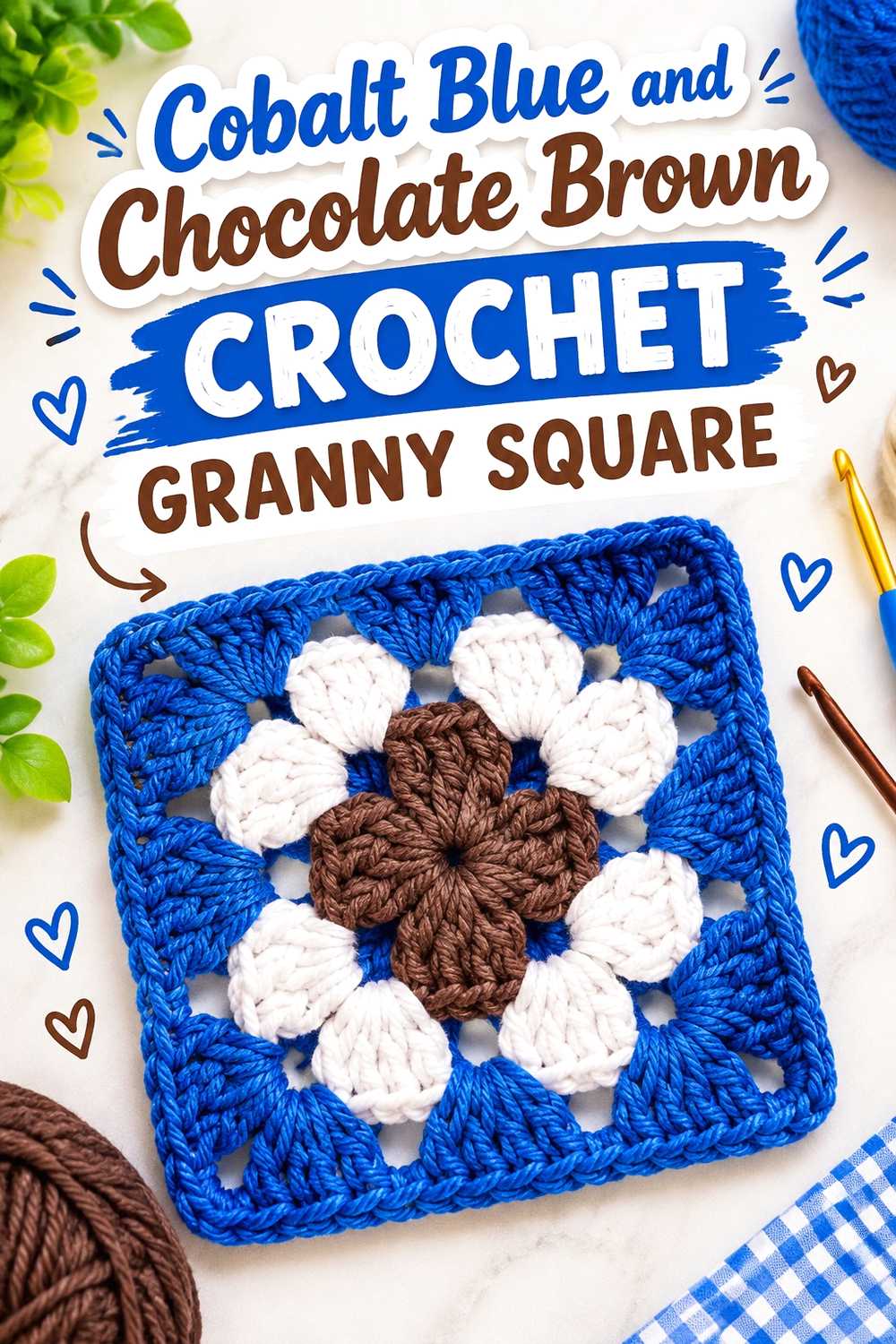
5. Cobalt Blue And Chocolate Brown Crochet Granny Square
 SAVE
SAVEA granny square makes the color hierarchy easy to control from the center outward. Cobalt Blue can become the focal point while Chocolate Brown provides a darker surrounding field and, if desired, a joining color.
Put Cobalt Blue at the Center of a Chocolate Brown Crochet Granny Square
A Cobalt Blue center creates a strong focal point without requiring blue to cover most of the motif.
When multiple squares are placed together, those blue centers can form a repeated visual rhythm across a larger blanket, bag, cardigan, or cushion.
Let Chocolate Brown Separate Cobalt Blue Crochet Granny Square Centers
Chocolate Brown outer rounds give neighboring blue centers breathing room once motifs are placed side by side.
If Chocolate Brown is also used for joining, the outer areas can visually merge into one larger field, allowing the Cobalt Blue centers to become the repeated feature that ties the project together.
Creator Credit: Hooked by Robin
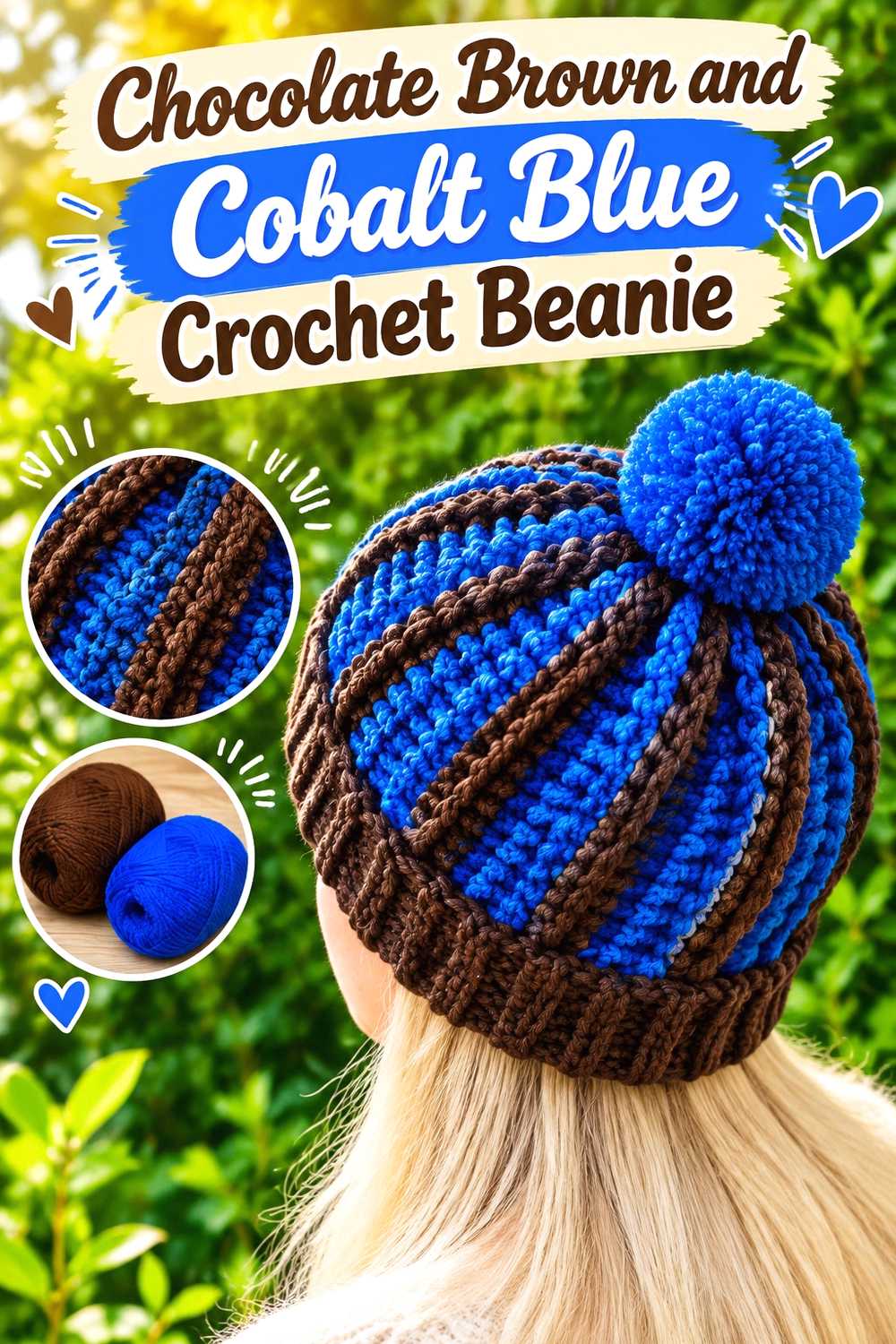
6. Chocolate Brown And Cobalt Blue Crochet Beanie
 SAVE
SAVEA beanie has a compact surface, so one Cobalt Blue section can provide enough contrast against a Chocolate Brown crown. Keeping the color division simple also gives ribbing or other texture more room to show.
Keep Chocolate Brown Across the Main Crochet Beanie Crown
Chocolate Brown can run from the crown through the upper body to establish a continuous dark foundation.
If the stitch pattern includes pronounced ribs or raised sections, frequent blue stripes may compete with that texture. Let the brown surface carry the construction before introducing the accent.
Use Cobalt Blue Around the Chocolate Brown Crochet Beanie Brim
A Cobalt Blue brim creates an obvious lower boundary and brings the more saturated shade close to the face without spreading it throughout the crown.
A deep brim can occupy a substantial amount of the visible hat, so check the finished proportion before adding more Cobalt Blue higher up.
Creator Credit: Di’s Handicrafts (Crochet and Knitting)
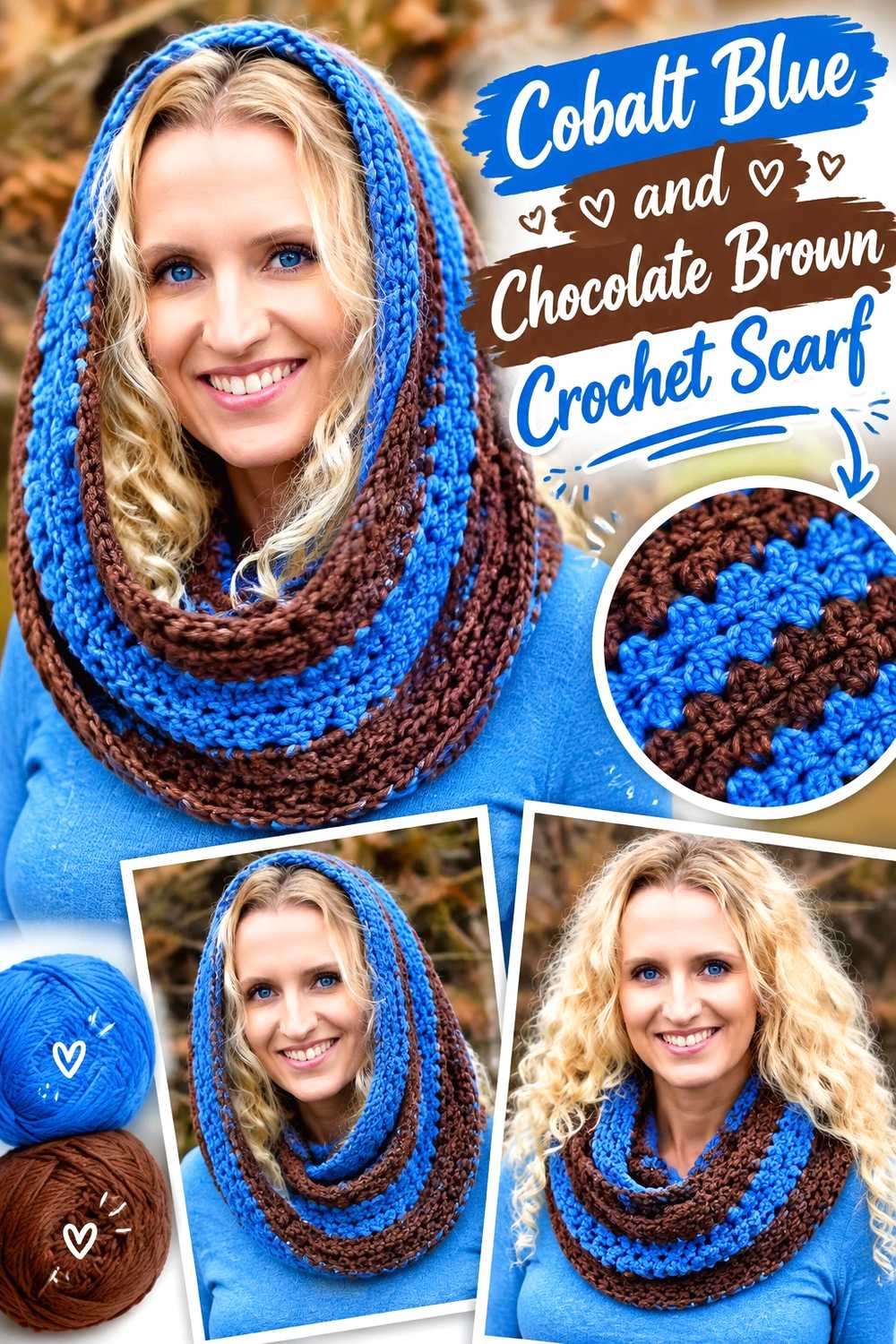
7. Cobalt Blue And Chocolate Brown Crochet Scarf
 SAVE
SAVEA scarf can place Cobalt Blue across most of its long center while using Chocolate Brown to create darker endpoints. This layout remains recognizable even when the scarf is wrapped and overlapping.
Run Cobalt Blue Through the Main Crochet Scarf Length
Keeping the central section Cobalt Blue gives the scarf a strong continuous color identity.
If the design uses ribbing, mesh, or another repeated texture, allow that stitchwork to create variation rather than interrupting the blue with many narrow brown stripes.
Put Chocolate Brown at Both Cobalt Blue Crochet Scarf Ends
Chocolate Brown end sections create two related stopping points across the long shape.
They can also remain visible when the center is wrapped. If fringe is included, decide whether it should continue the brown endpoints or return to Cobalt Blue rather than adding a third shade.
Creator Credit: Naztazia
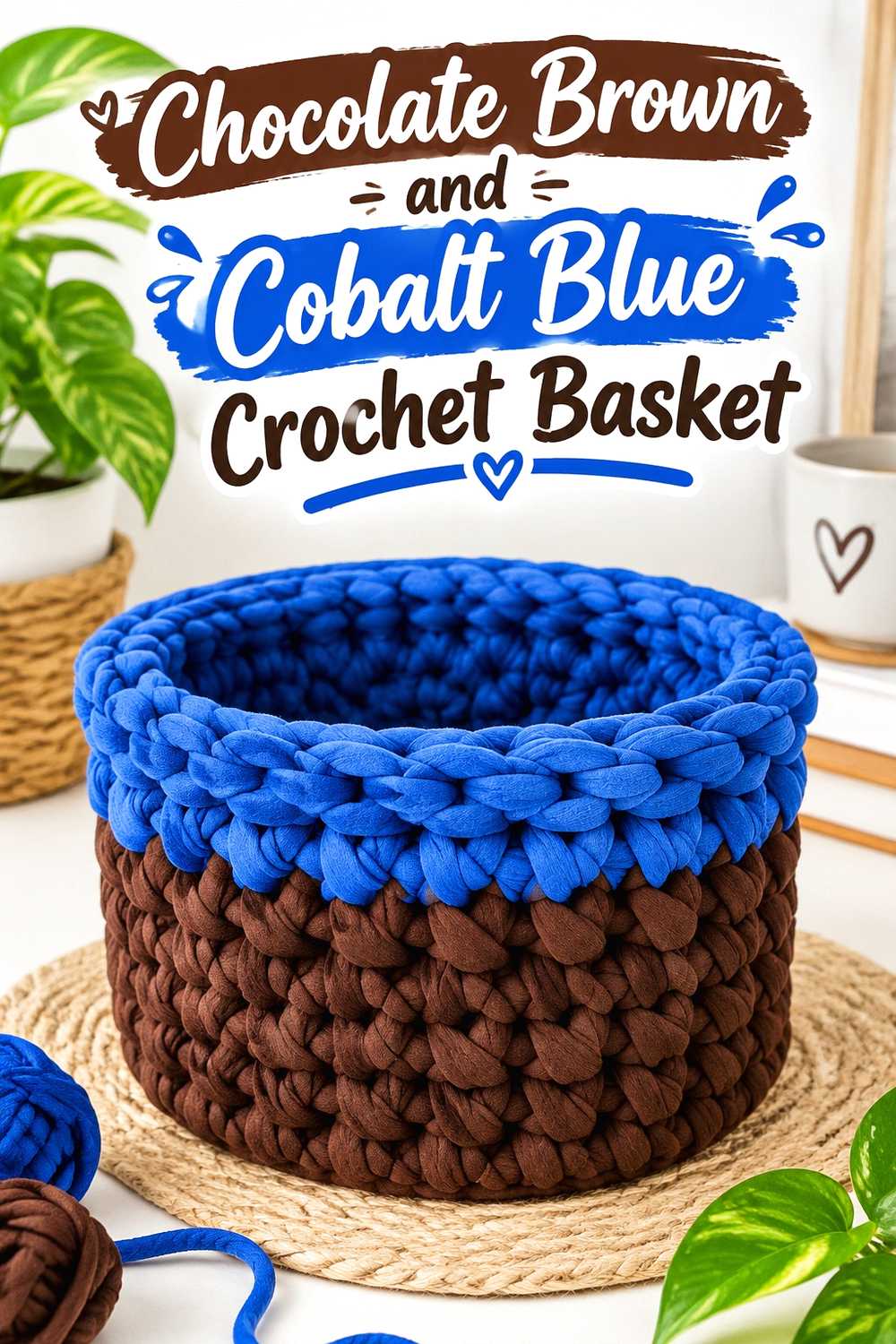
8. Chocolate Brown And Cobalt Blue Crochet Basket
 SAVE
SAVEA basket naturally divides into base, walls, rim, and handles. Chocolate Brown can carry the broader structural areas while Cobalt Blue draws attention to the opening.
Build the Main Crochet Basket Walls in Chocolate Brown
Keeping the walls Chocolate Brown creates a continuous body and prevents a short basket from becoming segmented by too many horizontal changes.
Continue brown through the base if you want the lower structure to read as one solid unit.
Use Cobalt Blue Around the Chocolate Brown Crochet Basket Rim
A Cobalt Blue rim creates a clear line around the opening and adds the strongest color where it remains easy to see.
If the basket has handles, repeat a small amount of blue there. This connects the upper details without requiring a large Cobalt Blue band across the walls.
Creator Credit: Lallaulab
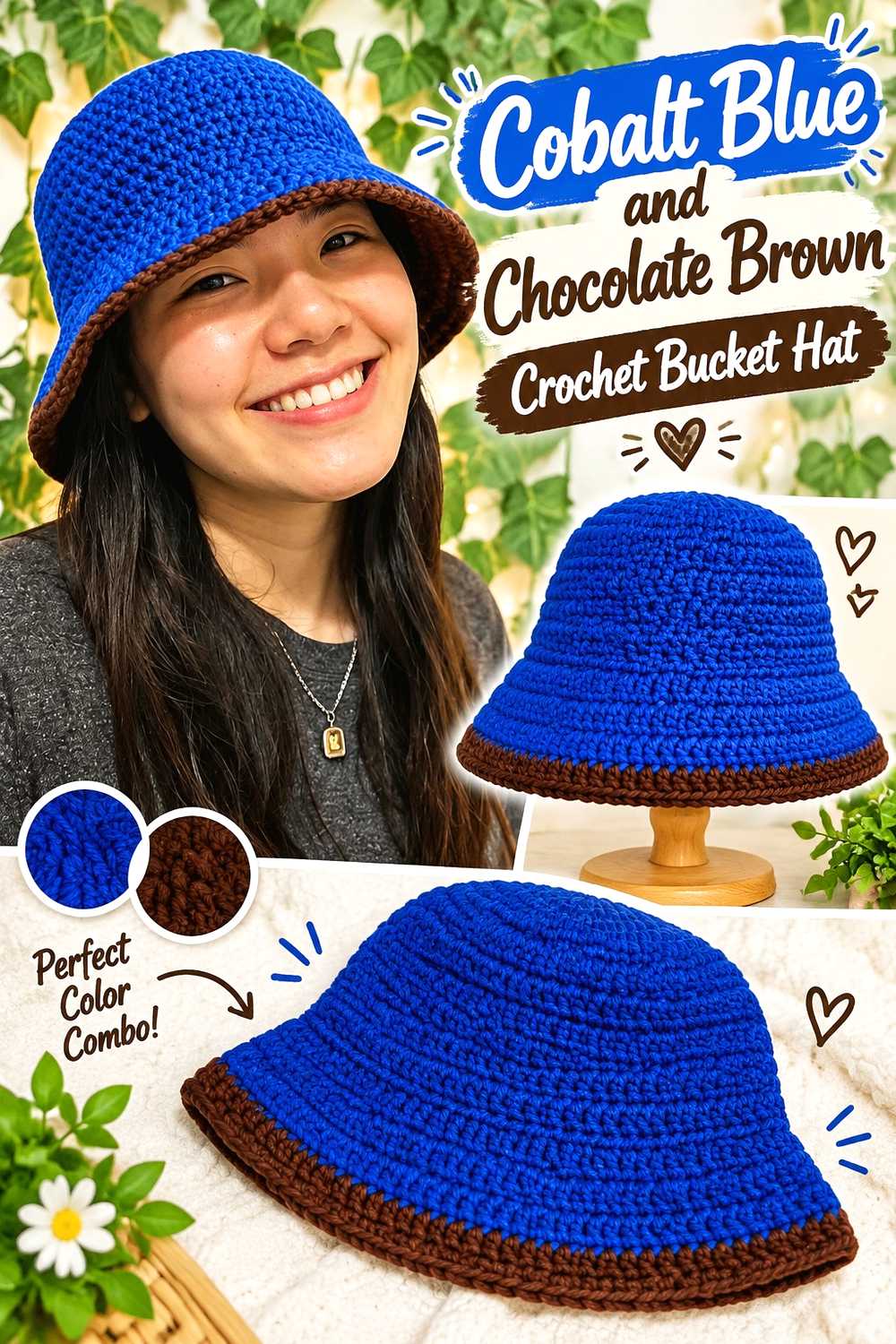
9. Cobalt Blue And Chocolate Brown Crochet Bucket Hat
 SAVE
SAVEThe crown, side wall, and brim give a bucket hat three obvious color areas. Cobalt Blue can dominate the top while Chocolate Brown grounds the lower silhouette.
Keep Cobalt Blue Across the Crochet Bucket Hat Crown
Carrying Cobalt Blue from the crown into most of the side wall creates one continuous upper shape.
That leaves the brim as a natural place to introduce Chocolate Brown rather than adding several small brown stripes through the hat body.
Let Chocolate Brown Ground the Cobalt Blue Crochet Bucket Hat Brim
A full Chocolate Brown brim creates a strong lower frame because the brim projects outward and remains visible from several angles.
For a more blue-led result, keep most of the brim Cobalt Blue and switch to brown only around the outer portion.
Creator Credit: VivCrochets
10. Chocolate Brown And Cobalt Blue Crochet Shawl
 SAVE
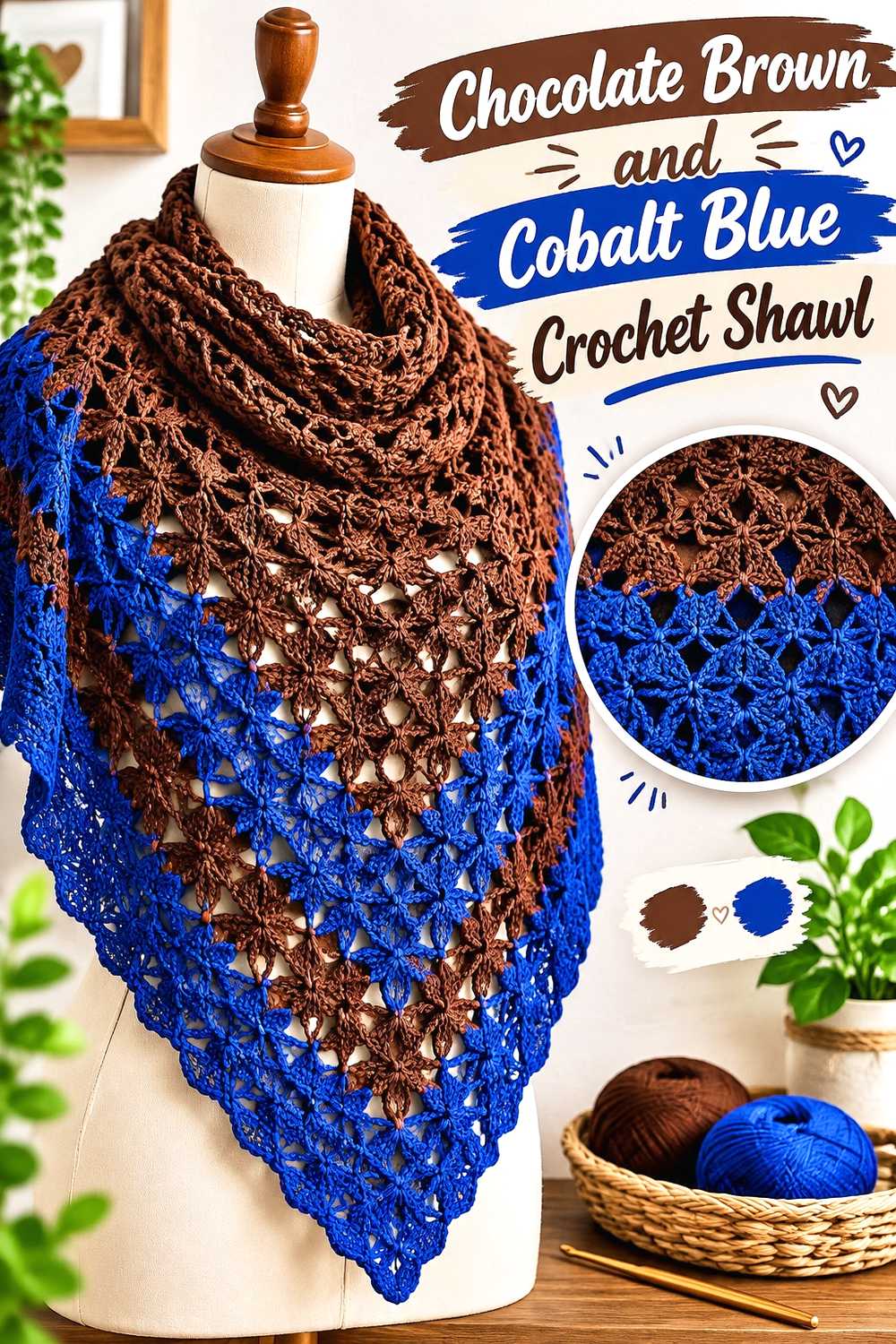
SAVEA shawl expands as it grows, so later color sections occupy considerably more visual area. Chocolate Brown can form the main body while Cobalt Blue becomes a more concentrated outer highlight.
Let Chocolate Brown Establish the Main Crochet Shawl Body
Chocolate Brown through the inner area gives lace, mesh, or textured stitches a stable background.
If you know the shawl will finish with Cobalt Blue, one small earlier blue repeat can help connect the eventual border to the center without making the piece regularly striped.
Control Cobalt Blue Around the Chocolate Brown Crochet Shawl Edge
Several Cobalt Blue rows near the outside can cover much more physical area than the same number of rows near the beginning.
If Chocolate Brown should remain dominant, judge the actual width of the blue edge as the shawl grows instead of relying only on row count.
Creator Credit: Fiber Spider
11. Cobalt Blue And Chocolate Brown Crochet Vest
 SAVE
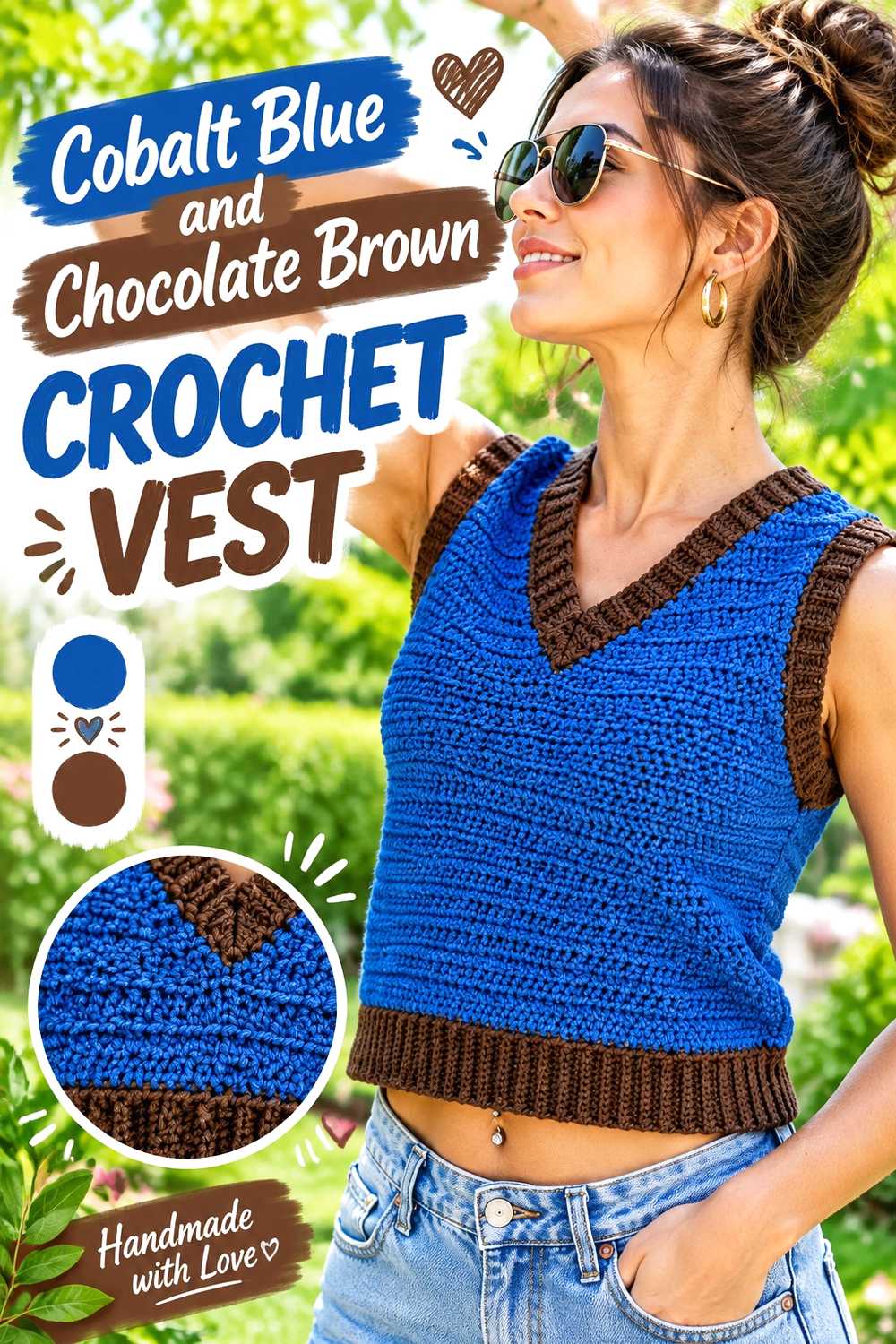
SAVEA vest gives Cobalt Blue broad front and back surfaces while leaving the armholes, neckline, and lower edge available for Chocolate Brown. That creates multiple structural accents without interrupting the main panels.
Keep Cobalt Blue Across the Main Crochet Vest Panels
Using Cobalt Blue throughout the front and back gives the vest one strong visual identity.
This arrangement also gives shaping, ribbing, and stitch texture an uninterrupted background rather than breaking the torso into multiple contrasting blocks.
Use Chocolate Brown Around Cobalt Blue Crochet Vest Armholes
Chocolate Brown armhole finishing creates matching dark accents on both sides of the garment.
Repeating brown around the neckline can connect those details. Check the vest at that point before adding a brown hem, since the upper finishing may already provide enough support.
Creator Credit: Leelee Knits
12. Chocolate Brown And Cobalt Blue Crochet Cowl
 SAVE
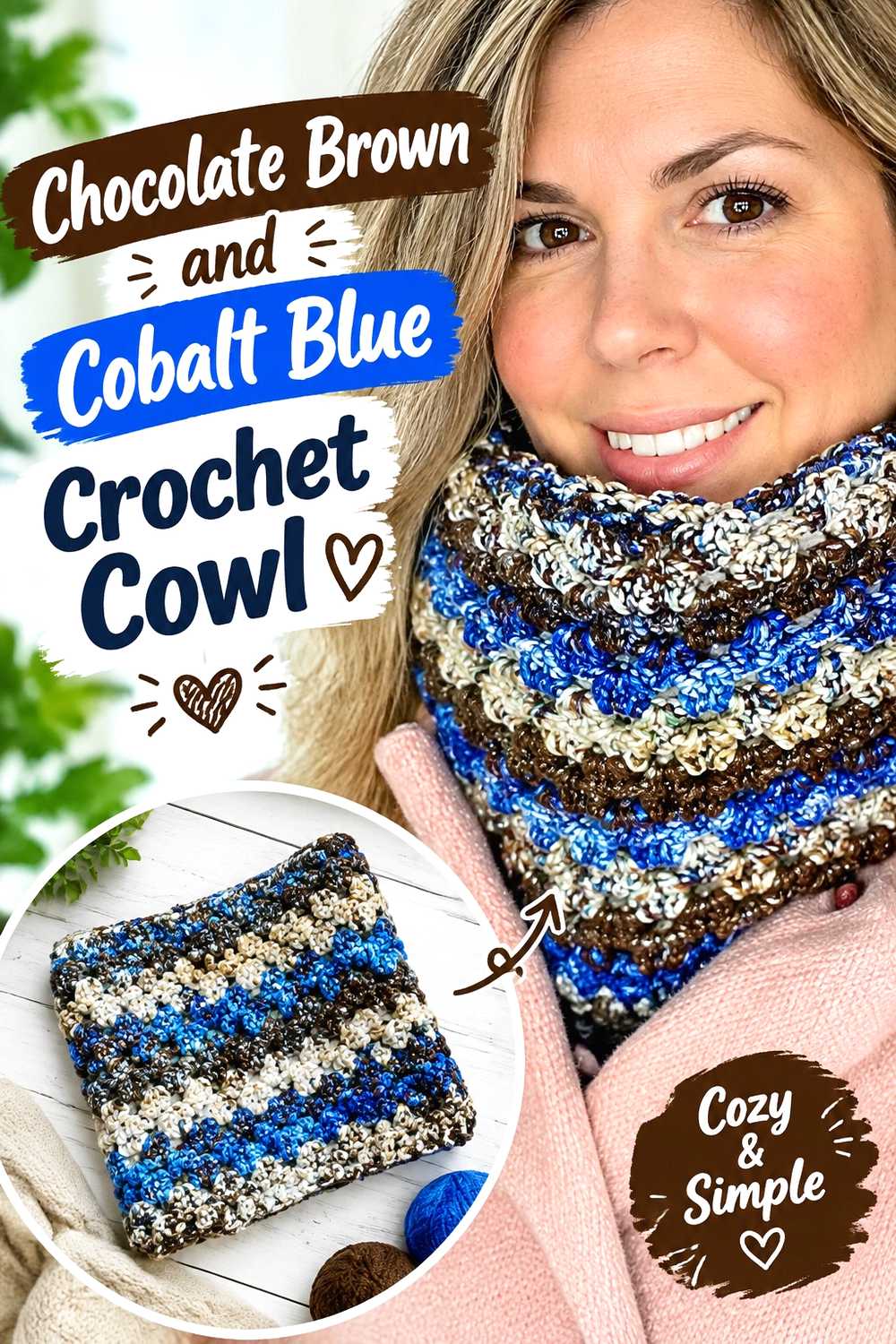
SAVEA cowl has a compact circular surface where color bands are immediately noticeable. Chocolate Brown can form most of the center, while Cobalt Blue gives the upper and lower edges stronger definition.
Keep Chocolate Brown Broad Across the Crochet Cowl Body
A wide Chocolate Brown center gives ribbing, woven texture, or other raised stitches room to continue around the cowl without frequent interruptions.
This makes the cowl especially useful for a brown-led interpretation of the palette.
Frame the Chocolate Brown Crochet Cowl With Cobalt Blue
Cobalt Blue at the upper and lower boundaries creates a clear frame around the darker center.
Keep the blue borders narrow when brown should remain dominant. If both blue sections become deep, the Chocolate Brown middle can begin to read as the smaller accent instead.
Creator Credit: Pretty Darn Adorable Crochet Tutorials
13. Cobalt Blue And Chocolate Brown Crochet Coasters
 SAVE
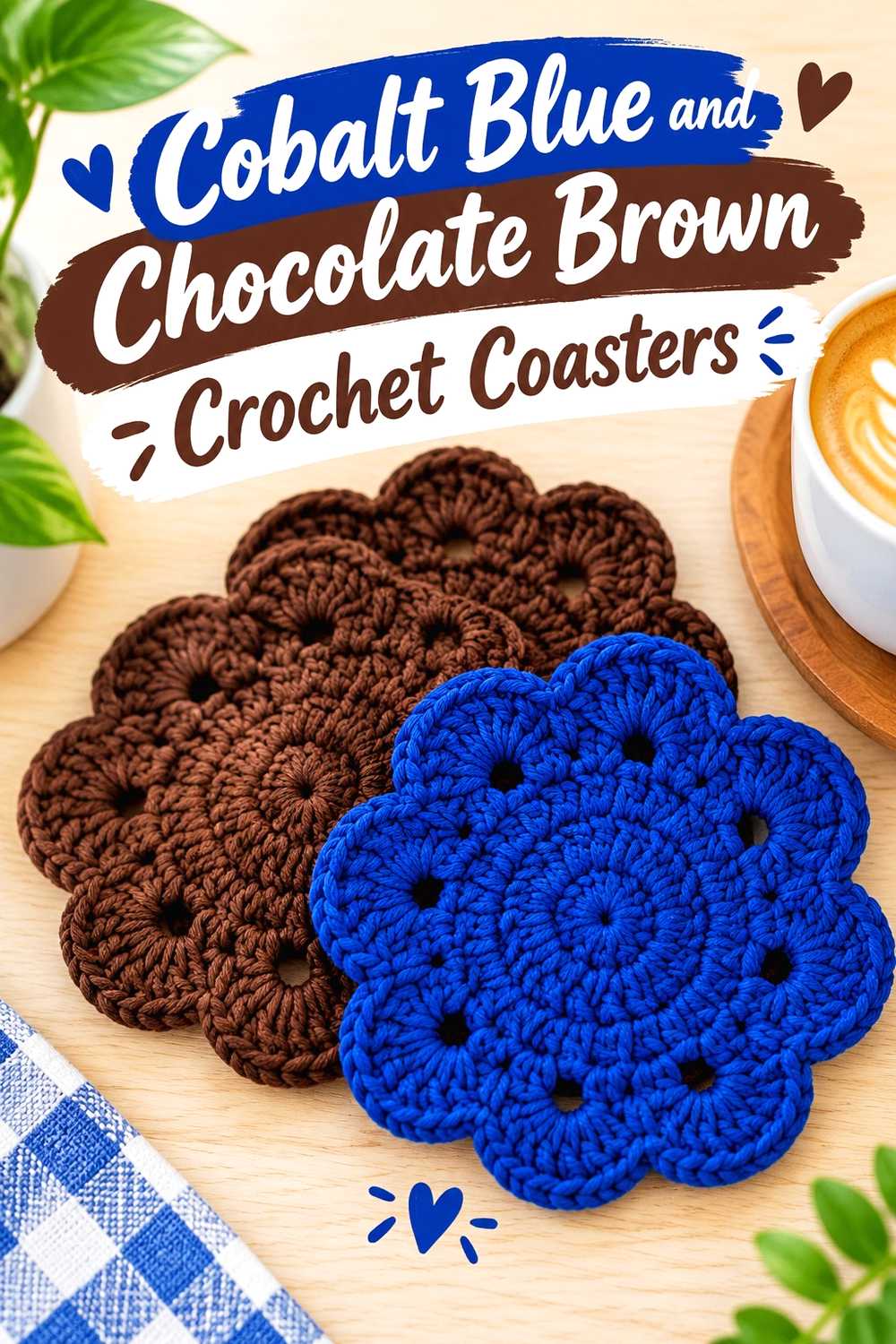
SAVEA coaster has so little surface that each color change carries significant weight. A Cobalt Blue center with Chocolate Brown edging gives the set a clear center-and-frame arrangement.
Give Cobalt Blue Enough Space in the Crochet Coaster Center
Allow Cobalt Blue to occupy a recognizable central area before switching colors.
If the Chocolate Brown edging begins too early, the border may take over the small surface and turn blue into a minor detail.
Outline Cobalt Blue Crochet Coasters With Chocolate Brown
Chocolate Brown around the edge provides a consistent finish across the set and adds a darker boundary without needing an additional color.
If the edging includes shells, puffs, or other strong texture, keep its width controlled because the combination of texture and dark color can make it visually prominent.
Creator Credit: Designs by Phanessa
14. Chocolate Brown And Cobalt Blue Crochet Headband
 SAVE
SAVEA headband works well with one clear main color and one concentrated focal detail. Chocolate Brown can carry most of the narrow band while Cobalt Blue appears at the twist, seam, or selected edge.
Keep Chocolate Brown Across the Main Crochet Headband
Chocolate Brown gives ribbing or another simple stitch texture one uninterrupted background.
Because the project is narrow, the brown does not need several additional design changes to remain visually interesting.
Concentrate Cobalt Blue on One Chocolate Brown Crochet Headband Detail
Use Cobalt Blue around a central twist, narrow band, seam detail, or selected finishing edge.
One deliberate blue section may read more clearly than several tiny accents scattered around such a compact project.
Creator Credit: Bella Coco
15. Cobalt Blue And Chocolate Brown Crochet Table Runner
 SAVE
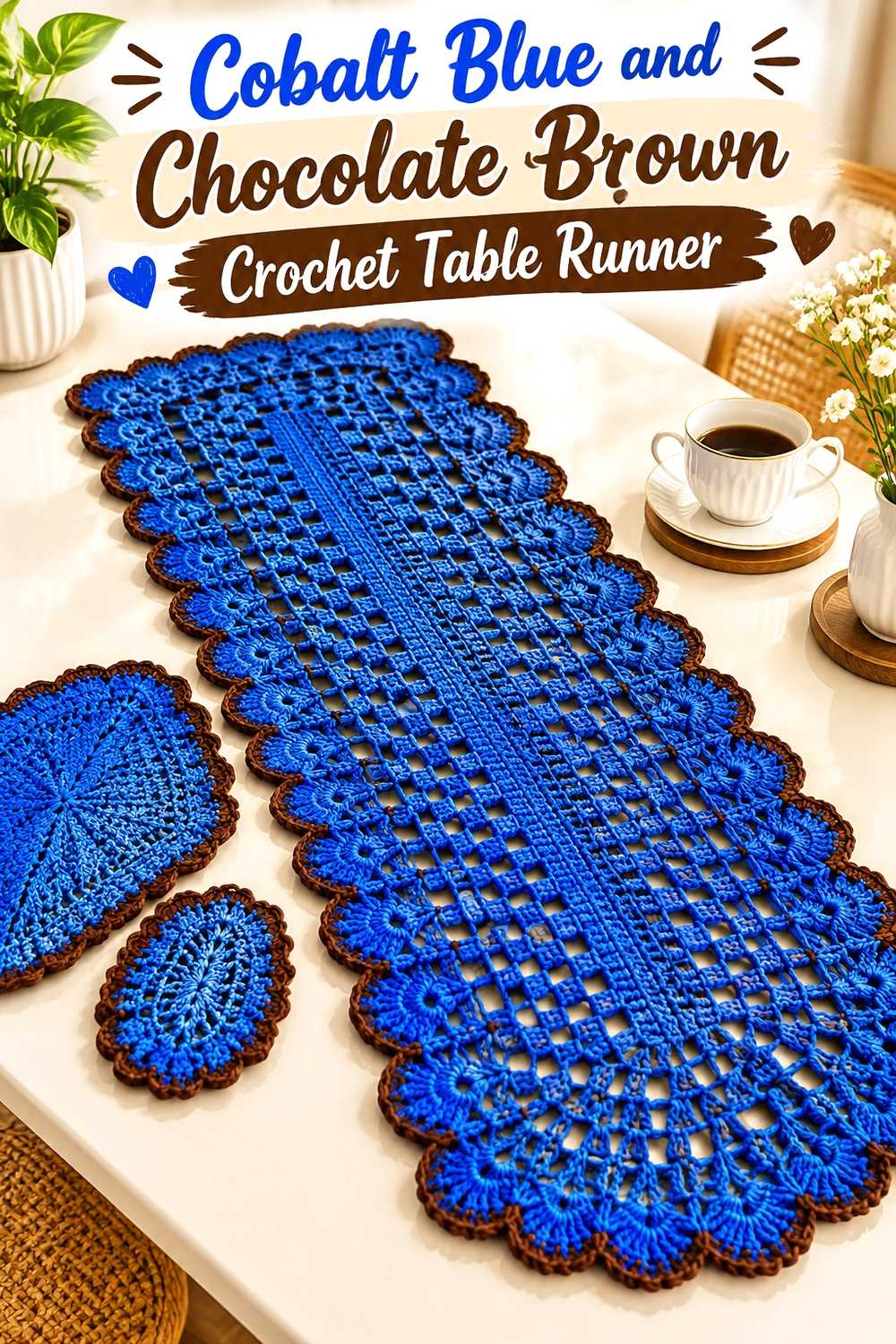
SAVEA table runner offers a long flat surface where color placement remains visible from end to end. Cobalt Blue can carry the central length while Chocolate Brown marks the ends and selected repeats closer to the middle.
Run Cobalt Blue Through the Main Crochet Table Runner
A broad Cobalt Blue center keeps the runner visually continuous and allows openwork or texture to provide much of the surface interest.
Keeping the largest section blue also means relatively modest Chocolate Brown areas can remain easy to identify.
Repeat Chocolate Brown Across the Cobalt Blue Crochet Table Runner
Chocolate Brown at both ends creates two related dark anchors. On a long runner, one smaller brown repeat near the center can connect those distant sections.
Avoid turning every interval into an equal stripe unless a regular striped effect is specifically what you want.
Keep Cobalt Blue Visible Between Chocolate Brown Table Runner Accents
Enough blue between the brown details preserves the runner’s main color and prevents the long surface from becoming visually chopped into short sections.
Lay the runner flat before adding another brown repeat. Color spacing can look different when the entire length is visible at once.
Creator Credit: Mary Souza crochê
16. Chocolate Brown And Cobalt Blue Crochet Market Bag
 SAVE
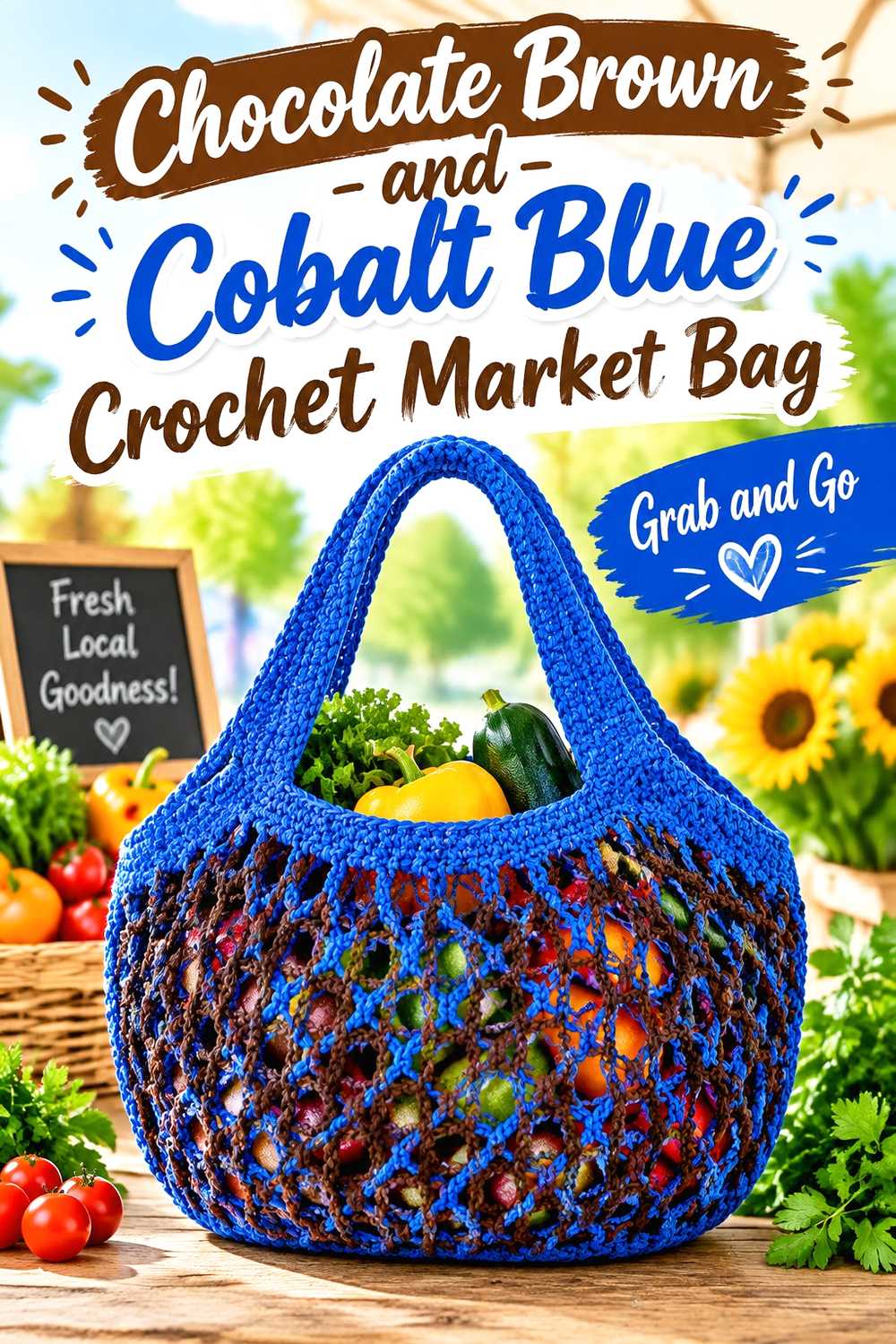
SAVEA market bag often has open fabric, so the stitch structure already creates considerable visual movement. Chocolate Brown can cover the main body while Cobalt Blue is reserved for the opening and handles.
Keep Chocolate Brown Across the Crochet Market Bag Body
Using Chocolate Brown continuously across the base and mesh or open body gives the bag one stable color field.
Because the open stitches already break up the surface, constant Cobalt Blue stripes are not necessary to create visual interest.
Use Cobalt Blue on Chocolate Brown Crochet Market Bag Handles
Cobalt Blue handles add a strong upper focal area and can be repeated around the bag opening.
If the handles already contribute a large amount of visible blue, keep the lower bag Chocolate Brown rather than automatically adding another wide blue section at the base.
Creator Credit: The Crochet Crowd
17. Cobalt Blue And Chocolate Brown Crochet Poncho
 SAVE
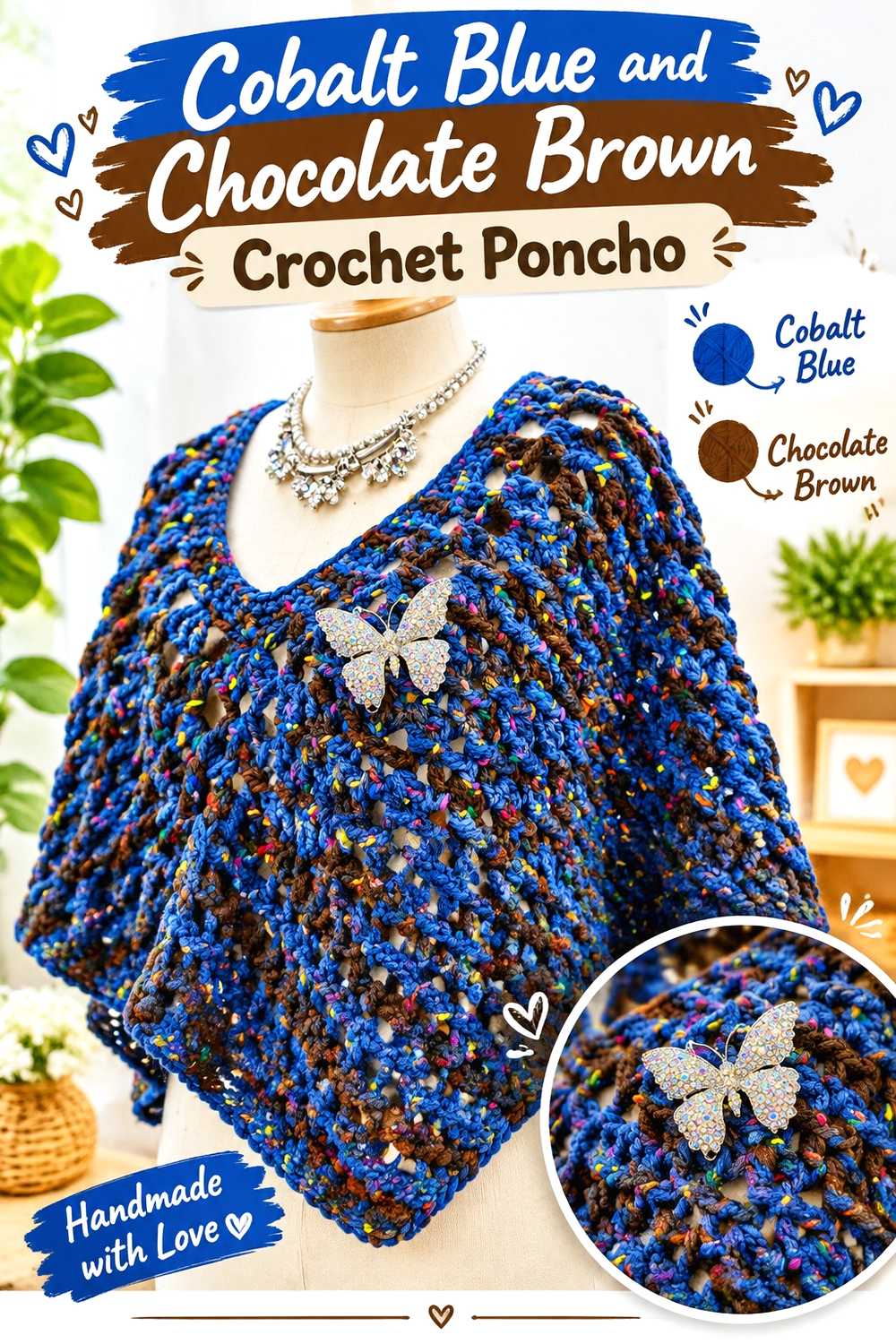
SAVEA poncho presents broad front and back surfaces that can support a substantial Cobalt Blue field. Chocolate Brown works well around the neckline and outer edges, where its darker weight can frame the garment without interrupting the center.
Use Cobalt Blue Across the Main Crochet Poncho Panels
Cobalt Blue over the broad body panels creates a strong, continuous color statement.
If the poncho includes openwork or a pronounced stitch repeat, keeping those large areas in one shade lets the construction remain visible instead of competing with frequent color blocks.
Repeat Chocolate Brown Around Cobalt Blue Crochet Poncho Edges
Chocolate Brown at the neckline can return at the lower edge or selected side finishing.
Those separated brown areas help frame the larger Cobalt Blue field from more than one direction without requiring an equally sized Chocolate Brown panel.
Keep Cobalt Blue Dominant Between Chocolate Brown Poncho Details
Because Chocolate Brown can carry substantial visual weight, avoid letting every edge become a thick dark band unless you intentionally want the garment to look more evenly divided.
View the poncho as a whole after the neckline treatment before deciding how much additional brown belongs around the hem.
Creator Credit: Bag-O-Day Crochet
Comparing Cobalt Blue and Chocolate Brown Crochet Placement
The darker direction starts with Chocolate Brown as the dominant field. The cardigan, blanket, beanie, basket, shawl, cowl, headband, and market bag all allow Cobalt Blue to appear in controlled structural locations without covering most of the project.
For a more saturated result, Cobalt Blue can dominate the pillow, tote, scarf, bucket hat, vest, table runner, and poncho. Chocolate Brown then provides visual weight around borders, handles, brims, armholes, or outer edges.
The granny square and coaster ideas show another approach: Cobalt Blue can occupy a comparatively small center while still becoming the focal color. Repetition gives those blue centers more importance than their actual surface area suggests.
Scale also changes the strategy. One brown edge may be sufficient on a coaster, whereas a large blanket needs the supporting color repeated across several areas before the palette feels connected.
Conclusion
Cobalt Blue and Chocolate Brown can move between two very different crochet directions without adding another color. A Cobalt Blue-led project looks more saturated and graphic, with brown providing deeper definition. A Chocolate Brown-led project feels darker overall and allows smaller areas of blue to act as concentrated focal points.
For home decor, the pillow and coasters make it easy to use Chocolate Brown as a frame around Cobalt Blue. The blanket and table runner require more attention to repetition because their surfaces are much larger. Baskets and market bags provide structural areas where the secondary shade can follow rims, openings, handles, or bases.
Wearables offer even more placement choices. A Chocolate Brown cardigan can use Cobalt Blue at cuffs and edging, while a Cobalt Blue vest or poncho can use brown to define the neckline and outer boundaries. Before beginning a large project, compare the actual yarns together and check whether their value contrast is sufficient for any small details you want to emphasize. Follow the credited tutorials for project construction while adapting the Cobalt Blue and Chocolate Brown arrangement independently.
Frequently Asked Questions
Should Cobalt Blue or Chocolate Brown dominate a crochet project?
Either can lead. Cobalt Blue dominance creates a more saturated, color-forward result, while Chocolate Brown produces a darker foundation with blue acting as the brighter accent. Choose according to the visual area you want each color to occupy rather than automatically dividing them equally.
Where should Chocolate Brown go on a Cobalt Blue crochet project?
Chocolate Brown works especially well around borders, brims, handles, neckline finishing, armholes, scarf ends, and other structural areas. These placements give Cobalt Blue a defined boundary without interrupting the main field unnecessarily.
Where should Cobalt Blue go on a Chocolate Brown crochet project?
Cobalt Blue can mark cuffs, basket rims, blanket bands, beanie brims, market-bag handles, granny-square centers, or selected edging. Repeating it in a few related places helps the brighter shade feel connected.
How can I check Cobalt Blue and Chocolate Brown contrast?
Place the actual yarns next to each other and look at them from several feet away. A grayscale photo can also reveal whether their light/dark values remain distinct. If they merge in grayscale, larger color areas may work better than narrow outlines.
What can replace Cobalt Blue in this crochet palette?
Choose another saturated medium-to-deep blue that remains clearly blue against the Chocolate Brown. A pale blue will create a much lighter contrast, while a very dark navy may reduce the value difference.
What can replace Chocolate Brown with Cobalt Blue?
Look for another deep warm brown that can continue serving as the grounding shade. A lighter tan or beige changes the palette considerably because it removes much of the dark visual weight provided by Chocolate Brown.
How do I keep Cobalt Blue and Chocolate Brown crochet from looking too heavy?
Avoid making both colors equally dark across large uninterrupted sections when you want more separation. Let one color dominate, use the other around clear structural areas, and allow openwork or stitch texture to create additional visual breaks without introducing another shade.