Chocolate brown and powder blue give crochet projects a clear dark-and-light relationship without relying on a basic black-and-white palette. Chocolate brown can ground borders, joins, cuffs, handles, and motif centers, while powder blue can open up larger surfaces and make textured stitches easier to distinguish.
The proportion of each shade changes the finished project considerably. A powder-blue cardigan with narrow chocolate brown finishing feels lighter than a chocolate-brown beanie with a powder blue brim. Granny squares provide another option because each color can take a consistent role inside the motif instead of dominating the entire project.
These 13 ideas use chocolate brown and powder blue across wearables, bags, blankets, accessories, and home decor. The linked tutorials support the construction concept for each project; the chocolate brown and powder blue palettes described here are independent color adaptations.
Quick List
- Powder Blue And Chocolate Brown Crochet Granny Square Pillow
- Powder Blue And Chocolate Brown Crochet Granny Square Cardigan
- Chocolate Brown And Powder Blue Crochet Granny Square Bag
- Powder Blue And Chocolate Brown Crochet Granny Blanket
- Chocolate Brown And Powder Blue Crochet Ribbed Beanie
- Powder Blue And Chocolate Brown Crochet Textured Scarf
- Powder Blue And Chocolate Brown Crochet Granny Square Vest
- Chocolate Brown And Powder Blue Crochet Bucket Hat
- Powder Blue And Chocolate Brown Crochet Headband
- Powder Blue And Chocolate Brown Crochet Striped Shawl
- Powder Blue And Chocolate Brown Crochet Nesting Baskets
- Chocolate Brown And Powder Blue Crochet Coasters
- Powder Blue And Chocolate Brown Crochet Granny Square Sweater
Decide Whether Chocolate Brown or Powder Blue Should Lead
Chocolate brown has much more visual weight than a pale powder blue, so equal quantities may not look equally balanced. If you want a lighter project, give powder blue most of the surface and concentrate chocolate brown around borders, joins, motif centers, cuffs, bases, or straps.
For a deeper result, reverse the hierarchy. A chocolate-brown body can make even a small amount of powder blue noticeable at a brim, edge, stripe, or central motif.
Use Powder Blue to Separate Chocolate Brown Crochet Details
Chocolate brown can visually compress small stitch details when it appears in several neighboring sections. Powder blue is useful around dark motifs because the lighter value creates clearer boundaries.
This matters most with granny squares, coaster motifs, ribbing, and other areas where the exact edge of a stitch pattern contributes to the design. If your particular blue is darker than expected, compare the yarns side by side before committing to small color changes.
Repeat Chocolate Brown and Powder Blue at Structural Points
A two-color project feels more connected when the colors correspond with the object’s construction. Chocolate brown cardigan cuffs can return around the neckline. Powder blue tote motifs can connect with powder blue top edging. A chocolate brown basket base can be echoed at the rim.
Repeated structural placement lets a smaller accent color influence the whole piece without forcing color changes into every row.
1. Powder Blue And Chocolate Brown Crochet Granny Square Pillow
 SAVE
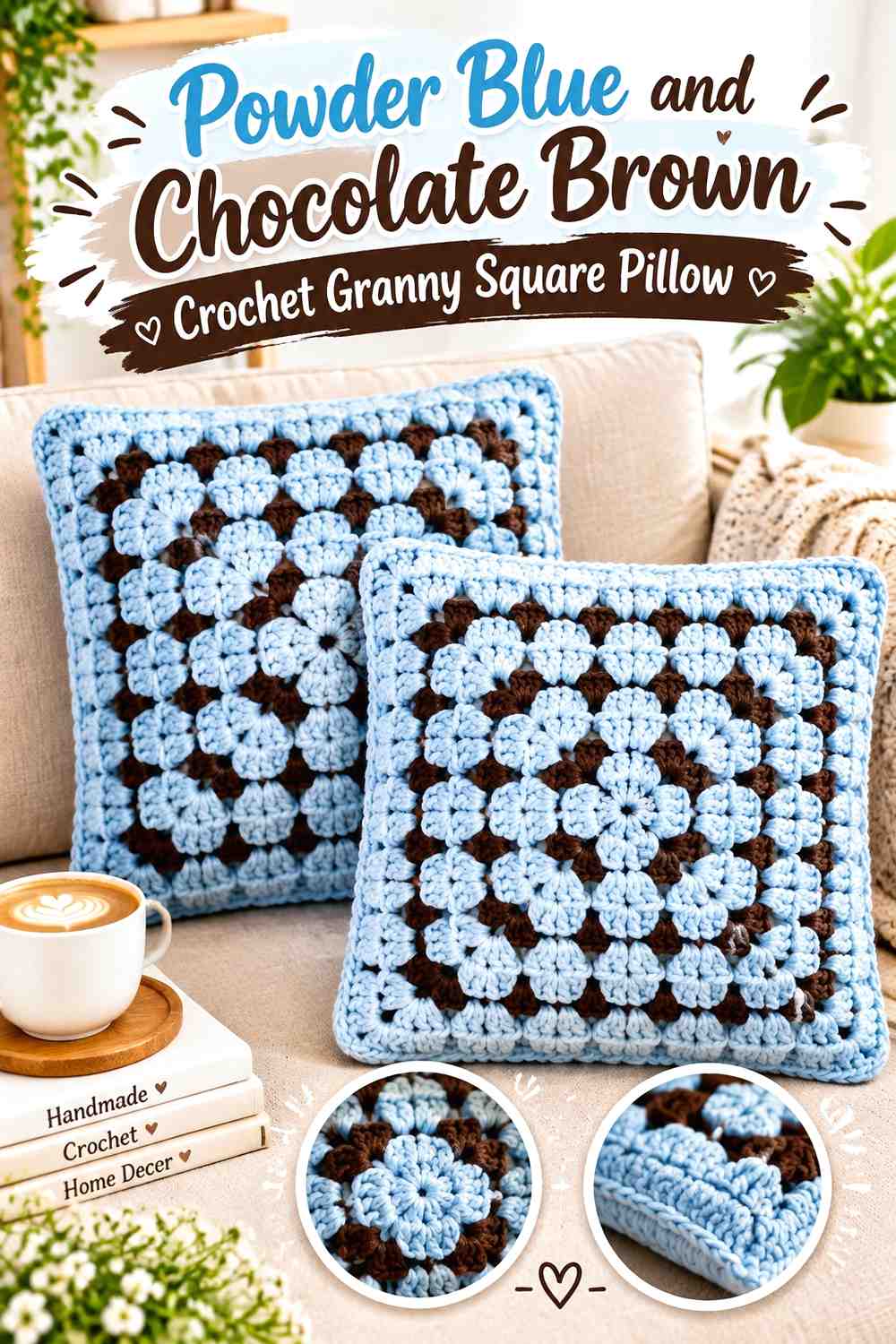
SAVEPowder blue can cover the largest areas of the pillow face while chocolate brown defines motif centers, selected outer rounds, or the finished border. This balance keeps the pillow light enough for stitch texture to remain visible while giving the individual granny squares a darker visual anchor.
Powder Blue Can Carry the Main Chocolate Brown Crochet Pillow Surface
Repeat powder blue in the broadest section of each square when you want the finished pillow to read as primarily blue. Consistent placement also helps several separate squares form one coordinated surface.
Lay the motifs together before joining. If neighboring powder blue sections make the square boundaries disappear more than you want, use chocolate brown around selected outer motif areas to restore definition.
Chocolate Brown Can Frame Powder Blue Crochet Pillow Motifs
Chocolate brown works well in centers or narrow framing rounds because a relatively small dark section can still be noticeable against powder blue.
If the motifs already contain substantial brown, finish the pillow with powder blue edging. If blue dominates strongly, a chocolate brown outer border can reconnect the perimeter with the darker details inside.
Creator Credit: Crochet Bits Tutorial
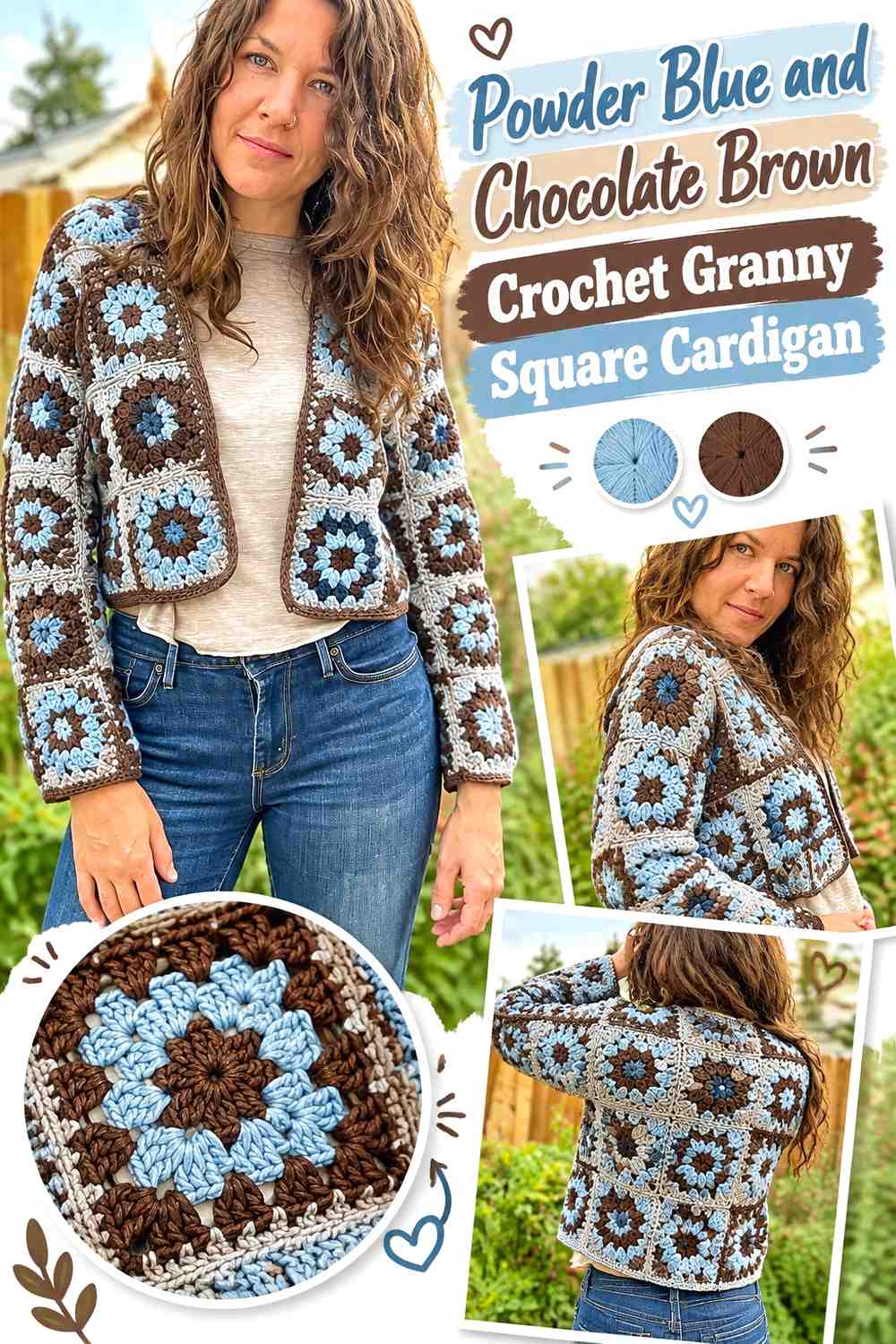
2. Powder Blue And Chocolate Brown Crochet Granny Square Cardigan
 SAVE
SAVEA cardigan gives powder blue enough surface to become a continuous garment color while chocolate brown defines cuffs, edging, joins, and selected motifs. This prevents the wearable from becoming an evenly divided patchwork when you want blue to remain the main visual field.
Powder Blue Can Connect Chocolate Brown Crochet Cardigan Panels
Repeat powder blue through the front, back, and sleeves instead of concentrating it in one section. On granny squares, using powder blue in a consistent outer area can connect otherwise separate motifs.
Arrange the cardigan in its finished layout before joining. Check both sleeves and front sections so several chocolate-brown-heavy squares do not accidentally collect in one area.
Chocolate Brown Can Define Powder Blue Crochet Cardigan Cuffs
Cuffs, neckline trim, and lower edging are natural places for chocolate brown because they repeat at garment boundaries. A relatively narrow dark finish can therefore influence the whole cardigan.
If the brown trim starts to overpower the powder blue body, reduce its width rather than introducing another color.
Powder Blue Joins Can Separate Chocolate Brown Cardigan Motifs
If several squares contain large chocolate brown areas, powder blue joins can stop the dark sections from merging visually.
Repeating blue at the joining lines also makes the motif grid easier to follow across the back and sleeves.
Creator Credit: Off the Beaten Hook Tutorial
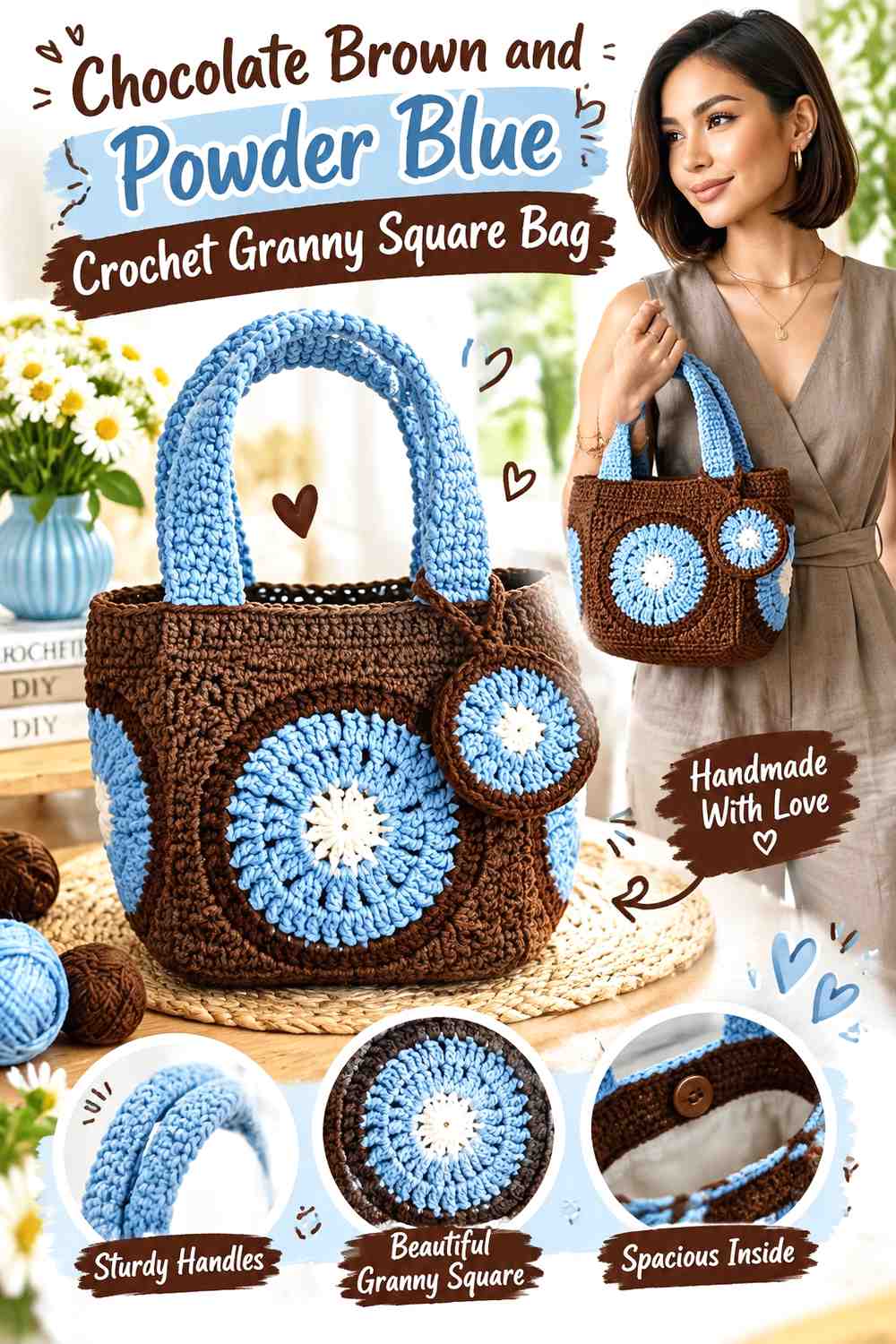
3. Chocolate Brown And Powder Blue Crochet Granny Square Bag
 SAVE
SAVEA granny-square bag can reverse the relationship and use chocolate brown as the stronger framework. Brown outer motif sections can define the bag shape, while powder blue centers or interior rounds give every square a lighter focal area.
Chocolate Brown Can Organize the Powder Blue Crochet Bag Grid
Use chocolate brown consistently around motif edges or joining areas if you want the square construction to remain visible. The dark repetition can make the grid an intentional part of the bag design.
Plan both sides of the bag together. A layout that looks balanced in a loose stack can create one noticeably darker face after assembly.
Powder Blue Can Lighten Chocolate Brown Crochet Bag Motifs
Place powder blue toward motif centers or another repeated interior section when you want each square to contain a clear light point.
Keep that placement reasonably consistent. Changing which color dominates every individual square can make the bag more visually active than a two-color palette needs to be.
Chocolate Brown Handles Can Connect Powder Blue Crochet Bag Details
Chocolate brown handles can repeat the dark motif framework above the bag body. A narrow brown top edge can make that transition feel intentional.
If the handles already supply plenty of brown, keep additional upper edging powder blue so the top does not become disproportionately dark.
Creator Credit: Kane Crochet Tutorial
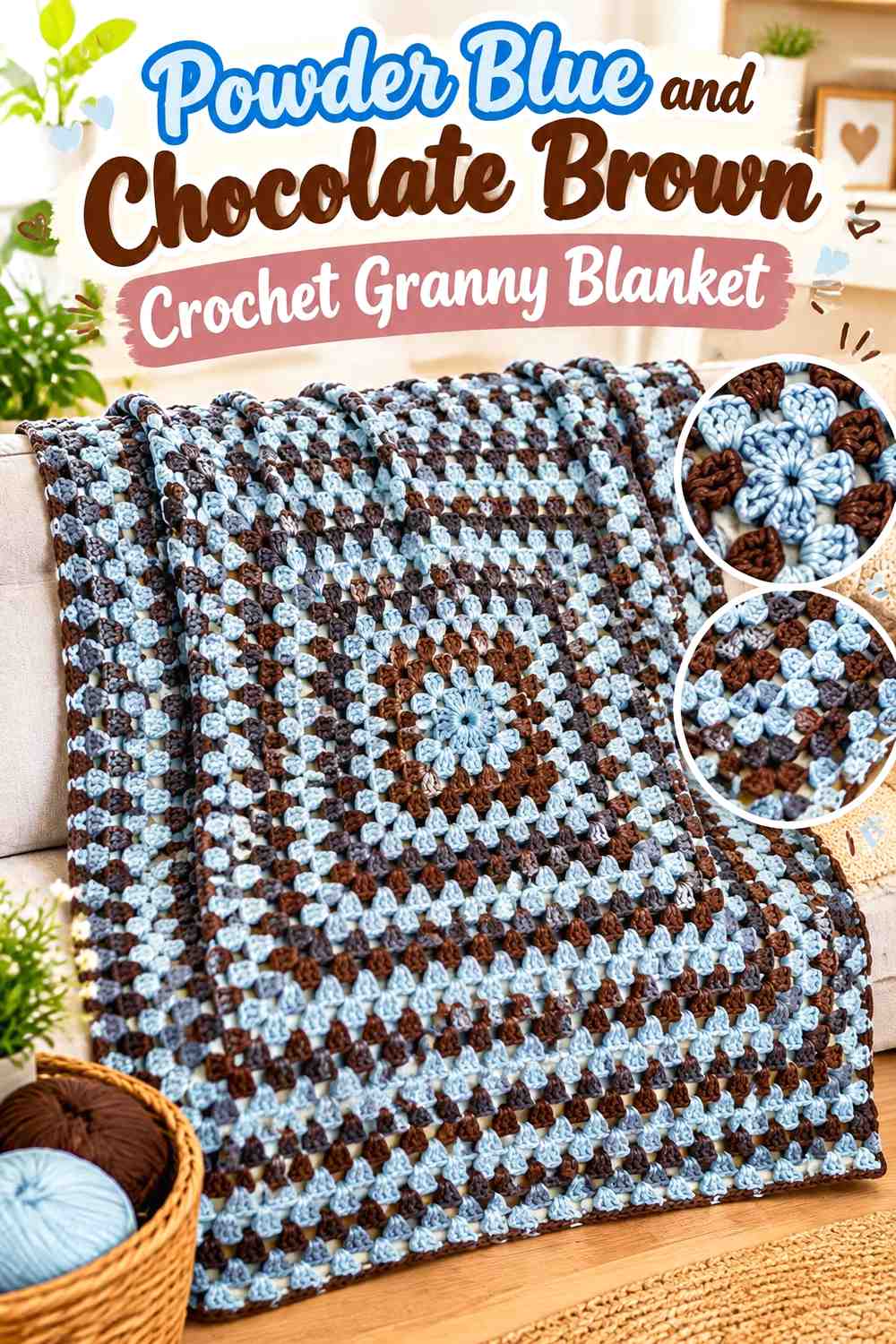
4. Powder Blue And Chocolate Brown Crochet Granny Blanket
 SAVE
SAVEA blanket offers enough surface for powder blue to dominate while chocolate brown repeats at regular intervals. Blue can occupy the larger field, with brown used for selected sections, granny-square centers, or the final border.
Powder Blue Can Keep a Chocolate Brown Crochet Blanket Visually Light
Give powder blue the larger share when you want the finished blanket to retain a light overall appearance. Even small brown sections can become prominent once they repeat across a large surface.
Evaluate several completed sections together rather than judging the balance from one corner or motif.
Chocolate Brown Should Repeat Predictably Across a Powder Blue Blanket
Place chocolate brown at recognizable intervals instead of introducing it randomly. Consistent centers, repeated bands, or planned outer rounds can all create a readable rhythm.
The repetition does not need to be perfectly symmetrical, but isolated brown blocks will attract considerably more attention than their size suggests.
Chocolate Brown Can Give a Powder Blue Crochet Blanket a Defined Border
A chocolate brown border can frame a blue-dominant blanket and create a clear visual endpoint.
If the central field already contains a large amount of brown, use powder blue on the final edge instead. The border should balance the center rather than automatically repeat its darkest shade.
Creator Credit: WoolyWondersCrochet Tutorial
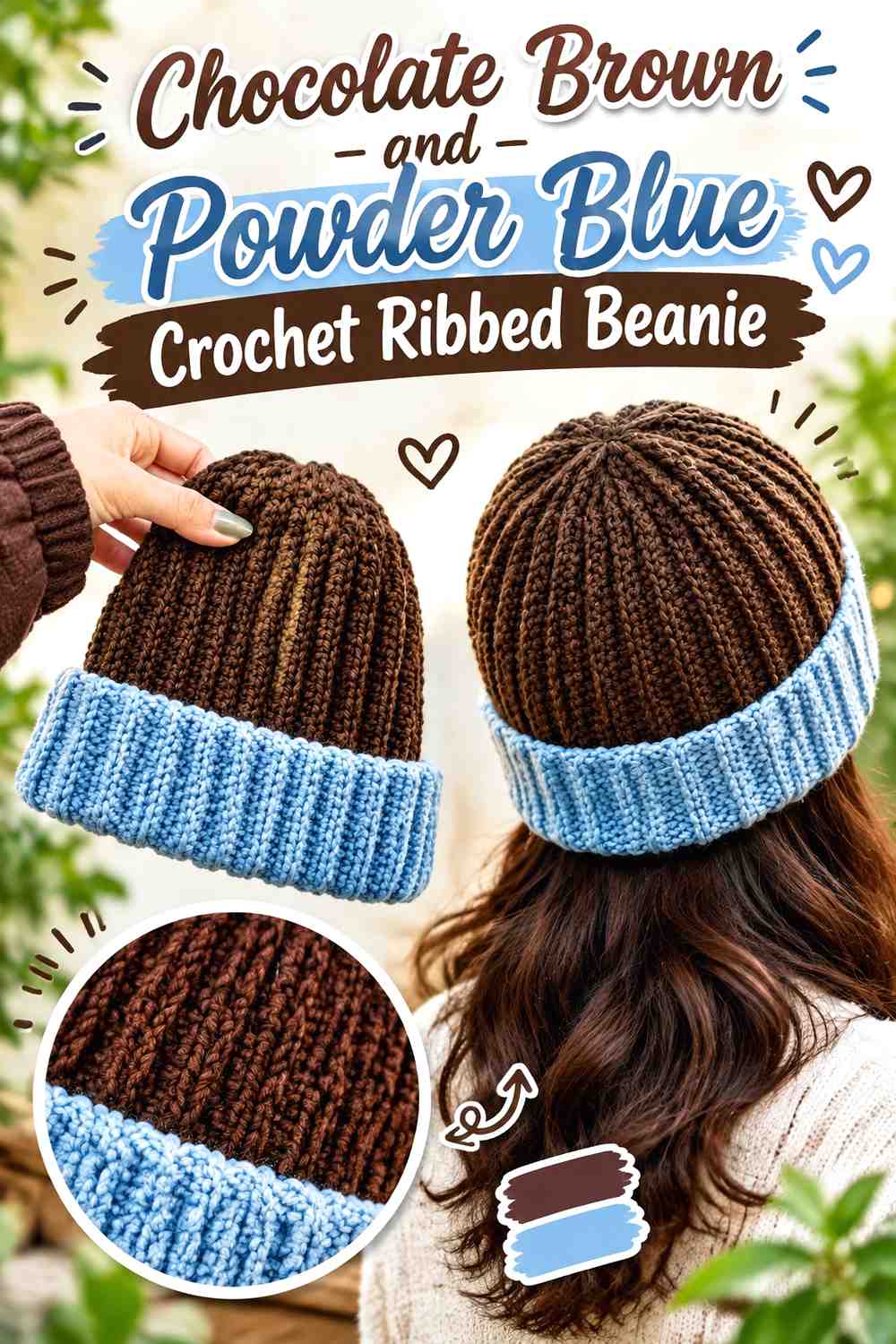
5. Chocolate Brown And Powder Blue Crochet Ribbed Beanie
 SAVE
SAVEA ribbed beanie already has a strong surface pattern, so broad color blocks can preserve the texture better than frequent stripes. Chocolate brown can cover the crown and body while powder blue defines the brim.
Chocolate Brown Can Keep Powder Blue Crochet Beanie Ribbing Continuous
Use chocolate brown through a substantial uninterrupted area so the ribbed structure remains the main surface detail.
If your chocolate brown is particularly deep, check the finished fabric from normal viewing distance. Very dark yarn can make subtle ribbing less visible than it appears close up.
Powder Blue Can Create a Clear Chocolate Brown Crochet Beanie Brim
Powder blue around the lower section gives the lighter shade a structural job rather than scattering it through unrelated stripes.
Evaluate the beanie with the brim folded or positioned as intended. Folding changes how much powder blue is actually visible and can alter the apparent color ratio considerably.
Creator Credit: VivCrochets Tutorial
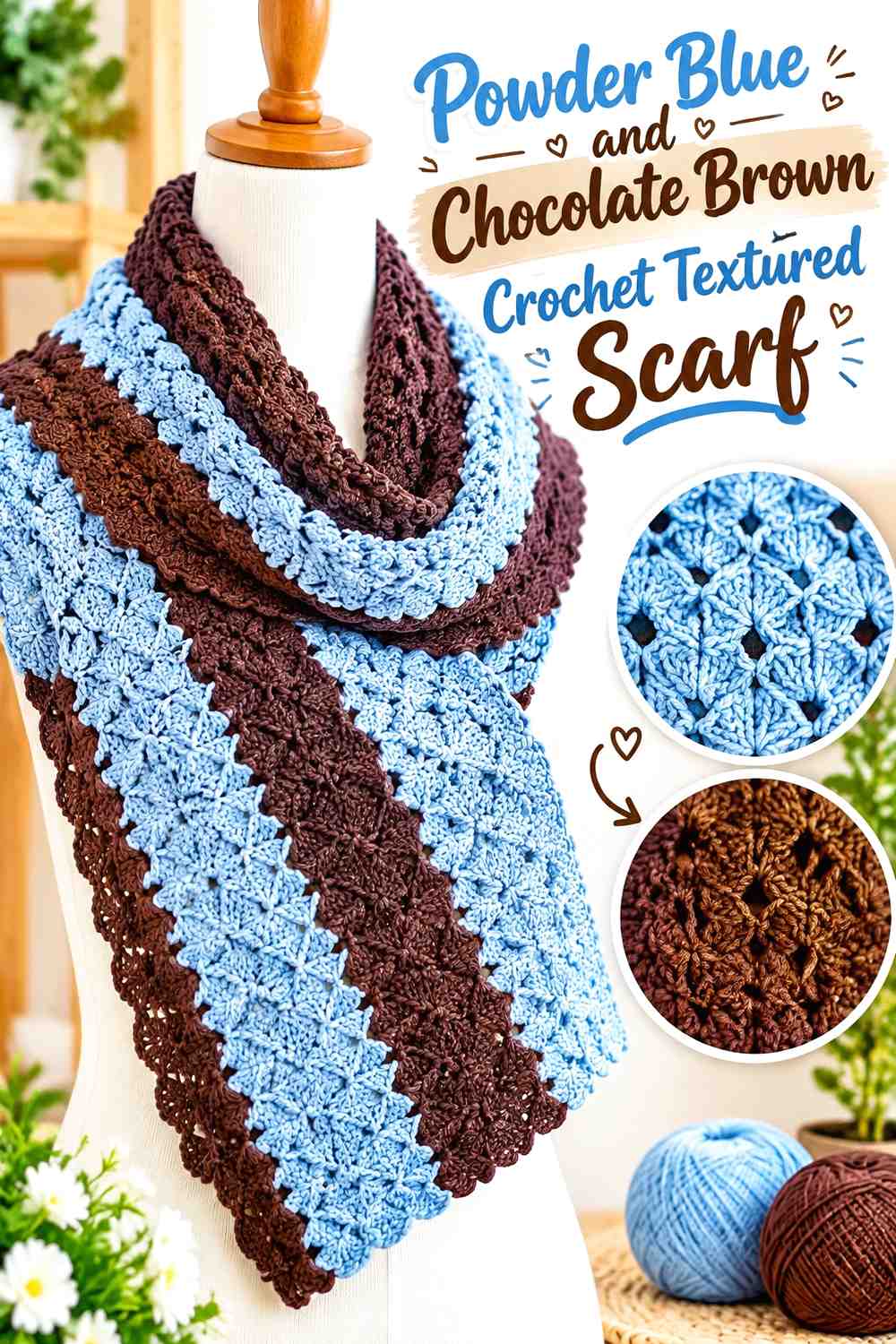
6. Powder Blue And Chocolate Brown Crochet Textured Scarf
 SAVE
SAVEA long scarf gives the two colors enough space for broad sections. Powder blue can dominate the central length where texture is most visible, while chocolate brown anchors the ends or interrupts the blue with a few deliberate blocks.
Powder Blue Can Keep Chocolate Brown Crochet Scarf Texture Visible
Use powder blue across a substantial area when the stitch pattern contains raised or repeating texture. The lighter field can make the changes in the crochet surface easier to distinguish.
If you want additional brown through the center, use a few larger sections rather than changing color so frequently that the scarf becomes mainly about stripes.
Chocolate Brown Can Anchor the Ends of a Powder Blue Crochet Scarf
Matching chocolate brown end sections provide a clear dark stop at both sides of the scarf and remain noticeable when it hangs vertically.
If the scarf includes fringe or another finishing detail, repeating chocolate brown there can extend the end color without making the entire central field darker.
Creator Credit: Fiber Flux Tutorial
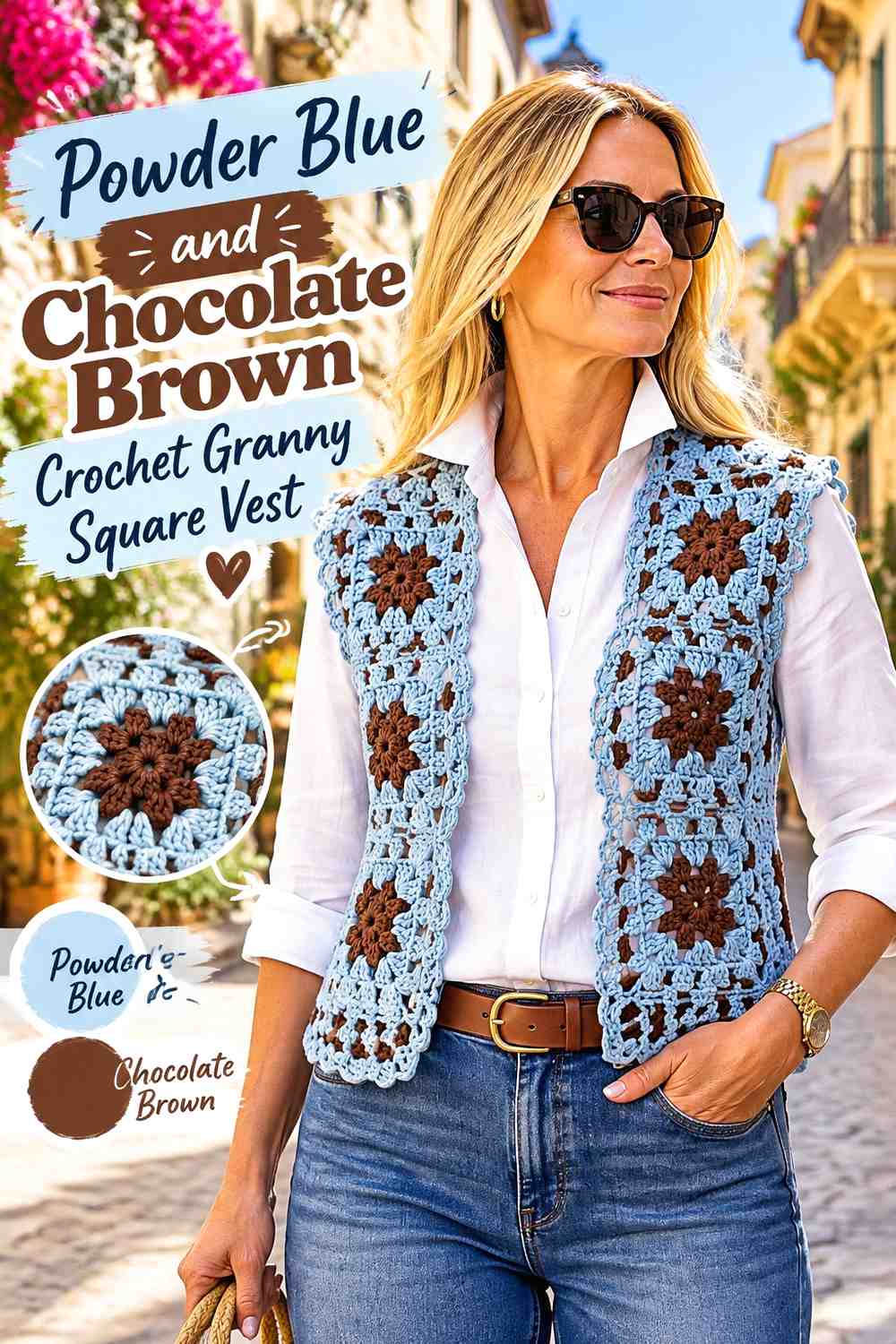
7. Powder Blue And Chocolate Brown Crochet Granny Square Vest
 SAVE
SAVEA granny-square vest divides its colors across a larger back and two front sections, so motif distribution matters. Powder blue can lead across the square field, while chocolate brown outlines selected motifs, joins, armholes, or the front opening.
Powder Blue Squares Need Balanced Chocolate Brown Crochet Vest Placement
Arrange the complete vest shape before joining and compare both front sections together. Several brown-heavy motifs on one side can make the vest look unbalanced even when the total color quantities are similar.
Check the back separately as well so its overall light-dark balance relates to the fronts.
Chocolate Brown Can Frame Powder Blue Crochet Vest Openings
Chocolate brown edging around armholes, the neckline, or the front opening gives the dark shade a clear repeated purpose.
If chocolate brown already occupies wide sections of the granny squares, keep the trim narrower so powder blue remains the garment’s dominant field.
Creator Credit: Handwork diy Tutorial
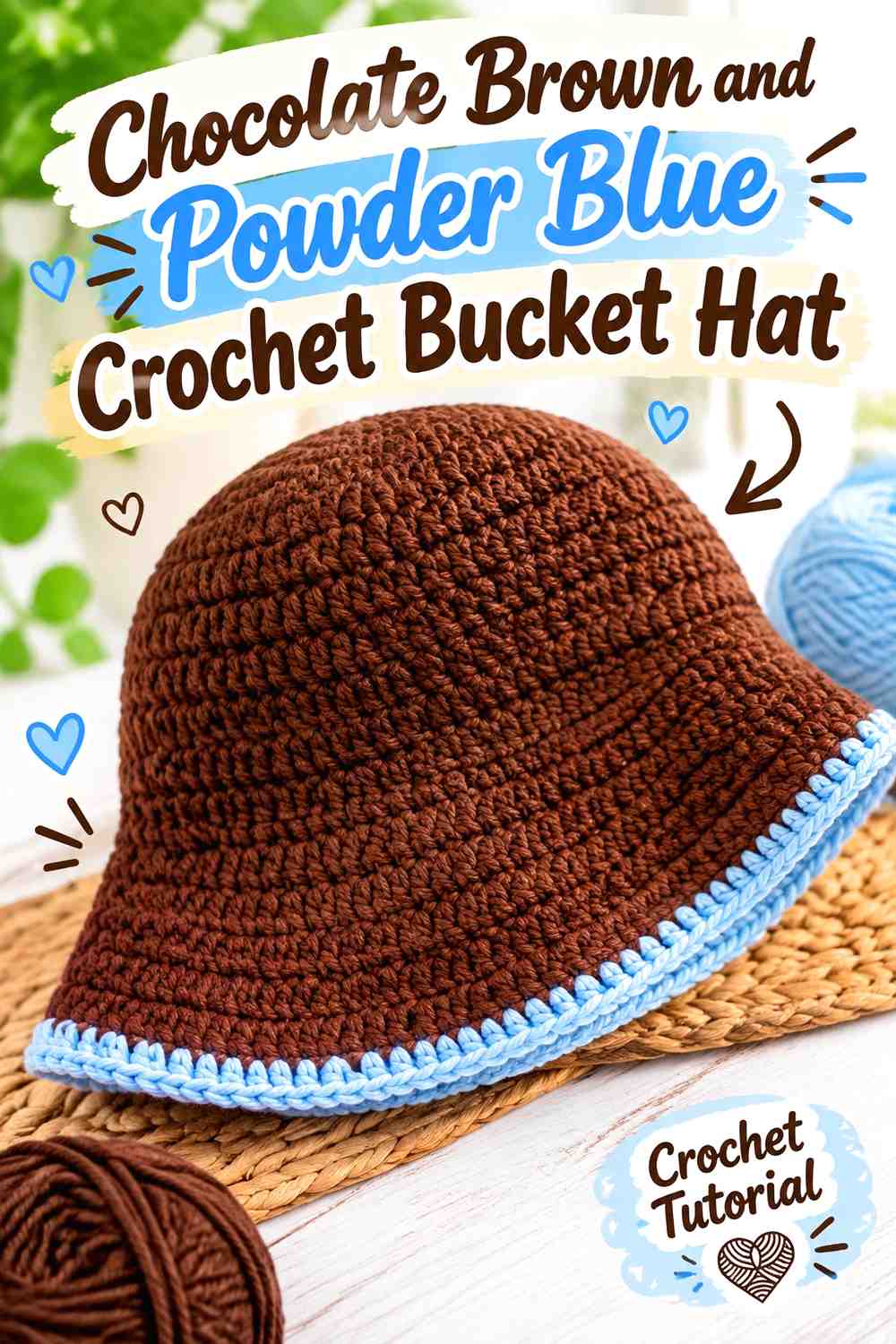
8. Chocolate Brown And Powder Blue Crochet Bucket Hat
 SAVE
SAVEA bucket hat naturally divides into crown, side wall, and brim. Chocolate brown can create a deep upper field while powder blue lightens the brim, producing clear color blocking without requiring complicated changes.
Chocolate Brown Can Connect the Powder Blue Crochet Bucket Hat Crown
Use chocolate brown continuously through the crown and upper sides if you want the top of the hat to read as one dark unit.
Keeping these sections in the same shade also lets shaping and crochet texture remain visible without being interrupted by numerous color bands.
Powder Blue Can Lighten a Chocolate Brown Crochet Bucket Hat Brim
Powder blue on the brim creates a strong contrast exactly where the silhouette widens.
View the hat from above and from the side before increasing the blue section. Because the brim projects outward, powder blue may have more visual presence than its yarn quantity suggests.
Chocolate Brown Can Repeat Inside a Powder Blue Crochet Hat Brim
If a fully blue brim feels disconnected from the dark crown, repeat a narrow chocolate brown detail near the outer edge.
Keep that repeat controlled. Too many alternating bands can replace the clean crown-and-brim relationship with a busier stripe effect.
Creator Credit: PassioKnit Kelsie Tutorial
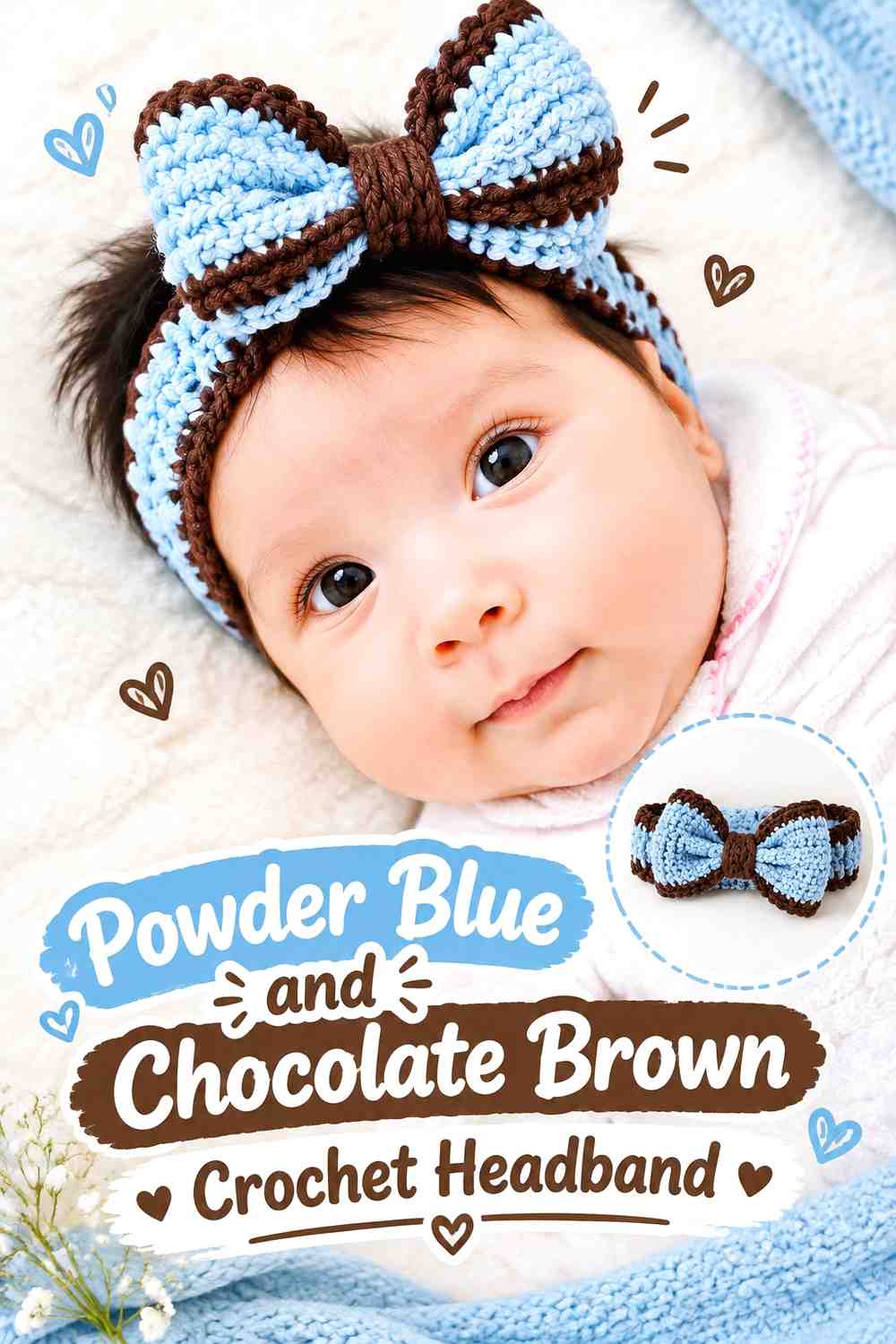
9. Powder Blue And Chocolate Brown Crochet Headband
 SAVE
SAVEA headband has limited surface area, so assigning each color one clear role creates a stronger result than many small switches. Powder blue can cover the textured body while chocolate brown emphasizes the center or outer edges.
Powder Blue Can Keep Chocolate Brown Crochet Headband Texture Clear
Use powder blue through the main ribbed or textured section when you want the stitch structure to remain easy to see.
Fold or wrap the unfinished headband into its approximate worn shape before increasing the brown. A twist or overlap can hide some of the lighter surface.
Chocolate Brown Can Mark the Center of a Powder Blue Crochet Headband
A chocolate brown central section can emphasize a twist, overlap, or joining area and give the darker shade a clear reason to appear.
If the headband construction has no central feature, repeat brown along both edges rather than creating one isolated dark patch.
Creator Credit: CJ Design Tutorial
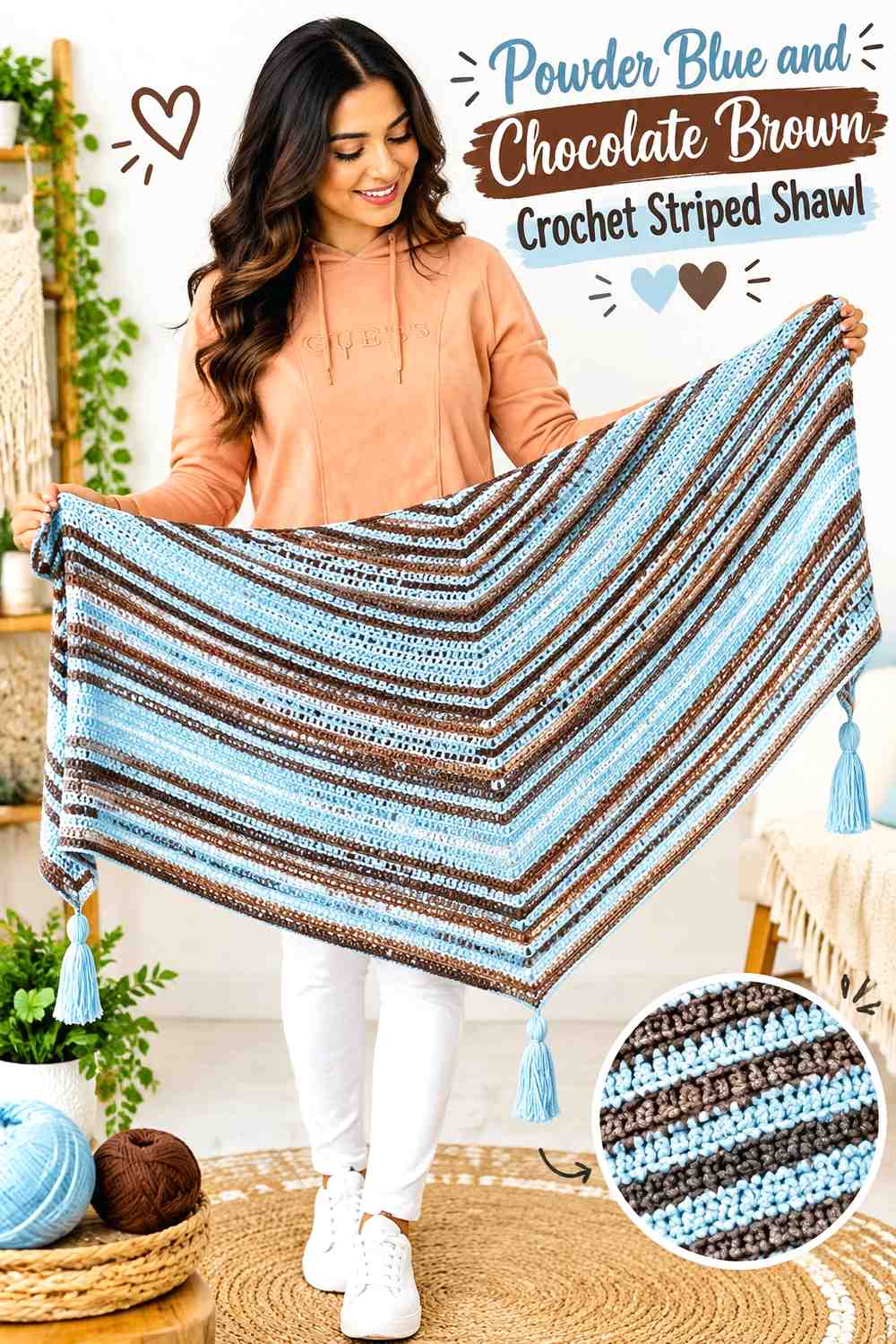
10. Powder Blue And Chocolate Brown Crochet Striped Shawl
 SAVE
SAVEA striped shawl gives both shades repeated roles, but an expanding shape changes their apparent proportions. Powder blue can provide the larger visual field while chocolate brown appears in narrower stripes and around the outer edge.
Powder Blue Can Establish the Chocolate Brown Crochet Shawl Field
Give powder blue enough space through the central portion that it remains dominant after the shawl grows wider.
Do not judge the palette by row count alone. Rows near the lower edge occupy substantially more surface than early rows near the center.
Chocolate Brown Stripes Can Be Narrower Than Powder Blue Crochet Stripes
Chocolate brown does not need equal stripe width to remain visible against a pale blue field. Using slightly broader powder blue areas can keep the shawl from becoming visually heavy.
Lay the shawl flat periodically and evaluate total surface coverage rather than making every stripe identical by default.
Chocolate Brown Can Define a Powder Blue Crochet Shawl Border
A final chocolate brown edge can contain a light blue center and connect with earlier brown stripes.
Because the shawl is widest at the border, build the dark section gradually. A few outer rows can have more visual weight than expected.
Creator Credit: Wilma Westenberg Tutorial
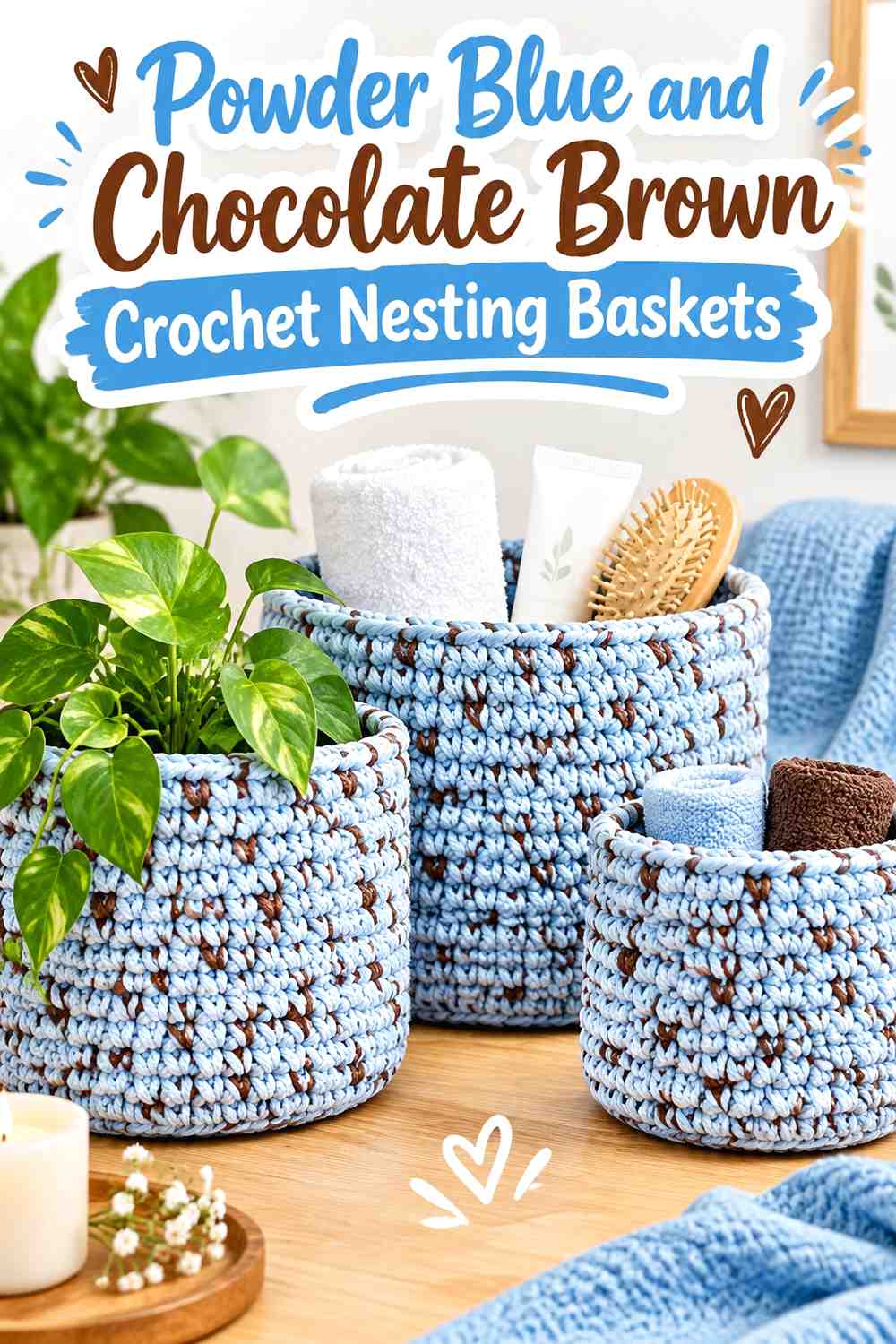
11. Powder Blue And Chocolate Brown Crochet Nesting Baskets
 SAVE
SAVEBaskets provide obvious structural zones at the base, walls, and rim. Powder blue can cover the broad walls, while chocolate brown defines the base and upper edge. Repeating that relationship across several basket sizes can make a nesting set look coordinated.
Powder Blue Can Keep Chocolate Brown Crochet Basket Walls Light
Use powder blue continuously across most of the wall section if you want the basket’s stitch texture and shape to remain visible.
For a nesting set, maintain the same basic powder-blue-led hierarchy even if the exact brown proportions differ between sizes.
Chocolate Brown Can Connect Powder Blue Crochet Basket Bases and Rims
Using chocolate brown at both the lower and upper structural transitions creates a dark frame around the blue walls.
This repeated placement also allows brown to remain important without dividing the entire basket into several horizontal bands.
Powder Blue Can Prevent Chocolate Brown Basket Tops From Becoming Too Heavy
If the rim already contains a substantial brown section, keep handles or other upper details powder blue when possible.
If the brown rim is very narrow, continuing chocolate brown through the handle area can instead strengthen the top edge. Judge the total upper section rather than each detail separately.
Creator Credit: Bella Coco Tutorial
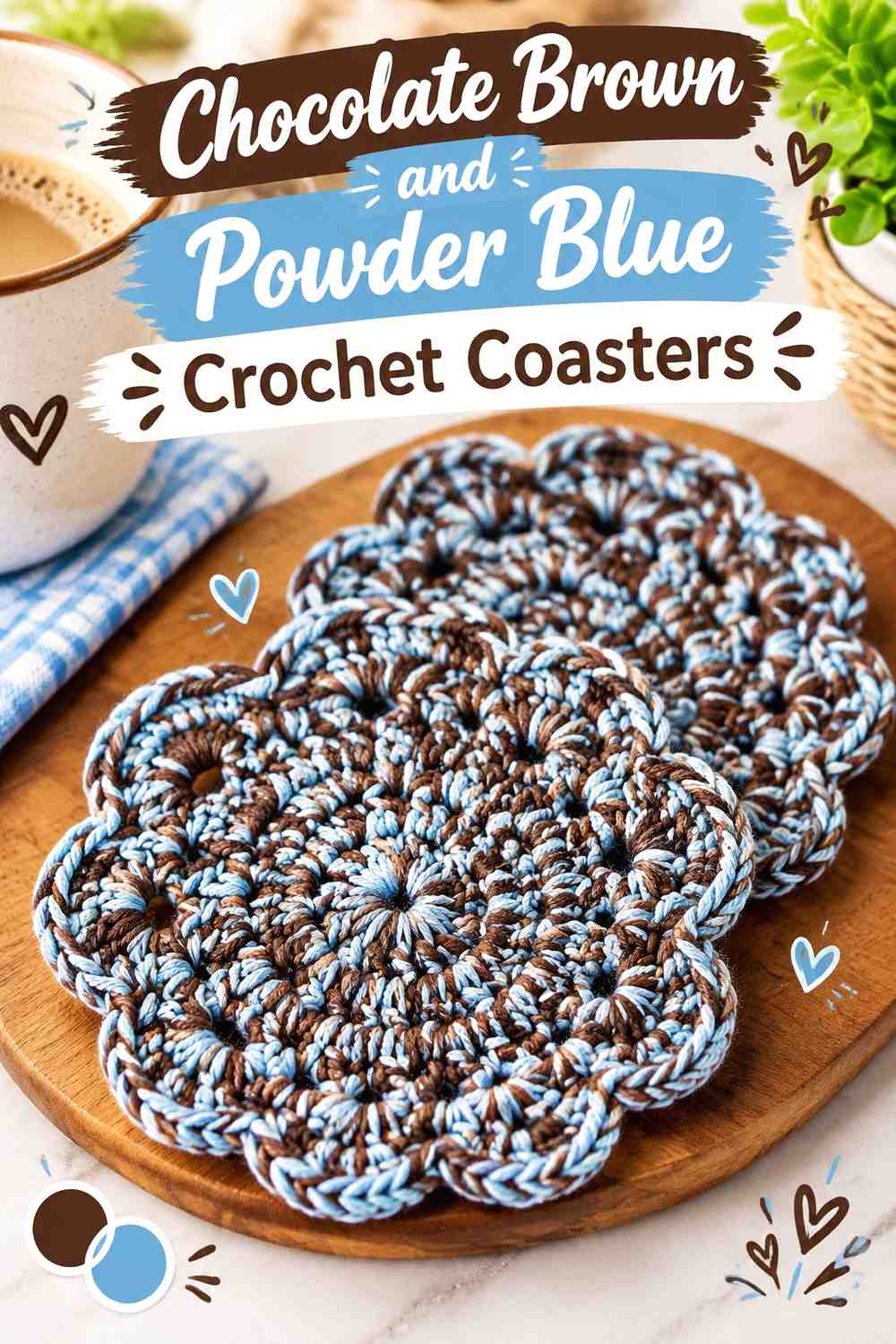
12. Chocolate Brown And Powder Blue Crochet Coasters
 SAVE
SAVEA coaster puts the entire palette into a small area, making proportion particularly important. Chocolate brown can form the center while powder blue expands toward the edge, creating a straightforward dark-to-light arrangement.
Chocolate Brown Can Give a Powder Blue Crochet Coaster a Defined Center
Make the chocolate brown center large enough to remain visible after the powder blue sections are added.
A very small dark center can become little more than a spot once the coaster expands, while a slightly broader center creates a clearer two-color relationship.
Powder Blue Can Define the Edge of a Chocolate Brown Crochet Coaster
Use powder blue around the outside if the coaster has scallops, texture, or another decorative edge you want to keep clearly visible.
For a coordinated set, reverse the two colors on selected coasters while keeping their overall proportions related.
Chocolate Brown and Powder Blue Can Alternate Across a Crochet Coaster Set
One coaster can use brown inside and blue outside, while another reverses that arrangement. The set remains connected because the palette does not change.
Avoid changing both the color placement and every other visual feature at the same time if you want the pieces to read as one collection.
Creator Credit: Designs by Phanessa Tutorial
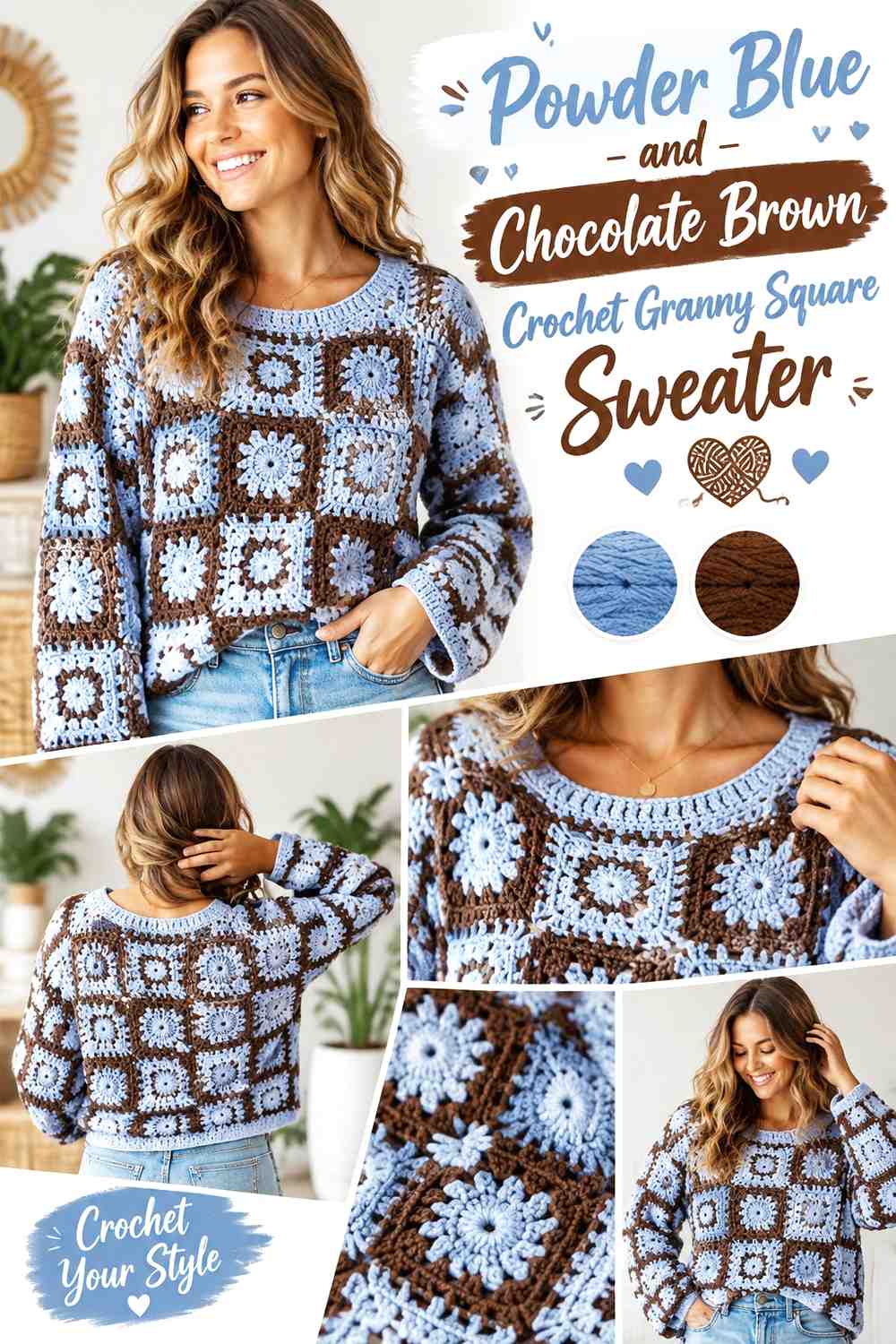
13. Powder Blue And Chocolate Brown Crochet Granny Square Sweater
 SAVE
SAVEA granny-square sweater gives both colors many opportunities to repeat across the body and sleeves. Powder blue can lead through the motif field while chocolate brown defines joins, selected centers, cuffs, or neckline edging.
Powder Blue Granny Squares Need a Chocolate Brown Crochet Sweater Layout Check
Arrange every major motif in its intended front, back, and sleeve position before joining.
A group of squares can appear balanced in a pile but create one very dark sleeve or shoulder once the garment sections are separated. Move motifs before joining rather than relying on the cuffs to correct a large imbalance later.
Chocolate Brown Can Organize Powder Blue Crochet Sweater Joins
Chocolate brown joining lines can create a clear grid around powder-blue-heavy motifs. This makes the assembly itself part of the color scheme.
Repeating chocolate brown at the cuffs or neckline connects those finishing details with the motif framework.
Powder Blue Edging Can Rebalance a Chocolate Brown-Heavy Crochet Sweater
If the assembled sweater contains more brown than expected, powder blue cuffs, neckline trim, or lower edging can return some lightness without remaking completed motifs.
Repeat blue at several finishing points so the change looks intentional across the whole garment.
Creator Credit: Lakeside Loops Tutorial
Choosing Between Powder-Blue-Dominant and Chocolate-Brown-Dominant Crochet
A powder-blue-dominant palette works especially well when stitch texture, open spaces, or individual motifs need to remain visually clear. Cardigans, blankets, shawls, baskets, and granny-square garments can give powder blue the largest surfaces while chocolate brown defines structural details.
Chocolate-brown-dominant projects create a deeper result in which small powder blue areas become more noticeable. Beanies, bucket hats, coasters, and compact accessories can use that relationship without requiring equal quantities of the two shades.
For granny-square projects, color hierarchy can also happen inside each motif. Consistent brown centers with blue outer sections—or the reverse—can organize a large project without dividing the entire finished object into two oversized color blocks.
Conclusion
Chocolate brown and powder blue work best in crochet when the contrast has a clear purpose. Powder blue can open up broad surfaces, reveal texture, and keep repeated motifs distinct, while chocolate brown can add definition around centers, joins, cuffs, borders, bases, handles, brims, and garment openings.
For a lighter finished project, give powder blue most of the visible area and use chocolate brown strategically. For a deeper result, let brown lead and repeat blue in several clearly visible structural areas rather than scattering tiny accents.
Before beginning a large garment or blanket, compare the actual yarns together and test the intended relationship on a small motif or swatch. The same two colors can produce very different results depending on which one surrounds the other.
Frequently Asked Questions
Do chocolate brown and powder blue work together in crochet?
Yes. Chocolate brown provides a dark neutral anchor while powder blue supplies a noticeably lighter contrasting hue. That difference can work especially well for motifs, borders, color blocks, ribbing, and granny-square layouts.
Should chocolate brown or powder blue dominate a crochet project?
Either can lead. Powder blue creates a lighter overall field, while chocolate brown produces a deeper finished result. Choose according to the size of the project and where you want the strongest visual weight.
How should I use chocolate brown and powder blue in granny squares?
Assign each color a repeatable position. Chocolate brown can form the center with powder blue around it, powder blue can fill the center with brown framing it, or two planned arrangements can alternate throughout the project.
How can I keep chocolate brown from overpowering powder blue?
Reduce the amount of brown while keeping it in meaningful locations such as joins, cuffs, borders, handles, motif centers, bases, or brims. A dark shade can remain visually important without occupying half of the surface.
Can I crochet with only chocolate brown and powder blue?
Yes. The contrast is sufficient for granny squares, stripes, color blocks, borders, joining lines, garment finishing, and many textured projects. A third shade is only useful when it serves a specific purpose.
Should chocolate brown always be the border color?
No. Chocolate brown creates a strong frame, but powder blue may be a better border when the center of the project already contains substantial brown. Choose the edge color after evaluating the completed central area.
How can I substitute different chocolate brown or powder blue yarns?
Preserve their visual relationship rather than trying to match a commercial shade name exactly. Choose a deep brown for the chocolate-brown role and a noticeably lighter, softened blue for the powder-blue role, then compare them together before using them in small motifs or narrow details.