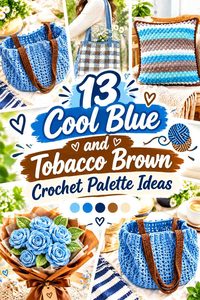
Cool blue and tobacco brown create an interesting crochet pairing because the colors pull in different directions without requiring extremely bright contrast. Cool blue brings a cleaner, cooler note, while tobacco brown introduces a muted warm brown that can ground borders, ribbing, handles, motifs, and larger panels.
Value matters with this combination. A medium cool blue and medium tobacco brown can be quite close in lightness even though their hues are clearly different. That softer separation can work well across broad sweater panels or blanket stripes, but small checks, flower centers, granny-square rounds, and narrow edging may need a lighter blue or deeper tobacco brown to remain easy to distinguish.
The following projects use the two colors in different proportions and locations so the palette can move from blue-led and airy to brown-led and grounded.
Quick List
- Cool Blue And Tobacco Brown Striped Crochet Blanket
- Cool Blue Crochet Cardigan With Tobacco Brown Ribbing
- Tobacco Brown Crochet Woven Scarf With Cool Blue Details
- Cool Blue Daisy Crochet Blanket With Tobacco Brown Centers
- Tobacco Brown V Neck Crochet Sweater With Cool Blue Trim
- Cool Blue Crochet Beanie With Tobacco Brown Brim
- Cool Blue Tobacco Brown And Cream Gingham Crochet Tote
- Tobacco Brown Crochet Bucket Hat With Cool Blue Brim
- Cool Blue Textured Crochet Pillow With Tobacco Brown Border
- Cool Blue Crochet Rose Bouquet With Tobacco Brown Wrapping Details
- Tobacco Brown Crochet Vest With Cool Blue Ribbing
- Cool Blue Crochet Market Bag With Tobacco Brown Handles
- Cool Blue Tunisian Crochet Shawl With Tobacco Brown Border
Decide Whether Cool Blue or Tobacco Brown Should Dominate
Give one color the largest visual role before deciding where the second shade goes. A cool-blue-led project can feel lighter when tobacco brown is concentrated around edges and finishing details. A tobacco-brown-led project creates a deeper, warmer base that gives even relatively small blue sections noticeable contrast.
The darkest yarn may feel dominant even when it occupies less physical space. If your tobacco brown is substantially deeper than your cool blue, narrow brown cuffs or a dark border can be enough to frame the whole project.
Check Cool Blue and Tobacco Brown Value Before Small Colorwork
Broad panels can tolerate subtle contrast, but small motifs depend more heavily on value differences. Place the yarns side by side and check them from several feet away. A grayscale photograph can also reveal whether they remain distinct once hue is removed.
If the two shades look nearly identical in grayscale, consider using them across broad stripes or panels rather than tiny checks. For motif work, a lighter cool blue, deeper tobacco brown, or restrained pale neutral can create clearer separation.
1. Cool Blue And Tobacco Brown Striped Crochet Blanket
 SAVE
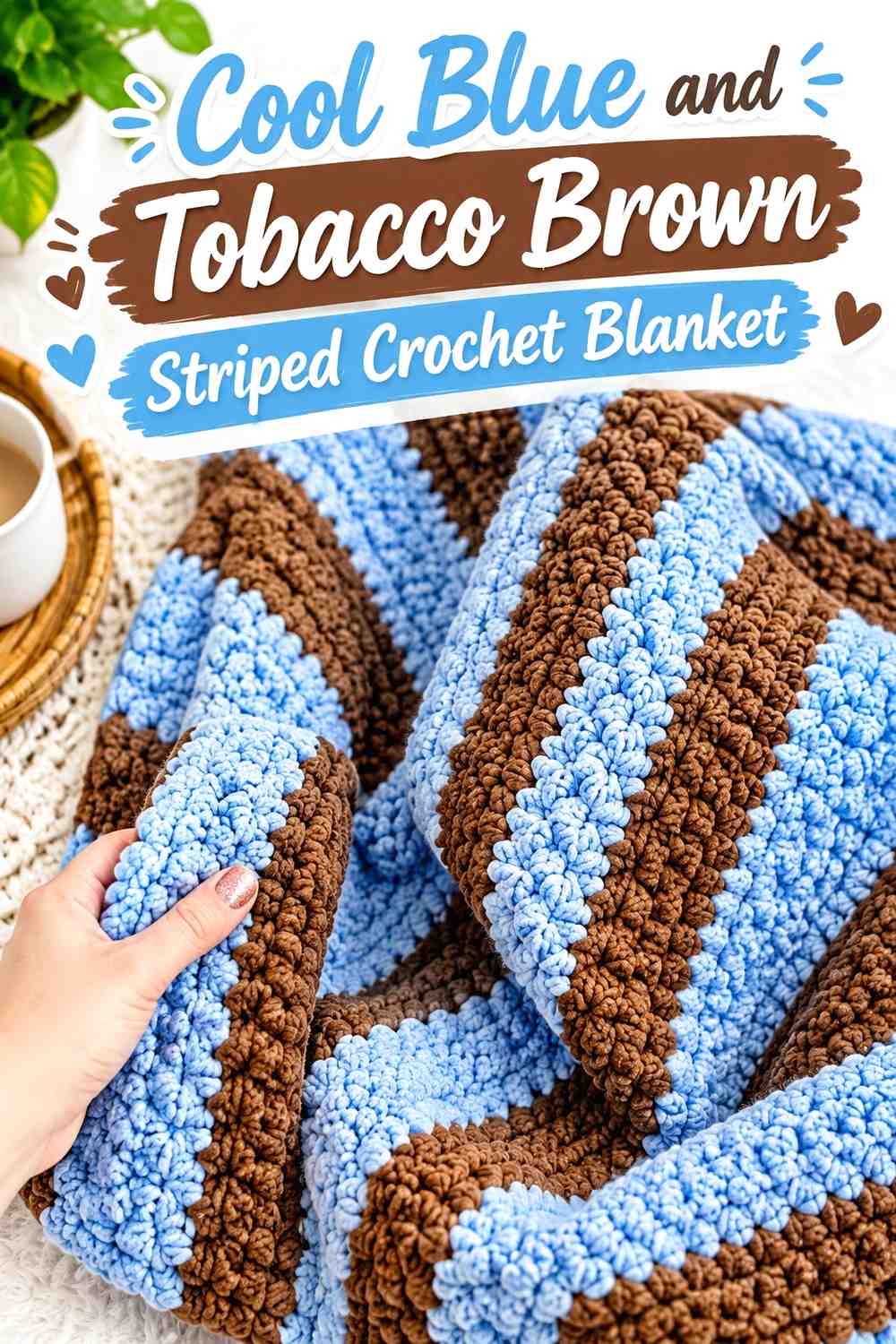
SAVEA striped blanket gives both colors enough room to be recognizable even when the values are relatively close. Let cool blue cover the broadest areas and introduce tobacco brown at repeated intervals. This keeps the blanket blue-led while allowing the warmer brown to create a steady visual rhythm.
Cool Blue Can Carry the Broadest Crochet Blanket Sections
Use cool blue for several substantial bands if you want the blanket to retain a distinctly cool overall direction. Check the yarn against the stitch texture before planning the full project; a darker blue can make subtle raised details less noticeable than expected.
Tobacco Brown Should Repeat Across the Cool Blue Crochet Blanket
Use tobacco brown more than once and at reasonably consistent intervals. Bringing brown back near the final border also helps connect the outer edge to the interior stripes instead of leaving the brown concentrated in the center.
Creator Credit: Bella Coco
2. Cool Blue Crochet Cardigan With Tobacco Brown Ribbing
 SAVE
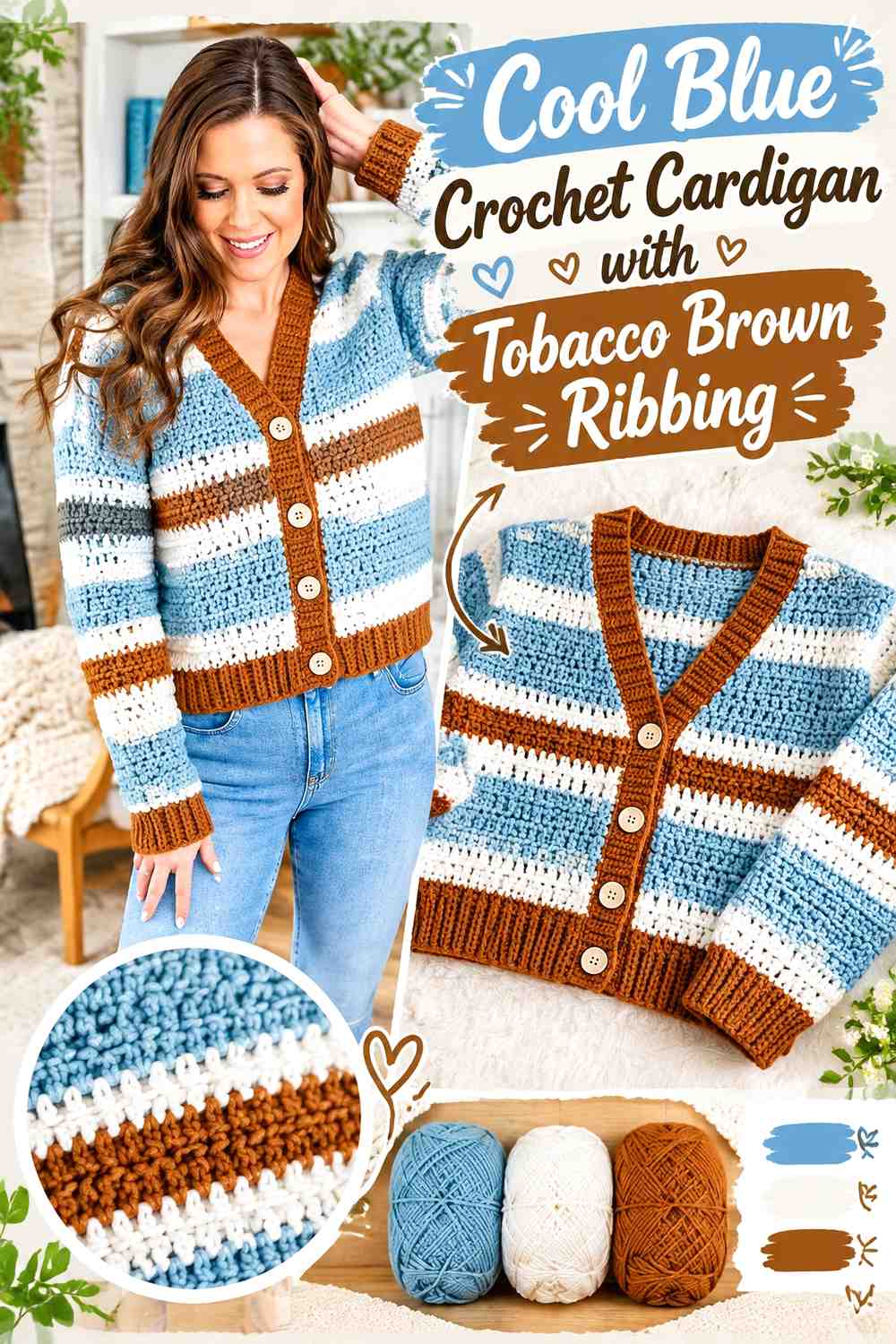
SAVEA cardigan provides several natural finishing areas for the darker brown. Keep the front, back, and most sleeve sections cool blue, then repeat tobacco brown around cuffs, hem ribbing, or the front opening. The color change follows the garment structure instead of dividing the body randomly.
Cool Blue Keeps the Crochet Cardigan Panels Visually Continuous
Using cool blue across the main panels creates continuity from shoulder to hem. If you want additional tobacco brown inside the cardigan body, use it in a deliberate repeated band rather than a single isolated section.
Tobacco Brown Can Frame Cool Blue Cardigan Cuffs and Edges
Repeat tobacco brown at two or more related finishing points. Brown cuffs paired with a brown hem or front border create a clear framework around the cool-blue body and keep the darker shade distributed across the garment.
Creator Credit: MJ’s Off The Hook Designs
3. Tobacco Brown Crochet Woven Scarf With Cool Blue Details
 SAVE
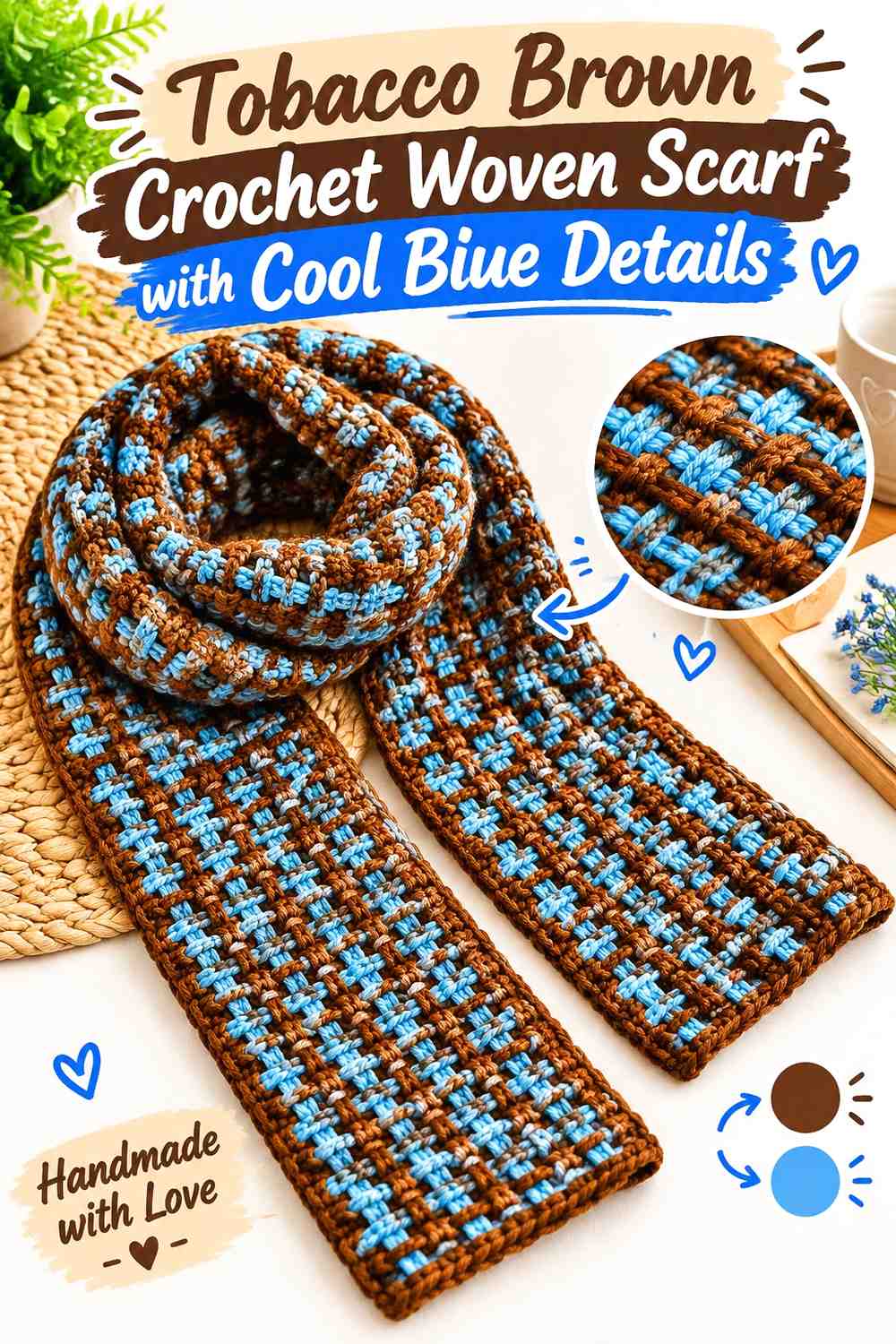
SAVEA woven-look scarf allows the colors to perform different jobs. Tobacco brown can form the primary crochet structure, while cool blue passes through open sections as a contrasting woven element. That gives the palette more depth than ordinary alternating stripes.
Tobacco Brown Gives the Crochet Scarf a Grounded Base
Use tobacco brown across the underlying scarf when you want the accessory to remain brown-led. A consistent base also lets the woven structure provide visual movement without needing additional colors.
Cool Blue Needs Enough Contrast Against Tobacco Brown Openings
Test a short cool-blue woven section before finishing the scarf. Narrow blue details can visually disappear if the blue and brown are very similar in value, even when the colors look clearly different as full skeins.
Creator Credit: Naztazia
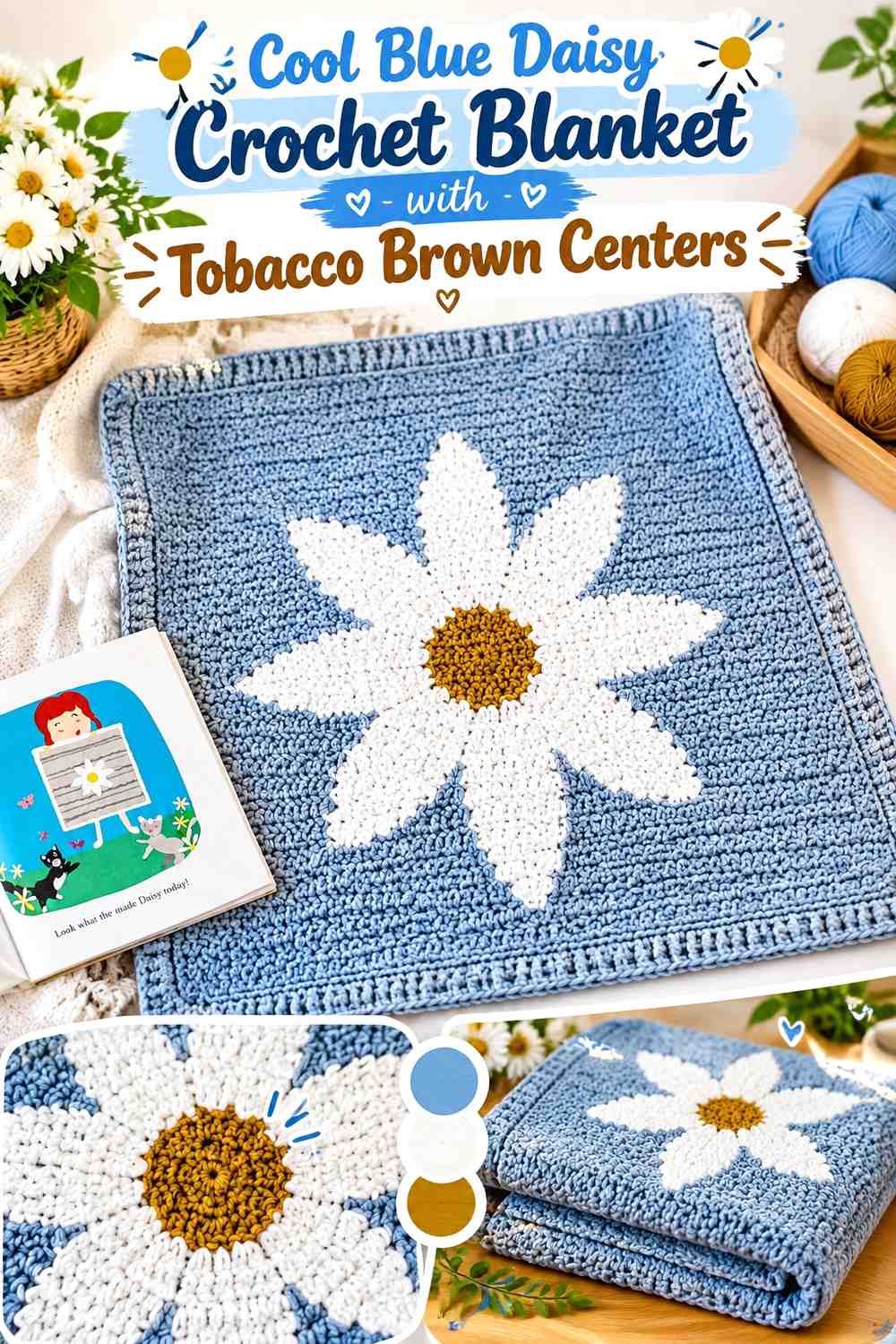
4. Cool Blue Daisy Crochet Blanket With Tobacco Brown Centers
 SAVE
SAVEA floral blanket can use cool blue as its broad field while tobacco brown repeats through the flower centers. A light neutral can separate the brown centers from the blue background when the two main shades do not provide enough value contrast by themselves.
Cool Blue Gives Tobacco Brown Crochet Flower Centers Room to Repeat
Keep cool blue consistent around the floral units so every tobacco-brown center has the same surrounding relationship. Repetition makes the brown details part of a planned motif system rather than scattered dark spots.
Tobacco Brown Can Anchor Cool Blue Daisy Motifs
Use tobacco brown for small repeated focal points rather than allowing it to spread unpredictably through the blanket. If the brown and blue are close in value, a cream or soft ivory petal area can provide the lighter separator needed to keep the flower shape readable.
Creator Credit: Daisy Farm Crafts
5. Tobacco Brown V Neck Crochet Sweater With Cool Blue Trim
 SAVE
SAVEA tobacco-brown sweater creates one of the deeper versions of this palette. Cool blue can follow the V-neck, cuffs, or hem, giving the cooler shade logical places to repeat without breaking the sweater body into multiple unrelated blocks.
Tobacco Brown Can Lead the Crochet Sweater Body
Use tobacco brown through most of the front, back, and sleeves if you want a strongly grounded result. Work a sample first if the sweater relies on subtle texture because very deep brown yarn can reduce the visibility of smaller stitch changes.
Cool Blue Can Outline the Tobacco Brown Crochet V-Neck
The neckline is an effective location for cool blue because the contrast follows an existing garment edge. Repeat the blue at the cuffs or hem so the neckline does not become the only cool-colored area in an otherwise brown sweater.
Creator Credit: forthefrills
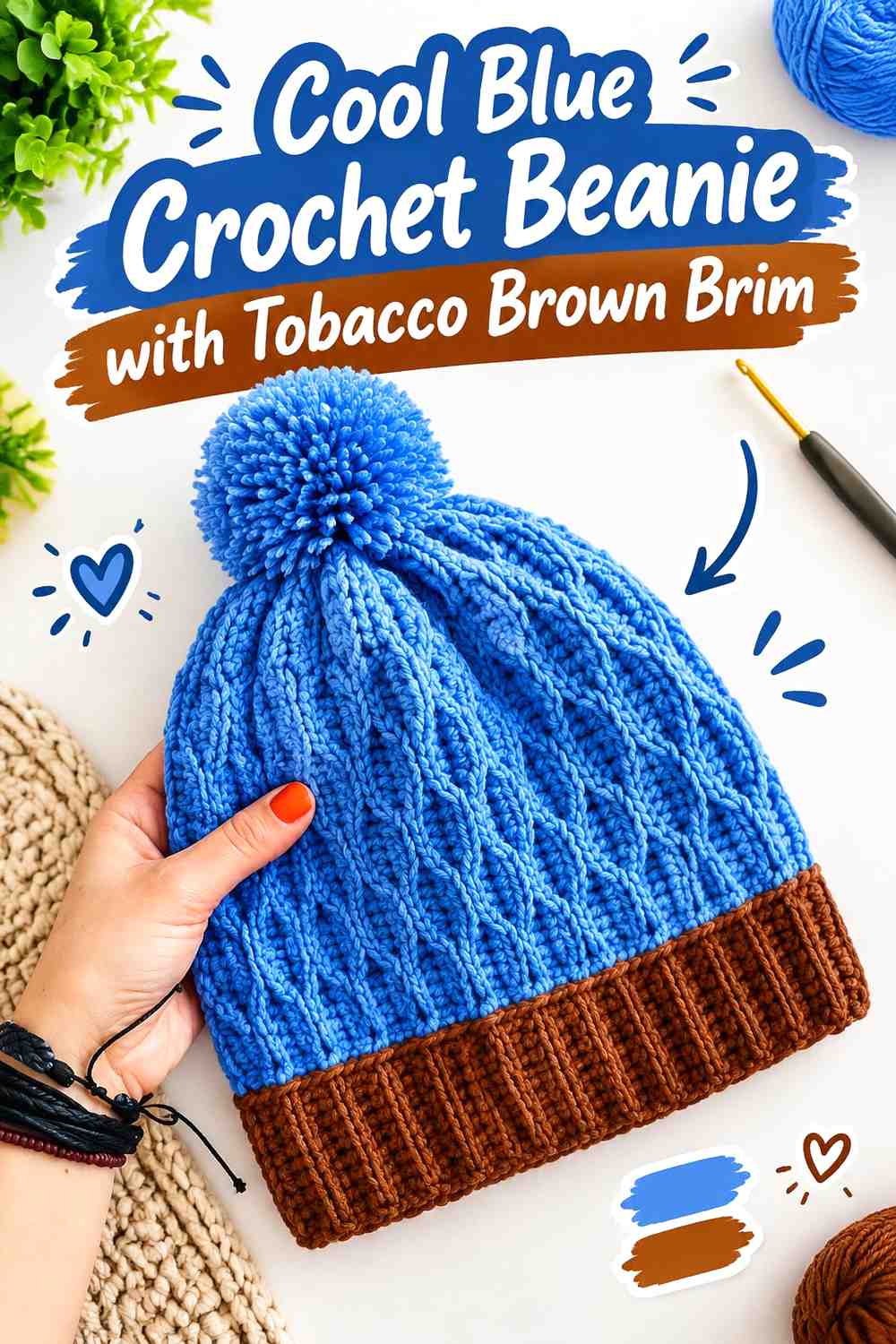
6. Cool Blue Crochet Beanie With Tobacco Brown Brim
 SAVE
SAVEA beanie benefits from a simple color hierarchy because its total surface is small. Use cool blue throughout the crown and tobacco brown around the brim. The clear division lets both colors register without introducing multiple narrow stripes.
Cool Blue Can Keep the Crochet Beanie Crown Lighter
Let cool blue cover most of the hat when you want the accessory to stay cool-toned. If the beanie has noticeable ribbing, check that the ridges remain visible in the selected blue before committing to the full crown.
Tobacco Brown Can Ground the Cool Blue Crochet Brim
The brim is a natural place for tobacco brown because it forms a visible lower frame around the hat. If the brim folds upward, remember that the brown may occupy more of the visible surface when worn than it does while the beanie lies flat.
Creator Credit: Sirin’s Crochet
7. Cool Blue Tobacco Brown And Cream Gingham Crochet Tote
 SAVE
SAVEGingham needs stronger value organization than broad stripes. Tobacco brown can act as the darkest check, cool blue as the middle value, and cream as the lightest. The neutral creates enough separation for the checked pattern while keeping blue and brown as the defining colors.
Tobacco Brown Should Anchor the Cool Blue Crochet Gingham Checks
Use tobacco brown consistently as the deepest part of the pattern. If your tobacco shade is unusually light, compare all three yarns in grayscale before beginning so the dark, medium, and light roles remain clear.
Cool Blue Can Bridge Tobacco Brown and Cream Crochet Squares
Cool blue works as the transition between deep brown and pale cream when its value sits clearly between them. Avoid choosing a blue so pale that it merges with the cream or so dark that it becomes indistinguishable from the brown.
Cream Can Separate Cool Blue and Tobacco Brown Crochet Details
Keep cream in a supporting role. Its purpose is to provide the lightest visual break, not to replace the blue-and-brown focus. Repeating the neutral evenly across both sides of the tote helps maintain the gingham effect.
Creator Credit: HayHay Crochet
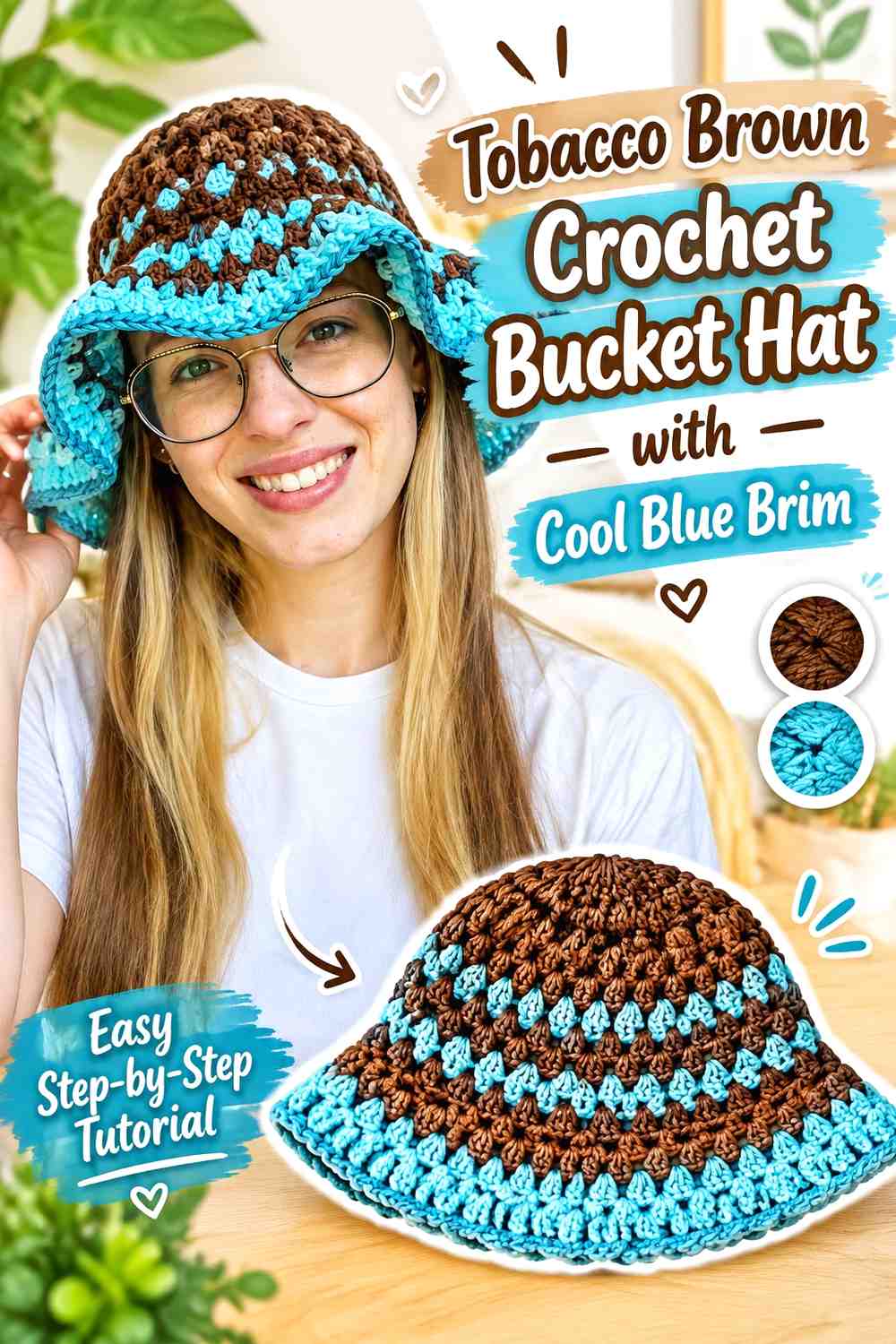
8. Tobacco Brown Crochet Bucket Hat With Cool Blue Brim
 SAVE
SAVEA bucket hat naturally divides into an upper crown-and-side section and a lower brim. Keeping the top tobacco brown and switching to cool blue at the brim creates color blocking that follows the actual shape of the hat.
Tobacco Brown Can Cover the Main Crochet Bucket Hat
Use tobacco brown continuously through the crown and sides when you want the deeper shade to establish the hat’s main identity. Avoid inserting isolated blue patches in the upper section if the brim is intended to be the primary contrasting feature.
Cool Blue Can Make the Tobacco Brown Crochet Brim Transition Clear
Cool blue around the brim introduces a visible change without needing additional colors. Because the brim is prominent from the front and sides, it can provide enough blue to balance a much larger brown crown.
Creator Credit: PassioKnit Kelsie
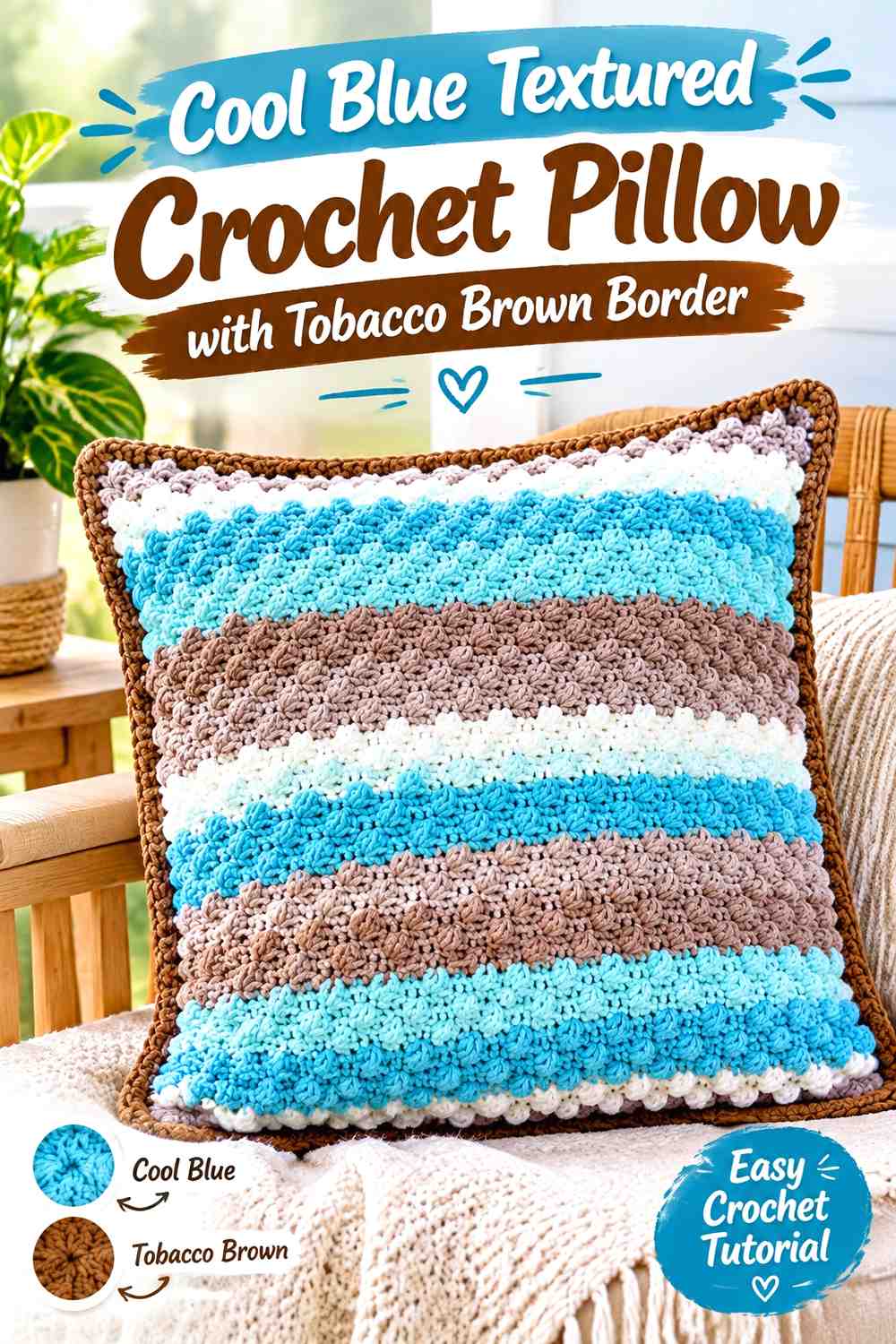
9. Cool Blue Textured Crochet Pillow With Tobacco Brown Border
 SAVE
SAVEA pillow gives cool blue a broad surface where crochet texture can remain the focal point. Tobacco brown can then define the perimeter and create a darker frame without interrupting the raised stitches across the main face.
Cool Blue Can Keep Crochet Pillow Texture Prominent
Use cool blue across the primary pillow surface if bobbles, puffs, ridges, or other raised details are important to the design. Compare a small textured blue sample with brown before deciding which shade shows the relief more clearly.
Tobacco Brown Can Frame the Cool Blue Crochet Pillow
Place tobacco brown around the border or joining area to define the square shape. If brown also appears inside the pillow face, repeat it symmetrically or at predictable intervals so the dark accents connect with the outer frame.
Creator Credit: Rich Textures Crochet
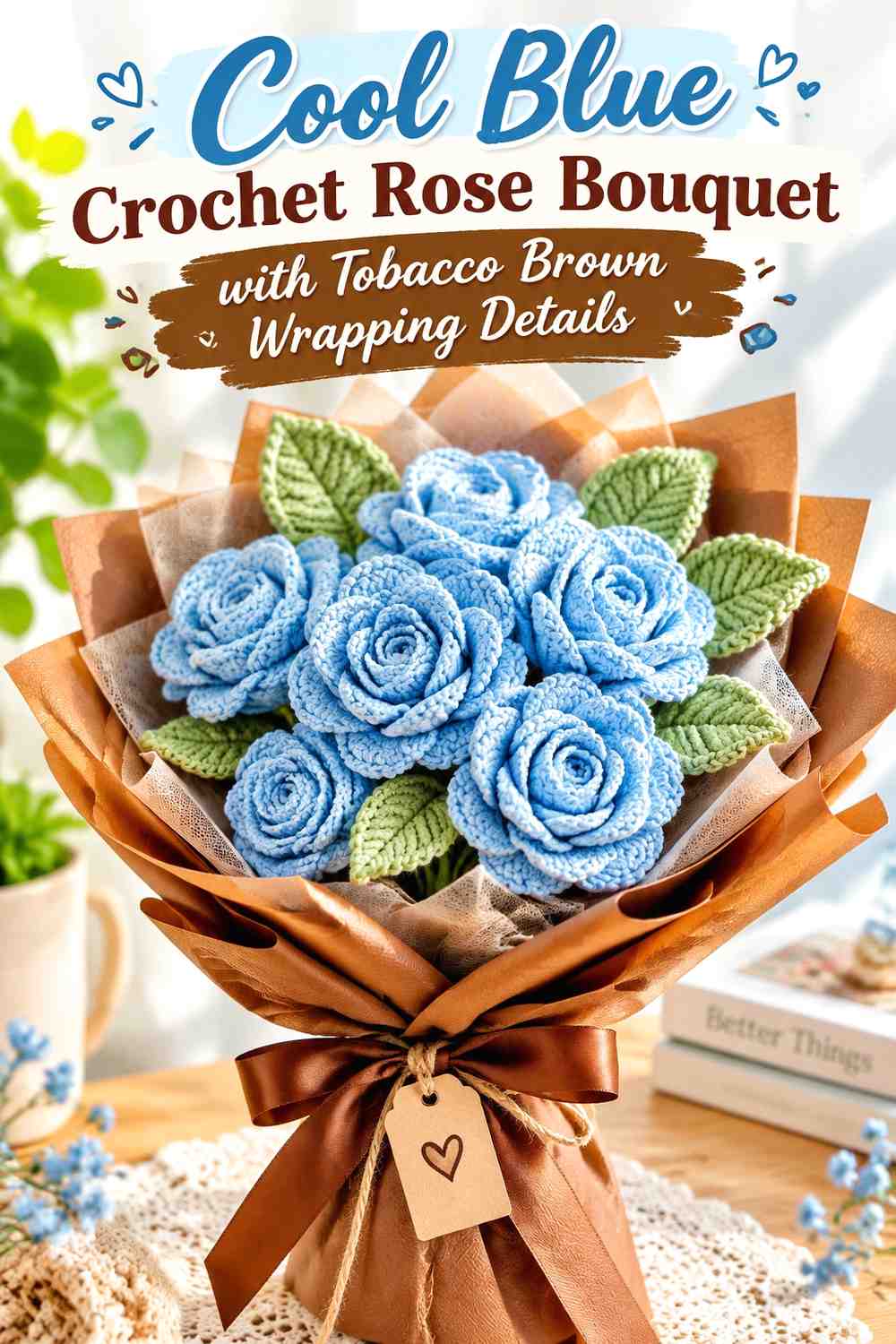
10. Cool Blue Crochet Rose Bouquet With Tobacco Brown Wrapping Details
 SAVE
SAVEA stylized crochet bouquet provides a different use for this palette. Cool blue can take the floral role, while tobacco brown appears through wrapping, ties, or selected supporting details rather than being forced into the petals.
Cool Blue Roses Should Repeat Across the Tobacco Brown Crochet Bouquet
Distribute cool-blue blooms across the arrangement instead of creating one isolated blue flower. Repetition makes the unusual floral color intentional and allows the bouquet to read as a coordinated collection.
Tobacco Brown Can Ground Cool Blue Crochet Roses Without Covering the Petals
Use tobacco brown around the bouquet base, wrapping area, or another supporting element. Keep it out of the small petal details when the two shades are close in value, since too much brown inside each blue flower can reduce the silhouette of the bloom.
Creator Credit: Lingzhi Handmade
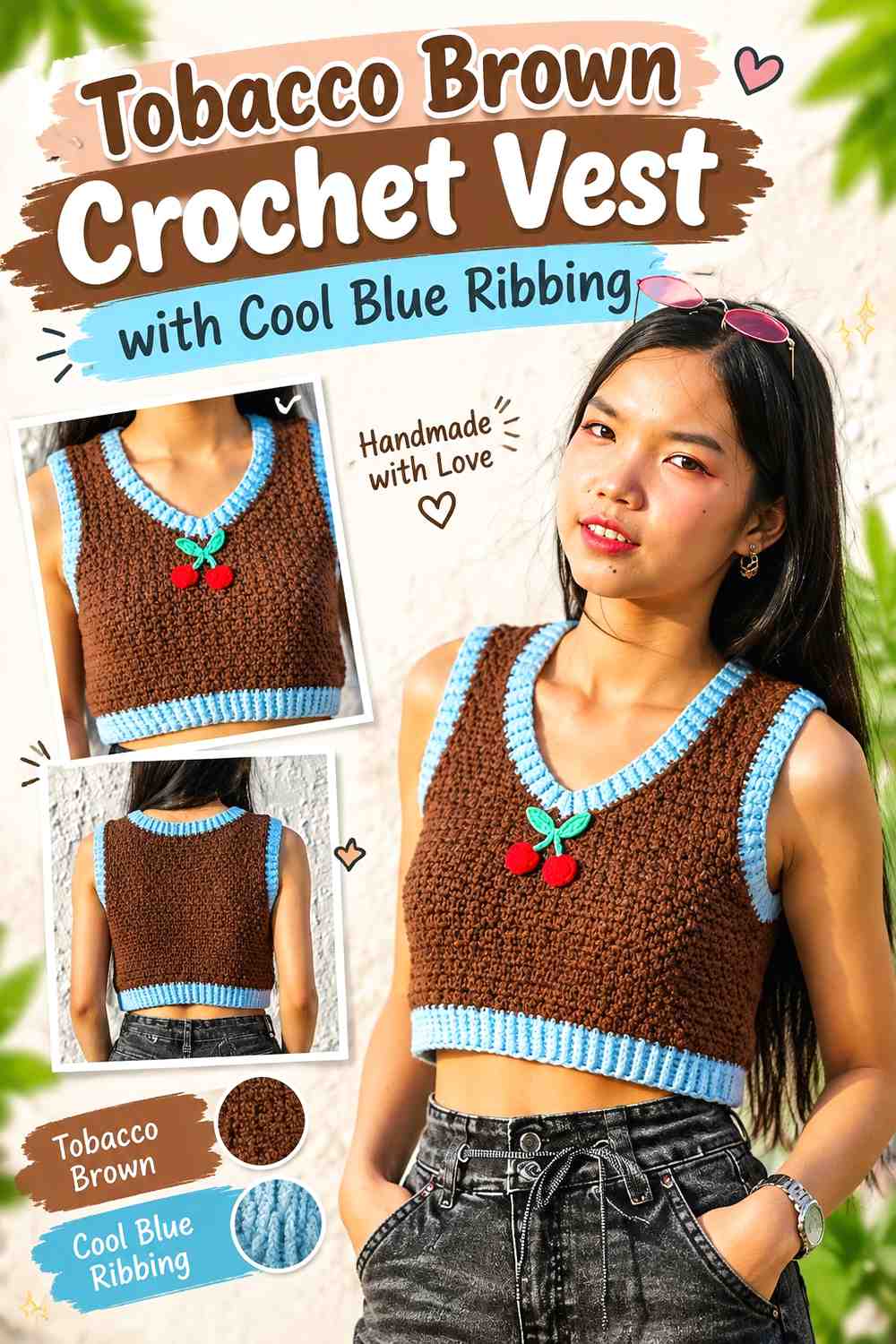
11. Tobacco Brown Crochet Vest With Cool Blue Ribbing
 SAVE
SAVEA vest provides several openings where cool blue can be repeated while leaving the larger panels tobacco brown. The neckline, armholes, and hem create a natural three-part finishing system.
Tobacco Brown Can Keep the Crochet Vest Panels Cohesive
Use tobacco brown across most of the front and back when you want the vest to feel grounded rather than patchworked. If you add blue to the body itself, repeat it in a planned way so it remains connected to the finishing.
Cool Blue Can Connect Tobacco Brown Crochet Vest Edges
Repeat cool blue around the neckline, armholes, and lower ribbing. Check the width of each blue section before finishing; a very wide blue hem with tiny armhole borders can make the bottom of the vest feel disproportionately cool and light.
Creator Credit: Chenda DIY
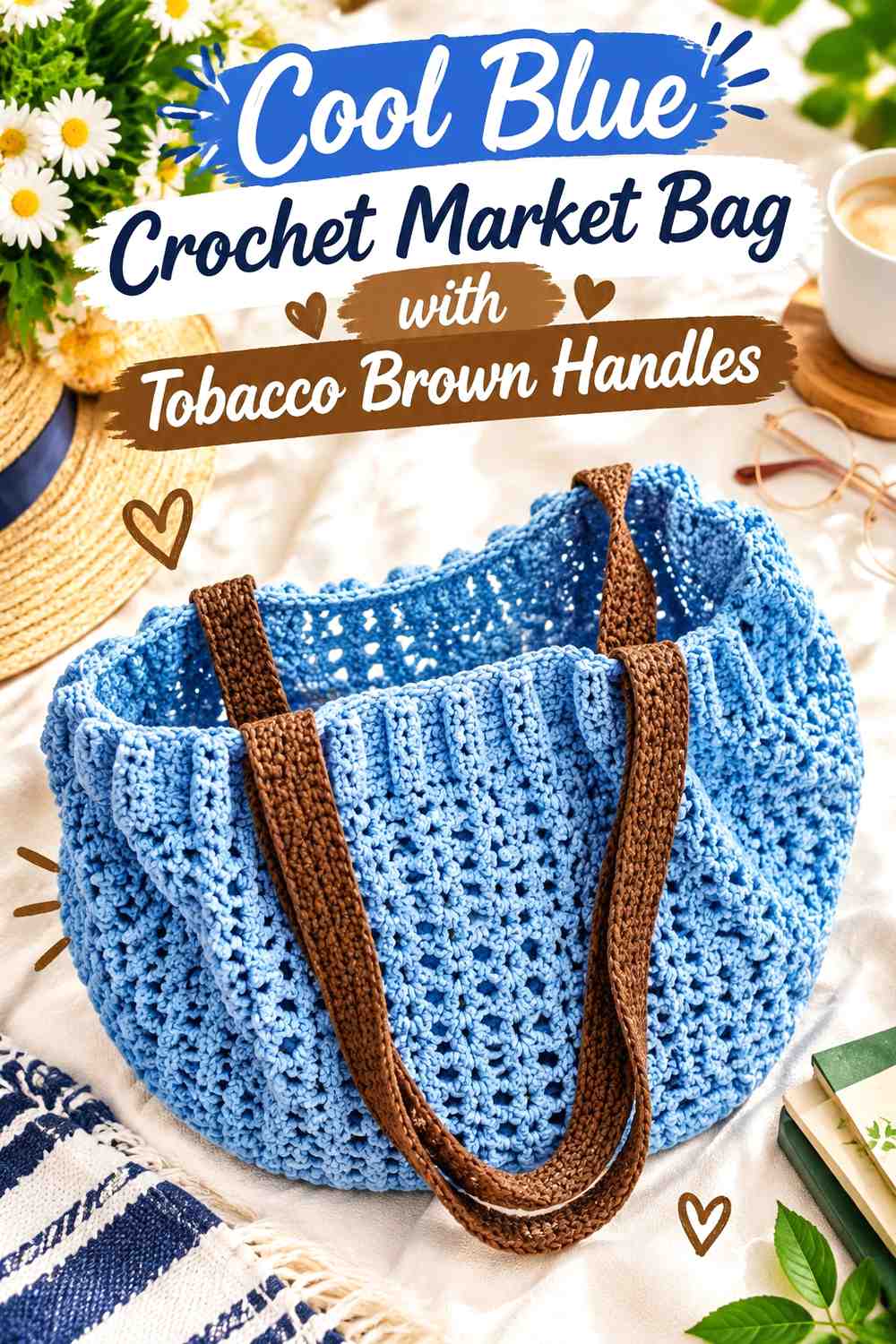
12. Cool Blue Crochet Market Bag With Tobacco Brown Handles
 SAVE
SAVEA market bag can use color to distinguish the carrying structure from the bag body. Cool blue can cover the main fabric, while tobacco brown appears around the upper edge and handles. Repeating brown near the base is another option when you want stronger balance.
Cool Blue Can Carry the Main Crochet Market Bag Surface
Use cool blue throughout the body when you want the bag to remain clearly blue-led. If the fabric is open or mesh-like, judge the finished color with something inside the bag because the background visible through the openings can change how the blue appears.
Tobacco Brown Can Connect Cool Blue Crochet Handles to the Opening
Start tobacco brown around the upper edge before continuing into the handles. That transition creates a visual connection between the blue body and brown straps rather than making the handles appear like a separate component attached afterward.
Creator Credit: Just Be Crafty
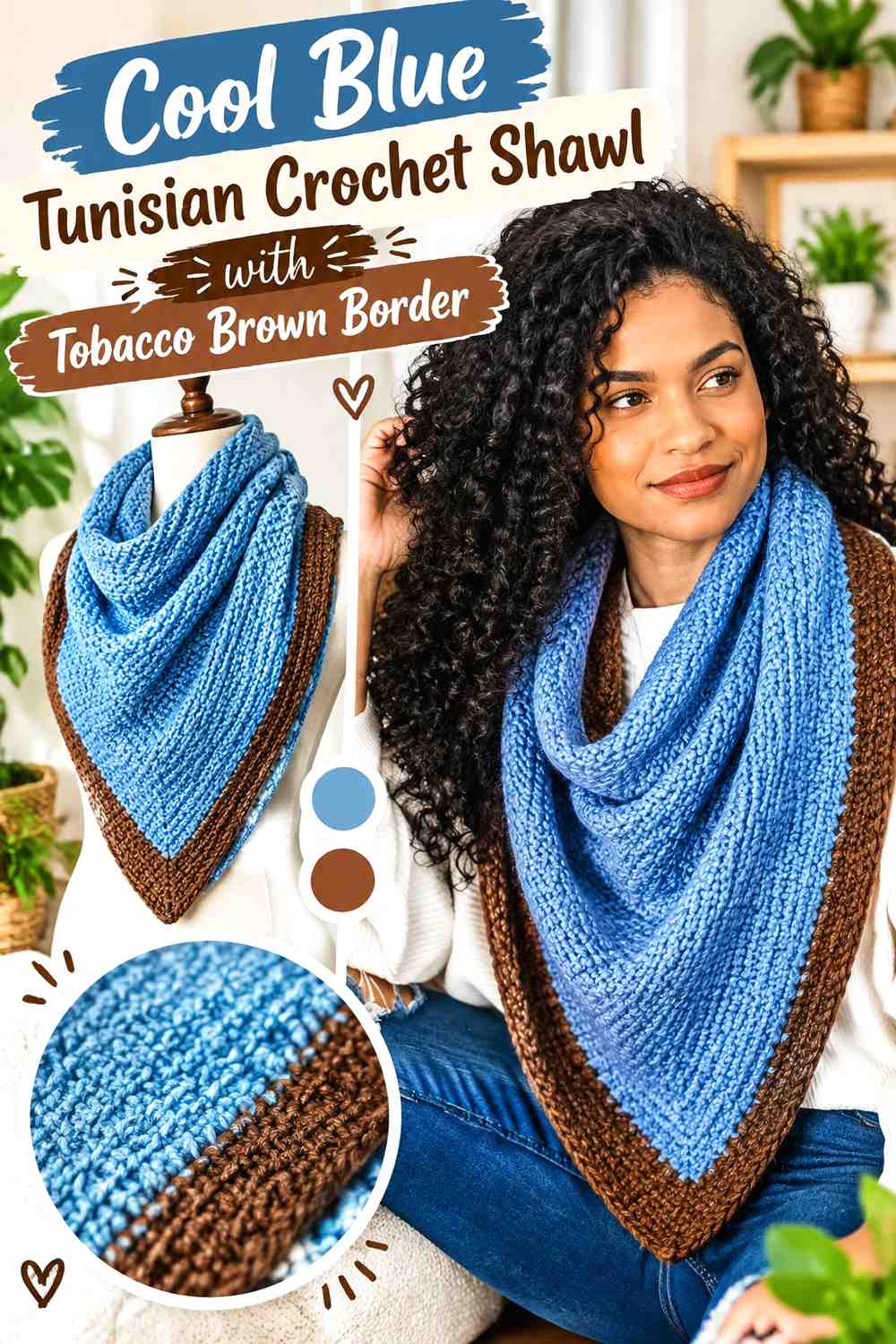
13. Cool Blue Tunisian Crochet Shawl With Tobacco Brown Border
 SAVE
SAVEA Tunisian shawl gives cool blue a large textured field while tobacco brown can be reserved for the final framing section. This arrangement lets the blue display the stitch texture and gives the darker brown a clear role around the outer silhouette.
Cool Blue Can Highlight Tunisian Crochet Shawl Texture
Use cool blue throughout the central field when you want the stitch pattern to remain the main visual feature. A medium or lighter blue can often show surface changes more clearly than a very deep brown, so compare swatches if texture visibility matters.
Tobacco Brown Can Give the Cool Blue Crochet Shawl a Defined Edge
Introduce tobacco brown toward the outer border or final section. A broad brown edge can become nearly co-dominant with the blue, while a narrow border keeps the shawl clearly blue-led. Choose the proportion according to how much visual weight you want at the perimeter.
Creator Credit: TL Yarn Crafts
Comparing Cool Blue and Tobacco Brown Crochet Directions
| If You Want | Color Direction to Consider |
|---|---|
| Mostly cool blue | Blanket, cardigan, beanie, pillow, market bag, or shawl |
| Mostly tobacco brown | Scarf, sweater, bucket hat, or vest |
| Clear geometric contrast | Gingham tote |
| Tobacco brown concentrated around edges | Cool-blue cardigan, pillow, or shawl |
| Cool blue concentrated around edges | Tobacco-brown sweater or vest |
| Softer blended contrast | Wide blanket stripes or large garment panels |
| Strong small-detail separation | Daisy blanket or gingham tote |
| An unconventional decor palette | Cool-blue crochet rose bouquet |
Conclusion
Cool blue and tobacco brown work particularly well when each shade has a defined job. Use cool blue over the largest area when you want the finished crochet item to feel lighter and cooler, then place tobacco brown around cuffs, borders, handles, brims, or motif centers for grounding.
Reverse the balance when you want a deeper result. Tobacco-brown sweaters, scarves, bucket hats, and vests can carry large areas of warm brown while cool blue defines openings and finishing details.
The main checkpoint is value contrast. Broad panels and wide stripes can still look intentional when blue and brown are close in lightness, but gingham, flowers, narrow borders, and other small colorwork need clearer separation. Use the original tutorials for exact construction details and apply the cool-blue-and-tobacco-brown placements as independent palette adaptations.
Frequently Asked Questions
Do cool blue and tobacco brown work together in crochet?
Yes. Cool blue provides a cooler hue while tobacco brown adds a muted warm contrast. The exact result can range from clearly two-tone to softly blended depending on how light or dark the yarns are.
Should cool blue or tobacco brown be the dominant crochet color?
Either can lead. Use cool blue across the largest panels or surfaces when you want a cooler result. Make tobacco brown dominant when you want a deeper, warmer project with blue confined to trim, borders, or accents.
How can I check the contrast between cool blue and tobacco brown?
Place the yarns beside each other and look at them from a distance. You can also take a photograph and view it in grayscale. If both shades become nearly the same gray, expect subtle separation in small crochet details.
What neutral can I add to cool blue and tobacco brown crochet?
Cream, ivory, or another restrained pale neutral can provide a lighter separator. This can be useful for gingham and floral motifs where the blue and brown need more contrast without changing the main two-color palette.
What if my tobacco brown is lighter than my cool blue?
The palette can still work. Treat the darker cool blue as the visual anchor and allow tobacco brown to become the lighter supporting shade. Color roles should follow the actual yarns rather than assuming brown must always be darker.
How can I substitute a different cool blue?
Preserve its role in the project. If the blue is meant to provide the lighter contrast, choose another cool blue that remains clearly lighter than the tobacco brown. If the project uses intentionally close values, match the original lightness more closely.
How can I substitute a different tobacco brown?
Choose another muted warm brown and pay attention to value first. For borders and ribbing, a darker replacement will create stronger definition. For broad panels or stripes, a medium tobacco brown can produce a softer transition against cool blue.
How do I keep cool blue and tobacco brown crochet from looking too busy?
Give each shade predictable placement. Let one color cover most of the surface and repeat the other around borders, handles, ribbing, motif centers, or selected stripes. You do not need to change colors every time the crochet structure changes.