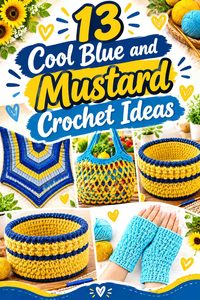
Cool blue and mustard create a crochet palette with a clear temperature contrast. Cool blue can provide a quieter, cooler field across large sections of fabric, while mustard introduces concentrated warmth around stripes, motifs, cuffs, handles, borders, and other details.
The combination does not need a 50/50 split to be effective. Mustard can remain noticeable even when it occupies a relatively small area, especially against an uninterrupted cool blue background. Reversing the balance creates a warmer project in which blue becomes the defining accent instead.
Before starting, compare the actual yarns rather than relying only on the color names. A muted mustard and gray-blue can produce a restrained palette, while clearer versions of both colors create stronger separation.
The tutorials credited with each idea support the crochet project or construction concept. The cool-blue-and-mustard color placements are independent adaptations rather than claims about the colors used by the tutorial creators.
Quick List
- Cool Blue And Mustard Granny Stripe Crochet Blanket
- Cool Blue And Mustard Ribbed Crochet Beanie
- Mustard And Cool Blue Granny Square Crochet Tote
- Cool Blue And Mustard C2c Crochet Granny Square
- Cool Blue And Mustard Crochet Storage Basket
- Cool Blue And Mustard Pocket Crochet Cardigan
- Mustard And Cool Blue Crochet Cowl
- Cool Blue And Mustard Crochet Fingerless Gloves
- Cool Blue And Mustard Crochet Bucket Hat
- Cool Blue And Mustard Crochet Sweater Vest
- Mustard And Cool Blue Textured Crochet Scarf
- Cool Blue And Mustard Crochet Shawl
- Cool Blue And Mustard Crochet Market Bag
Decide Whether Cool Blue or Mustard Should Lead
Cool blue is useful as the larger field when you want mustard to work as a concentrated accent. On garments, that could mean blue body panels with mustard ribbing. On a blanket, it could mean wide blue stripe groups interrupted by narrower mustard sections.
Making mustard dominant changes the emphasis considerably. A mustard scarf, cowl, or motif field with blue edging feels warmer overall and lets the blue behave more like a structural outline.
Avoid dividing every project equally just because two colors are available. The construction often tells you where the supporting color belongs.
Check Cool Blue and Mustard Contrast Before Using Small Details
Cool blue and mustard are clearly different hues, but that does not guarantee strong light-and-dark contrast. A dark mustard and medium blue may be surprisingly similar in value.
Place the yarns together and view them from a distance. A grayscale photo can also help when you intend to use one shade for small motifs, narrow joins, or other details that need clear separation.
When the values are close, larger color blocks usually communicate the palette more clearly than tiny accents.
Let Cool Blue and Mustard Follow the Crochet Structure
Color changes are easiest to organize around features that already divide the project: blanket stripes, granny-square centers, basket rims, cardigan pockets, cuffs, brims, straps, or shawl borders.
This approach also helps protect stitch texture. If ribbing, cables, shells, or another raised surface is a major feature, keeping that section predominantly one color prevents constant changes from competing with the texture.
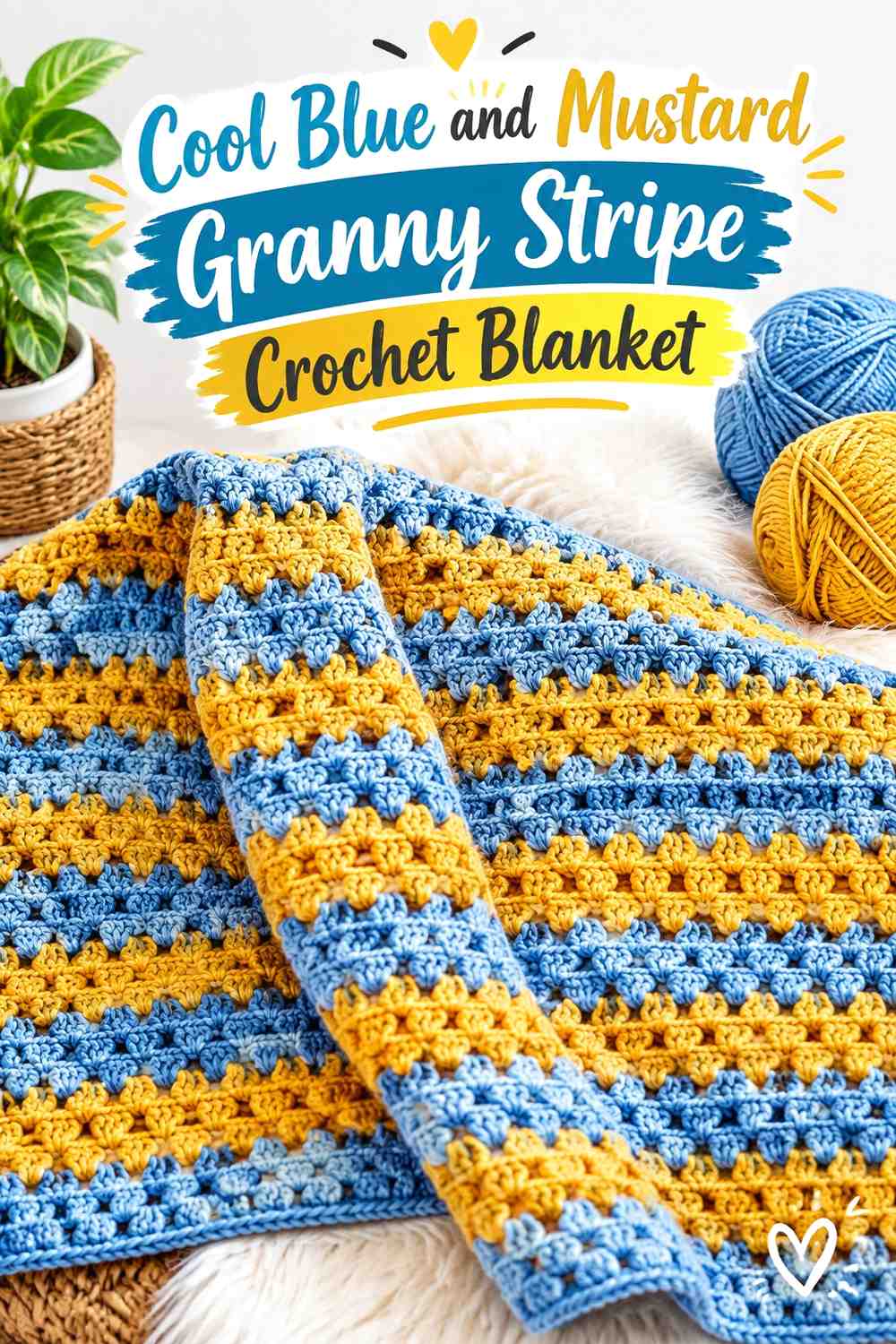
1. Cool Blue And Mustard Granny Stripe Crochet Blanket
 SAVE
SAVEA granny stripe blanket provides enough surface area to let cool blue dominate without reducing mustard to an insignificant detail. Use broader blue sections between strategically repeated mustard bands so the warmer color establishes a rhythm rather than appearing randomly.
Mustard Can Establish the Rhythm Across a Cool Blue Crochet Blanket
Repeat mustard at predictable points throughout the blanket. The bands do not need to match the blue sections in width; narrower mustard stripes can still make a strong contribution because their temperature contrasts with the cool background.
Spacing the mustard consistently also helps distant areas of a large blanket relate to one another.
Cool Blue Can Give Mustard Crochet Stripes More Breathing Room
Wider cool blue areas prevent the mustard bands from becoming visually crowded. They also give the repeated granny-style stitch groups a more continuous field.
Arrange several proposed stripe repeats before committing to the entire blanket. Judging one blue-to-mustard transition is less useful than seeing how the sequence looks after several repetitions.
Creator Credit: Emma C Makes
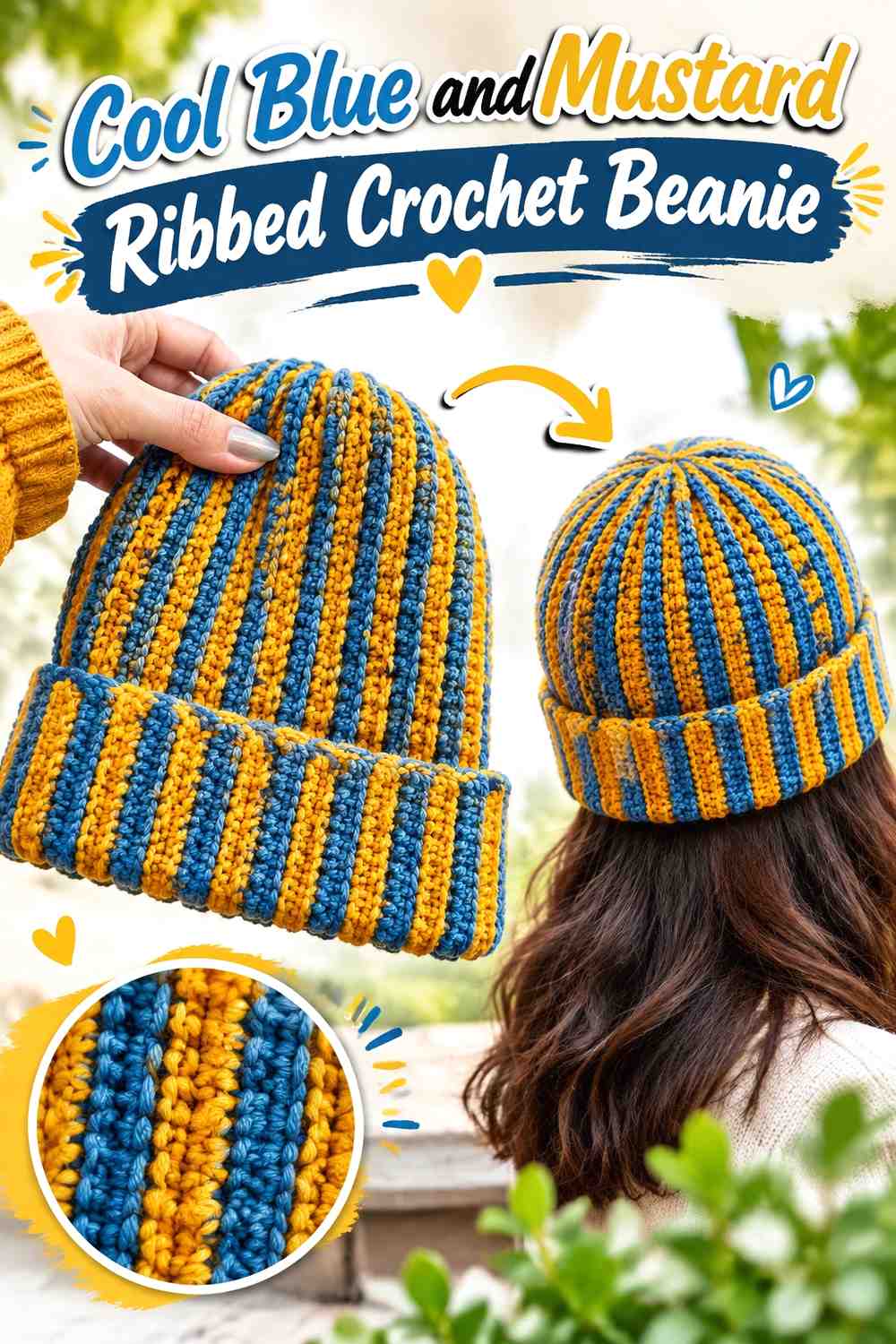
2. Cool Blue And Mustard Ribbed Crochet Beanie
 SAVE
SAVEA ribbed beanie already contains strong directional texture, so the colors can remain simple. Cool blue can cover the crown and main body while mustard is concentrated around the lower or folded brim.
Cool Blue Can Keep the Mustard Crochet Beanie Ribbing Continuous
Working most of the hat in cool blue lets the repeated ribbing run uninterrupted from the crown toward the lower section.
If your chosen blue is particularly dark, crochet a sample and view it under ordinary indoor lighting. Darker yarn can reduce the visible shadows that define ribbed texture.
Mustard Can Turn the Cool Blue Crochet Beanie Brim Into a Feature
A mustard brim creates a natural warm band exactly where the beanie construction already changes visually. Increase the mustard width when you want the two colors to carry more equal weight.
For a quieter palette, keep mustard confined to a narrow lower section rather than inserting additional stripes through the blue crown.
Creator Credit: VivCrochets
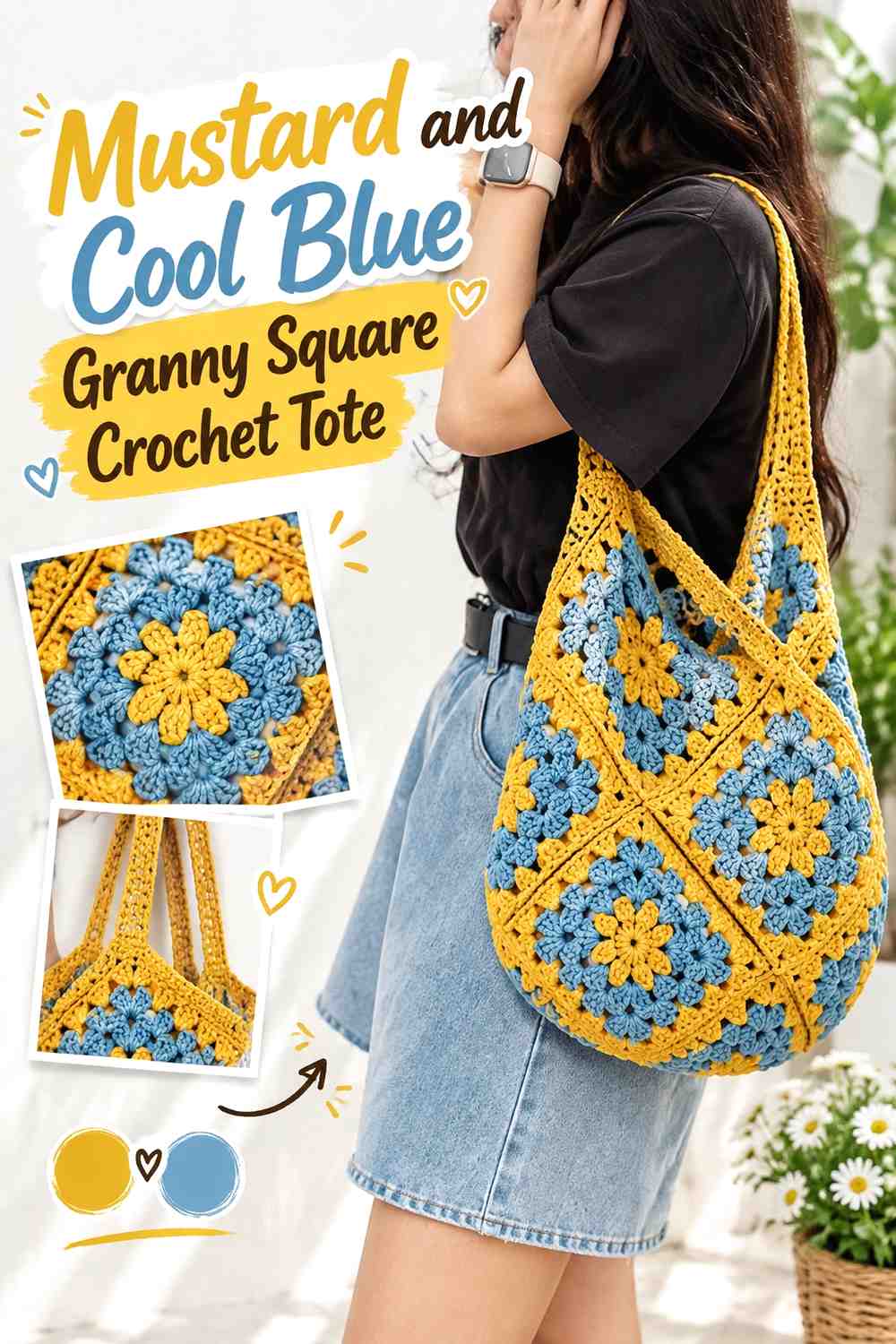
3. Mustard And Cool Blue Granny Square Crochet Tote
 SAVE
SAVEA granny square tote gives you several places to separate the colors: motif centers, outer motif sections, visible joins, edging, and handles. Mustard can dominate the square surfaces while cool blue provides repeated structural definition.
Mustard Can Lead the Cool Blue Crochet Tote Motifs
Use mustard across the largest area of each square when you want a warmer bag. Cool blue can then repeat in the centers or outer portions without needing equal coverage.
Arrange all completed squares before joining. Rotating them may change whether the blue sections appear evenly distributed or become concentrated on one side of the finished tote.
Cool Blue Can Connect Mustard Crochet Tote Squares
A cool blue joining color can visually separate individual mustard-heavy motifs while tying them into one bag.
If the handles are also blue, repeat enough blue within the motifs to connect those straps to the body. Otherwise, the handles can look like an unrelated third structural element even though the color already appears in the palette.
Creator Credit: 니팅스완 (knitting swan)
4. Cool Blue And Mustard C2c Crochet Granny Square
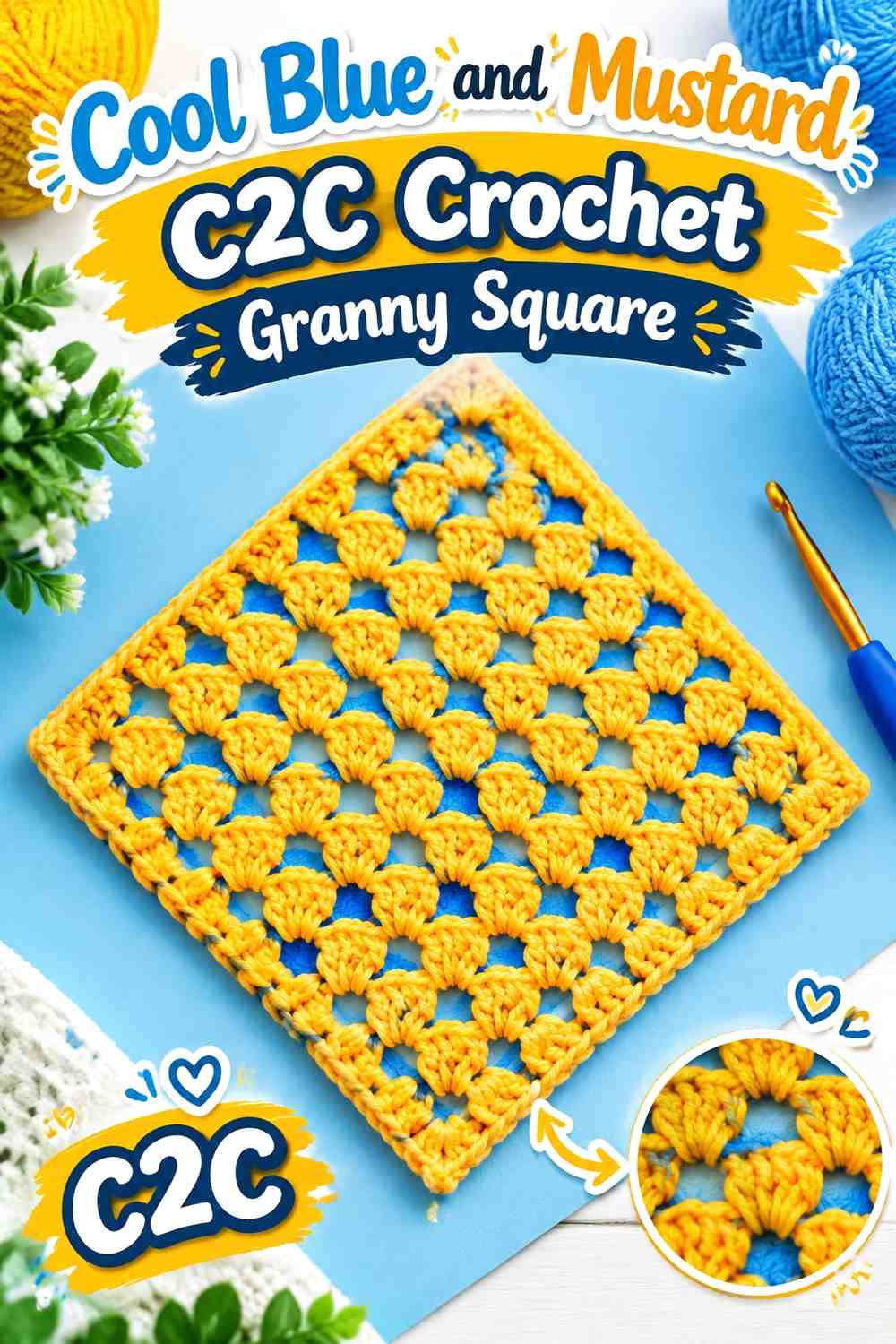 SAVE
SAVECorner-to-corner granny construction allows blue and mustard to form directional sections instead of ordinary concentric rings. Cool blue can occupy a large diagonal area while mustard provides the contrasting block.
Cool Blue Can Create the Main Diagonal in a Mustard Crochet Square
Give blue enough surface area for the corner-to-corner direction to remain obvious. Several narrow blue changes can look like unrelated stripes rather than one intentional section.
If you plan to join several squares, rotate them before assembly. Aligning their blue areas can create continuous diagonal movement across a larger project.
Mustard Can Keep Cool Blue C2C Crochet Motifs From Looking Too Uniform
A substantial mustard block breaks up repeated blue areas and gives the motif a clear warm counterpart.
When multiple squares are involved, keep the mustard placement consistent enough to create repetition. Randomizing every square can work, but it produces a busier result than a planned alternating arrangement.
Creator Credit: Jayda InStitches
5. Cool Blue And Mustard Crochet Storage Basket
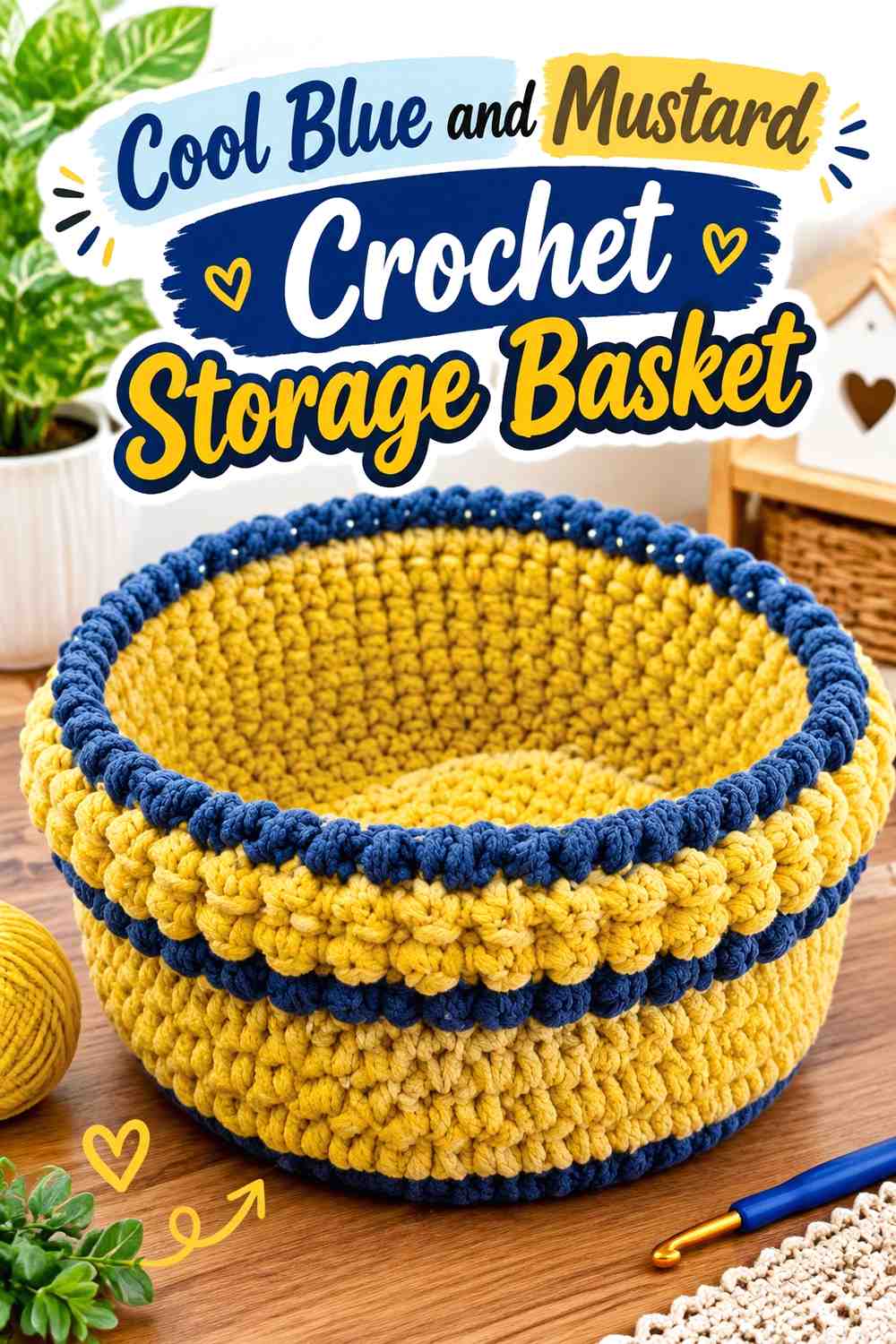 SAVE
SAVEA storage basket usually benefits from large color sections because the sides are read as one continuous surface. Cool blue can cover the lower and middle body, with mustard concentrated around the rim or upper section.
Cool Blue Can Ground the Mustard Crochet Basket Body
Use cool blue through most of the side wall when you want the basket to remain visually calm. This leaves the upper mustard area enough contrast to become a deliberate finishing feature.
Choose the transition based on the basket shape rather than changing colors simply when one yarn begins running low.
Mustard Can Define the Cool Blue Crochet Basket Opening
A mustard upper band draws attention to the basket rim and clearly separates it from the blue body.
Keep the mustard close to the top for a restrained accent. Extending it farther down creates a more obvious two-block basket in which both colors carry substantial visual weight.
Creator Credit: L’angolo di Criss
6. Cool Blue And Mustard Pocket Crochet Cardigan
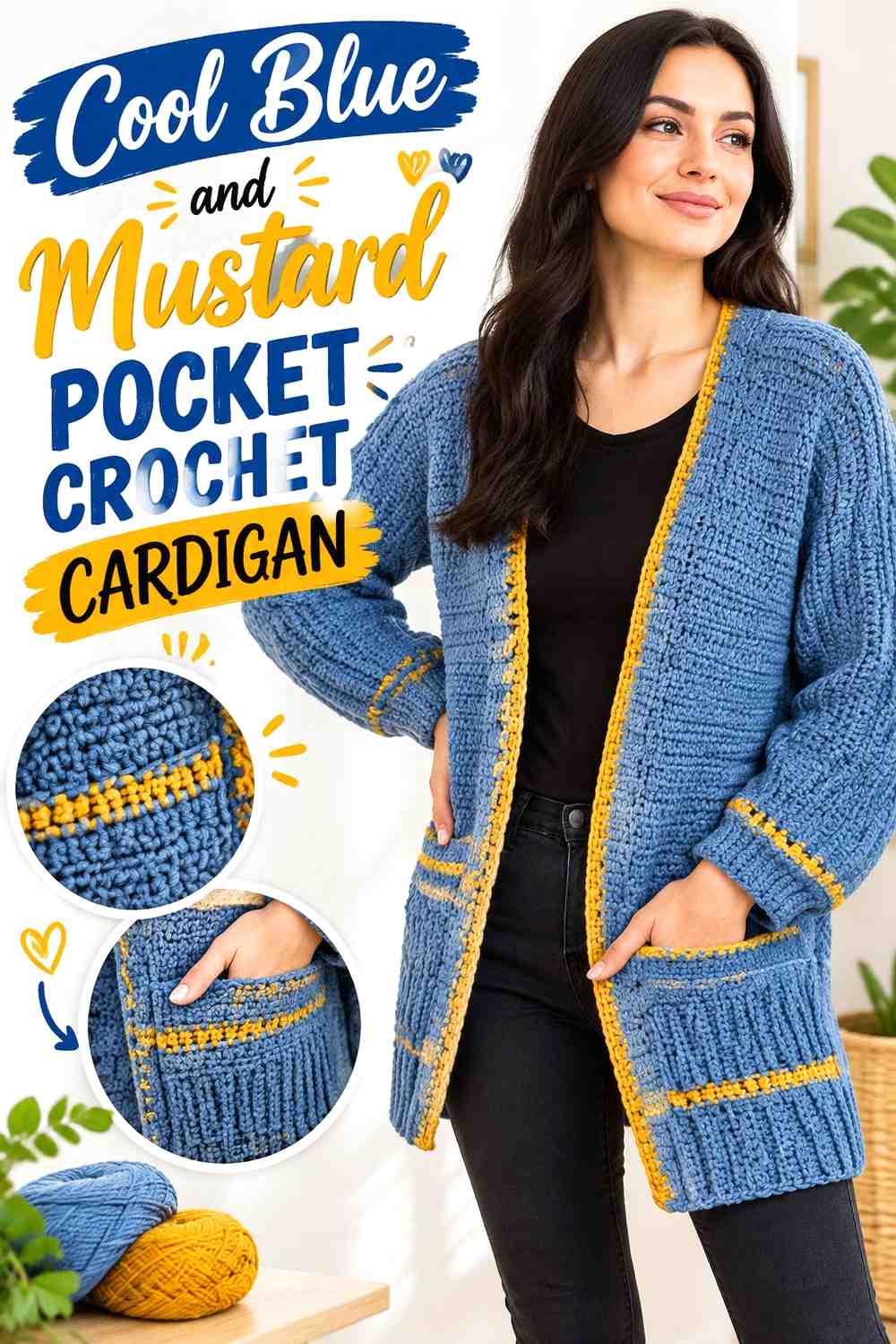 SAVE
SAVEA cardigan provides large panels plus natural accent locations such as pockets, cuffs, front edging, and the lower band. Cool blue can dominate the main garment while mustard is concentrated in those smaller structural areas.
Cool Blue Can Keep Mustard Crochet Cardigan Details Controlled
Working the back, front panels, and most of the sleeves in cool blue keeps the cardigan visually cohesive.
Because a cardigan has a large overall surface, mustard does not need to occupy much of it to remain noticeable. A few well-placed areas can be more effective than dividing every panel into color blocks.
Mustard Can Make Cool Blue Crochet Cardigan Pockets Intentional
Mustard pockets create warm focal areas on a blue cardigan front. Repeat mustard at the cuffs or edging so the pockets connect to the rest of the garment.
If contrasting pockets become too prominent, keep them blue and move mustard to narrower finishing instead. The palette remains the same, but the visual hierarchy becomes much quieter.
Creator Credit: TCDDIY
7. Mustard And Cool Blue Crochet Cowl
 SAVE
SAVEA compact cowl gives both shades considerable impact even when one appears only around the edges. Mustard can cover the main stitch surface while cool blue frames the upper and lower sections.
Mustard Can Keep the Cool Blue Crochet Cowl Warm and Continuous
A broad mustard center lets the main crochet texture repeat without frequent color interruptions.
If mustard and blue have similar value, maintain larger sections instead of creating very narrow stripes. Broad areas make the hue difference easier to recognize.
Cool Blue Can Frame Both Mustard Crochet Cowl Edges
Cool blue at both edges contains the warmer mustard field and creates visual repetition.
Check how the cowl folds around the neck. Very narrow blue sections may disappear when the fabric bunches, so widen them when you want the cooler color consistently visible.
Creator Credit: Bag-O-Day Crochet
8. Cool Blue And Mustard Crochet Fingerless Gloves
 SAVE
SAVEFingerless gloves naturally divide into hand and cuff areas, making them well suited to controlled two-color placement. Cool blue can cover the hand while mustard marks the wrist.
Cool Blue Can Preserve Mustard Crochet Glove Texture
Use cool blue across the main hand section when you want raised or repeated texture to stay visually continuous.
If the exact blue is too dark to show the stitch relief clearly, reverse the arrangement and use mustard in the most textured area.
Mustard Can Separate the Cool Blue Crochet Glove Cuff
A mustard cuff provides enough warm color to establish the palette without adding repeated stripes across the hand.
Keep the color transition in the same visual position on both gloves. Small differences in proportion are much easier to notice on a matched pair than on a large blanket.
Creator Credit: crochettoz
9. Cool Blue And Mustard Crochet Bucket Hat
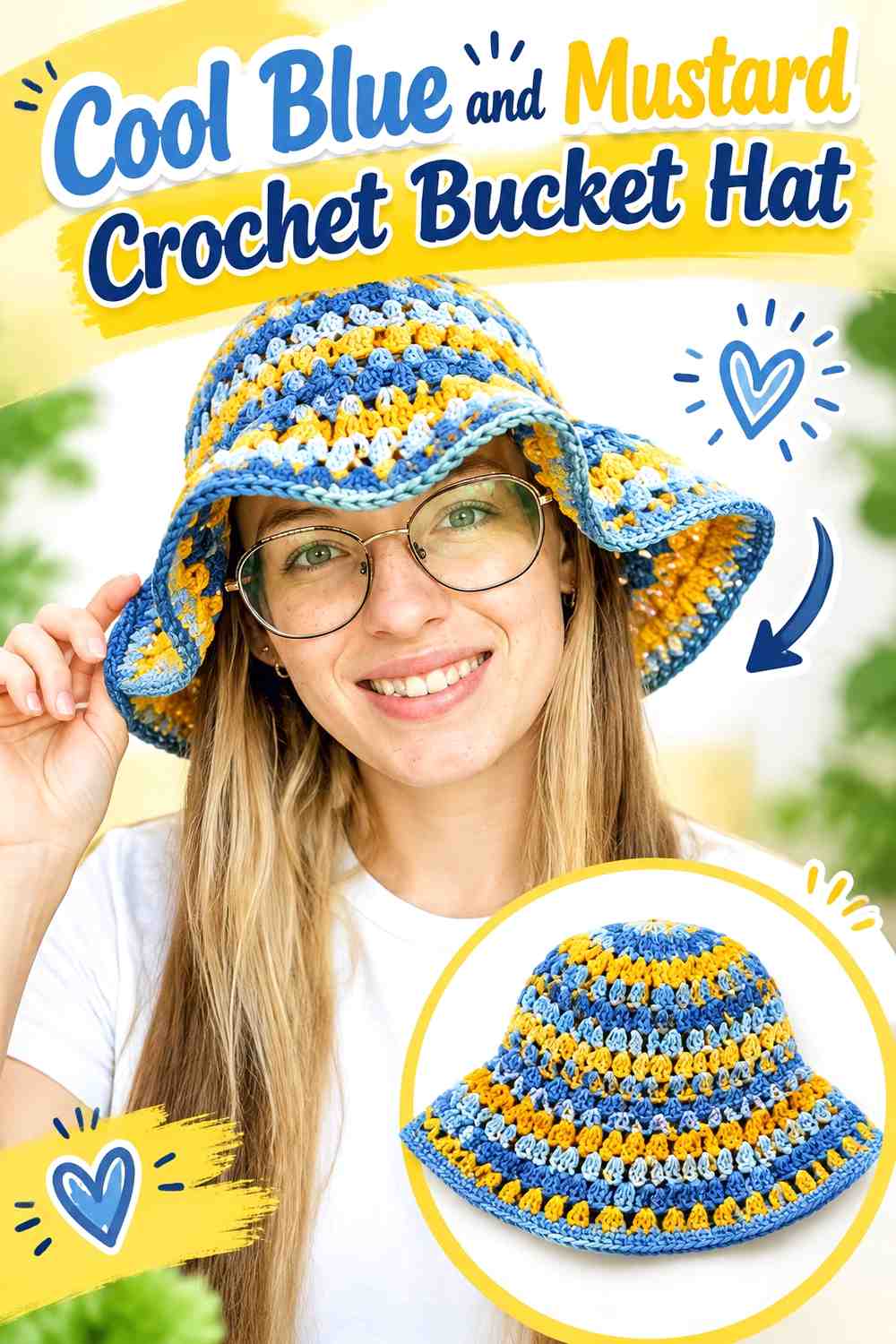 SAVE
SAVEA bucket hat offers three obvious zones: crown, sides, and brim. Cool blue can cover the crown and upper body, while mustard takes over at the brim for a strong but organized contrast.
Cool Blue Can Keep the Mustard Crochet Bucket Hat Crown Cohesive
Using blue through the crown and sides gives the upper hat one uninterrupted field rather than dividing it with multiple stripes.
If you want more mustard without disrupting the crown, introduce the warmer shade only near the lower side section before the brim begins.
Mustard Can Turn the Cool Blue Crochet Bucket Hat Brim Into the Focal Area
The brim already projects away from the crown, so mustard placed there gains considerable visibility without needing additional decorative changes.
If a full mustard brim feels too dominant, use cool blue for most of it and reserve mustard for the outer edge.
Creator Credit: PassioKnit Kelsie
10. Cool Blue And Mustard Crochet Sweater Vest
 SAVE
SAVEA sweater vest gives the supporting shade several natural places to appear because the neckline, armholes, and hem create clear finishing areas. Cool blue can cover the large front and back panels while mustard outlines those openings.
Cool Blue Can Keep Mustard Crochet Vest Panels Visually Unified
A blue body creates one continuous field across the front and back. This works well when mustard will already appear around several edges.
If the vest contains noticeable stitch texture, assess it in the exact blue yarn before making large panels. Color depth can affect how clearly surface detail appears.
Mustard Can Outline Cool Blue Crochet Vest Armholes and Necklines
Mustard around the armholes and neckline creates a repeated warm frame against the blue body.
Adding mustard to the lower edge can complete that framing effect. Narrow trim keeps blue dominant, while wider edging gives mustard a much larger role in the overall garment.
Creator Credit: passtschon
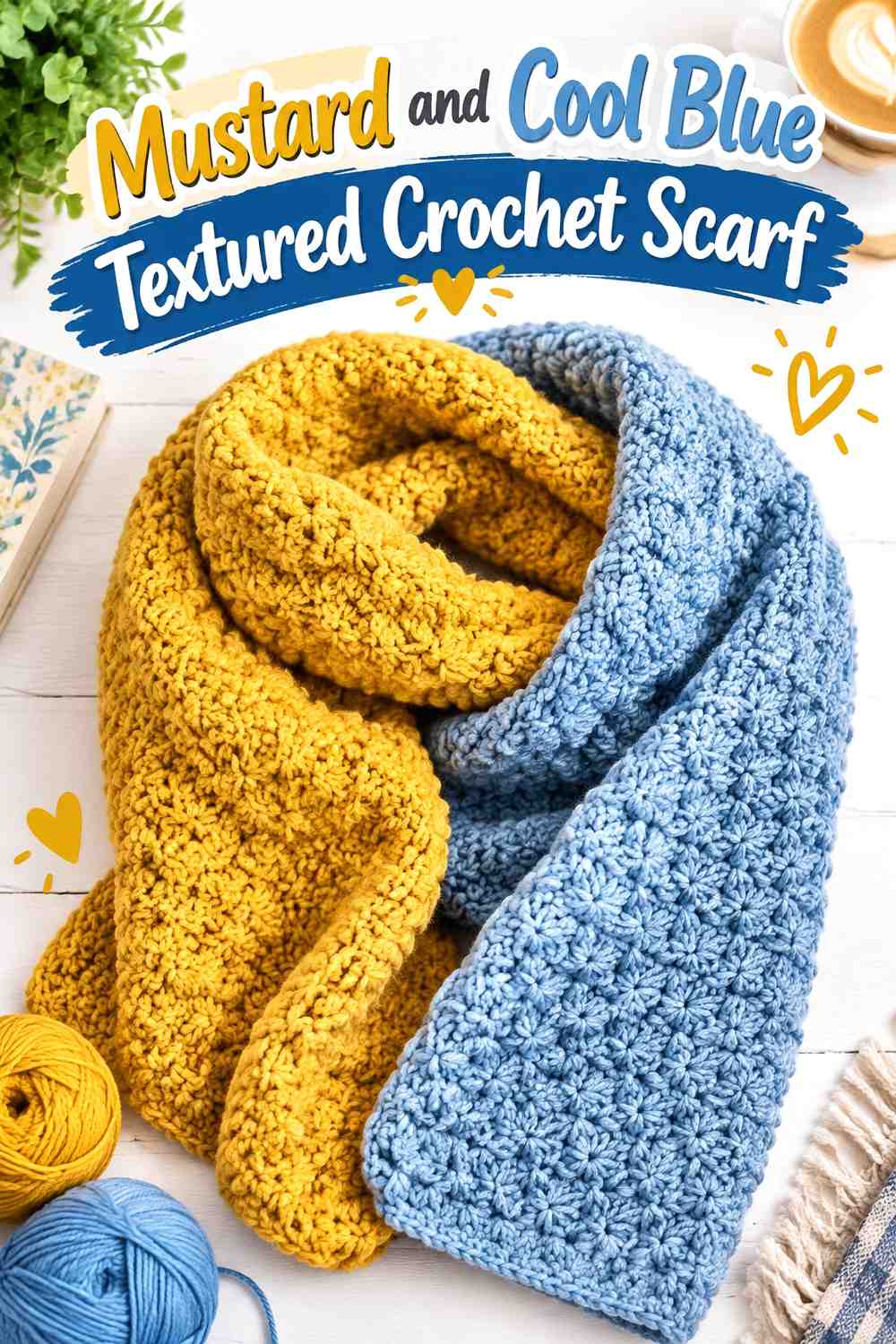
11. Mustard And Cool Blue Textured Crochet Scarf
 SAVE
SAVEA long scarf provides enough room to reverse the usual palette hierarchy. Mustard can dominate the main textured area while cool blue is repeated toward both ends.
Mustard Can Keep the Cool Blue Crochet Scarf Texture Continuous
Large mustard sections allow the stitch texture to repeat without constant blue interruptions.
Examine the mustard yarn under ordinary lighting first. If it is particularly deep or muted, the raised stitch definition may appear less pronounced than expected.
Cool Blue Can Balance Both Ends of a Mustard Crochet Scarf
Placing comparable blue sections at each end creates balance when the scarf hangs down the front of an outfit.
The blue sections do not need to be especially large. Their location already turns them into clear finishing points.
For a deliberately asymmetric scarf, blue can occupy only one end, but that changes the project from balanced framing to a directional color-block effect.
Creator Credit: Rich Textures Crochet
12. Cool Blue And Mustard Crochet Shawl
 SAVE
SAVEA shawl increases in width as the fabric grows, which means later color sections can occupy substantially more visual space. Cool blue can lead through the center while mustard appears farther toward the outer edge.
Cool Blue Can Keep the Mustard Crochet Shawl Center Quiet
Beginning with cool blue gives the central portion a continuous field and lets the stitch structure establish itself before the warm contrast is introduced.
Remember that shawls overlap when worn. A mustard section that appears relatively narrow while flat can become more prominent once the fabric is wrapped.
Mustard Can Frame Cool Blue Crochet Shawl Openwork
Mustard toward the outer area creates a warmer visual boundary around the blue center and emphasizes the expanding shawl shape.
If the edge contains detailed openwork, test mustard in that stitch pattern before committing to the entire section. The best placement is one that preserves both the color contrast and the crochet detail.
Creator Credit: Fiber Spider
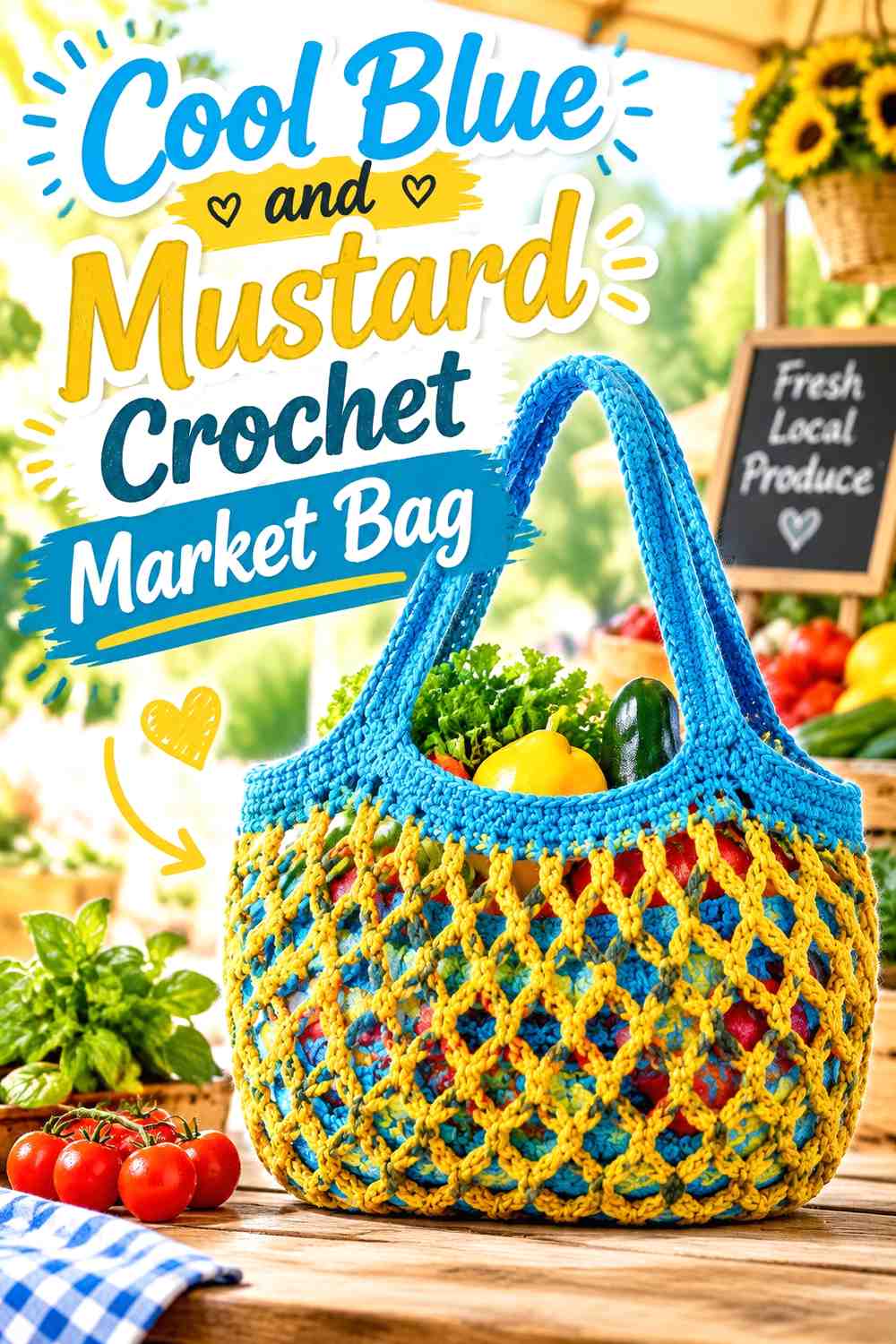
13. Cool Blue And Mustard Crochet Market Bag
 SAVE
SAVEA market bag provides a useful division between the lower body, upper opening, and handles. Cool blue can dominate the main bag surface while mustard is carried into the upper band and straps.
Cool Blue Can Anchor the Mustard Crochet Market Bag Body
Use blue across the lower and middle portions when you want one clear foundational shade.
If the bag fabric becomes more open toward the top, the switch to mustard can coincide visually with that structural change instead of appearing in an arbitrary location.
Mustard Can Connect Cool Blue Crochet Market Bag Handles to the Opening
Mustard handles will look more integrated when mustard also appears around the upper edge of the bag. The repeated color creates a transition from the blue body into the straps.
For a subtler version, keep the handles cool blue and restrict mustard to a smaller band or edge detail.
Creator Credit: The Crochet Crowd
Choosing Between Cool-Blue-Dominant and Mustard-Dominant Crochet
Choose a cool-blue-dominant arrangement when you want the warmer shade to behave as a concentrated accent. The cardigan, vest, beanie, gloves, bucket hat, market bag, shawl, blanket, and basket all provide natural edges or structural details where mustard can appear without taking over the main field.
A mustard-dominant arrangement gives the palette a warmer visual direction. The scarf, cowl, tote motifs, and other smaller pieces can use cool blue to define edges, joins, or repeated details.
For the most graphic result, use the palette in projects with built-in geometric divisions. Granny stripes, C2C squares, granny motifs, brims, and broad color blocks make the relationship between cool blue and mustard especially clear.
Conclusion
Cool blue and mustard give crochet projects a useful balance between a cooler field and a warmer contrasting shade, but the result depends heavily on proportion.
Use blue across large panels and surfaces when you want mustard to act as a focused accent. Reverse the arrangement when you want a warmer piece with cool blue providing structure and definition.
Before beginning a large project, compare the exact yarns, check their light-and-dark separation, and decide where the construction already provides logical color-change points. Borders, cuffs, joins, handles, brims, and repeated stripe groups usually provide a stronger plan than dividing both colors evenly by default.
Frequently Asked Questions
Do cool blue and mustard work together in crochet?
Yes. Cool blue supplies a cooler visual direction while mustard contributes a warmer contrast. The strength of the pairing depends on the exact lightness and saturation of the two yarns.
Should cool blue or mustard be the dominant crochet color?
Either can lead. Cool blue works well across broad backgrounds when you want mustard concentrated in smaller warm accents. Mustard can lead when you want a warmer finished piece with blue defining borders or structural details.
How can I tell whether cool blue and mustard have enough contrast?
Place the yarns next to each other and view them from a distance. A grayscale photo can help reveal differences in lightness. If they look very similar in grayscale, use larger areas instead of relying on narrow outlines or tiny motifs.
Where should mustard go in a cool blue crochet garment?
Cuffs, necklines, hems, pockets, armhole edging, and other finishing areas are practical locations. Repeating mustard in more than one area helps the accent look connected to the garment.
Where should cool blue go in a mustard crochet bag?
Cool blue can define motif centers, visible joins, borders, handles, or lower bag sections. Choose repeated structural locations rather than scattering small blue areas randomly.
Can cool blue and mustard be used in equal amounts?
Yes, particularly in granny stripes, C2C motifs, large color blocks, and repeated squares. Equal coverage creates a more graphic two-color result than a dominant-and-accent arrangement.
What can I substitute for cool blue or mustard yarn?
Preserve the color relationship rather than trying to match a commercial shade name exactly. Replace cool blue with another softened blue that maintains the intended value and cool direction. Replace mustard with a muted golden or yellow-brown shade that still gives enough separation from the blue