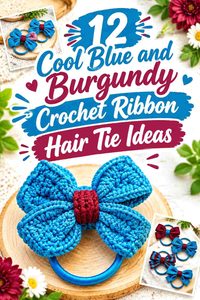
Cool Blue and Burgundy create a useful warm-cool contrast for a crochet ribbon hair tie. Cool Blue can make the ribbon feel lighter and visually cooler, while Burgundy supplies a deeper warm counterpoint. Neither color has to occupy half of the accessory: one can cover the main ribbon while the other appears only at the center, edges, or tail ends.
Ribbon hair ties also need to be judged after they are tied or gathered. A Burgundy section that looks prominent while the crochet lies flat may become partly hidden inside the knot, while a narrow Cool Blue edge can become much more noticeable along two hanging tails. Planning color around the finished shape therefore matters more than simply dividing a flat strip into equal sections.
Here, Cool Blue and Burgundy refer to color directions rather than particular commercial yarn shades. The credited tutorials support crochet bow, ribbon, and hair-tie construction concepts; the color schemes are independent adaptations and are not attributed to the creators.
Quick List
- Cool Blue Crochet Ribbon Hair Tie With Burgundy Center
- Burgundy Crochet Ribbon Hair Tie With Cool Blue Center
- Cool Blue Crochet Ribbon Hair Tie With Burgundy Tails
- Burgundy Crochet Ribbon Hair Tie With Cool Blue Tails
- Cool Blue And Burgundy Split Color Crochet Ribbon Hair Tie
- Cool Blue Crochet Ribbon Hair Tie With Burgundy Edging
- Burgundy Crochet Ribbon Hair Tie With Cool Blue Edging
- Cool Blue And Burgundy Striped Crochet Ribbon Hair Tie
- Cool Blue Crochet Ribbon Hair Tie With Burgundy Tail Tips
- Burgundy Crochet Ribbon Hair Tie With Cool Blue Tail Tips
- Alternating Cool Blue And Burgundy Crochet Ribbon Hair Tie
- Tonal Cool Blue And Burgundy Crochet Ribbon Hair Tie
Decide Whether Cool Blue or Burgundy Should Lead the Ribbon
The dominant shade should usually occupy the largest uninterrupted part of the ribbon. A Cool Blue ribbon with a Burgundy center gives you a predominantly blue accessory with one concentrated warm anchor. Reverse those roles and Burgundy becomes much more visually substantial.
A longer ribbon also gives you the option of separating color by function. The central section can remain Cool Blue while Burgundy appears toward the tails, for example. That arrangement makes the second color more visible when the tails hang below the elastic.
Check Cool Blue and Burgundy After the Ribbon Is Tied
Do not make every color decision while the crochet ribbon is lying flat. Temporarily tie or gather it around the hair elastic and check where the color changes land.
This is particularly important with stripes and split-color designs. Sections near the center may become compressed or hidden, while colors toward the tail ends remain exposed. Adjust the distribution before finishing if one shade almost disappears in the tied form.
Compare Cool Blue and Burgundy for Value as Well as Hue
Cool Blue and Burgundy are different hues, but your particular yarns may or may not have strong light-and-dark contrast. Place them side by side and, if useful, view a photograph in grayscale.
If the two shades are close in value, larger color blocks can make the palette easier to distinguish than narrow stripes. If they have strong value contrast, small Burgundy edges or Cool Blue tips may remain noticeable without occupying much surface area.
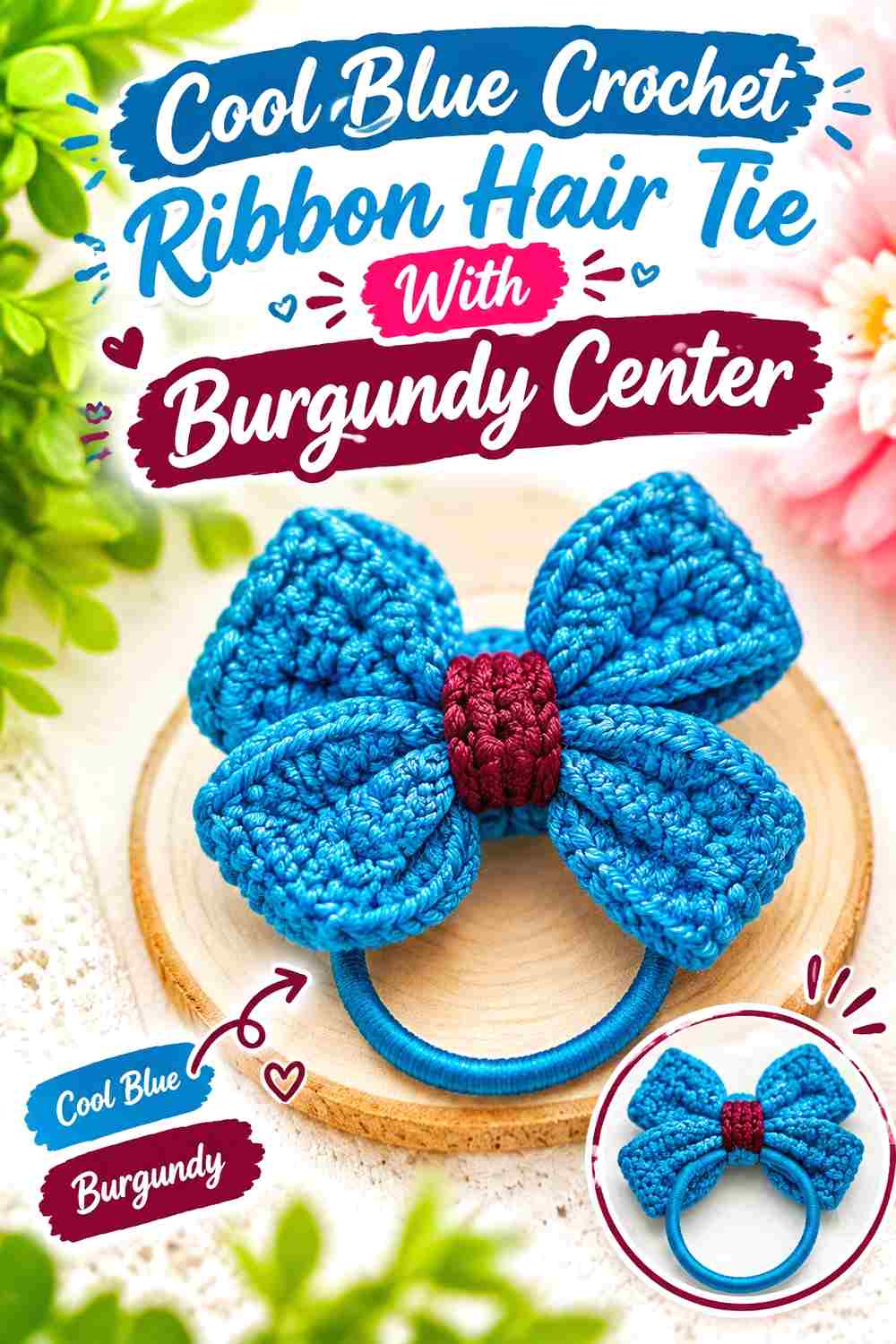
1. Cool Blue Crochet Ribbon Hair Tie With Burgundy Center
 SAVE
This arrangement keeps Cool Blue continuous across the ribbon while concentrating Burgundy around the tied or gathered center. Because the middle is a natural focal point, Burgundy can remain a relatively small part of the total crochet and still register clearly.
Cool Blue Can Cover the Main Crochet Ribbon
Keep Cool Blue uninterrupted across the broad ribbon sections when you want it to lead. This gives both sides or tails a consistent base and prevents the color scheme from becoming unnecessarily fragmented.
Burgundy Can Anchor the Cool Blue Ribbon Center
Place Burgundy around the central area where the ribbon meets or gathers around the hair tie. The darker warm shade can visually separate the two Cool Blue sides without requiring additional color changes.
Burgundy Should Stay Concentrated When Cool Blue Is Dominant
If the goal is a blue-led accessory, resist repeating Burgundy on every edge and tail. A defined center can supply enough contrast while allowing Cool Blue to remain unmistakably dominant.
Creator Credit: Yollenna’s Crochet
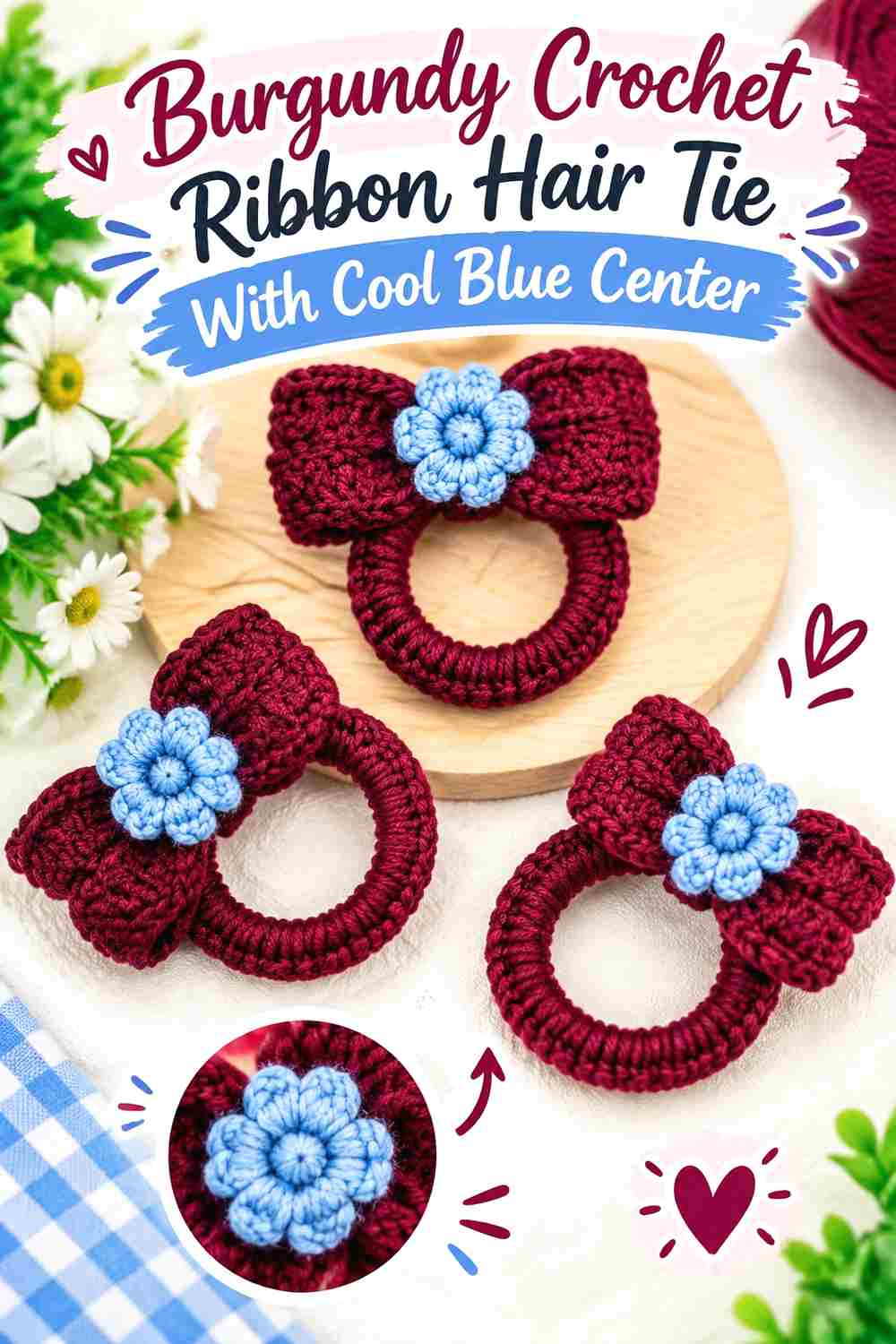
2. Burgundy Crochet Ribbon Hair Tie With Cool Blue Center
 SAVE
Reverse the hierarchy for a deeper overall accessory. Burgundy fills the main ribbon while Cool Blue becomes a concentrated central accent. This puts the warmer shade across the largest visible area without losing the requested cool contrast.
Burgundy Can Establish the Main Crochet Ribbon Field
Use Burgundy continuously across the ribbon body and tails. A broad dark field makes the color direction clear before any Cool Blue detail is added.
Cool Blue Can Break Up the Burgundy Ribbon Center
A Cool Blue center introduces contrast at the point where the ribbon changes direction or gathers. It can also prevent a dark ribbon from appearing visually continuous through the middle.
Cool Blue Can Repeat Once Against Burgundy
If the center feels too isolated, repeat Cool Blue in a restrained tail detail or edge. One additional reference can connect the palette without turning the accessory into an evenly divided two-color design.
Creator Credit: Meladora’s Creations for Crochet
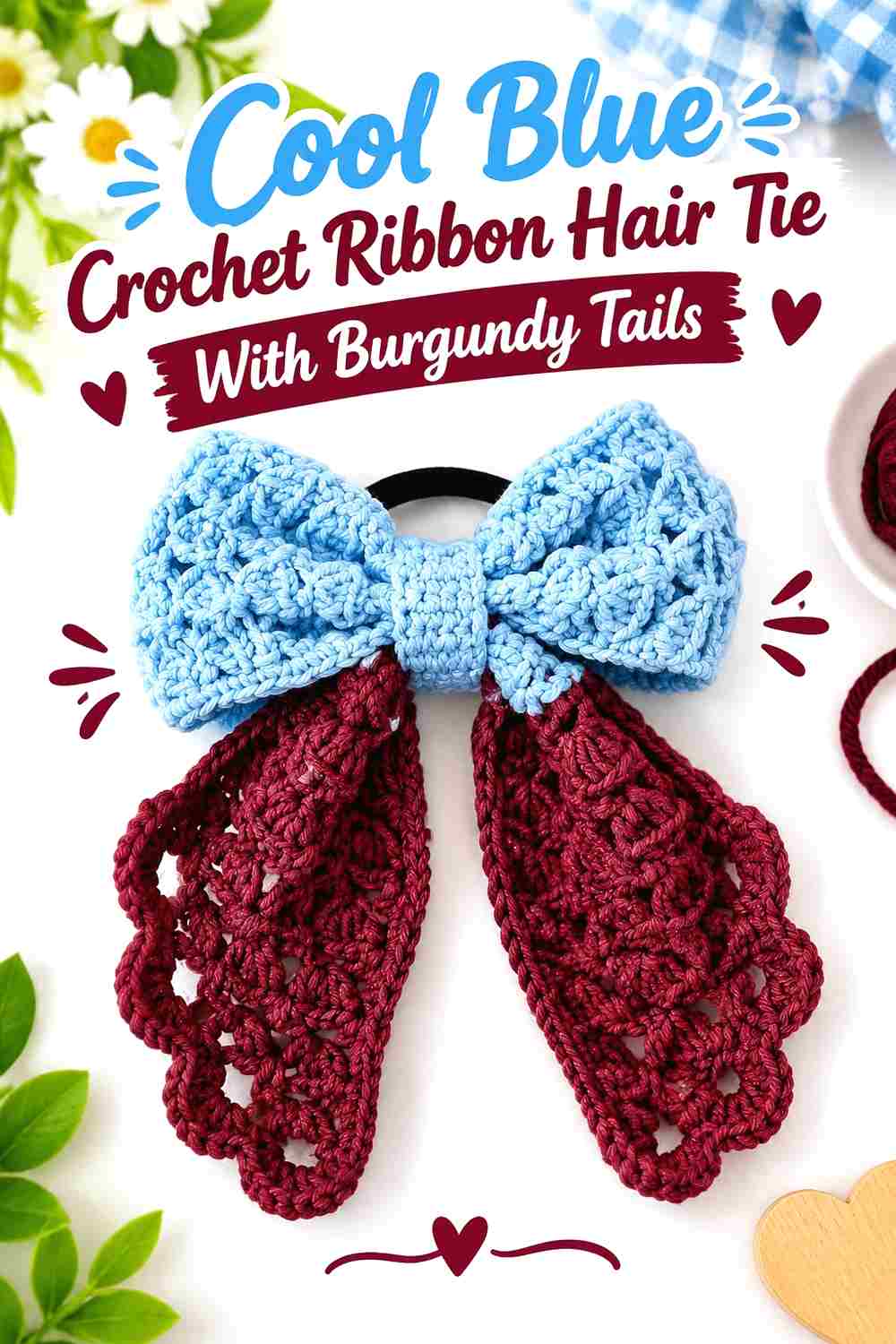
3. Cool Blue Crochet Ribbon Hair Tie With Burgundy Tails
 SAVE
This design separates color according to the ribbon’s shape. Cool Blue stays near the hair elastic and upper tied area, while Burgundy occupies the hanging tails. The result is a clear transition from cooler color above to deeper warm color below.
Cool Blue Can Keep the Upper Crochet Ribbon Visually Light
Place Cool Blue around the section nearest the elastic so the upper portion remains visually consistent. This also gives Burgundy a clearly separate area rather than scattering it throughout the blue.
Burgundy Tails Can Add Depth Below Cool Blue
Move Burgundy into the sections that hang from the tie. Because the tails remain visible away from the center, they provide enough surface area for Burgundy to become an important supporting color.
Cool Blue Can Repeat at the Burgundy Tail Ends
If the color transition feels abrupt, a narrow Cool Blue tip can reconnect the tails with the upper ribbon. Keep the repeat restrained if Burgundy is supposed to control most of the tail area.
Creator Credit: Happi Crochet
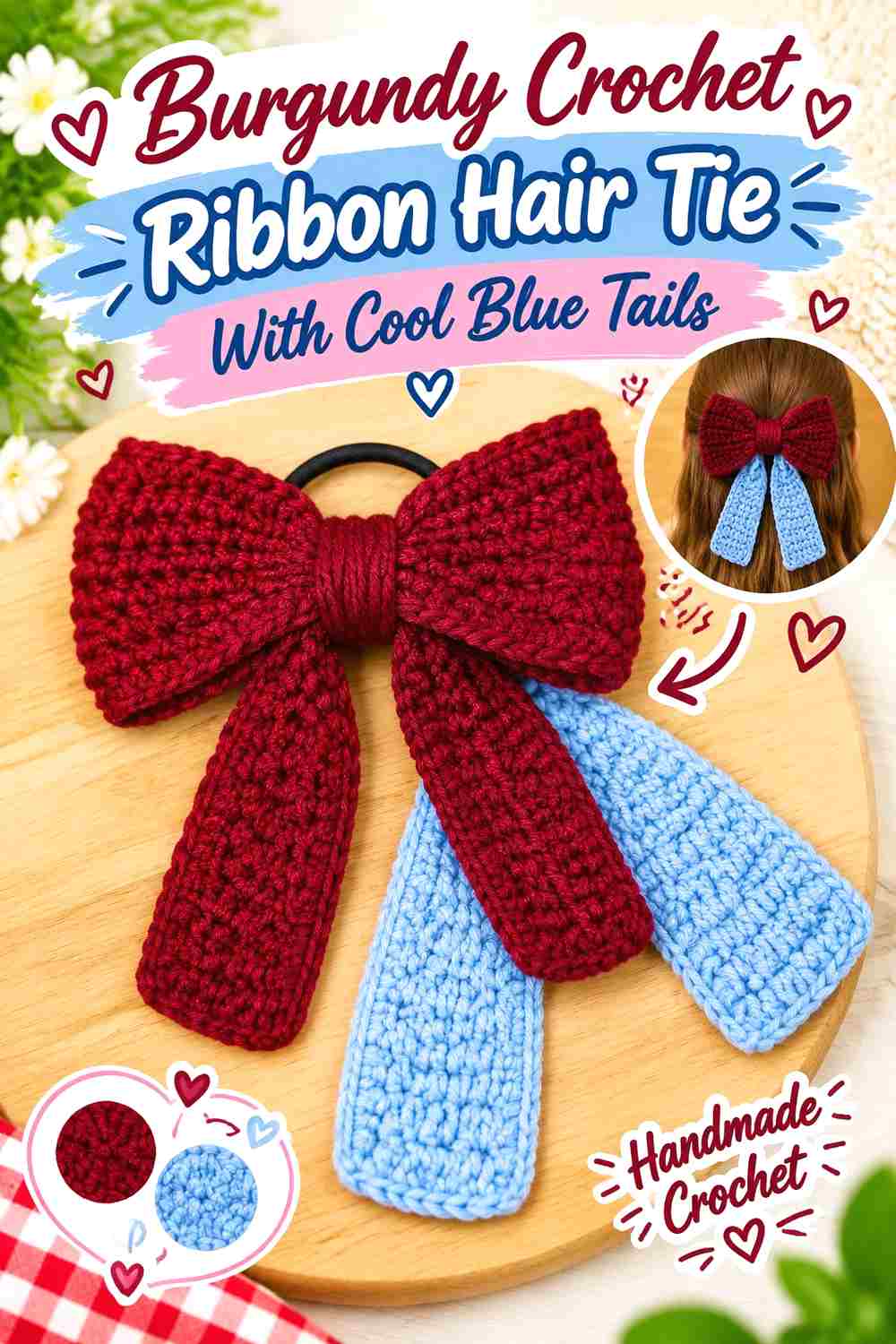
4. Burgundy Crochet Ribbon Hair Tie With Cool Blue Tails
 SAVE
Here Burgundy stays close to the elastic and tied center, while Cool Blue extends into the hanging ribbon ends. This produces a dark upper anchor with a cooler, lighter-looking lower portion.
Burgundy Can Ground the Crochet Ribbon Near the Hair Tie
Keep Burgundy around the central attachment area and upper ribbon sections. Concentrating the deeper color there gives the accessory a clear visual anchor.
Cool Blue Tails Can Lighten the Burgundy Ribbon
Use Cool Blue across the hanging sections so the color change follows a natural structural transition. This is easier to read than inserting unrelated blue blocks throughout a Burgundy ribbon.
Burgundy Can Reappear on the Cool Blue Tail Tips
A narrow Burgundy end detail can visually connect the tails back to the center. Judge the tip size while the ribbon hangs rather than while it lies flat.
Creator Credit: Cherilyn Q
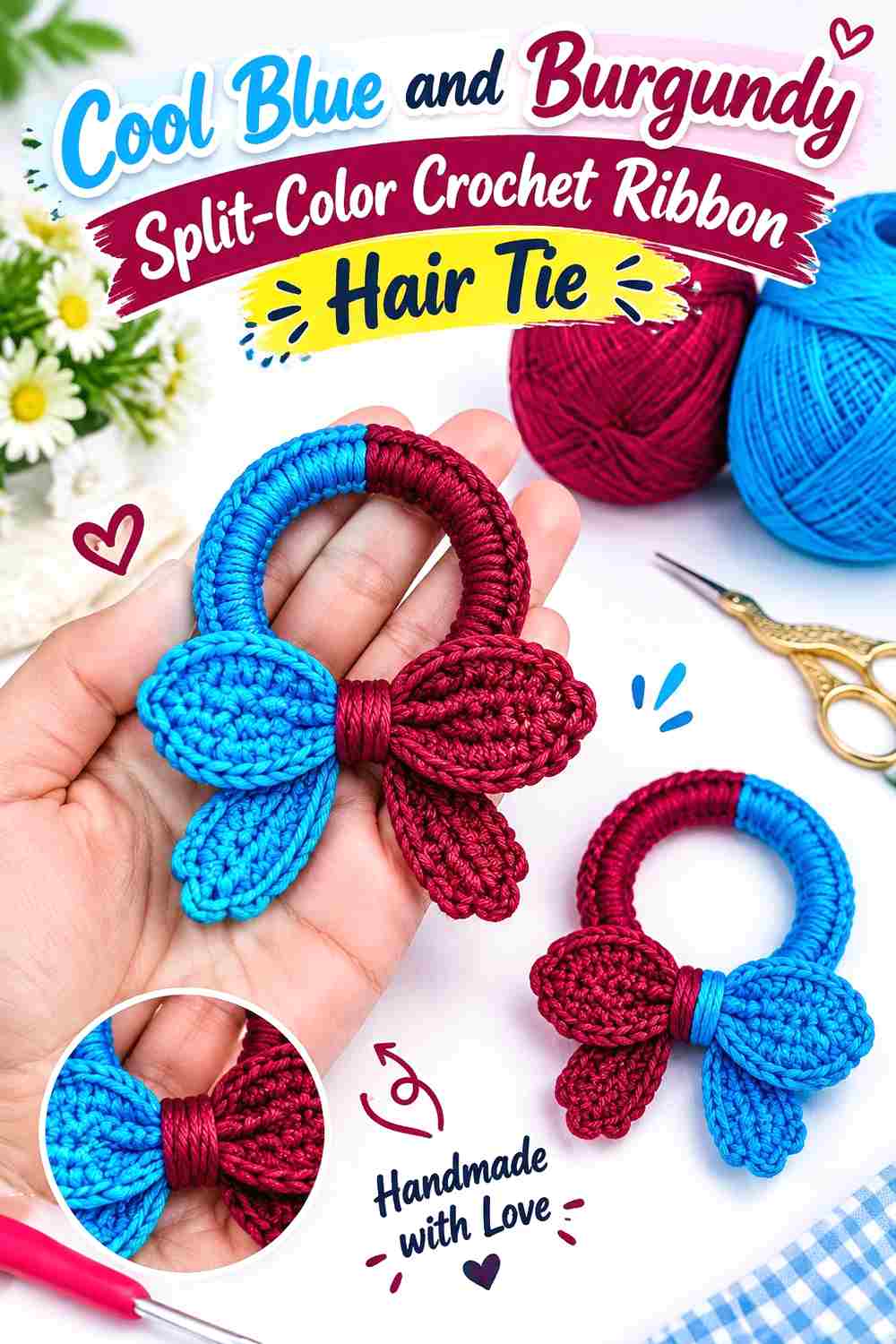
5. Cool Blue And Burgundy Split Color Crochet Ribbon Hair Tie
 SAVE
A split-color ribbon gives both shades substantial visual space. One side can be Cool Blue and the other Burgundy, creating a deliberate asymmetry when the ribbon is tied.
Cool Blue Can Define One Side of the Crochet Ribbon
Keep one major section consistently Cool Blue rather than breaking it into additional Burgundy details. The clean color block makes the split design easier to recognize.
Burgundy Can Give the Opposite Cool Blue Side More Visual Weight
Use Burgundy across the corresponding section on the other side. Because Burgundy may appear darker than your Cool Blue yarn, check whether equal physical areas also look visually balanced.
Cool Blue and Burgundy Need a Planned Meeting Point
Position the color transition deliberately around the center, knot, or another structural point. An off-center transition can work, but it should remain visible after the ribbon is tied.
Creator Credit: Jesuecrochet
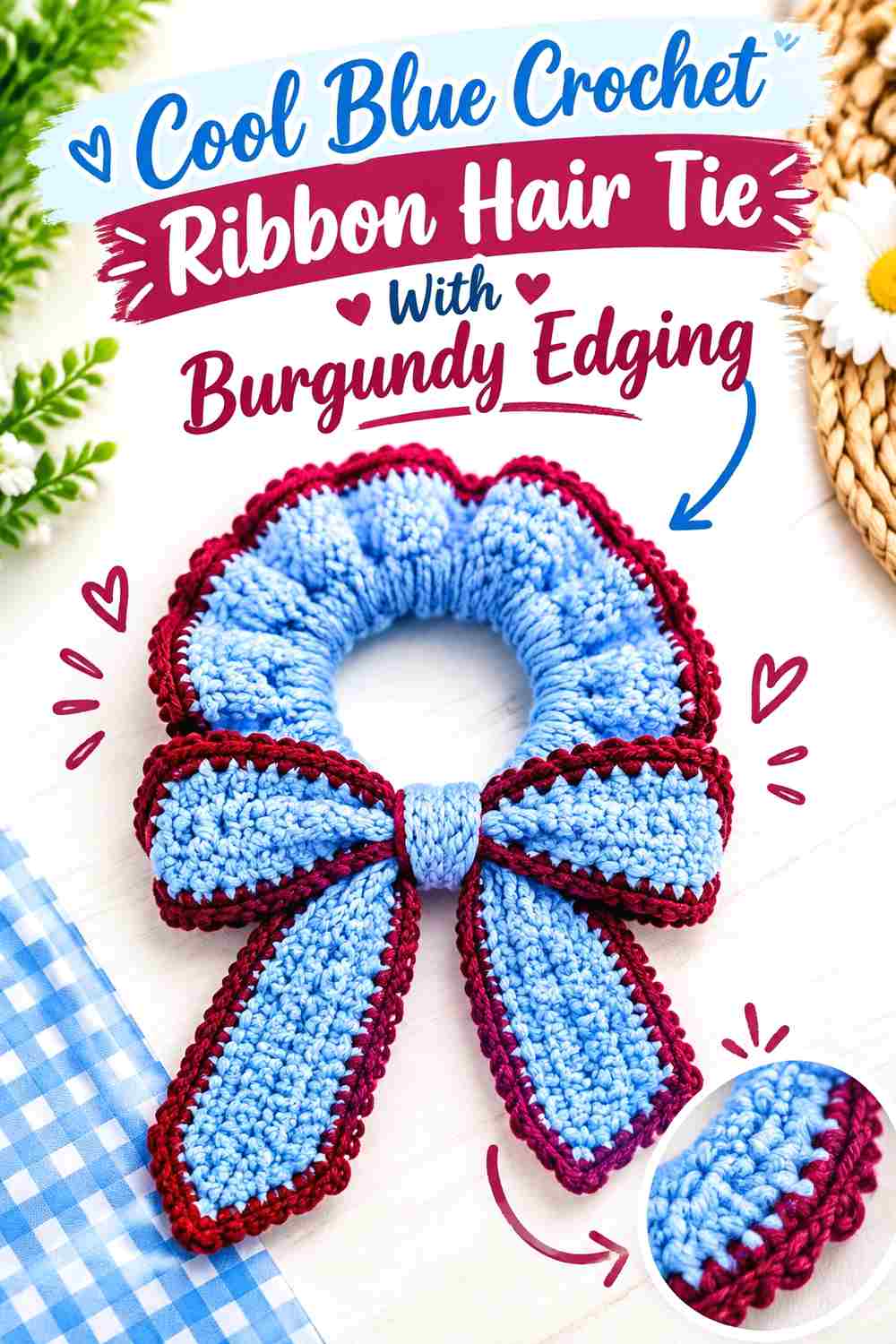
6. Cool Blue Crochet Ribbon Hair Tie With Burgundy Edging
 SAVE
This approach leaves the broad ribbon Cool Blue and moves Burgundy to the perimeter. The darker warm edge can outline the ribbon without interrupting the main blue surface.
Cool Blue Should Remain Broad Inside the Crochet Ribbon
Give Cool Blue enough uninterrupted width to stay dominant. If Burgundy edging becomes too broad, the accessory may read as equally divided rather than blue-led.
Burgundy Edging Can Define the Cool Blue Ribbon Sides
A narrow Burgundy edge can trace the ribbon from the tied area toward the tails. This placement emphasizes the outline instead of dividing the interior into multiple color blocks.
Burgundy Edging Should Be Checked on Folded Cool Blue
Tie or fold the ribbon before deciding whether the border is prominent enough. Portions of the edge may turn inward around the center and become less visible than they appeared on the flat crochet.
Creator Credit: Crochet crafts magic
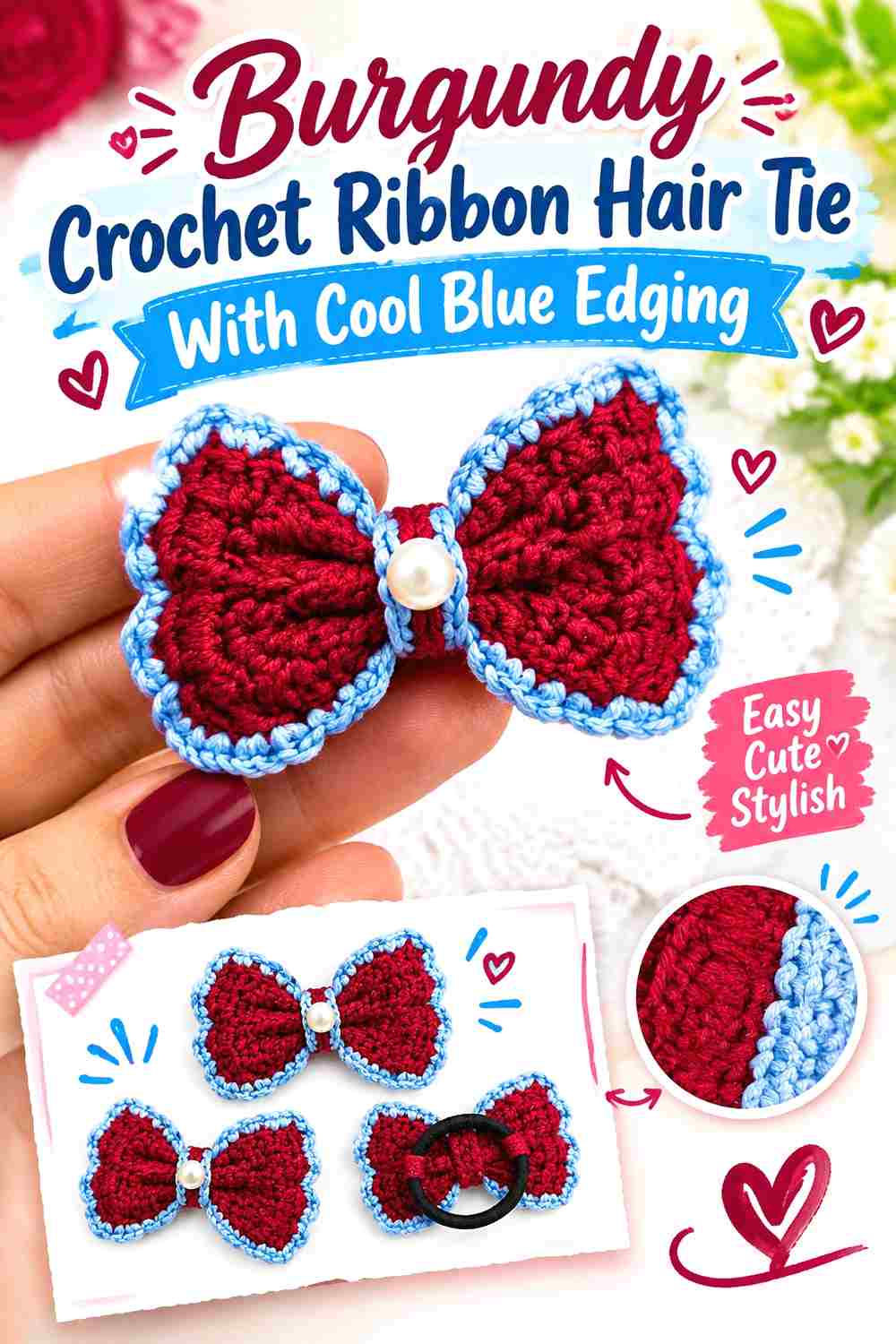
7. Burgundy Crochet Ribbon Hair Tie With Cool Blue Edging
 SAVE
Reverse the border treatment by using Burgundy throughout the main ribbon and Cool Blue along the edge. This keeps the accessory deep and warm overall while using blue to clarify its outline.
Burgundy Can Fill the Main Crochet Ribbon Surface
Keep the central ribbon area Burgundy so the warm color remains visually continuous from one side to the other.
Cool Blue Edging Can Frame the Burgundy Ribbon
Use Cool Blue around the outer boundary when you want the ribbon silhouette to carry the cooler color. Even a limited blue area can be noticeable when it runs along a long edge.
Cool Blue Should Repeat Consistently Around Burgundy
Decide whether the blue edge belongs on both long sides, the tail ends, or selected sections. Consistent placement generally looks more intentional than unrelated patches of edging.
Creator Credit: Sihirli ilmek sepeti – Amigurumi Örgü Tasarım
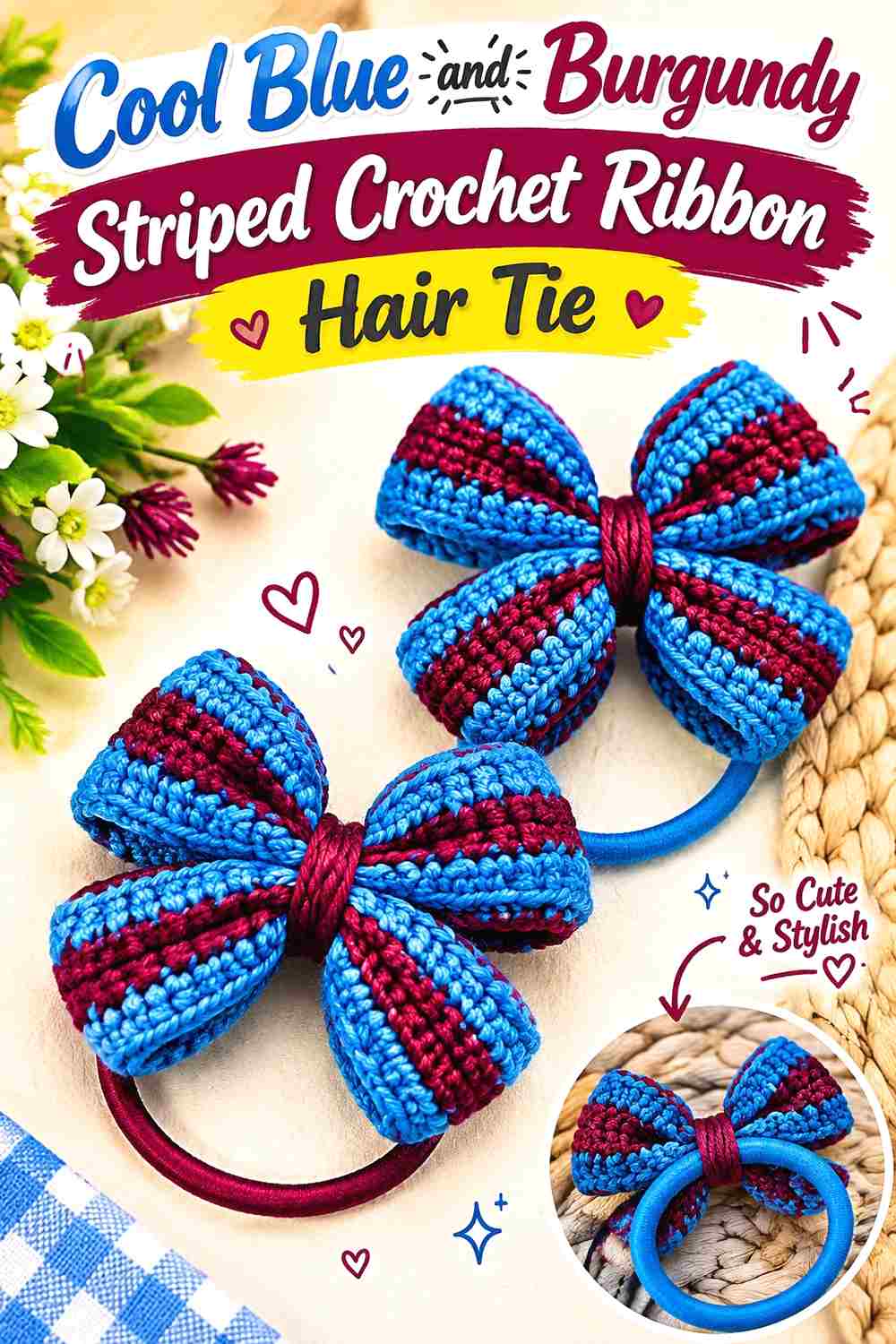
8. Cool Blue And Burgundy Striped Crochet Ribbon Hair Tie
 SAVE
Stripes mix both colors across the entire ribbon rather than separating them by component. Because the finished piece is tied and folded, stripe width and location should be judged in the final shape.
Cool Blue Stripes Can Create the Cooler Repeating Rhythm
Use Cool Blue at recurring intervals so it travels through both sides of the ribbon. Repetition keeps blue visible even when part of a stripe disappears inside the center gathering.
Burgundy Stripes Can Add Darker Breaks Between Cool Blue
Place Burgundy between selected blue sections to create clear warm interruptions. If your Burgundy is much darker, narrower bands may still carry considerable visual weight.
Cool Blue and Burgundy Stripes Should Survive the Tied Shape
Temporarily form the finished ribbon before committing to the stripe sequence. If several color changes disappear inside the center, move the most important contrast toward areas that remain visible.
Creator Credit: Yollenna’s Crochet
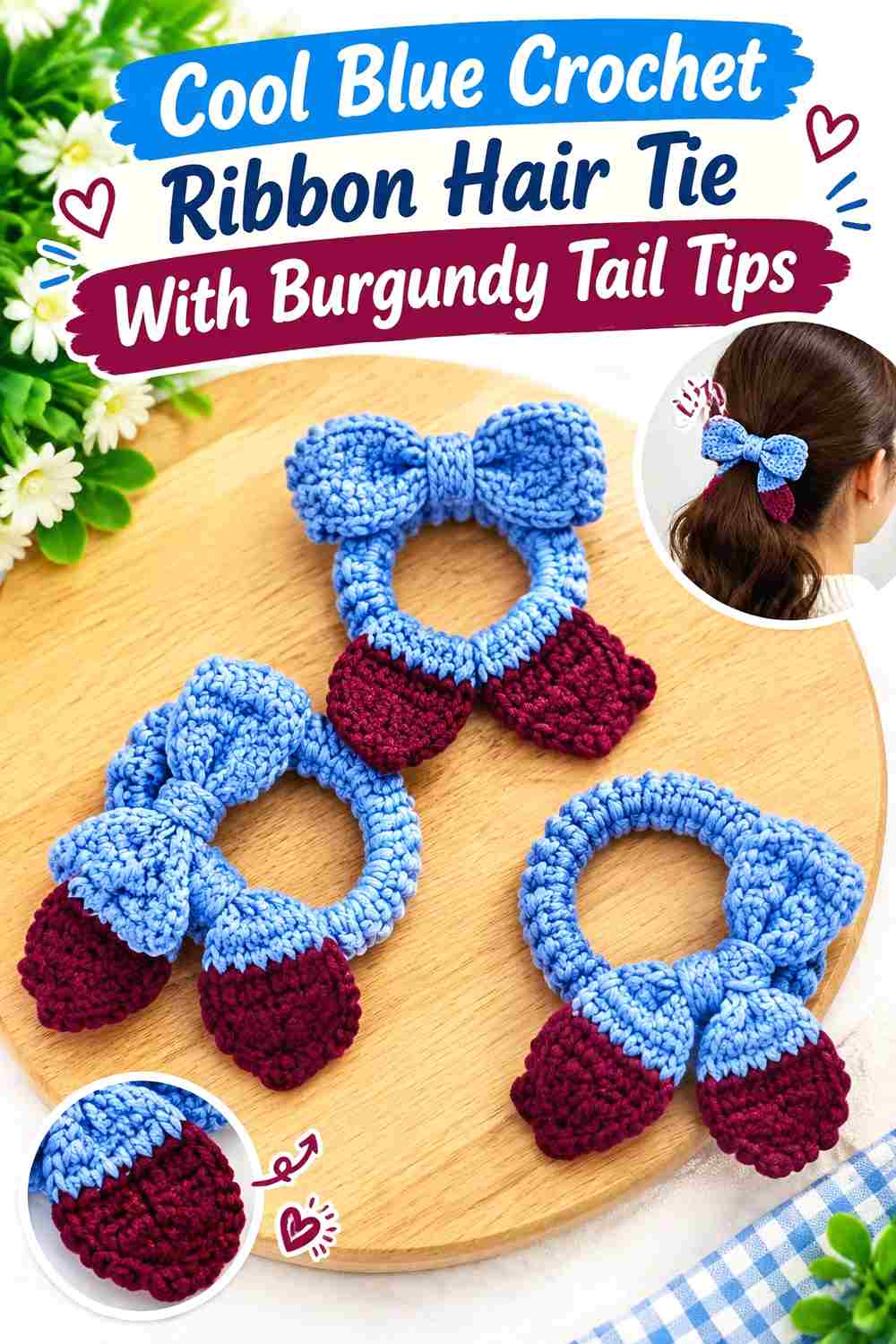
9. Cool Blue Crochet Ribbon Hair Tie With Burgundy Tail Tips
 SAVE
This is one of the most restrained Burgundy treatments. Cool Blue covers nearly the entire ribbon, and Burgundy appears only at the ends of the hanging tails.
Cool Blue Can Carry Almost the Entire Crochet Ribbon
Keep Cool Blue continuous through the center and most of both tails. This produces the strongest blue-dominant direction in the collection.
Burgundy Tail Tips Can Finish the Cool Blue Ribbon
A small Burgundy section at each end creates two warm stopping points. Matching the approximate visual size of the tips can make the repeated accent feel intentional.
Burgundy Tips Need Enough Length Against Cool Blue
If the Burgundy sections are extremely small, they may curl or turn away and become difficult to see. Check the hanging ribbon before deciding how much accent color is useful.
Creator Credit: Meladora’s Creations for Crochet
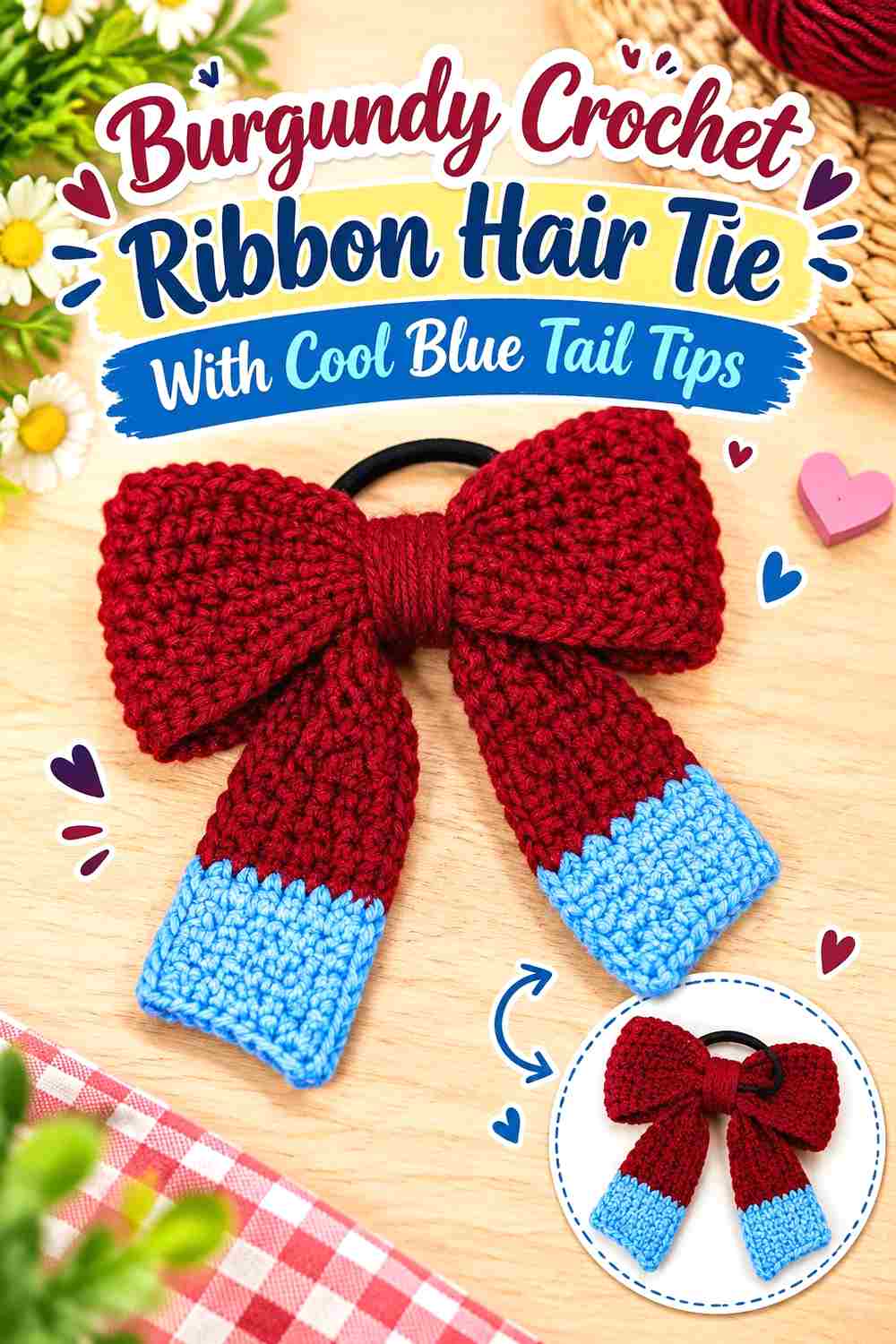
10. Burgundy Crochet Ribbon Hair Tie With Cool Blue Tail Tips
 SAVE
Reverse the previous design for a predominantly Burgundy ribbon. Cool Blue is limited to the very ends, creating a small cool interruption within a much deeper warm accessory.
Burgundy Can Remain Continuous Through the Crochet Ribbon Center
Keep Burgundy running through the tied portion and most of each tail. This avoids weakening the dark-led effect with unnecessary color changes.
Cool Blue Tail Tips Can Interrupt the Burgundy Ends
Place Cool Blue where the ribbon terminates so the contrast has a clear reason for being there. Two repeated blue ends also connect visually even though they are separated by the Burgundy center.
Cool Blue Tips Should Be Compared on Both Burgundy Tails
Once the ribbon is tied, one tail may face or fold differently from the other. Check how much Cool Blue is actually visible on each side rather than assuming equal crocheted sections will look identical.
Creator Credit: Cherilyn Q
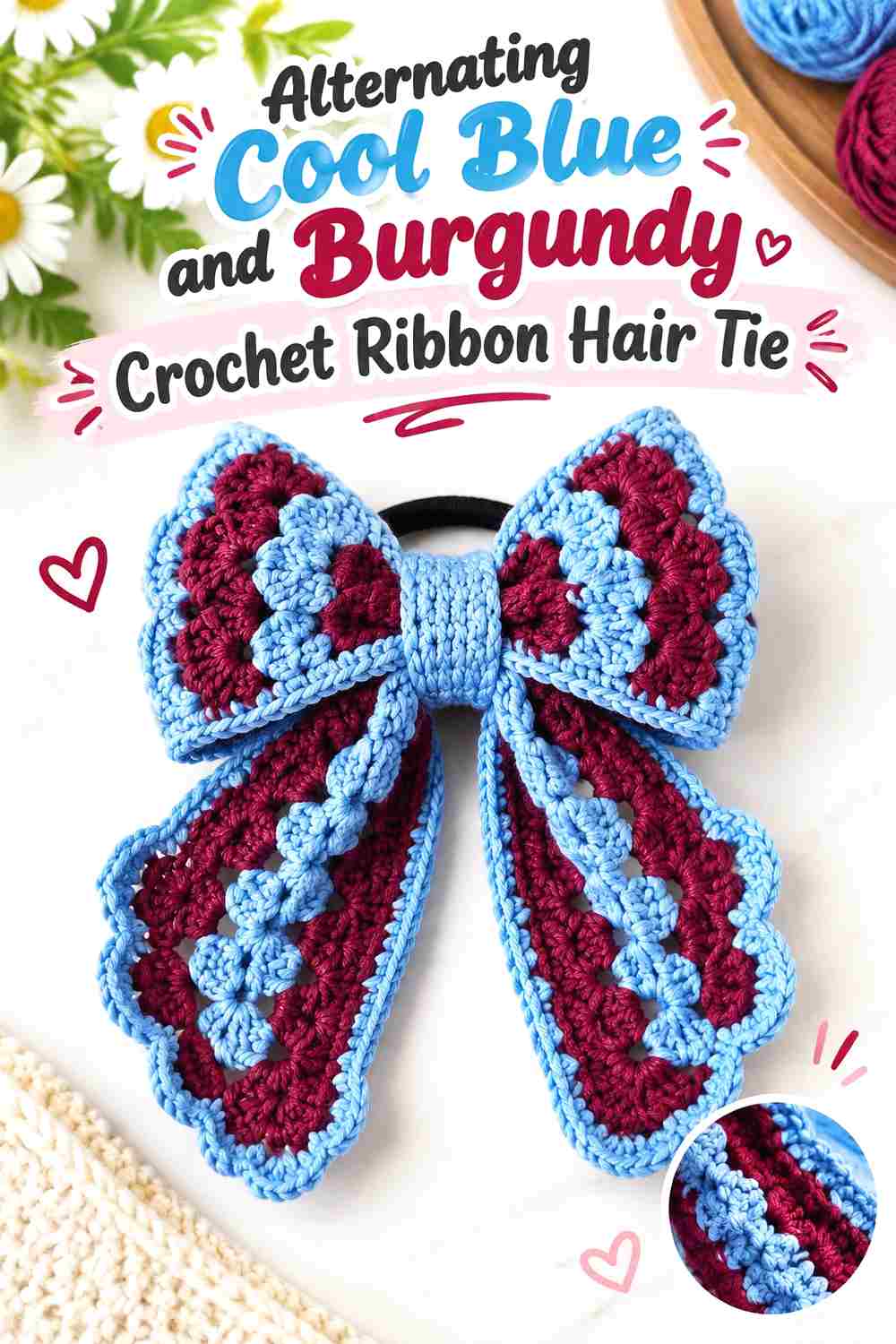
11. Alternating Cool Blue And Burgundy Crochet Ribbon Hair Tie
 SAVE
Larger alternating blocks create a bolder two-color treatment than narrow stripes. Each shade receives enough surface area to remain identifiable even after the ribbon folds around the elastic.
Cool Blue Blocks Need Enough Space to Read Beside Burgundy
Use sections large enough that Cool Blue remains recognizable after tying. Tiny alternating areas can become visually fragmented on a narrow ribbon.
Burgundy Blocks Can Give Cool Blue a Deeper Counterpoint
Repeat Burgundy at planned intervals rather than placing one isolated dark section. Consistent recurrence helps the warm-cool relationship extend across the whole accessory.
Cool Blue and Burgundy Blocks Need a Clear Center Plan
Decide which color should occupy the central tied area. Burgundy creates a darker anchor, while Cool Blue makes the middle visually cooler; the choice changes which shade appears to lead even when the overall quantities are similar.
Creator Credit: Happi Crochet
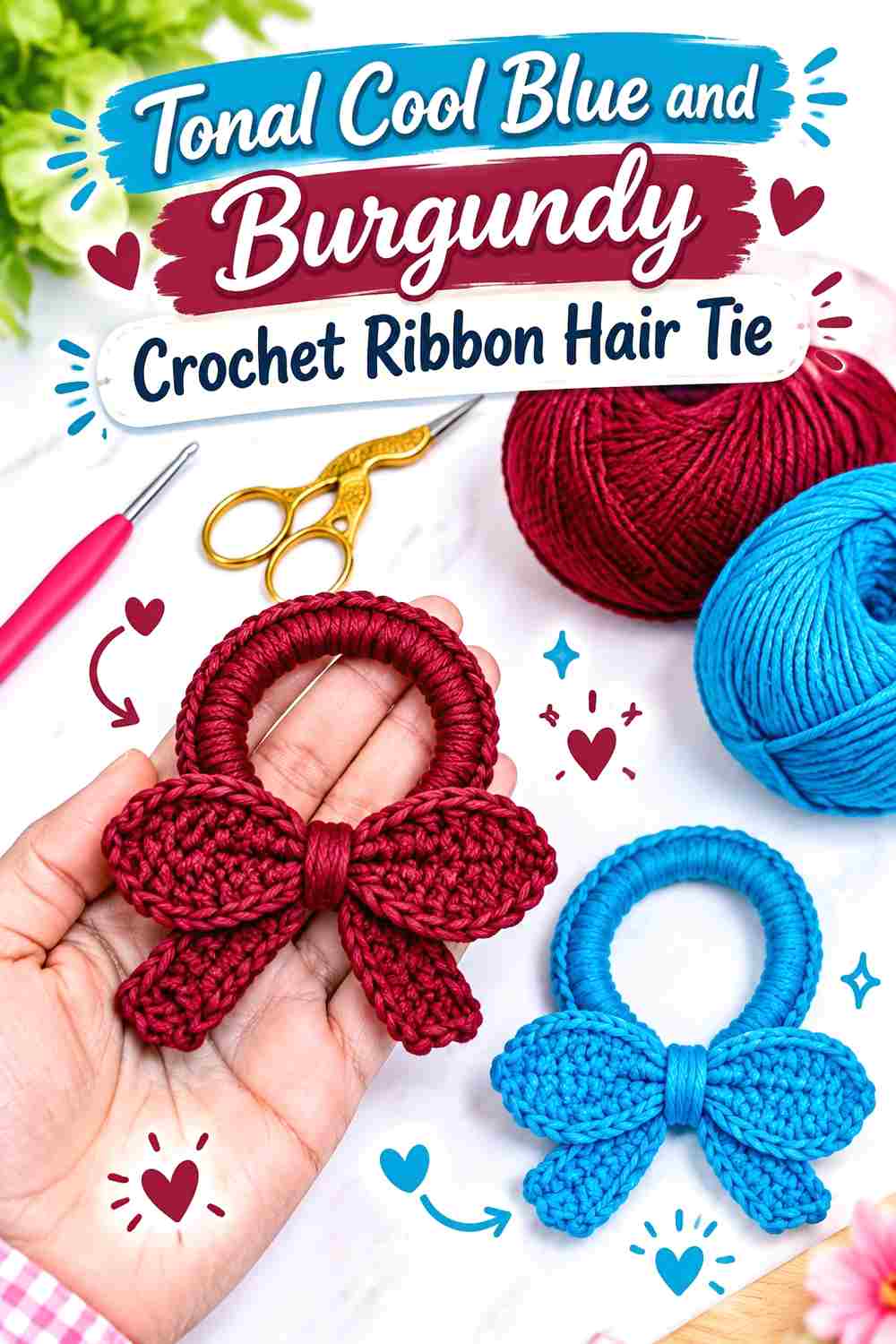
12. Tonal Cool Blue And Burgundy Crochet Ribbon Hair Tie
 SAVE
The final idea uses the palette with less dependence on sharp light-and-dark contrast. If your Cool Blue and Burgundy yarns happen to be relatively similar in value, give them larger separate areas and let hue provide much of the distinction.
Cool Blue Needs a Clear Area in a Tonal Crochet Ribbon
Reserve a substantial ribbon or tail section for Cool Blue rather than expecting a tiny blue line to remain obvious against similar-value Burgundy.
Burgundy Can Occupy the Opposite Cool Blue Ribbon Section
Give Burgundy its own broad area so both hues remain identifiable. This approach works particularly well with a split ribbon or larger color blocks.
Cool Blue and Burgundy Should Be Compared in Grayscale
A grayscale photo can show whether the two yarns differ strongly in value. If they become similar grays, avoid depending on narrow stripes or tiny edging for separation; larger blocks will preserve the color distinction more clearly.
Creator Credit: Jesuecrochet
Comparing Cool Blue and Burgundy Crochet Ribbon Hair Tie Color Directions
For the clearest Cool Blue-led accessory, use blue across the entire ribbon and limit Burgundy to the center or tail tips. For a Burgundy-led version, reverse those roles and let Cool Blue provide small concentrated accents.
Separating the upper ribbon from the tails gives both colors more substantial areas without making the design busy. Edging keeps the main field uninterrupted, while stripes and alternating blocks distribute both shades throughout the accessory.
A split-color ribbon provides one of the most balanced treatments because Cool Blue and Burgundy can each control a complete side. Whatever arrangement you choose, judge the colors after tying the ribbon: folds and gathering can substantially change how much of each section remains visible.
Conclusion
Cool Blue and Burgundy can produce a wide range of crochet ribbon hair ties simply by changing color hierarchy and placement. A Cool Blue ribbon with a Burgundy center is restrained and blue-dominant, while Burgundy tails give the warm shade much more visual space. Reversing those arrangements creates equally distinct Burgundy-led options.
For stronger two-color balance, divide the ribbon into large sections, alternating blocks, or stripes. For a quieter result, reserve the secondary color for edging or tail tips. Before finishing, form the ribbon around the elastic and inspect it from the front so the most important Cool Blue and Burgundy sections remain visible in the actual tied shape.
Use the original tutorials for their exact construction, attachment, and finishing methods. The Cool Blue-and-Burgundy arrangements here are independent color adaptations.
Frequently Asked Questions
Should Cool Blue or Burgundy dominate a crochet ribbon hair tie?
Either can lead. Give Cool Blue the largest ribbon area for a cooler overall direction, or use Burgundy across most of the ribbon for a deeper warm result. The secondary shade can then move to the center, tails, edges, or tips.
Where can Burgundy go on a Cool Blue crochet ribbon hair tie?
The center, hanging tails, outer edging, and tail tips are all useful options. Choose the placement according to how much Burgundy you want visible: a center uses relatively little, while Burgundy tails create a much stronger two-color split.
Can I make one crochet ribbon tail Cool Blue and the other Burgundy?
Yes. That creates an intentionally asymmetric color division. Check the tied accessory from the front because differences in tail position can make one color look more dominant even when the crocheted sections are similar in size.
How can I keep Cool Blue and Burgundy stripes visible after tying the ribbon?
Test the ribbon in its finished tied or gathered shape before finalizing the stripe placement. Move important color changes away from areas that become hidden or tightly compressed around the elastic.
Should Cool Blue or Burgundy be used for the ribbon edging?
Use Burgundy edging when Cool Blue is the main field and you want a deeper outline. Use Cool Blue edging around Burgundy when you want a cooler perimeter. If the two yarns have similar value, a narrow border may create subtler separation than expected.
How do I know whether Cool Blue and Burgundy have enough contrast?
Compare the actual yarns side by side and consider viewing a photograph in grayscale. If they have similar light-and-dark values, distinguish them with larger blocks, separate tails, or different ribbon sections instead of relying solely on tiny details.
Can Cool Blue and Burgundy be used equally on a crochet ribbon hair tie?
Yes. Split-color sides, alternating blocks, or stripes can give both colors substantial space. Equal yarn area is not essential, however; what matters visually is how much of each color remains exposed once the ribbon is tied.