Burgundy and cobalt blue create a strong crochet pairing because both colors have visual weight without looking identical. Burgundy brings a deep red direction, while cobalt blue adds a clearer, cooler contrast. The main challenge is deciding whether they should share equal space or whether one color should lead.
These 14 ideas use the pairing in different ways: large color blocks, granny-square motifs, borders, ribbing, plaid effects, and neutral-separated layouts. Cream, oatmeal, gray, camel, and charcoal appear selectively when the two deep colors need more separation.
The linked tutorials support the crochet construction or finished-item concept. The burgundy and cobalt blue placements described here are independent color adaptations, so the tutorial creator may use a different palette.
Quick List
- Burgundy Cobalt Blue And Cream Crochet Granny Square Pillow
- Cobalt Blue And Burgundy Crochet Granny Square Cardigan
- Burgundy Cobalt Blue And Oatmeal Crochet Granny Square Tote
- Burgundy Cobalt Blue And Soft Gray Crochet Granny Blanket
- Cobalt Blue And Burgundy Crochet Ribbed Beanie
- Burgundy Cobalt Blue And Camel Crochet Color Block Scarf
- Burgundy Cobalt Blue And Ivory Crochet Granny Square Vest
- Cobalt Blue Burgundy And Cream Crochet Plaid Bucket Hat
- Burgundy And Cobalt Blue Crochet Headband
- Burgundy Cobalt Blue And Soft Gray Crochet Shawl
- Cobalt Blue Burgundy And Oatmeal Crochet Basket
- Burgundy Cobalt Blue And Cream Crochet Coasters
- Burgundy Cobalt Blue And Charcoal Crochet Granny Square Sweater
- Burgundy Cobalt Blue And Soft Gray Crochet Cowl
How to Balance Burgundy and Cobalt Blue in Crochet
Burgundy and cobalt blue are both assertive colors, so giving them identical coverage can make some projects feel visually divided. A useful starting point is to choose one as the dominant shade and give the other a specific job: motif centers, borders, cuffs, stripes, joins, or trim.
The better dominant color depends on the object. On a cardigan, large cobalt panels with burgundy cuffs can create a very different result from a burgundy cardigan interrupted by cobalt motifs. On a pillow, the same two colors can be separated into a large background and smaller decorative areas so the texture remains clear.
Check Burgundy and Cobalt Blue Value Contrast Before Small Details
Different hues do not automatically create strong light-and-dark contrast. Some burgundy and cobalt yarns can appear surprisingly similar in value, particularly in smaller motifs or dense stitch textures.
Place the yarns beside each other before committing to a detailed layout. A quick grayscale photo can also show whether motif centers, narrow stripes, or edging will remain distinct. If the two colors merge visually, introduce cream, oatmeal, light gray, or another lighter shade around the smallest details instead of changing the entire palette.
Use Neutrals to Give Burgundy and Cobalt Blue More Space
A neutral is most useful when it has a clear structural role. Cream can outline granny-square motifs, gray can separate color blocks, and charcoal can unify seams or ribbing.
Avoid inserting a neutral randomly into one isolated section. Repeating it in joins, borders, cuffs, or edges makes the third color look intentional while allowing burgundy and cobalt blue to remain the main story.
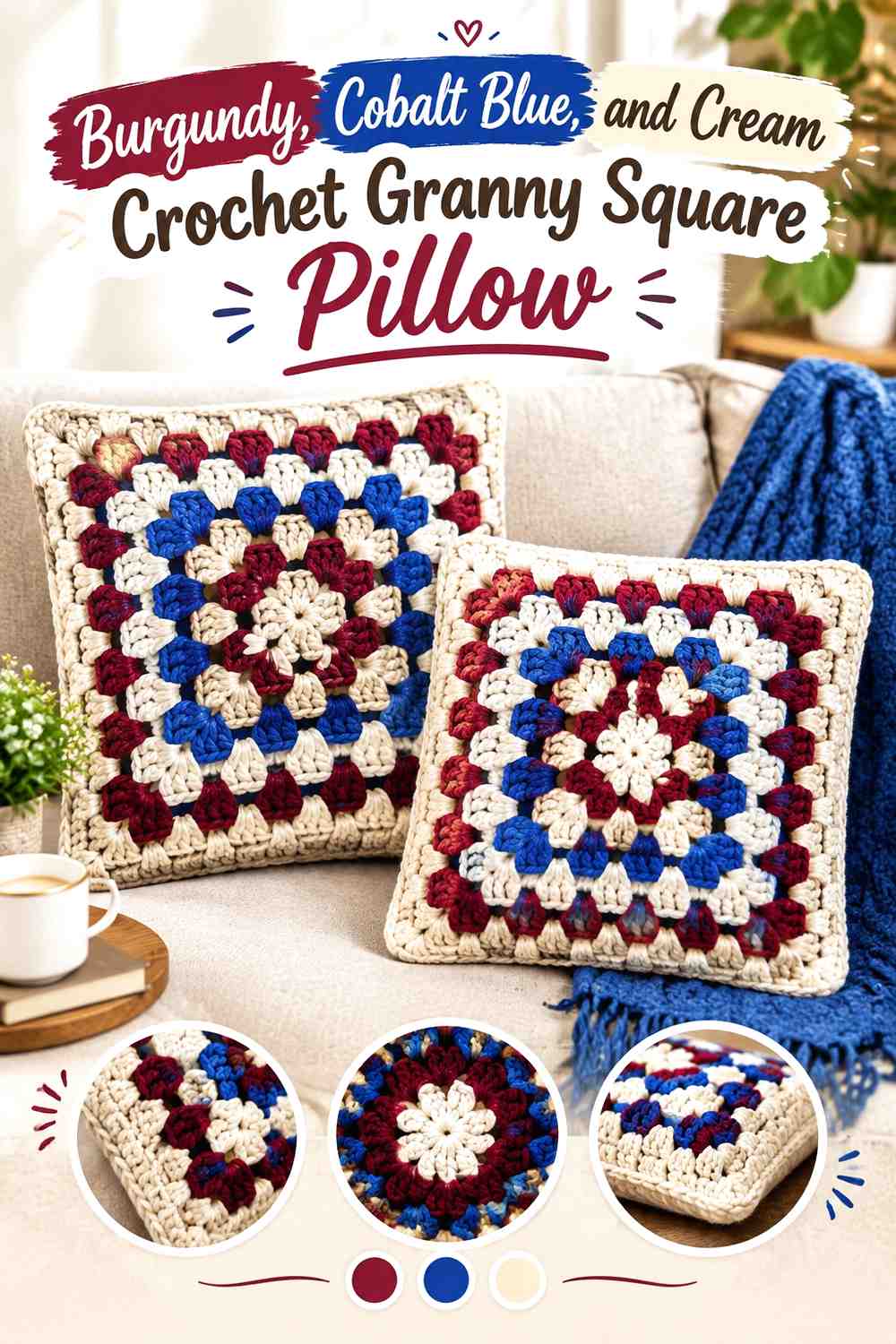
1. Burgundy Cobalt Blue And Cream Crochet Granny Square Pillow
 SAVE
SAVEFor a pillow, burgundy can cover most of the visible face while cobalt blue draws attention to granny-square centers or repeated motif details. Cream is valuable around the motifs or outer edge because it prevents two deep colors from flattening the pillow surface. This arrangement works especially well when the crochet texture itself deserves to remain visible.
Burgundy Should Cover Most of the Crochet Pillow Face
Letting burgundy occupy the larger sections creates a consistent background instead of turning the pillow into an equal two-color checkerboard. If several granny squares form the front, repeat burgundy in the same part of each motif so the separate squares read as one coordinated pillow surface.
Before joining the motifs, lay them out from normal viewing distance. If cobalt blue is attracting more attention than intended, reduce how often it appears rather than adding additional colors.
Cobalt Blue and Cream Keep the Burgundy Pillow Motifs Defined
Use cobalt blue where you want the strongest points of contrast, such as motif centers or selected rounds, then place cream between the two darker shades when the stitch design starts disappearing.
Cream can also work around the final pillow border. This gives the burgundy face a lighter visual frame while preventing the cobalt details from becoming the only noticeable feature.
Creator Credit: Crochet Bits
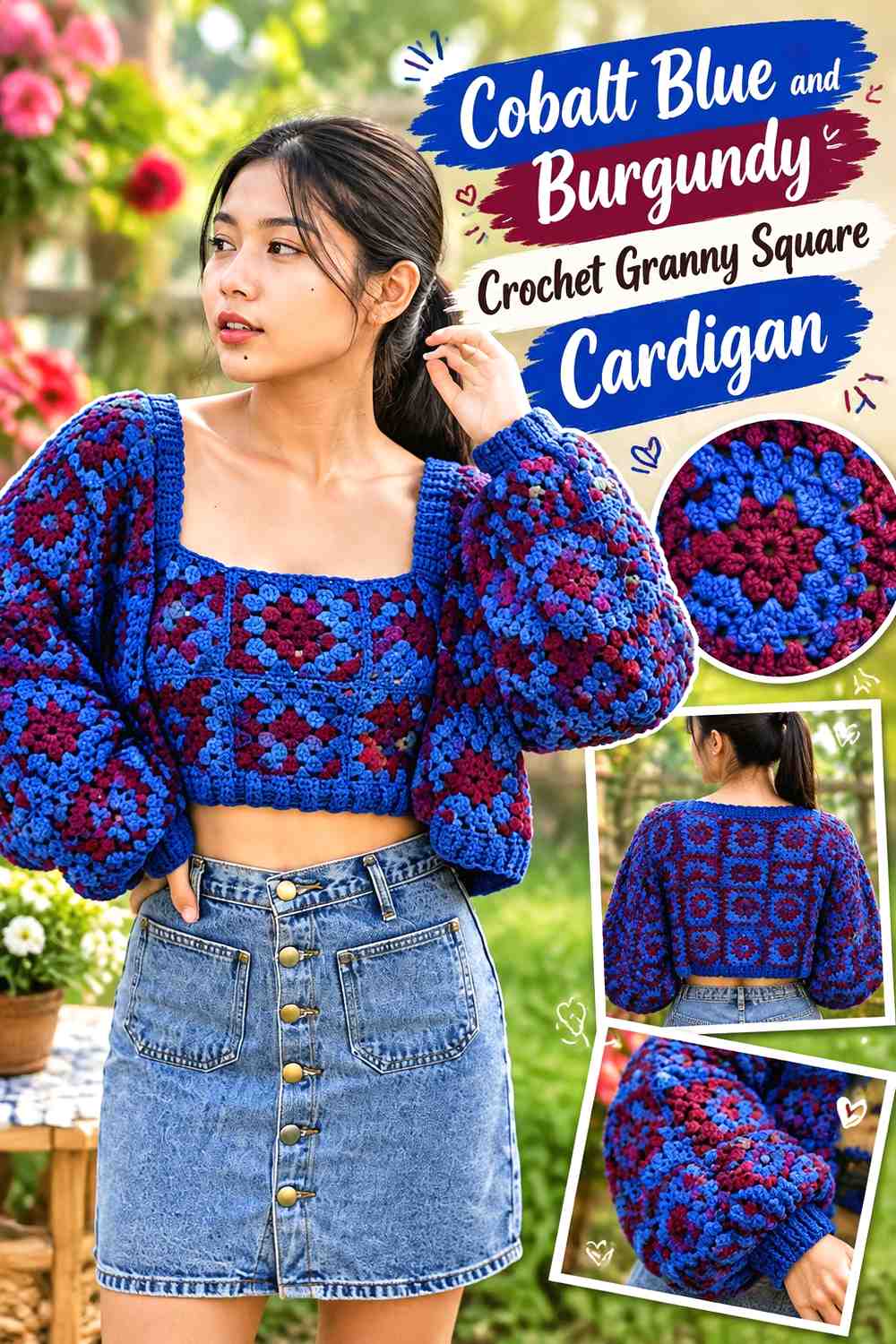
2. Cobalt Blue And Burgundy Crochet Granny Square Cardigan
 SAVE
SAVEA cardigan gives these colors much more surface area, so color hierarchy becomes especially important. Cobalt blue can lead across the body panels while burgundy appears repeatedly at cuffs, edging, selected squares, or the neckline. Keeping one color continuous across the larger garment areas prevents the cardigan from looking like unrelated patches.
Cobalt Blue Can Carry the Large Crochet Cardigan Panels
Using cobalt blue repeatedly through the body gives the cardigan a clear base color even when granny squares contain several contrasting sections. This is particularly useful across the back, where too many unrelated color changes can make individual motifs compete.
If you want a more patchwork-oriented result, keep cobalt in one consistent position within each square rather than changing its placement randomly.
Burgundy Gives Cobalt Blue Cardigan Edging a Strong Finish
Burgundy is effective on cuffs, lower edging, or neckline trim because these areas naturally repeat around the garment. Repetition makes the darker red look integrated rather than added at the end.
Check the cardigan laid flat before finishing all of the edging. If the burgundy trim seems too heavy beside large cobalt panels, a narrower trim or an occasional cobalt repeat can maintain better balance.
Creator Credit: Chenda DIY
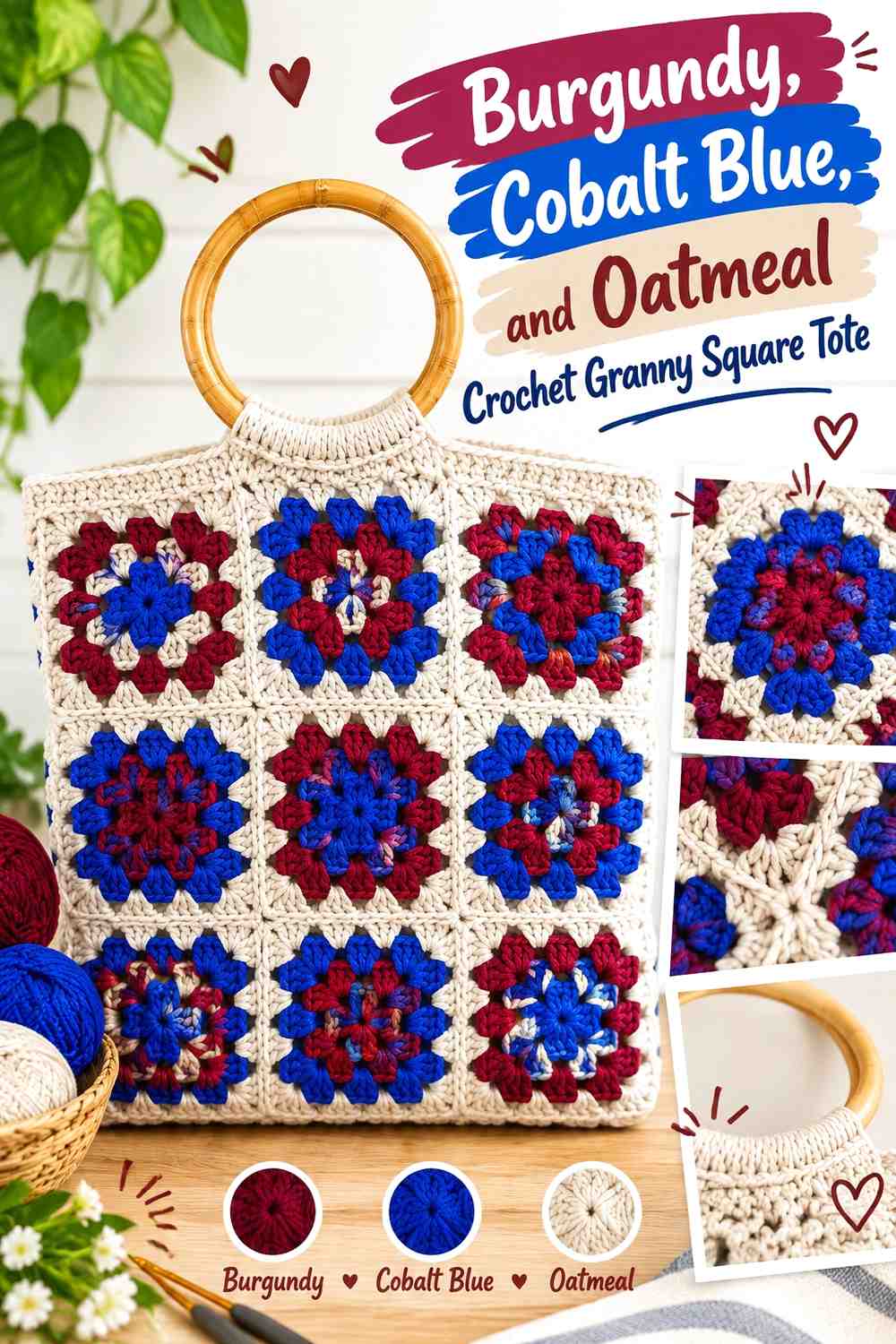
3. Burgundy Cobalt Blue And Oatmeal Crochet Granny Square Tote
 SAVE
SAVEA granny-square tote gives burgundy and cobalt blue many small areas to repeat. Burgundy can anchor the bag body, cobalt can mark motif centers, and oatmeal can handle joins or outer motif rounds. The neutral is especially useful on a bag because it can make the square layout visible without requiring more saturated colors.
Burgundy Keeps the Crochet Tote Body Visually Grounded
Repeat burgundy through enough squares that the eye can follow it across both sides of the tote. Concentrating all of the burgundy on one side can make the bag appear unbalanced when it is carried.
Arrange the completed motifs before joining and photograph the layout. Check that burgundy is distributed across the corners, center, and lower bag area instead of forming an accidental cluster.
Cobalt Blue and Oatmeal Separate the Burgundy Granny Squares
Cobalt works well as a smaller repeated accent because it remains noticeable against burgundy without needing to cover half the bag. Oatmeal around the motifs or joins can create a clear boundary when the two stronger shades are similar in darkness.
If handles or top edging are crocheted, repeating either oatmeal or burgundy there can connect the upper edge with the motif layout below.
Creator Credit: Fiber Flux
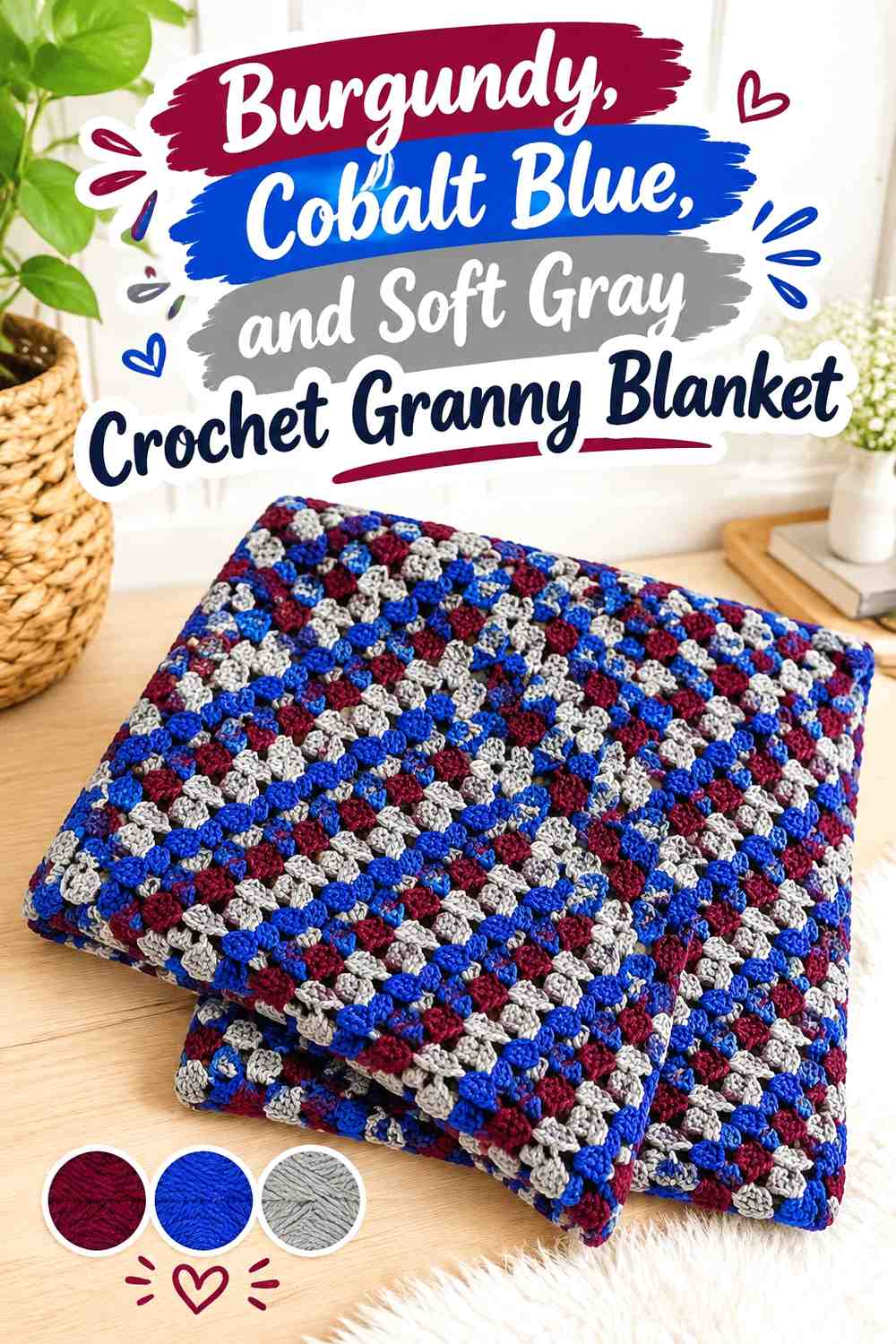
4. Burgundy Cobalt Blue And Soft Gray Crochet Granny Blanket
 SAVE
SAVEA blanket can support a more balanced burgundy-and-cobalt palette because there is enough surface area for repetition. Soft gray can provide breathing room between them, especially when the blanket contains concentric rounds, large squares, or regularly repeating color sections.
Burgundy and Cobalt Blue Need Repeated Spacing Across the Crochet Blanket
Plan the color rhythm before making a large number of motifs. If cobalt appears in the center of one square and burgundy in the center of the next, continue that logic across the blanket rather than changing the arrangement midway.
For one large granny-style blanket, alternating broader sections can create the same sense of repetition. The important point is that both colors return often enough to feel connected.
Soft Gray Prevents Burgundy and Cobalt Blue From Becoming One Dark Blanket Block
A lighter gray can sit between burgundy and cobalt when their values are too close. It does not need equal coverage. Even a repeated separating round or border can give the darker colors enough visual distance.
If the finished center already has plenty of contrast, reserve gray for the outer portion instead of automatically inserting it everywhere.
Creator Credit: The Crochet Crowd
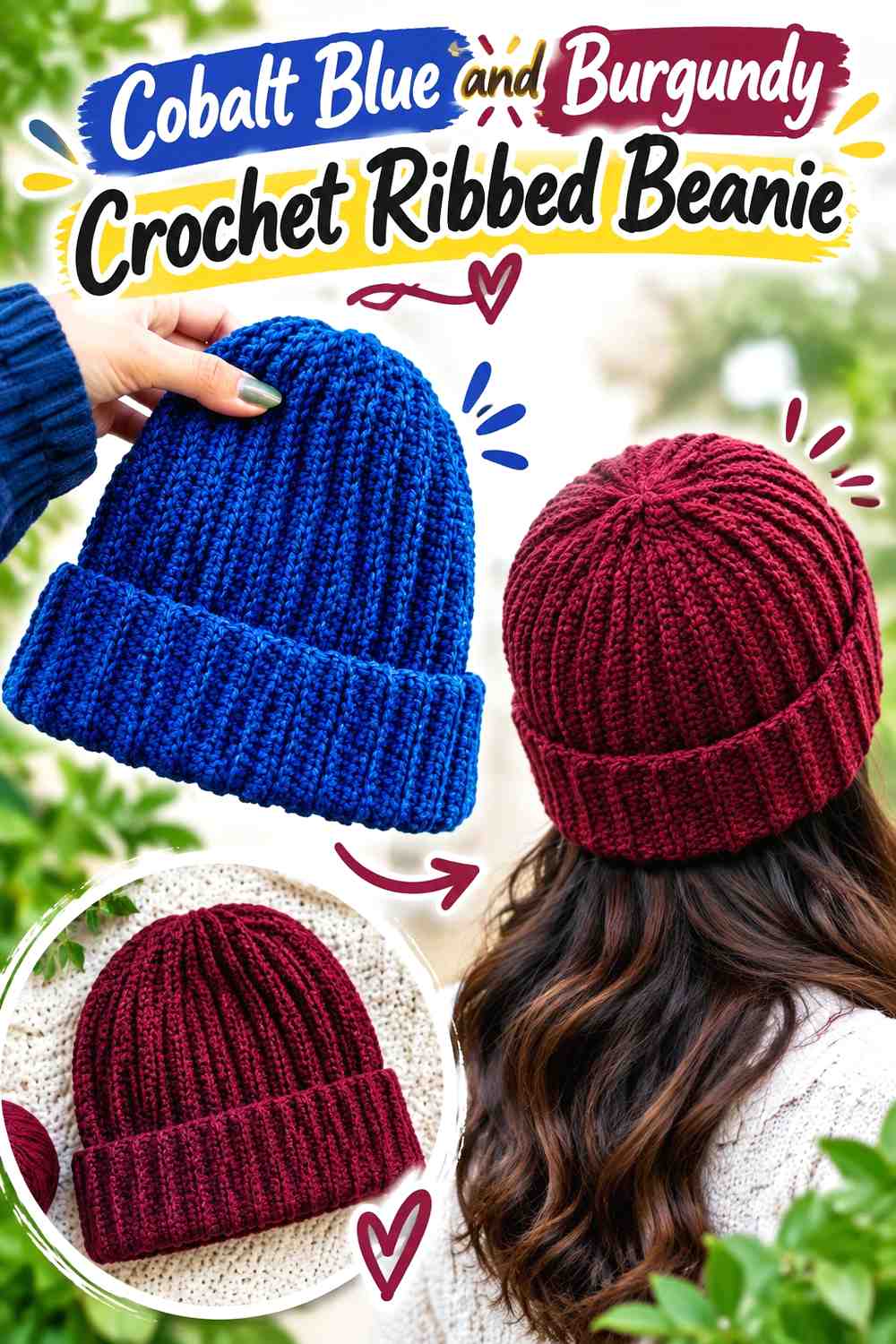
5. Cobalt Blue And Burgundy Crochet Ribbed Beanie
 SAVE
SAVERibbing naturally creates strong lines, so a simple two-color plan often works better than frequent color changes. Cobalt blue can cover most of the crown and body, while burgundy forms a broader brim section that looks deliberate when the hat is folded or worn.
Cobalt Blue Works Well Across the Ribbed Crochet Beanie Body
Allow cobalt to run through a substantial section of the ribbing so the stitch texture remains continuous. Narrow alternating burgundy-and-blue stripes can interrupt that texture and make the beanie look busier than necessary.
With a solid cobalt body, the ridges themselves remain an important part of the design rather than competing with repeated color switches.
Burgundy Makes the Cobalt Blue Beanie Brim Read as a Color Block
Use burgundy across a clearly defined lower section rather than scattering a few burgundy rows at irregular intervals. A broad contrasting area gives the brim its own identity while keeping the crown connected.
Compare the two yarns before starting because a very dark burgundy beside a dark cobalt may create subtler contrast than expected. That can work well, but it should be intentional.
Creator Credit: VivCrochets
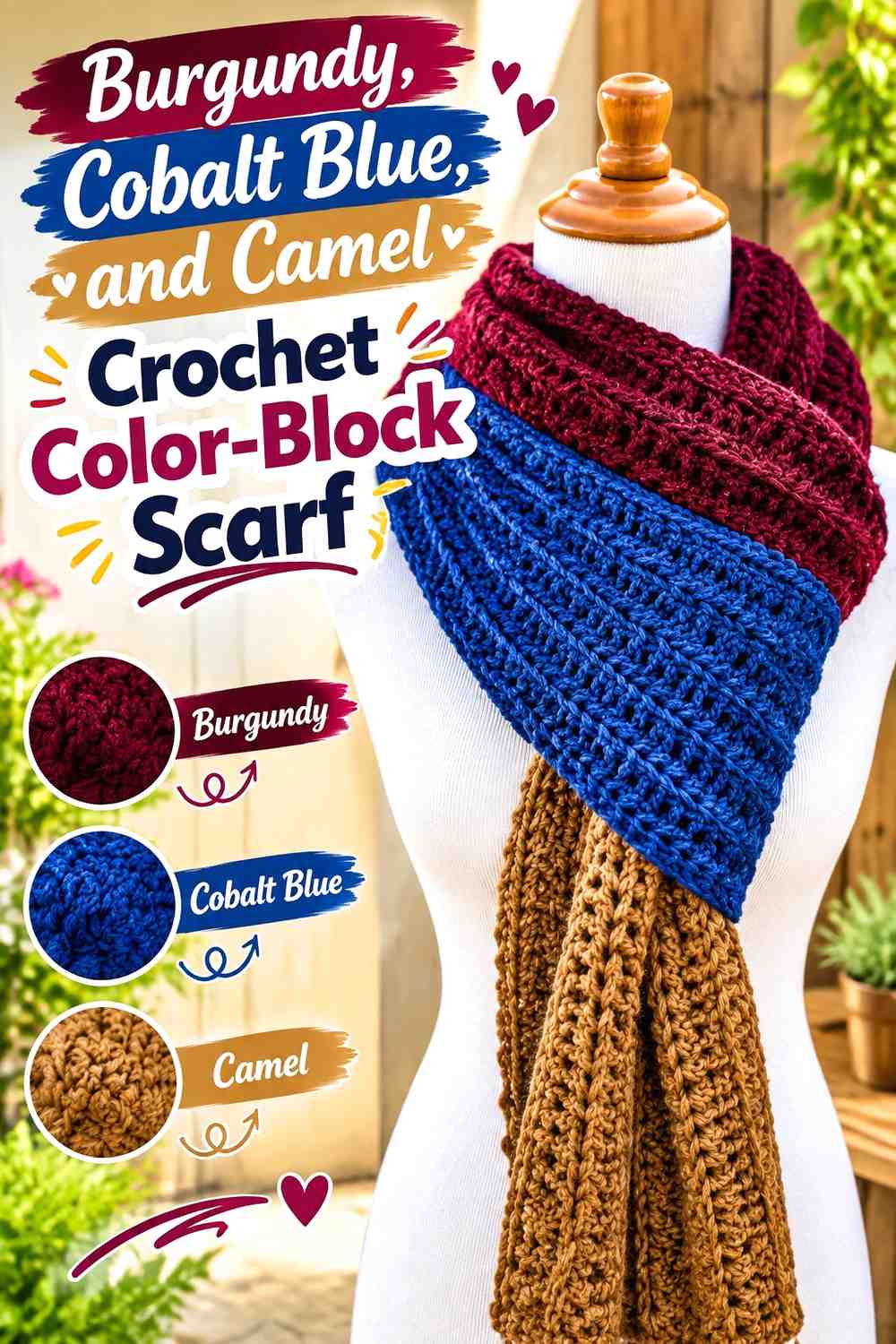
6. Burgundy Cobalt Blue And Camel Crochet Color Block Scarf
 SAVE
SAVEA long scarf provides enough length for large sections of color. Instead of rapidly alternating burgundy and cobalt blue, use substantial blocks and let camel act as a transition. The result keeps each saturated shade recognizable while making the scarf easier to coordinate as one continuous piece.
Burgundy and Cobalt Blue Work Better as Clear Crochet Scarf Blocks
Give each main shade enough length to read as a deliberate section. Very short alternating blocks can turn the scarf into a stripe design and weaken the clean color-block effect.
You can also use different proportions rather than dividing the scarf perfectly in half. What matters is repeating enough of each shade that one end does not look unrelated to the other.
Camel Can Separate Burgundy and Cobalt Blue Without Competing
A camel section between the two stronger colors creates a warmer neutral break. It is especially useful when burgundy and cobalt appear similar in darkness.
Keep camel secondary. If it occupies most of the scarf, the project becomes camel-led with two accents rather than a burgundy-and-cobalt color scheme.
Creator Credit: Kickin Crochet
7. Burgundy Cobalt Blue And Ivory Crochet Granny Square Vest
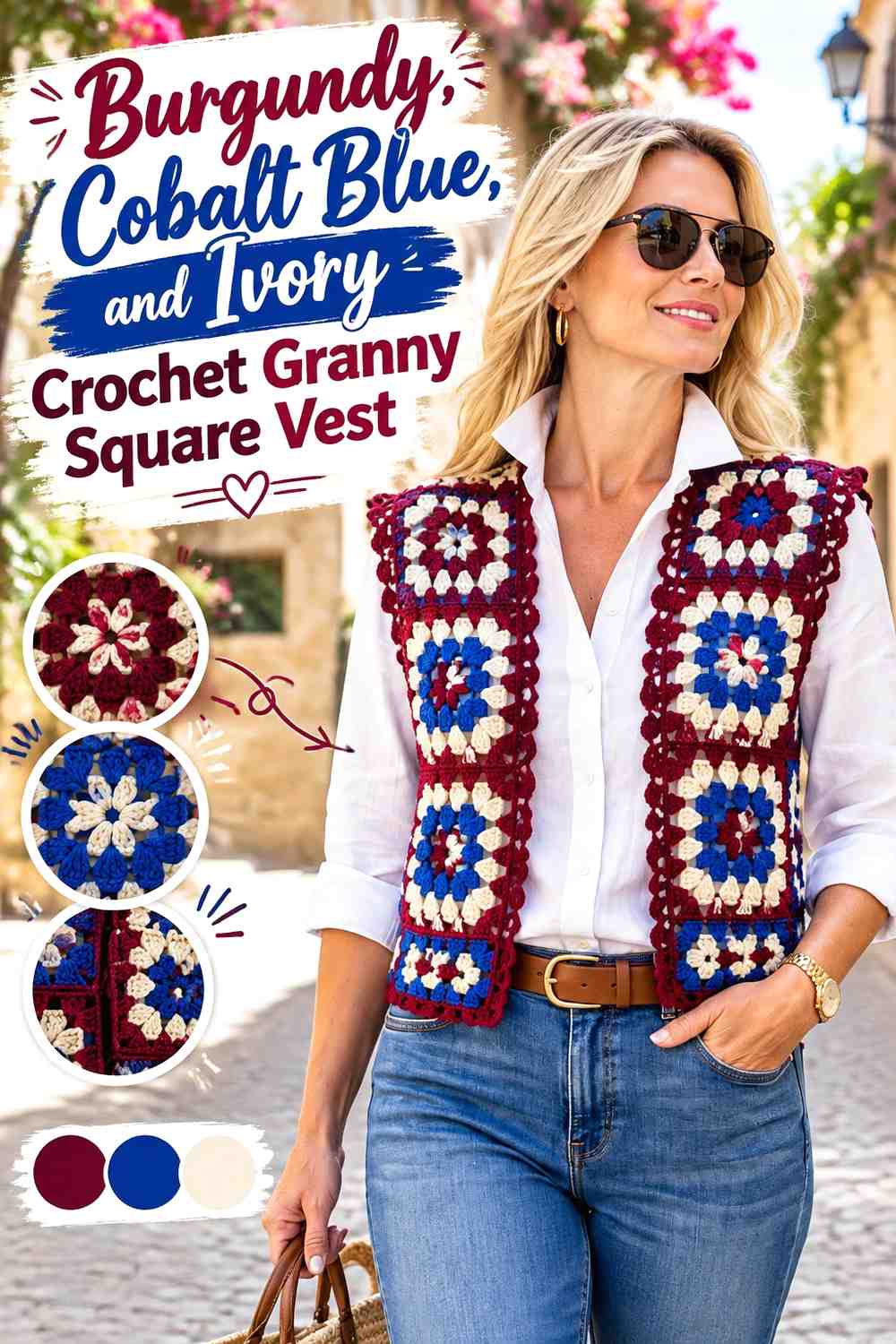 SAVE
SAVEA vest benefits from careful front-to-back color distribution because the motifs are viewed as part of a garment rather than a flat surface. Burgundy can anchor the larger square areas, cobalt can highlight selected motifs, and ivory can separate the deeper colors at joins or outer rounds.
Burgundy Can Anchor the Largest Crochet Vest Squares
Use burgundy consistently across the major front or back motifs if you want the vest to have a recognizable dominant shade. When every square reverses the color hierarchy, the vest can become visually fragmented.
Lay the planned motifs in the approximate vest shape before joining. This makes it easier to see whether burgundy has accidentally collected on only one side.
Cobalt Blue Makes Stronger Accent Motifs Across a Burgundy Vest
Cobalt can mark a repeated row of squares, motif centers, or selected areas near the front opening without needing equal coverage. Repeating it at several points gives the vest a deliberate blue rhythm.
Ivory joins can be especially useful if burgundy and cobalt have similar values because the lighter lines make each motif edge easier to distinguish.
Creator Credit: Handwork diy
8. Cobalt Blue Burgundy And Cream Crochet Plaid Bucket Hat
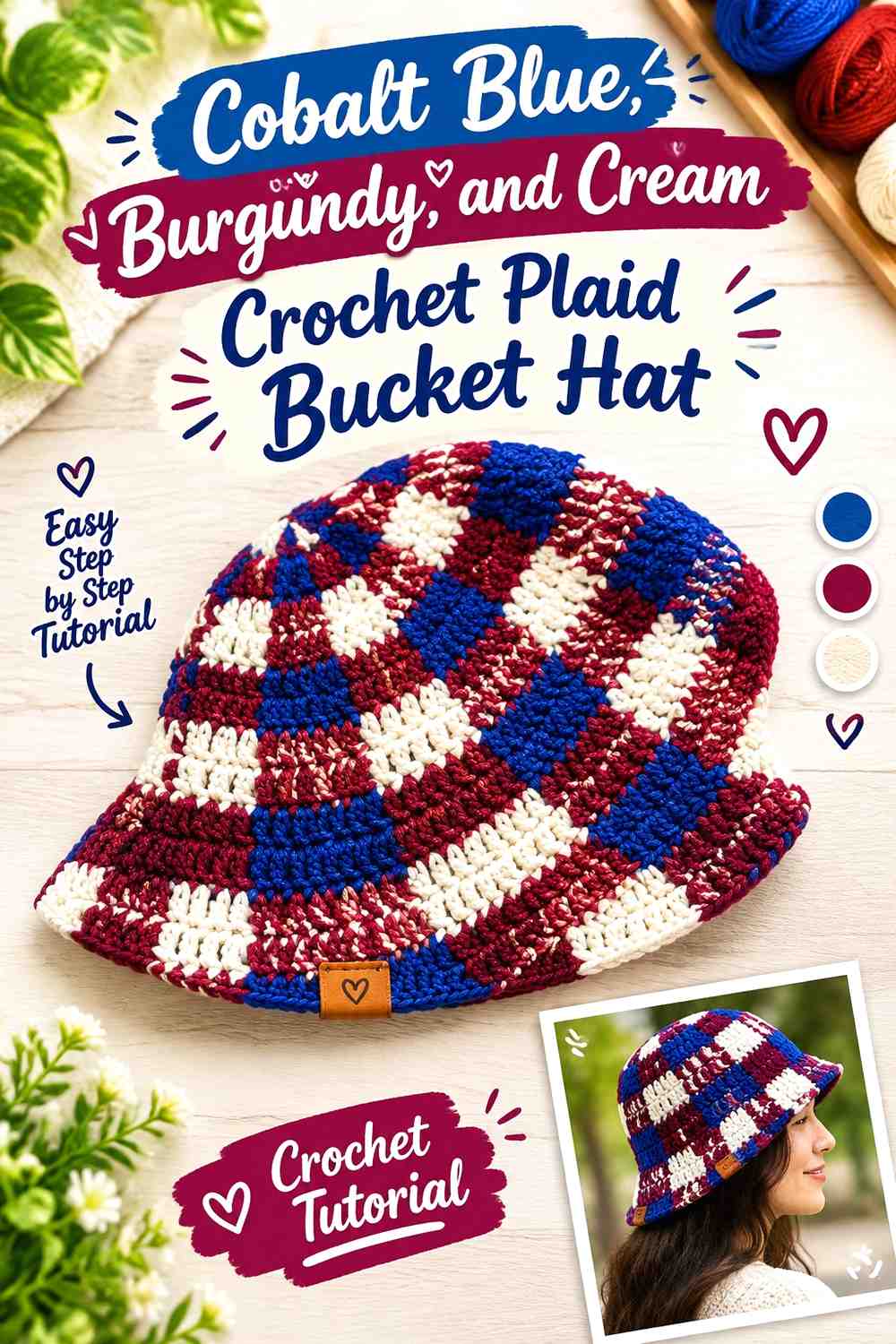 SAVE
SAVEPlaid gives burgundy and cobalt blue a more structured relationship than ordinary stripes. Cobalt can form the main hat color, burgundy can create repeated crossing lines, and cream can be used sparingly where the plaid needs another level of separation.
Cobalt Blue Gives the Crochet Bucket Hat a Consistent Base
Keeping cobalt across most of the crown and sides gives the plaid a surface to work against. If cobalt and burgundy constantly exchange dominant roles, the pattern may become harder to read around the curved hat shape.
Carry the same color logic into the brim so the crown and brim look like one design rather than two unrelated sections.
Burgundy Plaid Lines Need Consistent Repetition Over Cobalt Blue
Burgundy works most effectively when its placement follows a recognizable interval. Plaid relies on repeated lines, so one extra burgundy section can be much more noticeable here than in a random multicolor motif project.
Cream can provide a thinner secondary line if the burgundy and cobalt are too close in value. Keep it narrower so it supports the plaid rather than becoming a third dominant color.
Creator Credit: PassioKnit Kelsie
9. Burgundy And Cobalt Blue Crochet Headband
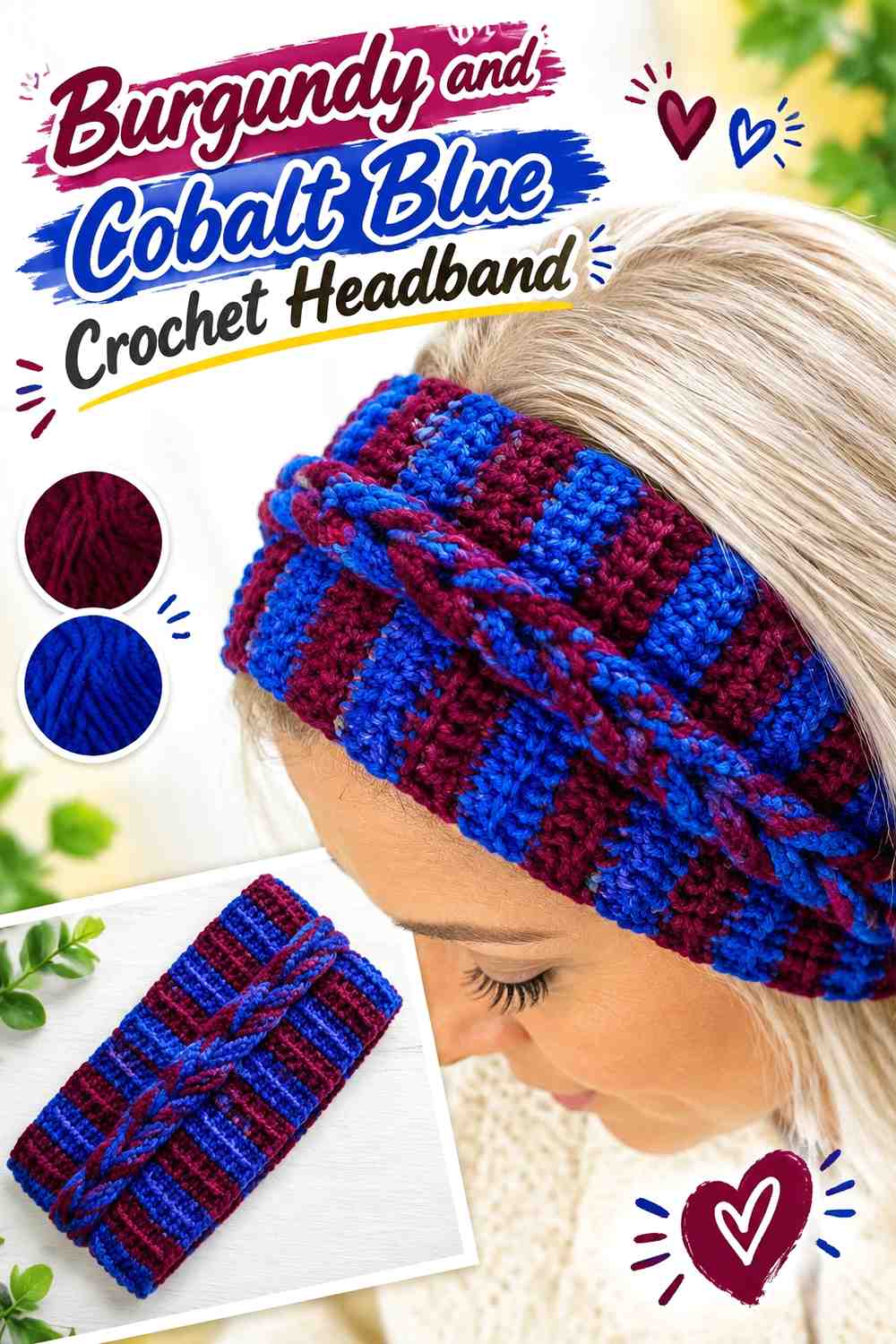 SAVE
SAVEA headband has limited space, which makes a restrained color plan especially useful. Burgundy can cover the wider sections while cobalt identifies the center, twist, edge, or another construction feature. This keeps both colors visible without chopping the headband into many narrow bands.
Burgundy Works Well Across the Wider Crochet Headband Sections
Use burgundy as a continuous field when you want the stitch texture to remain the main visual detail. This is especially helpful with ribbing or another strongly textured surface where frequent color changes could distract from the structure.
Before finishing, wrap the unfinished piece into its approximate worn shape to see where the burgundy section will actually sit.
Cobalt Blue Can Mark the Burgundy Headband Center
A controlled cobalt section near the center can draw attention to a twist, overlap, or joining area. It gives the second color a logical location rather than inserting blue merely to satisfy the palette.
If there is no obvious central feature, cobalt edging is another option. Repeating it along both edges keeps the color balanced from side to side.
Creator Credit: Di’s Handicrafts (Crochet and Knitting)
10. Burgundy Cobalt Blue And Soft Gray Crochet Shawl
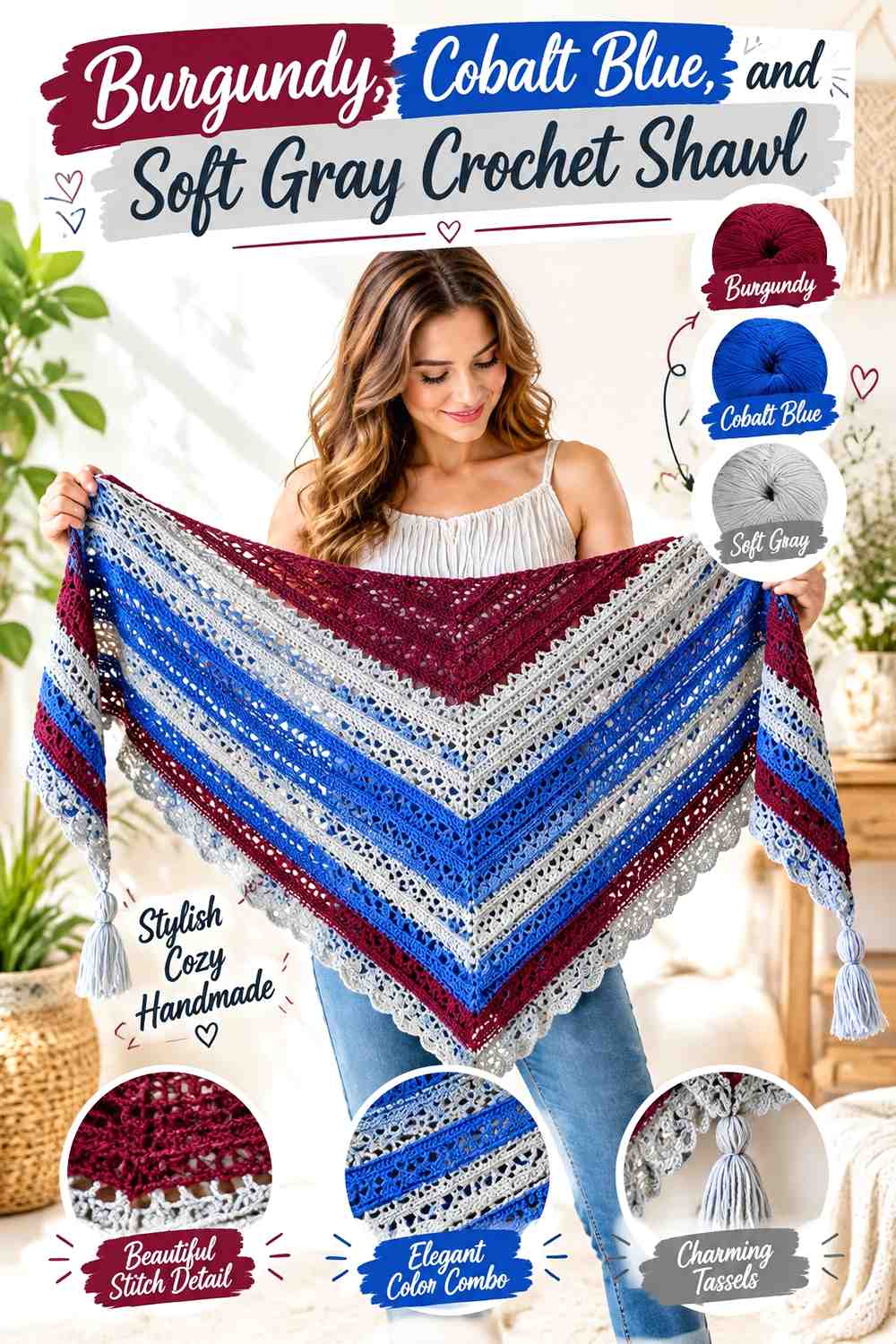 SAVE
SAVEA shawl offers room for gradual color movement. Burgundy can establish the upper portion, cobalt can become more prominent toward the lower sections, and soft gray can provide a transition between them. This produces a directional palette rather than repeating the same sequence across every row.
Burgundy Gives the Upper Crochet Shawl a Strong Visual Anchor
A burgundy-led upper section creates a stable starting point for the expanding shape. Keep the earliest color changes broad enough that the burgundy remains visible after later rows make the shawl larger.
If the construction widens quickly, remember that later color sections naturally occupy more surface area. A narrow burgundy beginning can therefore become less visually important than expected.
Cobalt Blue Can Take More Space Toward the Crochet Shawl Border
Cobalt is effective in broader lower bands because the expanding shawl gives the color more room. Repeating a small amount of cobalt earlier in the piece can help connect that strong lower section with the upper palette.
A cobalt border can also work, but compare it with the final burgundy section before committing so the edge does not appear disconnected.
Soft Gray Helps Burgundy and Cobalt Blue Transition Cleanly
Soft gray can sit between major burgundy and cobalt sections when the jump feels too abrupt. It is particularly useful in textured shawls because a lighter shade can make changes in stitch structure easier to see.
The gray does not need to repeat after every color. One or two intentional transition areas may be enough.
Creator Credit: Wilma Westenberg
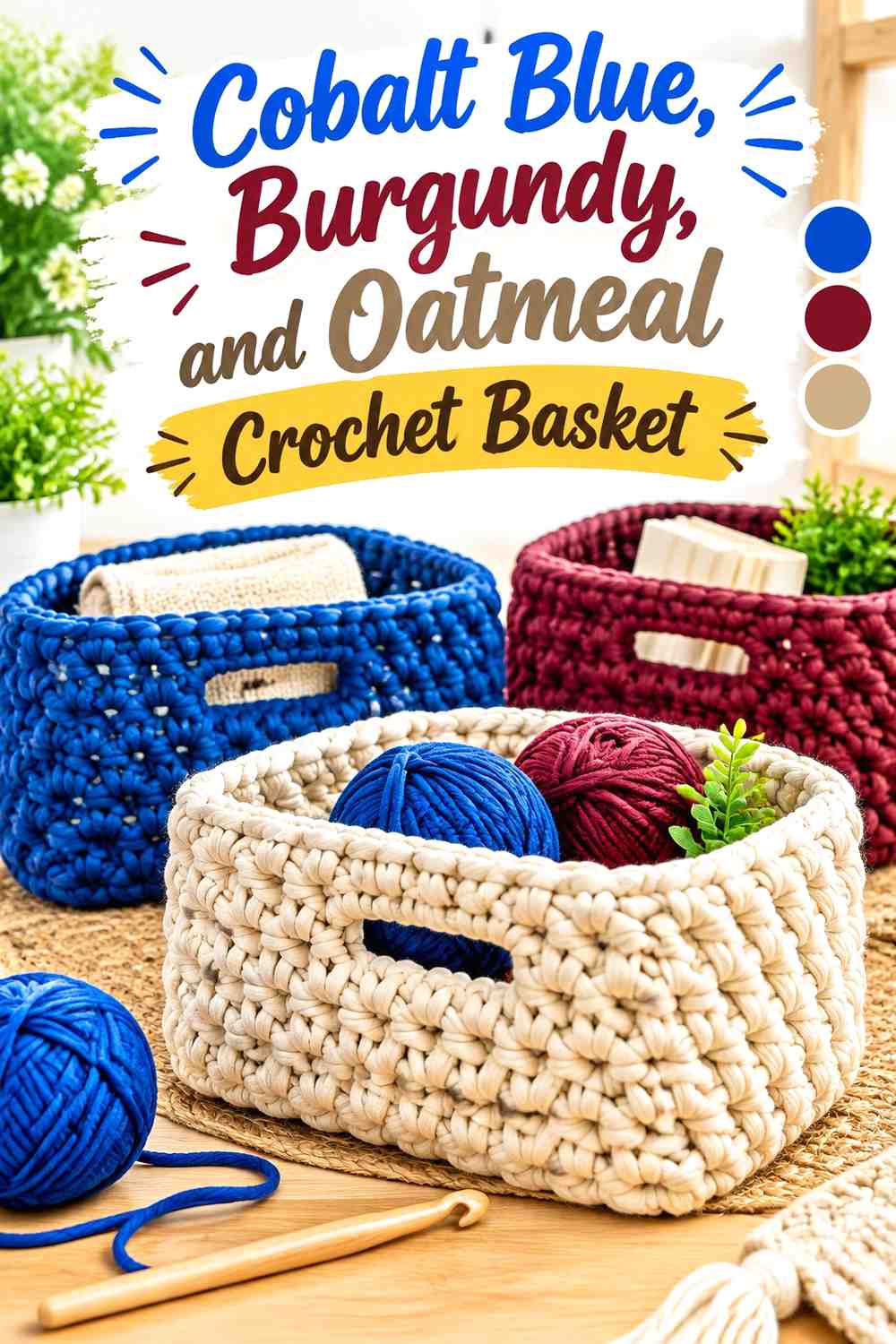
11. Cobalt Blue Burgundy And Oatmeal Crochet Basket
 SAVE
SAVEA crochet basket needs a palette that supports its structure instead of obscuring it. Cobalt blue can cover most of the basket walls, burgundy can define the rim or handle area, and oatmeal can create one lighter band that separates the two saturated shades.
Cobalt Blue Gives the Crochet Basket a Strong Main Wall Color
Using cobalt continuously around the walls emphasizes the basket shape and keeps the sides from looking patchy. If the stitch pattern is textured, a large uninterrupted area also gives that texture room to remain visible.
Keep the base connected to the body by using cobalt there as well or by repeating cobalt immediately above a contrasting base.
Burgundy Can Define the Cobalt Blue Basket Rim and Handles
The upper rim is a logical place for burgundy because it creates a clear finish and can visually connect integrated handle openings. Repeating the same shade all the way around prevents one side from appearing heavier.
If burgundy and cobalt are nearly equal in darkness, insert an oatmeal band immediately below the rim rather than trying to solve the problem with several extra accent colors.
Oatmeal Keeps Burgundy and Cobalt Blue Basket Sections Separate
Use oatmeal where it has a structural reason to appear: a transition band, narrow top stripe, or edge. That makes the neutral part of the basket architecture.
Avoid putting a single oatmeal patch on one side unless the construction itself calls for it, because an isolated light section will attract disproportionate attention.
Creator Credit: Bella Coco
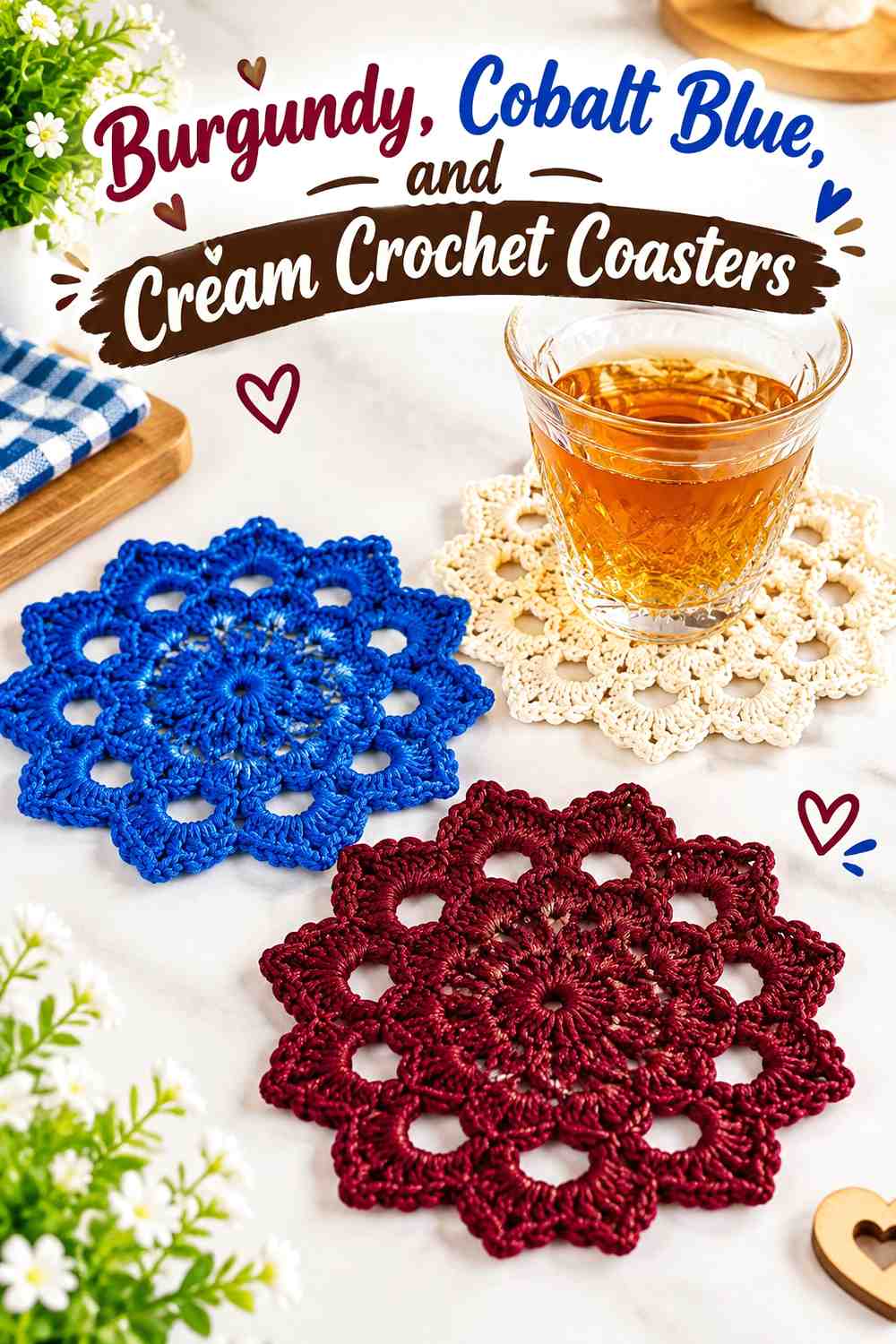
12. Burgundy Cobalt Blue And Cream Crochet Coasters
 SAVE
SAVESmall projects expose color-placement problems quickly because every round occupies a noticeable share of the finished piece. Burgundy centers, cobalt outer areas, and cream edging create a clear three-step progression without requiring a complicated palette.
Burgundy Makes a Strong Crochet Coaster Center
Starting with burgundy gives each coaster a repeated visual anchor. If you are making a set, keeping the center consistent can connect the coasters even if later color placement changes slightly.
Avoid reducing burgundy to such a tiny center that it disappears once cobalt and cream are added around it.
Cobalt Blue Should Have Enough Space Around the Burgundy Center
Give cobalt at least one visually substantial area so it reads as the second main color rather than a thin dividing line. Because a coaster is small, even a modest increase in cobalt coverage can noticeably change the overall color balance.
If the blue becomes too dominant, use cream on the outermost portion instead of adding another dark shade.
Cream Gives Burgundy and Cobalt Blue Coaster Edges More Definition
A cream edge can visually separate the finished coaster from a dark tabletop while also lightening the two-color center. It provides a clean endpoint for the motif.
For a coordinated set, repeat the cream edge on every coaster even if you reverse burgundy and cobalt in some centers.
Creator Credit: Crochet MC
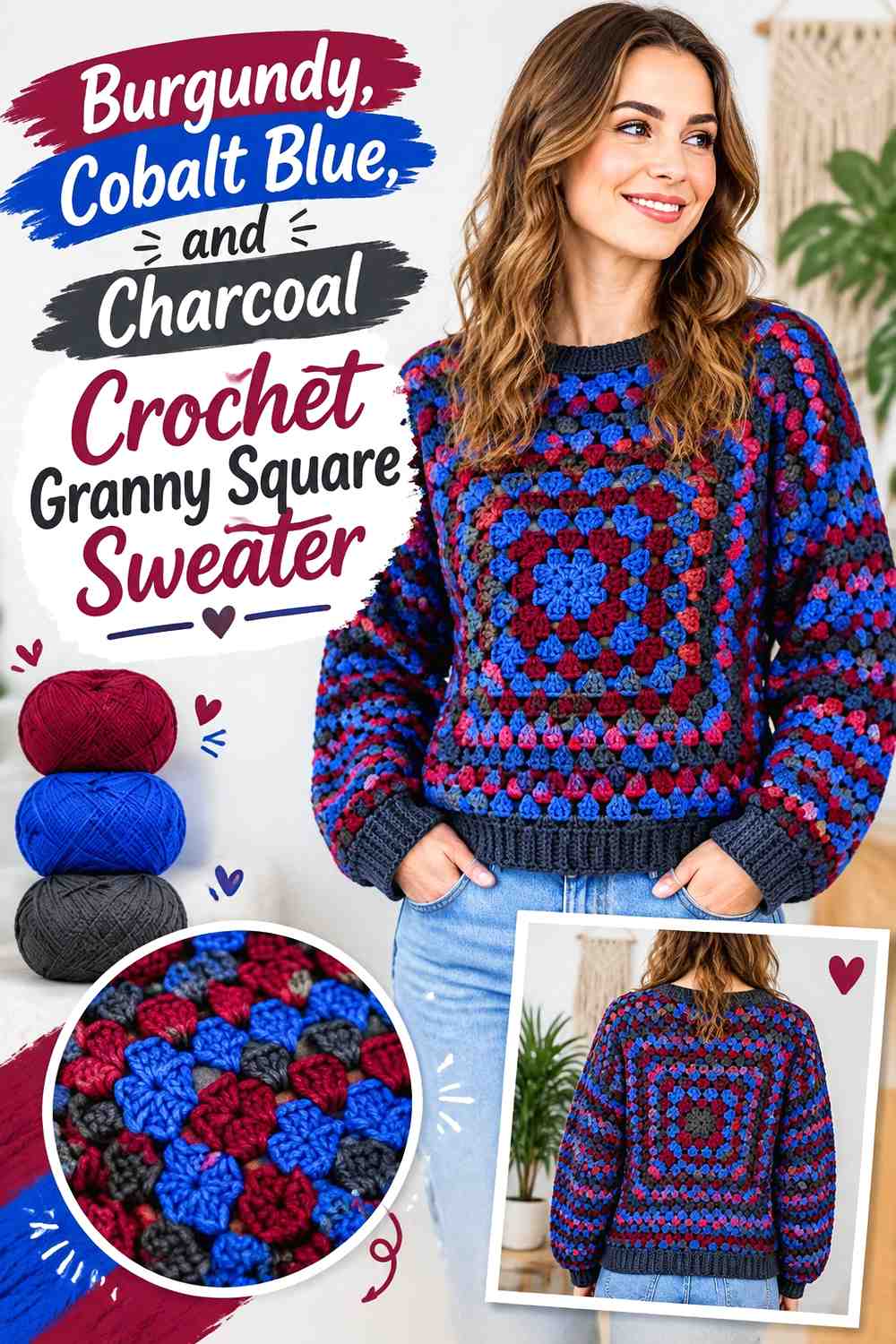
13. Burgundy Cobalt Blue And Charcoal Crochet Granny Square Sweater
 SAVE
SAVEA granny-square sweater can carry more visual complexity than a small accessory, but the garment still needs a repeatable color system. Alternating burgundy- and cobalt-led squares creates variety, while charcoal joins or ribbing can give the separate motifs one consistent frame.
Burgundy and Cobalt Blue Squares Need a Planned Sweater Distribution
Lay the squares in their garment positions before joining and check both the front and back. A random pile can look balanced while the assembled sweater accidentally places most burgundy squares on one sleeve or most cobalt squares on the front.
Alternating the dominant color from one square to the next is one option, but the distribution does not need to form a strict checkerboard. It only needs enough repetition to look intentional.
Charcoal Can Frame Burgundy and Cobalt Blue Crochet Sweater Motifs
Charcoal joins can create a consistent outline around both saturated colors and prevent neighboring squares from visually merging. The same shade can be repeated at the neckline or cuffs to connect the finishing with the motif grid.
If your burgundy or cobalt yarn is extremely dark, compare it with charcoal first. Too little value difference may make the join disappear, which is fine for subtle framing but unsuitable if you want every square clearly outlined.
Burgundy Ribbing Can Shift a Cobalt-Heavy Crochet Sweater Back Into Balance
If the finished motif layout contains more cobalt than expected, burgundy ribbing or edging can restore some of the red tone without remaking the squares. Because ribbing repeats around major garment openings, even a relatively small amount of burgundy can have a noticeable effect.
Use the same finishing color in more than one location so the adjustment looks planned.
Creator Credit: Zeens And Roger Crochet
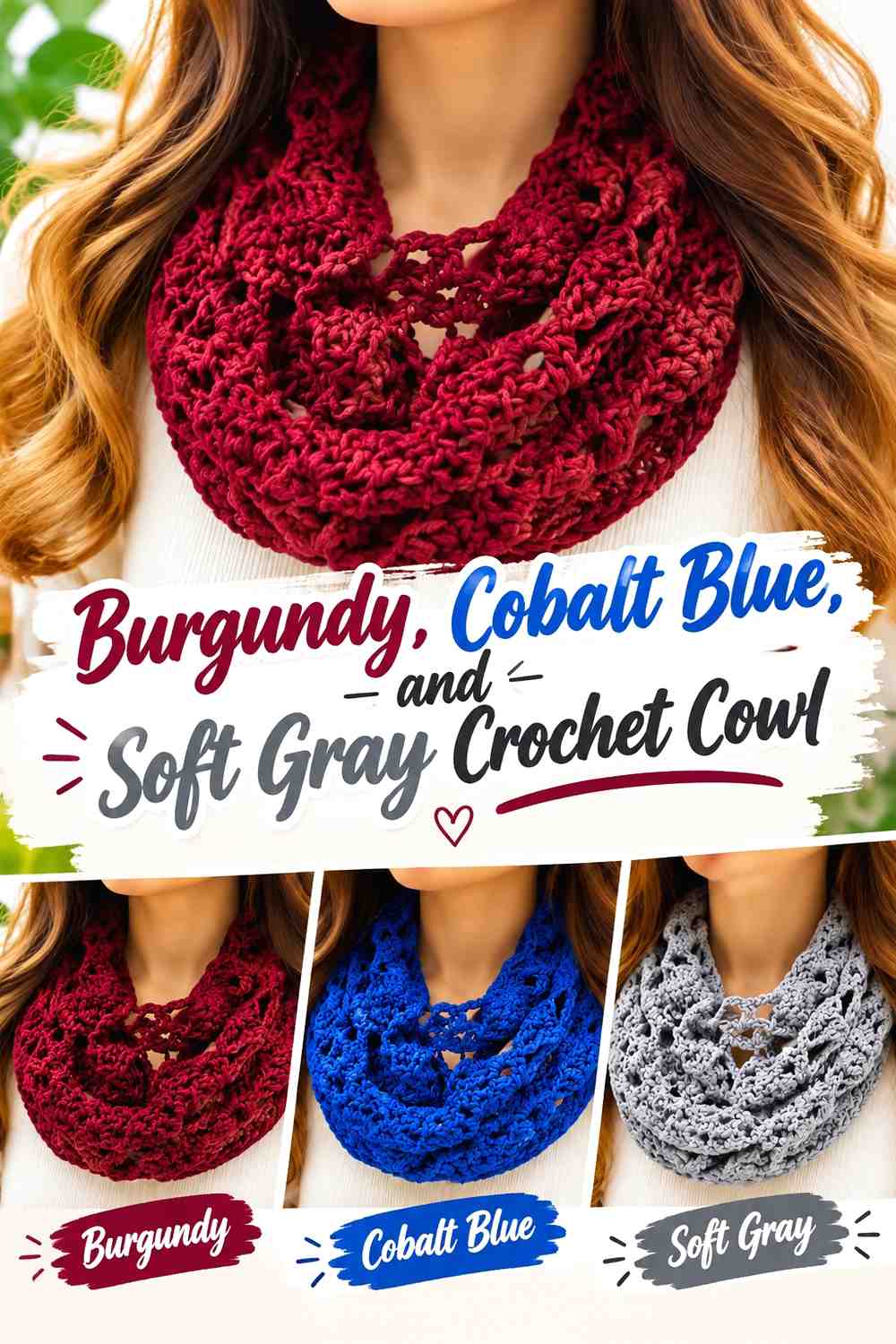
14. Burgundy Cobalt Blue And Soft Gray Crochet Cowl
 SAVE
SAVEA cowl is viewed as a continuous ring, so repeated color placement matters more than a single front-facing motif. Burgundy can dominate the main fabric, cobalt can appear in one or more purposeful bands, and soft gray can keep the transition from feeling abrupt.
Burgundy Can Carry Most of the Crochet Cowl Surface
Using burgundy across the largest section lets stitch texture remain visible and gives the cowl one recognizable base. This is particularly useful if the construction already contains strong texture.
Remember that a cowl folds and overlaps when worn, so a burgundy section that seems large while laid flat may share the visible surface with several other sections.
Cobalt Blue Works Best as a Repeated Burgundy Cowl Band or Edge
Instead of one isolated cobalt stripe, repeat blue in another edge or band so it appears from more than one viewing angle. This keeps the color from disappearing when the cowl turns or folds.
For stronger contrast, place a narrow gray section beside cobalt rather than increasing the number of blue stripes.
Soft Gray Can Separate Burgundy and Cobalt Blue Around the Cowl
Gray is useful when the two primary colors form one dark visual mass at normal viewing distance. A narrow separating band can solve that problem without changing the burgundy-led identity of the cowl.
Check the cowl in its worn, folded arrangement before deciding whether another gray repeat is necessary.
Creator Credit: Bag-O-Day Crochet
Choosing Between Burgundy-Dominant and Cobalt-Dominant Crochet Ideas
Choose a burgundy-dominant layout when you want the red tone to define most of the finished item and cobalt to function as a sharper accent. The pillow, tote, scarf, vest, coasters, sweater, and cowl can all support that direction.
A cobalt-dominant approach works particularly well on items with a large uninterrupted main surface, such as the cardigan, beanie, bucket hat, or basket. Cobalt establishes the main field while burgundy can define structural areas such as cuffs, rims, brims, handles, or edging.
For projects where both shades deserve similar prominence, such as a blanket or shawl, introduce repetition or a neutral separator. Equal color quantity is less important than making the placement look intentional.
Conclusion
Burgundy and cobalt blue can produce very different crochet results depending on which shade leads and where the contrast appears. Large burgundy fields with controlled cobalt accents suit projects where you want a warmer overall direction, while cobalt-led garments and accessories make the blue more immediate and let burgundy add depth around structural details.
For motifs, joins, small borders, and textured areas, check the light-and-dark contrast before committing to the whole project. Cream, oatmeal, gray, camel, or charcoal can help when the two main yarns are too similar in value, but each neutral should have a clear job.
Use the original tutorials for the construction of each project, then apply the burgundy-and-cobalt placement that fits the visual balance you want.
Frequently Asked Questions
Do burgundy and cobalt blue work together in crochet?
Yes. They are clearly different hues, but both can carry substantial visual weight. The pairing is usually easier to control when one shade dominates and the other is repeated in specific areas such as borders, motifs, cuffs, or stripes.
How can I tell whether burgundy and cobalt blue have enough contrast?
Place the yarns beside each other and view them from a short distance. You can also photograph them in grayscale. If they look almost identical in gray, small cobalt details may disappear against burgundy even though the actual hues are different.
Which neutral works with burgundy and cobalt blue crochet?
Cream and oatmeal create a lighter separation, soft gray gives a cooler neutral break, camel introduces a warmer transition, and charcoal can create a darker frame. Choose according to the role you need rather than adding a neutral simply for variety.
Should burgundy or cobalt blue be the dominant crochet color?
Either can lead. Burgundy dominance works well when you want cobalt concentrated in sharper details, while cobalt dominance works well when blue should cover larger garment panels or accessory surfaces. Compare both arrangements with your specific item before deciding.
How can I use burgundy and cobalt blue in granny squares without making them too busy?
Repeat the colors in consistent positions, such as burgundy centers with cobalt outer sections, or alternate two planned square arrangements. A neutral joining color can also separate neighboring motifs when the two main shades are visually heavy.
Can I use only burgundy and cobalt blue without cream or gray?
Yes. A two-color palette works especially well with broad color blocking, large stripes, ribbing, or simple sections. A neutral becomes more useful when the design contains small motifs or when your particular burgundy and cobalt yarns are close in lightness.
What should I do if burgundy and cobalt blue look too dark together?
Increase the visual space around them with a lighter shade rather than automatically replacing either main color. Cream, oatmeal, or soft gray can be used around motif borders, joins, edging, or transition bands to restore separation while preserving the original palette.