
Burgundy and Charcoal make a strong pair for a crochet cable vest because both colors have visual depth without serving the same purpose. Burgundy brings a warmer, richer focus to raised cable sections, while Charcoal can create a dark framework around those details or take over the main body for a more restrained vest.
The main challenge is keeping cable texture visible when both colors are relatively deep. Crochet cables depend partly on shadow and relief, so placing Burgundy and Charcoal next to each other does not automatically guarantee that a narrow cable will stand out. Color placement needs to work with the raised texture rather than covering it with unnecessary changes.
The tutorials supporting these ideas include a direct cable-vest tutorial and several compatible sleeveless vest constructions. Where a source teaches a plain or differently textured vest, use it for the garment shape, neckline, armholes, ribbing, or panel construction and plan the cable treatment separately. The Burgundy and Charcoal palettes below are editorial adaptations rather than claims about the creators’ original colors.
Quick List
- Burgundy Crochet Cable Vest With Charcoal Center Cable
- Charcoal Crochet Cable Vest With Burgundy Center Cable
- Burgundy Crochet Cable Vest With Charcoal Side Cable Panels
- Charcoal Crochet Cable Vest With Burgundy Side Cable Panels
- Burgundy Crochet V-Neck Cable Vest With Charcoal Ribbing
- Charcoal Crochet V-Neck Cable Vest With Burgundy Ribbing
- Burgundy Crochet Cable Vest With Narrow Charcoal Cable Columns
- Charcoal Crochet Cable Vest With Wide Burgundy Cable Columns
- Burgundy Diamond Cable Crochet Vest With Charcoal Frames
- Charcoal Diamond Cable Crochet Vest With Burgundy Frames
- Burgundy Front and Charcoal Back Crochet Cable Vest
- Burgundy Crochet Cable Vest With Charcoal Armholes and Hem
- Burgundy and Charcoal Split-Panel Crochet Cable Vest
Check Burgundy and Charcoal Contrast Inside the Cable Texture
Burgundy and Charcoal may look clearly different as yarn balls but become closer once shadows form around raised stitches. Before committing to a full vest, work enough of the intended cable texture to see both the raised crossings and the flatter background.
A grayscale photo can help reveal whether the two yarns are genuinely different in lightness. If they are very close, use color changes across broader panels rather than expecting a tiny Charcoal cable inside Burgundy—or the reverse—to remain sharply defined.
Give Burgundy and Charcoal Clear Jobs Around the Vest Openings
Neckline ribbing, armhole finishing, and the lower hem collectively occupy more visual area than they first appear to. Using Charcoal at all three openings can make a Burgundy body look strongly framed, while Burgundy ribbing can substantially warm an otherwise Charcoal vest.
Decide whether these edges should reinforce the dominant body color or deliberately contrast with it. Cable texture is already visually active, so a simple, repeated finishing-color system often works better than changing colors independently at every opening.
1. Burgundy Crochet Cable Vest With Charcoal Center Cable
 SAVE
Make Burgundy the main front and back color, then reserve Charcoal for one substantial central cable area. This gives the darkest neutral a precise focal job instead of distributing it throughout the entire vest. The idea works best when the Charcoal cable is large enough for both the color change and raised structure to remain readable.
Burgundy Should Give the Charcoal Cable Enough Background Space
Leave uninterrupted Burgundy on both sides of the central Charcoal section. The broad warm field allows the dark cable to read as a deliberate vertical feature instead of one of many competing color changes.
If additional Charcoal appears at every edge, the center cable loses some of its exclusivity, so keep the finishing colors restrained.
Charcoal Needs Enough Width to Show Its Cable Relief Against Burgundy
Very narrow Charcoal cable details can disappear visually, particularly if the Burgundy yarn is also dark. Test the actual cable repeat before deciding how narrow the accent can become.
If the two shades are close in value, enlarge the Charcoal panel rather than adding extra colors around it.
Creator Credit: TCDDIY
2. Charcoal Crochet Cable Vest With Burgundy Center Cable
 SAVE
Reverse the hierarchy and use Charcoal across most of the body while Burgundy carries the central cable. The warmer cable then becomes the focal point against a broad dark neutral field without requiring Burgundy to cover the full vest.
Burgundy Can Give the Charcoal Vest One Strong Vertical Focus
Keep Burgundy concentrated through the center rather than scattering small warm details across every panel. A substantial cable column gives the saturated color enough space to show both hue and stitch texture.
This also keeps the vest recognizably Charcoal-led.
Charcoal Side Areas Should Stay Quiet Beside Burgundy Cables
Use relatively uninterrupted Charcoal around the raised center section. Additional contrasting stripes or blocks beside the cable can compete with the texture that is supposed to be the main feature.
Charcoal can continue through the hem and armholes if you want those structural edges to recede.
Creator Credit: VivCrochets
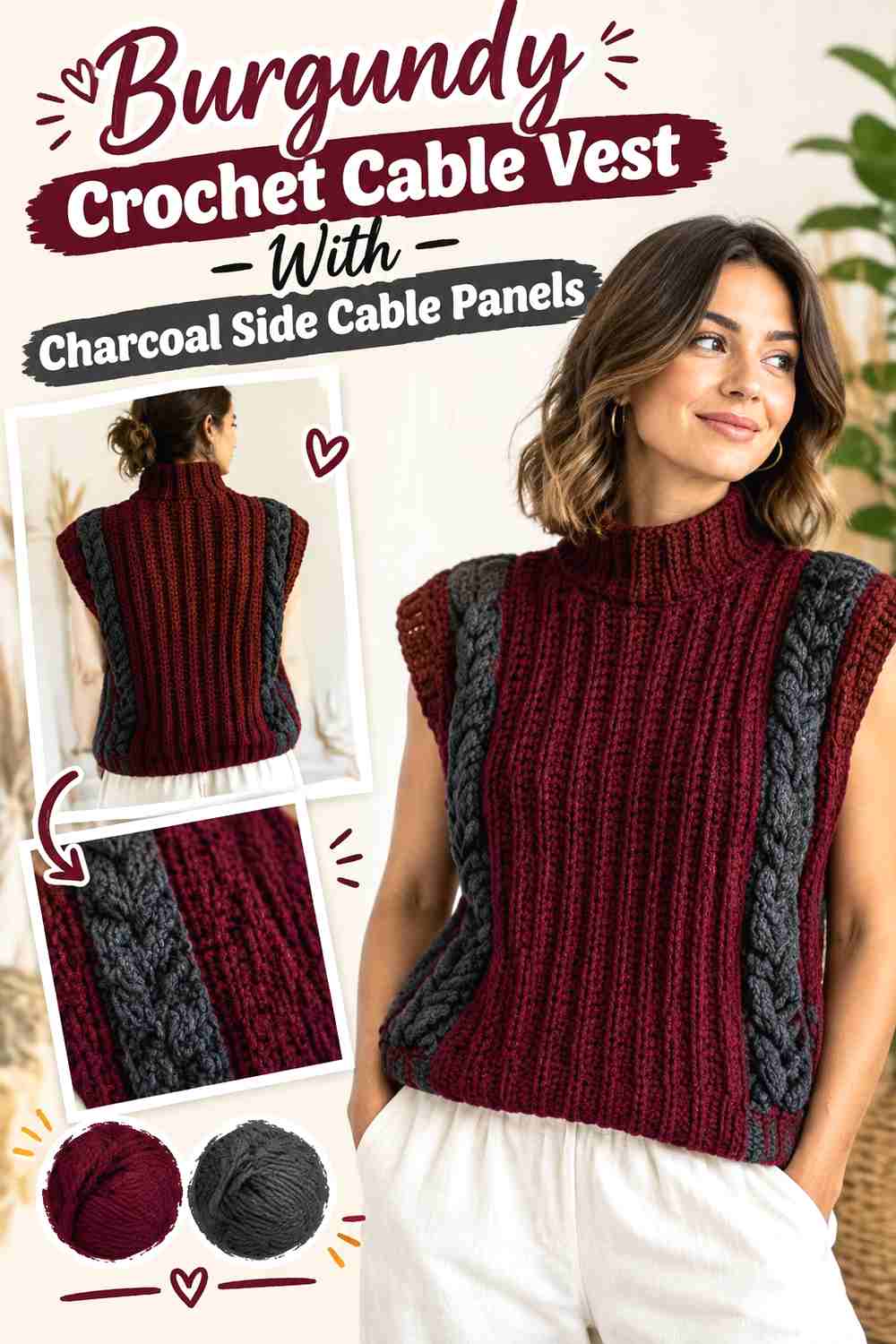
3. Burgundy Crochet Cable Vest With Charcoal Side Cable Panels
 SAVE
Instead of centering Charcoal, move it toward both side areas and keep the middle front Burgundy. The two dark side panels can visually frame the torso while allowing Burgundy to remain the largest continuous color.
Charcoal Side Cables Should Balance the Burgundy Center
Keep the left and right Charcoal sections comparable if symmetry is part of the design. Because Charcoal is dark, an uneven cable panel can draw attention even when the difference is relatively small.
Lay the front panel flat before assembly and compare both sides around the armhole shaping.
Burgundy Should Continue Between the Charcoal Cables and Neckline
Preserve a noticeable Burgundy area above and between the side cables. If Charcoal expands into the neckline, armholes, and shoulders as well, it may begin to dominate more of the vest than intended.
A Burgundy neckline can help maintain the warm central field.
Creator Credit: passtschon
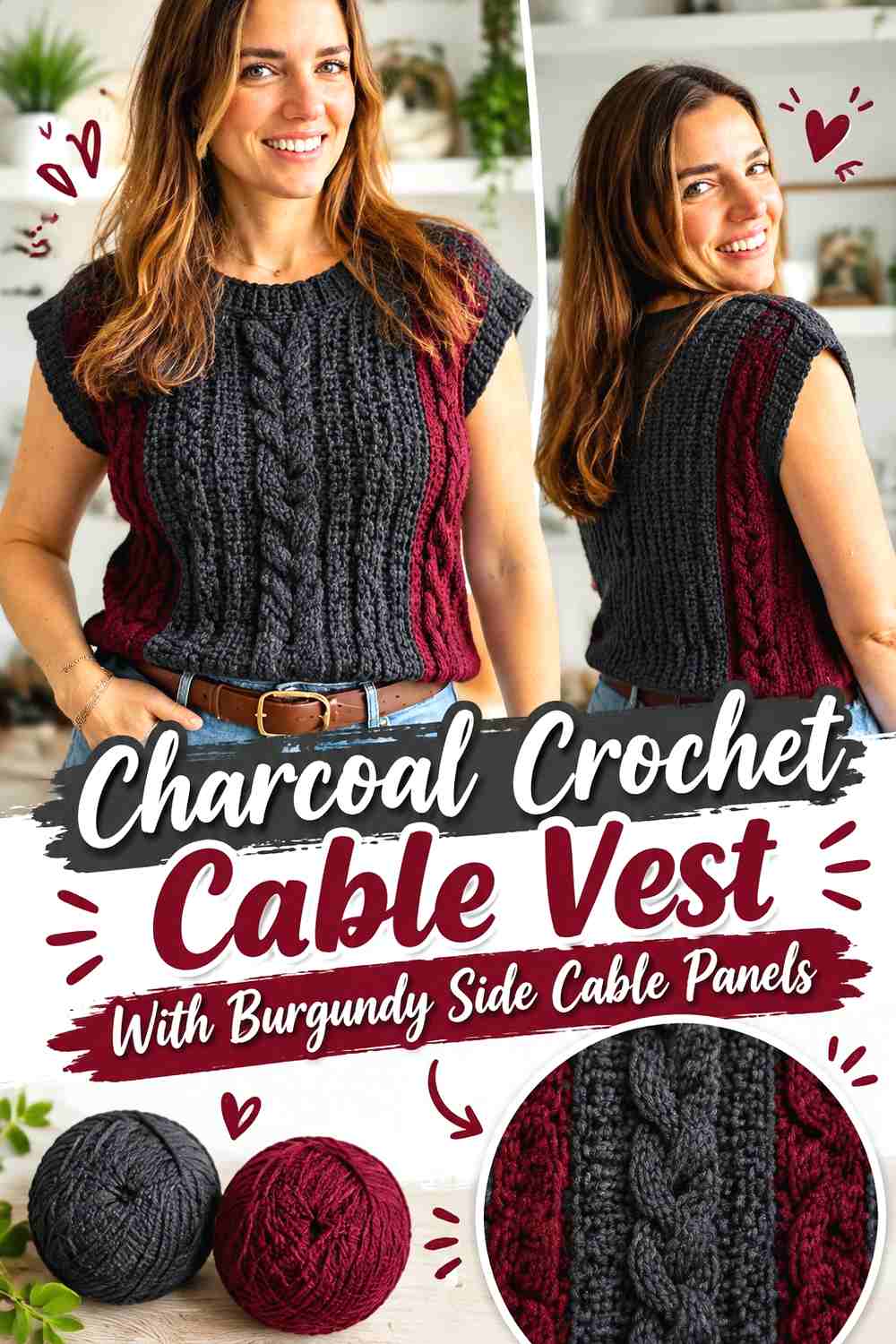
4. Charcoal Crochet Cable Vest With Burgundy Side Cable Panels
 SAVE
This version uses Charcoal for the broad central body while placing Burgundy cables closer to the sides. The placement spreads the warmer accent across the vest without creating one concentrated Burgundy stripe through the middle.
Burgundy Side Cables Need Clear Repetition Across Charcoal
Use a related Burgundy panel on each side so the color feels integrated into the vest rather than attached to one edge. The cables do not have to be oversized, but they need enough room to remain visible once armhole shaping begins.
Charcoal Can Keep Burgundy Side Texture From Crowding the Center
Leave the central front comparatively quiet. That negative visual space makes the side cables easier to distinguish and prevents the whole vest from becoming uniformly textured.
If the back is simpler, Charcoal can also connect the two sides around the garment.
Creator Credit: Cat Kemble
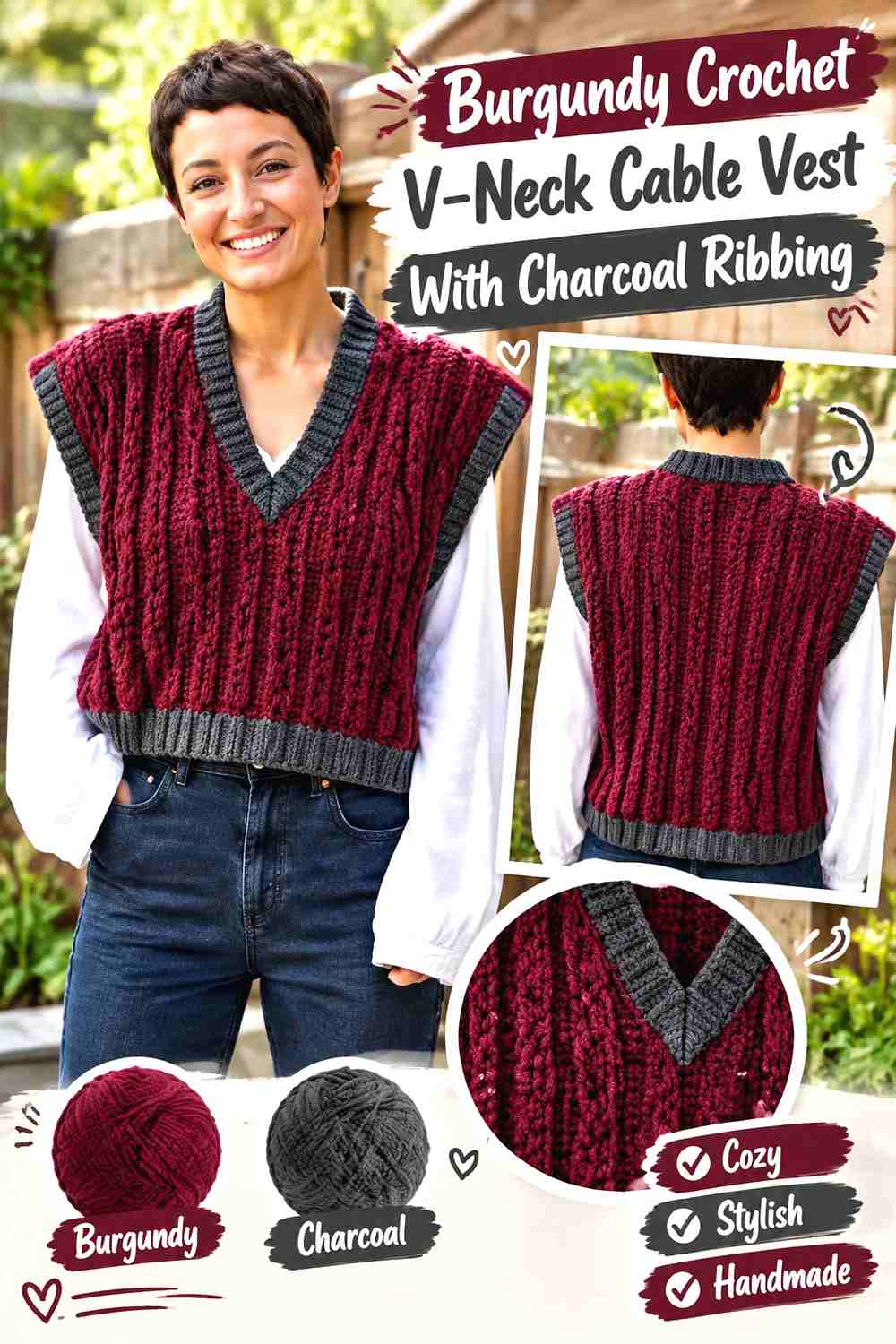
5. Burgundy Crochet V-Neck Cable Vest With Charcoal Ribbing
 SAVE
Use Burgundy through the body and cable panels, then let Charcoal define the V-neck, armholes, and lower hem. This creates a dark outline around a warm textured center and makes the garment openings part of the color scheme.
Charcoal Can Sharpen the Burgundy V-Neck
A continuous Charcoal neckband traces the V and gives it clear separation from the Burgundy cable body. Keep the border reasonably consistent on both sides because strong color contrast can make uneven finishing more noticeable.
Burgundy Cables Should Remain Clear Beside Charcoal Armholes
Do not run a major Burgundy cable so close to the Charcoal armhole edge that the two structural features visually collide. Leaving some flatter Burgundy fabric between them can preserve both the cable and the border.
Creator Credit: JeggoCrochet
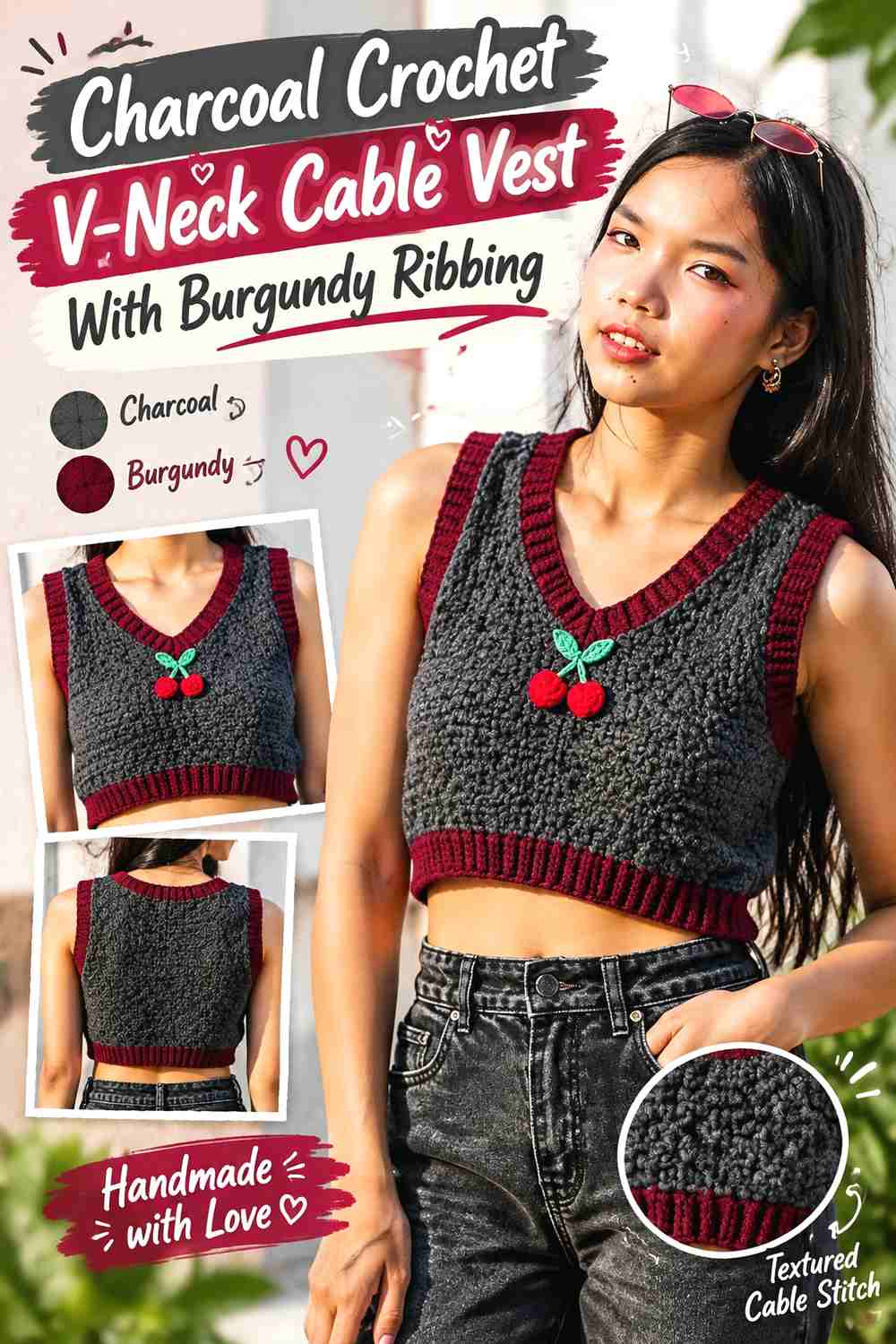
6. Charcoal Crochet V-Neck Cable Vest With Burgundy Ribbing
 SAVE
A Charcoal body creates a subdued field for the raised texture, while Burgundy around the neckline, armholes, and hem supplies repeated warm definition. The borders become more prominent than they would in a matching neutral.
Burgundy Ribbing Can Lift a Dark Charcoal Neckline
Use Burgundy continuously around the V rather than introducing it in disconnected pieces. That concentrated warm frame can make the neckline easy to distinguish against the darker body.
Charcoal Cable Texture Needs Checking Before Adding Burgundy Borders
Very dark Charcoal can reduce the visibility of smaller cable crossings because shadows have less light-dark range to work with. Make a cable sample first and check it under ordinary lighting.
If the detail looks flat, broader cable shapes may work better than adding more Burgundy inside the textured panel.
Creator Credit: Chenda DIY
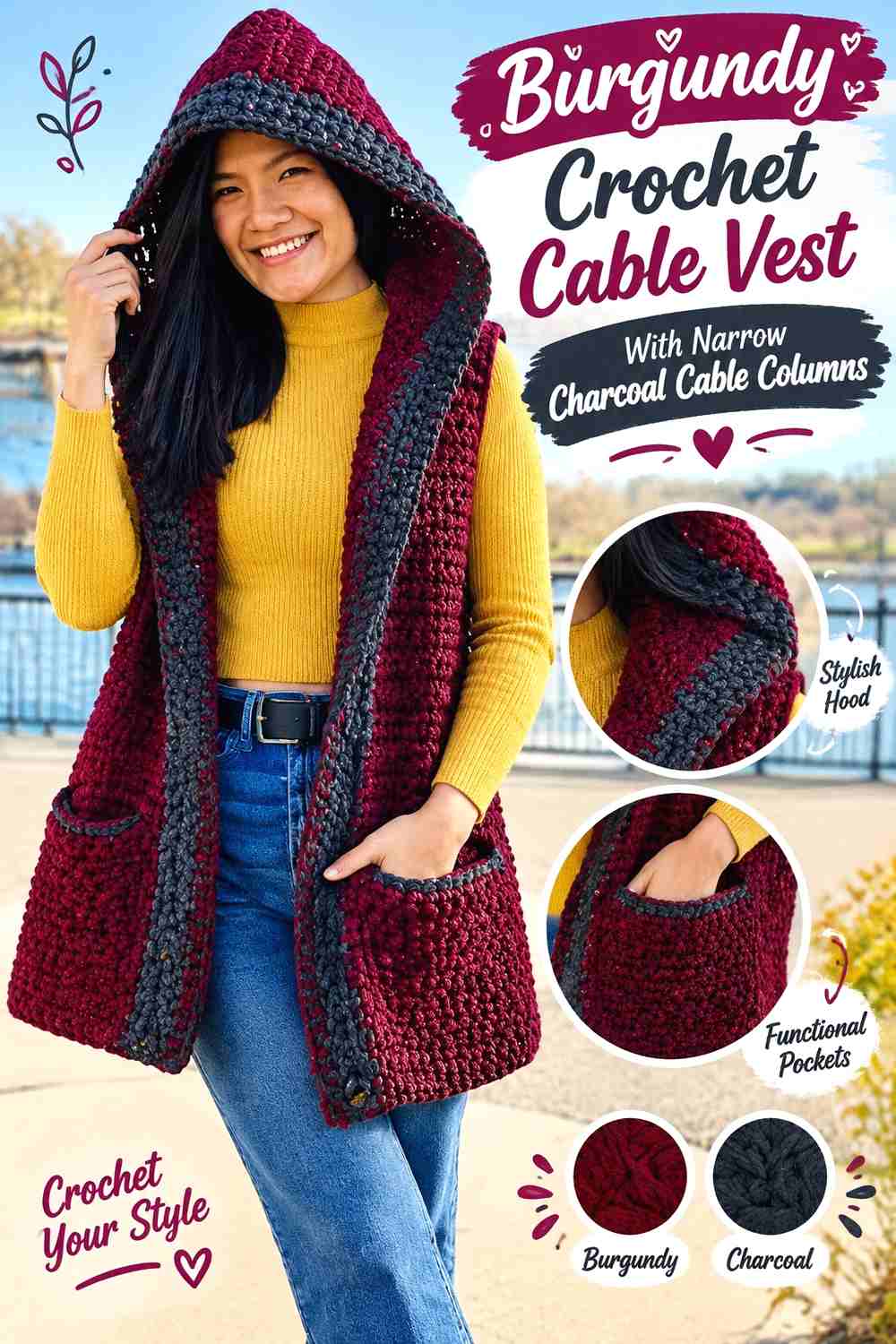
7. Burgundy Crochet Cable Vest With Narrow Charcoal Cable Columns
 SAVE
Use mostly Burgundy but introduce several narrow Charcoal vertical cable columns instead of one large central panel. Repetition distributes the neutral through the vest while still allowing Burgundy to occupy most of the surface.
Charcoal Cable Columns Need Consistent Spacing on Burgundy
Plan the columns across the full front width before starting the main textured section. Uneven gaps can become more obvious because the Charcoal lines naturally act as visual dividers.
Keep enough Burgundy between the columns for each cable to remain an individual feature.
Burgundy Should Stay Dominant Around Narrow Charcoal Details
Narrow cables already repeat several times, so additional broad Charcoal borders may push the palette closer to equal coverage. Burgundy cuffs are not relevant on a vest, making the neckline, armholes, and hem especially important places to preserve the main color.
Creator Credit: KnitcroAddict
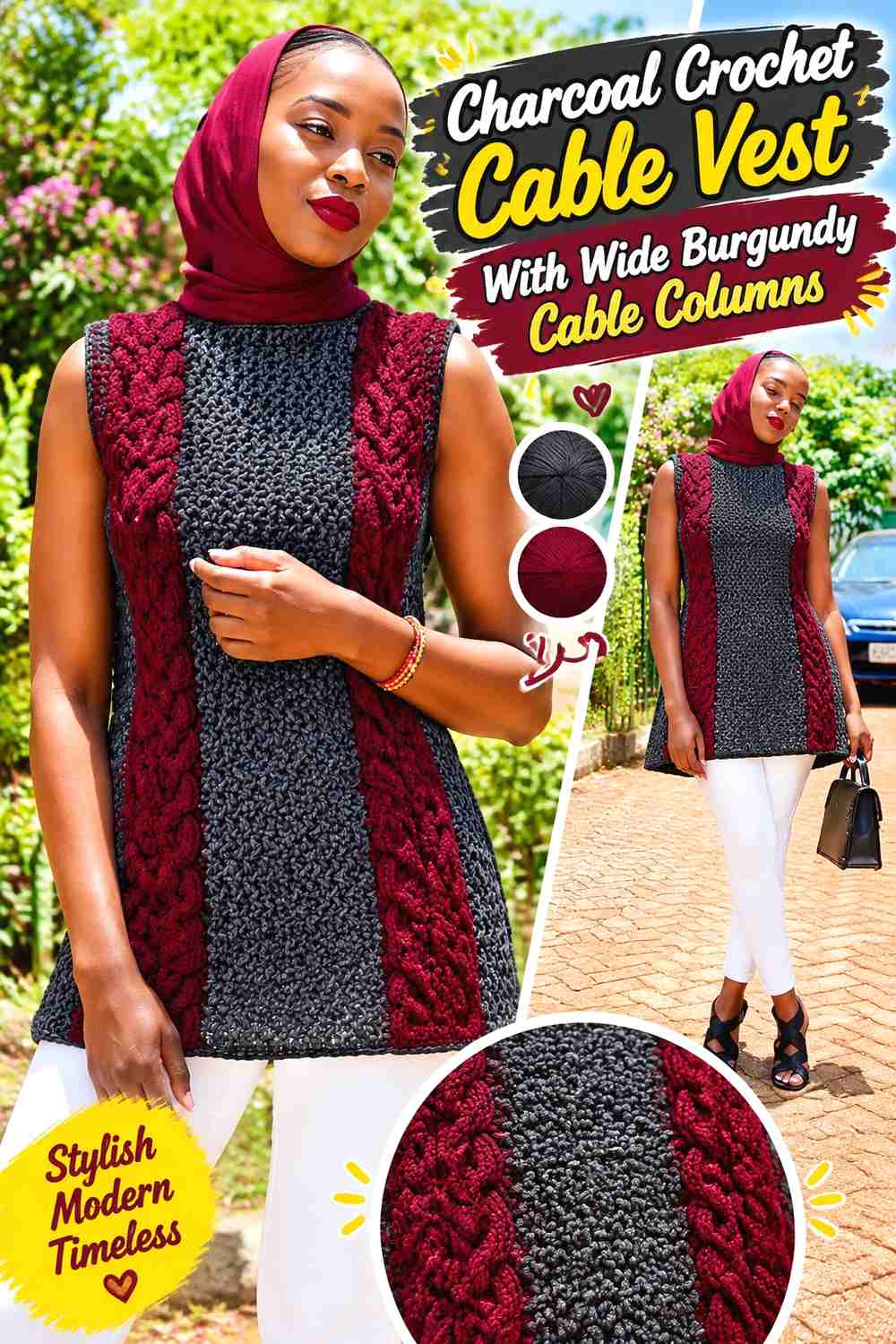
8. Charcoal Crochet Cable Vest With Wide Burgundy Cable Columns
 SAVE
Here the cable columns themselves become broader and Burgundy carries them against a Charcoal background. This creates more warm surface area than a small accent-cable approach and makes the raised sections major color blocks.
Burgundy Wide Cables Need Enough Charcoal Between Them
Use Charcoal as visible separation rather than squeezing multiple Burgundy cables together. The darker gaps help define each raised column and keep the warm sections from combining into a nearly solid Burgundy panel.
Charcoal Should Continue Through the Burgundy Cable Vest Edges
A Charcoal neckline or lower hem can reinforce the background color and visually contain the wide Burgundy texture. If every edge switches to Burgundy, the palette may become much warmer than the central Charcoal areas suggest.
Creator Credit: AC Crochets
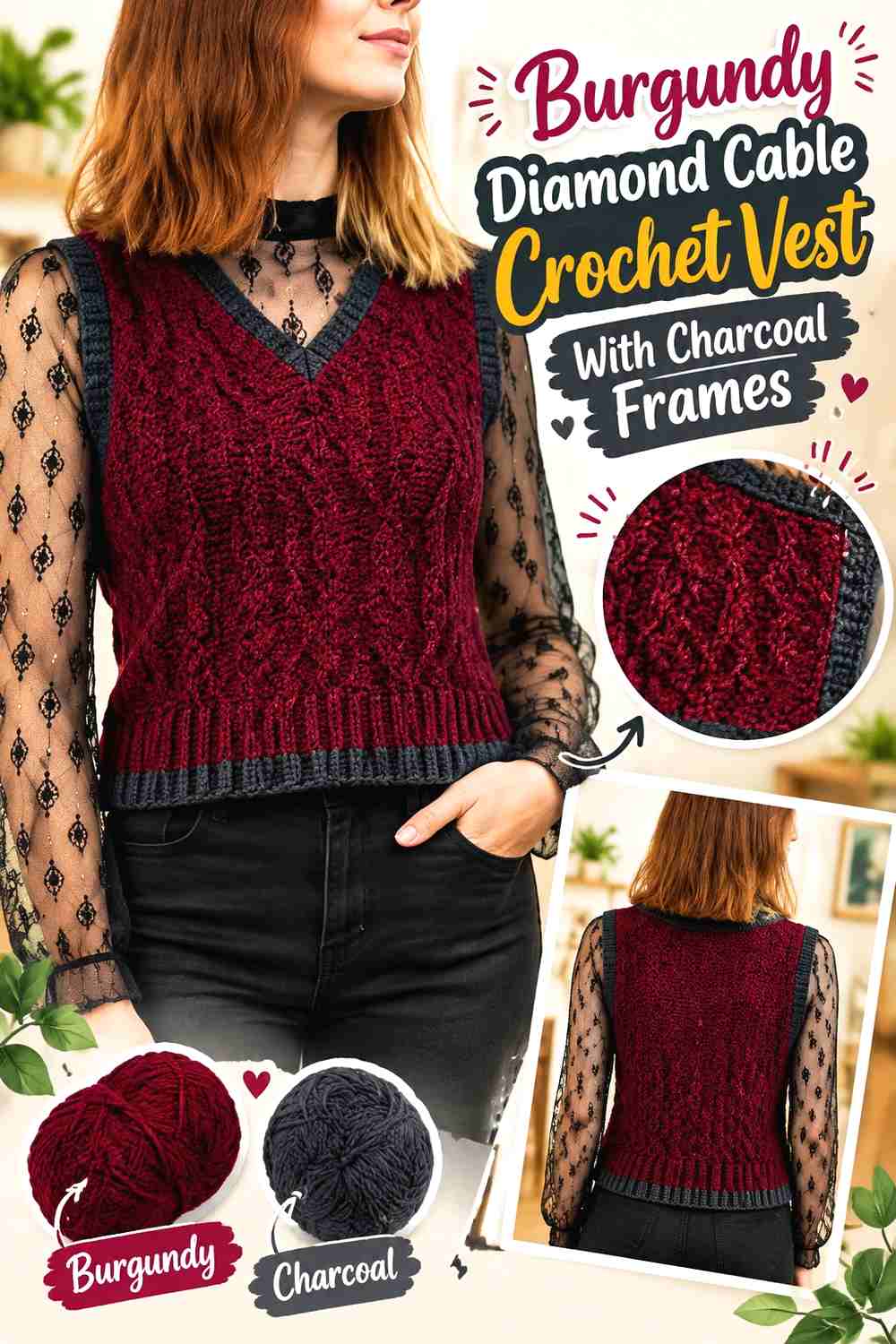
9. Burgundy Diamond Cable Crochet Vest With Charcoal Frames
 SAVE
Use Burgundy for raised diamond or crossing-cable motifs and Charcoal around the flatter surrounding sections. The darker frame can separate repeated Burgundy motifs, which is useful when several textured units sit close together across a front panel.
Burgundy Diamond Cables Need Charcoal Space Around Their Edges
Do not crowd one Burgundy motif directly against the next if you want each shape to remain identifiable. Charcoal between the cable units provides both color separation and a flatter visual pause.
Charcoal Frames Should Not Overwhelm Burgundy Cable Centers
A very wide Charcoal border can make the Burgundy motifs feel like small inserts rather than the focus. Check the proportion after one complete textured section and adjust the next panel before repeating the same balance across the vest.
Creator Credit: Krafty Station
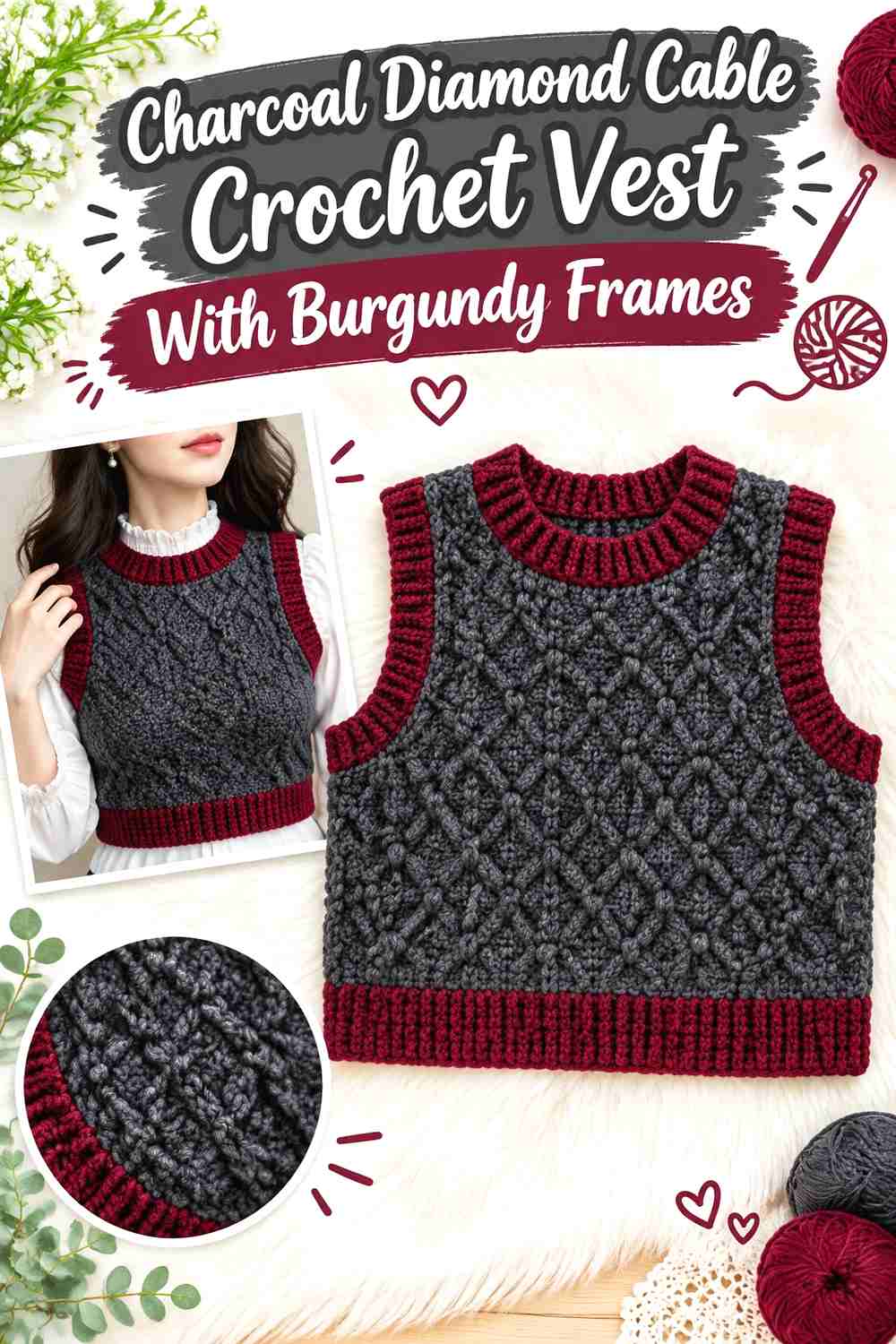
10. Charcoal Diamond Cable Crochet Vest With Burgundy Frames
 SAVE
Reverse the motif colors by making Charcoal responsible for the raised diamonds and using Burgundy around them. This creates a lower-contrast textured focal point if the Charcoal cable shadows blend into the dark yarn, while the warm surrounding field keeps the overall design from becoming monochromatic.
Charcoal Diamond Cables Should Be Tested Against Burgundy Before Repetition
Work one full cable unit and view it from a normal standing distance. If the Charcoal motif disappears too much, enlarge the surrounding Burgundy gap or choose a more substantial cable rather than relying on tiny crossings.
Burgundy Can Connect Separate Charcoal Motifs Into One Vest
Use Burgundy consistently between the cable units and through selected edges. That creates a continuous warm framework around otherwise separate Charcoal textures.
If the Burgundy framing becomes dominant, keep the neckline Charcoal to restore some dark balance.
Creator Credit: CROCHET BY BEV
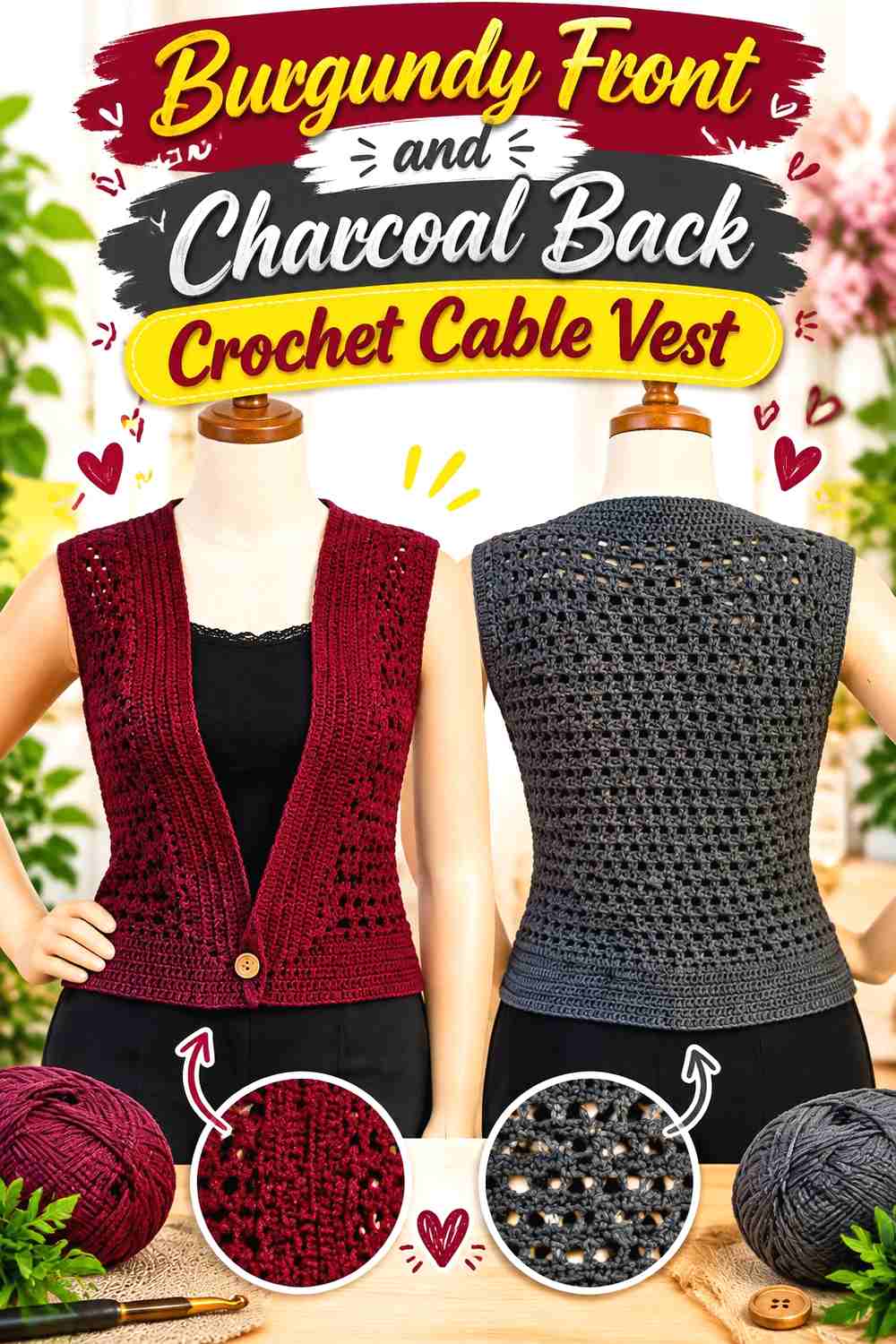
11. Burgundy Front and Charcoal Back Crochet Cable Vest
 SAVE
Give the front a Burgundy-led cable treatment and keep the back primarily Charcoal. This produces a vest with two distinct viewing directions while still using both colors around the shoulders and side seams.
Burgundy Front Cables Should Connect to the Charcoal Back at the Shoulders
Repeat a little Charcoal near the Burgundy shoulder area or neckline so the color change does not happen only at the seam. That crossover helps front and back feel intentionally related.
Charcoal Back Panels Can Stay Simpler Than Burgundy Cables
The back does not need equal cable density. A quieter Charcoal surface can make the front texture more important and reduce the risk that two dark colors plus heavy texture compete on every side.
If a cable is repeated on the back, keep its placement aligned with the overall shoulder structure rather than adding it only for color balance.
Creator Credit: Ler Crochet
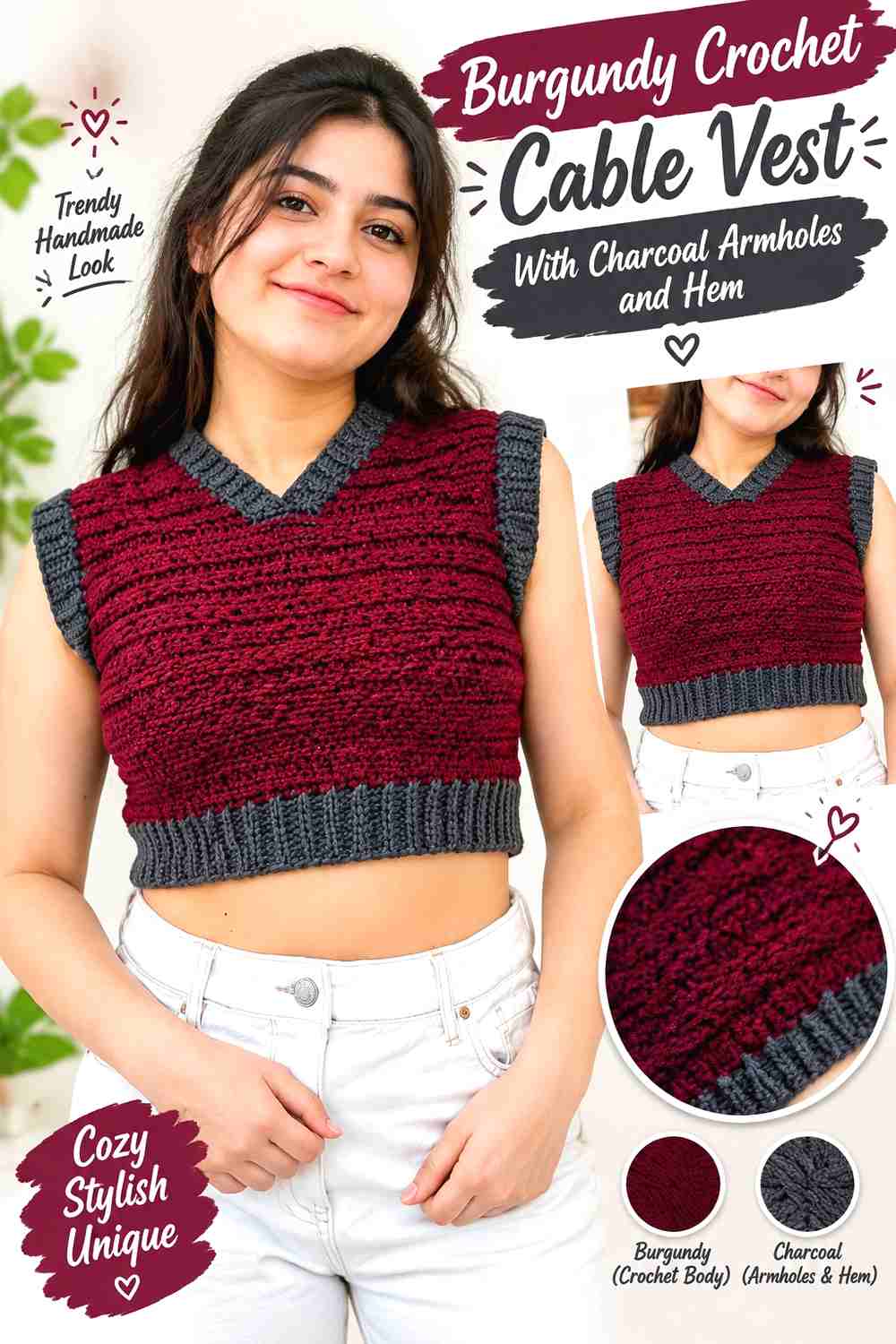
12. Burgundy Crochet Cable Vest With Charcoal Armholes and Hem
 SAVE
This idea keeps Burgundy throughout both major body panels and uses Charcoal mainly at the lower and side openings. It is one of the simplest ways to introduce the second color without interrupting the cable pattern itself.
Charcoal Armholes Can Frame Burgundy Cable Panels Without Cutting Through Them
Keep the Charcoal finishing around the openings rather than extending it deeply into the raised Burgundy texture. This preserves uninterrupted cables while still creating visible side definition.
Charcoal Hem Should Stay Proportionate to the Burgundy Body
A very deep dark lower band can visually divide the vest into two blocks. Use a narrower hem when you want Charcoal to behave as finishing rather than a full lower panel.
Repeat a little Charcoal at the neckline if the hem and armholes need a third point of connection.
Creator Credit: Yarnalina
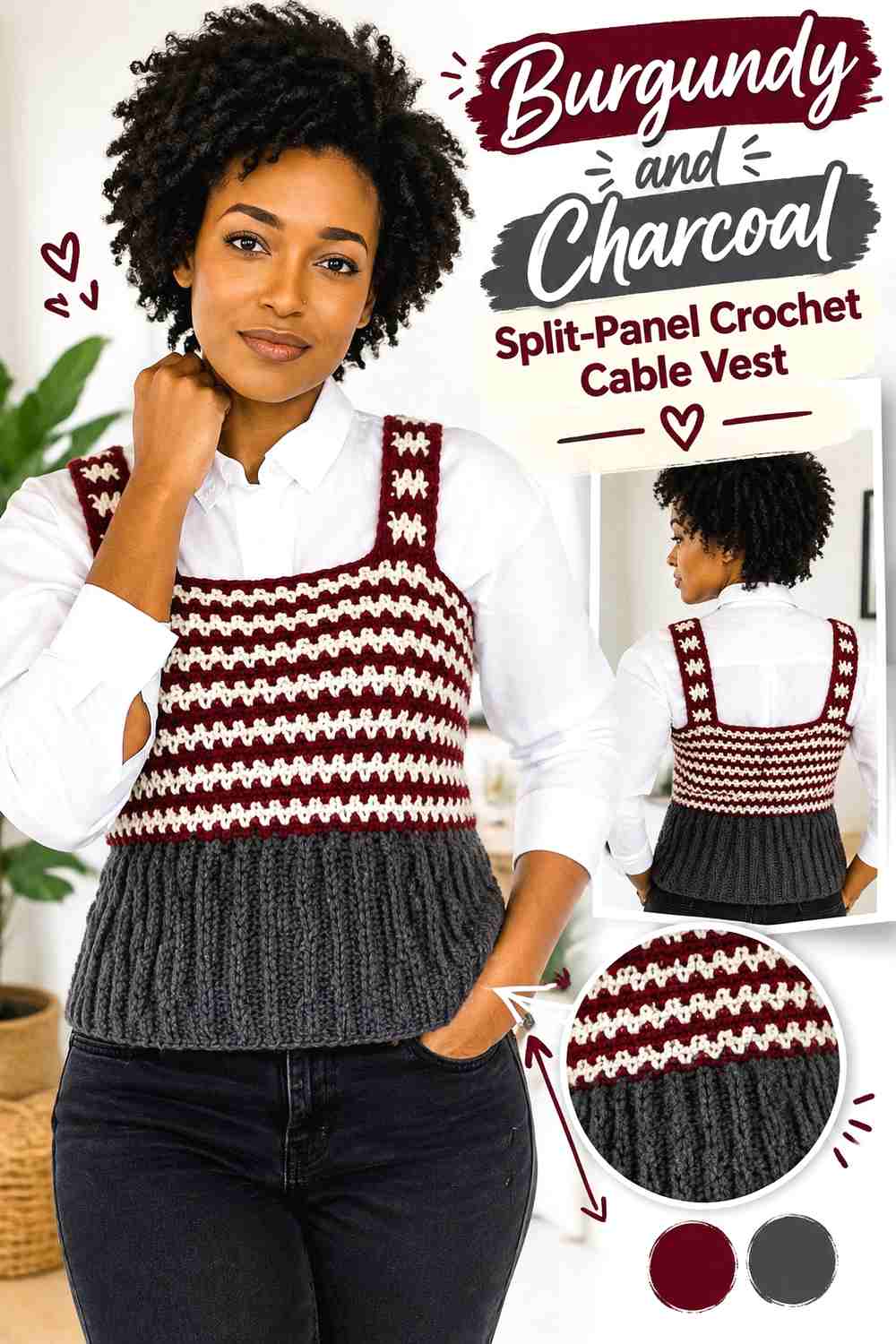
13. Burgundy and Charcoal Split-Panel Crochet Cable Vest
 SAVE
Divide the front into larger Burgundy- and Charcoal-led areas rather than using narrow stripes or equal alternation. One cable panel can sit in Burgundy while another major section stays Charcoal, creating intentional asymmetry.
Burgundy Should Cross Into the Charcoal Cable Vest Panel
Repeat Burgundy in a small Charcoal-side detail such as neckline edging, a secondary cable, or part of the hem. This crossover makes the split look designed rather than like two separate vest halves were combined.
Charcoal Should Reappear Inside the Burgundy Cable Panel
Apply the same logic in reverse. A narrow Charcoal cable or border inside the Burgundy-dominant section can connect both halves while preserving the asymmetric layout.
Lay the complete front flat before finishing the neckline so the final border strengthens the split instead of unintentionally favoring one side.
Creator Credit: TL Yarn Crafts
Which Burgundy and Charcoal Cable Vest Direction Should You Choose?
For a Burgundy-led vest, Ideas 1, 3, 5, 7, and 12 keep most of the garment warm while giving Charcoal specific structural jobs. These are useful when you want the cable texture to sit inside a clearly Burgundy garment rather than an evenly two-color piece.
For a Charcoal-led direction, Ideas 2, 4, 6, and 8 give the neutral more body area and make Burgundy responsible for focal cables, side panels, or finishing.
Ideas 9 and 10 put the color decision directly inside repeated cable motifs. Idea 11 separates the palette by front and back, while Idea 13 uses larger asymmetric panels for the strongest color-block effect.
Whichever direction you choose, compare the actual Burgundy and Charcoal yarns inside a cable sample. Two dark colors can look distinct in a skein and much closer once shadows from raised crochet stitches are added.
Conclusion
Burgundy and Charcoal work especially well on a crochet cable vest when the colors have different responsibilities. Burgundy can make central cables, diamond motifs, and broad panels warmer and more prominent, while Charcoal can frame those areas through side sections, necklines, armholes, or hems.
Avoid dividing both colors equally by default. First decide whether the garment should read Burgundy-first, Charcoal-first, or deliberately split. Then place the supporting color where it improves cable visibility or clarifies the vest structure.
For exact garment construction, shaping, and cable instructions, follow the original tutorial associated with the vest structure you choose. Where the tutorial demonstrates a plain sweater vest rather than cables, verify how your intended cable fabric changes panel dimensions before substituting the texture.
Frequently Asked Questions
Do Burgundy and Charcoal provide enough contrast for crochet cables?
They can, but both may be relatively dark. Compare the actual yarns in the intended cable texture rather than judging the skeins alone. A grayscale photo can help reveal whether there is enough light-and-dark separation for small details.
Should Burgundy or Charcoal be used for the main cable panel?
Use Burgundy when you want the raised texture to become the warmer focal point. Charcoal works well for a quieter, darker cable, particularly when Burgundy surrounds it. The better choice depends on the actual value difference between your yarns.
Is Charcoal a good color for Burgundy crochet vest ribbing?
Yes when you want the neckline, armholes, and hem clearly framed. Because those borders repeat around several garment openings, even relatively narrow Charcoal ribbing can have significant visual impact.
Can Burgundy ribbing work on a Charcoal cable vest?
Yes. Burgundy edging can warm an otherwise dark vest and make the neckline more noticeable. Repeat the Burgundy at more than one finishing area if you want the accent to feel integrated.
How can I keep dark Charcoal crochet cables visible?
Choose a cable with enough scale and relief to remain legible in a dark yarn, and inspect a sample under ordinary lighting. If subtle crossings disappear, increasing the motif size may be more effective than adding frequent color changes.
What can replace Burgundy in this cable vest palette?
Choose another deep, muted red or wine-toned shade that preserves a clear relationship with Charcoal. Compare the replacement directly against the gray before making the full vest because darker substitutes may reduce contrast.
What can replace Charcoal without changing the Burgundy cable vest too much?
Another deep neutral gray can preserve the same basic hierarchy. If the substitute is much lighter, it will create a more graphic contrast and may become more noticeable around ribbing and cable borders than Charcoal would.