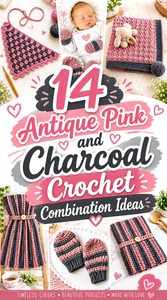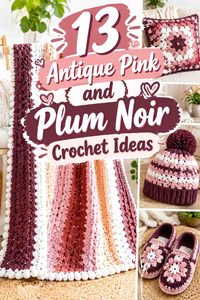
Antique pink and Plum Noir create a crochet palette built around a noticeable light-and-dark relationship. Antique pink brings the softer, muted side of the combination, while Plum Noir supplies a much deeper plum tone that can define edges, motifs, ribbing, joins, and other areas where stronger separation is useful.
The two shades do not need equal space. An antique-pink cardigan can use Plum Noir only around pockets and cuffs, while a shawl can reverse the balance and make Plum Noir the main field with antique pink concentrated toward the border. On granny squares and flowers, changing which color occupies the center can alter the emphasis without introducing another shade.
Because individual yarns labeled pink or deep plum can vary significantly in lightness, compare the actual yarns before starting. The tutorials credited below support the crochet item or construction concept; the antique pink and Plum Noir palettes are independent adaptations, so the creators do not necessarily use these exact colors.
Quick List
- Antique Pink And Plum Noir Striped Crochet Blanket
- Antique Pink Crochet Pocket Cardigan With Plum Noir Ribbing
- Plum Noir And Antique Pink Granny Square Crochet Tote
- Antique Pink Crochet Waffle Pillow With Plum Noir Frame
- Antique Pink And Plum Noir Color Block Crochet Scarf
- Plum Noir Crochet Ribbed Beanie With Antique Pink Brim
- Antique Pink Crochet Vest With Plum Noir Edging
- Antique Pink And Plum Noir Crochet Granny Squares
- Plum Noir Crochet Batwing Sweater With Antique Pink Cuffs
- Plum Noir Crochet Shawl With Antique Pink Border
- Plum Noir Crochet Storage Basket With Antique Pink Rim
- Antique Pink And Plum Noir Crochet Cowl
How to Balance Antique Pink and Plum Noir in Crochet
The darkest shade does not always need the most surface area to influence the finished project. Plum Noir used on cuffs, borders, joins, straps, or motif outlines can create a strong visual framework around a much larger antique-pink field.
If you want a softer finished object, let antique pink occupy most of the surface and use Plum Noir at repeated structural points. For a darker direction, reverse the relationship and keep antique pink around edges, motifs, or texture that you specifically want to highlight.
Avoid automatically splitting every project in half. Unequal color blocks often make the intended hierarchy clearer, particularly on garments, bags, pillows, and other items with obvious structural sections.
Use Antique Pink to Protect Detail Against Plum Noir
Deep yarn colors can make subtle crochet texture less obvious under some lighting. If Plum Noir covers a heavily textured section, look at a sample from normal viewing distance before committing to a large garment or pillow.
Antique pink can provide useful separation around cables, waffle texture, motif centers, ribbing, and other details. The goal is not simply to add more pink, but to place the lighter shade where the construction benefits from visible contrast.
A grayscale photo is also useful when comparing the actual yarns. If antique pink and Plum Noir remain clearly separated in grayscale, small motifs and narrow edging are more likely to stay distinct.
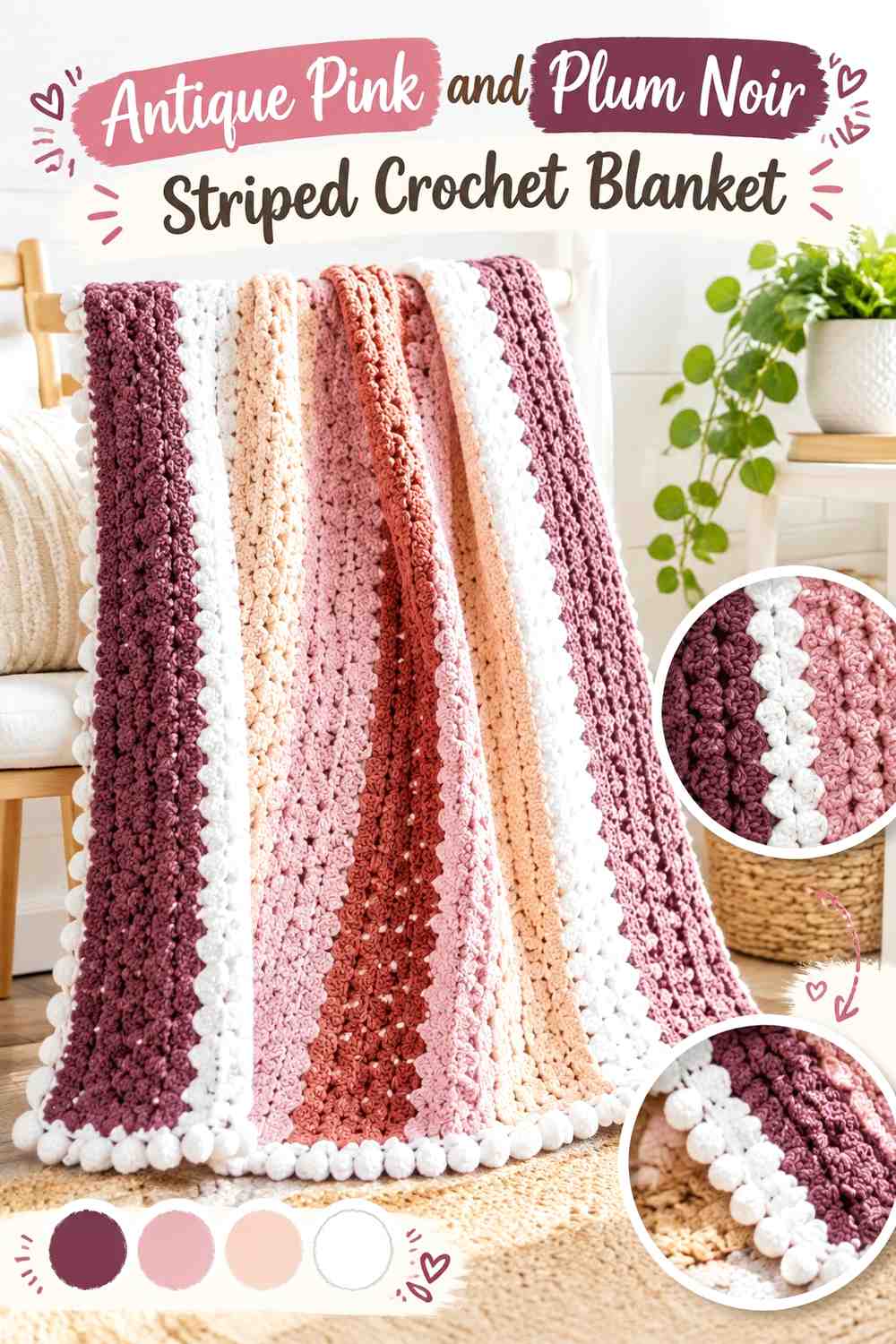
1. Antique Pink And Plum Noir Striped Crochet Blanket
 SAVE
SAVEA striped blanket gives this palette enough surface area to establish a clear hierarchy. Antique pink can form the wider bands, with Plum Noir appearing in narrower repeated stripes so the blanket stays soft overall without losing definition.
You can also use Plum Noir at the outer edge to reconnect the darker stripes. If the blanket texture is already pronounced, larger color sections are usually easier to read than numerous thin alternating lines.
Let Antique Pink Carry the Widest Crochet Blanket Stripes
Broad antique-pink bands keep the lighter shade dominant and provide uninterrupted space for the crochet texture to repeat. This can prevent a dark Plum Noir stripe from appearing to divide every small section of the blanket.
If you want more depth, increase the width of selected Plum Noir bands rather than adding many additional ones. A few substantial dark areas create clearer rhythm across a large surface.
Use Plum Noir to Define the Antique Pink Crochet Blanket Edge
Plum Noir around the perimeter can frame the lighter blanket center and give the darker stripes a visible destination at the outer edge.
If a full dark border feels too heavy, keep the border antique pink and place one final Plum Noir stripe just inside it. That preserves definition without making the perimeter the darkest part of the entire blanket.
Creator Credit: Daisy Farm Crafts
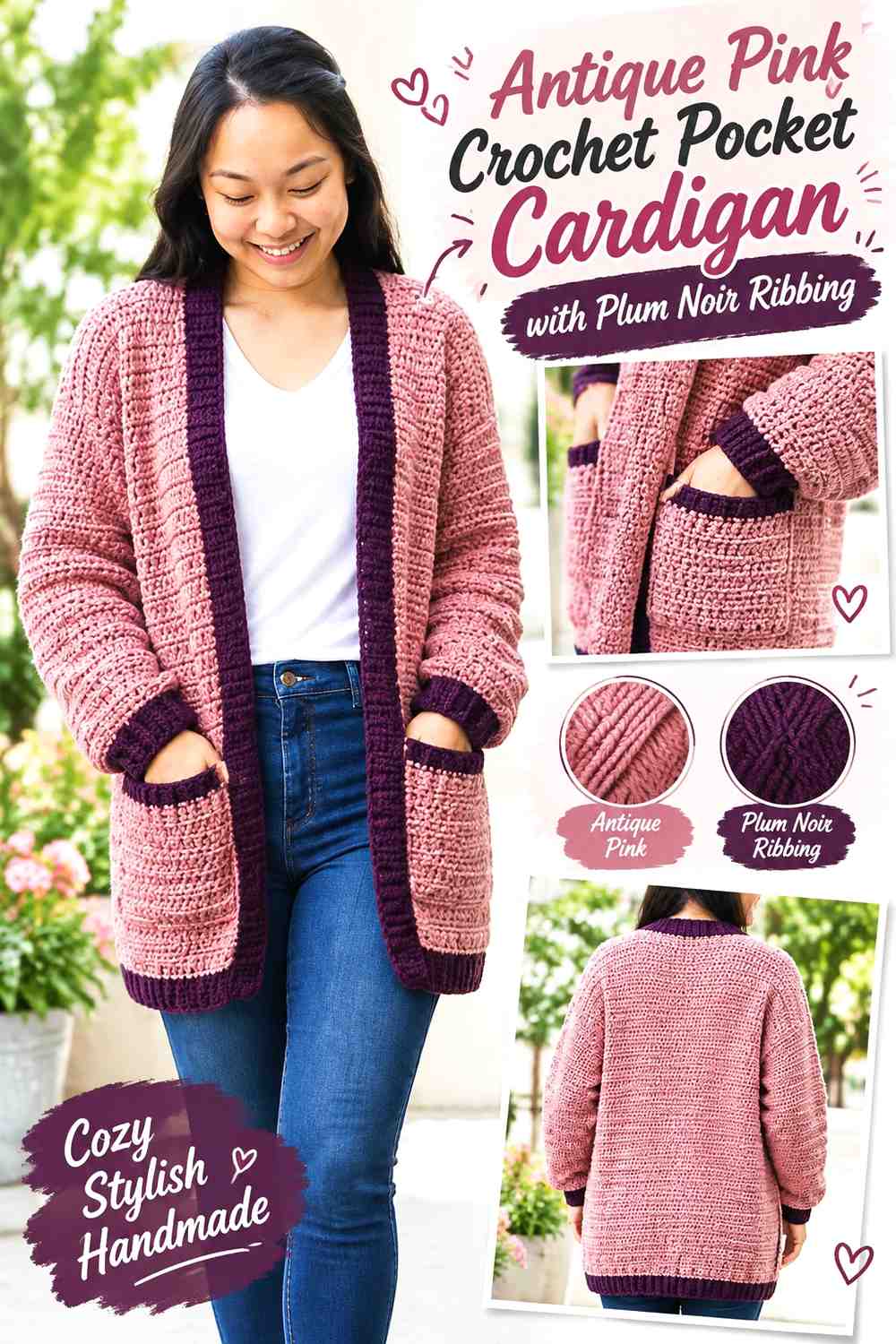
2. Antique Pink Crochet Pocket Cardigan With Plum Noir Ribbing
 SAVE
SAVEA cardigan offers several places for Plum Noir to repeat naturally without interrupting large antique-pink body panels. Cuffs, pockets, neckline edging, and lower ribbing can all carry the darker shade.
The key is controlling how many of those areas you use. Plum Noir pockets plus wide cuffs and heavy lower ribbing may shift the garment toward a more evenly divided palette even when antique pink still covers most of the fabric.
Keep Antique Pink Across the Main Crochet Cardigan Panels
Using antique pink continuously across the front and back panels gives the garment a softer central field. Plum Noir then has a clear supporting job rather than becoming another competing body color.
If you want more dark color, extending Plum Noir farther up the sleeves is less visually disruptive than placing an isolated dark block in only one front panel.
Repeat Plum Noir Around Antique Pink Cardigan Pockets and Cuffs
Plum Noir pockets can become prominent against an antique-pink front, so repeating the dark shade at the cuffs helps connect those features to the rest of the cardigan.
A narrow Plum Noir neckline can complete the relationship. Check the garment as a whole before also making the hem dark, since several repeated trims can collectively become a major portion of the palette.
Creator Credit: forthefrills
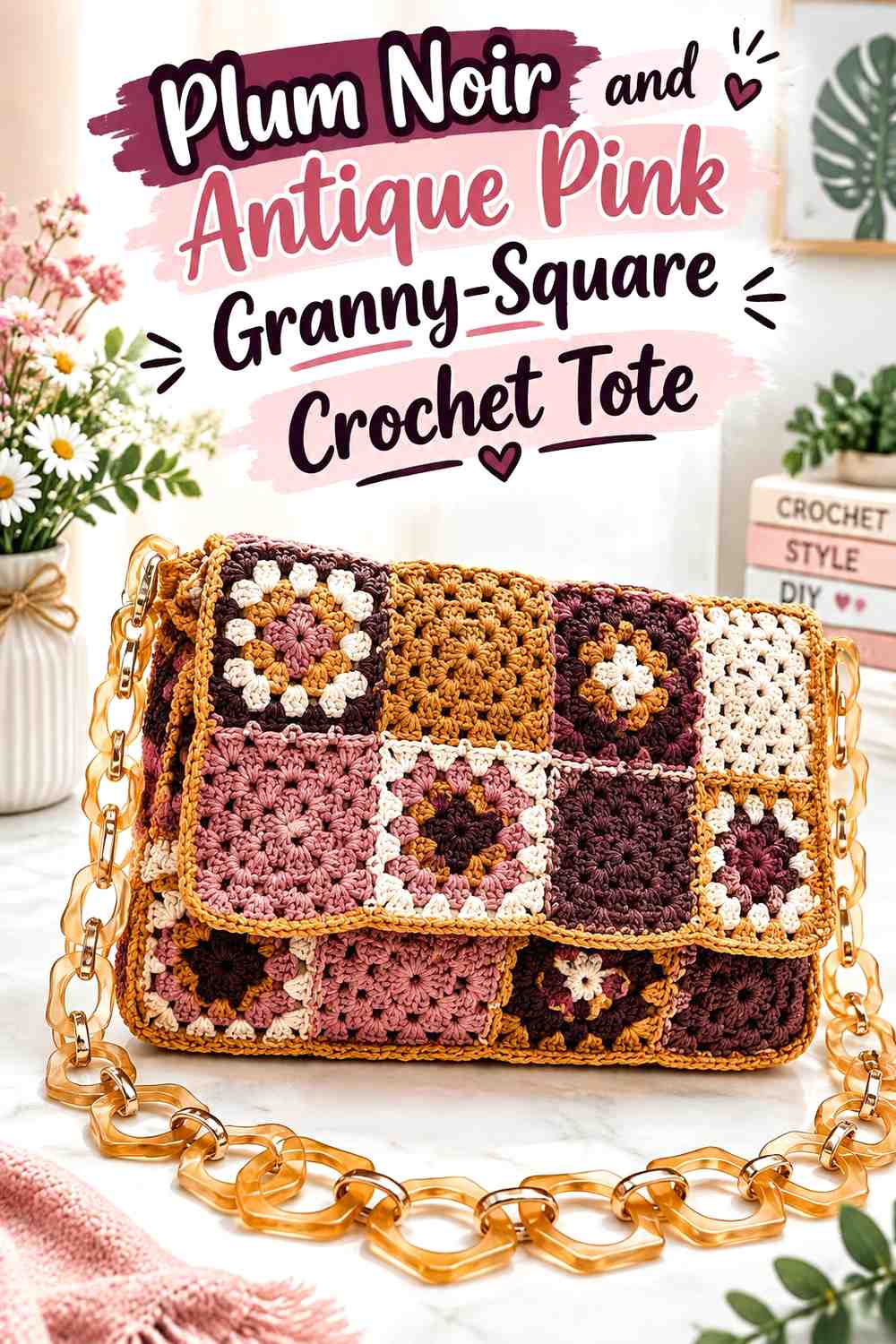
3. Plum Noir And Antique Pink Granny Square Crochet Tote
 SAVE
SAVEA granny-square tote can use Plum Noir as the common framework around antique-pink centers. Dark outer rounds and joins make individual motifs easier to separate while allowing the softer pink to repeat as a focal point across the bag.
The handles can then reinforce whichever shade needs more visual weight. Antique-pink handles lighten a dark tote, while Plum Noir handles extend the framework created by the joins.
Put Antique Pink Inside Plum Noir Crochet Tote Motifs
Antique-pink centers can break up a tote built from dark Plum Noir outer rounds. Keeping the pink in a consistent motif position creates a recognizable pattern across the finished bag.
Make those centers large enough to survive visually once the squares are joined. Very small antique-pink areas may appear less important against broad Plum Noir rounds than they do while you are holding one square.
Let Plum Noir Connect the Antique Pink Granny Squares
A Plum Noir joining color creates strong lines between motifs and can help the square layout remain visible from a distance.
If the joins, outer rounds, and handles are all Plum Noir, repeat antique pink near the bag opening when you want a more balanced result. A narrow pink upper edge may be enough.
Creator Credit: Brunaticality
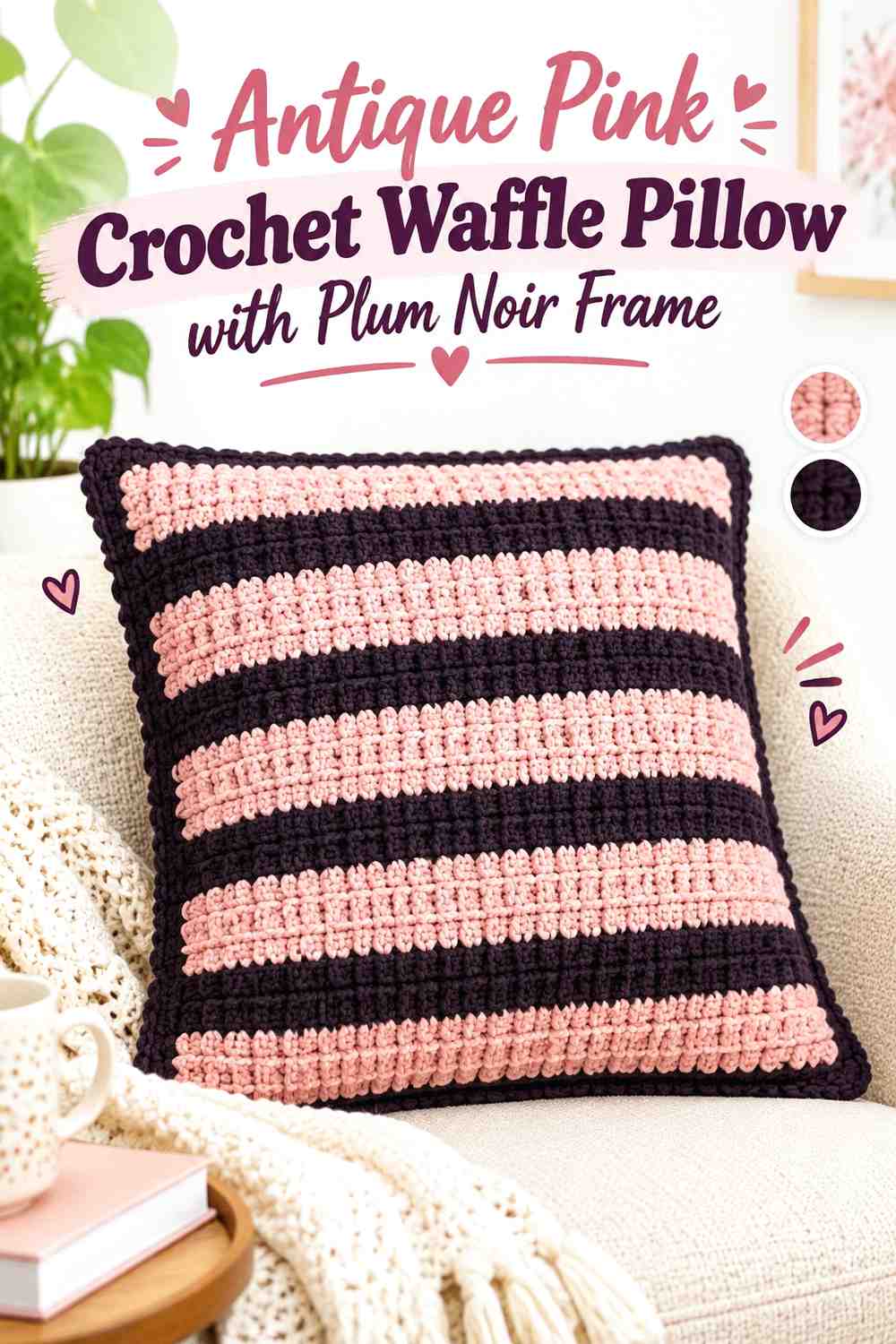
4. Antique Pink Crochet Waffle Pillow With Plum Noir Frame
 SAVE
SAVEWaffle texture creates enough surface detail that the pillow does not need complicated color blocking. Antique pink can cover most of the textured face while Plum Noir forms a border or selected dark bands.
This placement allows the raised texture to stay continuous. It also keeps Plum Noir concentrated around areas where the stronger value contrast can define the pillow’s shape.
Antique Pink Keeps the Crochet Waffle Texture More Visible
A lighter antique-pink field can make the shadows created by raised waffle texture easier to notice than an extremely dark field would under some lighting.
Before inserting Plum Noir through the center, check whether the texture already creates enough variation. The dark shade may be more useful around the perimeter than inside every textured repeat.
Plum Noir Gives the Antique Pink Crochet Pillow a Strong Frame
A Plum Noir border creates a clear outer boundary around the antique-pink face. Because pillows are usually viewed as complete surfaces rather than small individual sections, this perimeter treatment can have substantial impact.
Keep the border proportional to the pink center. If Plum Noir becomes too wide, the visible antique-pink surface can seem smaller and more enclosed.
Creator Credit: Yarnspirations
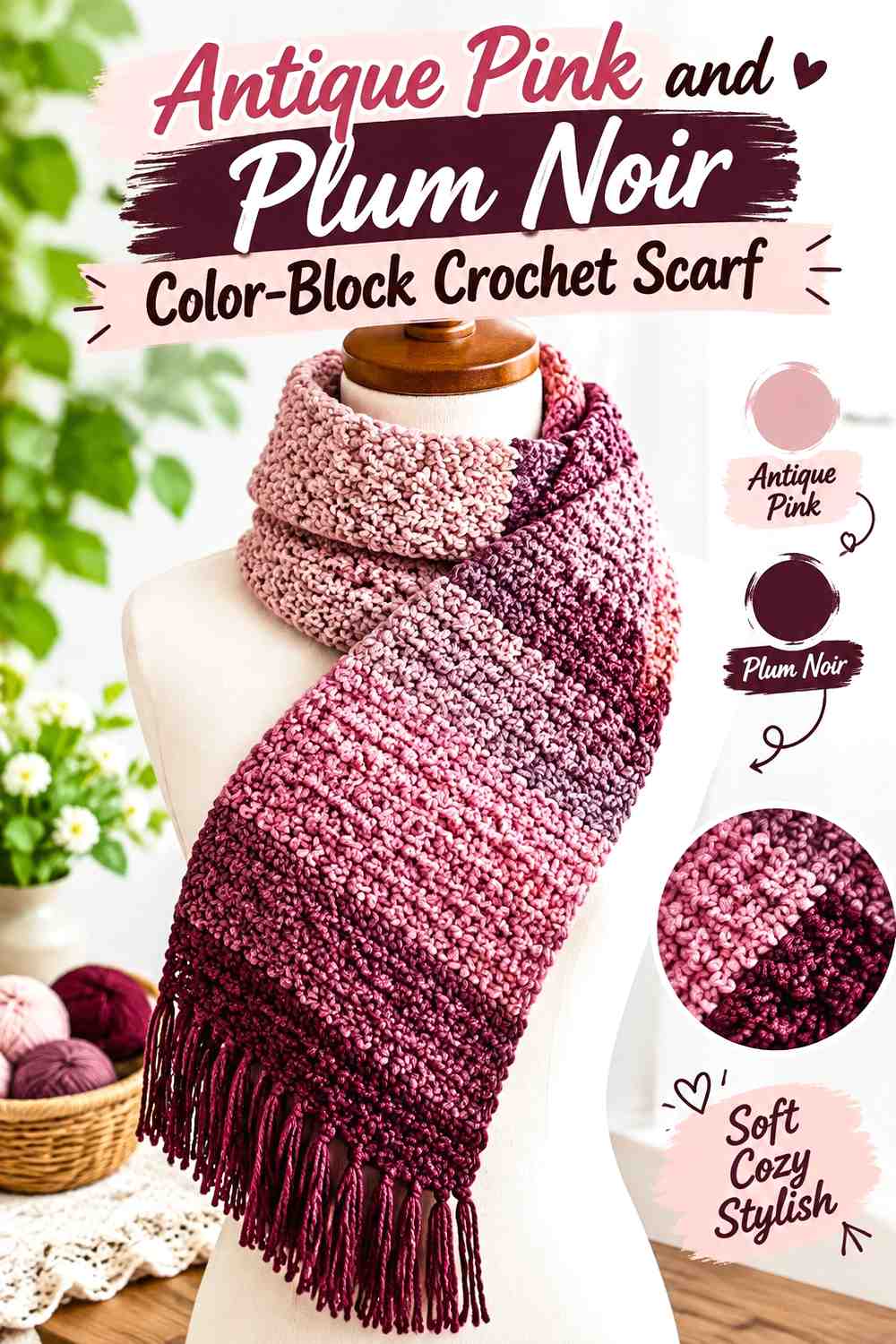
5. Antique Pink And Plum Noir Color Block Crochet Scarf
 SAVE
SAVEA scarf gives both colors enough length to work as large blocks instead of short alternating stripes. Antique pink can dominate the center, while Plum Noir finishes the ends or occupies one substantial off-center section.
Larger blocks suit this combination because the dark plum retains its impact without repeatedly interrupting the softer pink.
Keep Antique Pink Through the Main Crochet Scarf Length
A long antique-pink center creates visual continuity when the scarf hangs down or wraps around the neck. Texture can then provide smaller-scale variation.
If the scarf needs more Plum Noir, enlarge one dark section rather than scattering narrow stripes throughout the pink field.
Finish the Antique Pink Crochet Scarf with Plum Noir Ends
Plum Noir at both ends provides a strong visual stopping point and creates symmetry. Using it on only one end gives the scarf a more obvious asymmetric color-block treatment.
If fringe is included, antique-pink fringe over Plum Noir ends can pull the lighter main color back into the finishing area.
Creator Credit: Hooked by Robin
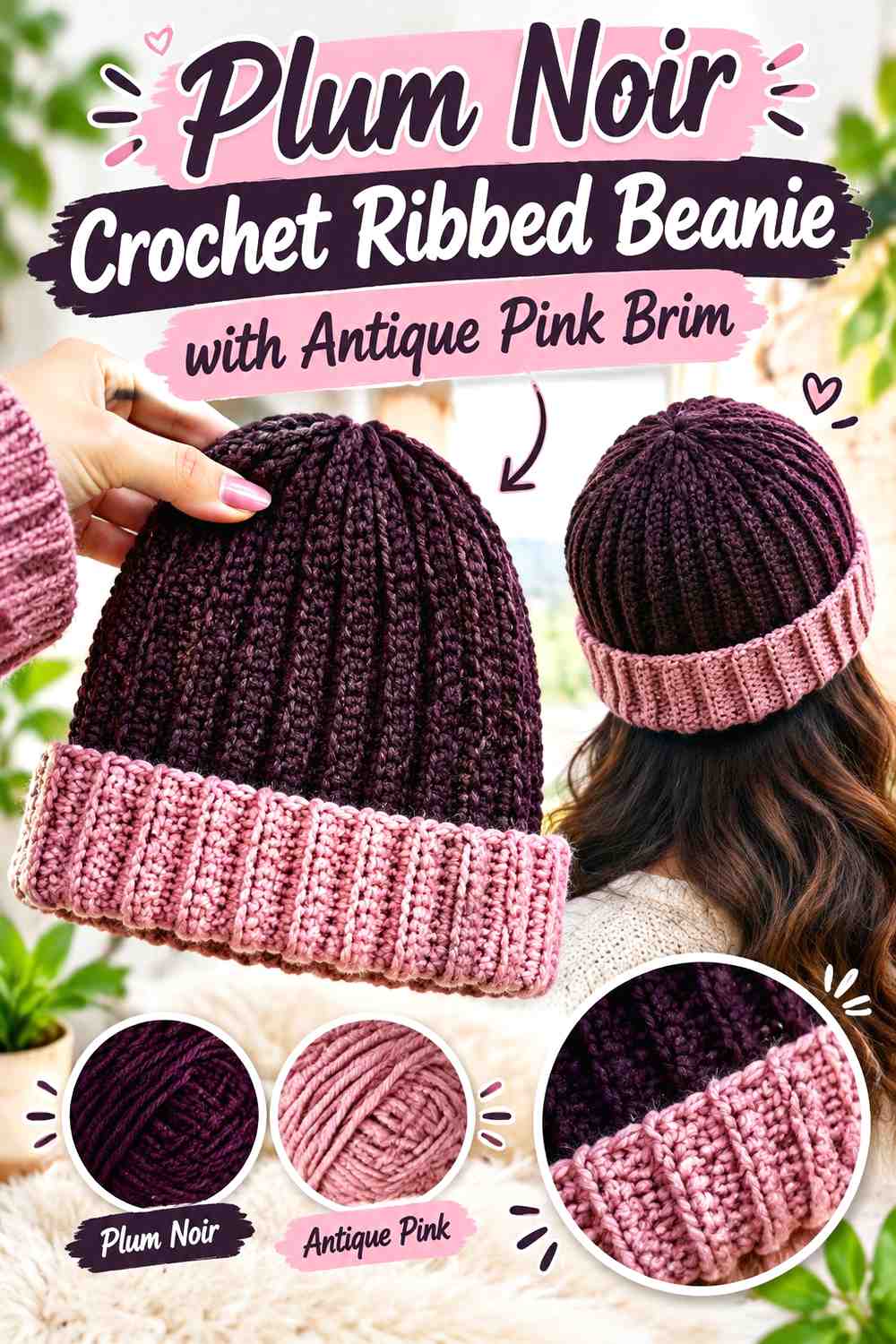
6. Plum Noir Crochet Ribbed Beanie With Antique Pink Brim
 SAVE
SAVEA ribbed beanie benefits from a simple color division because the ribbing already creates plenty of repeated visual lines. Plum Noir can cover the crown while antique pink defines the brim.
The lighter brim also prevents the entire accessory from becoming one uninterrupted dark area. For a softer version, reverse the colors and reserve Plum Noir for a narrow lower band.
Let Plum Noir Cover the Main Crochet Beanie Crown
A continuous Plum Noir crown keeps the shape unified and allows the ribbing itself to provide texture.
Because very dark yarn can reduce the visibility of small shadows, check a sample of the ribbing before deciding whether you want the whole crown in Plum Noir.
Antique Pink Can Separate the Plum Noir Beanie Brim
An antique-pink brim introduces a broad lighter band exactly where the hat changes visually from crown to lower edge.
If a full pink brim creates more contrast than you want, use Plum Noir for most of the brim and reserve antique pink for one narrower section.
Creator Credit: VivCrochets
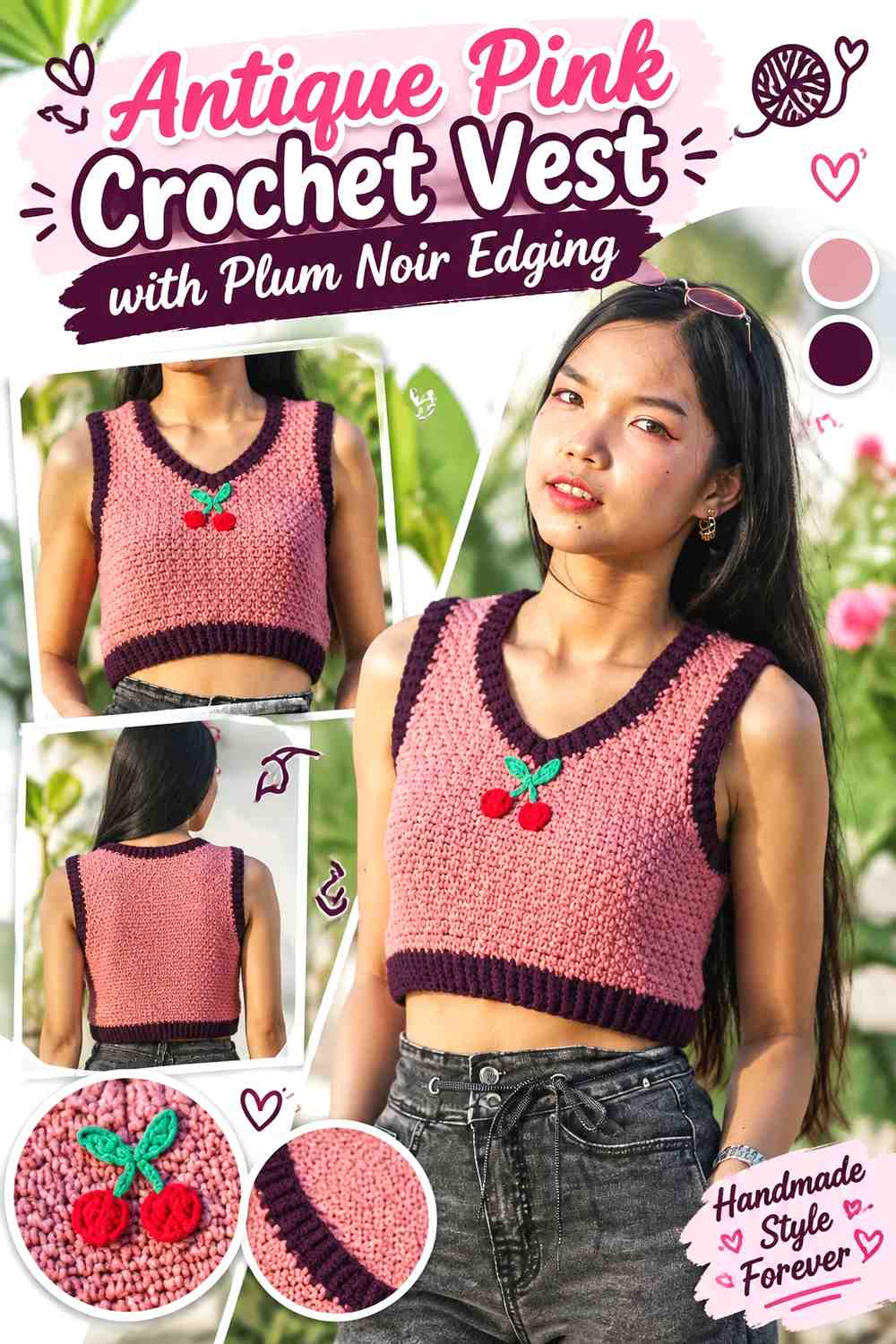
7. Antique Pink Crochet Vest With Plum Noir Edging
 SAVE
SAVEA vest offers neckline, armholes, and hem as natural locations for Plum Noir. Keeping the main front and back panels antique pink produces a softer wearable center while the dark edging shows the garment’s outline.
This is more controlled than dividing the vest into many small dark and light blocks, especially if the fabric already contains ribbing or other visible texture.
Keep Antique Pink Across the Main Crochet Vest Body
An uninterrupted antique-pink body makes the garment’s construction easier to read and gives Plum Noir edging a consistent background.
If you want more Plum Noir, expand the lower trim or introduce one substantial section rather than scattering small patches across the torso.
Use Plum Noir to Outline Antique Pink Vest Openings
Plum Noir around the neckline and armholes gives the dark shade a structural role. Repeating it along the lower edge can connect the outline around the entire vest.
The trim does not need equal width everywhere. A broader Plum Noir hem paired with narrower armhole edging can create useful hierarchy.
Creator Credit: Chenda DIY
8. Antique Pink And Plum Noir Crochet Granny Squares
 SAVE
SAVEIndividual squares let antique pink and Plum Noir exchange roles repeatedly. Some motifs can begin with antique pink and finish with Plum Noir, while others reverse the sequence.
The important decision is what happens on the outer round. That color strongly influences whether neighboring motifs blend into a continuous field or remain visibly separated after joining.
Use Antique Pink Centers Inside Plum Noir Crochet Granny Squares
An antique-pink center can create a soft focal point surrounded by increasingly dark Plum Noir rounds. This gives the motif a clear center-to-edge progression.
When making many squares, keep this arrangement on enough motifs to establish a pattern rather than changing the color order completely at random.
Use Plum Noir Outer Rounds to Separate Antique Pink Crochet Motifs
Plum Noir outer rounds can make the edges of antique-pink-heavy squares easy to distinguish. A lighter joining color is not automatically necessary if the dark outlines already provide enough separation.
If Plum Noir is also used for joins, test two completed squares together first. The outer rounds and join may visually merge, which can be useful for a continuous dark framework but less suitable if you want every edge emphasized.
Creator Credit: Sirin’s Crochet
9. Plum Noir Crochet Batwing Sweater With Antique Pink Cuffs
 SAVE
SAVEA batwing sweater has enough uninterrupted surface for Plum Noir to become a dramatic main color. Antique pink can appear where the wide sleeves narrow toward the cuffs and repeat around the neckline or lower band.
Because the sweater body is broad, a large dark field works differently here than on a small accessory. The pink details need enough area to remain visible across the full garment.
Keep Plum Noir Continuous Across the Crochet Sweater Body
Plum Noir across the front, back, and upper sleeves allows the broad batwing silhouette to read as one dark shape.
If you want to soften that field, extend antique pink upward from the cuffs rather than inserting unrelated small blocks across the torso.
Antique Pink Cuffs Can Break Up Plum Noir Crochet Sleeves
Antique-pink cuffs create obvious endpoints at the wrists and introduce the lighter shade where the garment naturally narrows.
Repeat antique pink around the neckline or lower edge to connect the cuffs. Without that repetition, the pink may appear isolated at the ends of otherwise completely dark sleeves.
Creator Credit: TCDDIY
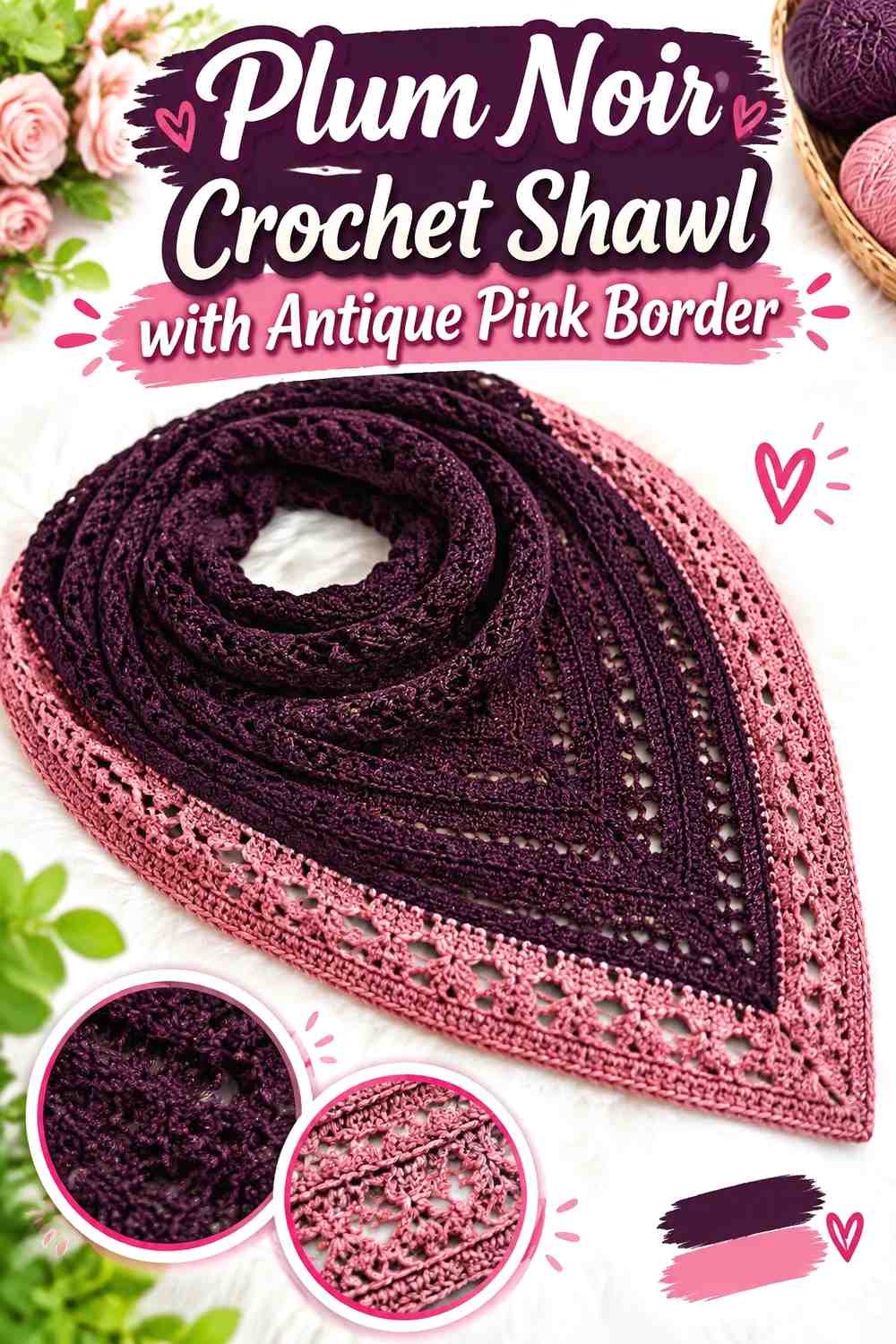
10. Plum Noir Crochet Shawl With Antique Pink Border
 SAVE
SAVEA shawl can gradually change its color balance as the fabric expands. Plum Noir can dominate the central and middle sections, while antique pink becomes more visible toward the wide outer edge.
This is especially effective when you want pink to soften a dark shawl without repeatedly interrupting the main Plum Noir body.
Let Plum Noir Establish the Main Crochet Shawl Field
Using Plum Noir through the central area creates a deep continuous base and leaves texture or openwork as the main source of variation.
If that dark field becomes visually heavier than expected, introduce one substantial antique-pink section rather than many thin alternating stripes.
Repeat Antique Pink Before the Plum Noir Crochet Shawl Border
If antique pink appears only at the final edge, it may seem detached from the main shawl. A narrower pink section farther inside creates an earlier reference point.
The inner pink repeat and outer pink border do not need equal widths. Keeping one small and one larger creates hierarchy while allowing Plum Noir to remain dominant.
Creator Credit: Bag-O-Day Crochet
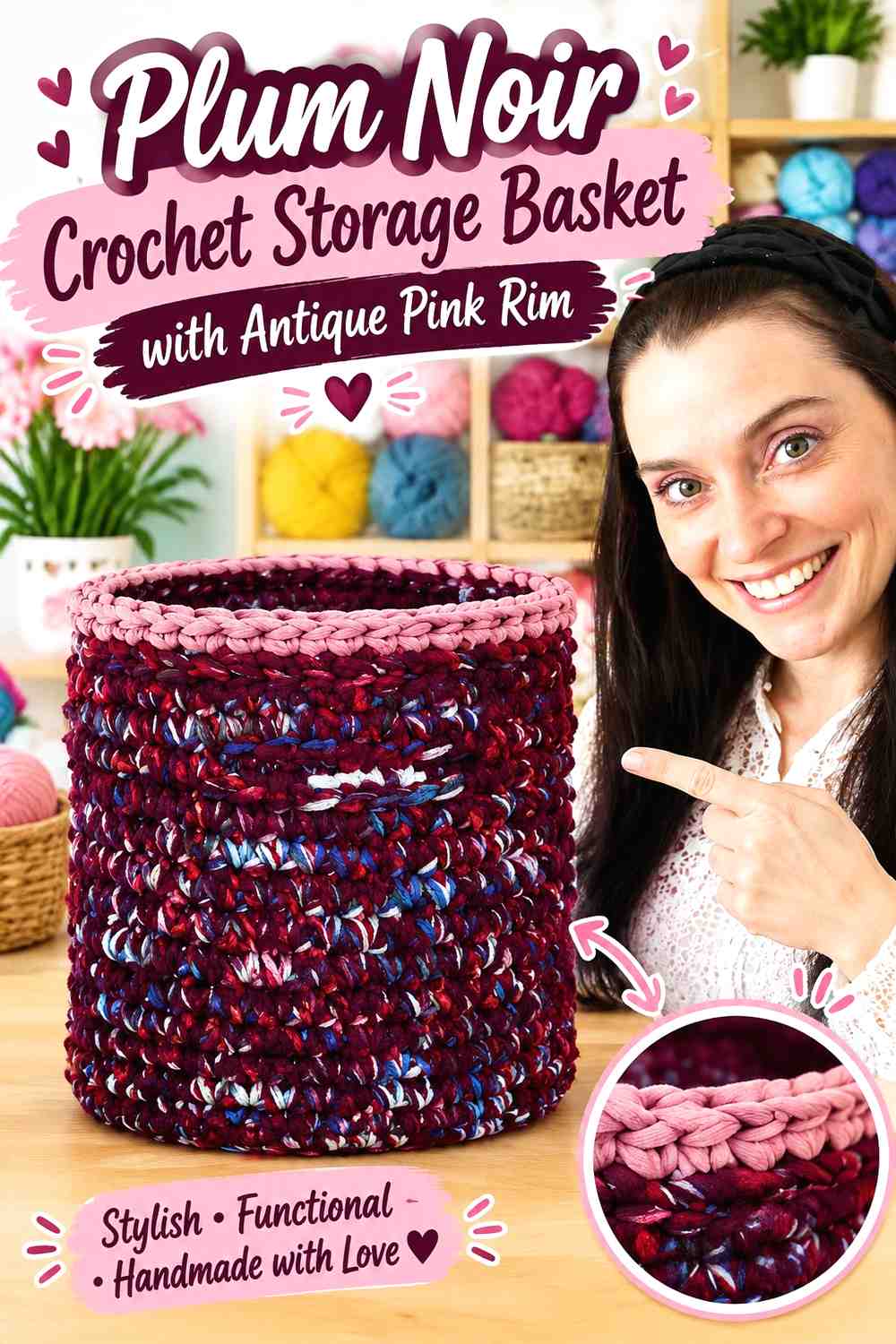
11. Plum Noir Crochet Storage Basket With Antique Pink Rim
 SAVE
SAVEA storage basket is a useful project for a Plum Noir-led palette because the broad walls can carry the dark shade while antique pink remains visible around the rim or handles.
The pink accent is particularly effective near the opening, where it remains visible even when the basket is placed on a shelf or filled with other items.
Use Plum Noir Across the Main Crochet Basket Walls
A continuous Plum Noir field keeps the basket sides visually steady and allows stitch texture to repeat without frequent color interruptions.
If the dark yarn obscures a surface pattern you want to emphasize, reserve antique pink for a wider textured band rather than only a narrow decorative line.
Antique Pink Can Define the Plum Noir Basket Opening
An antique-pink rim creates a lighter visual boundary around the top of the basket. The same color can be repeated on handles when the design includes them.
If both the rim and handles are substantial, antique pink may gain more visual weight than expected. Keep one area narrower if Plum Noir should remain clearly dominant.
Creator Credit: Jayda InStitches
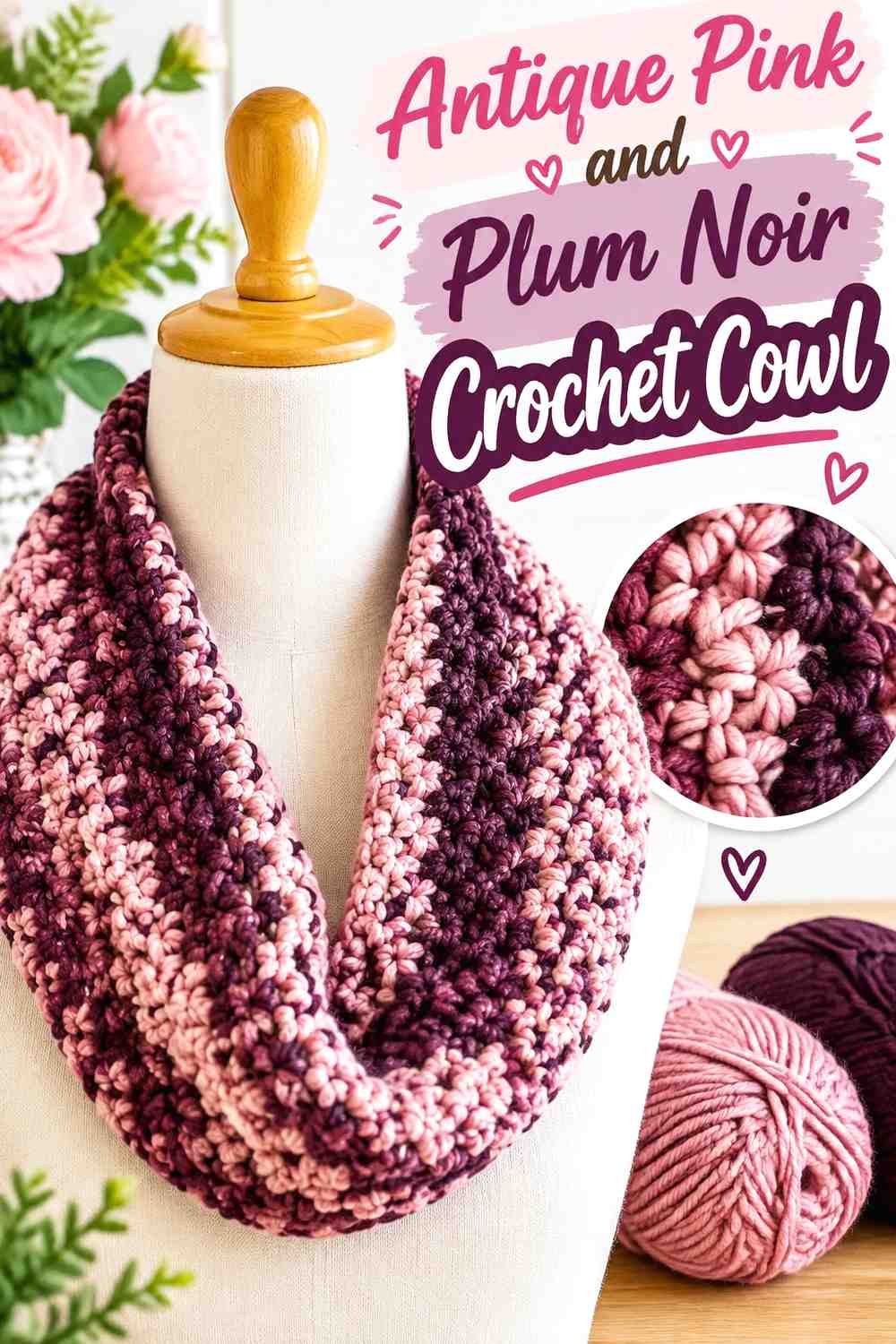
12. Antique Pink And Plum Noir Crochet Cowl
 SAVE
SAVEA cowl concentrates the palette into a relatively small wearable area, so large color zones are usually clearer than many narrow stripes. Antique pink can occupy the main center while Plum Noir defines one or both edges.
The reverse arrangement creates a darker cowl with pink concentrated near the face or lower border. Either way, decide which shade should dominate before distributing the trim.
Keep Antique Pink Across the Main Crochet Cowl Surface
Antique pink through the center gives ribbing or other crochet texture enough uninterrupted space to remain visible.
If the cowl already has strong texture, one Plum Noir edge may provide all the extra contrast needed. Additional dark stripes are optional rather than automatically necessary.
Use Plum Noir to Frame the Antique Pink Crochet Cowl
Plum Noir along the upper and lower edges creates a dark frame around the softer center. Using both edges produces symmetry, while one Plum Noir edge gives a less formal division.
If the frame becomes too dominant, narrow the Plum Noir sections rather than inserting additional pink detailing inside them.
Creator Credit: Fiber Flux
Comparing Antique Pink and Plum Noir Crochet Directions
For a lighter, softer overall result, start with the antique-pink-led blanket, cardigan, pillow, scarf, vest, flowers, or cowl. These projects give pink enough uninterrupted area to define the finished object while Plum Noir provides borders, ribbing, centers, or edging.
For a darker result, the beanie, sweater, shawl, and basket allow Plum Noir to take over the principal surface. Antique pink then becomes useful exactly where lighter contrast can clarify a brim, cuff, border, or opening.
The tote and granny-square ideas offer the most flexibility if you do not want one color to dominate the whole project. Individual motifs can reverse the two shades while a consistent joining or outer-round color keeps the final piece connected.
Conclusion
Antique pink and Plum Noir are most effective in crochet when their contrast is given a purpose. Antique pink can keep large surfaces softer and make detailed sections easier to see, while Plum Noir can define borders, joins, cuffs, straps, motif edges, and other structural areas.
Start by deciding which shade should cover the largest area. Then repeat the supporting color in two or three logical places instead of scattering small accents everywhere. A Plum Noir cuff that connects with a dark neckline, or an antique-pink shawl border that repeats once inside the body, usually creates a clearer palette.
For motifs, test the colors together before making a full batch. For larger garments and home decor, a small swatch can help you judge whether Plum Noir hides texture or whether your particular antique pink provides enough separation. Use the credited tutorials for exact construction while adapting the two colors to the balance you want.
Frequently Asked Questions
Should antique pink or Plum Noir be the main crochet color?
Either can lead. Antique pink produces a softer overall field with Plum Noir providing strong definition. Plum Noir creates a darker project in which smaller antique-pink areas can become obvious focal points. Choose the hierarchy according to the item rather than assuming both colors need equal coverage.
How can I check antique pink and Plum Noir contrast before crocheting?
Place the actual yarns side by side and view them under the lighting where the finished item will normally be used. A grayscale photograph can help you compare their light-and-dark values, especially for small motifs, narrow borders, and textured sections.
Where should Plum Noir go on a mostly antique-pink crochet garment?
Cuffs, neckline edging, hems, pockets, armholes, and planned color blocks are useful locations. Repeating Plum Noir at several related structural points usually looks more deliberate than adding isolated dark patches.
Can Plum Noir cover most of a crochet project?
Yes. Sweaters, shawls, baskets, hats, and bags can all use Plum Noir as the dominant field. Antique pink can then be concentrated around borders, cuffs, openings, handles, or motifs to keep important areas from disappearing into the dark surface.
How can I stop antique pink and Plum Noir crochet from looking too segmented?
Reduce the number of color changes and increase the size of the color zones. One broad Plum Noir border usually creates a clearer relationship with antique pink than many thin dark stripes spread across the project.
What should I substitute if I cannot find the exact antique pink?
Choose another muted or dusty pink that preserves the role of the original shade. If antique pink was meant to create lighter contrast against Plum Noir, make sure the substitute remains noticeably lighter instead of matching only the general pink hue.
What can replace Plum Noir in this crochet palette?
Choose another very deep plum, aubergine, wine-purple, or similarly dark purple-toned shade that keeps the intended contrast with antique pink. Preserve its dark supporting role rather than selecting a much brighter purple that would change the overall balance.