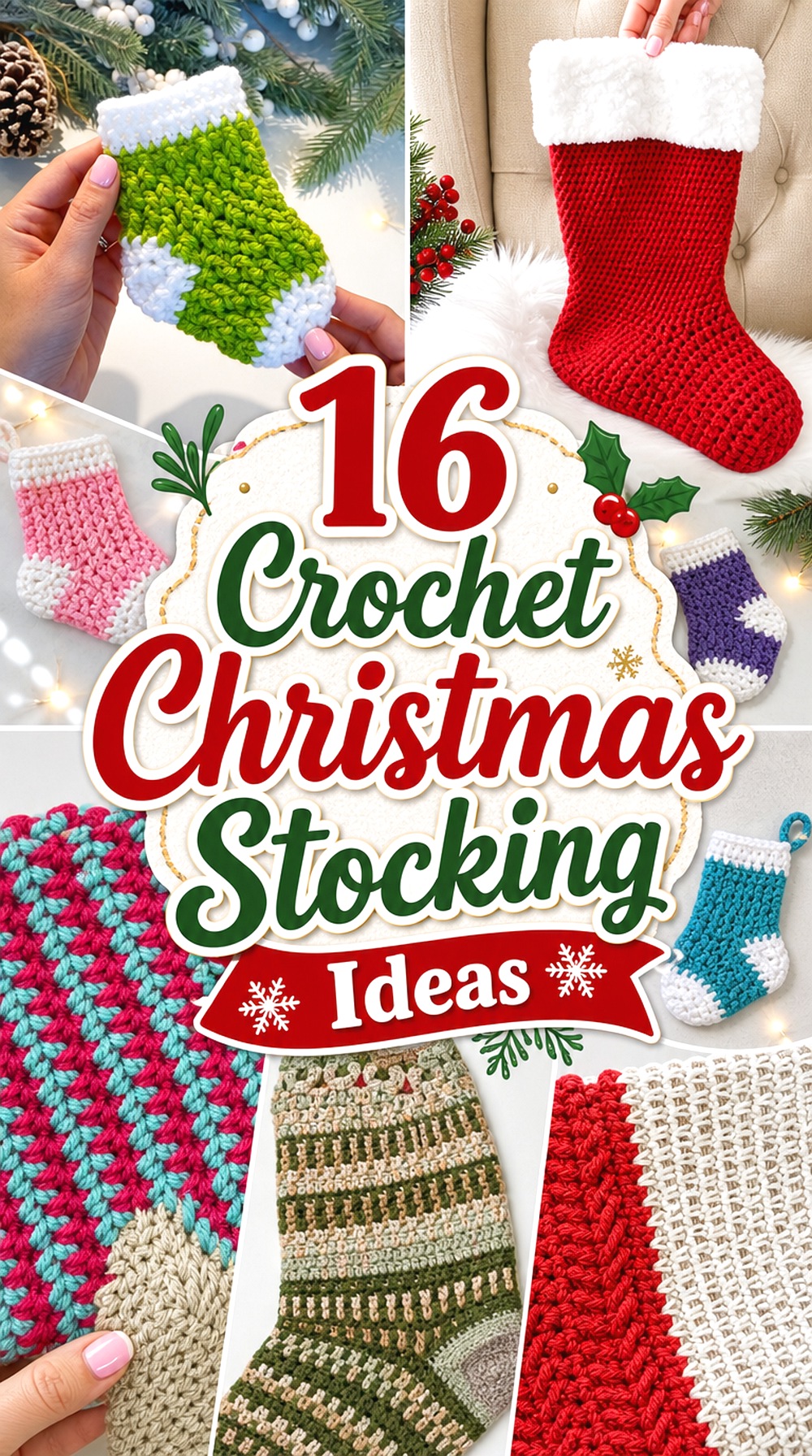
16 Crochet Christmas Stocking Ideas
A crochet Christmas stocking can be much more than the familiar red sock with a white cuff. The projects in this collection range from seamless toe-up stockings and textured cable designs to modular hexagons, mosaic colorwork, lined granny squares, fluffy faux fur, and miniature versions sized for ornaments or small gifts.
The differences matter when you start planning. Some constructions stretch more when filled, some put the decorative work front and center, and others make storage or personalization easier. This guide highlights those practical distinctions so you can compare shape, structure, texture, hanging details, and finishing before choosing a tutorial. Exact construction instructions remain with the original creators credited under each project.
Quick List
- Crochet Monogram Mantel Stocking
- Crochet Seamless Spiral Stocking
- Crochet Cable-Front Christmas Stocking
- Crochet Bobble and Faux-Fur Stocking
- Crochet Mosaic Holiday Stocking
- Crochet Hexagon Patchwork Stocking
- Crochet Lined Granny Square Stocking
- Crochet Plush Faux-Fur Stocking
- Crochet Chevron-Cuff Christmas Stocking
- Crochet Mini Gift Stocking
- Crochet Striped Mini Tree Stocking
- Crochet Classic Cuff-Down Stocking
- Crochet Flat-Seamed Christmas Stocking
- Crochet Granny-Stitch Tube Stocking
- Crochet Puff Stitch Christmas Stocking
- Crochet Classic Toe-Up Mantel Stocking
Choose the Stocking Construction Before the Color Palette
Stocking construction changes more than the making process. A seamless or mostly continuous stocking reduces visible joining and gives the fabric a consistent surface, while a flat-panel stocking makes it easier to see the overall silhouette before seaming. Modular granny squares and hexagons create deliberate join lines that become part of the design rather than something to hide.
Think about what you want to customize later. Motif-based stockings make color placement highly flexible, while a smooth solid stocking leaves more visual space for names, surface decoration, tags, or embroidery. If you plan to make a coordinated family set, compare the construction effort as carefully as the finished appearance. Repeating a simple body may be more practical than repeating complex colorwork several times.
Plan for Hanging, Filling, and Stretch
A stocking displayed empty has different structural demands from one regularly filled with gifts. Crochet fabric can stretch under weight, especially when the stitch pattern is open or the yarn is particularly elastic. Pay attention to the upper edge and hanging loop because that small attachment point carries much of the load.
Motif stockings deserve extra consideration. Open granny-square spaces can allow small objects to poke through, which is one reason a lining can be useful. For any design intended to hold heavier contents, check the creator’s construction and consider whether additional lining or reinforcement is compatible before modifying it. Avoid assuming that a decorative crochet stocking has a specific weight capacity unless the designer explicitly provides one.
Match Yarn Character to the Finished Look
Texture-heavy stockings benefit from yarn that lets cables, bobbles, puffs, or mosaic lines remain visible. Extremely fuzzy yarn can soften stitch definition, which may be exactly what you want for a plush stocking but less helpful for detailed relief work.
Cuff yarn deserves separate consideration. Faux fur creates strong visual contrast but can make individual stitches difficult to see while working. A smoother ribbed or solid cuff is easier to inspect and can also provide a cleaner area for names or tags. If you substitute yarn, remember that thickness changes the scale of the finished stocking as well as its drape. Compare your fabric with the tutorial’s intended shape rather than assuming a yarn swap will preserve the same dimensions.
1. Crochet Monogram Mantel Stocking
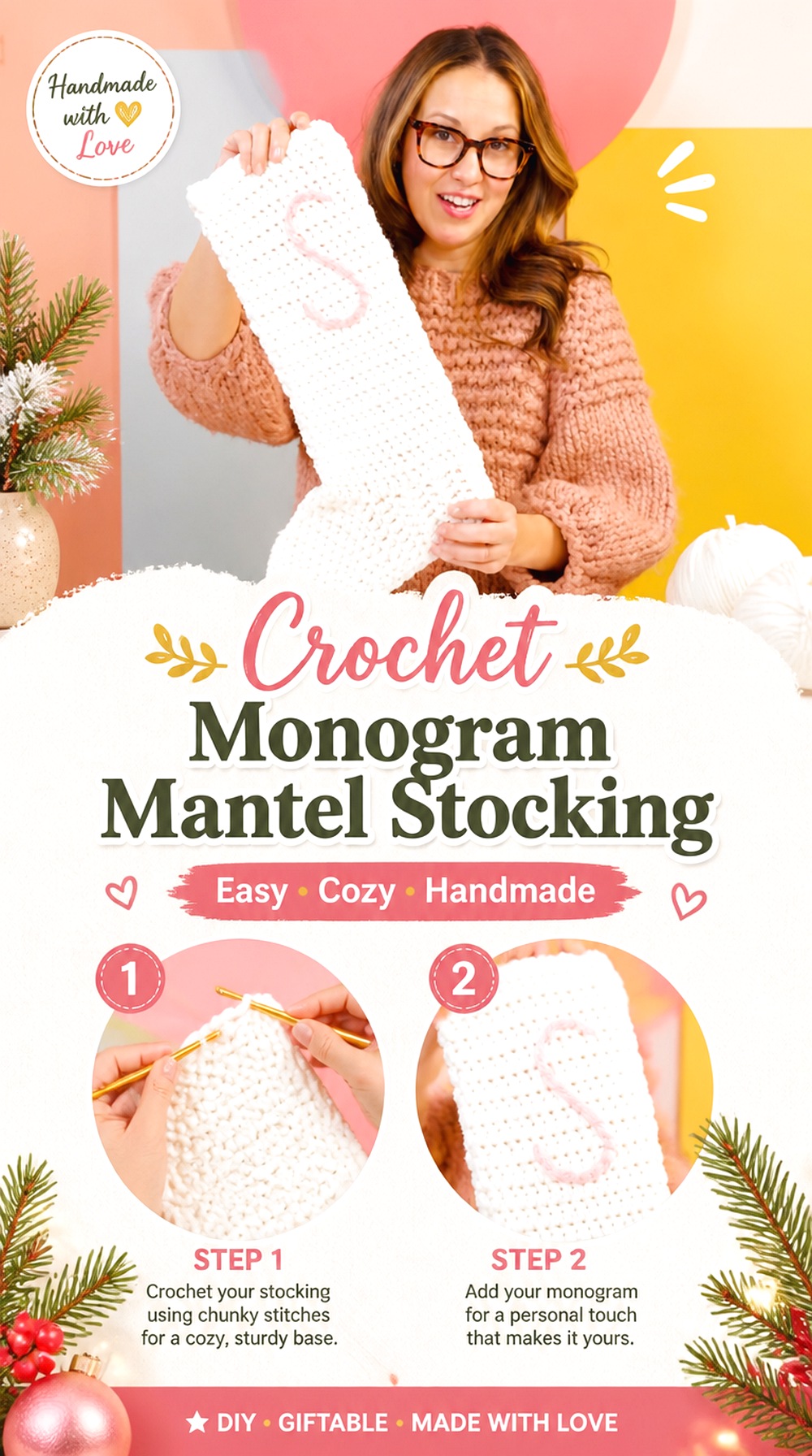
This stocking combines a recognizable traditional silhouette with personalization at the finishing stage. The Good Housekeeping Stitch Club tutorial demonstrates a complete stocking with toe, heel, leg, hanging loop, finishing, and a monogram, making the personalization a genuine part of the project rather than an afterthought. That makes this option particularly useful when you want a coordinated family display in which every stocking shares one basic form but still has a clear owner. The relatively uncluttered body also gives initials room to remain visible instead of competing with dense motif work.
Keep the Initial Readable From Display Distance
A monogram works best when it remains distinct after the stocking is hanging among greenery, lights, and other decorations. Before adding it, lay the finished stocking flat and identify the area that naturally faces forward. A letter placed too close to the heel, fold, or edge can become partly hidden when the stocking hangs.
Personalization Is Easier on a Quiet Background
If the initial is the main decorative feature, use color and texture strategically. A highly variegated or heavily textured body can reduce contrast around a letter, while a more restrained background gives the personalization greater visual weight. When making several stockings, keeping the same body construction but varying the initials can create a cohesive set without making every piece identical.
Original Tutorial and Creator Credit
Creator: Good Housekeeping
2. Crochet Seamless Spiral Stocking

A spiral construction gives this stocking a noticeably different workflow from designs assembled from panels or motifs. Katie Cooks and Crafts separates the tutorial into toe, foot, heel, leg, and cuff stages while maintaining the spiral/no-seam approach highlighted in the video title. The result suits crocheters who prefer working around the stocking rather than planning multiple pieces for later joining. A smooth continuous body is also useful if you want the yarn itself, rather than seams or motifs, to provide most of the visual interest.
Watch the Transition Around the Heel
The heel is where a simple tube must become a recognizable stocking. Before continuing far into the leg, check that the heel projects in the intended direction and that the foot still lies naturally. Catching an orientation issue early is much easier than discovering it after a long upper section has been completed.
A Continuous Surface Changes Decoration Options
With no patchwork joins dividing the body, stripes, color blocks, and surface embellishments can travel more freely around the stocking. If you plan to add a name or appliqué, decide which side will face outward when displayed so the decoration does not drift toward the side fold.
Original Tutorial and Creator Credit
Creator: Katie Cooks and Crafts
3. Crochet Cable Front Christmas Stocking

For a stocking that looks closer to a heavily textured winter knit, cables provide strong vertical definition. Sierra Fontaine’s tutorial builds a cabled front, a back, and a cuff before seaming the stocking, so this project differs substantially from round-based stocking constructions. The cable panel gives the front a clear display side, making it well suited to a mantel where the texture can remain visible. Because the front carries most of the visual interest, restrained colors can work especially well when you want the shadows around the raised stitches to do the decorating.
Let the Front Panel Stay the Focal Point
Before adding extra appliqués, buttons, or a large name, look at how much visual space the cable already occupies. Extra decoration can easily obscure the relief pattern. A simpler cuff, small tag, or subtle hanging detail may preserve the textured front more effectively.
Seaming Can Affect the Final Silhouette
When separate front and back pieces are joined, edge alignment matters. Compare the panel edges before committing to the final seam. If one piece has relaxed or stretched differently, correcting the shape first can prevent twisting and help the toe and leg sit more evenly.
Dense Texture Adds More Than Decoration
Raised cable work generally creates a more substantial surface than flat stitches. That can be an advantage for a structured display piece, but it also means yarn choice and tension have a stronger effect on stiffness and weight. Make a small sample if you are changing yarn substantially from the tutorial.
Original Tutorial and Creator Credit
Creator: Sierra Fontaine
4. Crochet Bobble and Faux Fur Stocking
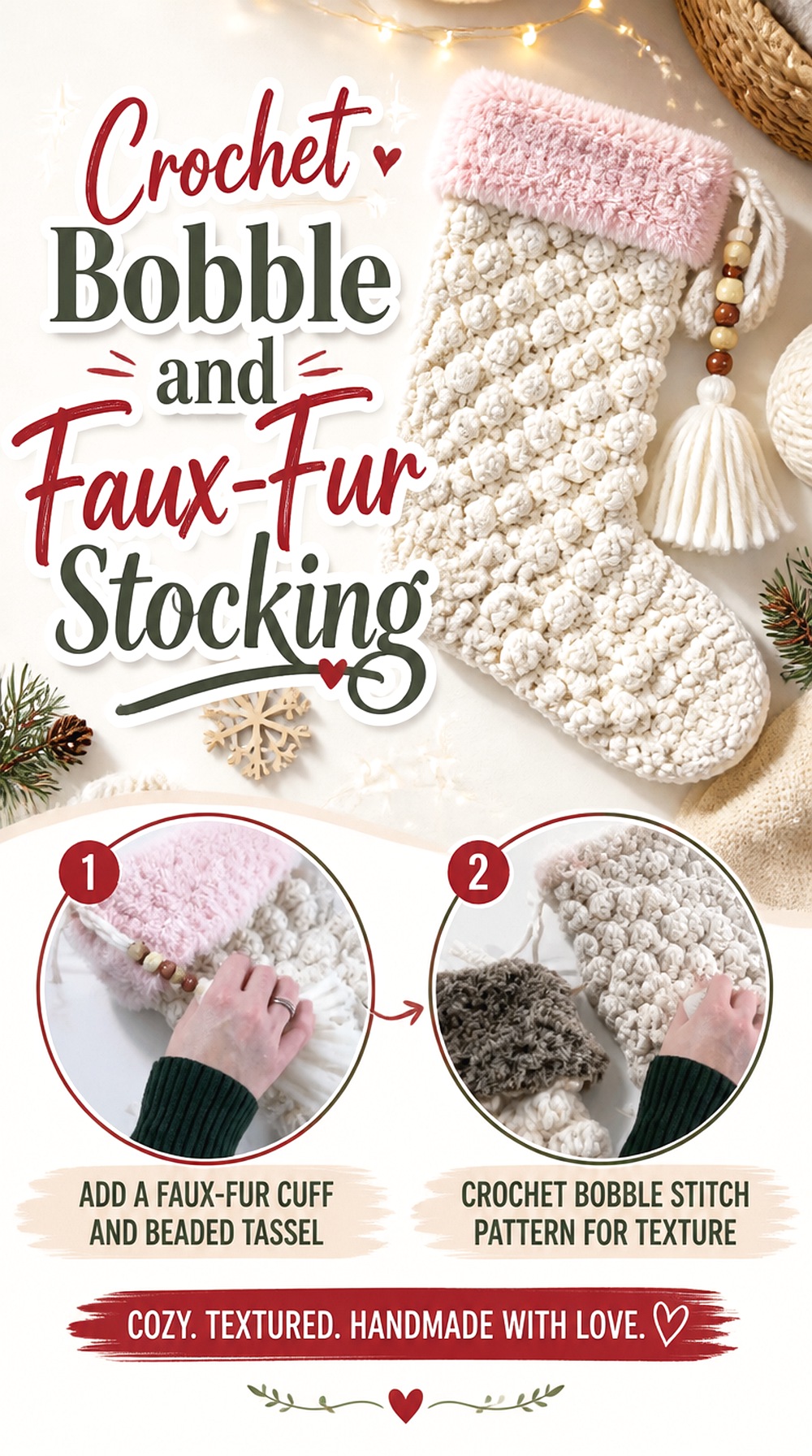
Bobbles turn the stocking body itself into a decorative surface, while the faux-fur cuff adds a second type of texture at the top. MJ’s Off The Hook Designs demonstrates a toe-up stocking with a heel completed later and a plush contrasting cuff. This approach works especially well for a stocking intended to look full and tactile even before anything is placed inside it. Because the texture repeats across much of the body, this design has more visual density than a simple solid stocking and needs less additional ornamentation.
Bobbles Need Space to Stay Distinct
If you substitute a very fuzzy yarn for the main body, the raised bobbles may lose some of their definition. A smoother yarn helps the texture cast visible shadows. Reserve the fluffiest fiber for the cuff when you want a clear distinction between the body pattern and trim.
Check the Heel Before Finishing the Upper Edge
A toe-up construction with a later heel means the stocking may not show its final balance immediately. Complete and inspect the heel before deciding where optional tassels, tags, or other embellishments should sit. The stocking’s hanging angle can affect where those details look most balanced.
A Fur Cuff Can Hide Stitch Placement
Faux-fur fibers often obscure individual loops. Stitch markers and careful counting can be more useful than visual inspection alone. If that working style feels frustrating, a smooth contrasting cuff can preserve the overall design without changing the bobble body that defines this stocking.
Original Tutorial and Creator Credit
Creator: MJ’s Off The Hook Designs
5. Crochet Mosaic Holiday Stocking
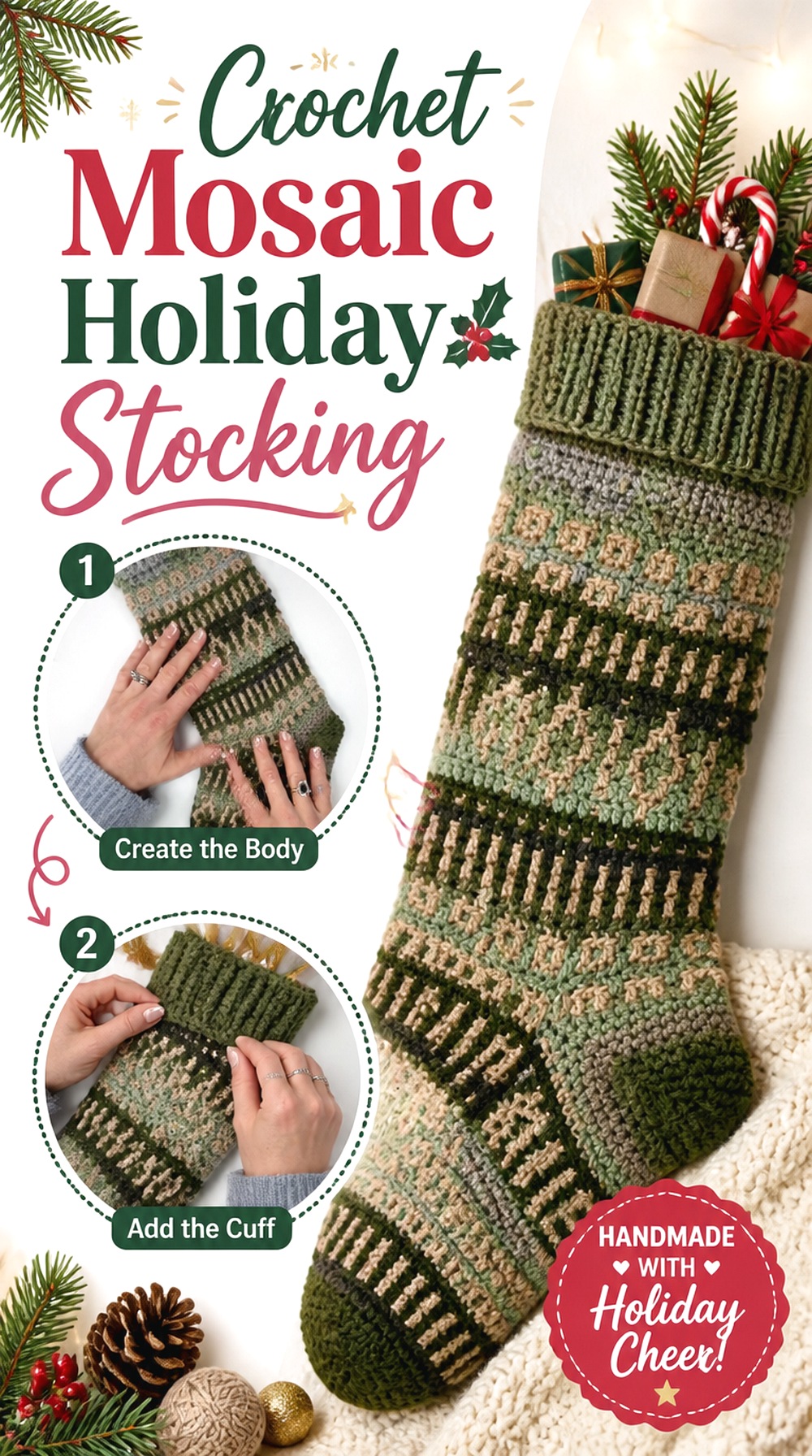
Mosaic crochet turns the stocking into a colorwork display rather than relying on attached decorations. HanJan Crochet’s tutorial covers a stocking pattern offered in five mosaic variations, using the contrast between two yarns to produce patterned surfaces. This project suits readers who want the leg and foot to carry a repeated graphic design while keeping the overall stocking silhouette traditional. It also provides a different route to a multicolor result than changing yarn for simple stripes because the colors interact as an intentional motif rather than separate bands.
Contrast Matters More Than the Individual Colors
Two beautiful yarns can still produce weak mosaic definition if their values are too similar. Before committing to the full stocking, view the yarns together from a distance or in a grayscale photo. Stronger light-dark separation usually makes the motif easier to read.
Keep Patterned Fabric From Becoming Visually Crowded
Mosaic work already supplies repeated detail, so extra appliqués can compete with it. If personalization matters, consider concentrating it around the cuff, hanging tag, or another calmer area rather than covering the central motif.
Check Colorwork Tension as the Leg Grows
Colorwork can change fabric behavior if carried or worked too tightly. Periodically flatten the stocking and check whether the patterned section is narrowing, puckering, or pulling upward. Addressing tension differences early helps keep the finished leg proportional to the foot.
Original Tutorial and Creator Credit
Creator: HanJan Crochet
6. Crochet Hexagon Patchwork Stocking
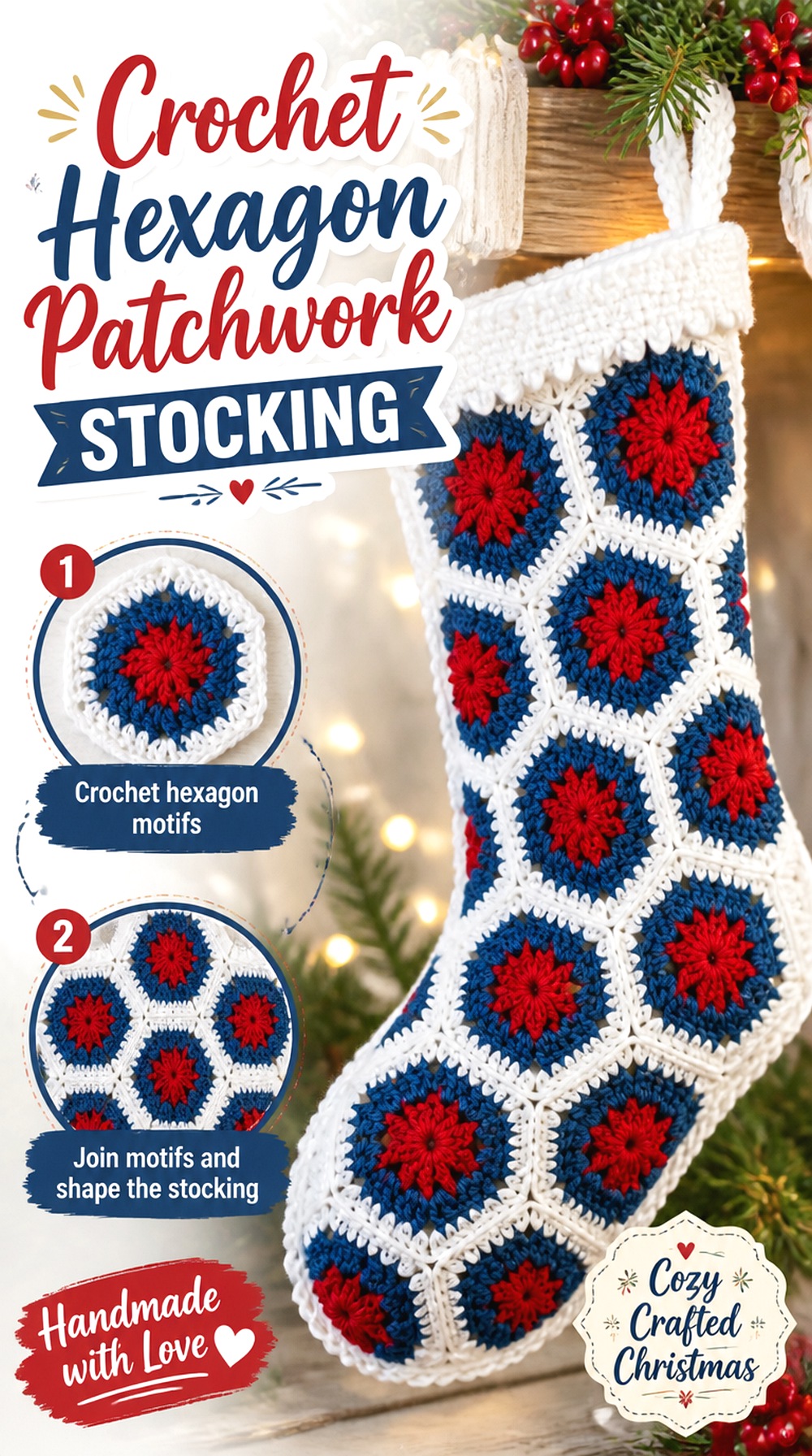
Instead of building a stocking from a tube or two shaped panels, this Bella Coco design assembles multiple crochet hexagons into the final form. The joins are deliberately visible, turning construction lines into part of the finished appearance. That makes it a strong choice for using several coordinated colors or for crocheters who enjoy making small portable motifs before assembling a larger object. The final piece reads as patchwork rather than a traditional smooth sock, so it brings a more handcrafted, geometric look to seasonal decor.
Arrange Every Hexagon Before Joining
Color placement becomes harder to change once assembly begins. Lay all completed motifs in the stocking configuration first and check the distribution from several feet away. Moving one strongly contrasting hexagon can improve balance without changing any crochet.
Match Motif Dimensions, Not Just Round Counts
Two hexagons worked with the same instructions can still finish at slightly different sizes because of tension changes. Compare the motifs after they have relaxed or been blocked as appropriate. Uneven pieces can pull joins out of alignment and distort the toe or upper edge.
Joins Become Part of the Finished Design
Choose the joining yarn with the same care as the motif colors. A contrasting join emphasizes the patchwork geometry, while a closer match can visually merge the pieces. Neither approach is automatically better; the choice depends on how strongly you want the modular construction to show.
Original Tutorial and Creator Credit
Creator: Bella Coco
7. Crochet Lined Granny Square Stocking
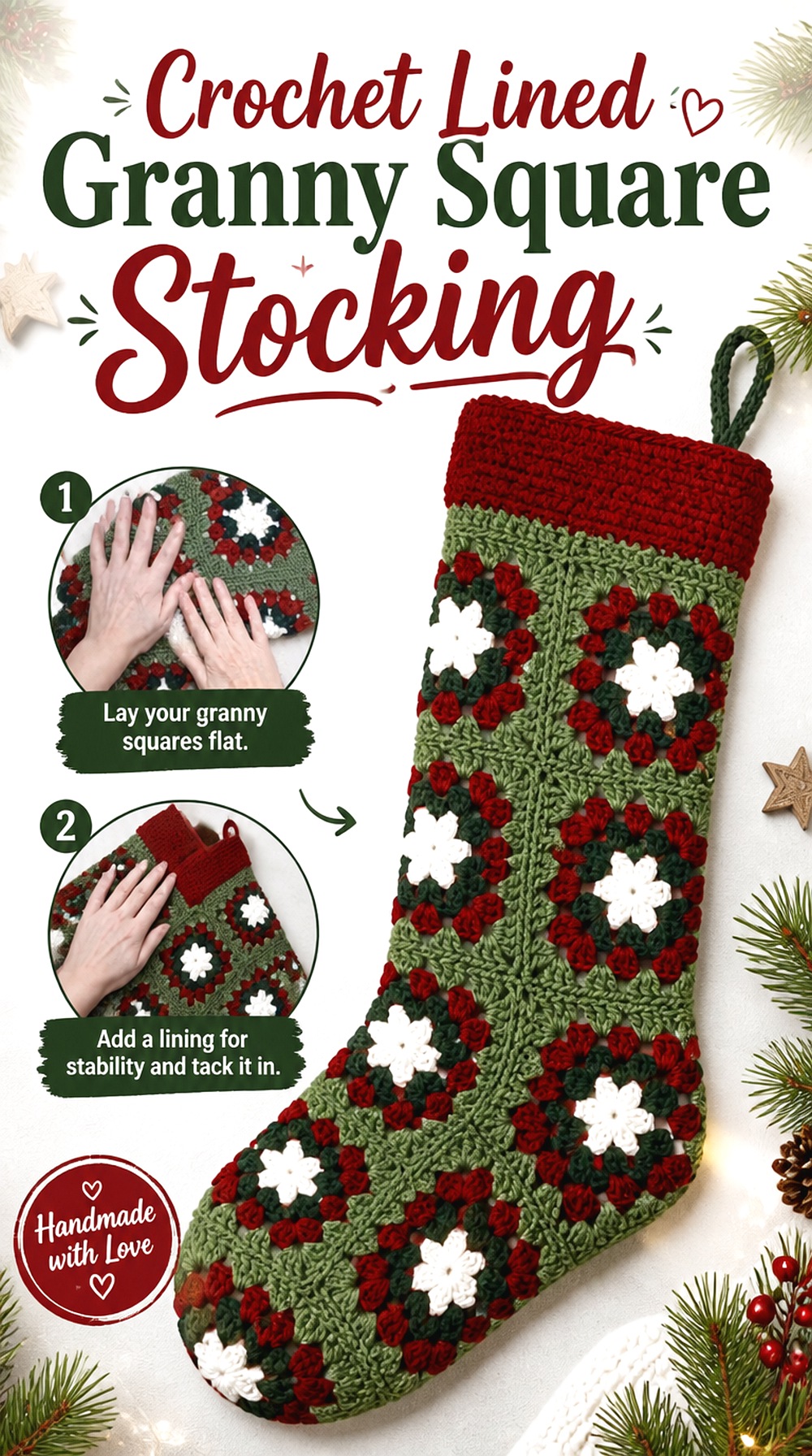
This project answers one of the most practical questions about an open motif stocking: what happens when you actually put small gifts inside it? Crochet with Patricia combines a granny-square stocking with a lining demonstration, so the interior treatment is central to the project. The lining helps separate the decorative crochet shell from the contents and addresses the open spaces naturally created by granny squares. Choose this approach when you like the nostalgic look of joined motifs but want the stocking to function more like a closed fabric container.
Lining Changes What the Stocking Can Hold
Open crochet fabric can allow narrow objects or packaging corners to push through the spaces. A lining creates a continuous interior surface. Before adding one, decide whether the stocking is mainly decorative or whether it will routinely hold small items, because that determines how valuable the extra finishing work will be.
Let the Crochet and Fabric Share the Load
A lining is most useful when it sits naturally inside the crochet shell rather than pulling against it. Avoid making the interior noticeably smaller than the outer stocking. If the two layers fight for shape, the motif joins may pucker when the stocking is filled.
Keep the Top Edge Neat on Both Layers
The upper edge is highly visible and also supports the hanging area. Plan how the lining will finish near the cuff before attaching it. A tidy transition helps prevent the fabric from rolling outward and showing unexpectedly when the stocking hangs empty.
Original Tutorial and Creator Credit
Creator: Crochet with Patricia
8. Crochet Plush Faux Fur Stocking
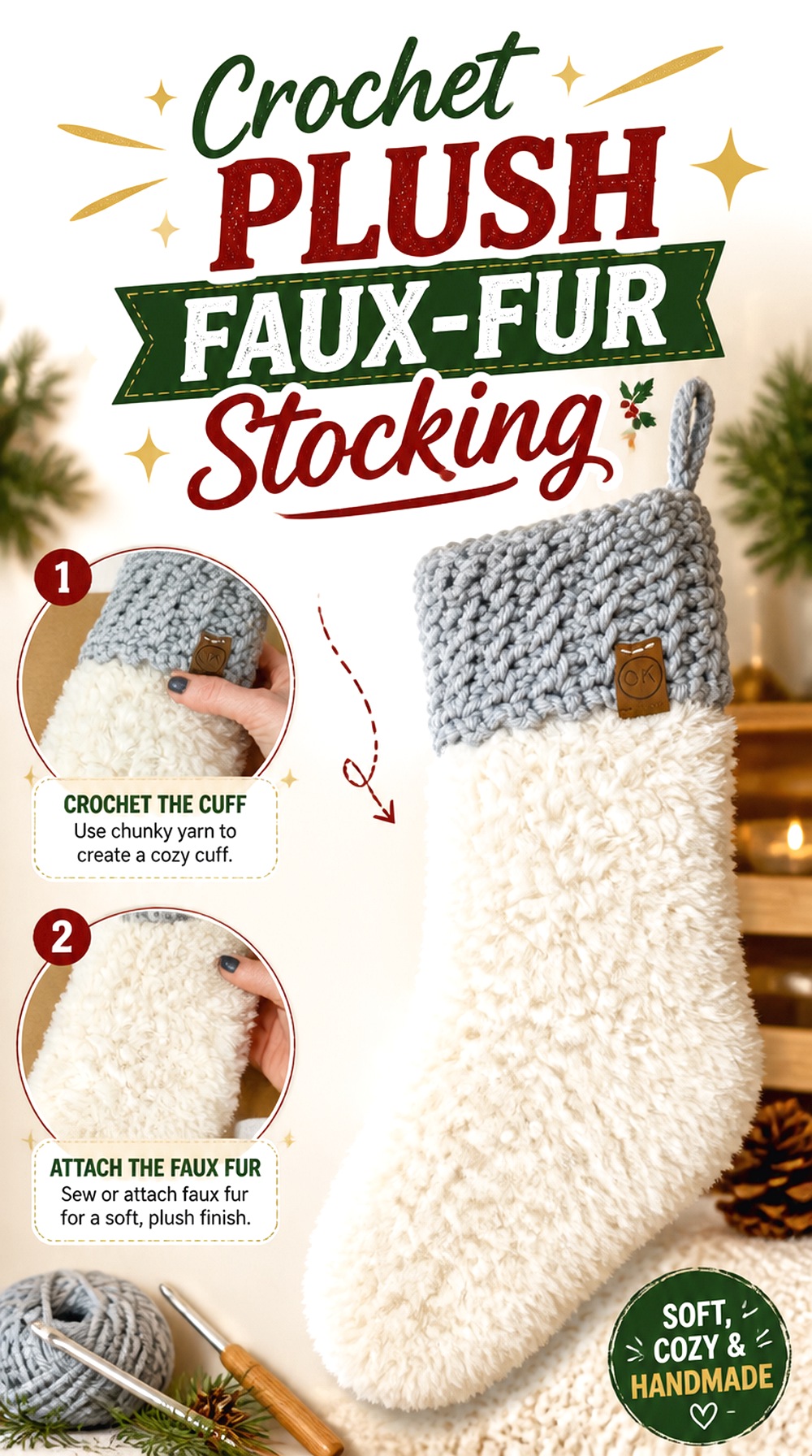
Here the fuzzy yarn is not confined to a narrow trim; plush texture becomes a major part of the stocking’s identity. Ginger Knots demonstrates a Christmas stocking using faux-fur yarn and notes that a different yarn is shown in the tutorial where visibility is helpful. The finished concept suits soft, snowy, or neutral holiday decorating where texture matters more than intricate stitch definition. It also provides a useful contrast to the cable and mosaic stockings in this collection because the fibers intentionally blur the individual stitches rather than highlighting them.
Feel for Stitches When You Cannot See Them
Long fibers can hide the tops of stitches almost completely. Marking important points and counting regularly can prevent errors from accumulating. If you are new to furry yarn, practice on a small sample first so you understand how the stitches feel under your fingers.
Plush Yarn Changes the Visual Scale
A fuzzy surface makes the stocking appear fuller and softer even when the underlying crochet shape is straightforward. Keep that in mind when adding a bulky cuff, pom-poms, or oversized tags; too many thick elements can overwhelm the silhouette.
Original Tutorial and Creator Credit
Creator: Ginger Knots
9. Crochet Chevron Cuff Christmas Stocking
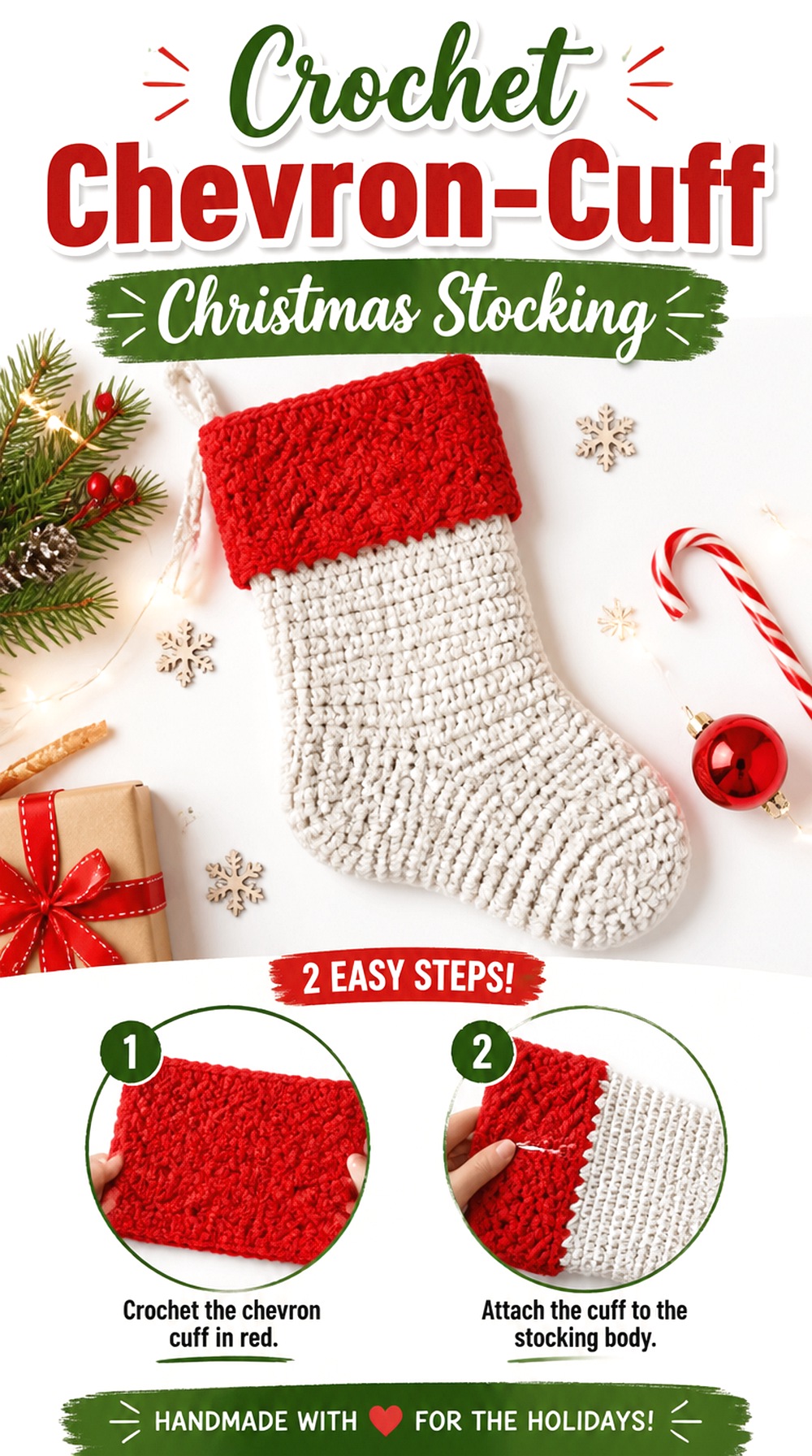
A chevron detail at the top gives this stocking a decorative opening before the viewer even reaches the main body. Crochet With Julie’s tutorial begins with the brim and then develops the body and boot shape, producing a different visual rhythm from stockings whose cuffs are plain ribbing or fluffy trim. The angled pattern works well when you want color changes concentrated around the top rather than spread over the entire leg. This makes the cuff a strong focal point while leaving the lower body comparatively simple.
Keep the Chevron Edge From Flaring
Decorative brims can become wider than the stocking body when their tension differs. Before moving far into the lower section, check how the cuff sits when laid flat. A pronounced flare may be intentional, but an accidental one can make the finished stocking look top-heavy.
Use Color Changes to Clarify the Zigzag
Chevron shapes are easiest to recognize when adjacent sections separate clearly. Similar tones produce a quieter effect, while stronger contrast emphasizes each peak and valley. Decide whether the brim should dominate the design before choosing the palette.
Original Tutorial and Creator Credit
Creator: Crochet With Julie
10. Crochet Mini Gift Stocking
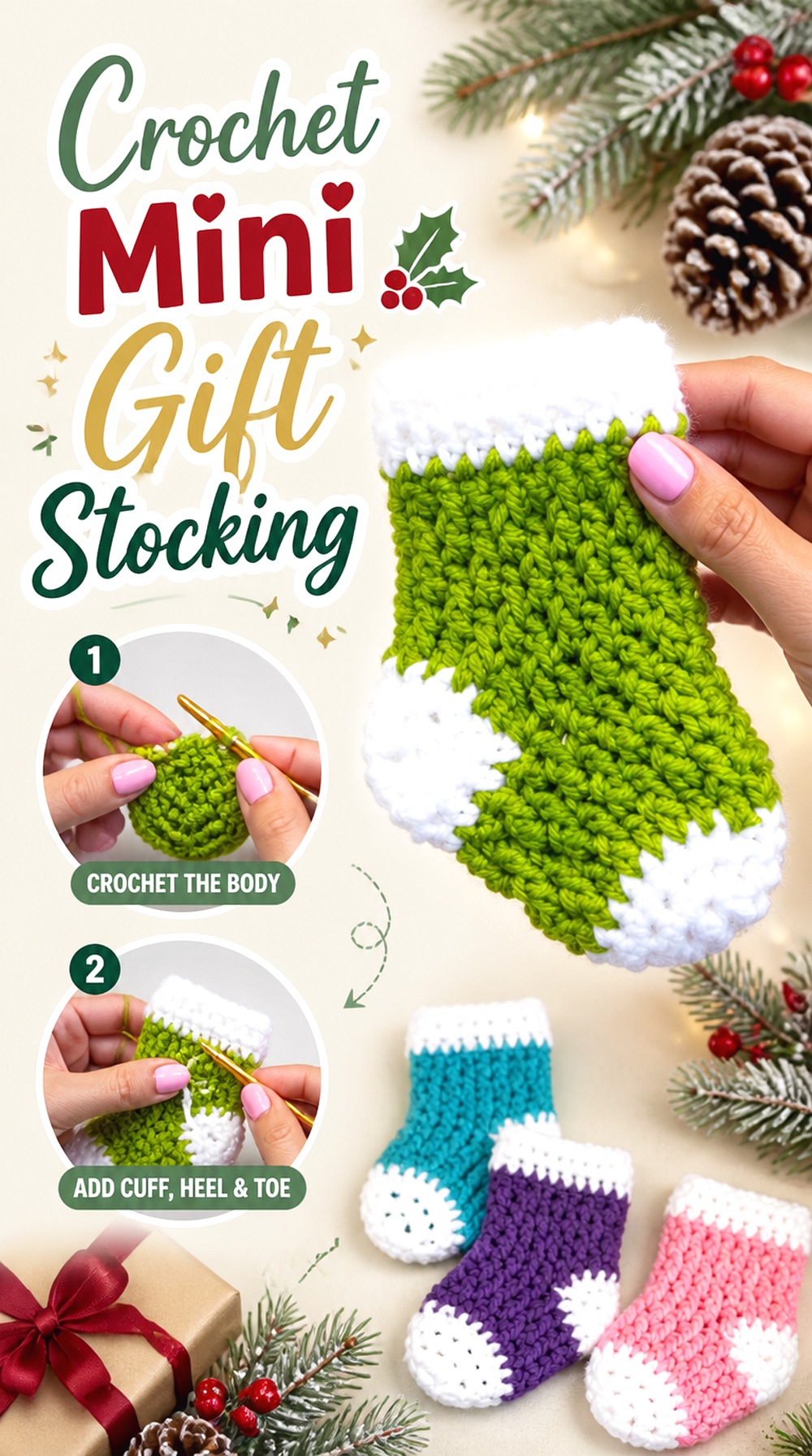
A mini stocking shifts the purpose from large mantel storage to small-scale gifting, ornaments, or decorative accents. Jennifer Noelle’s tutorial produces a compact traditional stocking form with contrasting colors and a defined cuff. The smaller format is useful when you want several coordinated pieces without committing to full-size stockings, and it can work as part of a place setting, package decoration, or small seasonal display depending on the finished scale. Because every feature is compressed, proportion matters more than adding many separate embellishments.
Small Projects Magnify Bulky Details
A cuff, pom-pom, button, or tag that looks modest on a full-size stocking can dominate a miniature one. Place embellishments temporarily before attaching them and check whether the actual stocking shape is still easy to recognize.
Decide the Purpose Before Changing Yarn Size
Using a different yarn weight can change a mini stocking’s scale substantially. If the project needs to fit a particular ornament hook, gift, or display area, make one sample before producing a batch rather than assuming every substitution will remain miniature.
Original Tutorial and Creator Credit
Creator: Jennifer Noelle
11. Crochet Striped Mini Tree Stocking
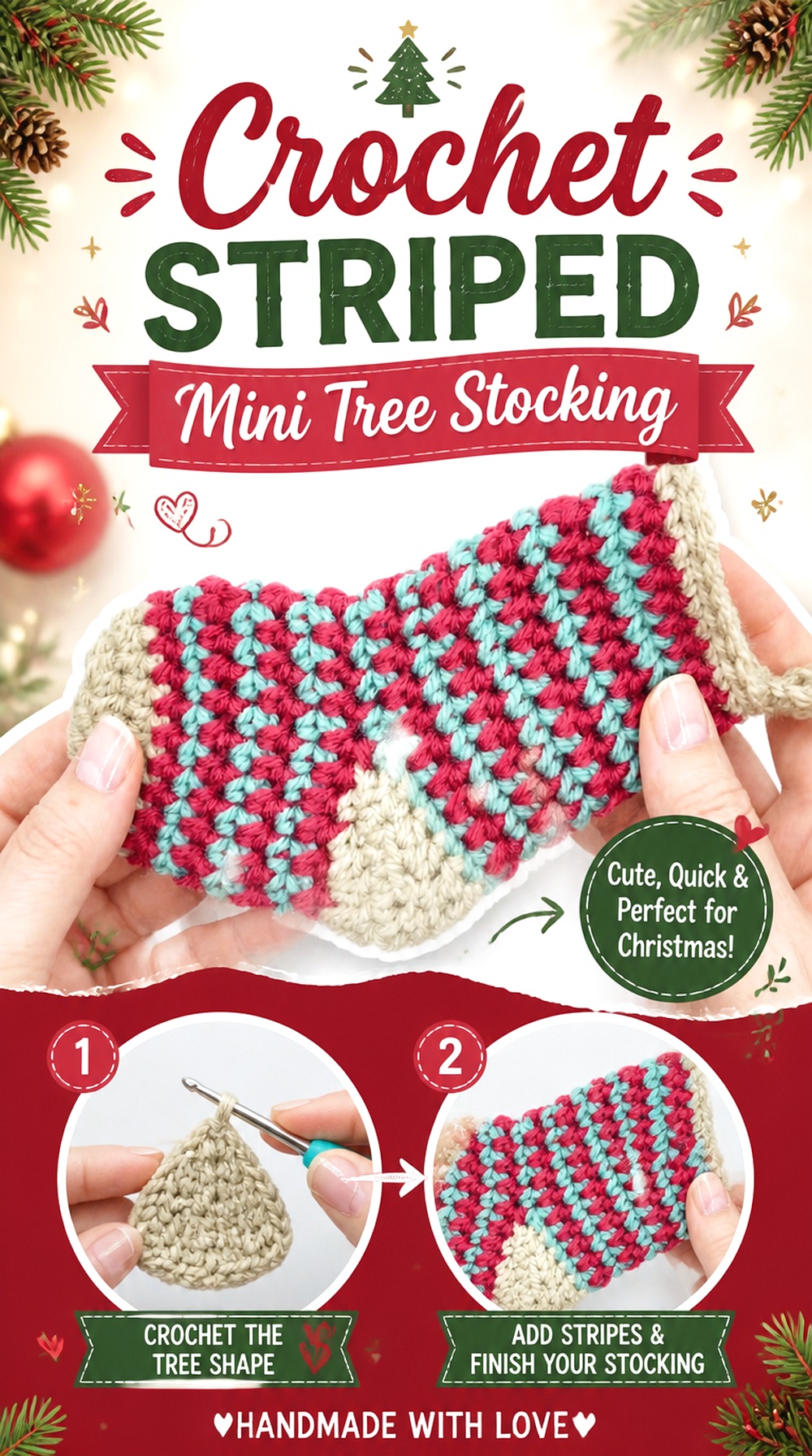
This miniature design uses repeated color changes to make stripes an essential part of the finished look. Wheelie Made It Crochet presents it as a small Christmas-tree decoration that can also accommodate a little gift, giving it a practical role between an ornament and a gift holder. Compared with the previous mini stocking, the main planning challenge here is managing several colors cleanly without letting the small scale become overwhelmed by yarn tails or uneven transitions.
Plan Stripe Width Before Choosing Three Colors
On a small stocking, every stripe occupies a noticeable portion of the total height. Strong contrast makes the bands energetic, while related tones create a softer effect. Sketching the color order or placing yarn strands together first can prevent one color from dominating unintentionally.
Neat Color Changes Matter More at Ornament Scale
A bulky join or loose tail is much more obvious on a tiny project. Inspect each transition as you work instead of saving every correction for the end. The cleaner the changes, the more the stripes look intentional when the stocking is viewed on a tree.
Original Tutorial and Creator Credit
Creator: Wheelie Made It Crochet
12. Crochet Classic Cuff Down Stocking
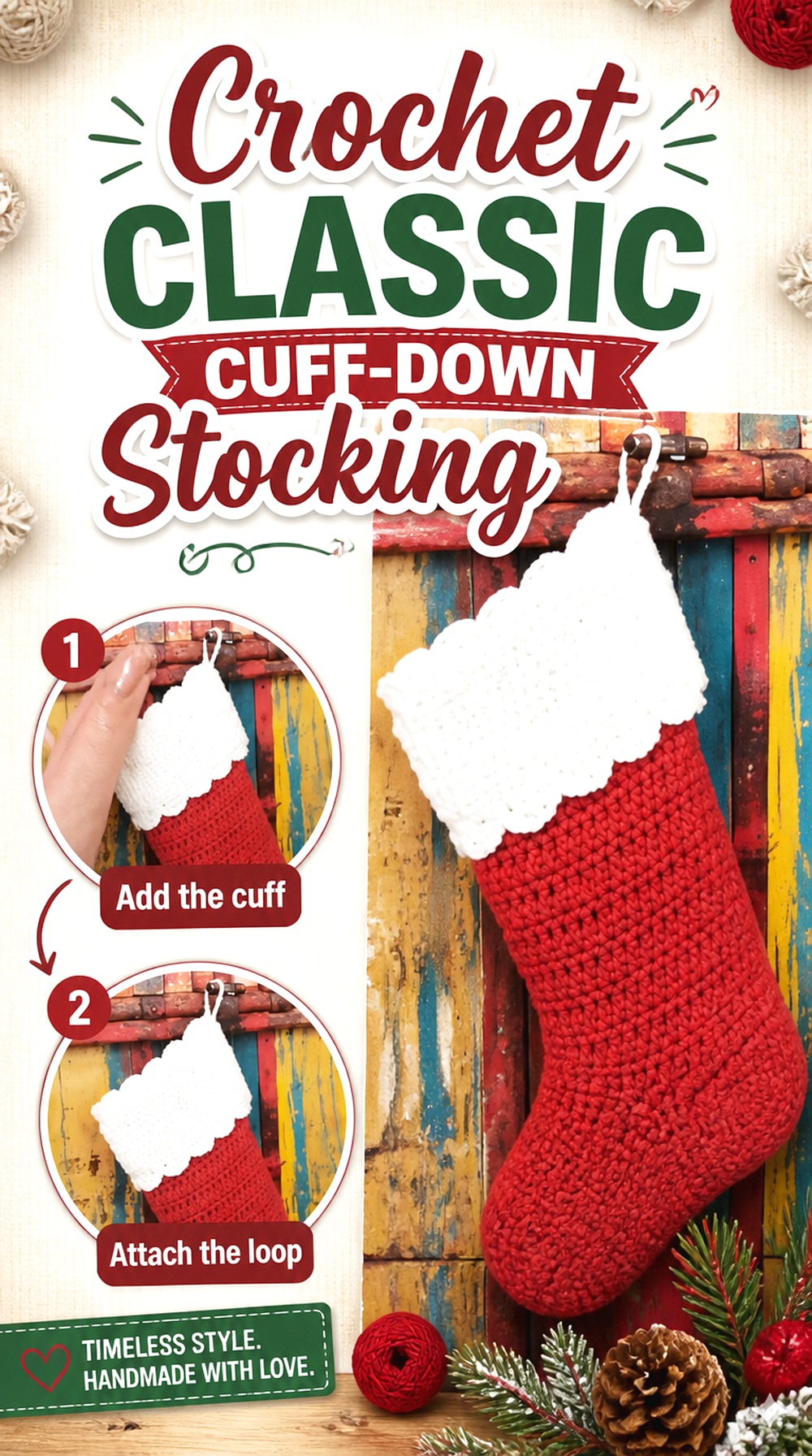
Not every stocking begins at the toe. This Michaels Stores class, taught by Tamara Kelly, works with a basic Christmas stocking pattern that starts from the upper portion and moves toward the foot and toe. That direction makes it a useful comparison with the many toe-up projects in this roundup. The clean shape also provides a flexible base for surface decoration or family color schemes without requiring complex motif planning.
Starting at the Top Changes Your Early Checkpoints
With cuff-down construction, you establish the opening before the foot exists. Check that the upper circumference and fabric feel appropriate early, because those choices affect how the stocking hangs and how easily larger gifts can pass through the opening.
Save Embellishment Decisions Until the Shape Is Finished
A plain stocking can support initials, surface crochet, patches, or appliqués, but their best position depends on the final heel and toe orientation. Finish the main silhouette first, then lay it in its intended display direction before committing to decorative placement.
Original Tutorial and Creator Credit
Creator: Michaels Stores
13. Crochet Flat Seamed Christmas Stocking

Alt Knots takes a panel-style route, working the stocking in rows and finishing with seaming and a hanging hook. This construction appeals to crocheters who prefer seeing the stocking silhouette develop flat rather than shaping a tube in the round. Flat pieces also make it straightforward to inspect edge shape and place surface embellishments before assembly. The seam is an intentional structural element, so finishing accuracy matters more here than it does in a completely seamless design.
Match Both Edges Before You Start Seaming
Lay the finished piece flat and line up the corresponding edges first. If the fabric has stretched during handling, gently reshape it before joining. A mismatch that seems small at the top can shift the toe noticeably by the time the seam reaches the bottom.
Flat Construction Opens Up Decoration Options
Before closing the stocking, the surface is easier to embroider, appliqué, or decorate because you are not reaching inside a tube. If you plan added details, test their position with the flat piece folded into its eventual shape so nothing ends up too close to the seam.
Original Tutorial and Creator Credit
Creator: Alt Knots
14. Crochet Granny Stitch Tube Stocking
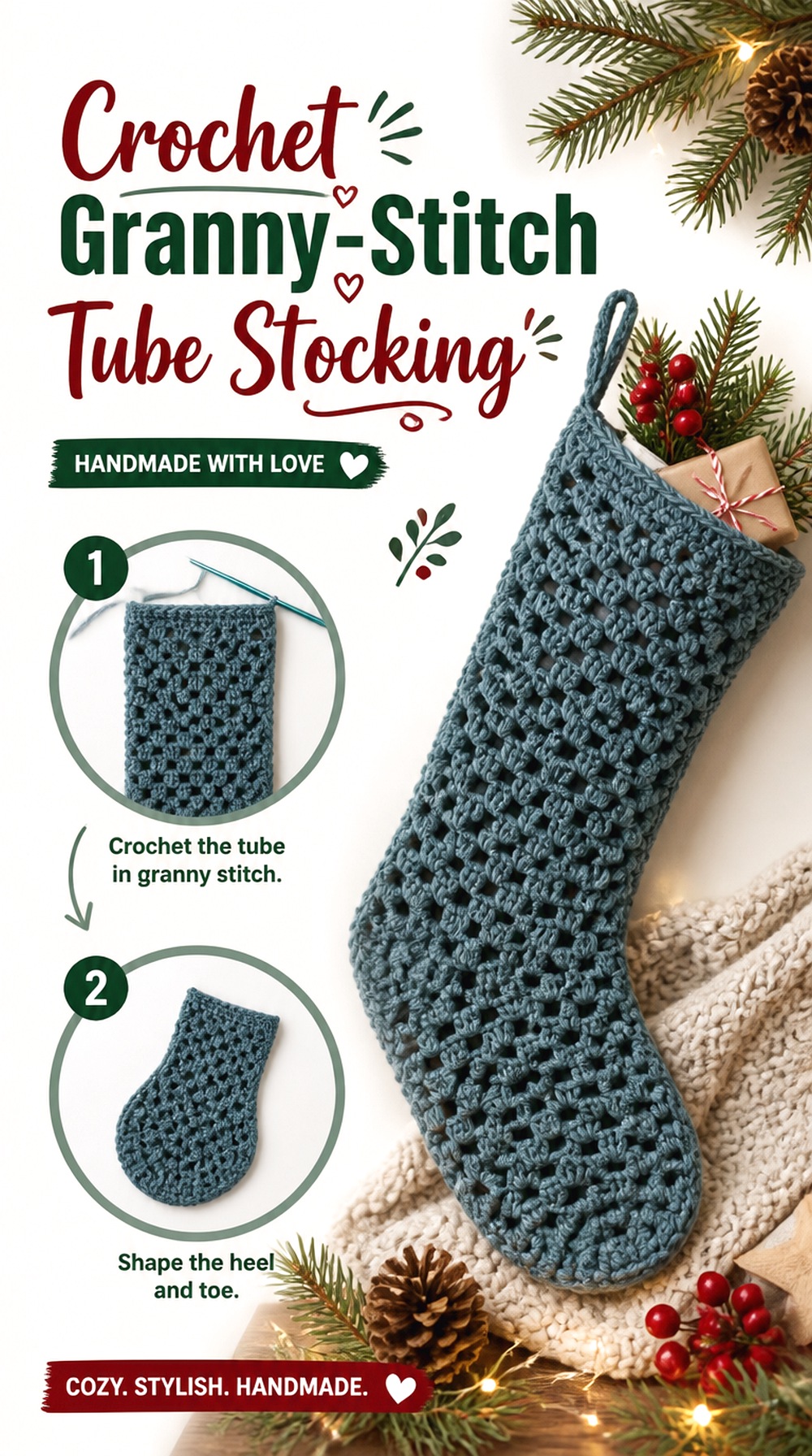
This design borrows the familiar clustered look associated with granny crochet without requiring a pile of separate squares. The American Crochet Association tutorial describes a granny-stitch stocking formed as a tube, giving you the open, rhythmic texture of granny work with fewer individual motifs to arrange and join. It is a useful middle ground for crocheters who like the visual language of granny squares but would rather maintain continuous construction through much of the project.
Open Clusters Affect What You Put Inside
Granny-style spaces may not contain very small objects as securely as dense single-crochet fabric. If the stocking will hold loose candy or tiny items, consider placing those gifts in a pouch or checking whether adding a compatible lining makes sense.
Color Changes Can Follow the Stitch Rhythm
The clustered structure naturally creates repeated horizontal sections. You can use that rhythm for deliberate bands of color without converting the project into complex charted colorwork. Keep the palette limited if you want the texture, rather than the number of colors, to remain the main feature.
Original Tutorial and Creator Credit
Creator: American Crochet Association
15. Crochet Puff Stitch Christmas Stocking
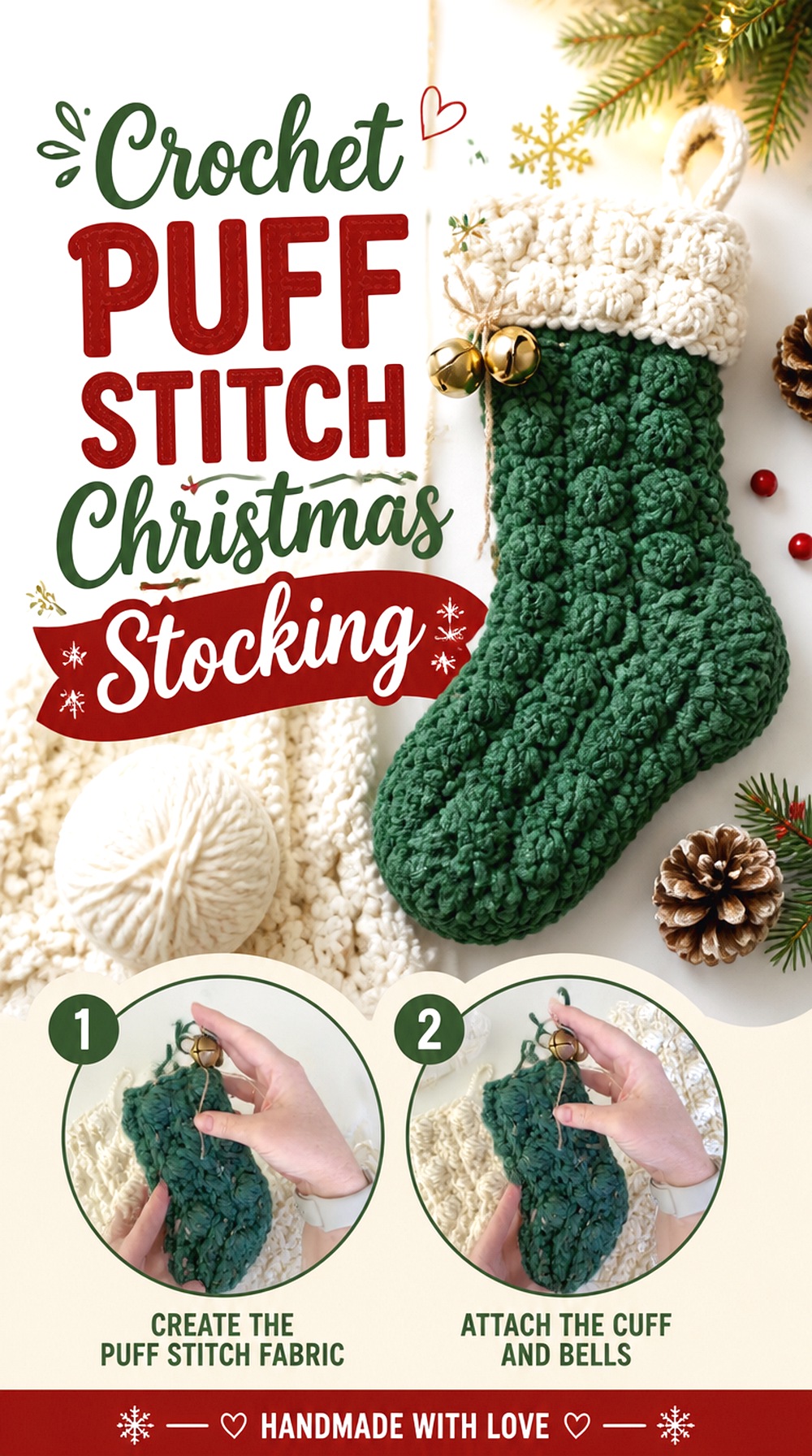
Puff stitches give this stocking a softer raised texture than cables and a different rhythm from round bobbles. Simply Made by Erin Crochet demonstrates the puff-stitch stocking using super-bulky yarn, creating a substantial finished surface with large-scale texture. This is a good option when you want the stocking to make its statement through dimensional fabric rather than intricate color changes. Optional ribbons, bells, or tags can be added, but the puff texture already gives the body considerable presence.
Large Texture Needs Consistent Tension
Puffs that vary greatly in height or fullness can make the stocking surface look uneven. Pay attention to how firmly each textured stitch is completed, especially if you pause and resume the project over several sessions.
Keep Extra Decorations Proportional to the Yarn
Super-bulky fabric can visually overpower tiny embellishments, while very large bells or bows may compete with the puff pattern. Temporarily pin or tie decorations in place and view the stocking from display distance before securing them permanently.
A Hanging Loop Deserves Extra Attention
A substantial textured stocking can have more fabric weight even before it is filled. Inspect the hanging-loop attachment carefully and avoid relying on a decorative element that is not actually integrated into the stocking’s structure.
Original Tutorial and Creator Credit
Creator: Simply Made by Erin Crochet
16. Crochet Classic Toe Up Mantel Stocking
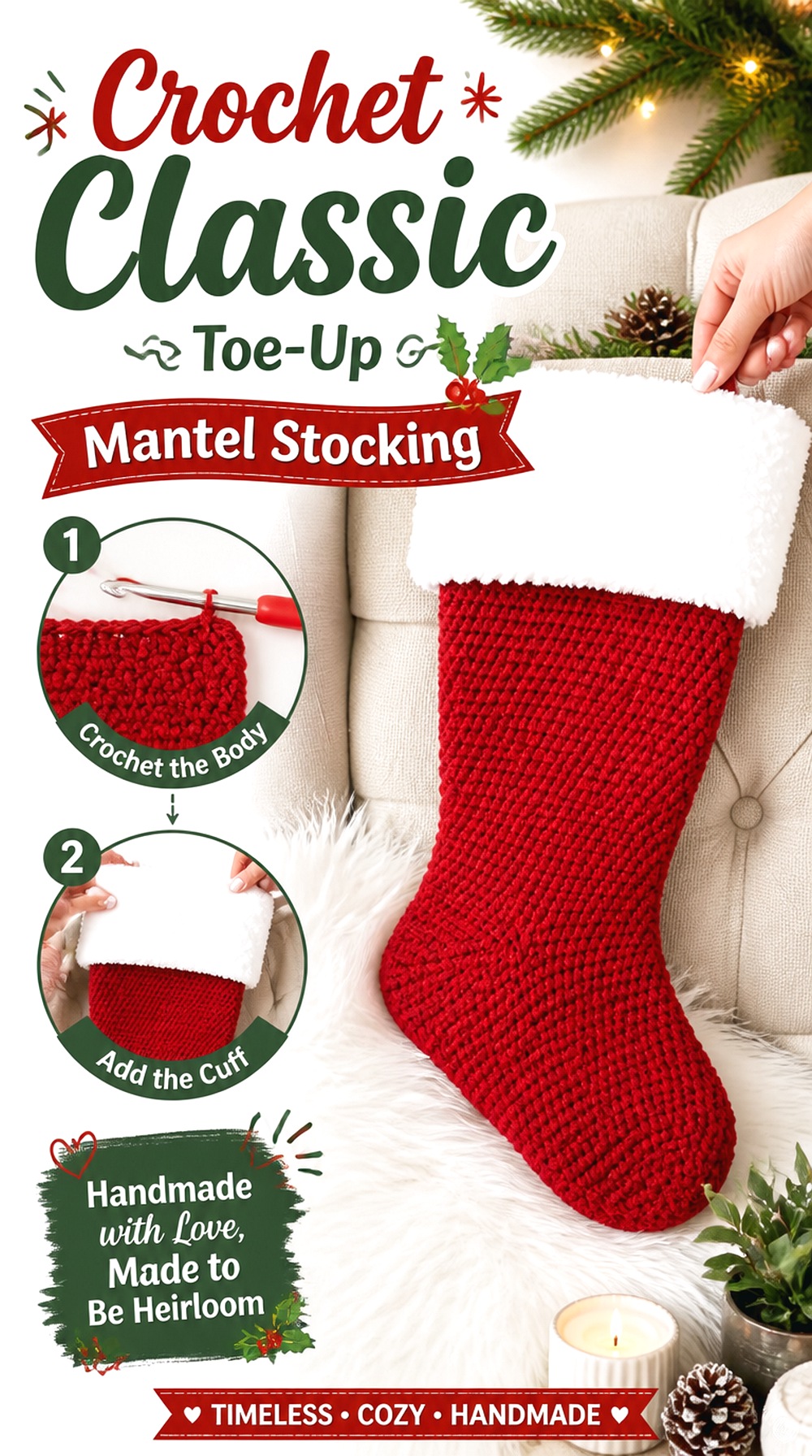
B.Hooked Crochet offers a traditional full stocking shape worked from the toe upward, with the tutorial covering the major shaping stages and a contrasting soft cuff. Compared with the highly decorated options above, this design is valuable precisely because the silhouette stays familiar and uncomplicated. It gives you a dependable base for a coordinated set and leaves plenty of room for adjusting color combinations or adding restrained personalization after the main crochet is complete.
Use the Plain Body as a Design Advantage
A simple surface does not have to look unfinished. It gives the toe, heel, cuff, and overall silhouette more influence. If you want a timeless set, consider repeating the same body color while changing only the cuff, hanging tag, or name treatment for each person.
Check the Stocking While It Is Still Empty
Before adding any decoration, hang the unfinished piece temporarily and see which side naturally faces outward. This reveals whether the toe turns the way you expect and where a name or appliqué will remain visible once the stocking is on a hook.
Structure Matters More Than Maximum Stretch
If the stocking will actually be filled, preserving its recognizable shape may matter more than making the fabric as stretchy as possible. When substituting yarn, compare the resulting fabric with the tutorial’s intended firmness and avoid assuming that a looser fabric will perform the same way.
Original Tutorial and Creator Credit
Creator: B.Hooked Crochet
Conclusion
The right crochet Christmas stocking depends on what you want the finished piece to do. Choose cables, bobbles, puffs, or mosaic work when the stocking itself should be a strong decorative feature. Hexagons and granny constructions suit a patchwork look, while lining becomes valuable when open motifs need to hold smaller gifts. Seamless, flat-seamed, cuff-down, and toe-up designs give you different construction experiences even when the final silhouette looks traditional.
For small gifts or tree decorating, the miniature stockings make more sense than simply shrinking a large design without planning. Once you have chosen the shape and structure that fit your display, use the original tutorials for exact construction details.
Frequently Asked Questions
Should a crochet Christmas stocking be lined?
Not every stocking needs lining. Dense crochet fabric used mainly for display may work well without it. Lining becomes more useful when the stitch pattern has open spaces, when small objects will be placed inside, or when you want the contents to pull less directly on the crochet. Make sure any lining is compatible with the stocking’s shape rather than noticeably smaller than the outer shell.
Which stocking construction is easiest to personalize with a name?
A relatively plain stocking body usually gives letters the clearest background. Monograms, embroidery, surface crochet, or tags can become harder to read over cables, mosaic motifs, or multicolored granny squares. Before adding a name, hang or fold the finished stocking in its display position and mark the area that faces forward.
How can I keep a crochet stocking from stretching when filled?
Start with a fabric that has enough structure for the intended use and avoid assuming decorative crochet can carry unlimited weight. A lining may help isolate the contents from open or stretchy stitches, while a secure hanging loop reduces strain at the top edge. If you plan to modify a tutorial, confirm that your changes do not weaken the hanging area.
Can I use a different yarn weight than the tutorial?
You can often experiment with another yarn, but the finished dimensions, stiffness, stitch definition, and overall proportions may change. A thicker yarn can enlarge the stocking and make textured stitches bulkier; a finer yarn can make the same construction smaller. When size matters, make a sample or compare early measurements rather than relying on the original finished dimensions.
Are granny square stockings practical for holding gifts?
They can be, but open motif spaces deserve consideration. Packaged gifts may work well, while very small or narrow objects can push through the holes. A lining is one solution, as shown by the lined granny-square option in this collection. Also check the motif joins and hanging point before using the stocking for anything heavier than decorative display.
What should I check before making several matching stockings?
Finish one complete sample first. Check its actual size, hanging angle, opening width, heel shape, and how the chosen yarn behaves when the stocking contains a few representative items. That sample gives you much better planning information than relying only on yarn labels or expected dimensions, especially if you are changing colors, fibers, cuffs, or personalization for a whole family set.