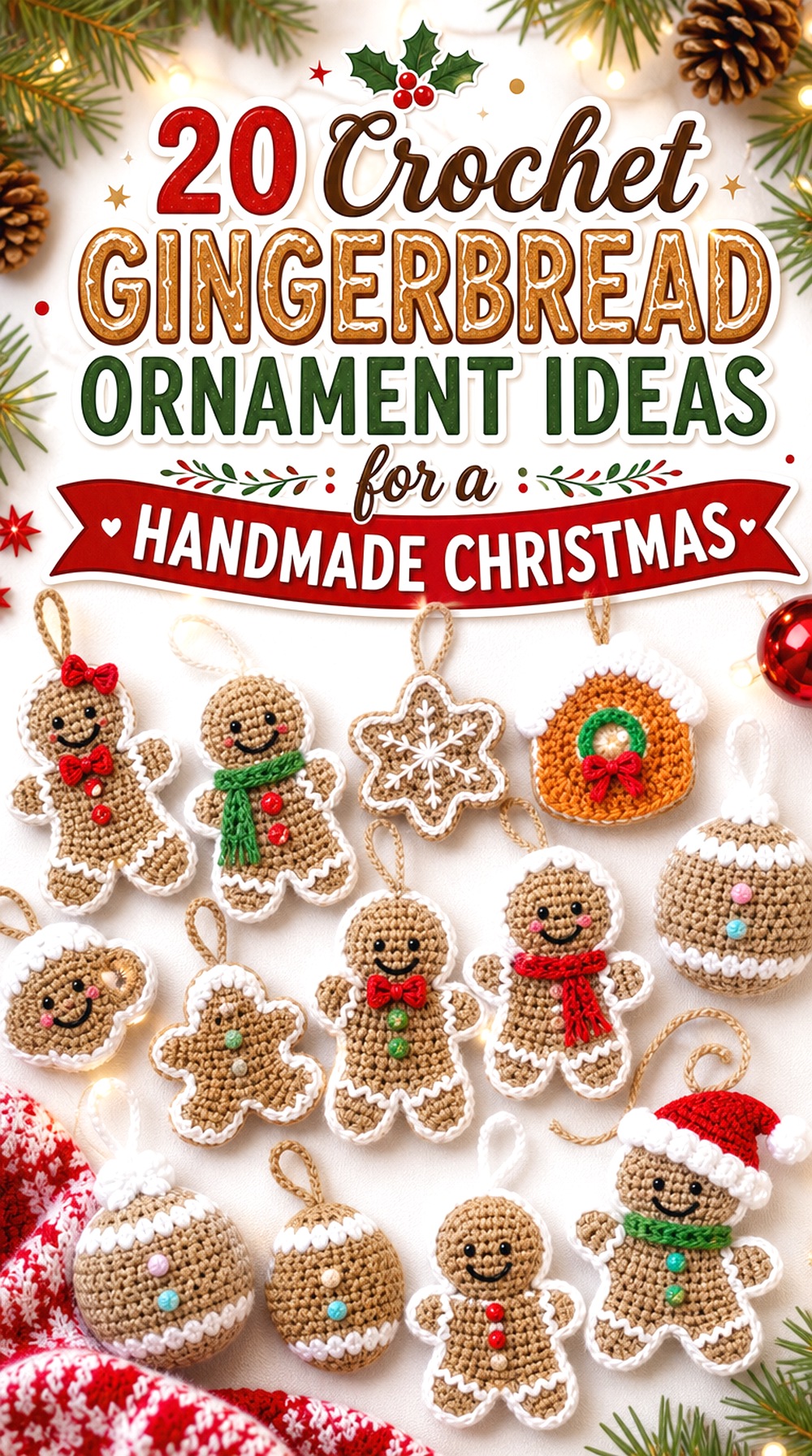
20 Crochet Gingerbread Ornament Ideas for a Handmade Christmas
Crochet gingerbread ornaments can look surprisingly different once you move beyond the familiar brown cookie person. This collection includes gingerbread houses, hearts, stars, flat appliqués, tiny cookies, a personalized photo ornament, a rounded bauble, and several character styles. Some sit almost flat against the tree, while others have enough dimension to become a stronger focal point.
The differences matter when you are choosing a project. A lightweight appliqué is practical for garlands and gift tags, dimensional designs create more presence on a tree, and heavily decorated houses give you more room to experiment with “icing,” candy colors, and embroidery. The ideas below pair those choices with original creator tutorials so you can compare finished forms first, then visit the source video for exact construction details.
Quick List
- Crochet Custom-Iced Gingerbread Man Ornament
- Crochet Candy-Trim Gingerbread House Ornament
- Crochet Three-Round Gingerbread House Ornament
- Crochet Flat Gingerbread Cookie Ornament
- Crochet Gingerbread House Appliqué Ornament
- Crochet Classic Gingerbread Man Silhouette Ornament
- Crochet Mini Gingerbread House Ornament
- Crochet Tiny Gingerbread Cookie Ornament
- Crochet Embroidered Gingerbread House Ornament
- Crochet Gingerbread Heart-and-Star Ornament Set
- Crochet Personalized Photo Gingerbread Ornament
- Crochet Gingerbread Appliqué Ornament Set
- Crochet Gingerbread Star Ornament
- Crochet Gingerbread Person Tree Ornament
- Crochet Gingerbread Bauble Ornament
- Crochet Gingerbread Heart Ornament
- Crochet No-Sew Gingerbread Man Cookie Ornament
- Crochet Mini Dimensional Gingerbread Man Ornament
- Crochet Advent-Style Gingerbread Man Ornament
- Crochet Traditional Gingerbread Man Tree Decoration
Choose the Ornament Shape Before the Decorative Details
The biggest decision is not the shade of brown yarn; it is the finished structure. Flat cookies, hearts, stars, and appliqués tend to disappear less into crowded branches because their silhouettes remain easy to read from the front. Houses offer a larger surface for windows, doors, frosting lines, and candy-inspired embellishment. Dimensional gingerbread people and baubles create more depth but can also hang differently because their weight is distributed farther from the branch.
Think about where the ornament will actually be used. A flat motif can also work as a gift tag or garland piece, while a stuffed design may be better reserved for a tree or hanging display. When adapting any tutorial, check the finished size and attachment point before changing yarn weight or adding heavy decorations.
Finishing Can Matter More Than Extra Embellishment
Small seasonal crochet shows every finishing decision. Uneven embroidery, loosely attached decorations, or an off-center hanger can change the appearance more than adding another color ever will. Before fastening a hanging loop, hold the finished ornament by the proposed attachment point and check whether the face, house, heart, or star sits upright.
For flat pieces, gentle blocking can help straighten edges before the hanger is added. Dimensional ornaments need a different check: make sure stuffing or layered construction has not pushed the decorative surface out of shape. If you add buttons, beads, bells, or other small parts that are not part of the original tutorial, consider both their weight and how securely they are attached. For ornaments that may be handled by young children or pets, embroidered details are generally a more practical direction than loose detachable embellishments.
1. Crochet Custom Iced Gingerbread Man Ornament
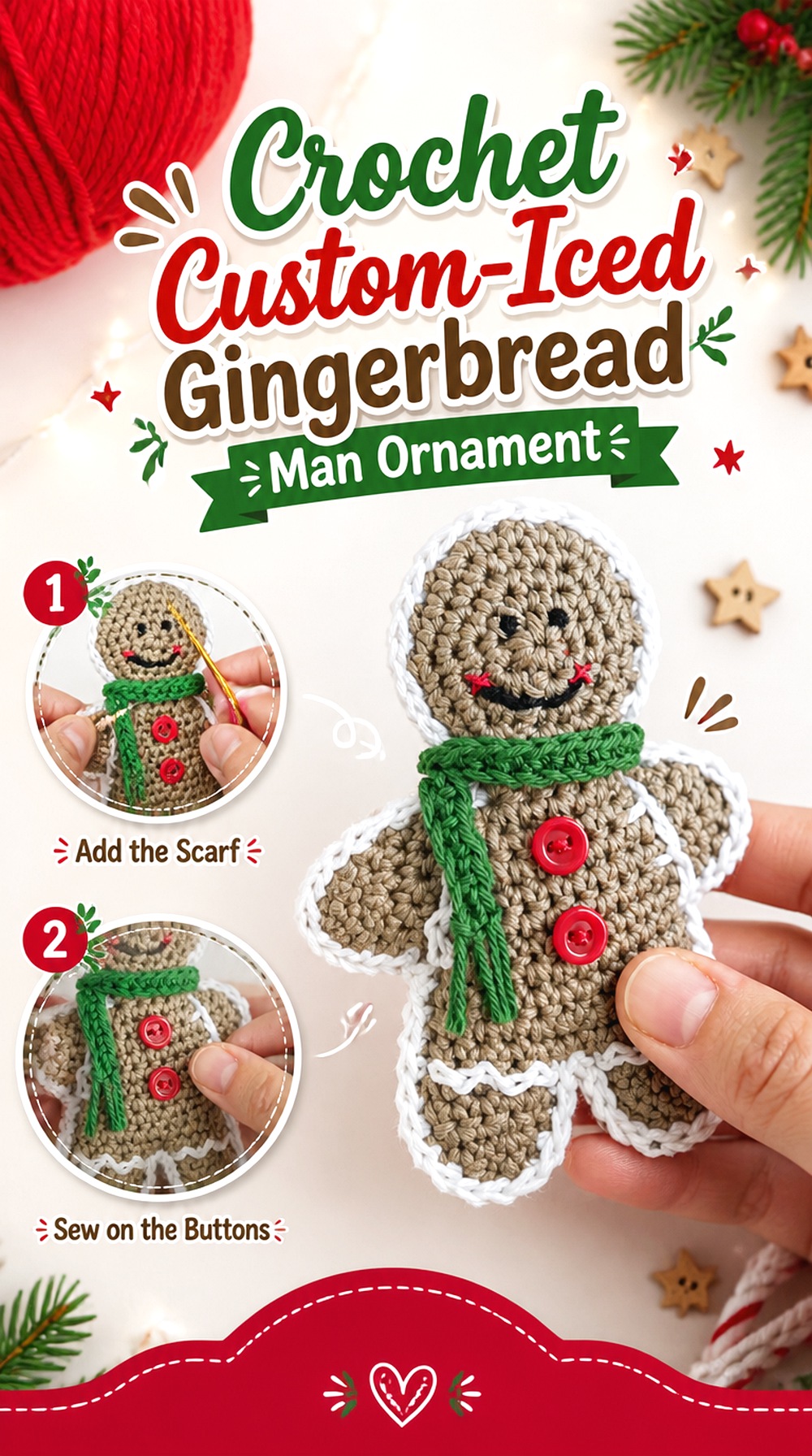
This gingerbread-person idea keeps the recognizable cookie silhouette front and center, making it a useful choice when you want an ornament that reads clearly even among busy Christmas branches. The creator also presents the design as customizable, so the strongest opportunity is not changing the underlying form but deciding how restrained or decorative the finished “cookie” should look.
Consider using the same overall icing language across several ornaments if you are making a coordinated tree set. A simple face and a few contrasting accents will read differently from a heavily decorated version, even when the basic gingerbread form stays the same.
Let the Cookie Outline Stay Visible
Gingerbread ornaments can become visually crowded when every available area receives embroidery, buttons, bows, or color changes. Keep enough brown background visible for the arms, legs, head, and torso to remain readable from several feet away. If you plan to add extra surface decoration, place the ornament on a neutral background first and check whether the silhouette still looks like a cookie rather than a cluster of embellishments.
Check the Hanger Against the Head Shape
A hanging loop attached too far forward or backward can make a character tilt. Before permanently securing it, temporarily thread yarn through the proposed hanging point and lift the ornament. If the face rotates toward the floor or ceiling, move the attachment slightly rather than trying to compensate with a shorter loop.
Original Tutorial and Creator Credit
Creator: Crochet Lovers
2. Crochet Candy Trim Gingerbread House Ornament
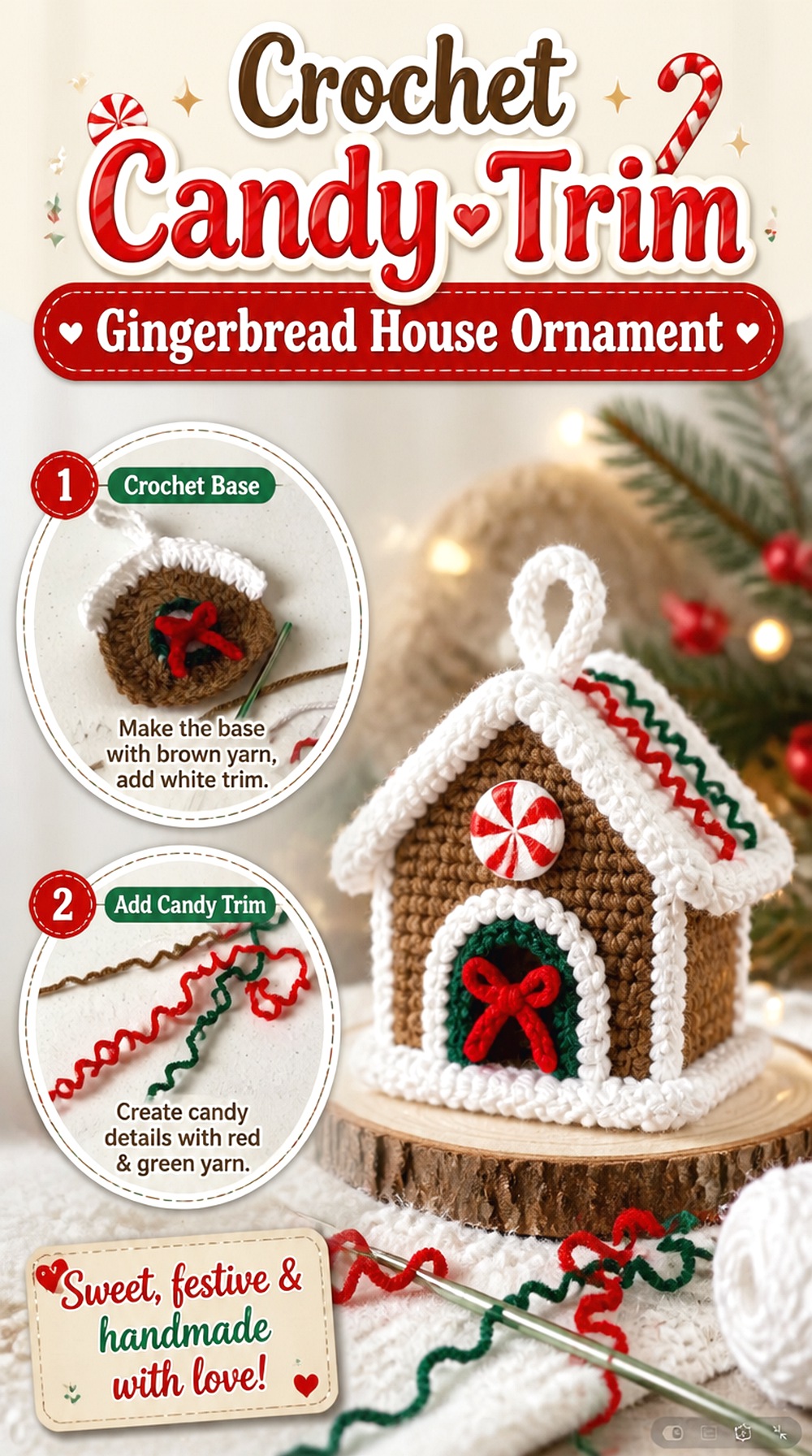
A house creates a much larger decorating canvas than a gingerbread person. This version is a good direction when roof trim, windows, door details, and candy-inspired accents are the features you want people to notice first. The tutorial is specifically presented as a gingerbread house ornament, making the finished hanging use part of the original project rather than an afterthought.
The main planning challenge is visual hierarchy. If the roof, door, window, and candy details all compete equally, the little house can become difficult to read. Decide which one or two features should dominate before choosing your accent colors.
Keep the Roofline Easy to Read
The roof is what separates a house ornament from a generic square decoration. Contrasting trim can strengthen that outline, but bulky embellishments near the roof edge may make it look uneven. Finish the main house shape first, assess the silhouette, and then decide how much surface detail it can support without hiding the roof.
Balance Both Sides of the Front
Symmetry is not mandatory, but visual weight still matters. If one side carries a bright candy detail and the other side remains nearly empty, the ornament can look unintentionally lopsided. Before attaching small decorations, lay them in place temporarily and view the whole house rather than deciding on each embellishment separately.
Original Tutorial and Creator Credit
Creator: Crochet Mili
3. Crochet Three Round Gingerbread House Ornament
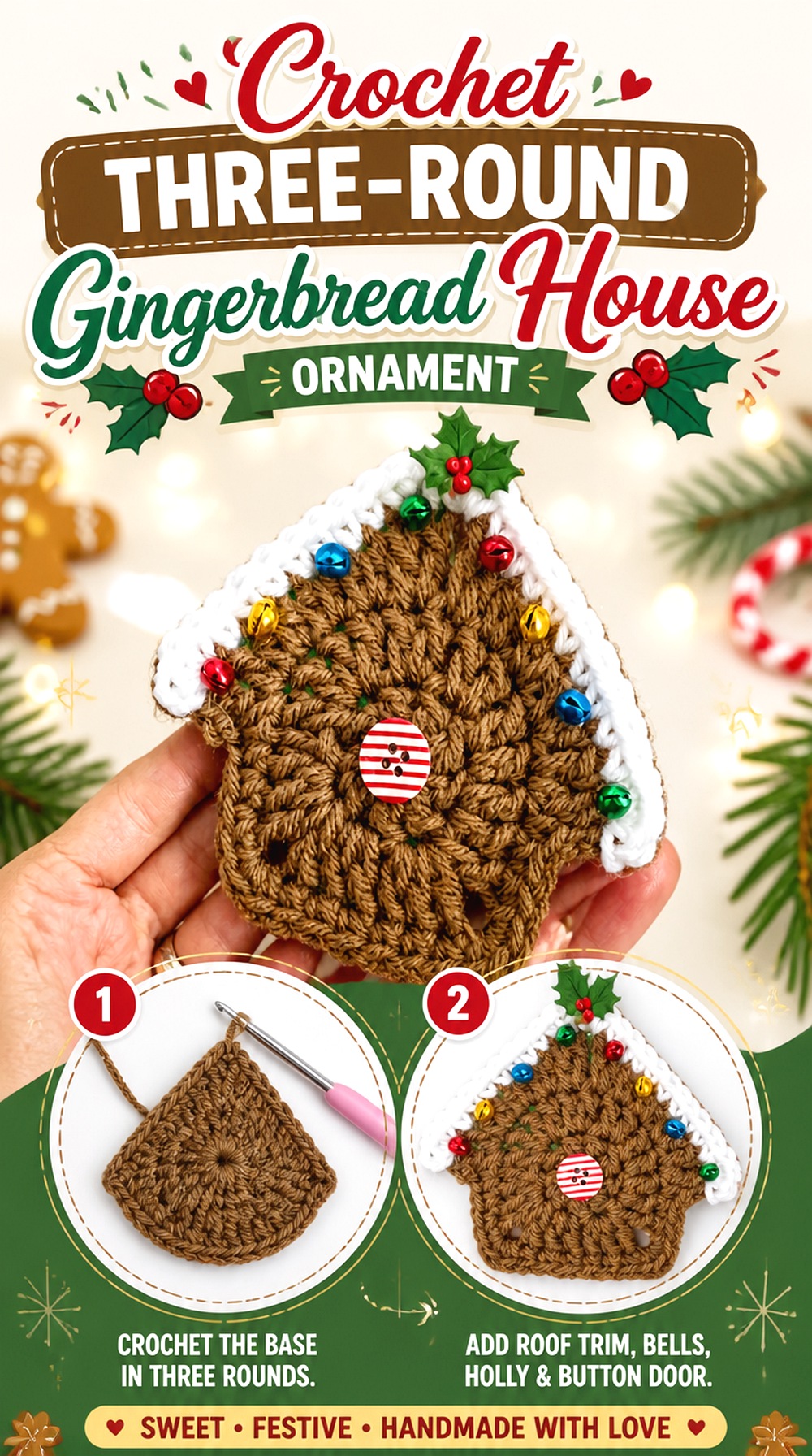
This small house takes a compact construction approach. Repeat Crafter Me presents the ornament as a three-round gingerbread house, making it an appealing option when you prefer a broad, graphic silhouette instead of a project built from numerous tiny decorative components.
Because the main shape is relatively simple, embellishment has a large effect on the final personality. One version can stay minimalist with icing-like trim, while another can take on the look of a miniature candy house. That makes this format particularly useful for a coordinated set where the same basic silhouette appears with different finishing choices.
Use Embellishments Without Overloading the Base
Buttons, bells, and similar add-ons contribute more weight than embroidery. If you personalize the house beyond the tutorial, consider the balance between the crocheted base and anything attached to it. A lightweight ornament is easier to hang on thinner branches, while several hard embellishments can change both its drape and center of gravity.
Test the House as a Garland Piece
A wide, recognizable house can also work in a repeated garland. Before making multiples, crochet and finish one sample, attach it to the type of cord you intend to use, and check whether it turns sideways. A stable sample gives you a better basis for deciding hanger length and spacing than guessing before the first ornament is complete.
Original Tutorial and Creator Credit
Creator: Repeat Crafter Me
4. Crochet Flat Gingerbread Cookie Ornament

Instead of building a small house or stuffed character, this idea focuses on the familiar look of a decorated gingerbread cookie. The flatter form suits readers who want the “baked cookie” effect to carry the design rather than relying on volume. Krafty Kitty presents the tutorial specifically as a gingerbread cookie and Christmas ornament project.
A flat cookie also gives you flexibility after crocheting. It can hang on a tree, sit against a wrapped package, or become one component in a repeated holiday display. That flexibility makes clean edge finishing especially important because the piece may be viewed up close.
Treat Surface Decoration Like Icing Placement
Instead of filling every section, think about how real cookie icing defines edges and features. A few deliberate lines can make the crochet shape easier to recognize. If your yarn is fuzzy or highly textured, fine embroidery details may visually disappear, so compare the contrast before committing to an elaborate decoration plan.
Keep the Cookie Flat After Finishing
Dense embroidery or tight sewn-on details can pull a flat motif inward. After decorating, place the piece on a flat surface and check for cupping or twisting. If the shape has changed, address the distortion before adding the hanger; otherwise the ornament may rotate or curl when suspended.
Original Tutorial and Creator Credit
Creator: Krafty Kitty
5. Crochet Gingerbread House Appliqué Ornament
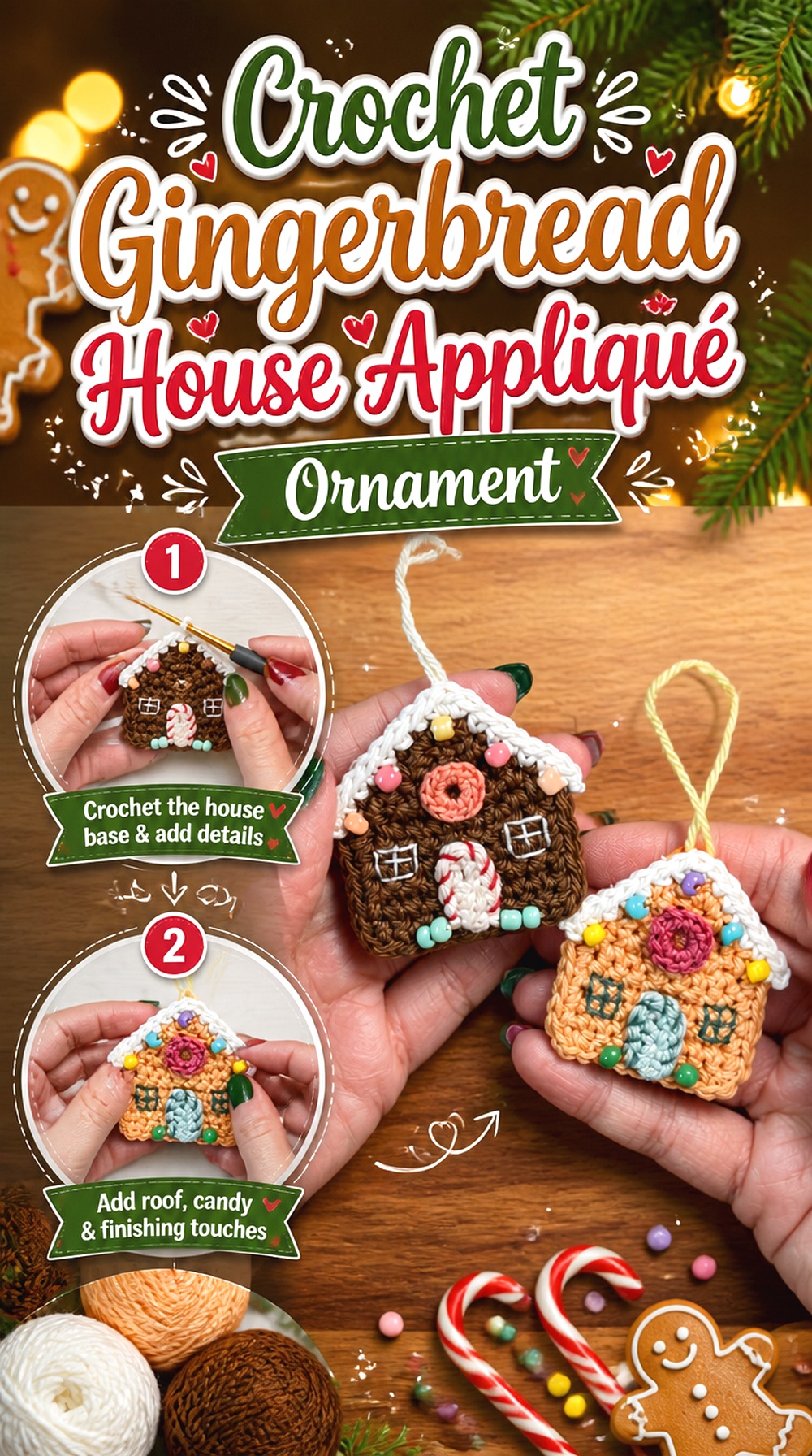
An appliqué house is a useful middle ground between pure motif work and a more dimensional ornament. olliehollycrochet specifically presents this gingerbread house as an appliqué that can become an ornament, pin, or keychain, so its flatter construction is part of the design’s flexibility.
That versatility makes it worth thinking beyond one Christmas tree. A house that stays neat and flat can also become a package accent or a repeated motif in a garland. The decorative front remains the main feature, so neat placement and a clean outline matter more than adding bulk.
Decide the Final Use Before Adding the Back
An ornament needs a secure hanging point, while a pin or keychain needs a different attachment. If you are adapting the source project, decide on the final use before finishing the back. That prevents a hanger, clasp, or other hardware from interfering with decorative stitching already in place.
Small House Details Need Clear Contrast
Windows, doors, wreaths, and roof decoration occupy relatively little space on an appliqué. Similar-value colors can merge visually even when they look different in the skein. Place candidate yarns next to the finished brown base and check them in normal room lighting before committing to tiny details.
Original Tutorial and Creator Credit
Creator: olliehollycrochet
6. Crochet Classic Gingerbread Man Silhouette Ornament
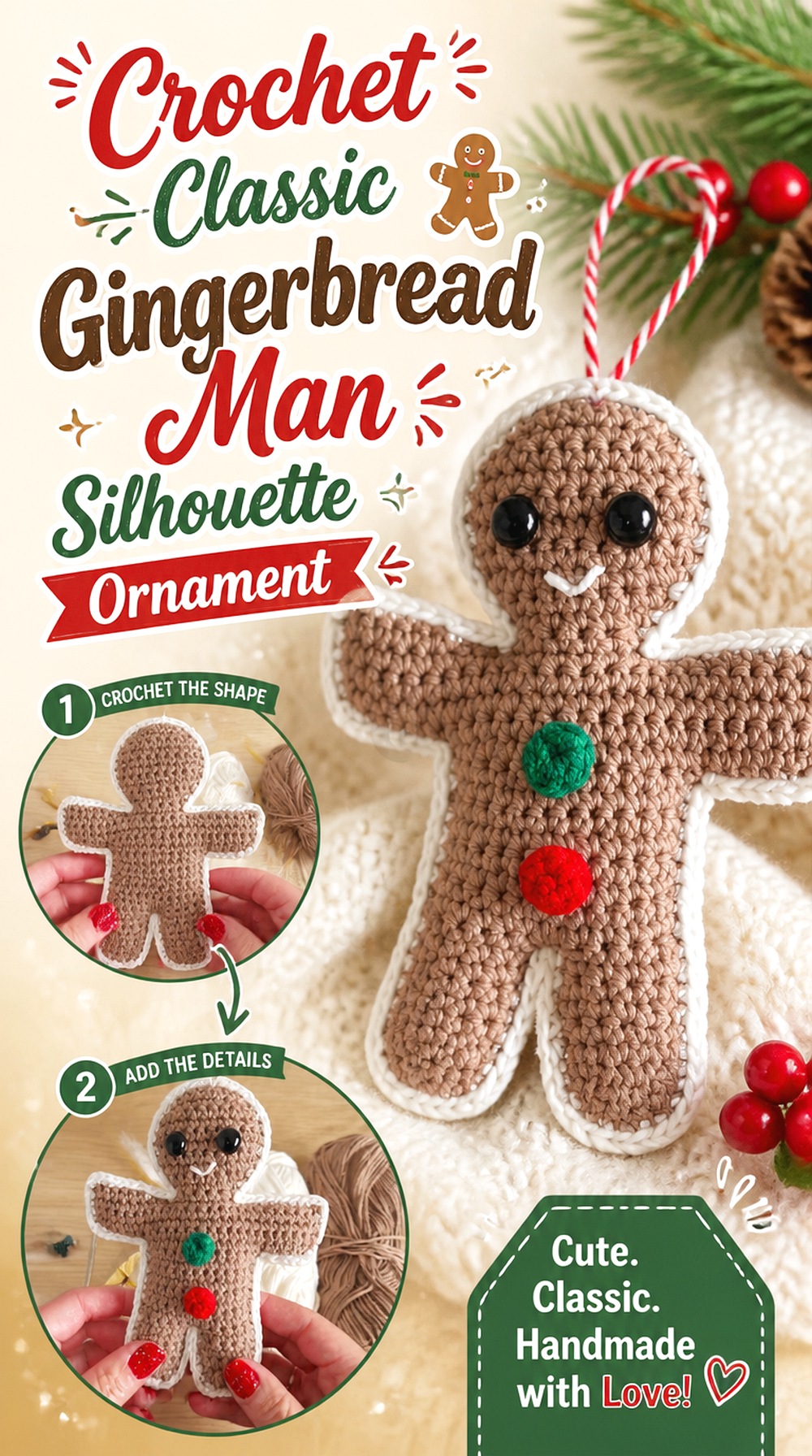
This ornament follows the traditional gingerbread-person route, which makes it a useful contrast to the houses, hearts, and stars elsewhere in the collection. MummaJ Crochet’s tutorial is explicitly for a gingerbread man Christmas ornament and uses US crochet terminology.
The familiar outline is the advantage here. You do not need a large number of decorative elements for the object to read as gingerbread. That leaves room to concentrate on proportion, neat edges, and facial placement. It can also work well in a mixed set where other ornaments already carry heavier candy-house decoration.
Proportion Does More Work Than Extra Decoration
When arms or legs visually dominate the torso, a small gingerbread figure can look less cookie-like. As you follow the original tutorial, periodically lay the piece flat and look at the entire silhouette rather than judging one section at a time. That full-shape check becomes even more useful if you change yarn or hook size.
Plan Facial Details at the End
Small shifts in eye or mouth placement can change the expression dramatically. Instead of attaching every facial detail immediately, position removable markers or short yarn pieces first. View the ornament from normal hanging distance, then finalize the face once its placement looks balanced with the head.
Original Tutorial and Creator Credit
Creator: MummaJ Crochet
7. Crochet Mini Gingerbread House Ornament
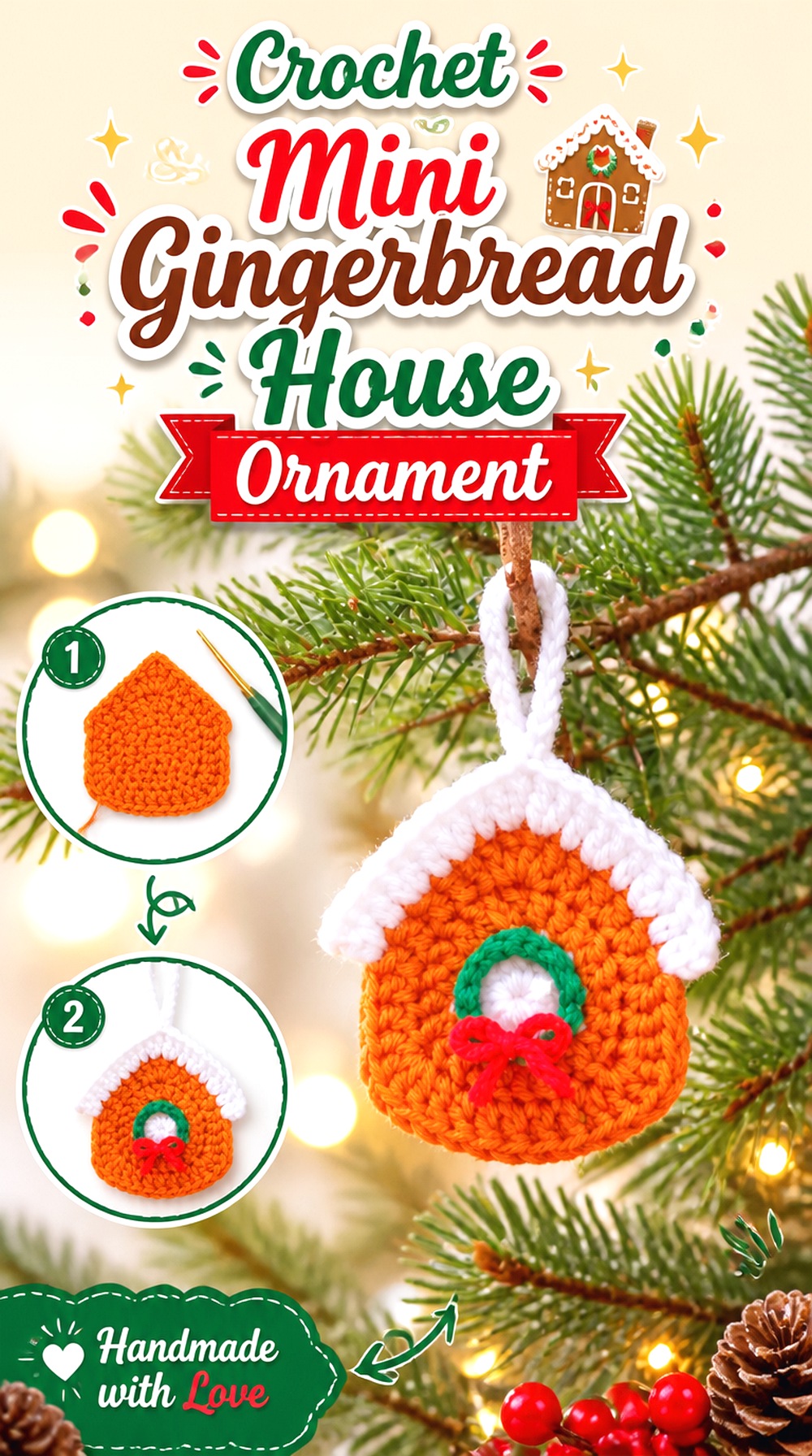
Pora Pora Crochet’s project puts the emphasis on a miniature gingerbread house specifically intended as a Christmas decoration and ornament. A small house can carry more visual storytelling than a simple geometric cookie because the roof, entrance, and façade naturally divide the surface into decorating zones.
The challenge is scale. Details that look attractive on a full-size gingerbread-house decoration may become bulky on a mini ornament. Rather than adding every possible candy-inspired accent, choose the elements that remain readable when the piece is hanging among branches.
Mini Scale Rewards Simpler Details
Small areas leave little room for correction. A thick line of contrasting yarn can visually become an entire window or roof border. When adapting colors or embroidery, compare the thickness of your decorative yarn with the available surface instead of assuming the same yarn will suit both the main house and its smallest details.
Check the Roof Before Adding a Loop
The highest point is the obvious place for a hanger, but the visually centered point is not always the best balance point. Temporarily suspend the finished house first. If the roof leans, shift the loop slightly until the front faces forward.
Original Tutorial and Creator Credit
Creator: Pora Pora Crochet
8. Crochet Tiny Gingerbread Cookie Ornament
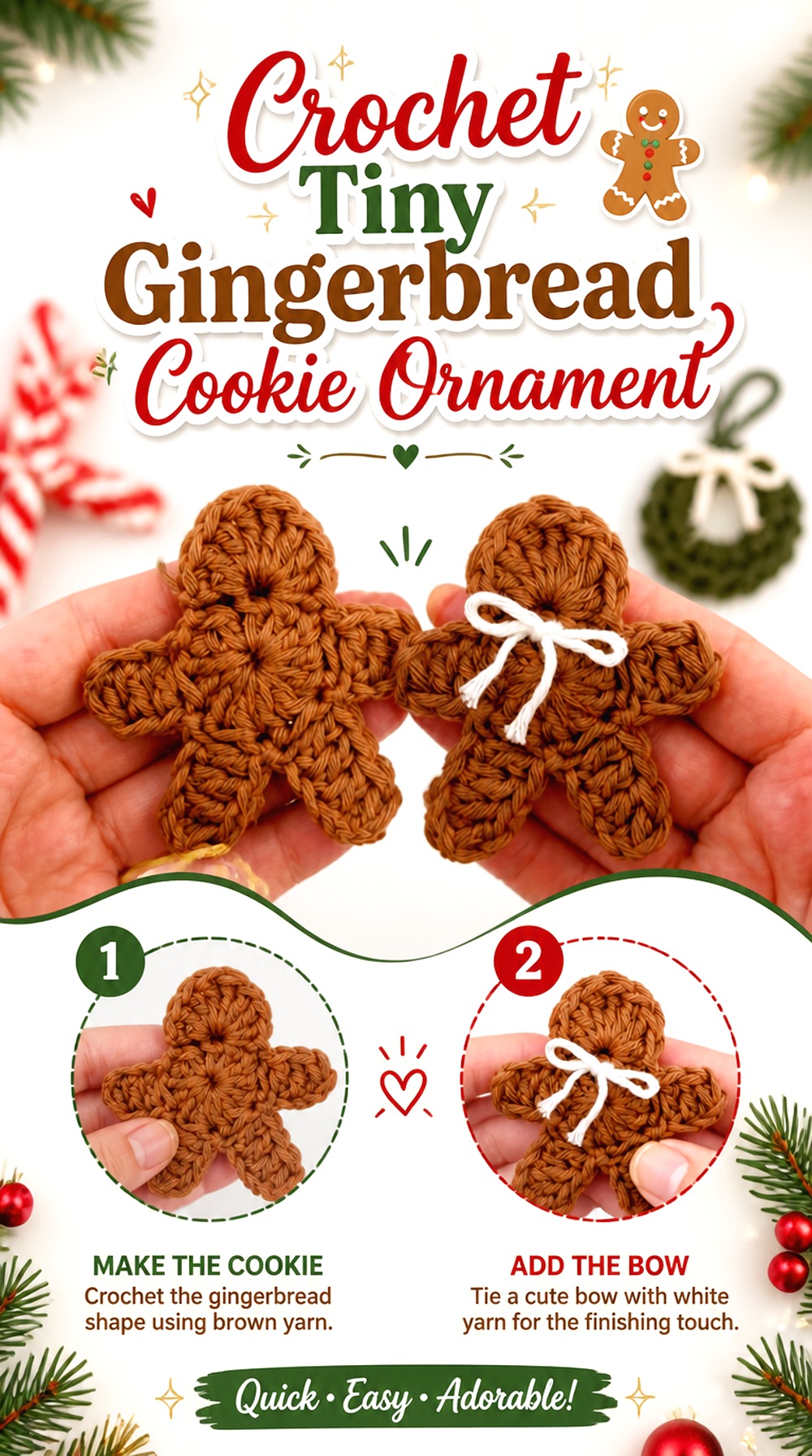
This Sznurki Studio tutorial centers on a very small gingerbread-cookie Christmas ornament. The video title describes it as a five-minute tutorial, but actual making time will naturally vary with crochet speed and familiarity, so the more useful distinction is the compact cookie format itself.
Tiny ornaments are useful for filling narrower gaps in a tree or for repeating across a garland. They also expose finishing quality: when there are only a few visual elements, an untidy edge or misplaced hanger becomes relatively prominent.
Small Ornaments Need Thin, Controlled Hangers
A hanging cord that is nearly as visually heavy as the cookie can overpower the finished piece. Compare several yarn strands, thread, or ribbon options against the ornament before attaching one. The hanger should support the ornament securely without becoming the first thing you notice.
Make One Sample Before Crocheting a Set
Tiny ornaments invite batch making, but changes in yarn, hook choice, or tension can affect their scale. Finish one completely—including decoration and hanging loop—before starting multiples. That sample lets you decide whether the finished size suits your tree, garland, or package before repeating the same choice many times.
Original Tutorial and Creator Credit
Creator: Sznurki Studio
9. Crochet Embroidered Gingerbread House Ornament

Jayda InStitches offers a gingerbread-house ornament tutorial that specifically highlights assembly and embroidery in the project description. That makes this a good choice for readers who enjoy treating the front of the ornament as a miniature decorating surface rather than relying mainly on crocheted color blocks.
Embroidery can create fine icing-like lines without adding as much thickness as separate crocheted pieces. The trade-off is that tension matters: stitches pulled too tightly can distort the house, especially close to edges or corners.
Embroider After Checking the House Shape
Complete enough of the underlying structure to judge the final outline before placing decorative stitching. Rooflines and corners provide natural reference points, so use them to keep embroidery visually aligned. If a line begins to pull the fabric, loosen it rather than trying to force the house flat afterward.
Repeat One Detail for a Cohesive Set
If you make multiple houses, they do not need identical façades. Repeating one feature—a roof treatment, door color, or icing style—can make varied houses feel like a collection. This is often more visually interesting than duplicating every decoration exactly.
Original Tutorial and Creator Credit
Creator: Jayda InStitches
10. Crochet Gingerbread Heart and Star Ornament Set
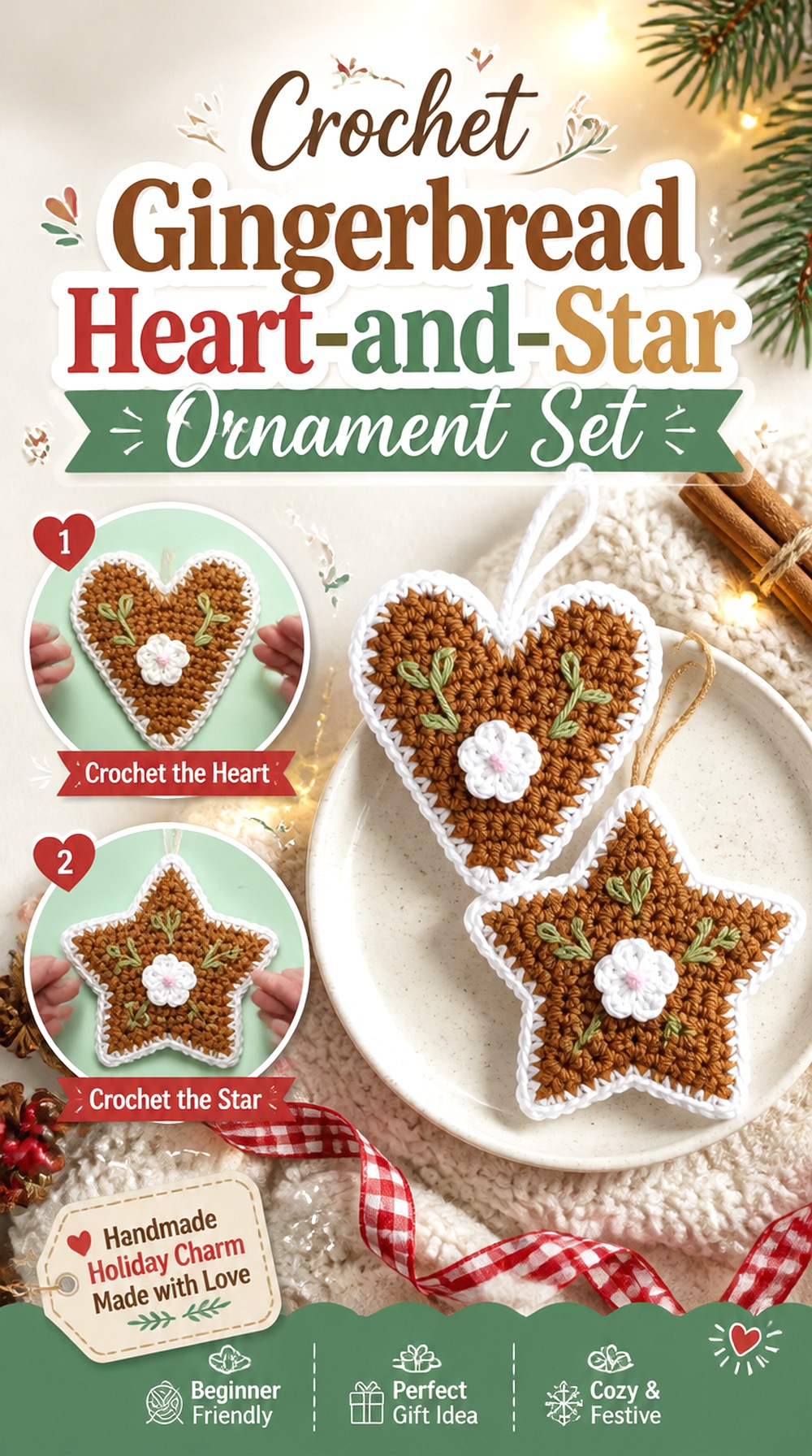
Play Hooky with Me takes gingerbread cookies beyond the person silhouette by showing heart and star forms, with the project presented for ornament and gift-holder uses. That makes this one of the easiest ideas in the collection to use when you want a coordinated group without repeating the same outline.
Stars look more angular and graphic, while hearts create a softer silhouette. Keeping the icing colors or edging consistent across both shapes can connect them visually even when their outlines differ.
Choose the Shape for the Display
A star naturally fits mixed Christmas ornament collections because its points create a strong holiday silhouette. A heart can transition more easily into gift decoration or other winter displays. If you are making only a few pieces, decide where they will hang before choosing which shape to repeat.
Decorating Space Changes Between Hearts and Stars
The center of a heart offers a relatively open decorating field, while the arms of a star break the surface into smaller sections. Do not force the same decorative layout onto both. Treat each shape according to the space it provides, while repeating colors or edging to keep the set coordinated.
Original Tutorial and Creator Credit
Creator: Play Hooky with Me
11. Crochet Personalized Photo Gingerbread Ornament
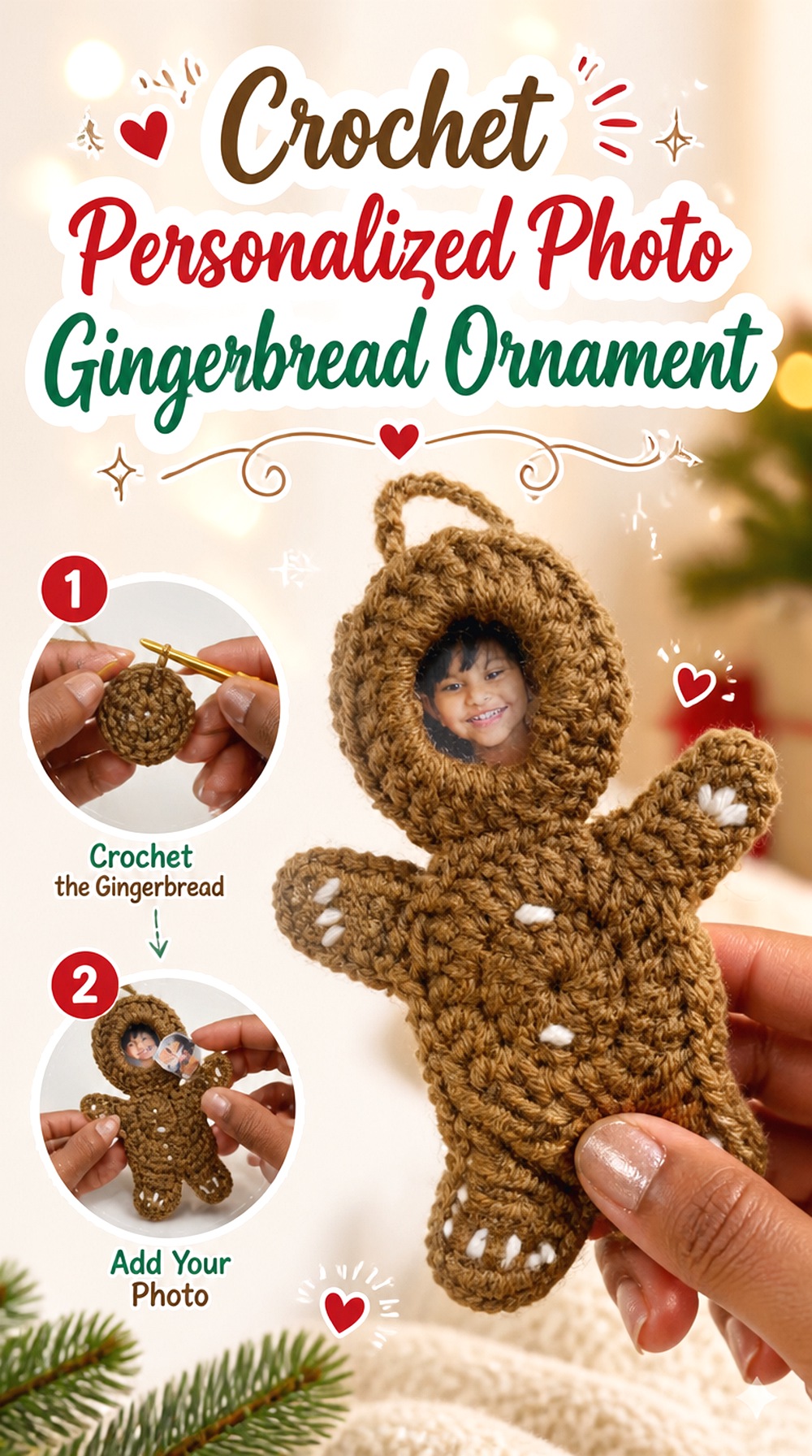
This project from Crafty Crochet Castle changes the purpose of the gingerbread ornament by turning the design into a photo keepsake. The tutorial is specifically presented as a gingerbread-man photo ornament, so the central feature is not simply the cookie decoration but the personal image it frames.
That makes it a strong option for family trees, commemorative ornaments, or handmade gifts. Because the photograph is the focal point, the crochet should frame rather than overwhelm it. Color and trim choices need to support the image instead of competing with it.
Measure the Photo Area Before Final Finishing
If you are using a particular photograph, check its crop and orientation against the available opening before permanently finishing the frame. Faces that look well positioned in a full photo can end up too close to an edge once cropped for a small ornament.
Protect the Keepsake Function
A photo ornament is likely to be stored and reused for years. Think about how the image will be held, whether it can be removed if needed, and how the crochet will be stored without folding the photograph. If you adapt the backing, keep added materials light enough that the ornament still hangs comfortably.
Original Tutorial and Creator Credit
Creator: Crafty Crochet Castle
12. Crochet Gingerbread Appliqué Ornament Set
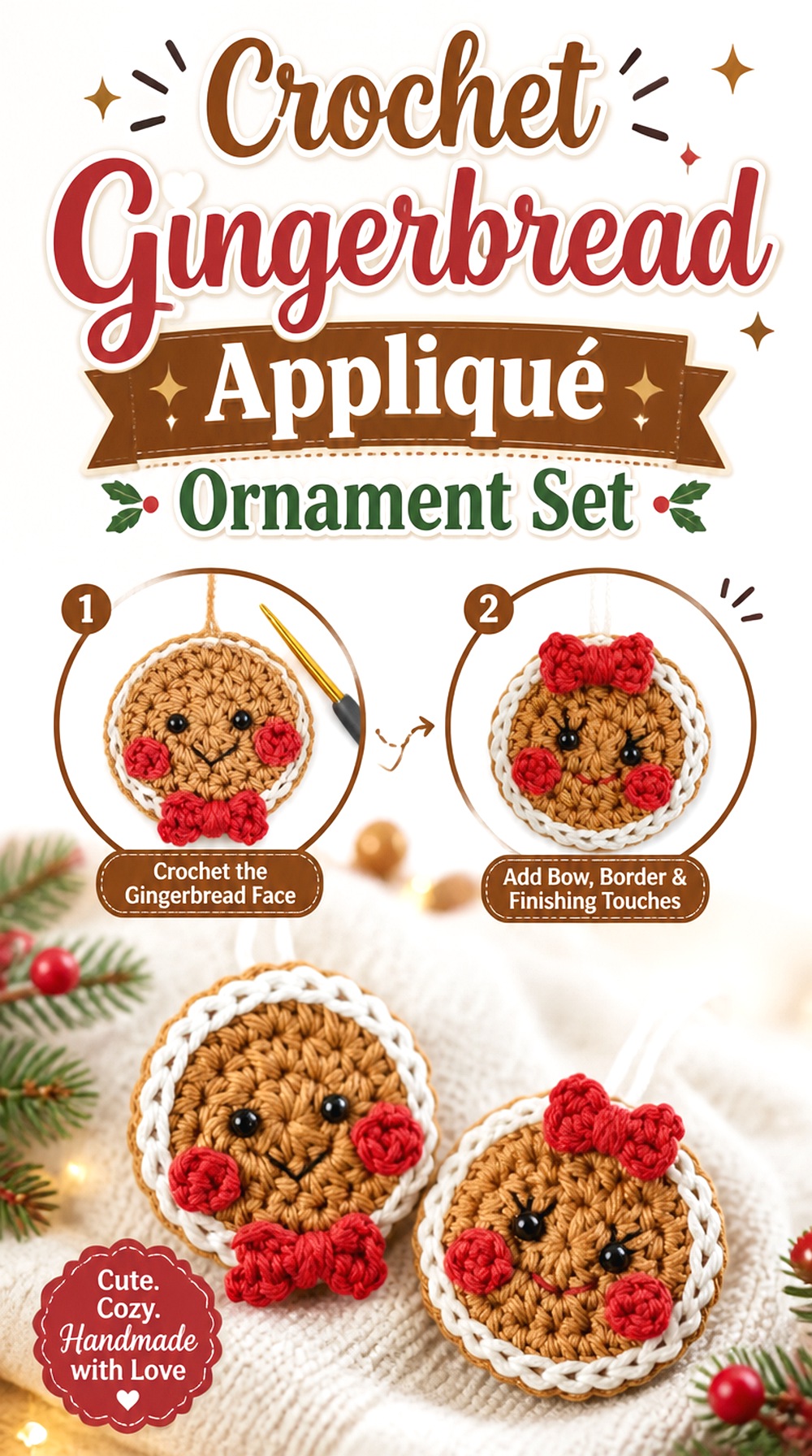
The Turtle Trunk’s source tutorial is for gingerbread appliqués as part of an advent-calendar series rather than a dedicated hanging ornament. That makes this idea an adaptation: the flat motifs can inspire lightweight ornaments, but the hanger and final tree use should be planned separately rather than assumed to be part of the creator’s instructions.
This route suits readers who prefer flat pieces and want flexibility. The same motif style can stay on an advent calendar, embellish a gift, or become an ornament when a secure hanging method is added.
Flat Appliqués Are Useful on Crowded Trees
A thin motif occupies less depth than a stuffed ornament, which can make it easier to place near the tips of branches or between larger decorations. The trade-off is that a very soft appliqué may curl. Check the finished fabric before adding a loop and consider whether gentle blocking is appropriate.
Keep Adaptations Separate From the Source Tutorial
If you convert an appliqué into an ornament, treat the hanging method as your own finishing decision. The creator’s tutorial should remain the reference for the motif construction itself. This distinction is particularly helpful if you change the motif’s final use without changing its crocheted structure.
Original Tutorial and Creator Credit
Creator: The Turtle Trunk
13. Crochet Gingerbread Star Ornament

Kristinas Retro Crochet turns the gingerbread-cookie idea into a star-shaped Christmas decoration. It provides a clear change of silhouette from gingerbread people and houses, and a repeated group of stars can blend naturally with more conventional star ornaments while still carrying the warm brown-and-icing gingerbread theme.
Because pointed shapes show distortion quickly, even finishing matters. If one point pulls inward or curls, the irregularity is easier to notice than it would be on a rounded cookie.
Check Every Point Before Decorating
Lay the finished star on a flat surface and compare the points before adding surface details. Decorative stitching can disguise small color differences, but it will not correct a badly distorted silhouette. Resolve shape issues first so the “icing” becomes decoration rather than camouflage.
Try Repetition Instead of More Detail
Three or five relatively simple gingerbread stars can create more impact than one extremely embellished piece. If you are planning a garland or a small cluster on the tree, consistent scale and hanger length can make the repeated star silhouette the main design feature.
Original Tutorial and Creator Credit
Creator: Kristinas Retro Crochet
14. Crochet Gingerbread Person Tree Ornament
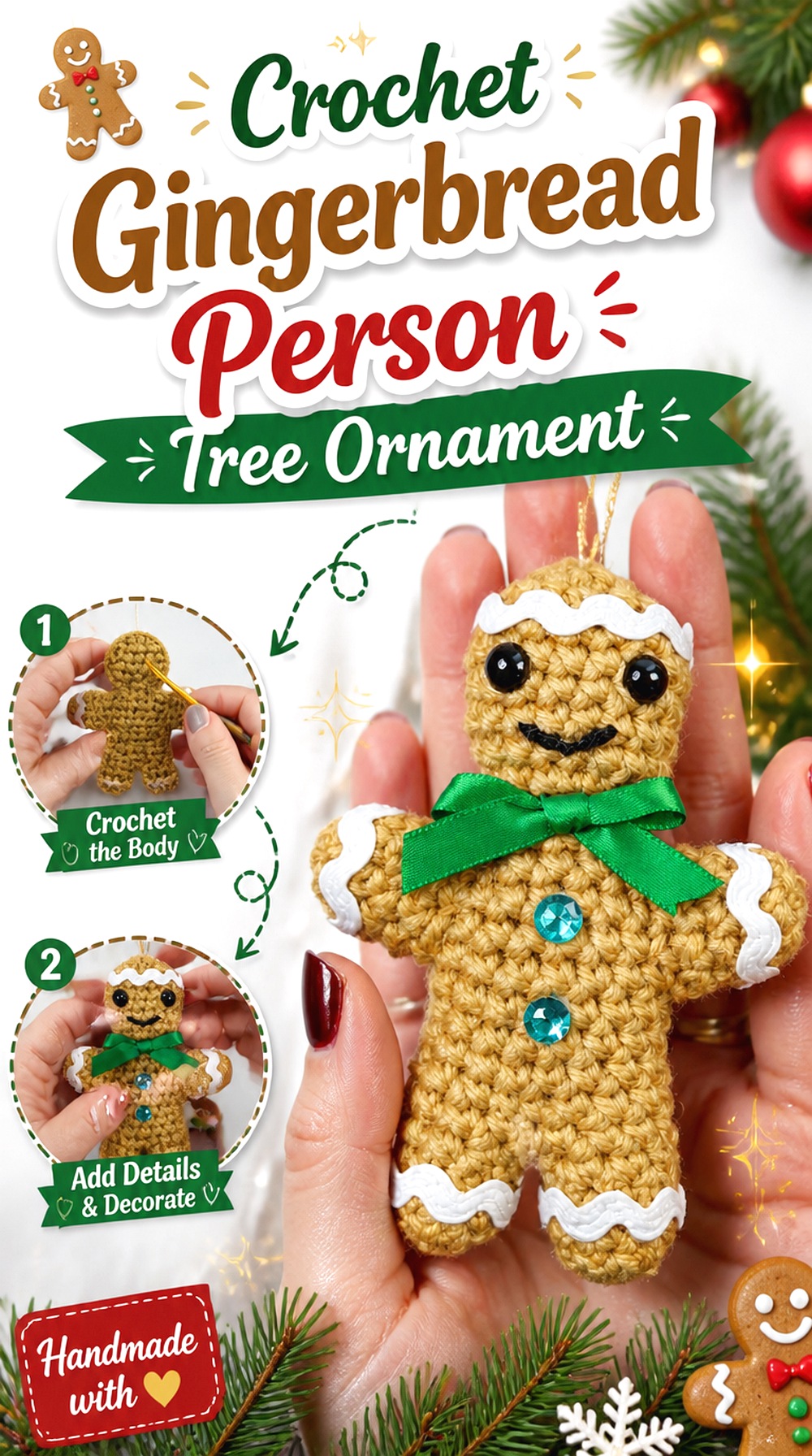
Freddie Loves Crochet presents a gingerbread person specifically as a Christmas tree ornament. The character format is familiar, but it works well when you want individual ornaments to develop distinct personalities through bows, facial styling, or contrasting trim.
This is also a useful format for a family-style set. Instead of changing the underlying construction, small decorative choices can distinguish one ornament from another while keeping the overall silhouettes coordinated.
Use One Feature to Differentiate a Set
If you are making several gingerbread people, avoid changing every detail at once. A bow, scarf-like accent, icing color, or button treatment is enough to distinguish individual ornaments. Keeping other elements consistent helps them look related rather than like unrelated projects.
Check Tree Scale Before Making Multiples
Character ornaments can feel larger than stars or small cookies because arms and legs extend the visual footprint. Finish one first and hold it against the tree you plan to decorate. That simple check is more useful than deciding scale from the piece alone on a worktable.
Original Tutorial and Creator Credit
Creator: Freddie Loves Crochet
15. Crochet Gingerbread Bauble Ornament

Maria’s Blue Crayon moves away from the flat cookie silhouette with a gingerbread-themed bauble ornament. The creator’s tutorial description specifically identifies the project as a gingerbread bauble. This rounded format gives the collection a different visual rhythm because the ornament reads as a Christmas ball first and gingerbread second.
A bauble works particularly well when your tree already contains traditional spherical ornaments. Instead of introducing a completely different shape, the gingerbread colors and decoration can connect the handmade crochet piece with the rest of the bauble collection.
Rounded Surfaces Change Decoration Placement
A design that looks centered when the bauble is sitting on a table may appear too low once it hangs. Check the final viewing angle before permanently attaching facial or icing details. The most important decoration should remain visible from the front when the ornament is suspended.
Stuff or Shape Evenly
Any lumpy area will be emphasized by a round silhouette. As you follow the source construction, assess the shape from several directions instead of only looking at the decorated front. A smoother sphere makes small decorative details look more deliberate.
Original Tutorial and Creator Credit
Creator: Maria’s Blue Crayon
16. Crochet Gingerbread Heart Ornament
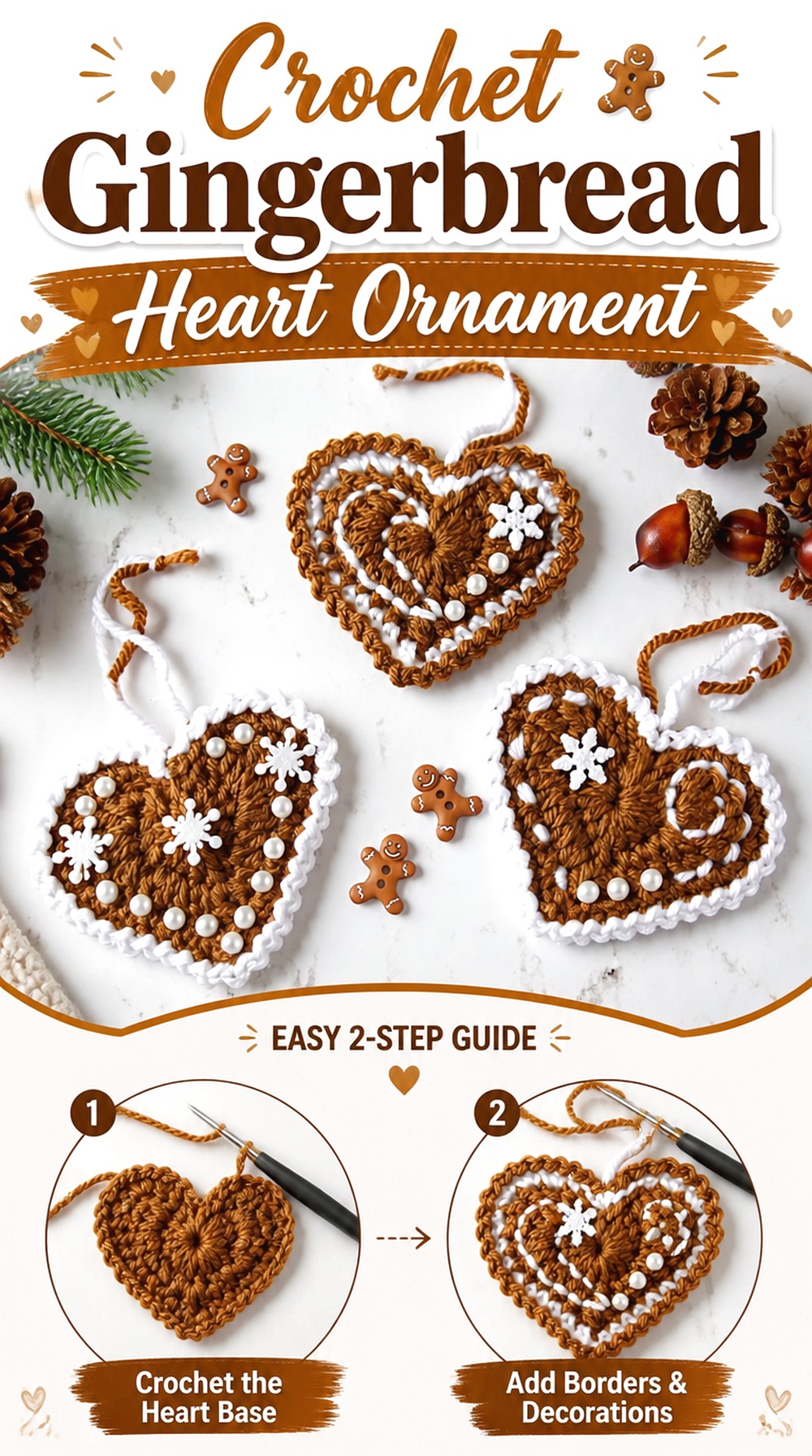
GoldenLucyCrafts uses the recognizable gingerbread palette and decorative styling on a heart-shaped ornament rather than a cookie person. The creator describes these gingerbread hearts as Christmas ornaments and also shows how naturally the form fits repeated holiday display.
A heart offers a larger uninterrupted center than a star, which gives you more freedom with icing-inspired embroidery or a single decorative focal point. It also transitions easily from a Christmas tree to gift decoration because the shape does not depend entirely on one seasonal character.
Keep the Center From Becoming Too Busy
The broad middle can tempt you to keep adding embellishment. Leave enough negative space for the heart outline to stay obvious. If you want a detailed border, a simpler center can create balance; if the center carries embroidery, a quieter edge may work better.
Decide Which Edge Defines the Cookie
A contrasting border can look like piped icing, while a brown outer edge emphasizes the baked-cookie silhouette. Both approaches can work, but they produce different visual weight. Make that decision before choosing the remaining decorative colors so the edge and center do not compete.
Original Tutorial and Creator Credit
Creator: GoldenLucyCrafts
17. Crochet No Sew Gingerbread Man Cookie Ornament
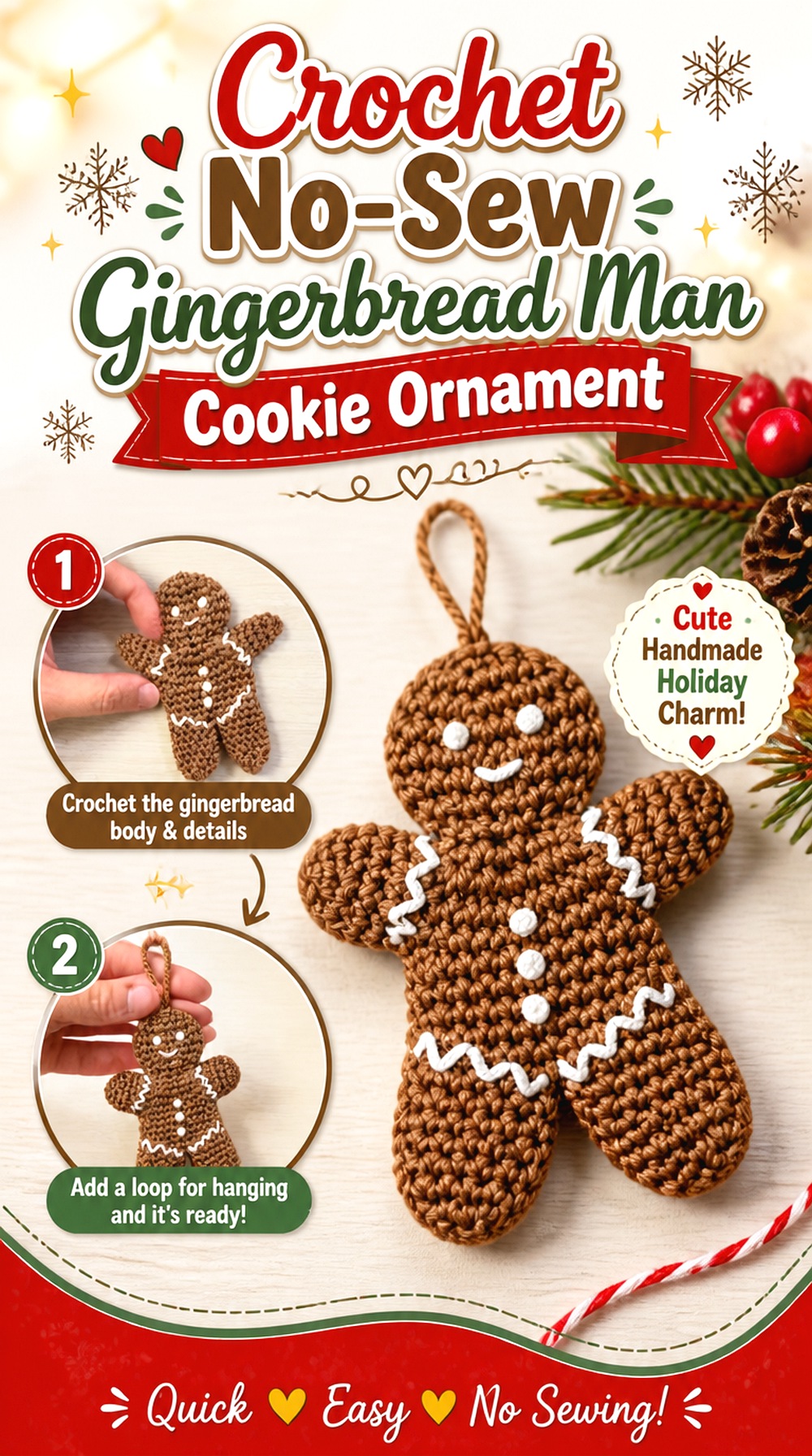
Pocket Yarnlings approaches the gingerbread person as a cookie-style project designed without conventional sewing or stuffing in the finished flat version described by the creator. The project is also presented as suitable for ornament use.
That construction direction makes this option noticeably different from layered or dimensional characters. The flatter result is practical when you want the gingerbread figure to resemble an actual cookie and when tree-branch depth is limited. Surface details become especially important because there is no plush volume to carry the design.
Flat Construction Makes Edge Quality Important
Without stuffing to soften the silhouette, every curve and transition remains visible. Pause before decorating and check the outline on a contrasting surface. If you changed yarn from the source project, this is the point to determine whether the fabric is holding the intended shape.
Embroidery Keeps the Cookie Lightweight
Yarn-based facial and icing details preserve the soft, flat character of the piece. If you substitute buttons or other hard embellishments, remember that they alter both weight and handling. For ornaments intended around small children or pets, avoid loose detachable decorations.
Original Tutorial and Creator Credit
Creator: Pocket Yarnlings
18. Crochet Mini Dimensional Gingerbread Man Ornament
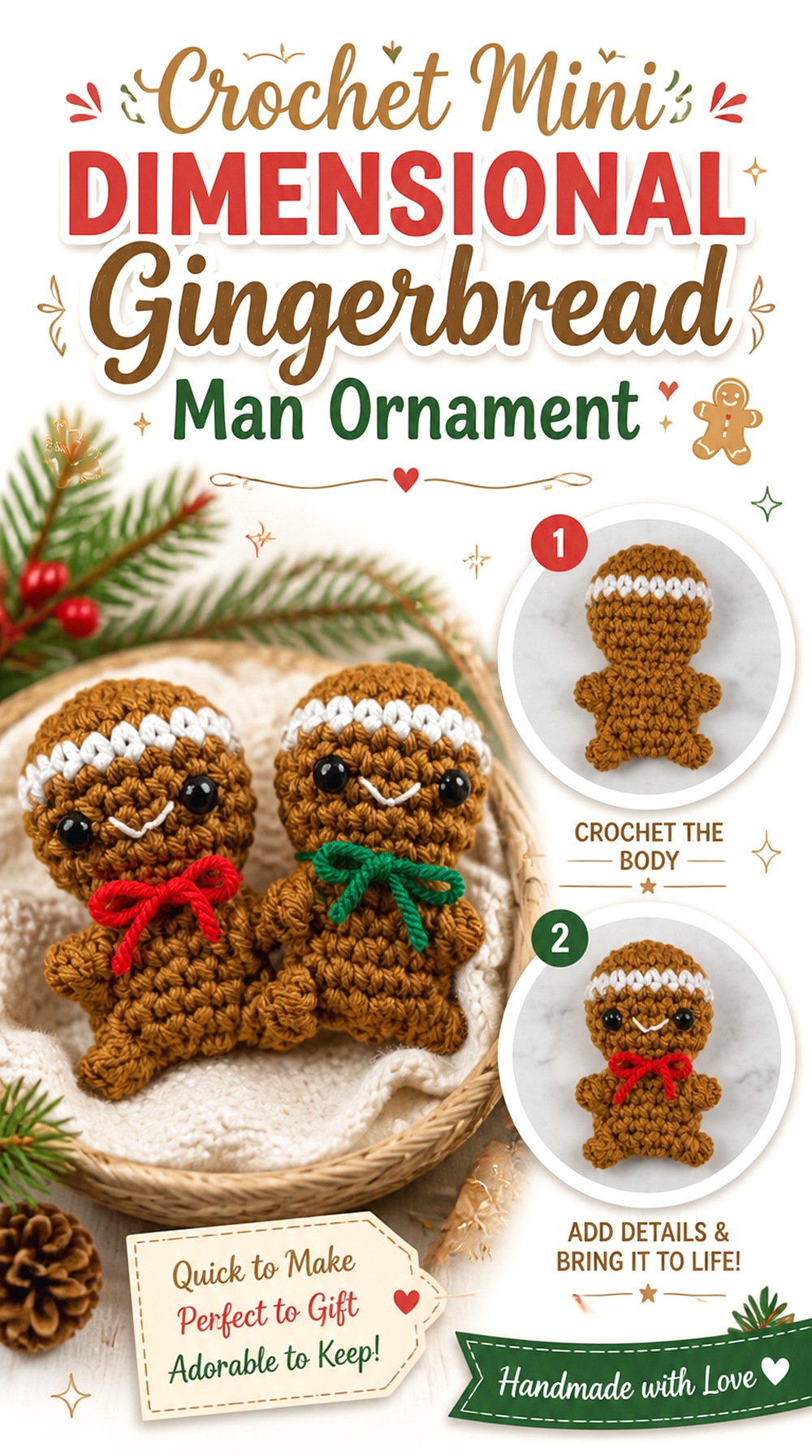
Heather Corinne Crochets offers a mini gingerbread man that is worked as a no-sew amigurumi-style project and can be adapted as an ornament or bag charm. Unlike the flat cookie above, this one introduces dimensional form while keeping the character compact.
That makes it a good choice for trees where you want a small ornament with more presence than an appliqué. The same dimensional quality also means balance matters: the hanger needs to support a body with actual depth rather than a nearly flat motif.
Do Not Overfill a Small Character
Extra stuffing does not automatically create a cleaner shape. On a miniature ornament, too much can push stitches apart or distort small features. Follow the creator’s construction and judge the form from the front and side before closing the piece completely.
Ornament and Bag-Charm Loops Have Different Needs
A tree hanger usually benefits from enough length to slip easily over a branch, while a bag charm may need hardware or a shorter attachment. Decide which use matters before finalizing the loop so the attachment looks intentional rather than improvised.
Original Tutorial and Creator Credit
Creator: Heather Corinne Crochets
19. Crochet Advent Style Gingerbread Man Ornament
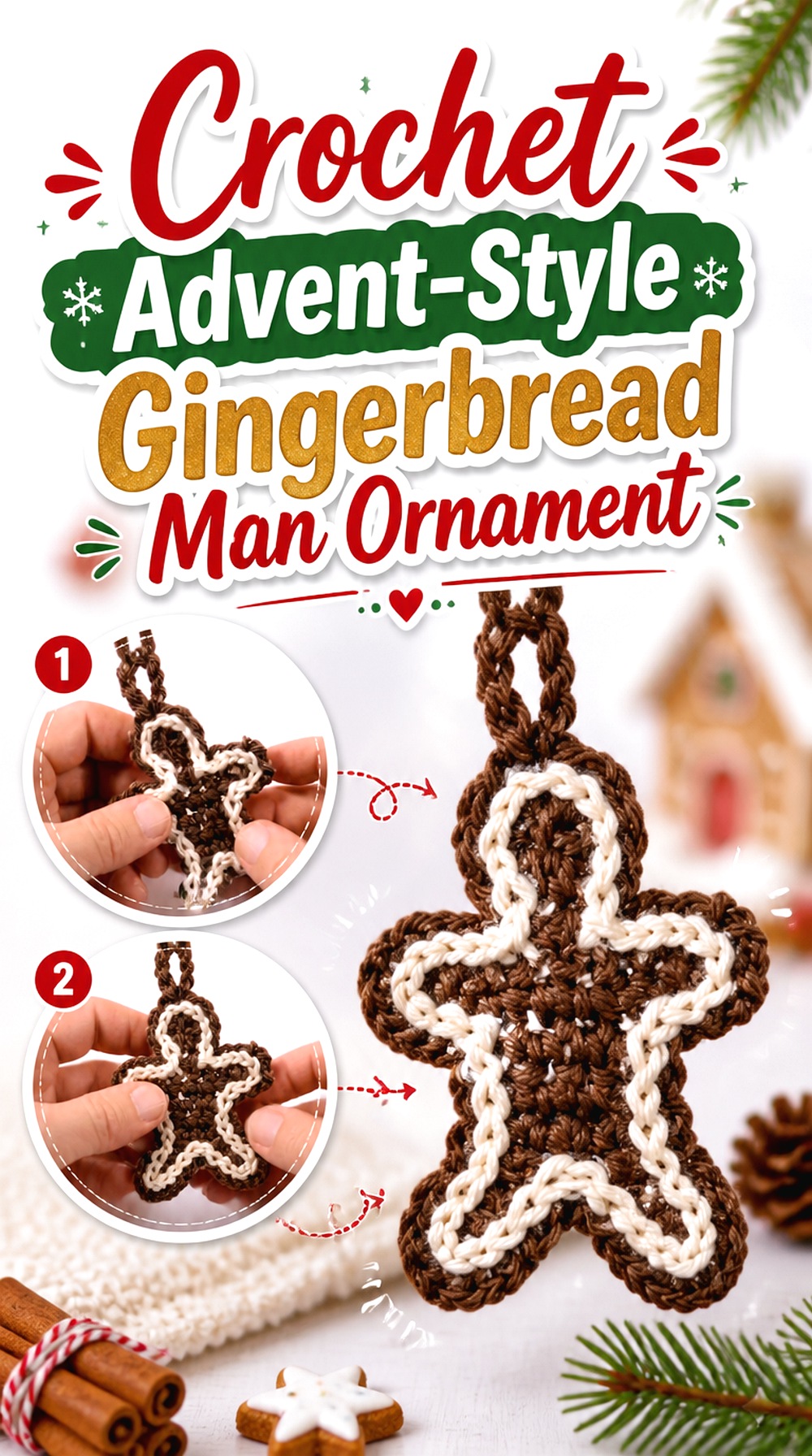
The Crochet Crowd presents its gingerbread man as an ornament suitable for an advent-calendar setting. That display context makes it useful for readers who are thinking beyond individual tree ornaments and want small gingerbread pieces that can become part of a larger Christmas collection.
An advent-oriented ornament needs to work visually alongside many other small motifs, so restrained decoration can actually be an advantage. The gingerbread silhouette and contrast do most of the identifying work, allowing the piece to remain recognizable without dominating neighboring decorations.
Match Scale Across an Advent Collection
If this ornament will join stockings, stars, snowflakes, or other small motifs, compare the finished visual footprint rather than only height. Wide arms and legs can make a gingerbread person feel larger than a narrow ornament with the same top-to-bottom measurement.
Give Repeated Ornaments a Common Detail
If gingerbread appears more than once in your advent display, repeat one trim color or facial style. That small link can make separate pieces look intentionally related without requiring every ornament to be identical.
Original Tutorial and Creator Credit
Creator: The Crochet Crowd
20. Crochet Traditional Gingerbread Man Tree Decoration
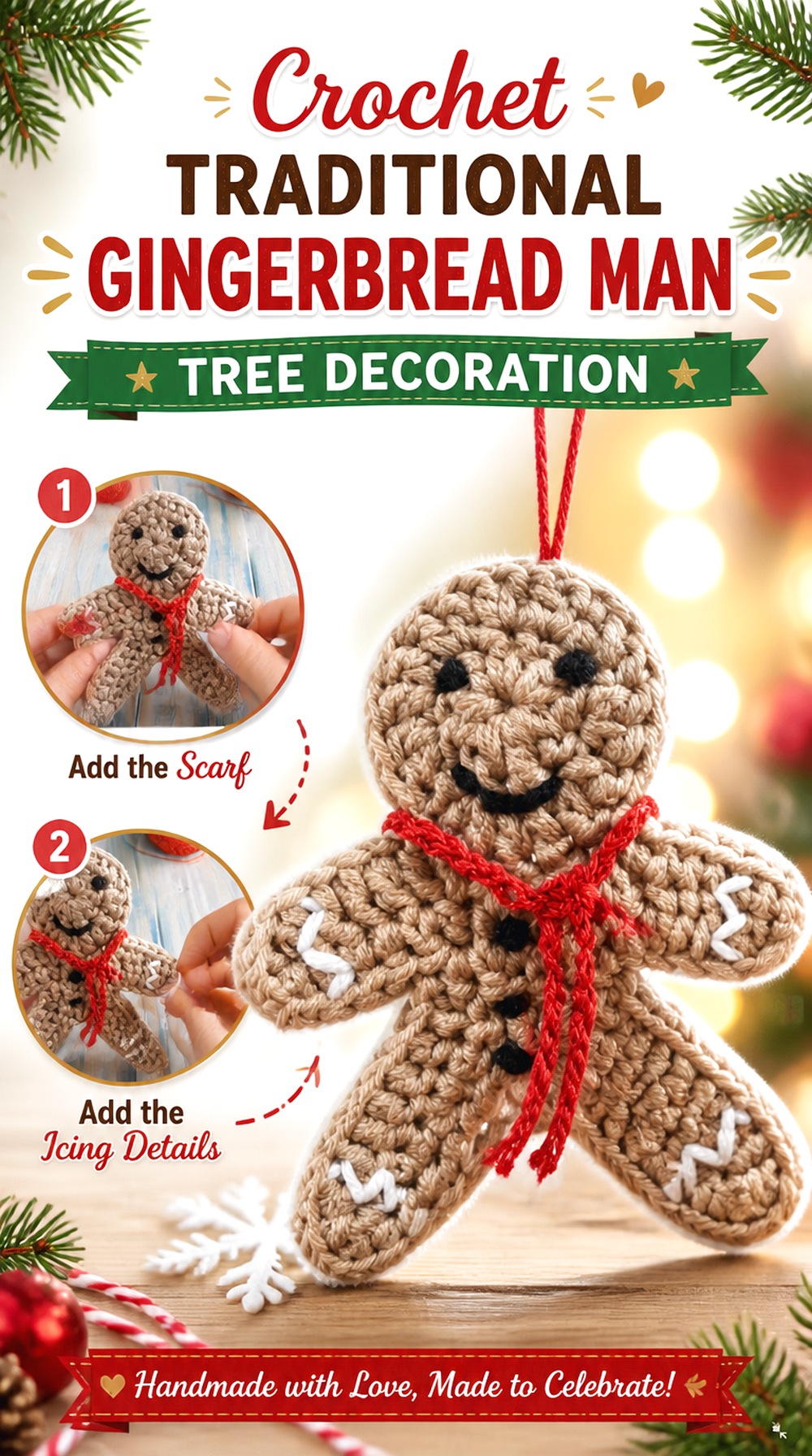
HappyBerry Crochet’s tutorial is built around a gingerbread man intended as a Christmas tree decoration or handmade decorative addition. It closes the collection with the most traditional concept: a recognizable gingerbread-person shape designed primarily to hang rather than to become a house, bauble, photo frame, or alternate cookie shape.
This route works well if you want a classic handmade ornament that will still make visual sense years from now. Rather than chasing novelty, concentrate on clean construction and a few strong decorative choices.
Classic Shapes Benefit From Consistent Finishing
Because viewers already know what a gingerbread cookie looks like, irregular proportions or misplaced trim stand out quickly. Follow the source construction carefully, then make your personal changes mainly through surface decoration rather than altering every part of the silhouette at once.
Build a Family of Related Cookies
A traditional shape can become the foundation of a larger ornament set. Change bows, icing colors, expressions, or small decorative accents while repeating the underlying form. This provides variety without making the collection visually chaotic.
Original Tutorial and Creator Credit
Creator: HappyBerry Crochet
Which Crochet Gingerbread Ornament Style Should You Choose?
For the flattest, easiest-to-store options, look first at the cookie, heart, star, and appliqué ideas. They also adapt naturally to gift tags and garlands. Choose a gingerbread house when decorating the surface is the main attraction; roofs, doors, windows, and candy-style trim give you more distinct areas to personalize.
The bauble and mini dimensional gingerbread man create more depth and are better choices when you want an ornament to project forward from the branches. The photo ornament serves a different purpose entirely: it works as a keepsake first and gingerbread decoration second. If you want to crochet multiples, make one completely finished sample before committing to a full set so you can judge scale, weight, hanger position, and storage needs.
Conclusion
The strongest crochet gingerbread ornament collection mixes silhouettes instead of repeating the same cookie twenty times. Houses give you room for detailed decorating, hearts and stars create lighter graphic shapes, appliqués are practical for flat displays, and dimensional people or baubles add depth among the branches. A personalized photo version can become the keepsake piece, while small cookies are easier to repeat across garlands or gift packages.
Whichever direction you choose, finish one sample and check how it hangs before making multiples. Pay particular attention to ornament weight, edge shape, embellishment security, and the balance point of the loop. Use the original creator tutorials linked with each project for their exact construction details.
Frequently Asked Questions
What type of crochet gingerbread ornament stores most easily?
Flat cookies, hearts, stars, and appliqués generally take up less storage depth than stuffed characters or baubles. Before packing them away, make sure they are completely dry and avoid folding them sharply, especially if they include embroidery or attached decorations. Dimensional ornaments need enough space that stuffing and rounded shapes are not compressed for long periods.
Should I use cotton or acrylic yarn for a crochet gingerbread ornament?
Either can work, but the finished behavior can differ by yarn construction. A smoother yarn can make small embroidery and stitch definition easier to see, while softer or fuzzier yarn may give a more plush appearance but obscure tiny details. The safest choice is to follow the yarn guidance in the selected tutorial first, particularly when finished scale matters.
Can I turn a crochet gingerbread appliqué into a tree ornament?
Yes, provided you treat the hanging loop as an adaptation when the original source does not include one. Finish and stabilize the appliqué first, then temporarily test possible hanging points so it faces forward instead of rotating. Keep the loop and added embellishments proportionate to the small motif.
How can I stop a flat gingerbread ornament from curling?
First check whether the curling comes from uneven crochet tension or tight embroidery pulling the fabric. Gentle blocking may help some yarns and constructions, but follow the care guidance for the fiber you actually used. Do not rely on stiffening or heat without confirming that the material is compatible with that treatment.
Where should the hanging loop go on a gingerbread person or house?
The visually highest point is a useful starting place, but the best location is the point that keeps the ornament facing forward. Before fastening the loop permanently, pass a temporary strand through the proposed location and lift the ornament. Move the strand slightly if the ornament tilts, twists, or hangs noticeably off-center.
Are buttons, beads, or safety eyes appropriate for every gingerbread ornament?
Not necessarily. They can add useful detail, but they also introduce hard, potentially detachable parts and extra weight. If the ornament could be handled by babies, small children, or pets, loose embellishments are an important consideration. Embroidered facial features and icing details avoid many of those detachable components while preserving the gingerbread look.