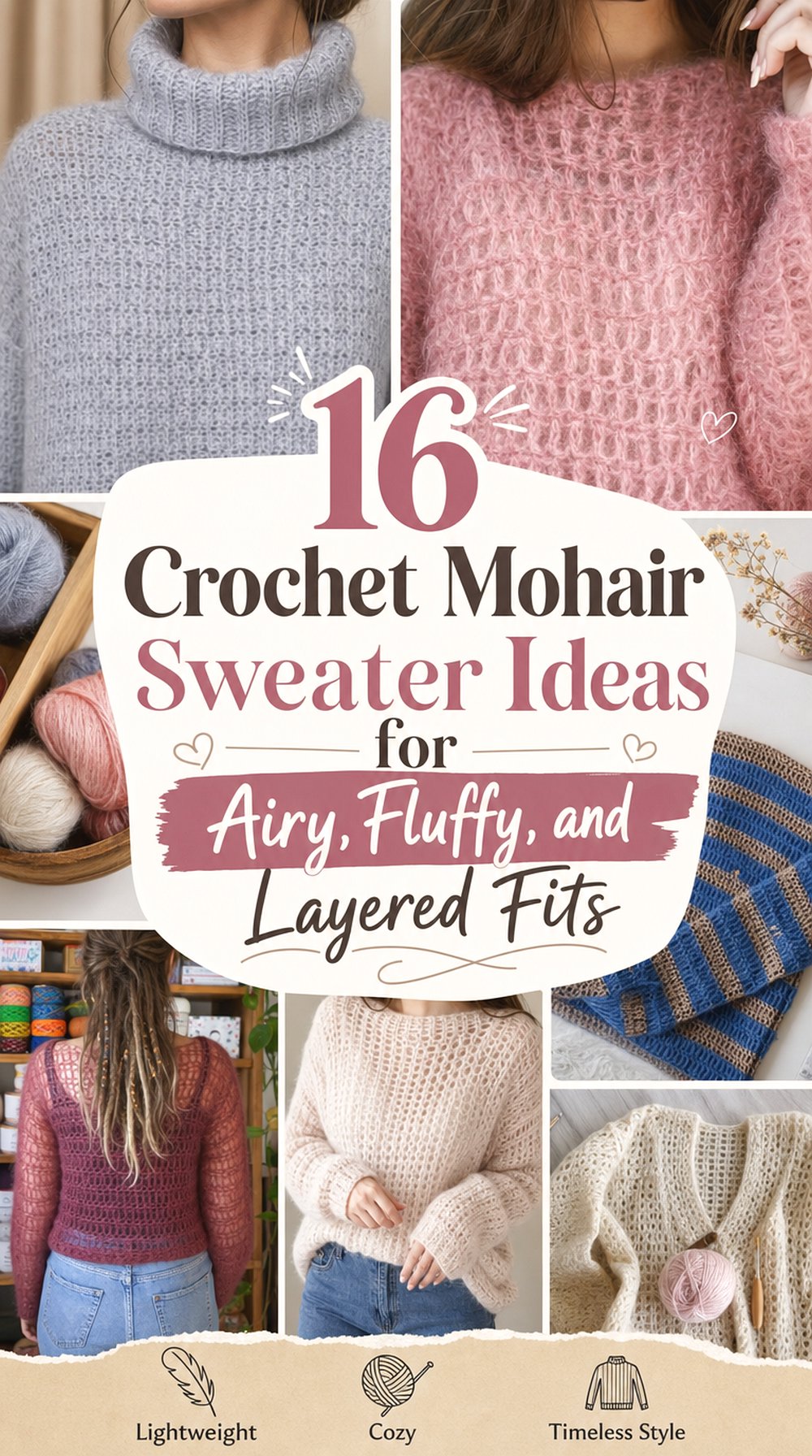
16 Crochet Mohair Sweater Ideas for Airy, Fluffy, and Layered Fits
Mohair changes the character of a crochet sweater before color or decoration even enters the picture. Its fuzzy halo can soften stitch definition, while an open fabric can produce a light, semi-sheer layer that looks very different from a compact pullover. These 16 sweater ideas cover mesh constructions, oversized silhouettes, measurement-led jumpers, top-down designs, an off-shoulder fit, stripes, raised texture, a cardigan, and a high-neck option.
The tutorials also approach fuzzy yarn differently. Some use mohair or a mohair blend as the main yarn, while others combine a mohair-containing yarn with another strand or incorporate it into a mixed-yarn fabric. That makes swatching, opacity, drape, neckline shape, and fit especially useful comparison points before choosing a project.
Quick List
- Airy Crochet Mohair Mesh Pullover
- Oversized Crochet Mohair Cloud Sweater
- Classic Crochet Fluffy Mohair Crewneck
- Made-to-Measure Crochet Mohair Jumper
- Flowing Crochet Oversized Mohair Sweater
- Plush Crochet Mohair Pullover
- Straight-Sleeve Crochet Kid-Silk Sweater
- Seamless Crochet Top-Down Mohair Sweater
- Off-Shoulder Crochet Mohair Sweater
- Striped Crochet Mohair Jumper
- Graphic Crochet Mohair Mesh Sweater
- Pastel Crochet Mohair-Blend Mesh Sweater
- Scrappy Crochet Mohair-Blend Lace Sweater
- Bobble-Detail Crochet Mohair Raglan Sweater
- Open-Front Crochet Mohair Cardigan Sweater
- Turtleneck Crochet Mohair Halo Sweater
Choose Between Airy Mohair, Blends, and Held-Together Yarn
“Mohair sweater” can describe several noticeably different fabrics. Fine mohair can create a light, hazy surface, and commercial mohair yarns are also commonly sold as blends rather than pure mohair. Some tutorials in this collection use a fuzzy strand on its own, while others combine fibers or strands to gain more coverage.
Choose according to the fabric you actually want. A very open single-strand construction works well when transparency and layering are intentional. A mohair blend can retain the halo while producing a somewhat different hand, and holding a fuzzy yarn alongside another yarn can make stitches appear more substantial. Do not assume two yarns labeled “mohair” will substitute directly. Swatch the specific yarn-and-hook combination and compare the resulting fabric with the tutorial before planning the sweater size.
Let the Finished Fabric Guide the Fit
A loose, airy sweater and a compact fuzzy sweater can share the same body measurements but feel completely different when worn. Decide first whether you want a close silhouette, a straight everyday shape, intentional oversized ease, a wide off-shoulder neckline, or a top-down sweater you can assess as it develops.
For measurement-led designs, use the creator’s sizing method rather than relying on a generic sweater formula. When adapting a construction, it can also help to compare the planned width and length with a sweater you already like wearing. Check the neckline, armhole depth, sleeve width, and body length as separate decisions; adding width everywhere does not automatically create a better oversized fit. With open mohair fabric, also consider what garment will be worn underneath, because that layer becomes part of the finished look.
Swatch Before You Need to Undo Mohair
Fuzzy yarn rewards early checking. The halo that gives mohair its characteristic appearance can catch on itself, making repeated unraveling considerably more frustrating than it is with a smooth yarn. Crochet guidance for kid-silk mohair specifically notes that frogging can become difficult when the fibers tangle.
Use a small swatch to judge more than gauge. Look at how clearly you can see the stitch structure, whether the fabric is more transparent than expected, how the yarn feels against the skin, and whether the edge looks stable enough for the intended neckline or cuff. If you are changing yarn, hook, or stitch openness from a tutorial, make those decisions in the swatch rather than after completing a full sweater panel.
1. Airy Crochet Mohair Mesh Pullover
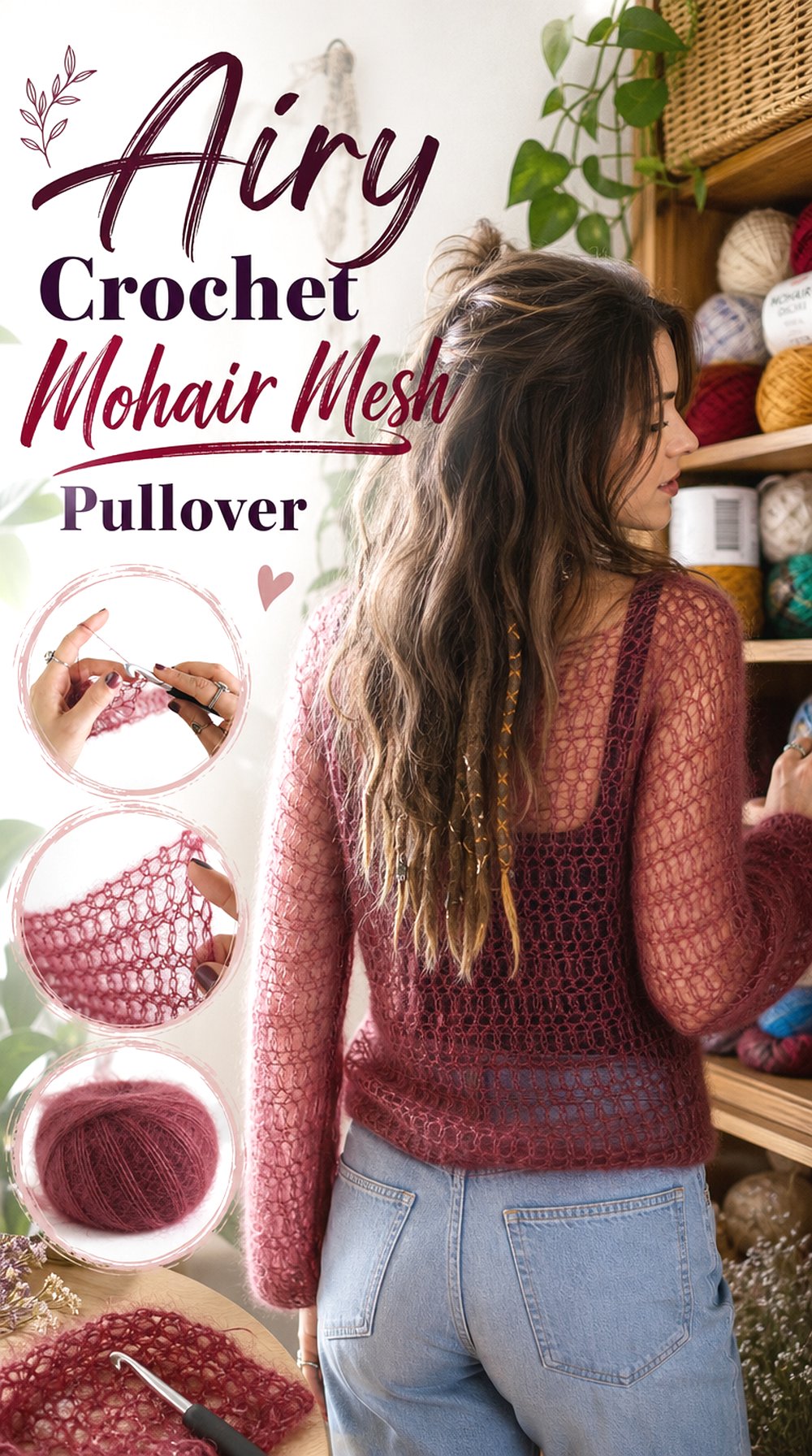
This option puts the lightness of mohair at the center of the design. Bloodimaryart Crochet’s tutorial shows a long-sleeved mesh top made with a fine fuzzy yarn and an intentionally open fabric, giving it more of a layering role than a conventional opaque sweatshirt-style sweater.
Choose this direction when you want the halo to float around clearly visible negative space. Because the garment is open, the camisole, bralette, tank, dress, or fitted top underneath becomes part of the styling. It is meaningfully different from the fuller-coverage sweaters later in the list, where the fuzzy surface rather than the open holes dominates the finished appearance.
Openness Is the Main Fit Decision
Before worrying about whether the sweater should be cropped or long, decide how much skin or underlayer you want visible through the fabric. Open mesh can look dramatically different over a high-contrast top than over a similar-colored base layer. Make a swatch large enough to hold over the clothing you expect to wear underneath. That gives you a more useful picture of the final sweater than examining the stitches against a tabletop.
Check the Neckline Against Your Layering Plan
A lightweight mesh neckline has less visual mass than a thick ribbed collar, so the opening becomes especially noticeable. Compare the tutorial’s finished neckline with the tops you normally layer underneath. If visible straps or a second neckline would bother you, plan that combination before making the full garment. Also check that any adaptation to the neck does not make the opening so wide that the light sweater shifts more than you want.
Creator: Bloodimaryart Crochet
2. Oversized Crochet Mohair Cloud Sweater
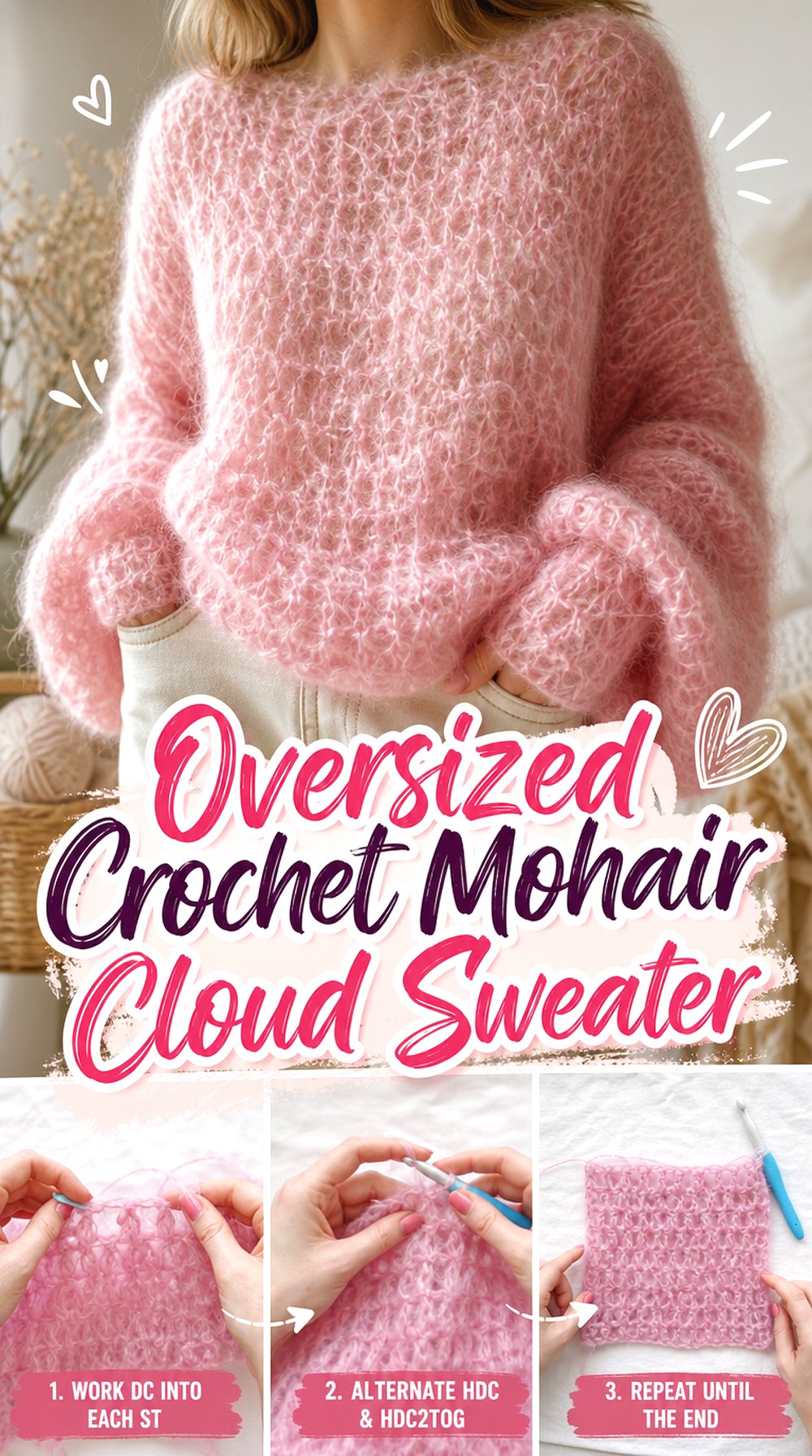
An oversized fuzzy sweater uses the halo differently: instead of emphasizing individual holes or graphics, the extra room lets the soft fabric create a broader cloud-like silhouette. HayHay Crochet’s tutorial presents customizable sweater options, including a longer oversized version, so it is a useful reference when generous proportions are part of the goal.
This style suits someone who wants mohair to feel visually substantial without relying on a heavy-looking stitch texture. Pay attention to where the extra room is added. A wide body, deeper shoulder line, longer sleeve, and longer hem each affect the silhouette differently, and increasing all of them at once may produce more volume than expected.
Positive Ease Changes More Than the Chest Width
For an oversized sweater, compare the planned garment width with a sweater whose looseness you already enjoy. Then inspect shoulder placement separately. A shoulder line extending past the natural shoulder produces a different result from simply adding circumference around the torso. This distinction matters with fuzzy yarn because a wide halo can visually enlarge the garment even further. Decide whether you want a deliberately dropped shoulder or merely comfortable body room.
A Large, Open Fabric Makes the Halo More Visible
Spacing between stitches gives fine fibers room to spread visually. That can create the misty surface associated with this style, but it can also expose the underlayer more than expected. Swatch against both light and dark clothing before committing to a color. The same fuzzy fabric may look nearly opaque over one layer and much more open over another, particularly when the mohair color contrasts strongly with what sits beneath it.
Decide on Collar Weight Before Adding More Length
An oversized body already carries strong visual volume. A substantial collar changes the balance near the face and can make the whole sweater feel more enveloping, while a simpler neckline keeps attention on the loose body. If adapting the tutorial, treat collar style and body length as connected design choices rather than independent extras. Comparing the sweater in progress against a favorite oversized garment can help keep those proportions intentional.
Creator: HayHay Crochet
3. Classic Crochet Fluffy Mohair Crewneck

For a more familiar everyday sweater shape, this fluffy crewneck keeps the focus on a straightforward body-and-sleeve silhouette. Alona crochets uses an acrylic-mohair blend and demonstrates a panel-based sweater construction with separate body sections and sleeves.
The result is a useful choice if you prefer a recognizable pullover outline rather than dramatic mesh, a wide neckline, or decorative motifs. The fuzzy blend still gives the surface softness, but the basic silhouette makes length, sleeve proportions, and neckline finishing the decisions that most influence how wearable the sweater feels with the rest of a wardrobe.
Panel Symmetry Helps the Crewneck Sit Cleanly
With separate front and back pieces, compare the panels before joining rather than assuming two pieces made in the same way will automatically finish identically. Fuzzy yarn can make edges harder to read, especially if tension changes between work sessions. Lay the pieces flat, check corresponding shoulder and side edges, and resolve noticeable differences before seaming. A small mismatch becomes more visible once it begins pulling the neckline or hem off balance.
A Fluffy Blend Can Hide Fine Stitch Detail
A strong halo can soften the appearance of subtle texture. If you are tempted to substitute a more decorative stitch for part of a simple crewneck, test whether the detail remains visible after the fuzzy fibers bloom around it. When the texture disappears, keeping the body simpler and using neckline, cuff, or proportion changes for interest may produce a clearer result than investing effort in stitches that the yarn visually obscures.
Creator: Alona crochets
4. Made to Measure Crochet Mohair Jumper
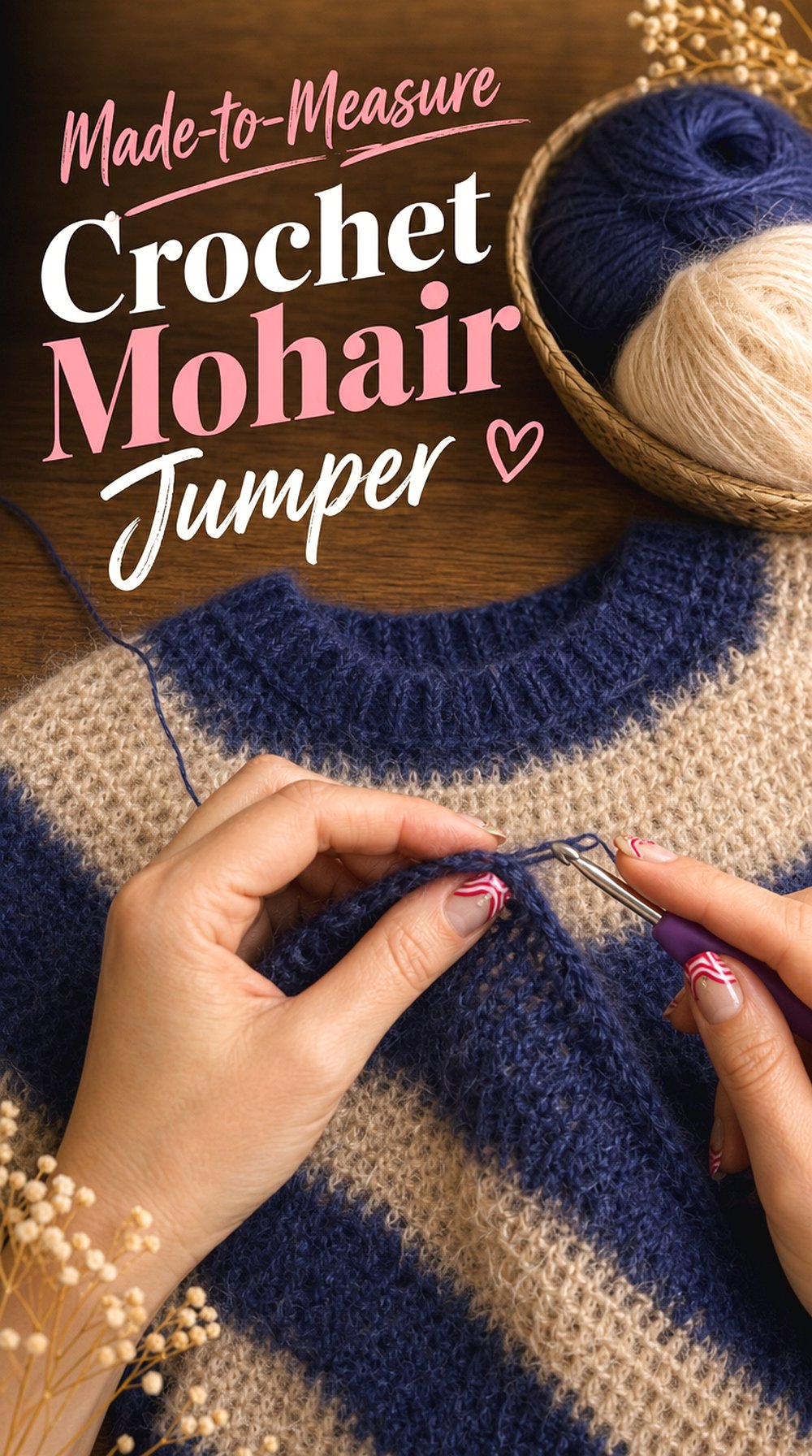
A measurement-led jumper is useful when fixed size labels are less important than matching the garment to a specific body and preferred amount of room. In Stitches by Marta presents the mohair jumper as an adaptable construction rather than limiting the tutorial to one finished size.
This approach is particularly appealing if standard sweater proportions often give you a body that fits but sleeves that do not, or vice versa. The trade-off is that customization requires active checking. “Made to measure” does not remove the need to decide on ease, body length, sleeve shape, and the clothing you plan to layer underneath.
Measure the Sweater You Want, Not Only Your Body
Body measurements establish the starting point, but they do not tell you how loose you want the garment. Compare them with a sweater that already has a comfortable fit and note the difference. That comparison gives useful context for deciding whether the mohair jumper should skim the body or sit farther away from it. Avoid copying dimensions from another garment without also checking whether its fabric stretches and drapes similarly.
Recheck Sleeve Placement Before Final Joining
Sleeves can change the apparent fit of a sweater even when the body width looks correct. Before completing permanent assembly, compare the arm opening and upper sleeve with where you want the garment to sit around the shoulder and underarm. A very deep opening may contribute to a relaxed silhouette but can also add extra fabric under the arm. A shallow opening may feel restrictive even when the torso itself has enough room.
Keep a Simple Measurement Record
Customization becomes much easier when the decisions are recorded as you make them. Note the actual dimensions you are targeting for body width, length, sleeve length, and important openings rather than relying on memory. This is especially valuable when making a second sleeve after the first one already fits well. The record is not a replacement for the creator’s tutorial; it simply helps you reproduce your own chosen proportions consistently.
Creator: In Stitches by Marta
5. Flowing Crochet Oversized Mohair Sweater
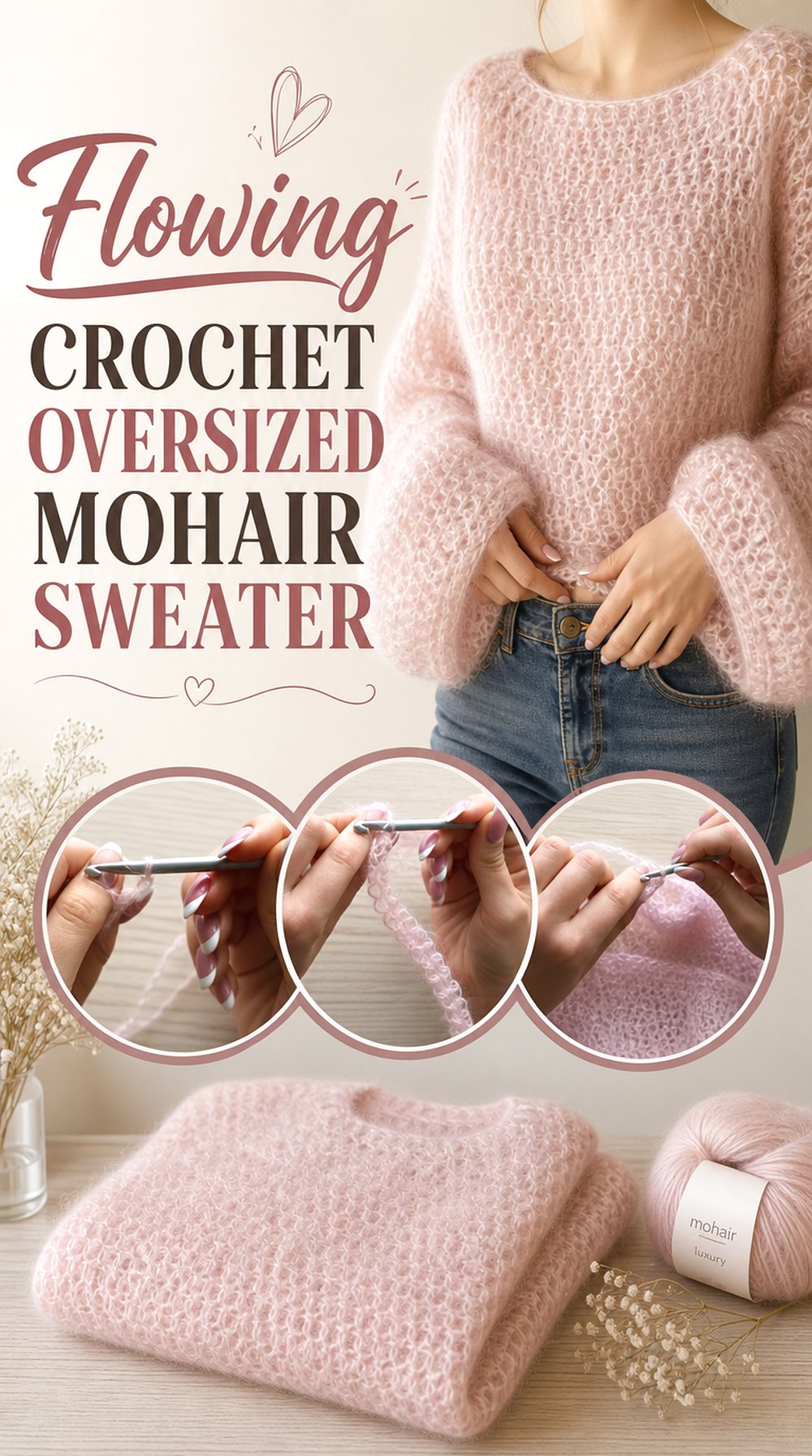
ACrochets’ sweater tutorial uses a thin mohair-mix yarn to create a loose, flowing oversized garment. That combination produces a different kind of volume from a thick, chunky sweater: much of the presence comes from width and movement rather than dense fabric.
This version is worth considering if you like roomy sweaters but do not want the silhouette to look rigid. The key planning question is how much length you actually want once the fabric is hanging from the shoulders. A wide fuzzy sweater can look balanced at one hem position and overwhelmingly large when both body and sleeves are extended farther.
Thin Fuzzy Yarn Lets Volume Move
A roomy shape depends on the fabric being able to hang rather than stand away from the body. If you substitute yarn, compare the swatch’s flexibility with the tutorial’s visible sweater instead of matching fuzziness alone. A thicker or firmer replacement may produce the same measurements but a much more structured silhouette. For this project, drape is therefore a design requirement, not merely a pleasant extra.
Watch Hem Length as the Fabric Hangs
Judge length vertically, not only while a piece lies flat on a table. A loose sweater is supported from the shoulders, and its overall proportions can read differently when worn or hung. If you are adjusting length, pause before the final finishing stage and compare the current hem with the trousers, skirts, or dresses you expect to pair with it. That prevents “oversized” from unintentionally becoming “longer than useful.”
Creator: ACrochets
6. Plush Crochet Mohair Pullover

The lerugi crochets tutorial centers on a distinctly fluffy mohair pullover, providing a useful alternative to the more transparent mesh sweaters in this collection. Here the fuzzy surface reads as the main visual feature, making the sweater feel closer to a cozy conventional pullover than a sheer layering top.
Choose this direction if you want the mohair halo to soften a fuller-looking fabric. Because the surface has more visual density, neckline and cuff boundaries become important: without enough definition, those details can appear to dissolve into the same fuzzy texture as the body.
More Coverage Changes the Layering Role
Before selecting this style, decide whether you still want a visible layer underneath. A fuller-looking fuzzy pullover can function as the main top rather than an obvious mesh layer, but actual opacity depends on the yarn, stitch spacing, color, and what is worn beneath it. Hold a swatch up to natural light and against your skin or base layer. That practical check is more useful than judging coverage from the yarn ball.
Keep Cuffs and Neck Edges Visually Distinct
Halo can make the transition between a sweater body and its finishing less obvious. If the creator’s finished edge is one of the features you like, check how clearly your chosen yarn shows it. A dramatically fluffier substitute may obscure that boundary. Work a small sample of the intended edge treatment first when possible; if it disappears visually, yarn choice rather than additional decorative complexity may be the more effective adjustment.
Creator: lerugi crochets
7. Straight Sleeve Crochet Kid Silk Sweater

Wood & Yarn’s April Sweater tutorial uses Kid Silk and shows a straight-sleeved sweater option, making it a good reference for a cleaner sleeve line than the exaggerated bell, balloon, or heavily tapered shapes common in statement sweaters.
Straight sleeves shift attention toward the overall fabric and body silhouette. They are useful if you expect to layer the sweater under a jacket or simply prefer less volume around the wrist and forearm. With a fine fuzzy yarn, consistent fabric is particularly noticeable because the simple outline leaves fewer decorative elements competing for attention.
Straight Sleeves Create a Cleaner Outer Layer
Think about what will be worn over the sweater. A dramatic sleeve may look appealing on its own but can bunch inside a fitted coat or blazer. A straighter profile is usually easier to pair with other layers because there is less excess fabric to manage. Check the upper arm and cuff separately, though; “straight” should describe the visual line, not mean that the sleeve must have the same amount of ease at every point.
Kid-Silk Makes Tension Changes More Noticeable in Simple Areas
When the design is deliberately uncluttered, uneven fabric has nowhere to hide except beneath the halo. Pay particular attention when beginning a new work session or switching between body and sleeve sections. Comparing the fabric periodically against the previous section can reveal changes before they extend very far. This matters with fuzzy yarn because catching an inconsistency early is usually much more convenient than undoing a long area later.
Creator: Wood & Yarn
8. Seamless Crochet Top Down Mohair Sweater
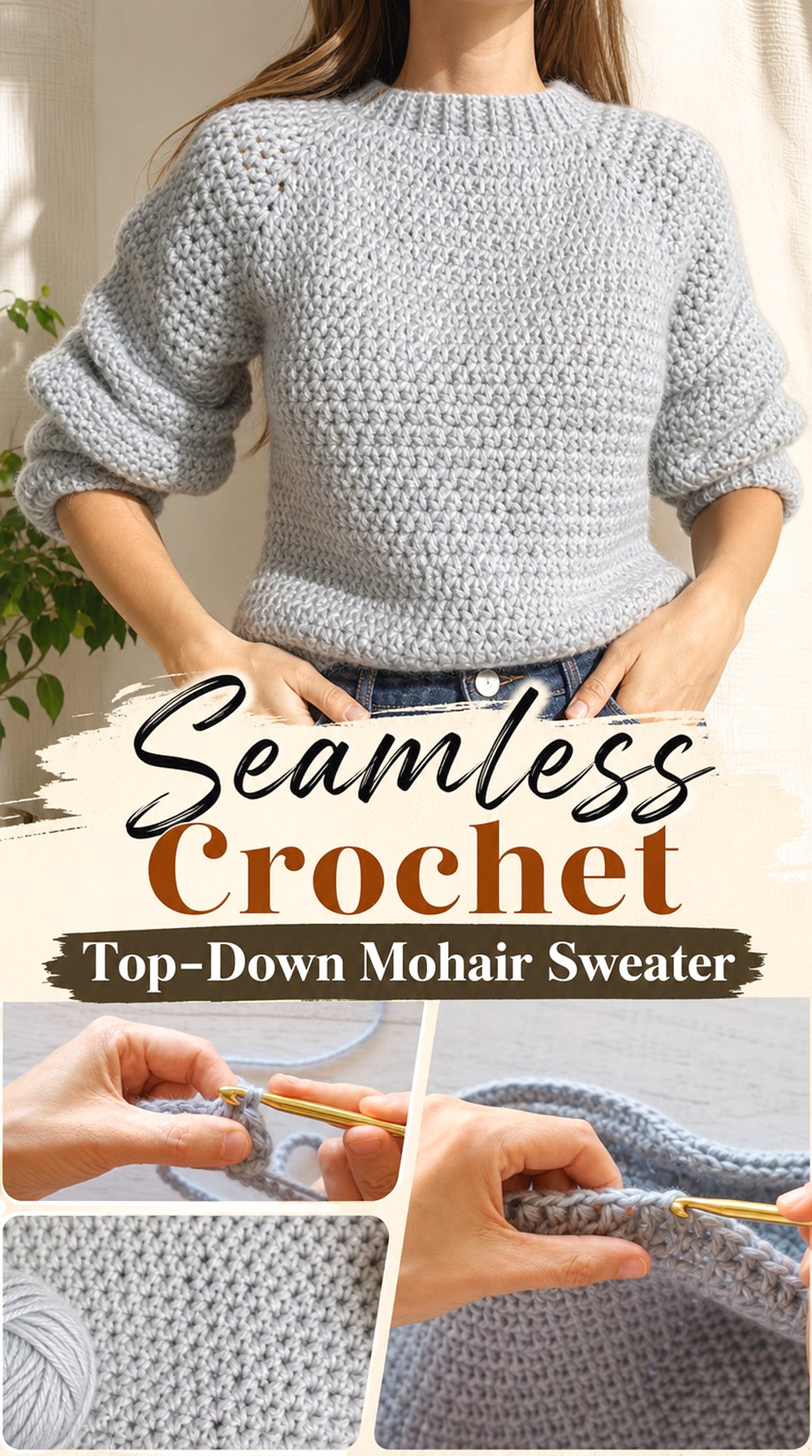
A top-down sweater changes the fitting process because the garment grows from the upper body rather than being assembled primarily from separate front and back panels. Hilados Malen – Vicky’s tutorial specifically presents a top-down, no-sewing mohair sweater construction with an inclusive sizing approach.
This is a strong option for crocheters who dislike long garment seams or want opportunities to assess proportions while the sweater develops. The main planning area moves to the yoke: its depth and expansion influence the chest, upper arm space, and where the body separates from the sleeves.
Try-On Checkpoints Are the Main Advantage
Use the top-down structure to answer fit questions while they are still easy to address. At sensible checkpoints, look at where the neckline sits, whether the yoke has reached the intended underarm area, and how much room the upper body has. Do not judge only by horizontal circumference. A sweater can have enough width but still feel uncomfortable if the yoke is too shallow for the wearer’s shoulder and underarm depth.
Yoke Depth Controls Several Fit Areas at Once
Adding more yoke depth affects more than sweater length. It influences where the sleeves begin and how much fabric sits around the upper torso. When adapting the tutorial, avoid treating extra rounds or rows as a generic solution to every fit issue. Identify whether you actually need more chest room, more vertical depth, or more sleeve space. Those problems can look similar when the sweater is flat but feel very different when worn.
Keep an Eye on Fabric Openness Through the Yoke
If your substitute mohair creates a more open fabric than the tutorial’s yarn, the upper chest and shoulder area may reveal more of the underlayer than expected. Swatch first and consider the neckline and bra or camisole placement together. A top-down construction makes this particularly worth checking early, because that upper section establishes the visual character for the rest of the sweater.
Creator: Hilados Malen – Vicky
9. Off Shoulder Crochet Mohair Sweater

The wide neckline is the defining feature of JeggoCrochet’s mohair sweater tutorial. Rather than keeping the neck opening close to the base of the neck, this design is intended for an off-shoulder look. That makes it a very different fit problem from a crewneck or turtleneck, even when the rest of the sweater is similarly soft and oversized.
Choose this version when the neckline itself is the styling focus. Before starting, think about how much shoulder exposure you actually want and what undergarments or base layers will work with it. A fuzzy yarn can make the sweater visually soft, but it does not remove the need for the neckline to sit where you expect.
Shoulder Grip Matters More Than Bust Width Here
A body that fits correctly does not guarantee an off-shoulder neckline will behave as intended. The opening has to balance enough width for the desired drape with enough stability to avoid sliding farther than you want. When evaluating the tutorial or adapting yarn, focus specifically on the finished neck opening. If your fabric stretches much more than the original, that difference may matter more here than it would on a conventional crewneck.
Decide How You Want the Neckline to Sit
“Off shoulder” can mean evenly exposing both shoulders, sitting mostly to one side, or simply creating a wide neckline that occasionally drops lower. Decide which look you are targeting before adjusting the opening. This also affects what you wear underneath. Testing the neckline position over the intended camisole, dress, or bra gives a more realistic styling checkpoint than judging the sweater on an empty hanger.
Sleeve Weight Can Pull on a Wide Opening
Long sleeves add hanging weight, and that weight is connected to the upper body and neckline. If you substitute a considerably heavier yarn or make the sleeves much longer or fuller, check how the sweater sits before completing all finishing. A neckline that feels stable on a sleeveless or partially completed garment may behave differently once both sleeves are attached.
Creator: JeggoCrochet
10. Striped Crochet Mohair Jumper

Stripes give a fuzzy sweater a stronger graphic structure without requiring complicated surface decoration. The tutorial from it’s marie c. demonstrates a striped mohair crochet sweater/jumper, making it the most direct choice in this collection for readers who want color changes to define the garment.
Mohair softens stripe boundaries slightly because the halo from neighboring colors can visually mingle. That can be part of the appeal, but it means stripe width, contrast, and placement deserve planning before the full sweater is underway. A two-color version can feel crisp and organized, while several closely related colors can produce a much softer transition.
Stripe Width Changes the Sweater’s Proportions
Narrow repeated stripes create a busier surface than a few broad bands. Before choosing a sequence, sketch or arrange the yarn colors in the approximate order they will appear across the body. Also consider where the hem, bust, shoulder, and neckline fall within that sequence. If one color is noticeably darker or brighter, its position can attract more attention than an equally sized stripe in a low-contrast palette.
Plan Color Changes Before the Halo Hides Them
Fuzzy fibers can make it harder to inspect small joins after the fact. Decide where color changes should occur according to the tutorial, and keep the transitions consistent between related sections. When weaving in ends, avoid assuming the halo itself will permanently secure or conceal everything. The fuzzy surface may visually disguise an untidy area, but the underlying finishing still needs to be handled securely.
Keep Both Sleeves Visually Related
Perfectly identical striping is not the only valid choice, but it should be intentional. Decide whether the sleeves will mirror each other, follow the same sequence with slight placement differences, or deliberately use contrasting arrangements. Lay the completed first sleeve beside the yarn plan before beginning the second. This simple visual check prevents an accidental mismatch from becoming the most noticeable feature of the finished jumper.
Creator: it’s marie c.
11. Graphic Crochet Mohair Mesh Sweater

Brianna sipp’s airy sweater combines mesh fabric with graph-based lettering, giving the project a much more graphic identity than a plain fuzzy pullover. The tutorial includes guidance related to reading graphs for lettering and graph-style crochet alongside the sweater construction.
This direction works when you want the sweater to communicate through a motif or word rather than relying entirely on color and silhouette. Mohair creates an interesting contrast: the yarn is visually soft, while the graphic needs deliberate placement and contrast to remain readable. That makes composition more important than on an all-over mesh top.
The Graphic Needs Enough Contrast to Read
A letter or image that looks clear on graph paper may lose definition when surrounded by fuzzy fibers and open mesh. Before committing to a large panel, sample the chosen colors together. View the swatch from several feet away, not only close up. If the image disappears at normal viewing distance, increasing color contrast may be more effective than adding increasingly complex detail that the halo will continue to soften.
Place Lettering Before Final Panel Assembly
Treat the graphic as part of the garment layout rather than an afterthought. Consider where it will fall relative to the neckline, side edges, and natural center of the torso. If you are adapting the wording or motif, map its approximate footprint before finishing the panel so it does not sit unexpectedly high, low, or close to a seam. Centering should be judged on the finished wearable area, not merely on a loose piece of fabric.
Decorative Edges Should Support the Graphic
The source sweater also includes additional decorative finishing, so decide whether you want those details to compete with or frame your central motif. A strong word or image may benefit from quieter surrounding edges, while a playful design can accommodate more movement. If adapting the concept, add one decorative element at a time and judge the overall balance rather than assuming every available embellishment needs to be retained.
Creator: brianna sipp
12. Pastel Crochet Mohair Blend Mesh Sweater
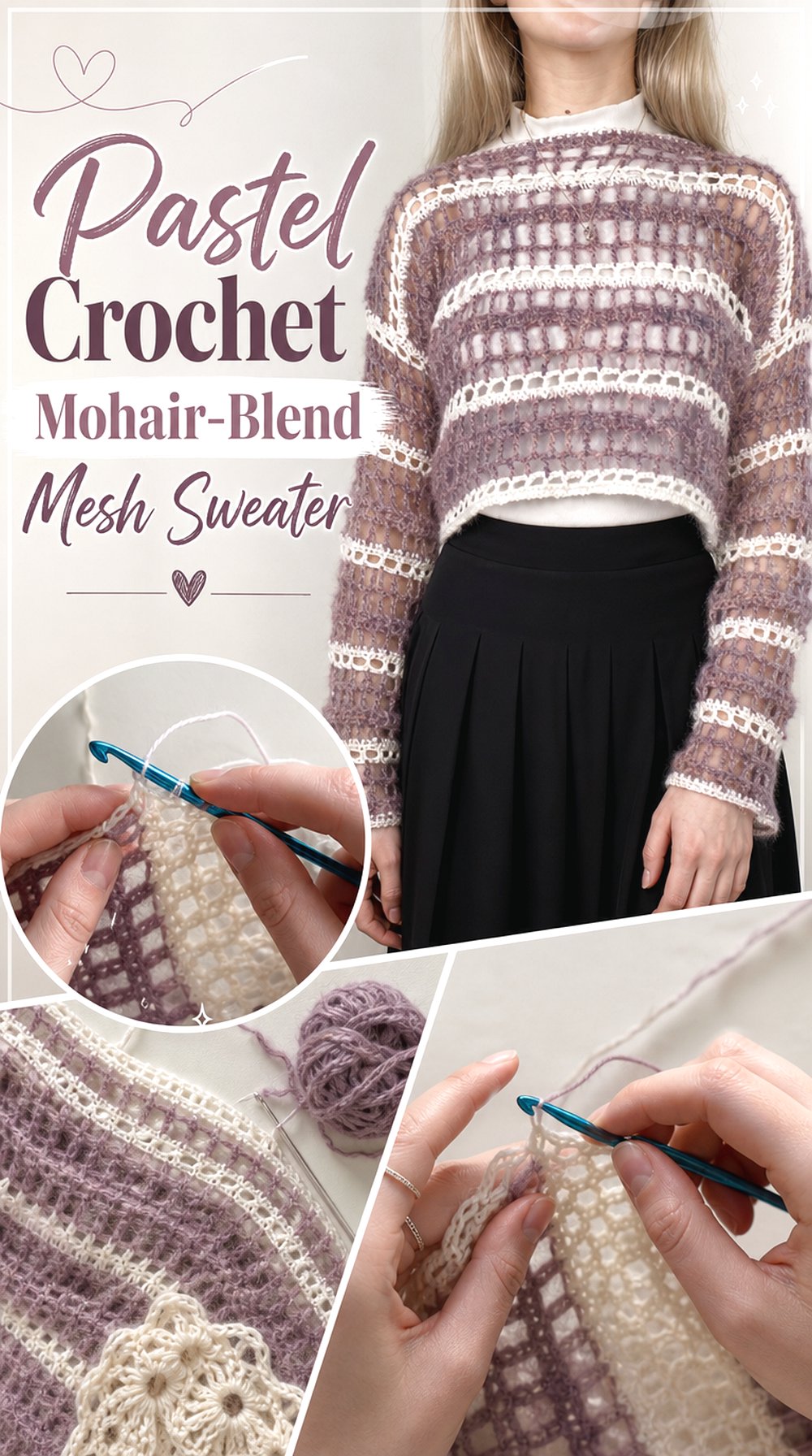
The CosyBearCrochet mesh sweater introduces another route to a fuzzy fabric by combining yarns rather than making the entire visual effect depend on one uniform strand. The tutorial materials include Hobbii Diablo Wild Print, a lace-weight blend containing mohair, along with another yarn.
That makes this idea useful for readers who want color variation and halo without requiring every section to behave exactly like a single fine mohair strand. Mixed-yarn construction can create appealing depth, but it also means each yarn change should be judged for thickness, stretch, and visual density rather than color alone.
Mixed Fibers Can Change the Fabric Between Sections
Two yarns can create similar-looking stitches while behaving differently when stretched or washed according to their own care requirements. Before using substitutes, make a sample that actually combines the yarns in the way you plan to use them. Check whether one section pulls inward, spreads more, or feels noticeably firmer. A color palette may be visually compatible while the fabrics themselves are not, so structure needs to be tested alongside appearance.
Plan the Layer Under a Pastel Mesh
Light or pastel fuzzy yarn can look very different depending on what lies beneath the openwork. A matching underlayer produces a softer, more continuous color field; a dark or contrasting layer highlights every opening. Neither is inherently better. Decide which effect you prefer before judging whether the mesh is “too open.” Photographing a swatch over two or three likely base-layer colors can make the difference easier to compare.
Keep Yarn Changes From Distorting the Panel
When moving between yarn types or combinations, watch the width of the fabric rather than assuming the same hand tension will produce the same result. Lay the work flat periodically and compare the side edges. If a new section begins narrowing or flaring, investigate the fabric before continuing through the full panel. Early correction is particularly worthwhile when one of the yarns has a fuzzy halo that would make extensive unraveling inconvenient.
Creator: cosybearcrochet
13. Scrappy Crochet Mohair Blend Lace Sweater

A scrappy sweater gives leftover yarns a deliberate role instead of demanding a perfectly uniform fiber and color throughout the garment. by Kristine’s mesh sweater tutorial is presented as a stash-busting lace top and mixes yarn colors and weights; the tutorial’s chapter information also identifies a section using a mohair blend.
This makes it a useful inspiration route when you have smaller quantities of fuzzy yarn rather than enough matching mohair for an entire sweater. The creative freedom is high, but so is the need to monitor fabric behavior. A successful scrappy sweater should look intentionally varied without becoming unintentionally narrower, heavier, or stiffer wherever the yarn changes.
Treat Every Major Yarn Change as a Fabric Test
Do not judge a scrap yarn only by whether its color belongs in the palette. Compare its thickness, elasticity, fuzziness, and resulting stitch openness with the section beside it. If a new yarn makes the fabric dramatically denser, consider whether that contrast belongs in a deliberate band or smaller accent rather than an arbitrary transition. The goal is controlled variation, not pretending all leftover yarns behave alike.
Record the First Sleeve Before Starting the Second
A scrappy design does not need mirrored sleeves, but some relationship between them usually makes the sweater feel more intentional. Take a quick note or photo of the yarn order, approximate color placement, and major transitions in the first sleeve. For the second, decide whether to repeat, reverse, or deliberately remix that arrangement. Making the decision in advance avoids a second sleeve that appears accidentally unrelated.
Mohair Can Soften Abrupt Visual Transitions
A fuzzy mohair-blend section can visually blur the boundary between sharper yarn textures, which can be useful in a mixed-material sweater. However, the halo only changes appearance; it does not eliminate physical differences in thickness or stretch. Run your hand across the transition as well as looking at it. If the fabric suddenly becomes rigid or heavy, reconsider the pairing even when the colors look cohesive.
Creator: by Kristine
14. Bobble Detail Crochet Mohair Raglan Sweater

Coffee and Crocheting’s Sabina Sweater combines a top-down construction with bobble texture and a substantial neck finish, using mohair for the soft finished surface. It is a useful contrast to the plain mesh designs because the yarn is being asked to support both halo and raised texture.
That combination requires balance. Fuzzy fibers naturally soften stitch boundaries, while bobbles depend on relief and shadow to remain visible. If the mohair you choose has a much stronger halo than the source yarn, make a texture sample before assuming the raised details will read the same way.
Halo Can Blur Small Raised Details
Test at least one representative textured area with the exact yarn combination you intend to use. Look at it in normal room light and from typical viewing distance. If the bobbles nearly disappear, adding more small details may not solve the problem. A clearer option may be increasing contrast between textured and plain areas or choosing a yarn whose halo still allows the relief to cast visible shadows.
Top-Down Shaping Lets You Judge Texture in Context
Raised details that appear subtle on a flat swatch can become more prominent once they are distributed across the upper body. Use the top-down format to assess the overall visual balance as the yoke develops. If adapting placement, consider how the bobbles interact with the shoulder lines and neckline rather than scattering texture without reference to the garment shape. The upper sweater is already a strong visual zone.
A Structured Neck Edge Anchors the Fuzzy Body
A substantial neck finish can provide a crisp boundary where the soft halo meets the face. If changing yarn, check that this area retains enough structure instead of collapsing into the body fabric. Also test the yarn against the neck before committing to a high or doubled edge. A fiber that feels comfortable on the hands may feel different on more sensitive skin around the throat.
Creator: Coffee and Crocheting
15. Open Front Crochet Mohair Cardigan Sweater
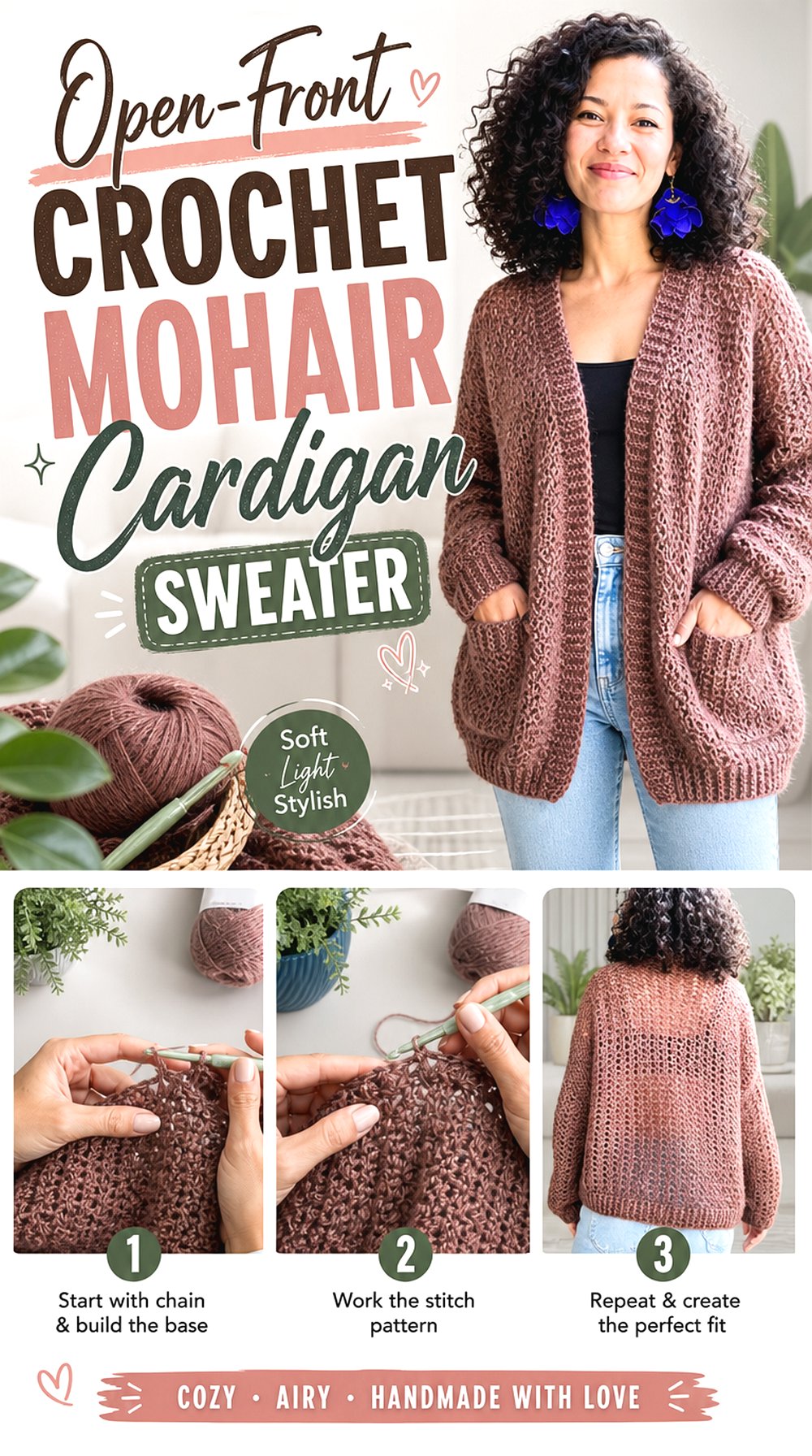
An open-front cardigan changes both styling and construction priorities. ByKaterina Designs’ Amira Cardigan tutorial uses a mohair strand held together in the garment, creating a useful reference for a light, fuzzy sweater that does not need a pullover neckline.
This shape is practical when you want adjustable front coverage or plan to layer over dresses, shirts, and fitted tops. Because there is no closed front anchoring the two sides together, the vertical front edges become prominent parts of the finished silhouette. Their stability and length can matter as much as body circumference.
Open Fronts Need Calm Vertical Edges
Lay the cardigan flat occasionally and inspect both front edges. They should relate to one another rather than one stretching or rippling noticeably more. A fuzzy surface can disguise small stitch inconsistencies but cannot hide a front edge that pulls the whole garment off-center. If your substitute yarn behaves differently from the tutorial’s combination, sample the edge treatment as well as the main body fabric before committing.
Held-Together Yarn Gives You an Opacity Dial
Combining a fuzzy strand with another yarn can make the mohair halo visible while allowing the companion yarn to contribute body and stitch definition. Changing that second strand, however, can alter thickness, drape, and stretch—not merely opacity. Treat the pair as a new yarn system and swatch them together. A substitution that looks equivalent when the skeins are separate may create a very different cardigan fabric once crocheted.
Check Front Coverage Before Adding More Length
Before extending the body, put the cardigan on or position it on a suitable form and see where the open fronts naturally fall. A longer hem can change the way those edges hang and how much of the outfit beneath remains visible. Decide whether you want a narrow framing effect, generous fronts, or an intentionally loose open layer. Length should reinforce that choice instead of being added automatically.
Creator: ByKaterina Designs
16. Turtleneck Crochet Mohair Halo Sweater

MIGAIA’s fuzzy sweater tutorial centers on a cozy turtleneck and uses Hobbii Mohair Delight, shifting the focus from open necklines to soft coverage around the neck. This is a distinctive final option because a high collar places the fuzzy yarn directly against an area where fiber feel becomes especially important.
The turtleneck also gives a lightweight sweater more visual weight near the face. It can make a simple body look finished without extra motifs or striping. Choose this direction when you want the halo itself to be the decorative feature and prefer a sweater that reads as enveloping rather than open and layered.
The Collar Must Feel Comfortable Against the Neck
Use the actual yarn to test skin feel before finishing a tall collar. Rub a small swatch gently against the side of the neck for a realistic comparison; hand feel alone is not enough. Fiber tolerance varies from person to person, so a yarn that works beautifully for a loose body may still feel distracting in a close collar. If sensitivity appears, reconsider collar height or the yarn rather than assuming washing will solve it.
A High Neck Changes the Sweater’s Visual Balance
A turtleneck already creates a substantial focal point, particularly in a fluffy yarn. Consider this before adding very dramatic sleeve volume, heavy edging, or additional texture. Keeping the rest of the garment comparatively restrained allows the fuzzy collar and overall silhouette to remain clear. If you do want more detail, add it selectively and evaluate the whole sweater rather than designing each section independently.
Keep the Body Simple Enough for the Halo to Show
Mohair does not require complex stitches to create visual interest. On a high-neck sweater, an uncluttered body can make the airy fibers, neckline, and proportions more noticeable. Before adding decorative texture to an adaptation, make a swatch and see whether the halo already gives the surface enough depth. Eliminating an unnecessary detail can sometimes make a fuzzy garment look more intentional, not less finished.
Creator: MIGAIA
Which Crochet Mohair Sweater Style Fits Your Goal?
For a visibly airy layering sweater, start with the Airy Mohair Mesh Pullover, Graphic Mesh Sweater, Pastel Mohair-Blend Mesh Sweater, or Scrappy Lace Sweater. All four make open fabric part of the design, but they differ in whether the emphasis is minimal, graphic, color blended, or stash driven.
For a soft pullover with more visual coverage, the Classic Fluffy Crewneck, Flowing Oversized Sweater, Plush Mohair Pullover, and Turtleneck Halo Sweater place more attention on silhouette and fuzz rather than obvious mesh.
Fit control is strongest as a deciding factor in the Made-to-Measure Jumper, Top-Down Sweater, and Off-Shoulder Sweater. Choose among them according to whether your priority is personal measurements, progressive top-down fitting, or neckline placement.
If you mainly want a visible design feature, compare the Striped Jumper, Graphic Mesh Sweater, Bobble-Detail Raglan, and Open-Front Cardigan. Their stripes, lettering, raised texture, and front opening each create interest in a different way.
Conclusion
The right crochet mohair sweater depends less on finding one universal fuzzy-sweater formula and more on choosing the fabric and construction that match how you want to wear it. Pick mesh if an underlayer should remain visible, a fluffy crewneck or turtleneck for a more conventional pullover look, a measurement-led or top-down design when fit flexibility matters, or stripes and bobbles when the surface needs stronger definition.
Before committing your mohair, swatch for openness, skin feel, drape, and stitch visibility—especially if you are substituting yarn. Once you choose a silhouette, use the original tutorials for the creators’ exact construction details rather than assuming one sweater’s measurements or assembly will transfer directly to another.
Frequently Asked Questions
Is mohair a good yarn for a crochet sweater?
It can be particularly effective when you want a light fabric with a noticeable fuzzy halo. Fine mohair is valued for qualities including lightness, warmth, sheen, and its distinctive surface, and it is frequently used in blends as well as on its own. The trade-off is reduced stitch clarity and more difficult unraveling. For crochet, swatching is especially useful before choosing a highly textured or very fitted sweater.
Should I crochet a mohair sweater with one strand or hold mohair with another yarn?
Either approach can work, but the results are different. A fine fuzzy strand used alone can create a light, open, sometimes semi-transparent fabric. Holding it with another yarn can increase coverage and allow the companion strand to contribute stitch definition and structure. Do not choose solely by appearance in the skein. Crochet both yarns together in a swatch and judge thickness, flexibility, stretch, and opacity before applying the combination to a sweater tutorial.
Can I substitute a different mohair yarn in these sweater tutorials?
Yes, but treat it as a genuine yarn substitution rather than assuming every mohair behaves alike. Commercial mohair yarns can differ substantially in fiber composition and construction; for example, some are blends containing mohair alongside synthetic fibers. Compare the tutorial’s required fabric with a swatch from your substitute. Gauge, drape, openness, and hand are more useful checks than matching the word “mohair” on the label.
How can I make a crochet mohair sweater less transparent?
Start by testing a denser fabric rather than discovering the problem after completing the body. Depending on the tutorial, that may mean choosing a construction with less open space or using a compatible yarn combination that produces more coverage. Do not change several variables blindly, because altering yarn thickness or hook choice also affects dimensions and drape. Another option is to embrace the open fabric and intentionally choose a coordinating camisole or fitted layer underneath.
How do I size an oversized crochet mohair sweater without guessing?
Use your body measurements together with the amount of ease you actually want. A practical comparison is a sweater you already own whose looseness, body length, and sleeve length you like. Measure that garment and compare its proportions with your body rather than simply choosing a larger standard size. Then follow the tutorial’s own construction and sizing method. Check shoulders, armholes, body width, sleeves, and length separately because “oversized” does not require every measurement to increase equally.
What should I do if I make a mistake while crocheting with mohair?
Catch errors as early as possible. The fine halo can cling to neighboring stitches, and crochet guidance for kid-silk mohair notes that unraveling can become difficult when those fibers tangle. Check your work at regular natural stopping points, particularly before changing sections or beginning assembly. If you need to undo stitches, work slowly instead of pulling hard on the yarn; aggressive tugging can tighten the fuzzy fibers around one another.


