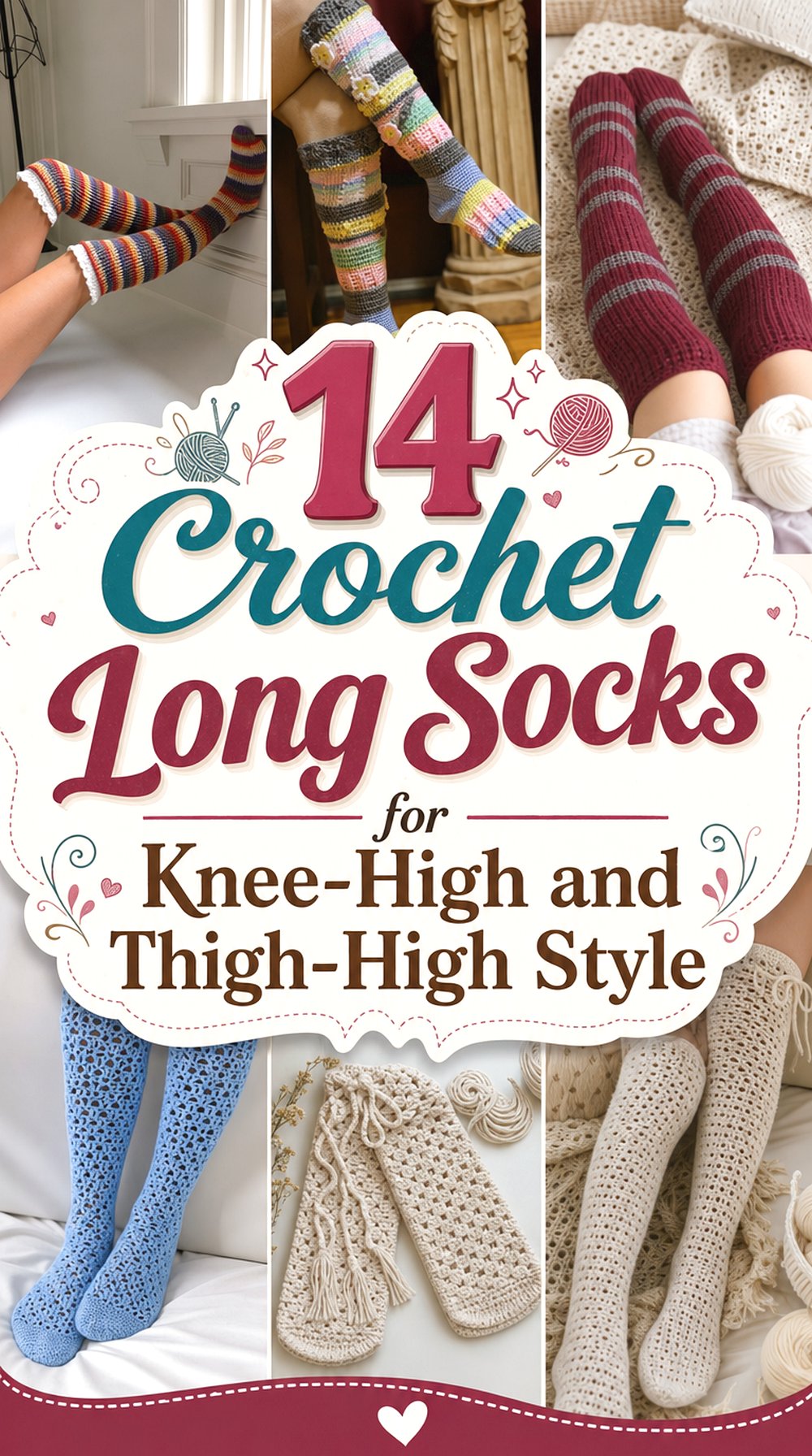
14 Crochet Long Socks for Knee-High and Thigh-High Style
Crochet long socks can range from substantial knee-high footwear to airy thigh-high lace, so choosing a design involves more than deciding how far up the leg it reaches. Texture affects bulk, openwork changes coverage, decorative lacing changes the look and adjustability, and a tall sock needs more attention to calf and upper-leg fit than a short sock does.
These 14 projects cover traditional knee-highs, Tunisian crochet, mixed textures, adjustable lace, over-the-knee designs, plus-size-oriented options, fishnet stockings, and thigh-high styles. The comparisons below focus on what changes from one design to the next and what to check before committing to a full pair, while the credited tutorials remain the source for each creator’s exact construction details.
Quick List
- Crochet Cable-and-Puff Knee-High Socks
- Crochet Tunisian Knee-High Socks
- Crochet Classic Knee-High Socks
- Crochet Lacy Adjustable-Length Long Socks
- Crochet Lace-Up Thigh-High Socks
- Crochet Cozy Textured Knee-High Socks
- Crochet Shell-Trim Thigh-High Socks
- Crochet Stay-Up Thigh-High Socks
- Crochet Over-the-Knee Socks
- Crochet Convertible Lacy Long Socks
- Crochet Mixed-Texture Thigh-High Socks
- Crochet Plus-Size Lace Thigh-High Socks
- Crochet Fishnet Thigh-High Socks
- Crochet Boho Chic Long Stockings
Plan the Leg Fit Before You Focus on Length
A sock that fits the foot does not automatically fit the calf, knee, or thigh. For a long design, compare the wearer’s foot length with several leg circumferences and with the point where the finished cuff is supposed to sit. Knee-high and thigh-high versions place the cuff on very different parts of the leg, so simply adding more rounds to a knee sock may not provide enough room higher up.
Try-on checkpoints are especially useful before completing a large section of decorative texture. Also consider whether the upper edge relies on fitted crochet, ribbing, ties, or another stay-up feature. For wearables, blocked dimensions, ease, yarn weight, drape, and edging tension are all useful planning considerations rather than details to leave until the end.
Yarn and Stitch Density Change How a Long Sock Feels
Dense crochet can make an attractive winter-style sock, but increasing the height also increases the amount of fabric around the leg. A thinner yarn or more open stitch arrangement can reduce visual and physical bulk, while a heavier yarn emphasizes texture and creates a more substantial look.
The foot deserves separate attention. A stitch that looks dramatic on the calf may feel bulky beneath a shoe, and large open spaces that work beautifully on the leg may not be the most comfortable choice beneath the sole. When changing the yarn suggested by a tutorial, compare the resulting fabric rather than assuming two yarns will behave alike. A small swatch can show whether the new combination produces enough flexibility and stitch definition before an entire long sock is made.
Match the Sock Style to How You Plan to Wear It
Knee-high socks are generally easier to coordinate with boots because their upper section stops near the knee instead of continuing onto the thigh. Thigh-high and over-the-knee designs make the crochet itself a much stronger part of the outfit, particularly when they use lace, mesh, contrasting textures, or decorative ties.
Footwear matters too. If the socks will be worn inside fitted shoes or boots, inspect the heel, seams, texture, and overall thickness around the foot before choosing a heavily textured tutorial. For styling over tights, for costume wear, or as a visible fashion layer, open mesh and decorative lace can make more sense because the visual effect matters as much as insulation. Decide on the intended use first, then compare the construction.
1. Crochet Cable and Puff Knee High Socks
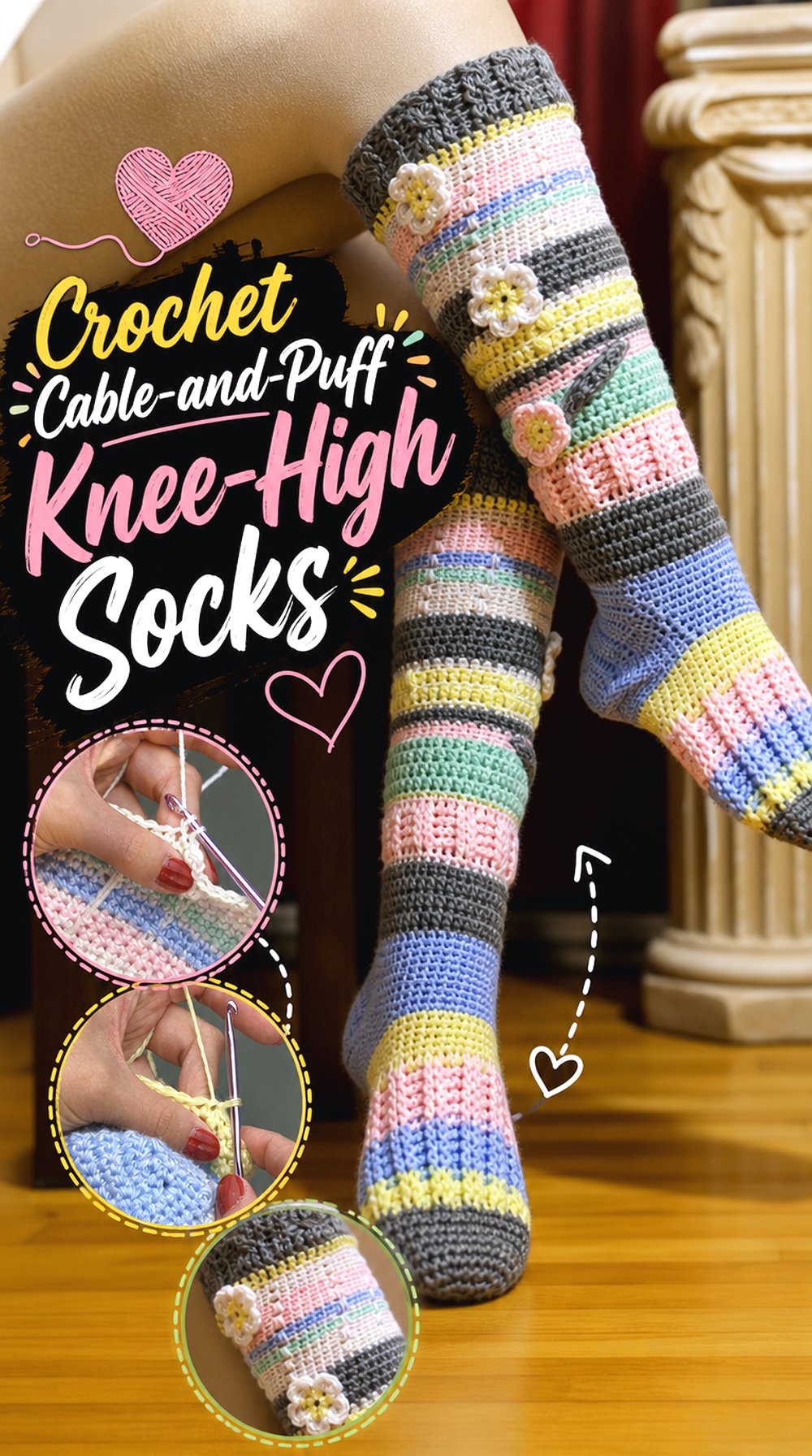
These knee-high socks stand out because the design combines several crochet textures rather than relying on one uniform stitch from toe to cuff. YARNutopia’s accompanying pattern information identifies cable and puff detailing alongside more basic crochet fabric, creating a sock with a clearly decorative leg section. The original design is knee-high rather than thigh-high, making it a useful option when you want significant leg coverage without taking the shaping all the way above the knee.
Because the textured sections attract attention, this pair suits a project where stitch definition is part of the finished look rather than hidden inside footwear.
The Raised Details Need Enough Definition to Stay Visible
Cable and puff textures depend on the yarn showing their shape. A very fuzzy fiber may soften the relief, while a smooth yarn can make the individual elements easier to see. Before substituting yarn, crochet a small sample containing the most dimensional texture you plan to use. If the design disappears into the fiber, changing color will not solve the underlying definition problem.
The same sample can tell you whether the texture becomes too thick for the footwear you intend to pair with the socks.
Watch the Calf Before Repeating a Textured Section
Highly patterned sections can make unnoticed fit problems harder to correct once a lot of fabric is complete. Check the circumference as the sock approaches the fullest part of the calf instead of waiting until the cuff is finished.
If a decorative repeat starts pulling sideways or looks compressed when worn, treat that as a fit warning. Correcting circumference before continuing preserves the look of the texture and avoids forcing a dimensional pattern to provide stretch it was never intended to supply.
Knee-High Length Makes the Cuff an Important Checkpoint
With a knee-high sock, the top edge needs to sit comfortably near the knee without cutting into the leg or immediately sliding downward. Test the cuff position while standing as well as sitting, since the leg changes shape around the knee.
If you are adapting the design for a different leg length, decide where the upper edge should finish before modifying the decorative section. Preserving the intended proportions is usually more useful than simply adding rows until the sock appears long enough.
Creator: YARNutopia by Nadia Fuad
2. Crochet Tunisian Knee High Socks

This project takes the collection in a different direction by using Tunisian crochet for a knee-high sock. Mode Bespoke’s public tutorial specifically presents a Tunisian crochet knee-high design, making it an appealing comparison point for crocheters who want to explore a fabric structure different from standard crochet rounds.
The taller leg gives the Tunisian fabric room to become the main visual feature. Rather than adding lace-up details or a dramatic open mesh, the interest comes from the technique itself. This makes the pair particularly relevant when you want a long sock that feels visually streamlined but still offers something technically different from ordinary crochet.
Tunisian Fabric Changes the Tool Decision
Do not assume a standard crochet hook will be interchangeable with the tool shown in a Tunisian sock tutorial. Tunisian crochet holds multiple loops during part of the process, so tool style and working space can matter.
Before beginning, confirm exactly what the creator uses for working the sock construction. This is particularly important for a cylindrical wearable because an unsuitable tool setup can make the technique frustrating even when you understand the stitches.
Compare Stretch Before Committing to the Calf
A knee sock needs to pass over the heel and accommodate changes in leg circumference. Crochet a meaningful sample with the tutorial’s technique and pull it both across and along the fabric. The important question is not simply whether the fabric stretches, but whether its stretch direction matches where the sock needs flexibility.
If you substitute yarn, repeat that check. A change in fiber or tension can alter how the finished fabric behaves even if the visual appearance remains similar.
Let the Tunisian Texture Carry the Design
This style does not need extra embellishment to justify its place among more decorative long socks. If you want to customize it, color choice and cuff treatment can change the mood without covering the underlying fabric.
For a first pair, keeping the modifications restrained also makes it easier to judge the Tunisian construction itself. Once you know how the sock fits and recovers after wear, later versions can explore stripes or other visual changes without introducing several unknowns at once.
Creator: Mode Bespoke
3. Crochet Classic Knee High Socks
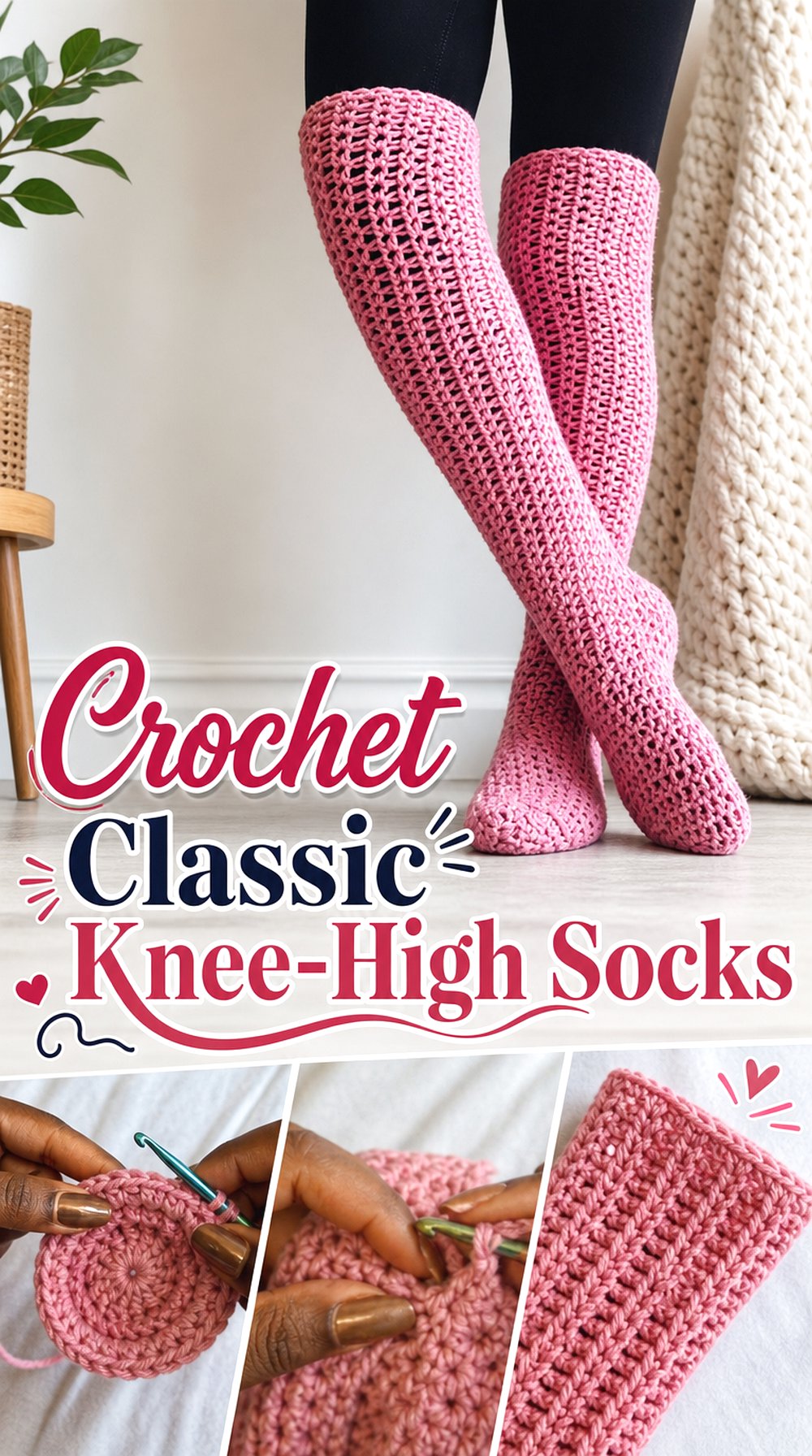
Aliche Stitches offers another true knee-high option, giving readers a more straightforward alternative to the cable-heavy and Tunisian projects above. The video is explicitly presented as a crochet knee-high sock tutorial, so it works well as a reference when the priority is the overall sock form rather than thigh-high length or decorative fishnet effects.
This is the kind of design to compare carefully with your planned footwear. A traditional-looking long sock may be more versatile than a dramatic stocking, but the heel shape, thickness around the foot, and calf fit still determine whether the finished pair works for everyday layering or is better treated as visible crochet footwear.
Use the First Sock as a Fit Record
Long socks have more places for two pieces to diverge. Once the first sock fits, note where you checked the heel, ankle, calf, and upper edge rather than relying on memory when making the second one.
The goal is not to invent new stitch counts outside the tutorial. It is to reproduce your own fit decisions consistently. If you adjusted tension or length during the first sock, recording that change helps prevent a matching pair from slowly turning into two different sizes.
Check Shoe Compatibility Before Finishing Both Feet
If you intend to wear the socks inside boots, test the completed first foot before spending time on the second leg section. Look for pressure from seams or dense crochet and make sure the shoe still fits comfortably.
A sock can feel comfortable by itself yet become too bulky inside a close-fitting boot. Discovering that difference early gives you a chance to reserve the pair for roomier footwear or adjust a future pair rather than repeating an unsuitable combination.
Creator: Aliche Stitches
4. Crochet Lacy Adjustable Length Long Socks
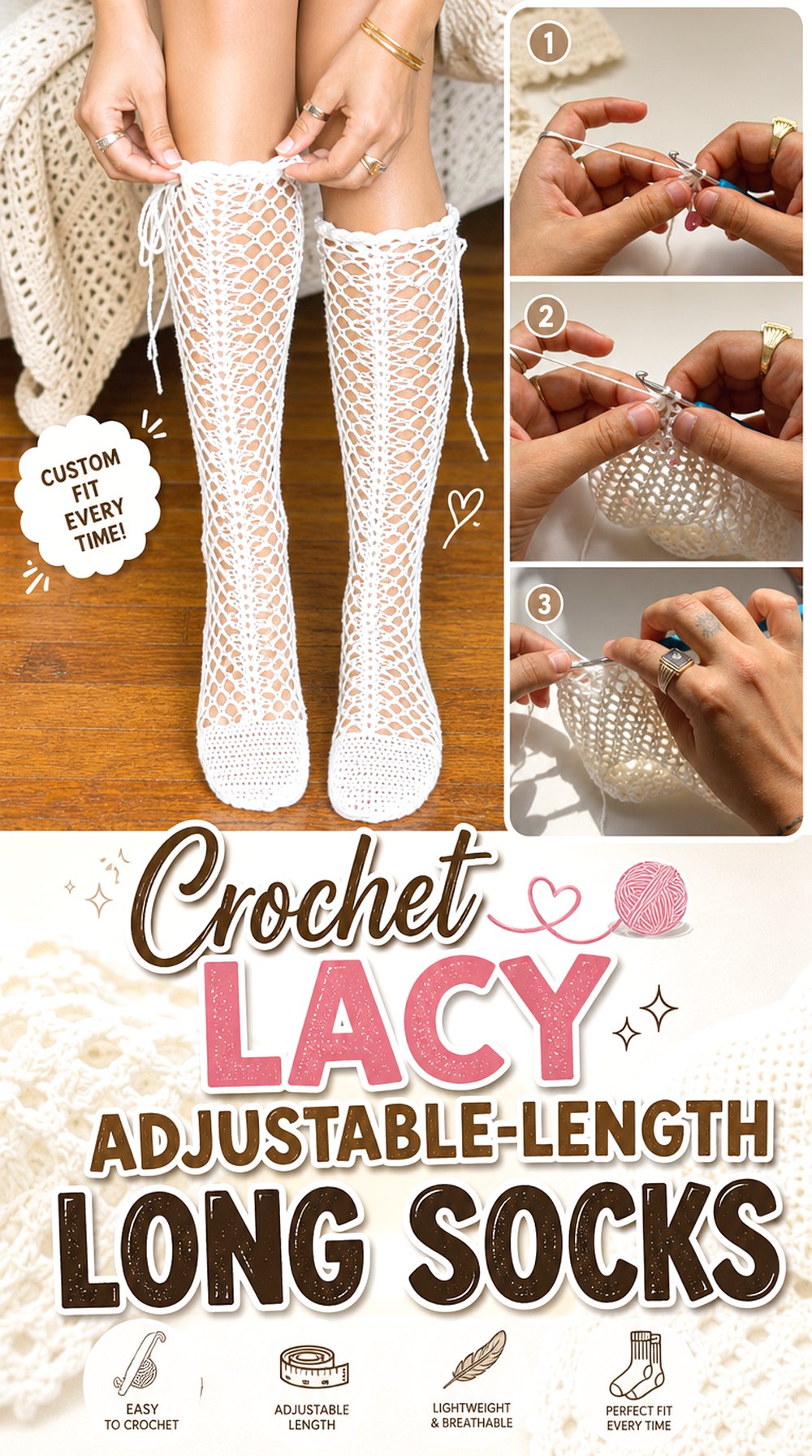
Lucille Pearl’s tutorial brings delicate openwork into the collection and explicitly presents the sock length as adjustable. That makes this project useful if you like the appearance of knee-high lace but want the option to change how far the leg section extends.
The visual weight is very different from dense winter socks. Open spaces break up the fabric and let the leg or an underlayer show through, creating a lighter fashion effect. Because the design is lacy, however, the project should be judged not only by circumference but also by how evenly the openwork stretches across wider parts of the calf.
Openwork Makes Uneven Stretch Easier to See
When lace is relaxed, its openings may look regular. Once stretched around the leg, those spaces can change shape, especially at the fullest part of the calf. Try the sock on before completing the entire upper section and look at the lace itself, not only at how tight the cuff feels.
If the openings become dramatically distorted, the fabric is telling you the circumference needs attention. Good fit should preserve the character of the lace rather than forcing the pattern completely open.
Decide the Final Length Before Adding Styling Details
An adjustable-length design gives you freedom, but that freedom is easier to use if you choose a target early. A sock ending just below the knee creates different proportions from one extending over it.
Try the developing sock with the skirt, shorts, boots, or other layer you expect to wear with it. That visual checkpoint can be more useful than choosing length from an isolated measurement because it shows how much of the lace will actually remain visible.
A Smooth Underlayer Can Change the Look Completely
Because the fabric is open, what sits beneath the sock becomes part of the appearance. Bare skin produces strong contrast through the lace, while tights or leggings can turn the openings into a two-color effect.
If you are choosing yarn colors for a specific outfit, compare them against the intended underlayer before beginning both socks. The same crochet color can read very differently depending on what shows through the open spaces.
Creator: Lucille Pearl
5. Crochet Lace Up Thigh High Socks
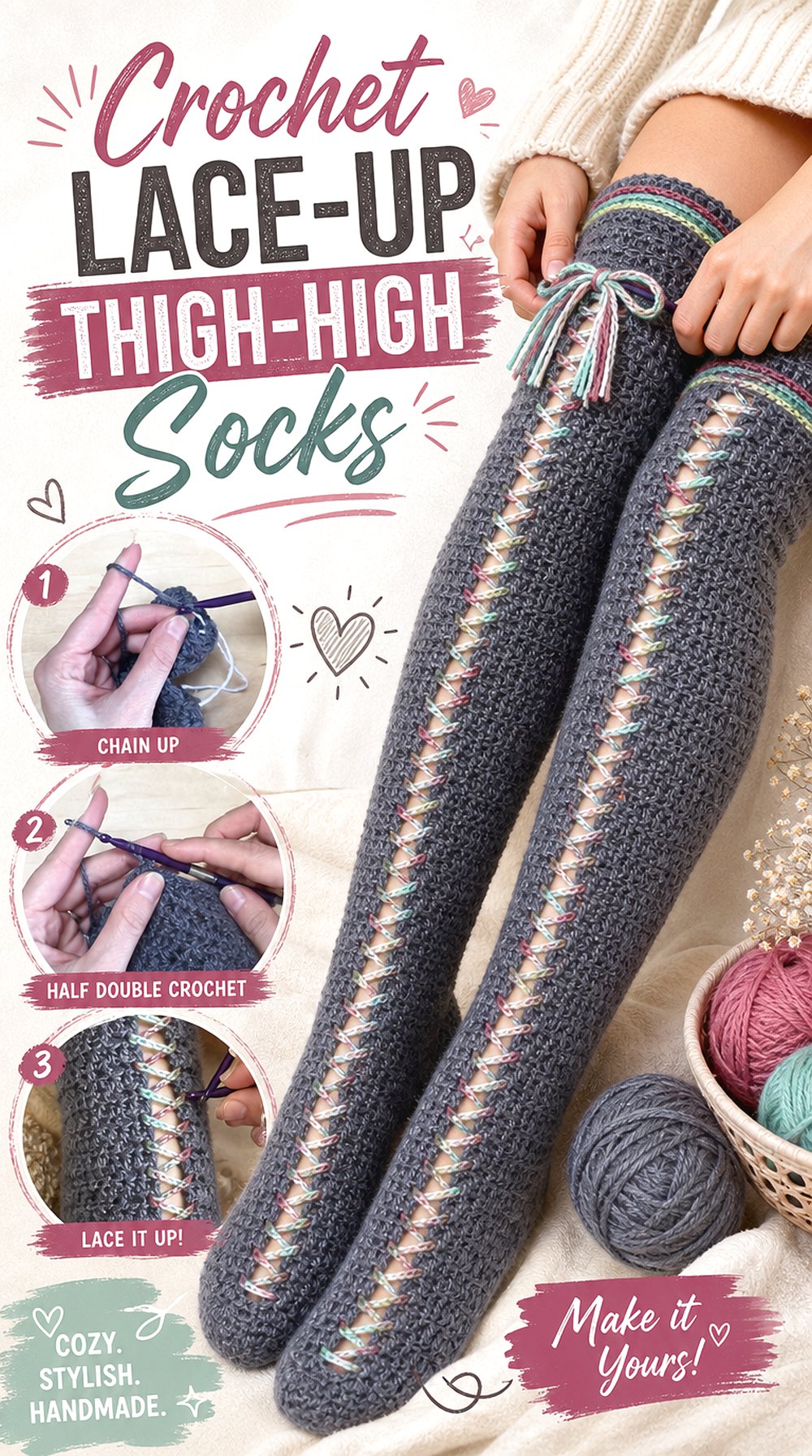
OmiCrochet’s thigh-high design makes lacing a visible feature instead of treating the sock as a simple uninterrupted tube. The decorative tie detail gives this pair a stronger statement look than the classic knee-high options and creates an obvious vertical focus along the leg.
A lace-up thigh-high is best chosen when you actually want the fastening detail to be seen. If most of the sock will disappear beneath tall boots, much of its defining feature may be lost. With shorter footwear, skirts, or shorts, however, the lacing can become the central visual element of the finished project.
Lacing Should Not Be Asked to Fix a Poor Base Fit
Decorative ties may provide some adjustment, but they should not have to pull a dramatically oversized sock into shape. Check the underlying leg section before threading or tightening the laces.
If the fabric gaps or bunches badly when relaxed, changing the lacing tension may only shift the problem. A better target is a sock that already follows the leg reasonably well, with the lace-up feature adding controlled adjustment and styling rather than functioning as emergency shaping.
Keep Both Lace-Up Panels Aligned
A pair of thigh-high socks puts two tall vertical features side by side, so differences become noticeable quickly. Before final finishing, compare where each lace-up section begins and ends and whether both sit on the same part of the leg.
This check matters especially when the socks are intended for an outfit where both legs remain visible. A small alignment difference at the ankle can become much more obvious by the time the design reaches the thigh.
Think About What the Ties Will Touch
Long decorative ties can interact with boots, hemlines, and movement. Before deciding how you will style the finished pair, check whether the lacing sits beneath footwear, catches on another layer, or creates pressure when tucked into a boot.
If the ties are meant to remain visible, consider how they behave when walking and sitting. The most decorative arrangement in a flat photograph may not be the most practical arrangement for actual wear.
Creator: OmiCrochet
6. Crochet Cozy Textured Knee High Socks

Yommycrochetlogy’s long-sock tutorial centers on a knee-high design with a visibly textured, cozy presentation rather than lace-up or fishnet construction. The project therefore sits between simple everyday knee socks and highly decorative stockings: the length is practical, but the surface pattern still gives the crochet a strong visual presence.
This is a useful direction when you want the leg section to look substantial rather than airy. Before choosing it for boots, pay special attention to where the strongest texture appears. Raised fabric along the exposed calf can be comfortable and decorative, while the same bulk in a tight shoe may feel quite different.
Texture Can Make a Neutral Color More Interesting
A long sock provides a large surface area, so pronounced stitch texture can supply visual variation even without frequent color changes. If you prefer a quieter palette, inspect a swatch in daylight and at normal viewing distance.
A texture that seems subtle when held close may read much more clearly once repeated over an entire leg. This is useful when you want detail without turning every section of the sock into a separate color block.
Test the Foot Separately From the Leg
Do not judge the whole project by how comfortable the calf section feels. Put on the first completed foot with the footwear you expect to use and pay attention to any raised areas around the sole, heel, or top of the foot.
If the sock is primarily for lounging, this restriction may matter less. If it is intended for boots or shoes, the foot section has to work inside that limited space regardless of how attractive the leg texture looks.
A Tall Textured Sock Benefits From Intermediate Try-Ons
Repeated texture can make it tempting to keep crocheting once the rhythm is established. Stop at useful leg landmarks instead and test circumference before continuing.
If the fabric begins to stretch more than intended at the upper calf, adjust according to the creator’s guidance rather than assuming the cuff will correct it later. The taller a sock becomes, the more work sits above an early fit problem, so catching it sooner protects both time and symmetry.
Creator: Yommycrochetlogy
7. Crochet Shell Trim Thigh High Socks

FluffyKnots By Ijay’s tutorial produces a full thigh-high sock, and another published roundup of the design identifies a shell detail toward the top of the finished piece. That decorative finish gives the sock a softer upper edge than a plain straight cuff and distinguishes it from the more structural knee-high projects.
Because the tutorial extends all the way to thigh level, the visual transition between foot, lower leg, and upper trim matters. This style is worth considering when you want the top of the sock to look intentionally decorative rather than simply ending when the required height has been reached.
The Upper Trim Should Sit Flat Instead of Flipping
A shell-style edge can look attractive when relaxed but behave differently once stretched around the thigh. Try the sock on before considering the top finished and look for sections that curl, flare excessively, or collapse.
The solution is not automatically to make the trim tighter. First make sure the underlying upper circumference fits properly, because an edge added to an already strained sock will have difficulty sitting evenly no matter how carefully it is finished.
Use the Decorative Cuff as a Proportion Check
Before completing the second sock, photograph or measure where the first decorative edge sits relative to the knee. That gives you a reliable reference for matching the pair.
This is particularly helpful with thigh-highs because a small difference in total leg length can be easy to miss while the socks are lying flat. On the body, two cuffs sitting at noticeably different heights will be much easier to see.
Confirm the Tutorial’s Stated Size Before Relying on It
The public video description for this tutorial gives specific yarn and sizing information for the demonstrated version. Treat those details as information about that tutorial, not as universal long-sock sizing.
If your foot or thigh measurements differ, watch for the creator’s adjustment guidance before beginning. A tall sock involves enough fabric that guessing about size at the start can create a much larger correction later.
Creator: FluffyKnots By Ijay
8. Crochet Stay Up Thigh High Socks
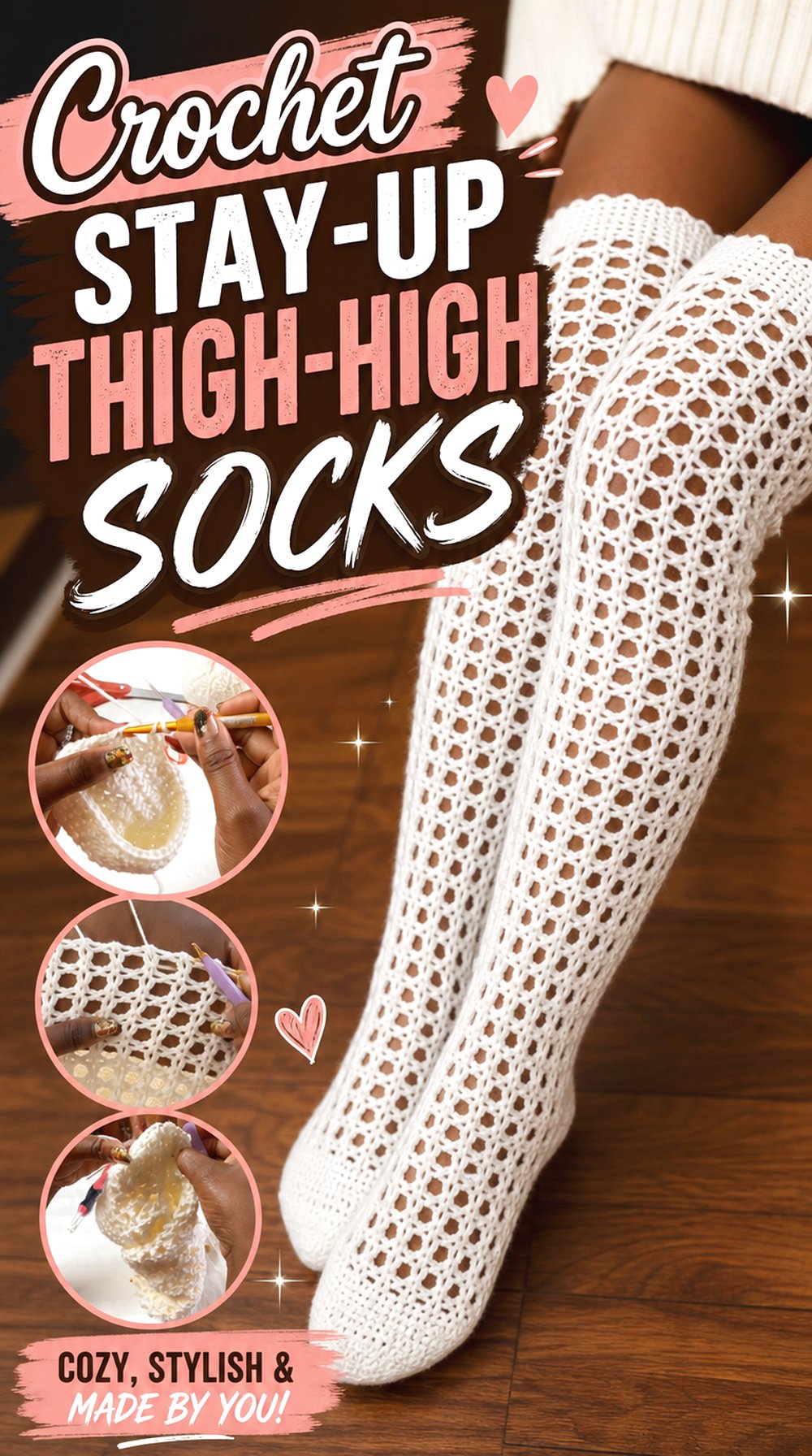
Knotty by Selassie’s updated thigh-high tutorial deserves a separate place because the creator specifically addresses the problem of thigh-high socks slipping down. That turns upper-leg retention into a central design consideration instead of leaving it as an afterthought.
This is particularly relevant for anyone who likes the appearance of crochet thigh-highs but is concerned about constantly pulling the cuff back into position. The project still needs appropriate sizing through the foot and leg, but the tutorial’s focus on the upper portion makes it a more targeted starting point for stay-up planning than a generic long-sock video.
Retention Starts Below the Cuff
A stay-up feature works best when the rest of the sock is not pulling heavily against it. If the calf or knee section is too narrow, upward tension can fight with the upper edge; if the leg is far too loose, the cuff has more fabric to support.
Try the sock on as it approaches the thigh and smooth the fabric naturally into place. That shows whether the upper section is solving a cuff problem or being asked to compensate for fit issues lower down.
Test the Top While Moving, Not Only Standing Still
A thigh-high can appear secure in front of a mirror and change once you walk, sit, or bend the knee. After completing the upper section, wear one sock briefly around the house before reproducing every finishing decision on the second.
Pay attention to rolling, gradual slipping, and pressure around the thigh. These observations are more useful than judging the cuff only while standing because actual movement is what determines whether the stay-up design works for your intended use.
Do Not Overtighten to Chase Security
A cuff that stays in place by becoming uncomfortably tight is not a successful fit. If the upper edge leaves strong pressure marks or feels restrictive, return to the creator’s adjustment guidance rather than simply tightening ties or edging further.
Long socks have to balance retention with comfort. That balance is especially important above the knee, where leg circumference and muscle movement can change noticeably between standing and sitting.
Keep the Pair’s Upper Circumference Consistent
Once the first sock stays where you want it, record the final upper-leg fit decisions before starting or finishing the second. The two cuffs should behave similarly, not merely measure the same while flat.
If your legs differ slightly in circumference, identical construction may still feel different. Use the tutorial as the construction source, but judge each sock on the leg it will actually be worn on.
Creator: Knotty by Selassie
9. Crochet Over the Knee Socks

Swecraftcorner Crochet’s tutorial focuses on thigh-high or over-the-knee crochet socks and connects to the creator’s over-knee sock design. Compared with a full fashion stocking, this style can be viewed as the middle ground between conventional knee-high coverage and a sock that extends far onto the thigh.
That makes it especially useful if your main goal is visible crochet above the top of a boot. The extra length can remain part of the outfit without committing to the very high cuff placement of some thigh-high designs.
Choose the Over-Knee Height With the Knee Bent
The correct length is not just the point where the sock looks attractive while standing. Bend the knee and check whether the fabric bunches sharply at the back or pulls down from above.
If you are adapting length, this movement check can help determine whether the cuff should sit just over the knee or farther up the thigh. A small change in finished height can make a noticeable difference in comfort around a joint.
Boot Height Can Decide How Much Crochet Is Worth Making
If you plan to pair the socks with tall boots, try the first developing sock alongside those boots before finalizing the upper length. You may discover that only a small section remains visible.
That is not necessarily a problem, but it should be intentional. If the goal is to showcase the crochet itself, shorter footwear may reveal the texture better. If the socks are mainly for layering, a smaller visible section may be exactly what you want.
Verify Your Own Measurements Before Using the Demonstration as a Size
Swecraftcorner provides a specific pattern and tutorial for the project, but the demonstrated piece should not be treated as a universal over-the-knee size. Compare your own foot, calf, and upper-leg measurements with the tutorial’s sizing information before beginning.
That check is particularly important when extending a fitted sock above the knee, because the circumference often needs to change as the leg widens.
Creator: Swecraftcorner Crochet
10. Crochet Convertible Lacy Long Socks
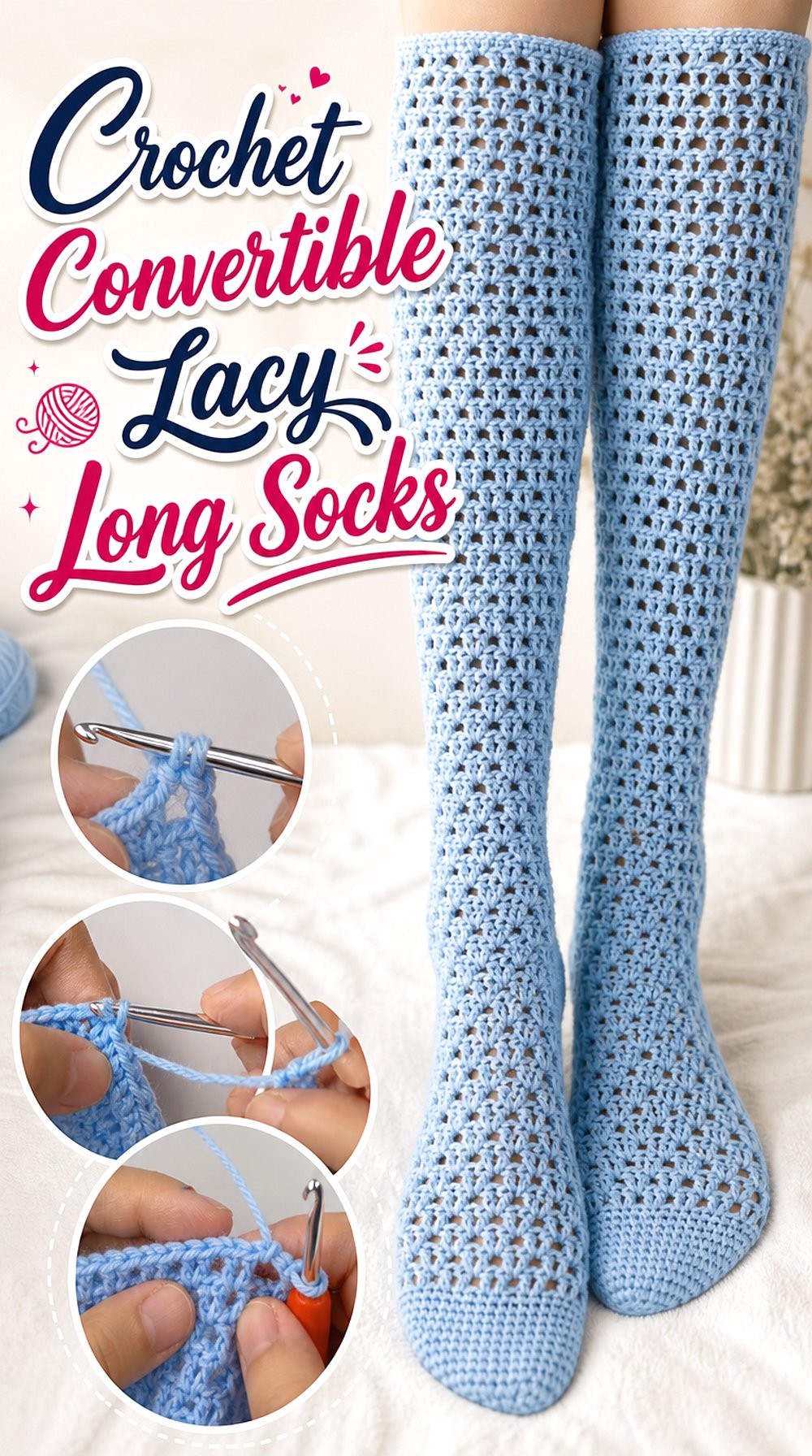
Crochet With Akita’s tutorial is unusually flexible in concept because the creator describes the design as suitable for ankle, knee-high, or thigh-high length and presents sizing across multiple women’s shoe sizes. That makes it particularly relevant to readers who like one lacy construction but have not yet decided how long they want the finished pair.
For this roundup, the knee-high or thigh-high versions are the useful comparison. The open fabric gives the socks a lighter visual effect than dense textured styles, while the adjustable length lets you decide whether the lace should function as a subtle boot layer or a much more visible fashion piece.
Make the Length Decision Before Buying for the Shorter Version
If a tutorial can stop at several lengths, material needs will naturally depend on which version you choose. Do not assume the amount suitable for an ankle sock will cover a thigh-high pair.
Use the creator’s material guidance for the length and size you actually plan to make. If the video does not clearly answer your exact combination, confirm before purchasing a tightly limited quantity, especially when using yarn from a dye lot you may need to match later.
Lacy Fabric Gives More Visual Room Around the Leg
Openwork can make a long sock appear less dense than a fully solid design, which is useful if you like thigh-high length but do not want a large uninterrupted block of crochet fabric.
The trade-off is that the spaces become part of the fit. Check whether the lace remains balanced around the calf and thigh instead of opening dramatically in only one area. A consistent-looking pattern generally signals a more successful relationship between circumference and stitch layout.
One Construction Can Serve Different Wardrobe Roles
At knee height, this design can work as a visible boot sock or decorative layer. Extended to the thigh, the same basic concept becomes much more of a statement accessory.
Think about the rest of the outfit before choosing the final stop point. If you want the lace to be the focus, make sure enough of it remains visible. If you only need a small section above a boot, the longer version may add work without changing the final look very much.
Creator: Crochet With Akita
11. Crochet Mixed Texture Thigh High Socks
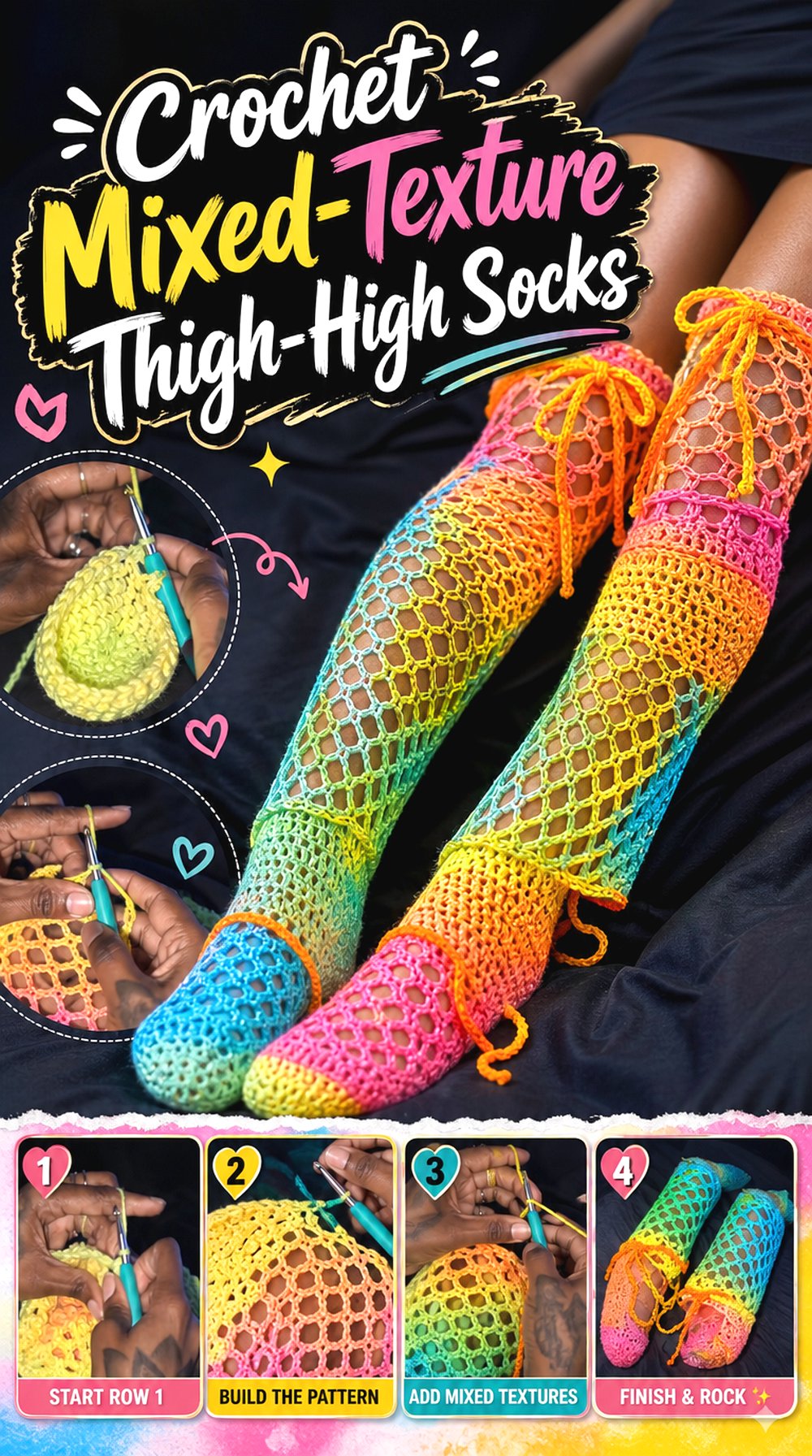
NailD By Ming’s thigh-high project offers one of the strongest visual departures in the collection. References to the tutorial describe a combination of mesh, houndstooth-style patterning, and stripes, so the leg becomes a sequence of contrasting crochet surfaces instead of one continuous texture.
This is a statement project for readers who want long socks to look intentionally mixed and graphic. The main planning challenge is balance: multiple textures already create movement, so color decisions, section lengths, and how the two socks relate to each other become more noticeable than they would in a plain thigh-high.
Decide Whether the Two Socks Will Match Exactly
Mixed textures create an opportunity for either strict symmetry or deliberate mismatch. Make that decision before you are deep into the second sock.
If you want a matching pair, photograph the first finished sock and note where each visual section sits on the leg. If you prefer an intentionally mismatched look, keep at least one organizing feature—such as the same overall length or repeated colors—so the pair still reads as a coordinated design rather than two unrelated projects.
Mesh and Dense Patterning Behave Differently
A section with open mesh can expand and drape differently from a tightly patterned section. Try on the sock at the transitions and inspect whether one area is pulling on another.
This matters more on a fitted thigh-high than on a loose scarf because the fabric has to follow changing leg circumference. If a transition puckers or bows, address the fit there instead of assuming blocking alone will make two structurally different sections behave identically.
Strong Patterning Rewards a Planned Color Palette
Houndstooth-inspired patterning, stripes, and mesh already create several visual changes. Before beginning, place your yarn colors together and decide which section should dominate.
Using every available contrast at maximum intensity can make the design busier than expected once repeated over a full thigh-high. A restrained palette can let the textural differences remain clear, while a high-contrast palette can push the socks toward a bolder costume or street-style look.
Creator: NailD By Ming
12. Crochet Plus Size Lace Thigh High Socks
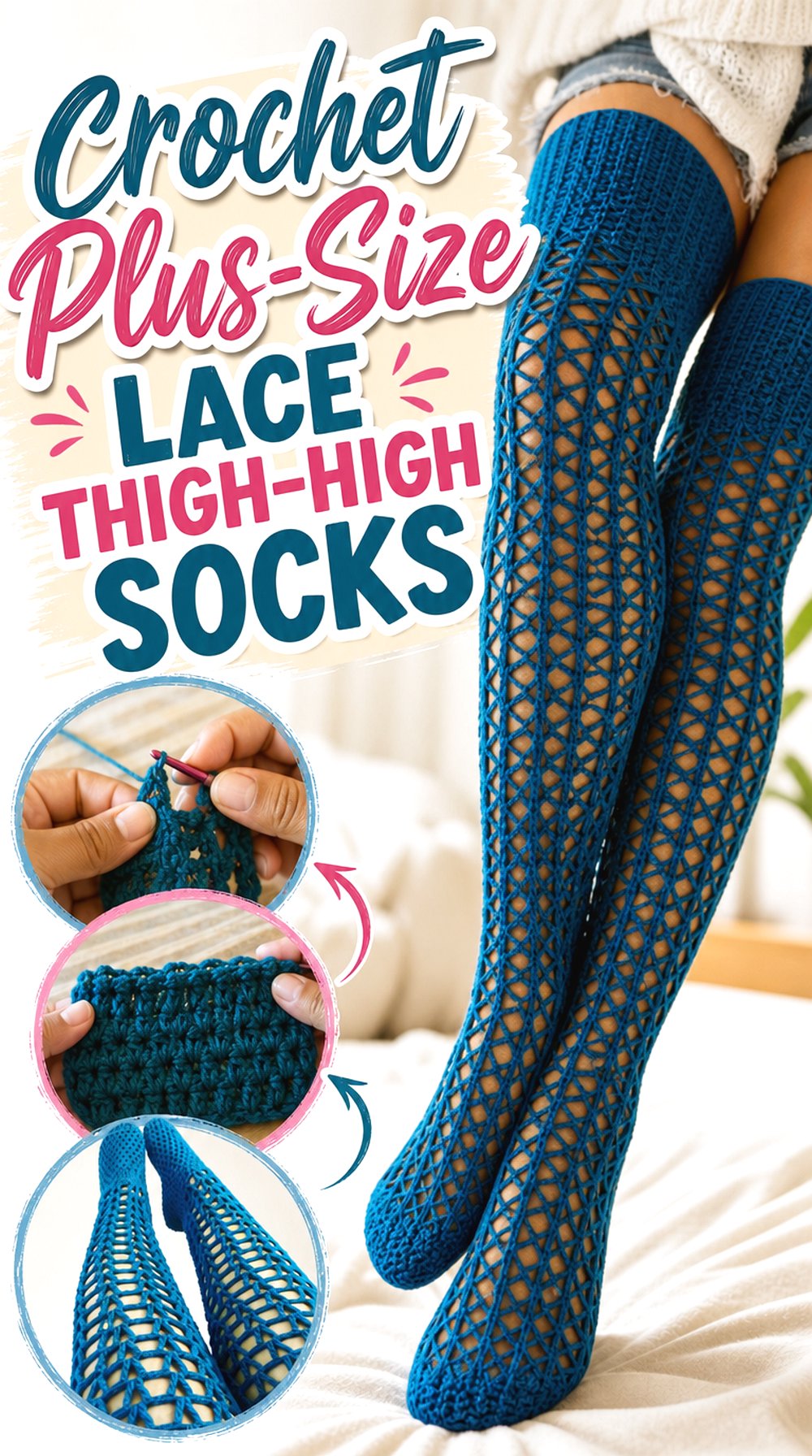
Sharronda Bowles-Simon’s tutorial specifically identifies the project as lace thigh-high socks and discusses plus-size socks in the title, giving this entry a different reader focus from tutorials demonstrated around only one unspecified body shape.
The lace structure also keeps the upper leg from becoming a completely solid tube of crochet. That can create a visually lighter thigh-high while still providing a strong handmade texture. Anyone adapting the project should concentrate on actual foot, calf, and thigh measurements rather than treating a general clothing label as enough information for fit.
Measure the Thigh Where the Cuff Will Actually Sit
“Thigh circumference” is only useful when measured at the location of the intended cuff. Moving the tape several inches higher or lower can change the number substantially.
Choose the desired finished height first, then measure at that point with the leg relaxed. Compare that measurement with the creator’s guidance before crocheting the final upper section. This is more reliable than choosing a size label and assuming every circumference within that label will match the tutorial.
Preserve the Lace Instead of Stretching It to Its Limit
Openwork provides flexibility, but using all of that flexibility just to make the sock fit can distort the design. As you approach the widest parts of the leg, look at the shape of the lace openings while the sock is worn.
If the fabric looks attractive only when relaxed and becomes severely pulled when on the body, the issue is circumference rather than simply needing a stronger cuff. Fit the fabric first; then let the upper finish handle retention.
Check Both Legs Independently
Bodies are not perfectly symmetrical, and a thigh-high makes small leg differences more relevant than an ankle sock does. Measure both legs instead of assuming the second sock should be based solely on the first.
If the difference is small, the same construction may still work comfortably. If it is noticeable, use the tutorial’s adjustment approach where appropriate rather than forcing both socks to identical dimensions simply for the sake of matching numbers.
Creator: Sharronda Bowles-Simon
13. Crochet Fishnet Thigh High Socks
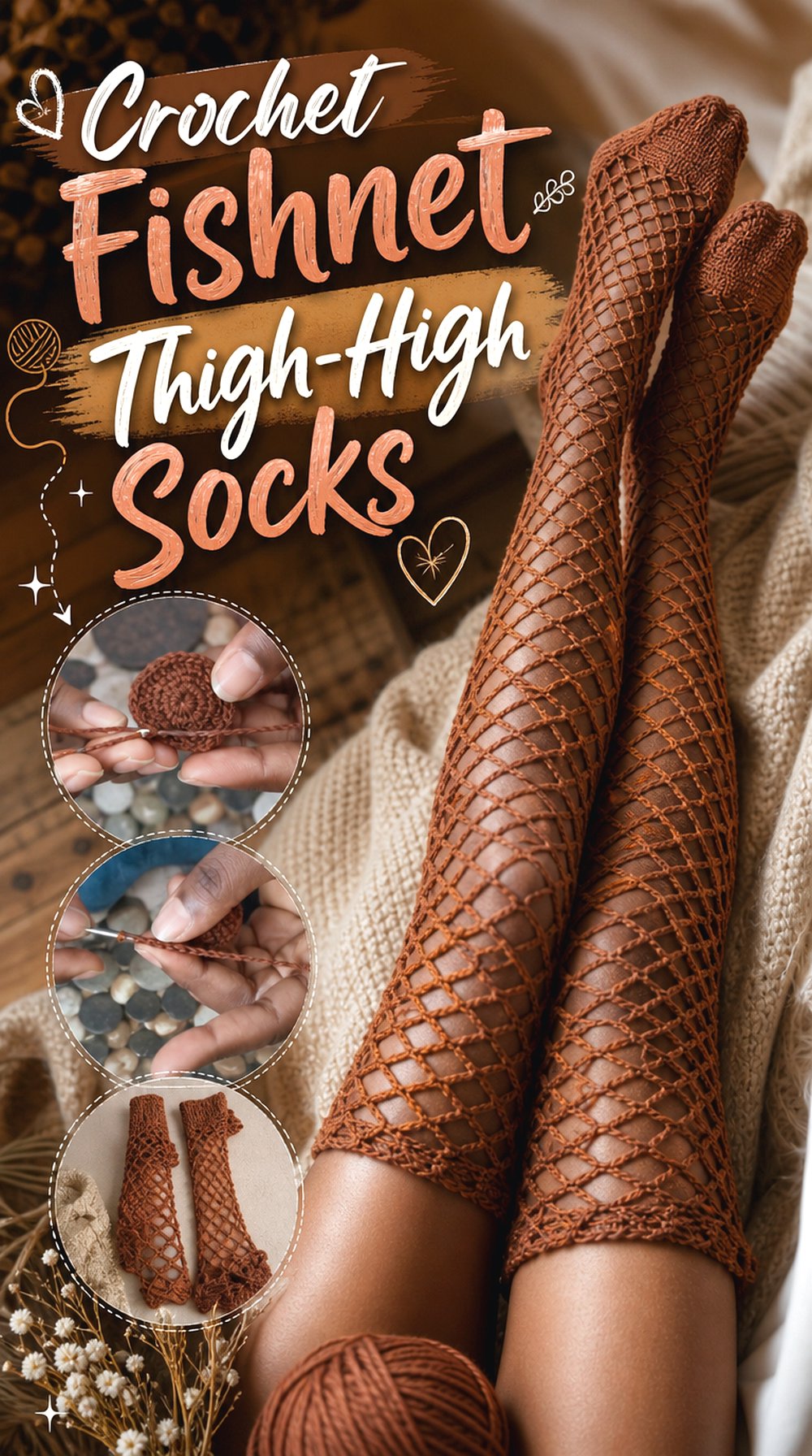
Yarn Mistress’s tutorial moves away from cozy sock fabric and into open fishnet or mesh thigh-high styling. The project is therefore better viewed as visible fashion hosiery than as a substitute for a dense everyday winter sock.
The open structure makes the leg highly visible and dramatically reduces the visual mass of a thigh-high design. It also changes where fit problems show up: rather than seeing compressed solid stitches, you are more likely to notice mesh openings becoming uneven or overly stretched around wider parts of the leg.
The Mesh Size Becomes Part of the Outfit
Large open spaces expose whatever is underneath, so the appearance depends on bare skin, tights, leggings, or another layer. Test your yarn against that background before committing to the pair.
A dark mesh over a contrasting underlayer can create a graphic effect, while a similar-color underlayer softens the openings. Because the sock itself is visually sparse, this background relationship has more influence than it does with a dense crochet knee-high.
Pay Extra Attention Around Toes and Footwear
Open mesh that looks attractive along the calf may interact differently with toes and shoes. Before planning this as regular walking footwear, inspect the finished foot and how the open structure sits inside the shoe you intend to use.
If the tutorial’s finished construction is better suited to styling, costume wear, or layering, use it that way rather than expecting it to perform like a conventional dense sock. Project category matters more than the word “sock” alone.
A Fishnet Thigh-High Needs Clean Tension Changes
Mesh makes tension variation easy to see because every opening becomes part of the pattern. As the sock widens from ankle to calf and thigh, inspect the fabric for abrupt changes in opening size.
If one region suddenly looks much more stretched, stop before continuing a large section. Follow the tutorial’s sizing logic rather than trying to disguise the difference at the cuff, where the underlying unevenness will still remain visible.
Creator: Yarn Mistress
14. Crochet Boho Chic Long Stockings

Annoo and The Unruly Stitch closes the collection with a boho-style crochet stocking. The public tutorial specifically presents a “Boho Chic Crochet Stockings” design, giving this option a styling identity that differs from athletic-looking knee socks, minimalist mesh, and fitted lace-up thigh-highs.
This is a useful project when the socks are meant to be seen as part of an outfit rather than hidden beneath footwear. The long stocking format provides plenty of room for decorative crochet to contribute to a layered, eclectic look, so it pairs naturally with styling where texture is deliberately visible.
Treat the Stocking as an Outfit Piece
Before choosing yarn, think about what will sit above and below the stocking. A long decorative design can compete with heavily patterned clothing, while a simpler skirt or shorts can give the crochet more visual space.
Lay possible yarn colors beside the garments you expect to wear with the socks. Making that decision before crocheting a full pair is more useful than choosing an attractive skein in isolation and trying to build an outfit around it afterward.
Decorative Crochet Still Needs a Practical Foot
Even when the purpose is fashion, the foot has to work with the planned shoes. Try the first completed foot inside the intended footwear before investing in the entire second stocking.
If the crochet is comfortable only with roomier shoes, treat that as a styling limitation rather than a defect. Long decorative socks can still work beautifully when paired with footwear that leaves enough space for the fabric instead of compressing it.
Keep the Long Silhouette From Becoming Visually Heavy
Boho styling welcomes texture, but a tall crochet stocking already covers a large area. If you customize colors or embellishment, step back periodically and look at the whole leg instead of evaluating each detail separately.
A feature that seems small while crocheting may become dominant when repeated twice over two long socks. Leaving some quieter sections can give stronger decorative elements room to stand out instead of making every inch compete for attention.
Creator: Annoo and The Unruly Stitch
Which Crochet Long Socks Should You Choose?
For traditional coverage, start with the classic Aliche Stitches knee-highs or YARNutopia’s more decorative cable-and-puff pair. Mode Bespoke is the strongest alternative when learning Tunisian crochet is part of the appeal, while Yommycrochetlogy puts more emphasis on a cozy textured surface.
For lighter-looking long socks, Lucille Pearl and Crochet With Akita offer lace-oriented options, while Yarn Mistress moves much farther into open fishnet styling. For a strong fashion statement, OmiCrochet’s lace-up design, NailD By Ming’s mixed textures, and Annoo’s boho stockings create the most obvious visual features.
For upper-leg fit, compare the over-the-knee Swecraftcorner option with Knotty by Selassie’s stay-up focus and Sharronda Bowles-Simon’s plus-size lace tutorial.
Conclusion
The most useful way to choose among these 14 crochet long socks is to start with where you want the cuff to sit and how much fabric you want around the leg. Knee-high versions are easier to layer with boots, while thigh-high and over-the-knee projects make the crochet itself a larger part of the outfit. Dense texture gives a warmer, more substantial appearance; lace and mesh reduce visual weight; and ties or decorative cuffs add styling details that also need fit checks.
Once you have chosen the silhouette, measure the foot and leg rather than relying on the finished photo alone. Use the original credited tutorials for the creators’ exact construction, sizing, and finishing directions.
Frequently Asked Questions
How do I keep crochet thigh-high socks from sliding down?
Start by checking the entire leg fit rather than focusing only on the top edge. A sock that is too loose through the calf or upper leg can place more demand on the cuff. Some designs include specific retention features; Knotty by Selassie’s updated tutorial, for example, explicitly addresses the stay-up portion of the thigh-high. Follow the selected creator’s instructions instead of adding a very tight improvised cuff that may become uncomfortable.
Can I turn a knee-high crochet sock into a thigh-high sock?
Sometimes, but it is not as simple as repeating the same circumference upward. The thigh is generally a different circumference from the calf, so the upper section may require additional shaping. A tutorial already designed for variable length, such as the Crochet With Akita project, can be a clearer starting point when longer adaptation is important. If adapting another design, confirm how the creator recommends altering the leg before extending it.
Should crochet long socks be blocked before wearing?
Check the specific yarn and tutorial instructions first because fiber behavior and finishing recommendations vary. For planning, a swatch can be blocked before you commit to the full project so you can compare fabric dimensions and drape. With a fitted wearable, avoid assuming that aggressive blocking will correct a sock that is substantially too small or too large. The underlying circumference and shape should already be appropriate before finishing is used to refine the fabric.
Are lacy crochet thigh-high socks suitable for boots?
They can be, but compatibility depends on the foot construction, yarn, shoe fit, and where the texture sits. An airy calf section does not guarantee that the foot is thin enough for a fitted boot. Complete or test one foot before making the second full sock and try it inside the intended footwear. If the shoe becomes tight or uncomfortable, reserve the pair for roomier shoes or visible styling instead of compressing the crochet.
How can I make two long crochet socks the same length?
Use the first sock as a record, not only as a visual reference. Note where fit adjustments occurred and compare the second sock at the ankle, calf, knee, and final cuff position. Measure with both pieces relaxed in the same way, then try them on because equal flat measurements do not always guarantee identical placement on the body. This is especially important with lace and mesh, where different amounts of stretch can make equal pieces appear different when worn.
Is fishnet crochet the same choice as a regular long sock?
No. A fishnet or open-mesh thigh-high emphasizes appearance and exposed space rather than creating the dense fabric associated with a conventional sock. Yarn Mistress’s tutorial is explicitly a fishnet/mesh thigh-high project. Consider what will show beneath the openings and how the mesh interacts with the foot and footwear. If warmth or dense shoe-friendly coverage is the priority, one of the solid knee-high designs is a more relevant comparison.