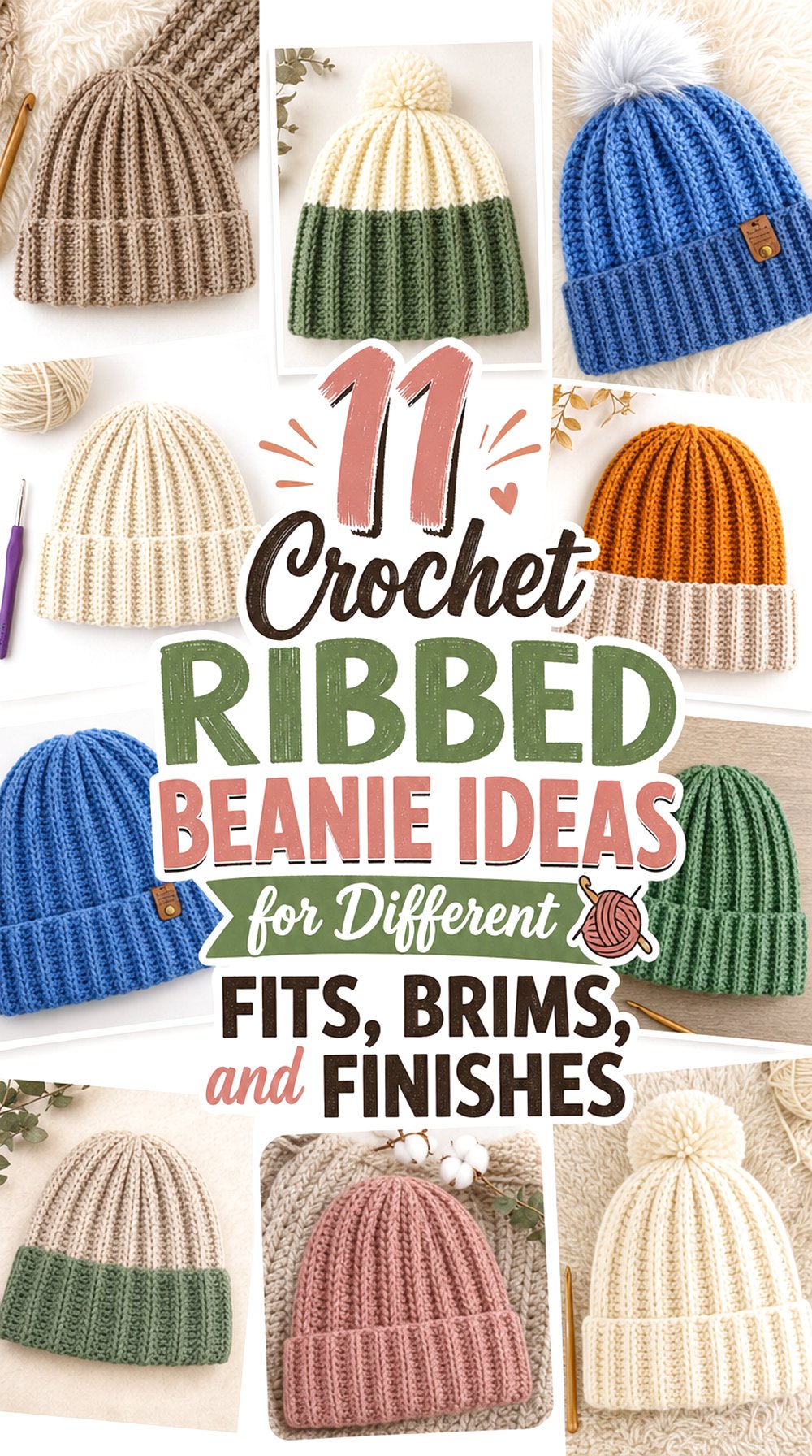
11 Crochet Ribbed Beanie Ideas for Different Fits, Brims, and Finishes
Crochet ribbed beanies can look similar at first, but the small design differences change how the finished hat sits, stretches, and feels. Some of these ideas focus on a close-fitting crown, while others lean into a slouchier shape, a folded brim, a color-change detail, or a chunky pom-pom finish.
This collection gives readers several ways to compare ribbed crochet hats before choosing a tutorial. You will find simple minimal styles, textured knit-look versions, a checkered beanie, a side-to-side construction, and options that call attention to sizing or crown shaping. Each project links back to the original YouTube creator for the full construction details.
Quick List
- Crochet Minimal Knit-Look Ribbed Beanie
- Crochet Smooth-Crown Beginner Ribbed Beanie
- Crochet Two-Color Ribbed Beanie Hat
- Crochet Ribbed Beanie With Color-Change Option
- Crochet Fitted Ribbed Beanie With a Clean Crown
- Crochet Rectangle Ribbed Beanie With Folded Brim
- Crochet Checkered Ribbed Beanie
- Crochet Slouchy Ribbed Beanie
- Crochet Multi-Size Ribbed Beanie
- Crochet Chunky Ribbed Beanie With Pom-Pom
- Crochet Side-to-Side Ribbed Beanie
Fit, Brim, and Crown Details to Compare First
Before choosing a crochet ribbed beanie tutorial, look at three practical details: the fit around the head, the brim style, and the crown finish. A close-fitting beanie usually needs more attention to sizing because there is less extra fabric at the top. A slouchy version gives a softer shape but may not suit readers who want a neat, fitted look.
The brim also changes the final use. A folded brim adds depth and a warmer-looking edge, while a plain lower edge keeps the beanie more minimal. Crown shaping matters too, especially in ribbed hats, because gathered tops can become bulky. Tutorials that address crown bulk or sizing notes are especially useful for readers who want a cleaner finished result.
1. Crochet Minimal Knit Look Ribbed Beanie

This crochet ribbed beanie has a clean, minimal look with vertical ribbing and a close everyday shape. The finished style is useful for readers who want a simple hat without colorwork, heavy surface texture, or a large decorative topper. Its main appeal is the knit-look finish and the attention given to avoiding a bulky gathered crown.
Compared with the checkered, pom-pom, and slouchy options later in this list, this beanie is the quietest choice. It works best as a neutral starting point for readers who want ribbing to be the main visual feature.
The Minimal Shape Keeps the Focus on Ribbing
A plain ribbed beanie depends on neat texture because there are no extra motifs or color blocks to distract from the finish. Readers should look closely at how the ribbing lines up around the hat and how the lower edge sits. This is a good option when the goal is a clean winter hat that can be made in a solid color.
Crown Bulk Is the Key Detail
The source specifically presents this as a ribbed beanie without the thick bunching that can happen at the top. That matters because ribbed hats are often gathered after the main fabric is formed. Readers who dislike a lumpy crown should pay attention to the shaping and finishing parts of the original guide.
Sizing Notes Deserve Careful Reading
The tutorial includes a sizing section, which is important for a stretch ribbed hat. A beanie that stretches should not be judged only by flat width. Before choosing yarn or starting, readers should compare the creator’s sizing guidance with the intended head measurement and preferred fit.
Creator: VivCrochets
2. Crochet Smooth Crown Beginner Ribbed Beanie

This ribbed beanie is another simple cold-weather hat, but it stands out for its straightforward beginner-focused format and smooth crown goal. The finished beanie has a soft ribbed surface and a comfortable-looking shape without an oversized slouch. It is a practical pick for readers who want a clear, uncluttered beanie tutorial rather than a decorative statement piece.
The design differs from the minimal VivCrochets version because the source places strong emphasis on a beginner-friendly step-by-step layout. It also keeps the supplies simple, with worsted weight yarn, a 5 mm hook, scissors, and a tapestry needle listed in the description.
A Straightforward Supply List Helps Planning
This project is useful for readers who want to gather basic tools without sorting through many extra components. The listed supplies are simple, and there is no required pom-pom, button, or special closure shown in the description. Readers should still check the full material list before buying yarn, especially if they want the same weight and look.
The Crown Finish Should Be Watched Closely
A smooth-crown ribbed beanie depends heavily on how the top is closed. The tutorial title and description focus on a “no bunching” result, so the assembly portion is worth careful attention. Readers should avoid judging the beanie only from the lower ribbed fabric, because the top finish changes the final shape.
Best Use for This Style
This style suits readers who want a basic ribbed hat with a soft, wearable shape. It does not rely on colorwork or a folded brim to make an impact. The main decision is whether the reader prefers this simple smooth-crown look over a chunkier pom-pom beanie, a slouchier profile, or a more decorative checkered version.
Creator: ElyseCrochets 💌
3. Crochet Two Color Ribbed Beanie Hat

This crochet ribbed hat brings color contrast into the collection without turning into a full colorwork project. The finished beanie is described by the creator as a two-color ribbed design, which makes it different from the single-color fitted and minimal options. Readers who want a little more visual interest may prefer this style over a plain ribbed hat.
The shape still stays in classic beanie territory, so the color placement becomes the detail to watch. It may work well for readers who want to coordinate two yarn shades, use contrast carefully, or make a beanie that feels less plain while staying wearable.
Color Placement Carries the Design
With a two-color ribbed beanie, the color relationship matters as much as the ribbing. A high-contrast pair will make the sections more noticeable, while closer shades may keep the hat softer and more subtle. Readers should decide whether they want the color change to stand out clearly or blend into the overall winter-hat look.
Watch the Transition Areas
Any two-color project needs clean transition points so the finished hat does not look accidental. This does not mean readers need to copy the colors exactly, but they should pay attention to where the colors meet and how the ribbing continues through those areas. The original tutorial is the right place to follow the exact handling.
Fit Still Matters More Than Color
A color combination can look appealing, but the beanie still needs to fit the intended wearer. Readers should not choose this option only for the two-tone effect. They should also check how the finished shape sits, whether the lower edge gives enough coverage, and whether the crown finish matches their preferred beanie style.
Creator: Sirin’s Crochet
4. Crochet Ribbed Beanie With Color Change Option

This crochet ribbed beanie has a classic beginner-friendly shape, with the added value of a color-change section in the tutorial. That makes it a flexible choice for readers who want a plain beanie first but may want to add stripes, a contrast section, or another simple color detail later.
The finished look can stay minimal or become more playful depending on color choice. Compared with the checkered beanie, this is a gentler way to bring in more than one shade because the ribbed structure remains the main feature.
A Flexible Choice for Simple Color Work
The color-change portion makes this project useful for readers who are not ready for a full checkered design. A single contrast section or controlled stripe can change the mood of the beanie without adding a busy surface. Readers should choose colors that still allow the ribbed texture to remain visible.
Fitting as You Go Is a Helpful Feature
The source includes a “fitting as you go” section, which is valuable for ribbed hats because the fabric can stretch. Readers should use that part of the guide to compare the developing shape with the intended fit. This is especially useful when changing yarn color, yarn type, or overall hat size.
Keep the Crown and Color Balanced
A color-change beanie can look unfinished if the top closure interrupts the color placement awkwardly. Readers should look at the completed hat before deciding where they want any contrast to appear. The original guide should be used for the actual joining and top-closing details.
Creator: eliznuts
5. Crochet Fitted Ribbed Beanie With a Clean Crown

This fitted crochet ribbed beanie is designed for readers who want a closer shape with less extra fabric at the top. The source describes the finished style as fitted, with no extra fabric on the crown. That makes it a strong contrast to the slouchy beanie later in the list.
The spiral effect and ribbed texture give the hat more movement than a plain rectangle-style beanie. This option may suit readers who prefer a neat profile and want the crown to sit smoothly rather than gather into a bulky top.
Close Fit Is the Main Decision
A fitted ribbed beanie leaves less room for guessing. Readers should pay attention to head circumference, stretch, and the finished crown shape before choosing this style. A close hat can look polished, but it also needs more careful sizing than a slouchy option.
The Crown Has Less Extra Fabric
The clean crown is the practical reason this project stands apart. Instead of accepting extra fabric at the top, this version aims for a more tailored finish. Readers who often dislike the gathered look on ribbed crochet hats should focus on the crown section of the original tutorial.
Surface Movement Adds Interest
The ribbed effect is not the only visible feature here; the source also mentions a spiral pattern. That gives the finished beanie more direction and texture than a flat vertical-rib style. Readers should decide whether they want that movement or a simpler straight-rib look.
Creator: Cherilyn Q
6. Crochet Rectangle Ribbed Beanie With Folded Brim

This crochet ribbed beanie is made from a rectangle-style approach and finishes with a folded brim. The shape is classic and approachable, with the folded edge adding extra visual weight around the face. It is different from the fitted clean-crown option because the brim becomes a major part of the finished look.
The source also mentions the possibility of making the hat in one color or using a contrasting brim. That makes this a useful choice for readers who want simple structure but still want a small design decision to personalize the finished beanie.
The Folded Brim Changes the Profile
A folded brim gives the lower edge more depth and makes the beanie look more substantial. Readers should consider whether they want that extra fold around the forehead or prefer a lighter plain edge. The brim also affects the visual balance of the hat, especially when a contrast color is used.
Rectangle Construction Keeps the Shape Understandable
The tutorial presents the beanie as a rectangle that is later formed into a hat. This can help readers understand the overall shape before the finishing stage. Still, the final seaming and crown closure matter, so the original tutorial should be followed for the exact construction details.
One-Color or Two-Tone Finish
The option to make a one-color or two-tone version gives this project more flexibility. A matching brim keeps the hat classic, while a contrast brim makes the fold more noticeable. Readers should decide this before choosing yarn so the finished beanie looks intentional rather than mismatched.
Creator: Hooked on Homemade Happiness
7. Crochet Checkered Ribbed Beanie

The checkered ribbed beanie is the boldest color-focused option in this collection. Instead of using one contrast stripe or a simple two-color layout, this design brings a checkerboard effect into the ribbed beanie shape. It is a better match for readers who want the hat to stand out clearly.
Because the visual pattern is more active, color choice matters. Strong contrast will make the checkerboard sharper, while softer colors can make the beanie easier to style. This project is less minimal than the others, but it still keeps the recognizable ribbed beanie structure.
Color Contrast Defines the Finished Look
A checkered beanie depends on the relationship between the chosen colors. Readers should think about whether they want a bold graphic finish or a softer tonal effect. The ribbing and checker pattern both need to be visible, so colors that are too similar may reduce the impact.
A More Decorative Beanie Choice
This is not the quietest everyday ribbed hat in the list. It works better when the reader wants the beanie itself to be a visible outfit detail. Compared with the fitted neutral styles, this design places more attention on surface pattern and color planning.
Written Support May Help Visual Learners
The video description links to a written pattern, which may help readers who prefer to cross-check visual instruction with written guidance. That can be especially useful for a checkered layout, where staying oriented matters. Readers should use the creator’s original materials and pattern notes rather than guessing from the finished image.
Creator: HayHay Crochet
8. Crochet Slouchy Ribbed Beanie
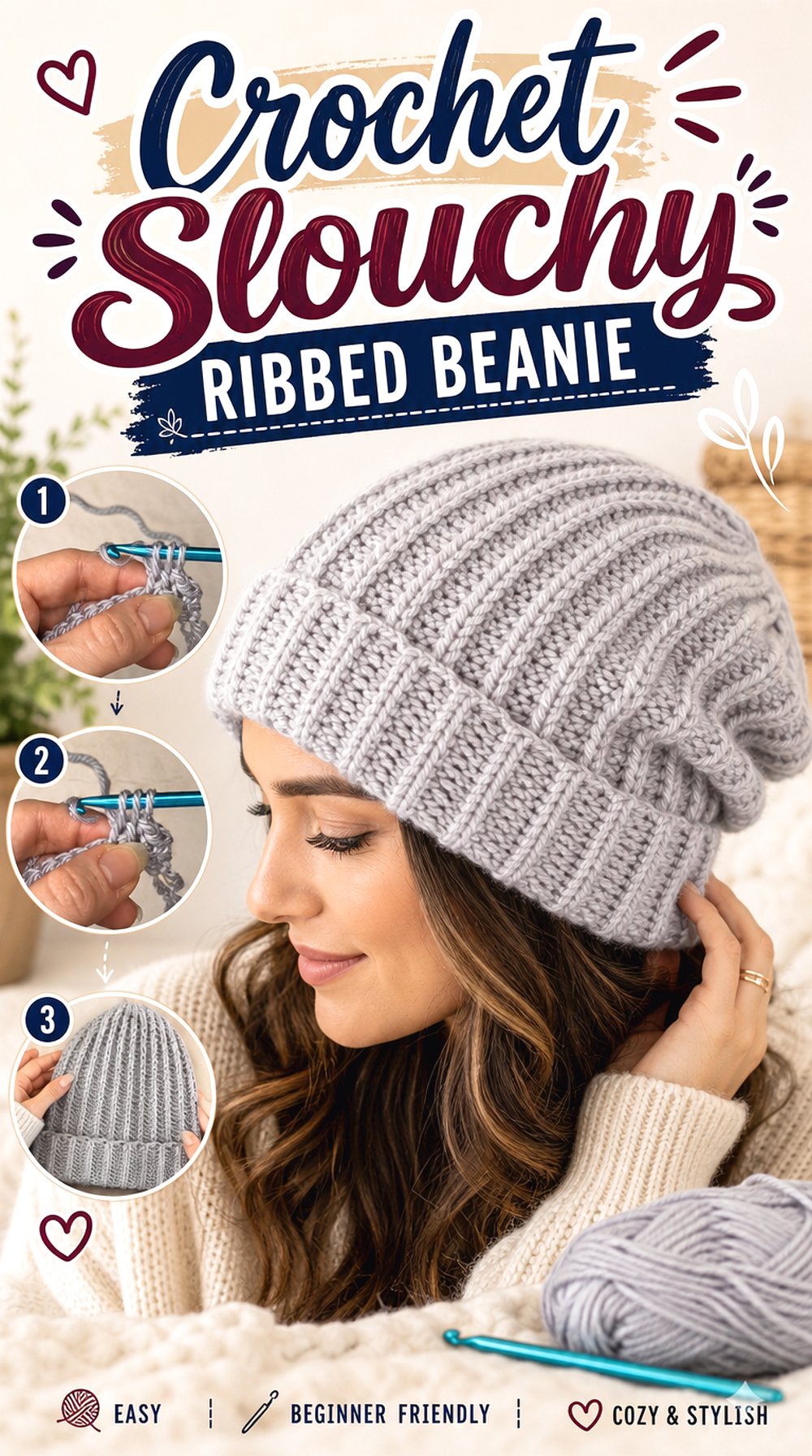
This crochet ribbed beanie leans into a slouchier shape, making it different from the close-fitting and clean-crown styles. The finished look has a softer, more relaxed profile, while still using ribbing to give the surface a knit-like direction. It is a good option for readers who do not want the hat to sit tightly against the crown.
The source notes a knit-like ribbed effect and includes material information in the description. Readers who prefer relaxed winter accessories may find this shape more appealing than the fitted beanies in the middle of the list.
Slouch Changes the Fit Expectation
A slouchy beanie is not meant to sit the same way as a fitted ribbed hat. Readers should decide how much extra fabric they want above or behind the crown. This kind of shape may feel more casual, but it still needs enough structure at the lower edge to stay wearable.
Ribbing Keeps the Relaxed Shape From Looking Flat
The ribbed texture gives the beanie direction even though the overall fit is softer. This matters because a slouchy hat without visible texture can look shapeless. Readers should look at how the ribbing continues through the finished beanie and whether the texture matches the style they want.
Material Notes Are Worth Checking
9. Crochet Multi Size Ribbed Beanie
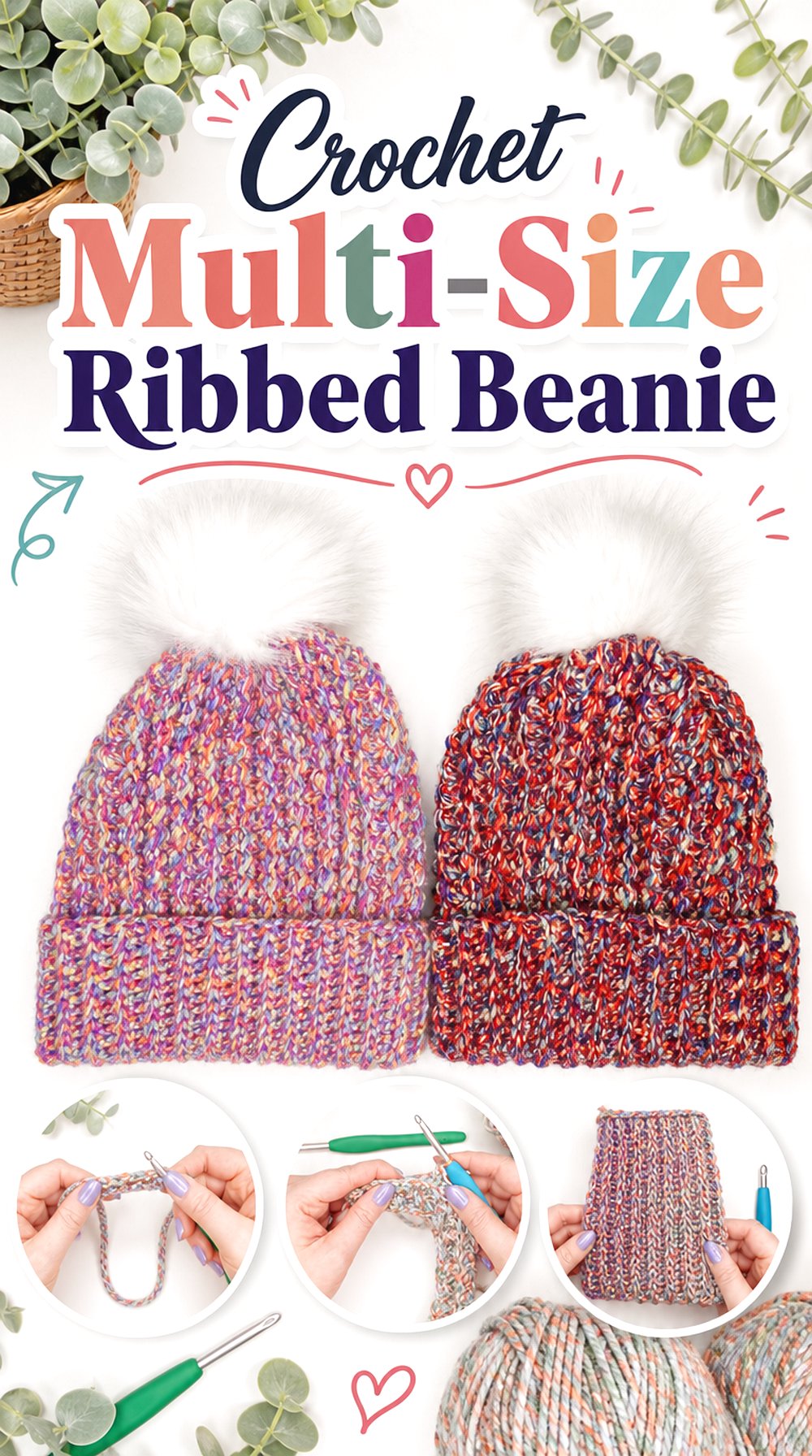
This ribbed crochet beanie stands out because the source presents it with multiple size options, from child to adult. That makes it especially useful for readers choosing a project for more than one person or comparing family-size hat possibilities. The finished beanie includes ribbed sections and a winter-hat shape, with the creator’s tutorial supporting the sizing approach.
Unlike a one-size-style tutorial, this project asks readers to pay closer attention to the size they actually need. The ribbing adds stretch, but the selected size still matters.
Size Range Is the Main Advantage
A multi-size beanie tutorial helps readers avoid guessing when making hats for different ages or head sizes. The source presents seven sizes, so readers should start by identifying the correct size category. This is more practical than simply making one adult sample smaller or larger without guidance.
Crown, Body, and Brim Are Treated Separately
The tutorial chapters identify construction notes for the brim, body, and crown. That structure can help readers understand how the finished beanie is organized. It is also useful for checking the final shape, because a ribbed hat can look right in the body but still need careful finishing at the crown.
Pom-Pom Use Is Optional to Compare
The tutorial includes a pom-pom attachment section, but readers can decide whether that finish matches their intended wearer. A pom-pom adds height and a playful finish, while leaving it off keeps the beanie cleaner. This choice should be made with the finished size and style in mind.
Creator: Just Be Crafty
10. Crochet Chunky Ribbed Beanie With Pom Pom
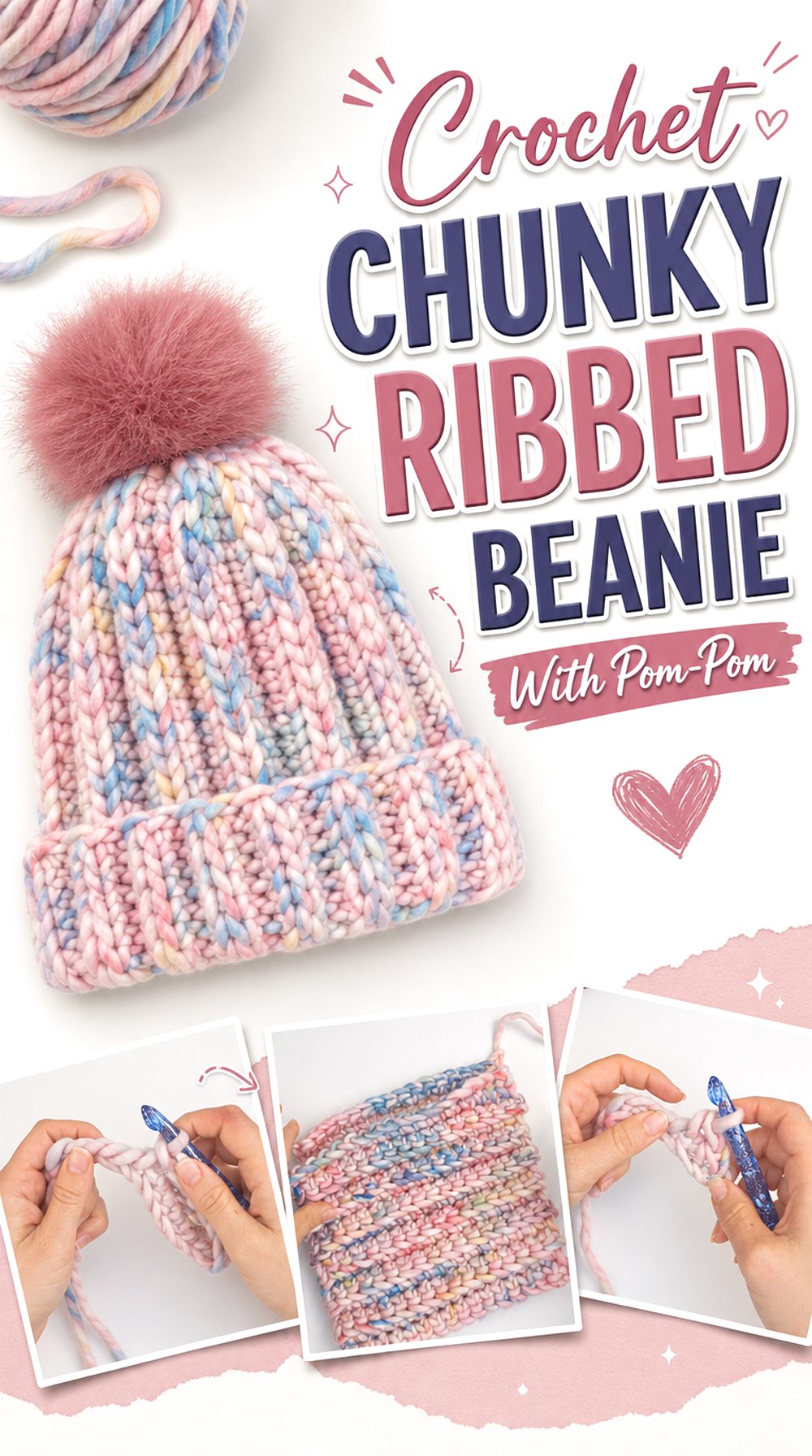
This crochet ribbed beanie uses a chunkier presentation and includes a pom-pom in the finished look. The source lists a large hook, wool yarn, and one pom-pom, so the final hat has a different feel from the lighter worsted-weight ribbed examples. It is a good choice for readers who want a bold, cozy-looking beanie rather than a slim fitted one.
The pom-pom changes the overall shape, adding height and a clear decorative finish. This project is less plain than the minimal knit-look options but less pattern-heavy than the checkered beanie.
Chunky Texture Makes the Hat More Prominent
A chunkier ribbed beanie has a stronger visual presence. Readers should expect the ribs, crown, and pom-pom to look more substantial than on thinner yarn projects. This can be appealing for a winter accessory, but it may not be the best match for someone who wants a low-profile hat.
The Pom-Pom Is Part of the Style
The pom-pom is not just an afterthought here; it affects the balance of the finished beanie. Readers should decide whether they want that rounded top detail before starting. If they prefer a cleaner crown, one of the fitted or minimal ribbed beanies may be a better choice.
Supply Details Should Be Matched Carefully
Because the source lists a specific type of yarn, hook size, and pom-pom, substitutions may change the finished look. Readers should confirm the creator’s material list and think about whether a different yarn will still give the chunky ribbed effect they want. The original tutorial should guide the exact making process.
Creator: Diving Ducks Crochet
11. Crochet Side to Side Ribbed Beanie
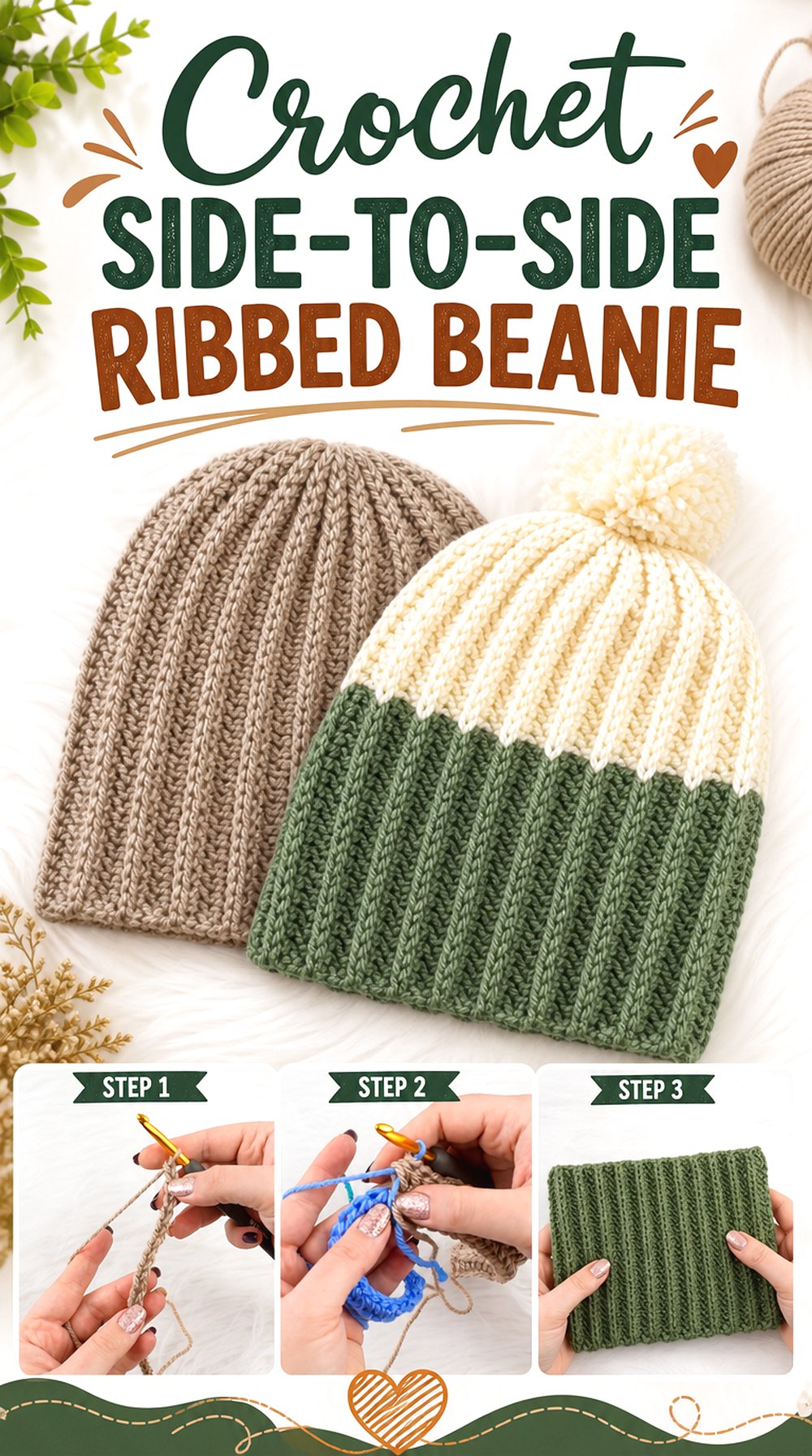
This crochet side-to-side ribbed beanie offers a different construction angle from the rectangle and fitted-crown options. The source describes it as a side-to-side crochet ribbed hat with a knit-looking finish. That makes it a useful final choice for readers who want the ribbing direction and construction method to feel a little different.
The finished beanie still belongs in the classic ribbed-hat family, but the side-to-side approach gives readers another way to think about shape. It may appeal to those who like seeing the hat form from a different direction.
Side-to-Side Construction Sets It Apart
Most ribbed beanies in this list focus on flat ribbing, sizing, and crown finishing. This one is specifically presented as side-to-side, which changes how readers may understand the fabric as it develops. Anyone choosing this project should watch how the direction of the ribbing relates to the final hat shape.
Knit-Look Ribbing Is the Main Finish
The source describes the result as knit-looking, so the ribbed surface is central to the design. Readers who want a crochet hat that visually leans toward knit texture may prefer this over the checkered or color-change styles. A simple yarn color can help the ribbing remain the main feature.
Written Instructions Are Mentioned Separately
The creator notes that written instructions are available through shops. Readers who like having a written reference should check those details before starting. The public YouTube tutorial is the main source here, but extra written support may be worth considering for anyone who prefers not to rely only on video.
Creator: Passionate Crafter
How to Choose Between These Ribbed Beanie Styles
Choose the minimal knit-look or smooth-crown beanie if the goal is a clean everyday hat. Pick the fitted Cherilyn Q version when the crown shape matters most and extra top fabric is not wanted. The folded-brim rectangle beanie is better for readers who like a thicker lower edge, while the slouchy beanie gives a softer casual profile.
For stronger visual detail, the checkered beanie, two-color beanie, and color-change option all add interest in different ways. The chunky pom-pom beanie has the boldest winter finish, and the multi-size option is the most practical when making hats for different wearers. The side-to-side version is useful for readers who want another construction style.
Conclusion
These crochet ribbed beanie ideas show how much variety can fit inside one simple category. A plain knit-look beanie keeps the focus on clean texture, while a fitted version gives a closer crown shape. Folded brims, color changes, checkerboard detail, slouch, chunky yarn, and pom-poms all change the final personality of the hat.
Readers choosing a tutorial should start with fit first, then compare brim style, crown finish, and color detail. Use the original YouTube tutorials for exact stitch counts, shaping, assembly, and finishing instructions, especially when sizing or crown closure affects the final result.
FAQs
How do I choose the right crochet ribbed beanie tutorial?
Start by deciding what fit you want. A fitted beanie needs careful sizing, while a slouchy version gives a more relaxed shape. After that, compare the brim and crown. A folded brim adds depth, a smooth crown looks cleaner, and a pom-pom creates a more decorative winter finish.
Are ribbed crochet beanies usually stretchy?
Many ribbed crochet beanies have stretch because of the way the ribbed fabric is worked, but the amount of stretch can vary by yarn, hook, stitch style, and finishing. Do not assume every tutorial will fit the same. Check the creator’s sizing notes and compare them with the intended head measurement.
Should I make a folded brim or a plain-edge ribbed beanie?
A folded brim gives the lower edge more thickness and a classic winter-hat look. A plain edge feels more minimal and may look less bulky. Choose a folded brim when the brim is part of the style, and choose a plain-edge version when the ribbing and crown shape are the main features.
What should I check before changing yarn for a ribbed beanie?
Check the yarn weight, hook size, gauge or sizing notes, and the finished look shown by the creator. A different yarn can change stretch, crown bulk, brim depth, and slouch. This matters most for fitted beanies, chunky pom-pom styles, and tutorials that depend on a smooth crown.
Can I add a pom-pom to any crochet ribbed beanie?
A pom-pom can often be added as a style choice, but it will change the balance of the hat. It looks more natural on chunky, folded-brim, or winter-style beanies than on very minimal fitted designs. Check whether the creator includes pom-pom guidance before relying on it as part of the finished look.
Can I sell finished crochet ribbed beanies from YouTube tutorials?
Do not assume selling is allowed just because a tutorial is public. Check the creator’s pattern terms, video description, linked written pattern, and any shop or license notes. Also follow local labeling, tax, and business rules if selling finished hats. When terms are unclear, contact the creator directly.