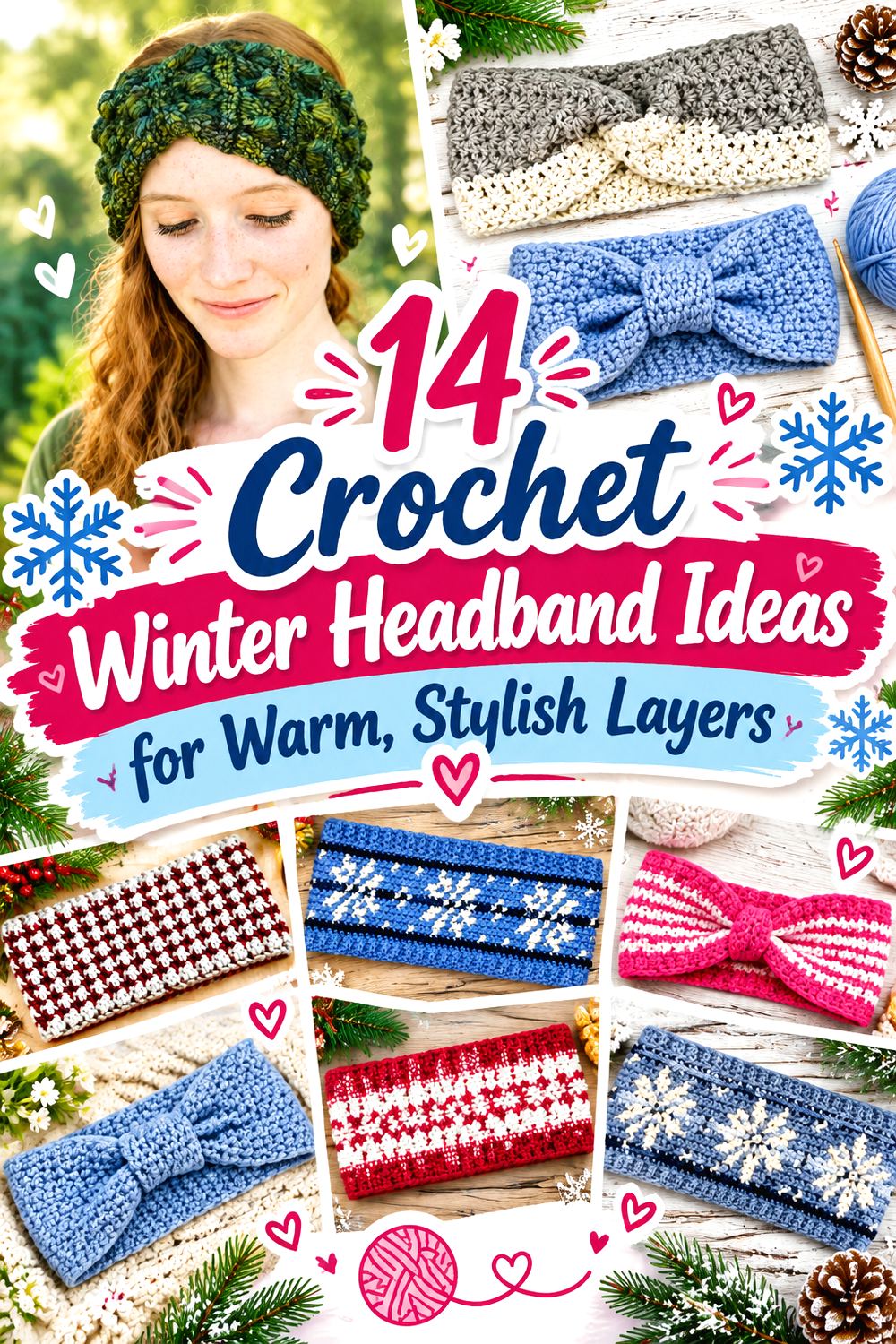
14 Crochet Winter Headband Ideas for Warm, Stylish Layers
A winter headband can be much more than a narrow strip of crochet. The projects below range from thick tubular constructions and sculpted front twists to Tunisian honeycomb fabric, plaid colorwork, snowflake motifs, raised puffs, and understated gathered fronts. Some emphasize coverage and double-layer warmth, while others put more attention on texture, sizing flexibility, or a decorative focal point.
Those differences matter when choosing a project. A dense headband that feels substantial around the ears behaves differently from a lighter band with a prominent twist, and colorwork brings different finishing considerations than a single-color texture. This collection pairs each idea with an original tutorial while also highlighting the fit checkpoints, yarn choices, structural trade-offs, and adaptation questions worth considering before you start.
Quick List
- Crochet Button-Scrunched Ribbed Winter Headband
- Crochet Double-Layer Faux-Bow Winter Headband
- Crochet Two-Tone Honeycomb Tunisian Headband
- Crochet Double-Thick Mixed-Loop Twist Headband
- Crochet Plaid Three-Finish Winter Ear Warmer
- Crochet Sculpted Overlap Twist Headband
- Crochet Minimal Cinched Winter Headband
- Crochet Double-Thick Tunisian Knit-Look Headband
- Crochet Snowflake Tapestry Winter Headband
- Crochet Double-Layer Diamond-Texture Headband
- Crochet Reversible Houndstooth Winter Headband
- Crochet Wide Bow-Band Ear Warmer
- Crochet Star-Stitch Twist Winter Headband
- Crochet Adjustable Puff-Texture Ear Warmer
Size a Winter Headband for Stretch, Not Just Head Circumference
A fitted crochet headband usually needs to be smaller than the head it will stretch around, but there is no single negative-ease number that works for every yarn and stitch pattern. Make & Do Crew specifically bases its Aspen Socialite sizing on the wearer’s head measurement, while Daisy Farm Crafts also emphasizes measuring around the forehead and above the ears for its tubular twist design.
Treat the original tutorial’s gauge and sizing method as the starting point. Then consider how readily your actual fabric stretches and recovers. A dense Tunisian fabric, loose conventional crochet, bulky yarn, and a double-thick tube can all respond differently. When the construction allows it, checking the band around the intended wearer before the final seam is safer than relying on circumference alone. Also check width: adequate ear coverage can matter just as much as snugness during genuinely cold weather.
Choose Yarn According to Warmth, Bulk, and Recovery
Winter warmth does not come from yarn thickness alone. Fabric density, open spaces, width, and whether the headband has one or two layers all contribute. Several projects in this collection deliberately create substantial fabric: Daisy Farm Crafts uses a double-thick tube, One Dog Woof describes its Tunisian twist design as double-thick, and Rich Textures Crochet joins two textured pieces for another double-layer result.
Substituting a heavier yarn may increase bulk without preserving the intended fit. A different fiber can also change stretch and recovery. Before substituting, compare yarn weight, gauge, and fabric behavior rather than yarn diameter alone. For a headband that will be worn directly against the forehead and ears, hand feel is another practical consideration. Follow the source’s yarn guidance where possible, and use the yarn label rather than assumptions when deciding how the finished piece should be washed.
Decide Where You Want the Visual Focus
Front twists, cinches, wrapped bands, buttons, and colorwork all create different focal points. A prominent twist adds dimensional fabric at the forehead; a narrow cinch gives a more restrained shape; and plaid, houndstooth, honeycomb, or snowflake designs make the stitch surface itself the main feature.
Construction also influences styling. Winding Road Crochet, for example, demonstrates three different finishes from one plaid base, while Yarn + Chai notes that its gathered section can be positioned on top, to one side, or beneath a ponytail. If you regularly wear glasses, a hood, or bulky outerwear around the neckline, consider whether a very thick front treatment will feel comfortable. For gifts, simpler continuous or adjustable constructions may also be easier to fit when you cannot repeatedly try the project on the recipient.
1. Crochet Button Scrunched Ribbed Winter Headband
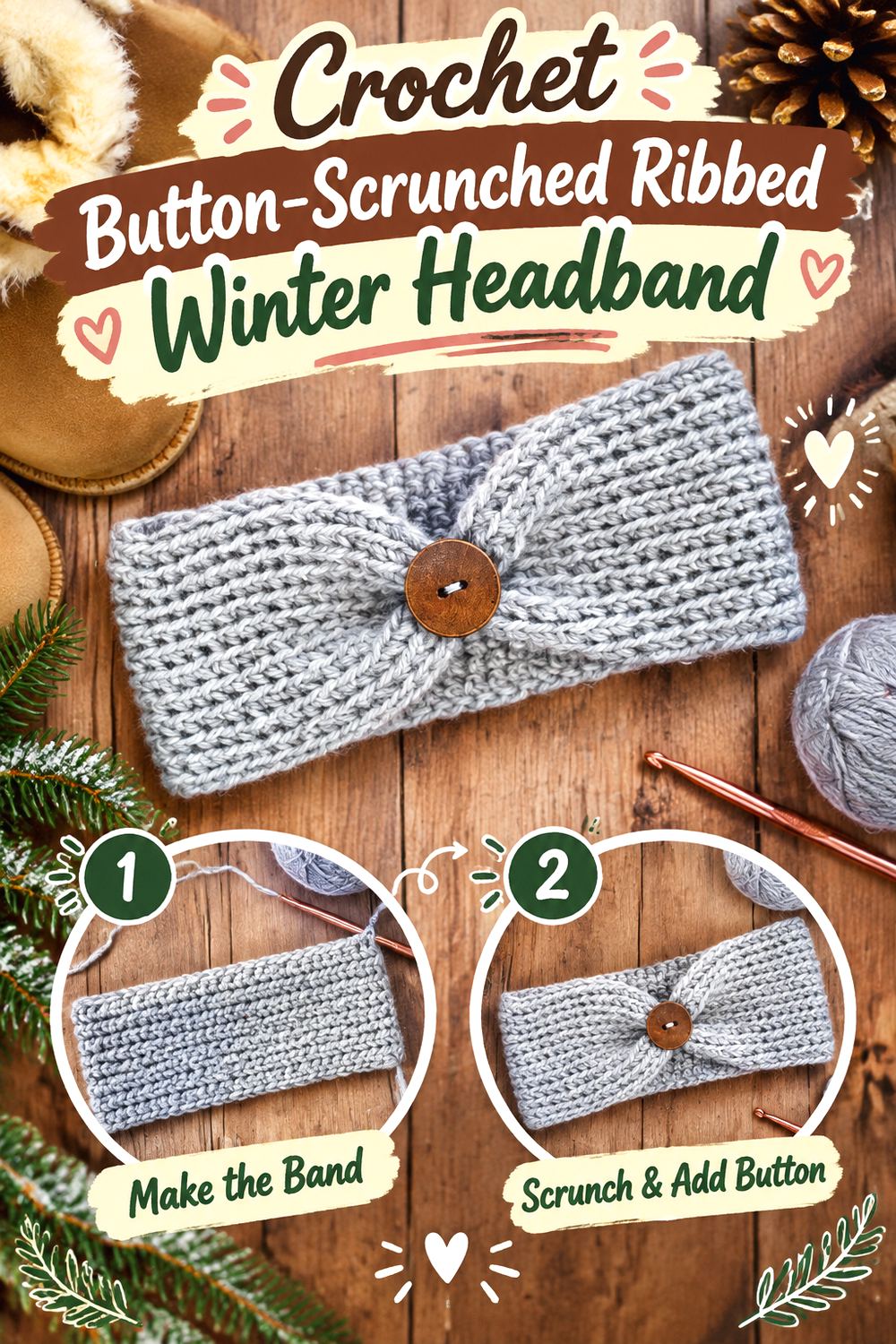
This headband keeps the basic band shape straightforward and concentrates its character in one gathered section topped with a button. The original Aspen Socialite design is worked in the round with back-loop single crochet and includes sizing guidance spanning newborn through adult. Rather than treating every size as an identical fixed stitch count, the source emphasizes adjusting the starting length in relation to head circumference.
That combination makes this idea especially useful when you want a recognizable winter accessory without a bulky center twist. The button provides a clear focal point, while the surrounding ribbed-looking fabric remains relatively restrained.
Fit the Band Before Adding the Focal Detail
Because the gathered section cannot correct an oversized band, settle the circumference first. Stretch the fabric only as much as it would realistically stretch during wear, and check whether it remains comfortably positioned over the ears. If you substitute yarn, do not assume the source’s original amount of negative ease will behave identically. The tutorial itself notes that yarn choice can affect elasticity, so a small fabric check is worthwhile before committing to the entire circumference.
Treat the Button as Decoration and Hardware
A decorative button adds polish, but it also introduces another component that needs secure attachment. Choose a button whose visual scale suits the gathered area instead of overwhelming the band. If the headband is intended for a baby or very young child, detachable embellishments deserve particular caution; consider whether an unembellished finish would be more appropriate for the intended recipient.
Original Tutorial and Creator Credit
Creator/Site: Make & Do Crew
2. Crochet Double Layer Faux Bow Winter Headband
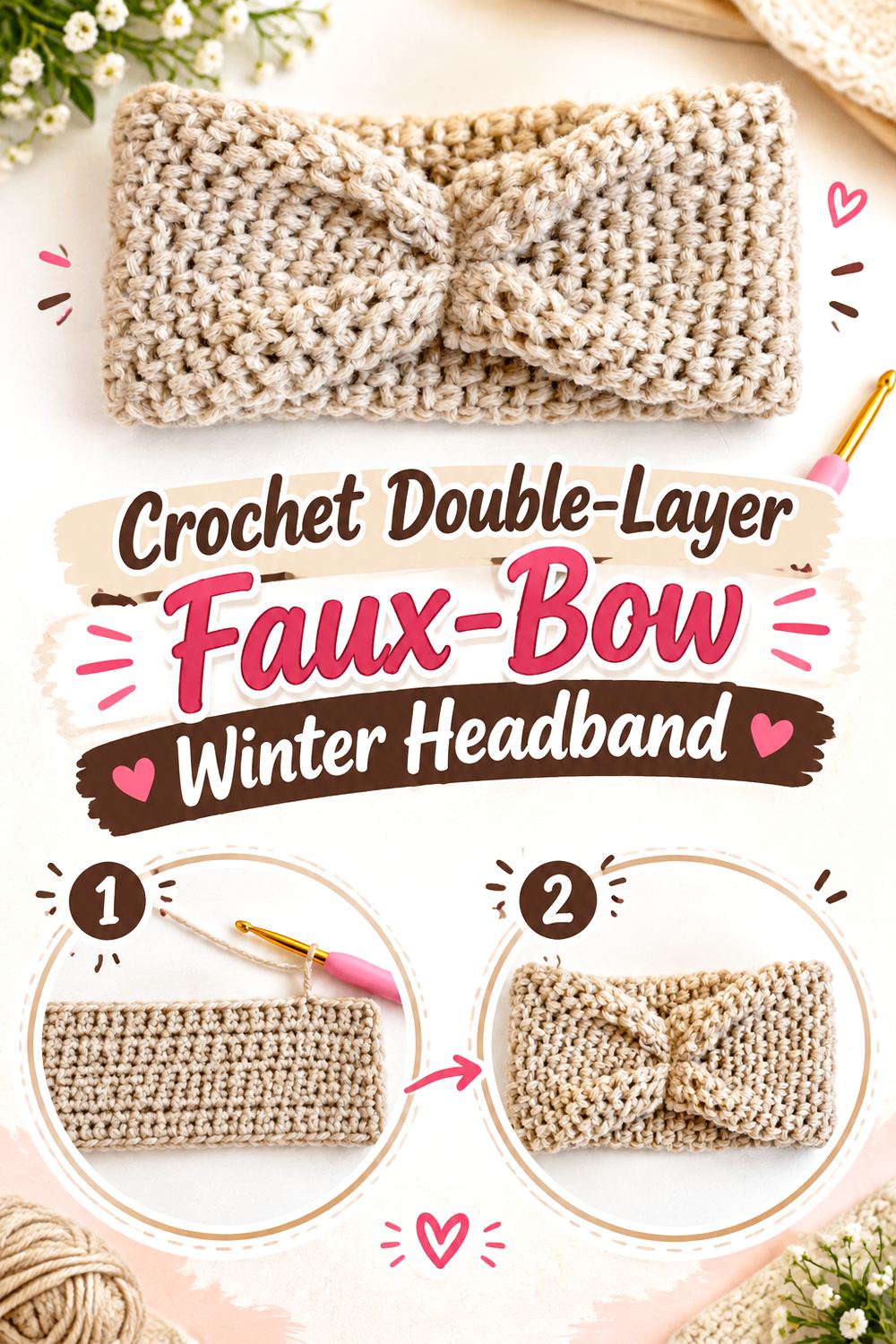
For a fuller profile, this faux-bow headband uses a tube rather than a single flat strip. Mama In A Stitch describes the finished piece as double layered and constructs the tube in the round before flattening, folding, and seaming the center into the bow-like detail. The pattern uses granite stitch and provides baby, toddler, teen, and women’s sizing.
Visually, the result sits between a classic ear warmer and a turban-style headband. It has a strong center feature but avoids adding a completely separate crocheted bow. That makes it a useful choice for readers who want dimensional styling along with more fabric around the ears.
Account for the Thickness of the Tube
A tubular band places two layers of crochet between the wearer and cold air, but the extra fabric also changes how the accessory feels. Substituting a dramatically heavier yarn could make the center fold noticeably bulkier than intended. If changing materials, compare the resulting folded thickness as well as gauge before deciding the substitution works.
Keep the Faux Bow from Becoming Too Stiff
The central fold depends on fabric that can compress and shape neatly. Very tight tension or an unusually rigid substitute yarn may make that area harder to arrange. Conversely, excessively loose fabric can reduce definition. Aim for fabric behavior similar to the tutorial sample rather than choosing a hook solely because it is your usual size for that yarn category.
Original Tutorial and Creator Credit
Creator/Site: Mama In A Stitch
3. Crochet Two Tone Honeycomb Tunisian Headband
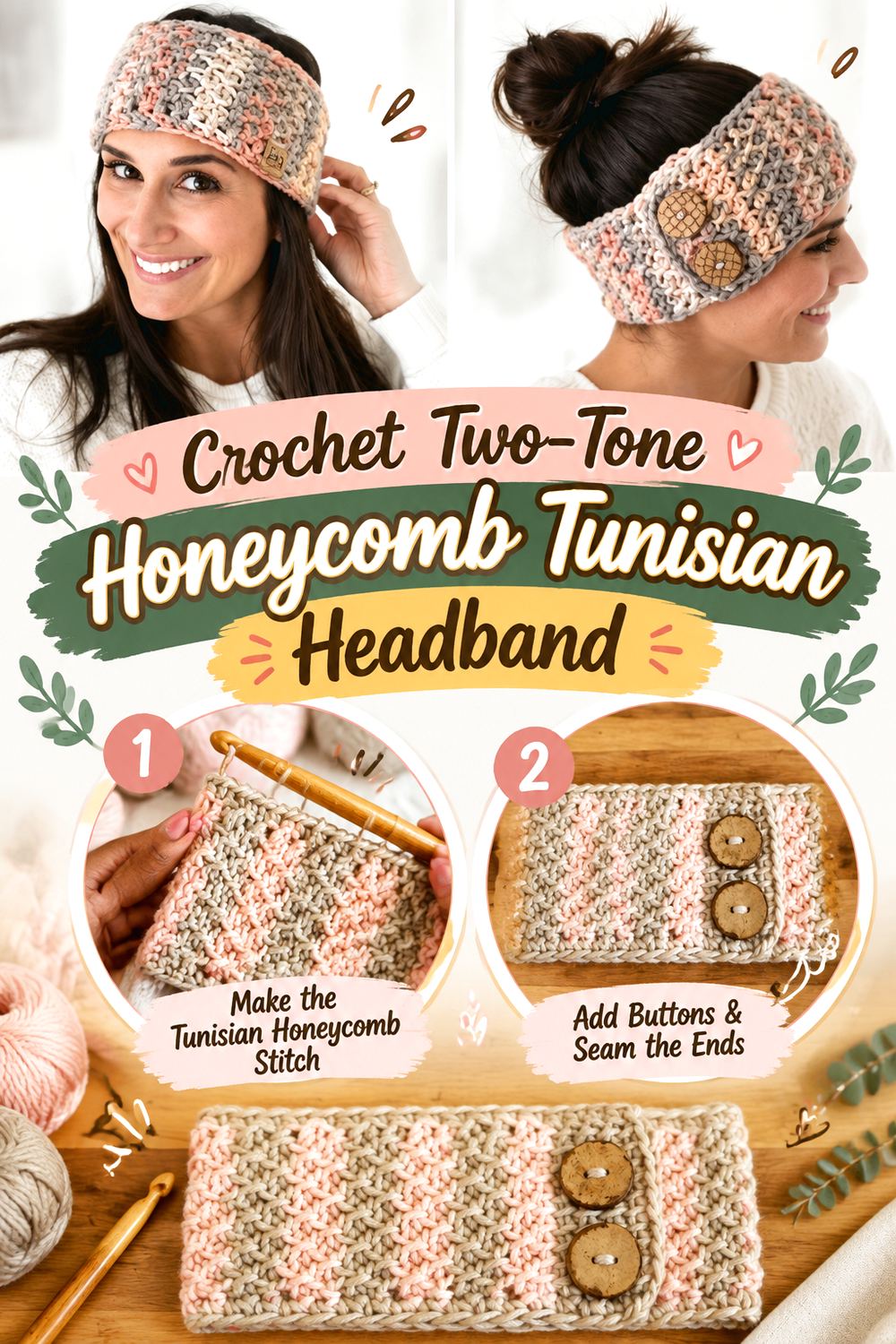
This option moves away from conventional ribbing and uses Tunisian crochet to create a compact honeycomb surface. TL Yarn Crafts combines Tunisian simple and purl stitches with color changes, then adds a traditional crochet border and button detailing. The source also provides adjustments for several yarn-weight categories and notes that a standard crochet hook can be used for this particular project.
The two-tone texture makes this one of the more graphic headbands in the collection without relying on a large motif. It suits a winter wardrobe where texture and controlled color contrast are more appealing than a dramatic front knot.
Plan the Two Colors as a Pair
Honeycomb texture becomes part of the color design, so contrast deserves attention. Two shades that are almost identical may make the alternating surface subtler; stronger value contrast will emphasize it. Neither is automatically better. Decide whether you want the stitch structure or the overall neutral palette to dominate before buying yarn.
Watch the Edges of Tunisian Fabric
Tunisian crochet can behave differently from ordinary crochet, particularly in the way the fabric curls or feels before finishing. The tutorial incorporates edging and finishing into the design, so evaluate substitutions after the complete fabric treatment rather than judging an unfinished strip too early. Maintaining consistent tension is especially helpful when alternating Tunisian simple and purl stitches.
Verify Button Placement Before Sewing
The buttons are a visible finishing feature, not a reason to guess at placement. Lay the headband flat, check where the decorative section falls during wear, and compare that arrangement with the original tutorial before attaching anything permanently. For young children, detachable buttons may not be appropriate.
Original Tutorial and Creator Credit
Creator/Site: TL Yarn Crafts
4. Crochet Double Thick Mixed Loop Twist Headband
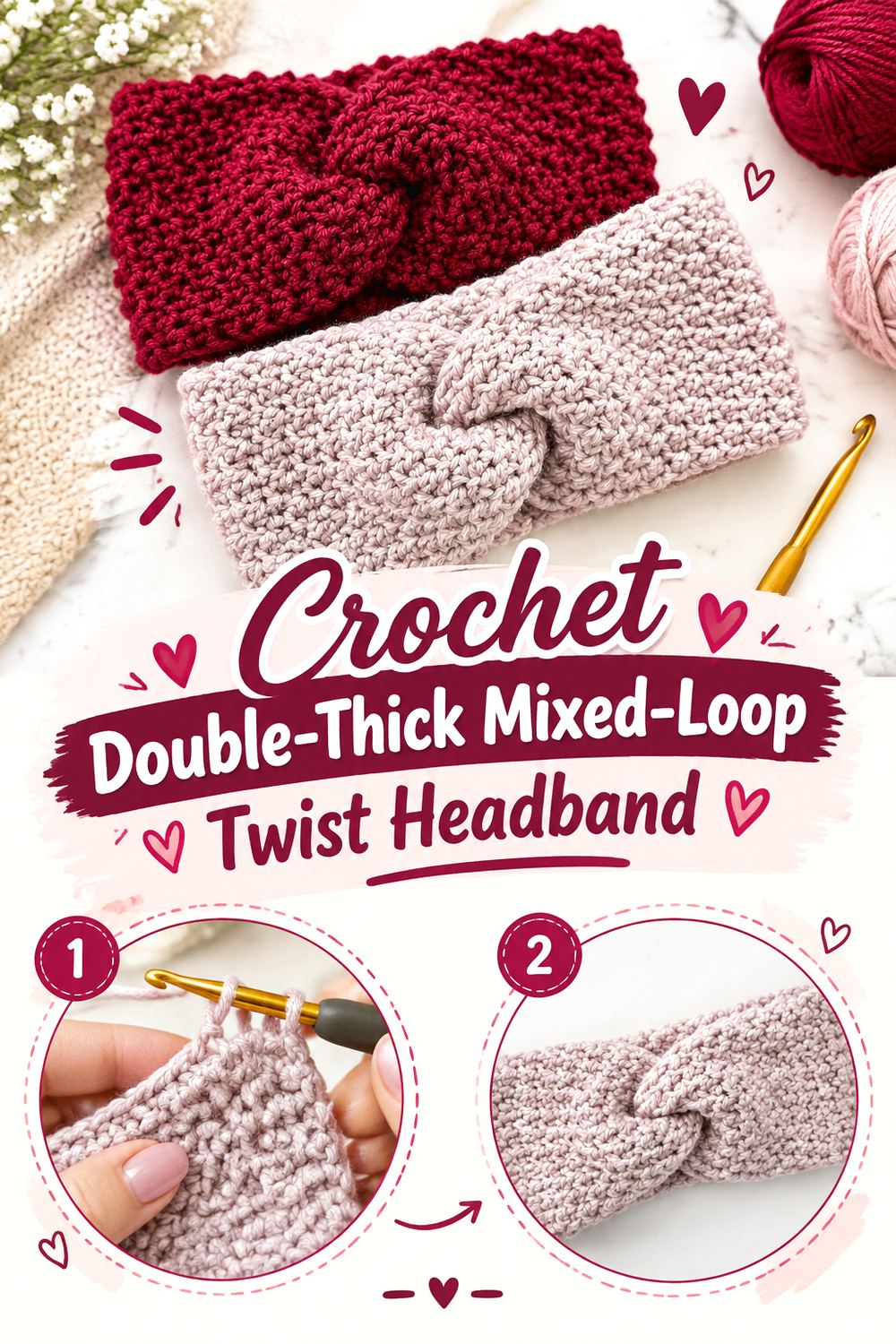
Daisy Farm Crafts builds this winter headband as a continuous tube, alternating front-loop and back-loop half double crochet to create its surface texture. The source specifically describes the construction as double thick and recommends using an accurate head measurement for the best fit before forming the twist.
The visual interest is quieter than plaid or tapestry crochet, yet the alternating loops prevent the fabric from looking flat. Its defining difference is structural: the tube creates a substantial ear-covering band before the ends are folded together into the front twist.
Measure the Tube in Its Finished State
Long tubular pieces can look misleading while they are lying relaxed on a table. Before closing the twist, check both circumference and width against the intended wearer. The tutorial’s own sizing discussion accounts for the fabric being shorter than the head circumference, but the exact amount that works for you depends on whether your yarn and tension stretch similarly.
Keep the Continuous Rounds Consistent
Alternating front and back loops creates the intended surface only when the sequence stays orderly. If you lose track, inspect the texture several inches back rather than discovering the shift at the final seam. A removable stitch marker can also help identify the beginning area even when the construction does not use a conventional joined-round seam.
Control the Bulk at the Twist
Four folded layers meet during the twisted seam. That is where an unnecessarily heavy yarn substitution is most likely to show. Before sewing permanently, hold the folded ends together and assess both appearance and comfort. If the front feels too bulky, the better solution may be returning to a yarn closer to the specified weight rather than compressing the seam excessively.
Original Tutorial and Creator Credit
Creator/Site: Daisy Farm Crafts
5. Crochet Plaid Three Finish Winter Ear Warmer
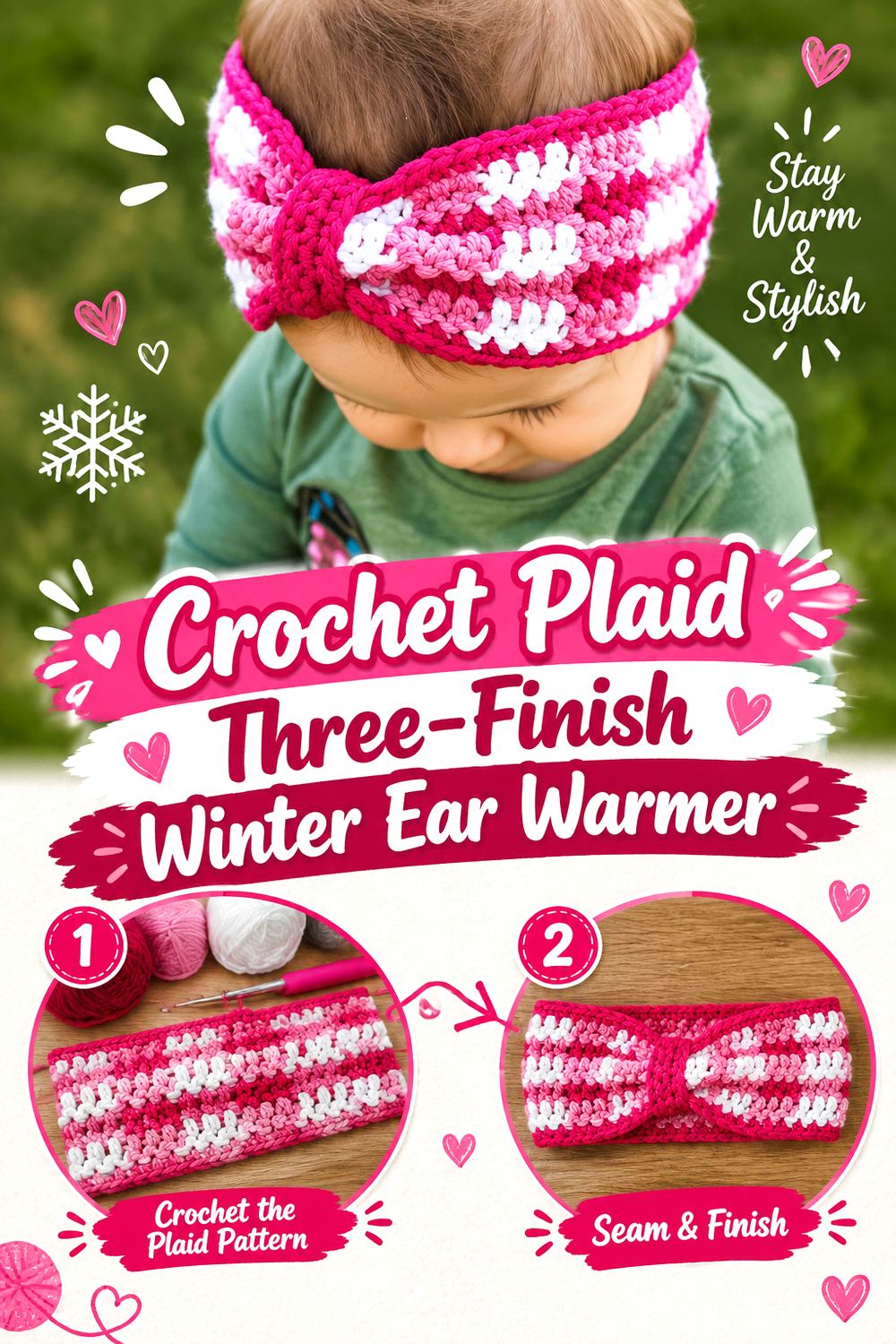
Instead of making color the only variation, this plaid design offers multiple ways to finish the same basic crocheted band. Winding Road Crochet presents wide, twisted, and cinched treatments, allowing the maker to decide how prominent the center shaping should be after completing the plaid fabric.
That flexibility gives this project a different role from a headband whose construction permanently dictates its silhouette. The plaid itself provides strong winter character, while the finishing choice can move the result from relatively straight and understated to more gathered or sculptural.
Keep Plaid Color Changes Visually Clean
Plaid depends on repetition and alignment more than random multicolor crochet does. When choosing your own palette, use colors that remain distinct enough to preserve the intended checks. Keep color changes and carried strands consistent so one section does not become noticeably tighter than another.
Choose the Finish After Checking the Fabric
A cinch, twist, and plain wide finish distribute fabric differently around the forehead. Before completing the final treatment, temporarily hold each shape in place and compare both appearance and comfort. The option that looks most dramatic flat may not be the one you prefer under a hood or with your usual hairstyle.
Original Tutorial and Creator Credit
Creator/Site: Winding Road Crochet
6. Crochet Sculpted Overlap Twist Headband
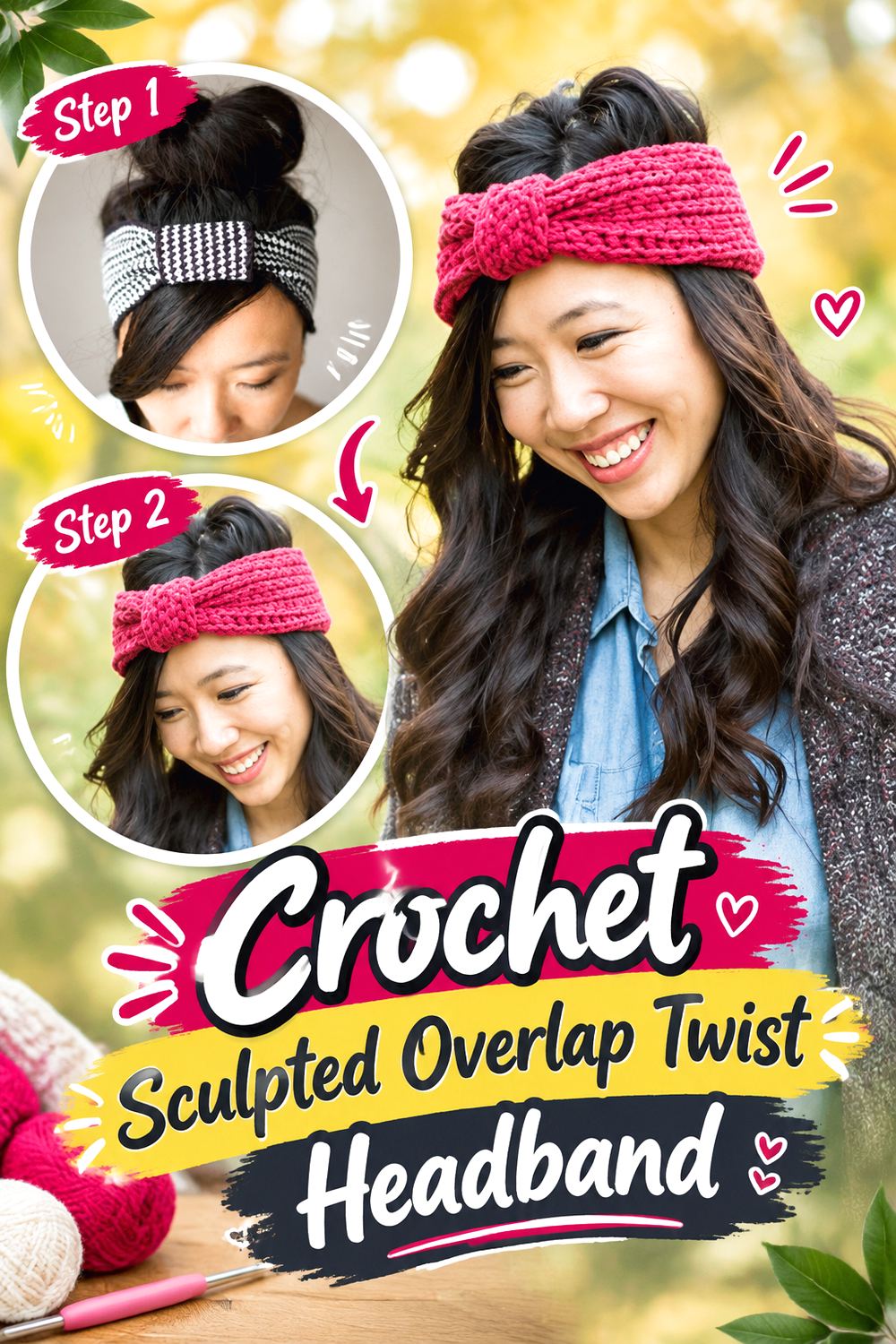
All About Ami takes a different approach to the popular twisted headband. The project begins as one unusually long strip, then the fabric is overlapped, twisted, and sewn into a dimensional center arrangement. The tutorial uses bulky yarn and recommends checking the developing strip against the intended head after the first row because stretch will affect the finished fit.
This is a good choice when the front treatment is meant to be the star of the accessory. Rather than a small cinch, the design creates broad folds that cross and overlap, giving the headband a sculptural appearance from several angles.
Test the Twist Before Final Seaming
The front shaping consumes part of the effective length. A flat strip that appears comfortably long may fit differently once folded and overlapped. Arrange the full twist temporarily and place it around the wearer—or around an appropriately sized form—before committing to the long seam.
Keep Sewing Tidy Around the Overlap
Because the construction brings multiple sections together, seam visibility matters more than on a plain back-seamed band. Match sewing yarn to the project and avoid tightening stitches so aggressively that they create puckering. The source itself changes sewing treatment near the overlapping front to help preserve the visual effect.
Consider Hairstyle and Forehead Bulk
The broad twist makes a stronger statement than a narrow gathered center. That can work particularly well with hair worn up because the top remains open, but the extra fabric across the forehead may feel substantial under a close-fitting hood. Styling context is worth considering before choosing this over a flatter design.
Original Tutorial and Creator Credit
Creator/Site: All About Ami
7. Crochet Minimal Cinched Winter Headband
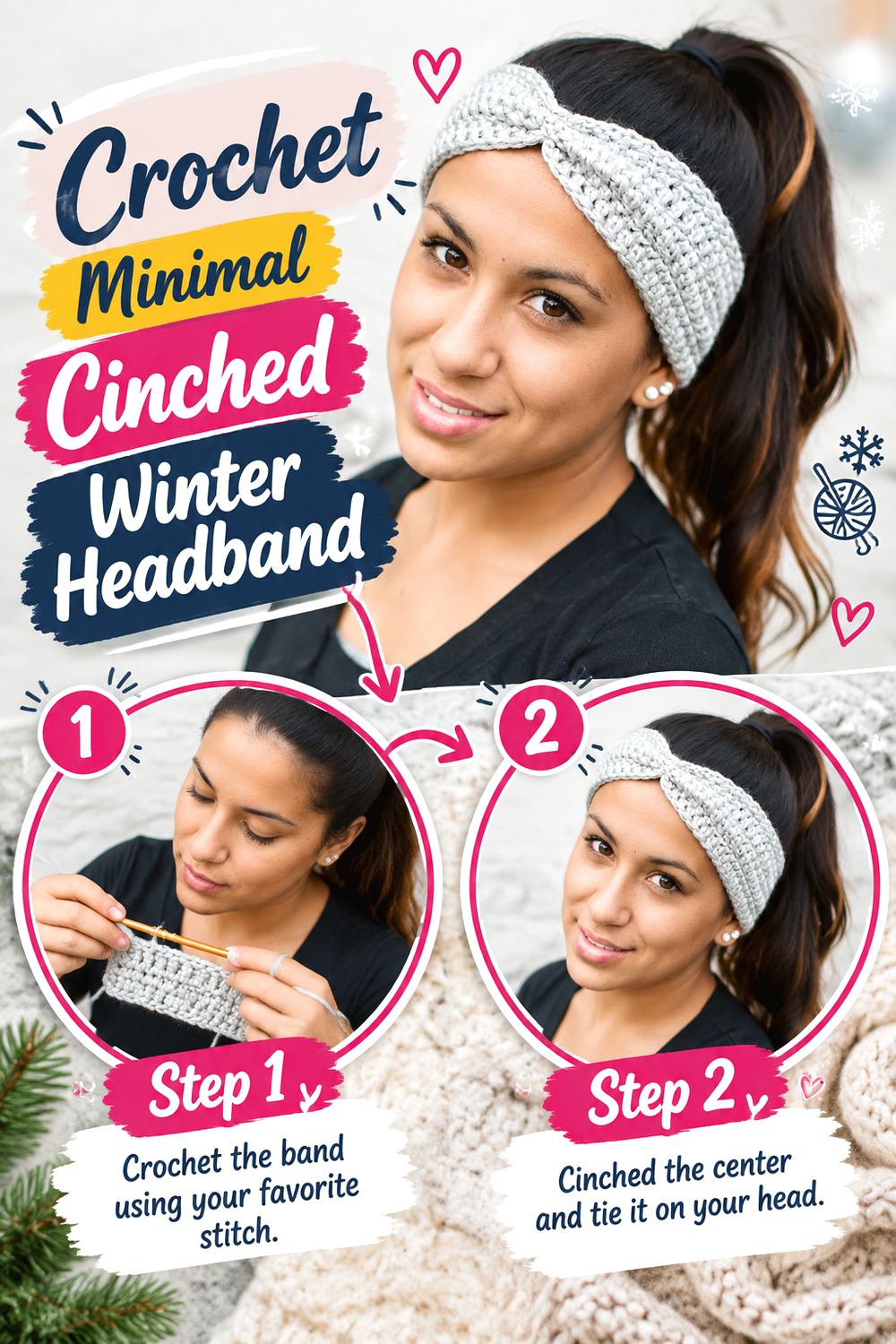
A cinched front gives this Yarn + Chai design a noticeably cleaner silhouette than the larger faux bows and twists elsewhere in the list. The crocheted ring is gathered at one point, creating a compact indentation that the designer notes can be worn at the top, shifted to the side, or positioned underneath a ponytail.
That positioning flexibility makes this project appealing when you want an ear warmer to work with several hairstyles rather than always presenting a prominent center ornament. Its shape is recognizable but relatively restrained, so solid or softly variegated yarn can remain the main visual element.
Check the Circumference Before Cinching
Gathering changes the local shape but does not compensate for a band that is fundamentally too loose or too tight. Before securing the cinch, make sure the circular band sits comfortably over the ears without needing the gathered point to hold it in place.
Decide Where the Gather Will Be Worn
If you expect to wear the cinch beneath a ponytail, check that the gathered area does not create an uncomfortable bump at the back of the head. If it will sit at the forehead, confirm that the fold is neat and symmetrical before securing it permanently.
Original Tutorial and Creator Credit
Creator/Site: Yarn + Chai
8. Crochet Double Thick Tunisian Knit Look Headband
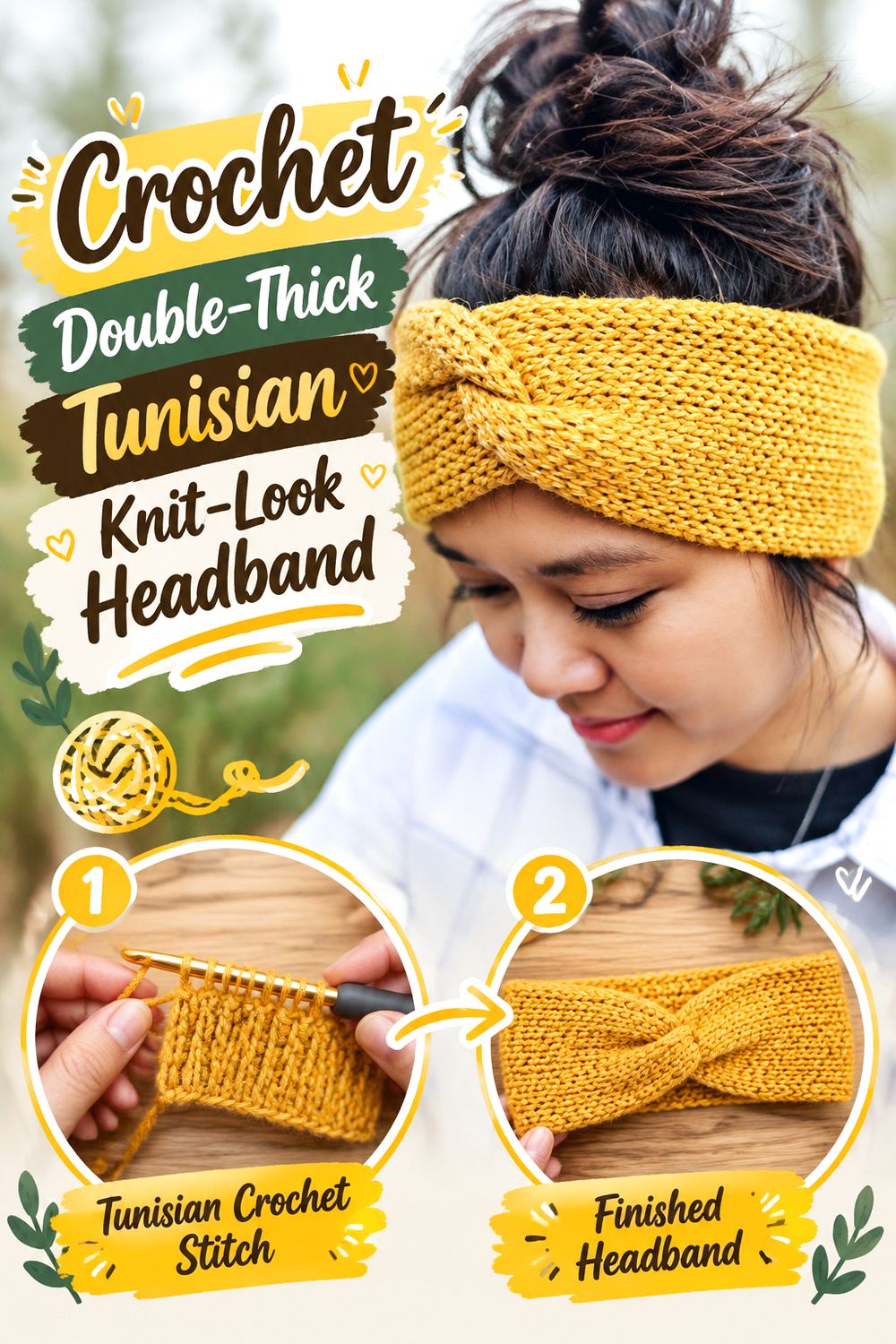
One Dog Woof combines a familiar front twist with Tunisian crochet fabric that has a knit-like visual character. The designer describes the project as double thick and uses a DK-weight cotton-and-baby-alpaca blend in the sample, giving this option a noticeably different fabric identity from conventional half-double-crochet twist bands.
The result works well for someone who likes the smooth vertical appearance often associated with knit fabric but wants to stay within crochet techniques. Its broad folded construction also provides a substantial winter profile without needing buttons or contrast-color motifs.
Give Tunisian Tension Extra Attention
A twist makes differences in fabric tension more visible because the front folds sit beside one another. If one part of the strip is noticeably narrower or firmer, it can affect the symmetry of the finished center. Periodically lay the work flat and compare its width rather than waiting until assembly.
Think Beyond Yarn Weight When Substituting
Matching DK weight does not guarantee matching fabric. Fiber content affects softness, drape, stretch, and recovery, all of which matter in a fitted double-thick accessory. Swatch the Tunisian fabric and fold it over itself; that reveals more about the final thickness than a single-layer gauge swatch alone.
Keep the Back Comfortable
Front styling naturally gets most of the visual attention, but the back seam bears directly against the head. Join the ends securely without creating a hard ridge. Weave ends through enough fabric to hold them while avoiding a bulky cluster in one small spot.
Original Tutorial and Creator Credit
Creator/Site: One Dog Woof
9. Crochet Snowflake Tapestry Winter Headband
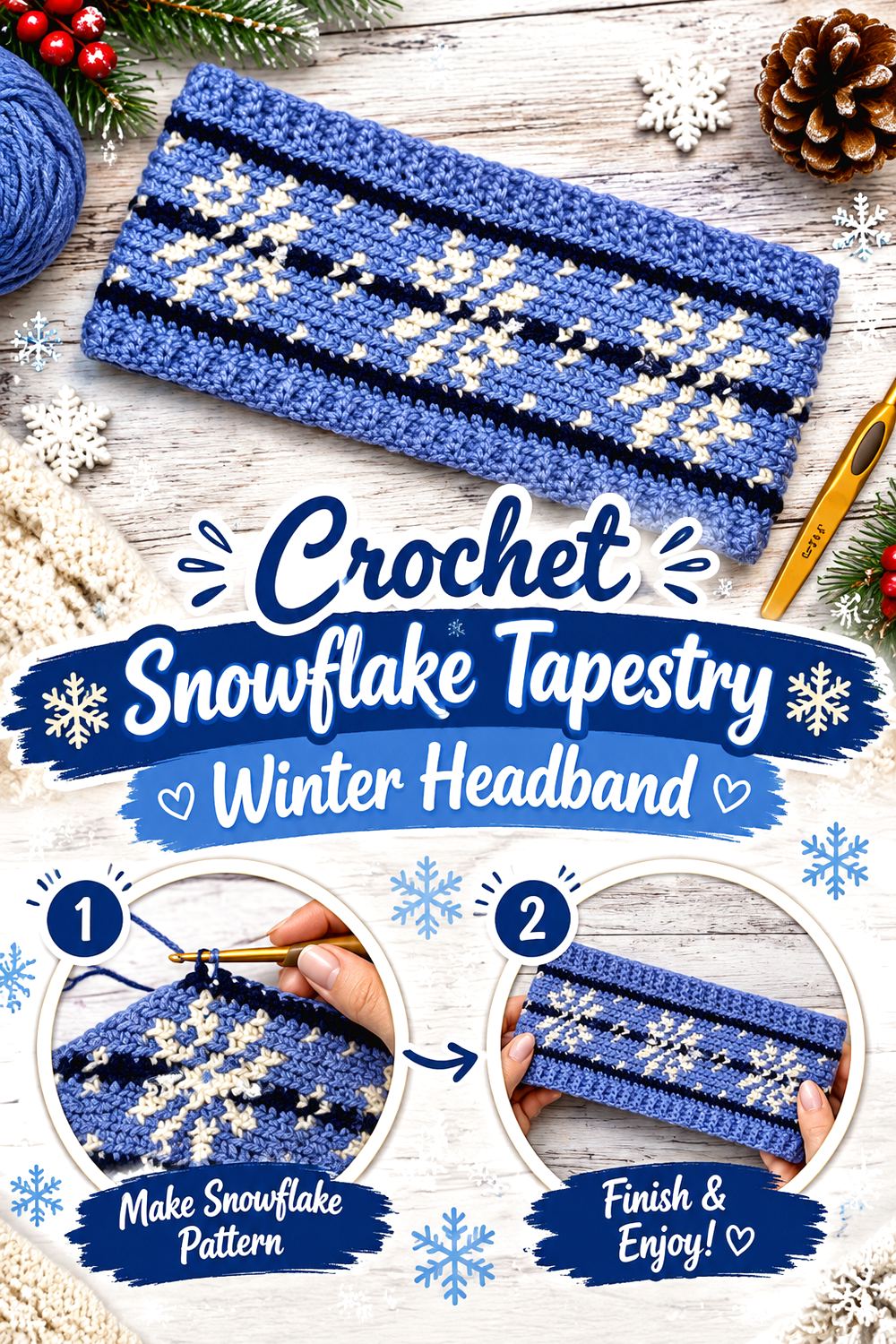
This snowflake ear warmer brings an unmistakably seasonal motif into the collection. Love. Life. Yarn. combines a contrasting tapestry-crochet snowflake area with ribbed edging, and the original project works in both rows and rounds. The designer carries unused colors within the work during the charted section and provides a finished adult-size reference in the tutorial.
Unlike a headband whose identity comes mainly from a twist or bow, this project depends on crisp motif visibility. It is therefore especially appealing for makers who enjoy chart-based colorwork and want a winter design that reads clearly even when the overall silhouette stays simple.
Preserve the Snowflake Proportions
Changing gauge can affect more than circumference in a charted design: it also changes the motif’s apparent proportions. If your stitches are unusually tall, narrow, tight, or loose, make a small colorwork sample first and compare the visual result before working the entire headband.
Manage Carried Yarn Without Puckering
Tapestry crochet can become distorted when the unused strand is carried too tightly. The fabric should remain able to stretch as intended even after the contrasting yarn is enclosed. Occasionally spread the completed stitches along the carried strand to confirm that it has not shortened the fabric.
Let the Motif Determine Color Contrast
The snowflake needs enough separation from the background to remain recognizable. You do not necessarily need extreme contrast, but very similar values may soften the design. Viewing candidate yarns in grayscale with a phone camera is a simple way to judge value contrast before committing.
Original Tutorial and Creator Credit
Creator/Site: love. life. yarn.
10. Crochet Double Layer Diamond Texture Headband
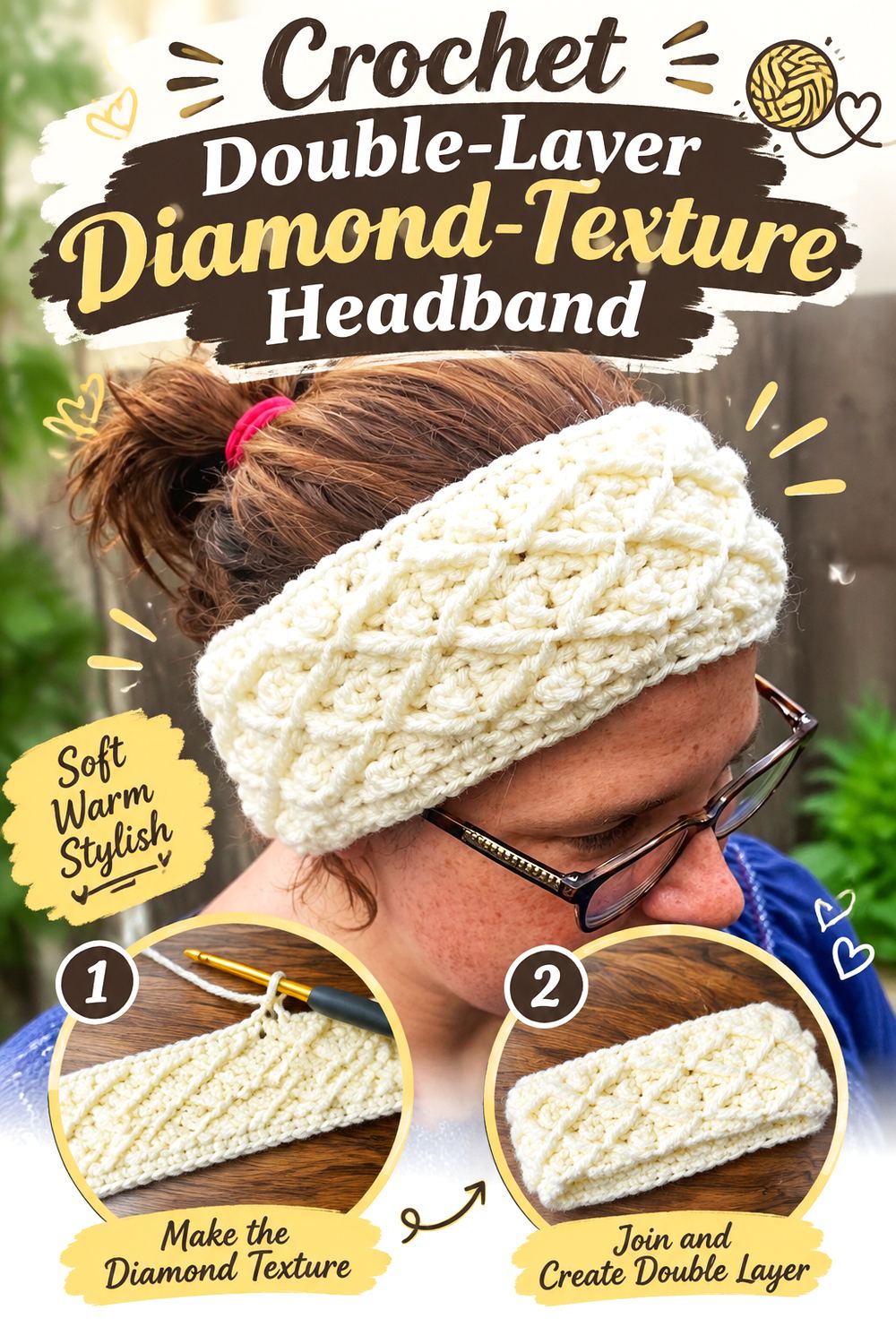
Raised texture rather than colorwork defines this Rich Textures Crochet design. The original Diamond in the Rough headband is made as two pieces that are crocheted together, creating a double-thick winter accessory with a pronounced diamond surface.
That two-piece structure separates it clearly from tubular headbands. It can deliver a similarly substantial result while showcasing a more architectural stitch pattern. For a solid-color project, the shadows formed by the textured surface provide much of the visual interest, making yarn definition more important than elaborate color changes.
Choose Yarn That Shows the Diamond Surface
Highly fuzzy or heavily variegated yarn can obscure raised texture. If the stitch pattern is your main reason for choosing this project, compare how clearly the yarn displays relief in a small swatch. A beautiful skein is not necessarily the best match for a detail-heavy surface.
Match the Two Layers Carefully
When separate crocheted pieces are joined, small differences in length or width can produce rippling at the edges. Compare the sections before assembly and correct obvious discrepancies while they are still easier to address. Blocking may help with minor shaping depending on the chosen fiber, but it should not be expected to repair a major gauge mismatch.
Evaluate the Finished Thickness
Two-layer construction increases insulation but also creates more fabric around the head. That can be useful in cold conditions, yet it may be excessive for milder weather or very thick substitute yarn. Fold the sample fabric double when evaluating yarn choices so the decision reflects the actual construction.
Original Tutorial and Creator Credit
Creator/Site: Rich Textures Crochet
11. Crochet Reversible Houndstooth Winter Headband
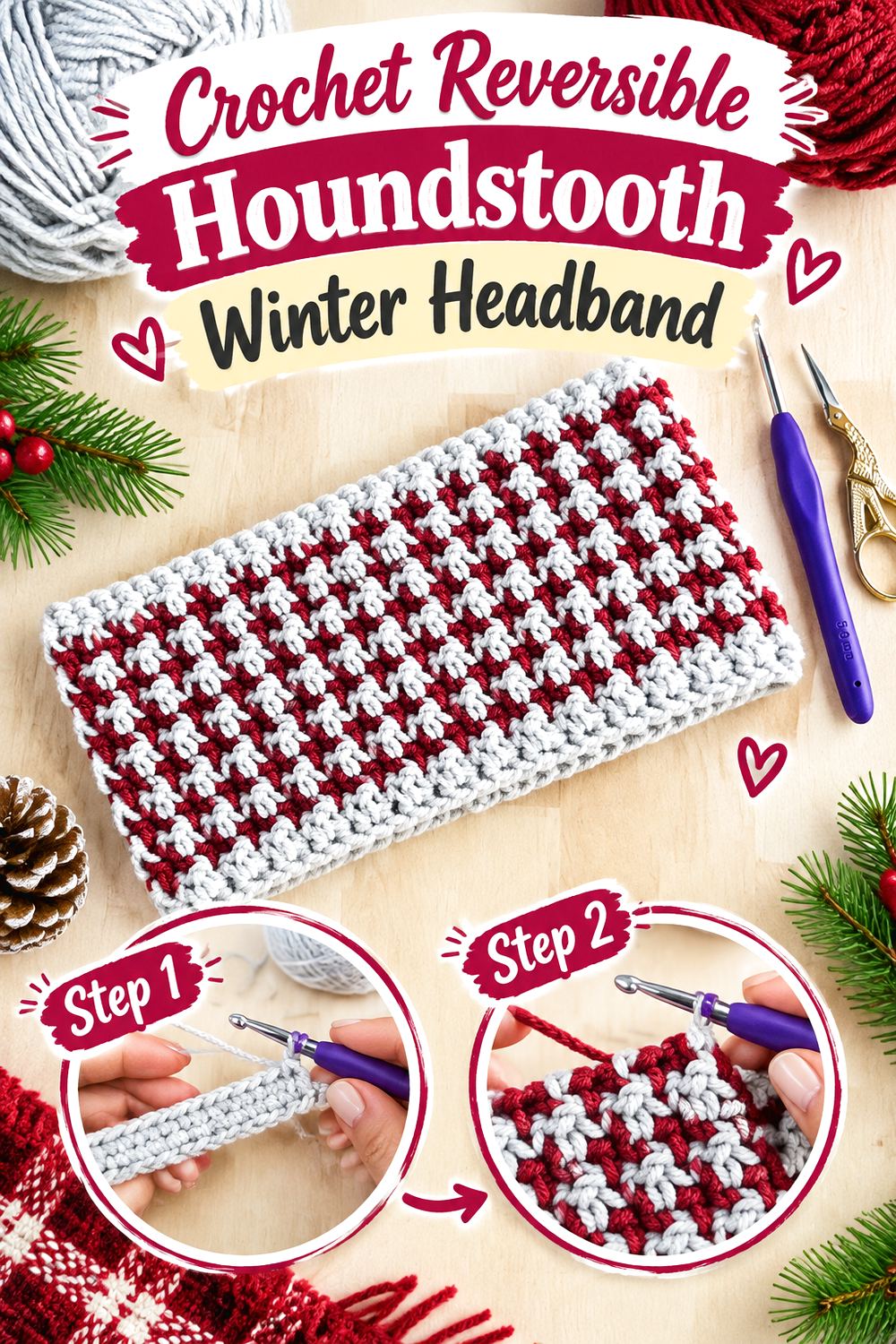
For graphic colorwork without a large centered motif, this My Crochet Space headband uses contrasting colors to create a houndstooth effect. The designer notes that the ear warmer is reversible, with the color balance appearing somewhat different from one side to the other, and explains that the stitch pattern is worked with alternating contrasting colors.
The small-scale repeat makes this design easier to coordinate with patterned winter coats than a large snowflake motif might be. It also offers visual interest all the way around the head rather than concentrating decoration at the front.
Pick Contrast With Both Sides in Mind
Because the headband is reversible, inspect your color pairing from both fabric faces. One shade may dominate more strongly on a particular side. That can be an advantage: instead of expecting two identical surfaces, treat the reversal as a subtle styling change.
Keep Color Transitions Consistent
Frequent alternating colors can expose inconsistent tension quickly. Maintain the same yarn-handling method throughout and check that changes are neither cinching the circumference nor leaving loose loops. A neatly managed transition area is especially important on a design intended to look presentable from either side.
Preserve Enough Stretch for Wear
A colorwork pattern can feel firmer if strands or transitions restrict movement. Test the developing fabric around the intended head before finalizing the circumference. If it looks correct but feels rigid, revisit tension rather than simply enlarging the entire headband.
Original Tutorial and Creator Credit
Creator/Site: My Crochet Space
12. Crochet Wide Bow Band Ear Warmer
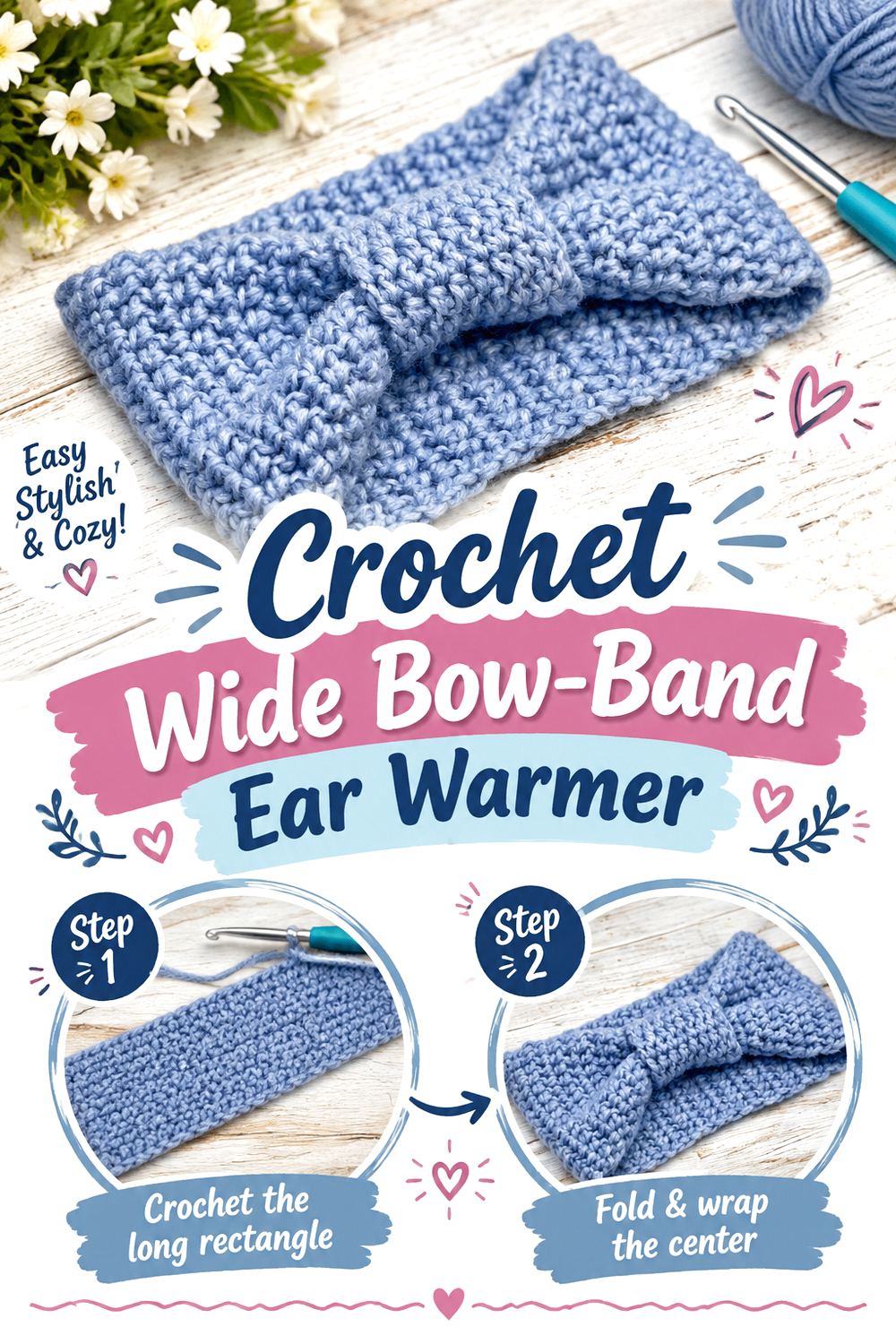
Through The Loop Yarn Craft’s Linley design emphasizes width and a separate center band rather than a folded twist. The original ear warmer is worked back and forth, seamed, and gathered beneath an additional crocheted band. It uses bulky yarn in the sample, and the free version gives an adult small/medium size while explaining how the circumference can be adjusted through the number of rows.
The silhouette is broad and softly gathered, making it noticeably different from narrow button accents or compact cinches. It is a strong option when ear coverage is a priority and you like a centered bow impression without constructing a literal bow.
Check Width Against Your Usual Outerwear
The source’s sample is intentionally wide. That can provide generous coverage, but consider how the lower edge will interact with glasses, high coat collars, or a tightly fitted hood. Width is part of the design rather than an incidental measurement, so reducing it may also change the overall gathered proportions.
Size the Center Band to the Fabric
If you substitute a thicker or thinner yarn, the main ear warmer may gather differently beneath the decorative wrap. Before sewing the center band shut, place it around the completed headband and make sure it holds the gather without crushing the fabric or sitting loose.
Original Tutorial and Creator Credit
Creator/Site: Through The Loop Yarn Craft
13. Crochet Star Stitch Twist Winter Headband
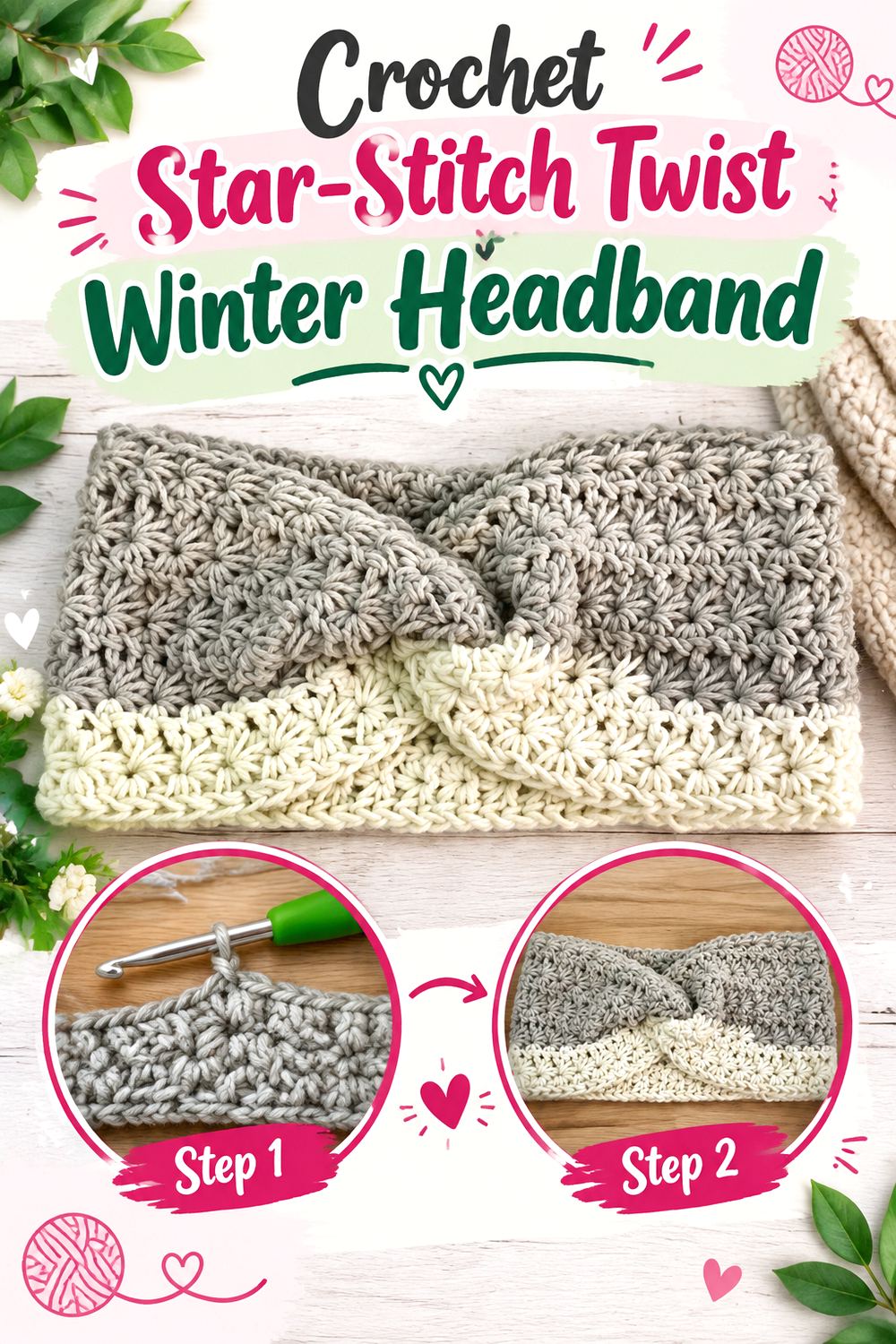
Rows of star-shaped texture give this headband a more intricate surface than basic ribbing. Carroway Crochet identifies the Starla Headband as an intermediate pattern because the star stitch has several steps, and the source provides three finished size options along with visual guidance for creating the final twist.
The stitch creates a dense decorative fabric, so the headband carries plenty of visual interest even in a single color. This makes it a useful bridge between simple twist ear warmers and more demanding charted colorwork: the challenge comes from stitch execution and tension rather than managing several yarn colors.
Keep the Star Loops Even
The designer specifically calls attention to maintaining even loop tension while forming the star stitch. Uneven loops can make individual stars look irregular and may gradually alter the width of the strip. Stop periodically to inspect several repeats together; overall consistency is easier to judge from a short distance than stitch by stitch.
Avoid Hiding the Texture With the Yarn
The star pattern already creates a busy surface. A highly textured novelty yarn or rapid multicolor print may compete with that structure. If the stars are the feature you want to showcase, a yarn with clear stitch definition will usually make the geometry easier to see.
Recheck Length Before Forming the Twist
The folded twist changes how the completed strip fits. Before seaming all layers permanently, arrange the twist and compare the resulting circumference with the intended wearer. This is particularly important if your star-stitch gauge differs from the tutorial’s reference fabric.
Original Tutorial and Creator Credit
Creator/Site: Carroway Crochet
14. Crochet Adjustable Puff Texture Ear Warmer
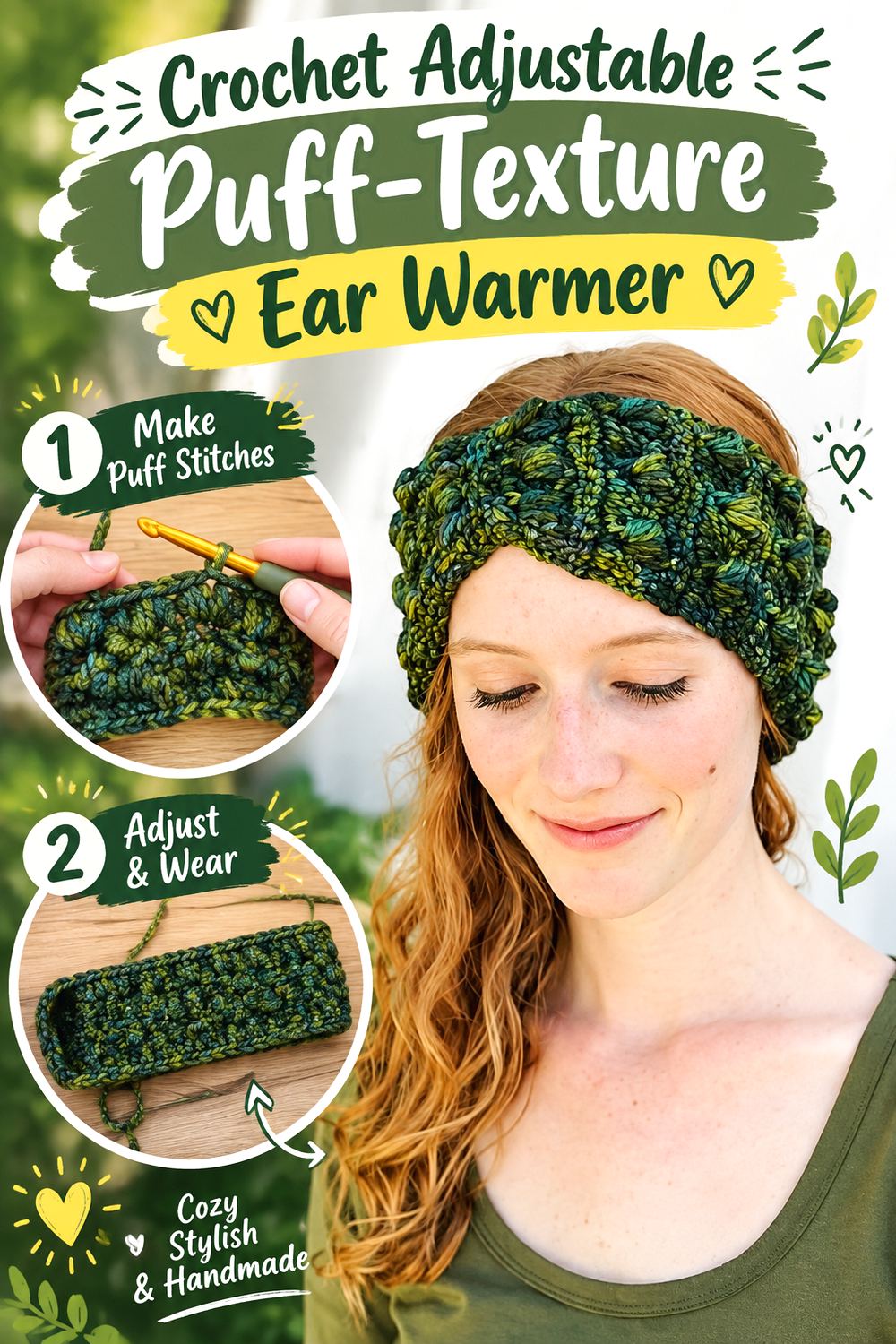
The Everglade ear warmer from Desert Blossom Crafts uses a long rectangular construction with raised front-post puff texture and a gathered front detail. Its major advantage is sizing flexibility: the designer explains how length can be continued until it fits the intended head and discusses several approaches to altering the width while preserving or changing the puff arrangement.
Compared with the smooth cinched design earlier in the list, this version makes the gathered area part of a much more dimensional stitch surface. It works especially well when you want texture to run across the band rather than limiting decoration to the finishing seam.
Adjust Length Before Changing Everything Else
When adapting the design, circumference is the simplest variable to evaluate because the rectangle can be wrapped around the intended head before seaming. Make that check first. Changing yarn weight, width, and stitch proportions simultaneously makes it much harder to identify why the finished fit has changed.
Preserve the Puff Layout When Resizing Width
The tutorial notes that width changes can alter the number or arrangement of textured puff sections. If that texture is the feature you want to preserve, do not casually add stitches without considering the stitch multiple. Follow the designer’s adjustment discussion rather than treating the fabric like a plain rectangle.
Original Tutorial and Creator Credit
Creator/Site: Desert Blossom Crafts
Comparing the 14 Crochet Winter Headband Styles
For maximum visual texture, the star-stitch, diamond, puff, honeycomb, and mixed-loop projects place the crochet fabric itself at center stage. The snowflake, houndstooth, and plaid options are better fits when color changes are part of the appeal. Readers prioritizing substantial construction can look first at the double-layer faux bow, mixed-loop tube, Tunisian twist, or diamond-texture designs.
For a simpler silhouette, the cinched Yarn + Chai headband and button-scrunched Aspen-inspired version keep the focal area relatively compact. The All About Ami twist is at the opposite end of that spectrum, using broad overlapping fabric for a stronger sculptural effect. If uncertain sizing is the main concern, the Everglade’s try-as-you-go rectangular format deserves particular attention.
Conclusion
These 14 crochet winter headband ideas show how much variety can fit into one small cold-weather accessory. You can choose a dense double layer for more substantial coverage, a compact cinch for understated styling, raised stitchwork for texture, or plaid, houndstooth, and snowflake colorwork when you want the fabric pattern to make the statement.
Before choosing, think about where the headband will be worn, how much stretch your yarn provides, the amount of bulk you want around the forehead, and whether you can measure the intended wearer. Those practical questions usually narrow the list faster than color alone. Once you have picked a style, use the linked original tutorials for the creator’s exact construction, stitch, sizing, and finishing details.
Frequently Asked Questions
How much smaller should a crochet winter headband be than the wearer’s head?
There is no universal amount because negative ease changes with yarn, stitch pattern, gauge, and construction. A stretchy single-layer band may need different sizing from a firm Tunisian or double-thick design. Start with the specific tutorial’s sizing method, measure the head where the band will actually sit, and test the developing fabric when possible. Do not transfer an adjustment from one headband pattern to another unless their fabric behaves similarly.
Which crochet headband construction is warmest for winter?
A broad, dense, double-layer fabric will generally provide more coverage than a narrow open fabric, but no construction can guarantee warmth in all conditions. Double-thick tubular or two-layer designs are useful options when substantial coverage is the priority. Yarn fiber, fabric density, wind exposure, and how completely the headband covers the ears also matter. For severe weather, a headband should not automatically be treated as a substitute for more protective winter headwear.
Can I substitute a different yarn weight in these winter headbands?
Only when the pattern can accommodate the resulting gauge and fabric changes. Moving to a heavier yarn can increase thickness and alter circumference, while lighter yarn may produce a narrower or more flexible fabric. Some sources, such as TL Yarn Crafts’ Honeycomb ear warmer, specifically discuss multiple yarn weights, but that does not mean every tutorial does. When substitution guidance is absent, swatch and compare gauge, stretch, thickness, and recovery before proceeding.
Are twist headbands harder to size than straight ear warmers?
They can require an extra checkpoint because the twist or overlap consumes and redistributes fabric at the front. A flat strip that seems long enough does not always feel identical after the final shaping. Arrange the twist temporarily before sewing and check the effective circumference. Straight rectangular bands can sometimes be simpler to evaluate because they can be wrapped directly around the head before joining, as the Everglade tutorial demonstrates.
Should a crochet winter headband cover the entire ear?
For an ear-warmer function, the band should provide enough width to cover the area you personally need protected without interfering uncomfortably with glasses or movement. There is no single correct width for every wearer. A wider design such as the Linley or Everglade offers more coverage than a narrow decorative hair band, but fit, yarn thickness, and intended conditions still matter.
How should crochet winter headbands be washed?
Follow the care instructions for the actual yarn and any additional materials used rather than applying one washing rule to every project. Buttons, mixed fibers, decorative hardware, and unusual yarn constructions may affect care. If the original tutorial provides project-specific guidance, use it alongside the yarn manufacturer’s label. When in doubt, avoid assuming that two yarns in the same weight category have identical washing, drying, or heat tolerances.