12 Crochet Bat Motif Sweater Ideas: Winged Silhouettes and Gothic Details
A crochet bat sweater can take the theme in more than one direction. Some designs create the bat effect through deep dolman sleeves and sweeping underarm fabric, while others use lace, dark texture, strong shoulder lines, or dramatic color placement to reinforce the winged look. That difference matters because the silhouette affects fit and yarn behavior much more than simply choosing black yarn.
The source-backed ideas below concentrate on sweaters and sweater-like layers whose construction genuinely creates a batwing or winged profile. They range from two-panel pullovers and cuff-to-cuff garments to a nearly seamless top-down design and a crescent-shaped sweater-poncho. If you want literal bat silhouettes as surface decoration, treat that as a separate embellishment choice rather than assuming the linked garment tutorial includes a bat chart or appliqué.
Quick List
- Crochet Airy Mesh Batwing Sweater with Deep Waistband
- Crochet Braided-Puff Batwing Sweater with Hip-Led Fit
- Crochet Seamless Batwing Pullover with Rounded Hem
- Crochet Scrap-Stripe Batwing Sweater
- Crochet Lace-Shoulder Batwing Sweater
- Crochet Sleek Long-Cuff Batwing Sweater
- Crochet Fitted-Waist Dolman Bat Sweater
- Crochet Crescent-Lace Batwing Swancho
- Crochet Cuff-to-Cuff Batwing Sweater
- Crochet Rainbow Open-Stitch Batwing Sweater
- Crochet Ribbed-Trim Batwing Sweater
- Crochet Diamond-Construction Batwing Pullover
What “Bat Motif” Means for a Crochet Sweater
A literal bat graphic is only one way to make a sweater read as bat-inspired. For garments, the more important visual cue can be geometry: narrow wrists opening into a broad sweep of fabric under the arms creates the unmistakable winged outline associated with dolman and batwing sleeves. Lace running from neck to wrist can emphasize that span, while strong cuffs make the transition from wide “wing” to narrow forearm more obvious.
The tutorials below teach those garment structures. They do not all contain literal bat charts. If you want an actual bat silhouette on the finished sweater, consider a separately designed crochet appliqué, surface embellishment, or colorwork motif. Keep that addition light enough that it does not pull a drapey panel out of shape, and confirm its placement only after the sweater body is assembled or blocked.
Choose Fit from the Hem, Hips, and Wingspan—not Just the Bust
Batwing sweaters often have substantial room through the chest because sleeve width flows directly into the body. That means the bust measurement alone may not tell you where the garment will actually feel fitted. Some designs deliberately use the hips or lower band as the controlling measurement; others rely on the overall cuff-to-cuff span or a loose rectangular body.
Before beginning, compare the tutorial’s finished measurements or sizing method with the point where you want the sweater to sit. Also consider what will be worn underneath. A fitted waistband over a dress behaves differently from a relaxed hem layered over a shirt. For cuff-to-cuff designs, sleeve span deserves equal attention: extra body ease does not automatically provide the sleeve length you want.
Yarn Weight Changes the Wing More Than You Might Expect
Wide sleeves put a large area of fabric under gravity. A yarn substitution that creates a heavier or looser fabric can therefore affect both sleeve drop and body length. A lightweight, open fabric tends to emphasize movement; denser stitches can create stronger structure but may add noticeable weight across a large batwing panel.
Swatch for fabric behavior as well as stitch gauge. Hold the swatch vertically for a while and look at how it elongates. This is particularly useful for sweaters with deep underarms, substantial cuffs, or large rectangular panels. If you plan to add a crocheted bat appliqué later, include the embellishment yarn in your evaluation—the extra layer may be more noticeable on lace or very soft fabric.
1. Crochet Airy Mesh Batwing Sweater with Deep Waistband

This version makes the bat shape through gradually widening panels while keeping the fabric visually light. Lulo Stitch Co’s Adelyn design uses two matching pieces and a double-crochet moss-stitch fabric, with a substantial lower waistband giving the loose upper section a defined stopping point. The combination works well when you want noticeable wing volume without an equally bulky torso.
For a gothic interpretation, the structure would suit a dark solid, muted gradient, or controlled contrast at the waistband. The original source specifies a Category 3 yarn, which supports the airy character of the fabric rather than turning the broad sleeves into a very heavy layer.
Let the Waistband Control the Silhouette
A deep, more stable lower band can visually contain the expanding batwing section. Before deciding whether to lengthen the body, consider where that band will land on the wearer. Moving it farther down changes both the proportion of the wings and how much fabric must hang above the hips. If you substitute yarn, compare the waistband and mesh swatches together; two stitch sections can react differently even when made from the same fiber.
Plan Any Bat Decoration Around the Mesh
A large, dense appliqué can interrupt the movement of an open fabric. If you want a literal bat motif on this style, a smaller accent near a relatively stable area may preserve the sweater’s drape better than covering a large section of the wing. Another option is using color placement rather than added layers. This is an adaptation decision, not part of the linked sweater tutorial, so arrange the finished garment flat before committing.
Original Tutorial and Creator Credit
Creator/Site: Lulo Stitch Co
2. Crochet Braided Puff Batwing Sweater with Hip Led Fit

The Azalea design gives the winged shape a much stronger textural focal point. Two bottom-up panels widen into batwing sleeves, while a braided puff-stitch section travels across the upper sweater and neckline. The result is less minimal than a plain dolman and offers a useful direction for readers who want their bat-inspired sweater to rely on texture rather than a printed-looking graphic.
Ned & Mimi also bases size selection on the hip area because the batwing construction naturally creates more room at the bust. That makes this a particularly useful reference when you want a sweater that appears expansive across the upper body but remains intentionally controlled at the lower edge.
Measure the Place That Actually Holds the Sweater
The source specifies relatively close hip ease and explains that the bust is naturally loose. That distinction is important. Choosing a larger size only because you want more chest room can also enlarge the hem beyond what you intended. Compare the finished hip dimensions with your preferred fit first, then assess whether the built-in upper-body volume already gives the look you want.
Keep the Puff Section from Dominating the Drape
Dense textured stitches and simpler body stitches do not always produce identical fabric behavior. Ned & Mimi specifically discusses a different gauge in the puff section and the possible use of another hook size. If substituting yarn, swatch both areas rather than assuming one successful gauge check covers the entire sweater.
Use the Upper Texture as the Visual “Wing Bone”
For a bat-themed interpretation, the strong band across the shoulders can do the visual work that a literal bat graphic would otherwise provide. Dark-on-dark texture, a slightly contrasting puff section, or a restrained tonal shift could emphasize the wing span without adding appliqué weight. Keep any customization subordinate to the pattern’s gauge requirements because the textured section also affects actual garment dimensions.
Original Tutorial and Creator Credit
Creator/Site: Ned & Mimi — Sarah Ruane
3. Crochet Seamless Batwing Pullover with Rounded Hem
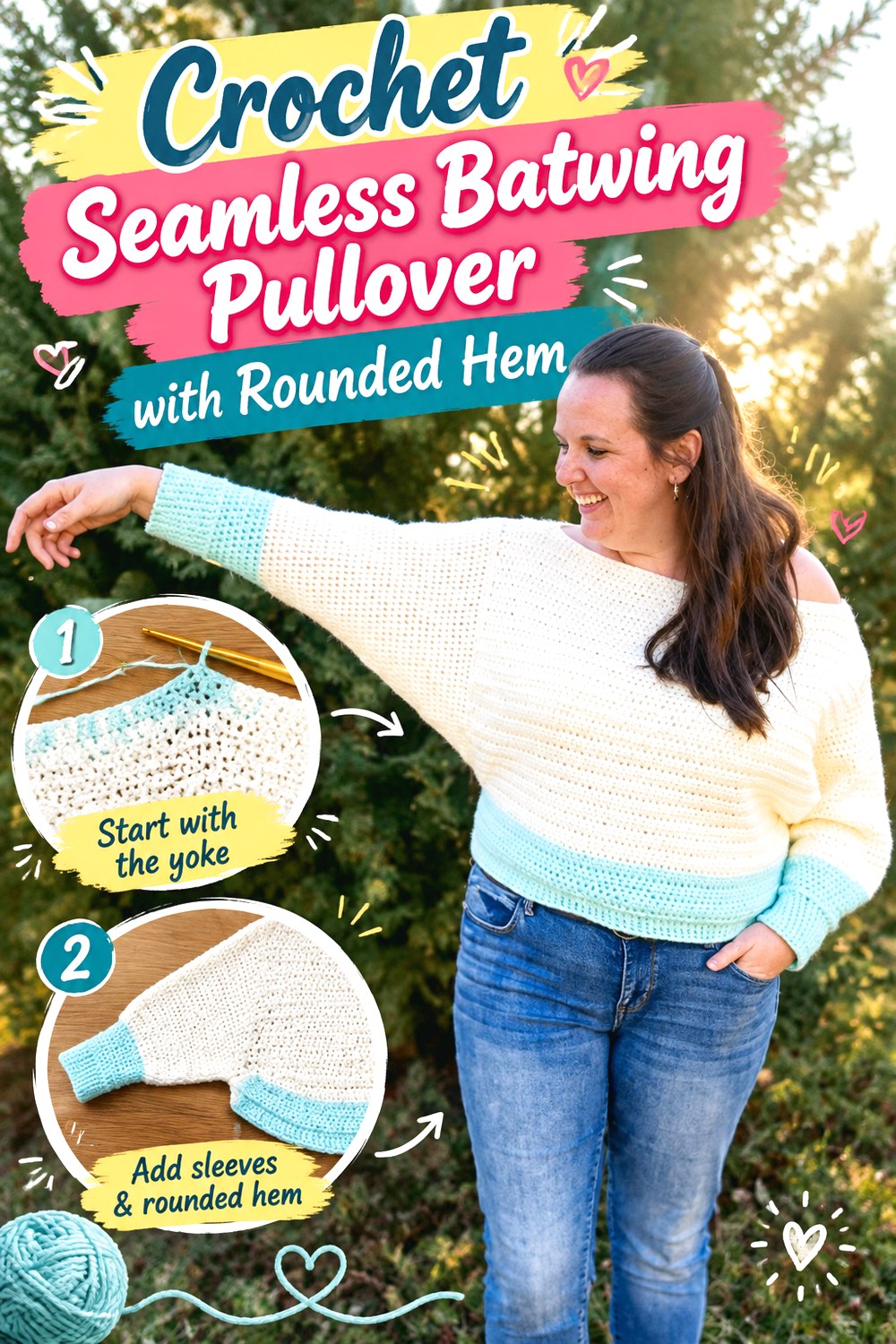
Fosbas Designs approaches the wide-sleeved sweater differently from the typical pair of separate panels. The main front and back sections are formed together with the neckline created within that larger piece, while the lower band and sleeves are added afterward. The designer describes the garment as having no sewing throughout its construction.
That makes this idea appealing when the winged outline interests you but long shoulder and side seams do not. Visually, it can still give a broad bat-inspired upper body, yet its assembly logic is quite different from the panel-heavy projects elsewhere in this list.
Check the Neck Opening Before the Fabric Gets Heavy
When much of a sweater is already connected, the neckline becomes an important early checkpoint. Lay the work flat and compare the opening with a sweater whose neck fit you already like. Also remember that a large developing batwing piece may pull differently once more fabric is added. Avoid judging the opening only while the project is small and unsupported.
Watch the Lower Band for Unexpected Gathering
A fitted or narrower waistband can bring the wide upper fabric inward and create the characteristic bloused shape. If your substitution is noticeably more elastic or less elastic than the source yarn, that transition may look different. Swatch the stitch used for the lower band as well as the body, and compare relaxed dimensions rather than stretching the band to force a particular measurement.
A Seamless Base Can Suit Minimal Bat Styling
Because there are fewer major garment seams interrupting the surface, this concept can work well for a restrained gothic palette or a single centrally placed embellishment. If adding a literal bat motif after construction, pin or baste it temporarily while the sweater is hanging naturally. Placement that looks centered on a flat table may shift visually once the broad sleeves are extended.
Original Tutorial and Creator Credit
Creator/Site: Fosbas Designs
4. Crochet Scrap Stripe Batwing Sweater

Dora Does designed the Stash to Treasure sweater around leftover yarn, making color variation part of the garment rather than an afterthought. The source describes a simple two-panel batwing sweater using half double crochet and chains, with back-loop work at the cuffs and hem. It is written across multiple adult sizes and was conceived specifically as a stash-using project.
That immediately creates a different bat-motif direction: instead of a single Halloween black, the wings can become a controlled field of narrow color changes. Deep plum, gray, charcoal, rust, and muted violet could keep the mood atmospheric while still using many partial skeins.
Sort Scraps by Behavior, Not Only Color
Leftover yarns labeled with the same weight can still vary in elasticity, twist, fiber, and actual thickness. In a broad batwing panel, those differences may create stripes that pull inward or flare outward. Before committing a small leftover ball, work a short sample beside the neighboring yarn. Similar fabric density matters more than achieving a perfectly matched label description.
Let Stripe Placement Support the Wing Shape
Horizontal color changes can make the sweater look wider, which may be an advantage when the goal is a dramatic bat silhouette. If you prefer a subtler effect, keep high-contrast stripes concentrated away from the deepest part of the sleeve. Plan repeated accent colors before starting so the distribution looks deliberate even when the actual yarn quantities vary.
Original Tutorial and Creator Credit
Creator/Site: Dora Does
5. Crochet Lace Shoulder Batwing Sweater

Moogly’s Batwing Lace Sweater puts the decorative emphasis exactly where it can reinforce a bat-inspired silhouette: along the upper span from neckline toward the wrists. The design combines a relatively straightforward body with contrasting lace shoulders, and the two main sweater pieces are identical enough for the finished garment to be reversible.
This is a strong option when you want the “wings” to remain obvious even without a literal bat image. A dark body with a tonal lace insert can resemble skeletal wing structure more subtly than a large appliqué, while a contrasting insert makes the sleeve span the focal point.
Use Lace Placement to Draw the Eye Outward
Decorative shoulder lines naturally emphasize width. If your goal is a pronounced bat shape, keep the strongest visual contrast along that neck-to-wrist route. If you want a more everyday sweater, reduce the contrast and allow stitch texture rather than color to define the lace. Either approach preserves the source construction while changing the intensity of the theme.
Make Matching Pieces Before Perfect Seams
With two large corresponding pieces, the quickest fit check is also one of the simplest: lay them directly on top of each other before joining. Differences can arise from tension, yarn joins, or how the fabric was stored between sessions. Correcting a discrepancy before shoulder assembly is generally easier than trying to disguise an uneven hem or sleeve after finishing.
Remember That Openwork Changes Embellishment Choices
Lace is not an ideal foundation for every added motif. A heavy crochet bat attached across an open shoulder section may distort the spaces. If you want literal bats as well as the winged silhouette, keep any sewn embellishment on a denser portion of the garment or use a lightweight surface detail that does not bridge large open areas.
Original Tutorial and Creator Credit
Creator/Site: Moogly — Tamara Kelly
6. Crochet Sleek Long Cuff Batwing Sweater

Crazy Cool Crochet’s version makes shape, rather than stitch complexity, the main event. The source uses single crochet for the primary fabric and pairs very wide upper sleeves with long, narrow cuffs. That contrast produces a particularly clear batwing outline: expansive through the arm and sharply controlled toward the wrist.
This is one of the strongest silhouettes for a dark, graphic wardrobe because it does not need additional surface detail to communicate the wing shape. It also offers a useful counterpoint to airy mesh designs—the fabric reads as cleaner and more continuous, so proportion becomes especially important.
Check Cuff Comfort Before Finishing Both Arms
Long cuffs provide visual balance, but they also cover more of the forearm than a narrow wrist band. Check that the first completed cuff can move comfortably over the hand and sit where intended before duplicating it. Yarn with more recovery or less stretch than the source material can noticeably change this area even when the sweater body looks correct.
Consider Weight Across the Widest Point
A broad area of relatively solid crochet can become substantial depending on the yarn chosen. Drape a generously sized swatch or partial panel vertically rather than evaluating it only flat. If it noticeably lengthens under its own weight, expect that behavior to influence sleeve depth and body length once both panels and cuffs are assembled.
Original Tutorial and Creator Credit
Creator/Site: Crazy Cool Crochet — Sylvia Talo
7. Crochet Fitted Waist Dolman Bat Sweater

The Victoria Sweater from Two Brothers Blankets changes the construction direction again. Rather than making separate sleeves or two large flat panels, it is worked top-down, with increases creating the wide dolman sleeves as the sweater develops. The designer describes the body as wide through the sleeves but fitted around the waist.
That makes this a useful bat-inspired option for someone who likes wing volume but does not want the lower body to remain equally oversized. The contrast between a broad upper silhouette and a narrower waist can also make the wing line more dramatic when the arms are extended.
Try On Before the Waist Becomes the Anchor
Top-down construction can offer useful opportunities to evaluate proportion as the garment grows. Pay attention not only to bust circumference but also to where the deepest underarm point falls and how the developing waist sits. A wing that looks dramatic flat can feel more restrictive once the arms are lowered if the transitions are not where you expect.
Keep the Waist from Fighting the Upper Drape
The lower body should control the silhouette without pulling the entire sweater downward. If the fabric is heavier than expected, the wide sleeve sections may transfer more weight toward the narrower waist. Swatch vertically and consider whether a lighter yarn with similar gauge would preserve the intended relationship between upper volume and lower fit.
Let Shape Carry the Bat Theme
This construction already creates a strong visual bat reference, so elaborate decoration is optional. A nearly black brown, charcoal, aubergine, or deep forest tone can keep the garment wearable beyond Halloween while retaining the winged outline. If you add contrasting edging, remember that a high-contrast waistline will visually emphasize the fitted lower section as much as the sleeves.
Original Tutorial and Creator Credit
Creator/Site: Two Brothers Blankets — Michelle Ferguson
8. Crochet Crescent Lace Batwing Swancho
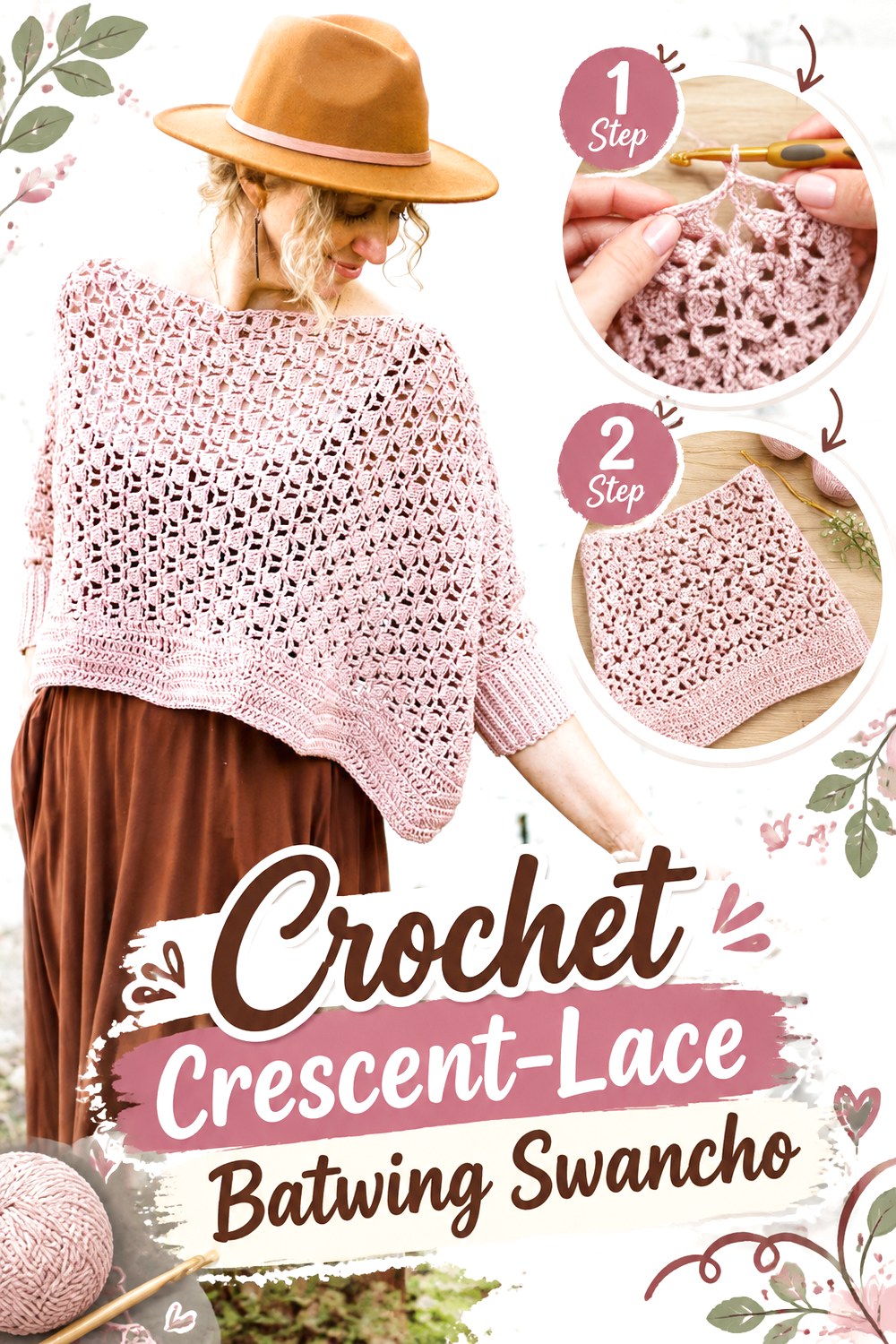
The Marika Swancho pushes the category toward a sweater-poncho hybrid. Make & Do Crew describes it as a wide pullover with sleeve cuffs made from two crescent shapes, giving the garment a distinctly different drape from a conventional rectangular sweater body.
For a bat-inspired wardrobe, the curved construction is interesting because the wings look less geometric and more flowing. The lace also makes the garment practical as a layering piece rather than a fully opaque cold-weather pullover. It can work especially well when you want dramatic movement but not the visual weight of a dense oversized sweater.
Treat Wingspan as a Primary Measurement
Because this design spreads substantially from cuff to cuff, total width deserves as much attention as body circumference. Consider where you want the cuffs to finish with your arms relaxed and extended. If you shorten or lengthen the span, also think about how the crescents will drape around the torso rather than treating sleeve length as an isolated alteration.
Decide What the Layer Underneath Contributes
Open lace makes the garment underneath part of the finished color story. A black or charcoal base layer can turn a lighter swancho into a more graphic bat-themed piece, while a tonal underlayer makes the openwork subtler. This is an easy way to alter the mood without modifying the original crochet structure.
Keep Curved Pieces Symmetrical
Two large shaped sections make alignment important. Compare their relaxed dimensions before permanent assembly, especially after any blocking recommended for your yarn. If one crescent opens more than the other, the difference can affect both cuff position and how evenly the neckline sits. Make corrections before adding finishing elements that would make adjustment more difficult.
Original Tutorial and Creator Credit
Creator/Site: Make & Do Crew — Jess Coppom
9. Crochet Cuff to Cuff Batwing Sweater
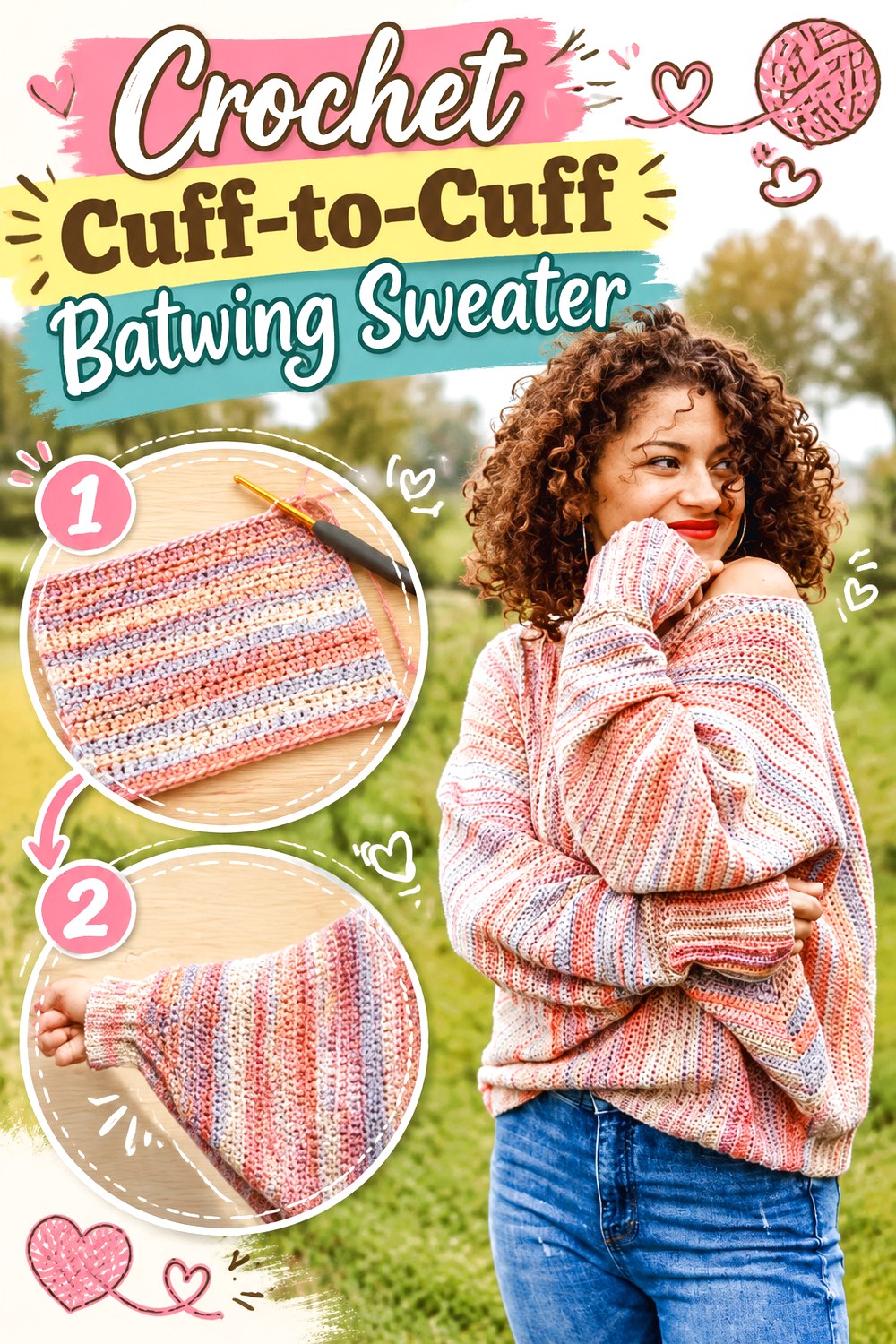
ByKaterina’s Sunset Sweater is constructed from cuff to cuff, with the front and back developed together until the neckline requires them to separate and later rejoin. The main sweater is worked in half double crochet, with ribbed finishing at the cuffs and lower edge. The source includes eight sizes.
This construction produces a different visual rhythm from a bottom-up batwing. Rather than thinking first about hem width and increasing outward, you can think across the entire horizontal span of the garment. That makes it particularly interesting for long gradients or intentional color shifts that travel from one sleeve to the other.
Plan Color Along the Horizontal Journey
Cuff-to-cuff construction changes where yarn transitions appear. A self-striping or gradient yarn may move continuously from one arm across the body and into the other, which can emphasize the sense of spread wings. If using separate colors, sketch their approximate locations first so a major transition does not land somewhere visually awkward, such as only a few rows from the neckline.
Compare Your Arm Span with the Source Dimensions
Body width and sleeve length are interconnected in a cuff-to-cuff piece. Before beginning, compare the tutorial measurements with a well-fitting long-sleeve garment laid flat. This provides a practical check on whether the sleeves are likely to finish where you want without changing the central body proportions unexpectedly.
Original Tutorial and Creator Credit
Creator/Site: ByKaterina
10. Crochet Rainbow Open Stitch Batwing Sweater
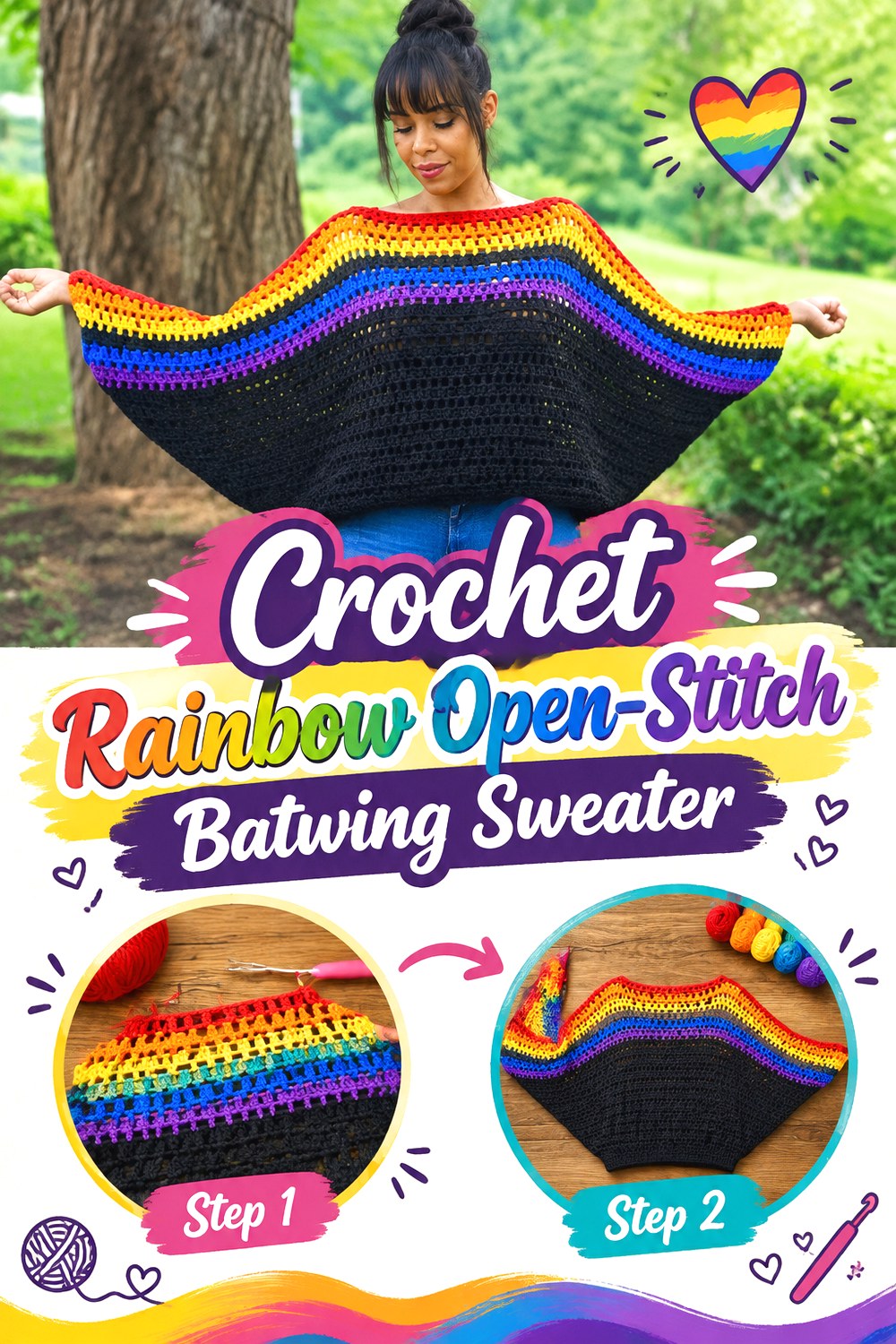
Alysha Littlejohn’s batwing sweater uses two panels and a repeating stitch sequence, but its color treatment immediately separates it from neutral versions. The source shows a rainbow progression and explicitly warns that yarn density and finished garment weight can influence stretching.
That makes it useful beyond the specific palette. A Halloween interpretation could replace rainbow brights with a sequence such as charcoal, black, plum, rust, and smoky violet while preserving the same broad color-band concept. The open sections also prevent the striped surface from feeling like one dense block of color.
Treat Stretch as a Design Variable
The designer specifically notes that the sweater may stretch depending on yarn density. For any substitution, measure a swatch before and after allowing it to hang vertically. If it grows significantly, consider the effect on both hem position and sleeve depth before committing to a full panel.
Make Color Changes Earn Their Place
With multiple stripes, every new yarn end adds finishing work and every band contributes to the overall proportions. Broader dark sections can make a garment feel calmer, while narrow high-contrast bands create more movement. For a bat-motif palette, you do not need every stripe to be black; limiting the brightest accent to a few positions can keep the result dark without flattening all the stitch detail.
Original Tutorial and Creator Credit
Creator/Site: Littlejohn’s Yarn — Alysha Littlejohn
11. Crochet Ribbed Trim Batwing Sweater
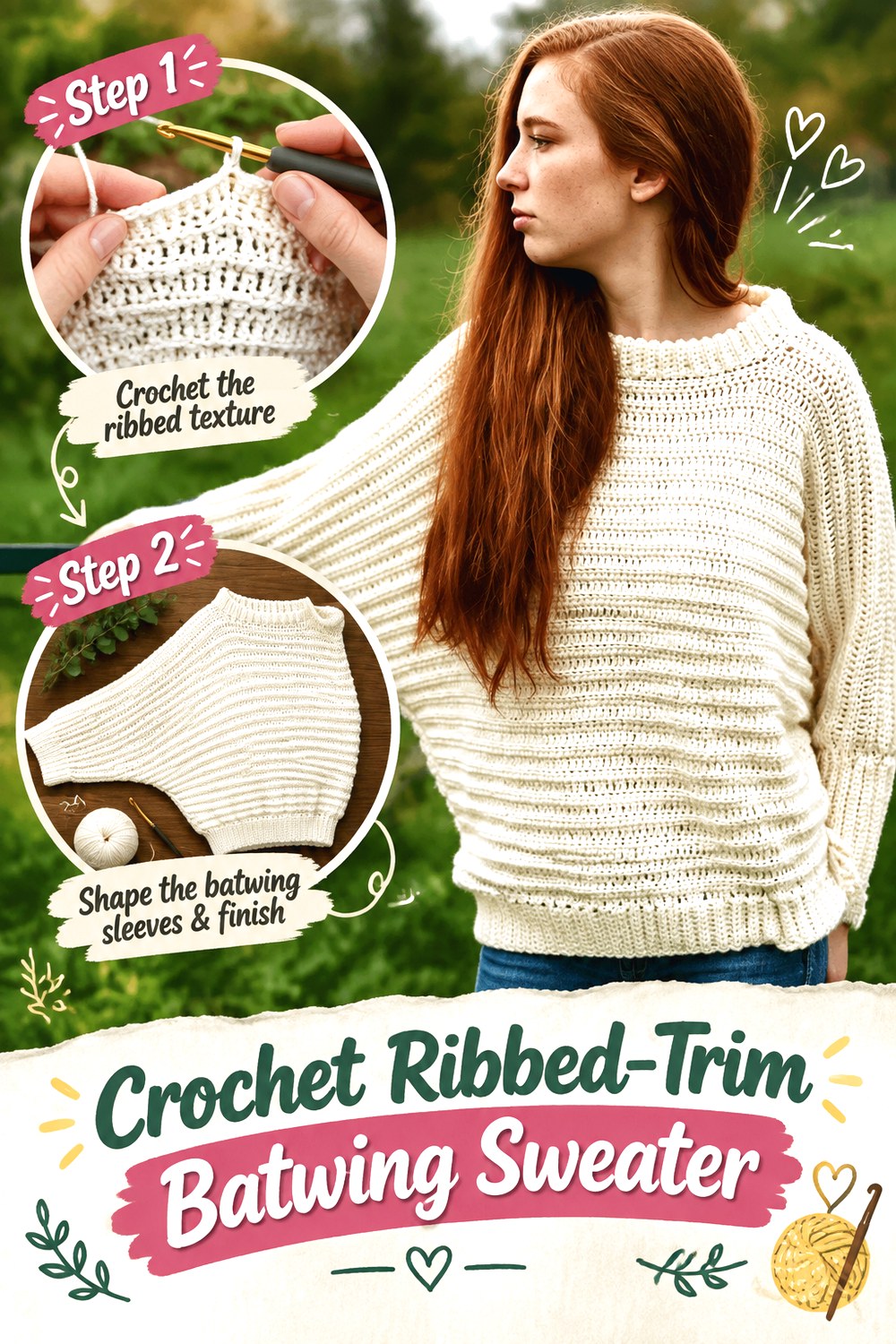
Crochet with Carrie’s batwing sweater combines a relaxed two-piece body with a particularly noticeable set of finishing elements: ribbed hems, long sleeve cuffs, and a ribbed collar. The body alternates half double crochet and double crochet rows, while the ribbing is added as separate structural detail.
This is a strong foundation for a bat-inspired sweater that still looks polished enough for everyday styling. Dark color does not have to hide the construction; the contrast between the softer body and defined ribbing can make the neckline, wrists, and lower edge visible even in a nearly monochrome palette.
Give the Collar Its Own Fit Check
A substantial ribbed collar influences how the sweater sits around the shoulders. Before securing all finishing, check whether the opening lies where intended and whether the collar is encouraging the wide upper body to shift backward or forward. A yarn substitution with different elasticity can be more noticeable in ribbing than in the main fabric.
Use Trim to Frame Rather Than Compete
If you add a literal bat motif to this style, the existing collar and cuffs already create strong visual borders. Keep the central embellishment scale in proportion with those details. An oversized appliqué plus a prominent ribbed frame can make the sweater front visually crowded, whereas a smaller chest or shoulder bat may leave the garment construction readable.
Original Tutorial and Creator Credit
Creator/Site: Crochet with Carrie — Carrie Chambers
12. Crochet Diamond Construction Batwing Pullover
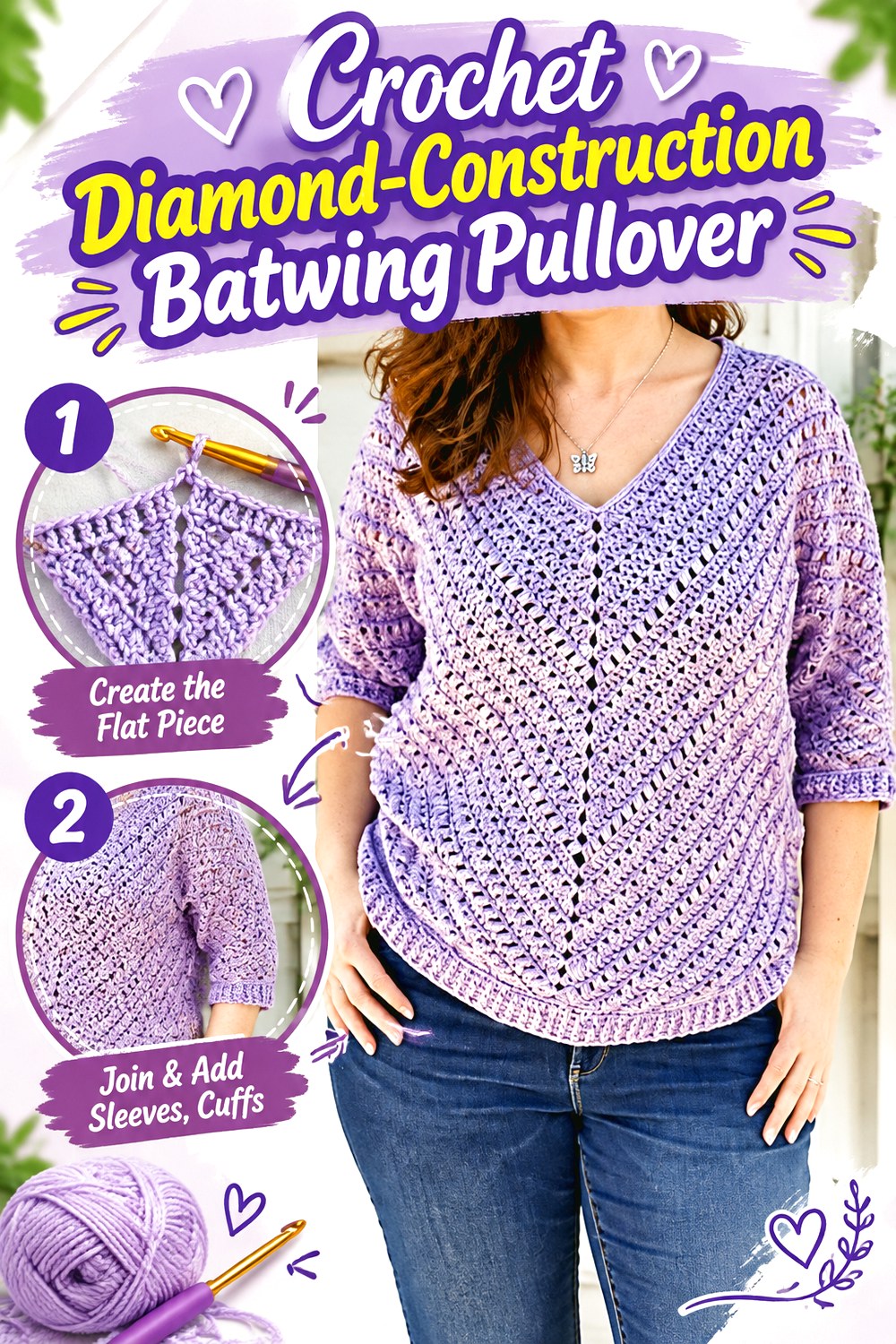
The Sum Of Its Parts Pullover from I Need It Crochet offers the most unusual geometry in this collection. Rather than beginning as two conventional sweater panels, the garment develops as a large flat piece whose central portion includes a diamond-like shape and neckline opening. The completed piece is folded before sleeve and side finishing are added.
The source also uses puff and crossed-double-crochet texture, giving this idea both structural and surface interest. It suits readers who want a batwing silhouette but are more excited by unconventional construction than by reproducing a familiar front-and-back sweater formula.
Understand the Flat Shape Before Judging the Garment
Unusual flat construction can look surprisingly unlike the finished sweater. Use the source diagrams and photos to understand which edges will eventually meet before evaluating apparent width or neckline placement. Avoid improvising a decorative bat insert into the central section until you know how that area rotates or folds on the body.
Match Yarn Weight to the Amount of Fabric
The designer discusses choosing a DK-like yarn and notes that testers using a heavier worsted option found their pullovers heavier. That observation is particularly relevant to a large folded batwing piece, where extra grams are distributed across a wide area.
If substituting, compare not only gauge but grams per length and the hanging behavior of the swatch.
Save Surface Motifs for a Known Orientation
A flat diamond or shaped piece can make “front,” “upper,” and “center” less intuitive during construction than on a standard rectangular panel. If you want to add an appliquéd bat later, wait until assembly establishes the garment orientation. Pin the motif while the sweater is worn or displayed on a form so its wings sit level in actual use rather than only when the fabric is flat.
Original Tutorial and Creator Credit
Creator/Site: I Need It Crochet — Sarah Wright
Comparing the 12 Crochet Bat Sweater Directions
| Idea | Main construction character | Strongest visual feature | Important checkpoint |
|---|---|---|---|
| Airy Mesh Batwing | Two widening panels | Light mesh + deep hem | Mesh drape |
| Braided-Puff Batwing | Two bottom-up panels | Textured upper span | Hip fit and texture gauge |
| Seamless Batwing | Connected body sections | Clean continuous shape | Neck and waistband behavior |
| Scrap-Stripe Batwing | Two panels | Multi-yarn color bands | Matching scrap yarn behavior |
| Lace-Shoulder Batwing | Matching panels | Lace from neck toward wrists | Panel symmetry |
| Long-Cuff Batwing | Wide solid panels | Narrow extended cuffs | Fabric weight |
| Fitted-Waist Dolman | Top-down shaping | Wide arms + narrow waist | Underarm depth |
| Crescent Swancho | Two curved sections | Flowing lace wings | Cuff-to-cuff span |
| Cuff-to-Cuff Batwing | Horizontal one-piece direction | Continuous sleeve-to-sleeve line | Arm span |
| Rainbow Batwing | Two striped panels | Open stripes | Stretch under weight |
| Ribbed-Trim Batwing | Two-piece body | Defined neck, hem, cuffs | Collar elasticity |
| Diamond Pullover | Folded shaped piece | Unusual central geometry | Orientation before embellishing |
Conclusion
The strongest crochet bat motif sweater does not have to depend on a large bat graphic. A deep dolman sleeve, narrow cuff, lace shoulder line, fitted waist, crescent body, or dramatic cuff-to-cuff construction can create the theme through silhouette alone.
For airy movement, the Adelyn mesh sweater and Marika Swancho stand apart. The Victoria and Azalea designs offer more controlled lower-body fit, while the Sunset and Sum Of Its Parts pullovers are better choices if unusual construction is part of the appeal. Scrap stripes and Littlejohn’s broad color bands offer the clearest route to a more graphic finish.
If you want literal bats as well, add them only after considering fabric weight, orientation, and stretch. Use the credited original tutorials near each idea for exact garment construction details.
Frequently Asked Questions
Can I add a crochet bat appliqué to one of these sweaters?
Yes, as a separate adaptation, provided the finished motif does not distort the sweater fabric. A dense appliqué is more noticeable on lace, mesh, and very lightweight fabric than on a firm solid panel. Finish or block the sweater first, then temporarily pin the bat in place while the garment hangs naturally. Use a separately designed bat tutorial for the motif rather than trying to derive one from the sweater instructions.
Which construction gives the most dramatic bat-wing shape?
Designs with substantial width beneath the arms and a comparatively narrow cuff generally produce the clearest wing outline. The exact effect still depends on body size, sleeve length, yarn drape, and how the garment is worn. A long slim cuff can emphasize the transition especially strongly, while a sweater-poncho construction tends to create a softer, sweeping wing rather than a sharply defined dolman shape.
Should I use black yarn for a bat motif sweater?
Black is an obvious choice, but it can hide texture in photographs and low light. Charcoal, aubergine, dark brown, deep green, smoke gray, or combinations of those shades can retain the gothic character while allowing lace, ribbing, puff stitches, or openwork to remain visible. If the sweater depends heavily on stitch texture, examine your yarn in ordinary indoor light before deciding.
Can I substitute a heavier yarn to make the sweater warmer?
Only if the tutorial and gauge allow the substitution or you are comfortable recalculating the consequences. A batwing sweater contains a broad area of fabric, so additional yarn weight can increase downward pull and change sleeve depth or body length. Swatch first, match the source gauge where required, and hang the swatch vertically to see whether it stretches noticeably under its own weight.
How do I choose a size for an oversized batwing sweater?
Follow the specific tutorial rather than assuming every design is sized from the bust. Some batwing sweaters use the hips or lower hem as the main fit point because the upper body already contains substantial ease. Cuff-to-cuff garments also require attention to total span. Compare the source’s finished measurements with a garment you already like and identify which part is meant to fit closely before choosing a size.
Should I block a crochet batwing sweater before assembly?
When the source recommends blocking, doing it before major seaming can make matching large panels easier. This is especially useful when two pieces should have the same width and length. Fiber choice matters, so do not assume every yarn should receive the same blocking treatment. Follow the yarn label and the original designer’s guidance, and handle embellishments separately if they require different care.