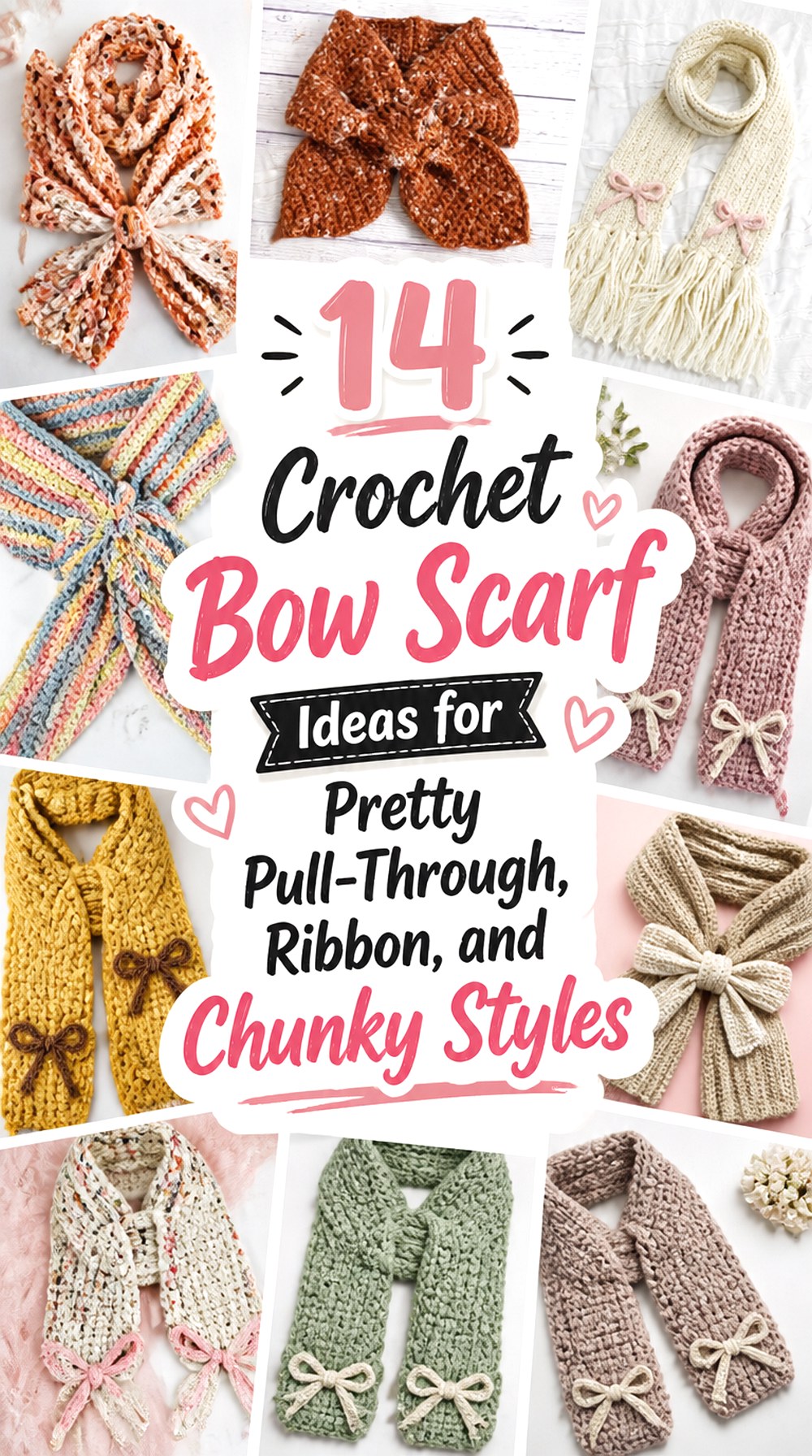
14 Crochet Bow Scarf Ideas for Pretty Pull-Through, Ribbon, and Chunky Styles
A crochet bow scarf can take several surprisingly different forms. Some designs create the bow through a keyhole opening, while others use a true tied ribbon shape, an attached dimensional bow, a short collar, or decorative bows added to a longer scarf. That difference affects more than appearance: it changes how much fabric sits around the neck, how securely the scarf stays arranged, and whether it fits comfortably under outerwear.
These 14 crochet bow scarf ideas cover slim neckerchiefs, chunky winter pieces, pull-through scarves, a buttoned collar, a tasseled statement scarf, a seasonal leaf variation, and even a matching pet option. The comparisons below focus on construction style, drape, bulk, fit, and adaptation so you can choose a tutorial that suits how you actually want to wear the finished scarf.
Quick List
- Crochet Multi-Wear Skinny Bow Scarf
- Crochet Lace Bowtie Neckerchief Scarf
- Crochet Ribbon Neckline Bow Scarf
- Crochet Classic Bow-Shaped Neck Scarf
- Crochet Buttoned Bow Collar Scarf
- Crochet Pull-Through Keyhole Bow Scarf
- Crochet Minimal Bow Keyhole Scarf
- Crochet Chunky Bow-Tie Neck Scarf
- Crochet Chunky Applied-Bow Scarf
- Crochet Tassel-and-Bow Statement Scarf
- Crochet Fall Leaf Bow-Effect Scarf
- Crochet Short Bow Neck-Warmer Scarf
- Crochet Matching Pet-and-Owner Bow Scarf
- Crochet Textured Keyhole Bow-Effect Scarf
Start With the Bow Mechanism, Not the Color
The biggest decision is how the scarf creates its bow effect. A skinny scarf can be physically tied, giving you freedom to change the knot and placement. A keyhole scarf works differently: one end passes through an opening, producing a tidy crossed or bow-like front without a conventional knot. Buttoned collars hold their shape in a more fixed position, while applied-bow designs treat the bow as decoration rather than the fastening method.
That distinction matters when comparing projects. A large tied bow needs enough flexible fabric to shape cleanly, while a keyhole opening must accommodate the finished thickness of the end passing through it. A practical comparison should therefore consider closure, bulk, fit, drape, and intended use rather than treating color as the main difference.
Match Yarn Behavior to the Bow Shape
Bow scarves need a balance between softness and definition. For a narrow neckerchief or skinny scarf, drape can help the ends fall naturally and make a tied bow less bulky. A sculptural front bow needs more body so its loops remain visible instead of collapsing against the scarf. Chunkier yarn increases visual volume quickly, but that extra thickness can also crowd the neck or make a pull-through opening harder to use.
Substituting yarn therefore deserves more thought than simply matching a favorite color. Check the tutorial’s original yarn category and finished appearance first. If you change thickness or fiber significantly, work enough fabric to judge whether it bends, springs back, stretches, or becomes too dense for the intended closure before committing to the full scarf.
Check Neck Fit Against the Clothes You Will Wear
A bow scarf that looks balanced over a lightweight top may behave differently inside a winter coat. Large bows need visible space at the front, while close-fitting keyhole scarves generally need less room. A short collar can interfere with a tall jacket collar, and a bulky applied bow may be more comfortable worn outside outerwear rather than tucked beneath it.
Before finishing or permanently positioning a closure, try the developing scarf with the sweater, cardigan, or coat you expect to wear most. Pay attention to where the bow rests, whether the scarf presses under the chin, and whether the front remains easy to arrange. There is no universal ideal neck measurement for these projects, so use the creator’s sizing information where supplied and judge personal comfort before making major length changes.
1. Crochet Multi Wear Skinny Bow Scarf
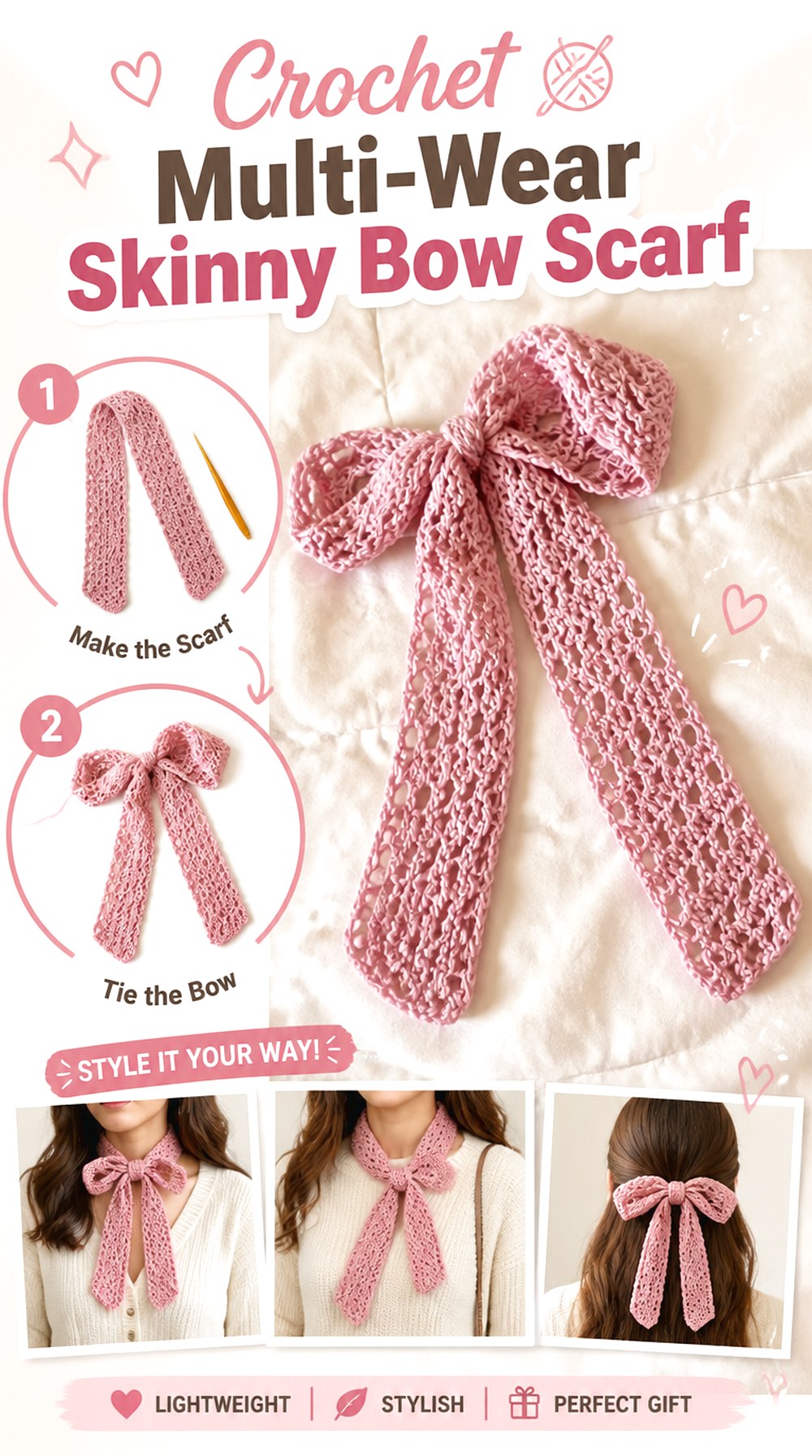
This narrow scarf from nat’s record takes the bow idea in a light, flexible direction. Instead of building a bulky bow permanently into the neck area, the finished strip can be tied and styled in several ways. The creator specifically presents it as multifunctional, including scarf, headband, belt, and bow-accessory uses.
That versatility makes it especially useful if you want crochet that behaves more like a fabric ribbon than a winter muffler. As a neck scarf, the long narrow form lets the tie itself become the focal point. It is also a useful contrast to keyhole designs because you control the size and position of the bow every time you wear it.
Tie Length Determines More Than the Final Look
A true tied bow consumes part of the scarf’s available length. Before deciding you want shorter ends, tie the developing piece around the intended neckline and see how much fabric the bow actually uses. A scarf that seems long while laid flat can become much more compact once the loops and tails are formed. This is particularly important if you want a generous bow instead of a small knot.
Keep Drape if You Want Several Styling Options
The attraction of this design is its ability to change roles, so overly rigid fabric can work against that flexibility. If you substitute yarn, make a small sample and bend or knot it rather than judging it only while flat. A fabric that folds comfortably will be easier to use as a scarf, headband, belt, or decorative bow without creating an excessively stiff knot.
2. Crochet Lace Bowtie Neckerchief Scarf
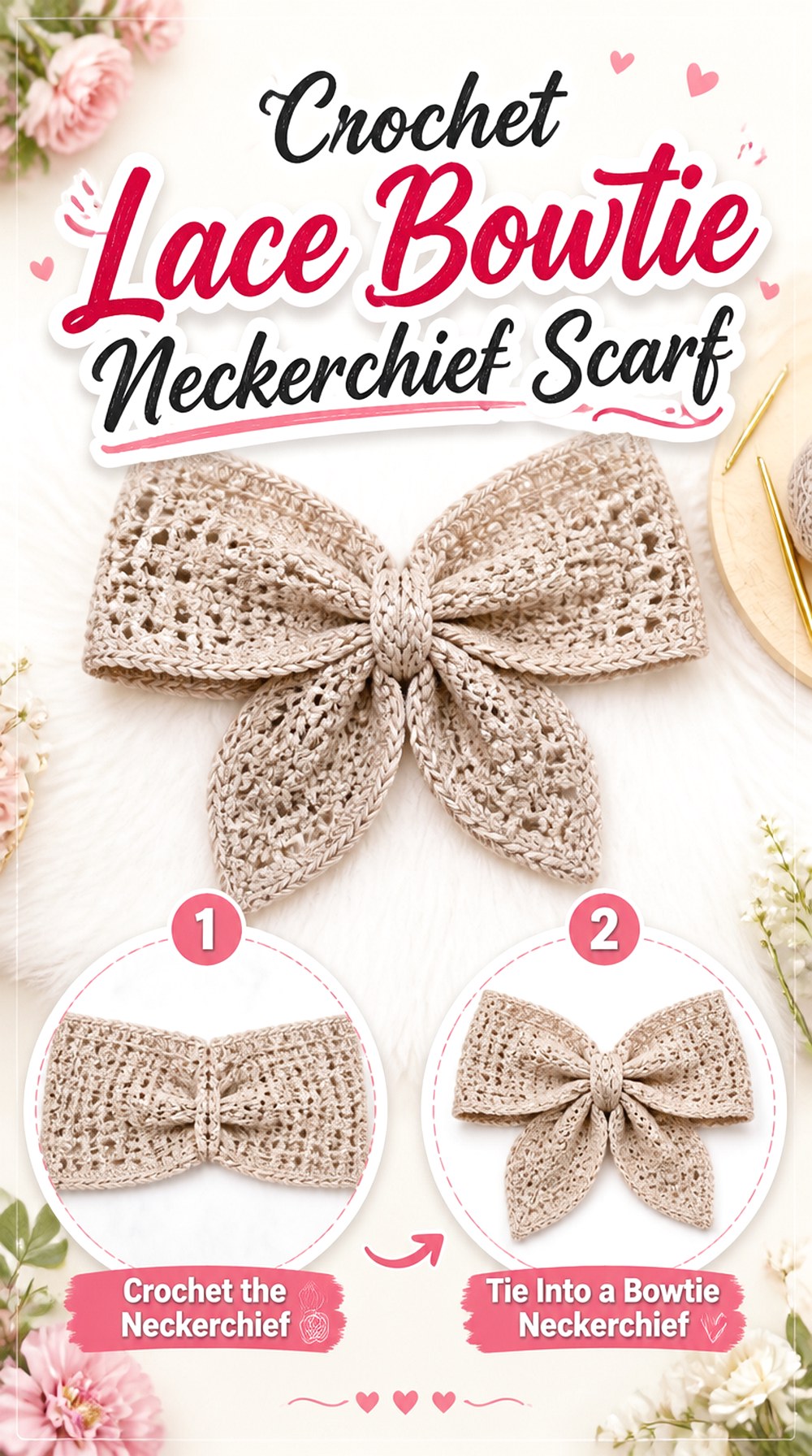
Jess Crafting’s bowtie neckerchief gives the bow-scarf idea a finer, more delicate profile. The tutorial uses lace yarn or crochet thread, so the result reads more like a decorative neck accessory than a heavy winter layer. Openings incorporated into the piece help create its distinctive finished arrangement.
Choose this direction when you want the bow shape to accompany a blouse, dress, fine sweater, or indoor outfit without surrounding the neck with thick fabric. Compared with a chunky keyhole scarf, its lighter visual weight puts more emphasis on line and proportion. The fine material also means yarn substitutions deserve care because increasing thickness can change both the scale and the way the scarf passes through its openings.
Fine Yarn Keeps the Bow From Becoming Overbuilt
This project is designed around much finer material than the chunky scarves later in the collection. Moving dramatically upward in yarn thickness can enlarge the scarf while also making the overlapping sections more substantial. If you want a similar delicate effect with another yarn, compare the new fabric’s thickness and flexibility rather than assuming the same construction will retain the original proportions.
Opening Size and End Thickness Work Together
The scarf includes spaces that participate in the finished styling. Treat those openings and the sections that pass through them as a matched system. If you alter yarn or edging, test the interaction before finishing the whole project. The important checkpoint is not simply whether the opening looks correct while flat, but whether the completed scarf section moves through it without bunching or slipping excessively.
Original Tutorial and Creator Credit
Creator: Jess Crafting
3. Crochet Ribbon Neckline Bow Scarf
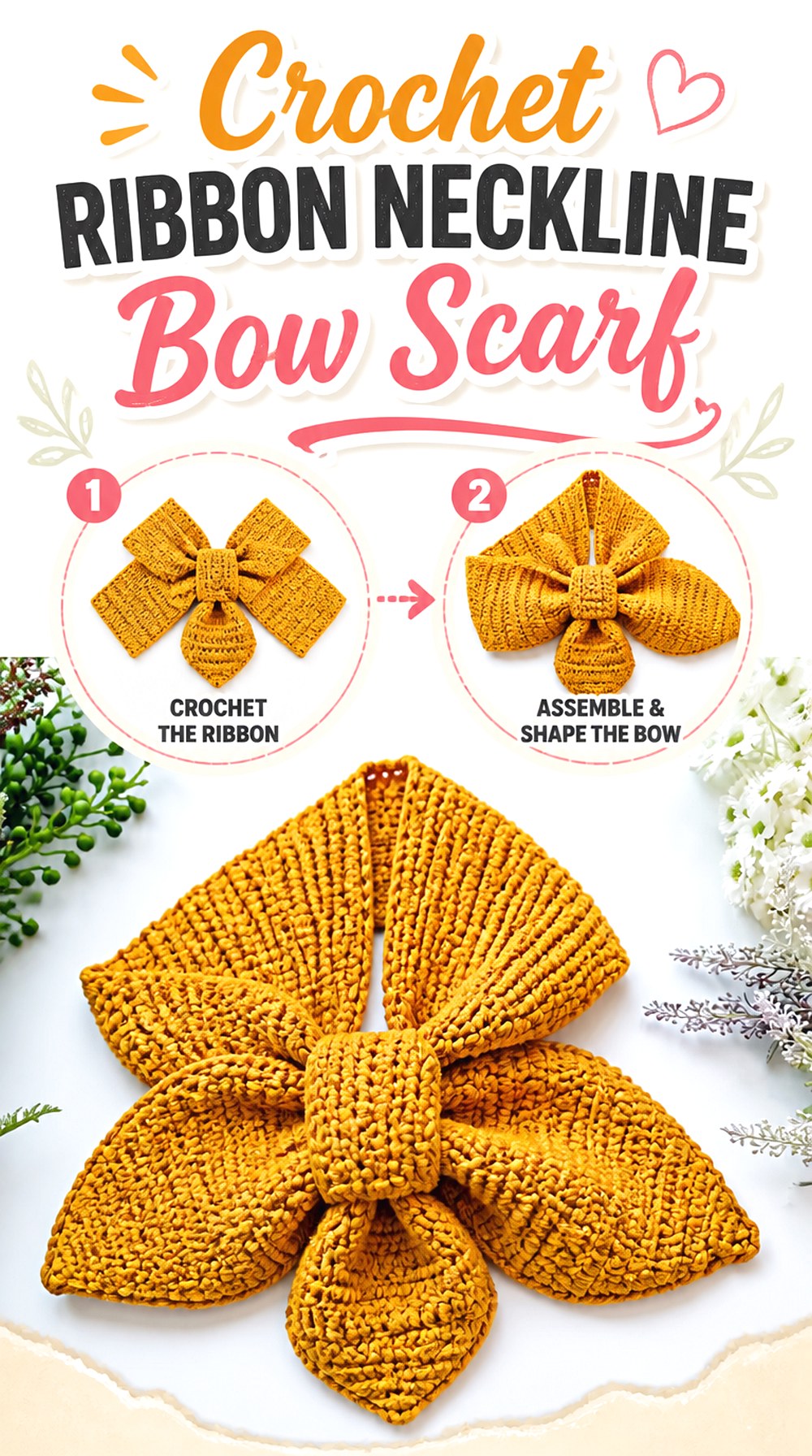
Adel handmade’s ribbon scarf sits close to the neckline and creates a polished bow-like finish without needing the scale of a full-length scarf. The creator’s video distinguishes adult and child versions, making it especially useful for understanding how this type of short neck scarf depends on proportion rather than simply adding more length.
The finished concept works well when you prefer a compact accessory with clearly shaped ends. It has more body than the lace neckerchief but less visual mass than a chunky winter bow. Because the scarf stays concentrated around the neck, fit matters immediately; changes in yarn thickness or length are more noticeable than they would be in a long rectangular scarf.
A Short Scarf Leaves Less Room for Fit Errors
Long scarves can absorb extra length through another wrap or a looser knot. A short neckline scarf cannot. If you adapt this style, check the developing length around the intended wearer before completing the end shaping. The scarf should have enough room to form its intended front without relying on uncomfortable tension around the neck.
Adult and Child Versions Need Separate Proportion Checks
The creator provides references for adult and child use, but that does not mean one finished scarf will automatically suit every wearer. Neck circumference, preferred looseness, yarn thickness, and the size of the front detail all affect the result. When changing size, judge the bow and scarf together instead of changing only the overall length.
The Ribbon Shape Benefits From Visible Edges
A ribbon-style scarf relies heavily on its outline. Before choosing a very fuzzy or highly variegated yarn, consider whether it will soften the edge definition that makes the finished shape recognizable. A yarn with clearer stitch and edge definition can emphasize the ribbon effect, while a haloed fiber may create a softer, less graphic result.
Original Tutorial and Creator Credit
Creator: Adel handmade
4. Crochet Classic Bow Shaped Neck Scarf

Vyva ‘s Crochet presents a scarf whose finished form is unmistakably centered on the bow silhouette. Rather than treating a bow as a small appliqué, the scarf itself creates the decorative front shape. The result feels controlled and collar-like, making it distinct from both freely tied skinny scarves and longer scarves decorated with separate bows.
This idea suits readers who want the bow to remain visually prominent each time the scarf is worn. Its neat front could work over a simple sweater or with outerwear left open enough to show the shape. Because the bow is fundamental to the silhouette, preserving the relationship between fabric thickness and front shaping matters more than chasing an exact color match.
The Front Silhouette Is the Main Fit Check
When a scarf is designed to look like a bow, an otherwise comfortable neck fit can still feel visually off if the front spreads too wide or collapses. Watch how the finished example sits before modifying the design. If you change yarn, compare the proportion of the bow area to the neck section rather than judging either part separately.
Too Much Softness Can Blur a Defined Bow
A very drapey yarn may feel pleasant but can soften the crisp outline that gives this scarf its identity. Conversely, an extremely stiff fabric may make the front sit awkwardly away from the body. When substituting, look for a balance: enough flexibility for comfort around the neck, with enough body for the bow to remain legible.
Original Tutorial and Creator Credit
Creator: Vyva ‘s Crochet
5. Crochet Buttoned Bow Collar Scarf
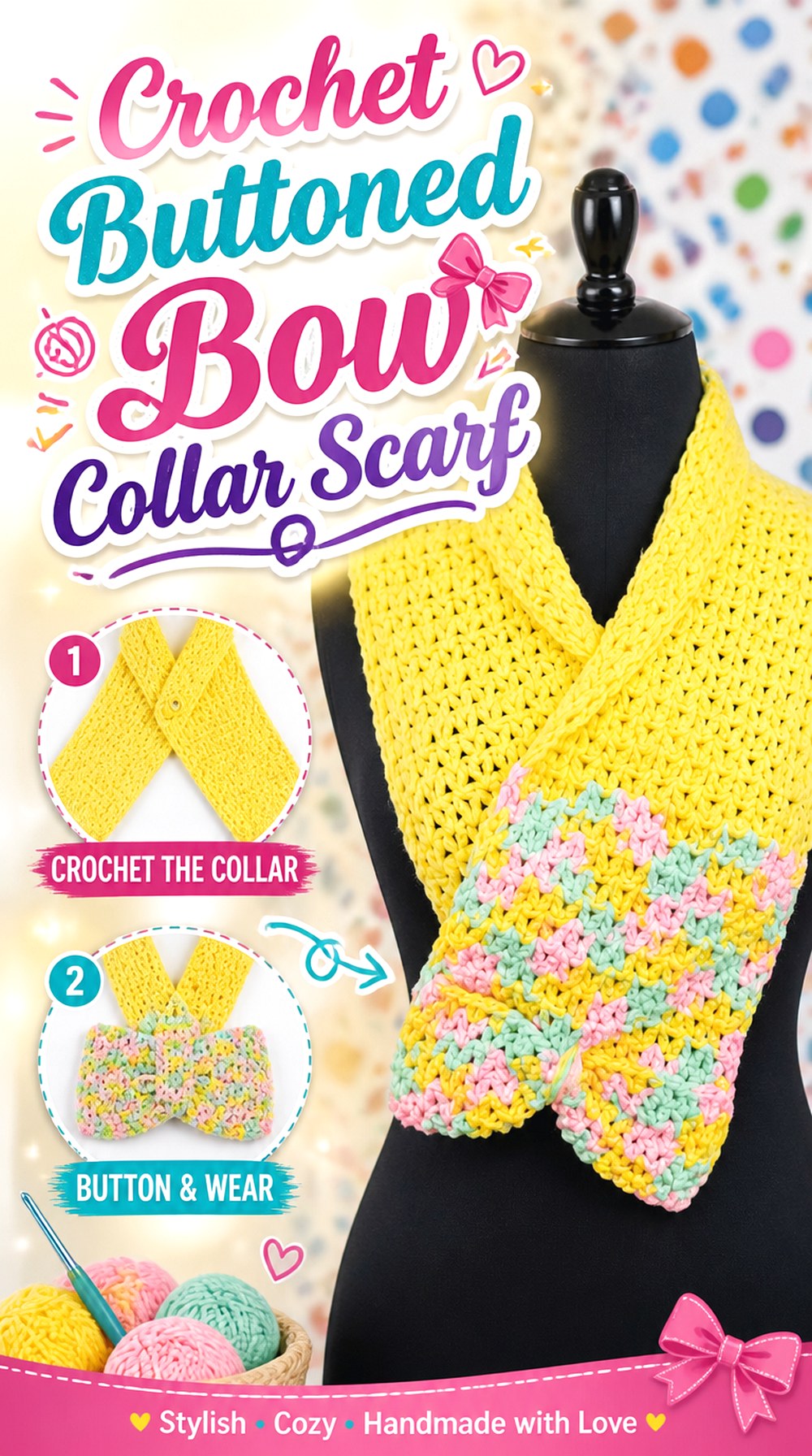
This Vivirtejiendo project combines a bow-like decorative front with a button, giving the scarf a more fixed collar-style presentation. That closure separates it from keyhole scarves, where one end moves through an opening, and from tied scarves that can be rearranged each time they are worn.
A buttoned bow collar can appeal to anyone who wants a tidy neck accessory that returns to a predictable position. It also creates a useful styling choice: the front looks deliberately finished rather than loosely wrapped. The trade-off is that button position becomes part of the fit. If the overlap is changed substantially, the finished collar may sit closer or farther from the neck than the original design.
Button Placement Controls the Resting Circumference
With a fixed closure, even a modest change in overlap can affect comfort. Before attaching or relocating a button, position the scarf around the intended neckline and mimic the closure. Check the fit while standing and turning the head, not only while the scarf lies flat. Decorative placement should come after the collar feels comfortable.
Leave Enough Space for the Bow to Show
A tall coat collar or heavily textured sweater can compete with a compact decorative bow. If this scarf is intended for outerwear, try the planned placement with that garment before finishing. You may prefer the bow centered above a low neckline, while a high jacket collar may call for wearing the scarf inside with only part of the detail visible.
Hardware Adds a Finishing Consideration
Because a button is functional as well as decorative, attachment deserves attention. Choose a button and attachment method appropriate for the fabric and anticipated handling, and periodically check that it remains secure. If the scarf is intended for a child, also consider whether a detachable small component is appropriate for the intended age and use.
Original Tutorial and Creator Credit
Creator: Vivirtejiendo
6. Crochet Pull Through Keyhole Bow Scarf

Handmade By Mei’s design demonstrates one of the most recognizable bow-scarf formats: a keyhole scarf. One end passes through an opening in the other section, creating a crossed front that resembles a soft bow without requiring you to tie a conventional knot. The creator notes that the style can be worn by adults and children.
This closure is useful when you want fewer loose ends and a scarf that tends to return to the same arrangement. It also uses less front volume than a large tied bow. The important practical relationship is between the keyhole and the scarf end: if either changes substantially during customization, the pull-through action can change as well.
Test the Keyhole Before Finishing the Entire Scarf
If you substitute yarn or change edging, the scarf end may become thicker than the tutorial’s version. Pass a representative section through the opening as early as practical. An opening that is too small can crush or distort the end, while one that is excessively large may create a looser front than intended.
Adult and Child Fit Still Needs Individual Checking
The tutorial identifies the concept for both adults and kids, but neckwear should still be sized for the actual wearer. Look at total length, the distance between the neck and pull-through point, and how tightly the finished scarf closes. For children in particular, prioritize comfortable, nonrestrictive fit rather than trying to reproduce an adult proportion at a smaller scale.
Original Tutorial and Creator Credit
Creator: Handmade By Mei
7. Crochet Minimal Bow Keyhole Scarf
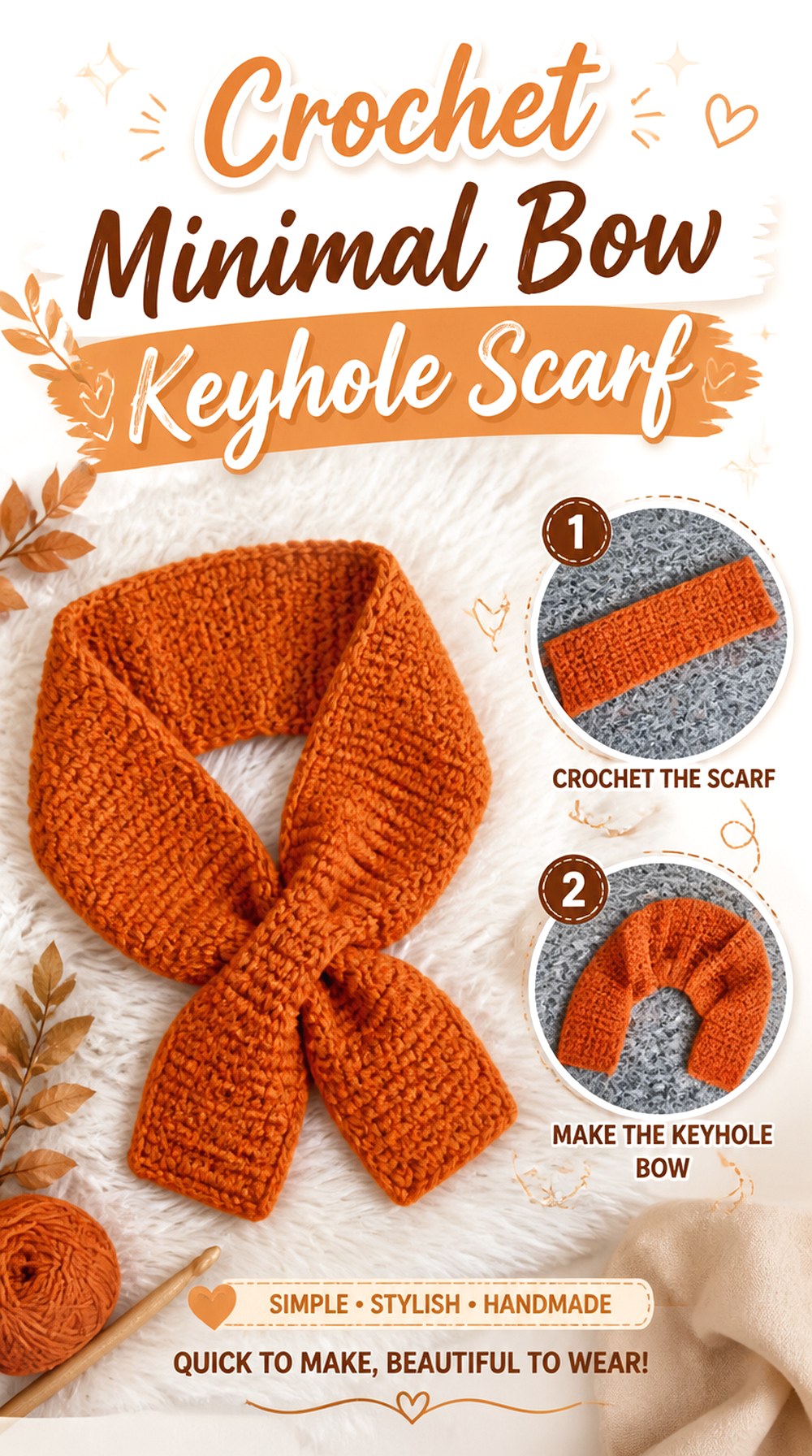
frim crochet offers another direct bow-keyhole interpretation, but its straightforward finished form makes it a useful choice when you want the fastening method to provide most of the visual interest. There is no need to rely on a large attached bow or several decorative elements; the crossing of the scarf itself creates the focal point.
This simpler silhouette is practical for experimenting with color, subtle texture, or everyday layering because the scarf does not need much extra decoration to read as intentional. It is also a good comparison point for the more embellished projects in this collection. The key decision is whether you prefer a compact front that stays relatively controlled or the volume and movement of a true tied bow.
A Clean Front Makes Tension Differences More Visible
On a simple keyhole scarf, uneven edges or changes in fabric width have fewer decorative elements to hide behind. Check the scarf periodically while it is laid flat, particularly before completing the pull-through area. If the fabric begins narrowing or widening unexpectedly, correcting the issue earlier is easier than trying to disguise it in the finished bow arrangement.
Keep the Closure Practical After Yarn Changes
Changing to a plush or thicker yarn may make a minimal scarf look fuller, but it also changes the part that travels through the opening. Before committing to the substitution, compare the thickness of folded fabric with the apparent keyhole space. Maintaining smooth pull-through function is more important than matching the original scarf’s flat width exactly.
Original Tutorial and Creator Credit
Creator: frim crochet
8. Crochet Chunky Bow Tie Neck Scarf
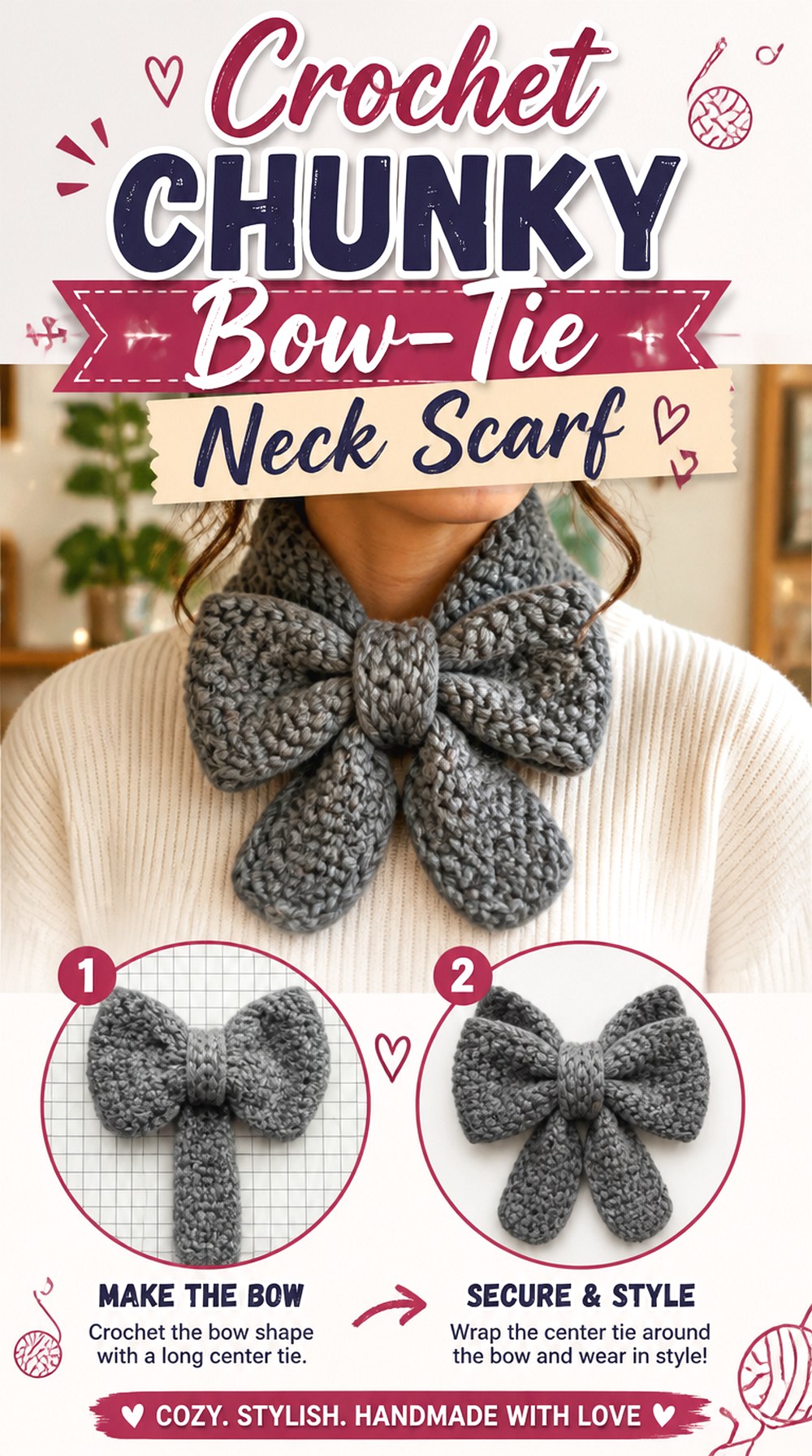
BDD Patterns moves the bow scarf toward a heavier, more substantial winter accessory. The tutorial is specifically for a women’s chunky bow-tie scarf, so the finished front has more visual weight than the fine neckerchief and minimal keyhole examples. That makes the scarf itself a noticeable part of an outfit rather than a small accent at the neckline.
Choose this type when you want a short scarf with a strong bow-tie presence but do not need long hanging ends. Its additional thickness can provide a cozy appearance, yet that same bulk deserves consideration if you usually wear fitted coats. A scarf that looks balanced over a sweater may feel crowded once a structured jacket collar is added.
Chunky Fabric Magnifies Front Volume
When yarn is thick, relatively small areas of overlapping crochet can build considerable bulk. Check the finished tutorial view with your usual outerwear in mind. If you plan to substitute another chunky yarn, compare not just the label category but also the density and loft of the resulting fabric, since two yarns of similar nominal weight can behave quite differently.
One Strong Bow Can Replace Extra Decoration
The bow-tie silhouette already provides a clear focal point, so this is a useful style for solid yarns or restrained texture. Additional embellishment can compete with the shape rather than improve it. If you want to customize the scarf, changing the edge finish or using a carefully chosen contrast may preserve the bow outline better than covering the front with extra appliqués.
Check Supporting Pattern Information at the Source
BDD Patterns links the video with written pattern support. That can be useful when you prefer to move between visual instruction and text. Before buying yarn or altering size, review the creator’s current source material for the exact supply and construction information rather than relying on measurements from another bow-tie scarf, since similarly named projects are not automatically interchangeable.
Original Tutorial and Creator Credit
Creator: BDD Patterns
9. Crochet Chunky Applied Bow Scarf
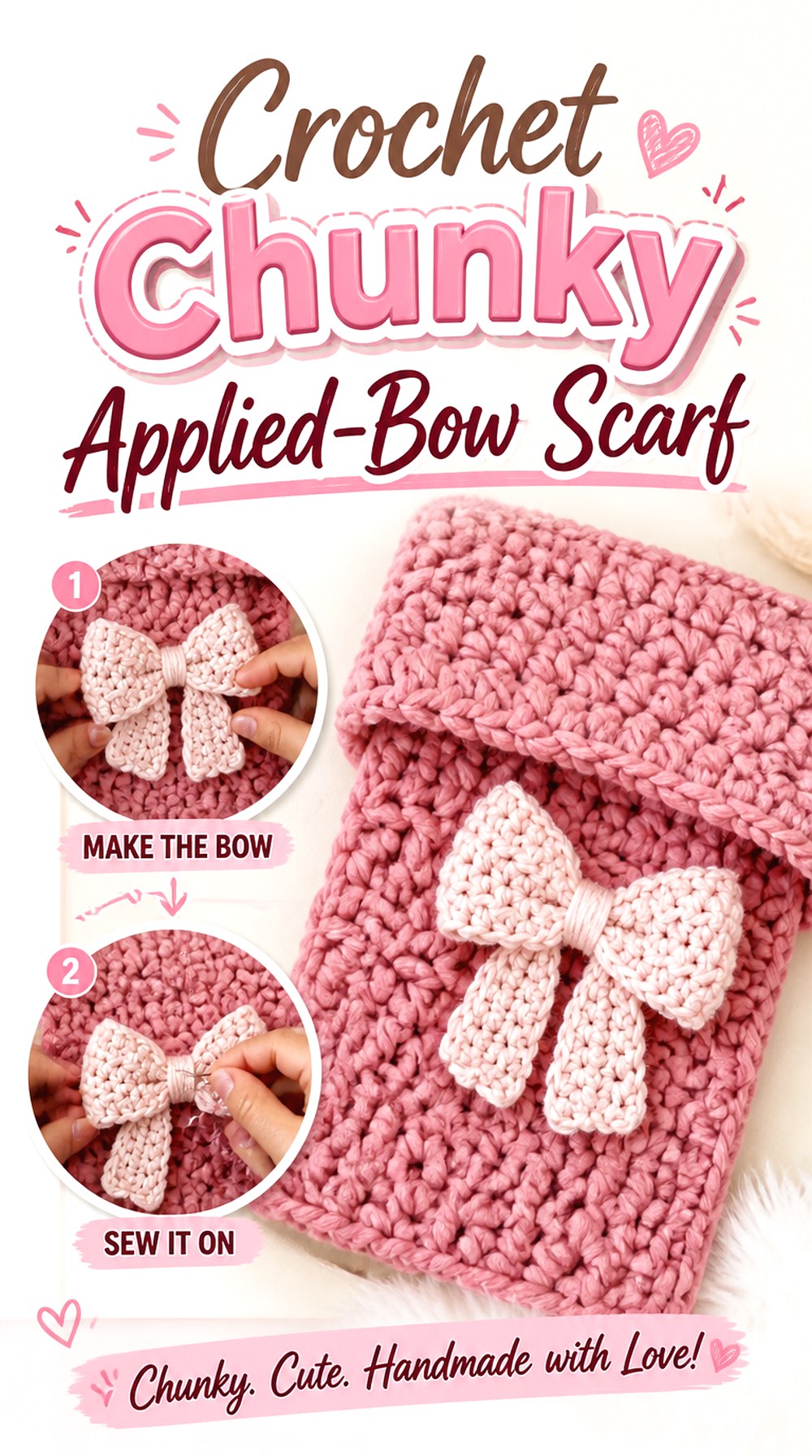
crochet daniela’s scarf takes a different route from bow-shaped closures: the tutorial shows a chunky scarf decorated with chunky bows. Here, the bows are visual features attached to the scarf rather than simply the result of pulling one end through a keyhole. That distinction opens up more freedom for motif placement and turns the finished accessory into a stronger statement piece.
Because both the scarf and bows have substantial volume, this design is well suited to being seen rather than hidden inside a narrow coat opening. It can also be adapted visually by changing the number or placement of decorative bows, provided that any alteration still leaves the scarf comfortable and balanced when worn.
Bow Placement Can Affect How the Scarf Hangs
Before permanently attaching dimensional bows, arrange the completed scarf as it will actually be worn. A bow that looks perfectly placed on a flat table may fall under a coat lapel, turn toward the body, or add unnecessary weight to one hanging end. Temporary positioning lets you evaluate symmetry and visibility before committing.
Chunky Bows Need Space Around Them
A dimensional bow loses impact when compressed beneath a tight collar. If this scarf is meant to accompany winter outerwear, decide whether you want the bows displayed outside the coat or concentrated lower on the hanging ends. That styling decision can guide placement more effectively than attaching decorative pieces according to flat measurements alone.
Stitch Definition Matters on Dimensional Details
The creator uses a chunky yarn for the scarf and bows. If you substitute, consider how clearly the new yarn shows the bow edges and center. Extremely fuzzy yarn can soften those boundaries, while very stiff yarn can make a dimensional bow project outward. Make a single sample bow first if the fiber behaves substantially differently from the tutorial material.
Original Tutorial and Creator Credit
Creator: crochet daniela
10. Crochet Tassel and Bow Statement Scarf
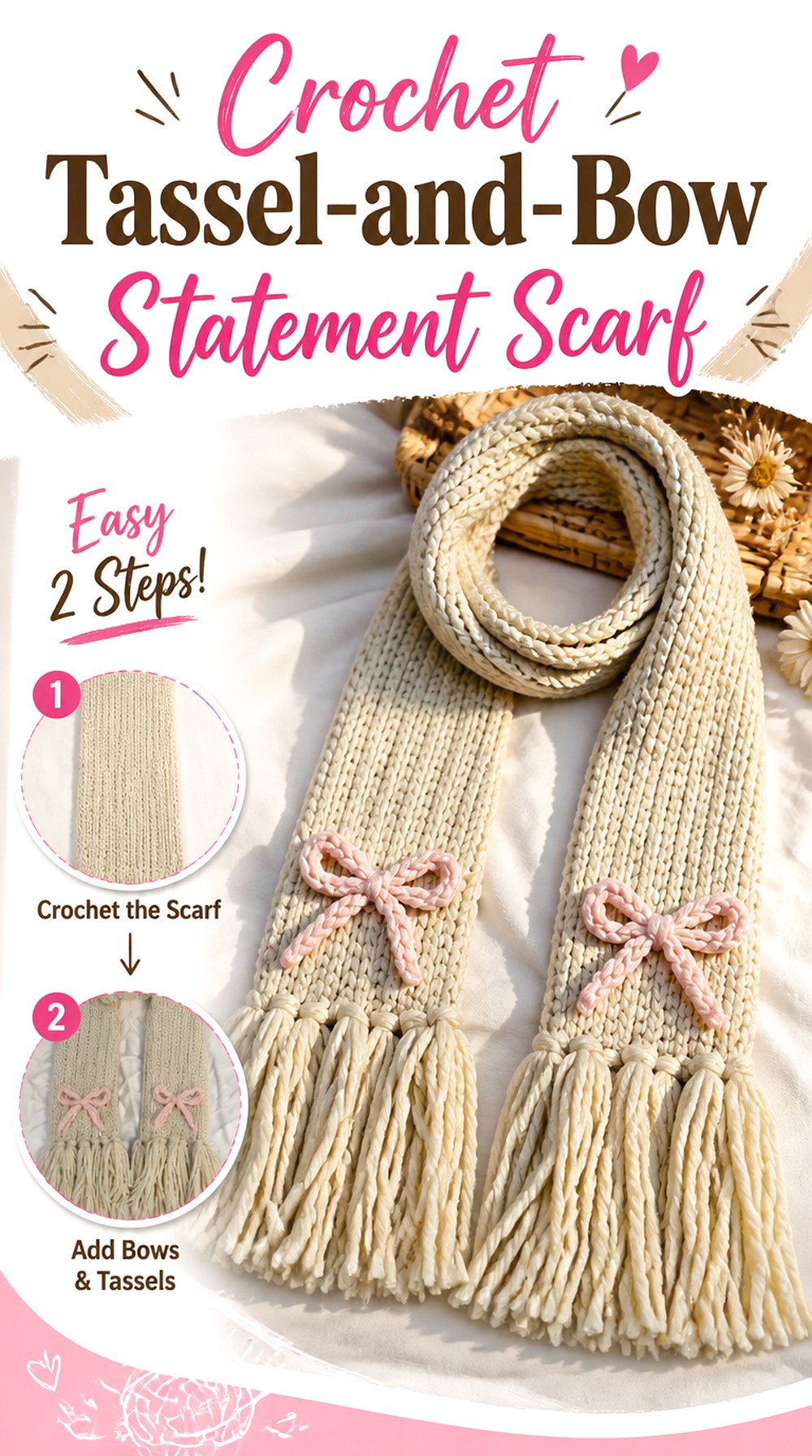
gias.yarniverse combines several decorative elements in one scarf: the creator’s tutorial includes the main scarf, tassels, crocheted bows, and the attachment of those bows. This makes it one of the more embellished options in the collection and distinctly different from compact bow collars or simple pull-through neck warmers.
The longer scarf format gives the decorative details room to appear away from the neck instead of concentrating everything at the closure. That can work well if you want a playful scarf that remains visibly decorative when worn with plain outerwear. Because tassels and bows both create movement and texture, planning their relationship before final attachment can keep the ends from looking overly crowded.
Tassels and Bows Compete for the Same Visual Space
Both details naturally draw attention. Before attaching every element, lay out the finished scarf and test several placements. Concentrating too many details in one small area can obscure the bow shapes, while spreading them thoughtfully can create a clearer rhythm down the scarf. This is a design decision where temporary pinning is more useful than committing based on a flat sketch.
Added Details Increase the Importance of Finishing
Every attached bow and tassel introduces another set of yarn ends or attachment points. Secure those areas carefully and inspect them during use and cleaning. If the scarf is intended as a gift, consider how the recipient will store and wash it; dimensional bows and tassels may benefit from gentler handling than an undecorated rectangular scarf.
A Busy Scarf Often Benefits From Simpler Color Planning
When the silhouette already contains tassels and multiple bows, elaborate color changes can compete with the shapes. A limited palette can make each decorative feature easier to read. If you do want several colors, arrange the finished components together before attachment so the distribution feels deliberate on both scarf ends rather than accidentally concentrated in one place.
Original Tutorial and Creator Credit
Creator: gias.yarniverse
11. Crochet Fall Leaf Bow Effect Scarf
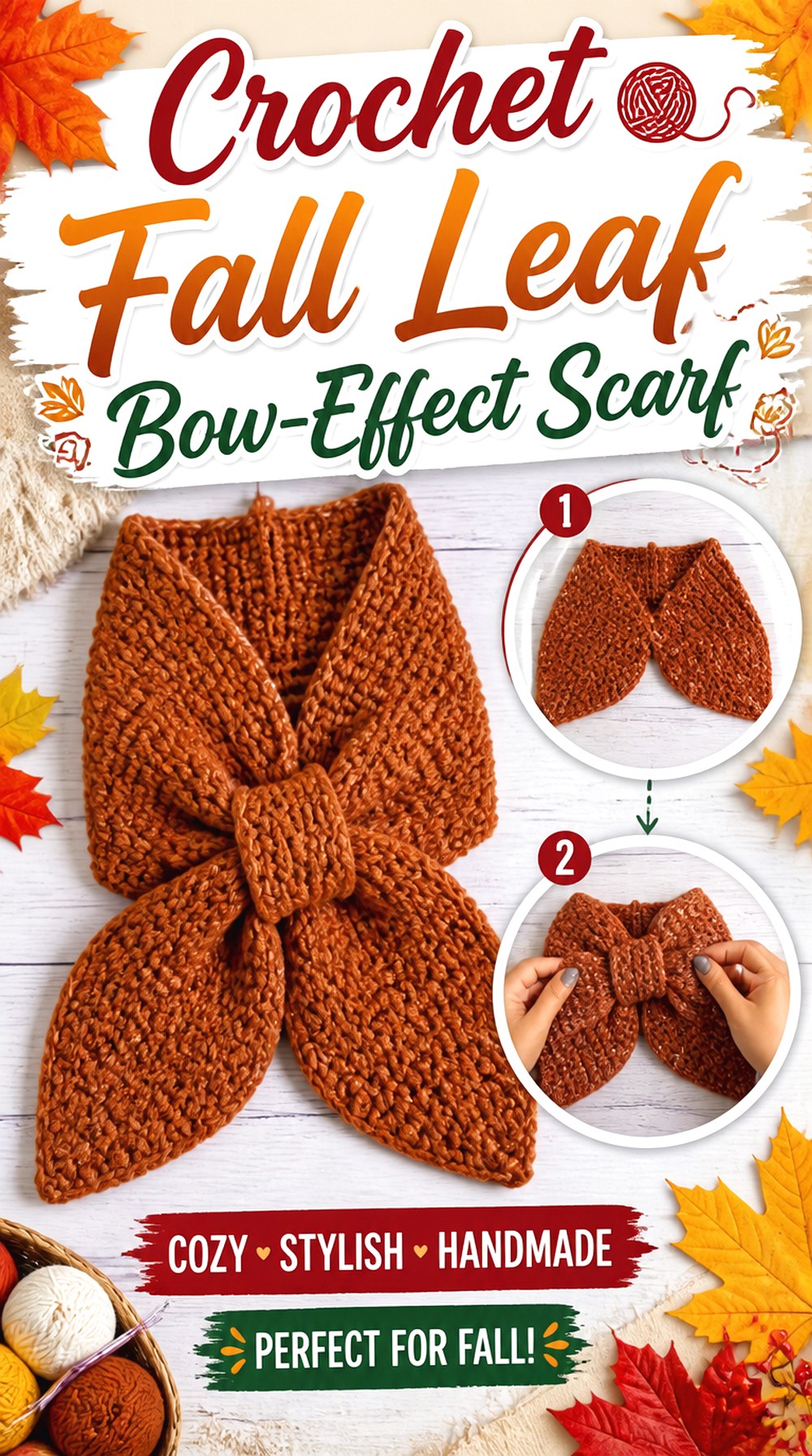
Kailea Crafting on the Fly’s tutorial is explicitly presented as a fall leaf scarf while playfully asking whether it is also a bow scarf. That makes it a useful variation for this collection: the scarf does not depend on a conventional decorative bow, but its shaped ends and crossed styling can create a bow-like impression at the neck.
This is the option to consider if you want a recognizable seasonal shape rather than a classic ribbon silhouette. Leaf-inspired ends give the scarf character even when it is laid flat, and autumnal colors can reinforce that idea. Because the shaped ends are part of the design language, changes to yarn thickness can affect how clearly those contours remain visible.
Let the Leaf Outline Stay Recognizable
A strongly variegated or extremely fuzzy yarn can compete with a shaped edge. If the leaf silhouette is what attracts you to this project, consider whether the yarn makes that outline easier or harder to see. Solid or gently shifting colors can allow the form to carry the seasonal effect without requiring additional embellishment.
Crossed Styling Creates the Bow Connection
This tutorial is a leaf-scarf source rather than a conventional attached-bow project, so treat the bow effect as a styling interpretation. Before choosing it, watch the finished presentation and decide whether that crossed, shaped front matches what you mean by a bow scarf. Readers wanting a literal ribbon bow may prefer one of the earlier projects instead.
Shaped Ends Need Careful Blocking Decisions
Blocking can help a shaped scarf settle, but the appropriate method depends on the yarn fiber and care instructions. Avoid assuming that steam, heat, or aggressive stretching is suitable for every yarn. Follow the yarn manufacturer’s care guidance and shape the leaf areas gently so the outline is clarified rather than flattened or distorted.
Original Tutorial and Creator Credit
Creator: Kailea Crafting on the Fly
12. Crochet Short Bow Neck Warmer Scarf

Nunú Creations brings the bow idea into a compact neck-warmer format. Compared with a full scarf, this approach keeps most of the fabric close to the neck and avoids long hanging tails. The bow detail prevents the short silhouette from looking like a plain tube or basic cowl, giving the front a more deliberate focal point.
This format makes sense for readers who value a contained accessory that can sit with cardigans and coats without managing excess scarf length. The reduced length also means the front fit carries more responsibility: there is less spare fabric available to adjust through extra wrapping. Check how the tutorial’s finished piece rests around the neck before making significant size or yarn changes.
A Neck Warmer Needs Comfortable Breathing Room
Short scarves can feel more fixed than long scarves, particularly once the front arrangement is formed. Test the circumference and closure position before finishing any irreversible details. The scarf should sit where intended without needing tension to hold the bow in place or pressing uncomfortably against the throat.
The Bow Has to Work Within a Smaller Silhouette
On a compact neck warmer, an oversized bow can dominate the entire front. That may be exactly the look you want, but it is worth deciding deliberately. If you alter yarn thickness or bow scale, hold the developing piece at the neckline to judge the proportion rather than relying on its appearance while flat.
Original Tutorial and Creator Credit
Creator: Nunú Creations
13. Crochet Matching Pet and Owner Bow Scarf
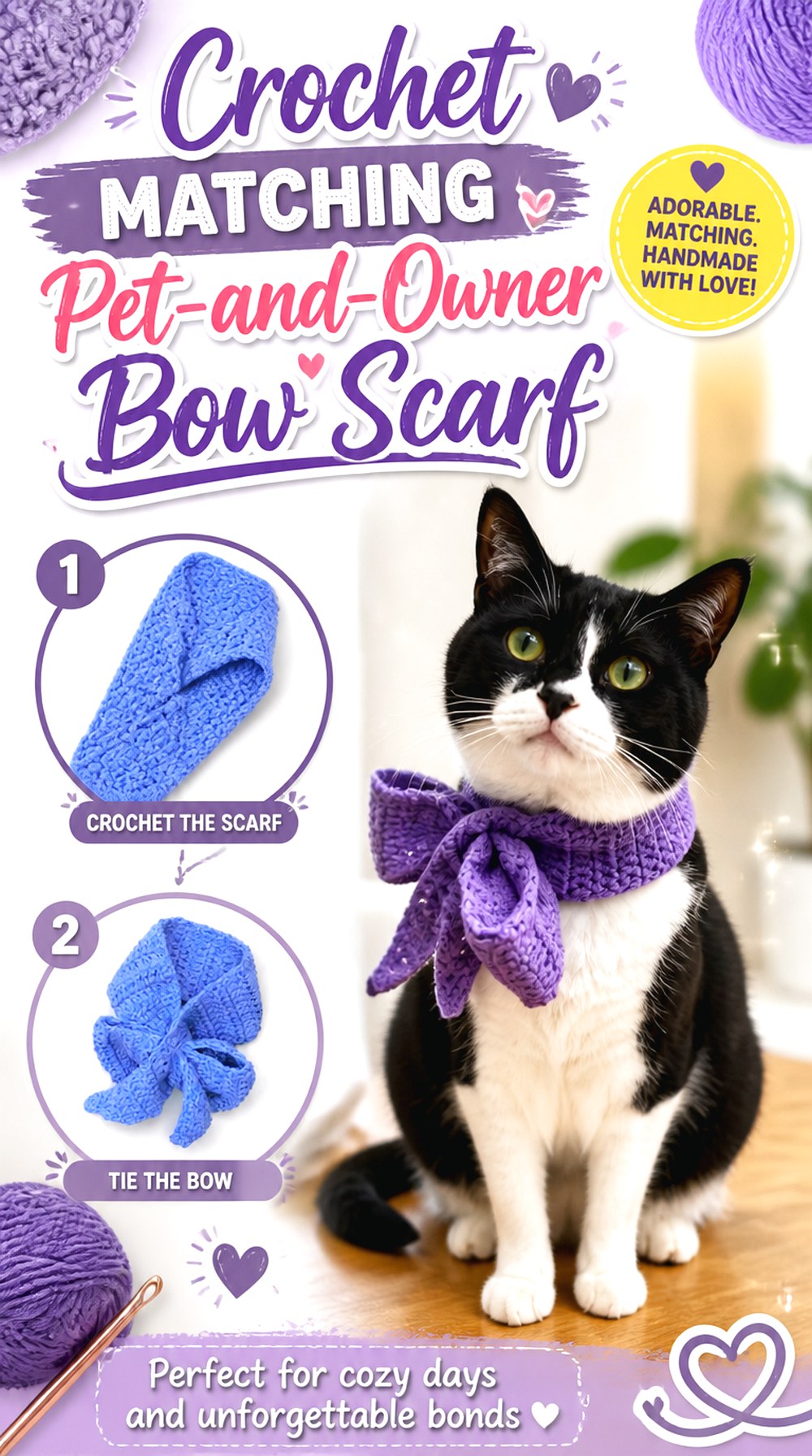
CreamCreamCat’s tutorial introduces a completely different scale: the demonstrated bow scarf is made for pets. The accompanying pattern information explains that it can also be enlarged for matching scarves for owners and pets. The design also includes a hidden opening, making the fastening method part of the finished look rather than relying on dangling ties.
This is a playful direction for coordinated accessories, but pet neckwear needs more caution than a human scarf. A cute bow should never take priority over unrestricted movement or safe supervision. If adapting the idea for a person, use the tutorial’s construction concept while recalculating fit rather than treating the pet proportions as a universal template.
Pet Neckwear Calls for a Stricter Fit Check
Any crocheted accessory worn around an animal’s neck should be comfortable, nonrestrictive, and supervised. Check that the scarf does not interfere with breathing, movement, eating, identification, or normal collar use. Consider snag risks in the animal’s environment as well, and remove decorative neckwear when it cannot be monitored appropriately.
The Hidden Opening Keeps the Front Visually Clean
The source specifically highlights a hidden opening in the scarf. That makes this design interesting even apart from its pet scale because the fastening does not need to become a separate decorative feature. When resizing, remember that the opening and the section passing through it must be reconsidered together; scaling only the overall length may not preserve the same function.
Matching Versions Should Share Style, Not Necessarily Dimensions
A pet-and-owner set can look coordinated through yarn, color, edging, and bow shape without using proportionally identical dimensions. The human version needs to fit a human neckline, while the pet version must suit the individual animal safely. Treat the two projects as related designs rather than simply enlarging every measurement by an arbitrary factor.
Original Tutorial and Creator Credit
Creator: CreamCreamCat
14. Crochet Textured Keyhole Bow Effect Scarf
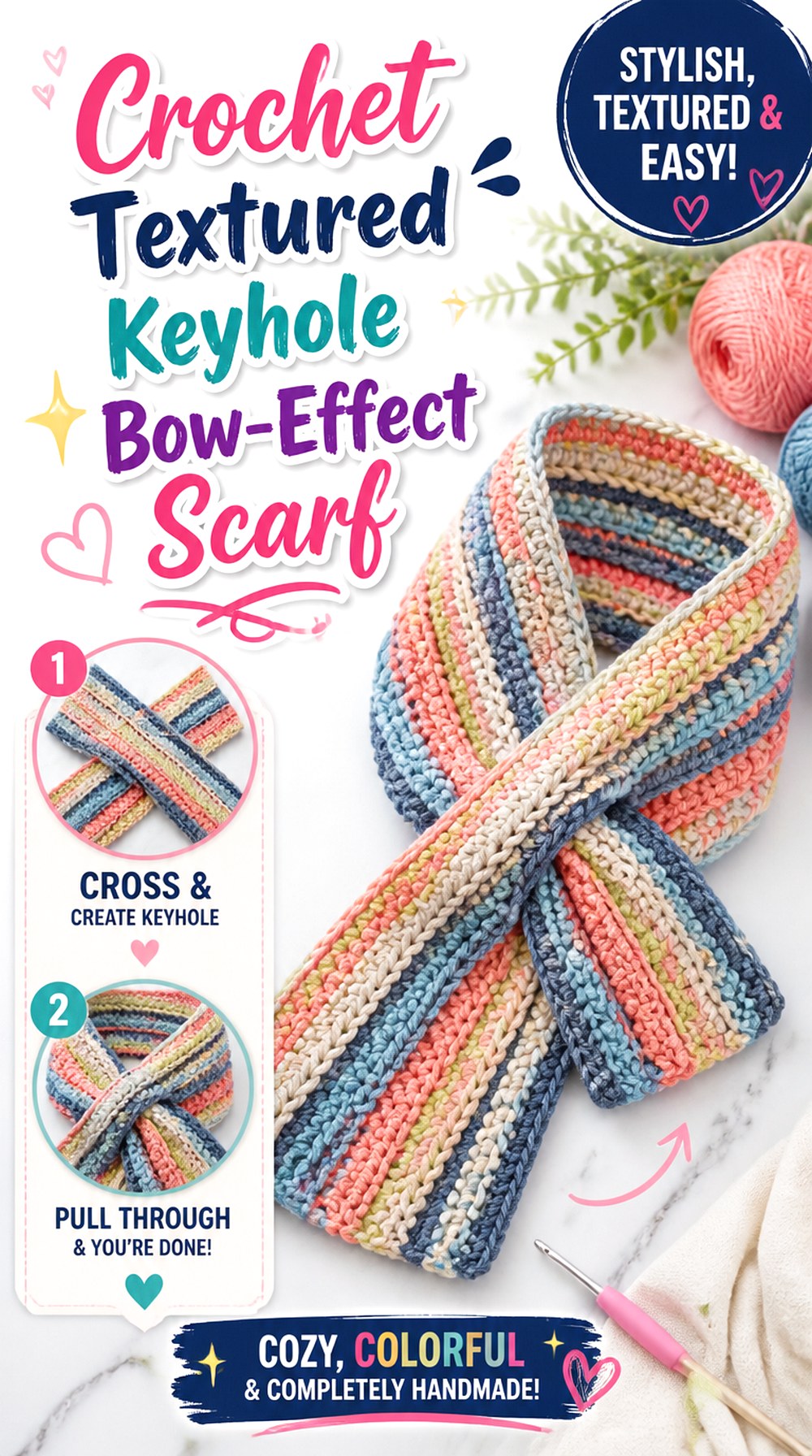
Atreyu Crochet’s tutorial teaches a keyhole scarf rather than an explicitly named decorative bow scarf. It earns a place here as an adaptation route because the pull-through closure can be arranged into the same tidy crossed, bow-like front associated with many bow scarves. This option is useful if texture and practical fastening matter more to you than a literal attached bow.
The distinction is important: follow the creator for the keyhole scarf construction, then judge the bow effect through styling rather than expecting the tutorial to add a separate bow motif. That makes this project a quieter choice for readers who like the function of bow scarves but prefer an understated finished accessory.
Texture Can Become the Decorative Feature
Because this project does not depend on an applied bow, surface texture can supply visual interest. Before adding extra embellishment, look at how the stitch pattern appears when the end is pulled through the keyhole. Layering the fabric already creates shadows and dimension, so additional bows may be unnecessary if you prefer a restrained design.
Treat the Bow Look as Styling, Not Source Construction
The creator teaches a keyhole scarf. The bow-like appearance is an editorial styling option based on arranging the crossed front, not a separate bow component from the tutorial. That distinction makes the project most suitable for readers who are comfortable adapting presentation while leaving the source construction intact.
Check the Opening After Any Texture Change
Texture can increase effective fabric thickness even when the yarn weight remains similar. If you substitute a denser stitch concept or add edging, verify that the finished end still moves through the keyhole comfortably. A decorative change that prevents the closure from functioning would undermine the main advantage of choosing this style.
Which Crochet Bow Scarf Style Should You Choose?
For the lightest, most accessory-like result, start with the Multi-Wear Skinny Bow Scarf, Lace Bowtie Neckerchief, or Ribbon Neckline Bow Scarf. They emphasize tying and proportion more than winter bulk.
If you want a scarf that stays arranged without tying a conventional bow, the Pull-Through Keyhole, Minimal Bow Keyhole, and Textured Keyhole Bow-Effect versions make the fastening part of the design. The Buttoned Bow Collar offers an even more fixed closure.
For a larger visual statement, choose the Chunky Bow-Tie, Chunky Applied-Bow, or Tassel-and-Bow Statement Scarf. The Fall Leaf Bow-Effect Scarf is the most shape-driven seasonal option, while the Short Bow Neck Warmer minimizes loose length. The Pet-and-Owner Bow Scarf is the specialized choice for coordinated accessories where careful pet safety and sizing come first.
Conclusion
The most useful way to choose among these 14 crochet bow scarf ideas is to decide what should create the bow effect. A tied skinny scarf offers styling flexibility; a keyhole gives a compact pull-through closure; a buttoned collar stays more fixed; and attached bows create the strongest decorative statement. Yarn thickness then determines how soft, structured, or bulky that shape becomes.
For lighter outfits, the neckerchief and ribbon styles keep the neckline relatively clean. For winter impact, the chunky bow and embellished scarf options have more visual presence. Whatever direction you choose, check fit, opening function, and yarn behavior before making major adaptations, and use each creator’s original tutorial for the exact construction details.
Frequently Asked Questions
What is the difference between a crochet bow scarf and a keyhole scarf?
A bow scarf describes the finished visual effect, while a keyhole scarf describes a fastening method. Many bow scarves are keyhole scarves because one end passes through an opening and creates a crossed front resembling a bow. Other bow scarves use an actual tied bow, an attached dimensional bow, or a buttoned bow-shaped collar. Check the construction rather than relying only on the project name.
How can I keep a crochet bow from looking too floppy?
First consider whether the chosen yarn produces enough body for the type of bow you want. A true tied bow can benefit from drape, while a dimensional decorative bow generally needs enough structure to keep its loops visible. Before remaking the entire project, crochet a small sample or bow component with the proposed yarn and see how it behaves when folded, tied, or held vertically.
Can I substitute a different yarn weight in a bow scarf tutorial?
You can adapt many scarf concepts, but changing yarn weight can alter width, length, bulk, drape, and closure function at the same time. This is especially important for keyhole designs because the completed scarf end still needs to fit through its opening. Compare your fabric with the creator’s finished example and recheck fit rather than assuming that changing hook size alone will preserve the proportions.
How do I know whether a keyhole opening is large enough?
Test it with the actual section of finished scarf that will pass through it. A flat measurement alone does not account for thickness, texture, edging, or how much the fabric compresses. If you changed yarn or added a border, test before finishing the entire scarf. The end should pass through without excessive force while still producing the amount of overlap you want.
Which crochet bow scarf works most comfortably under a coat?
A slim neckerchief, ribbon scarf, or relatively flat keyhole scarf usually creates less front bulk than a chunky scarf covered in dimensional bows. However, coat collars vary considerably. The most reliable checkpoint is to try the scarf with your intended outerwear before finalizing fit or decorative placement, especially if the coat has a high neck, narrow lapels, or a close front closure.
How should I care for dimensional bows after washing?
Follow the care instructions for the actual yarn first, because fibers differ in their tolerance for water, agitation, steam, and heat. After cleaning, reshape dimensional bows gently while the scarf dries if the fiber permits. Avoid assuming that ironing or aggressive steam blocking is safe. Store the scarf without crushing large bows or tassels so the decorative sections are less likely to remain flattened.