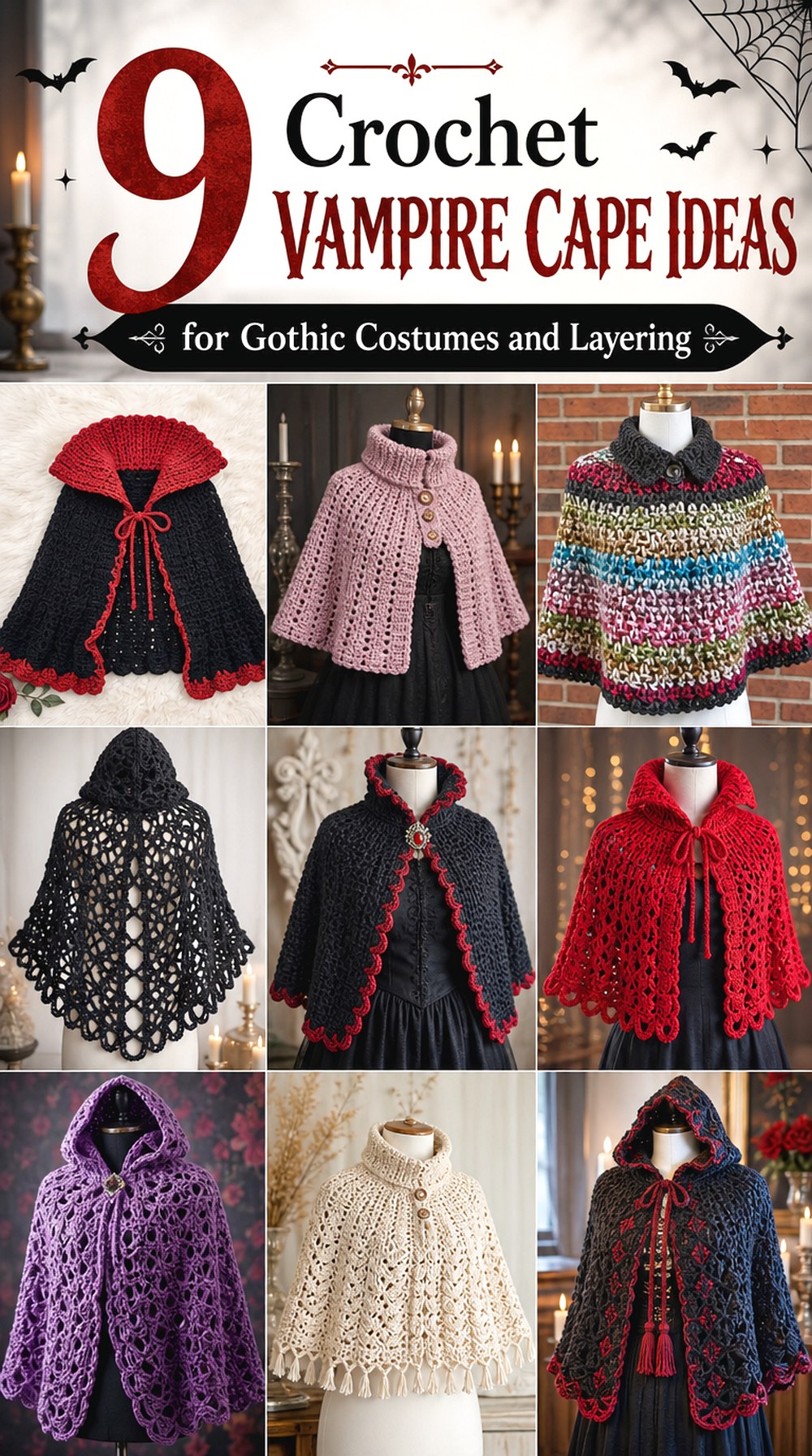
9 Crochet Vampire Cape Ideas for Gothic Costumes and Layering
A crochet vampire cape can be much more than a black shoulder covering. The strongest designs use silhouette to create the character: a long cloak gives dramatic movement, a hood changes the face-framing effect, a compact capelet keeps a costume lighter, and an open front lets the clothing underneath become part of the look.
Exact vampire-specific crochet videos are limited, so this collection combines a true vampire pet cape tutorial with verified cape, cloak, capelet, and hooded-cape tutorials that can provide different structural starting points for vampire-inspired styling. The original creators should be followed for construction. The dark colors, contrast edging, gothic presentation, and costume combinations discussed here are adaptation ideas rather than replacement patterns.
Quick List
- Crochet Dramatic Hooded Vampire Cloak
- Crochet Full-Length Gothic Vampire Cape
- Crochet Moss-Stitch Vampire Hooded Capelet
- Crochet Classic Open-Front Vampire Cape
- Crochet Lightweight Vampire Shoulder Capelet
- Crochet Textured Gothic Vampire Capelet
- Crochet Short Vampire Poncho Cape
- Crochet Button-Front Victorian Vampire Capelet
- Crochet Cat Vampire Costume Cape
Choose the Cape Silhouette Before Choosing the Vampire Details
Length changes the costume more dramatically than color. A long cloak creates a strong vertical outline and can become the main garment, while a shoulder capelet leaves more of the shirt, dress, vest, or costume underneath visible. Hooded designs move the focus upward and create a mysterious face-framing shape. Open-front capes feel less enclosed and allow contrasting clothing to show through.
Decide where you want the visual emphasis before adding red edging, decorative clasps, gothic buttons, or other themed details. A strong basic silhouette usually needs fewer embellishments. If you plan to modify a tutorial, check how changes around the neckline or front opening could affect the original fit before committing to them.
Yarn Drape Can Change a Vampire Cape’s Character
A cape that is meant to sweep or fold around the body benefits from enough drape to move naturally. A stiffer fabric can make the lower edge project outward instead, which may be useful for a short theatrical cape but less appealing for a flowing cloak.
Texture matters too. Dense stitches can make black yarn look substantial and graphic, while open or lightweight fabric can produce a softer, more spectral effect. Do not assume that swapping yarns will preserve the creator’s finished dimensions. If the original tutorial includes gauge or sizing information, use that information when changing fibers or hook sizes. For costume use, also consider the temperature and clothing that will sit underneath the cape.
Plan the Neckline and Closure Around How the Cape Will Be Worn
The neckline does much of the practical work because the entire cape hangs from that area. Hoods add weight, while buttons, ties, or open fronts distribute and control the garment differently. Before choosing a tutorial, consider whether the cape will be worn for photos, walking around an event, trick-or-treating, or ordinary layering.
A dramatic separate costume collar can sometimes provide the classic vampire effect without rebuilding the crocheted neckline itself. If you add a closure that is not part of the source design, check that it does not pull the fabric unevenly. For children or pets, avoid long loose ties or detachable decorations that could create unnecessary snagging or chewing hazards.
1. Crochet Dramatic Hooded Vampire Cloak
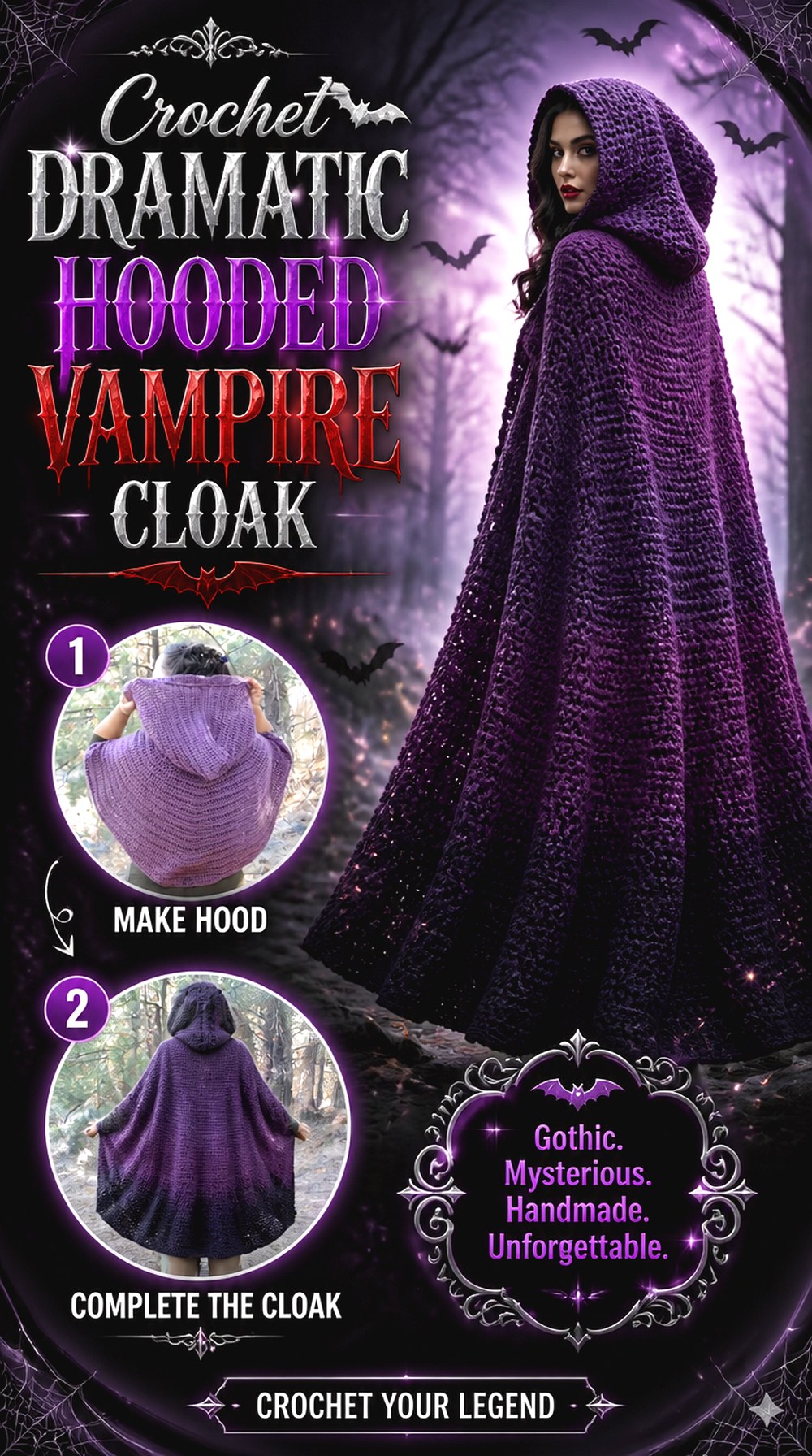
This Crochet Dramatic Hooded Vampire Cloak is the strongest choice when the cape needs to carry most of the costume. The source tutorial is specifically presented as a hooded cloak/cape for costume and Halloween use, giving it a closer thematic connection than an everyday shoulder wrap.
The hood creates an immediately darker outline around the head and shoulders, while the cloak shape provides more visual coverage than a capelet. A black body with restrained burgundy or deep red accents could support a classic vampire palette without requiring the entire garment to be heavily decorated. Review both parts of the creator’s tutorial before beginning because the first video is explicitly identified as part one.
Let the Hood Create the Main Gothic Shape
A hood already provides strong costume character, so it does not necessarily need additional large embellishments. Check how the finished hood rests when down as well as when worn up. That back view matters because a hood that is too visually heavy can dominate a shorter cape. If you plan contrasting edging, keeping it narrow around the hood can emphasize the outline without distracting from the cloak itself.
Decide How Much Clothing Should Remain Visible
A fuller hooded cloak can conceal much of an outfit. That works well when the cloak is the centerpiece, but it is less useful if you want an embroidered shirt, waistcoat, dress bodice, or jewelry to remain prominent. Look at the finished front opening before choosing this route and plan the rest of the costume around the amount of coverage the cloak naturally provides.
Review the Complete Tutorial Sequence First
The creator labels this video as part one and notes that part two continues the project. Locate both before starting rather than assuming the first video contains the entire construction. That is especially important for a costume garment where the hood, neckline, and body need to work together visually.
2. Crochet Full Length Gothic Vampire Cape
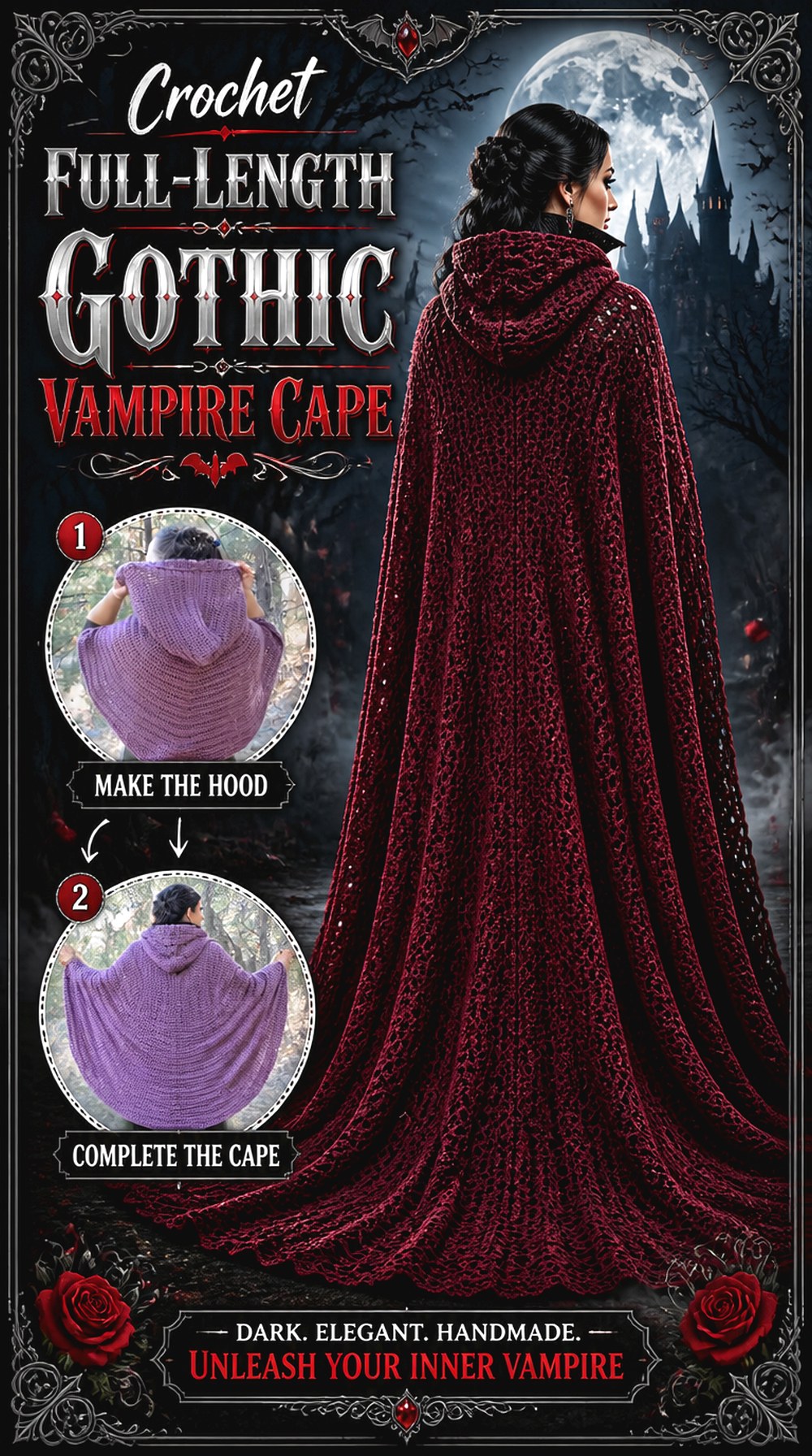
A long cape gives a vampire costume a completely different presence from a shoulder wrap. Bag-O-Day Crochet’s source is explicitly a long cloak cape tutorial, making this option useful when you want length and sweeping coverage to define the finished look.
For vampire styling, the uninterrupted vertical shape can do most of the visual work. Black, charcoal, deep plum, or another dark solid would keep attention on the silhouette, while a contrasting garment underneath could provide the red accent instead. This choice is better suited to someone who wants an outer layer that reads as a cloak from a distance rather than a decorative capelet.
Longer Fabric Makes Weight More Important
The farther a crochet cape extends down the body, the more finished fabric it contains. Yarn choice therefore affects more than warmth. A heavier fabric can pull at the neckline and shoulders, while a lighter fabric may move more freely. Follow the creator’s material guidance closely before substituting yarn, particularly if maintaining the intended length and drape matters.
Check Movement Before Adding Extra Trim
Fringe, wide borders, dimensional motifs, and heavy decorative edging all add mass to an already long garment. Before adapting this cape for a vampire costume, decide whether movement or decoration matters more. A cleaner lower edge may create a stronger sweeping silhouette and can also reduce the chance of costume trim catching on footwear or nearby objects.
Keep the Vampire Contrast Strategically Placed
A long cloak does not need red throughout the entire body. A smaller amount of contrast near the opening, neckline, or clothing beneath the cape can provide the traditional black-and-red association without breaking up the vertical line. If you change edging from the tutorial, first check how the original border contributes to the cape’s finished shape.
Original Tutorial and Creator Credit
Creator: Bag-O-Day Crochet
3. Crochet Moss Stitch Vampire Hooded Capelet
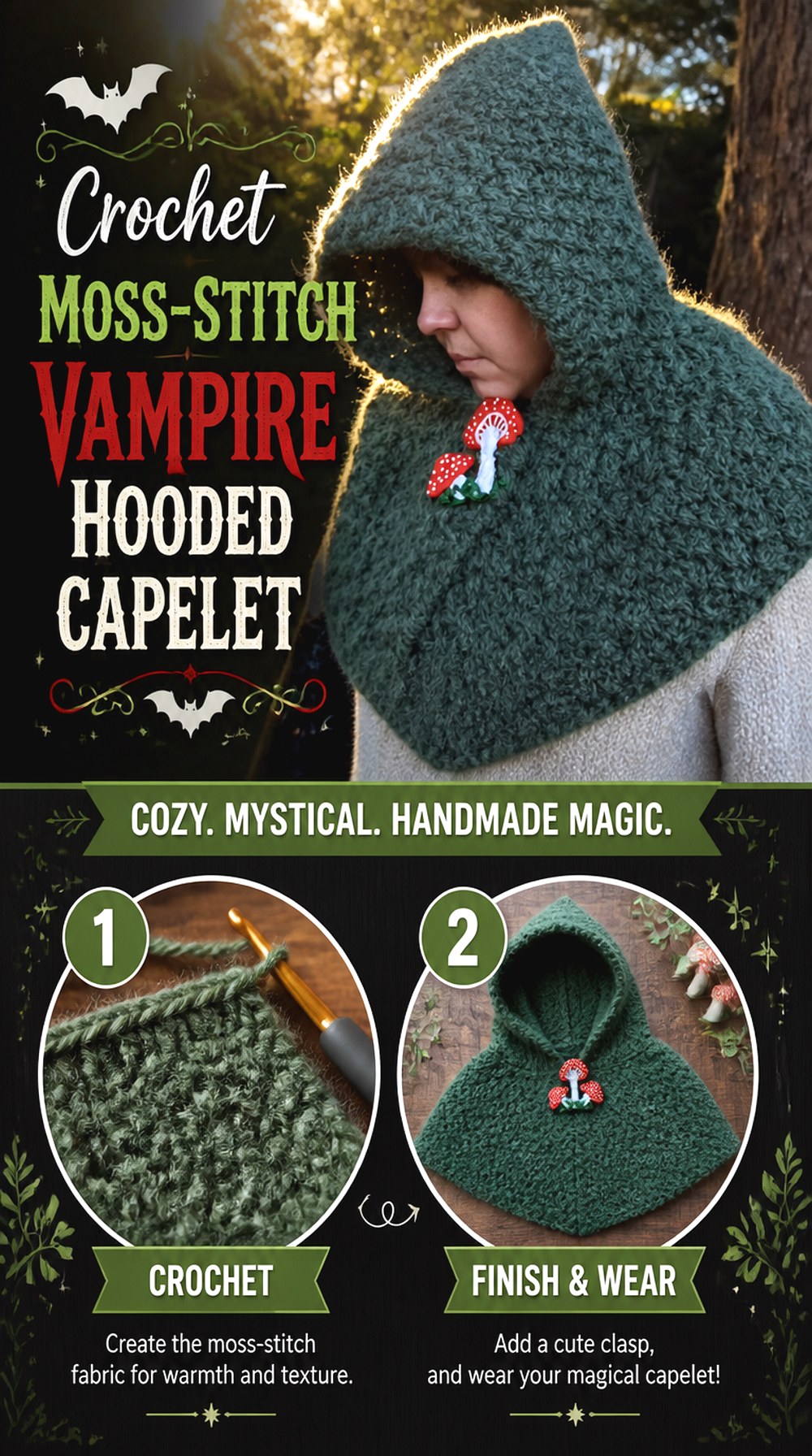
This Crochet Moss-Stitch Vampire Hooded Capelet keeps the mysterious hood but removes much of the length of a full cloak. Lizfaerie Crafts’ finished piece uses a hooded capelet format and extended moss stitch, creating a textured shoulder layer with a strong fantasy character.
That compact shape works well when you want a vampire-inspired garment that can sit over a dress or top without concealing the entire outfit. It can lean gothic, witchy, woodland, or theatrical depending on color. For a vampire version, the hood and dark palette can carry the theme while the shorter body keeps the silhouette lighter than the previous two cloaks.
A Short Cape Puts More Attention on the Shoulders
Because this design ends much higher than a long cloak, the shoulder line becomes more noticeable. Check how the capelet spreads across the upper arms and back when worn. If you are planning costume jewelry, a corset-style top, or decorative sleeves underneath, this silhouette leaves considerably more of those elements available to contribute to the overall vampire look.
Texture Can Get Lost in Very Dark Yarn
Dark yarn is an obvious vampire choice, but complex surface texture can become harder to read, especially in low indoor lighting. If the moss-stitch appearance is part of what attracts you to this design, consider whether charcoal, dark burgundy, or another slightly lighter gothic shade will show the fabric more clearly than absolute black.
Keep Hood Adaptations Light
The hood is already a focal point. Large appliqués, thick borders, or heavy decorative elements could change how it hangs from the neckline. If you want a more vampiric face frame, color contrast or a separate accessory may be less disruptive than changing the hood structure itself. Compare the finished hood shape with your costume plan before adding anything permanent.
Original Tutorial and Creator Credit
Creator: Lizfaerie Crafts
4. Crochet Classic Open Front Vampire Cape
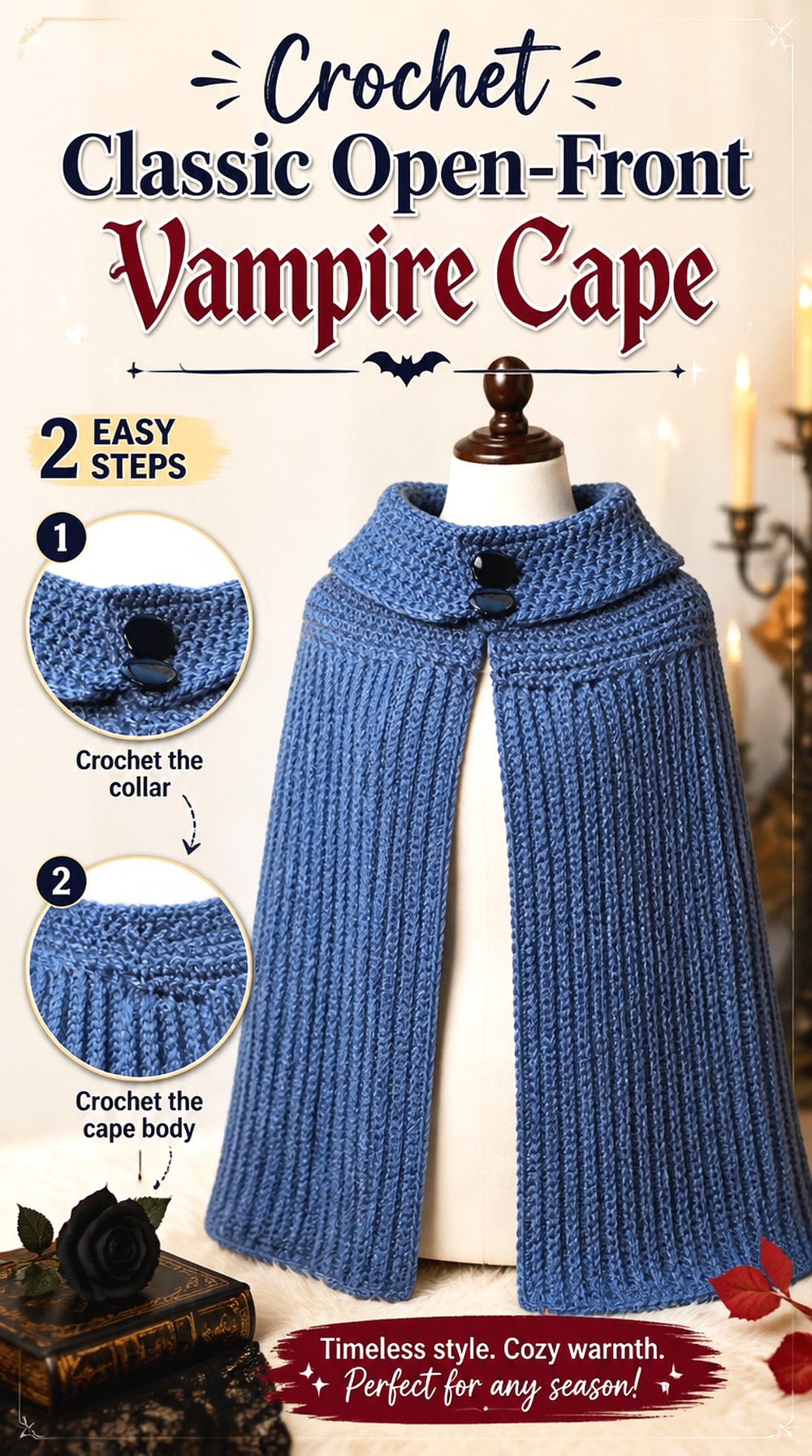
The open-front shape in this Crazy Cool Crochet tutorial offers a more tailored alternative to a hooded cloak. The source presents an updated classic crochet cape with an open front, and buttons are included among the listed materials.
That openness makes this version interesting for vampire styling because the costume underneath remains visible. A white shirt, dark dress, vest, or contrasting red layer can become part of the composition instead of being hidden. The silhouette also reads more like a wearable cape than a fantasy cloak, making it useful for readers who want something that can move between Halloween styling and less theatrical outfits.
Use the Open Front as Part of the Costume
Rather than trying to make every vampire detail part of the crochet, let the open center frame what is underneath. This is particularly useful when your costume already has a decorative neckline or contrasting shirt front. Before modifying the cape, look at how much of the torso remains visible and use that space deliberately.
Button Choice Can Shift the Mood
Buttons are among the materials listed for the source project. For a vampire interpretation, button style can change the impression without altering the crochet construction. A subdued dark button keeps the piece versatile, while a more ornate choice can push it toward Victorian or gothic styling. Make sure any replacement suits the intended attachment point and does not pull excessively on the fabric.
Structure Matters More Than Extra Decorations Here
This cape’s appeal comes from its clear open-front outline. Covering it with many motifs could compete with that shape. If you want a more theatrical version, consider concentrating visual detail near the neckline or closure area rather than scattering decorations across the entire body.
Original Tutorial and Creator Credit
Creator: Crazy Cool Crochet
5. Crochet Lightweight Vampire Shoulder Capelet

Not every vampire costume needs heavy winter fabric. Hectanooga1’s source is specifically a lightweight summer capelet or shawl, giving this idea a noticeably airier silhouette than the dense hooded and long-cloak options. The video presents several size ranges, so readers should follow its own sizing guidance rather than assuming one universal fit.
In black, wine, plum, or another dark color, the lighter shoulder layer could suit indoor Halloween events, warmer climates, photo styling, or costumes where a large cloak would be uncomfortable. The smaller scale also makes the clothing beneath it a major part of the finished appearance.
Lightweight Fabric Changes the Vampire Effect
This capelet will not create the same heavy shadowed silhouette as a long cloak, and that is its advantage. It can produce a more elegant or spectral interpretation instead. Choose it when you want movement and shoulder framing rather than maximum coverage. If you substitute yarn, verify the source’s sizing and fabric expectations because extra bulk can change that lightweight character.
Plan Contrast Around the Garment Beneath It
With less cape coverage, the top or dress underneath becomes visually important. A pale base can create strong traditional vampire contrast, while dark-on-dark layering produces a subtler gothic result. Decide on the complete outfit before choosing your cape color so the small garment does not disappear against the layer beneath it.
Confirm the Size Rather Than Scaling by Eye
The creator provides multiple size references in the tutorial information. Use the source guidance instead of simply adding random length or width. Shoulder garments can sit incorrectly if the neckline and body proportions are enlarged independently, so adaptation should preserve the relationship between those areas.
Original Tutorial and Creator Credit
Creator: Hectanooga1
6. Crochet Textured Gothic Vampire Capelet
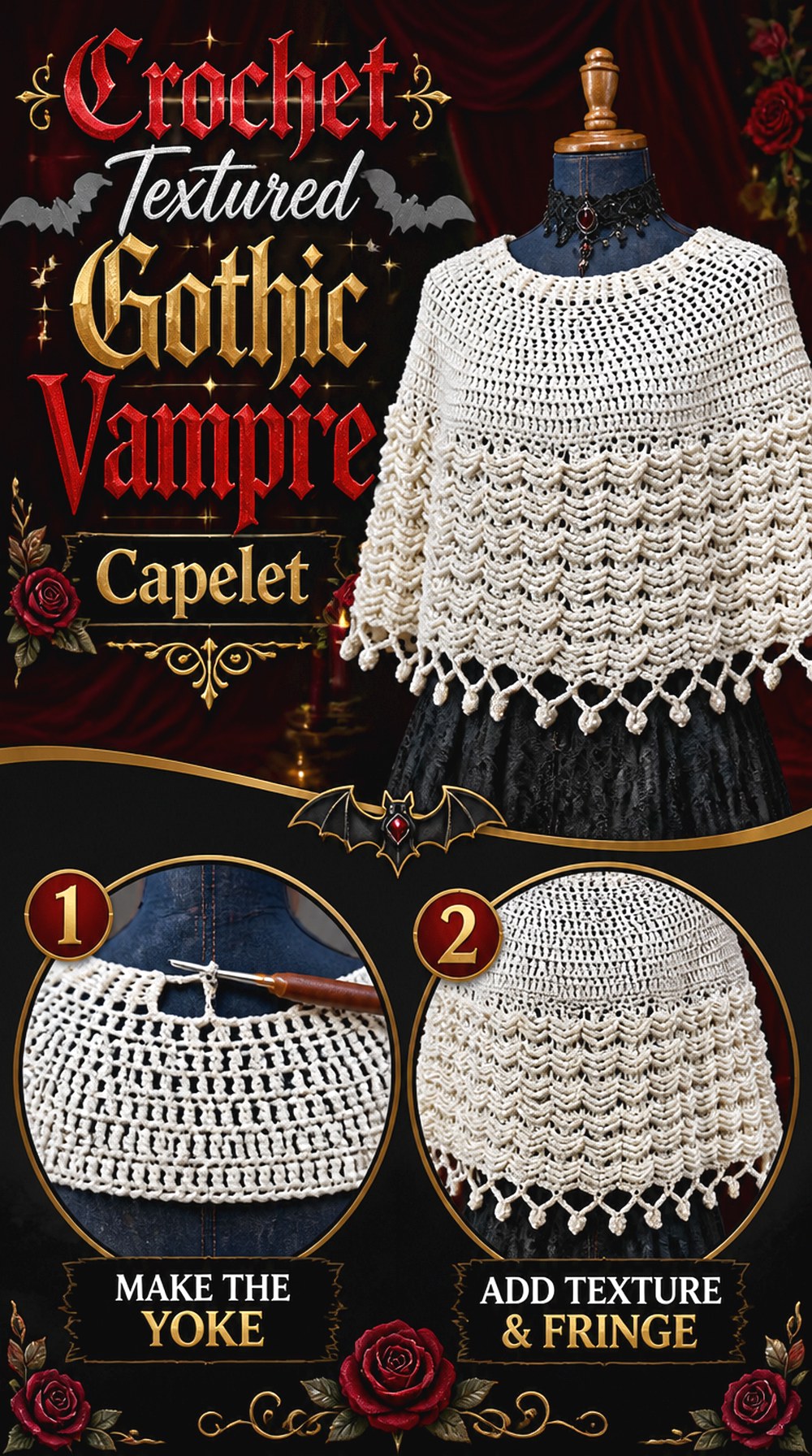
Texture is the main differentiator in this option. Stitches n Scraps’ Snowdrift Capelet uses prominent cable-like surface detail across the body, a circular yoke, a collar, and an optional decorative border. That combination gives the finished garment more dimensional character than the smooth lightweight capelet.
For vampire styling, the texture could create a sophisticated gothic effect without relying on novelty motifs. A deep solid color would let the raised surface become the decoration. This idea suits readers who want a substantial shoulder piece that feels more like designed clothing than a simple costume throw-on.
Choose a Color That Still Shows the Raised Texture
The cable-style detail is worth preserving visually. Very dark yarn under dim party lighting may hide some of the surface definition, while burgundy, aubergine, charcoal, or another near-black shade can keep the gothic mood while revealing more texture. View the fabric in the lighting where the cape will actually be worn before deciding.
The Circular Yoke Controls the Upper Fit
The source specifically identifies a circular yoke in the construction. That means the upper portion deserves more attention than simply measuring the lower edge. If you are adapting colors or decorative finishing, avoid changes that make the neckline rigid or excessively heavy because the yoke is responsible for how the capelet sits around the shoulders.
Optional Edging Can Change the Style Direction
The tutorial includes an optional pom-pom-style border. That finishing detail has a much softer, wintry personality than a classic vampire costume. For gothic styling, compare the capelet with and without that decorative element and choose the finish that better suits the character you want rather than automatically using every optional detail.
Original Tutorial and Creator Credit
Creator: Stitches n Scraps
7. Crochet Short Vampire Poncho Cape
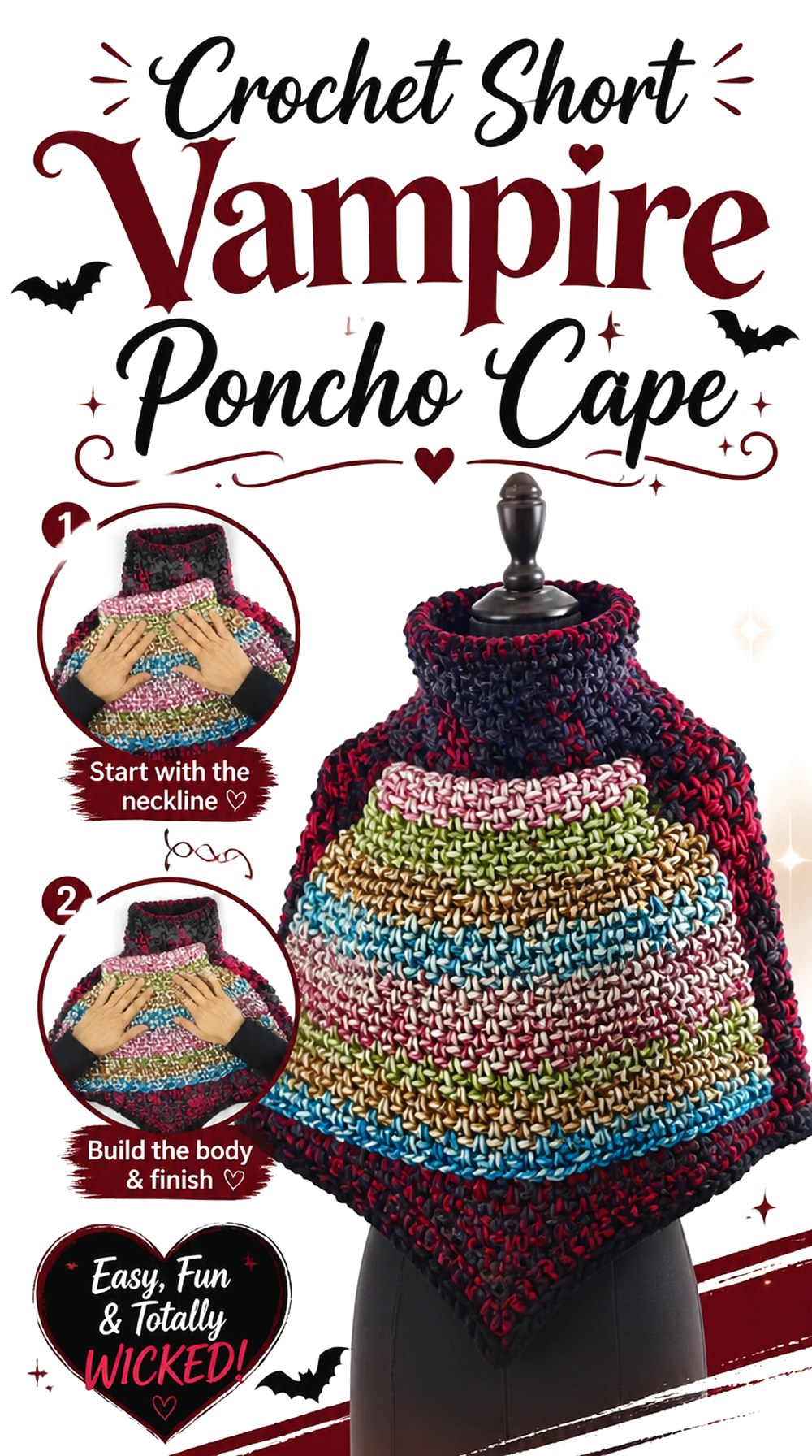
This short poncho-or-cape design offers a softer, more rounded silhouette than the open-front cape or narrow shoulder capelet. The Uncinettando Crochet&Love source shows women’s and girls’ versions and describes the result as a mini cape or poncho-style layer.
For vampire styling, the compact shape could work as an upper-body costume accent rather than a sweeping cloak. It is especially useful when freedom of arm movement or a less theatrical outline is preferred. Dark color blocking can create the theme, but the rounded shape will still feel distinctly different from a traditional rectangular cloak.
A Poncho Shape Changes Arm Movement
Unlike a fully open front, a poncho-like cape distributes fabric around the shoulders and upper body. Check where the lower edge falls relative to the arms before choosing it for an active event. If the wearer needs to carry a bag, handle props, or move frequently, make sure the finished coverage suits those activities.
Keep Color Blocking Simple
Because this silhouette is already compact, many narrow stripes or motifs can make it visually busy. A dark main color with one controlled contrasting section is usually enough to suggest a vampire palette. If you change the creator’s color arrangement, keep the original shaping and size information separate from your decorative decisions.
Compare the Intended Wearer to the Source Sizing
The tutorial specifically presents women’s and girls’ sizes and discusses adapting the size. Follow that guidance instead of assuming the same proportions work for every wearer. A mini cape that is too wide can start behaving more like a poncho, while one that is too narrow may restrict the shoulder area.
Original Tutorial and Creator Credit
Creator: Francesca Uncinettando Crochet&Love
8. Crochet Button Front Victorian Vampire Capelet
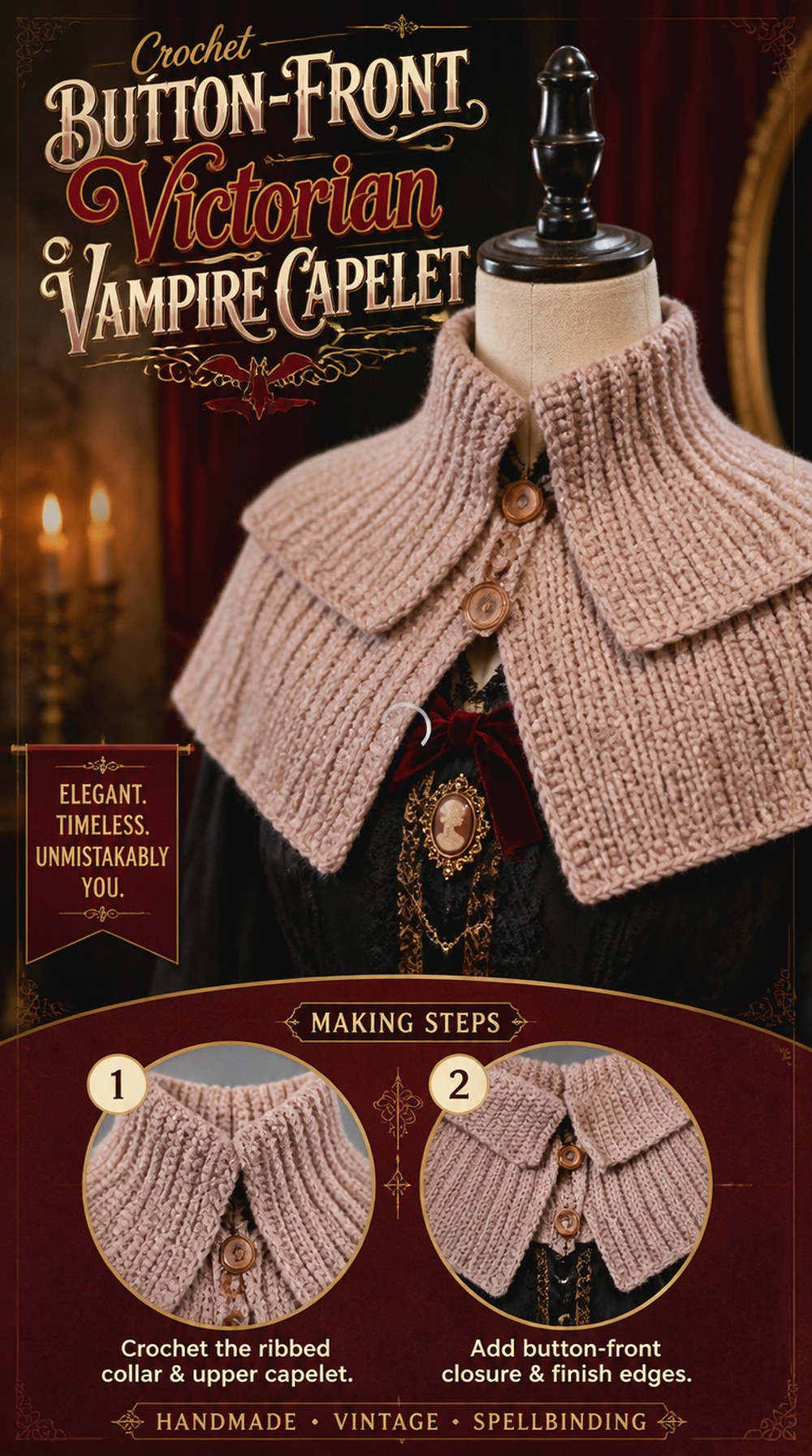
Sabrina Melodieuse’s crochet capelet introduces a clear front-button detail, with three buttons listed in the source materials. That closure gives this project a more dressed, vintage-leaning appearance than the open cape and makes it a good candidate for a restrained Victorian vampire interpretation.
The shorter capelet length means the closure remains visually prominent. Instead of adding many themed motifs, a dark solid yarn and carefully chosen buttons could give the garment enough character. This route works well when you want the vampire influence to look more historical or formal than overtly Halloween-themed.
Buttons Become Part of the Design Language
On a short capelet, front buttons are easy to see, so their scale and finish matter. A subtle dark button keeps attention on the crochet fabric; an ornate metal-look or jewel-like option shifts the piece toward theatrical styling. If substituting buttons, make sure they suit the creator’s intended attachment and do not create unnecessary weight at the front edge.
Check the Neckline Against Your Costume Collar
If you plan to wear a high shirt collar, necklace, jabot-style accessory, or separate vampire collar beneath the capelet, make sure those elements do not all compete around the same small area. Try planning the neckline stack before adding decorations. A simpler crochet edge may be more effective when the clothing underneath already provides strong historical detail.
Short Length Makes Proportion More Noticeable
Capelets rely heavily on where they stop across the upper torso. A version that ends close to the shoulder feels decorative, while additional depth creates more garment-like coverage. Use the creator’s actual construction and sizing rather than extending the piece casually, because changes in depth can alter the balance between neckline, buttons, and lower edge.
Original Tutorial and Creator Credit
Creator: Sabrina Melodieuse
9. Crochet Cat Vampire Costume Cape

The final project changes the wearer completely. Mhalee’s Crochet provides an actual crochet vampire cape tutorial made for cats, so unlike the previous adaptation-based ideas, the vampire theme is part of the source project itself.
A pet cape is much smaller than a human garment, but fit and supervision matter more because an animal cannot explain when a closure is uncomfortable or snagged. This idea is suitable primarily for a brief supervised photo or costume moment. Avoid adding beads, loose buttons, long cords, or other detachable decorations that a pet could chew or catch.
Prioritize Comfortable Neck and Shoulder Placement
Do not judge pet fit from appearance alone. The cape should not interfere with normal breathing, walking, head movement, or the animal’s ability to lie down comfortably. Watch the source carefully for how the finished piece is positioned. If the cat resists clothing or appears uncomfortable, the costume should be removed rather than adjusted repeatedly during wear.
Keep Added Decorations Minimal
A small vampire cape can already communicate the theme through its shape and contrasting colors. Extra beads, chains, bells, or dangling ties add unnecessary opportunities for chewing and snagging. For a pet version, simple visual contrast is a better adaptation route than turning the cape into a heavily embellished costume.
Treat It as Supervised Costume Wear
Crocheted pet costumes should not be left on an unattended animal. Yarn loops and closures can catch on furniture or claws, and some animals will chew unfamiliar materials. Use the cape only when someone is actively watching the pet, and remove it promptly if the animal paws at it, freezes, struggles, or otherwise appears distressed.
Which Crochet Vampire Cape Shape Should You Choose?
For the strongest traditional costume silhouette, start with the Dramatic Hooded Vampire Cloak or Full-Length Gothic Vampire Cape. They provide the most coverage and make the cape itself the dominant costume element.
Choose the Moss-Stitch Hooded Capelet when you want a hood without full length. The Classic Open-Front Cape and Button-Front Victorian Capelet leave more room for clothing underneath to contribute to the character. The Lightweight Shoulder Capelet works better when warmth and bulk are concerns, while the Textured Gothic Capelet emphasizes crochet surface detail. For a compact rounded silhouette, use the Short Vampire Poncho Cape. The cat version belongs in a separate category and should be treated as supervised pet costume wear.
Conclusion
The most convincing crochet vampire cape does not necessarily need the most decorations. Start by choosing the silhouette that fits the costume: a long hooded cloak for maximum drama, a buttoned or open cape for more formal gothic styling, or a short capelet when the outfit underneath should remain visible. Texture and yarn drape can then refine the mood without forcing every vampire reference into the crochet itself.
Several of these projects are cape constructions rather than vampire-specific designs, so treat the dark palettes and costume details as adaptations. Use the original tutorials for exact construction, sizing, materials, and finishing information, especially around necklines, hoods, and closures.
Frequently Asked Questions
Can any crochet cape tutorial be turned into a vampire cape?
Not automatically. A cape can support vampire styling, but the original silhouette still determines the final look. Long cloaks naturally feel more theatrical, while short capelets are closer to decorative shoulder layers. Rather than changing the construction heavily, start with a tutorial whose length, neckline, opening, and coverage already resemble the costume you want, then use color and removable styling details to develop the vampire theme.
What colors work besides black and red for a crochet vampire cape?
Charcoal, aubergine, oxblood, deep burgundy, smoky gray, and very dark plum can all create a gothic effect. Slightly lighter dark shades may also reveal crochet texture more clearly than pure black. If the cape has strong cables, moss stitch, or decorative edging, check the yarn under realistic lighting before committing to a color that could hide those details.
Should a vampire cape have a hood or a standing collar?
Either can work, but they create different characters. A hood gives the cape a mysterious fantasy or gothic outline and usually adds visual weight around the back of the neckline. A standing collar gives a more traditional Dracula-inspired look. If the chosen crochet tutorial does not include that collar structure, consider a separate costume accessory instead of rebuilding the neckline without guidance.
How do I check whether a crochet cape will fit over a costume?
Look beyond chest size alone. Check the source’s neckline, shoulder coverage, finished depth, and any stated sizing information, then consider what will be worn underneath. A cape that fits over a light shirt may sit differently over a jacket, padded costume, or layered dress. When the tutorial provides measurements or gauge, use those rather than estimating from the video thumbnail.
Is a heavier yarn better for a dramatic vampire cape?
Not necessarily. Heavier fabric can look substantial, but a long crochet cape already contains considerable material, so extra weight may pull more strongly at the neckline and shoulders. A lighter or more fluid fabric may create better movement. Follow the tutorial’s yarn recommendations first, particularly for long or hooded projects, before experimenting with major yarn substitutions.
How can I make a vampire cape look gothic without adding lots of appliqués?
Use silhouette, texture, and a small number of intentional details. A deep hood, long vertical drape, ornate-looking buttons, restrained contrast edging, or a dark textured yarn can establish the style without covering the garment in bats or other motifs. This also keeps adaptations from interfering unnecessarily with the original cape construction.
What should I consider when making a vampire cape for a pet?
Comfort and supervision come before appearance. Avoid long ties, loose embellishments, beads, or decorations that can be chewed or snagged. The cape should not restrict breathing, head movement, walking, or resting. Keep costume sessions brief, supervise continuously, and remove the garment immediately if the animal tries to escape it or shows signs of discomfort.


