17 Crochet Toadstool Keychain Ideas for Cute, Useful, and Characterful Charms
A crochet toadstool keychain can be much more than a tiny red mushroom with white spots. The projects in this collection range from compact amanita charms and woodland mushrooms to character designs, a shiitake, a pumpkin-capped version, key covers, storage pouches, and an interactive mushroom fidget. Some are designed mainly to decorate keys or bags, while others add a practical function.
The differences matter at such a small scale. Cap proportions determine whether the mushroom silhouette reads clearly, embellishments affect snagging and care, and the way the hardware connects to the crochet can become more important than the decorative details. This guide highlights those trade-offs so you can choose a project for its shape, function, finishing style, and intended use, then follow the credited original tutorial for the actual construction.
Quick List
- Crochet Kawaii Face Toadstool Keychain
- Crochet Classic Amanita Toadstool Keychain
- Crochet Flat-Bottom Toadstool Keychain
- Crochet Pom-Pom Spot Toadstool Keychain
- Crochet Scarf-Wearing Toadstool Doll Keychain
- Crochet No-Sew Woodland Mushroom Keychain
- Crochet Frog Toadstool Keychain
- Crochet Pumpkin-Cap Toadstool Keychain
- Crochet Sheep-Hat Mushroom Keychain
- Crochet Shiitake Mushroom Bag Charm
- Crochet Toadstool Chapstick Sleeve Keychain
- Crochet Floral Sliding-Top Mushroom Pouch Keychain
- Crochet Mushroom Key Cover Keychain
- Crochet Two-Color Squishy Mushroom Keychain
- Crochet Tall-Stem Toadstool Keychain
- Crochet Short-and-Squat Toadstool Keychain
- Crochet Popping Mushroom Fidget Keychain
Choose Yarn With Scale and Structure in Mind
Small mushroom charms generally benefit from fabric dense enough to keep stuffing contained and preserve the transition between cap and stem. Changing yarn can alter far more than color: thicker or fluffier yarn enlarges the silhouette and can soften small embroidered details, while a smooth yarn usually makes shaping, spots, and facial features easier to see. Some original tutorials intentionally use different yarn types, so check the creator’s materials before substituting.
Also consider how the finished piece will be used. A soft, plush mushroom can work nicely as a bag charm, but bulk may be inconvenient on a crowded key ring. Functional key covers and holders need enough flexibility to open or move without becoming so stretchy that their contents slip out. When changing yarn weight, treat the tutorial’s finished proportions—not an assumed universal size—as your reference.
Make the Keychain Attachment a Structural Decision
The metal ring is small, but it creates a concentrated pull point every time the charm is lifted, dropped into a bag, or tugged from a pocket. Check how the original designer anchors the hardware instead of simply pushing a jump ring through whichever stitch is convenient. An attachment that spreads strain across a secure area of the cap or a reinforced yarn loop is generally preferable to repeatedly loading one loose surface loop.
Before calling the project finished, hold the charm by its hardware and inspect the surrounding crochet for distortion. Functional versions need another check: the hanging loop should not obstruct a pouch opening, key-cover movement, or removable item. Metal findings can also affect washing, so care should follow both the yarn label and any creator-specific guidance rather than a single rule for every keychain.
Decorative, Functional, or Fidgeting?
Start by deciding what the charm actually needs to do. A stuffed amanita or character mushroom is primarily decorative, so silhouette and secure embellishment can take priority. A chapstick sleeve, sliding pouch, or key cover needs usable clearance and movement as well as an attractive mushroom shape. Interactive popping mushrooms introduce another requirement: the fabric must still move as intended after stuffing and hardware are added.
Recipient also matters. Keychain rings, clasps, safety eyes, beads, pom-poms, and similar embellishments are small components that can potentially detach. A keychain should not automatically be treated as a young child’s toy. For projects intended around small children, consider embroidered details where appropriate and assess every attachment carefully. Even then, the metal keychain hardware itself remains a small-part consideration.
1. Crochet Kawaii Face Toadstool Keychain
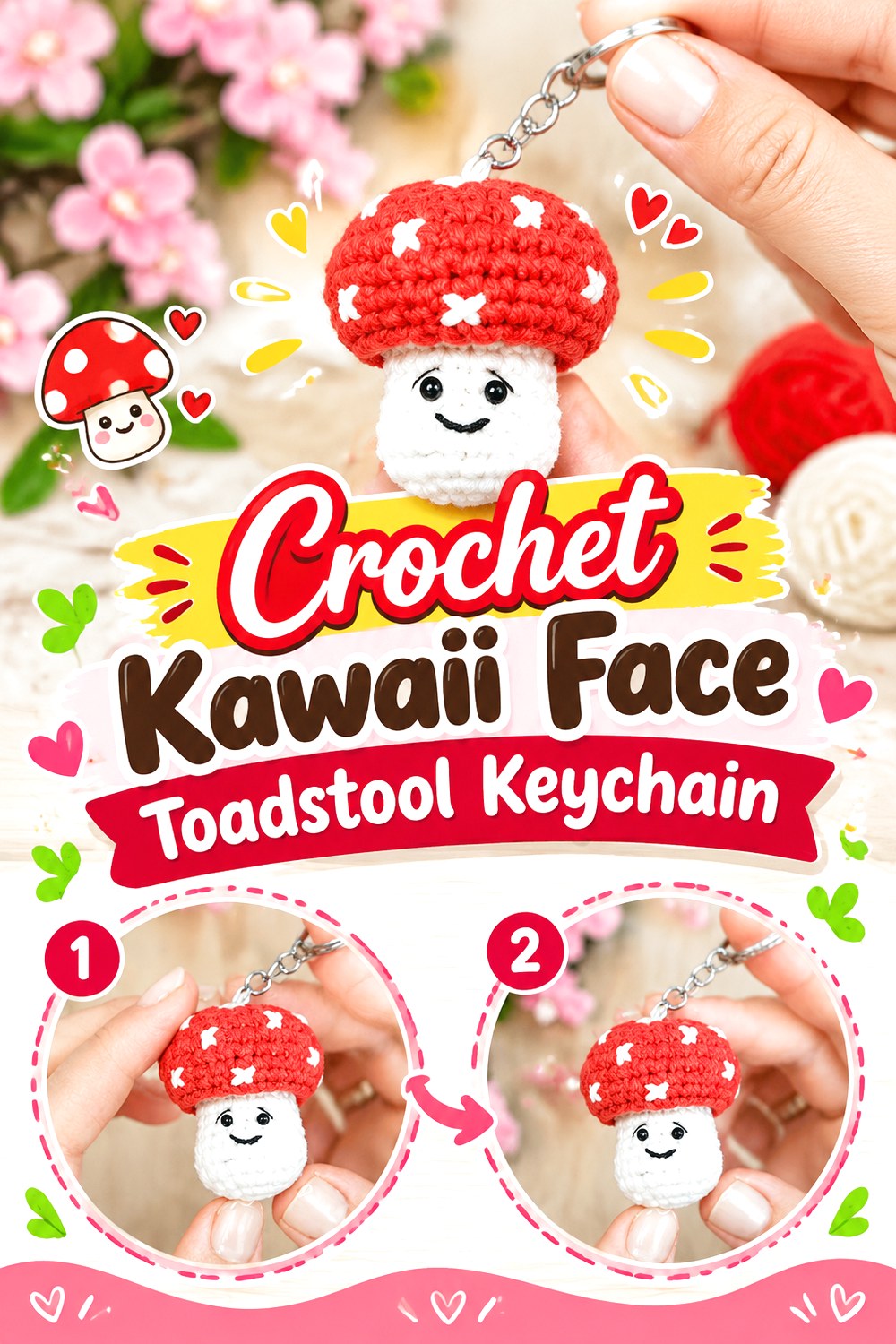
This version turns the familiar spotted mushroom into a tiny character. DidyToys’ tutorial shows a stuffed mushroom with a contrasting cap, spots, a smiling face, eyebrows, and keychain hardware, so the expression is a major part of the finished design rather than an afterthought. It works particularly well when you want a charm that reads as cute amigurumi instead of botanical mushroom decor.
Because several visual details compete for attention on a small surface, proportion matters. Leave enough open cap area for the spots and enough uninterrupted stem area for the face. Enlarging individual features without considering the whole mushroom can make the expression dominate the silhouette.
Keep the Face Readable at Keychain Scale
Before permanently securing facial elements, view the mushroom from the distance at which it will normally be seen hanging from a bag. Very tiny details can disappear, while oversized eyes or a broad mouth can visually shorten the stem. Temporary placement with pins or removable markers can help you judge expression and spacing before committing.
Protect the Details That Get Handled Most
Faces and cap spots sit on exposed surfaces that may rub against keys, zipper pulls, and bag interiors. Whatever finishing method the source calls for, check loose yarn ends and surface details carefully before attaching the hardware. If you adapt the face, flatter embroidered features generally create fewer projecting points than bulky additions.
Original Tutorial and Creator Credit
Creator: DidyToys
2. Crochet Classic Amanita Toadstool Keychain
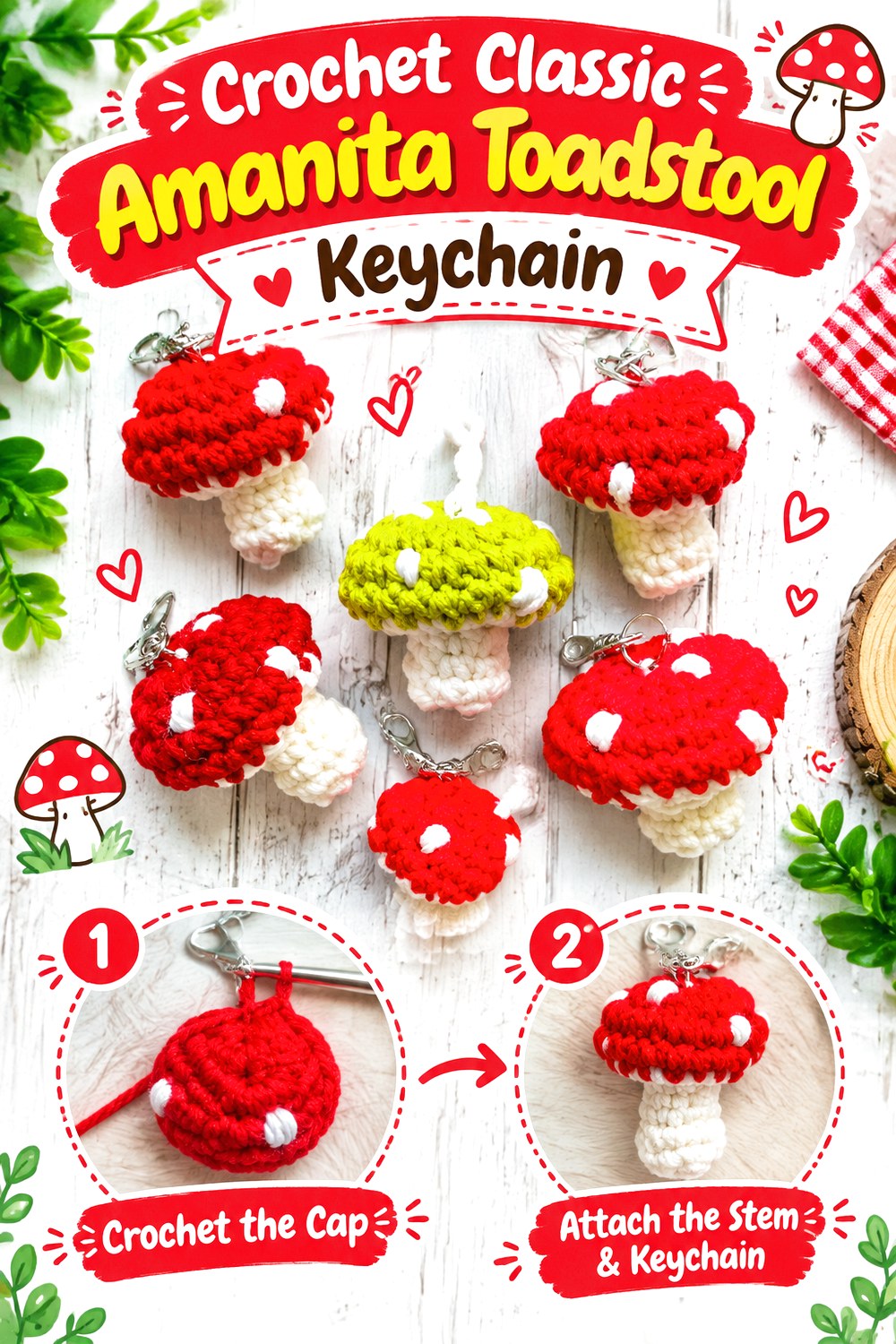
For the most recognizable woodland look, this design focuses on the red-and-white Amanita muscaria silhouette. Kimberly Arenas’ original tutorial for The Caffeinated Snail presents a miniature spotted mushroom that can be finished as a keychain or adapted into an ornament. The source also demonstrates how strongly the familiar cap color and embroidered spots establish the identity of the design.
This is a good reference point for anyone comparing the more elaborate projects later in the list. Nothing has to compete with the mushroom itself: the rounded cap, contrasting stem, and scattered spots provide the visual interest.
Emphasize the Cap-to-Stem Proportion
The classic silhouette depends on the cap appearing broad enough relative to the stem. If you substitute a substantially different yarn or tension, evaluate both sections together rather than assuming they will scale identically. A cap that becomes too compact can lose the toadstool effect; an overfilled cap can also change the intended profile.
Decide Between Keyring and Ornament Use
The original page explicitly presents the project as both a keychain and an ornament option. That makes hardware choice part of the planning stage. A metal ring suits keys or bags, while a soft hanging loop changes the way the mushroom sits and may be more appropriate for decorative display.
Original Tutorial and Creator Credit
Creator/Site: Kimberly Arenas / The Caffeinated Snail
3. Crochet Flat Bottom Toadstool Keychain
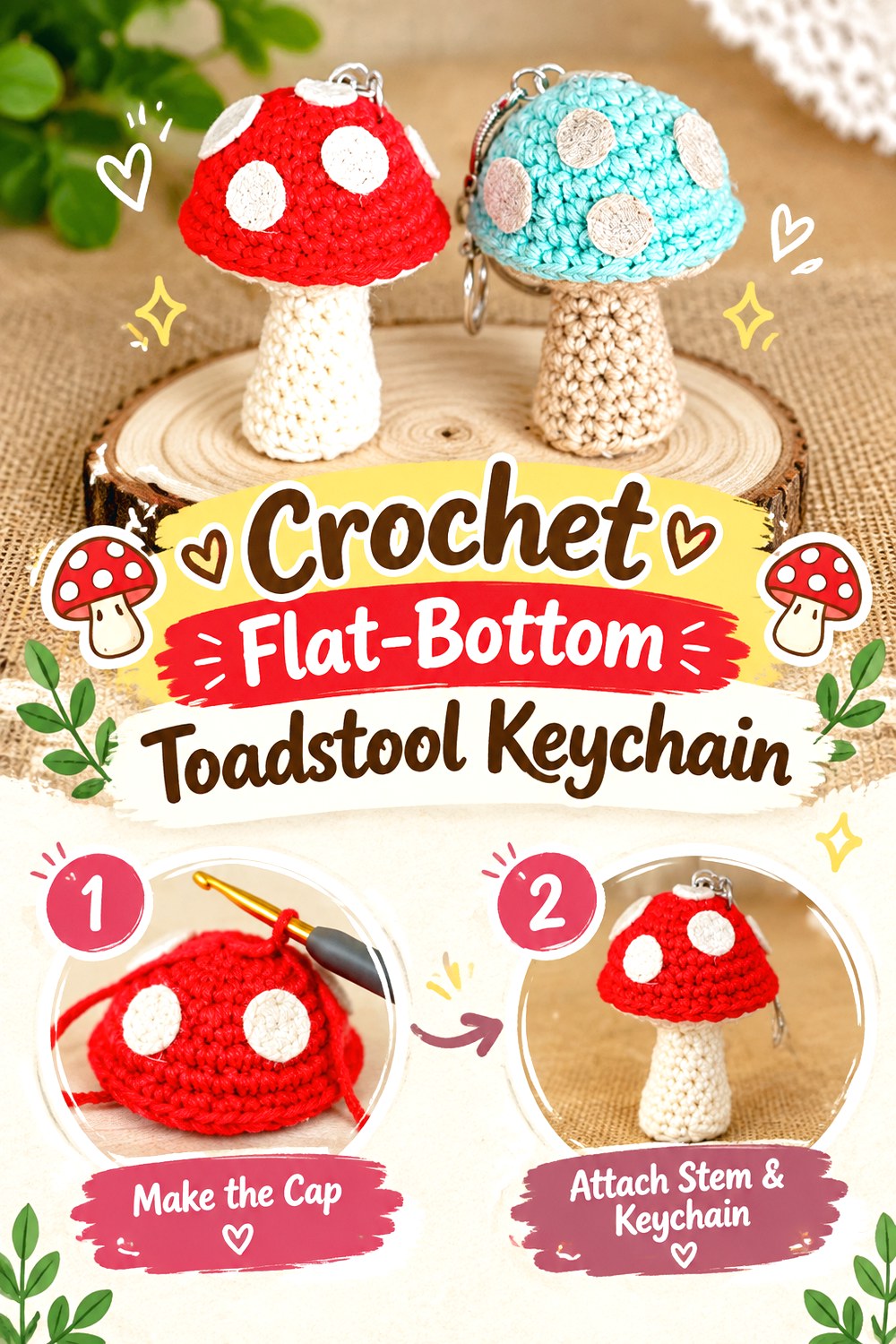
Miss Dolkapots’ mushroom introduces a structural detail that separates it from the softer rounded charms: the tutorial uses felt beneath the cap and discusses an optional piece of cardboard in the stem base to help keep it flat. The project can be turned into a keychain or ornament, giving it a slightly more constructed feel than a simple all-yarn stuffed mushroom.
That flatter base can be attractive if you want a keychain that also looks intentional when placed on a desk or shelf. The trade-off is that mixed materials introduce different wear and care considerations.
Use the Base as a Shape Check
Set the unfinished mushroom upright before finalizing every detail. If the base is intended to sit flat, a visibly tilted stem or uneven stuffing is easier to correct before all finishing elements are secured. Keep in mind that a keychain does not need to stand like a rigid figurine; the goal is simply to preserve the intended profile.
Treat Felt and Internal Support as Mixed Materials
Felt, adhesive, crochet fabric, stuffing, and optional internal support may not respond to moisture or handling in the same way. Avoid assuming that care instructions for the yarn alone apply to the entire finished keychain. If you use the optional support described by the designer, keep the project away from situations where soaking would be likely.
Original Tutorial and Creator Credit
Creator/Site: Miss Dolkapots Crochet Studio
4. Crochet Pom Pom Spot Toadstool Keychain
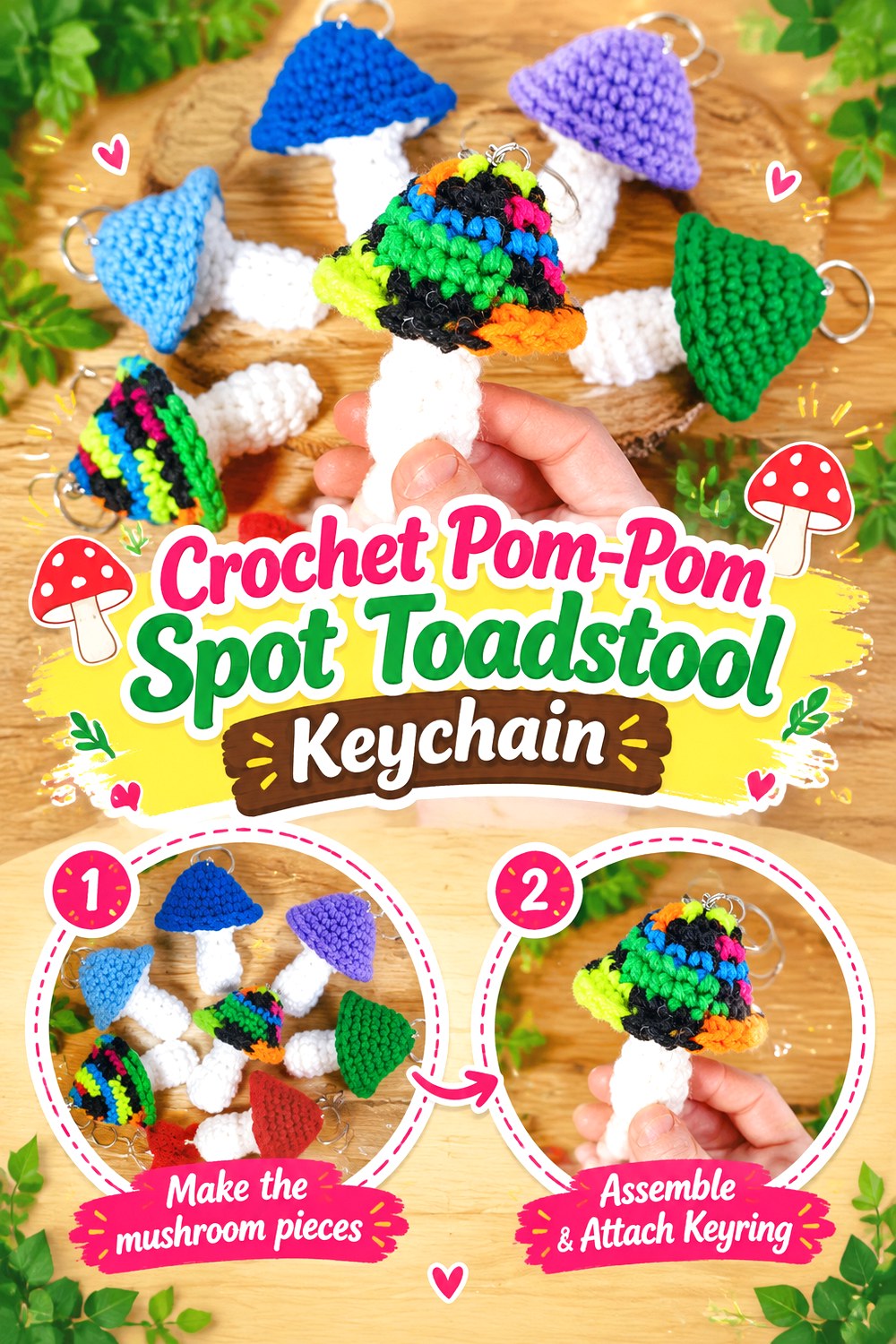
Pixeled Peach’s mushroom tutorial provides an interesting route for changing texture rather than merely changing cap color. The designer discusses small mushrooms with stitched spots as well as chunkier, fluffy versions decorated with pom-poms. The project is explicitly presented as suitable for keychains, giving you room to decide whether you want crisp miniature detailing or an oversized, fuzzy interpretation.
A pom-pom-spotted version looks substantially different from a flat embroidered amanita. It is especially suited to a decorative bag charm where tactile texture can be appreciated and where extra bulk is less inconvenient than it might be on everyday house or car keys.
Match Spot Size to the Cap
Pom-poms create more visual and physical volume than embroidered dots. Arrange them before permanent attachment so you can judge spacing from several angles. Too many large spots may hide the crochet cap entirely, while just a few well-separated ones can make the dimensional texture the focal point.
Consider Snagging Before Choosing a Fluffy Finish
A fuzzy charm rubbing inside a heavily used bag experiences different wear than a smooth crochet keychain. Projecting fibers and pom-poms can catch more easily on zippers or other objects. If the charm will receive rough daily handling, inspect the embellishment attachment regularly or reserve the fluffiest version for a bag exterior.
Original Tutorial and Creator Credit
Creator/Site: Pixeled Peach
5. Crochet Scarf Wearing Toadstool Doll Keychain
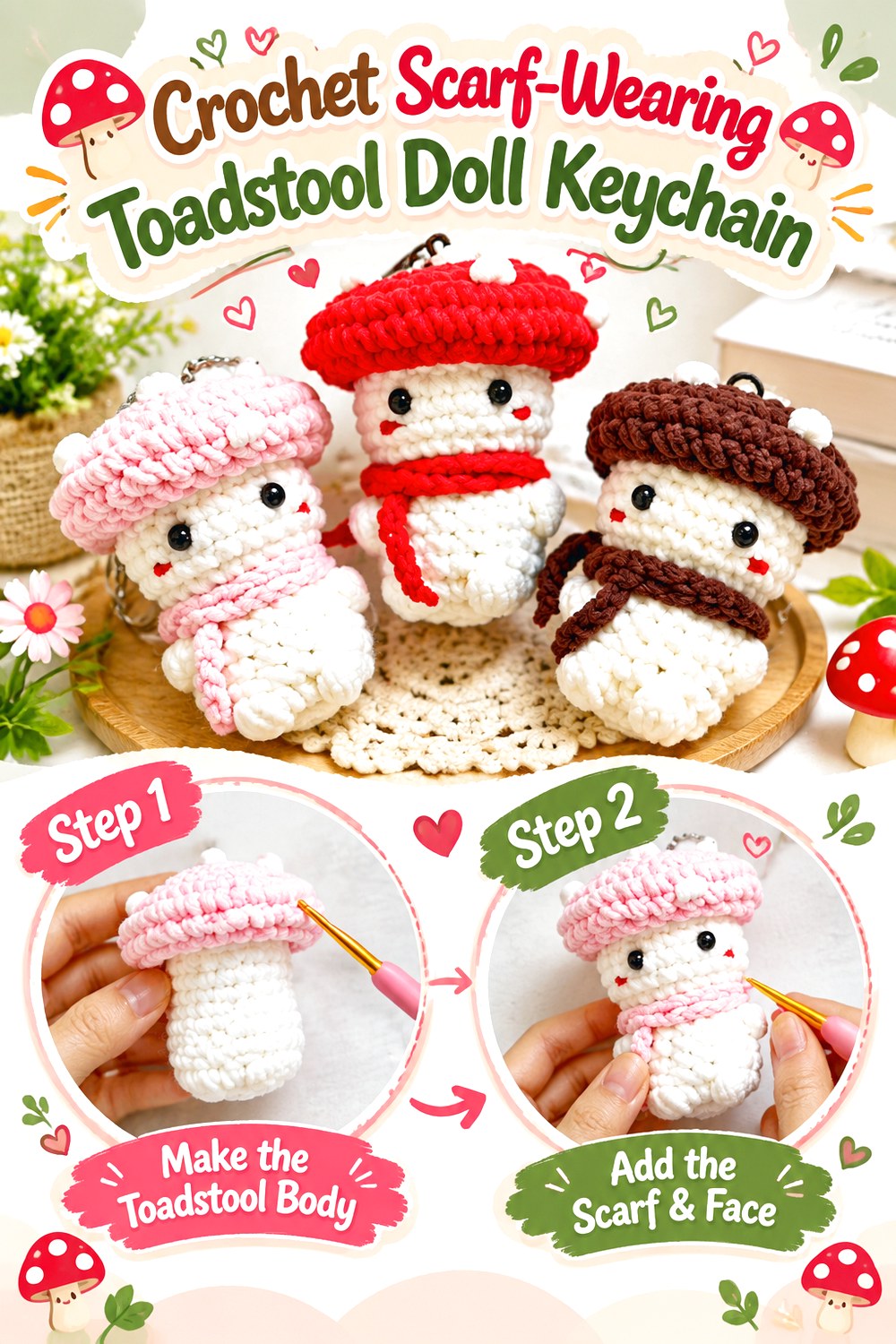
Meemanan takes the mushroom beyond a cap-and-stem charm by turning it into a miniature doll. The tutorial covers a body, head, mushroom cap, scarf, and assembly, and presents the finished piece as a mini mushroom doll that can work as a keychain. That layered character construction gives this idea a much stronger toy-like personality than the compact botanical designs.
The scarf provides an additional color and styling opportunity, but it also adds another projecting element. Keep the overall scale in mind if the finished doll will share a key ring with several keys rather than hang freely from a backpack.
Balance the Scarf Against the Character
A scarf can visually divide a tiny doll in half if it is too bulky relative to the head and body. When substituting yarn, check how the scarf thickness compares with the neck area before finishing it. The accessory should remain recognizable without hiding the doll’s main silhouette.
Check the Hanging Point Before Finishing
Character charms can tilt if the hardware sits too far forward or backward on the head or cap. Temporarily hold the doll from the intended attachment area and see how it hangs. A slight tilt may be charming, but a severe forward roll can hide the face whenever the keychain is suspended.
Original Tutorial and Creator Credit
Creator: Meemanan
6. Crochet No Sew Woodland Mushroom Keychain
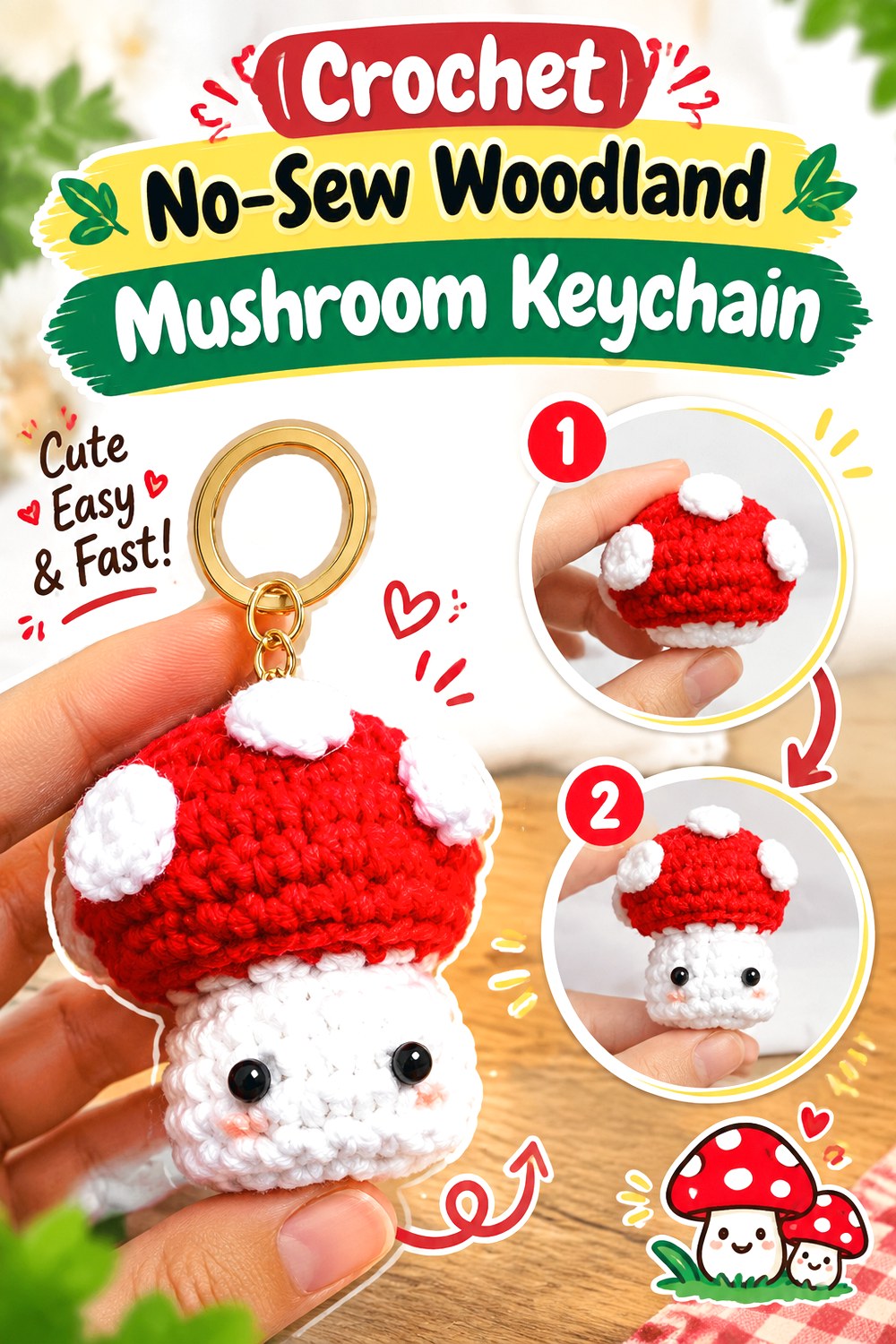
The from littlespot tutorial focuses on a no-sew mini mushroom format and shows red and brown versions, making it useful for readers who like the traditional toadstool look but would rather reduce separate assembly. The brown option also shifts the mood toward a more natural woodland mushroom instead of the familiar bright amanita.
No-sew does not mean no finishing. Yarn tails, optional facial details, stuffing containment, and the hardware connection still deserve attention. What changes is the number of separately crocheted pieces that must be joined, which can make the finished form feel more continuous.
Use Continuous Construction to Your Advantage
When fewer pieces are sewn together, changes in tension become more visible across the whole mushroom. Pause at the transition between cap and stem and check the profile. Correcting an unwanted flare or compressed area early is easier than trying to reshape the finished charm solely with stuffing.
Let the Brown Version Read as Woodland
If you choose natural colors, rely on shape and contrast rather than color alone to keep the mushroom recognizable. A stem that is too close in value to the cap can make the two forms merge visually, particularly at miniature scale. Subtle contrast can preserve the silhouette without turning it into a bright fantasy mushroom.
Original Tutorial and Creator Credit
Creator: from littlespot
7. Crochet Frog Toadstool Keychain
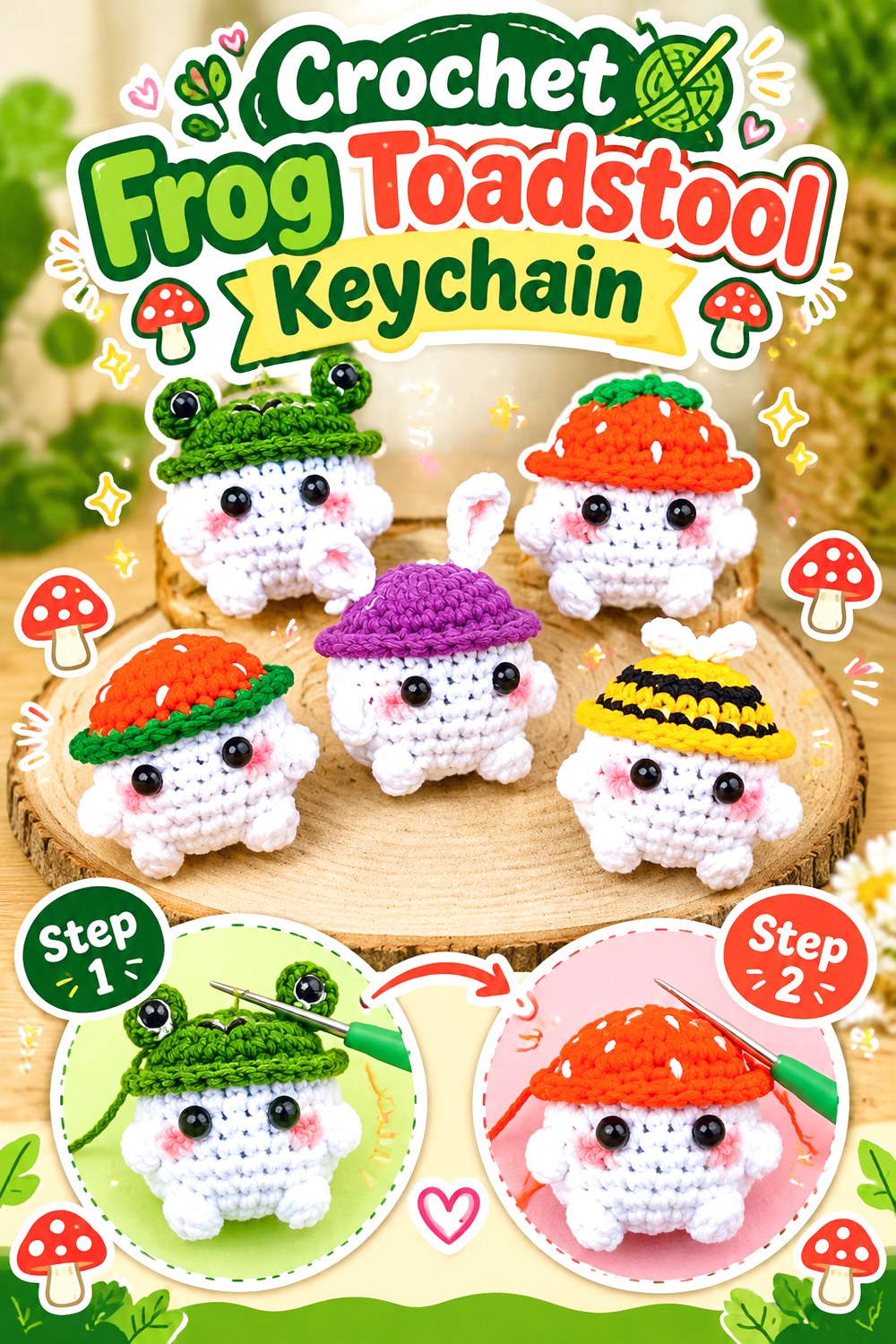
Yeyey Crochet combines two recognizable motifs in one small charm: a frog and a mushroom. The resulting amigurumi keychain has more personality than a plain toadstool while still keeping the mushroom theme immediately visible. Because the tutorial is specifically for a frog-mushroom keychain, this is a stronger hybrid choice than simply adding an unrelated face to a standard cap.
Hybrid designs need a clearer hierarchy than simple mushrooms. The frog features should be legible, but the cap still needs enough visual presence that the piece reads as a mushroom-inspired character rather than an ordinary frog.
Keep Frog Features Proportional
Small eyes, limbs, or facial details can become visually dominant when placed on a miniature body. Check the entire charm rather than judging each feature in isolation. If you alter yarn weight or embellishment size, place the main frog details temporarily before securing them to make sure the mushroom cap remains part of the design.
Avoid Overloading a Hybrid Character
A frog-mushroom already contains two themes. Additional flowers, beads, bows, or oversized spots can quickly make the small surface difficult to read. If you personalize it, one controlled change—such as a different cap palette—usually preserves the hybrid silhouette better than layering several extra motifs.
Original Tutorial and Creator Credit
Creator: Yeyey Crochet
8. Crochet Pumpkin Cap Toadstool Keychain
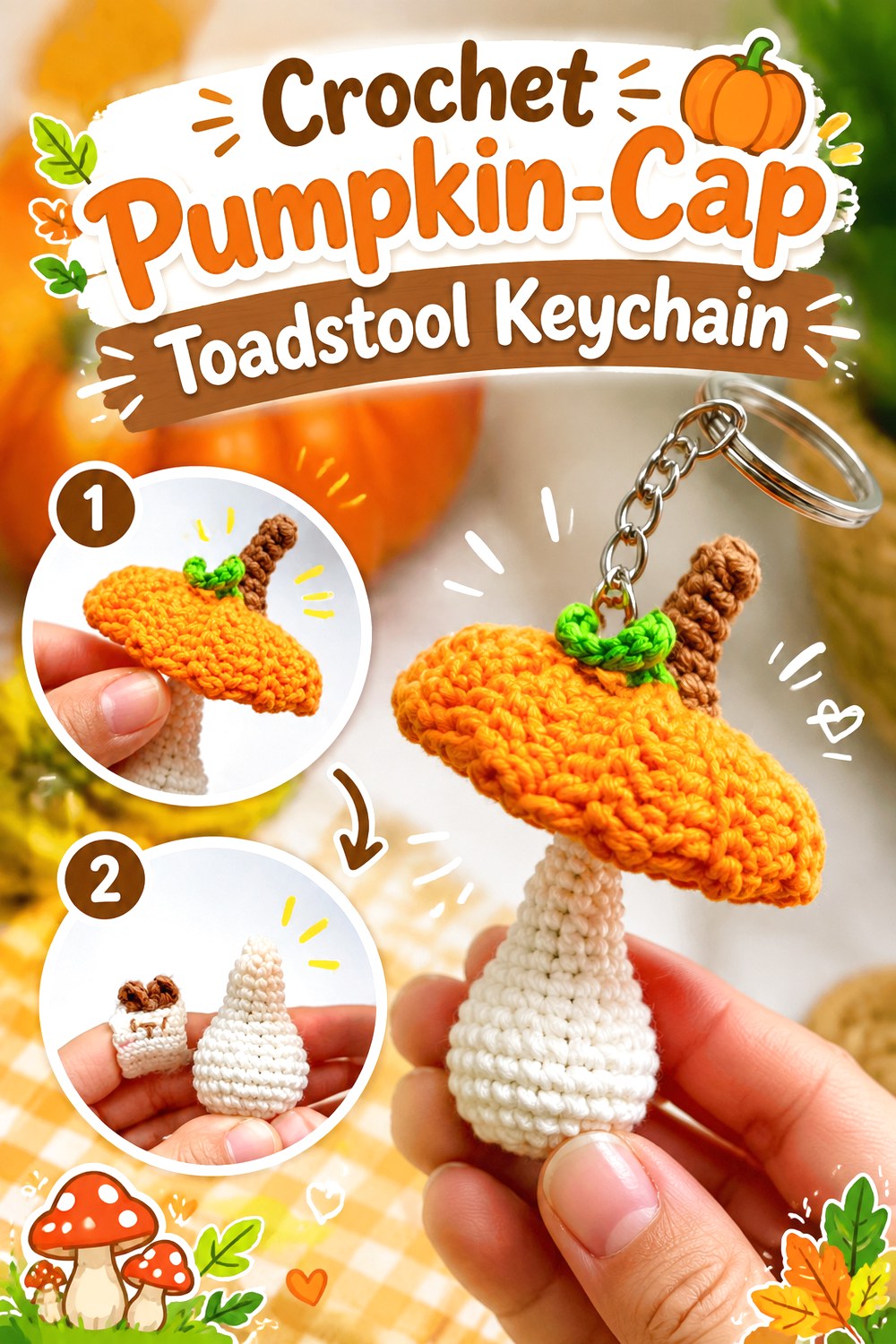
This autumn version replaces the expected spotted cap with a ribbed pumpkin form. Crochet Everyday’s tutorial presents the project as a pumpkin-mushroom keychain and bag charm, with the finished design combining the mushroom stalk with an orange ridged cap and green plant detail.
It earns its place in the list because the seasonal theme is created through construction and silhouette, not merely by recoloring an ordinary mushroom orange. The ridging needs to remain visible for the cap to read as a pumpkin, especially after the charm has been handled or stored.
Preserve the Pumpkin Ridges
Avoid stuffing or finishing choices that flatten the cap’s defining texture. View the mushroom from the side as well as from above; a pumpkin effect that looks strong on a worktable may become less obvious once the charm hangs vertically. The ridges should remain readable without making the cap overly stiff.
Treat the Leaf as a High-Wear Detail
Leaves and vine-like decorations project beyond the main stuffed body, so they may encounter more friction than the stem and cap. Check where the charm will hang and consider how often the small green detail will catch on zippers, pockets, or other keys. Decorative bag placement can be gentler than a crowded key ring.
Original Tutorial and Creator Credit
Creator: Crochet Everyday
9. Crochet Sheep Hat Mushroom Keychain
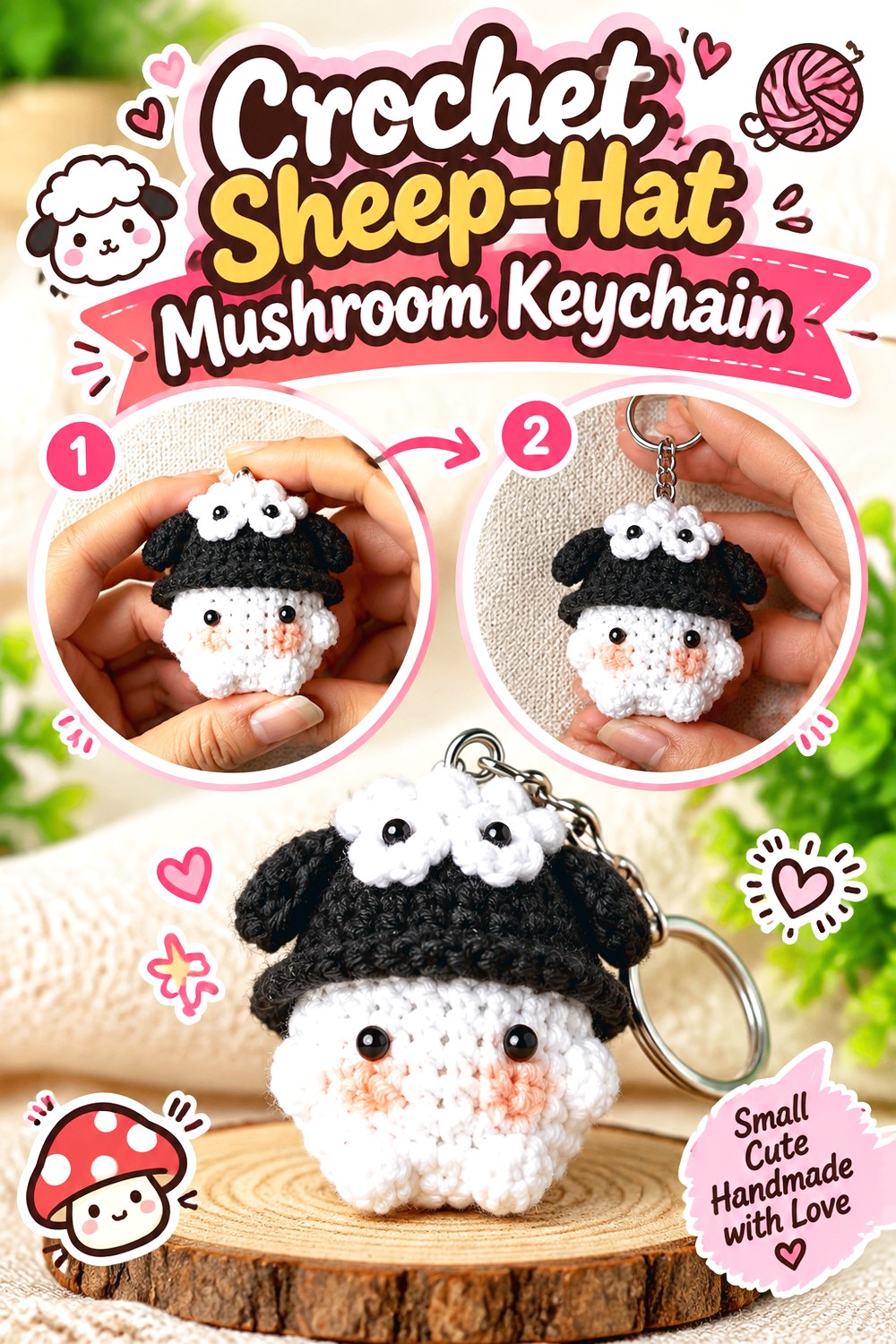
Po Handmade pushes the character idea in another direction with a baby mushroom wearing a sheep-inspired hat. Unlike the frog hybrid, the animal identity sits around the mushroom character like headwear, creating a layered costume effect. The source specifically presents the project as a baby mushroom keychain in a sheep hat.
This type of design suits someone who enjoys detailed character charms and wants the keychain to feel more like a tiny collectible. The main planning challenge is visual separation: cap, hat texture, face, and mushroom body should not merge into a single indistinct shape.
Keep the Hat Silhouette Clear
When a hat surrounds a small head, yarn thickness can noticeably change the character’s proportions. Before completing all decorative details, check that the mushroom face still has enough open space and that the sheep-like headwear remains recognizable around it.
Use a Softer Finish Without Losing Definition
A sheep theme naturally invites texture, but very fuzzy yarn can hide tiny stitches and facial placement. If substituting materials, decide which matters more: plush texture or crisp miniature definition. Combining both indiscriminately can make the smallest features difficult to see.
Original Tutorial and Creator Credit
Creator: Po Handmade
10. Crochet Shiitake Mushroom Bag Charm

Jess Crafting offers a welcome break from the red-and-white toadstool by basing this charm on a shiitake. The original tutorial uses two main colors and embroidery to create mushroom-specific surface character, and the project is designed as a bag charm with a bonus functional holder aspect.
A shiitake-inspired shape feels more naturalistic and understated than a storybook amanita. It is a good option for readers who want fungi-themed crochet without bright spots or cartoon facial features. The embroidery deserves careful placement because those markings help distinguish the cap when color contrast is restrained.
Make Shiitake Markings Visible
Surface embroidery works best when it contrasts enough with the cap to be seen without overwhelming the small shape. Lay the unfinished charm against the bag where you expect to use it. A combination that looks distinct on a white worktable may disappear against a similarly colored backpack.
Decide Whether the Stem Is Decorative or Functional
Because the source includes a bonus holder function, think about your actual use before treating this like an ordinary stuffed charm. If you plan to carry something in it, fit and access matter. If you only want the shiitake silhouette, avoid adding bulk simply because a functional option exists.
Keep a Longer Charm From Twisting
An elongated mushroom hanging from a single top point may rotate more than a compact ball-shaped keychain. Before final finishing, suspend it from the intended clasp and check whether the cap, embroidered side, and stem still present attractively as the piece turns.
Original Tutorial and Creator Credit
Creator/Site: Jess Crafting
11. Crochet Toadstool Chapstick Sleeve Keychain
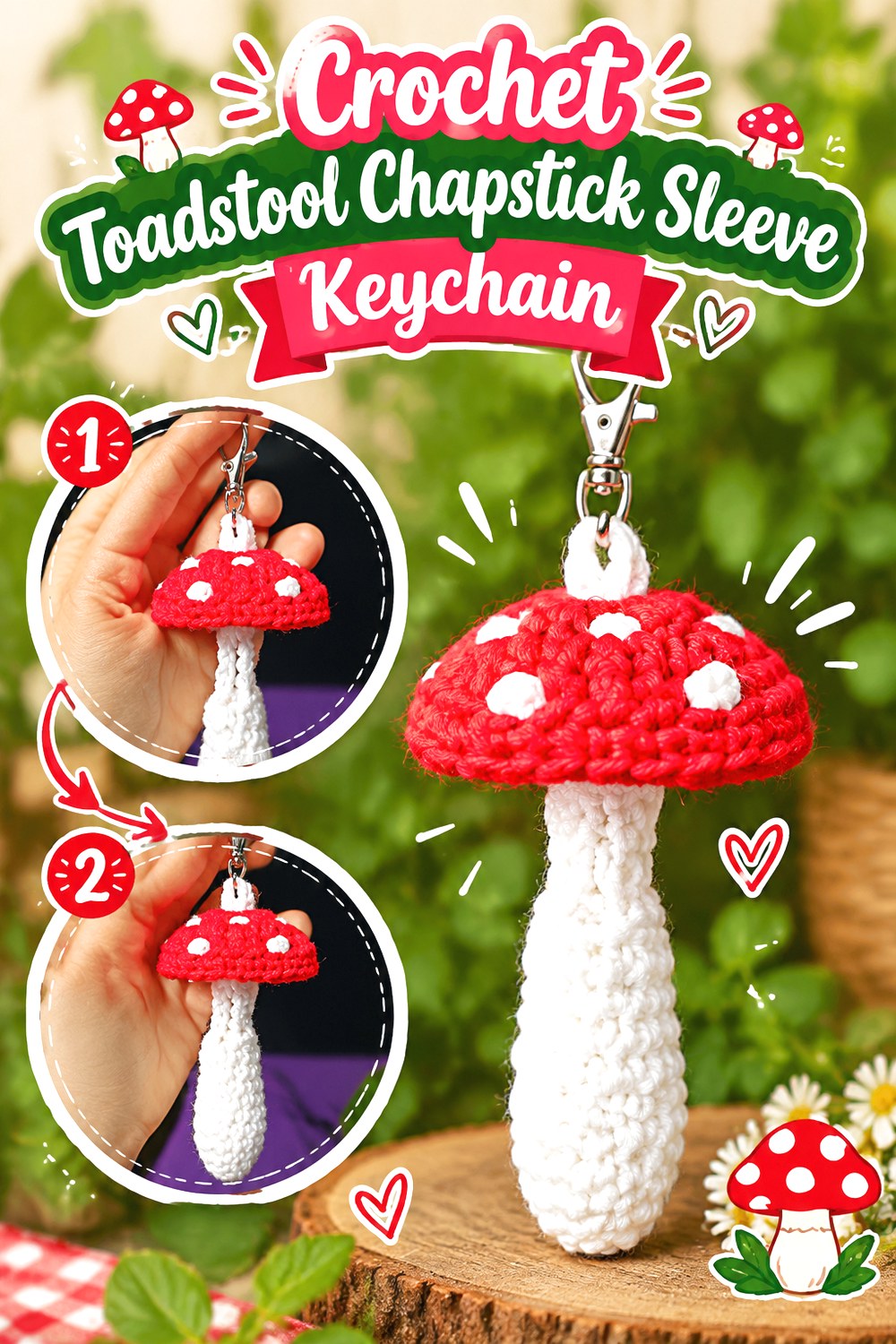
The stitchaster design turns the mushroom stem into an elongated holder rather than stuffing it as a closed amigurumi body. The original pattern is specifically titled as a mushroom chapstick/lighter holder keychain and incorporates keychain hardware, so its function is integral to the construction rather than an adaptation added afterward.
For a general-use version, a lip balm or similarly sized everyday item is an obvious application. The key decision is fit: changes in yarn, tension, or the object being carried can change how securely the sleeve holds its contents.
Fit the Sleeve to What You Carry
Do not assume every cylindrical item has the same diameter or length. Compare the intended object with the work while you can still adjust your material or sizing choices. A sleeve that is too loose may not hold securely, while one that is excessively tight can stretch the crochet and make removal awkward.
Reinforce the Hanging Area
A loaded holder places more force on its hanging connection than an empty decorative mushroom. Inspect the yarn loop and metal hardware after inserting the item you plan to carry. If the attachment visibly distorts the upper crochet, reconsider the load or finishing before putting it into regular use.
Check Cap Clearance
The mushroom cap is part of the visual joke, but it should not make the holder frustrating to access. Test the opening with the intended item and make sure the cap and hanging hardware do not interfere with removal. Functional clearance matters more than forcing an adaptation to look exactly like a stuffed charm.
Original Tutorial and Creator Credit
Creator/Site: stitchaster
12. Crochet Floral Sliding Top Mushroom Pouch Keychain
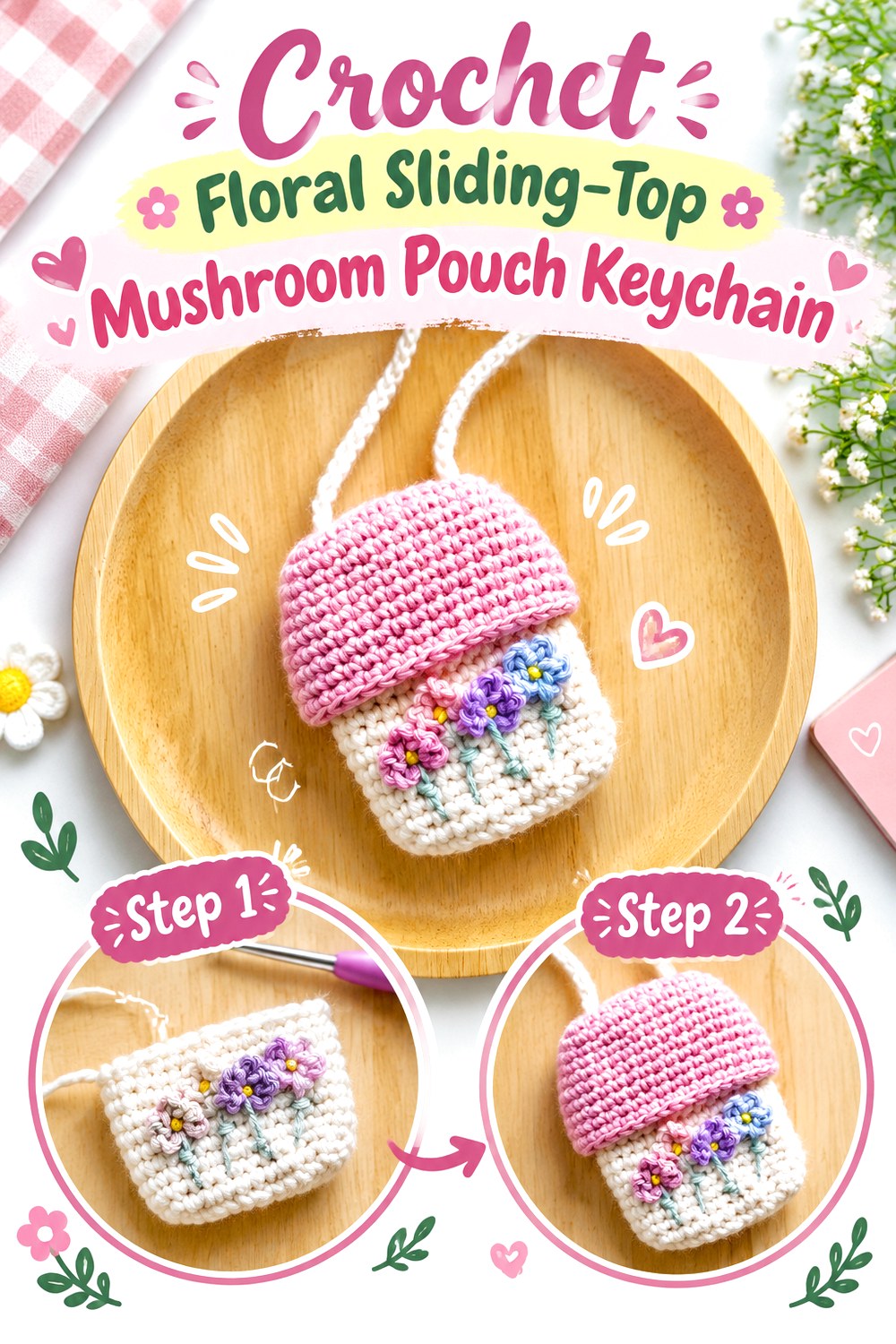
Sweet Softies turns the mushroom into a small storage pouch with a sliding top and floral embellishment. The original design can be used with a shorter attachment as a backpack accessory or keychain-style charm, while the pouch itself provides space for small items. That combination of opening mechanism, storage, and flower decoration makes it one of the most functionally different choices here.
Because the cap moves, decoration cannot be planned independently of function. Flowers that look well placed while the pouch is closed may sit close to areas your fingers need when opening it.
Plan the Sliding Opening Before Embellishing
Operate the pouch several times before deciding where every decorative feature belongs. A flower or leaf positioned directly on a frequently handled area may become annoying or distort more quickly. Functional movement should remain smooth enough that you do not have to pull aggressively on decorative crochet.
Place Flowers Where They Are Less Likely to Snag
Dimensional flowers add cottagecore detail but also create edges that can catch on other objects. Consider whether the pouch will hang outside a backpack or spend most of its time inside another bag. The more enclosed the location, the more valuable a compact embellishment layout becomes.
Choose Strap Length by Use
The source allows the design to function in more than one carrying format. Decide whether you want a close-hanging keychain, backpack accessory, or longer wearable-style pouch before finishing the attachment. A strap that suits one purpose may be awkward for another.
Original Tutorial and Creator Credit
Creator/Site: Sweet Softies
13. Crochet Mushroom Key Cover Keychain
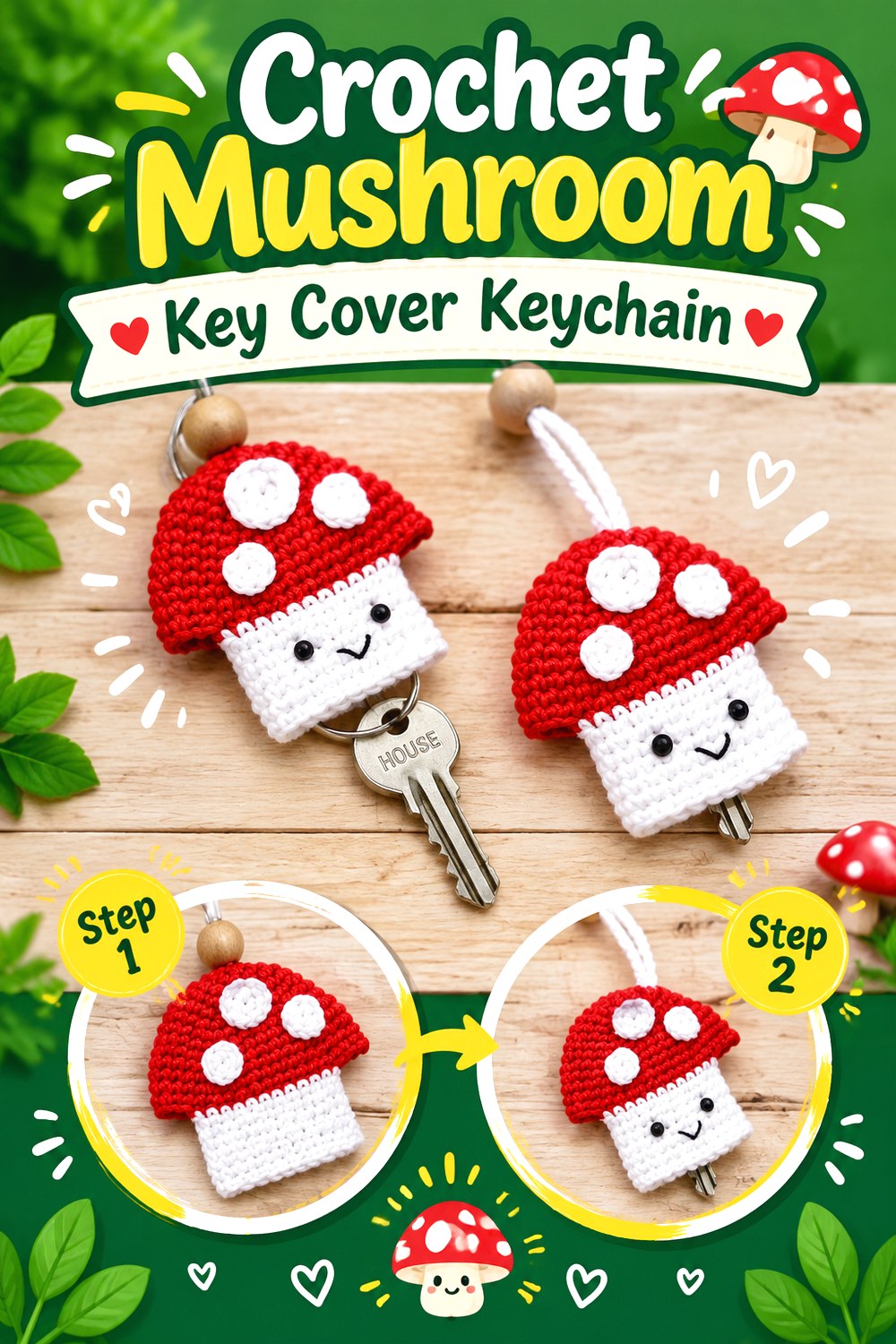
Instead of carrying a stuffed mushroom beside your keys, Hopeful Turns’ design turns the mushroom into the key cover itself. The tutorial separates the top and lower portions, adds circular patches, and includes the hanging arrangement, so movement is part of the finished object’s purpose.
This option is especially appealing when you want the mushroom theme to interact with the keys rather than function as another charm on the ring. It also introduces a practical checkpoint that does not apply to ordinary amigurumi: the cover has to move freely enough to expose and conceal the key as intended.
Make Sure the Cover Still Moves
Test the cover with the actual key or key arrangement you plan to use before judging the fit. Differences in key head shape and thickness can affect how smoothly a cover operates. Do not reduce the dimensions solely to create a tinier mushroom if that prevents the intended sliding action.
Keep Decorative Patches Clear of the Pull Path
The circular mushroom patches help establish the toadstool look, but they should not sit where repeated pulling constantly catches or folds them. Watch how your fingers naturally hold the cover during use and keep high-relief decoration away from the most active handling areas when adapting the design.
Test the Weight of Your Key Set
A cover that behaves well with one lightweight key may hang differently from a large cluster. Suspend the finished arrangement and check whether the mushroom distorts or becomes difficult to slide. If necessary, reserve the cover for a smaller key set rather than expecting the crochet to manage unlimited weight.
Original Tutorial and Creator Credit
Creator: Hopeful Turns
14. Crochet Two Color Squishy Mushroom Keychain
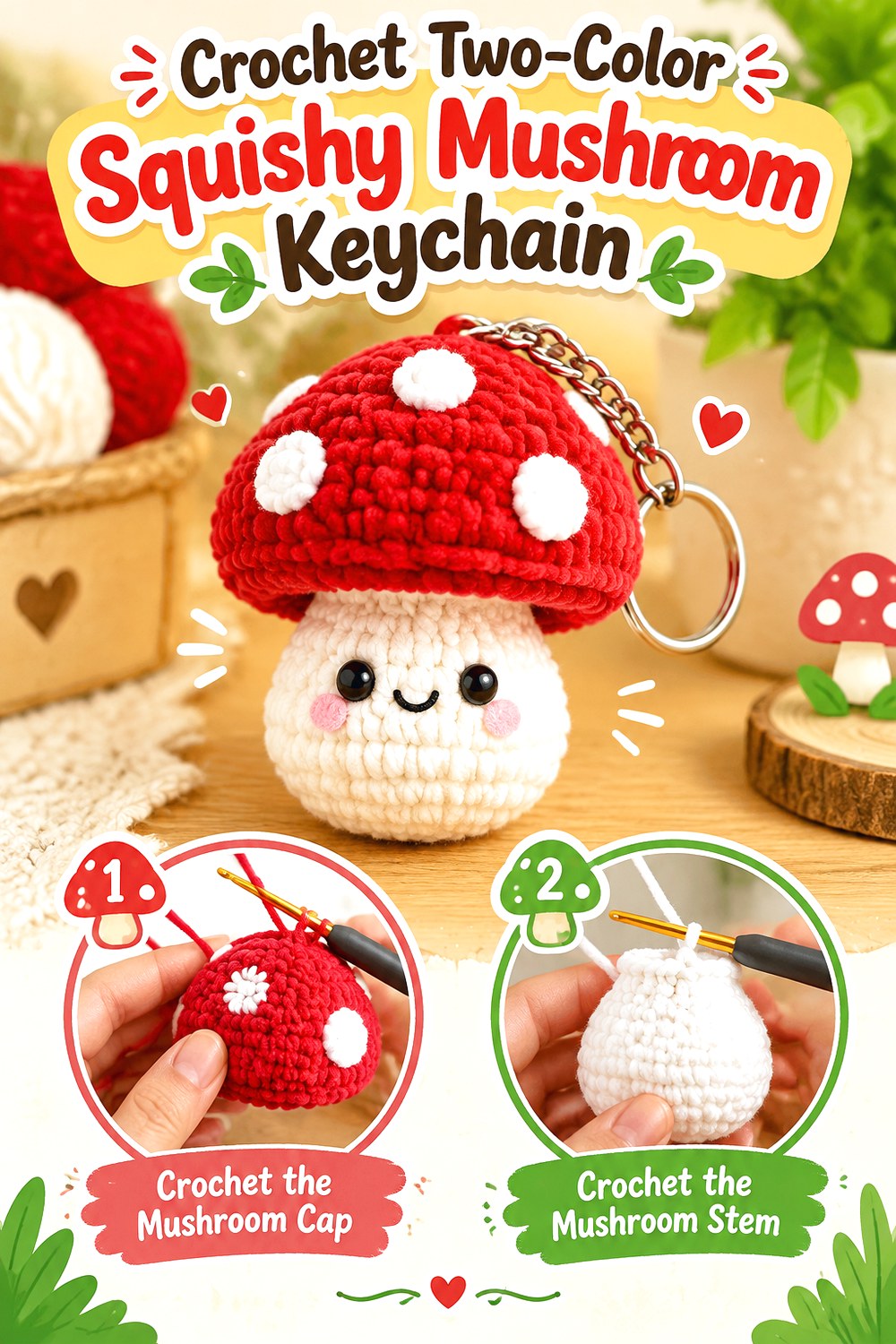
Regina P Designs offers a compact stuffed mushroom that uses two yarn colors and a straightforward sculptural form rather than relying on white polka dots. The original page specifically presents it as a small key or bag accessory, uses a small amount of stuffing, and secures the keychain through the cap during construction.
The result is useful inspiration for readers who prefer a softer, simplified mushroom rather than a highly decorated amanita. Color blocking does most of the visual work, so this version can move easily into purple, brown, rust, pastel, or other palettes without requiring extra surface pieces.
Shape With Stuffing, Not Excess Bulk
The designer specifically cautions against overstuffing the mushroom. More stuffing does not automatically create a better-defined charm; too much can stretch stitches and change the intended contour. Add enough to support the form while keeping the crochet surface smooth and the cap proportionate.
Inspect the Top Attachment as a Stress Point
The source incorporates the keychain connection through the cap while the piece is still accessible. Whatever hardware you use, tug it gently before closing the piece and make sure the surrounding stitches remain stable. It is much easier to correct the anchor while the interior can still be reached.
Original Tutorial and Creator Credit
Creator/Site: Regina P Designs
15. Crochet Tall Stem Toadstool Keychain
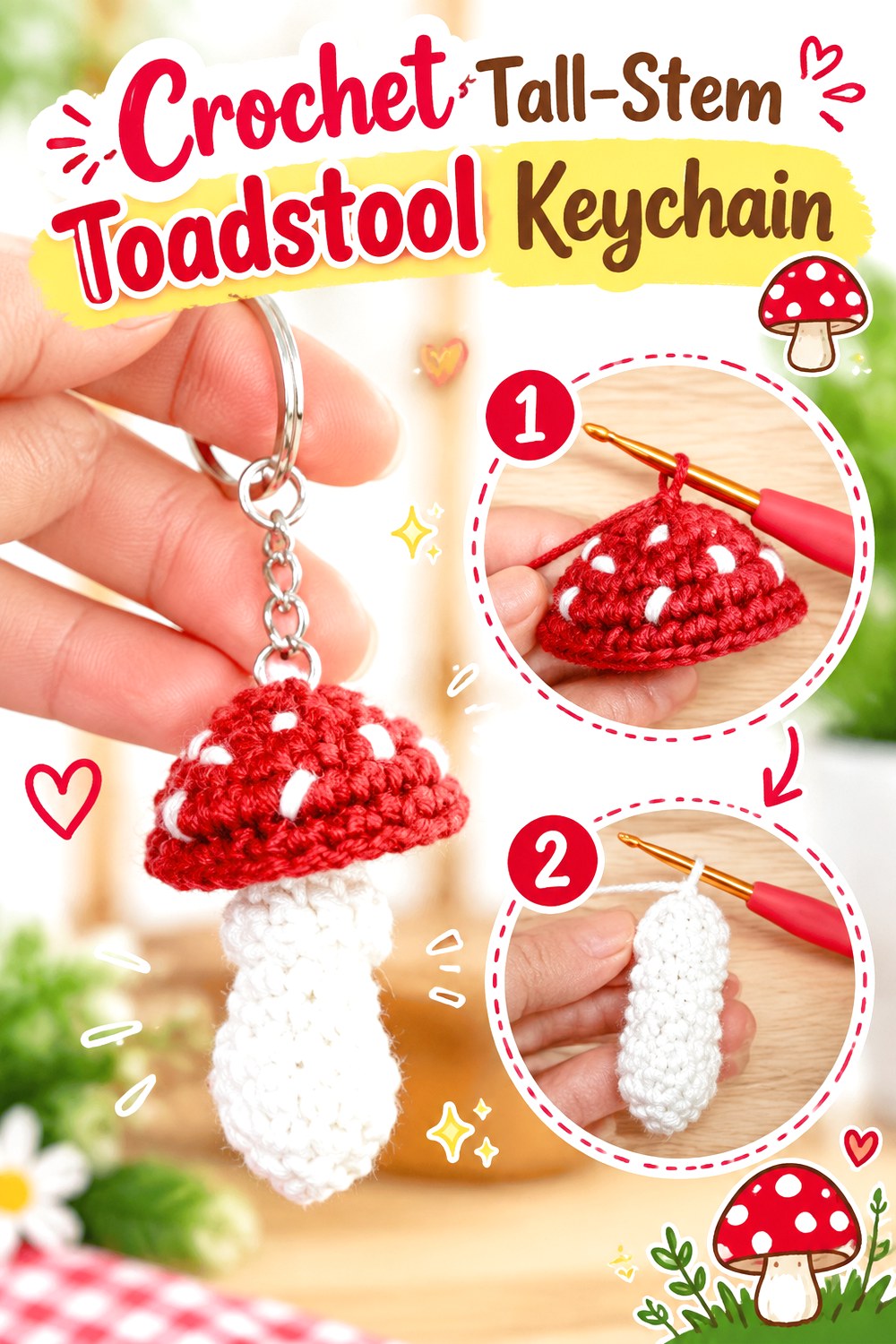
Yarn & Crochet’s mushroom has a notably defined cap-and-stem profile, making it a useful choice when you prefer a taller classic silhouette over a rounded, almost ball-shaped charm. The original online tutorial uses contrasting red and off-white areas and finishes the cap with embroidered spots, while the completed project is intended to decorate keys or a bag.
The taller stem creates visual elegance but also changes balance. When the charm hangs, the cap remains the widest point while the narrower body extends below it, so stuffing and tension should support that transition without making the stem rigid or crooked.
Keep the Stem From Looking Top-Heavy
Hold the mushroom vertically during finishing rather than evaluating it only while it lies flat. If the cap visually overwhelms the lower section, excessive cap stuffing or a very soft stem may be contributing. Preserve the source silhouette rather than forcing both sections to have the same firmness.
Use Spot Placement to Balance the Cap
Embroidered spots are flatter than beads or separate appliqués and can be distributed without adding much bulk. Before securing every spot, rotate the mushroom. A keychain turns constantly, so a cap that looks balanced from several sides usually works better than placing all visual interest on one “front.”
Original Tutorial and Creator Credit
Creator/Site: Yarn & Crochet
16. Crochet Short and Squat Toadstool Keychain
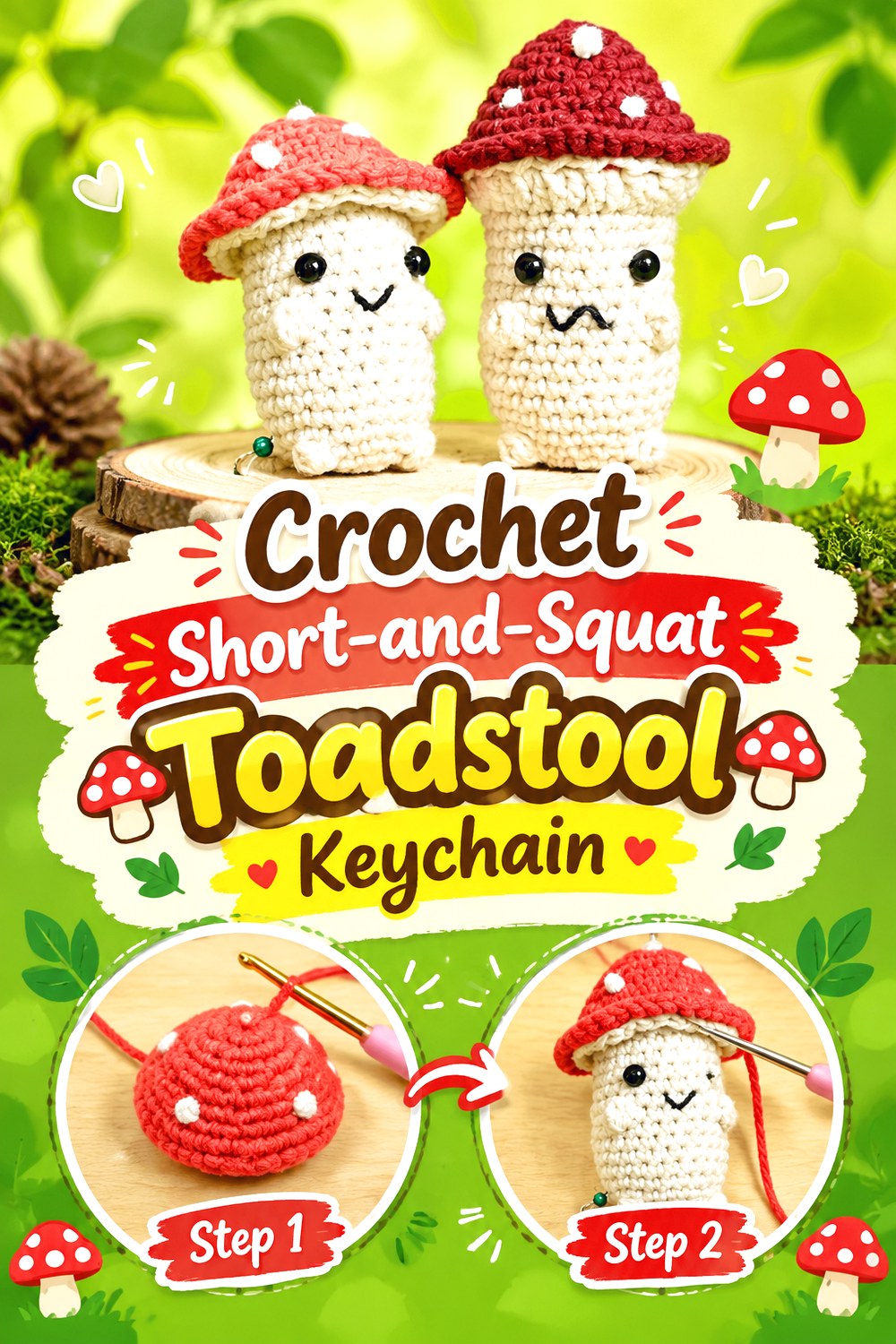
Amigurumi Forge’s original mushroom tutorial demonstrates two mushroom proportions—tall and short—and notes that the finished fungi can be used as keychains, desk companions, or small gifts. That makes the shorter variation useful for anyone who wants a broad, compact mushroom silhouette rather than an elongated stem.
A squat mushroom can sit visually closer to the hardware and may feel less dangly on a bag. Its character depends heavily on the cap-to-body relationship, so this is a case where changing proportions deliberately is more effective than simply shortening an unrelated pattern without considering the rest of the shape.
Compare Width as Well as Height
When aiming for a squat silhouette, shortening the stem alone may make the project look unfinished rather than intentionally compact. Study the relative width and height of the source’s shorter mushroom and preserve the overall relationship when substituting yarn or changing scale.
Use the Compact Shape for Busier Key Rings
A short mushroom has less length available to swing and wrap around neighboring objects. That does not guarantee it will never snag, but it can be a practical direction when a long character charm would feel cumbersome. Check the finished width too, since a very broad cap creates its own bulk.
Original Tutorial and Creator Credit
Creator/Site: Amigurumi Forge
17. Crochet Popping Mushroom Fidget Keychain
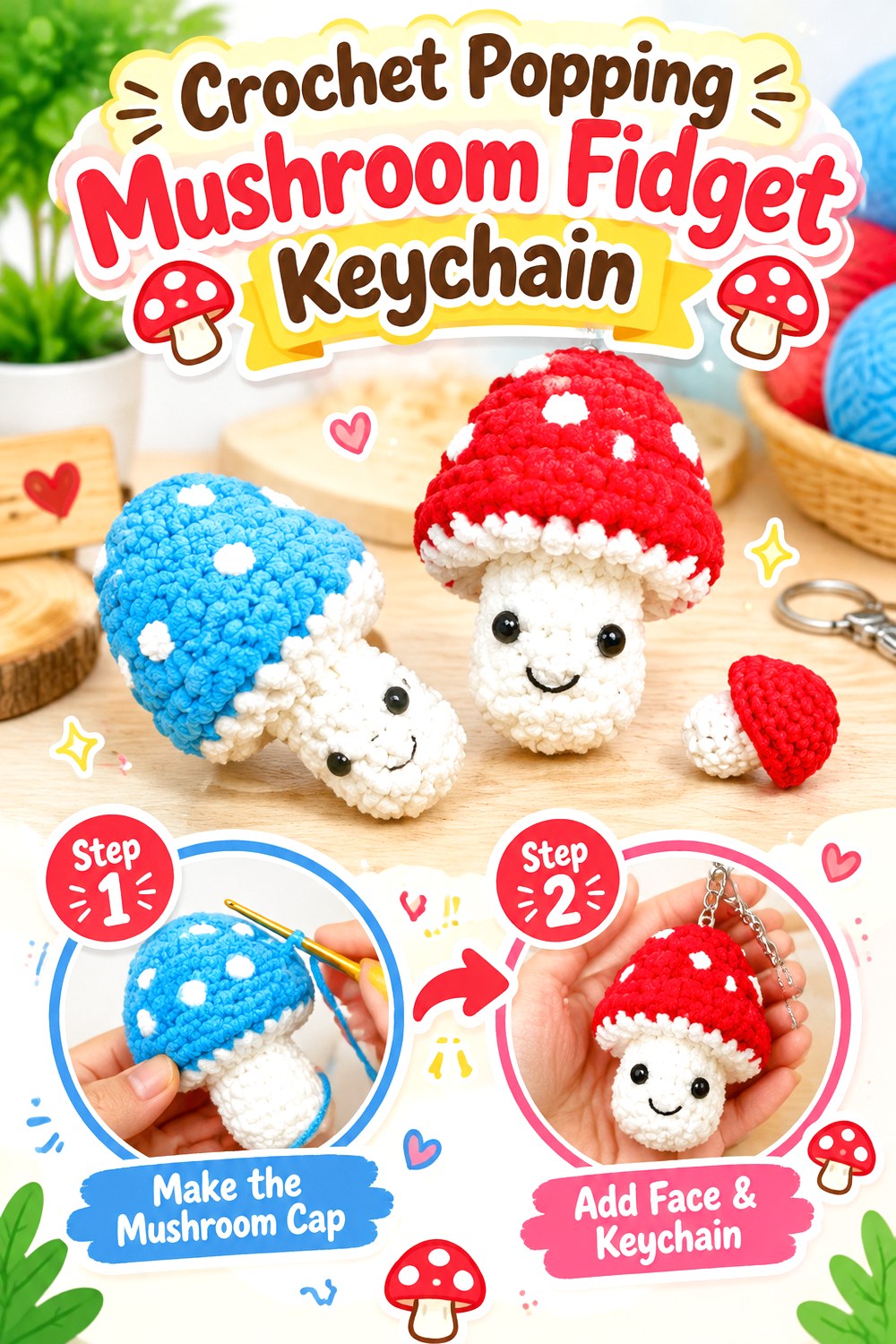
The final idea adds movement. Hopeful Turns’ tutorial is specifically for a popping mushroom fidget and also presents a small keychain interpretation, turning the mushroom cap into an interactive feature rather than a permanently fixed silhouette.
That makes this the strongest option for someone choosing primarily for tactile interest. It also means the project should not be evaluated exactly like a stuffed ornament: too much rigidity, obstructive hardware, or an adaptation that changes the moving portion can undermine the feature that makes the design distinctive.
Preserve the Pop Motion
Test the mushroom repeatedly before finalizing every decorative or hardware addition. If the moving section becomes difficult to invert or return, identify what changed before adding more bulk. Stuffing, tension, yarn substitution, and extra embellishments can all alter how flexible a small crochet structure feels.
Let Fiber Choice Set the Experience
The source discusses different yarn approaches for larger squishy and smaller keychain versions. Rather than treating them as interchangeable, decide whether you care more about a compact accessory or a plush tactile feel. A material that excels at one may change the scale or movement of the other.
Keep Hardware Away From the Working Area
Position the keychain attachment so that rings, clasps, or connecting loops do not interfere with the section you need to press or pull. Try operating the fidget while it is actually hanging from its ring; movement that works on a table may feel different once the hardware is attached.
Original Tutorial and Creator Credit
Creator: Hopeful Turns
How the Toadstool Keychain Styles Compare
For the simplest mushroom-first look, the classic amanita, flat-bottom, two-color, tall-stem, and short-and-squat designs keep the fungal silhouette central. The kawaii, scarf doll, frog, pumpkin, and sheep-hat versions are better choices when the charm itself should behave like a miniature character.
Function changes the decision more dramatically. The shiitake and chapstick designs can carry a small item, the floral mushroom is a true pouch, and the mushroom key cover interacts directly with the keys. The popping version prioritizes movement and tactile play. Textured embellishment also matters: the pom-pom mushroom is visually bold but potentially more snag-prone than flat embroidery. Choose by intended use first, then by color and decoration.
Conclusion
These 17 crochet toadstool keychain ideas show how much can change within one small motif. A compact amanita emphasizes an iconic silhouette, character mushrooms add facial or costume details, and the functional projects turn caps and stems into sleeves, covers, or storage. The pumpkin, shiitake, pom-pom, and fidget versions move even farther from the standard spotted mushroom without losing the fungi theme.
Before starting, consider where the charm will hang, how much handling it will receive, whether projecting embellishments are practical, and whether an opening or moving section needs to remain functional. For exact construction, materials, and finishing details, follow the original tutorials credited with each project.
Frequently Asked Questions
What yarn works well for a crochet toadstool keychain?
There is no single yarn that is correct for all 17 designs. Smooth yarn can make tiny stitches, embroidery, and cap shaping easier to see, while plush or fuzzy yarn creates a softer, larger character. Functional holders also need enough stability to retain their contents. Start with the yarn specified by the original designer when possible; if substituting, expect changes in dimensions, density, stretch, and hardware compatibility.
How can I stop keychain hardware from pulling through the crochet?
Use the attachment method shown in the selected tutorial and inspect the anchor before closing inaccessible areas of the project. In general, repeated strain is better distributed across a secure structural area than concentrated on one loose surface loop. After attaching the ring, hold the entire project by the hardware and gently check for distortion. A loaded pouch or holder deserves extra attention because its contents add weight.
Can I resize a crochet mushroom keychain?
Often, changing yarn and hook size changes the finished scale, but it may also change stiffness, stuffing gaps, embellishment proportions, and the fit of functional openings. A key cover or lip balm holder should not be resized casually because it needs to fit a particular object. For decorative mushrooms, compare the new cap-to-stem proportion as you work and confirm any designer-specific adjustment advice in the original tutorial.
Are safety eyes suitable for toadstool keychains made for children?
That depends on the intended recipient and the specific components. Keychain hardware, safety eyes, beads, pom-poms, and other small pieces can potentially detach, so a decorative keychain should not automatically be treated as a toy for a baby or toddler. Embroidered eyes can reduce one type of detachable embellishment, but the key ring and other components still need consideration. Use age-appropriate judgment and secure every part carefully.
Can these mushroom designs become bag charms or ornaments instead?
Many can, provided the attachment suits the new use. Several of the original sources explicitly present their mushrooms as bag accessories, ornaments, or alternative hanging decorations. A bag charm may use a clasp that is easier to move between bags, while an ornament may only need a light hanging loop. Functional key covers and storage pouches are less directly interchangeable because their construction is tied to their intended use.
How should I clean a crochet toadstool keychain?
Check both the yarn label and the original designer’s guidance before washing. A plain all-yarn charm may have different care needs from a mushroom containing felt, glue, cardboard, metal findings, safety eyes, stuffing, pom-poms, or other embellishments. If care information is not supplied, avoid assuming the entire object can be machine washed simply because its yarn is washable. Spot cleaning may be more practical for mixed-material pieces.