
9 Crochet Christmas Table Runner Ideas for a Festive Holiday Table
A crochet Christmas table runner can be a subtle background for dinnerware or the main decorative feature running through the center of the table. These nine ideas cover noticeably different approaches, including graphic filet crochet, individual snowflake and star motifs, lace, floral accents, sparkle yarn, coordinated holiday colors, and dense textured fabric.
The differences matter when you are deciding what will work on your own table. A motif runner leaves more of the tabletop visible, while a solid rectangle provides greater visual coverage. Fine thread can create an airy formal look, whereas thicker textured crochet feels more rustic. Use the comparisons below to think about length, flatness, finishing, storage, and how much decorative detail you want before following the original tutorial for the exact construction.
Quick List
- Crochet Filet Christmas Tree Table Runner
- Crochet Snowflake Motif Table Runner With Tassels
- Crochet Joined Christmas Star Table Runner
- Crochet Christmas Bell and Lace Table Runner
- Crochet Sparkle-Accent Christmas Table Runner
- Crochet Floral Christmas Table Runner With Gold Accents
- Crochet Red, White, and Gold Christmas Table Runner
- Crochet Rustic Daisy-Texture Christmas Table Runner
- Crochet Classic Rectangular Christmas Table Runner
Choose the Runner Construction Before Choosing the Colors
Holiday colors can make almost any runner look festive, but construction has a bigger effect on how the finished piece behaves. Filet crochet creates a relatively flat fabric in which open and solid areas form the picture. Joined snowflakes or stars create irregular outer edges and more visible tabletop between motifs. A continuous rectangular runner gives you a predictable strip of coverage and can be easier to coordinate with plates, serving dishes, and a centerpiece.
Applied flowers, bells, tassels, and metallic details add dimension, but they also change how you use the surface. If dishes need to sit directly on the runner, flatter designs usually leave more flexible placement options. If the runner will mainly decorate an empty center strip, dimensional motifs can become the focal point.
Plan Length Around the Table Setting, Not a Universal Measurement
There is no single correct table-runner length. First decide whether you want the crochet to remain completely on top of the table or extend beyond the ends. Then measure the actual area left between place settings, chargers, serving pieces, and the centerpiece.
For example, if the usable decorative length in the center of a table is 50 inches and you want about 8 inches of uncovered tabletop at each end, a runner near 34 inches would fit that particular plan before tassels or fringe are considered. That is only a planning example, not a pattern measurement.
Motif runners are especially adaptable because another motif may change the length substantially. With continuous patterns, check where the tutorial allows repeats to be added or removed before altering the original construction.
Think About Flatness, Fiber, and Holiday Table Use
A table runner has to look good from above, so edge control and finishing deserve as much attention as the stitch pattern. Open filet work often benefits from careful blocking because the picture depends on straight grids. Joined stars and snowflakes should be checked for consistent motif size before the final joins. Raised flowers may need extra attention during storage so the petals do not remain crushed.
Fiber choice also affects the result. A smooth yarn or crochet thread usually shows graphic stitches and lace openings clearly, while a loftier yarn can emphasize texture. When metallic or sequin thread is involved, make a small sample first if you are unsure how flexible the fabric will feel.
Treat these runners as decorative textiles rather than trivets. Keep crochet away from open flames and do not assume a yarn is suitable for direct contact with hot cookware unless its intended use is clearly confirmed.
1. Crochet Filet Christmas Tree Table Runner
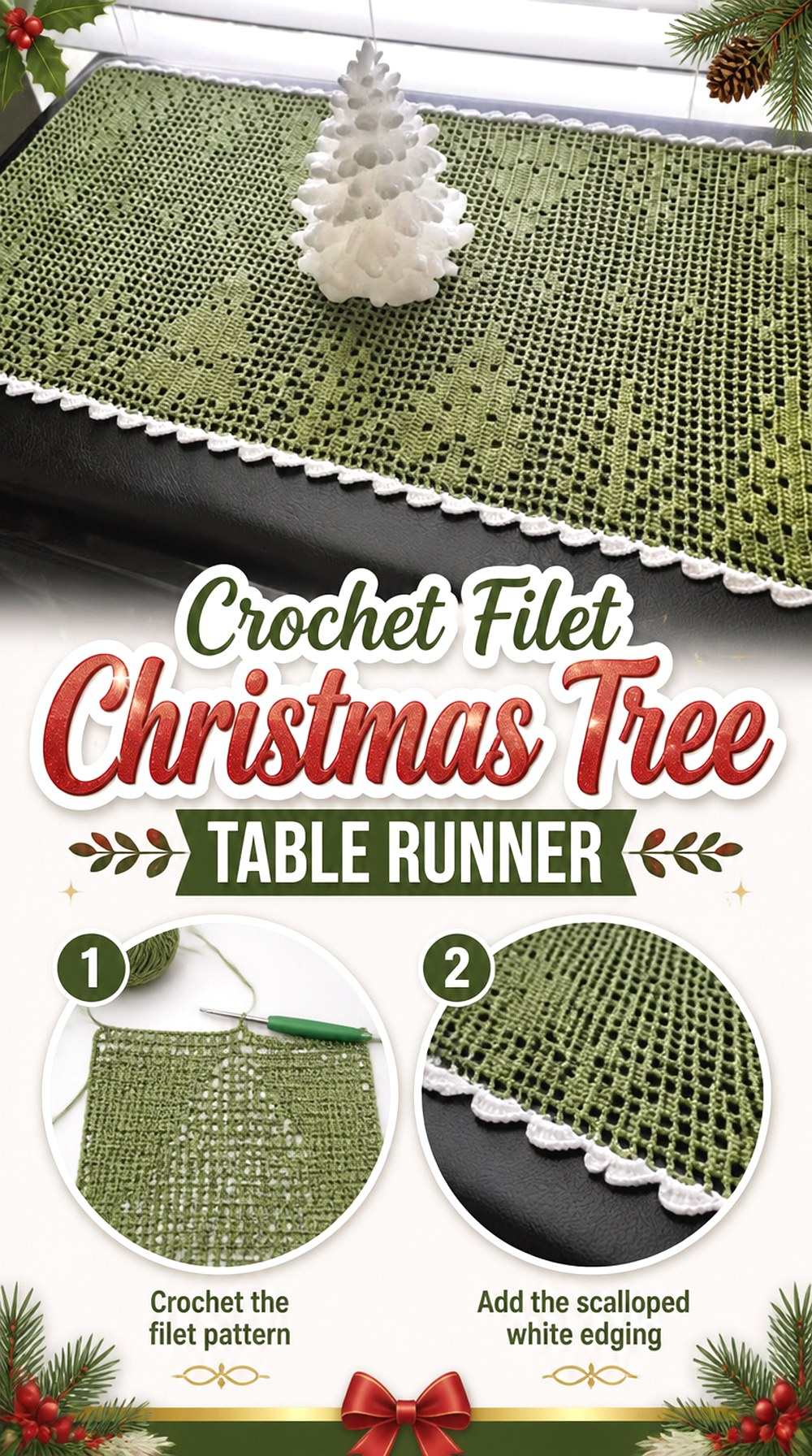
This idea turns the Christmas motif into part of the actual fabric rather than attaching decorations afterward. The runner uses filet crochet so open and solid areas create repeated evergreen silhouettes, while a contrasting white border gives the long edges a snow-inspired finish. HandmadebyRaine describes the design as a Christmas tree filet runner and demonstrates both the chart-based fabric and final blocking.
It is a strong option when you want clearly recognizable Christmas imagery without raised appliqués taking up serving space. The graphic design also makes it easier to build the rest of the tablescape around one dominant motif rather than several competing decorations.
The Tree Silhouettes Depend on a Straight Filet Grid
Filet crochet works visually because the open and filled sections stay aligned. Small inconsistencies that might disappear in a textured scarf can become more noticeable when they form the outline of a tree. Before committing to a long piece, check that your working tension keeps the grid reasonably even. The tutorial includes chart-reading guidance, so this option particularly suits crocheters who want the decorative image integrated into the fabric rather than added later.
The Snowy Border Creates a Built-In Color Break
The white border is more than an edge treatment: it separates the green filet section from the tabletop and gives the piece a winter finish. If your holiday decor already contains several strong colors, keeping the body and border limited to two tones can prevent the centerpiece area from becoming visually busy. If you substitute colors, preserve enough contrast for the tree shapes and border to remain distinct from one another.
Blocking Is Part of the Final Presentation
This is one of the designs where finishing can noticeably affect the picture. HandmadebyRaine specifically includes blocking in the tutorial, which makes sense because an even rectangle helps the filet trees read clearly. Before blocking, compare both long edges and make sure the corners are not pulling inward. Shape the runner according to the fiber and care guidance that applies to the yarn or thread you actually use.
2. Crochet Snowflake Motif Table Runner With Tassels

Instead of working one long rectangle, this winter-focused runner is assembled from separate snowflake motifs. Fiber Flux joins the motifs into an elongated arrangement and finishes the ends with tassels, producing an open silhouette with substantial negative space between the points. The creator also notes that the motif-based construction can be adjusted in length by changing the number used.
This format works particularly well when you want the wood, cloth, or other table surface to remain visible through the crochet. It also separates the work into repeatable units, which can be convenient when a large continuous runner feels cumbersome to handle.
Motif Size Should Be Consistent Before Joining
A joined runner can only lie neatly when the individual units are reasonably compatible in size. Place finished snowflakes next to one another before committing to the final layout and check whether their outer points line up naturally. If one motif is noticeably smaller or tighter, correcting it before joining is usually cleaner than trying to force the discrepancy into the assembled runner. The visual rhythm depends on repetition, so consistent motifs matter more than tiny cosmetic variations.
Tassels Change the Length and the Edge Behavior
The tassels create a softer, more decorative finish than a straight crocheted border. Fiber Flux’s published project information treats them as part of the finished length, so account for that extra extension when deciding where the runner should end on your table. If your table has busy seating at the ends, you may prefer the tassels to remain on top rather than hang where they can be brushed repeatedly.
Join-as-You-Go Makes Layout Planning Important
The tutorial uses a join-as-you-go approach for the snowflakes. That reduces the amount of separate assembly at the end, but it also means you should decide the general arrangement early. Before adding the next motif, look at the overall width as well as the length. An extra snowflake can change the silhouette in more than one direction depending on where it is attached.
Original Tutorial and Creator Credit
Creator: Fiber Flux
3. Crochet Joined Christmas Star Table Runner

This star runner treats the motifs themselves as the outer shape of the centerpiece. Francesca Uncinettando Crochet&Love demonstrates a Christmas table runner built from crocheted stars, including smaller and larger star elements and the way the motifs are joined into the finished composition. The tutorial also discusses methods intended to help the work retain its shape.
Compared with a straight-edged runner, the star points create a more sculptural outline and a larger amount of open tabletop around the crochet. This makes the design suitable when the runner is meant to function more like an arrangement of connected ornaments than a conventional strip of fabric.
Mixed Star Scale Gives the Layout More Movement
Using more than one star scale breaks up the repetition that can make a long motif runner feel rigid. The design can therefore read as a connected holiday centerpiece even before additional decorations are placed around it. When evaluating the arrangement, step back from the table rather than judging each star individually. The balance between large and small shapes will affect the overall visual weight more than minor differences inside one motif.
Star Points Need Space Around Place Settings
The irregular outline is decorative, but it occupies the table differently from a rectangle. Before choosing this design for a narrow table, mark the approximate runner zone and consider where the outer star points will sit relative to plates, glasses, and shared dishes. Keeping the most detailed points away from crowded serving areas allows the shape to remain visible instead of disappearing underneath tableware.
Shape Retention Matters More With Individual Points
A runner made from stars has many outer tips that can curl or shift independently. Francesca’s tutorial specifically addresses ways to help the work keep its shape. When finishing your own version, assess the entire runner on a flat surface rather than straightening one star at a time. The goal is a coherent center line and balanced overall outline, not simply perfectly rigid individual motifs.
Original Tutorial and Creator Credit
Creator: Francesca Uncinettando Crochet&Love
4. Crochet Christmas Bell and Lace Table Runner

Bells give this runner a more illustrative holiday identity than a color-only design. Hablemos de Magia Crochet presents a Christmas table runner featuring bell details together with a decorative lace treatment, creating a combination of recognizable seasonal imagery and an ornamental edge.
This is a useful choice when your table decor leans traditional and you want the runner itself to supply much of the Christmas theme. It can reduce the need for numerous small decorations scattered along the table because the bells and lace already add visual detail. That makes proportion especially important: allow enough open space around the piece for the motifs to remain readable.
Bell Motifs Work Best When They Stay Visually Clear
When a recognizable object is part of a runner, contrast matters more than it does in a purely textured design. Before changing the tutorial palette, imagine the bells from normal standing distance rather than close up. Two yarns may look different in your hand but merge visually across a dining table. Stronger value contrast can help the motif remain identifiable without requiring additional embellishment.
The Lace Edge Adds Width as Well as Decoration
Decorative lace can make the finished runner look lighter, but it still occupies physical space. Measure the available center strip of the table with the full outer edge in mind rather than planning only for the central body. On a narrow table, an elaborate border may reach closer to place settings than expected. On a wide table or sideboard, that extra edge detail can help a comparatively narrow center section feel more substantial.
Keep Dimensional Holiday Decor Away From the Detailed Border
If you plan to add candles, figurines, greenery, or a floral centerpiece, leave breathing room around the crocheted lace. Dense decorations placed directly over the most detailed portion can hide the feature that differentiates this runner from simpler rectangular options. A more restrained centerpiece often lets the bell motif and edge treatment do the decorative work. Keep open flames safely separated from yarn and other textile decorations.
Original Tutorial and Creator Credit
Creator: Hablemos de Magia Crochet
5. Crochet Sparkle Accent Christmas Table Runner
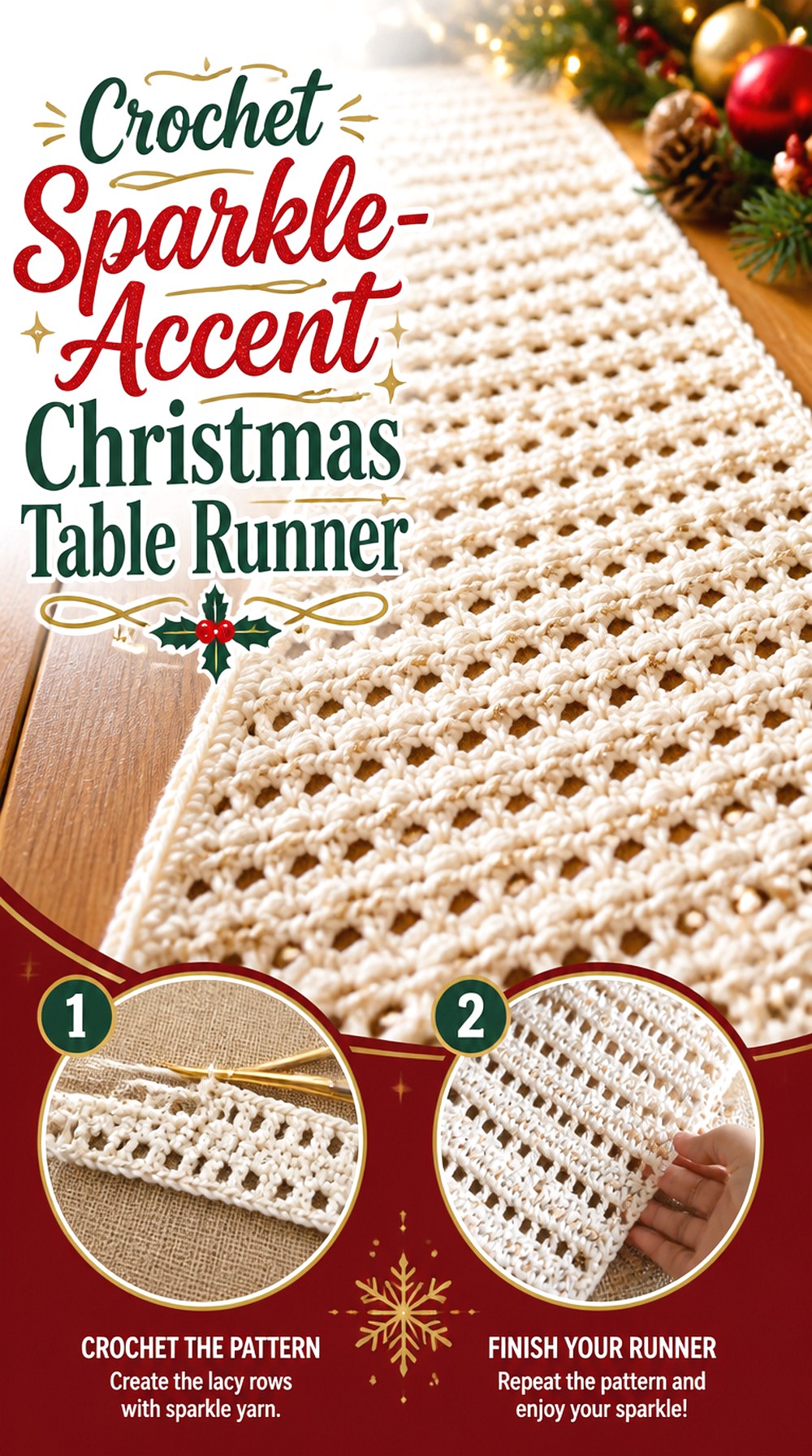
Las Totoras Crochet takes a more formal route with a fine holiday runner designed for a special table setting. The listed materials include fine cotton or macramé-type thread along with sequins, with the creator suggesting another sparkly or textured thread if sequins are not available. That combination makes this idea quite different from chunky, rustic Christmas crochet.
Rather than filling the center of the table with large motifs, the appeal comes from a lighter textile and controlled shine. It is a strong option for dinnerware with metallic rims, glassware, or a more restrained holiday palette where a small amount of shimmer can provide the seasonal accent.
Subtle Shine Can Replace Multiple Holiday Colors
Red, green, and white are not the only way to make a runner read as festive. A neutral or limited-color base with a controlled sparkle thread can work with gold, silver, champagne, or glass accents already on the table. If you adapt the palette, hold the yarn beside your actual dishes under evening lighting. Metallic effects can look stronger under artificial light than they do beside a daytime window.
Fine Crochet Needs a Different Scale Check
A delicate thread runner can look narrower once placed beneath larger dinner plates and serving pieces. Before deciding the finished proportions, use folded fabric or paper to simulate the planned width on the table. This tells you whether you want a slim decorative center line or enough crochet to remain visible beyond a centerpiece. Fine work may be visually detailed without having the same physical presence as a heavier textured runner.
Test Specialty Thread Before Using It Throughout
Sequins or sparkly companion threads can change how smoothly the yarn moves through the hands and how flexible the resulting fabric feels. If you are substituting a specialty strand, make a small sample before committing to the entire runner. Check whether the surface lies comfortably flat and whether the added texture is appropriate around the tableware you expect to use. A small amount of sparkle can be effective without needing to appear in every row.
Original Tutorial and Creator Credit
Creator: Las Totoras Crochet
6. Crochet Floral Christmas Table Runner With Gold Accents
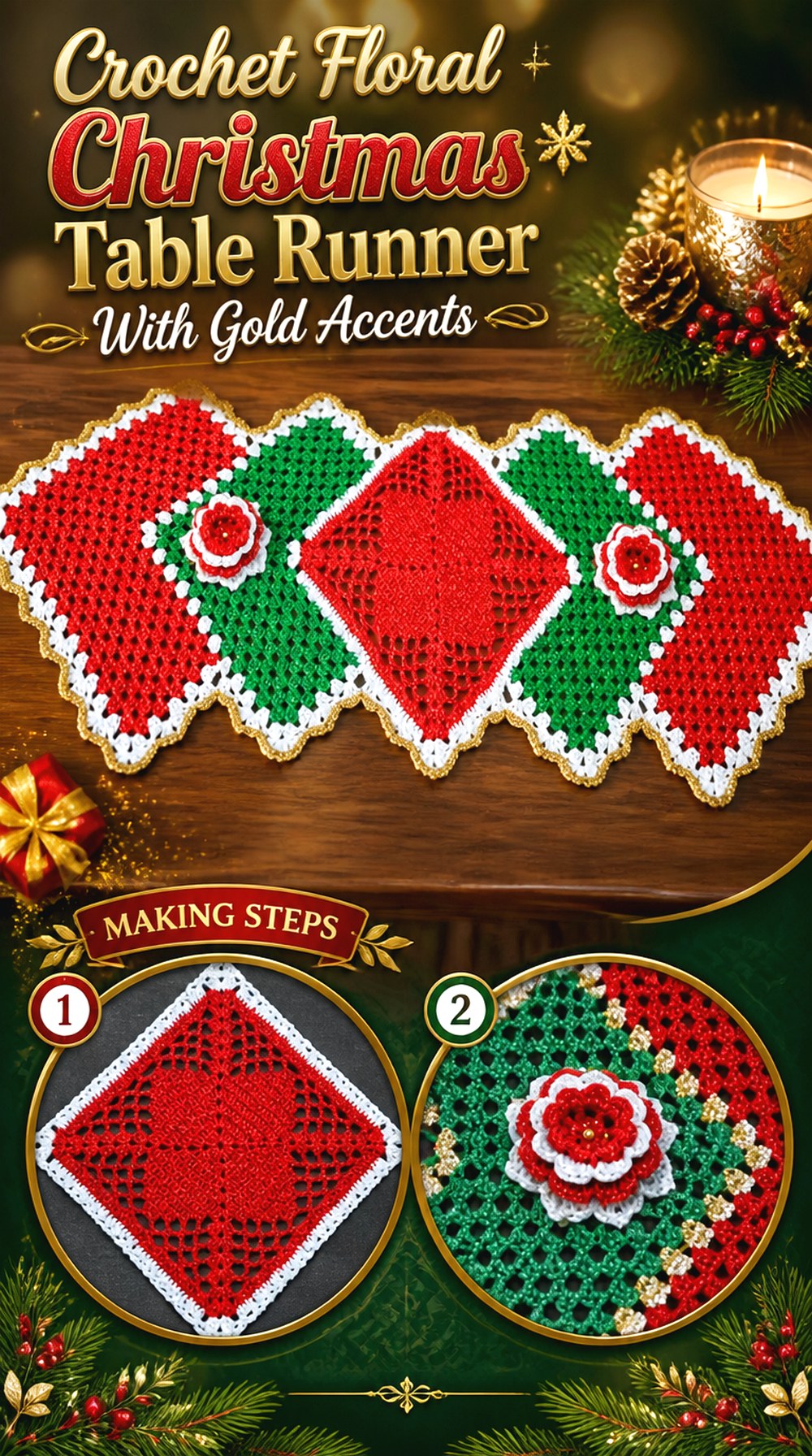
This design from Mimos da Jô Ateliê combines traditional Christmas colors with a shiny gold yarn and a crocheted flower accent identified by the creator as the Flor Amora. The result moves beyond a simple striped holiday runner because the flower introduces a raised focal element while the metallic accent adds another layer of seasonal detail.
Choose this direction when you want a handcrafted centerpiece that still has the familiar red-green-gold language of Christmas decorating. It is particularly suitable for a table where the runner can remain visible rather than being almost completely covered by serving platters.
Raised Flowers Need a Deliberate Placement Zone
Applied flowers create depth, but that depth affects where objects can sit. Before attaching or arranging dimensional motifs, identify the part of the runner that will remain decorative during the meal. Keeping raised elements toward visible sections can prevent a serving dish from flattening them or sitting unevenly. If the table is frequently rearranged, consider how the runner looks both fully set and after plates or serving pieces are removed.
Gold Works Best as an Accent, Not a Competition
The creator uses a shiny gold yarn alongside the Christmas palette. When adapting the colors, compare the metallic strand with other gold decorations already in the room. Too many different shiny surfaces can make a small table feel crowded. Repeating the runner’s gold in only one or two places—such as napkin rings or a restrained centerpiece—can create a more coherent tablescape.
Protect the Flower Shape During Seasonal Storage
A flat runner is easy to fold, but applied flowers can become compressed between layers. When the holiday season ends, make sure the piece is clean and fully dry according to the fiber’s care guidance, then store it in a way that does not leave heavy objects pressing on the raised motifs. When it comes out again, inspect the petals and surrounding attachment areas before putting the runner back on display.
Original Tutorial and Creator Credit
Creator: Mimos da Jô Ateliê
7. Crochet Red, White, and Gold Christmas Table Runner
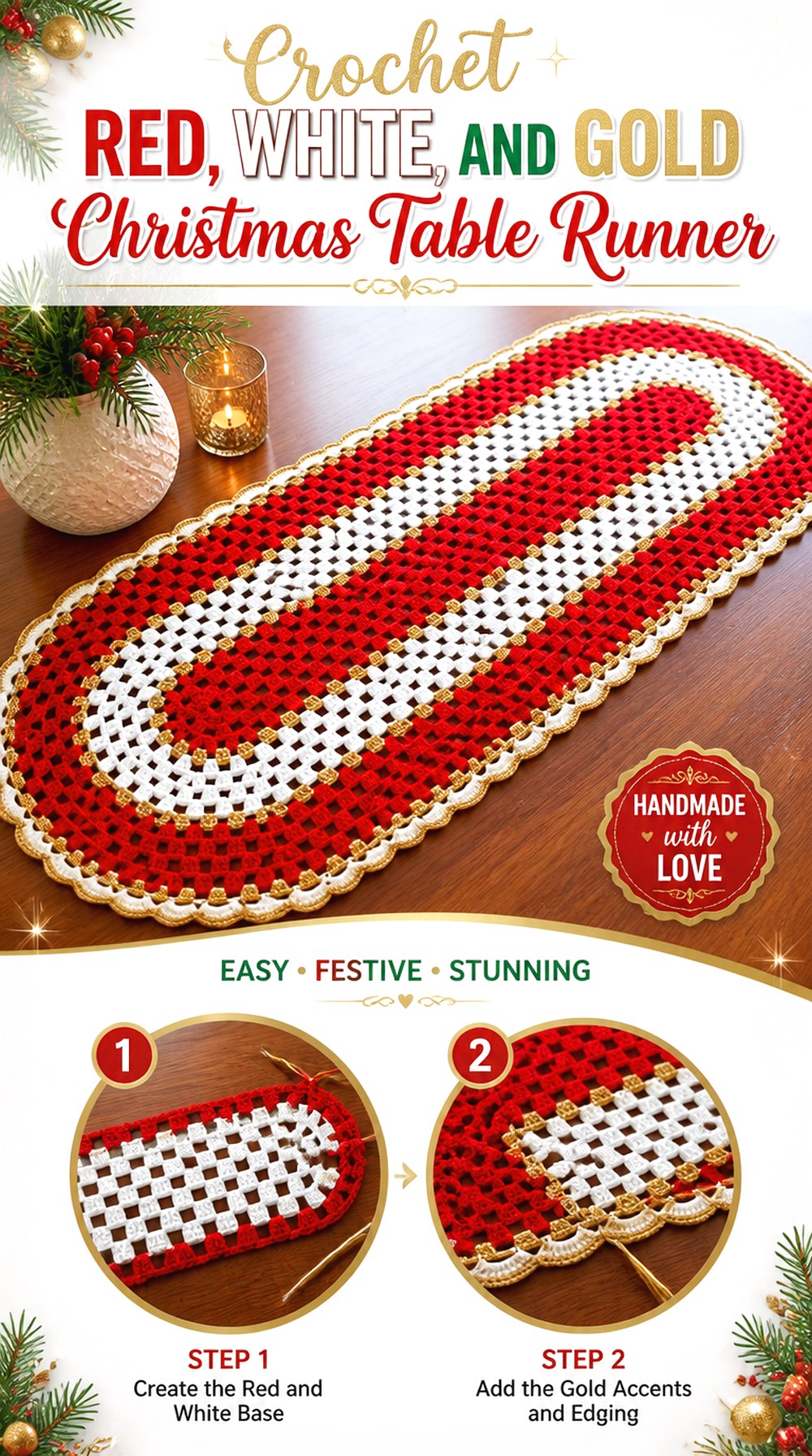
D Tejidos a Crochet uses a clear three-color holiday palette of red, white, and satin gold in a cotton runner designed to coordinate with a matching Christmas placemat. The creator’s sample is presented as a broad rectangular table piece rather than a chain of individual motifs.
This makes the idea useful for readers who want the runner to belong to an entire coordinated table setting. Instead of treating it as a standalone centerpiece, you can use its palette as the reference point for napkins, placemats, or small crocheted table accessories. The strong color blocks also give the runner plenty of presence even without three-dimensional appliqués.
A Three-Color Palette Needs a Clear Dominant Color
Red, white, and gold can all compete for attention if each is used with the same visual weight. When adapting the idea, choose which color should dominate the runner and which should act as accents. Then compare that balance with your plates and tablecloth. On a red table covering, for example, a red-heavy runner may disappear more than it would on wood, cream, or white.
Coordinate the Runner With Placemats Before Making Both
The source runner is presented as a companion to a Christmas placemat tutorial. If you plan to make a full set, decide whether you want the runner and placemats to match exactly or simply share one or two colors. Exact repetition creates a formal set, while a shared palette with different proportions can keep the table from looking overly uniform.
Check Width Against the Actual Dinnerware
The creator provides specific dimensions for the demonstrated runner, but that sample size should not automatically determine your own. Measure the space between opposite place settings and consider the width of your serving dishes. A visually broad runner can look balanced on a large table but crowded on a narrow one. Confirm the tutorial’s resizing options before changing the construction.
Original Tutorial and Creator Credit
Creator: D Tejidos a Crochet
8. Crochet Rustic Daisy Texture Christmas Table Runner

Raji’s Craft Hobby offers a distinctly different route: a rustic Christmas runner whose main feature is stitch texture rather than a large picture motif. The tutorial uses a Daisy Cluster stitch pattern, which the creator describes as producing a rich surface resembling small flowers. The project is also presented as customizable in size.
This style suits farmhouse, woodland, traditional, or understated holiday decorating because it does not depend on literal trees, snowflakes, or bells. Seasonal color can provide the Christmas connection while the repeated texture keeps the runner useful as a decorative textile even when the rest of the tablescape is simple.
Texture Creates Interest Without Applied Pieces
Raised stitch texture can make a single-color runner look more detailed without requiring separately crocheted ornaments or flowers. That can be useful if the table needs a relatively uninterrupted surface. When choosing yarn, look at stitch definition as well as color. A very fuzzy yarn may soften the daisy-like texture, while a smoother strand can make the repeating surface easier to see.
A Narrow Rustic Runner Leaves More Table Exposed
The sample is designed as a relatively narrow strip and is described as customizable. That format can work well on wood dining tables where you want the grain to remain visible. Before widening the piece, consider whether additional fabric actually improves the tablescape. A narrow textured band beneath greenery or a few ornaments can sometimes create stronger contrast than covering a much larger portion of the surface.
Repeated Texture Makes Straight Edges Important
When a runner is visually simple, uneven edges become easier to notice. Periodically lay the work flat rather than judging width only while it is on the hook. Compare the first section with the newest section and watch for gradual widening or narrowing. If you intend to change the length, use the tutorial’s repeat structure rather than inserting an arbitrary section that could interrupt the texture.
Original Tutorial and Creator Credit
Creator: Raji’s Craft Hobby
9. Crochet Classic Rectangular Christmas Table Runner
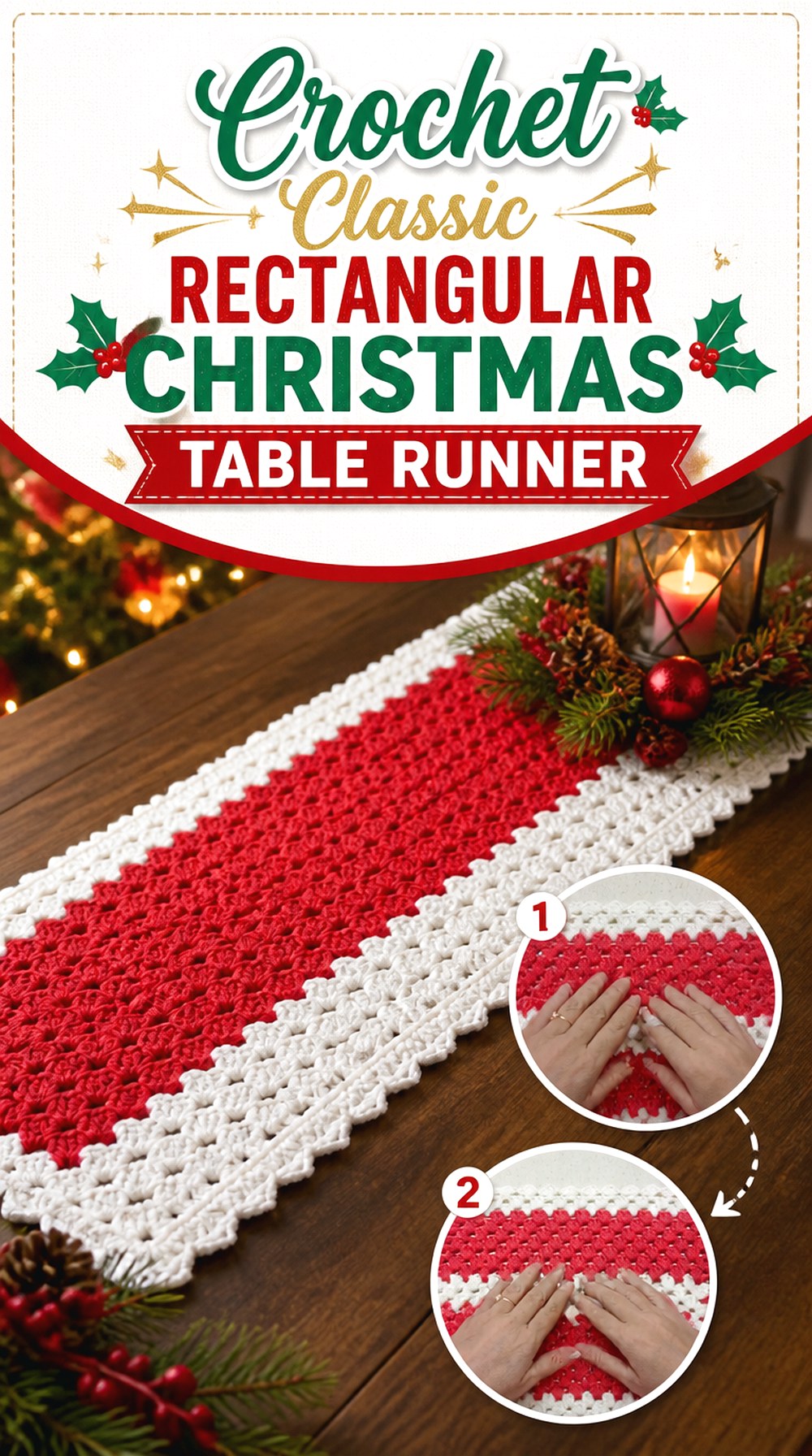
The Art Zone’s tutorial focuses on a straightforward rectangular Christmas table runner and leaves the festive identity largely to the yarn and color choices. That simplicity is useful in a list filled with stars, trees, snowflakes, bells, tassels, and flowers because it provides a calmer alternative.
A basic rectangle can also be easier to integrate with an elaborate centerpiece. Rather than asking the crochet itself to provide every holiday detail, use it as the textile layer underneath greenery, ornaments, dishes, or a decorative bowl. This approach is especially practical when you want the table runner to support the setting rather than become the dominant object.
The Rectangle Makes Placement Easy to Predict
Straight sides give you a clear idea of how much table surface the finished piece will occupy. Use that advantage before starting: place a strip of fabric, paper, or even a measuring tape down the table to test the planned footprint. Check both the width and the length from normal seating positions. This simple preview can prevent a finished runner from competing with plates or disappearing beneath a centerpiece that is too large.
Let Holiday Yarn Do the Decorative Work
Because the construction is comparatively restrained, color changes and yarn selection have greater influence over the final mood. The tutorial specifically frames the project around festive yarn choices. Traditional red and green are one option, but a rectangle can also suit cream and gold, winter white, deep forest green, or another palette already used in the room. Keep enough contrast with the tabletop for the runner’s edges to remain visible.
Simple Shapes Make Care and Storage Less Complicated
A flat rectangle has no separate motifs or raised flowers that need to be protected during storage. That does not eliminate the need for careful care, but it simplifies folding and seasonal organization. Follow the care information for the actual yarn you use rather than assuming all crochet can be washed the same way. Before storing it after Christmas, make sure the runner is clean and completely dry.
Original Tutorial and Creator Credit
Creator: The Art Zone
Which Crochet Christmas Table Runner Style Fits Your Table?
| Runner Style | Main Construction | Visual Effect | Useful When |
|---|---|---|---|
| Filet Christmas trees | Continuous open-and-solid grid | Graphic and traditional | You want recognizable Christmas imagery with a flat surface |
| Snowflake motifs | Joined individual motifs | Airy and wintry | You want visible tabletop and adjustable motif-based length |
| Christmas stars | Connected star shapes | Sculptural and decorative | The runner itself will act as the centerpiece |
| Bells and lace | Pictorial motif with decorative edging | Detailed and traditional | You want seasonal imagery plus an ornamental border |
| Sparkle accent | Fine crochet with specialty thread | Light and formal | Your table uses metallic, glass, or elegant dinnerware |
| Floral and gold | Base with dimensional flower detail | Rich and decorative | Raised accents can stay visible during the meal |
| Red, white, and gold | Broad coordinated rectangle | Bold and festive | You want matching placemats or other table accessories |
| Rustic daisy texture | Repeating textured fabric | Warm and understated | You prefer farmhouse or non-pictorial holiday crochet |
| Classic rectangle | Continuous simple shape | Calm and versatile | The centerpiece or dinnerware should provide most decoration |
Conclusion
The most useful way to choose among these crochet Christmas table runner ideas is to start with the table rather than the yarn shelf. Choose filet trees when you want a flat graphic motif, snowflakes or stars when negative space is part of the look, floral or bell designs when the runner should act as the main decoration, and a textured or simple rectangle when you need an adaptable background for dishes and a centerpiece.
Also consider storage, edge shape, dimensional details, and how much of the runner will remain visible once the table is set. After choosing the style that fits your space, use the original creator’s tutorial for its exact construction details and finishing method.
Frequently Asked Questions
Should a crochet Christmas table runner hang over the ends of the table?
It can, but an overhang is a styling choice rather than a requirement. A centered runner that remains completely on top of the table can be more practical when people sit at the ends or when tassels and pointed motifs might be disturbed. Measure the actual table and set out your dinnerware before choosing a length. If the tutorial is motif-based, also check how much one additional motif changes the finished length.
Which construction is easiest to resize for a different table?
Motif runners can be convenient because length is often changed by adding or removing complete stars or snowflakes, provided the layout still works. Continuous textured runners may also be adjustable when the design contains a repeat that the creator specifically allows you to extend. Filet picture designs can be less flexible because changing the row count may alter the image. Always check the original tutorial before modifying its proportions.
How can I keep a crochet table runner from looking wavy?
First identify where the waviness starts. With motif runners, compare the finished size of each snowflake or star before joining. With rectangular crochet, periodically lay the work flat and check whether the width is gradually changing. Filet designs may need careful blocking to make the grid and edges look crisp. Do not rely on aggressive blocking to fix a major construction problem; correct noticeable tension or sizing differences as early as possible.
Is cotton a good choice for Christmas table runners?
Cotton is commonly used in several of the linked tutorials, including both fine-thread and heavier runner styles. It can provide clear stitch definition, which is useful for filet grids, lace, and motifs. However, use the yarn recommended by the specific tutorial when you want similar proportions, and always check the manufacturer’s care information before deciding how the finished runner should be washed, blocked, or stored.
Can I add metallic yarn or sequins to any Christmas runner?
They can be attractive accents, but they are not automatically suitable for every construction. Specialty strands can change flexibility, stitch visibility, and the way the fabric feels beneath tableware. Las Totoras Crochet specifically incorporates sequins or an alternative sparkly/textured strand in the featured runner, while other tutorials were designed around different materials. Make a small sample before adding metallic or textured yarn throughout a design that did not originally use it.
What should go on top of a dimensional crochet Christmas runner?
Keep the raised portion visible whenever possible. A runner with flowers, pointed stars, tassels, or elaborate lace can lose much of its character if a large centerpiece covers the most decorative area. Place flat-bottomed dishes on stable sections rather than directly over raised motifs. Keep candles and other open flames safely separated from crochet and surrounding decorations, and never use a decorative runner as a substitute for a heat-rated trivet.


