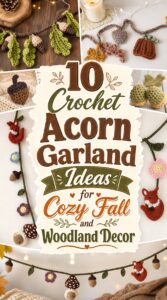
Crochet acorn garlands can look simple, rustic, playful, or full of woodland detail depending on the shape of the acorns and what they are paired with. Some of the ideas below are full garland tutorials, while others use a complete acorn tutorial as the main repeatable motif for a custom strand.
This collection focuses on real differences: oak leaves, pumpkins, winter motifs, cottagecore pieces, tiny amigurumi acorns, chunkier farmhouse acorns, and multi-size options. Before choosing one, think about where the garland will hang, how much weight the cord needs to hold, and whether you want a full seasonal display or a quieter acorn-only strand.
Quick List
- Crochet Oak Leaf and Acorn Mantel Garland
- Crochet Solstice Acorn Garland With Winter Motifs
- Crochet Autumn Acorn, Leaf, and Pumpkin Garland
- Crochet Cottagecore Woodland Acorn Garland
- Crochet Mini Acorn Repeat Garland
- Crochet Acorn and Oak Leaf Ornament Garland
- Crochet Classic Small Acorn Garland
- Crochet Multi-Size Country Acorn Garland
- Crochet Rustic Farmhouse Chunky Acorn Garland
- Crochet Compact Amigurumi Acorn Garland
What to Decide Before Making a Crochet Acorn Garland
The biggest choice is whether you want a full garland tutorial or a repeatable acorn motif that you arrange yourself. A full garland source usually gives more help with spacing, attaching, and overall layout. A single-acorn tutorial gives more freedom, but you will need to decide how many acorns to make, what cord to use, and how far apart each piece should sit.
Weight also matters. Small flat or lightly stuffed acorns can usually suit narrow mantel strands, shelf edges, and small wall displays. Larger stuffed acorns may look better as a shorter swag, a window accent, or a few grouped pieces rather than a long, heavy line. For mixed garlands, compare the size of every motif so the acorns do not get hidden behind leaves, pumpkins, or flowers.
1. Crochet Oak Leaf and Acorn Mantel Garland
 SAVE
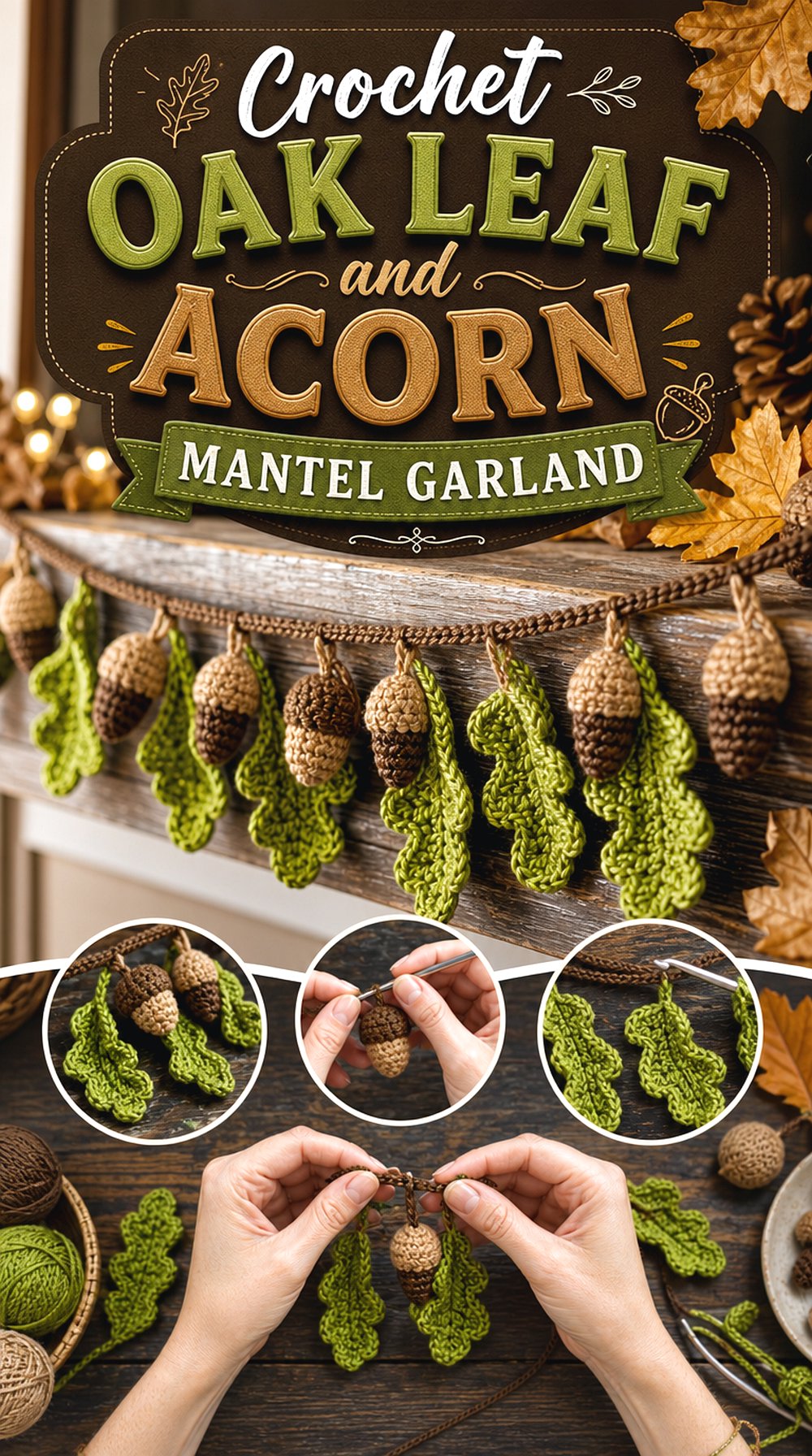
SAVEThis crochet garland has a classic autumn look because the acorns are paired with oak leaves instead of standing alone. The finished style feels natural and woodland-inspired, making it useful for a mantel, shelf front, mirror edge, or fall wall display. The acorns give the strand weight and shape, while the leaves help spread the design across the hanging line.
This is one of the strongest options when you want the finished project to read clearly as an acorn garland, not just a group of small seasonal ornaments. The source focuses on building a crocheted acorn and oak leaf garland, so the finished arrangement is part of the project rather than an afterthought.
Best Placement for the Oak Leaf Sets
Because this design includes both acorns and oak leaves, it works well where the individual pieces can be seen from the front. A mantel, open shelf, or plain wall gives the leaf shapes room to show. If the strand is placed against a busy wreath or patterned background, the oak leaves may not stand out as clearly.
How the Hanging Line Affects the Finished Shape
The cord or crocheted chain is not just a support piece here. It controls how the acorns and leaves sit, how much space appears between each cluster, and whether the strand looks loose or tidy. Readers should watch the final attachment section closely before deciding how many repeats they want for their own display space.
Motif Balance Is the Main Feature
2. Crochet Solstice Acorn Garland With Winter Motifs
 SAVE
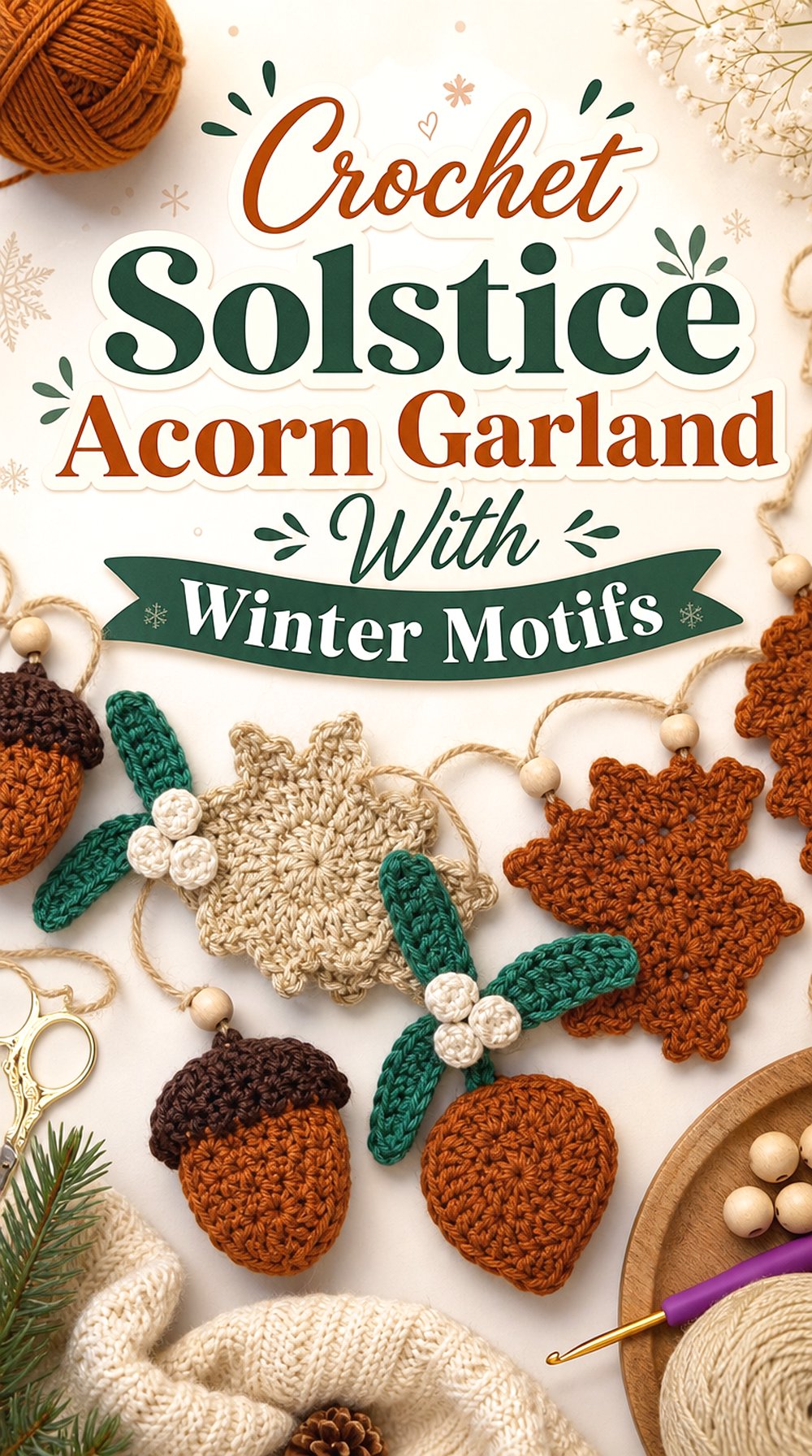
SAVEThis garland moves the acorn idea away from only fall decor and into a winter woodland direction. The project includes an acorn as part of a larger solstice-style motif set, with other natural and seasonal shapes included in the strand. That makes it a good choice when you want acorns, but not a strictly Thanksgiving or autumn-only display.
The finished mood is softer and more storybook-like than a plain acorn strand. It may suit a winter mantel, a nature-themed holiday shelf, or a seasonal window display where acorns can sit beside lighter motifs instead of pumpkins and orange leaves. The source describes acorn, sun, mistletoe, and oak leaf motifs for the garland.
The Winter Motif Mix Changes the Mood
Adding sun, mistletoe, and oak leaf motifs gives the garland a broader seasonal look. The acorn still matters, but it becomes one part of a winter nature strand. This is helpful if you want decor that can stay up beyond early fall without looking too tied to Halloween or Thanksgiving.
Where a Mixed Garland Can Hang Well
A mixed motif garland needs enough open space for each shape to be recognized. A narrow shelf edge, window frame, or plain wall can help the acorn and the other motifs read separately. If the display area is small, consider whether fewer motifs or a shorter strand would look cleaner.
Details to Confirm Before Assembly
For a multi-motif garland, the joining stage is important because each shape may hang differently. Flat motifs and stuffed or textured motifs do not always sit the same way on a cord. Viewers should confirm how the original source handles attachment before deciding whether to copy the same order or make a custom layout.
Creator: Hobbii
3. Crochet Autumn Acorn, Leaf, and Pumpkin Garland
 SAVE
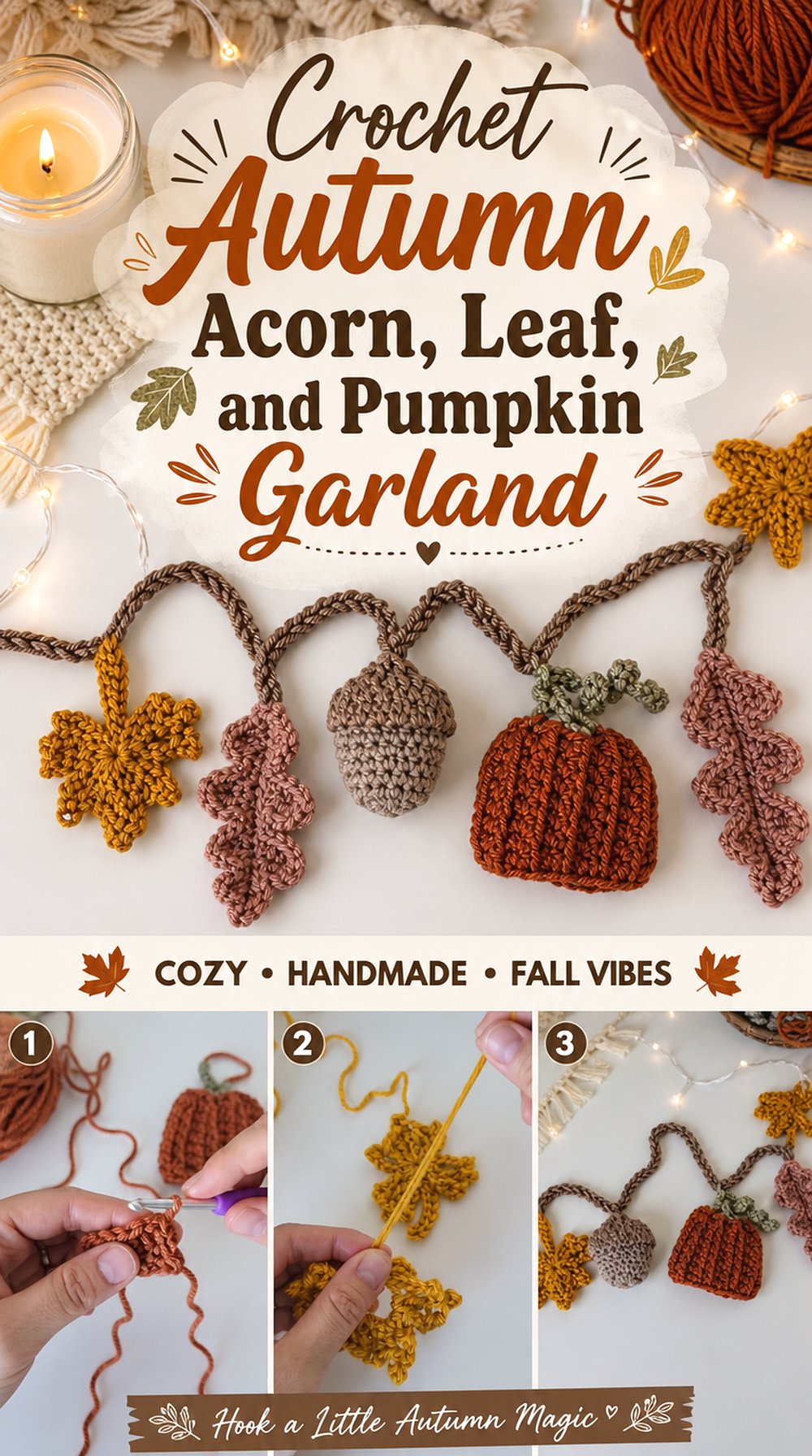
SAVEThis is a fuller fall garland idea with acorns, leaves, and pumpkins in one seasonal strand. The acorns do not have to carry the whole design alone; instead, they work as smaller woodland accents between larger autumn shapes. That makes this project useful for readers who want a complete fall display rather than a quiet acorn-only decoration.
The finished look may suit a fireplace mantel, party backdrop, craft room shelf, or entryway hook rail. Since pumpkins and leaves bring more visual variety, the acorns can be used as rhythm pieces that break up the strand and keep the garland from looking too uniform. The source describes leaves, an acorn, a pumpkin, and an i-cord for the garland.
Pumpkin and Acorn Balance
The pumpkins will likely draw more attention because they are visually familiar fall shapes. The acorns help soften the layout and bring in a woodland detail. When planning colors, readers may want the acorns to contrast enough with both pumpkins and leaves so they do not disappear into the strand.
The Cord Style Matters Here
A garland with several motif types needs a stable hanging line. The cord affects spacing, drape, and how the pieces face forward. Before making extra motifs, it is worth watching how the original project spaces and attaches the pieces so the finished garland does not become crowded in the center.
Good for a Fuller Seasonal Display
This idea is better for someone who wants a decorated fall strand, not a minimalist acorn garland. The extra motifs create more movement and color, which can look strong over a mantel or long shelf. For a smaller area, the same concept may work better with fewer repeats.
Creator: Annie’s Attic Videos
4. Crochet Cottagecore Woodland Acorn Garland
 SAVE
SAVEThis cottagecore garland takes the acorn theme in a playful woodland direction. Instead of using only acorns and leaves, it includes a broader scene with flowers, leaves, acorns, a toadstool house, and a fox. The result feels more like a small crochet story across a string than a traditional fall mantel garland.
This is a good option for a reading corner, craft space, nursery wall, or whimsical seasonal display. The acorns are still part of the strand, but the main appeal is the mix of tiny forest pieces. The source includes chapters for flowers, leaves, acorns, the toadstool house, the fox, and attaching the ornaments.
The Woodland Story Is the Main Appeal
The acorns work best here as part of a larger forest scene. They support the cottagecore mood without needing to be the biggest motif. This makes the idea useful for readers who like decorative storytelling and want a garland that feels softer and more detailed than a standard fall strand.
Small Motifs Need Breathing Room
Because this project includes several different shapes, spacing becomes important. If the motifs are packed too tightly, the fox, flowers, acorns, and toadstool may compete with each other. A little empty cord between pieces can make the acorns easier to notice and keep the whole garland from looking cluttered.
Attachment Is Worth Watching Closely
The final attachment stage matters because every ornament has a different shape and weight. A flower, acorn, and toadstool house will not naturally hang the same way. Before finishing, readers should check how the source places each piece and decide whether their own strand needs fewer motifs for the available space.
Best Setting for This Style
This garland is less formal than a farmhouse acorn strand and more playful than a leaf-and-acorn mantel piece. It may work especially well in a cozy corner, children’s room, craft studio, or cottage-inspired display. A plain wall or simple shelf will help the small details stay visible.
Creator: thisfairymade
5. Crochet Mini Acorn Repeat Garland
 SAVE
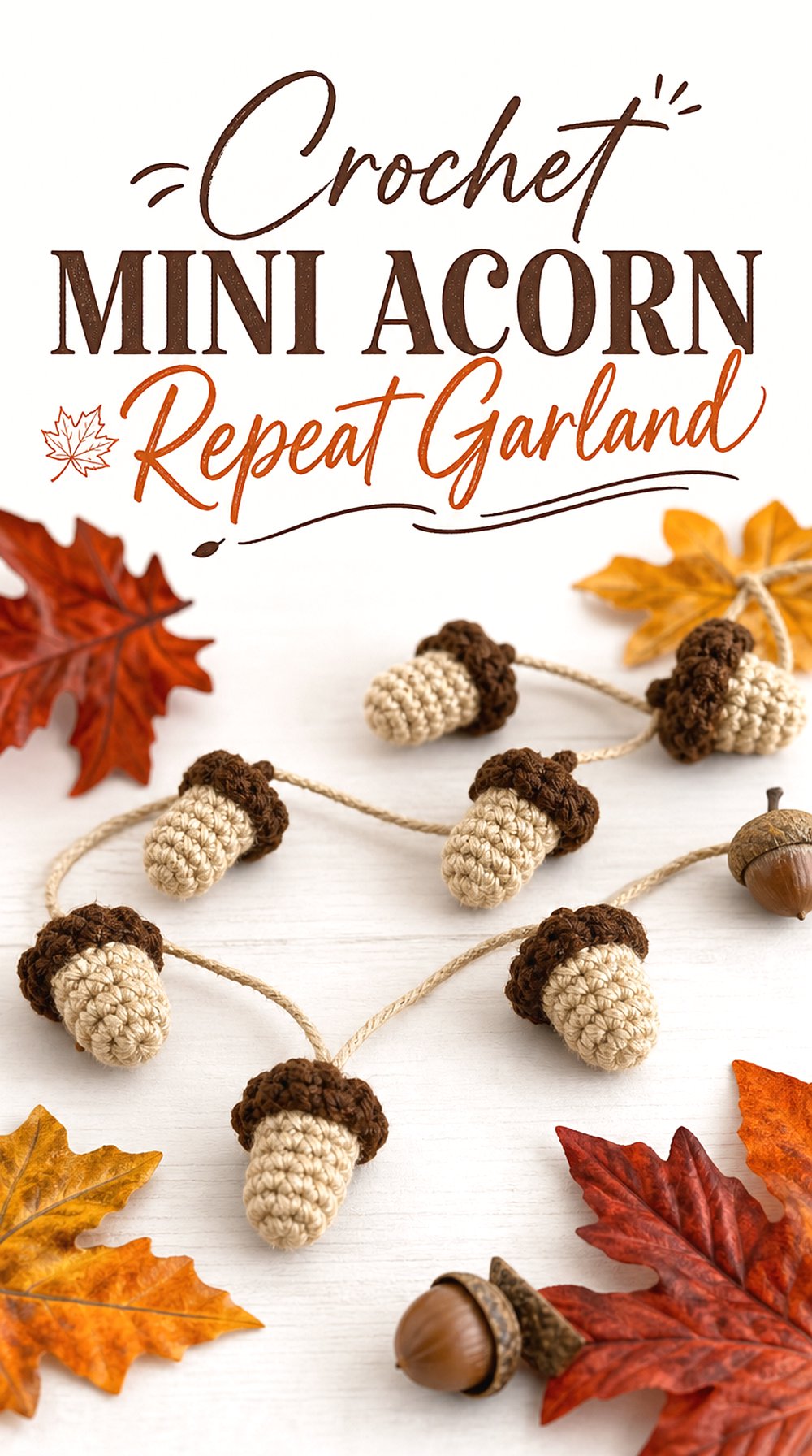
SAVEA mini acorn repeat garland keeps the focus on one simple shape. Instead of mixing many different motifs, this idea uses small acorns as the repeated element across the strand. The result can look neat, rustic, and flexible because the finished length depends on how many acorns you choose to make.
The original source teaches a quick crochet acorn for fall decor rather than a full finished garland, so readers will need to plan their own hanging cord, spacing, and attachment method. That freedom can be useful if you want a short shelf accent, a bowl-to-garland matching set, or a narrow strand for a small wall.
Repeatable Mini-Acorn Layout
A repeated acorn strand works best when the acorns are similar enough to look intentional. Small variations in color can still look natural, but very different yarn weights may change the balance of the garland. Before making a long strand, try placing a few finished acorns in a row to judge spacing.
Add Your Own Hanging Method
Since this source focuses on the acorn itself, the hanging method is a separate reader decision. Twine, crocheted chain, ribbon, or another cord can change the look. The important point is to attach each acorn securely enough for display while avoiding any claim about strength or load unless the source confirms it.
Creator: Winding Road Crochet
6. Crochet Acorn and Oak Leaf Ornament Garland
 SAVE
SAVEThis idea uses an acorn and oak leaf pairing in a more ornament-like style. The finished pieces can work as individual decorations, but they also make sense as repeated units for a garland. Compared with a large mixed fall strand, this option feels more focused and nature-based.
The acorn and leaf combination is useful because the rounded acorn brings dimension while the oak leaf creates a flatter outline. If you want a garland that feels seasonal without using pumpkins, this pairing gives a clear autumn look. The source teaches an acorn amigurumi and oak leaf together.
Pair the Acorn With the Oak Leaf
The leaf is not just an extra decoration. It helps frame the acorn and gives each repeat a wider silhouette. For a garland, that can make the strand look fuller without needing many stuffed pieces. Readers can decide whether every acorn needs a leaf or whether alternating them would feel lighter.
Ornament-to-Garland Planning
Because the source presents the pieces as ornaments, the garland layout needs separate planning. This is a useful project for readers who want flexibility, but they should decide how each ornament will face forward once it is attached. Testing one repeat on a cord first can prevent a twisted or uneven strand.
Small Details Need Close Watching
The acorn cap, stem, and leaf shaping are the parts that make the project recognizable. Since these are small decorative pieces, close-up viewing is helpful. Anyone planning several repeats should make sure the first acorn and leaf look balanced together before making the full set.
Creator: Laia Crochet
7. Crochet Classic Small Acorn Garland
 SAVE
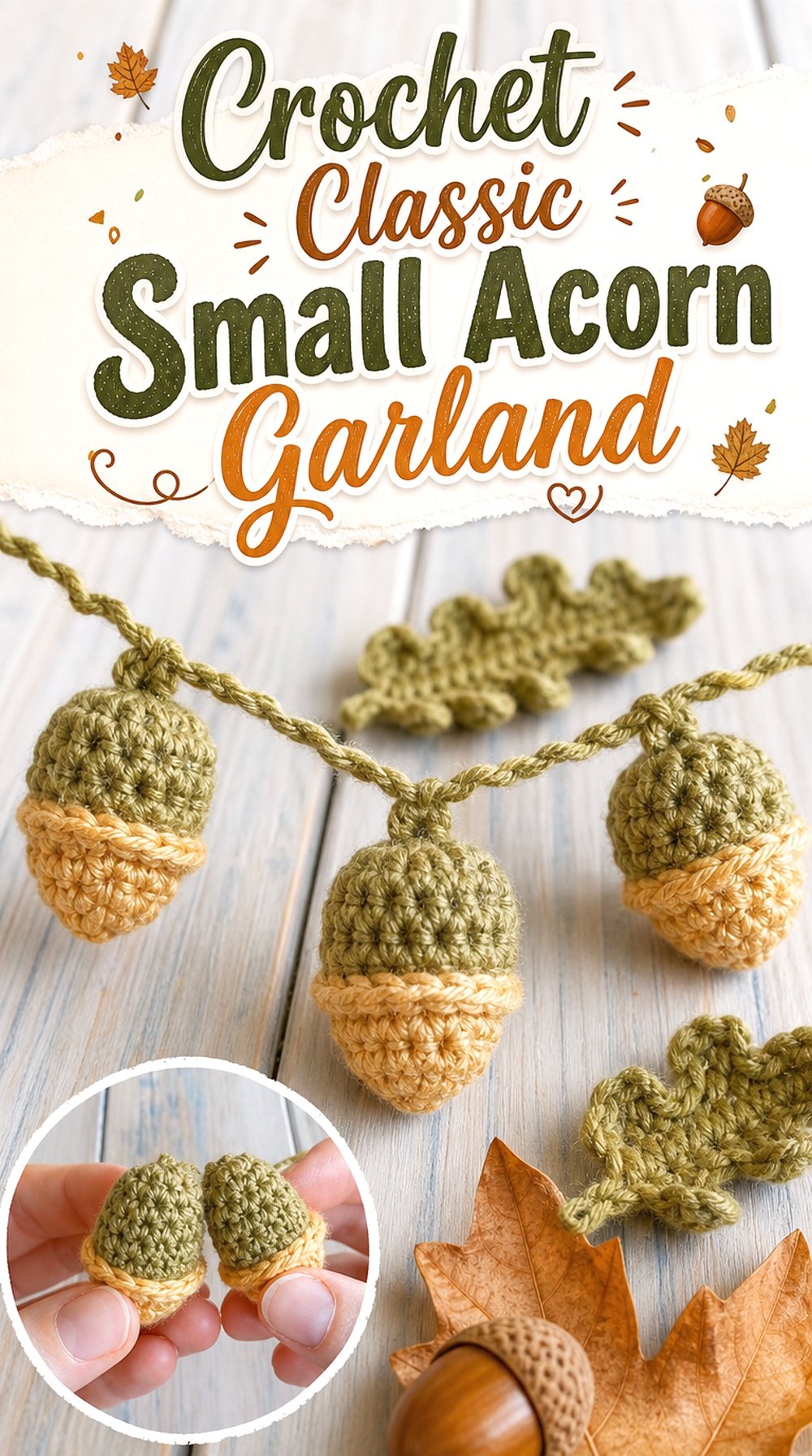
SAVEA classic small acorn garland is a good choice when you want the acorn shape to stay simple and recognizable. This idea does not rely on pumpkins, flowers, or many extra motifs. Repeating the same small acorn can create a clean fall strand for a shelf, narrow mantel, basket handle, or small wall hook.
The original tutorial is for a single crochet acorn, so the final garland planning belongs to the reader. That can be helpful if you want to control the length or make a matching set of acorns for both a garland and a bowl display. The source presents the acorn as a small design made to go with an oak leaf from the creator’s related work.
Standalone Acorns Keep the Garland Quiet
A strand of only acorns has a calmer look than a full autumn banner. This works well for neutral fall decor or small spaces where pumpkins and large leaves might feel too busy. Color choice will affect whether the garland looks natural, playful, or more decorative.
Match With Leaves Only If Needed
The source connects the acorn idea with an oak leaf theme, but the garland does not have to include leaves. Adding leaves can widen the display, while acorns alone keep the strand compact. Readers should decide based on the space: a long mantel may need leaves, while a small shelf may not.
Creator: HappyBerry Crochet
8. Crochet Multi Size Country Acorn Garland
 SAVE
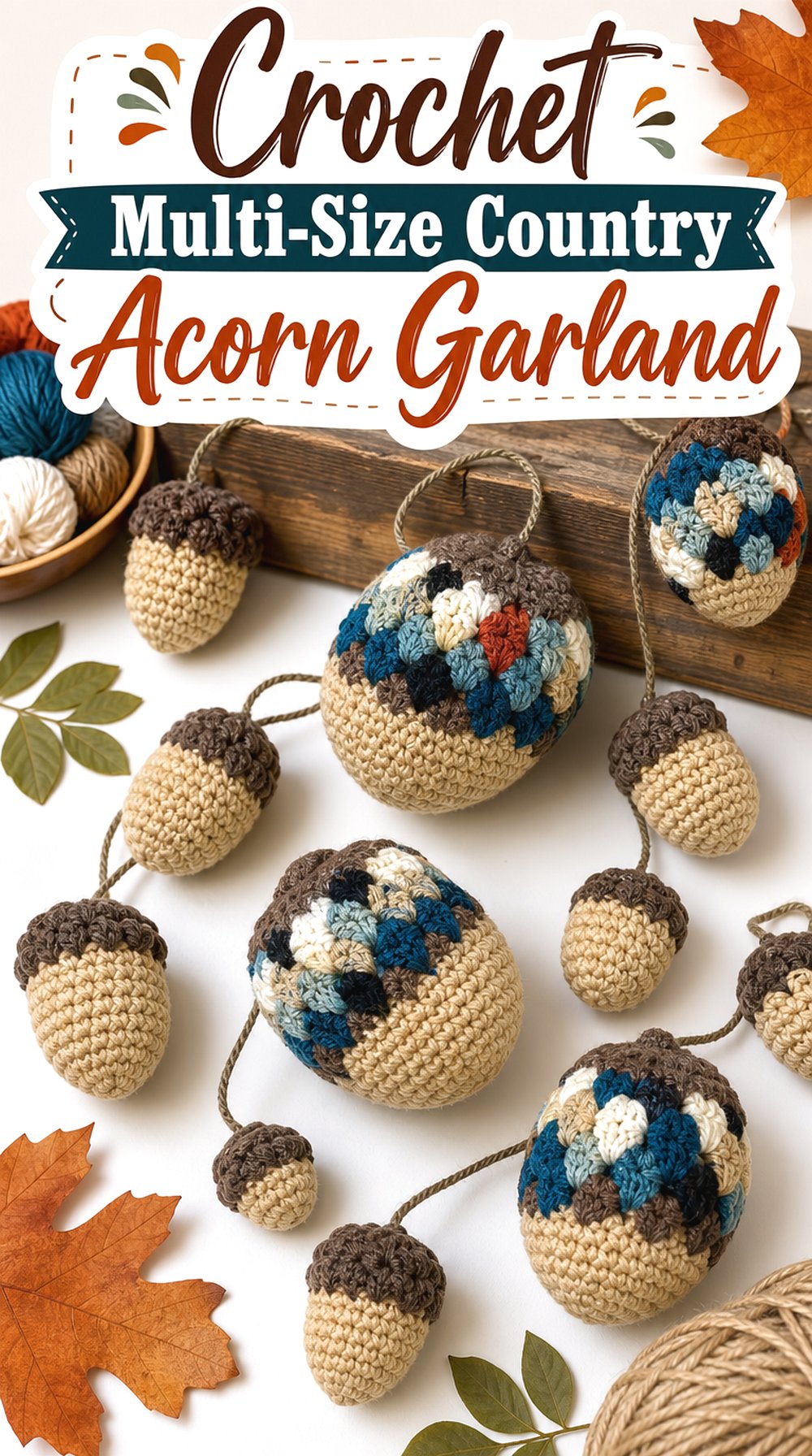
SAVEThis acorn garland idea is useful when you want size variation instead of a row of identical pieces. The source includes a crochet acorn pattern with multiple sizes, which can help readers plan a strand with larger focal acorns and smaller filler acorns. That gives the garland a more collected, natural look.
The finished acorns can also be made with different cap looks, including solid or striped styling from the source information. For a garland, this matters because the cap is the most visible design detail when the acorns hang in a row. The source describes four acorn sizes and customization options for different uses, including garlands.
Size Variation Creates a Natural Rhythm
Using several acorn sizes can make the garland look less stiff. Larger acorns can sit near the center, while smaller ones can move toward the ends or fill gaps. Before making many pieces, readers should compare the finished size information from the creator with the actual space where the strand will hang.
Solid or Striped Caps Change the Style
A solid cap gives the acorn a more natural and traditional look. A striped or color-blocked cap feels more playful and handmade. For a garland, too many different cap colors can become busy, so it may help to repeat a limited palette across the whole strand.
Confirm the Finished Measurements
Because this source offers more than one size, measurements matter more than usual. A garland made with large acorns will need more display room and a stronger visual line than one made with minis. Readers should check the creator’s size notes before choosing which version to repeat.
Creator: Pretty Darn Adorable Crochet Tutorials
9. Crochet Rustic Farmhouse Chunky Acorn Garland
 SAVE
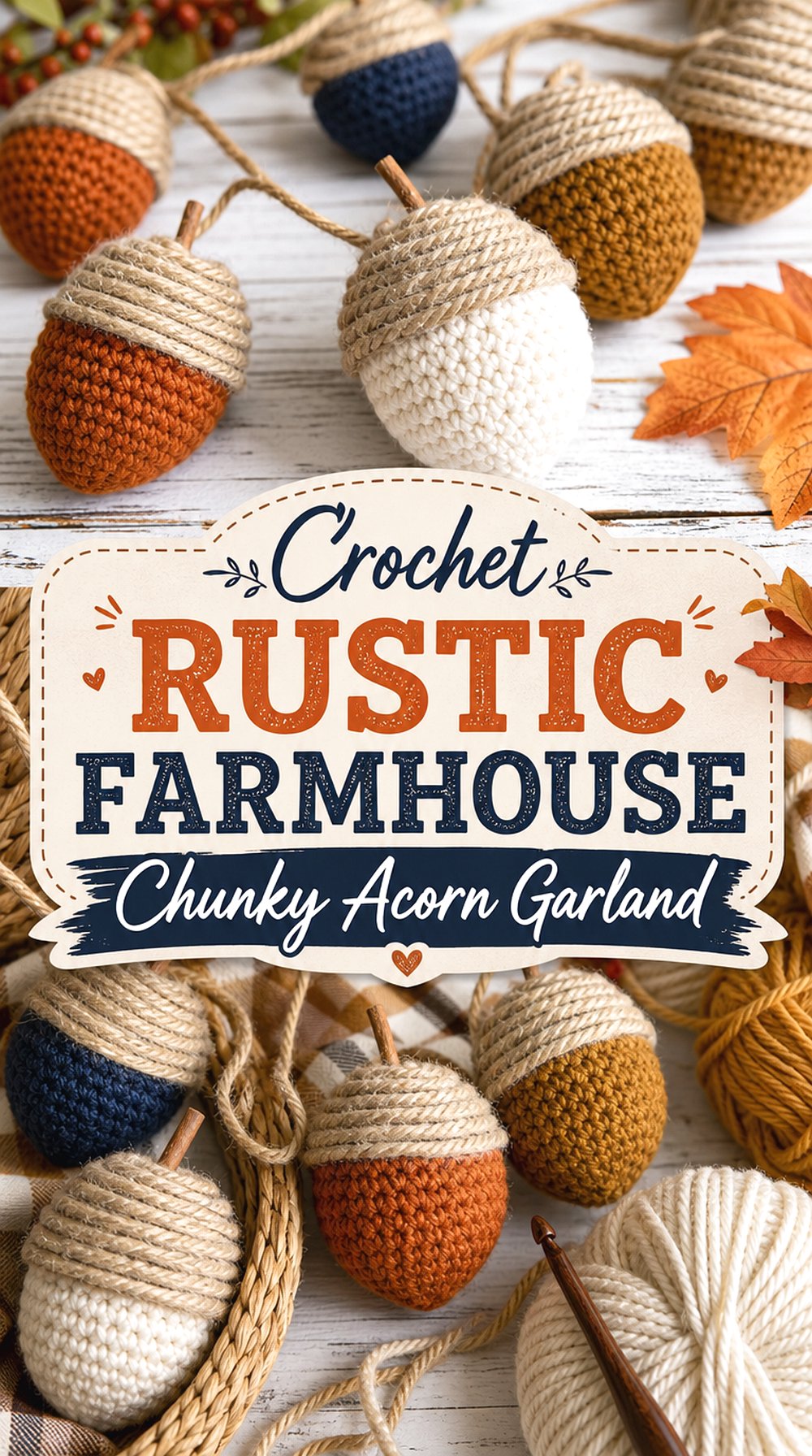
SAVEThis rustic farmhouse acorn idea has a fuller, chunkier look than the tiny motif options. The acorns are designed as decorative pieces with a textured, rustic finish, so a garland made from them would feel more like a statement strand than a delicate trim. This can work well for a short mantel swag, a basket display, or a few large acorns spaced widely on a cord.
The original tutorial focuses on farmhouse-style crochet acorns rather than a complete garland, so the hanging method and spacing need careful planning. Because the pieces are larger and more dimensional, fewer repeats may be enough. The source describes rustic acorns with different size options and added top details.
Chunky Pieces Need a Shorter Plan
A long strand of large stuffed acorns may look heavy or crowded. This style is better suited to a shorter garland, a centered swag, or widely spaced pieces. Readers should place finished acorns along the intended display area before attaching them permanently.
Rustic Top Details Affect the Look
The top treatment is a major part of the farmhouse style. Natural-looking cord, textured caps, or stem details can make the acorns feel more decorative than simple motifs. If the garland will hang near other fall decor, keep the surrounding pieces simple so the acorn texture remains visible.
Weight Is the Practical Question
Larger acorns need more attention to how they will be supported. The original source gives the acorn construction, but the garland support is a separate decision. Readers should choose a hanging setup suitable for their own finished pieces and display location rather than assuming any cord will work.
Creator: MJ’s Off The Hook Designs
10. Crochet Compact Amigurumi Acorn Garland
 SAVE
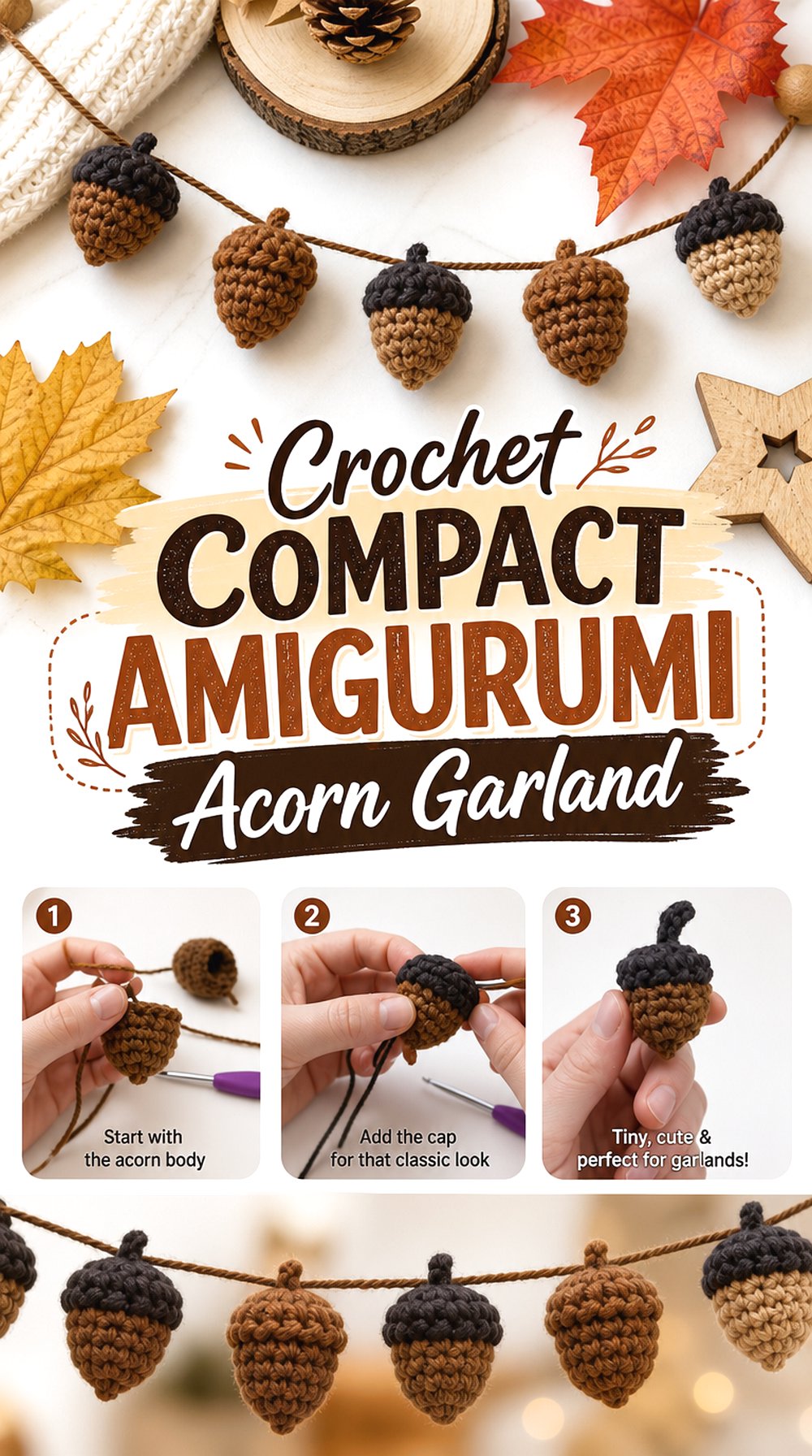
SAVEA compact amigurumi acorn garland gives the strand a soft, rounded look without becoming as large as a chunky farmhouse display. This idea works best when you want small stuffed acorns that feel more like tiny ornaments than flat appliqués. The repeated shape can look tidy across a narrow mantel, shelf, or seasonal peg rail.
The original tutorial teaches a crochet acorn amigurumi, so readers will need to decide the final garland cord and attachment method. This source is a good fit for a simple strand where the acorn shape itself is the main feature, especially if you prefer a rounded acorn body with a separate-looking cap.
Compact Shape Keeps the Strand Flexible
Smaller amigurumi acorns can be easier to arrange than large stuffed pieces. They can sit closer together without overwhelming a small display area. To keep the strand balanced, make sure each acorn hangs in the same direction before adding more repeats.
A Simple Garland Lets the Acorns Stand Out
This project does not need many extra motifs. A plain cord with evenly spaced acorns can look clean and intentional. If adding leaves or beads, keep them secondary so the rounded acorn shapes remain the focus of the finished garland.
Creator: Club Crochet
Choosing the Right Crochet Acorn Garland Style
Choose the oak leaf and acorn mantel garland if you want the most traditional fall look. Pick the solstice version for a winter nature strand, or the autumn attractions garland when pumpkins and leaves should share the display. The cottagecore garland is the most playful choice because it turns the acorns into part of a woodland scene.
For quieter decor, the mini acorn, classic acorn, and compact amigurumi options work better because they repeat one shape. The multi-size country acorn strand gives more variation, while the rustic farmhouse version is best for a shorter, chunkier display. The main decision is whether you want a complete garland layout or a repeatable acorn motif that you arrange yourself.
Conclusion
Crochet acorn garlands can be small and simple, full of fall motifs, or detailed enough to feel like a woodland scene. For a classic mantel, the acorn-and-oak-leaf options are the clearest fit. For a fuller seasonal display, choose the pumpkin or cottagecore garlands. If you want more control over length and spacing, use one of the single-acorn tutorials and plan your own cord arrangement.
The original tutorials are the right place to follow exact construction details, especially for shaping, attaching, and finishing each acorn. Before starting, decide where the strand will hang and whether the acorns need to be tiny, mixed-size, or chunky enough to stand out.
FAQs
Can I make a crochet acorn garland from a single acorn tutorial?
Yes, as long as the tutorial gives a complete acorn and you are willing to plan the garland layout yourself. You will need to decide how many acorns to make, what hanging cord to use, and how each piece will attach. A full garland tutorial is better if you want more guidance on spacing and assembly.
What style of crochet acorn garland works best for a mantel?
A mantel usually works well with a balanced strand that has visible spacing between motifs. Oak leaf and acorn garlands are a strong choice because the leaves spread the design while the acorns add depth. Chunky acorns can also work, but they may look better as a shorter swag instead of a long crowded line.
Should I choose small or large crochet acorns for a garland?
Small acorns are better for longer strands, narrow shelves, and lightweight displays. Larger acorns make more of a statement but may need wider spacing and stronger support. If the source gives finished measurements, compare them with your display area before making the full set.
Can I add leaves, pumpkins, or flowers to an acorn garland?
Yes, mixed motifs can make the garland feel more seasonal or more woodland-inspired. Leaves create a natural fall look, pumpkins make the strand fuller, and flowers or tiny forest pieces create a cottagecore style. Keep the motif sizes balanced so the acorns do not get hidden.
Can I sell crochet acorn garlands made from YouTube tutorials?
Do not assume selling is allowed. Check the creator’s pattern terms, video description, linked blog post, or shop policy before selling finished items. Some creators allow finished-item sales with credit, while others limit use. Also avoid using creator photos, screenshots, thumbnails, or copied wording in any listing.